• Skip to primary navigation
  • Skip to main content
  • Skip to primary sidebar
  • Home
  • About Us
    • Privacy Policy
    • Comment Policy
    • Disclosures & Disclaimers
  • Resources
    • Links, Essays & Articles
    • Fandomology!
    • CLAMP Directory
    • BlogRoll
  • Features & Columns
    • 3 Things Thursday
    • Adventures in the Key of Shoujo
    • Bit & Blips (game reviews)
    • BL BOOKRACK
    • Bookshelf Briefs
    • Bringing the Drama
    • Comic Conversion
    • Fanservice Friday
    • Going Digital
    • It Came From the Sinosphere
    • License This!
    • Magazine no Mori
    • My Week in Manga
    • OFF THE SHELF
    • Not By Manga Alone
    • PICK OF THE WEEK
    • Subtitles & Sensibility
    • Weekly Shonen Jump Recaps
  • Manga Moveable Feast
    • MMF Full Archive
    • Yun Kouga
    • CLAMP
    • Shojo Beat
    • Osamu Tezuka
    • Sailor Moon
    • Fruits Basket
    • Takehiko Inoue
    • Wild Adapter
    • One Piece
    • After School Nightmare
    • Karakuri Odette
    • Paradise Kiss
    • The Color Trilogy
    • To Terra…
    • Sexy Voice & Robo
  • Browse by Author
    • Sean Gaffney
    • Anna Neatrour
    • Michelle Smith
    • Katherine Dacey
    • MJ
    • Brigid Alverson
    • Travis Anderson
    • Phillip Anthony
    • Derek Bown
    • Jaci Dahlvang
    • Angela Eastman
    • Erica Friedman
    • Sara K.
    • Megan Purdy
    • Emily Snodgrass
    • Nancy Thistlethwaite
    • Eva Volin
    • David Welsh
  • MB Blogs
    • A Case Suitable For Treatment
    • Experiments in Manga
    • MangaBlog
    • The Manga Critic
    • Manga Report
    • Soliloquy in Blue
    • Manga Curmudgeon (archive)

Manga Bookshelf

Discussion, Resources, Roundtables, & Reviews

Setona Mizushiro

My 10 Favorite Spooky Manga

October 24, 2010 by Katherine Dacey 38 Comments

Whether by accident or design, the very first manga I read and liked were horror titles: “The Laughing Target,” Mermaid Saga, Uzumaki. I’m not sure why I find spooky stories so compelling in manga form; I don’t generally read horror novels, and I don’t have the constitution for gory movies. But manga about zombies? Or vampires? Or angry spirits seeking to avenge their own deaths? Well, there’s always room on my bookshelf for another one, even if the stories sometimes feel overly familiar or — in the case of artists like Kanako Inuki and Kazuo Umezu — make no sense at all. Below is a list of my ten favorite scary manga, which run the gamut from psychological horror to straight-up ick.

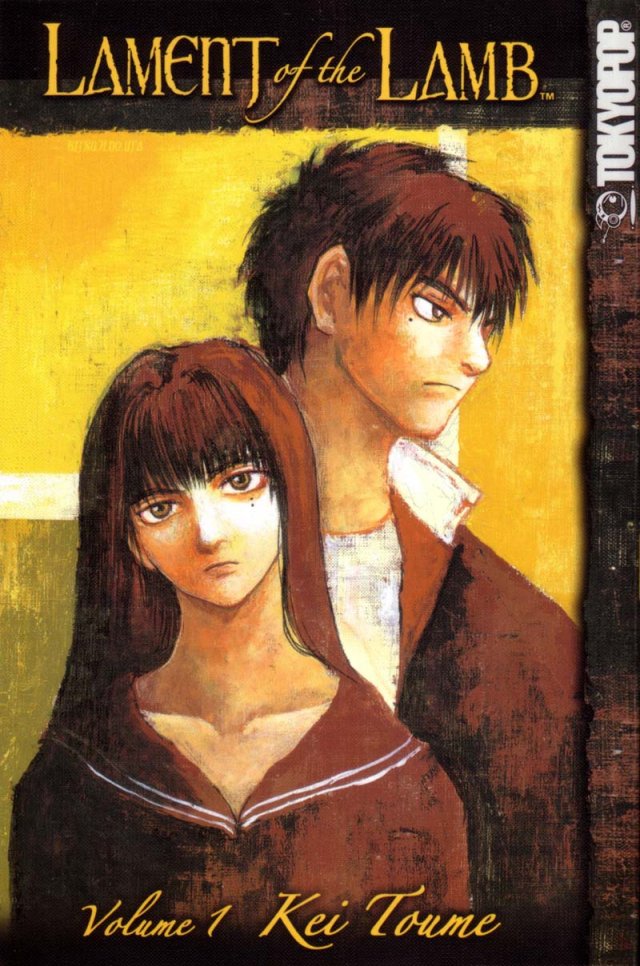
10. LAMENT OF THE LAMB

KEI TOUME • TOKYOPOP • 7 VOLUMES

Kei Toume puts a novel spin on vampirism, presenting it not as a supernatural phenomenon, but as a symptom of a rare genetic disorder. His brother-and-sister protagonists, Kazuna and Chizuna, begin exhibiting the same tendencies as their deceased mother, losing control at the sight or suggestion of blood, and enduring cravings so intense they induce temporary insanity. Long on atmosphere and short on plot, Lament of the Lamb won’t be every vampire lover’s idea of a rip-snortin’ read; the manga focuses primarily on the intense, unhealthy relationship between Kazuna and Chizuna, and very little on blood-sucking. What makes Lament of the Lamb so deeply unsettling, however, is the strong current of violence and fear that flows just beneath its surface; Kazuna and Chizuna may not be predators, but we see just how much self-control it takes for them to contain their bloodlust.

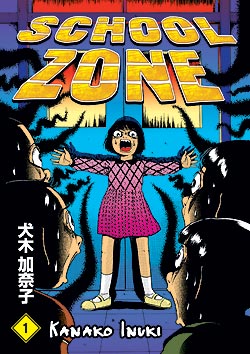
9. SCHOOL ZONE

KANAKO INUKI • DARK HORSE • 3 VOLUMES

In this odd, hallucinatory, and sometimes very funny series, a group of students summon the ghosts of people who died on school grounds, unleashing the spirits’ wrath on their unsuspecting classmates. School Zone is as much a meditation on childhood fears of being ridiculed or ostracized as it is a traditional ghost story; time and again, the students’ own response to the ghosts is often more horrific than the ghosts’ behavior. Inuki’s artwork isn’t as gory or imaginative as some of her peers’, though she demonstrates a genuine flair for comically gruesome thrills: one girl is dragged into a toilet, for example, while another is attacked by a scaly, long-armed creature that lives in the infirmary. Where Inuki really shines, however, is in her ability to capture the primal terror that a dark, empty building can inspire in the most rational person. Even when the story takes one its many silly detours — and yes, there are many WTF?! moments in School Zone — Inuki makes us feel her characters’ vulnerability as they explore the school grounds after hours. —Reviewed at The Manga Critic on 10/29/09

8. MAIL

HOUSUI YAMAKAZI • DARK HORSE • 3 VOLUMES

If you like you horror neat with a twist, Mail might be your kind of manga: a meticulously crafted selection of short, spooky tales in which a handsome exorcist goes toe-to-toe with all sort of ghosts. The stories are a mixture of urban legend and folklore: a GPS system which directs a woman to the scene of a crime, an accident victim who haunts the elevator shaft where he died, a possessed doll. Through precise linework and superb command of light, Hosui Yamakazi transforms everyday situations — returning home from work, logging onto a computer — into extraordinary ones in which shadows and corners harbor very nasty surprises. Best of all, Mail never overstays its welcome; it’s the manga equivalent of the Goldberg Variations, offering a number of short, trenchant variations on a single theme and then wrapping things up neatly.

7. AFTER SCHOOL NIGHTMARE

SETONA MITZUSHIRO • GO! COMI • 10 VOLUMES

Masahiro, a charming, popular high school student, harbors a terrible secret: though he appears to be male, the lower half of his body is female. At a nurse’s urging, he agrees to visit the school infirmary for a series of dream workshops in which he interacts with classmates who are also grappling with serious problems, from child abuse to pathological insecurity. The students’ collective dreams are vivid and strange, unfolding with the peculiar, fervid logic of a nightmare; buildings flood, stairwells lead to dead ends, and characters undergo sudden, dramatic transformations. Making the dream sequences extra creepy is the way Setona Mizushiro renders the students, choosing an avatar for each that represents their true selves: a black knight, a faceless body, a long, disembodied arm that grasps and slithers. Attentive readers will be rewarded for their patient observation with an unexpected but brilliant twist in the very final pages.

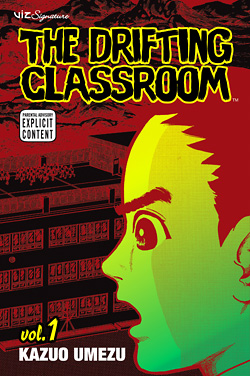
6. THE DRIFTING CLASSROOM

KAZUO UMEZU • VIZ • 11 VOLUMES

It’s sorely tempting to compare The Drifting Classroom to The Lord of the Flies, as both stories depict school children creating their own societies in the absence of adult authority. But Kazuo Umezu’s series is more sinister than Golding’s novel, as Classroom‘s youthful survivors have been forced to band together to defend themselves from their former teachers, many of whom have become unhinged at the realization that they may never return to their own time. (Their entire elementary school has slipped through a rift in the space-time continuum, depositing everyone in the distant future.) The story is as relentless as an episode of 24: characters are maimed or killed in every chapter, and almost every line of dialogue is shouted. (Sho’s petty arguments with his mother are delivered as emphatically as his later attempts to alert classmates to the dangers of their new surroundings.) Yet for all its obvious shortcomings, Umezu creates an atmosphere of almost unbearable tension that conveys both the hopelessness of the children’s situation and their terror at being abandoned by the grown-ups. If that isn’t the ultimate ten-year-old’s nightmare, I don’t know what is. —Reviewed at PopCultureShock on 10/15/06

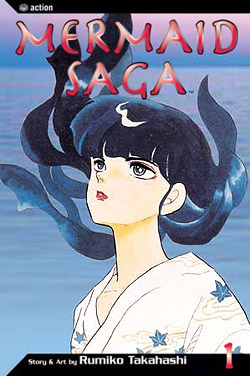
5. MERMAID SAGA

RUMIKO TAKAHASHI • VIZ • 4 VOLUMES

This four-volume series ran on and off in Shonen Sunday for nearly ten years, chronicling the adventures of Yuta, a fisherman who gained immortality by eating mermaid flesh. Desperate to live an ordinary existence, Yuta spends five hundred years wandering Japan in search of a mermaid who can restore his mortality, crossing paths with criminals, immortals, and “lost souls,” people reduced to a monstrous condition by the poison in mermaid flesh. Though the stories follow a somewhat predictable pattern, Takahashi’s writing is brisk and assured, propelled by snappy dialogue and genuinely creepy scenarios. The imagery is tame by horror standards, but Takahashi doesn’t shy away from the occasional grotesque or gory image, using them to underscore the ugly consequences of seeking immortality. –Reviewed at The Manga Critic on 10/29/09.

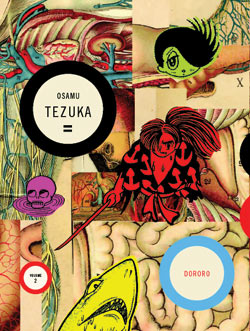
4. DORORO

OSAMU TEZUKA • VERTICAL, INC. • 3 VOLUMES

The next time you feel inclined to criticize your parents, remember Hyakkimaru’s plight: his father pledged Hyakkimaru’s body parts to forty-eight demons in exchange for political power, leaving his son blind, deaf, and limbless at birth. After being rescued and raised by a kindly doctor, Hyakkimaru embarks on a quest to reclaim his eyes and ears, wandering across a war-torn landscape where demons take advantage of the chaos to prey on humans. Some of these demons have obvious antecedents in Japanese folklore (e.g. a nine-tailed fox), while others seem to have sprung full-blown from Tezuka’s imagination (e.g. a shark who paralyzes his victims with sake breath). Though the story ostensibly unfolds during the Warring States period, Dororo wears its allegory lightly, focusing primarily on swordfights, monster lairs, and damsels in distress while using its historical setting to make a few modest points about the corrosive influence of greed, power, and fear. For my money, one of Tezuka’s best series, peroid. —Reviewed at The Manga Critic on 7/27/09

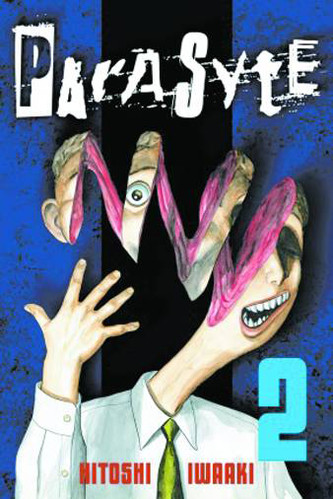
3. PARASYTE

HITOSHI IWAAKI • DEL REY • 8 VOLUMES

Part The Defiant Ones, part Invasion of the Body Snatchers, Parasyte focuses on the symbiotic relationship between Shin, a high school student, and Migi, the alien parasite that takes up residence in his right hand after failing to take control of Shin’s brain. The two go on the lam after another parasite kills Shin’s mother — and makes Shin and Migi look like the culprits. If the human character designs are a little blank and clumsy, the parasites are not; Hitoshi Iwaaki twists the human body into some of the most sinister-looking shapes since Pablo Picasso painted Dora Maar. The violence is graphic but not sadistic, as most of the action takes place between panels, with only the grisly aftermath represented in pictorial form. The best part of Parasyte, however, is the script; Shin and Migi trade barbs with the antagonistic affection of Oscar Madison and Felix Unger, revealing Migi to be smarter and more objective than his human host. Shin and Migi’s banter adds an element of levity to the story, to be sure, but their heated debates about survival are also a sly poke at the idea that human beings’ intellect and emotional attachments place them squarely atop the food chain. –Reviewed at The Manga Critic on 7/2/10

2. THE KUROSAGI CORPSE DELIVERY SERVICE

EIJI OTSUKI AND HOUSUI YAMAKAZI • DARK HORSE • 13+ VOLUMES

The Kurosagi Corpse Delivery Service is comprised of five members: Karatsu, a monk-in-training; Numata, a hipster with an encyclopedic knowledge of pop culture; Yata, an odd duck who communicates primarily through a puppet that he wears on his left hand; Makino, a chatty embalmer; and Sasaki, a hacker with an entrepreneurial streak. Working as a team, the quintet helps the dead cross over, using their myriad talents to locate bodies, speak with ghosts, and resolve the spirits’ unfinished business. The set-up is pure gold, giving the episodic series some structure, while allowing Eiji Otsuka and Housui Yamakazi the flexibility to stage grisly murders and discover corpses in a variety of unexpected places. Think Scooby Doo with less wholesome protagonists and scarier spooks and you have a good idea of what makes this offbeat series tick. And yes, the gang even has their own van. —Reviewed at The Manga Critic on 6/24/09

1. GYO

JUNJI ITO • VIZ • 2 VOLUMES

From the standpoint of craft, Uzumaki is a better manga, but it’s hard to top the sheer creepiness factor of Gyo, which taps into one of the most primordial of fears: being eaten! Here’s how I explained its appeal to David Welsh at The Comics Reporter:

Like many other children of the 1970s, Jaws left an indelible impression on me. I wasn’t just terrified of swimming in the ocean, I was reluctant to immerse myself in any standing body of water — swimming pools, bathtubs, ponds — that might conceivably harbor a shark. That irrational fear of encountering a great white somewhere it’s not supposed to be even led me to wonder what it might be like to bump into one on land — could I outrun it?

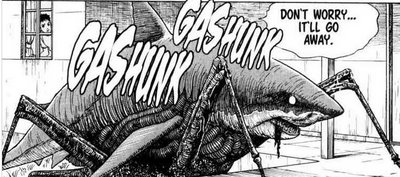
I’m guessing Junji Ito also suffers from icthyophobia, because Gyo looks like my worst nightmare, a world in which hideously deformed fish crawl out of the sea on mechanical legs and terrorize humans, spreading a disease that quickly jumps species. As horror stories go, many of Gyo‘s details aren’t terribly well explained — how, exactly, the fish acquired legs remains unclear despite talk of military experiments gone awry — but the imaginative artwork appeals on a visceral level. Gyo‘s highpoint comes midway through volume one, when a great white shark chases the hero and his girlfriend through a house, even scaling the stairs (no pun intended) in pursuit of its next meal. The scene is utterly ridiculous, but it works — for a few terrible, thrilling pages I learned the answer to my long-standing question, What would it be like to be chased by a shark on land? In a word: scary.

In other words, this is my worst nightmare:

So those are ten of my favorite spooky manga! What horror manga are on your top-ten list? Inquiring minds want to know!
Filed Under: Manga Critic Tagged With: Dark Horse, del rey, Eiji Otsuka, Go! Comi, Hitoshi Iwaaki, Horror/Supernatural, Housui Yamakazi, Junji Ito, Kanako Inuki, Kazuo Umezu, Kei Toume, Osamu Tezuka, Rumiko Takahashi, Setona Mizushiro, Tokyopop, vertical, VIZ

My 10 Favorite Spooky Manga

October 24, 2010 by Katherine Dacey

Whether by accident or design, the very first manga I read and liked were horror titles: “The Laughing Target,” Mermaid Saga, Uzumaki. I’m not sure why I find spooky stories so compelling in manga form; I don’t generally read horror novels, and I don’t have the constitution for gory movies. But manga about zombies? Or vampires? Or angry spirits seeking to avenge their own deaths? Well, there’s always room on my bookshelf for another one, even if the stories sometimes feel overly familiar or — in the case of artists like Kanako Inuki and Kazuo Umezu — make no sense at all. Below is a list of my ten favorite scary manga, which run the gamut from psychological horror to straight-up ick.

10. Lament of the Lamb
By Kei Toume • Tokyopop • 7 volumes
Kei Toume puts a novel spin on vampirism, presenting it not as a supernatural phenomenon, but as a symptom of a rare genetic disorder. His brother-and-sister protagonists, Kazuna and Chizuna, begin exhibiting the same tendencies as their deceased mother, losing control at the sight or suggestion of blood, and enduring cravings so intense they induce temporary insanity. Long on atmosphere and short on plot, Lament of the Lamb won’t be every vampire lover’s idea of a rip-snortin’ read; the manga focuses primarily on the intense, unhealthy relationship between Kazuna and Chizuna, and very little on blood-sucking. What makes Lament of the Lamb so deeply unsettling, however, is the strong current of violence and fear that flows just beneath its surface; Kazuna and Chizuna may not be predators, but we see just how much self-control it takes for them to contain their bloodlust.

9. School Zone
By Kanako Inuki • Dark Horse • 3 volumes
In this odd, hallucinatory, and sometimes very funny series, a group of students summon the ghosts of people who died on school grounds, unleashing the spirits’ wrath on their unsuspecting classmates. School Zone is as much a meditation on childhood fears of being ridiculed or ostracized as it is a traditional ghost story; time and again, the students’ own response to the ghosts is often more horrific than the ghosts’ behavior. Inuki’s artwork isn’t as gory or imaginative as some of her peers’, though she demonstrates a genuine flair for comically gruesome thrills: one girl is dragged into a toilet, for example, while another is attacked by a scaly, long-armed creature that lives in the infirmary. Where Inuki really shines, however, is in her ability to capture the primal terror that a dark, empty building can inspire in the most rational person. Even when the story takes one its many silly detours — and yes, there are many WTF?! moments in School Zone — Inuki makes us feel her characters’ vulnerability as they explore the school grounds after hours. —Reviewed at The Manga Critic on 10/29/09

8. Mail
By Housui Yamazaki • Dark Horse • 3 volumes
If you like you horror neat with a twist, Mail might be your kind of manga: a meticulously crafted selection of short, spooky tales in which a handsome exorcist goes toe-to-toe with all sort of ghosts. The stories are a mixture of urban legend and folklore: a GPS system which directs a woman to the scene of a crime, an accident victim who haunts the elevator shaft where he died, a possessed doll. Through precise linework and superb command of light, Hosui Yamakazi transforms everyday situations — returning home from work, logging onto a computer — into extraordinary ones in which shadows and corners harbor very nasty surprises. Best of all, Mail never overstays its welcome; it’s the manga equivalent of the Goldberg Variations, offering a number of short, trenchant variations on a single theme and then wrapping things up neatly.

7. After School Nightmare
By Setona Mizushiro • Go! Comi • 10 volumes
Masahiro, a charming, popular high school student, harbors a terrible secret: though he appears to be male, the lower half of his body is female. At a nurse’s urging, he agrees to visit the school infirmary for a series of dream workshops in which he interacts with classmates who are also grappling with serious problems, from child abuse to pathological insecurity. The students’ collective dreams are vivid and strange, unfolding with the peculiar, fervid logic of a nightmare; buildings flood, stairwells lead to dead ends, and characters undergo sudden, dramatic transformations. Making the dream sequences extra creepy is the way Setona Mizushiro renders the students, choosing an avatar for each that represents their true selves: a black knight, a faceless body, a long, disembodied arm that grasps and slithers. Attentive readers will be rewarded for their patient observation with an unexpected but brilliant twist in the very final pages.

6. The Drifting Classroom
By Kazuo Umezu • VIZ Media • 11 volumes
It’s sorely tempting to compare The Drifting Classroom to The Lord of the Flies, as both stories depict school children creating their own societies in the absence of adult authority. But Kazuo Umezu’s series is more sinister than Golding’s novel, as Classroom‘s youthful survivors have been forced to band together to defend themselves from their former teachers, many of whom have become unhinged at the realization that they may never return to their own time. (Their entire elementary school has slipped through a rift in the space-time continuum, depositing everyone in the distant future.) The story is as relentless as an episode of 24: characters are maimed or killed in every chapter, and almost every line of dialogue is shouted. (Sho’s petty arguments with his mother are delivered as emphatically as his later attempts to alert classmates to the dangers of their new surroundings.) Yet for all its obvious shortcomings, Umezu creates an atmosphere of almost unbearable tension that conveys both the hopelessness of the children’s situation and their terror at being abandoned by the grown-ups. If that isn’t the ultimate ten-year-old’s nightmare, I don’t know what is. —Reviewed at PopCultureShock on 10/15/06

5. Mermaid Saga
By Rumiko Takahashi • VIZ Media • 4 volumes
This four-volume series ran on and off in Shonen Sunday for nearly ten years, chronicling the adventures of Yuta, a fisherman who gained immortality by eating mermaid flesh. Desperate to live an ordinary existence, Yuta spends five hundred years wandering Japan in search of a mermaid who can restore his mortality, crossing paths with criminals, immortals, and “lost souls,” people reduced to a monstrous condition by the poison in mermaid flesh. Though the stories follow a somewhat predictable pattern, Takahashi’s writing is brisk and assured, propelled by snappy dialogue and genuinely creepy scenarios. The imagery is tame by horror standards, but Takahashi doesn’t shy away from the occasional grotesque or gory image, using them to underscore the ugly consequences of seeking immortality. —Reviewed at The Manga Critic on 10/29/09.

4. Dororo
By Osamu Tezuka • Vertical, Inc. • 3 volumes
The next time you feel inclined to criticize your parents, remember Hyakkimaru’s plight: his father pledged Hyakkimaru’s body parts to forty-eight demons in exchange for political power, leaving his son blind, deaf, and limbless at birth. After being rescued and raised by a kindly doctor, Hyakkimaru embarks on a quest to reclaim his eyes and ears, wandering across a war-torn landscape where demons take advantage of the chaos to prey on humans. Some of these demons have obvious antecedents in Japanese folklore (e.g. a nine-tailed fox), while others seem to have sprung full-blown from Tezuka’s imagination (e.g. a shark who paralyzes his victims with sake breath). Though the story ostensibly unfolds during the Warring States period, Dororo wears its allegory lightly, focusing primarily on swordfights, monster lairs, and damsels in distress while using its historical setting to make a few modest points about the corrosive influence of greed, power, and fear. For my money, one of Tezuka’s best series, peroid. —Reviewed at The Manga Critic on 7/27/09

3. Parasyte
By Hitoshi Iwaaki • Del Rey • 8 volumes
Part The Defiant Ones, part Invasion of the Body Snatchers, Parasyte focuses on the symbiotic relationship between Shin, a high school student, and Migi, the alien parasite that takes up residence in his right hand after failing to take control of Shin’s brain. The two go on the lam after another parasite kills Shin’s mother — and makes Shin and Migi look like the culprits. If the human character designs are a little blank and clumsy, the parasites are not; Hitoshi Iwaaki twists the human body into some of the most sinister-looking shapes since Pablo Picasso painted Dora Maar. The violence is graphic but not sadistic, as most of the action takes place between panels, with only the grisly aftermath represented in pictorial form. The best part of Parasyte, however, is the script; Shin and Migi trade barbs with the antagonistic affection of Oscar Madison and Felix Unger, revealing Migi to be smarter and more objective than his human host. Shin and Migi’s banter adds an element of levity to the story, to be sure, but their heated debates about survival are also a sly poke at the idea that human beings’ intellect and emotional attachments place them squarely atop the food chain. —Reviewed at The Manga Critic on 7/2/10

2. The Kurosagi Corpse Delivery Service
By Eiji Otsuki and Housui Yamakazi • Dark Horse • 13+ volumes
The Kurosagi Corpse Delivery Service is comprised of five members: Karatsu, a monk-in-training; Numata, a hipster with an encyclopedic knowledge of pop culture; Yata, an odd duck who communicates primarily through a puppet that he wears on his left hand; Makino, a chatty embalmer; and Sasaki, a hacker with an entrepreneurial streak. Working as a team, the quintet helps the dead cross over, using their myriad talents to locate bodies, speak with ghosts, and resolve the spirits’ unfinished business. The set-up is pure gold, giving the episodic series some structure, while allowing Eiji Otsuka and Housui Yamakazi the flexibility to stage grisly murders and discover corpses in a variety of unexpected places. Think Scooby Doo with less wholesome protagonists and scarier spooks and you have a good idea of what makes this offbeat series tick. And yes, the gang even has their own van. —Reviewed at The Manga Critic on 6/24/09

1. Gyo
By Junji Ito • VIZ Media • 2 volumes
From the standpoint of craft, Uzumaki is a better manga, but it’s hard to top the sheer creepiness factor of Gyo, which taps into one of the most primordial of fears: being eaten! Here’s how I explained its appeal to David Welsh at The Comics Reporter:

Like many other children of the 1970s, Jaws left an indelible impression on me. I wasn’t just terrified of swimming in the ocean, I was reluctant to immerse myself in any standing body of water — swimming pools, bathtubs, ponds — that might conceivably harbor a shark. That irrational fear of encountering a great white somewhere it’s not supposed to be even led me to wonder what it might be like to bump into one on land — could I outrun it?

I’m guessing Junji Ito also suffers from icthyophobia, because Gyo looks like my worst nightmare, a world in which hideously deformed fish crawl out of the sea on mechanical legs and terrorize humans, spreading a disease that quickly jumps species. As horror stories go, many of Gyo‘s details aren’t terribly well explained — how, exactly, the fish acquired legs remains unclear despite talk of military experiments gone awry — but the imaginative artwork appeals on a visceral level. Gyo‘s highpoint comes midway through volume one, when a great white shark chases the hero and his girlfriend through a house, even scaling the stairs (no pun intended) in pursuit of its next meal. The scene is utterly ridiculous, but it works — for a few terrible, thrilling pages I learned the answer to my long-standing question, What would it be like to be chased by a shark on land? In a word: scary.

In other words, this is my worst nightmare:

So those are ten of my favorite spooky manga! What horror manga are on your top-ten list? Inquiring minds want to know!

Filed Under: Manga, Manga Critic, Recommended Reading Tagged With: Dark Horse, del rey, Eiji Otsuka, Go! Comi, Hitoshi Iwaaki, Horror/Supernatural, Junji Ito, Kanako Inuki, Kazuo Umezu, Kei Toume, Osamu Tezuka, Rumiko Takahashi, Setona Mizushiro, Tokyopop, Vertical Comics, VIZ

5 Underrated Shojo Manga

July 10, 2010 by Katherine Dacey 7 Comments

Earlier in the week, I sang the praises of Kaze Hikaru, my all-time favorite shojo manga (and one of my all-time favorite manga, period). Today I shine the spotlight on five great titles that haven’t garnered as much favorable notice as they deserve. Sadly, all but one are officially out of print or will be soon, owing to publisher closings, lapsed licenses, and so-so sales. If you can’t find them through retailers such as Amazon, Buy.com, or Right Stuf!, you might wish to cast your net wider to include sites like Robert’s Anime Corner Store (a good source for older titles) and eBay, or try your local library for copies.

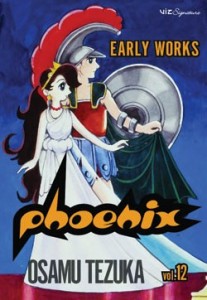
phoenix125. PHOENIX, VOL. 12: EARLY WORKS

OSAMU TEZUKA • VIZ • 1 VOLUME (complete)

A better subtitle for volume twelve of Phoenix would be I Lost It At the Movies, as these four stories reveal just how passionately Osamu Tezuka loved American cinema. In a 1980 essay, Tezuka explained that “watching American big-screen spectacle movies such as Helen of Troy and Land of the Pharaohs made me want to create a similar sort of romantic epic for young girls’ comics.” Looking at this collection, the sword-and-sandal influence manifests itself in almost every aspect of Tezuka’s storytelling, from the costumes and settings to the dialogue, which the characters declaim as if it were of Biblical consequence. (Paging Charlton Heston!) What makes this Hollywood pomposity bearable — even charming — is the tempering influence of Walt Disney. The character designs owe an obvious debt to Snow White, while the supporting cast could easily belong to Cinderella or Sleeping Beauty’s entourage of chatty animal friends.

Anyone looking for the moral complexity of later Phoenix stories will be disappointed in volume twelve, as Tezuka’s villains are cartoonishly evil and his heroes (and heroine) chastely noble. If one approaches this collection in the spirit of, say, a musicologist flipping through Beethoven’s pre-Eroica manuscripts, however, the rewards are more palpable. In these early stories we see Tezuka developing his comedic chops with pop culture references and physical slapstick; we see him experimenting with layout, as he renders the battlefields of Troy and Rome in sweeping, full-page panels; and we see him creating his first cycle of interconnected stories, introducing some of the themes that would unify the entire Phoenix saga. In short, we see Tezuka’s first attempts to find his own voice as he pays tribute to the artists who influenced him, learning more about his exuberant, unique artistry in the process. (Originally reviewed at PopCultureShock on 3/19/08.)

xday14. X-DAY

SETONA MIZUSHIRO • TOKYOPOP • 2 VOLUMES (complete)

When star high jumper Rika injures her leg and loses her boyfriend to a teammate, she becomes profoundly depressed. She soon discovers an online community of similarly disaffected students, however, all of whom share her desire to “make the school disappear.” Their internet chats soon give way to in-person meetings, where Rika comes face-to-face with three very different people: “Polaris,” a shy teen who dresses like a Goth off campus, “Mr. Money,” a friendly underclassman, and “Janglarian,” a young biology teacher who wants to dynamite the school. Setona Mizushiro’s dark story could easily spiral into melodrama, but she does a fine job of showing us how the normal tribulations of being a teenager — fighting with parents, enduring harassment from peers, feeling overwhelmed by anxiety — have led these four fragile people to hatch such a radical plan for coping with their pain. The second volume lacks the dramatic urgency of the first, as the students’ plot begins to come unraveled, but X-Day remains persuasive until its final pages, thanks to Mizushiro’s vivid characterizations and nuanced artwork.

airevolution13. A.I. REVOLUTION

YUU ASAMI• GO! COMI • 5 VOLUMES (incomplete; 17 volumes in Japan)

A.I. Revolution starts from a premise familiar to legions of Isaac Asimov fans: a human builds a robot, only to discover his creation has a mind and feelings of its own. Sui, the story’s human protagonist, initially views robots as household appliances, not unlike toasters or vaccuum cleaners. When her father presents her with an android companion, however, Sui develops a strong bond with it, discovering that Vermillion has a capacity for emotion that far outstrips her expectations.

A.I. Revolution may sound like I, Robot Hottie, but Yuu Asami puts a thoughtful spin on the material, filtering familiar sci-fi themes through a shojo lens. Though she weaves evil scientists and corporate espionage into the narrative, the story is at its best when focusing on Vermillion’s interactions with his human family; Sui’s father, for example, has modeled Vermillion in the image of a colleague that he admired, leading to a few funny, awkward moments of human-robot flirtation, while Sui seesaws between sisterly protectiveness and romantic attachment to her handsome companion. (Really, is there any other kind of robot in shojo manga?) Asami’s art reminds me of Akimi Yoshida’s with its elongated character designs, delicate linework, and sparing use of screentone. It’s a little dated perhaps, but a welcome change of pace from the slicker, busier layouts characteristic of the titles licensed by Tokyopop and VIZ. Highly recommended for fans of old-school shojo. (Originally reviewed at PopCultureShock on 3/4/08.)

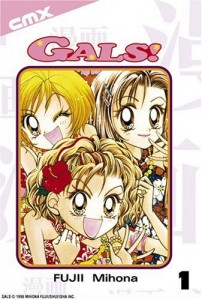
gals12. GALS!

MIHONA FUJI • CMX • 10 VOLUMES (complete)

This wacky comedy is one of the better shojo licenses in the CMX catalog, a rude, raunchy, and oddly moral tale about a feisty kogal named Ran Kotobuki. Though Ran and her pals are primarily interested in shopping for outrageous outfits, visiting the tanning salon, and stealing book bags from students at rival schools, Ran’s upbringing in a household full of police officers (dad, mom, and big brother are all cops) has taught her to adhere to a strict code of conduct: no sex for favors, and no tolerance for anyone who disrespects her friends.

Ran is a terrific, memorable character — impetuous, loud, funny, and tough, the kind of person who would literally smack sense into another girl if she thought it would work. Better still, she’s not easily swayed by boys; her relationship with the sweet but dim Tatsuki is surprisingly chaste, limited primarily to hand-holding and awkward discussions about feelings. (Ran won’t deign to say, “I love you,” as it compromises her tough-girl image.) As befits a manga that was serialized in Ribon, all of the characters have enormous, doll-like eyes in the Arina Tanemura style, and fabulous outfits that shame the Gossip Girls. The backgrounds are surprisingly detailed, conveying the look and feel of the Shibuya district with a specificity that’s all too rare in shojo manga. In sum, Gals! is the kind of good-natured gang comedy that I hoped My Darling! Miss Bancho would be: full of humor and heart, but with fewer capitulations to shojo convention.

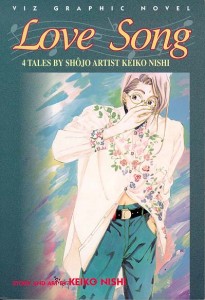
lovesong1. LOVE SONG

KEIKO NISHI • VIZ • 1 VOLUME (complete)

Back in the 1990s, Matt Thorn labored hard to make Keiko Nishi a household name among American manga readers, translating six of her stories for VIZ; two appeared in Four Shojo Stories alongside work by Moto Hagio and Shio Sato, and four appeared in a stand-alone volume called Love Song. Though Nishi didn’t catch on with Western shojo fans, it’s easy to see why Thorn championed her work: she’s a terrific, versatile storyteller, equally capable of writing light-hearted fantasies and character studies of deeply damaged people.

Of the four stories that appear in Love Song, two are standouts: “Jewels of the Seaside,” a black comedy about three sisters who compete for the same man’s affection, with disastrous results, and “The Skin of Her Heart,” a quiet sci-fi tale about a young woman torn between what she wants and what her mother wants for her. (Readers who enjoyed A, A’ or Twin Spica are a natural audience for “Skin of Her Heart,” though it works equally well for folks who aren’t big sci-fi buffs.) Nishi’s artwork is an acquired taste, at times precise, elegant, and naturalistic, and at times loose and sketchy, with the white of the page playing an important role in underscoring the emotional distance between her characters. Her minimalist approach won’t be to every shojo fan’s liking, but she demonstrates that it’s perfectly possible to convey the interior lives of her characters without resorting to the kind of visual shorthands — flowers, sweatdrops, nosebleeds — that have been overused in contemporary shojo manga. Love Song is out of print, but unlike Four Shojo Stories and A, A’, is still relatively easy to obtain through online retailers like Amazon. Highly recommended.

HONORABLE MENTIONS

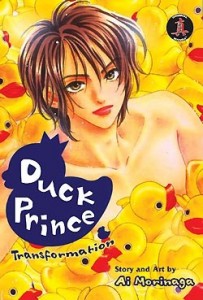
duckprince1DUCK PRINCE (Ai Morinaga • CMP • 3 volumes, suspended)
Morinaga’s battle-of-the-sexes comedy takes a standard shojo plot — homely gal gets makeover to win the guy of her dream — and turns it on its head, substituting a sweet, helmet-haired nerd for the customary plain Jane, and adding a novel twist: Reiichi appears to most girls as a smokin’ hottie, but in the presence of his beloved Yumiko, he reverts to his original form. As in all her work, Morinaga uses humor to make deeper points about gender roles and physical beauty, though Duck Prince is too rude and risque to be mistaken for an Afterschool Special. Central Park Media released three of the five volumes before suspending Duck Prince; of all the titles left homeless by CPM’s demise, it seems like one of the strongest candidates for a license rescue, though middling sales of Your & My Secret and My Heavenly Hockey Club may have scared American publishers away from Morinaga’s distinctive comedies.

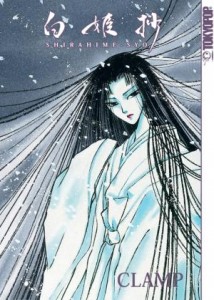
shirahimesyoSHIRAHIME-SYO: SNOW GODDESS TALES (CLAMP • Tokyopop • 1 volume)
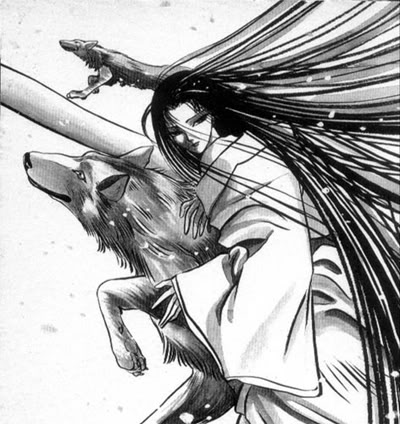
This lovely anthology is a radical departure for CLAMP. Gone are the super-detailed costumes and fussy character designs of their early, post-doujinshi work; in their place are spare, simply-drawn figures that seem consciously modeled on examples from eighteenth- and nineteenth-century scroll paintings. The stories themselves are told directly without embellishment, though CLAMP infuses each tale with genuine pathos, showing us how the characters’ anger and doubt lead to profound despair. As a result, the prevailing tone and spirit are reminiscent of Masaki Kobayashi’s 1964 film Kwaidan, both in the stories’ fidelity to the conventions of Japanese folklore and in their lyrical restraint. And if my description didn’t sell you on Shirahime-Syo, let this beautiful image, taken from the final story of the collection, persuade you to give this out-of-print gem a try:

snowgoddess2

* * * * *

So what titles top your list of underrated shojo manga? Inquiring minds want to know!

Filed Under: Manga Critic Tagged With: Ai Morinaga, clamp, Classic, cmx, Comedy, CPM, Drama, Go! Comi, Historical Drama, Osamu Tezuka, Sci-Fi, Setona Mizushiro, shojo, Tokyopop, VIZ

5 Underrated Shojo Manga

July 10, 2010 by Katherine Dacey

Earlier in the week, I sang the praises of Kaze Hikaru, my all-time favorite shojo manga (and one of my all-time favorite manga, period). Today I shine the spotlight on five great titles that haven’t garnered as much favorable notice as they deserve. Sadly, all but one are officially out of print or will be soon, owing to publisher closings, lapsed licenses, and so-so sales. If you can’t find them through retailers such as Amazon, Buy.com, or Right Stuf!, you might wish to cast your net wider to include sites like Robert’s Anime Corner Store (a good source for older titles) and eBay, or try your local library for copies.

phoenix125. Phoenix: Early Years, Vol. 12
By Osamu Tezuka • VIZ Media • 1 volume (complete)
A better subtitle for volume twelve of Phoenix would be I Lost It At the Movies, as these four stories reveal just how passionately Osamu Tezuka loved American cinema. In a 1980 essay, Tezuka explained that “watching American big-screen spectacle movies such as Helen of Troy and Land of the Pharaohs made me want to create a similar sort of romantic epic for young girls’ comics.” Looking at this collection, the sword-and-sandal influence manifests itself in almost every aspect of Tezuka’s storytelling, from the costumes and settings to the dialogue, which the characters declaim as if it were of Biblical consequence. (Paging Charlton Heston!) What makes this Hollywood pomposity bearable — even charming — is the tempering influence of Walt Disney. The character designs owe an obvious debt to Snow White, while the supporting cast could easily belong to Cinderella or Sleeping Beauty’s entourage of chatty animal friends.Anyone looking for the moral complexity of later Phoenix stories will be disappointed in volume twelve, as Tezuka’s villains are cartoonishly evil and his heroes (and heroine) chastely noble. If one approaches this collection in the spirit of, say, a musicologist flipping through Beethoven’s pre-Eroica manuscripts, however, the rewards are more palpable. In these early stories we see Tezuka developing his comedic chops with pop culture references and physical slapstick; we see him experimenting with layout, as he renders the battlefields of Troy and Rome in sweeping, full-page panels; and we see him creating his first cycle of interconnected stories, introducing some of the themes that would unify the entire Phoenix saga. In short, we see Tezuka’s first attempts to find his own voice as he pays tribute to the artists who influenced him, learning more about his exuberant, unique artistry in the process. (Originally reviewed at PopCultureShock on 3/19/08.)

xday14. X-Day
By Setona Mizushiro • Tokyopop • 2 volumes (complete)
When star high jumper Rika injures her leg and loses her boyfriend to a teammate, she becomes profoundly depressed. She soon discovers an online community of similarly disaffected students, however, all of whom share her desire to “make the school disappear.” Their internet chats soon give way to in-person meetings, where Rika comes face-to-face with three very different people: “Polaris,” a shy teen who dresses like a Goth off campus, “Mr. Money,” a friendly underclassman, and “Janglarian,” a young biology teacher who wants to dynamite the school. Setona Mizushiro’s dark story could easily spiral into melodrama, but she does a fine job of showing us how the normal tribulations of being a teenager — fighting with parents, enduring harassment from peers, feeling overwhelmed by anxiety — have led these four fragile people to hatch such a radical plan for coping with their pain. The second volume lacks the dramatic urgency of the first, as the students’ plot begins to come unraveled, but X-Day remains persuasive until its final pages, thanks to Mizushiro’s vivid characterizations and nuanced artwork.

airevolution13. A.I. Revolution
By Yuu Asami • Go! Comi • 5 volumes (incomplete; 17 volumes in Japan)
A.I. Revolution starts from a premise familiar to legions of Isaac Asimov fans: a human builds a robot, only to discover his creation has a mind and feelings of its own. Sui, the story’s human protagonist, initially views robots as household appliances, not unlike toasters or vaccuum cleaners. When her father presents her with an android companion, however, Sui develops a strong bond with it, discovering that Vermillion has a capacity for emotion that far outstrips her expectations.

A.I. Revolution may sound like I, Robot Hottie, but Yuu Asami puts a thoughtful spin on the material, filtering familiar sci-fi themes through a shojo lens. Though she weaves evil scientists and corporate espionage into the narrative, the story is at its best when focusing on Vermillion’s interactions with his human family; Sui’s father, for example, has modeled Vermillion in the image of a colleague that he admired, leading to a few funny, awkward moments of human-robot flirtation, while Sui seesaws between sisterly protectiveness and romantic attachment to her handsome companion. (Really, is there any other kind of robot in shojo manga?) Asami’s art reminds me of Akimi Yoshida’s with its elongated character designs, delicate linework, and sparing use of screentone. It’s a little dated perhaps, but a welcome change of pace from the slicker, busier layouts characteristic of the titles licensed by Tokyopop and VIZ. Highly recommended for fans of old-school shojo. (Originally reviewed at PopCultureShock on 3/4/08.)

gals12. GALS!
By Mihona Fuji • CMX Manga • 10 volumes (complete)
This wacky comedy is one of the better shojo licenses in the CMX catalog, a rude, raunchy, and oddly moral tale about a feisty kogal named Ran Kotobuki. Though Ran and her pals are primarily interested in shopping for outrageous outfits, visiting the tanning salon, and stealing book bags from students at rival schools, Ran’s upbringing in a household full of police officers (dad, mom, and big brother are all cops) has taught her to adhere to a strict code of conduct: no sex for favors, and no tolerance for anyone who disrespects her friends.

Ran is a terrific, memorable character — impetuous, loud, funny, and tough, the kind of person who would literally smack sense into another girl if she thought it would work. Better still, she’s not easily swayed by boys; her relationship with the sweet but dim Tatsuki is surprisingly chaste, limited primarily to hand-holding and awkward discussions about feelings. (Ran won’t deign to say, “I love you,” as it compromises her tough-girl image.) As befits a manga that was serialized in Ribon, all of the characters have enormous, doll-like eyes in the Arina Tanemura style, and fabulous outfits that shame the Gossip Girls. The backgrounds are surprisingly detailed, conveying the look and feel of the Shibuya district with a specificity that’s all too rare in shojo manga. In sum, Gals! is the kind of good-natured gang comedy that I hoped My Darling! Miss Bancho would be: full of humor and heart, but with fewer capitulations to shojo convention.

lovesong1. Love Song
Keiko Nishi • VIZ Media • 1 volume (complete)
Back in the 1990s, Matt Thorn labored hard to make Keiko Nishi a household name among American manga readers, translating six of her stories for VIZ; two appeared in Four Shojo Stories alongside work by Moto Hagio and Shio Sato, and four appeared in a stand-alone volume called Love Song. Though Nishi didn’t catch on with Western shojo fans, it’s easy to see why Thorn championed her work: she’s a terrific, versatile storyteller, equally capable of writing light-hearted fantasies and character studies of deeply damaged people.

Of the four stories that appear in Love Song, two are standouts: “Jewels of the Seaside,” a black comedy about three sisters who compete for the same man’s affection, with disastrous results, and “The Skin of Her Heart,” a quiet sci-fi tale about a young woman torn between what she wants and what her mother wants for her. (Readers who enjoyed A, A’ or Twin Spica are a natural audience for “Skin of Her Heart,” though it works equally well for folks who aren’t big sci-fi buffs.) Nishi’s artwork is an acquired taste, at times precise, elegant, and naturalistic, and at times loose and sketchy, with the white of the page playing an important role in underscoring the emotional distance between her characters. Her minimalist approach won’t be to every shojo fan’s liking, but she demonstrates that it’s perfectly possible to convey the interior lives of her characters without resorting to the kind of visual shorthands — flowers, sweatdrops, nosebleeds — that have been overused in contemporary shojo manga. Love Song is out of print, but unlike Four Shojo Stories and A, A’, is still relatively easy to obtain through online retailers like Amazon. Highly recommended.

HONORABLE MENTIONS

duckprince1Duck Prince
By Ai Morinaga • CMP • 3 volumes (suspended)

Morinaga’s battle-of-the-sexes comedy takes a standard shojo plot — homely gal gets makeover to win the guy of her dream — and turns it on its head, substituting a sweet, helmet-haired nerd for the customary plain Jane, and adding a novel twist: Reiichi appears to most girls as a smokin’ hottie, but in the presence of his beloved Yumiko, he reverts to his original form. As in all her work, Morinaga uses humor to make deeper points about gender roles and physical beauty, though Duck Prince is too rude and risque to be mistaken for an Afterschool Special. Central Park Media released three of the five volumes before suspending Duck Prince; of all the titles left homeless by CPM’s demise, it seems like one of the strongest candidates for a license rescue, though middling sales of Your & My Secret and My Heavenly Hockey Club may have scared American publishers away from Morinaga’s distinctive comedies.

shirahimesyoShirahime-Syo: Snow Goddess Tales
By CLAMP • Tokyopop • 1 volume

This lovely anthology is a radical departure for CLAMP. Gone are the super-detailed costumes and fussy character designs of their early, post-doujinshi work; in their place are spare, simply-drawn figures that seem consciously modeled on examples from eighteenth- and nineteenth-century scroll paintings. The stories themselves are told directly without embellishment, though CLAMP infuses each tale with genuine pathos, showing us how the characters’ anger and doubt lead to profound despair. As a result, the prevailing tone and spirit are reminiscent of Masaki Kobayashi’s 1964 film Kwaidan, both in the stories’ fidelity to the conventions of Japanese folklore and in their lyrical restraint. And if my description didn’t sell you on Shirahime-Syo, let this beautiful image, taken from the final story of the collection, persuade you to give this out-of-print gem a try:

snowgoddess2

* * * * *

So what titles top your list of underrated shojo manga? Inquiring minds want to know!
Filed Under: Manga, Manga Critic, Recommended Reading Tagged With: Ai Morinaga, clamp, Classic, cmx, Comedy, CPM, Drama, Go! Comi, Historical Drama, Osamu Tezuka, Sci-Fi, Setona Mizushiro, Tokyopop, VIZ

  • « Go to Previous Page
  • Page 1
  • Page 2
 | Log in
Copyright © 2010 Manga Bookshelf | Powered by WordPress & the Genesis Framework