• Skip to primary navigation
  • Skip to main content
  • Skip to primary sidebar
  • Home
  • About Us
    • Privacy Policy
    • Comment Policy
    • Disclosures & Disclaimers
  • Resources
    • Links, Essays & Articles
    • Fandomology!
    • CLAMP Directory
    • BlogRoll
  • Features & Columns
    • 3 Things Thursday
    • Adventures in the Key of Shoujo
    • Bit & Blips (game reviews)
    • BL BOOKRACK
    • Bookshelf Briefs
    • Bringing the Drama
    • Comic Conversion
    • Fanservice Friday
    • Going Digital
    • It Came From the Sinosphere
    • License This!
    • Magazine no Mori
    • My Week in Manga
    • OFF THE SHELF
    • Not By Manga Alone
    • PICK OF THE WEEK
    • Subtitles & Sensibility
    • Weekly Shonen Jump Recaps
  • Manga Moveable Feast
    • MMF Full Archive
    • Yun Kouga
    • CLAMP
    • Shojo Beat
    • Osamu Tezuka
    • Sailor Moon
    • Fruits Basket
    • Takehiko Inoue
    • Wild Adapter
    • One Piece
    • After School Nightmare
    • Karakuri Odette
    • Paradise Kiss
    • The Color Trilogy
    • To Terra…
    • Sexy Voice & Robo
  • Browse by Author
    • Sean Gaffney
    • Anna Neatrour
    • Michelle Smith
    • Katherine Dacey
    • MJ
    • Brigid Alverson
    • Travis Anderson
    • Phillip Anthony
    • Derek Bown
    • Jaci Dahlvang
    • Angela Eastman
    • Erica Friedman
    • Sara K.
    • Megan Purdy
    • Emily Snodgrass
    • Nancy Thistlethwaite
    • Eva Volin
    • David Welsh
  • MB Blogs
    • A Case Suitable For Treatment
    • Experiments in Manga
    • MangaBlog
    • The Manga Critic
    • Manga Report
    • Soliloquy in Blue
    • Manga Curmudgeon (archive)

Manga Bookshelf

Discussion, Resources, Roundtables, & Reviews

Novels

My Week in Manga: August 15-August 21, 2106

August 22, 2016 by Ash Brown

My News and Reviews

After a somewhat tumultuous year, last week marked the sixth anniversary of Experiments in Manga! Though at one point I was very stressed out about the fate and state of the blog, I’m now honestly looking forward to year seven, even if I’m not able to write as much anymore. Thank you to everyone who has read and supported Experiments in Manga in the past, present, and future!

Elsewhere online, Speculative Fiction in Translation interviewed Tyran Grillo, translator of Yusaku Kitano’s award-winning Mr. Turtle, the most recent offering from Kurodahan Press. And Barnes & Noble posted a list of 8 Great Japanese Books in Translation That Aren’t by Haruki Murakami. It’s a great list–I’ve only reviewed one of the novels included (Manazuru by Hiromi Kawakami), but I’m very fond of Keigo Higashino‘s work and several of the other books are very high on my to-be-read pile.

Quick Takes
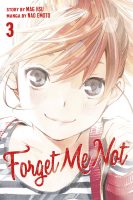
Forget Me Not, Volume 3Forget Me Not, Volume 3 written by Mag Hsu and illustrated by Nao Emoto. I was taken a little by surprise by how much I enjoyed the first two volumes of Forget Me Not and so I was looking forward to reading the third volume as well. The series delves into the life and past loves of Serizawa, a young man who so far has been shown to have very little luck when it comes to romance. Some of his relationship woes can be credited to the fact that he’s still immature and inexperienced, but that’s starting to become less and less of an excuse for him now that he’s in college. Perhaps because of that, the third volume of Forget Me Not didn’t work quite as well for me as the previous volumes did. It is very clear that the relationships shown in the third volume are heading towards an absolute train wreck. Considering the beginning of the series it’s already a known fact that Serizawa ends up alone and full of regret, but it’s still painful to watch the whole mess unfold. I feel just as badly for the two young women involved as I do for Serizawa. They both like him and he likes them both; Serizawa just hasn’t been able to figure out exactly what that means yet. Apparently, he still has quite a bit of growing up left to do. Despite my frustration with the most recent volume of Forget Me Not, I am curious to see how this unfortunate past ties in with the mystery of Serizawa’s current situation.
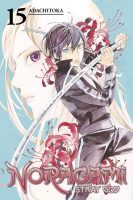
Noragami: Stray God, Volume 15Noragami: Stray God, Volumes 15-16 by Adachitoka. Although the series’ quirky humor hasn’t completely disappeared, Noragami has become increasingly dark and dramatic over time. Adachitoka does still find appropriate moments within the series to insert a bit of levity, but for me what makes the manga compelling is its characters. The real heart of the much of the conflict in Noragami–the frequently unpredictable relationships between the various gods as well as the turbulent relationships between the gods and mortals–has once again been thrust to the forefront of the series with the manga’s most recent story arc. One thing that I found particularly interesting about these two volumes of Noragami is that Adachitoka introduces several deities of indigenous origins in addition to recognizing the existence of foreign gods. I’m not sure that they will necessarily have a large role to play in the series (then again, it seems as though they might), but this expansion is marvelous from a worldbuilding perspective, especially as Noragami is currently dealing heavily with the court and political intrigue of the Heavens. Along with that also comes a few tremendous fight sequences. Ocassionally some of the individual actions can be a little difficult to follow amidst the chaos of battle, but overall the scenes are effective and at times even impressive.
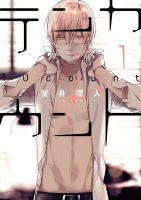
Ten Count, Volume 1Ten Count, Volume 1 by Rihito Takarai. Although the art style in Ten Count looked familiar to me, I actually didn’t make the connection at first–Takarai was the artist of the short boys’ love series Seven Days which I loved. Ten Count, however, is a very different manga than Seven Days. Even before it was licensed in English, I was aware of Ten Count. It’s a massively popular boys’ love manga, but the series also has a fair number of detractors and understandably so. Only one volume in and Ten Count is already a deliberately uncomfortable and troubling story with dark psychological elements, dubious ethics, and emotional manipulation. The manga follows Shirotani, a young man with a severe obsessive-compulsive disorder which has remained untreated since it first manifested. After a chance meeting Shirotani catches the attention of Kurose, a clinical psychotherapist who would seem to have some emotional issues of his own. Kurose takes a particular and decidedly unprofessional interest in Shirotani, offering to help Shirotani deal with his condition off-the-record and off-the-clock. Without realizing it, as Shirotani begins to be able to more easily function within society, he has also become more and more reliant on Kurose. Romantic it certainly is not, but at least for the moment I’m part of the group that finds Ten Count compelling and definitely plan on reading more.
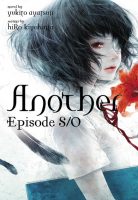
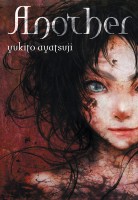
Another: Episode S/0Another: Episode S/0, novel by Yukito Ayatsuji, manga by Hiro Kiyohara. While I was left feeling a little cheated by how some of the major reveals were handled in the horror-mystery novel Another, for the most part I did like the book. And so I was excited when Yen Press licensed both the not-exactly-sequel Another: Episode S (the main action of the novel takes place during the original Another but is only tangentially related) and the short prequel manga Another 0, releasing them together in a single, beautiful hardcover volume. (Out of all the North American manga publishers, Yen Press has had some of the best book designs of late.) Sadly, Episode S has many of the same narrative problems found in Another, namely important reveals that, while they make sense, seem a bit unfair to the readers. I actually really liked the plot twists themselves in Episode S, it’s just that their execution falls short; once again left feeling unsatisfied by the story’s developments. Tonally, Episode S is a little different from Another–while it’s still a ghost story of sorts and there are some marvelously disturbing scenes, the mystery is emphasized far more than the horror. The atmosphere of Another 0, written and illustrated by the creator who helmed the Another manga adaptation, is much closer that of Another. The prequel relies heavily on readers’ familiarity with the original while Episode S largely stands on its own.

Ultimate Conditioning for Martial ArtsUltimate Conditioning for Martial Arts by Loren Landow. From an athletic standpoint, I have found several of the books published by Human Kinetics to be useful resources in supplementing my study of traditional Okinawan karate. Ultimate Conditioning for Martial Arts, one of the publisher’s most recent titles, can technically apply to any martial artist, but the book does tend to be geared more towards athletes and competitors. Landow also assumes that readers already have basic knowledge of anatomy, physiology, and sports training methods. While perhaps not suitable for absolute beginners, Ultimate Conditioning for Martial Arts does provide a good starting point for established martial artists who want to begin incorporating speed, agility, and conditioning work into their training. In addition to providing suggested conditioning exercises and programs, Landow also incorporates an overview of relevant and closely-related topics such as the evaluation and establishment of fitness baselines, warmups and flexibility, rest and recovery, and nutrition. The book includes a generous number of helpful photographs to accompany the descriptions of the specific exercises, but the photographs selected aren’t always the ones that would be most illustrative or useful. Additionally, rather than explaining the particular functions and applications of the individual exercises, Landow tends to broadly generalize and categorize their benefits. This lack of specificity and guidance can make the creation of an individualized conditioning program challenging for someone who has never developed one before. Ultimate Conditioning for Martial Arts groups commonly practiced martial arts disciplines together as either striking and kicking arts or wrestling and grappling arts. Landow suggests specific conditioning exercises for each category but also emphasizes the benefits of using a blended approach when developing a training program. Mixed Martial Arts is the only discipline that’s addressed in-depth but Ultimate Conditioning for Martial Arts is still broadly applicable to other martial arts and a valuable resource, providing a fine overall introduction to conditioning and endurance training.

Filed Under: FEATURES, My Week in Manga Tagged With: Adachitoka, Another, Forget Me Not, Hiro Kiyohara, Loren Landow, Mag Hsu, manga, Nao Emoto, Nonfiction, Noragami, Novels, Rihito Takarai, Ten Count, Yukito Ayatsuji

Giveaway: Sparkler Monthly Year 4 Giveaway Winner

August 3, 2016 by Ash Brown

Sparkler Monthly: Year 4And the winner of the Sparkler Monthly Year 4 giveaway is… Isaac!

As the winner, Isaac will get to choose two Sparkler paperbacks, ebooks, or audio dramas. Last week, I was honestly afraid that Sparkler Monthly wouldn’t be able to raise the funds to continue the online magazine for another year. However, over the last few days there was an amazing surge of support, and the Kickstarter campaign not only met, but surpassed its initial goal. I am so incredibly happy (and relieved) that Sparkler Monthly will continue to thrive for another year. I decided to coordinate a giveaway to go along with the Kickstarter campaign and asked that participants tell me a little about their favorite Sparkler Monthly title. As can be seen from the giveaway comments, Jennifer Doyle’s comic Knights-Errant is very well-loved, but here’s a list of all the great content currently freely available from Sparkler Monthly:

Awake by Tory Woollcott, Barabara, and Angela Sham
Bad Chemistry by Barabara
Before You Go by Denise Schroeder
The Cat Lover’s Circumstances by LAMP and Aiwa
Dead Endings by Jessica Chavez and Irene Flores
Dinner Ditz by Alexis Cooke
Dire Hearts by Christy Lijewski
DNA-RW by Sarah Elkins and Ru Xu
Dusk in Kalevia by Emily Compton and Onorobo
For Peace by Alexis Cooke
Gatesmith by Jen Lee Quick
Guantlet by Ellery Prime and T2A
Inhabitant of Another Planet by KaiJu
Knights-Errant by Jennifer Doyle
Lettera by Studio Kosen
Magical How? by Eurika Yusin Gho
Mahou Josei Chimaka by KaiJu
The Maiden and the Fish by Lydia Mackenzie and Phong Anh
Nine Circles by Jen Lee Quick
Off*Beat by Jen Lee Quick
Orange Junk by Heldrad
The Ring of Saturn by KaiJu
Shut In Shut Out by dee Juusan and Lianne Sentar
Skyglass by Jenn Grunigen and Mookie
Sparkler Podcast by the Sparkler Team
Sparkler RPG: ESPU by the Sparkler Team
Tokyo Demons by Lianne Sentar
Windrose by Studio Kosen
Witch’s Quarry by Jen Lee Quick

That’s quite a list, isn’t it! And because the Sparkler Monthly campaign was a success, even more comics, prose, audio, and games will be able to be added over the coming year. A huge thank you to everyone supported Sparkler Monthly, and a thank you to everyone who participated in the giveaway. I hope to see you again for the next one!

Filed Under: Giveaways, UNSHELVED Tagged With: comics, Novels, sparkler monthly

Giveaway: Sparkler Monthly Year 4 Giveaway

July 27, 2016 by Ash Brown

The end of the month is fast approaching, which means it’s time for another giveaway at Experiments in Manga. It also means that the Kickstarter campaign for Year Four of Sparkler Monthly is drawing to a close. I actually held a Sparkler Monthly giveaway last year to coordinate with the campaign to raise funds for the magazine’s third year. Normally, I try not to repeat myself too much when it comes to giveaways, but this year’s campaign still needs some boosting if it’s going to succeed. Also, I love what Sparkler Monthly is doing and I want to share that love! And so for this year’s Sparkler Monthly giveaway, the winner will have the opportunity to choose not one, but two Sparkler paperbacks, ebooks, or audio dramas. (Don’t worry, I’m more than happy to make specific recommendations if needed or desired.) And of course as always the giveaway is open worldwide!

Sparkler Monthly: Year 4

I adore Sparkler Monthly and have been an avid supporter of both it and its publisher Chromatic Press for years. Although I am a little behind in my reviewing, I do make a point to feature the novels and comics released in print here at Experiments in Manga, but there is even more content available digitally, either as ebooks or freely serialized online. And it’s all marvelous; I have honestly loved everything that I’ve read or listened to from Sparkler Monthly. The magazine, which is currently a mix of prose, comics, illustrations, and audio, provides a wonderful variety of stories in a number of different genres. There’s romance, fantasy, horror, mystery, science fiction, historical fiction, comedy, satire, drama, adventure, and so much more.

As Sparkler Monthly continues to grow, so does its catalog. A fourth year will mean even more fantastic content including (but certainly not limited to) the Paper Star Studio’s visual novel Out of Sync, the light novel The Decoy and Retrofit by Hazel + Bell, a continuation of Denise Schroeder’s lovely comic Before You Go, and even a Skyglass novella that I personally commissioned from Jenn Grunigen. The work that the staff and creators of Sparkler Monthly and Chromatic Press is doing is phenomenal and important, too. I sincerely hope that the Kickstarter campaign succeeds because they all deserve another year and then some! If you can, please consider directly supporting the campaign if you haven’t already.

So, you may be wondering, how can you win some Sparkler Monthly goodness?

1) In the comments below, write a little about a Sparkler Monthly series that you’ve enjoyed. (Haven’t read or listened to any before? That’s okay! Simply mention that, or take the time to try one out!)
2) If you’re on Twitter, you can earn a bonus entry by tweeting, or retweeting, about the contest. Make sure to include a link to this post and @PhoenixTerran (that’s me). You can tag @SparklerMonthly, too, while you’re at it if you’d like!

That’s all there is to it. As usual, giveaway participants will have one week to submit comments and can earn up to two entries. If needed or preferred, comments can be sent to phoenixterran(at)gmail(dot)com and I will then post them here in your name. The winner of the giveaway will be randomly selected and announced on August 3, 2016. Good luck and sparkles to you all!

VERY IMPORTANT: Include some way that I can contact you. This can be an e-mail address in the comment form, a link to your website, Twitter username, or whatever. If I can’t figure out how to get a hold of you and you win, I’ll just draw another name.

Contest Winner Announced–Giveaway: Sparkler Monthly Year 4 Giveaway Winner

Save

Filed Under: FEATURES, Giveaways Tagged With: comics, Novels, sparkler monthly

My Week in Manga: June 13-June 19, 2016

June 20, 2016 by Ash Brown

My News and Reviews

Okay. So I don’t usually get very personal here at Experiments in Manga, but I feel it’s needed this time. Last week I had every intention of posting an in-depth review of Dawn, the first novel in Yoshino Tanaka’s renowned space opera Legend of the Galactic Heroes. But Thursday came along and I’d only managed to write a quarter of it and I finally had to admit to myself that it just wasn’t going to happen. And so while driving to and from taiko rehearsal that evening I took the opportunity to reevaluate some things and to try to find a sustainable solution for Experiments in Manga.

The last year and a half or so has been rough on me. Without going into unnecessary details, I have been under tremendous amount of stress at work, at home, and just in general with more and more responsibilities to take on and less and less time for myself. While my anxiety issues are fortunately mostly in check at the moment, being stressed out feeds directly into my depression which in turn feeds into being stressed out. It’s a miserable cycle that’s difficult to break. And it makes doing all of the things that I want to do nigh impossible, even if I actually had the time to do all of those things (which I don’t).

I can’t do much about the situation at work right now, and my options outside of work are limited, too, but one thing that I have complete control over is my blogging. While there are some very strong arguments to be made for me to completely give up writing at Experiments in Manga, that’s not really something that I’m prepared to do yet. However, I will be drastically changing my approach and will be writing less, at least for the time being. I’m hoping this won’t be permanent, but I will have to see how things go as I try to find some balance in my life.

And so: For now the My Week in Manga feature will continue to be posted as normal, as will the monthly manga giveaways. The Bookshelf Overload feature will still make an appearance every month, too. However, in-depth reviews and other long-form features will by necessity be posted more sporadically and won’t necessarily adhere to a specific schedule. To make up for this somewhat, the Quick Takes section of My Week in Manga will be expanded slightly to include my thoughts on novels and nonfiction works among other things. Even though overall I will be writing less, this means that I’ll be able to read more, and hopefully relax more, which will be very good for me.

Anyway! In happier news, according to the series’ translator, the second volume of Quantum Devil Saga: Avatar Tuner is scheduled for release later this year. (I reviewed the first volume when it was released and liked it so well that it made my list of notable works of 2014.) Kodansha Comics’ most recent creator spotlight features an interview with Akiko Higashimura. The latest manga Kickstarter campaign to launch is a project by Fakku and Toshio Maeda to release a remastered edition of Urotsukidoji: Legend of the Overfiend. Some pretty big news for fans of BL in translation, Japanese publisher Libre has cut its ties with Digital Manga. Sadly, though perhaps not especially surprising at this point, Digital Manga’s press release comes across as very passive aggressive and unprofessional.

Quick Takes

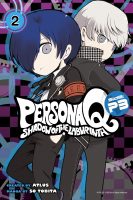
Persona Q: Shadow of the Labyrinth, Side: P3, Volume 2Persona Q: Shadow of the Labyrinth, Side: P3, Volume 2 by So Tobita. I haven’t actually played the Persona Q video game, but from what I hear from others, the manga adaptation remains true to its tone and main storyline. My knowledge of the original Persona Q, as well as my knowledge of Persona 3 and Persona 4 which directly tie into Persona Q, is admittedly cursory. Those who do not have at least some familiarity with the Persona franchise will be at a significant disadvantage when reading Persona Q, especially when it comes to understanding the characters and their personalities. Fortunately, I know enough to be able to appreciate the Persona Q for what it is—a fun and slightly silly adventure with puzzles, labyrinths, and cute artwork (much like the game itself, which I suspect I would greatly enjoy playing). The manga is very clearly an adaptation of an role-playing game as some of the side quests, boss fights, and other elements of gameplay remain quite evident, but the ways in which they are incorporated into the story are generally unobtrusive and make sense within the context of all that is going on.

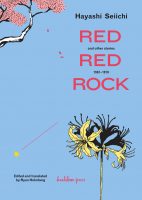
Red Red Rock and Other Stories, 1967-1970Red Red Rock and Other Stories, 1967-1970 by Seiichi Hayashi. As far as creators of alternative manga go, Hayashi is fairly well represented in English with several volumes of manga available in translation. The most recent is Red Red Rock and Other Stories, a collection of thirteen of Hayashi’s short avant-garde manga as well as an accompanying essay by the volume’s editor and manga historian Ryan Holmberg. Most of the stories come from the influential alternative manga magazine Garo, but two of the selections were actually created for the magazine A Woman’s Self. Out of all of Hayashi’s manga currently available in English, Red Red Rock and Other Stories is probably one of the least immediately accessible. While Hayashi’s imagery can be stunning and appreciated by all, some of the short manga in Red Red Rock and Other Stories will likely be nearly impenetrable for a casual reader. But that’s where Holmberg’s informative essay comes in handy, explaining some of the references and historical context needed to fully understand the collection. I enjoyed the manga in Red Red Rock and Other Stories, but I also appreciated being able to learn more about them.

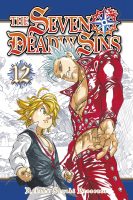
The Seven Deadly Sins, Volume 12The Seven Deadly Sins, Volumes 12-14 by Nakaba Suzuki. It’s been a while since I’ve read any of The Seven Deadly Sins, but I picked up the series again just in time for a major showdown. Granted, just about any of the fights that occur in The Seven Deadly Sins become epic battles simply because all of the combatants involved are so incredibly powerful. The action sequences are impressive, although sometimes it can be difficult to tell exactly what is going on. Some of the characters move so quickly only the results of their martial techniques are apparent. Occasionally Suzuki absolutely nails these sequences and they can be thrillingly effective, but just as often the action ends up being confusing. Suzuki also seems reluctant to actually kill anyone off which means the stakes don’t seem as high they should be. Well, except for the potential end of the world. At first it seems as though an apocalypse has been averted in these few volumes, but soon it become apparent it that it may have only been delayed. The Seven Deadly Sins still have plenty of fighting left to do, not only for the future of their world but also to overcome their past mistakes.

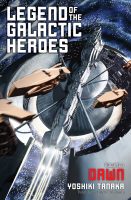
Legend of the Galactic Heroes, Volume 1: DawnLegend of the Galactic Heroes, Volume 1: Dawn by Yoshiki Tanaka. Thanks to Viz Media’s speculative fiction imprint Haikasoru, Tanaka’s award-winning Legend of the Galactic Heroes novels are finally getting an official English-language release. Although Dawn is largely a standalone novel, it feels even more like an extended prologue to the ten-volume work as a whole, providing an introduction to the setting and the war that is the focus of the series. Much of Dawn is devoted to two opposing factions, the Galactic Empire and the Free Planets Alliance, but there’s also the Phezzan Dominion, a third faction which ultimately isn’t as neutral as it first appears. While the cast of characters in Legend of the Galactic Heroes is fairly large, at this point the most is known about two rival strategists—the reluctant hero Yang Wen-li and the ambitious genius Reinhard von Lohengramm—and their closest cohorts. With strategists as some of the main characters, a fair amount of legitimate battle strategy is included in Dawn which I particularly liked. There’s also a significant amount of politics involved in the story and none of the factions come out of the first volume looking very good with their warmongering ways.

Filed Under: FEATURES, My Week in Manga Tagged With: Legend of the Galactic Heroes, manga, Nakaba Suzuki, Novels, Persona, Seiichi Hayashi, Seven Deadly Sins, Shin Megami Tensei, So Tobita, Yoshiki Tanaka

The Man in the High Castle

May 13, 2016 by Ash Brown

The Man in the High CastleAuthor: Philip K. Dick
Publisher: Houghton Mifflin Harcourt
ISBN: 9780544916081
Released: October 2016
Original release: 1962
Awards: Hugo Award

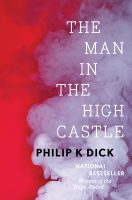
Philip K. Dick’s The Man in the High Castle is one of those classic science fiction novels that I’ve been meaning to read for ages but for one reason or another never quite got around to. Recently, though, the novel seems to be popping up wherever I turn: Viz Media’s speculative fiction imprint Haikasoru takes its name from the title; it was mentioned multiple times in the tenth volume of Mechademia which I read not too long ago; and in 2015 it was adapted as a live-action television series. Originally published in 1962, The Man in the High Castle can be counted as among the first major works of fiction written in English to examine an alternate history in which Germany and Japan emerged victorious from the Second World War, a historical turning point which has since become one of the most popular for the subgenre to explore. Winning the Hugo Award for best novel in 1963, The Man in the High Castle is also regarded as one of Dick’s most well-known and highly-acclaimed works. The novel has been re-published around the world numerous times with the most recent US edition scheduled to be released in 2016 by Houghton Mifflin Harcourt.

After being defeated, the United States of America was divided into three political entities at the end of World War II. The Pacific States of America is overseen by Japan and the Eastern United States is occupied by Germany while the central third of the country, the Rocky Mountain States, remains an independent buffer zone. Less than two decades have passed since the end of the war. Nazi Germany, having become a major power, continues to dominate and conquer the rest of the world and has even extended its reach to space. However, internal power struggles threaten to throw the precariously-balanced international political landscape into war and turmoil once again. In the meantime, Americans have had to either learn to adapt to their occupiers’ whims or to flee their homeland. The Japanese rule is fairly benign, especially when compared to that of the Germans, but it is still grating and demeaning for the Americans who are slowly losing their national identity along with the freedoms and respect that they once enjoyed in the past.

The alternate history that Dick envisions in The Man in the High Castle is honestly terrifying and horrifying. Under the global influence of a fascist, totalitarian regime, extreme racism and prejudice is rampant and genocide isn’t a thing of the past but of the present and future. People live in a world in which insidious fear, hatred, anger, and uncertainty have come to dominate. The Man in the High Castle follows several different and fairly ordinary characters from a variety of backgrounds who are all ultimately connected to one another, either directly or tangentially: an antiques dealer making his living selling Americana to Japanese clients, an American craftsman and jewelry maker who must hide his Jewish identity and heritage, a Japanese trade official stationed in what was once California, an American woman who teaches judo in the Rocky Mountain States, and a Nazi defector trying to prevent impending atrocities from becoming a reality. By the end of the novel, both together and separately, they have all taken a stand against the status quo and have made a difference, however small, in the world around them.

In addition to being a work of alternate history itself, there is a novel within The Man in the High Castle—The Grasshopper Lies Heavy—which explores yet another potential reality. That novel plays a pivotal role as does the Chinese classic the I Ching which many of the characters consult as an oracle or use to make major decisions and which Dick himself used to guide the story and plot of The Man in the High Castle. The writing style of The Man in the High Castle did take some time for me to get used to. Much of the novel consists of the characters’ internal monologues and thought processes, resulting in a work that frequently feels like fragmented stream-of-consciousness. Parts of the novel are also written in deliberately stilted English which, while clever and effective (and while I can understand and appreciate Dick’s intentions), doesn’t necessarily always make for the most pleasant reading experience. However, the underlying ideas and themes behind The Man in the High Castle are tremendous. Ultimately, The Man in the High Castle is a fascinating and chilling read, and a novel that is remarkably relevant and thought-provoking even today.

Filed Under: REVIEWS Tagged With: Hugo Award, Novels, Philip K. Dick

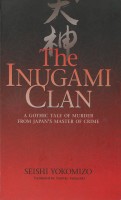
The Inugami Clan

April 21, 2016 by Ash Brown

The Inugami ClanAuthor: Seishi Yokomizo
Translator: Yumiko Yamazaki
U.S. publisher: ICG Muse
ISBN: 9784925080767
Released: July 2003
Original release: 1951

The Inugami Clan is one of Seishi Yokomizo’s most well-known works and is currently the only novel by the popular and prolific author of mystery and detective fiction to have been translated into English. Yokomizo completed The Inugami Clan in 1951. Yumiko Yamazaki’s English translation was published twice—first by ICG Muse 2003 and then again by Stone Bridge Press in 2007—but sadly both editions have since gone out of print. The Inugami Clan is one of many stories by Yokomizo which features the eccentric private investigator Kosuke Kindaichi, perhaps the author’s most notable, popular, and memorable character. (It’s interesting to note that the manga series Kindaichi Case Files is in part inspired by Yokomizo’s detective Kindaichi.) Like a number of Yokomizo’s other works, The Inugami Clan served as the basis for a live-action adaptation—director Kon Ichikawa’s award-winning film The Inugamis was released in 1976 and then remade again in 2006.

Sahei Inugami began his life as a poor and homeless orphan. He drifted from place to place until, at the age of seventeen, he was taken in by Daini Nonomiya, a Shinto priest at a shrine near Lake Nasu, and his wife. But by the end of his life, Sahei had become a wealthy and respected businessman, as well as the head of a dysfunctional family with very little love lost among its members. Sahei died in the mid-1940s, leaving behind a last will and testament that triggered a series of ghastly murders. One after another, people closely associated with Sahei began dying and the number of his potential heirs dwindled. Because of the strange and stained circumstances surrounding Sahei’s demise a private detective, Kosuke Kindaichi, was called to Nasu to investigate. However, his presence does little to stop the unfolding calamity until he delves more deeply into the closely kept secrets and hidden pasts of Sahei and the rest of the Inugamis.

I found The Inugami Clan to be an extraordinarily satisfying mystery. From the very beginning of the novel, Yokomizo provides the hints and clues needed to solve case, giving readers the opportunity to come to their own conclusions should they choose. There are many surprises as the story twists and turns, but everything falls beautifully into place by the end in a way that, although unexpected and arguably unbelievable, feels natural rather than forced. The already troubled relationships among the various members of the Inugami family along with the execution of Sahei’s peculiar will present numerous scenarios in which any one of the Inugamis could have a convincing motive to carry out the murders as well as the opportunity to act upon their ill intentions. Coincidences and deliberate actions come together to form a deadly situation where very few of the Inugamis can claim to be completely innocent. And so it is left to Kindaichi, and by proxy the reader, to piece together the facts and untangle an elaborate knot of passion, loyalty, and betrayal in order to deduce the culprit’s identity.

The Inugami Clan works so well as a novel and as a mystery because of Yokomizo’s close attention to the intricacies and complexities of human and familial relationships—people don’t always behave logically or act rationally when the lives and happiness of the ones who they love are at stake. As Kindaichi investigates the Inugami family and the murders it is revealed that everything that has happened can ultimately be traced back to the homosexual relationship rumored to have existed between Sahei and Daini; their closeness and intimacy has grave, unintended consequences decades later. A subtle thread of eroticism pervades The Inugami Clan, love and sexuality being a key part of the plot without necessarily being obvious. That combined with the dramatic scandals and dysfunction of the Inugamis as well as the bizarre and grotesque nature of the murders makes The Ingumai Clan both thrilling and engaging if at times somewhat outrageous. However, the novel’s popularity is completely understandable; I only wish that more of Yokomizo’s work would be translated.

Filed Under: REVIEWS Tagged With: Kosuke Kindaichi, Novels, Seishi Yokomizo

Random Musings: Notable in 2015

December 25, 2015 by Ash Brown

For the last couple of years, I have made a point to compile an end-of-year list of works that, for me, were particularly notable. In general I tend to like making lists, but I particularly enjoy working on this one because it specifically provides me the opportunity to reflect back on the year. The notable list isn’t exactly a “best of” list or even a list of favorites. To be included, a work must simply have been released in 2015, read in 2015, and stood out to me in one way or another. (That being said, I didn’t get to read as much this past year as I have in previous years. I’m sure that, had I had the chance to read them, there would be other works represented here, too.)

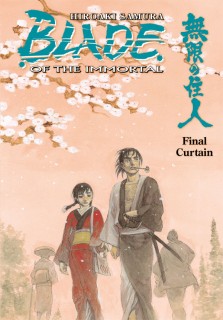
Blade of the Immortal, Volume 31: Final Curtain2015 was a year in which many series came to an end. Final Curtain, the last volume in the English-language edition of Hiroaki Samura’s Blade of the Immortal, was especially meaningful to me since the series was one of the first manga that I ever read and continues to be a personal favorite. Dark Horse began releasing the series in individual issues back in 1996; nearly two decades later it is now available in its entirety. All in all, it was a great ending to a great series.

The Summit of the Gods, Volume 5Another series that concluded in English in 2015 was The Summit of the Gods, written by Baku Yumemakura and illustrated by Jiro Taniguchi. Fanfare/Ponent Mon is one of the smaller, more niche manga and comics publishers and has infrequent releases. Multiple years passed between the publication of some of the volumes in the series, so I was honestly afraid I’d never have the opportunity to read the conclusion of such an impressively drawn and written manga.

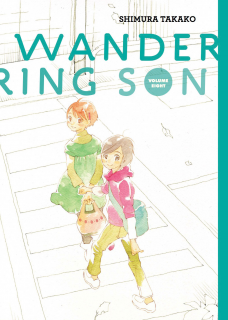
Wandering Son, Volume 8 2015 also saw what may be the premature end to a few manga in English. Tragically, for a variety of reasons, Fantagraphic’s release of Takako Shimura’s Wandering Son hasn’t been doing well and the publisher might have to cancel the series if sales don’t improve. Only a single volume, with one heck of a cliffhanger, was able to be released in 2015. The series is incredibly important to me on a very personal level—it was literally life-changing—so I’ll heartbroken if this is truly the end.

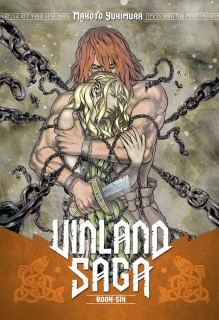
Vinland Saga, Omnibus 6Makoto Yukimura’s Vinland Saga is another series that might come to a close before its time in English. After a temporary hiatus, the sixth and seventh omnibuses, the last that are guaranteed to be published, were released in 2015. Even if the rest of the series isn’t translated (and I hope that it is), the first two major story arcs are complete and the manga is well-worth seeking out. The character development in the series is fantastic, the artwork is excellent, and the story is marvelous.

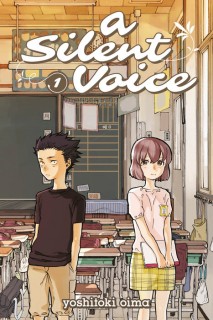
A Silent Voice, Volume 1One of the manga to debut in 2015 that stood out to me the most was A Silent Voice by Yoshitoki Oima. A realistic portrayal of bullying and the consequences of such cruelty, the series can be a difficult but ultimately worthwhile read. The subject matter is heartwrenching but handled extremely well, skillfully showing the nuanced complexity of human nature and relationships while exploring themes of forgiveness, empathy, and redemption.

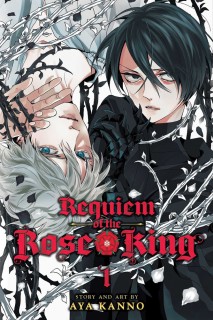
Requiem of the Rose King, Volume 1Aya Kanno’s Requiem of the Rose King was one of my most anticipated manga series to be released in 2015. A combination of historical fact and historical fantasy inspired by the plays of William Shakespeare, Kanno’s research into the Wars of the Roses, and her own imagination, the manga hasn’t yet disappointed me and gets better with each volume. The storytelling can be somewhat cryptic and chaotic at times, but its dark, dreamlike nature can also be wonderfully effective.

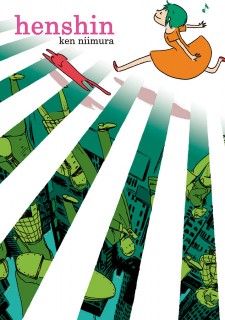
HenshinKen Niimura is an award-winning Spanish comics creator of Japanese heritage who has worked in the European, North American, and Asian markets. Henshin is a delightfully quirky collection of thirteen short manga originally released online by Ikki, making it Niimura’s first major Japanese publication. While the stories range from semi-autobiographical to the absolute fantastic, they all tend to have surprising twists to them with great emotional impact.

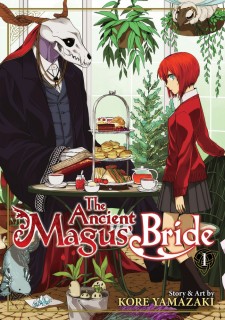
The Ancient Magus' Bride, Volume 1Seven Seas has recently shown a remarkable increase in the number and variety of titles it has licensed. Kore Yamazaki’s The Ancient Magus’ Bride is perhaps one of Seven Sea’s more atypical series, but it seems to be doing well for itself. I’m glad, because I enjoy the manga and its strangeness immensely. A peculiar romance incorporating horror and fantasy, magic and science, the series is heavily influenced by European legends, fairy tales, and folklore.

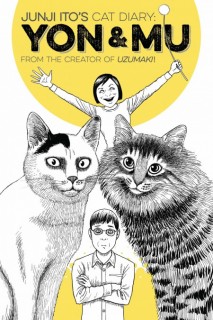
Junji Ito's Cat Diary: Yon & MuJunji Ito had a pretty good showing in English in 2015 with several new releases and re-releases. Of those, it was Junji Ito’s Cat Diary: Yon & Mu that made the strongest impression on me. (I admittedly find it difficult to resist cat comics.) The manga is drawn in Ito’s signature style but is undoubtedly a comedy, granted one about the horrors and anxieties of pet ownership. The disconnect between the artwork and the story makes it even funnier.

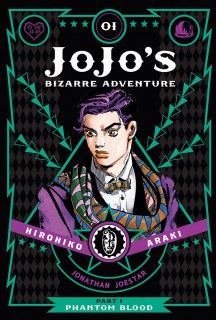
JoJo's Bizarre Adventure, Part 1: Phantom Blood, Volume 1I never expected to see the beginning of Hirohiko Araki’s exceptionally weird yet iconic manga series JoJo’s Bizarre Adventure released in English. The third story arc was published years ago but only garnered a relatively small following. Thankfully, the manga’s recent anime adaptation revitalized interest in the series, leading Viz Media to release the first two arcs of the epic—Phantom Blood and Battle Tendency—and in a beautiful hardcover edition no less.

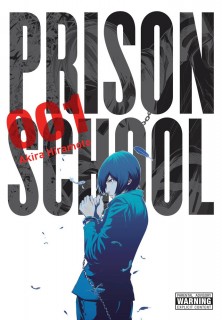
Prison School, Omnibus 1Probably one of the most divisive debuts of 2015 was Prison School by Akira Hiramoto, but Yen Press had the guts to license it. With its highly sexualized content, over-the-top fanservice verging on the grotesque, and preponderance despicable characters, it’s definitely not a series for everyone. The manga revels in its salaciousness to the point of parody, making it a strangely engrossing and humorous work for readers who aren’t immediately offended by it.

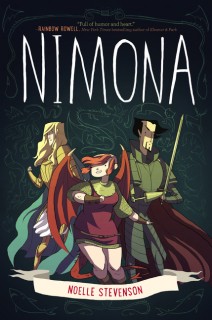
NimonaNimona had its beginnings as an award-winning webcomic, ultimately becoming Noelle Stevenson’s debut graphic novel; the print edition also includes additional material not found online. I absolutely loved this comic. It starts out rather lighthearted, but as the graphic novel progresses it becomes more serious. However, it never loses its sense of humor. Stevenson combines colorful characters, settings, and artwork to create a comic that is both entertaining and meaningful.

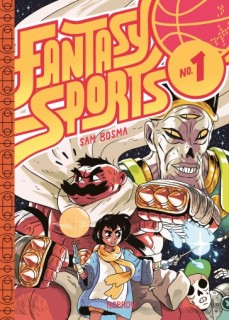
Fantasy Sports, Volume 1Sometimes all I want from a comic is something fun, and Fantasy Sports by Sam Bosma is certainly that and then some. The comic started as a short, self-published, black-and-white work but it has been expanded into an ongoing, full-color series being released by Nobrow Press. The marvelous first volume, featuring a life-and-death game of basketball between an ancient mummy and a young magic user interning at the United Order of Mages, is filled with silliness and adventure.

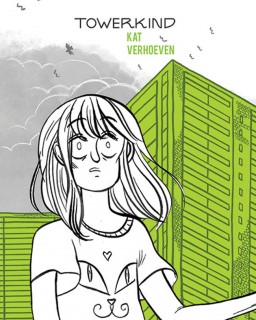
TowerkindAlso originally self-published, Towerkind by Kat Verhoeven was a comic that I came across by chance more than anything else; I picked up the book on an impulse after seeing it at the Toronto Comic Arts Festival and finding myself oddly drawn towards it. The comic is surreal, about a group of children with supernatural abilities who may or may not be facing the end of the world. It’s both a strangely compelling and darkly ominous work.

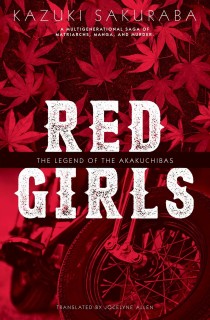
Red Girls: The Legend of the AkakuchibasOut of all of the novels released in 2015 that I read, Red Girls: The Legend of the Akakuchibas by Kazuki Sakuraba was perhaps the most curious, peculiar, and enthralling. A multi-generational family epic, the story follows the lives and legends of three women, each powerful in their own way. (One of them even becomes a successful mangaka after retiring from being the leader of a girl gang.) Part history, part mystery, and part fantasy, I enjoyed the novel a great deal.

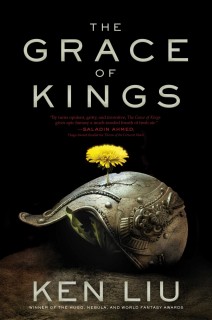
The Grace of KingsKen Liu is probably best known for his short fiction, but in 2015 he made his debut as a novelist with The Grace of Kings, the first book in The Dandelion Dynasty which is a sort of retelling or reimagining of China’s historical legends and mythologies. The novel is a massive and expansive work with incredible worldbuilding. Though contemporary fantasy fiction, stylistically Liu also pays tribute to the narrative structure of the Chinese classics and not just their stories.

Filed Under: FEATURES Tagged With: comics, manga, Novels

Dead Endings

December 23, 2015 by Ash Brown

Dead EndingsAuthor: Jessica Chavez
Illustrator: Irene Flores

Publisher: Chromatic Press
ISBN: 9780993861154
Released: November 2015
Original run: 2013-2014

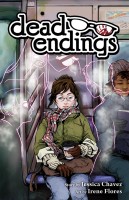
Jessica Chavez, a former localizer and editor for XSEED Games, has more recently turned to writing novels. Dead Endings, illustrated by Irene Flores, became her first published work. The novel was also among the first to be serialized in Sparkler Monthly, the online multimedia magazine from Chromatic Press. Sparkler Monthly‘s line of prose is influenced by the Japanese light novel format, aiming to provide engaging and easily accessible works of fiction with interesting characters and stories. I wasn’t previously aware of Chavez’s work before reading Dead Endings and I only vaguely recognized Flores’ name as an illustrator, but I was still very interested in reading the novel if for no other reason than it was released by Chromatic Press. Dead Endings was originally serialized between December 2013 and August 2014. The novel was collected and released in print in 2015 along with two additional side stories, “The Art… of LOVE” and “Rare Parrot Watching and Other Recommended Activities,” a bonus art gallery, and the short comic “Pancakes and Sex” illustrated by Crystal Jayme.

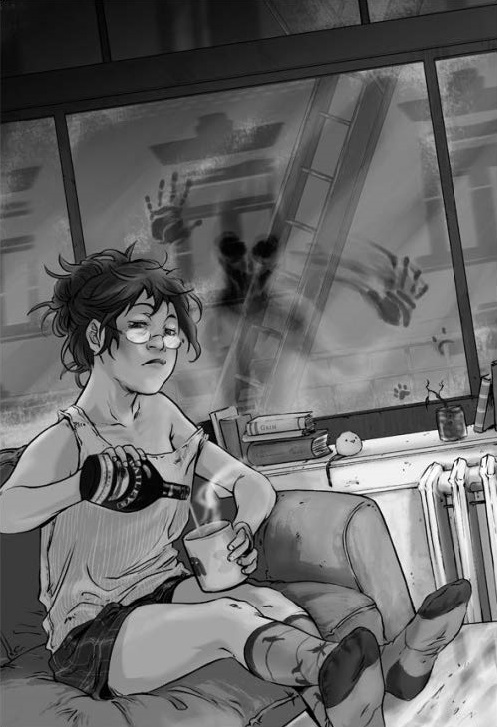
After nearly drowning off the coast of Miami, New Yorker and graduate student Cailen Delaney gained an especially unwelcome ability—she can now see ghosts. Not only that, they seem to be particularly drawn to her. So, when she’s not commuting to or from school or taking advantage of the fact that her roommate Gabriella is a part-time exorcist, Cailen doesn’t necessarily get out very often; she much prefers the company of a strong drink, whether it be coffee or booze, in the comfort of her ghost-free home. Enter Everett Jung, a young journalist-in-training who has his own peculiar way of sensing ghosts. He arrives at Cailen’s apartment looking for some assistance from Gabrielle as he investigates a series of murders that seem to be supernaturally linked. Gabrielle, however, is currently out of the country and so he settles on the reluctant Cailen instead. With enough persistence, Everett eventually convinces Cailen to help, but the case turns out to be much more dangerous than any of them expected.

Dead Endings, page 1Supernatural talents aside, I found the characters in Dead Endings to be very relatable, especially Cailen. She’s vaguely cranky and cynical, snark and sarcasm being some of her favored modes of communication. As the main protagonist of the novel, her personality carries over into Chavez’s style of writing in Dead Endings, resulting in a casual-feeling narrative which doesn’t shy away from frankness or the use of strong language. Although underneath it all is a vein of horror, Dead Endings also has plenty of humor. Chavez strikes an excellent balance between the two—the novel manages to be both fun and frightening, either in turn or simultaneously. Dead Endings, in addition to being a darkly humorous supernatural thriller, is also a satisfying mystery. While Cailen, Everett, and Gabrielle are particularly interested in the stranger spiritual aspects of the case, essentially they are involved in solving a murder investigation.

Ultimately, Dead Endings is a near-perfect mix of horror, mystery, and humor with well-realized characters and an engaging story. While the additional stories included in the volume add more depth to the cast, generally in a more lighthearted fashion, Cailen is the most fully-developed individual in the novel proper. I loved seeing her character arc unfold. She starts out as someone who miserably puts up with the consequences of her abilities, but by the end she has wrested control of her own life back. However, getting to that point takes effort on Cailen’s part, instinctual self-preservation, and a deliberate decision to not fall victim to the frequently perilous circumstances she finds herself in. Dead Endings can be honestly chilling—supernatural encounters and ghostly possessions are threatening and the living can be just as menacing as the dead—but the novel never becomes overwhelming dark or grim. I enjoyed Dead Endings immensely and am looking forward to its sequel a great deal.

Filed Under: REVIEWS Tagged With: Chromatic Press, Dead Endings, Irene Flores, Jessica Chavez, Light Novels, Novels

The Tokyo Zodiac Murders

December 10, 2015 by Ash Brown

The Tokyo Zodiac MurdersAuthor: Soji Shimada
Translator: Ross and Shika Mackenzie
U.K. publisher: Pushkin Press
ISBN: 9781782271383
Released: September 2015
Original release: 1981

The British-based publisher Pushkin Press launched Vertigo, a new imprint devoted to classic crime and mystery fiction from around the world, in 2015. One of the six works selected for Vertigo’s debut was Soji Shimada’s first novel The Tokyo Zodiac Murders. Originally published in Japan in 1981, the novel would become the first book in a series of mysteries featuring Kiyoshi Mitarai. Shimada is an extremely prolific author particularly known for fostering the revitalization of honkaku fiction, a subgenre of Japanese mysteries that I was introduced to through The Decagon House Murders by Yukito Ayatsuji, who Shimada mentored. Currently, The Tokyo Zodiac Murders is the only major work by Shimada available in English although a few of his short stories have been translated as well. The Tokyo Zodiac Murders, translated by Ross and Shika Mackenzie, was first released in English in 2004 by IBC Publishing, but that edition has since gone out-of-print. I was very glad to see Vertigo bring the novel back.

In 1936, a set of grisly murders took place in Japan which came to be known as the Tokyo Zodiac Murders. Seven women, sisters and cousins, were found dead, their bodies cut into pieces and buried in remote locations across the country. A letter describing exactly how the women would be killed and dismembered would have made Heikichi Umezawa, their father and uncle, the primary suspect except that he himself had already met an untimely demise behind locked doors. Although over time many popular theories were proposed, the murders of Umezawa and the seven women remained unsolved for more than forty years. In 1979, new evidence came to light which inspired amateur detectives Kazumi Ishioka, a mystery enthusiast, and his close friend Kiyoshi Mitarai, a professional astrologer, to take up the case. Their investigation led them in many different directions as they searched for additional clues, but finally, more than four decades later, the murders are solved.

While there are some wonderful character moments in The Tokyo Zodiac Murders, especially between Mitarai and Ishioka—who is the one actually narrating the tale—the novel is much more focused on the details of the crimes and the related investigations than it is on nuanced characterization. Over the course of The Tokyo Zodiac Murders, Shimada outlines all of the clues needed for the novel’s readers to solve the mystery themselves—they are given the same information that Mitarai and Ishioka have available to work with. In fact, Shimada briefly interrupts the narrative not once but twice, directly addressing and challenging readers to solve the case before Ishioka reveals the solution in the final few chapters. Granted, in addition to crucial hints, Shimada has also included plenty of red herrings to lead readers astray if they are not careful. The Tokyo Zodiac Murders presents a devious intellectual challenge, but it is solvable.

Although the cleverness of The Tokyo Zodiac Murders can be appreciated in its own right, much of my enjoyment of the novel came from directly engaging with the mystery. Readers can simply follow along as Ishioka and Mitarai conduct their investigations, waiting for everything to be disclosed, or they can take up Shimada’s challenge to try to uncover the solution on their own. First, the known facts about the murders are recounted by Ishioka in a fairly straightforward if enthusiastic manner. He then reveals how he and more specifically Mitarai became personally involved with the case, showing how their efforts ultimately led to the closing of a decades-old crime. The Tokyo Zodiac Murders is gruesome and shocking, but it’s also engrossing and introduces a likeable and somewhat eccentric investigator in Mitarai. Although The Tokyo Zodiac Murders was Shimada’s debut work, it is still considered by him and by others to be one of his best and I can understand why.

Filed Under: REVIEWS Tagged With: Detective Mitarai, Novels, Soji Shimada

Attack on Titan: Kuklo Unbound

November 27, 2015 by Ash Brown

Attack on Titan: Kuklo UnboundAuthor: Ryo Suzukaze
Illustrator: Thores Shibamoto

Translator: Ko Ransom
U.S. publisher: Vertical
ISBN: 9781939130877
Released: May 2015
Original release: 2012

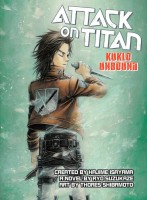
Between 2011 and 2012, three light novels written by Ryo Suzukaze and illustrated by Thores Shibamoto were released in Japan, forming a prequel trilogy to Hajime Isayama’s massively popular manga series Attack on Titan. All three novels were translated into English by Ko Ransom and published by Vertical. The first novel was released as Attack on Titan: Before the Fall, which is the title that the entire trilogy is known by in Japan. The second and third novels, originally published in 2012, were released together in English as an omnibus in 2015 called Attack on Titan: Kuklo Unbound. The manga series Attack on Titan: Before the Fall adapts the same story found in Kuklo Unbound. I’ve been reading the Before the Fall manga and I enjoyed the first Before the Fall novel well enough, so I was interested in reading Kuklo Unbound as well.

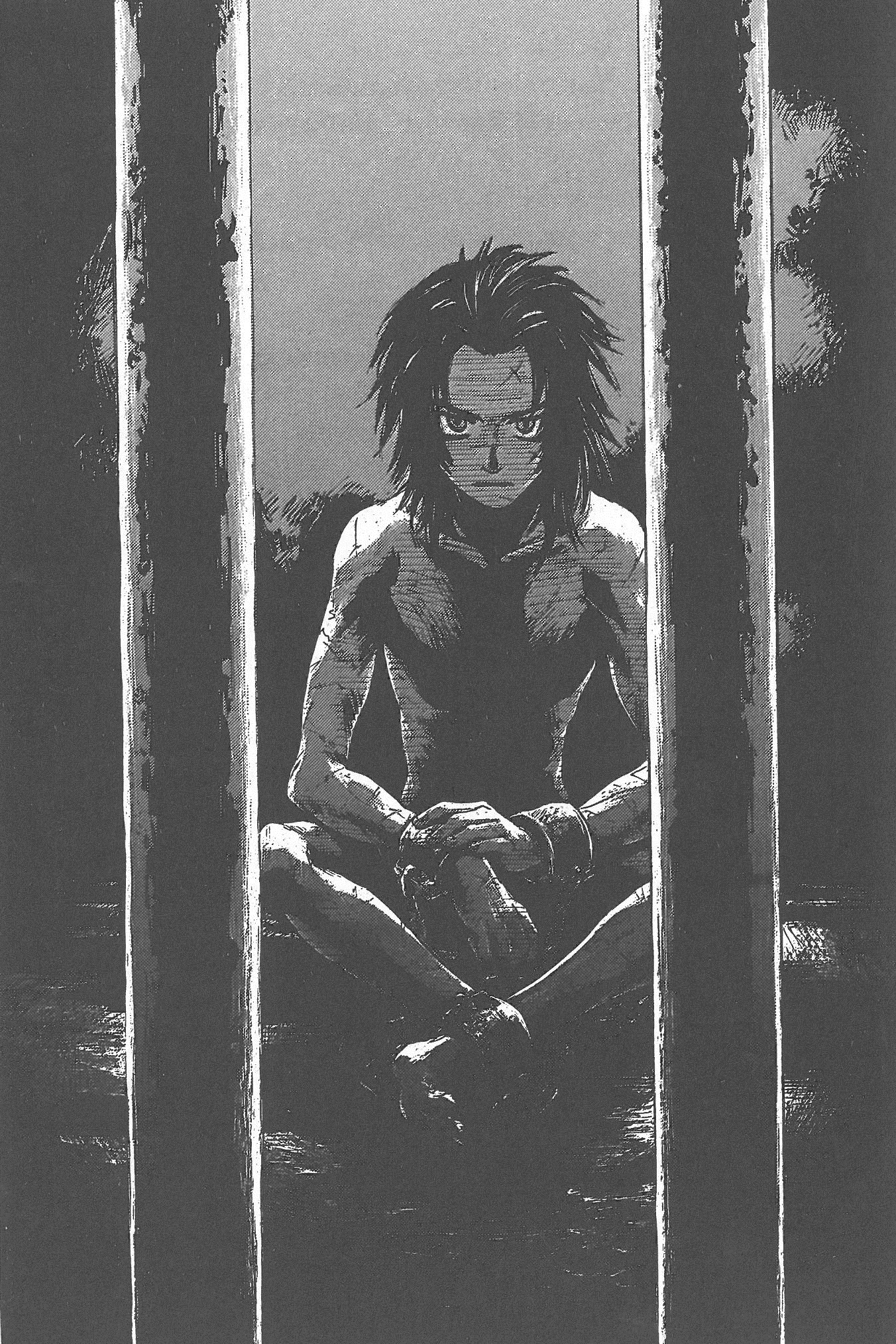
Roaming the earth in search of humans to feast upon are the Titans–giant, monstrous creatures of mysterious origins which nobody completely understands. In order to protect itself, humanity literally walled itself off from the outside world. The Titans are nearly invincible and very few people manage to live through a direct encounter with them, but Kuklo is one such survivor. Swallowed whole by a Titan while still in his mother’s womb, against all odds Kuklo was somehow saved. However, he has never been able to completely rid himself of the stigma of being born the “son” of a Titan. Feared and hated during a time when very few people have actually even seen a Titan, Kuklo is an orphan who is abused, held captive, and treated as a sideshow oddity. As he grows older he desires nothing more than to escape his cruel fate and to prove to himself and others that he is indeed human. And though his birth was ill-omened, Kuklo may in fact be the key needed to unlock humanity’s full potential in the fight against the Titans.

Attack on Titan: Kuklo Unbound, page 52Since I have been reading the ongoing Before the Fall manga series, I was already familiar with a fair amount of the story of Kuklo Unbound and wasn’t especially surprised by any of the developments. I do think that out of the two versions the original novels are the stronger, though. The manga doesn’t always capture the internal thoughts and feelings of the characters very well, and that perspective is very important to understanding Kuklo Unbound. I feel that Kuklo Unbound is better written than the first Before the Fall novel, too, or at least it was overall more enjoyable to read. Parts of Kuklo Unbound did feel very repetitive–there was a tendency to restate obvious and well-established plot points and even use the exact same descriptions over and over again–but for the most part the pace of the narrative is quick enough that the redundancy wasn’t too frustrating. As a whole, many of the characters in Kuklo Unbound seemed to be slightly better-developed and less reliant on worn tropes when compared to those of Before the Fall, too.

Kuklo Unbound works well as an omnibus, telling Kuklo’s entire story, but the two novels contained are distinct in their focus. In the first novel, Kuklo is the undisputed star. In the second novel attention is still primarily turned towards Kuklo, but by that point in the trilogy the story is really about the Vertical Maneuvering Equipment, the most recognizable technological innovation to be found in Attack on Titan. The predecessor of the Vertical Maneuvering Equipment was created in the Before the Fall novel, so this ties the prequel together quite nicely. While being different from most other Attack on Titan stories, the prequel trilogy also feels familiar, incorporating the types of scenes that have been seen before, including deadly battles with Titans, political intrigue and religious turmoil, and intense military training sequences. What makes Before the Fall and Kuklo Unbound particularly interesting is that they serve as an origin story, showing not only the development and implementation of the Vertical Maneuvering Equipment, but also the beginnings of the Survey Corps when it was still celebrated instead of despised.

Filed Under: REVIEWS Tagged With: attack on titan, Light Novels, Novels, Ryo Suzukaze, Thores Shibamoto, vertical

Another

October 21, 2015 by Ash Brown

AnotherAuthor: Yukito Ayatsuji
Translator: Karen McGillicuddy
U.S. publisher: Yen Press
ISBN: 9780316339100
Released: October 2014
Original release: 2009

Another is a horror mystery novel written by Yukito Ayatsuji which was originally serialized in Japan between 2006 and 2009 before being collected into a single volume later that year. The novel was then released again in 2011 in two separate volumes. It is that edition upon which the English translation by Karen McGillicuddy is based. Another was initially released digitally in English by Yen Press in two volumes in 2103, but in 2014 it was published as a single-volume hardcover under the newly established Yen On light novel imprint. In addition to being Ayatsuji’s first novel to be translated into English, Another is probably his most widely-known work, especially outside of Japan. This is in part due to the fact that Another was adapted as a manga series and as an anime series, both of which have been licensed in English, as well as a live-action film. Although I’ve known about Another for a while, it actually wasn’t until I read Ayatsuji’s debut novel The Decagon House Murders that I was inspired to pick it up.

Yomiyama North Middle School’s third-year Class 3 is cursed. For some strange reason, the students of that class and their immediate families seem to be more susceptible to dying. Some years pass by without any casualties while other years see multiple deaths every month. The curse is said to be tied to an incident which occurred twenty-six years ago. A popular student named Misaki died, but the entire class was in such denial that Misaki’s spirit manifested. Now more than two decades later, Misaki’s story has been embellished and retold so many times that it’s difficult to tell how much of it is rumor and urban legend and how much is really true. Koichi Sakakibara recently transferred into Class 3 and isn’t sure what to believe and nobody is being particularly forthcoming about the situation. The curse could just simply be a ghost story, but his classmates and teachers are honestly frightened of something. And soon after Koichi’s arrival, a new series of deaths begin.

Another is a marvelous combination of mystery and horror. The first half of the novel explores the “what” and “why” of the increasingly odd situation while the second reveals the “how” and “who.” As a transfer student, Koichi is an outsider. He isn’t as knowledgeable as the other people involved, and they are reluctant to share information with him, so Koichi is largely left to investigate on his own. Eventually he gains some dubious allies, the most important being a young woman named Mei Misaki who may or may not actually exist. Ayatsuji excels at creating a constant air of uncertainty in Another—he introduces just enough creepiness and doubt that readers, like Koichi, are left questioning everything. While logical analysis is a valid option, the weirdness of the situation and the possibility of supernatural interference makes the more mundane, straightforward answers feel suspect. Additionally, Koichi himself is shown to be a somewhat unreliable narrator, and it’s his perspective of the unfolding events that drives Another.

Ayatsuji is particularly well-known for his inventive stories with dramatic twists. Another definitely falls into that category, the plot taking multiple clever and surprising turns over the course of the novel. However, without spoiling things, there was one major reveal towards the end that left me feeling cheated, especially when most of the other developments were so engaging. Retrospectively, the reveal does fit into the overall narrative, and there were some clues hinting at it scattered throughout the novel, but it isn’t foreshadowed as well as it could have been. As a result, I found it to be very unsatisfying. The revelation is shocking and certainly leaves an impact, but I think that had the information been shared earlier in the novel it could have been used even more effectively. Despite this one notable complaint, I actually quite enjoyed Another. The mystery was intriguing, the horror was disconcerting, and blended together they formed a chilling novel that was highly readable and kept me eagerly turning the pages.

Filed Under: REVIEWS Tagged With: Another, Novels, Yen On, yen press, Yukito Ayatsuji

Genocidal Organ

October 9, 2015 by Ash Brown

Genocidal OrganAuthor: Project Itoh
Translator: Edwin Hawkes
U.S. Publisher: Viz Media
ISBN: 9781421542720
Released: August 2012
Original release: 2007

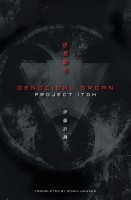
Although Genocidal Organ was the third novel by Project Itoh to be translated and released in English, in Japan the book was actually his debut work as an author. My introduction to Itoh’s fiction was through the award-winning Harmony, his first novel to be translated into English, which I greatly enjoyed and found to be an intelligent, thought-provoking work of science fiction. I was also greatly impressed by his two short stories: “The Indifference Engine,” collected in The Future is Japanese, and “From Nothing, With Love,” found in Phantasm Japan. Thus, reading Genocidal Organ, released by Viz Media’s Haikasoru imprint in 2012 with a translation by Edwin Hawkes, was an obvious choice for me. The publication of Genocidal Organ in Japan in 2007 established Itoh as a talented author to watch out for. Sadly, he died two years later at the age of thirty-four from cancer. But Itoh and his work haven’t been forgotten. In 2014 it was announced that three of his novels, including Genocidal Organ, were to be adapted as feature-length animated films.

Ever since the attack on the World Trade Center on September 11, 2001, American citizens have more or less willingly given up their privacy and freedoms in order to feel safer from perceived terrorist threats. Much of the world has followed suit and there are very few places left where a person isn’t closely monitored and recorded, the immense amounts of data and metadata collected being saved indefinitely, waiting to be complied at a moments notice. In order to maintain this life of extreme hyper-surveillance there are people who must deal in death. Clavis Shepherd is one such man, an assassin who is a part of the Special Operations of the United States Military. He has killed countless people in service of his country—men, women, even children—but his recent missions have all had one target in common, an American linguist by the name of John Paul. Time and again the man seems to manage to slip away just before Shepherd’s unit arrives, leaving behind one developing country after another devastated by civil war and genocide.

Genocidal Organ is a novel that is absolutely saturated with death. It’s something that Clavis cannot escape in either his personal or professional life, whether he’s asleep or awake. Killing other people is his job and aided by modern science and medicine he is largely able to accept that, but his work is still tremendously damaging psychologically. But it’s not until Clavis had to make the decision whether or not to remove his mother from life support after she was in an accident that mortality really became personal to him. From there, his mental stability begins to steadily unravel as he is haunted by all of the death that he has seen and the death for which he has been responsible. Genocidal Organ can be horrific and tragic, gruesome and visceral. Clavis has been both a participant in and a witness to some truly terrible things—war and genocide that lay waste to entire countries and populations and all that accompanies that devastation. And, as an assassin for the government, he knows that he’s not an innocent bystander in how events unfold.

First and foremost, Genocidal Organ is Shepherd’s own personal narrative as he struggles to come to terms with his role as an assassin, but his story is couched in a much larger one dealing with global policy and international politics. Itoh has successfully incorporated many different genre styles in order to create a compelling and cohesive novel. In addition to all of the action and espionage, there are also the mysteries surrounding Paul as the “King of Genocide,” and an exceptionally strong philosophical and intellectual bent to the story as Genocidal Organ examines the worth of life and cost of freedom. Itoh presents an incredibly insightful perspective of the Untied States as a world power. Although it is perhaps more critical and frank than most American authors would likely attempt, the perspective is one that still feels surprisingly authentic. (It’s also very clear that Itoh was particularly well-versed in Western literature and popular culture.) Ultimately, though at times heavy-handed, Genocidal Organ is a fascinating and engaging novel of the near future; I remain convinced that Itoh was an author of exceptional talent.

Filed Under: REVIEWS Tagged With: Haikasoru, Novels, Project Itoh, viz media

The Dandelion Dynasty, Book 1: The Grace of Kings

September 23, 2015 by Ash Brown

The Grace of KingsAuthor: Ken Liu
Publisher: Simon & Schuster
ISBN: 9781481424271
Released: April 2015

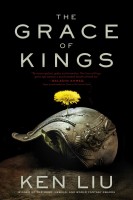
Ken Liu is a multi-award-winning author and translator (in addition to being a lawyer and software programmer), probably best known for his short fiction. I was aware of Liu’s work for quite some time before I actually read any of it. His award-winning short story “Mono no Aware”—one of my favorite contributions in the anthology The Future Is Japanese—was my introduction to his fiction and Liu quickly became an author who I made a point to follow. And so I was very interested to learn about his debut novel The Grace of Kings. Published in 2015 by Simon & Schuster’s new speculative fiction imprint Saga Press, the novel is the first of three books planned for Liu’s series The Dandelion Dynasty. Often described as a silkpunk fantasy epic, the novels are heavily inspired by Chinese history and the historical legends surrounding the Han dynasty, such as the extremely influential Romance of the Three Kingdoms.

The islands of Dara were once made up of seven independent kingdoms which were constantly at war with one another. Generations passed before one of the kings was finally able to conquer the others, for the first time uniting the lands to form a single empire. The newly-coronated emperor intended to establish a lasting peace among the lands of Dara, but power has a way of corrupting its wielder and his vision was ultimately overshadowed by his ruthlessness. There were great undertakings made for the good of the empire, but there was also great suffering. As the emperor ages and approaches the end of his life, the stirrings of rebellion begin. Two very different men will be caught up in the resulting wars, becoming leaders in the conflicts as the empire disintegrates: Kuni Garu, a seemingly carefree, small-time gangster, and Mata Zyndu, the last in a long line of legendary warriors and generals. Whether through fate, luck, or the will of the gods, together the two of them are destined to help shape and reshape Dara as it enters into a new era.

Over the course of The Grace of Kings, Kuni Garu and Mata Zyndu emerge as two of the most pivotal characters in the unfolding epic, but they are really only a small part of a much greater whole. Much like the historical legends that influence the novel, there are dozens upon dozens of named characters who play a significant role and whose actions, even those that seem inconsequential, will have a tremendous impact on the way events develop. Liu has established a complex world filled with differing cultures and traditions which are in conflict with one another. Government administration, politics, economics, commerce, social structures, history, religion, mythology, geography, agriculture, philosophy, education, innovation, technology and so much more have all been taken into consideration in the creation of The Dandelion Dynasty. And none of it exists in a vacuum. The interplay and intricate connections among all of these different aspects of Dara has been captured remarkably well; a simple change in one that may initially appear to be insignificant can trigger a chain reaction which has unexpected and far-reaching ramifications in the others.

The Grace of Kings recounts over two decades of Dara’s history and legends, following the people involved in the wars resulting from the collapse of the empire and the attempts made to establish a new order among the chaos. The story is told in short chapters, many of which at first don’t seem to be directly related, but they slowly build upon each other as more and more connections form. The Grace of Kings becomes increasingly complex as it progresses but the novel is still easy to read and follow, showing how the actions of a single person can dramatically change the course of history. The world of The Grace of Kings is so incredibly well-realized that it can be imagined how events would have turned out if any particular person’s decisions were made differently. Very few of the characters act maliciously without good reason and none could be described as evil for evil’s sake; what they do they do because they believe it to be right. But even so, sometimes the consequences are heartbreakingly tragic. The Grace of Kings is the beginning of a spectacular epic; the magnificent worldbuilding and diverse cast of believably flawed characters greatly impressed me.

Filed Under: REVIEWS Tagged With: Dandelion Dynasty, Ken Liu, Novels

The Decagon House Murders

September 9, 2015 by Ash Brown

The Decagon House MurdersAuthor: Yukito Ayatsuji
Translator: Ho-Ling Wong
U.S. publisher: Locked Room International
ISBN: 9781508503736
Released: June 2015
Original release: 1987

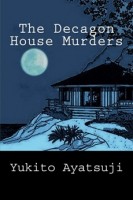
Originally published in 1987, Yukito Ayatsuji’s debut novel The Decagon House Murders is credited with sparking a renaissance in Japanese honkaku mystery fiction, a subgenre of classic detective fiction emphasizing logic and fair play. The novel was translated into English by Ho-Ling Wong (the text based off of the Japanese edition from 2007) and released in 2015 thanks to the efforts of Locked Room International, a group which works to publish translations of novels featuring locked room mysteries and impossible crimes. The English edition of The Decagon House Murders also includes an introduction written by Japanese mystery author Soji Shimada, which places the novel within the historical context of Japanese and world mystery fiction, as well as a brief essay by the translator. It was only after reading The Decagon House Murders that I realized why Ayatsuji’s name seemed so familiar to me—he wrote the horror mystery novel Another which was also recently translated and which received both a manga and an anime adaptation. Ayatsuji also happens to be the husband of Fuyumi Ono, the creator of The Twelve Kingdoms which I greatly enjoy.

Located on the currently uninhabited island of Tsunojima is the Decagon House, a peculiar building designed by the eccentric architect Seiji Nakamura, a man believed to have committed a series of murders on the island before taking his own life. The house, the island, and their history provides the perfect setting for some of the more accomplished members of a university mystery club to relax and find some inspiration for their writing during the break before classes resume. But what most of the group doesn’t realize is that Seiji Nakamura was the father of Chiori Nakamura, another club member who recently died as the result of one of their drinking parties. Chiori had a preexisting health condition, but at least one person feels that the club is responsible for her death. On the mainland members are receiving ominous and threatening letters signed with the name Seiji Nakamura and on the island one person after another dies under strange circumstances, and no one but the murderer knows killer’s identity.

The focus of The Decagon House Murders is definitely on its mystery. Character development in the novel is limited, enough to distinguish the individual players and to establish some of their back stories, but not so much that the reader really gets to know them as people. The murderer, whose motivations and meticulous schemes are eventually revealed, is the person who has the most depth as a character. Although there are twists to the story, Ayatsuji’s writing style is likewise straightforward and clean, lacking in heavy description or embellishments. Distraction is kept to a minimum as the facts of the case are laid out one after another, allowing readers the chance to pick up on clues and develop their own theories before everything is explained. At the same time, the members of the group trapped together on the island are themselves struggling to come up with their own solutions before they all end up dead. Ultimately, The Decagon House Murders is primarily about the murderous plot and it its execution.

Ayatsuji’s decision to make a large part of the cast of The Decagon House Murders members of a mystery club is a brilliant one. They are all well-versed in how similar crimes play out in fiction, but now they are faced with an increasingly deadly reality where those rules and expectations don’t necessarily apply; even though they know the possibilities, they can’t anticipate what will actually happen. I, too, am fairly familiar with many of the tropes and tricks used in mysteries about seemingly impossible crimes, however The Decagon House Murders still managed to surprise and satisfy me with its clever twists. I also particularly liked the narrative structure of the novel. At first the chapters alternate between the developing situation on the island and a related investigation occurring on the mainland, but eventually the two connected storylines merge together for the novel’s big reveal. The Decagon House Murders is apparently the first volume in a series of mysteries involving buildings designed by Seiji Nakamura. I have no idea if there are any plans to translate the others, but I would certainly be interested in reading them.

Filed Under: REVIEWS Tagged With: Mansion Murders, Novels, Yukito Ayatsuji

A True Novel

August 28, 2015 by Ash Brown

A True NovelAuthor: Minae Mizumura
Photographer: Toyota Horiguchi

Translator: Juliet Winters Carpenter
U.S. publisher: Other Press
ISBN: 9781590512036
Released: November 2013
Original release: 2001
Awards: Yomiuri Prize for Literature

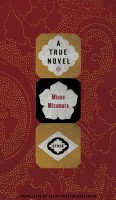
So far, only two works by Minae Mizumura have been translated into English. The first was the Yomiuri Prize-winning A True Novel. Originally published in Japan in 2002, A True Novel was selected for translation as part of the Japanese Literature Publishing Project. The novel was ultimately released by Other Press in 2013 with an English translation by Juliet Winters Carpenter. Other Press’ edition of A True Novel is a lovely two-volume box set retaining the black-and-white images taken by Kyoto-based photographer Toyota Horiguchi scattered throughout the pages. Mizumura’s second work to be translated, her treatise The Fall of Language in the Age of English, was published in early 2015. It was the release of The Fall of Language in the Age of English that reminded me that A True Novel had been sitting on my shelf waiting to be read for quite some time. My excuse was that I wanted to make sure that I had the time to devote to the novel that it deserved—A True Novel is a massive work well over eight hundred pages in length.

Taro Azuma immigrated to New York from Japan in the 1960s, finding a position as a personal chauffeur. Not much was known about the enigmatic young man and he was reluctant to talk about his past, but he did very well for himself in America, eventually becoming an extremely successful, wealthy, and respected businessman. It’s only after he made a name and a fortune for himself that he began to return to Japan on occasion. Growing up Taro was an orphan raised in a poor and abusive household. His fate was changed when he was taken in as a helper by the well-off Utagawa family, becoming remarkably close with their youngest daughter Yoko. But as time passed, the differences between Taro and Yoko’s social classes became more pronounced and more problematic for the Saegusas—Yoko’s high-society relatives—especially after a series of “indiscretions.” This was what prompted Taro to initially leave the country, but his destiny had already become intrinsically connected to those of Yoko and her family.

In part, A True Novel is a retelling of Emily Brontë’s Wuthering Heights, Mizumura moving the setting of the story from nineteenth-century England to postwar Japan. While someone who has read Wuthering Heights will be able to appreciate the parallels between the two narratives, A True Novel stands completely on its own as a separate work. It’s been a long while since I’ve read Wuthering Heights, but I must say I think I actually prefer A True Novel. The structure of the novel has several layers that build upon one another. The story opens with an autobiographically-influenced prologue long enough to be its own novel which outlines Mizumura’s life growing up in America and her impression of Taro when she meets him there. A True Novel continues with a young editor named Yuske Kato relating to Mizumura his later encounter with Taro in Japan and the story told to him by Fumiko Tsuchiya who at one point in her life was a maid to the Utagawas. It is these two stories that Mizumura weaves together to form the main narrative of A True Novel.

Each of the three nested stories—Mizumura’s, Yusuke’s, and Fumiko’s—draws the reader closer and closer to the heart of A True Novel. The work is tragically romantic, Yoko and Taro born into circumstances where their love for each other is all but impossible to realize, their hopes for happiness dashed by the expectations of society and matters of privilege and class. The characters and their relationships in A True Novel are marvelously complex with love and hate, redemption and revenge all playing a role. At times they can actually be infuriating, but that’s part of the reason A True Novel is so compelling and engaging—the characters are believably flawed individuals navigating (not always successfully) a world that is inherently unfair. A True Novel is a tremendous work, the story tracing decades of family history and drama and the dynamics of complicated and shifting relationships. The novel may be lengthy, but it never felt overly long. If anything, while I was immensely satisfied I was still sad to see it end. A True Novel may very well be one of the best works of literature that I’ve read.

Filed Under: REVIEWS Tagged With: Minae Mizumura, Novels, Yomiuri Prize for Literature

  • « Go to Previous Page
  • Page 1
  • Page 2
  • Page 3
  • Page 4
  • Page 5
  • Go to Next Page »
 | Log in
Copyright © 2010 Manga Bookshelf | Powered by WordPress & the Genesis Framework