• Skip to primary navigation
  • Skip to main content
  • Skip to primary sidebar
  • Home
  • About Us
    • Privacy Policy
    • Comment Policy
    • Disclosures & Disclaimers
  • Resources
    • Links, Essays & Articles
    • Fandomology!
    • CLAMP Directory
    • BlogRoll
  • Features & Columns
    • 3 Things Thursday
    • Adventures in the Key of Shoujo
    • Bit & Blips (game reviews)
    • BL BOOKRACK
    • Bookshelf Briefs
    • Bringing the Drama
    • Comic Conversion
    • Fanservice Friday
    • Going Digital
    • It Came From the Sinosphere
    • License This!
    • Magazine no Mori
    • My Week in Manga
    • OFF THE SHELF
    • Not By Manga Alone
    • PICK OF THE WEEK
    • Subtitles & Sensibility
    • Weekly Shonen Jump Recaps
  • Manga Moveable Feast
    • MMF Full Archive
    • Yun Kouga
    • CLAMP
    • Shojo Beat
    • Osamu Tezuka
    • Sailor Moon
    • Fruits Basket
    • Takehiko Inoue
    • Wild Adapter
    • One Piece
    • After School Nightmare
    • Karakuri Odette
    • Paradise Kiss
    • The Color Trilogy
    • To Terra…
    • Sexy Voice & Robo
  • Browse by Author
    • Sean Gaffney
    • Anna Neatrour
    • Michelle Smith
    • Katherine Dacey
    • MJ
    • Brigid Alverson
    • Travis Anderson
    • Phillip Anthony
    • Derek Bown
    • Jaci Dahlvang
    • Angela Eastman
    • Erica Friedman
    • Sara K.
    • Megan Purdy
    • Emily Snodgrass
    • Nancy Thistlethwaite
    • Eva Volin
    • David Welsh
  • MB Blogs
    • A Case Suitable For Treatment
    • Experiments in Manga
    • MangaBlog
    • The Manga Critic
    • Manga Report
    • Soliloquy in Blue
    • Manga Curmudgeon (archive)

Manga Bookshelf

Discussion, Resources, Roundtables, & Reviews

manga

My Week in Manga: June 12-June 18, 2017

June 19, 2017 by Ash Brown

My News and Reviews

It’s been couple of months since there’s been an in-depth review here at Experiments in Manga (I mostly blame TCAF 2017), but last week I was very pleased to write about Yeon-sik Hong’s award-winning manhwa Uncomfortably Happily which was just released by Drawn & Quarterly this past Tuesday. It’s an engrossing and relatable memoir about the time Hong and his wife moved from the city of Seoul to the countryside of Pocheon. Normally I would have posted May’s Bookshelf Overload last week, but because I wanted to feature Uncomfortably Happily close to its release date, I’ll be posting it later this week instead.

As for other interesting things to read online, The OASG interviewed a few cosplayers about their opinions on Yui Sakuma’s Complex Age, a manga in which cosplaying takes a very important role. (I’ve fallen a little behind in reading the series, but the first volume in particular left a huge impression on me.) Matt Thorn’s blog, which had been dormant for so long, has a couple of new posts now, too: Before the Forty-Niners takes a look at the early history of shoujo manga while Who’s to Judge Tezuka’s Rivals? delves into even more shoujo manga history by looking at some of Osamu Tezuka’s contemporaries.

Quick Takes
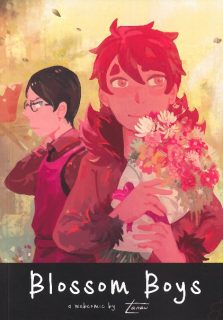
Blossom BoysBlossom Boys by Tanaw. I don’t exactly remember how I came across Blossom Boys, but it may have been thanks to one of Tanaw’s Yuri!!! on Ice fanworks. Tanaw is an illustrator and comics creator based in the Philippines. Blossom Boys had its start as part of a webcomics class that Tanaw decided to take and was finished a year later. It’s a charming boys’ love story that is earnest, adorable, sweet, and even a little surprising. Reese is a university student who wants nothing more than to be loved. He’s desperate for someone to ask him out–it doesn’t really matter who they are or what their gender is–and so he is ecstatic when he unexpectedly receives a bouquet of flowers in the middle his math class. Thus begins Reese’s endearingly awkward relationship with Prince, a florist whose peculiarly stern demeanor is the complete opposite of Reese’s bubbly personality. Although Blossom Boys does have an overarching story, many of the individual chapters can be fairly episodic. Tanaw also experiments with different illustration styles, palettes, and techniques over the course of the comic. What holds Blossom Boys together instead is its delightful characters and sense of humor. I enjoyed the comic a great deal and I’m glad to have found it; I would definitely be interested in reading more of Tanaw’s work.
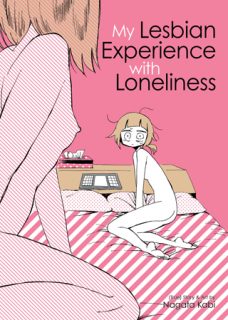
My Lesbian Experience with LonelinessMy Lesbian Experience with Loneliness by Kabi Nagata. Before it was picked up by a manga publisher, Nagata released the majority of My Lesbian Experience with Loneliness on Pixiv. The manga is an autobiographical and very personal account of Nagata’s struggles with her mental wellness and sexuality. My Lesbian Experience with Loneliness is a powerful work which has been met with well-deserved acclaim. Nagata is forthright, frankly portraying her experiences in a way that is both accessible and disarming. Even though the subject matter is quite serious (self-harm, eating disorders, anxiety, and debilitating depression are all discussed), the pink-hued artwork in the manga is actually rather cute. My Lesbian Experience with Loneliness outlines a turning point in Nagata’s life. On the verge of giving up on life, feeling so incredibly isolated and alone, Nagata makes the impulisve decision to hire a lesbian escort. Ultimately the whole affair doesn’t really solve any of Nagata’s problems and even amplifies some of those that already existed, but it does encourage her to look critically at who she is and the source of her suffering. That’s the story that Nagata captures in My Lesbian Experience with Loneliness and the story with which so many readers have found they could identify. Admittedly and understandably, it’s not always an easy read, but it is a very good one.
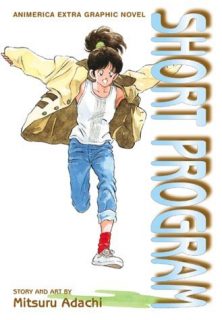
Short Program, Volume 1Short Program, Volumes 1-2 by Mitsuru Adachi. My introduction to Adachi’s work was through the baseball manga series Cross Game and its anime adaptation. I only recently discovered that Adachi’s first manga to be translated into English was actually Short Program. The series is a collection of short manga taken from a variety of magazines from all of the major demographics (shounen, shoujo, seinen, and josei) spanning from the late 1970s to the early 2000s. Viz Media only ever published the first two volumes of Short Program; it would have been nice to have seen the rest of the series released as well, but since the stories are largely unrelated to one another, at least it’s not like readers will be left with a cliffhanger or otherwise unresolved narrative. For the most part, the short manga of the first two volumes of Short Program are quirky romances, often with twist endings that add a little surprise to what would otherwise be fairly straightforward and even mundane stories. Adachi successfully works within a number of different genres in Short Program–some of the stories are comedies while others are thrillers, some are unabashedly romantic while others are intentionally disconcerting. Overall, Short Program is a solidly engaging and consistently entertaining series.
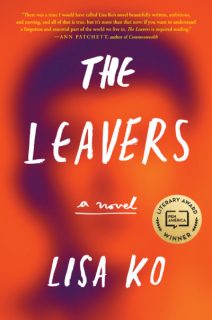
The LeaversThe Leavers by Lisa Ko. Although Ko has written numerous short stories and essays, The Leavers is her debut work as a novelist and the winner of the 2017 PEN/Bellwether Prize for Socially Engaged Fiction. It’s a particularly timely novel, too, examining the impact of illegal immigration on the families both directly and tangentially involved. The Leavers follows two entwined lives, alternating perspectives between them. First there is Deming, a young man who has yet to find his place in the world. After his undocumented mother Polly suddenly disappears when he is eleven, Deming is fostered and adopted by a white couple who rename him Daniel, never knowing what happened to her. The second is narrative is that of Polly herself, telling the story of her background, how she came to the United States from China, and eventually what really happened to her before and after she was gone from her son’s life. The Leavers is in turns compelling and tedious, engaging and exasperating. The issues explored are important ones, but the telling of the character’s stories, especially Deming’s, can sometimes be frustratingly unfocused. Granted, this may also be a deliberate reflection of Deming’s own obscured state of mind.
Filed Under: FEATURES, My Week in Manga Tagged With: comics, Kabi Nagata, Lisa Ko, manga, Mitsuru Adachi, Novels, Short Program, Tanaw

My Week in Manga: June 5-June 11, 2017

June 12, 2017 by Ash Brown

My News and Reviews

Last week at Experiments in Manga, I announced the winner of the Anonymous Noise give away. The post also includes a list of manga which have characters who have notable singing voices. I got a particularly kick out of the fact that not all of the manga were necessarily music manga. Also, a bit of a heads up: I’m switching around my usual posting schedule. Normally the second week of the month would be devoted to the Bookshelf Overload feature, but I’ll be posting an in-depth review this week instead–Yeon-Sik Hong’s award winning manhwa Uncomfortably Happily is being released in English by Drawn & Quarterly on Tuesday and I’m working on putting the finishing touches on my write-up. Spoilers: I enjoyed the work immensely.

As for interesting reading elsewhere online: Hitomi Yoshio, a professor and translator, wrote a little about teaching Japanese Literature in Translation. And speaking of Japanese literature in translation, it looks like the second volume of Yu Godai’s Quantum Devil Saga: Avatar Tuner will finally be released sometime later this summer. (I enjoyed the first volume a great deal when it was published three years ago and sincerely hope that the wait between future volumes is much shorter.) I’ve known about the upcoming translation of Kazuki Sakuraba’s A Small Charred Face for a while, but now it’s official–Haikasoru will be releasing the novel in the fall. Sakuraba may best be known as the creator of Gosick, but my introduction to author’s work was through Red Girls: The Legend of the Akakuchibas, which I loved. Finally, I’d like to draw attention a series of fascinating Golden Kamuy Cultural Notes & Video References put together by @zeppelichi on Twitter.

Quick Takes

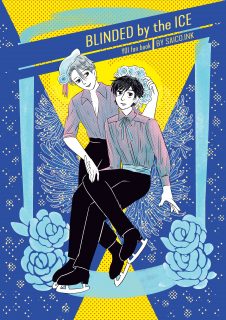
Blinded by the IceBlinded by the Ice by Saicoink (An Nguyen). In general, I don’t buy very many fan works or doujinshi, generally preferring to support artists’ original comics over their explorations of other people’s creations. However, I do occasionally make exceptions and I was very excited for Saicoink’s Yuri!!! on Ice fan book Blinded by the Ice. In addition to some bonus comics, illustrations, and research notes, the volume focuses on two main stories. The first and longest, Don’t Leave Me This Way, was probably my favorite comic of the two. I enjoyed Makes Me Think of You as well–it’s a charming and sweet holiday story which takes place after most of the events of the original anime series–but Don’t Leave Me This Way is the one that really impressed me. The comic is set in the late seventies and early eighties, featuring an alternative universe in which Victor and Yuri’s relationship must develop over both time and distance due to the fact that Victor is a high-profile athlete for the USSR. The only time the two of them can really meet in person is during competitions and even then it is very challenging and difficult. Blinded by the Ice is fantastic; I love the humor and insight that Saicoink brings to the stories and the time and effort Saicoink put into research really pays off, too.

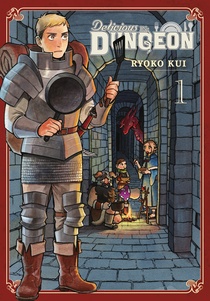
Delicious in the Dungeon, Volume 1Delicious in Dungeon, Volume 1 by Ryoko Kui. I enjoy tabletop role-playing games (or at least enjoy being present while other people are playing them) and I love food manga, so Delicious in Dungeon was a series that immediately caught my attention. The groups that I’ve played pen and paper RPGs with actually tended to devote a fair amount of attention to the food within the games. Our adventures never quite turned out how it does for Laois and his dungeoning companions, though. When, partially due to hunger, his party is nearly wiped out by a dragon, Laois and the other survivors find themselves facing the prospect of having to launch a rescue mission to save one of their own. There’s just one problem: their supplies are limited and they don’t have any food. And so Laois proposes that they simply find what they need to eat and sustain themselves inside the dungeon itself, something that he’s apparently been wanting to try for a very long time. The others, on the other hand, are much more skeptical. Conveniently, they are all fortunate enough to meet a dwarf who is much more skilled and experienced than Laois when it comes to making monsters palatable. The conceit of Delicious in Dungeon is frankly brilliant. Unsurprisingly, I loved the first volume of the series and definitely plan on reading more.

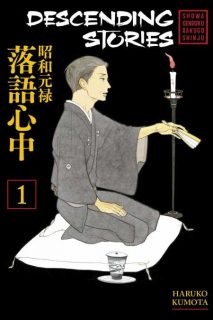
Descending Stories: Showa Genroku Rakugo Shinju, Volume 1Descending Stories: Showa Genroku Rakugo Shinju, Volume 1 by Haruko Kumota. Although I haven’t actually had the opportunity to watch it yet, Kumota’s manga series Descending Stories was first brought to my attention due to its recent anime adaptation. The excitement surrounding the anime and the licensing of the original manga made Descending Stories one of the debuts I was most looking forward to in 2017; I was not disappointed. Rakugo is a traditional Japanese performance art which isn’t as popular as it once was but still has a devoted following. Familiarity with rakugo isn’t at all necessary to enjoy Descending Stories, but readers who have at least some basic understanding of it will likely get even more out of the series. But while rakugo is an important and interesting part of Descending Stories, it’s the relationships and drama between the characters that really make the manga so engrossing and compelling. Kyoji is an outgoing young man who has recently been released from prison. Curiously, the first thing he does with his freedom is to seek out Yakumo, a famous rakugo artist, and demand to become his apprentice. Up until this point Yakumo has always rejected those who want to study under him, but to everyone’s surprise on a whim takes Kyoji into his household.

Filed Under: FEATURES, My Week in Manga Tagged With: comics, Delicious in Dungeon, Descending Stories, Haruko Kumota, manga, Ryoko Kui, Saicoink, Yuri on Ice

Manga Giveaway: Anonymous Noise Giveaway Winner

June 7, 2017 by Ash Brown

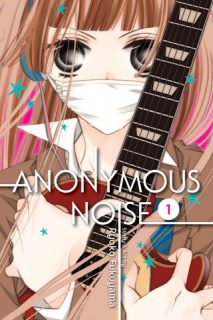
Anonymous Noise, Volume 1And the winner of the Anonymous Noise manga giveaway is… Chris!

As the winner, Chris will be receiving a copy of the first volume of Ryoko Fukuyama’s Anonymous Noise as published in English by Viz Media. Since the lead character of Anonymous Noise loves to sing, for this giveaway I asked that participants tell me a little about their favorite vocalist from a manga. The individual responses can be found in the giveaway comments, but (as usual) I’ve also compiled a list which includes additional titles as well.

Some of the manga released in English with notable vocalists:
Age Called Blue by est em
Anonymous Noise by Ryoko Fukuyama
Black Bard by Ichiya Sazanami
Beck: Mongolian Chop Squad by Harold Sakuishi
Cardcaptor Sakura by CLAMP
Clover by CLAMP
A Devil and Her Love Song by Miyoshi Tomori
Gravitation by Maki Murakami
Hatsune Miku: Mikubon by Ontama
Hatsune Miku: Rin-chan Now! written by Sezu, illustrated by Hiro Tamura
K-ON! by Kakifly
Kobato by CLAMP
Love Com by Aya Nakahara
Monthly Girls’ Nozaki-kun by Izumi Tsubaki
Nana by Ai Yazawa
One Piece by Eiichiro Oda
Otomen by Aya Kanno
Popcorn Romance by Tomoko Taniguchi
Pretty Guardian Sailor Moon by Naoko Takeuchi
Sensual Phrase by Mayu Shinjo
Solanin by Inio Asano
Utahime: The Songstress by Aki
Wanted by Matsuri Hino
Yokan by Makoto Tateno

The above certainly isn’t a comprehensive list but it does have an interesting mix of titles. I particularly appreciate the fact that not all of the manga included are necessarily considered to be music manga–characters with notable singing voices (both good and bad) make appearances in all sorts of stories. Thank you to everyone who participated in the giveaway; I hope to see you again for the next one!

Filed Under: Giveaways, Lists, UNSHELVED Tagged With: Anonymous Noise, manga, Ryoko Fukuyama

My Week in Manga: May 29-June 4, 2017

June 5, 2017 by Ash Brown

My News and Reviews

The most recent manga giveaway at Experiments in Manga was posted last week. This month everyone participating has a chance to win Anonymous Noise, Volume 1 by Ryoko Fukuyama. The winner will be announced on Wednesday, so there’s still time to enter. Simply tell me about your favorite singer or vocalist from a manga! In other giveaway news, Taneeka Stotts is sponsoring a tremendous Queer Comics Giveaway for Pride Month. I’ve read and/or own a fair number of the comics in the giveaway and they’re all great. Even if you don’t enter or win, the list itself is still well-worth checking out!

As for other interesting things that I’ve recently come across online: Terry Hong (creator of the Smithsonian Asian Pacific American Center’s BookDragon review blog, which I greatly enjoy) compiled a list of fourteen Japanese thrillers for The Booklist Reader which includes both novels and manga. (I’ve read most of the books on the list and they’re great; here are my in-depth reviews of some of the titles mentioned: The Devotion of Suspect X, Malice, and Salvation of a Saint by Keigo Higashino, The Kurosagi Corpse Delivery Service by Eiji Otsuka and Housui Yamazaki, and Nijigahara Holograph by Inio Asano.) Matt Thorn has re-posted an old article from The Comics Journal on The Magnificent Forty-Niners. Also, my Manga Bookshelf cohort Brigid Alverson is now writing for ICv2 as well. Her first post is a roundup of recent manga news.

Quick Takes

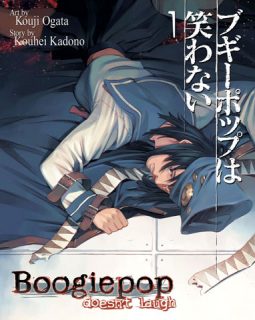
Boogiepop Doesn't Laugh, Volume 1Boogiepop Doesn’t Laugh, Volumes 1-2 written by Kouhei Kadono and illustrated by Kouji Ogata. The Boogiepop franchise began as a series of light novels but would eventually expand to include music, a live-action film, an anime, and two short manga series among other things. Boogiepop Doesn’t Laugh is actually the second of the two manga series to be released but it’s an adaptation of Boogiepop and Others, the very first Boogiepop light novel. Although the manga does include a few additional scenes, for the most part it’s a very close adaptation. Like the original novel, the narrative of Boogiepop Doesn’t Laugh is deliberately fragmented–the supernatural mysteries surrounding the serial disappearances of a number of high school girls are explored through multiple perspectives taken from before, after, and during the events. Sadly, the technique isn’t nearly as effective in the manga as it was in the novel and the adaptation never quite reaches the same depth as the original, but the story remains and interesting and curious one. Perhaps obviously what makes the manga stand apart from its predecessor is its artwork. The first quarter or so of the series isn’t especially impressive, but then Ogata switches to a style reminiscent of ink wash paintings which is quite lovely.

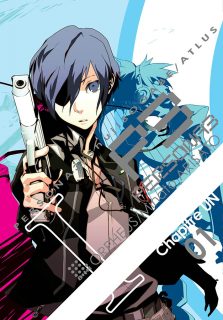
Persona 3, Volume 1Persona 3, Volumes 1-3 by Shuji Sogabe. Having read and largely enjoyed what has so far been translated of Sogabe’s Persona 4 manga adaptation, I was looking forward to giving the Persona 3 manga a try as well. (Especially as I’ve actually played some of Persona 3, unlike Persona 4. Granted, I still haven’t actually finished the video game.) I really wanted to like the manga, but I was very disappointed with the first three volumes of Sogabe’s Persona 3. Apparently, it was Sogabe’s first professional manga, which may explain some of the series problems. The Persona 3 manga will likely work best for readers who are already very familiar with the original, and even then I suspect that most would rather just play the game again. The manga has no clear or coherent narrative to it, jumping around in the story and in an out of battles without reason. Considering the number of fight sequences included, it’s particularly unfortunate that conveying action is one of Sogabe’s weakest areas. Characterization is largely lacking in the manga and most of the cast members are never fully or adequately introduced, but at least their designs are attractive enough. Overall, I didn’t enjoy the Persona 3 manga much at all, mostly because it didn’t make much sense at all. Some of the more comedic moments were admittedly amusing, though.

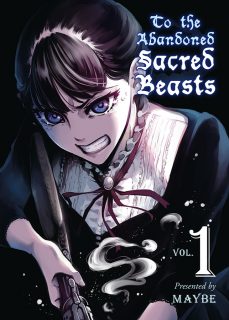
To the Abandoned Sacred Beasts, Volume 1To the Abandoned Sacred Beasts, Volumes 1-2 by Maybe. Before reading To the Abandoned Sacred Beasts I was under the impression that the series used the American Civil War as the foundation of its story. It turns out that’s not really the case, although the worldbuilding and character designs take obvious inspiration from nineteenth-century United States and the setting of the manga is a country recovering from a great war between the North and the South. (I suppose To the Abandoned Sacred Beasts could be some sort of alternative historical fantasy, but for the moment at least it doesn’t read that way to me.) In order to emerge victorious from the war, the North relied on soldiers known as Incarnates–humans who were granted tremendous abilities and battle prowess but at a great cost; they were literally turned into monsters. The metaphor may not be particularly subtle, but how To the Abandoned Sacred Beasts tackles the psychological ramifications and ravages of war is certainly engaging. Now that the conflict is over and an uneasy peace has been established, there is no longer any need for creatures of war and the Incarnate soldiers largely find themselves feared and despised. As the last of their humanity slips from their grasp, the Incarnates ultimately become the targets of the Beast Hunters.

Filed Under: FEATURES, My Week in Manga Tagged With: Boogiepop, Kouhei Kadono, Kouji Ogata, manga, Maybe, Persona, Shin Megami Tensei, Shuji Sogabe, To the Abandoned Sacred Beasts

Manga Giveaway: Anonymous Noise Giveaway

May 31, 2017 by Ash Brown

Not only is it the last Wednesday of May, it’s the last day of May, so it is once again time for a giveaway at Experiments in Manga! For this month’s giveaway you will all have the opportunity to win the first volume of Ryoko Fukuyama’s manga series Anonymous Noise as published in English by Viz Media’s Shojo Beat imprint. And as usual, the giveaway is open worldwide!

Anonymous Noise, Volume 1

As a musician, I have a particular affinity for manga which incorporates music in some way, whether it’s tangentially or as a primary theme. So when Anonymous Noise was licensed, it immediately caught my attention. The series’ lead loves to sing and many of the other characters introduced are musically inclined as well. As I was reading the first volume of Anonymous Noise, it occurred to me that there were a fair number of other manga that I could think of which aren’t music manga per se but which do include characters with notable singing voices. (For example, Tomoyo Daidouji from Cardcaptor Sakura or Yuzuki Seo from Monthly Girls’ Nozaki-kun.) And for some reason, that realization made me really happy.

So, you may be wondering, how can you a copy of the Anonymous Noise, Volume 1?

1) In the comments below, tell me about your favorite singer or vocalist from a manga. (Don’t have a favorite or haven’t come across any? Simply mention that instead.)
2) If you’re on Twitter, you can earn a bonus entry by tweeting, or retweeting, about the contest. Make sure to include a link to this post and @PhoenixTerran (that’s me).

It’s as simple as that. Giveaway participants have one week to submit comments and can earn up to two entries. Comments can also be sent directly via email to phoenixterran(at)gmail(dot)com if needed or preferred. I will then post those entries here in your name. The giveaway winner will be randomly selected and announced on June 7, 2017. Best of luck to you all!

VERY IMPORTANT: Include some way that I can contact you. This can be an e-mail address in the comment form, a link to your website, Twitter username, or whatever. If I can’t figure out how to get a hold of you and you win, I’ll just draw another name.

Contest winner announced–Manga Giveaway: Anonymous Noise Giveaway Winner

Filed Under: FEATURES, Giveaways Tagged With: Anonymous Noise, manga, Ryoko Fukuyama

My Week in Manga: May 22-May28, 2017

May 29, 2017 by Ash Brown

My News and Reviews

As has been previously mentioned, a couple of weekends ago I attended the Toronto Comic Arts Festival (which I’ve apparently been going to for five years now). It took me a little longer than I had originally planned, but I did finally manage to post my random musings on TCAF 2017. In the post I write about some of the major highlights of the trip and attempt to summarize prominent themes that emerged during the panels that I attended. Last week I also spent a fair amount of time with my family in Ohio. I was already planning on going down for the long weekend, but that weekended turned out to be much longer than initially anticipated–my maternal grandmother passed away on Tuesday, so I left town on Thursday instead of Saturday. While the occasion was a sad one (though not entirely unexpected), it was wonderful to see so much of my family and everyone is doing really well considering. I also got to hear some great family stories and learned a bit more family history than I previously knew.

Unsurprisingly, I wasn’t really online much at all last week and was all sorts of distracted, so I’m sure there are plenty of things that I missed. However, The OASG had a great feature on Kazuhiro Fujita’s The Ghost and The Lady which combines a review and an interview with Finola Austin, the cultural consultant for the English-language edition of the manga. Seven Seas also made another series of interesting and exciting manga license announcements: Giant Spider & Me: A Post-Apocalyptic Tale by Kikori Morino, Fauna and the Dragonewts’ Seven Kingdoms by Kiyohisa Tanaka, Ultra Kaiju Anthropomorphic Project by Shun Kazakami, Saint Seiya: Saintia Shō by Chimaki Kuori, and Leiji Matsumoto’s original Captain Harlock.

Quick Takes

Girls' Last Tour, Volume 1Girls’ Last Tour by Tsukumizu. There is a fairly common conceit in manga and anime which can basically be described as cute girls doing things. Though I’ll still happily read it, it’s a category of manga that doesn’t especially interest me and I don’t usually intentionally seek it out unless there’s an additional hook of some sort that I am curious about. In the case of Girls’ Last Tour, it was the manga’s post-apocalyptic setting and a recommendation from a friend that caught my attention. And I’ll admit: I enjoyed the first volume much more than I expected I would and definitely plan on reading more. For the most part I find Tsukumizu’s artwork appealing, although in general the character designs are less inspired than the backgrounds. Chito and Yuuri are two young women traveling together across the wasteland in search of food, fuel, and the comforts of home. At this point in the manga it’s unclear what brought about the end of civilization or even how many survivors there are. (Chito and Yuuri spend most of the first volume alone together, but at one point they do meet and briefly team up with a mapmaker, so they aren’t the only ones left.) The backstory may never be fully explained as Girls’ Last Tour is mostly about Chito and Yuuri’s everyday lives. Girls’ Last Tour is a surprisingly delightful and charming series although it it has a melancholy air to it as well.

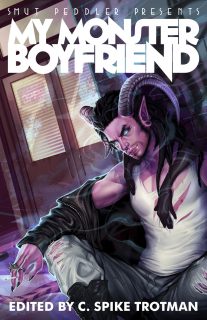
My Monster BoyfriendMy Monster Boyfriend edited by C. Spike Trotman. Smut Peddler started as a series of minicomics before blossoming into a series of anthologies. My Monster Boyfriend is the first thematic Smut Peddler project as well as being the first Smut Peddler anthology to feature full-color artwork. The stories in My Monster Boyfriend are also longer than the ones included in the series’ previous installments–the anthology features ten erotic comics, the work of fourteen different creators. Unlike most of the comics anthologies that I’ve recently read, I was actually already familiar with most of the contributors to My Monster Boyfriend. The volume has a great lineup and I was not at all disappointed with the collection. I was particularly pleased to see the representation of a wide array of genders and sexualities. My Monster Boyfriend continues the sex-positive, queer-friendly trend of Smut Peddler. Considering the volume’s motif (inhuman men and their sexual partners), all of the stories included are fantastic by nature. However, there is still wonderful variety in style, approach, and genre. Some of the stories are comedic while others are quite serious; some comics lean towards horror while others tend towards romance. My Monster Boyfriend can in turns be sweet, scary, and sentimental.
Filed Under: FEATURES, My Week in Manga Tagged With: comics, Girls' Last Tour, manga, Smut Peddler, Tsukumizu

Random Musings: Toronto Comic Arts Festival 2017

May 28, 2017 by Ash Brown

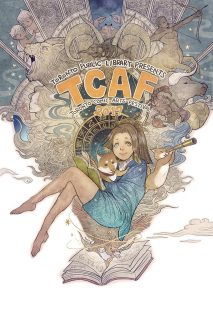
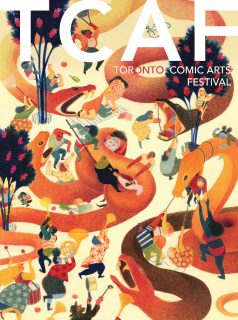
TCAF 2017 Poster - Sana Takeda

©Sana Takeda

I didn’t actually realize it until I started writing up my random musings for the 2017 Toronto Comic Arts Festival (TCAF), but this year was actually my five-year TCAF anniversary! For the first two years I coordinated the trip with a friend (a different one each year), but for the last three years my TCAF adventures have been combined with a Toronto family vacation. 2017’s TCAF trip leaned a little more heavily towards family activities than in years past, but I still found the opportunity to enjoy what the festival had to offer. And seriously, TCAF has a tremendous amount to offer. It’s the only comics-related event that I currently attend, and it’s absolutely worth challenging my social anxiety and general awkwardness.

Although there are TCAF-related events throughout May, the festival-proper usually takes place on Mother’s Day weekend which was May 13th and 14th this year. As mentioned, much of the emphasis of my trip this year was on family vacationing. We made a long weekend of it, leaving on Thursday and returning on Sunday. On Thursday, after treating ourselves to breakfast at a favorite local restaurant and taking the young one to a weekly language development play group (which I hadn’t actually had the opportunity to visit before since I’m usually working when the class is held), the four of us (three adults and a toddler) piled into the car on headed out.

If we were to drive straight through from where we live in Michigan to Toronto, it would take about four and a half hours but we arrived a little over six hours after we left. Things always seem to take a bit longer when kids are involved, not to mention the fact that we also happened to stop for a leisurely picnic lunch once we were in Canada and well on our way. I don’t remember exactly what time we finally pulled into Toronto, but it was late enough that I missed the book launch party for Jane Mai and An Nguyen’s newest collaboration So Pretty / Very Rotten: Comics and Essays on Lolita Fashion and Culture which I had hoped to attend. Instead, we all took our time settling into the room for our stay and then ordered tasty takeout from a place that was a surprising combination of pizzeria and Asian fusion.
On Friday, the whole family spent most of the day at the Ontario Science Centre, which was fantastic. We mainly focused on the interactive areas geared towards younger ages and so certainly didn’t see everything there was to see; I would like to go back sometime and explore even more of the centre because we all had a great time. After resting up in our room for a bit, we eventually made our way down to The Distillery Historic District for dinner, drinks, and other diversions. In the past, Friday night would have been the night that I would take off for the Sparkler Monthly mixer, but this year that party was held on Saturday evening instead. (Sadly, this also meant Sparkler’s party conflicted with the annual queer mixer.)

After spending most of Thursday and Friday with the family, I was mostly off on my own on Saturday enjoying the first day of TCAF. As in years past, I started my morning off wandering the exhibitor areas before they got super crowded. I mostly explored the Toronto Reference Library,  which had three floors of exhibitors this year, but eventually made my way to the exhibitors situated in the Masonic Temple as well. I wasn’t quite as social as I have been at previous festivals, but I did make a point to at least say hello to the creator’s that I recently supported through Kickstarter who were at the festival. I spent a fair amount of time going through all of the exhibitor’s online portfolios before arriving in Toronto, making notes to myself of the tables that I wanted to be sure to stop by, but in the end I really did try to see everything there was to see. One of the things I love about TCAF is the wide variety of comics at the event, but I especially appreciate the number of queer creators and the amount of queer content present.

Ontario Science Centre Rainforest

Exploring the rainforest at the Ontario Science Centre

In addition to all of the phenomenal exhibitors, TCAF also has a strong lineup of panels, workshops, and creator spotlights. As usual, it was a tremendous challenge deciding which events I wanted to go to, especially as so many of the conflict with one another. In the end I settled on six, all but one of which were held on Saturday. There were definitely others that I wanted to attend, too, but for one reason or another (such as waking up with a migraine on Sunday morning or a cranky toddler) I wasn’t ultimately able to fit them all into my schedule.

Since I’m a musician on top of being a huge fan of comics, one of the panels that immediately caught my interest was “Sounds and Vision: Music in Comics,” moderated by Phillipe Leblanc, which explored how artists portray and convey music and sound in a visual medium. Although I haven’t actually read any of their comics (yet), I did recognize the panelists by name–Dave Chisholm, Nick Craine, Anya Davidson, Sandrine Revel, and Eric Kostiuk Williams. All of the creators on the panel had at least some musical background, formal or otherwise (Chisholm even has a doctorate in jazz trumpet), and consider music to be one of their passions. In some ways the two artforms, music and comics, are incompatible since each one requires so much time to master as an artist, but they can still be brought together. If nothing else, creators’ experiences as musicians can inform and influence the stories they want to tell. Effectively incorporating music into a comic requires more than just putting music notes on a page. As Chisholm pointed out, musical notation isn’t really music either–it’s simply ink on paper, a visual shorthand (much like comics themselves). In order to convey the intended feeling of the music, comic creators must instead rely on page and panel design to capture a sense of tempo, movement, and flow. Creative use of typography can also be effective, especially when lyrics are involved, and imaginative onomatopoeiae can serve as a device to form a visual soundscape. Often a literal representation of music isn’t what is demanded by a narrative, it’s the emotional resonance and impact of that music that needs to be seen, whether it’s the focus of a comic or simply being used as a background element to help set a scene.

After spending a little more time browsing the exhibitor areas, the next panel that I attended was simply titled “Sports!” which included Michael Nybrandt, Ngozi Ukazu, Sonam Wangyal, and Jarrett Williams as panelists and RJ Casey as a moderator. While in Japan sports comics have been immensely successful, the subgenre hasn’t thrived in the same way in the North American comics industry. Although there have been some independent sports comics with impressive followings, such as Ukazu’s Check, Please!, in general sports comics continue to be a hard sell for many major publishers. In the 1990s there were some unsuccessful mainstream attempts that basically tried to turn sports comics into superhero narratives rather than focusing on the underlying human story, something that didn’t work well at the time. There’s also the question of audience since there is a lingering and inaccurate stereotype that “nerds don’t like sports.” (Ukazu commented that it might actually be more difficult to sell sports comics to sports fans than to comics fans.) Sports stories provide ready-made and easily understood narratives which allow the incorporation and exploration of other subjects such as politics, religion, and performance of gender, making those issues more acceptable or palatable for readers. Emotional highs and lows are inherent to the stories, often directly tied to the athletes’ successes and failures in competition. Sports comics can risk becoming repetitive since the most basic story arc is the often same–someone will win and someone will lose–but while the ending may be already be determined, how the comic arrives at that ending is not. Changing the implications of winning and losing can introduce new dynamics and not all the conflict and drama has to happen within the context of the sport itself.

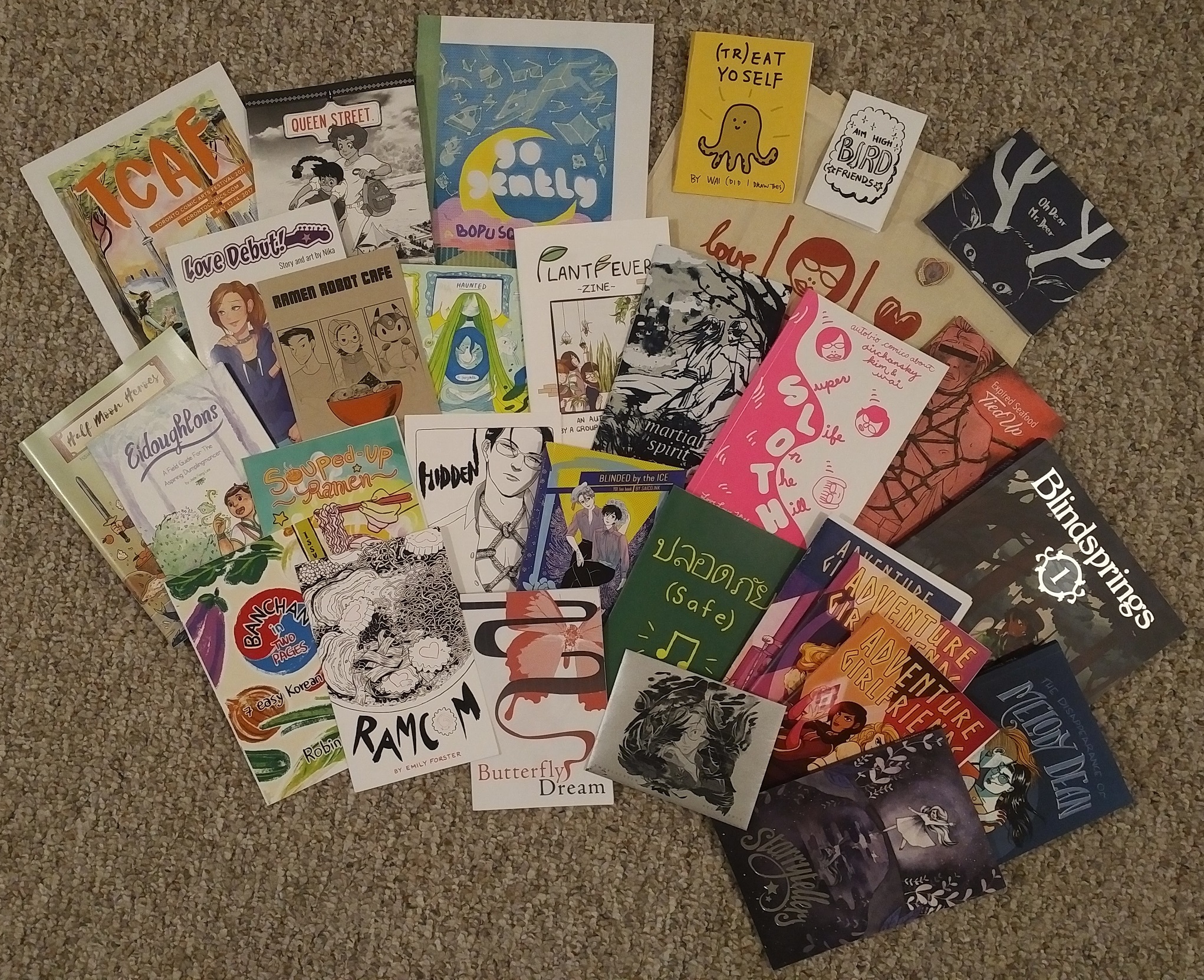
TCAF 2017 Haul

TCAF Haul 2017!
(minus a t-shirt and poster)

While the first two panels I went to were both held at the Stealth Lounge at The Pilot, my next three panels were located at another of TCAF’s primary event locations, the Toronto Marriott Bloor Yorkville Hotel which allows for larger gatherings. It’s a good thing, too. Glen Downey, who was moderating “Creating While Depressed,” noted that it was one of the most well-attended TCAF panels with which he has been involved. The subject matter being discussed appeared to strike a very personal chord with many of the people in the audience, myself included. The panelists–Meredith Gran, Tara Ogaick, Meredith Park, and Shivana Sookdeo–were all very candid and open, sharing their own experiences as creators who have to carefully balance their mental health with their creative work. They talked about how damaging the idealized stereotype of the “tortured artist” is and how the romanticized portrayal of depression found in popular culture is often vastly different from actual experience. In reality, people with depression are creating despite depression rather than because of it. For them, comics can be an outlet for expression and a way to alleviate some of the symptoms of depression, but at their lowest points it may be impossible for them to produce any work at all. It is at those times when communication and honesty are particularly crucial in order to clearly delineate limitations and establish realistic expectations not only for themselves but for the people with whom they might be working. The panelists also emphasized the importance of finding a supportive, close-knit community. Although they were specifically speaking as artistic creators with depression, I found that their experiences strongly resonated with my own and could be more broadly relatable.

My fourth panel of the day was “21st Century Webcomics,” featuring Michael DeForge, Blue Delliquanti, Priya Huq, Matt Lubchansky, and moderated by Tom Spurgeon. I don’t actually follow as many comics online as I used to–I find reading digital content difficult and/or frustrating for a wide variety of reasons–but I am still a huge supporter of webcomics, frequently buying print editions if they exist. As with any medium, webcomics have evolved over time especially as advances in the creation of digital artwork have also been made. Likewise, the relationship between webcomics and print comics have changed and there is less of a sense that they are at war these days. Instead, webcomics are often used to support their print equivalents. Because they are online, webcomics are inherently more discoverable and more widely accessible which helps to build an audience and further promote a creator’s work. Webcomics can also give a creator the opportunity to experiment with new methods and formats of expression that simply aren’t realistically feasible or even possible in print, such as the use of infinite canvass, animation techniques, or interactive elements. Creators have a tremendous amount of freedom when it comes to webcomics, allowing personal or experimental works to be produced and distributed that more traditional or mainstream comic publishers might initially be reluctant to take a risk on. However, while it was hoped that the Internet would allow creators to more directly deliver their content to readers and flatten out publishing hierarchies (which to some extent has occurred), the reality is that there has been a rise in intermediaries. More and more, creators find they frequently have to rely on multiple external systems and platforms like Kickstarter, Patreon, and social media to sustain their work.

“LGBTQ Comics Abroad,” moderated by Justin Hall, was the one panel that I wanted to be sure to make it to above all others not just because the subject matter had to do with queer comics but because Gengoroh Tagame was participating. (Even if someone isn’t a fan of Tagame’s works, his immense historical knowledge and experience as a gay comics creator makes his panels well-worth seeking out.) The other panelists included A.C. Esguerra, Molly Ostertag, Tommi Parrish, and Martina Schradi. Anne Ishii was also there, technically to assist with interpretation for Tagame, but she also had her own thoughts and experiences to bring to the discussion. The panelists talked about their work and the state of queer comics within their own countries (Japan, United States, Australia, and Germany) but also the challenges presented when considering international audiences. Queer identities are formed differently from culture to culture, and some of the nuances of those differences can be difficult to convey or translate, however there are still some shared and common experiences that are not limited by borders; social mores and contexts will often vary, but universal themes can still be found. The online environment has presented an opportunity for queer comics to be successful in ways that are currently difficult through traditional publishing, although the mainstream comics industry has been slowly making progress. The Internet allows for an unprecedented ease of global access to and distribution of queer content; it has been possible for numerous communities and support networks to be established which aren’t limited by geographic boundaries. But along with the good, there is also the bad–the piracy, scanlations, and extreme levels of fan entitlement present online can be hugely damaging.

TCAF 2017 Poster - Eleanor Davis

©Eleanor Davis

As mentioned, Saturday night I went to the Sparkler TCAF Mixer. I brought the little one along with me to allow the family’s other two adults to have a child-free dinner date. A good time was had by all and I had the chance to catch up with not only the Chromatic Press/Sparkler Monthly folks but some of Seven Seas’ people as well. There’s a bit of an overlap between the two groups even though the demographics of each company’s audience are currently the inverse of each other. (Interesting tidbit: According to a recent Sparkler Monthly survey, while women form the core readership, at present Chromatic Press has more nonbinary readers than male readers.) Expect some really great things and exciting announcements to come from both publishers in the near future.

Sunday ended up being a much shorter day than was originally planned (I was really hoping to attend the So Pretty / Very Rotten discussion on Lolita culture at the Japan Foundation, for one). However, I and one of my partners were able to at least make it to The Pilot for the panel “Looks Good Enough to Eat: Comics and Food” before we all headed back to Michigan. We sadly missed out 2016’s food comics panel, so we were particularly happy to be there this year. Perhaps unsurprisingly considering my well-known love of food comics, I was already familiar with the work of most of the panelists: Sarah Becan, Emily Forster, Robin Ha, Jade Feng Lee, and Kat Verhoeven. Along with moderator Lauren Jorden, the group discussed what appealed to them about creating and reading comics that prominently feature or incorporate food. The subgenre of food comics is actually quite diverse, including comics explicitly about food (recipe comics, autobiographical works, or journalistic reviews) as well as comics that use food as a theme or aesthetic. Everyone has to eat, which can make food comics particularly accessible; it’s a shared experience that can serve as a gateway into comics. Food is a multisensory experience, so it can be challenging when working in a medium that primarily relies on one. However, an important part of eating is the visual experience, so to that extent comics are a natural fit. Comics can evoke a feeling or mood that can’t be captured in the same way with photography or other visual artforms. Often there is a strong emotional component to food comics. Even when the subject matter is specifically about food, food itself isn’t just food–it’s history, community, culture, relationships, and personal expression. And comics can be all of those things, too.

And with that,  and after one last tour through the exhibitor areas, the whole family prepared to depart for home. Though I didn’t end up doing everything that I had originally planned or hoped to do,  but I still had a fantastic trip. Toronto is a terrific city and TCAF is a phenomenal festival. However inadequately, I’ve tried to convey some of that greatness here by highlighting a little of what I learned and experienced. However, there’s so much more that I could have (and perhaps should have) written about because there’s so much more to the festival. I definitely plan on attending TCAF for the foreseeable future.

Filed Under: FEATURES, Random Musings Tagged With: comics, Gengoroh Tagame, manga, TCAF

My Week in Manga: May 15-May 21, 2017

May 22, 2017 by Ash Brown

My News and Reviews

Other than the usual My Week in Manga, I didn’t manage to post any other features at Experiments in Manga last week. This was largely expected since I’m still catching up from my trip to the Toronto Comic Arts Festival. I have, however, been working on writing up some of my random musings about this year’s festival and hope to have those ready to post within the next few days. There is one thing that happened last week that I’d definitely like to share with everyone, though: the artwork that I commissioned from KaiJu was finished!

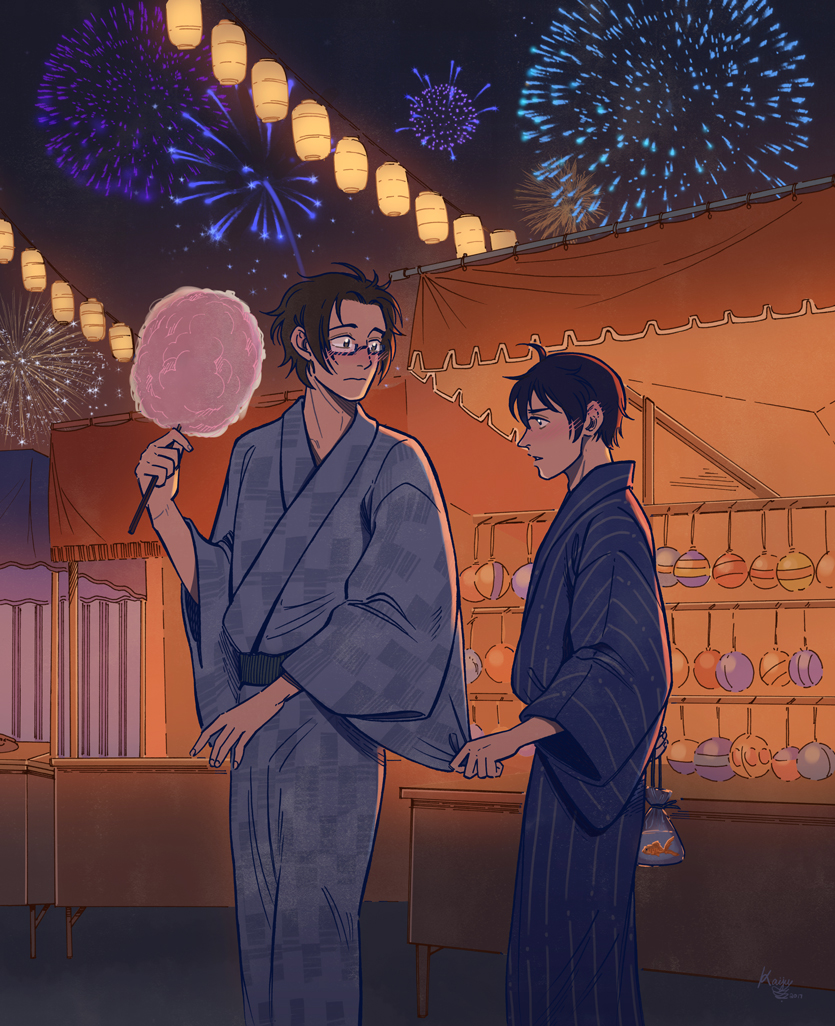
KaiJu Tokyo Demons Commission

The illustration is of the characters Sachi and Kadoyuki from Lianne Sentar’s Tokyo Demons, a series which I love very, very much. I’m also quite fond of KaiJu’s original work as well, some of which I’ve previously reviewed here at Experiments in Manga. The creative team’s current comic is Novae which is absolutely wonderful and well-worth checking out.

Elsewhere online: Lilian Min talks to Jane Mai and An Nguyen about their new book So Pretty / Very Rotten in the article The Complex Femininity of Japanese Lolita Fashion. One of Tofugu’s most recent podcasts, Interpreting for Osamu Tezuka, features Frederick L. Schodt. Also at Tofugu, manga translator Zack Davisson has some advice for learning Japanese. Speaking of Davisson, he’ll be translating two of Seven Sea’s recently announced acquisitions: Go Nagai’s original Devilman manga series (this is huge!) as well as Go Nagai and Team Moon’s Devilman vs. Hades manga. In other licensing news, Viz Media will be releasing Hinodeya Sankichi’s Splatoon manga.

Quick Takes

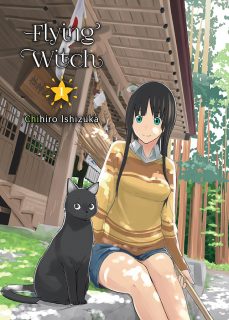
Flying Witch, Volume 1Flying Witch, Volume 1 by Chihiro Ishizuka. I was only vaguely aware of Flying Witch before Vertical Comics licensed the manga; although I haven’t actually watched it, a twelve-episode anime adaptation of the series first aired a little over a year ago. Flying Witch is a manga about Makoto, a fifteen-year-old witch who has moved to the country to stay with her relatives while she completes her magic training. She’s a bit of an airhead and has a terrible sense of direction, but she’s earnest and kind and quick to make friends with the locals. The focus of Flying Witch is on the everyday lives of Makoto, her relatives, and friends. It’s a gentle and harmless manga that much of the time isn’t even about magic though it can still occasionally be charming. The manga’s artwork, much like the story itself, is functional but not particularly distinctive and even the worldbuilding is somewhat lacking. Flying Witch isn’t a bad series, but it didn’t really grab me, either. Granted, I don’t have a particular interest in witches. However, I did really like the series’ countryside setting. Additionally, The Harbinger of Spring, a nature spirit introduced in one of the final chapters of the first volume, was a fascinating addition and easily my favorite part of the manga.

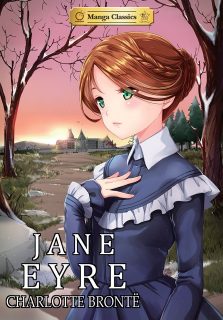
Jane EyreJane Eyre adapted by Crystal Silvermoon Chan and illustrated by SunNeko Lee. Charlotte Brontë’s Jane Eyre holds a very special place in my heart; I first read it in high school and it remains one of my favorite novels. To varying degrees, I’ve enjoyed the numerous films, novels, comics, and other works inspired by Jane Eyre that I’ve encountered as well. And so I was very curious to read one of the most recent adaptations, Chan and Lee’s Jane Eyre comic from Udon Entertainment’s Manga Classics line. (This is the same creative team which worked on the adaptation of Victor Hugo’s Les Misérables, one of Manga Classics debut titles.) Though overall Lee’s artwork is attractive, I wasn’t entirely satisfied by the character designs of the leads–Jane as a young woman doesn’t look much older than when she was a child, and Mr. Rochester comes across as too traditionally handsome. Other than that relatively minor complaint, Chan and Lee’s Jane Eyre remains true to Brontë’s original and is an enjoyable and very accessible rendition. Some small changes have been made, as Chan describes in the essay about the adaptation process, but all the major characterization and plot points remain. The volume also includes additional historical background information. Now I really want to reread the novel again.

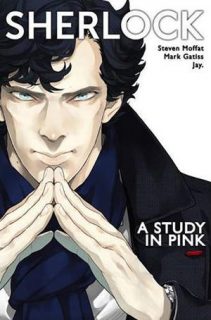
Sherlock, Volume 1: A Study in PinkSherlock, Volume 1: A Study in Pink by Jay. I believe Sherlock is the very first manga to be released by Titan Comics, recently followed by Yano Takashi and Kenji Oiwa’s Assassin’s Creed: Awakening. The fact that Titan isn’t a typical manga publisher and hasn’t released many manga may partly explain why Jay’s adaptation of the BBC’s television series Sherlock was first released in English as six individual comic issues before being collected into a single volume. Titan’s catalog largely consists of comic adaptations of Western television and video game franchises, so Jay’s Sherlock fits in nicely with the rest. Sherlock is a modern reimagining of Sir Arthur Conan Doyle’s Sherlock Holmes stories, A Study in Pink influenced heavily by Doyle’s novel A Study in Scarlet. It’s been a while since I’ve actually watched A Study in Pink, but Jay’s interpretation does seem to be a very faithful one, including character designs that are based on the show’s actors, most notably Benedict Cumberbatch (Sherlock) and Martin Freeman (Watson). Some of the action can be a little difficult to follow, but otherwise I largely enjoyed Jay’s version of A Study in Pink. However, because it is such a close adaptation and nothing much is added or taken away I’m not entirely sure who the best or intended audience for the Sherlock manga would be; most people would likely be satisfied with the original episode.

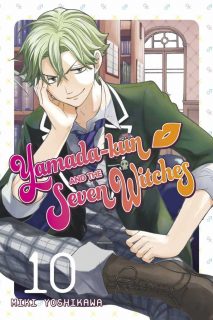
Yamada-kun and the Seven Witches, Volume 10Yamada-kun and the Seven Witches, Volumes 10-12 by Miki Yoshikawa. From the beginning Yamada-kun and the Seven Witches wasn’t without its problems, but I thoroughly enjoyed the first part of the manga. However, I’m now starting to find the series somewhat wearisome even though there are some things that are quite well done and that I still like about it. With these three volumes, Yoshikawa brings the second major story arc of Yamada-kun and the Seven Witches to a close and begins yet another one. To the Yoshikawa’s credit, each time the story is more or less restarted it makes logical sense, but at this point it feels like the series is being stretched out far longer than it was originally intended. (I suspect that Yamada-kun and the Seven Witches may be a victim of its own popularity and success.) The first story arc was highly entertaining, but I wasn’t as impressed with the second and the third hasn’t instilled much confidence in me that it will greatly improve. On top of that, the manga’s fanservice has become more and more forced as the series has progressed. Where at one point it was incorporated well into the story, more recently the fanservice is haphazard at best. Because at first I did greatly enjoy Yamada-kun and the Seven Witches and appreciated its gender play and themes of friendship, it saddens me to see the series’ decline.

Filed Under: FEATURES, My Week in Manga Tagged With: Chihiro Ishizuka, comics, Crystal Silvermoon, Flying Witch, Jay, manga, Manga Classics, Miki Yoshikawa, Sherlock, SunNeko Lee, Yamada-kun and the Seven Witches

My Week in Manga: May 8-May 15, 2017

May 15, 2017 by Ash Brown

My News and Reviews

The Bookshelf Overload for April was posted at Experiments in Manga last week; otherwise, things were pretty quiet. Initially I had an in-depth feature scheduled for this week, but I’ll probably end up pushing that back to next week instead. I spent last Thursday through Sunday in Canada with the family for vacation and the Toronto Comic Arts Festival (TCAF) which I’ll be writing up like I have in years past. We had a great time, although not everything went exactly as planned.

Speaking of TCAF, Heidi MacDonald, Brigid Alverson, Deb Aoki, and Erica Friedman were apparently all sharing a hotel room for the event. I haven’t had a chance to listen to it yet, but they took advantage of that fact by recording a podcast in which they (and eventually Robin Brenner and Eva Volin as well) discuss a wide variety of topics including manga, queer comics, food, libraries, and more: Episode 1, Episode 2, Episode 3, Episode 4. I only found out about the details after I got back home, but once again some people had trouble crossing the border between the United States and Canada in order to attend TCAF. In one notable case, Anne Ishii, one of the folks behind Massive and Gengoroh Tagame’s interpreter and translator, was detained for over two hours before eventually being allowed to enter the country.

A few things from elsewhere online last week: Anyone who picked up the Attack on Titan choose-your-own-path book from Kodansha Comics will want know about the corrections and errata that were recently released online. Kodansha also confirmed it would be releasing the Neo Parasyte M manga anthology (a sort of companion volume to Neo Parasyte F which I greatly enjoyed). In other licensing news, although an official public announcement hasn’t been made, The OASG received some confirmation that Udon Entertainment is currently “deep into the localization” of Rose of Versailles and Sugar Sugar Rune. No release dates have been set yet, though. Seven Seas hasn’t mentioned any release dates for its most recent set of licensing announcements, either, though I wouldn’t be surprised to see Okayado’s MaMaMa: Magical Director Mako-chan’s Magical Guidance, Mintarou’s DNA Doesn’t Tell Us, Tekka Yaguraba’s Sorry For My Familiar, Hiroaki Yoshikawa’s Crisis Girls, Tsuina Miura and Takahiro Oba’s High-Rise Invasion, and Coolkyoushinja’s Mononoke Sharing all released first.

A couple of Kickstarters that have recently caught my attention, too. Chromatic Press’ latest campaign is raising funds to print the first volume of Magical How? by Eurika Yusin Gho (aka Eyugho). Though on occasion I’ve mentioned Magical How? on Twitter, I haven’t really wrote much about the comic here at Experiments in Manga. (Or at least not yet.) It’s a pretty fun series though, a sort of magical girl/boys’ love mashup with energetic, full-color artwork and lots of humor. The other project I specifically want to mention is for the second volume of Beyond, a queer speculative fiction comics anthology. If successful, the project will also allow the award-winning first volume (which is great) to be reprinted.

Quick Takes

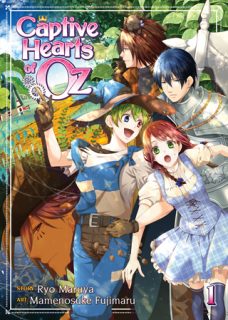
Captive Hearts of Oz, Volume 1Captive Hearts of Oz, Volume 1 written by Ryo Maruya, illustrated by Mamenosuke Fujimaru. One of the most interesting things about Captive Hearts of Oz is that the English-language release is actually the first time the manga has been published; rather than licensing existing content, the series is a direct collaboration between Seven Seas and the creators. Captive Hearts of Oz is Maruya’s debut work in English, but Fujimaru already has a notable presence due to the numerous Alice in the Country of… manga that have been translated. I suspect that it’s intentional then that Captive Hearts of Oz has a similar vibe to those series. Interestingly, there’s no explicit romance in the series yet although the manga is reminiscent of an otome game. Dorothy has simply been swept into an unfamiliar world where she meets a number of unusual people, many of whom just happen to be attractive young men. Captive Hearts of Oz is a somewhat unusual reimagining of a Western classic which may (or may not) have more depth to it than initially appears. At the very least there’s something dark and mysterious going on, although after only one volume it’s not entirely clear exactly what that is. The narrative is frustratingly disjointed in places, but I am curious to see how Captive Hearts of Oz continues to develop.

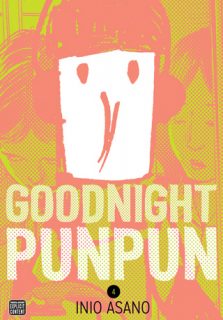
Goodnight Punpun, Omnibus 4Goodnight Punpun, Omnibuses 4-5 by Inio Asano. At this point in Goodnight Punpun, the series’ titular protagonist has entered early adulthood and his life largely remains a directionless disaster not entirely of his own making. He’s not completely blameless, though. I find that I have to time my reading of Goodnight Punpun very carefully. The manga has a very pessimistic worldview with which I can very easily identify, so if I’m already feeling mentally or emotionally exhausted, it’s usually a good idea for me to wait to tackle the series. On the other hand, it can sometimes be extremely cathartic to completely acknowledge the unfairness and darkness of the story and its real-life parallels. Either way, Goodnight Punpun is an incredible and powerful work, but it’s also very hard-hitting. Asano seems to be very aware of this and very aware of some of the related criticisms that have been leveled at the series. I, for one, have at times questioned whether or not all of the pain and suffering in Goodnight Punpun ultimately serves a purpose or if the manga is simply reveling in gloom and despair. I’ll admit that I’m still not sure and probably won’t be convinced one way or another until the manga’s conclusion, but Asano does directly recognize those concerns by having the creative work of some of the series’ characters similarly criticized.

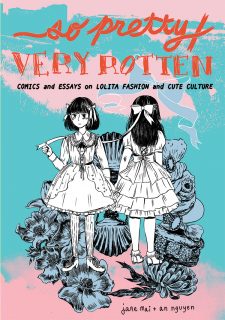
So Pretty / Very RottenSo Pretty / Very Rotten: Comics and Essays on Lolita Fashion and Cute Culture by Jane Mai and An Nguyen. I don’t have a particular interest in fashion, so if it wasn’t for the fact that I make a point to follow the work of Nguyen (aka Saicoink) I might not have gotten around to reading So Pretty / Very Rotten for quite some time. That would have been a shame because So Pretty / Very Rotten is both a terrific and fascinating work. I was certainly aware of Lolita culture previously, but I can confidently say that I have a much better understanding of it and even appreciation for it after reading So Pretty / Very Rotten. The volume examines numerous topics related to Lolitas–history, culture, fashion, identity, gender, expression, community and more–through approachable and accessible essays, both personal and academic (the Lolita lifestyle is one of the areas of Nguyen’s research), as well as through comics and illustrations. It’s a mix that works quite well. The essays are informative and the comics are cute and engaging, effectively demonstrating the concepts addressed through visual narratives. So Pretty / Very Rotten also includes an interview with and essay by Novala Takemoto, a prominent figure in Lolita culture who is probably best known in North America as the creator of Kamikaze Girls.

The Whipping Girl by Nuria Tamarit. I’m not entirely certain, but I believe that The Whipping Girl is the first published solo comic by Tamarit, an illustrator from Valencia, Spain. Even if it’s not, I certainly hope that there will be more in the future if for no other reason than Tamarit’s striking artwork is gorgeous. Color pencils are prominently used to illustrate The Whipping Girl and the effect is lovely. Writing-wise, the work isn’t quite as strong; The Whipping Girl feels like it ends rather abruptly, even considering that it’s a short comic to begin with, but it’s still an enjoyable tale. The story largely follows Agape, the whipping girl of Prince Dalibor. He’s a bit of a jerk, intentionally behaving improperly in order to get back at Agape who is generally much more capable than he is. She finally gets so fed up with the whole situation that she decides to make a run for it. Neither she nor Dal are able to anticipate the complete extent of the repercussions of her actions, and both are surprised to discover how close their bond really is. Overall, The Whipping Girl is a very satisfying comic with beautiful artwork, expressive characters, and a great sense of humor. Agape in particular is a delight, an intelligent, strong-willed young woman with an attitude.

Filed Under: FEATURES, My Week in Manga Tagged With: Captive Hearts of Oz, comics, Goodnight Punpun, Inio Asano, Jane Mai, Mamenosuke Fujimaru, manga, Nonfiction, Nuria Tamarit, Ryo Maruya, Saicoink

My Week in Manga: May 1-May 7, 2017

May 8, 2017 by Ash Brown

My News and Reviews

Last week at Experiments in Manga, the winner of the Queen Emeraldas manga giveaway was announced. The post also includes a list of some of the manga available in English which are at least partially set in space. Otherwise, it was a fairly quiet week. I’m still very busy at work, training for the new job, but things are largely going well on that front. Later this week I’ll be leaving for a long weekend in Toronto for the Toronto Comic Arts Festival, so hopefully I’ll still be able to remember everything that I’ve been learning when I get back.

Elsewhere online, Brigid Alverson recently reported back on manga at the C2E2 conference for Publishers Weekly. The Anime Feminist continues to host interesting features on manga; most recently freelance translator Jenny McKeon took a look at yuri manga. The San Diego Comic-Con is fast approaching which means that this year’s Eisner Award nominations have been announced. As usual, most of the nominated manga are found in the Best U.S. Edition of International Material—Asia category (Goodnight Punpun by Inio Asano, Orange by Ichigo Takano, The Osamu Tezuka Story by Toshio Ban, Princess Jellyfish by Akiko Higashimura, and Wandering Island by Kenji Tsuruta) but Takeshi Obata’s artbook Blanc et Noir was also nominated for Best Comics-Related Book.

Quick Takes

Cigarette GirlCigarette Girl by Masahiko Matsumoto. Although touted as the first collection of Matsumoto’s work in English (which may technically be true), Cigarette Girl is actually the second volume of manga by Matsumoto to be translated. Granted, Cigarette Girl was likely to be the first licensed (it was first announced by Top Shelf back in 2010), but it didn’t end up being released until 2016, two years after The Man Next Door was published by Breakdown Press. Matsumoto, like Yoshihiro Tatsumi (who provides the introduction to Cigarette Girl), worked in the gekiga tradition of manga. Cigarette Girl collects eleven of Matsumoto’s short gekiga manga, originally created for several different magazines in the early 1970s. Most of the stories could be considered romances of one sort or another. While an exploration of love isn’t necessarily the focus of the volume, the manga are all about relationships between people and often those relationships between men and women have a romantic bent to them. The stories in Cigarette Girl tend to be fairly quiet and focus on the everyday life of everyday people, but they’re also rather quirky and surprisingly funny, too. I enjoyed Cigarette Girl a great deal and would definitely be interested in reading more of Matsumoto’s work.

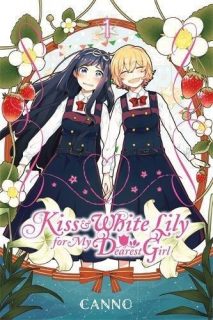
Kiss and White Lily for My Dearest Girl, Volume 1Kiss & White Lily for My Dearest Girl, Volume 1 by Canno. Lately, most of the yuri and other lesbian-themed manga translated in English are currently being released by Seven Seas, but other publishers have been starting to explore (or re-explore) the genre as well. One of Yen Press’ most recent yuri offerings is Canno’s Kiss & White Lily for My Dearest Girl, an ongoing series about the lives and loves of the students at an all-girls school. So far two main couples have been introduced and the short manga between chapter breaks implies that most of the background characters are in one way or another paired off together as well. As for the lead couples, first there is Ayaka and Yurine, the school’s top students. Ayaka is used to being first academically but finds that no matter how hard she tries, Yurine’s natural genius is tough to beat. Yurine, bored with how easy everything is for her, is delighted to finally have someone that she can consider a rival. While Ayaka and Yurine currently have something of a love-hate relationship going on, the affections of the second main couple are much sweeter and more clearly romantic–Ayaka’s tomboyish cousin Mizuki has been in a close relationship with Moe for years.

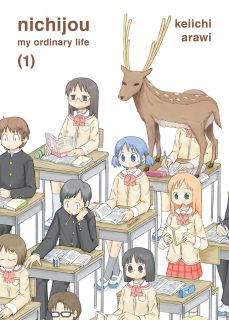
Nichijou: My Ordinary Life, Volume 1Nichijou: My Ordinary Life, Volumes 1-2 by Keiichi Arawi. I’ve heard great things about Nichijou, both the original manga and it’s anime adaptation and so I was fully expecting to enjoy the series. But while I tend to like absurd humor, for whatever reason the offbeat comedy found in the first two volumes of Nichijou just didn’t work for me. Or at least not consistently. While many of the gags fell flat, there were definitely individual bits that I found to be extremely funny. Some even made me laugh out loud. I was frequently amused by the manga as well as delightfully bemused. But as a whole, Nichijou seems to lack real substance. Granted, that’s not necessarily a bad thing and may very well be part of the point. The series mixes the mundane with the strange and completely unexpected,  but that randomness can be difficult to follow at times. On top of the nearly nonexistent narrative logic, action and movement isn’t always conveyed clearly by Arawi’s artwork. As a result, the series’ humor can be difficult to interpret. Even so, Nichijou is admittedly silly and entertaining. But I was very surprised to discover that I didn’t enjoy the manga more than I actually did; it seems like it should haven been a series I loved.

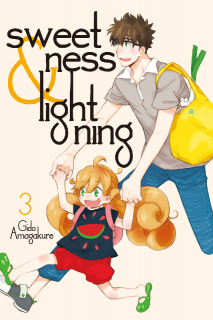
Sweetness and Lightning, Volume 3Sweetness & Lightning, Volumes 3-5 by Gido Amagakure. As I’ve mentioned many times previously, I love food manga and Sweetness & Lightning is no exception. The series is an absolute delight. There’s the food, of course, which I find appealing, but perhaps even more so I enjoy the manga’s focus on friendship and family. Granted, all of this is all tied together in the story–food is what brings people together, creates connections, and deepens relationships. Preparing and sharing a meal is shown as a way of expressing love for another person. Food can also help keep memories alive. Inuzuka keenly feels the loss of his wife and their daughter Tsumugi misses her mother dearly. But as they learn to cook together, recreating family dishes and traditions, they can still be close to her even though she is gone. There are moments of intense sadness but there is also a tremendous amount of joy in Sweetness & Lightning. Amagakure’s illustrations are very expressive, finding an easy balance between these moods. In addition to more exaggerated expressions, the artwork also captures subtle changes. As Tsumugi grows older, for example, her character design matures slightly as well. Sweetness & Lightning is a wonderful series.

Filed Under: FEATURES, My Week in Manga Tagged With: Canno, Gido Amagakure, Keiichi Arawi, Kiss and a White Lily for My Dearest Girl, manga, Masahiko Matsumoto, Nichijou, Sweetness and Lightning

Manga Giveaway: Queen Emeraldas Giveaway Winner

May 3, 2017 by Ash Brown

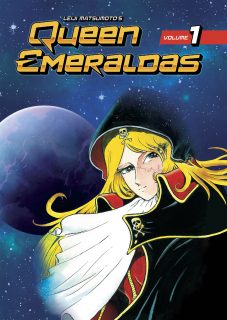
Queen Emeraldas, Volume 1And the winner of the Queen Emeraldas manga giveaway is… Sofia!

As the winner, Sofia will be receiving a copy of the first volume of Leiji Matsumoto’s Queen Emeraldas as published in English (and in hardcover!) by Kodansha Comics. Queen Emeraldas is a relatively recent example of a manga released in translation that is set in space. I happen to be rather fond of stories with space settings and so for this giveaway I asked that participants tell me a little about their favorite space manga. Check out below for a list of manga, but everyone’s detailed responses can be found in the giveaway comments.

Some of the manga with space settings released in print in English:
2001 Nights by Yukinobu Hoshino
A, A′ by Moto Hagio
Astra Lost in Space by Kenta Shinohara
Andromeda Stories written by Ryu Mitsuse, illustrated by Keiko Takemiya
Battle Angel Alita: Last Order by Yukito Kishiro
Bodacious Space Pirates: Abyss of Hyperspace by Chibimaru
Captain Harlock: Dimensional Voyage written by Leiji Matsumoto, illustrated by Kouichi Shimahoshi
Chronowar by Kazumasa Takayama
Earthian by Yun Kouga
Gankutsuou: The Count of Monte Cristo by Mahiro Maeda
Gin Tama by Hideaki Sorachi
Jyu-Oh-Sei by Natsumi Itsuki
Knights of Sidonia by Tsutomu Nihei
Mobile Suit Gundam: The Origin by Yoshikazu Yasuhiko
Mobile Suit Gundam: Thunderbolt by Yasuo Ohtagaki
Moon Child by Reiko Shimizu
Phoenix by Osamu Tezuka
Planetes by Makoto Yukimura
Please Save My Earth by Saki Hiwatari
Queen Emeraldas by Leiji Matsumoto
Stellvia by Ryo Akitzuki
Saber Tiger by Yukinobu Hoshino
Saturn Apartments by Hisae Iwaoka
Terra Formars written by Yu Sasuga, illustrated by Ken-ichi Tachibana
They Were Eleven by Moto Hagio
To Terra… by Keiko Takemiya
Trigun by Yasuhiro Nightow
Twin Spica by Kou Yaginuma
The Two Faces of Tomorrow by Yukinobu Hoshino
The Voices of a Distant Star written by Makoto Shinkai, illustrated by Mizu Sahara

As usual, the above list is not at all comprehensive (and there’s even more available digitally), but it should hopefully provide a good launching point. I’ve personally read and am quite fond of many of the titles listed, but there are some that I have yet to try, too. Thank you to everyone who took time to share your favorite space manga with me! I hope to see you all again for the next monthly giveaway.

Filed Under: Giveaways, Lists, UNSHELVED Tagged With: Leiji Matsumoto, manga, Queen Emeraldas

My Week in Manga: April 24-April 30, 2016

May 1, 2017 by Ash Brown

My News and Reviews

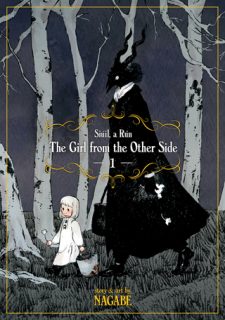
Last week at Experiments in Manga I posted two features in addition to the usual My Week in Manga. First up was the monthly giveaway. The winner will be announced on Wednesday, so there’s still time to enter for a chance to win the first volume of Leiji Matsumoto’s Queen Emeraldas. All you have to do is tell me a little about your favorite space manga (if you have one). Also posted last week was the long-form manga review for April. I took a look at The Girl from the Other Side: Siúil, a Rún, Volume 1 by Nagabe. The manga was one of my most anticipated debuts of 2017 and it is easily one of my favorites to be released so far this year. Last week was also the first week at my new job so I was rather preoccupied and busy with settling in there and so wasn’t online all that much. However, I did catch an interesting feature on the recent josei renaissance over at Anime Feminist. The article is written by Megan from The Manga Test Drive, one of the manga review blogs that I make a point to follow and particularly like.

Quick Takes

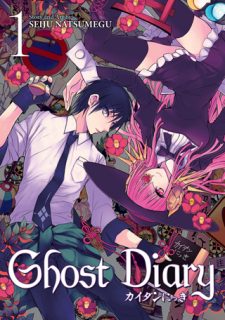
Ghost Diary, Volume 1Ghost Diary, Volume 1 by Seiju Natsumegu. My experience reading Ghost Diary was a little odd. I can’t say that I was overly impressed by the first volume while I was reading it, but by the time I reached the end I found that I actually had enjoyed myself and was interested in reading the rest of the short series. The individual elements of Ghost Diary aren’t particularly original, but as a whole it’s horrific fun. In some ways the manga feels like it’s a mashup of other existing stories which deal with the supernatural and the occult. Even the illustrations reminded me of other works, in particular some of CLAMP’s darker series. I was actually expecting Ghost Diary to be much more serious than it actually was. The manga definitely has a disturbing side to it, but to me it comes across as a dark comedy more than anything else. It’s both goofy and grotesque. The story follows Sukami Kyouichi, the youngest son in a long line of exorcists whose older sister (also an exorcist and far more powerful than he is) mysteriously disappears after he angers a god due to his inexperience, ineptitude, and ignorance. Now he’s desperately searching for her which proves to be a very dangerous venture.

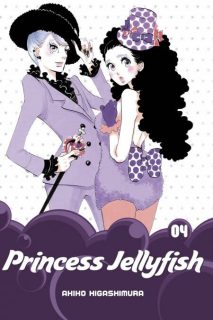
Princess Jellyfish, Omnibus 4Princess Jellyfish, Omnibus 4 (equivalent to Voluems 7-8) by Akiko Higashimura. At this point the Princess Jellyfish manga has progressed much further along in the story than the content that was adapted for the anime series (which was my introduction to the work). So far, my love for the series has yet to diminish. In this omnibus the women of the Amamizukan apartments (along with Kuranosuke) somehow manage pull off a successful fashion show which is intended, in a roundabout way, to save their home from being demolished and redeveloped. However, for that to work, their success will have to extend to actually launching the Jelly Fish brand as well, and reality is much more challenging than a dream. Princess Jellyfish is intentionally outrageous and comedic in the telling of its story but the underlying heart of the manga is believable earnest. I find the manga’s style of humor to be immensely entertaining, but probably what I enjoy most about Princess Jellyfish are its characters and their relationships with one another. I especially liked how Shuu and Kuranosuke’s brotherly affections were developed and portrayed in these two volumes.

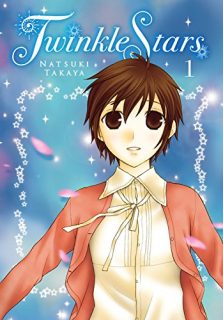
Twinkle Stars, Omnibus 1Twinkle Stars, Omnibuses 1-2 (equivalent to Volumes 1-4) by Natsuki Takaya. Probably like most people, my introduction to Takaya’s work was through the series Fruits Basket, a landmark title in the North American manga industry. It would seem, then, that Takaya’s next major series, Twinkle Stars, would be an obvious license choice, but the manga only began to be released in English relatively recently. Other than the fact that Takaya was the creator, I actually didn’t know much about Twinkle Stars before reading it. The series turns out to be an incredibly compelling and emotionally resonant work even if some of the story developments do seem a little convenient and trope-worn. The lead of Twinkle Stars is Sakyua Shiina, an endearing highschool third-year whose outward cheerfulness goes a long way to hide her inner struggle with depression and self-worth, the result of a troubled family life. Fortunately, she now has people in her life who care for her dearly. Under some rather peculiar circumstance she meets and ultimately falls in love with Chihiro, a young man who likewise is left dealing with the aftermath of past tragedies. At times Twinkle Stars can be absolutely heartbreaking but this countered by the immense kindness that is also exhibited in the series.

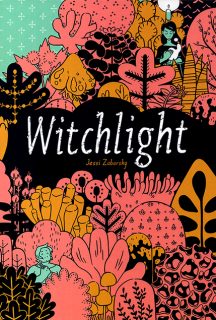
WitchlightWitchlight by Jessi Zabarsky. Before being edited and published in a collected edition with additional content, most of Witchlight had previously been released as a series of individual comic chapters. Described as a shoujo adventure, Witchlight is a delightful fantasy comic about the close bond of friendship and love which slowly develops between two young women as they travel together on a quest. They don’t start out on good terms, though. Sanja is kidnapped by Lelek, a candle witch who demands that she teach her how to use a sword. Lelek is searching for a part of herself that has been lost and magic isn’t always enough to protect her. While being abducted isn’t exactly a promising beginning to a relationship, Sanja is more curious than afraid and her good nature and openness has a positive influence on the untrusting Lelek who has kept her heart closed off from others for so long. Lelek and Sanja’s emotional journeys are the most important aspects of Witchlight, but their physical journey is also wonderful to watch unfold as they encounter other cultures and and types of magic. The characterizations, worldbuilding, artwork in Witchlight are all lovely.

RevengeRevenge: Eleven Dark Tales by Yoko Ogawa. I find the cover design and even the title selected for the English-language edition of Ogawa’s Kamoku na shigai, midara no tomurai to be somewhat misleading. Revenge, although it does make a few appearances throughout the volume, is not at all an overarching theme. And while there is death and violence, most of the gruesomeness implied by the cover occurs off-page. That being said, Revenge is a marvelously disconcerting work of subdued horror. Everything in Revenge is told from a first-person perspective, giving the collection a surprisingly quiet and contemplative atmosphere which becomes increasingly dark as the volume progresses. The individual stories can all be read and function well on their own, but what makes Revenge such a phenomenal collection is how they are all entangled with one another. Often the connections are tangential–similar turns of phrases and references are used, main characters and plot points from one story appear and reappear in the backgrounds of others, and so on–but sometimes they have a profound impact on the interpretation of the various narratives. A close, careful reading of Revenge is rewarded with the revelation of a complex, strange, and surreal web of the macabre.

Your NameYour Name directed by Makoto Shinkai. Originally I thought I would be waiting to watch a home video release of Your Name but the film actually ended up being shown at one of my local theaters and a friend invited me out to see it over the weekend. Your Name is a beautiful film, both visually and thematically, and not quite what I was expecting. (Granted, I’m not entirely sure exactly what it was that I was expecting.) To me it almost feels like three different films have been merged into one. Initially Your Name is about Mitsuha and Taki, two young people who don’t really know each other but who have started to spontaneously and erratically switch bodies when they fall asleep. But when the switching suddenly and unexpectedly stops, the film changes its focus to Taki as he tries to locate Mitsuha, keenly feeling the absence of the close intimacy that the two understandably developed over time. From there the urgency of Your Name increases even more as Taki uncovers the truth and he and Mitsuha struggle to prevent further disaster and loss. In part a romantic comedy, in part a meditation on love and spirituality, and in part (it would seem) a response to the Fukushima disasters, Your Name largely remains cohesive even while bending and shifting between genres.

Filed Under: FEATURES, My Week in Manga Tagged With: Akiko Higashimura, anime, comics, Ghost Diary, Jessi Zabarsky, makoto shinkai, manga, natsuki takaya, Princess Jellyfish, Seiju Natsumegu, twinkle stars, Yoko Ogawa

The Girl from the Other Side: Siúil, a Rún, Vol. 1

April 28, 2017 by Ash Brown

The Girl from the Other Side: Siúil, a Rún, Volume 1Creator: Nagabe
Translator: Adrienne Beck
Adapter: Ysabet Reinhardt MacFarlane
U.S. publisher: Seven Seas
ISBN: 9781626924673
Released: January 2017
Original run: 2016

The Girl from the Other Side: Siúil, a Rún by Nagabe was easily one of my most anticipated manga debuts of 2017. Nagabe is known as a creator of somewhat unusual or unorthodox manga, The Girl form the Other Side easily fitting into that category. (Nagabe’s work was actually first brought to my attention thanks to a series of beautifully drawn boys’ love doujinshi featuring birds.) The first volume of The Girl from the Other Side was originally published in Japan in 2016, while the English-language edition was released by Seven Seas early in 2017. The quality of the physical release is admittedly a little disappointing–the cover stock feels ephemeral and ink tends to smudge and transfer between pages (granted, this does at least seem to be thematically appropriate)–but I’m thrilled that The Girl from the Other Side is being translated at all. It’s also worth noting that the manga does share some obvious parallels with another unusual series, Kore Yamazaki’s The Ancient Magus’ Bride, but even considering their similarities they are quite different from each another.

Once upon a time, two kingdoms existed in a world divided into the Outside and the Inside. Humans live on the Inside behind a wall intended to keep the monstrous Outsiders and the dark curse associated with them at bay. Coming into contact with an Outsider is to be avoided at all costs; to do otherwise means risking ones’ life and humanity. But the darkness of the Outside is slowly encroaching upon the light of the Inside. Humans are succumbing to a cursed disease and are abandoning entire villages as they unsuccessfully try to flee from it. Out of fear and suspicion, people have started to turn against one another in a desperate effort to survive. In the midst of this turmoil is a young girl, Shiva. Unexpectedly left behind in an area which is now considered a part of the Outside, she is waiting to be reunited with her family. In a peculiar twist of fate, Shiva is being guarded and cared for by an inhuman Outsider who she simply calls “Teacher.” The circumstances are unusual and dangerous for them both as Shiva’s safety becoming more and more difficult to guarantee the longer she remains on the Outside, set apart from others.

 The Girl from the Other Side: Siúil, a Rún, Volume 1, page 32The fact that Shiva’s very life is in danger is clear from the beginning of The Girl from the Other Side. As a sort of prologue, the manga opens with her being warned of the curse brought by the touch of an Outsider while the first panel of the story-proper shows her lying listless on the stump of a tree. She has only fallen asleep, but the visual cues of the scene are closely reminiscent of death. An ominous feeling of uncertainty–is Shiva actually alive or is she dead, how much of her world is real and how much of it is a fairytale–pervades The Girl from the Other Side. Shiva is young enough that she doesn’t completely understand everything that is happening to her and doesn’t know enough to be afraid. But as she experiences more her awareness grows, even when Teacher tries to shield her from life’s harsher realities. Likewise, readers gain more knowledge as the underlying truths of Shiva’s situation are slowly revealed. However, they don’t have Teacher to soften the blows for them. To some extent Shiva’s innocence protects her from the tragedy and heartbreak inherent to The Girl from the Other Side which is so obvious from an outside perspective.

The Girl from the Other Side is incredibly atmospheric, a beautiful and surprisingly gentle and charming story which simultaneously manages to be disconcerting and unsettling. The series is very dark, in both theme and illustration. There is a tremendous amount of ink on the manga’s pages–the oppressive shadow of death which haunts the story is reinforced visually, the darkness permeating the scenes. Shiva, with her light-colored hair and dressed in white, stands apart from the unwelcoming environment. She is obviously out of place, separate from what is around her. In contrast, Teacher is clothed in black and at times is barely discernible from the background. But although an Outsider and demonic in form, Teacher is Shiva’s only hope, trying to safeguard her from anyone who would seek to do her harm. Their strange yet sweet and endearing relationship is core to The Girl on the Other Side. The life that they have, no matter how impermanent, carries great weight as they face an uncertain future together. The Girl from the Other Side is a gorgeous and striking work; I can’t wait for the next volume to be released.

Filed Under: REVIEWS Tagged With: Girl from the Other Side, manga, Nagabe, Seven Seas

Manga Giveaway: Queen Emeraldas Giveaway

April 26, 2017 by Ash Brown

It’s that time again! The end of the month is fast approaching which means another giveaway at Experiments in Manga is now underway! This month’s giveaway features Queen Emeraldas, Volume 1 by Leiji Matsumoto as published in English by Kodansha Comics. (It’s a hardcover!) The second and final volume of the series will be released later this year (I believe it’s scheduled for July), so this giveaway is a great opportunity for a chance to win the first volume to give the series a try. And, as always, the giveaway is open worldwide!

Queen Emeraldas, Volume 1

I have been a long-time fan of speculative and science fiction of all types, but I do seem to particularly fond of those that somehow involve space. Taking that into consideration, it probably shouldn’t be too surprising that manga about space travel and exploration especially tend to appeal to me. When Leiji Matsumoto’s Queen Emeraldas was licensed it immediately caught my attention. Not only does it take place in space, it’s also a series from the 1970s. “Classic” manga aren’t frequently released in English (unless they’re by Osamu Tezuka), so that aspect of Queen Emeraldas interested me, too. And indeed, I enjoyed the first volume a great deal.

So, you may be wondering, how can you a copy of the Queen Emeraldas, Volume 1?

1) In the comments below, tell me about your favorite manga set in space. (Don’t have a favorite or have never read one? Simply mention that instead.)
2) If you’re on Twitter, you can earn a bonus entry by tweeting, or retweeting, about the contest. Make sure to include a link to this post and @PhoenixTerran (that’s me).

And there you have it. Everyone participating in the giveaway can earn up to two entries and has one week to submit comments. If needed or preferred, entries can also be sent directly to me at phoenixterran(at)gmail(dot)com. The comments will then be posted here in your name. The giveaway winner will be randomly selected and announced on May 3, 2017. Good luck!

VERY IMPORTANT: Include some way that I can contact you. This can be an e-mail address in the comment form, a link to your website, Twitter username, or whatever. If I can’t figure out how to get a hold of you and you win, I’ll just draw another name.

Contest winner announced–Manga Giveaway: Queen Emeraldas Giveaway Winner

Filed Under: FEATURES, Giveaways Tagged With: Leiji Matsumoto, manga, Queen Emeraldas

My Week in Manga: April 17-April 23, 2017

April 24, 2017 by Ash Brown

My News and Reviews

Well, I didn’t manage to post my in-depth manga review for April last week after all. Today I’m starting in a new position at a different library, meaning that last week I spent most of my time tying up as many loose ends as possible at my previous job. This included writing a lot of documentation. And since I was doing so much writing for work, by the time I got home I didn’t want to do anything but read, so that’s what I did. (Which goes to explain why I ended up finishing Cixin Liu’s excellent novel The Three-Body Problem much sooner than I had originally anticipated.) But never fear, I’ll be posting my review of Nagabe’s The Girl from the Other Side later this week in addition to the monthly manga giveaway.

In other news, Seven Seas continued its string of licensing announcements, adding Orikō Yoshino and Z-ton’s light novel series Monster Girl Doctor, Kazuki Funatsu’s Yokai Girls manga, and Saki Hasemi and Kentaro Yabuki’s To Love Ru and To Love Ru Darkness manga to the slate. Recent announcements from Viz Media included Sankichi Hinodeya’s Splatoon manga, a Hello Kitty coloring book, picture books of Hayao Miyazaki’s Castle in the Sky and Princess Mononoke, as well as the My Little Pony: The Movie artbook. Kodansha Comics had a couple of announcements to make recently, too, such as the upcoming release of full-color hardcover edition of Gun Snark’s Attack on Titan: No Regrets (I’ve previously reviewed the series’ first English-language release) and a hardcover omnibus edition of Yukito Kishiro’s Battle Angel Alita. (The series was originally published in English by Viz Media but has been out-of-print for quite some time.)

I also came across a few other interesting things last week: Over at The OASG, Justin interviewed Mariko Hihara and Kotoyo Noguchi, two independent manga creators in Japan. Noguchi also had some questions to ask in return. Frederik L. Schodt (whose work I greatly enjoy) was recently profiled at Nippon.com. The article takes a look at his involvement as an ambassador for manga over the last four decades. Caitlin from I Have a Heroine Problem presented a panel called “Is This Feminist or Not? Ways of Talking about Women in Anime” at Sakura Con 2017 and has made her slides available. A very nicely designed site called Persona Problems offers criticism of Persona 5‘s English localization and delves into translation theory and practice that even people who don’t play the game may find interesting. Finally, the author and designer Iku Okada has started a series of autobiographical essays called Otaku Girl and Proud which explores Japanese gender inequality and identity and how popular culture can impact that experience.

Quick Takes

Dorohedoro, Volume 17Dorohedoro, Volumes 17-20 by Q Hayashida. Despite being one of my favorite ongoing series currently being released in English, I seem to somehow always forget how incredibly much I love Dorohedoro. I tend to forget how tremendously horrific the manga can be, too, mostly because it simultaneously manages to be surprisingly endearing. Hayashida’s story and artwork is frequently and stunningly brutal, gut-churning, and grotesque, but Dorohedoro also carries with it a great sense of humor. Granted, the comedy in Dorohedoro tends to be phenomenally dark. Lately, as Dorohedoro continues to steadily progress along what I believe will be it’s final major story arc, the series has become fairly intense and serious, but it remains exceptionally weird and has yet to completely lose its humor. The plot of Dorohedoro does meander a bit and because it’s been so long since I’ve read the previous volumes I’m sure that I’ve forgotten a few important details as the story takes multiple convoluted turns along the way. Ultimately, it doesn’t seem to really matter though since the world and characters of of Dorohedoro follow and operate under their own peculiar sort of logic; Dorohedoro doesn’t need to make a lot of sense in order to be bizarrely enjoyable.

FukuFuku: Kitten Tales, Volume 1FukuFuku: Kitten Tales, Volumes 1-2 by Kanata Konami. Before there was Chi’s Sweet Home there was FukuFuku Funyan, Konami’s cat manga which started in the late 1980s. The series featured an elderly woman and her cat FukuFuku. More recently, Konami created FukuFuku: Kitten Tales, a spinoff of FukuFuku’s first series which, as can be accurately assumed by the manga’s title, shares stories from the loveable feline’s youth. While Konami’s artwork in FukuFuku: Kitten Tales is black-and-white rather than being full-color and the manga is only two-volumes long rather than being twelve, the series is otherwise very similar in format to Chi’s Sweet Home. It’s actually been quite a while since I’ve read any of Chi’s Sweet Home, but FukuFuku: Kitten Tales feels like it might be a little more episodic as well. However, it is still an incredibly cute series. Each chapter is only six pages or so but manages to tell a complete story, accurately portraying the everyday life and antics of a kitten. FukuFuku: Kitten Tales isn’t especially compelling or creative as far as cat manga goes, but it is an adorable series which consistently made me smile and even chuckle from time to time.

Magia the Ninth, Volume 2Magia the Ninth, Volume 2 by Ichiya Sazanami. I enjoyed the first volume of Magia the Ninth immensely. I’m not really sure I could call it a good manga per se, and I don’t think I would necessarily recommend it broadly, but personally I got a huge kick out of it. That being said, I can’t say that I’m surprised that the series only lasted two volumes. (I don’t know for certain, but I get the feeling that Magia the Ninth was cancelled.) What did surprise me was how well Sazanami was able to pull everything together to conclude the manga in a coherent (and almost satisfying) fashion when obviously it was intended to be a series on a much grander scale. To be honest, Magia the Ninth probably would have done much better for itself if the manga had had that level of focus from the very beginning. Magia the Ninth is a strange and somewhat goofy little series about demons, magic, and music. While the series wasn’t always the most comprehensible, it’s stylishly drawn, has tremendous energy, and even manages to effectively incorporate legitimate music history into the story. Magia the Ninth may not have lived up to its potential, but I had fun with it.

The Prince in His Dark Days, Volume 2The Prince in His Dark Days, Volumes 2-3 by Hico Yamanaka. More and more of The Prince in His Dark Days seems to revolve around Itaru, but at this point I would still consider Atsuko, who is serving as Itaru’s double, to be the real lead of the manga. Unfortunately, Atsuko is casually threatened with sexual violence on a regular basis in the series which frankly makes me uncomfortable. In general, the power dynamics in The Prince in His Dark Days tend to be fairly disconcerting. It doesn’t really help when other characters’ try to play it off as a joke, either. If anything, it only seems to emphasize the fact that so many of them are unrepentant jerks. I know that I’m supposed to empathize with some of their personal struggles, but I find it difficult to spare a lot of sympathy for entitled assholes. However, the themes that Yamanaka explores in The Prince in His Dark Days are of tremendous interest to me, most notably those of gender expression and sexual identity. I also appreciate the manga’s melancholy mood and the slow blossoming of love in unexpected places. There’s only one volume left in The Prince in His Dark Days and despite some of my reservations about the series I am curious to see how it ends.

The Three-Body ProblemThe Three-Body Problem by Cixin Liu. If my memory serves me right, The Three-Body Problem is actually the first contemporary Chinese novel that I’ve read. It initially came to my attention when it became the first work in translation to win the Hugo Award for Best Novel. Interestingly, when The Three-Body Problem was translated into English by Ken Liu, the order of the chapters was restored to what the author originally intended and a few additional changes were made in consideration of some of the real-world scientific advances that had developed since the novel was first published in China. As a novel that leans heavily on hard science, I found The Three-Body Problem to be fascinating. (At one point in my life, I actually considered going into theoretical physics.) But what makes The Three-Body Problem so compelling are the social aspects of the narrative. In particular, China’s Cultural Revolution and the characters’ responses to it play a critical role in the story’s development. The Three-Body Problem is the first book in a trilogy, Remembrance of Earth’s Past, and so while largely being a satisfying novel on its own, it’s obviously only the beginning of a larger work. I definitely plan on reading the rest.

Filed Under: FEATURES, My Week in Manga Tagged With: Cixin Liu, dorohedoro, FukuFuku, Hico Yamanaka, Ichiya Sazanami, Konami Kanata, Magia the Ninth, manga, Prince in His Dark Days, Q Hayashida, Remembrance of Earth's Past

  • « Go to Previous Page
  • Page 1
  • Page 2
  • Page 3
  • Page 4
  • Page 5
  • Page 6
  • Interim pages omitted …
  • Page 60
  • Go to Next Page »
 | Log in
Copyright © 2010 Manga Bookshelf | Powered by WordPress & the Genesis Framework