• Skip to primary navigation
  • Skip to main content
  • Skip to primary sidebar
  • Home
  • About Us
    • Privacy Policy
    • Comment Policy
    • Disclosures & Disclaimers
  • Resources
    • Links, Essays & Articles
    • Fandomology!
    • CLAMP Directory
    • BlogRoll
  • Features & Columns
    • 3 Things Thursday
    • Adventures in the Key of Shoujo
    • Bit & Blips (game reviews)
    • BL BOOKRACK
    • Bookshelf Briefs
    • Bringing the Drama
    • Comic Conversion
    • Fanservice Friday
    • Going Digital
    • It Came From the Sinosphere
    • License This!
    • Magazine no Mori
    • My Week in Manga
    • OFF THE SHELF
    • Not By Manga Alone
    • PICK OF THE WEEK
    • Subtitles & Sensibility
    • Weekly Shonen Jump Recaps
  • Manga Moveable Feast
    • MMF Full Archive
    • Yun Kouga
    • CLAMP
    • Shojo Beat
    • Osamu Tezuka
    • Sailor Moon
    • Fruits Basket
    • Takehiko Inoue
    • Wild Adapter
    • One Piece
    • After School Nightmare
    • Karakuri Odette
    • Paradise Kiss
    • The Color Trilogy
    • To Terra…
    • Sexy Voice & Robo
  • Browse by Author
    • Sean Gaffney
    • Anna Neatrour
    • Michelle Smith
    • Katherine Dacey
    • MJ
    • Brigid Alverson
    • Travis Anderson
    • Phillip Anthony
    • Derek Bown
    • Jaci Dahlvang
    • Angela Eastman
    • Erica Friedman
    • Sara K.
    • Megan Purdy
    • Emily Snodgrass
    • Nancy Thistlethwaite
    • Eva Volin
    • David Welsh
  • MB Blogs
    • A Case Suitable For Treatment
    • Experiments in Manga
    • MangaBlog
    • The Manga Critic
    • Manga Report
    • Soliloquy in Blue
    • Manga Curmudgeon (archive)

Manga Bookshelf

Discussion, Resources, Roundtables, & Reviews

manga

Manga Giveaway: Battle Angel Alita Giveaway

March 26, 2014 by Ash Brown

Perhaps because March follows the shortest month of the year it seems to have lasted a particularly long time for me. Granted, that feeling may attributed to how incredibly busy I’ve been recently. Regardless, the end of March is almost here, which means it’s time for another manga giveaway! This month you’ll all have the chance to win the first omnibus in Yukito Kishiro’s Battle Angel Alita: Last Order as published by Kodansha Comics. The omnibus collects the first three volumes of the series as well as additional stories by Kishiro not previously released in English. As always, the giveaway is open worldwide!
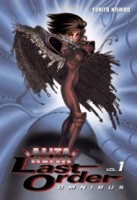
Battle Angel Alita: Last Order, Omnibus 1

It’s not at all a secret that I am a fan of androids (I blame the absurd amount of Isaac Asimov that I read in my youth), so it probably isn’t too surprising that I’m rather fond of cyborgs as well. That’s one of the reasons that Battle Angel Alita particularly appeals to me. The existence of ancient Martian martial arts and space karate in the series doesn’t hurt, either. In general, cyborgs aren’t a particularly uncommon element in near future science fiction and I’m aware of quite a few from manga specifically. Much as with android stories, I enjoy stories about cyborgs because they allow creators a way to explore what it means to be human in interesting ways.

So, you may be wondering, how can you win a copy of the first Battle Angel Alita: Last Order omnibus?

1) In the comments below, tell me a little about your favorite cyborg from manga. (If you don’t have one, you can simply mention that.)
2) For a second entry, name another manga that features a cyborg that hasn’t been mentioned yet by me or by someone else.
3) If you’re on Twitter, you can earn a bonus entry by tweeting about the contest. Make sure to include a link to this post and @PhoenixTerran (that’s me).

That’s all there is to it. Each person can earn up to three entries for the giveaway and has a week to submit comments. If you have trouble leaving a comment, or if you would prefer, entries may also be submitted via e-mail to phoenixterran(at)gmail(dot)com which will then be posted in your name. The giveaway winner will be randomly selected and announced on April 2, 2014. Best of luck to you all!

VERY IMPORTANT: Include some way that I can contact you. This can be an e-mail address, a link to your website, Twitter username, or whatever. If I can’t figure out how to get a hold of you and you win, I’ll just draw another name.

Contest winner announced–Manga Giveaway: Battle Angel Alita Giveaway Winner
Filed Under: FEATURES Tagged With: Battle Angel Alita, manga, Yukito Kishiro

My Week in Manga: March 17-March 23, 2014

March 24, 2014 by Ash Brown

My News and Reviews

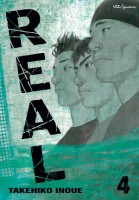
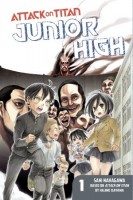
Experiments in Manga featured two manga reviews as well as something a little different last week. First up, I took a look at Saki Nakagawa’s Attack on Titan: Junior High, Omnibus 1. It’s a rather absurd and ridiculous series, but I was amused. The manga does require some familiarity with both Attack on Titan and Attack on Titan fandom to fully appreciate it, though. Not too long ago, I read Jeffrey Angles’ Writing the Love of Boys which introduced me to the work of Kaita Murayama. Not much about Murayama has been written in English, and only two of his short stories have ever been translated, but I was interested in learning more about him and his work. The result was a Spotlight on Kaita Murayama. (I’m actually very happy with how the post turned out!) Finally, as the actual March Madness begins, I posted the penultimate review in my own Manga March Madness–Real, Volume 4 by Takehiko Inoue, which delves more deeply into Togawa’s past. Real is a fantastic series, and one of my favorite manga.

And now for a few things found online! Vertical’s tumblr often has something interesting to read. Last week’s response to a question about licensing old Tokyopop titles was particularly informative. I enjoy House of 1000 Manga, but the most recent column focuses on Usamaru Furuya and his work, which I’m always happy to read more about. Sequart has a great interview with Kumar Sivasubramanian, the translator of some of my very favorite manga. Gay Manga posted an excellent article about the censorship of a billboard designed by artist Poko Murata promoting HIV awareness which also addresses some of the history of gay artwork in Japan. And in other censorship news, it looks like the manga series Barefoot Gen, after running into some trouble last year, may end up being banned again in parts of Japan.

Quick Takes

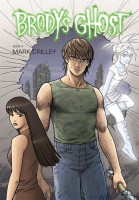
Brody's Ghost, Book 4Brody’s Ghost, Book 4 by Mark Crilley. It’s been quite a while since I’ve read any of Brody’s Ghost, but I do enjoy the series. Each installment is frustratingly thin though (each is less than a hundred pages) and only one book is released per year. Once the story is finished, I’d love to see Brody’s Ghost collected into a single omnibus. I think the series would benefit from being read in larger chunks or all at once. Which is not to say the individual books aren’t enjoyable. Each one has a great mix of action, story, and character development. I enjoy Crilley’s artwork, too. I also enjoy the bonus content that Crilley includes, outlining some of his design choices and storytelling decisions. In this particular volume of Brody’s Ghost, Brody is doing everything that he can to track down the Penny Murderer, including impersonating a detective. His ex-girlfriend, who he still cares about, may very well be the next victim and he is desperate to prevent that from happening. Things are even more complicated now that he has discovered that Talia–the ghost who pressured him into the investigation–has been lying to him.

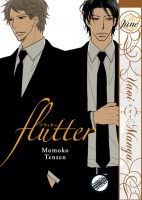
FlutterFlutter by Momoko Tenzen. I appreciate it when a boys’ love manga includes a character who is actually openly gay, so that aspect of Flutter particularly appealed to me. Mizuki is that man–a respected and skilled project leader at his company. He presents himself as someone who is extremely well put together, but that public face is deliberately crafted to hide his weaknesses and insecurities. Asada is one of Mizuki’s coworkers. He finds himself inexplicably drawn to Mizuki. After the two of them are assigned to the same project they get to know each other, first as friends and then as something possibly more as Mizuki begins to drop his guard around Asada. Flutter is a slowly paced and relatively quiet manga, which is somewhat surprising as Mizuki’s backstory is fairly melodramatic. However, that melodrama is completely lacking from Mizuki and Asada’s somewhat awkward relationship; I enjoyed watching it develop. Asada’s personality is very kind and candid and his inability to hide what he is thinking and feeling is adorable. This open honesty is just what Mizuki needs, whether he realizes it or not.

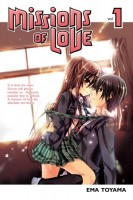
Missions of Love, Volume 1Missions of Love, Volumes 1-4 by Ema Toyama. I’ll admit it, I’m addicted to Missions of Love. I actually began reading the series with the fifth and sixth volumes, but I enjoyed them enough that I wanted to go back and read it from the beginning to learn how the whole mess between Yukina, Shigure, Akira, and Mami came to be. Missions of Love isn’t the most believable series and some of it is admittedly silly, but I don’t think I would enjoy the manga as much as I do if Toyama took a more serious or realistic approach. The story itself might be somewhat ridiculous, but the complicated relationships and emotions are real enough. Ultimately, that’s what appeals to me about Missions of Love–the intensity of the characters’ feelings paired with a plot that can be over-the-top. In the beginning, Yukina and Shigure don’t even like each other which is what allows them to resort to blackmail and manipulation. But as the series progresses, they come to care for and rely on each other in a way that is incredibly twisted. All of the relationships in Missions of Love are like that. I can’t help but want to watch the emotional chaos and turmoil unfold.

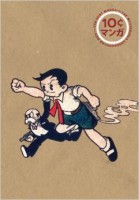
The Mysterious Underground MenThe Mysterious Underground Men by Osamu Tezuka. The Mysterious Underground Men is the second volume in Ryan Holmberg’s Ten-Cent Manga series which explores classic manga influenced by classic American comics and cartoons. Tezuka, often called the grandmaster of contemporary manga and anime, has had many of his works released in English. Granted, only a small fraction of his total output has been translated. As much as I appreciate Tezuka’s manga and his importance as a creator, I’m actually much more interested in the work of other classic mangaka who are less likely to be licensed. Initially, I wasn’t even planning on reading The Mysterious Underground Men. But because I was so impressed by the first volume of Ten-Cent Manga, I decided to give it a try after all. I’m glad that I did, not so much for the manga itself (which I did enjoy), but more for the supplementary material–Tezuka’s afterword, in which he describes The Mysterious Underground Men as his first story manga, and Holmberg’s essay which puts the manga into historical context, specifically noting its Western pop culture influences.

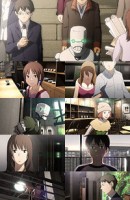
Time of EveTime of Eve directed by Yasuhiro Yoshiura. It’s not a secret that I have a fondness for stories about androids, so it probably shouldn’t be too surprising that I liked Time of Eve, a six episode anime series that was first released online. The series revolves around an unusual cafe, the titular Time of Eve, where humans and androids can interact while ignoring the laws that normally separate them. The cafe has only one rule, that there is to be no discrimination between the two groups. Rikuo discovers the cafe while looking into the unexpected behavior of “Sammy,” his household’s android. Along with his close friend Masaki, Rikuo’s assumptions about androids and how humans treat them are challenged as he gets to know the other customers at the cafe. Time of Eve doesn’t break any new ground when it comes to androids and makes good use of Asimov’s Three Laws of Robotics. I’ve read and watched so much android fiction that nothing about the series surprised me (including what were supposed to be dramatic reveals), but I still found the anime to be immensely enjoyable.

Filed Under: FEATURES, My Week in Manga Tagged With: anime, Brody's Ghost, comics, Ema Toyama, manga, Mark Crilley, missions of love, Momoko Tenzen, Osamu Tezuka, Ten-Cent Manga, Time of Eve

Real, Vol. 4

March 23, 2014 by Ash Brown

Real, Volume 4Creator: Takehiko Inoue
U.S. publisher: Viz Media
ISBN: 9781421519920
Released: April 2009
Original release: 2004
Awards: Japan Media Arts Award

I am a huge fan of Takehiko Inoue’s illustrations and manga. Everything that I have read by him has impressed me; his artistic skills and storytelling, as well as his complex characterizations, are fantastic. When I first began reading Inoue’s manga I fully expected to enjoy his series Vagabond the most. Vagabond is marvelous and I love it, but it was Inoue’s wheelchair basketball series Real that became my favorite. Real also happens to be the first manga by Inoue that I read. Since I don’t follow sports of any sort very closely, I was somewhat taken by surprise by how much I enjoyed Real. But the series is about so much more than basketball. Inoue adeptly portrays hard-hitting challenges and life-changing events in Real; basketball is just one part of the whole. The fourth volume of Real was published in Japan in 2004 while the English-language edition was released under Viz Media’s Signature imprint in 2009. Inoue received a Japan Media Arts Award Excellence Prize for Real in 2001, the same year the manga began serialisation.

After a violent falling-out with the captain of his wheelchair basketball team, Togawa has only recently returned to the game. There is still a fair amount of tension between the members of the Tigers, but with the Sunflower tournament coming up the team has started to pull together in a way that it hasn’t been able to in a long time. Togawa’s hard work and enthusiasm for basketball have served as an inspiration for some of his teammates. Unfortunately, some of the other players aren’t as appreciative of his attitude and the grueling practices that he leads. It is very likely that the Tigers forward momentum is only temporary and that the team will soon fall apart again. For Togawa, playing basketball and playing for the Tigers means everything to him. Having his right leg amputated as a middle school student because of bone cancer brought his dream of becoming a sprinter to an abrupt end. Togawa struggled immensely with this loss and it wasn’t until he discovered wheelchair basketball that he was able to find himself and his passion as an athlete again.

Just as the third volume of Real largely focused on the beginning of Takahashi’s rehabilitation, the fourth volume in the series delves more deeply into Togawa’s past, looking closely at the state of his life immediately following the amputation of his leg. It shows how the young track star, after having his ambitions crushed, came to play wheelchair basketball. The loss of his leg was devastating for Togawa. He became withdrawn, cutting himself off from his classmates and his friends, and his father unintentionally reinforced this isolation. Along with his leg, Togawa lost his sense of purpose, drive, and direction in his life. Even greater is the tremendous loneliness that he experiences. Togawa doesn’t want pity from others, he wants understanding. At the same time he is shunning contact and pushing people away, he is desperate to ease the loneliness that he feels. Togawa is extremely fortunate to meet a man by the name of Tora who helps drag Togawa back out of the shell he created for himself, serving as a much-needed role model–something that Takahashi has yet to find.

Despite all of the sweat and tears in Real, Volume 4, it tends to be slightly more ruminative and quiet than the volumes that precede it. One of the major themes that Inoue explores in the series–the meaning and purpose of a person’s life–becomes particularly prominent in the fourth volume. Both Togawa and Takahashi are faced with enormous challenges and changes in their lives which require them to completely reevaluate who they are as people. They are both struggling to rediscover and redefine their identities. Having lost something incredibly important to them, they anguish over the reasons why and what could have been done to prevent it. Ultimately, these are questions that don’t have an easy answer or solution. Over the course of the series, Takahashi frequently lashes out at those around him. In contrast, as seen in Real, Volume 4, Togawa tends to internalize his anger and despair. The similarities and differences in their situations and personalities are striking and an extraordinary effective part of the series. Real is a powerful and emotionally engaging work.

Filed Under: REVIEWS Tagged With: Japan Media Arts Award, manga, real, Takehiko Inoue, viz media, VIZ Signature

Attack on Titan: Junior High, Vol. 1

March 19, 2014 by Ash Brown

Attack on Titan: Junior High, Omnibus 1Creator: Saki Nakagawa
U.S. publisher: Kodansha
ISBN: 9781612629162
Released: March 2014
Original release: 2013

Attack on Titan: Junior High is one of several spin-off series inspired by Hajime Isayama’s hit manga Attack on Titan. Saki Nakagawa was selected to work on an Attack on Titan series after entering a manga contest. (Coincidentally, both Nakagawa and Isayama attended the same design school.) Although Nakagawa is the writer and artist for Attack on Titan: Junior High, Isayama has had some input into the series’ development. In fact, he was the one who suggested creating a manga along the lines of Tsutomu Nihei’s parody series Blame! Academy. And so Attack on Titan: Junior High was born–a comedy manga that somehow manages to combine Attack on Titan with contemporary Japanese school life. The manga began serialization in 2012 in Japan and the first two volumes were collected in 2013. Kodansha Comics is releasing Attack on Titan: Junior High in an omnibus edition. The first omnibus, collecting the first two Japanese volumes, was published in 2014 and Kodansha was kind enough to send me a review copy.

It has been five years since Eren was traumatized from an encounter with a Titan. Now that he’s in junior high he finally has the opportunity to seek revenge–both humans and titans are counted among the students and teachers of Attack Junior High. Of course Eren has other pressing matters to attend to even while his hatred of Titans remains at the forefront of his mind: making allies out of his classmates (which he’s not particularly good at), surviving epic games of dodgeball and choosing the perfect after-school club (which are both more dangerous than they might first appear), not to mention trying to stay on the upperclassmen’s good sides (which can actually be rather difficult). On top of all of that, Eren is a member of class four, a group of first years who all have their own quirks and issues to deal with. All together they’re a bunch of weirdos, but none of the other classes at Attack Junior High are much better. It’s really saying something when the Titans are the most normal ones at the school.

To really appreciate Attack on Titan: Junior High requires familiarity with the original Attack on Titan series and to some extent familiarity with Attack on Titan fandom as well. Some of Attack on Titan: Junior High will be funny, or at least amusing, even to those who haven’t read Attack on Titan, but the manga works best when it is directly parodying the original series and using it as its framework. All of Attack on Titan‘s most well-loved and reviled characters make an appearance in Attack on Titan: Junior High with some of their personality traits taken to a comedic extreme (although some were fairly over-the-top to begin with): Eren is a single-minded fanatic; Mikasa is overprotective of him to a fault; Sasha thinks about nothing but food; Jean is an arrogant ass; Hange succumbs to fits of ecstasy at the mere thought of Titans; Levi is obsessed with cleanliness, and so on. These characteristics were true of the original cast, too, but Nakagawa has stretched them to their limits in Attack on Titan: Junior High.

Nakagawa is clearly a fan of the original Attack on Titan series and is having a lot of fun with Attack on Titan: Junior High. In addition to using Isayama’s characters and taking them to their ludicrous yet logical conclusions, Nakagawa also uses pivotal and memorable scenes from Attack on Titan, giving them utterly ridiculous and absurd twists to emphasize their more comedic possibilities. The darkness, death, and destruction found in Attack on Titan is almost completely missing from Attack on Titan: Junior High. It can be just as frantic and frenetic, but as a parody the manga is much more lighthearted in tone. Even characters who have long been dead in the original series have an active role to play in Attack on Titan: Junior High; it seems as though no one really has to worry about dying in Nakagawa’s series. The worst thing that really happens in the first omnibus of Attack on Titan: Junior High is some stolen lunches. Granted, for students that can be an extremely tragic event, indeed.

Thank you to Kodansha for providing a copy of Attack on Titan: Junior High, Omnibus 1 for review.

Filed Under: REVIEWS Tagged With: attack on titan, kodansha, Kodansha Comics, manga, Saki Nakagawa

My Week in Manga: March 10-March 16, 2014

March 17, 2014 by Ash Brown

My News and Reviews

I managed to post three in-depth reviews last week, and two of them were for manga! First up was my review of Mieko Kanai’s delightful novel Indian Summer. Technically, it’s the third book in her Mejiro series, following Oh, Tama!, which I also recently read and enjoyed. However, Indian Summer was actually her first novel to be translated in English. As part of my Year of Yuri review project, I took a look at the omnibus edition of Milk Morinaga’s manga Kisses, Sighs, and Cherry Blossom Pink. So far it has been my favorite yuri manga by Morinaga to have been released in English. It’s very cute, sweet, and romantic. And to wrap things up, over the weekend I posted the next review in my “Manga March Madness” project which focuses on Takehiko Inoue’s wheelchair basketball series Real. It was the third week in March, so I reviewed Real, Volume 3. I still think that Real is one of the best comics currently being released in English.

Quick Takes

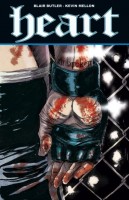
HeartHeart written by Blair Butler and illustrated by Kevin Mellon. At one point Oren “Rooster” Redmond was a run-of-the-mill office worker. Bored with his job, he decides to take control of his life. Following in the footsteps of his older brother he starts by becoming an amateur MMA fighter. After months of grueling training he finally has the opportunity to go pro, but that’s when the hard work really begins. Heart follows the rise and fall of Rooster and the sacrifices that he makes. There’s too much face punching, blood, and machismo to call Heart sentimental, but it is a very human story. Rooster’s fights both in the cage and internally with himself are also representative of anybody’s struggle to accept themselves for who they are. Sometimes, no matter how hard someone tries or how much they improve, it will simply never be enough. It’s how someone deals with that fact that really determines who they are as a person. Heart is a great comic and one that I personally found to be inspirational, and not just because I’m a martial artist.

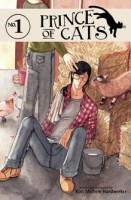
Prince of Cats, Issue 1Prince of Cats, Issues 1-4 by Kori Michele Handwerker. Prince of Cats is an ongoing webcomic that is free to read, however the print edition of the series includes some bonus content not available online. I knew going into Prince of Cats that the comic was a queer love story, but what I didn’t realize is that the series also features a transgender character, which I was rather pleased to discover. Handwerker hand paints each page of the comic and the watercolors are beautiful. The story itself is also lovely, focusing on the relationship between Lee and Frank who were once very close but who are starting to drift apart. Despite the high school drama, Prince of Cats tends to be quiet and subdued but very realistic (with the exception of talking cats, of course.) I could easily empathize with the characters and the portrayal of growing up in a conservative, rural area. It’s hard enough trying to fit in to begin with, let alone while also being a member of a minority (of any sort). I’m definitely looking forward to reading more of Prince of Cats.

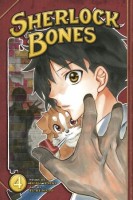
Sherlock Bones, Volume 4Sherlock Bones, Volume 4 written by Yuma Ando and illustrated by Yuki Sato. In previous volumes of Sherlock Bones the answer to the various mysteries were known from the beginning. The challenge was simply to find evidence to prove who was guilty. However, in the fourth volume Sherdog and Takeru actually have to do some legitimate investigation and sleuthing. Granted, in all but one case the readers are already aware who the culprit is. I’m still enjoying Sherlock Bones more than I expected I would. The silliness of the premise is a bit at odds with the seriousness of many of the crimes (homicide, accidental and otherwise, is the one that is most frequently encountered), but for the most part it somehow works; Sherlock Bones can be unexpectedly entertaining. I would like to say that I will be extremely disappointed if Meowriarty doesn’t make another appearance in the series. As if Sherlock Holmes as a small puppy wasn’t ridiculous enough, Moriarty as a bruiser of a cat is marvelously absurd. Also, Sherdog needs an arch-nemesis.

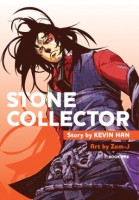
Stone Collector, Volume 1Stone Collector, Book 1 written by Kevin Han and illustrated by Zom-J. Stone Collector is Gen Manga’s first manhwa series, but it reads from right to left, which is a little odd. I was rather surprised when I saw the first volume of Stone Collector; I’m used to the smaller trim sizes used by Gen Manga and hadn’t realized that Stone Collector was going to be so much larger. The oversized format shows off Zom-J’s artwork, which is very clean and fairly dynamic with great facial expressions. Frequently, I found that I was vaguely reminded of Kohta Hirano and especially Hellsing. Some of the battle sequences in Stone Collector are a little difficult to follow, and the lack of backgrounds often made it seem more like a storyboard than a fully realized comic. More attention is given to the fights and monsters than is given to a completely comprehensible plot or well-developed characters. However, it is a quickly paced, action-packed series. I could see a film adaptation of Stone Collector actually doing quite well.

Filed Under: FEATURES, My Week in Manga Tagged With: Blair Butler, comics, Kevin Han, Kevin Mellon, Kori Michele Handwerker, manga, manhwa, Prince of Cats, Sherlock Bones, Stone Collector, Yuki Sato, Yuma Ando, Zom-J

Real, Vol. 3

March 15, 2014 by Ash Brown

Real, Volume 3Creator: Takehiko Inoue
U.S. publisher: Viz Media
ISBN: 9781421519913
Released: January 2009
Original release: 2003
Awards: Japan Media Arts Award

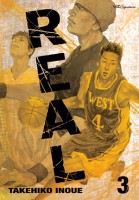
Takehiko Inoue is probably best known for his basketball manga series Slam Dunk. Now, I enjoy Slam Dunk quite a bit. However, it’s another basketball manga by Inoue that is my personal favorite–Real, which specifically features wheelchair basketball. Although Real and Slam Dunk both share some similar themes, Inoue’s approach in Real tends to be much more serious and realistic, which make sense as the series is intended for a more mature audience. Real began serialization in the manga magazine Weekly Young Jump in 2001. Later that year, Inoue would win a Japan Media Arts Award Excellence Prize for the manga. The third volume of Real was released in Japan in 2003. Viz Media published Real under its Signature imprint, releasing the English-language edition of Real, Volume 3 in 2009. Real is a fantastic series that starts strongly and only continues to get stronger with each volume.

Things always came easily for Takahashi and he naturally excelled at both school and sports. But now he is faced with one of the most daunting challenges of his life. The question is whether or not he will be able to meet that challenge. After being hit by a truck, Takahashi has lost all feeling in his legs along with his ability to walk. He is in complete denial about his condition and is convinced that with only a little effort he’ll be back to playing basketball in no time. Takahashi is in for quite a shock when he begins his physical rehabilitation and he doesnt’ take it well. Recovery, both mental and physical, will be a long and excruciating process and in the end Takahashi will never have the mobility he once enjoyed. Coming to terms with that fact and facing reality are the first steps that Takahashi needs to take in order to move on with his life, but they may be some of the most difficult ones to accomplish.

Although Takahashi is largely the focus of the third volume of Real, he is not the only one who is facing a significant crossroads in his life. Moving forward after a traumatic experience is one of the themes addressed in Real, Volume 3. Nomiya still feels incredibly guilty over the accident that he was in which caused Natsumi to lose the use of her legs. She, like Takahashi, has begun her rehabilitation. It’s a painful and exhausting process for the body, the mind, and the spirit. Seeing this, Nomiya desperately wants to change the direction his life is heading and to become a better person. This, too, is not an easy process. At this point in the series, Togawa serves as proof that these sorts of challenges can be overcome. Things certainly aren’t perfect for him and he still harbors intense anger and frustration, but even with a missing leg he leads a full life. However, it took hard work and effort to get to where he is now. Whether or not Takahashi will be able to do the same remains to be seen.

One of the things that impresses me about Real and Inoue’s work in general is his ability to create incredibly flawed characters who are still sympathetic. Takahashi in particular can be extremely harsh and unlikeable, but I still care about him and his situation. His tormented feelings over no longer being able to walk and how he believes that makes him a lesser person are counterproductive. But he is not the only person who shares them; others struggle with those types of feelings as well. Tamura, the captain of Togawa’s basketball team, has repeatedly expressed similar sentiments which either deflates the other players or pisses them off. (Togawa is particularly sensitive to this issue and has hauled off and punched Tamura at least once because of it.) Inoue’s adept handling of these concerns, while specific to the context of Real and its characters, is also more universally applicable. Almost everyone, no matter who they are, has experienced feelings of inadequacy and disappointment at some point in their lives. Real simply shows what can happen when that reality is faced head on.

Filed Under: REVIEWS Tagged With: Japan Media Arts Award, manga, real, Takehiko Inoue, viz media, VIZ Signature

Kisses, Sighs, and Cherry Blossom Pink

March 14, 2014 by Ash Brown

Kisses, Sighs, and Cherry Blossom PinkCreator: Milk Morinaga
U.S. publisher: Seven Seas
ISBN: 9781937867317
Released: June 2013
Original release: 2012

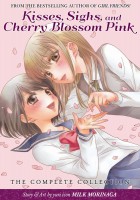
Kisses, Sighs, and Cherry Blossom Pink is the second yuri manga by Milk Morinaga to have been licensed in English. The first, and my introduction to her work, was her series Girl Friends. I quite enjoyed Girl Friends and so was looking forward to reading more of her manga, in this case one of her earlier series. Kisses, Sighs, and Cherry Blossom Pink was released in English by Seven Seas in 2013 in a single-volume omnibus edition. Morinaga first began creating the stories included in Kisses, Sighs, and Cherry Blossom Pink in 2003. In Japan, the earlier stories were collected into a single volume in 2006. However, Kisses, Sighs, and Cherry Blossom Pink was later released again in 2012 in two volumes that collected additional stories, including some that were previously unpublished. This two-volume edition of Kisses, Sighs and Cherry Blossom Pink is the one upon which Seven Seas’ omnibus is based. As such, the English-language edition of the manga collects nearly a decade’s worth of material into a single volume.

Nana and Hitomi were best friends who grew up together and attended the same elementary and junior high schools. Nana was looking forward to becoming a student at Sakurakai Girls’ High School, but that was when she thought Hitomi would be enrolling as well. However, Hitomi was accepted at Touhou Girls’ High School. Finding it too painful to continue to suppress her love for Nana after being rejected, Hitomi chooses to attend Touhou instead. Despite how close the two of them used to be, Nana finds Hitomi drifting away and she misses her terribly. But recognizing her own feelings is only the first step in mending their relationship as is begins to evolve into something more than just friendship. Similarly, several of the other young women at Sakurakai and Touhou are faced with their own first loves and crushes on classmates. It isn’t always easy to confess their feelings and falling in love with a person of the same gender often brings along challenges that other couples don’t have to deal with.

The stories collected in Kisses, Sighs, and Cherry Blossom Pink follow a vague chronological order, but many of them aren’t directly related to one another. They share the same setting and to some extent the same characters, but only Nana and Hitomi are the focus of multiple stories in the volume. I actually really enjoyed Morinaga’s structural approach to Kisses, Sighs, and Cherry Blossom Pink. Nana and Hitomi’s relationship provides a more developed, ongoing narrative, creating a framework which supports the supplementary side stories about their classmates and friends. Overall, I feel this gives the manga slightly more depth. Also included in Kisses, Sighs, and Cherry Blossom Pink is a diagram that visually shows how all of the different stories and characters overlap and are connected to one another. Although they are interrelated and occasionally make references to previous developments and chapters, most of the stories do stand perfectly well on their own in addition to contributing to the manga as a whole.

Kisses, Sighs, and Cherry Blossom Pink tends to be very cute, sweet, and romantic, which is not to say that every story is a happy one. I appreciated that some of the chapters in Kisses, Sighs, and Cherry Blossom Pink have touches of angst, sadness, and bittersweetness to them. Nana and Hitomi’s relationship, despite having its ups and downs, does have an ending that seems to tie everything up a little too easily and nicely, but I won’t deny that it made me smile. Morinaga also addresses some very real issues and concerns, such as homophobia, that are encountered by same-gendered couples, but many of the feelings expressed are relevant for any romantic relationship. The manga may be a bit melodramatic at times, but it is emotionally resonant. Kisses, Sighs, and Cherry Blossom Pink also incorporates a fair amount of humor. It’s a highly enjoyable and charming collection of short manga with likeable characters, a generally optimistic outlook, and a satisfying amount of realism to go along with its sweetness.

Filed Under: REVIEWS Tagged With: manga, milk morinaga, Seven Seas, Year of Yuri

My Week in Manga: March 3-March 9, 2014

March 10, 2014 by Ash Brown

My News and Reviews

Last week the Smuggler Giveaway Winner was announced. As usual, I took the opportunity to compile a list. In this case, I pulled together some of the manga licensed in English that feature assassins. And speaking of assassins, last week I reviewed Hiroaki Samura’s Blade of the Immortal, Volume 28: Raining Chaos which focuses on the confrontation between the remnants of the Ittō-ryū and the Rokki-dan warriors and the Mugai-ryū assassins. There isn’t much plot development in the volume, but there are some great battle sequences. I also reviewed Real, Volume 2 by Takehiko Inoue, which features battles of an entirely different sort. Real is a mix of human drama, tragedy, and hope as its characters deal with events in their lives beyond their control. It’s a truly fantastic series.
There was quite a bit of manga industry news and analysis last week. I’m particularly excited that Moyoco Anno will be a featured guest at TCAF! ICv2 interviewed Dark Horse’s manga editor Carl Horn (Part 1, Part 2). Deb Aoki took a look at the state of digital manga for Publishers Weekly. Vertical’s licensing survey is currently underway. Vertical also posted a little more information about past surveys and how they’ve been used. Sean Gaffney rounds up some of the recent licensing announcements at A Case Suitable for Treatment. Not directly related to the current state of the manga industry but still worth a read is Dan Mazur’s post about early shōjo manga.

Quick Takes

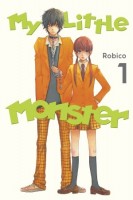
My Little Monster, Volume 1My Little Monster, Volume 1 by Robico. On the first day of school, Haru was suspended and he hasn’t been back since. As a favor to a teacher, Shizuku agrees to bring him his homework which Haru interprets as a sign of friendship. Now, much to Shizuku’s dismay, the two of them have become nearly inseparable. Because of Haru’s propensity towards violence and his almost complete lack of understanding as to what is socially appropriate behavior, some of the situations in My Little Monster can be extremely uncomfortable and worrisome. However, although they are often used as a source of humor, I was very happy to see that Haru’s actions were not romanticized. His tendency to lash out and physically intimidate others, whether out of fear or for some other reason, was not generally portrayed as a desirable characteristic. It’s completely understandable that some people are afraid of him. However, Haru’s naivety and earnestness can be very endearing. Shizuku, one of the few people who can seem to handle the volatile Haru, is an interesting character in her own right with both flaws and strengths. They are both social misfits in their own ways; I’m very curious to see how their relationship continues to develop.

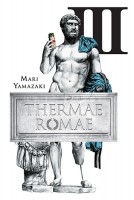
Thermae Romae, Omnibus 3Thermae Romae, Omnibus 3 by Mari Yamazaki. If it seems like it’s been a long time since the last Thermae Romae omnibus was released, that’s because it’s been almost a year. Thermae Romae is a series that started out more like a gag manga, following the exploits of the Roman bath engineer Lucius as he somehow time travels to modern-day Japan and back after repeated near-drownings. With the second omnibus, the series shifts into a romantic comedy when Lucius meets Satsuki after becoming stuck in Japan. That ongoing plot continues through the rest of the series. Although there is still plenty of humor in the third omnibus, Thermae Romae takes a decidedly more serious turn when it looks like Satsuki and Lucius will be torn apart. Satsuki’s grandfather, an incredibly skilled massage artist (as well as a man who should definitely not be trifled with), plays an increasingly important role in the story. Thermae Romae is a great deal of fun. It has drama and romance and comedy, not to mention great art. The ending does feel a little abrupt, but Yamazaki notes that she hopes to write additional Thermae Romae stories that address some of the lingering questions that readers may have about the series and its characters.

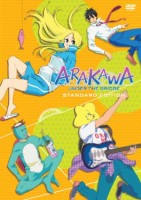
Arakawa Under the BridgeArakawa Under the Bridge, Season 1 directed by Akiyuki Shinbo. The Arakawa Under the Bridge anime series is based on an ongoing manga by Hikaru Nakamura. Kou Ichinomiya lives his life following one very simple rule that has been instilled in him by his father: never be indebted to another person. So when Nino, a rather strange young woman living on the banks of the Arakawa River, saves him from drowning, Kou wants to repay the favor and move on as quickly as possible. Except, the only thing that she wants is for him to stay with her and so Kou finds himself obligated to move in under the bridge. There he meets the other residents of the Arakawa River, all of whom are not just a bit peculiar and strange. Though Kou is supposedly the “normal” one, it quickly becomes obvious that he fits right in and is just weird as the rest of them. I found Arakawa Under the Bridge to be highly entertaining and enjoyable in all of its absurdity. The series doesn’t have much of an ending, which makes some amount of sense seeing as there is a second season (which I’ll definitely be watching), but the anime tends to be fairly episodic so I wouldn’t necessarily expect it to have a definitive conclusion, either.

Like Father, Like SonLike Father, Like Son directed by Hirokazu Kore-eda. Ryota and Midori Nonomiya are stunned when they discover that their son Keita isn’t related to them biologically. Six years ago at the hospital where he was born, Keita was somehow switched with Ryusei, the son of Yudai and Yukari Saiki. Now the two families must decide how to handle the situation and whether blood ties are stronger than those of time. Ryota, who has his own father issues to work out and whose relationship with Keita wasn’t especially strong to being with, is having a particularly difficult time, but his wife is struggling tremendously as well. The members of the Saiki family tend to be a little more easy-going in comparison, but the situation is a challenge for them as well. And caught up in the whole mess are Keita and Ryusei, who have very little say in the matter. The revelation of the two boys being switched at birth disrupts both families, resulting in both joy and heartbreak as they grow to know each other better. Like Father, Like Son is a beautiful film about parental and familial love as Ryota learns what is important in life and what it really means to be a father.

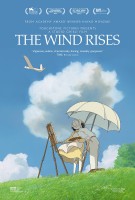
The Wind RisesThe Wind Rises by Hayao Miyazaki. The anime film The Wind Rises is historical, biographical fiction, following the life of Jiro Horikoshi, an aeronautic engineer who designed fighter planes for Japan during World War II. Almost as much of the film takes place in Jiro’s dreams as it does in his waking life. At first, the designs of the planes in The Wind Rises are very fantastical but as the film progresses they become more and more realistic as Jiro makes his dreams a reality. There is an emphasis placed on the beauty of design and creativity, but this is contrasted with the ugly, destructive forces of war and the terrible applications of those innovations. His planes may have been beautiful, but their purposes were not, which begs the question–how much responsibility do artists hold over their creations and their use? The Wind Rises‘ answer to that question is left ambiguous. As with many of Miyazaki’s other films, The Wind Rises has gorgeous flight sequences and an anti-war sentiment. Some of the time skips were a little difficult to follow at first, and I think the film was a little longer than it really needed to be, but overall The Wind Rises was well done. It’s far from my favorite Miyazaki film, though.

Filed Under: FEATURES, My Week in Manga Tagged With: anime, Arakawa Under the Bridge, film, manga, Mari Yamazaki, My Little Monster, Robico, Thermae Romae

Real, Vol. 2

March 9, 2014 by Ash Brown

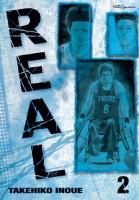
Real, Volume 2Creator: Takehiko Inoue
U.S. publisher: Viz Media
ISBN: 9781421519906
Released: October 2008
Original release: 2002
Awards: Japan Media Arts Award

Although I wouldn’t necessarily consider myself to be a sports fan, I have come to the realization that I really enjoy sports manga. Out of all of the sports manga that I’ve so far read, Takehiko Inoue’s wheelchair basketball series Real is the one that stands out for me the most. (Actually, Real happens to be one of my favorite manga series in general.) But it’s really more than just a sports manga. Yes, basketball is an important part of the series, but to an even greater extent Real is about challenges faced in life and how people deal with them. It’s a mix of human drama, tragedy, and hope that earned Inoue a Japan Media Arts Award Excellence Prize in 2001. The second volume of Real was first published in Japan in 2002 while the English edition was released in 2008 by Viz Media under its Signature imprint. Real, Volume 1 did a fantastic job of introducing the series’ main characters and establishing some of the themes that the manga begins to explore more deeply in the second volume and those that follow.

After his accident, Takahashi no longer has the use of his legs. Confined to a hospital bed and with very few visitors he has had to come to terms with his condition largely on his own. He had good grades and excelled at whatever he applied himself to, becoming the captain of his high school’s basketball team with ease. No longer having the ability to walk is a devastating blow to Takahashi and how he is viewed by others and by himself. It won’t be an easy process to compensate for what he has lost. It’s been five years since Togawa lost one of his legs to bone cancer and that’s something he continues to struggle with. He still has most of his mobility, but having a leg amputated brought his dream of becoming the fastest sprinter in Japan, if not the world, to an abrupt end. An extremely competitive athlete he has redirected his ambitions towards wheelchair basketball, now one of the few things in his life for which he has any enthusiasm. Nomiya has a strong love for basketball as well, but as a high school dropout he currently has no outlet for that passion.

A large portion of Real, Volume 2 is devoted to Togawa and part of his backstory. The series turns to his middle school days as he is discovering his love of running, struggling with his relationship with his father, and developing strong, lasting friendships. Immensely talented, it is crushing to know that Togawa will never achieve his dream even as everything seems to be going his way. Just as Takahashi is now being forced to admit his limitations, Togawa also had to deal with events in his life that were beyond his control. The interplay between their two stories in Real is handled extraordinarily well. The two young men have never met, their only direct connection at this point is that they both know Nomiya, but Inoue draws on the parallels between their experiences to great effect. Takahashi is at the beginning of his recovery while Togawa has made years of progress, but the challenges that they face are very similar. Their personalities and how they handle things are very different, though.

Parallels also exist between Togawa and Nomiya. They are both very focused and intense, taking any and all opportunities that they can to practice and improve their game. Even when Togawa, Nomiya, and Takahashi’s stories don’t directly intersect, they are all still very closely tied together. The second volume of Real is very much about beginnings and endings. After originally leaving his basketball team, Togawa has found new drive and inspiration that brings him back. Nomiya doesn’t have the option of returning to his old team and can only watch from the sidelines as his former teammates play their last game. As for Takahashi, he can’t even do that. His denial is slowly turning into agonizing despair as he comes closer to admitting to himself that his life will never be the same. Inoue captures all three of their struggles in a very realistic way. The story is emotionally intense without being melodramatic and the artwork is fantastic, making Real and incredibly effective series.

Filed Under: REVIEWS Tagged With: Japan Media Arts Award, manga, real, Takehiko Inoue, viz media, VIZ Signature

Blade of the Immortal, Vol. 28: Raining Chaos

March 7, 2014 by Ash Brown

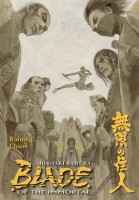
Blade of the Immortal, Volume 28: Raining ChaosCreator: Hiroaki Samura
U.S. publisher: Dark Horse
ISBN: 9781616553210
Released: January 2014
Original release: 2011
Awards: Eisner Award, Japan Media Arts Award

Raining Chaos is the twenty-eighth volume in the English-language edition of Hiroaki Samura’s manga series Blade of the Immortal. Because of slight differences between the Japanese and English publications of the series, Raining Chaos is actually equivalent to the twenty-seventh volume of Blade of the Immortal released in Japan in 2011. The English edition was released by Dark Horse in 2014. Blade of the Immortal is a multi-award-winning series, having earned Samura honors both in Japan and in other countries. The series was one of the first manga that I made a point of following, so I am glad that Dark Horse is seeing Blade of the Immortal through to its end. Raining Chaos is part of the fifth and last major story arc in Blade of the Immortal. With only a few volumes left in the series, Blade of the Immortal is quickly approaching its final climax and Raining Chaos is part of that approach.

The majority of the remaining Ittō-ryū members have steadily been making their way to Hitachi, but it was only a matter of time before those in pursuit would catch up with them. After encountering the Rokki-dan en route, the Ittō-ryū has once again split its members into smaller groups so that some of them may have a better chance of survival. Most stay behind to face the Rokki-dan warriors, hoping to at least delay them if not destroy them, while a smaller force forges ahead attempting to keep the Ittō-ryū’s current second-in-command, Abayama Sōsuke, alive and safe. What they hadn’t counted on was the involvement of the Mugai-ryū, the predecessor of the Rokki-dan. Only two members of that group are still alive, and neither of them are the fighters that they once were, but they are both still extremely skilled and dangerous. With the Ittō-ryū occupied with both the Rokki-dan warriors and the Mugai-ryū assassins, the continued existence of the radical sword school looks increasingly grim.

The Ittō-ryū isn’t so much a specific style of fighting as it is a philosophy. The only agreed upon “rule” is that battles are nominally to be fought one-on-one. Other than that, almost anything goes. In part because of this, the school has attracted a diverse group of fighters with different backgrounds, martial abilities, and motivations. Some, like the Ittō-ryū’s leader Anotsu Kagehisa and several of the other high-ranking members, have very honorable intentions; they fight against what they see as corruption, though their methods may be questionable. Abayama, for example, is very concerned about the welfare of the men who train and serve under him. Others, however, are more interested in their own personal vendettas and selfish desires. They don’t care about others as long as they get what they want. The differences between these two types of people–those with noble and lofty ideals and those who are completely without morals–can be clearly seen in Raining Chaos. Even so, they are all still Ittō-ryū.

In addition to having different goals and reasons for joining the Ittō-ryū, the individual members also have different styles of fighting, which is put to good use in Raining Chaos. There isn’t much plot development in this particular volume of Blade of the Immortal, but there is plenty of action as the confrontation between the remnants of the Ittō-ryū and the Rokki-dan and the Mugai-ryū is largely brought to a conclusion. Happily, the battles in Raining Chaos are quite good; they’re well-choreographed and interesting to watch play out. Samura has a tendency to introduce unusual weapons and techniques in Blade of the Immortal, but even the most fantastic and strange have some basis in reality; legitimate tactics and fighting techniques are still applied to the battles in the series. In Raining Chaos, the importance of range and distancing is particularly emphasized. With excellent fights and compelling characters, Blade of the Immortal continues to be a series that I enjoy. I’m looking forward to the next volume, Beyond Good and Evil, a great deal.

Filed Under: REVIEWS Tagged With: Blade of the Immortal, Dark Horse, Eisner Award, Hiroaki Samura, Japan Media Arts Award, manga

Manga Giveaway: Smuggler Giveaway Winner
March 5, 2014 by Ash Brown

SmugglerAnd the winner of the Smuggler Giveaway is…Dawn!

As the winner, Dawn will be receiving a copy of the new edition of Shohei Manabe’s Smuggler as published by One Peace Books. Because a rather violent assassin plays a very important role in Smuggler, for this giveaway I asked that entrants tell me a little about their favorite manga assassins. Check out the Smuggler Giveaway comments for all of the responses. And for your reading pleasure, I have compiled a list of some of the manga licensed in English that feature assassins.

A selection of assassin manga in English:
Assassination Classroom by Yūsei Matsui
Apothecarius Argentum by Tomomi Yamashita
Banana Fish by Akimi Yoshida
Benkei in New York written by Jinpachi Mori and illustrated by Jiro Taniguchi
Black Cat by Kentaro Yabuki
Black Lagoon by Rei Hiroe
Blade of the Immortal by Hiroaki Samura
City Hunter by Tsukasa Hojo
Code:Breaker by Akimine Kamijyo
Crying Freeman written by Kazuo Koike and illustrated by Ryoichi Ikegami
Dogs by Shirow Miwa
Gangsta by Kohske
Gungslinger Girl by Yu Aida
Golgo 13 by Takao Saito
Hotel Harbour View written by Natsuo Sekikawa and illustrated by Jiro Taniguchi
Hunter x Hunter by Yoshihiro Togashi
Immortal Rain by Kaori Ozaki
Jormungand by Keitaro Takahashi
Lady Snowblood written by Kazuo Koike and illustrated by Kazuo Kamimura
Lone Wolf & Cub written by Kazuo Koike and illustrated by Goseki Kojima
Maoh: Juvenile Remix by Megumi Osuga
No. 5 by Taiyo Matsumoto
Path of the Assassin written by Kazuo Koike and illustrated by Goseki Kojima
Project Arms written by Kyoichi Nanatsuki and illustrated by Ryoji Minagawa
Rurouni Kenshin by Nobuhiro Watsuki
Smuggler by Shohei Manabe
Strain written by Buronson and illustrated by Ryoichi Ikegami
This Night’s Everything by Akira Minazuki
Triage X by Shoji Sato
Until Death Do Us Part written by Hiroshi Takashige and illustrated by DOUBLE-S
X-Kai by Asami Tojo

Filed Under: UNSHELVED Tagged With: manga, Shohei Manabe

My Week in Manga: February 24-March 2, 2014

March 3, 2014 by Ash Brown

My News and Reviews

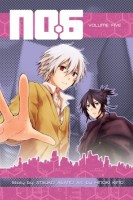
Last week ended up being surprisingly busy here at Experiments in Manga. The most recent manga giveaway was posted, and there’s still some time left to enter for a chance to win a copy of the new edition of Shohei Manabe’s Smuggler. All you have to do is tell about your favorite assassin in manga. Last week I also posted my review of Hinoki Kino’s manga No. 6, Volume 5. I already knew going into the series that I liked the characters and story, having seen the No. 6 anime, but each volume of the manga is progressively stronger than the last. Over the weekend, I posted February’s Bookshelf Overload for those of you who are interested in that sort of thing. Also over the weekend, I reviewed Real, Volume 1 by Takehiko Inoue. I honestly believe Real to be one of the best manga currently being released in English. The review is part of what I’m calling “Manga March Madness.” Each weekend in March I will be posting a review for another volume of Real. At least that’s the plan. We’ll see if I can pull it off or not.

On to other interesting thing online! The Guys with Pencils podcast posted the second part of their interview with TCAF-founder Chris Butcher. Organization Anti-Social Geniuses has some Advice on Manga Lettering, From Manga Letterers. Khursten Santos wrote about The Silence on Josei Manga on Otaku Champloo, and had some feedback and followup to the post show up on Tumblr. Finally, the Comics Book Legal Defense Fund has an interesting article about the impact government regulations can have on creative freedom–History Repeats Itself: How Korean Manwha Met the Same Fate as American Comics

Quick Takes

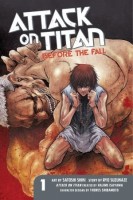
Attack on Titan: Before the Fall, Volume 1Attack on Titan: Before the Fall, Volume 1 written by Ryo Suzukaze and illustrated by Satoshi Shiki. Set some seventy years before the main events of Hajime Isayama’s original Attack on Titan manga, Before the Fall is based on a series of light novels by Ryo Suzukaze (which Vertical will begin releasing later this year). Despite having a different author than the original manga, Before the Fall fits right in with Isayama’s worldbuilding and the tone set by Attack on Titan–there is still plenty of fear and darkness. The most striking difference, which didn’t come at all as a surprise, is that the artwork in Before the Fall is much stronger overall. The story follows Kuklo, a young man who, due to the unusual circumstances of his birth, is feared, abused, and reviled by those around him. It’s not pretty. People who have read the original Attack on Titan will have a slightly better understanding of the world than those who haven’t, but so far Before the Fall seems to stand quite well on its own. Before the Fall has a lot of potential; I look forward to seeing how it develops.

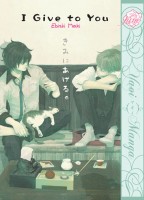
I Give to YouI Give to You by Ebishi Maki. As far as I can tell, I Give to You is Maki’s first and currently only boys’ love manga. It’s not a typical boys’ love story, either. The focus is very much on the characters themselves and their personal struggles and less on romance. The manga addresses what it means to be normal and lead a normal life, which isn’t an option for either of the leads. Ryoichi is being pursued by debt collectors after his ex-boyfriend defaults on a loan they co-signed together. He takes shelter from a storm in a teahouse run by Ren, another young man with a past he’d like to put behind him. The two are very different–despite his financial worries, Ryoichi tends to be fairly warm and happy-go-lucky while Ren is cooler and much more reserved. In the beginning, it’s Ryoichi who needs help and acceptance from Ren, but by the end of I Give to You their roles have almost completely reversed. The evolution of their relationship happens so slowly and naturally over the course of the manga that I was quite impressed with how it was handled. I would definitely be interested in reading more of Maki’s manga.

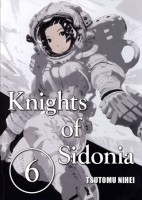
Knights of Sidonia, Volume 6Knights of Sidonia, Volumes 6-7 by Tsutomu Nihei. For most of Knights of Sidonia, it has been the Gauna who have been adapting and evolving by adopting human strategies, techniques, and even form. In these volumes, it’s the humans who have begun to apply the abilities and characteristics of the Gauna to their own technologies, creating terrifying and powerful human-Guana hybrids in the process. Understandably, not everyone is comfortable with these developments, but humanity is running out of options if it wants to survive. Knights of Sidonia has this odd mix of comedy and creepiness that somehow works. Although by this point in the series he has largely been accepted by the rest of the population of Sidonia and even has a few romantic interests, Nagate continues to be incredibly awkward socially. Because of this he still has a tendency to unintentionally create quite a commotion, often with humorous results. At the same time, Knights of Sidonia is also a horror manga. The Gauna, and now the hybrids as well, have very disconcerting designs that can be both grotesque and beautiful.

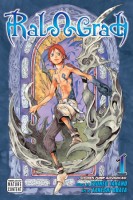
Ral Ω Grad, Volume 1Ral Ω Grad, Volumes 1-4 written by Tsuneo Takano and illustrated by Takeshi Obata. The primary reason I decided to read Ral Ω Grad was because I’m a fan of Obata’s artwork. Ral Ω Grad is a loose adaptation of the 2006 video game Blue Dragon. The manga definitely has a fantasy RPG feel to it–a young hero with special abilities fights against the destruction of the world by gathering together a party of other gifted individuals around him–but familiarity with Blue Dragon isn’t at all necessary to understand what’s going on. Generally, Ral Ω Grad manages to be vaguely entertaining even though it’s breaking no new ground. I found that I enjoyed the series more when I approached it as a parody rather taking it too seriously. (I’m pretty sure it wasn’t intended to be a parody, though…) Ral’s motivation for saving the world? Because he loves women. And boobs. Consequently, there’s fanservice and groping aplenty, but Ral spends quite a bit of his time running around mostly naked, too. In the end, the series’ highlight really is Obata’s artwork, which is consistently excellent. The story, sadly, is less engaging.

Filed Under: FEATURES, My Week in Manga Tagged With: attack on titan, Ebishi Maki, knights of sidonia, manga, Ral Ω Grad, Ryo Suzukaze, Satoshi Shiki, Takeshi Obata, Tsuneo Takano, Tsutomu Nihei

Real, Vol. 1

March 2, 2014 by Ash Brown

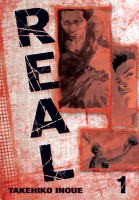
Real, Volume 1Creator: Takehiko Inoue
U.S. publisher: Viz Media
ISBN: 9781421519890
Released: July 2008
Original release: 2001
Awards: Japan Media Arts Award

When I first began reading Takehiko Inoue’s manga series Real it was simply because it was the only work of his that my local library had at the time. I was already familiar with and loved Inoue’s fantastic artwork but I hadn’t actually yet read any of his manga. The series that I really wanted to read was Vagabond, but it happened to be Real that was more readily available. Little did I know that Real would not only end up being my favorite series by Inoue, it would become one of my favorite manga period. I honestly believe that Real is one of the best comics currently being released in English. The first volume of Real was published in Japan in 2001, the same year that Inoue won a Japan Media Arts Award for the series. Viz Media released the English-language edition of Real, Volume 1 in 2008 under its Signature imprint.

Ever since he quit the Nishi High School basketball team, nothing seems to be going right for Tomomi Nomiya. His life is changed forever when he is involved in a motorcycle accident. Nomiya comes through it relatively unharmed, at least physically, but Natsumi Yamashita, the young woman who was riding with him, is no longer able to walk. While visiting her at the hospital Nomiya meets Kiyoharu Togawa, another young man who, like him, has a passion for basketball. He’s incredibly talented, but with only one leg it’s wheelchair basketball that has become his outlet. Thus begins a somewhat antagonistic friendship between Togawa and Nomiya. And then there is Hisanobu Takahashi, one of Nomiya’s former classmates and the current captain of Nishi High’s basketball team. He may have the skills on the court, but he has an extremely arrogant attitude and delights in making Nomiya and his friends miserable. But soon he’ll have some serious challenges to face in his own life as well.

In general, Inoue’s artwork in tends to be very realistic, with a particular focus on characters and their designs. This is certainly true for Real, and his style suits a story that emphasizes real-life issues as the source of its drama incredibly well. The characters’ personalities and attitudes can easily be determined by their actions and how they are drawn. When Nomiya is first introduced, he seems to be nothing more than a delinquent. And to some extent he is a delinquent, frequently getting into fights and finding ways to scam rich kids out of their money. But he is also exceptionally kindhearted and accepting of others. Nomiya’s facial expressions and body language range from pure anger to utter delight. Togawa, on the other hand, more often than not has a smirk or sneer on his face and barely manages to suppress his extreme irritation. He has absolutely no patience for people who can’t take themselves or what they are doing seriously and it shows. At times Nomiya and Togawa’s respective intensity can be both frightening and exhilarating.

At its heart Real is very much a manga about its characters and how they deal with the challenges and setbacks in their lives. Basketball is simply a part of that because the game is important to the characters as individuals. The first volume of Real does an excellent job of introducing the main players of the series–Nomiya, Togawa, and Takahashi. In one way or another, each one of them is searching for some direction in their lives. It is their passion for basketball that provides some of that needed purpose. Nomiya struggles a great deal with the guilt he feels over the incident that cost Natsumi the use of her legs; his love of basketball is the only thing that really remains from before the accident. Togawa holds onto a tremendous amount of anger that playing basketball helps to keep under control. As for Takahashi, his talent for basketball was one of the few things that secured his popularity. But even considering the important role that basketball plays in Real, it is not at all necessary to be a fan of the game to be able to appreciate the manga.

Filed Under: REVIEWS Tagged With: Japan Media Arts Award, manga, real, Takehiko Inoue, viz media, VIZ Signature

No. 6, Vol. 5

February 28, 2014 by Ash Brown

No. 6, Volume 5Creator: Hinoki Kino
Original story: Atsuko Asano

U.S. publisher: Kodansha
ISBN: 9781612623597
Released: February 2014
Original release: 2012

As much as I would like to read them, it is highly unlikely that Atsuko Asano’s series of science fiction novels No. 6 will ever be licensed in English. Happily, two adaptations are available: the 2011 anime series directed by Kenji Nagasaki (which was my introduction to the story) and the manga series by Hinoki Kino. Despite the anime’s bungled ending, I actually quite enjoyed the series, so I was glad to have a chance to experience another interpretation of the original story. The fifth volume in Kino’s manga adaptation was initially published in Japan in 2012. Kodansha Comics’ English-language edition of No. 6, Volume 5, published in 2014, also collects bonus stories not included in the regular Japanese edition. Though it had its high points, overall I found the first volume of the No. 6 manga to be a bit weak. However, each volume has gotten progressively stronger as Kino has had time to more fully develop the series’ characters and world.

With the increase in the number of refugees and the rise in violent crime, the population of West Block has been deemed too large and dangerous. It’s all the excuse the holy city of No. 6 needs to mount a massive cleanup operation, known to the residents of West Block as the Manhunt, in which parts of the area outside the city walls are completely destroyed and the population conveniently “removed.” The Manhunt is a way for No. 6 to keep control and prevent riots, but this time the operation serves another purpose–to gather enough undesirables to serve as human guinea pigs for a top-secret experiment being conducted and authorized by the city’s upper echelons. The Manhunt will also provide Shion and Rat with the opportunity that they need to infiltrate the Correctional Facility in order to search for and hopefully rescue Shion’s close friend Safu. Rat is one of the few people to have made it out of the Correctional Facility alive and doesn’t particular want to go back, but he isn’t about to allow Shion to attempt it on his own.

This is the volume of No. 6 in which Shion is brought dangerously close to his breaking point, and it is heart-wrenching to witness it happen. Living in West Block has been slowly changing him; it’s an environment that is drastically different from the seemingly perfect city of No. 6 where he spent almost his entire life. But the violence and suffering that Shion has been exposed to in West Block is nothing compared to the extent of the very deliberate cruelty of the Manhunt. Any faith that he still had in No. 6 is shattered when confronted with this horrifying atrocity, absolute proof that the city is not at all what it claims to be. Shion by nature has a very positive and optimistic outlook on life, but he has begun to lose that. Both he and Rat regret that change and even fear how much Shion might continue to change, especially in light of the most recent turn of events. Shion will never be able to return to the person who he once was no matter how much either of them would want it.

The characters and their growth continue to be some of the strongest elements of Kino’s No. 6 manga. This is especially true of Shion, as can particularly be seen in this volume, but Rat has also been changing in significant ways. The supporting cast, too, has almost all seen at least some minor development. The only major exception to this is the research scientist in charge of No. 6’s experiment. In fact, even though the series is more than halfway over, he doesn’t even have a name yet and is only referred to as “the man in white” in the character profiles. Since he seems to be one of the series’ main antagonists, this is a little disappointing. It’s also rather unsatisfying that the experiment, its purpose, and the motives behind it haven’t yet been made clear to the readers. This persistent vagueness and lack of clarity, instead of being mysterious or creating ominous tension, is mostly just frustrating this far along in the series. Even so, Rat and Shion’s excellent development in the manga largely makes up for this. In the end, I’m still really enjoying No. 6.

Filed Under: REVIEWS Tagged With: Atsuko Asano, Hinoki Kino, kodansha, Kodansha Comics, manga, no. 6

Manga Giveaway: Smuggler Giveaway

February 26, 2014 by Ash Brown

For being the shortest month of the year, February seems to be lasting a long time for me. But the end is almost here, which means it’s time for another manga giveaway! This month you all (well, mostly all) will have the opportunity to win a copy of Smuggler by Shohei Manabe. Originally released in English by Tokyopop, Smuggler is now available in a new edition from One Peace Books. Because this manga is aimed at more mature audiences, entries are restricted to those of you who are eighteen years of age or older. Otherwise, as always, the giveaway is open worldwide!

Smuggler

Assassins, they’re everywhere you look. Well, maybe not everywhere, especially as many of them generally stay out of sight as part of their job. However, it’s not uncommon to come across an assassin or two in a manga. It tends to be a fairly manly profession, with the likes of Golgo 13 and Yo Hinamura (Crying Freeman), but there are some pretty kick-ass women working as assassins, too, such as the titular Lady Snowblood and quite a few of the women in Black Lagoon. Why am I talking about assassins? Because the dark and violent Smuggler just so happens to feature more than one extraordinarily vicious killer-for-hire, though the manga’s focus is on one of the guys who has to clean up after them (he just doesn’t realize it at first).

So, you may be wondering, how can you win a copy of the Smuggler?

1) In the comments below, tell me a little about your favorite manga assassin.
2) For a second entry, name another manga that features an assassin that hasn’t been mentioned yet by me or by someone else.
3) If you’re on Twitter, you can earn a bonus entry by tweeting about the contest. Make sure to include a link to this post and @PhoenixTerran (that’s me).

And there you have it! Each person can earn up to three entries for this giveaway. As usual, you will all have a week to submit your comments. If you would prefer or have trouble leaving a comment, entries may also be submitted via e-mail to phoenixterran(at)gmail(dot)com. I will then post them in your name. The giveaway winner will be randomly selected and announced on March 5, 2014. Good luck!

VERY IMPORTANT: Include some way that I can contact you. This can be an e-mail address, a link to your website, Twitter username, or whatever. If I can’t figure out how to get a hold of you and you win, I’ll just draw another name.

Contest winner announced–Manga Giveaway: Smuggler Giveaway Winner
Filed Under: FEATURES Tagged With: manga, Shohei Manabe

  • « Go to Previous Page
  • Page 1
  • Interim pages omitted …
  • Page 27
  • Page 28
  • Page 29
  • Page 30
  • Page 31
  • Interim pages omitted …
  • Page 60
  • Go to Next Page »
 | Log in
Copyright © 2010 Manga Bookshelf | Powered by WordPress & the Genesis Framework