• Skip to primary navigation
  • Skip to main content
  • Skip to primary sidebar
  • Home
  • About Us
    • Privacy Policy
    • Comment Policy
    • Disclosures & Disclaimers
  • Resources
    • Links, Essays & Articles
    • Fandomology!
    • CLAMP Directory
    • BlogRoll
  • Features & Columns
    • 3 Things Thursday
    • Adventures in the Key of Shoujo
    • Bit & Blips (game reviews)
    • BL BOOKRACK
    • Bookshelf Briefs
    • Bringing the Drama
    • Comic Conversion
    • Fanservice Friday
    • Going Digital
    • It Came From the Sinosphere
    • License This!
    • Magazine no Mori
    • My Week in Manga
    • OFF THE SHELF
    • Not By Manga Alone
    • PICK OF THE WEEK
    • Subtitles & Sensibility
    • Weekly Shonen Jump Recaps
  • Manga Moveable Feast
    • MMF Full Archive
    • Yun Kouga
    • CLAMP
    • Shojo Beat
    • Osamu Tezuka
    • Sailor Moon
    • Fruits Basket
    • Takehiko Inoue
    • Wild Adapter
    • One Piece
    • After School Nightmare
    • Karakuri Odette
    • Paradise Kiss
    • The Color Trilogy
    • To Terra…
    • Sexy Voice & Robo
  • Browse by Author
    • Sean Gaffney
    • Anna Neatrour
    • Michelle Smith
    • Katherine Dacey
    • MJ
    • Brigid Alverson
    • Travis Anderson
    • Phillip Anthony
    • Derek Bown
    • Jaci Dahlvang
    • Angela Eastman
    • Erica Friedman
    • Sara K.
    • Megan Purdy
    • Emily Snodgrass
    • Nancy Thistlethwaite
    • Eva Volin
    • David Welsh
  • MB Blogs
    • A Case Suitable For Treatment
    • Experiments in Manga
    • MangaBlog
    • The Manga Critic
    • Manga Report
    • Soliloquy in Blue
    • Manga Curmudgeon (archive)

Manga Bookshelf

Discussion, Resources, Roundtables, & Reviews

manga

My Week in Manga: October 5-October 11, 2015

October 12, 2015 by Ash Brown

My News and Reviews

Last week was a slower week at Experiments in Manga, but I am steadily coming to terms with the fact that I’m leading an increasingly busy life and that it’s okay to have slow blogging weeks. (Though I still wish I had the time to read and write more.) Anyway, last week I announced the Devils and Realist Giveaway Winner. The post also includes a list of some of the manga available in English that feature demons and devils. I also reviewed Project Itoh’s debut novel Genocidal Organ which is an excellent, intelligent work of near future science fiction. I’ve now read almost everything of Itoh’s that has been translated (I still need to pick up his Metal Gear Solid novel) which makes me a little sad since it’s all so good and I want more.

New York Comic Con was last week and there were some exciting license announcements to come out of that. Kodansha Comics will be releasing an Attack on Titan anthology collecting Western creator’s takes on the franchise (considering some of the artists and writers involved, this should be great) and has licensed Hounori’s Spoof on Titan and Hiroki Katsumata’s I Am Space Dandy. Viz Media announced a slew of new print titles: Mitsu Izumi’s 7th Garden, Yūki Tabata’s Black Clover, Izumi Miyazono’s Everyone’s Getting Married, Haruichi Furudate’s Haikyu!!, Tadatoshi Fujimaki’s Kuroko’s Basketball, Keiichi Hikami and Shin Yamamoto’s Monster Hunter, and Mizuho Kusanagi’s Yona of the Dawn. (I was very happy to see more sports manga and josei in that mix!) And Yen Press will be releasing Mikoto Yamaguchi’s Scumbag Loser, Makoto Kedōin and Toshimi Shinomiya’s Corpse Party: Blood Covered, Masafumi Harada, Sung-woo Park, and Red Ice’s Space Dandy, Yuji Iwahara’s Dimension W, and Cotoji’s Unhappy Go Lucky! as well as several new light novels.

Unrelated to NYCC (but still very interesting), manga-translator and yokai expert Zack Davisson was a guest on That Girl with the Curls podcast talking about all sort of things Japan-related. Actually, Davisson has been making the podcast rounds and was recently interviewed at Kaijucast, too, which happens to be featuring yokai all this month. Also of note, Connie at Slightly Biased Manga has posted a nice introduction/guide to all the various Alice in the Country of manga and light novels for anyone who may be intimidated the sheer number of titles involved.

Quick Takes

Devil Survivor, Volume 1Devil Survivor, Volume 1by Satoru Matsuba. Shin Megami Tensei is a huge and popular franchise of video games spanning multiple series and spinoffs which has spawned numerous anime and manga adaptations. Matsuba’s Devil Survivor is one of those, based on a 2009 tactical RPG for the Nintendo DS system. I’m always a little wary of manga adaptations of video games but was still interested in Devil Survivor. Unfortunately, it’s painfully obvious that the manga originated from a game. Although the story has some great mystery and action elements, as well as religious cults, demons, and so on, the original game mechanics are blatant in the story, made even more obvious by the characters’ use of handheld consoles. I’m not completely writing off the Devil Survivor manga, but honestly, I was disappointed with the first volume. I’m hoping that in the future the series will focus more on the story and characters, which have some great potential, and develop into something that takes advantage of the manga medium and feels less like watching someone else play a video game.
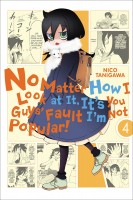
No Matter How I Look at It, It’s You Guys’ Fault I’m Not Popular!, Volume 4No Matter How I Look at It, It’s You Guys’ Fault I’m Not Popular!, Volumes 4-6 by Nico Tanigawa. In general Watamote tends to be fairly episodic, but time does slowly pass; the rhythm of school life drives the series along even if there isn’t much plot or character development per se. However, more and more recurring characters and running jokes are introduced and smaller story arcs form. The basic premise of Watamote is unchanging—Tomoko is an extremely awkward young woman whose social skills (or really the lack thereof) are entirely informed by the video games and manga that she’s interested in, many of which are rather raunchy. Occasionally she makes an effort to fit in with her classmates, but more often than not it backfires in terribly embarrassing ways. Watamote can be very funny in a painful and incredibly crass sort of way. Some but not all of the humor requires the reader to be at least vaguely familiar with Japanese pop culture, especially anime, manga, and video games. But there are copious translation notes available and the manga is usually fairly successful in conveying the basic gist of any given joke.
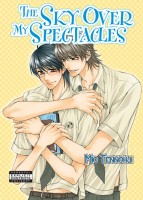
The Sky Over My SpectaclesThe Sky Over My Spectacles by Mio Tennohji. I will readily admit that I have a thing for glasses; in addition to having to wear them myself, I really like how they look on other people. One of the leads in titular story of The Sky Over My Spectacles has a similar fetish, which is what initially drew the collection of boys’ love manga to my attention. (The Sky Over My Spectacles was actually one of the first boys’ love manga that I ever read.) The four main manga collected in the volume—”The Sky Over My Spectacles,” “Let’s Fall in Love,” “Let’s Meet at 1 p.m.,” and “Tell Me You Love Me with Earnest Eyes”—all tend to be fairly upbeat and even surprisingly cute and sweet. Although there’s a bit of drama to be found, nothing ends in tragedy, which I appreciate. I also enjoy the light sense of humor present throughout the stories in the collection. The titular, and longest, manga is probably my favorite, though. In it, Azuma, whose glasses fetish is infamous, has developed a crush on one of his male, glasses-wearing classmates but then discovers that his feelings remain unchanged even when the glasses come off.
Filed Under: FEATURES, My Week in Manga Tagged With: Devil Survivor, manga, Mio Tennohji, Nico Tanigawa, Shin Megami Tensei, Watamote

Manga Giveaway: Devils and Realist Giveaway Winner

October 7, 2015 by Ash Brown

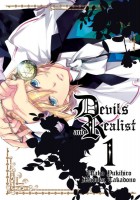
Devils and Realist, Volume 1And the winner of the Devils and Realist Giveaway is… Hanna!

As the winner, Hanna will be receiving the first volume of Madoka Takadono and Utako Yukihiro’s Devils and Realist as published by Seven Seas. For this giveaway, I asked that participants tell me a little about their favorite manga that featured devils or demons. Black Butler by Yana Toboso was mentioned quite frequently, but there were some others named, too. Check out the giveaway comments for all of the responses!

Some of the manga in English featuring devils or demons:
Angel Sanctuary by Kaori Yuki
Berserk by Kentaro Miura
Black Butler by Yana Toboso
Blood Blockade Battlefront by Yasuhiro Nightow
Blood Lad by Yuuki Kodama
Bloody Cross by Shiwo Komeyama
Blue Exorcist by Kazue Kato
Cat Eyed Boy by Kazuo Umezu
The Demon Ororon by Mizuki Hakase
Demon from Afar by Kaori Yuki
Demon Love Spell by Mayu Shinjo
The Devil Is a Part-Timer by Akio Hiiragi
Devil Survivor by Satoru Matsuba
Dorohedoro by Q Hayashida
From Far Away by Kyoko Hikawa
Gaba Kawa by Rie Takada
High-School DxD by Hiroji Mishima
Inuyasha by Rumiko Takahashi
Jiu Jiu by Touya Tobina
The Monkey King by Katsuya Terada
Love in Hell by Reiji Suzumaru
Nura: Rise of the Yokai Clan by Hiroshi Shibashi
The Sacred Blacksmith written by Isao Miura, illustrated by Kotaro Yamada
Seraph of the End written by Takaya Kagami, illustrated by Yamato Yamamoto
Seimaden by You Higuri
Stray Little Devil by Kotaro Mori
Wish by CLAMP

The above list is by no means exhaustive, but it does provide a wide range of manga for anyone looking for a devilish or demonic read. Seinen, shoujo, shounen; comedy, drama, horror, romance… all sorts of variations on the theme! As always, thank you to everyone who took time to share your favorites with me. Hope to see you again for the next giveaway!

Filed Under: Giveaways, UNSHELVED Tagged With: Devils and Realist, Madoka Takadono, manga, Utako Yukihiro

My Week in Manga: September 28-October 4, 2015

October 5, 2015 by Ash Brown

My News and Reviews

A few different things were posted at Experiments in Manga last week. First of all, it’s time for the most recent monthly giveaway. The winner will be announced on Wednesday, so you all still have a chance to enter to win the first volume of Madoka Takadono and Utako Yukihiro’s Devils and Realist. The honor of the first in-depth review for October goes to Jim Zub and Steve Cummings’ Wayward, Volume 2: Ties That Bind, which continues to successfully meld the history and legends surrounding yokai with a brand new story. The series, which I’m thoroughly enjoying, would probably make a great entry point for manga fans who would be interested in exploring American-style comics. Finally, over the weekend I posted September’s Bookshelf Overload.

As for some of the interesting things that caught my attention elsewhere online last week: Foreign Policy has a nice piece about evolving LGBT rights in Japan and the role that manga like Wandering Son and boys’ love has played in it; Otaku USA has an interview with the (in)famous mangaka and tentacle master Toshio Maeda; it looks as though Masahiko Matsumoto’s long-awaited Cigarette Girl is currently scheduled for release in 2016 by Top Shelf; and Digital Manga, despite the trouble it seems to be having actually publishing anything in print these days, has launched its newest Tezuka Kickstarter aiming to release Wonder 3 and, as a stretch goal, The Film Lives On.

Quick Takes

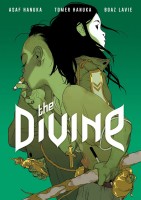
The DivineThe Divine by written by Boaz Lavie and illustrated by Asaf Hanuka and Tomer Hanuka. The striking color artwork of The Divine is what first caught my attention. (It looked vaguely familiar, and indeed, it turns out that Tomer created the cover art for Haikasoru’s recent Battle Royale releases.) The graphic novel follows Mark, an explosives expert, who travels to a remote Southeast Asian country on a military contract. The mission seems relatively straightforward—blowing up a mountain, supposedly to help the locals gain better access to its rich mineral resources—but Mark ends up caught up in the local civil war when he’s captured by a group of young rebels. Mixing mythology and modern warfare and the supernatural with man-made terrors, the comic is graphic in its blood and violence. The artwork is consistently great, but I found the narrative to be a little uneven and none of the characters are particularly likeable. The Divine was in part inspired by a photograph of the twelve-year-old Htoo twins from Burma, the leaders of the God’s Army guerrilla group in the 1990s. Although I did enjoy The Divine, I think I’d actually be even more interested in seeing a direct retelling of their story.

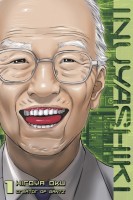
Inuyashiki, Volume 1Inuyashiki, Volume 1 by Hiroya Oku. It’s been a long while since I’ve read any of Gantz, the series that Oku is most well-known for, but I was still curious about Inuyashiki, his most recent series to be released in English. Almost unheard of in manga available in translation, which largely tends to be targeted at a younger audiences, one of lead characters, the titular Ichiro Inuyashiki, is nearly sixty years old. In fact, he looks even older than that. The first volume of Inuyashiki seems to mostly be a prologue for the rest of the series, establishing the premise of the manga and introducing the characters who will become the major players. Oku makes a point to emphasize just how sad and miserable Inuyashiki’s life is before killing him and another innocent bystander off in a freak accident. Granted, they are then both resurrected as extraordinarily powerful, weaponized cyborgs. In the case of Inuyashiki, he’s using his new-found abilities for good, and in spectacular fashion, too. As for the other victim, I don’t expect that he’ll be quite as magnanimous. Inuyashiki, as ridiculous as its setup is, has a promising start. I’m rather curious to see the direction Oku will be taking the series.

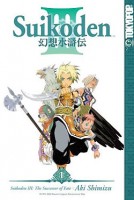
Suikoden III: The Successor of Fate, Volume 1Suikoden III: The Successor of Fate, Volumes 1-5 by Aki Shimizu. Although I am aware of the RPG series, I haven’t actually played any of the Suikoden video games. I was specifically interested in the Suikoden III manga adaptation for two reasons: the entire Suikoden series is loosely based on the Chinese classic Water Margin, and I generally enjoy Shimizu’s work (which also tends to have a Chinese influence). An overview of the previous two Suikoden stories is provided before the manga gets underway; it’s a nice, but largely unnecessary addition. The Successor of Fate seems to stand well on it own, so far. The manga doesn’t really feel like a video game adaptation, either, which I was happy to discover. References are made to past events (and past games, technically), but for the characters that history is shrouded in myth and legend. At this point The Successor of Fate hasn’t really made itself stand out from most other epic fantasy series, but its a solid beginning and, despite a few infodumps, there are plenty of things to like: a large cast of characters (including quite a few women in prominent roles), prophecies and magic, politics and intrigue, battles that rely on strategy as much as strength, and so on.

Filed Under: FEATURES, My Week in Manga Tagged With: Aki Shimizu, Asaf Hanuka, Boaz Lavie, comics, Hiroya Oku, Inuyashiki, manga, Suikoden, Tomer Hanuka

Manga Giveaway: Devils and Realist Giveaway

September 30, 2015 by Ash Brown

The end of September doesn’t just approach, it’s here! And because it’s the end of the month, it’s also time for another giveaway at Experiments in Manga. This month you all will have the chance to win a copy of Devils and Realist, Volume 1 written by Madoka Takadono, illustrated by Utako Yukihiro, and published in English by Seven Seas. And, as always, the giveaway is open worldwide!

Devils and Realist, Volume 1

I always find it interesting when manga incorporates Western settings, religions, and mythologies. In some cases they aren’t used as much more than an aesthetic (I’m looking at you X), but in other cases the mangaka have clearly done their research. Legends surrounding angels and demons seem to be a particularly rich source of inspiration. Series like Devils and Realist take that inspiration, but then spins the stories and their interpretations to create something entirely different. The results can often be entertaining.

So, you may be wondering, how can you win Devils and Realist, Volume 1?

1) In the comments below, tell me a little about your favorite manga featuring devils or demons. (Don’t have one? Simply mention that.)
2) If you’re on Twitter, you can earn a bonus entry by tweeting, or retweeting, about the contest. Make sure to include a link to this post and @PhoenixTerran (that’s me).

There it is! Everyone has one week to submit comments and can earn up to two entries for this giveaway. If needed or preferred, comments may also be sent to me directly at phoenixterran(at)gmail(dot)com. The comments will then be posted here in your name. The giveaway winner will be randomly selected and announced on October 7, 2015. Good luck!

VERY IMPORTANT: Include some way that I can contact you. This can be an e-mail address in the comment form, a link to your website, Twitter username, or whatever. If I can’t figure out how to get a hold of you and you win, I’ll just draw another name.

Contest winner announced–Manga Giveaway: Devils and Realist Giveaway Winner

Filed Under: FEATURES, Giveaways Tagged With: Devils and Realist, Madoka Takadono, manga, Utako Yukihiro

My Week in Manga: September 21-September 27, 2015

September 28, 2015 by Ash Brown

My News and Reviews

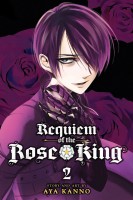
Apparently, considering the two in-depth reviews that I posted, Experiments in Manga was all about dynastic struggles and warfare last week. Ken Liu is an author that I’ve started to follow since reading one of his short stories in The Future is Japanese. His debut novel, Grace of Kings, was released this year and I absolutely loved it. It’s the first book in The Dandelion Dynasty, a fantasy epic which is inspired by and reimagines Chinese history and legends, such as Romance of the Three Kingdoms (which I really need to get around to finishing). I also reviewed Aya Kanno’s Requiem of the Rose King, Volume 2. So far, I’m really liking the series which takes its inspiration from William Shakespeare’s plays dealing with the Wars of the Roses. I think the second volume of Requiem of the Rose King improves on the first and is generally a little easier to follow as well. I continue to love the manga’s dark atmosphere and theatrical nature. Fortunately, the wait won’t be quite as long for the release of the next volume.

Quick Takes

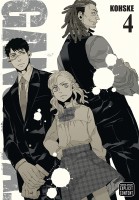
Gangsta, Volume 4Gangsta, Volumes 4-6 by Kohske. I intentionally saved up a few volumes of Gangsta to read all at once, but somehow during that time I’d forgotten how much I enjoy the series. I love the diverse cast of characters, the gritty setting, and the action and intrigue of the story. In addition to an escalation in the conflicts between “normals” and Twilights, these particular volumes of Gangsta include significant plot developments as well as more character development. For one, Alex’s memories are slowly returning, revealing small fragments of her past which should have major implications as the series progresses. Her younger brother even enters the scene. While Gangsta can be an extremely violent, brutal, and cruel manga, Kohske remembers to include quieter and more lighthearted moments to provide a contrast to the series’ intensity. Granted, they also serve to emphasize the manga’s tragic turns. Kohske isn’t afraid of killing off characters, either. With all of the battles going on between exceptionally skilled and powerful fighters, it’s probably not too surprising that there will be death, severe injury, and tremendous suffering involved.

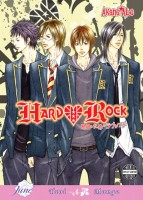
Hard RockHard Rock by Akane Abe. Because of my interest in and love of music, I have a tendency to seek out related manga (no matter how tangential), which is how I initially came across the boys’ love one shot Hard Rock. The manga follows four young men who started a band together. However, the volume actually begins with the band’s breakup and not much time is spent on music at all. Instead, Hard Rock focuses on the former bandmates’ changing friendships and relationships. There’s an underlying tangle of crushes, angst, and unrequited love, but relatively little romance, most of the major developments occurring off panel between chapters. With the exception of one page in the epilogue manga, close physical intimacy in Hard Rock is almost nonexistent beyond an occasional kiss or even rarer groping. The young men are just as likely to punch one another as they are to hug. Thus, readers looking for steamy bedroom scenes will probably be disappointed. Personally, I actually liked and appreciated the understated romance; Abe makes it work. Although Hard Rock ended up having very little to do with music, I still enjoyed it quite a bit.

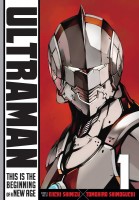
Ultraman, Volume 1Ultraman, Volume 1 by Eiichi Shimizu and Tomohiro Shimoguchi. I’ve watched and enjoyed a little over a dozen episodes of the live-action Ultraman series from the 1960s and so was curious about Shimizu and Tomohiro’s addition to the incredibly successful franchise. Readers who aren’t familiar with the original needn’t fear—the first chapter of the sequel has a tremendous amount of exposition crammed into it. While this does quickly establish the premise of the manga, it’s not the most effective or enjoyable introduction. However, the narrative of the following chapters quickly improves and the volume ends with a great hook. The manga takes place a generation after the end of the Ultraman television series and focuses on Shinjiro Hayata who, as the son of the original Ultraman, has inherited superhuman powers. He becomes the target of an alien attack which leads him to accept the role of the new Ultraman. However, instead of transforming into a powerful giant, Shinjiro uses an exo-suit to enhance his abilities. So far, the Ultraman manga is shaping up to be more serious and a fair amount darker than the original series.

Filed Under: FEATURES, My Week in Manga Tagged With: Akane Abe, Eiichi Shimizu, Gangsta, Kohske, manga, Tomohiro SHimoguchi, Ultraman

Requiem of the Rose King, Vol. 2

September 25, 2015 by Ash Brown

Requiem of the Rose King, Volume 2Creator: Aya Kanno
U.S. publisher: Viz Media
ISBN: 9781421580906
Released: September 2015
Original release: 2014

Aya Kanno has had several of her manga series released in English in the past—Soul Rescue, Blank Slate, and Otomen—all of which were quite different from one another. One of the things that I appreciate most about Kanno is the versatility apparent in the range of her work. I was especially looking forward to her most recent series Requiem of the Rose King and was thrilled when Viz Media licensed for an English-language release. The manga is loosely inspired by William Shakespeare’s historical plays Henry VI (in its various parts) and Richard III which are in turn a dramatization of England’s Wars of the Roses. As a fan of Shakespeare and as a fan of Kanno, I was very interested in seeing her interpretation. Although upon initial reading the first volume of Requiem of the Rose King could occasionally be somewhat confusing—visions, nightmares, and reality all bleeding into one another—I loved its dark atmosphere, theatrics, and dramatic nature. I was very glad when Requiem of the Rose King, Volume 2, initially published in Japan in 2014, was translated into English in 2015.

The bloody struggle for England’s throne continues. The Lancasters executed King Richard II for treason and has now ruled the country for three generations. However, there are many who still view the Lancasters as usurpers and who support the House of York’s claim to the throne. Richard, the Duke of York, is poised to become the next monarch after King Henry VI is captured and coerced into relinquishing the crown in order to end the bloodshed. But then Queen Margaret takes command of the King’s military forces, unwilling to let power to slip from her and her family’s hands. The resulting conflict does not go well for the Duke and with this turn of events the dynastic war escalates. During this time, both Henry and the Duke’s youngest son Richard are imprisoned in a tower, unaware of the battle’s progress and the changing tides of war. Richard is utterly devoted to his father and wants to see him crowned as England’s king. Thus, the Duke’s death on the battlefield will set into motion a tragic series of events for his son and for the entire kingdom as the darkness that resides within Richard is unleashed.

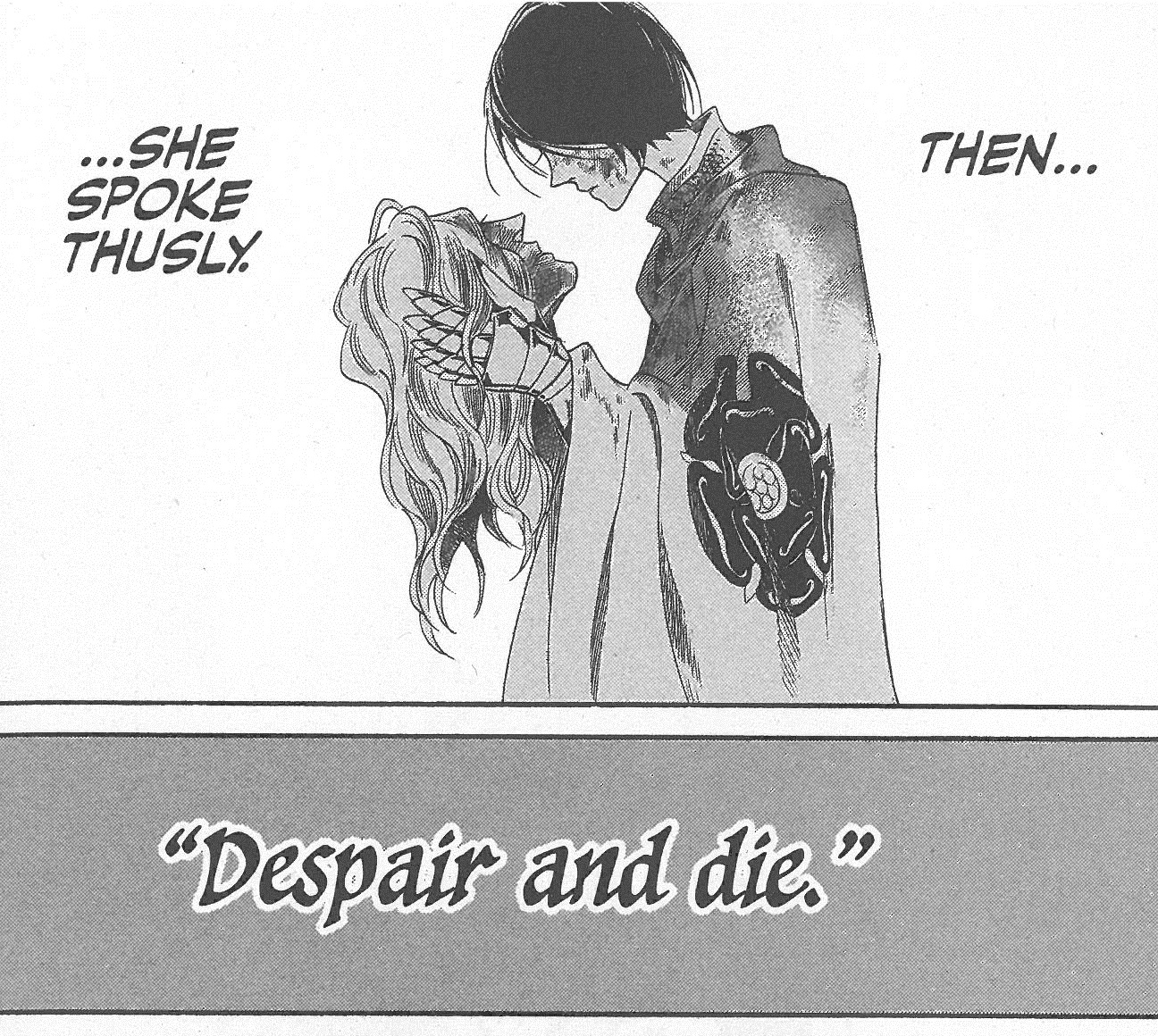
Requiem of the Rose King, Volume 2, page 96In part, the first two volumes of Requiem of the Rose King have been a prologue to the rest of the series. The stage, characters, and mood have now been fully set for the unfolding drama and tragedy. There is a huge psychological element to Requiem of the Rose King. Kanno draws parallels between Henry and Richard which emphasize that, especially in regards to their mental states. Both men are touched by madness, but it manifests in vastly different ways. Henry’s insanity seems to be fairly benign although it does cause significant political turmoil. It also provides a way for him to escape from his responsibilities as a ruler and to avoid a very violent reality. Richard’s madness, on the other hand, is the result of facing that same reality head on. He becomes utterly consumed by rage and a desire for vengeance. Compared to Henry’s passivity and what could be described as harmlessness, Richard takes on a much more active and venomous role. The contrast between Henry and Richard and light and dark extends beyond their characterizations and is captured visually as well; Richard’s black hair and clothing consistently set him apart from everything else.

Anno’s Richard is both a tragic and terrifying figure. The beginning of Requiem of the Rose King shows the creation of a monster—a young man who is forcefully taking ownership of his own destiny after being irrevocably scarred emotionally and psychologically. Since his birth, Richard has been labeled as a demon child and a harbinger of death. He initially struggles against this stigma, but has now begun to embrace his own darkness. His father, the one person he loved and admired the most is dead; his mother has abandoned him multiple times; Richard sees very little incentive to retain his humanity if everything he truly cares about will be torn from him and he is already viewed as an abomination. The second volume of Requiem of the Rose King is defining for Richard. Among the chaos, violence, and death of war, he loses what little innocence and hope that he might have had. Although many of the surrounding circumstances were beyond his control, ultimately the choice to become a villain is his own. He is driven by despair, madness, and rage, willing to do anything to ensure his own future and the downfall of the Lancasters and anyone else who would stand in his way.

Filed Under: REVIEWS Tagged With: Aya Kanno, manga, requiem of the rose king, viz media

My Week in Manga: September 14-September 20, 2015

September 21, 2015 by Ash Brown

My News and Reviews

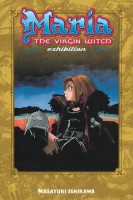
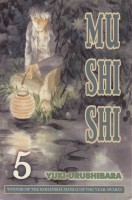
Two in-depth manga reviews were posted last week! As part of my monthly horror manga review project, I took a look at Yuki Urushibara’s Mushishi, Volume 5. I still love this series tremendously and wish it wasn’t out-of-print, but at least it’s available digitally from Kodansha Comics now. The second review last week was of Masayuki Ishikawa’s Maria the Virgin Witch: Exhibition, which is a collection of side stories, both prequels and sequels, focusing on the characters of Maria the Virgin Witch. For fans of the original series, it’s a very nice addition. The volume probably won’t appeal to or make much sense to anyone who hasn’t read the main manga, though.

There were a ton of interesting articles, reviews, and news announcements that I saw last week. Deb Aoki has been busy at Anime News Network with a two part interview with various Kodansha folk, mostly focusing on the Kodansha Advanced Media digital manga efforts, as well as an interview with those involved with the new Ultraman manga series, including the creators Eiichi Shimizu and Tomohiro Shimoguchi and Mike Montesa from Viz Media and Ai Shimizu from Hero’s Magazine. Over at Publishers Weekly, she takes a closer look at Tokyopop’s most recent efforts. Elsewhere, Kristin of Comic Attack interviewed Arina Tanemura at Anime Fest; AM Cosmos writes about the different perspectives of bullying found in A Silent Voice and Haven’t You Heard? I’m Sakamoto; and Organization Anti-Social Geniuses concludes its Advice on Manga series with advice on manga editing from manga editors.

In licensing news, the fine folk of MASSIVE will be working with Koyama Press to translate What Is Obscenity?, the comic memoir of sculptor and mangaka Megumi Igarashi (aka Rokudenashiko). In addition to the three original short manga, the English-language edition will have additional content, such as a new introduction by the artist and an interview between Rokudenashiko and Sion Sono. Yaoi Con was held over the weekend and there were some other licensing announcements made. SuBLime Manga picked up Rihito Takarai’s Ten Count, Bohra Naono’s Midnight Stranger, and Yonezou Nekota’s Don’t Be Cruel. (I’m especially looking forward to Ten Count, but am always happy to see more of Naono’s work translated.) As for Digital Manga, the Juné imprint is adding twenty-four new titles… except that they’re all digital, no print. (Interestingly, Project H’s recent license announcements were all digital-only as well, which really makes me wonder about DMP, especially as it’s starting to gear up for its next Tezuka Kickstarter.) And speaking of yaoi and BL, Kathryn Hemmann’s academic article “Queering the Media Mix: The Female Gaze in Japanese Fan Comics” takes a look at BL doujinshi based on CLAMP’s works.

Quick Takes

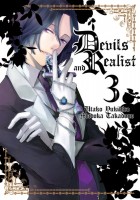
Devils and Realist, Volume 3Devils and Realist, Volumes 3-4 written by Madoka Takadono and illustrated by Utako Yukihiro. Sometimes the two major aspects of Devils and Realist (it’s humor and it’s drama) mesh well and sometimes they make the manga seem like it’s trying to be two entirely different series. Despite the demons that have become students in order to be closer to him, William’s school life remains fairly mundane, though humorous. That part of the story isn’t so different from any other school-based manga. What makes the series more interesting is the drama, politics, and intrigue surrounding the selection of the next ruler of hell. Heaven is getting involved now, too. Not only does William have to deal with demons vying for his attention, and in some cases his life, angels are beginning to make their presence known, causing even more problems for him. Also, angels can be just as big of jerks as their fallen brethren. Although I’m not in a rush to find out what happens next, I am still enjoying Devils and Realist; the art and character designs are pretty and I generally find the series to be entertaining.

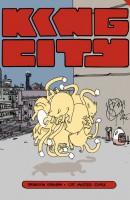
King CityKing City by Brandon Graham. The first half of King City was initially published by Tokyopop but the series, like so many of the publisher’s other original English comics, was left unfinished. However, unlike all but a very select few of the series that met that particular fate, King City found a new home and was able to be completed, in this case thanks to Image Comics. Although there are some dramatic battles and rescues in King City, there really isn’t much in the way of a plot. What there is a bizarre futuristic city filled with some very strange residents. The comic focuses on Joe, his friends and acquaintances, and Earthling, his extremely intelligent and multi-talented cat. Joe is a Catmaster—with a little help from an injection, Earthling can turn into or do anything. What I love most about King City, besides Earthling and the rest of the cats, is that it is absolutely crammed with wordplay and visual puns. It’s worth taking time to thoroughly examine every page because Graham has incorporated so much humor in the small, seemingly inconsequential details. King City is very strange, but it’s the kind of strange that I tend to enjoy.

Pandora Hearts, Volume 1Pandora Hearts, Volumes 1-3 by Jun Mochizuki. I know so many people who absolutely adore Pandora Hearts that I’ve been meaning to try the series for a while now. To be honest, After reading the first volume, I wasn’t so sure about the manga—I found it to be extremely chaotic and confusing, and almost nonsensical (maybe I just wasn’t reading closely enough)—but after the second volume it started to click for me and by the third I was completely hooked on the series. Mochizuki’s artwork is pretty great, too. I definitely plan on reading more of Pandora Hearts. I’ll admit, I’m still not entirely sure what’s going on yet, but that mystery is part of the point. Most of the characters don’t understand everything, either, and those who do know at least part of the truth aren’t necessarily sharing that information anyone else unless it serves their own purpose. Tragedy and psychological trauma are major components of Pandora Hearts. There is violence and horror, betrayals and lies, but also obsessive loyalty and kindness. The characters are struggling with loneliness and the intense desire and need to belong and feel wanted.

Filed Under: FEATURES, My Week in Manga Tagged With: Brandon Graham, comics, Devils and Realist, Jun Mochizuki, King City, Madoka Takadono, manga, pandora hearts, Utako Yukihiro

Maria the Virgin Witch: Exhibition

September 18, 2015 by Ash Brown

Maria the Virgin Witch: ExhibitionCreator: Masayuki Ishikawa
U.S. publisher: Kodansha
ISBN: 9781632361905
Released: August 2015
Original release: 2015

I rather enjoyed Masayuki Ishikawa’s short, three-volume manga series Maria the Virgin Witch. Although it was a bit uneven in places, possibly because the series ended sooner than was initially planned (granted, that is my own speculation rather than something that I know for a fact), I liked the series’ quirky characters, historical fantasy, and peculiar mix of humor and more serious philosophical and theological musings. Because Maria the Virgin Witch wrapped up so quickly and left many questions unanswered, I was happy to learn that Maria the Virgin Witch: Exhibition had also been licensed for an English-language release. Originally published in Japan in 2015, Exhibition is a collection of sides stories, a mix of prequels and sequels to the main series. Kodansha Comics released the English-language edition in 2015 as well. It is a relatively slim volume, but I was looking forward to spending a little more time with Maria the Virgin Witch and its characters.

Each of the short manga in Exhibition focuses on a different character of Maria the Virgin Witch: Viv, Maria, Joseph, and Ezekiel. Viv’s story is the only multi-chapter manga in the volume. It follows the English witch from when she first arrived on France’s shores, traveling on a ship filled with soldiers and other witches sent to reinforce England’ armies in the Hundred Years War. This is long before she befriends Maria, but Viv’s enthusiastic and reckless approach to battle, in addition to wreaking havoc, becomes a source of inspiration for Maria’s own efforts. The next story is just as much about Maria’s familiars as it is about Maria herself, taking place during the main series and showing a typical day away from the battlefield after Ezekiel joins their small group. Josephs’ story, like Viv’s, is a prequel to Maria the Virgin Witch, recounting Joseph and Maria’s first adorably awkward meeting as he seeks her aid for France’s war efforts. The volume ends with a story about Ezekiel, not as an angel, but as the human child of Maria and Joseph, providing a nice epilogue for the series as a whole.

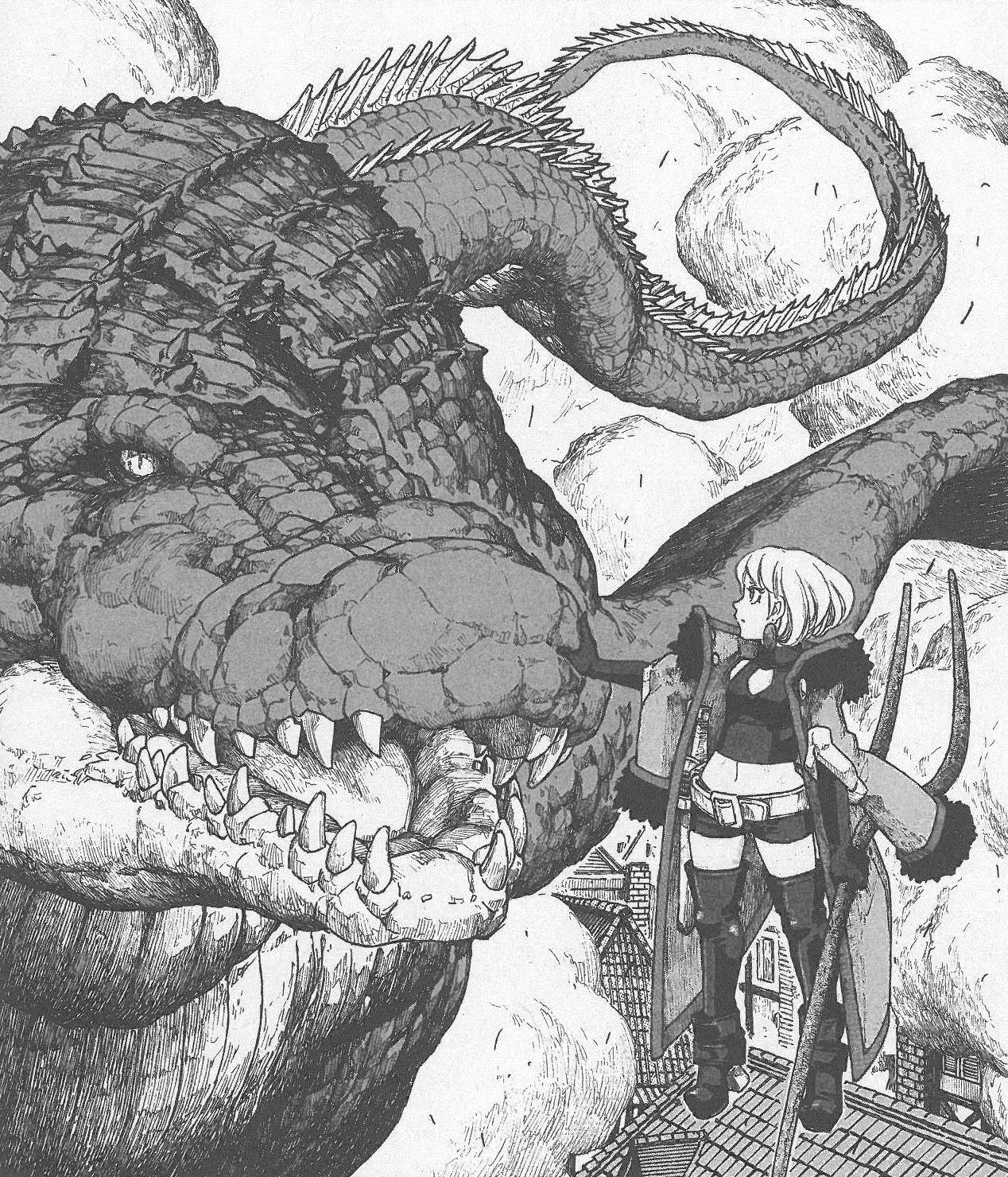
Maria the Virgin Witch: Exhibition, page 44The stories in Exhibition are obviously intended for readers who are already familiar with Maria the Virgin Witch and who have already read the entire series. Although the short manga in Exhibition aren’t necessarily directly connected to the main narrative of Maria the Virgin Witch, by their very nature there are some spoilers involved and the collection relies on the reader having previous knowledge of the series’ characters. Exhibition is less devoted to expanding the world and plot of Maria the Virgin Witch and more focused on further developing the manga’s characters and their personal stories. And by telling the stories of the individual characters in Exhibition, more about Maria herself is revealed. Even when she isn’t immediately involved or present, Maria plays an important role in all of the short manga. Exhibition shows many of her different sides: Maria the friend, Maria the master, Maria the lover, Maria the mother, and so on.

Whereas the main Maria the Virgin Witch series had a rather serious story that was accompanied and punctuated with humor, overall Exhibition consistently tends to be much more lighthearted and comedic in nature. It’s a fun collection for fans of the series even if the stories are generally fairly inconsequential. None of the hard questions raised by the main series or the lingering plot threads are really addressed. Maria’s lineage and backstory still remain obscure. (If anything, I’m left wondering even more about her origins and who she really is.) Not much in the way of additional worldbulding is present in the volume either. Instead, Exhibition offers readers the opportunity to enjoy a collection of stories that are charming, funny, and even a little touching as they celebrate the characters of Maria the Virgin Witch. And because the characters are such a large part of what makes Maria the Virgin Witch so appealing, Exhibition is a perfect send-off for the series.

Filed Under: REVIEWS Tagged With: kodansha, Kodansha Comics, manga, Maria the Virgin Witch, Masayuki Ishikawa

Mushishi, Vol. 5

September 16, 2015 by Ash Brown

Mushishi, Volume 5Creator: Yuki Urushibara
U.S. publisher: Del Rey
ISBN: 9780345501387
Released: August 2008
Original release: 2004
Awards: Japan Media Arts Award, Kodansha Manga Award

The manga series Mushishi was Yuki Urushibara’s professional debut as a mangaka. The manga began serialization in Japan in 1999, lasted for ten volumes, and was the basis for multiple anime adaptations and a live-action film in addition to other media. Over the course of its publication, Mushishi would earn Urushibara several awards and honors, including a Japan Media Arts Award in 2003 and a Kodansha Manga Award in 2006. Mushishi, Volume 5 was originally published in Japan in 2004. The English-language edition of the volume was initially released in print by Del Rey Manga in 2008 and then in an electronic format by Kodansha Comics in 2014. Mushishi is one of my favorite manga series and one of the first that I made a point to collect in its entirety. Fortunately, I discovered the series as it was first being published in English, so I was able to complete my set before the manga went out-of-print and became expensive to find. However, I am glad that the digital version is now available for readers who missed the series’ original run in English, though.

Mushishi, Volume 5 collects five stories which, as is usual for the series, largely stand on their own. Ginko’s doctor friend makes a brief reappearance and there are a few nods to some of the series’ previous chapters, such as those exploring Ginko’s past, but it’s not necessary to be familiar with those references to enjoy the stories in the fifth volume. In “The Sea Palace,” Ginko visits a remote island where it is rumored that people are reborn after they die, suspecting that mushi may involved. His search for unusual mushi continues in “Eye’s Fortune, Eye’s Misfortune” when he happens upon a clairvoyant traveling musician with quite a story to tell—blind as a child, she credits a mushi for giving her sight. “The Coat That Holds a Mountain” follows an aspiring artist who leaves his rural village to study in the city, his success coming with unanticipated consequences and costs. In “Flames of the Fields,” a village’s mushishi makes a drastic decision when an unknown, invasive grass threatens lives and livelihoods. Finally, in “The Snake of Dawn,” Ginko is asked to do what he can to help a young mother who is slowly losing all of her memories.

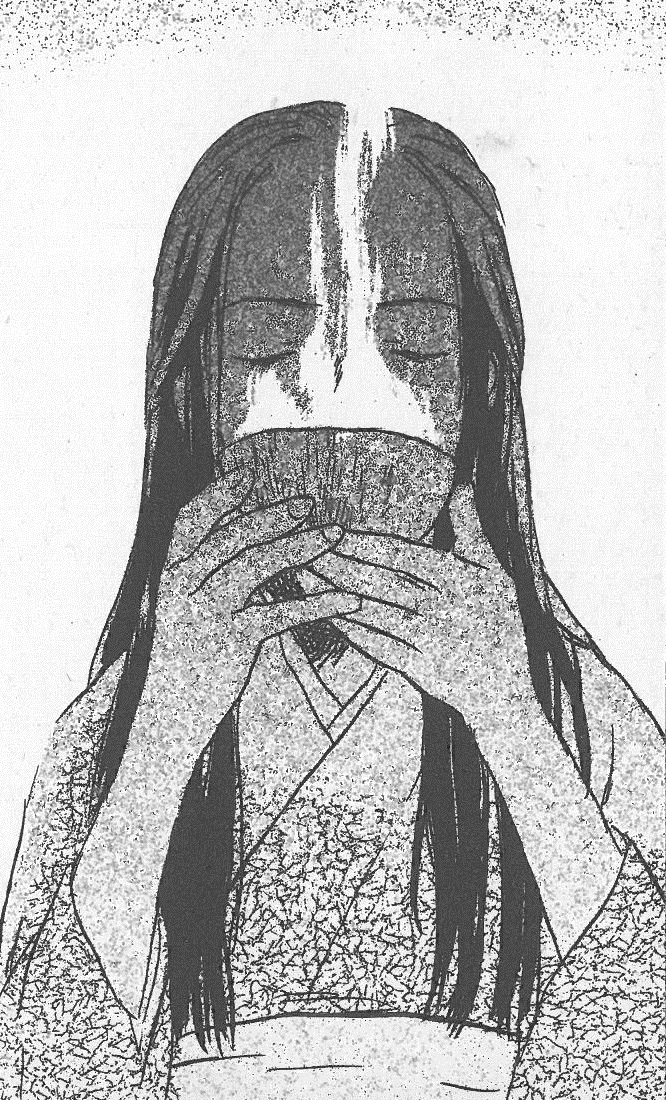
Mushishi, Volume 5, page 202As a mushishi, Ginko travels across Japan striving to learn as much as he can about mushi. Some mushishi see the creatures as little more than dangerous pests that need to be eradicated. Ginko, however, approaches mushi more liberally, recognizing the need to treat them with caution but also advocating for the sanctity of all life and for the coexistence between humans and mushi whenever possible. Mushishi, Volume 5 presents several scenarios in which this harmony has actually been achieved: mushi that facilitate life, mushi that provide healing, mushi that grant health and strength. In some cases, though the results may still be tragic, what would normally be seen as an unwanted side-effect of interacting with a particular mushi can be used to a person’s advantage. But the fifth volume also shows that people must still continue to be vigilant and take great care when dealing with mushi and their powerful influences. This is a concept that of course extends beyond the mushi themselves; mushi are both representative of and a metaphor for those things which humans don’t fully understand or know.

I particularly enjoy the strong influence that Japanese folklore and legends have had on Mushishi. Some of the chapters take direct inspiration from existing stories while others easily fit in with those traditional tales. But there’s another aspect of Mushishi that I find especially interesting because in some way it runs counter to its seemingly supernatural elements—the actual study of mushi. In part, to be a mushishi is to be a scientist and a researcher, someone who pursues and gathers knowledge. Much of Mushishi, Volume 5 deals with rarer and unknown mushi. By investigating them, Ginko and other mushishi are in a better position to make more informed decisions in situations in which mushi are involved. Acting without complete understanding can be extremely dangerous, therefore knowledge is an incredibly powerful and valuable tool granting some amount of control over the world. Mushishi realize how important and vital the accumulation of knowledge truly is and they take their chose profession very seriously.

Filed Under: REVIEWS Tagged With: del rey, Japan Media Arts Award, Kodansha Manga Award, manga, mushishi, Yuki Urushibara

My Week in Manga: September 7-September 13, 2015

September 14, 2015 by Ash Brown

My News and Reviews

I was on a much-needed vacation last week; the family spent a fair amount of time in northern Michigan enjoying nature and good food and drink. I got some extra sleep and caught up on some of my reading and writing, too. All in all, a lovely time was had. I wasn’t online much at all except to post a couple of reviews, so I’m sure that I’ve missed out on all sorts of things. (If you would, please do fill me in on anything that was particularly interesting!) The first review I posted was of the rather clever debut mystery novel The Decagon House Murders by Yukito Ayatsuji (who also happens to be the creator of the horror mystery Another and the husband of Fuyumi Ono). I also reviewed Hirohiko Araki’s JoJo’s Bizarre Adventure, Part 1: Phantom Blood, Volume 1 which continues to be marvelously strange and over-the-top.

Quick Takes

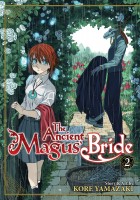
The Ancient Magus' Bride, Volume 2The Ancient Magus’ Bride, Volume 2 by Kore Yamazaki. The first volume of The Ancient Magus’ Bride was one of my favorite debuts of 2015 and I continue to thoroughly enjoy the series with the second volume. Although overall there is a disconcerting, dark, ominous, and creepy atmosphere to the manga, but there are also moments light; the horror and mystery are accompanied by touches of humor and hope that help keep the series from becoming too oppressive. Yamazaki also captures the capricious nature of the fae perfectly. I was rather pleased to see Titania and Oberon, the queen and king of the fairies, introduced in this volume as well. Although more is hinted about Elias’ past—he has connections to the fae, mages, and alchemists, but isn’t really accepted by any of them—he’s still reluctant to open up and talk about it. He largely remains shrouded in mystery, but it seems as though he may have more in common with Chise than would initially appear. Their relationship has a peculiar dynamic to it in addition to a significant imbalance of power, but I’m very curious to see how it develops; there may be healing involved for both of them.

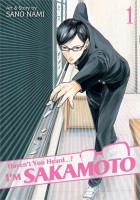
Haven't You Heard? I'm Sakamoto, Volume 1Haven’t You Heard? I’m Sakamoto, Volume 1 by Nami Sano. The exceedingly odd Sakamoto doesn’t seem to care at all about what other people might think of him, making him immune to bullying and giving him the reputation of being the coolest student in school despite his weirdness. Somehow, he is able to take control of any situation and use it to his advantage; he always ends up looking good. The girls all love him and the guys, though they would like to hate him, can’t help but admire and respect him. And that’s what makes the manga so funny. So far, Haven’t You Heard? I’m Sakamoto is fairly episodic although there are some recurring characters and running jokes. Both the series and Sakamoto are admittedly strange, but the comedy is played seriously with an incredibly straight face. At the same time, Sano’s artwork highlights the drama and humor of the various situations. Haven’t You Heard? I’m Sakamoto is kind of absurd and yet highly entertaining. I’m not sure for how long Sano will be able to keep the gags fresh, but I’m looking forward to reading more of the series and finding out.

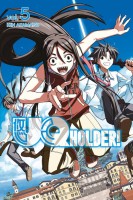
UQ Holder!, Volume 5UQ Holder!, Volume 5 by Ken Akamatsu. Up until this point, my feelings toward UQ Holder! have been fairly lukewarm. I’ve enjoyed the wide variety of immortals and some of the action sequences can be highly entertaining, but the story and characters more often than not are frustratingly directionless and shallow. That being said, I was surprised by how much I actually liked the fifth volume of UQ Holder!. I didn’t have much hope for it at first as the opening battle ends up being extremely anticlimactic. I’m sure this was meant to be an amusing development, but Akamatsu’s sense of humor in the series doesn’t always work for me. But then four of the UQ Holder members are sent undercover as high school students to investigate a string of serial murders in which an immortal may be involved. Not unexpectedly, some silliness ensues alongside the seriousness of the killings. The murder case is interesting, though, even if its solution ultimately feels forced. And while I liked some of the newly-introduced characters, the lead’s oblivious optimism and aggressive friendliness continues to be both an asset and a detriment to the series.

Save

Filed Under: FEATURES, My Week in Manga Tagged With: Ancient Magus' Bride, Haven't You Heard I'm Sakamoto, Ken Akamatsu, Kore Yamazaki, manga, Nami Sato, UQ Holder

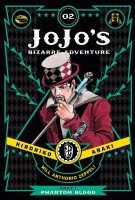
JoJo’s Bizarre Adventure, Part 1: Phantom Blood, Volume 2

September 11, 2015 by Ash Brown

JoJo's Bizarre Adventure, Part 1: Phantom Blood, Volume 2Creator: Hirohiko Araki
U.S. publisher: Viz Media
ISBN: 9781421578804
Released: May 2015
Original release: 1988

For years the only part of Hirohiko Araki’s epic and fashionably strange shōnen manga series JoJo’s Bizarre Adventure that was available in English was the third story arc, Stardust Crusaders. A standalone side story, Rohan at the Louvre was released as well, but it wasn’t until 2015 that the very beginning of the series, Phantom Blood, was translated and released in print, and in a lovely hardcover edition, too. (I have a feeling that the popularity of the recent JoJo’s Bizarre Adventure anime adaptation probably had something to do with that.) Phantom Blood was originally published in five volumes in Japan between 1987 and 1988, but in 2002 the first story arc was re-released in three volumes. Viz Media’s English-language edition is based on that 2002 release. JoJo’s Bizarre Adventure, Part 1: Phantom Blood, Volume 2, published in 2015, collects part of the second volume, all of the third volume, and part of the fourth volume of the original Japanese release.

JoJo’s life isn’t exactly turning out the way that he would have hoped or expected. His father lays dying in his arms after having taken a fatal blow that was intended for him. Behind the knife that will end his father’s life is Dio, a man who was raised as his brother but who has turned against the Joestar family as was always his plan and intention. Not only that, Dio has gained untold powers from a mysterious and ancient stone mask. Now a vampire, Dio is nearly immortal and possesses great strength. Even he doesn’t know the full extent of his astonishing abilities, but he has already begun gathering followers who are drawn to his charisma and promises of power. With the help of a curious man named Baron Zeppeli, JoJo becomes one of the only people who might have a chance of defeating Dio. Zeppeli unlocks JoJo’s own latent talents, training him in Sendo and its use of Hamon energy, an impressive martial technique which when mastered may make it possible for JoJo to destroy Dio and save the world.

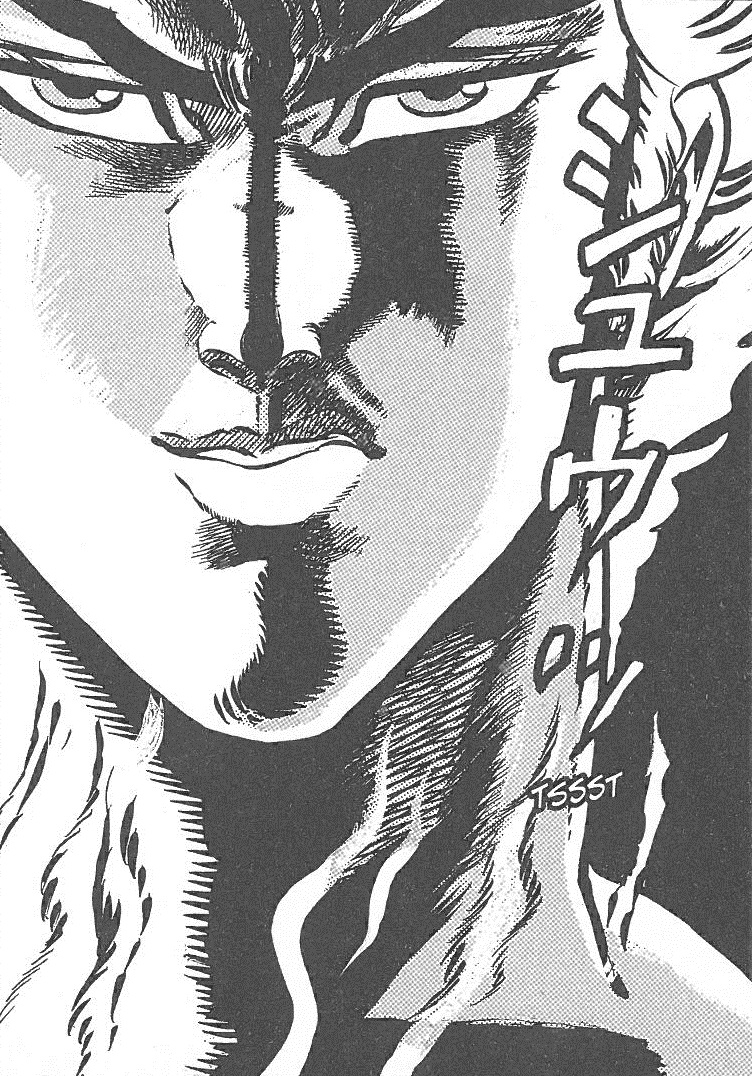
PhantomBlood2-72JoJo’s Bizarre Adventure is a very aptly named series. It is an exceedingly strange manga with nonstop, over-the-top action and drama. Nearly every phrase of narration and dialogue in Phantom Blood, Volume 2 is an exclamation. Even the few relatively quiet moments are fervently intense and the calm never lasts for very long. Most of the second volume of Phantom Blood consists of extended fight scenes and training sequences. Araki keeps Phantom Blood moving along at a breakneck pace which sometimes includes the actual breaking of necks. Blood, gore, dismembered body parts, splattered guts, eyeballs, and brain matter are all fairly common in the series. There is definitely a strong element of horror in the early part of JoJo’s Bizarre Adventure. While Araki’s artwork in Phantom Blood understandably doesn’t show the same refinement found in his later illustrations, it still has a sense of visceral dynamism and the occasional panel can actually be quite beautiful or striking.

JoJo’s Bizarre Adventure is a very odd manga. The story, artwork, and characters are all memorable if for no other reason than they are so over-the-top and strange. Additionally, Araki freely mixes historical events with historical fantasy in Phantom Blood. For example, Jack the Ripper becomes one of Dio’s earliest followers and England’s bloody dynastic struggles of the sixteenth century form a dramatic backstory for some of the other warriors that JoJo must face as he pursues his adoptive brother. Plenty of Phantom Blood is completely Araki’s own creation, though. And lest there be any confusion about all the weirdness, JoJo’s faithful and at times even useful companion Speedwagon is there to explain everything that’s going on, as well as to narrate the obvious. Speedwagon’s help isn’t needed to realize how much of a villain Dio is, though. Even before becoming a vampire Dio delighted in his own evil and the evil of others, but with his newfound powers he is in a better position than ever to make his malevolent schemes a reality. How successful he will actually be remains to be seen, but so far the results are marvelously terrifying and outrageous.

Filed Under: REVIEWS Tagged With: Hirohiko Araki, JoJo's Bizarre Adventure, manga, Shonen Jump, viz media

My Week in Manga: August 31-September 6, 2015

September 7, 2015 by Ash Brown

My News and Reviews

A few different things posted at Experiments in Manga last week. First up was the announcement of the Yumi Tamura Giveaway Winner which also includes a list of mangaka whose work the giveaway participants consistently enjoy and follow. For the second post last week, which also happens to be the first in-depth review of September, I took a look at Takeshi Matsu’s second English collection of erotic gay manga Dr. Makumakuran and Other Stories which I quite enjoyed. Overall, I think it may even be stronger than his first collection, More and More of You and Other Stories, which I also liked. Finally, over the weekend, I posted August’s Bookshelf Overload for those of you interested in what sorts of things I’ve picked up recently.

A little over a month ago I posted my responses to a game of manga tag. Well, that game is still making the rounds! Most recently, I discovered that Daiyamanga’s Krystallina took the opportunity to talk about her collection. Elsewhere online, Shojo Beat posted a brief interview with Kimi ni Todoke‘s creator Karuho Shiina. And in licensing news, Seven Seas has picked up three more manga: Nanatsuki Takafumi and Risumai’s I Was Abducted by an Elite All-Girls School as a Sample Commoner, Amemiya Yuki and Ichihara Yukino’s Battle Rabbits, and Takeoka Hazuki and Tiv’s Masamune-kun’s Revenge.

My News and Reviews

An Even More Beautiful LieAn Even More Beautiful Lie by Kei Kanai. It was the lovely, ethereal, and sensuous cover of An Even More Beautiful Lie that initially caught my eye and first brought the boys’ love one-shot to my attention. And, except for the creepy way that Kanai draws some of the characters’ eyes, I really liked the interior artwork as well with its strong inking and solid blacks. I enjoyed the basic premise and setup of the story, too, but ultimately I felt a little betrayed by the manga. Kurosu is a university student studying art. He’s particularly fond of the paintings by Yukari, a fellow student, genius artist, and something of a recluse. Yukari’s life is devoted to painting. Sometimes while in the grip of inspiration he’s so focused on creating that forgets to eat or even sleep. Which is why it’s fortunate that he left his umbrella on the train—returning it gives Kurosu the excuse he needed to talk to Yukari and the two grow close; Yukari now has someone who not only cares about his paintings, but cares about his well-being, too. I wish An Even More Beautiful Lie would have continued in that vein, but instead there’s an abrupt shift in the story’s tone that’s and a horrible, unnecessary rape scene. But at least it’s not between the two leads and their relationship remains intact.

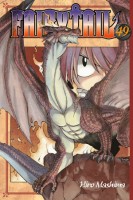
Fairy Tail, Volume 49Fairy Tail, Volume 49 by Hiro Mashima. The forty-ninth volume of Fairy Tail brings to an end the Tartaros story arc while beginning new one. Since Igneel dominates the cover, I was hoping for an epic showdown between dragons. There is a pretty good fight, but sadly it’s over fairly quickly. In fact, the whole Tartaros arc seemed to be wrapped up sooner than anticipated. And indeed, Mashima mentions in the afterword that it was cut short. Even so, it ends in a suitably dramatic fashion and the next arc promises to be very interesting. Of course, Mashima does have to retcon a few things to really pull it off well. That’s one of the things about Fairy Tail that I’m consistently frustrated by—although Mashima claims to have thought out the story well in advance, due to the lack of adequate foreshadowing and what seems like constant rewriting, I’m not convinced. And as the series continues to grow in length (I don’t see Fairy Tail ending any time soon), keeping internal consistency is going to become more and more of a challenge. Even though magic is obviously a major part of Fairy Tail, I think it’s been used one to many times to backtrack the narrative when Mashima has written himself into a corner; major plot and character developments lose their impact if they can so easily be waved away later on.

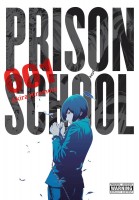
Prison School, Omnibus 1Prison School, Omnibus 1 by Akira Hiramoto. Some people, like me, may be familiar with Hiramoto as the creator of the acclaimed manga series Me and the Devil Blues, a supernaturally-tinged historical drama about a blues musician. Prison School is a completely different manga that, except for Hiramoto’s tremendous skill as an artist, has very little in common that earlier series. Prison School is an absurdly dramatic and over-the-top comedy. Even though the manga can hardly be taken seriously it will still likely be incredibly offensive and obscene to a large number of readers since the most powerful characters—the young women of Hachimitsu Private Academy’s shadow student council—are also the most sexualized and fetishized. The men in the series are all varying degrees of despicable, and they unapologetically revel in it. And yet, if one can stand the stunningly less-than-flattering portrayal of just about every character in the series, Prison School can be immensely entertaining and engaging. Considering all of the perversion, sadomasochism, nudity, and violence in Prison School, it’s certainly not a series that I would recommend to everyone, though. I expect that Prison School will be a divisive series, but I’m still intensely curious to see how the manga plays out.

Filed Under: FEATURES, My Week in Manga Tagged With: Akira Hiramoto, Fairy Tail, Hiro Mashima, Kei Kanai, manga, Prison School

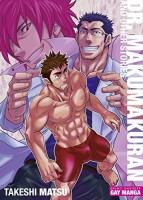
Dr. Makumakuran and Other Stories

September 4, 2015 by Ash Brown

Dr. Makumakuran and Other StoriesCreator: Takeshi Matsu
Publisher: Bruno Gmünder
ISBN: 9783867878432
Released: August 2015

Dr. Makumakuran and Other Stories is the second collection of erotic gay manga by Takeshi Matsu to be released in English. Matsu was one of the nine mangaka to be featured in the landmark anthology Massive: Gay Erotic Manga and the Men Who Make It which is where I initially encountered his work. Matsu can be counted among the few mangaka who have been able to make a career out of creating gay manga, his stories appealing to readers of multiple genders and sexualities. I thoroughly enjoyed “Kannai’s Dilemma”—the story of his collected in Massive—as well as his first English anthology More and More of You and Other Stories (which had the added bonus of in part being a food manga), so I was looking forward to Dr. Makumakuran and Other Stories a great deal. The volume, published by the Germany-based Bruno Gmünder in 2015, collects several of Matsu’s short manga, many of which had previously only been available digitally. So, not only are the stories being translated into English for the first time, most of them are being released in print for the first time as well.

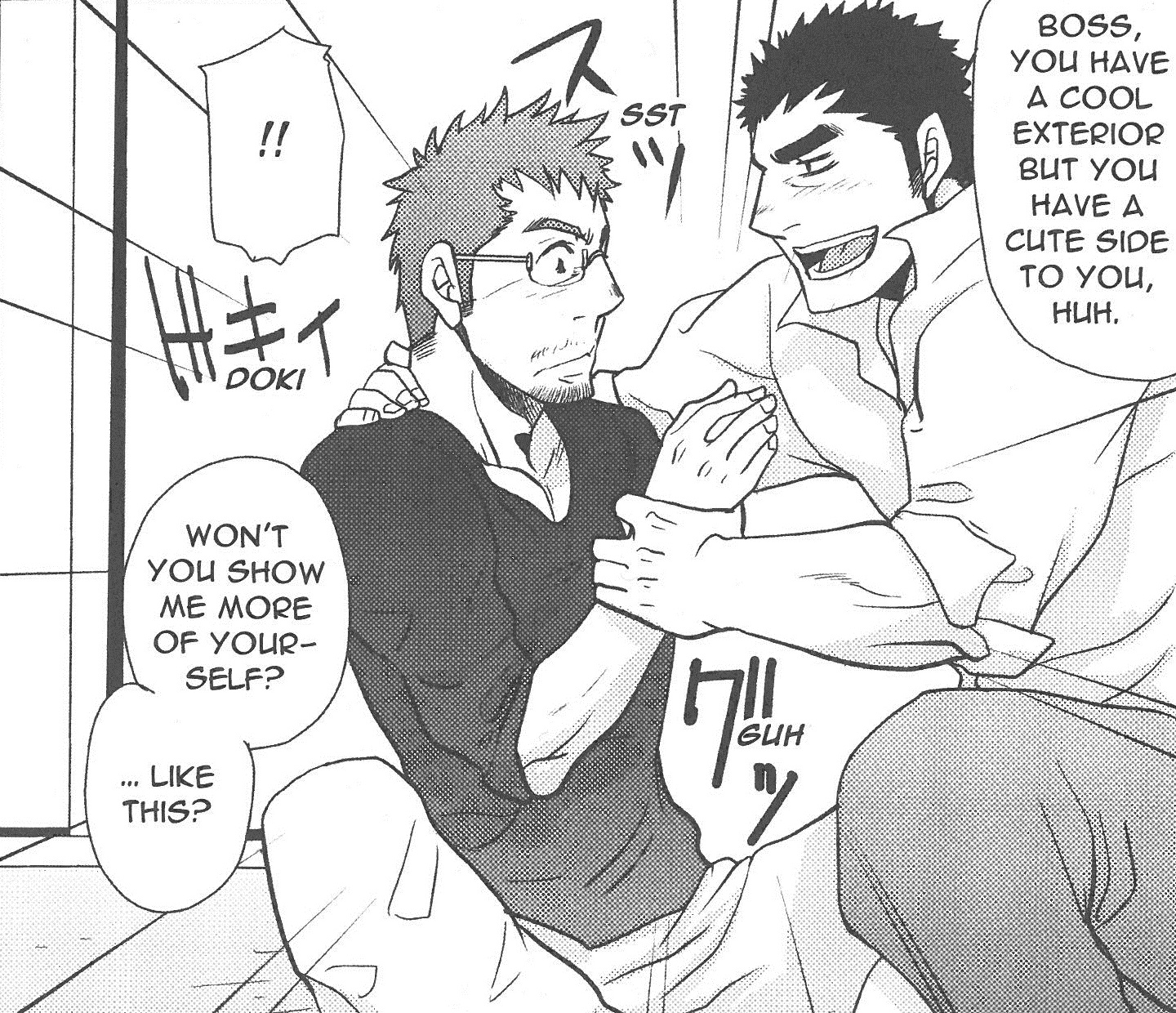
Dr. Makumakuran and Other Stories collects five of the Matsu’s short erotic manga. The volume opens with the first two episodes of The Dangerous Games of Dr. Makumakuran, a ongoing series featuring the titular Dr. Makumakuran. Both a genius scientist and a total slacker, he spends much of his time working on side projects and annoying his assistants rather than focusing on more commercially productive research. More than once the lead assistant Tachibana becomes the test subject for Makumakuran’s seemingly innocent inventions, including a virtual reality workplace training system which allows for a variety of simulations and a diet formula that shrinks more than just fat cells. The next story, “Yashio and Shibayama,” is about a comedian whose career is struggling after he undergoes a celebrity makeover as well as the lengths he and his manager are willing to go to save it. In “Big Man, Tiny Boss” a strapping underling approaches his superior for some hands-on advice on satisfying a partner, except that he’s straight and his boss is gay. Finally, things unintentionally get a little out of hand in the changing room between a designer and his stand-in model in “Wolf Mask.”

Dr. Makumakuran and Other Stories, page 131Although I enjoyed More and More of You and Other Stories immensely, overall I think that Dr. Makumakuran and Other Stories may actually be the stronger collection out of the two, or at least the one that will be more immediately accessible to a wider audience as a whole. But either way, both anthologies are great. I’ve come to expect Matsu’s work to have a sense of humor and playfulness to it, and Dr. Makumakuran and Other Stories doesn’t disappoint. The stories, as well as the plentiful no-holds-barred sex scenes to be found within them, can actually be surprisingly sweet and charming. Even the scenarios with more dubious beginnings end up being rather romantic. One of the things that I particularly enjoy about Matsu’s erotic manga in Dr. Makumakuran and Other Stories is that while the works aren’t overly serious and at times can be quite comedic, there is still some relationship drama and honest emotional connections between the characters; the sex is only one aspect of that greater whole.

Except for the first two manga collected in Dr. Makumakuran and Other Stories which are part of the same series, none of the works in the volume are directly related to one another. However, there are a few themes that occur repeatedly. Many of the stories feature a transformation of some sort, whether it be physical or psychological. Matsu plays with size and power dynamics a fair bit in Dr. Makumakuran and Other Stories as well. Both “Big Man, Tiny Boss” and “Yashio and Shibayama” deal with pushing the boundaries of professional relationships between men with different body types. The changes in size and dynamics in the two The Dangerous Games of Dr. Makumakuran stories are more fantastic and dramatic in nature and the sex ends up having to be fairly creative as a result. “Wolf Mask” turns out to be intense and kinky, too, but ultimately the relationship between the men is kind of adorable. Dr. Makumakuran and Other Stories is a great collection of erotic gay manga, Matsu exhibiting his skills as a creator whose work can be hot and heavy and still have heart. I hope to see more of his manga translated in the future.

Filed Under: REVIEWS Tagged With: Bruno Gmünder, Gay Manga, manga, Takeshi Matsu

Manga Giveaway: Yumi Tamura Giveaway Winner

September 2, 2015 by Ash Brown

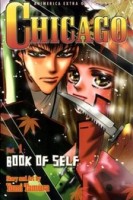
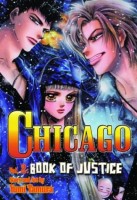
Chicago, Volume 1: The Book of SelfChicago, Volume 2: The Book of JusticeAnd the winner of the Yumi Tamura Giveaway is… Olivia!

As the winner, Olivia will be receiving a complete set of Yumi Tamura’s shoujo action thriller Chicago as published by Viz Media back in the day. I came across Chicago because Tamura was also the creator of Basara, a series that I love. And so for this giveaway, I asked that participants tell me about the mangaka whose work they always make a point to read. Check out the giveaway comments for the detailed responses, and check out below for the list of mangaka mentioned in addition to a selection of their works that are available in English!

Aki
The Angel of Elhamburg
Olympos
Utahime: The Songstress

Moyoco Anno
In Clothes Called Fat
Sakuran: Blossoms Wild
Sugar Sugar Rune

CLAMP
Cardcaptor Sakura
X
xxxHolic

Usamaru Furuya
Genkaku Picasso
Lychee Light Club
No Longer Human

Kyoko Hikawa
From Far Away

Kazuo Koike & Goseki Kojima
Lone Wolf & Cub
Path of the Assassin
Samurai Executioner

Mitsukazu Mihara
Doll
The Embalmer
IC in a Sunflower

Setona Mizushiro
After School Nightmare
Black Rose Alice
X-Day

Jun Mochizuki
Pandora Hearts

Kaoru Mori
Anything and Something
Bride’s Story
Emma

Takeshi Obata
All You Need Is Kill
Death Note
Hikaru no Go

Yayoi Ogawa
Tramps Like Us

Atsushi Ohkubo
B. Ichi
Soul Eater
Soul Eater Not!

Eiji Otsuka
The Kurosagi Corpse Delivery Service
Madara
MPD-Psycho

Yumi Tamura
Basara
Chicago
Wild Com.

Arina Tanemura
Idol Dreams
Phantom Thief Jeanne
Sakura Hime: The Legend of Princess Sakura

Jiro Taniguchi
A Distant Neighborhood
The Summit of the Gods
The Walking Man

Osamu Tezuka
Astroboy
Dororo
Message to Adolf

Yana Toboso
Black Butler
Rust Blaster

Naoki Urasawa
Master Keaton
Monster
Pluto

Yu Yagami
Go West!
Hikkatsu!: Strike a Blow to Vivify
Those Who Hunt Elves

Fumi Yoshinaga
Not Love But Delicious Foods Make Me So Happy!
Ôoku: The Inner Chambers
What Did You Eat Yesterday?

For the sake of space, I’ve limited the lists of works to up to three releases each in English, but many of the creators have other manga available in translation, too. And hopefully we’ll continue to see more of all of these mangaka! Thank you to everyone who took the time to participate in the giveaway and share some great mangaka with me. Hope to see you all again for the next giveaway!

Filed Under: Giveaways, UNSHELVED Tagged With: Chicago, manga, Yumi Tamura

My Week in Manga: August 24-August 30, 2015

August 31, 2015 by Ash Brown

My News and Reviews

Last week was a bit slow at Experiments in Manga as I decided to take it a little easy on myself, but I did still post a couple of things in addition to the usual My Week in Manga feature. The most recent manga giveaway was posted, for one, and there’s still time to enter for a chance to win a complete set of Yumi Tamura’s shoujo action thriller Chicago. I also posted an in-depth review of Minae Mizumura’s award-winning A True Novel which I absolutely loved. In part it’s a reimagining of Emily Brontë’s Wuthering Heights set in postwar Japan, but it’s not at all necessary to have read Brontë’s novel to appreciate Mizumura’s work.

Elsewhere online, Mangabrog has posted a translation of an interview of Parasyate‘s Hitoshi Iwaaki from 2005. Justin interviewed Sekai Project for Manga Bookshelf about the company entering the manga market. In licensing news, Kodansha Comics has picked up some Fairy Tail and Noragami side stories and Vertical Comics confirmed its acquisition of Maybe’s The Abandoned Sacred Beasts. Also of note, Humanoids will be releasing an anthology in 2016 called The Tipping Point which will include contributions from mangaka Katsuya Terada, Naoki Urasawa, Taiyo Matsumoto, and Atsushi Kaneko in addition to other comics creators from Europe and the United States.

Quick Takes

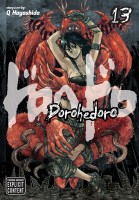
Dorohedoro, Volume 13Dorohedoro, Volumes 13-16 by Q Hayashida. Even though I love Dorohedoro, it’s been a while since I’ve read the series; I like to save up a few volumes to read all at once. The manga is now entering what I believe will be its final story arc. Granted, Dorohedoro tends to be all over the place with all sort of plot lines weaving in and out, so its difficult to identify distinct story arcs, but Hayashida is now bringing it all back together again. She’s even tying in what initially seemed to be extraneous side stories from earlier in the series more cohesively. Dorohedoro is such a bizarre manga, somehow managing to be sweet and charming at the same time it is disgusting and grotesque. Hayashida’s artwork is marvelous, creating horrific, nightmare-inducing images and an atmosphere that’s dank, dirty, and dingy. But the series is also fun and funny, with a quirky sense of humor and a peculiar fixation on food. At this point, though there is still comedy, Dorohedoro is actually getting pretty serious and dramatic. En’s dead and the rest of the family is currently homeless and on the run; the Cross-Eyes have taken over, but they seem to be losing control of the extremely deadly situation.

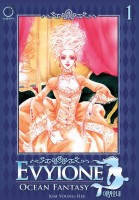
Evyione: Ocean Fantasy, Volume 1Evyione: Ocean Fantasy, Volume 1 by Young-Hee Kim. Back in the day, Udon Entertainment had a line of manwha which, sadly, didn’t end up going very far. Tragically, only the first volume of Kim’s twelve-volume series Evyione: Ocean Fantasy was translated and released. It’s admittedly disappointing that there isn’t more, but the first volume of Evyione serves as a sort of prologue and is well worth checking out even though the rest of the story will likely never be translated. The manhwa is in part inspired by Hans Christian Andersen’s The Little Mermaid except that in the case of Evyione, it’s the king of the sea who has fallen in love with a human princess. The artwork in the series is stunningly gorgeous. The ocean scenes and merfolk are beautiful, sensuous, and slightly disconcerting. There’s a touch of horror to the king’s transformation into a human, keeping with the darker aspects of the original story. On land, Kim pays particular attention to the characters’ clothing and attire, the dresses especially are intricately detailed. Although Evyione is obviously based on The Little Mermaid, it’s not a simple retelling and incorporates political and court intrigue as well as additional plot elements.

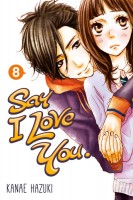
Say I Love You, Volume 9Say I Love You, Volume 8 by Kanae Hazuki. I continue to really enjoy Say I Love You. Hazuki’s forthright portrayal of teenage sexuality in particular tends to be handled quite well. After focusing on some of the series’ supporting characters, the eighth volume of Say I Love You largely turns its attention back to Mei. Most of the volume is dealing with a popularity contest being held as part of the school festival that thrusts Mei into the spotlight when she becomes a finalist—some students voting for her because they like her, and some students voting for her in hopes that she will utterly embarrass herself. Yamato is a participant in the contest as well and out of all of the boys he’s expected to win, meaning he’ll be going on an arranged date with whichever girl receives the most votes. All together, this is a very challenging situation for Mei. She doesn’t really want all of the attention and yet she feels compelled to try to win. Hazuki avoids the pitfall of a makeover suddenly changing a person into someone completely unrecognizable. It’s not so much that Mei’s outward appearance is drastically altered, it’s that she’s starting to overcome some of her insecurities and reclaim her femininity for herself.

Filed Under: FEATURES, My Week in Manga Tagged With: dorohedoro, evyione, Kanae Hazuki, manga, manhwa, Q Hayashida, Say I Love You, Young-Hee Kim

  • « Go to Previous Page
  • Page 1
  • Interim pages omitted …
  • Page 13
  • Page 14
  • Page 15
  • Page 16
  • Page 17
  • Interim pages omitted …
  • Page 60
  • Go to Next Page »
 | Log in
Copyright © 2010 Manga Bookshelf | Powered by WordPress & the Genesis Framework