• Skip to primary navigation
  • Skip to main content
  • Skip to primary sidebar
  • Home
  • About Us
    • Privacy Policy
    • Comment Policy
    • Disclosures & Disclaimers
  • Resources
    • Links, Essays & Articles
    • Fandomology!
    • CLAMP Directory
    • BlogRoll
  • Features & Columns
    • 3 Things Thursday
    • Adventures in the Key of Shoujo
    • Bit & Blips (game reviews)
    • BL BOOKRACK
    • Bookshelf Briefs
    • Bringing the Drama
    • Comic Conversion
    • Fanservice Friday
    • Going Digital
    • It Came From the Sinosphere
    • License This!
    • Magazine no Mori
    • My Week in Manga
    • OFF THE SHELF
    • Not By Manga Alone
    • PICK OF THE WEEK
    • Subtitles & Sensibility
    • Weekly Shonen Jump Recaps
  • Manga Moveable Feast
    • MMF Full Archive
    • Yun Kouga
    • CLAMP
    • Shojo Beat
    • Osamu Tezuka
    • Sailor Moon
    • Fruits Basket
    • Takehiko Inoue
    • Wild Adapter
    • One Piece
    • After School Nightmare
    • Karakuri Odette
    • Paradise Kiss
    • The Color Trilogy
    • To Terra…
    • Sexy Voice & Robo
  • Browse by Author
    • Sean Gaffney
    • Anna Neatrour
    • Michelle Smith
    • Katherine Dacey
    • MJ
    • Brigid Alverson
    • Travis Anderson
    • Phillip Anthony
    • Derek Bown
    • Jaci Dahlvang
    • Angela Eastman
    • Erica Friedman
    • Sara K.
    • Megan Purdy
    • Emily Snodgrass
    • Nancy Thistlethwaite
    • Eva Volin
    • David Welsh
  • MB Blogs
    • A Case Suitable For Treatment
    • Experiments in Manga
    • MangaBlog
    • The Manga Critic
    • Manga Report
    • Soliloquy in Blue
    • Manga Curmudgeon (archive)

Manga Bookshelf

Discussion, Resources, Roundtables, & Reviews

manga

My Week in Manga: November 16-November 22, 2015

November 23, 2015 by Ash Brown

My News and Reviews

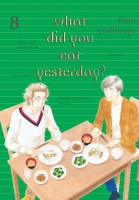
Only one review was posted at Experiments in Manga last week since I’m still on my more relaxed blogging schedule. I’m a little behind in reviewing the series, but I finally took a closer look at What Did You Eat Yesterday?, Volume 8 by Fumi Yoshinaga. I’m still really loving the manga, especially the realistic portrayal of its characters and their relationships. The eighth volume had some heartbreaking moments as well as heartwarming moments and just the right touch of humor to keep it all entertaining.

I came across quite a few interesting things to read online last week. Organization Anti-Social Geniuses has a great post about the skills and education that are helpful for pursuing a career in the manga publishing industry. The Guardian looks at some recent and past manga controversies in the article “Manga rows show why it’s still Japan’s medium of protest.” Also of note, Dark Horse, partnering with Le Vision, will apparently be adapting six Chinese comics into English. Compared to manga or even manhwa, hardly any manhua has been published in English; there is only one other publisher that I know of off the top of my head (JR Comics) which is currently releasing manhua in translation.

Elsewhere online, Manhattan Digest interviewed Graham Kolbeins, talking about gay manga, MASSIVE, and the group’s hopes to expand into more queer content, which is very exciting. Wondering about the state of the English edition of Takako Shimura’s Wandering Son? Crunchyroll gathered together some of the comments made by Matt Thorn (the series’ translator) about the manga’s current status. Sadly, it’s not especially encouraging. Although Fantagraphics has stated in the past that it intends to release the entire series, the publication date for ninth and next volume has yet to be set. Fantagraphics is still working on manga projects, though–Moto Hagio’s Otherworld Barbara should hopefully be released sometime in 2016.

Quick Takes
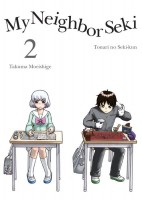
My Neighbor Seki, Volume 2My Neighbor Seki, Volumes 2-4 by Takuma Morishige. I continue to be utterly charmed and delighted by My Neighbor Seki. The anime series was wonderful, too, but I’m especially glad for the chance to read the chapters that where never adapted. My Neighbor Seki is an episodic manga, but there are a few running jokes that have emerged. Several scenarios feature the robot family, for one; Seki’s younger sister repeatedly appears after being introduced; and Yokoi and Seki’s classmate Goto more than once erroneously believes their relationship to be of a romantic nature. And of course there is the primary gag that underlies the entire series: Seki goofing off in class in impressively ridiculous ways and Yokoi being completely caught up in it all despite herself. My Neighbor Seki is marvelously funny and imaginative. Seki’s antics and Yokoi’s reactions (and overreactions) to them never disappoint. Reading the manga always leaves me smiling and has even been known to make me laugh out loud. I’m very glad that Vertical ultimately decided to release the entire series rather than just a “best of” collection.

One Is EnoughOne Is Enough by Love. Gen Manga is one of the very few publishers to release translations of doujinshi in English. The selections are independent, amateur works that unsurprisingly vary in quality, but I generally find them interesting. I believe One Is Enough was the first and so far has been the only boys’ love offering from Gen. I originally read the first half or so of the manga while it was being serialized, but am only now getting around to reading the completed volume. I’m not entirely sure whether it’s intentional or not, but at times One Is Enough almost seems to be a parody of boys’ love, exaggerating some of the genre’s well-worn tropes and plot devices. Although there are some nice individual panels and sequences, the manga’s artwork is sadly very inconsistent. Even the story itself seems to be constantly shifting in tone, as though the creator couldn’t quite decide which direction to take the manga. One Is Enough can be silly, cute, and sweet, but it also occasionally deals with some pretty heavy subject matter like suicide and self harm. Honestly, the manga is a bit of a mess without much cohesion, but it does have its moments.
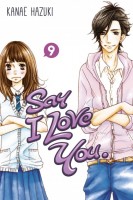
Say I Love You, Volume 9Say I Love You, Volume 9 by Kanae Hazuki. As the winners of the school idol contest, Megumi and Yamato are expected to go on a date with each other, despite the fact that he already has a girlfriend. While I had to suspend my disbelief for some of the setup, Hazuki actually handles the scenario as a whole very well. I was completely satisfied with the way that the date played out and ultimately ended. I also feel better about Megumi as she continues to mature as a person; the date was a turning point for her. Many of the characters in Say I Love You are dealing with some very personal issues, but there is hope that they will be okay in the end even though the journey itself may be painful. After the date and its fallout has been resolved, most of the ninth volume is actually spent exploring the tragic backstory of Yamato’s brother Daichi and how it complicates and interferes with his present-day relationships. Hazuki promises to return to Mei and Yamato’s story which will be good to see, but one of the things I particularly like about Say I Love You is Hazuki’s willingness to take the time to delve into the lives of the other characters as well.
Filed Under: FEATURES, My Week in Manga Tagged With: Kanae Hazuki, Love, manga, My Neighbor Seki, Say I Love You, Takuma Morishige

What Did You Eat Yesterday?, Vol. 8

November 19, 2015 by Ash Brown

What Did You Eat Yesterday, Volume 8Creator: Fumi Yoshinaga
U.S. publisher: Vertical
ISBN: 9781941220238
Released: May 2015
Original release: 2013

I have been a fan of Fumi Yoshinaga’s manga for quite some time now, so I was very happy when her series What Did You Eat Yesterday? was licensed for release in English. Although I’ve enjoyed all of Yoshinaga’s translated work, I was particularly interested in What Did You Eat Yesterday? because it promised and has since proved to be a manga realistically portraying the lives of two gay men (and boyfriends) living together in Japan. As can be safely assumed from the title of the series, What Did You Eat Yesterday? also happens to be a food manga, which is another niche genre that I especially enjoy. Unsurprisingly, with its well-developed characters a touches of humor, I find the series immensely appealing. What Did You Eat Yesterday?, Volume 8 was originally released in Japan in 2013 while Vertical published the English-language edition of the manga in 2015.

As a lawyer, Shiro often finds himself involved in sorting out other people’s relationships, helping to resolve child custody disputes and providing divorce consultations and such. In many ways, this allows him to better appreciate his relationship with his boyfriend Kenji. Shiro isn’t always the most outwardly or physically demonstrative with his affection, especially when in public or when compared to Kenji’s exuberance, but the two men have built a comfortable life together. Their relationship has its ups and downs, just like any other couple might encounter, though being gay in contemporary Japan still has its own particular challenges. While Kenji’s family is largely supportive, Shiro’s parents are still adjusting to the fact that their son is in committed relationship with another man and has been for years. Thankfully, both Kenji and Shiro have close friends and acquaintances who have no problems whatsoever with the two of them being together.

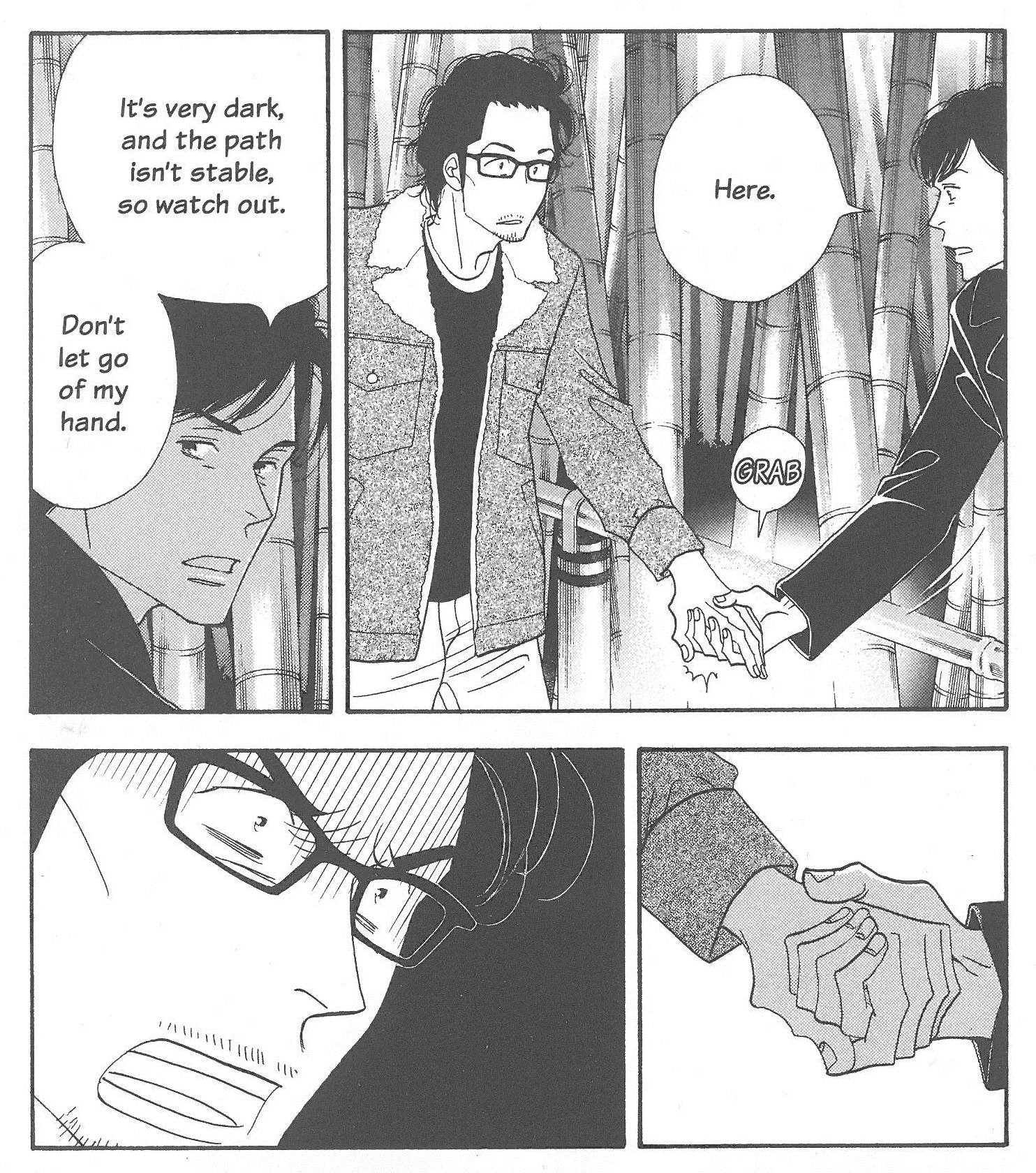
What Did You Eat Yesterday?, Volume 8, page 53While Shiro and Kenji are obviously a couple, What Did You Eat Yesterday?, Volume 8 offers several scenarios in which they’re actually acting as a couple. I honestly enjoyed all of the stories collected in the volume, but two that particularly stood out to me explicitly showed them as boyfriends. The first story featured a trip where the two of them visit Kyoto together for Kenji’s birthday in which Shiro acts more stereotypically romantic and boyfriend-like than he has during the entire rest of the series, stunning Kenji in the process. Granted, the underlying reason for Shiro treating Kenji to such an extravagant vacation is a little heartbreaking when it is revealed. A story taking place a few months later sees Kenji and Shiro baking brownies together to celebrate Valentine’s Day, which is all sorts of sweet and wonderful. That chapter is also an excellent example of how the food and recipes included in What Did You Eat Yesterday? can be directly incorporated into the story itself. Some chapters are more successful at this than others–occasionally the food in the series comes across as being tangential–but I absolutely love when Yoshinaga pulls it off well.

The relationships between the characters of What Did You Eat yesterday?, often expressed through the sharing and enjoyment of food, are a crucial part of the series. There are many different types of relationships portrayed, but What Did You Eat Yesterday?, Volume 8 in particular reminded me of the importance of family relations in the manga. Just like in real life, the opinions and actions of family members can have a tremendous impact on an individual. The eighth volume reveals more about Kenji’s family circumstances when he returns home on the occasion of the death of his father. The acceptance shown to him by his mother and his sisters and their children was comforting to see, giving hope that in time Shiro’s parents, too, will be able to more fully accept their son. Family isn’t necessarily limited by law or blood in the series, either–Shiro ends up becoming a godfather of sorts when the daughter of one of his friends has a baby. And, of course, there is the small family made up of Shiro and Kenji themselves. Though they have their disagreements, What Did You Eat Yesterday? makes it clear that they greatly care for each other.

Filed Under: REVIEWS Tagged With: fumi yoshinaga, manga, vertical, what did you eat yesterday?

My Week in Manga: November 9-November 15, 2015

November 16, 2015 by Ash Brown

My News and Reviews

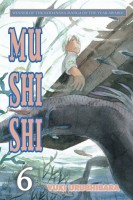
Last week was the first week of the temporary adjustment in my posting schedule at Experiments in Manga. I’ve got a lot going on right now and not enough time to do everything that I need to or would like. Hopefully I’ll have some good news to share soon, though! (I don’t want to jinx anything by saying too much, yet.) Anyway! Last week I reviewed Mushishi, Volume 6 by Yuki Urushibara as part of my monthly horror manga review project. I’ve read the series before so I already know that I like it (in fact, it’s a favorite of mine), but I’ve really been enjoying my reread.

A few interesting things that I came across online last week: Netcomics hinted on Twitter that it would have some exciting licenses to announce soon. Dark Horse has confirmed that it will be releasing Kenji Tsuruta’s Wandering Island. And Kodansha Comics has licensed Hiro Mashima’s Fairy Tail Zero prequel. The English Light Novels site has an interview with light novel translator Stephen Paul. And Shojo Beat posted the first part of an interview with Arina Tanemura.

Quick Takes

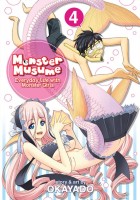
Monster Musume: Everyday Life with Monster Girls, Volume 4Monster Musume: Everyday Life with Monster Girls, Volume 4 by Okayado. I suspect it’s at least in part due to the enormous success of Monster Musume that Seven Seas has been able to expand its catalog and take a few more risks with its licenses of late. Monster Musume has been a bestseller since the release of its very first volume. I’m not exactly a member of the manga’s target audience though and so I haven’t really been keeping up with it. But I can easily understand why it’s so popular. And there actually are a few things that I like about the series in addition to the things that I don’t particularly care for. I enjoy the absolutely atrocious puns and wordplay, for one. I also appreciate the variety of monster girls and that new races are always being introduced. Considering the highly-sexualized nature of the manga and the obsession with breasts and nipples, the story can at times be surprisingly sweet and endearing. Kimihito is a legitimately nice guy who honestly cares for the well-being of the liminals that he meets and is put in charge of. Ultimately however, there’s no question that Monster Musume is an ecchi harem fantasy.

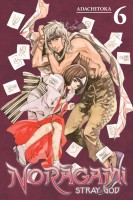
Noragami: Stray Go, Volume 6Noragami: Stray God, Volumes 6-7 by Adachitoka. The fifth volume of Noragami ended with one heck of a cliffhanger so I was very much looking forward to reading more of the series. The sixth volume is excellent and probably my favorite volume of the manga to date. It brings Yato and Bishamonten’s battle to an effective close, but there will still be lingering consequences and repercussions of the fight that will have to be dealt with moving forward. After the intense drama, emotions, and action of the sixth volume, Adachitoka takes the seventh in a different direction, bringing back some of the manga’s humor and goofiness while still building the underlying tension of the series. As the next story arc begins, new characters and antagonists are introduced and additional backstories are explored. One particularly important revelation is that Yato’s very existence is somewhat precarious, which is why maintaining his ties to other people is so critical. I’ve largely enjoyed the series since the beginning, but Noragami is starting to get really good. I’m like seeing the evolution of the characters and the changing dynamics of their relationships.

Showa: A History of Japan, 1953–1989Showa: A History of Japan, 1953-1989 by Shigeru Mizuki. Each volume of Showa has been massive, but this final installment covers the longest period of time. In fact, the fourth volume provides an outline of more years than the first three volumes combined. 1953-1989 follows Japan through the country’s postwar period, the falls and rises of the economy, and the political turmoil and change of the era. Woven into the history of Japan is Mizuki’s own personal story. One of the reasons that the fourth volume of Showa especially appealed to me was that it explores a bit of manga history as well, following Mizuki’s start and growth as a mangaka including the management of a studio of assistants. Sanpei Shirato, Ryoichi Ikegami, Yoshiharu Tsuge, and many other prominent creators and editors all make appearances. Mizuki’s interest in yokai is shown to become increasingly important as well. The final volume of Showa also includes some of Mizuki’s color work, which I’d never seen before. Mizuki’s black and white manga is great, but some of the color illustrations are simply stunning.

Filed Under: FEATURES, My Week in Manga Tagged With: Adachitoka, manga, Monster Musume, Noragami, Okayado, Showa: A History of Japan

Mushishi, Vol. 6

November 12, 2015 by Ash Brown

Mushishi, Volume 6Creator: Yuki Urushibara
U.S. publisher: Del Rey
ISBN: 9780345501660
Released: November 2008
Original release: 2005
Awards: Japan Media Arts Award, Kodansha Manga Award

I discovered Yuki Urushibara’s award-winning manga series Mushishi more by chance than anything else, but it quickly became a favorite and I made a point to collect the manga as it was being released in English. I’m very glad that I did–replacing my copies would cost a fair amount since Mushishi is currently out-of-print and increasingly difficult to find. Fortunately, Kodansha Comics released the entire series digitally in 2014. Mushishi, Volume 6 was first released in print in English in 2008 by the now defunct Del Rey Manga. In Japan the volume was initially published in 2005, the same year that the series’ first anime adaptation began airing. (The Mushishi anime is also a personal favorite and I re-watch it frequently.) In addition to being popular enough to warrant multiple adaptations in a variety of different media over the course of its publication, Mushishi was also a recipient of a Japan Media Arts Award and a Kodansha Manga Award.

Mushi are creatures which are invisible to most and which few people truly understand. But even so, they are an integral part of the natural world, said to be very similar to the original form of life. Mushi’s influences on humans, though not necessarily intentional or malicious, can be both good or bad depending on the circumstances. Some people, like Ginko, have made a profession out of studying mushi. These mushishi gather and share invaluable knowledge about mushi and about the world. By closely observing mushi and their environment, mushishi are able to recognize signs of impending disaster, explain what would seem to be the unexplainable, and identify when and where balance to the natural order must be restored to avoid dire consequences. The work of mushishi is inherently dangerous as they are frequently dealing with the unknown, but their perseverance can also be extremely rewarding, allowing them to some extent to leverage and even control the abilities of mushi for their own purposes.

Mushishi, Volume 6, page 133Mushishi, Volume 6 collects five chapters of the series. Except for the presence of Ginko and mushi, none of them are directly related to one another, however three of the stories deal in some fashion with the powerful phenomenon known as kōki. Whereas mushi could be considered primordial, kōki is an even purer and more basic form of life from which the varied multitude of mushi originate. Kōki is portrayed as a river of light, the glowing liquid proving to have both harmful and healing effects depending on how it is used. Mushi are intensely attracted to these rivers and will seek them out. In “Heaven’s Thread” this becomes a problem for humans living near the light flow–mushi that prey on other mushi sometimes catch a person instead. Humans can also be infected by decaying kōki, as is seen in “The Hand That Pets the Night,” negatively impacting families for multiple generations while also benefiting them. The third story in Mushishi, Volume 6 delving into kōki is “Banquet in the Farthest Field” in which a sake brewer unknowingly attempts to replicate the taste of the liquor of life with unintended consequences.

The other two stories collected in Mushishi, Volume 6, while still unrelated, both explore the loss of a loved one. Mushi’s involvement in “The Chirping Shell” is actually fairly minimal as the chapter focuses on a man coming to terms with the tragic death of his wife and learning to forgive in the face of an even greater imminent tragedy of which the mushi are an omen. “Under the Snow” is likewise about a young man in denial who is grieving the loss of the life of his little sister. In this story snow-like mushi literally suck the heat from his body, but they also serve as a metaphor–because of his sister’s death Toki has become numb to the people and the world around him. Many of the stories in Mushishi can be read on multiple levels like this, which is one of the reasons that I love the manga so much and find it so enjoyable to read and reread. The series frequently feels like a collection of folktales and stories of the supernatural, but at its heart Mushishi is very often about an individual’s personal struggle when confronted by something in their life beyond their control or understanding.

Filed Under: REVIEWS Tagged With: del rey, Japan Media Arts Award, Kodansha Manga Award, manga, mushishi, Yuki Urushibara

My Week in Manga: November 2-November 8, 2015

November 9, 2015 by Ash Brown

My News and Reviews

Keeping this short and sweet because boy do I have a lot of stuff going on right now! Last week at Experiments in manga the Barakamon manga giveaway winner was announced. The post also includes a list of manga with prominent countryside settings for anyone interested in exploring some of what has been published in English. As for the first in-depth manga review of the month, I took a look at Junji Ito’s Cat Dairy: Yon & Mu which I found to be highly entertaining. I expected that I would at least like the manga, but I absolutely loved its weird mix of not-exactly-horror and comedy.

A few things of interest that I came across online last week: The most recent Sparkler Podcast focuses on what it’s like Working in the Manga Industry. (The podcast is currently only free for Sparkler Monthly members. Non-members can either purchase it now, or simply wait a few weeks.) Over at Anime New Network, Deb Aoki has been talking to the folks at Kodansha about the upcoming Attack on Titan anthology and bridging the gap between American comics and manga. Finally, Seven Seas slipped in a new license announcement: Monster Musume: I ♥ Monster Girls, a yonkoma spinoff from Okayado’s main series.

Quick Takes

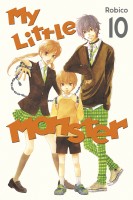
My Little Monster, Volume 10My Little Monster, Volume 10 by Robico. The last few volumes of My Little Monster have been getting progressively more serious to the point where, overall, the tenth seems to hardly have any humor at all. This is quite a change from the beginning of the series where the manga’s balance leaned more towards comedy and the more humorous aspects of the interactions between its oddball characters. I did really like this volume, though. Basically, Haru’s past and present are now colliding and the results are appropriately dramatic as everyone involved deals with the fallout. There are hurt and conflicted feelings, and many complications and frustrations. For one, Haru’s family circumstances are more fully explained, showing how the intense antagonism between him and his brother came about and just how awful a person their father is. A significant portion of My Little Monster, Volume 10 actually explores the story through the perspective of Haru’s brother Yuzan, which I was glad to see. He’s still not particularly pleasant, but being able to better understand his and Haru’s situation makes him less of an enigma and a much more sympathetic and interesting character.

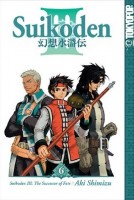
Suikoden III: The Successor of Fate, Volume 6Suikoden III: The Successor of Fate, Volumes 6-11 by Aki Shimizu. I still haven’t played any of the Suikoden games, although based solely on the manga adaptation of the third, it’s likely a to be franchise that I would enjoy. I liked the first five volumes of Shimizu’s Suikoden III, but the final six cemented my appreciation for the manga–it’s a solid epic fantasy series with both magic and military might. Although it is a video game adaptation and in a few places the RPG mechanics can be seen if one is looking for them, the manga stands very well on its own and doesn’t really feel too game-like. The second half of the series more fully delves into the antagonist’s backstory which was needed as his motivations are much more complicated than would initially appear. One of the things I like the most about the Suikoden III manga is that nothing is strictly good or evil, the characters and their actions are more nuanced than that. Under the weight of war and inherited responsibilities they must all try to hold onto their ideals while at the same time making compromises in order to protect what and who they love. Enemies become allies and in some cases even friends, but it is a hard journey.

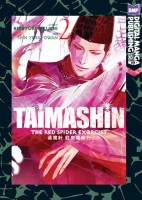
Taimashin: The Red Spider Exorcist, Volume 2Taimashin: The Red Spider Exorcist, Volume 2 written by Hideyuki Kikuchi and illustrated by Shin Yong-Gwan. Although all six volumes of Taimashin have been translated into English, only the first two were released in print; the other four volumes are only available digitally. It’s been a long while since I’ve read the first volume in the series, but I do distinctly recall liking it, or at being enthralled by Akamushi Fujiwara, the titular Red Spider Exorcist who may be a human, a demon, or something else entirely. Reading the second volume, Akamushi still fascinates me and is probably my favorite part of the manga. For the most part I would classify Taimashin as a horror manga although, as I’ve come to expect from Kikuchi’s works, it also has distinct elements of science fiction and fantasy. While it doesn’t always make a lot of sense, the manga can be both thrilling and creepy. This is actually something else that I associate with Kikuchi–he writes these bizarrely engaging stories with ominous atmospheres that end up being all over the place. Taimashin‘s artwork fits the story and characters particularly well, ranging from Akamushi’s otherworldly beauty to scenes that are frankly grotesque.

Filed Under: FEATURES, My Week in Manga Tagged With: Aki Shimizu, Hideyuki Kikuchi, manga, My Little Monster, Robico, Shin Yong-Gwan, Suikoden, Taimashin

Junji Ito’s Cat Diary: Yon & Mu

November 6, 2015 by Ash Brown

Junji Ito's Cat Diary: Yon & MuCreator: Junji Ito
U.S. publisher: Kodansha
ISBN: 9781632361974
Released: October 2015
Original release: 2009

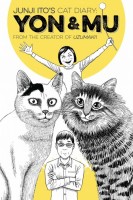
Junji Ito’s Cat Diary: Yon & Mu was one of the manga releases I was most looking forward to in 2015. Junji Ito is primarily known for horror manga–his Uzumaki is one of my personal favorites in the genre–but in 2008 he had the opportunity to serialize an autobiographically-inspired manga based on his experiences living in a house with two cats. The result was Junji Ito’s Cat Diary, ultimately collected in a single, slim volume and published in Japan in 2009. The English-language edition of the manga released by Kodansha Comics in 2015 also includes the contributions made by Ito and his wife (Ayako Ishiguro) to the 2011 Tohoku Earthquake relief anthology Teach Me, Michael! A Textbook in Support of Feline Disaster Victims. I thoroughly enjoy Ito’s brand of unusual horror and I, too, happen to have the privilege of feline companionship, so I was very interested in Junji Ito’s Cat Diary. I expected it to be a manga that I would enjoy and I wasn’t disappointed; I absolutely loved it.

J-kun is the proud owner of a new house in pristine condition from floor to ceiling and he’s looking forward to living there with his soon-to-be wife A-ko. What he didn’t initially realize was that by inviting her to live with him he would also become host to two more guests: Yon and Mu. J-kun is convinced that Yon, one of A-ko’s family’s cats, is cursed. He’s a strange-looking feline with skull-like markings that would seem to confirm J-kun’s suspicions. Mu, on the other hand, is an adorable kitten with a pedigree and cute enough to melt even J-kun’s dog-loving heart. And so begins J-kun’s trials and tribulations as a keeper of cats, slowly falling under their spell as he grieves the loss of his perfectly-kept house. He warms up to both Yon and Mu, but they don’t quite exhibit the same amount of warmth in return, more often than not preferring A-ko’s company. But J-kun is determined–one day he, too, will enjoy Yon and Mu’s love and affection.

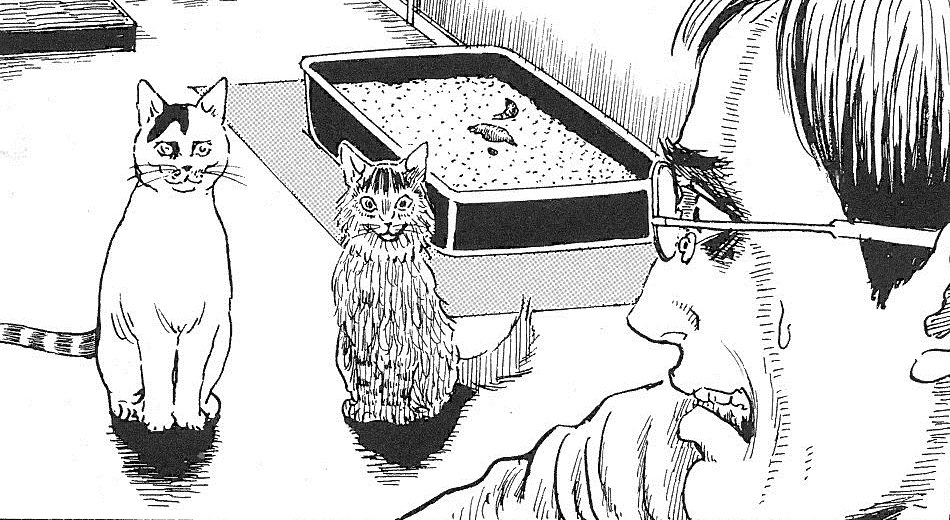
Junji Ito's Cat Diary: Yon & Mu, page 31Junji Ito’s Cat Diary is immensely entertaining. Ito has kept his signature style used when drawing horror manga and has applied it to a collection of stories that are closer to being gag manga. The illustrations can be intentionally grotesque and creepy, with an emphasis on J-kun’s exaggerated expressions as he reacts (and overreacts) to the events occurring in his household and the horrors of pet ownership. A-ko, too, is drawn in such a way that her disconcerting appearance adds to the atmosphere of horror in the manga. For the most part, the cats are simply cats (at least when J-kun isn’t hallucinating from lack of sleep); it’s the humans who come across as maniacal. Junji Ito’s Cat Diary looks like it should be a horror manga and has all of the genre’s visual stylings, but it really isn’t. The humor is even funnier because of this deliberate disconnect between the actual stories being told and how they are being portrayed.

As someone who tends to enjoy Ito’s work and as someone who tends to like cat comics, I was already in a position to particularly appreciate Junji Ito’s Cat Diary. It may certainly not work for everyone, though–the manga is a weird mix of horror and comedy, the grotesque and the adorable–but I loved it. In general, the stories in Junji Ito’s Cat Diary are less about Yon and Mu’s antics and more about J-kun’s reactions to their behavior and his changing relationships with the two cats. Yon and Mu are actually very normal as cats go; the humans in the manga are the ones who come across as eccentric and a bit odd. Junji Ito’s Cat Diary is hilarious but at the same time the manga maintains and oddly disconcerting and even ominous atmosphere. Ito simply excels at taking the mundane and transforming it into something truly devious and bizarre. I’m not sure, but perhaps I should be concerned by how much I can identify with the stories found in Junji Ito’s Cat Diary.

Filed Under: REVIEWS Tagged With: Junji Ito, kodansha, Kodansha Comics, manga

Manga Giveaway: Barakamon Giveaway Winner

November 4, 2015 by Ash Brown

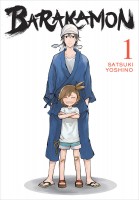
Barakamon, Volume 1And the winner of the Barakamon manga giveaway is… Joseph!

As the winner, Joseph will receive Satsuki Yoshino’s Barakamon, Volume 1 as released in English by Yen Press. As the fall and winter holiday season has arrived, I was beginning to feel a little nostalgic for my childhood home in the country. So, for this giveaway, I asked that entrant’s tell me a little about their favorite manga with countryside and rural settings. Check out the giveaway comments for everyone’s complete responses, and check out below for a list of manga!

Some of the countryside manga available in English:
Barakamon by Satsuki Yoshino
Brilliant Blue by Saemi Yorita
Can’t Win with You! written by Satosumi Takaguchi, illustrated by Yukine Honami
The Flowers of Evil by Shuzo Oshimi
A Girl on the Shore by Inio Asano
Kamikaze Girls by Yukio Kanesada
The Legend of Kamui by Sanpei Shirato
Mermaid Saga by Rumiko Takahashi
Moyasimon by Masayuki Ishikawa
Mushishi by Yuki Urushibara
Non Non Biyori by Atto
NonNonBa by Shigeru Mizuki
Popcorn Romance by Tomoko Taniguchi
Sand Chronicles by Hinako Ashihara
Summer Wars written by Mamoru Hosoda, illustrated by Iqura Sugimoto
Tropic of the Sea by Satoshi Kon
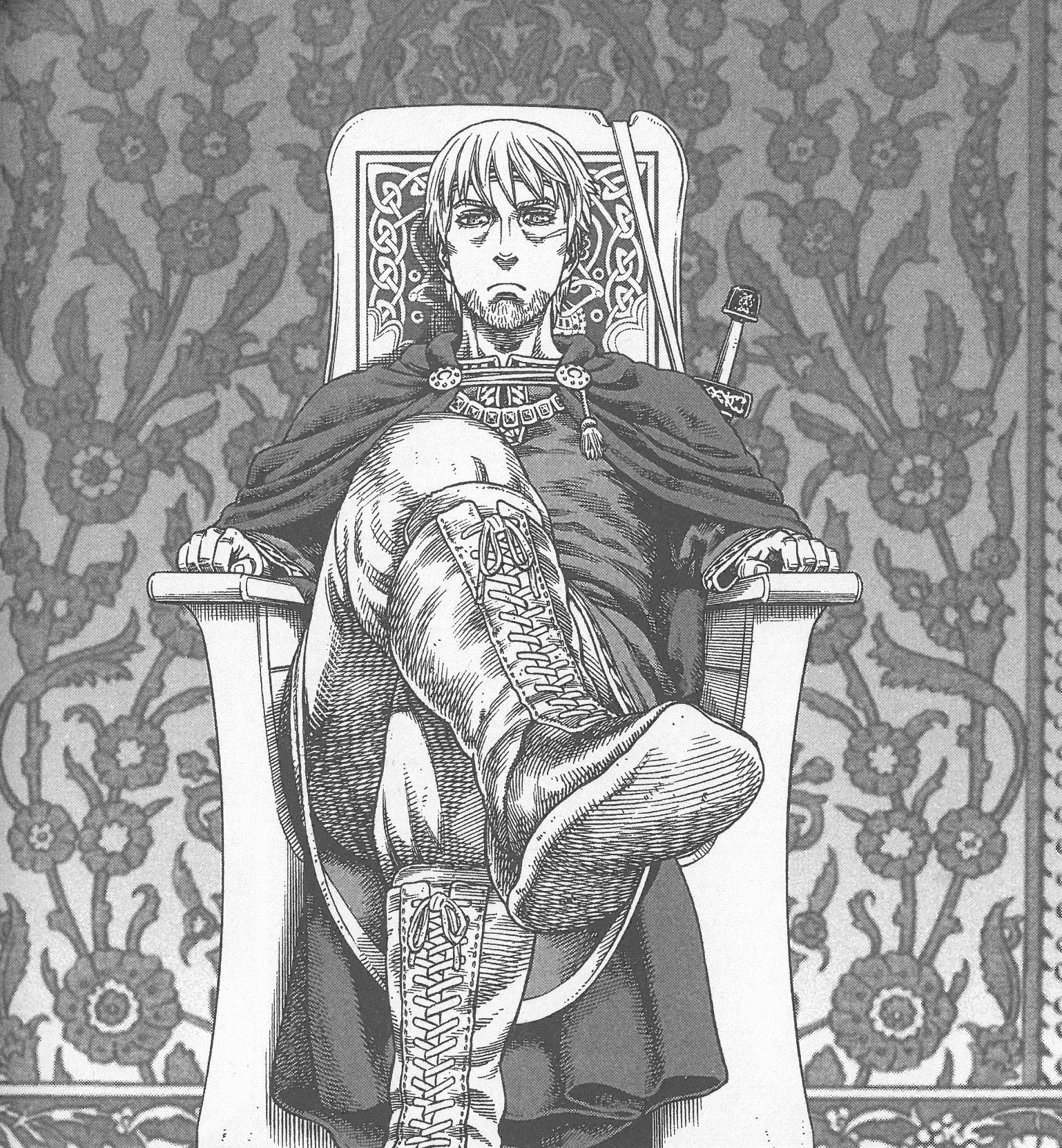
Vinland Saga by Makoto Yukimura
Wandering Island by Kenji Tsuruta

As usual, the above list isn’t comprehensive, but it hopefully presents a nice selection of manga from which to choose. Thank you to everyone who shared you’re favorites with me! I hope to see you all again for the next giveaway as well.

Filed Under: Giveaways, UNSHELVED Tagged With: Barakamon, manga, Satsuki Yoshino

My Week in Manga: October 26-November 1, 2015

November 2, 2015 by Ash Brown

My News and Reviews

A few different things were posted at Experiments in Manga last week. The most recent manga giveaway is currently underway, for one, and here’s still time to enter for a chance to win Barakamon, Volume 1 by Satsuki Yoshino. Last week I reviewed Vinland Saga, Omnibus 6 by Makoto Yukimura. The series continues to impress me a great deal with its story telling and character development. The fate of the series in English will be in part determined by how well the sixth and seventh omnibuses do (the seventh omnibus is currently scheduled to be released in December); I truly hope that Kodansha will be able to release more because Vinland Saga is fantastic. Finally, over the weekend, I posted the Bookshelf Overload for October.

I’ve been extremely busy with all sorts of life stuff, so while I’m sure there were plenty of interesting things going on in the realm of manga online, there were only two that really caught my eye last week: Shojo Beat posted a short interview with Rinko Ueda and Chris Butcher wrote about his experience interviewing Masashi Kishimoto at New York Comic Con. Also as a heads up, because I am so extraordinarily caught up in things going on at work and at home right now, I’ve decided to go a little easier on myself with my blogging schedule for November (and probably for the first half of December as well). Instead of the usual Monday-Wednesday-Friday posting schedule, in the upcoming weeks I may just be posting on Monday and Thursday. Hopefully things will calm down and I can get back to writing more soon!

Quick Takes

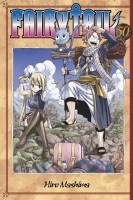
Fairy Tail, Volume 50Fairy Tail, Volume 50 by Hiro Mashima. After so many arcs in which the Fairy Tail guild was fighting to save the world, I’m particularly enjoying the beginning of this most recent arc in which Fairy Tail doesn’t technically even exist anymore. Although there are some epic, world-altering developments occurring in the background, for the moment the story is focusing on the much more personal crises of the disbanded guild as it rebuilds itself. It’s a nice change of pace, though I’m fairly certain it won’t last for very long. A year or so has passed since the members of Fairy Tail parted their separate ways. Quite a few of the magic users have managed to power up during that time, allowing Mashima the opportunity to come up with some exciting and interesting new skills for them in order to show just how badass they’ve become (and they were strong to begin with). Some of the fan service focusing on the female characters in Fairy Tail continues to feel very out-of-place and distracting, but at least the women are frequently some of the strongest and most well-developed characters. The male characters are the subject of fan service from time to time, too, though never to the same extent.

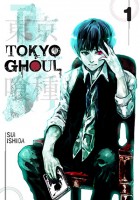
Tokyo Ghoul, Volume 1Tokyo Ghoul, Volume 1-3 by Sui Ishida. The glut of vampire and zombie manga continues—and I’m not really a devotee of either of those subgenres—so I especially appreciate that Tokyo Ghoul makes use of an entirely different creature, the titular ghoul. In the case of this particular manga series, ghouls largely pass as normal humans assuming that they can master their intense hunger for human flesh. After an encounter with a ghoul that nearly leaves him dead, Kaneki finds himself in the unique position of partly belonging to both the human world and the world of the ghouls, and yet it will be a struggle for him to survive in either of them. In Tokyo Ghoul, humans are just as capable of being monsters. And Ishida isn’t afraid of killing off prominent characters, whether they be human or ghoul, so there is a constant sense of danger. Sadly, I think the emotional impact of the deaths was somewhat diminished since readers hadn’t yet had the chance to really get to know the characters involved as individuals. Still, kudos to Ishida for potentially making good use of some shocking, unexpected developments, especially as some early parts of the first volume were a little predictable.

Yamada-kun and the Seven Witches, Volume 4Yamada-kun and the Seven Witches, Volume 4 by Miki Yohsikawa. Although the fan service in Fairy Tail tends to bug me, the fan service in Yamada-kun and the Seven Witches doesn’t really bother me at all, probably because it’s better incorporated into the story itself. Admittedly, it can still be gratuitous from time to time. Since the manga in part deals with body-swapping, it makes sense that there would be some focus on the characters’ physical traits. Plus this particular volume includes the obligatory beach and onsen scenes. One thing that really impresses me about Yoshikawa’s artwork in the Yamada-kun and the Seven Witches is that it’s obvious from the characters’ facial expressions and body language when there has been some swapping going on. This actually ends up being explicitly pointed out in the series when one character develops a crush on a specific combination of personality and body type. The witch count continues to grow in the series as does Yamada’s group of friends while he begins to work out a theory explaining why everyone has the powers that they do. I’m still really enjoying Yamada-kun and the Seven Witches. Though largely a comedy, it has some heart to it as well.

Filed Under: FEATURES, My Week in Manga Tagged With: Fairy Tail, Hiro Mashima, manga, Miki Yoshikawa, Sui Ishida, Tokyo Ghoul, Yamada-kun and the Seven Witches

Vinland Saga, Vol. 6

October 30, 2015 by Ash Brown

Vinland Saga, Omnibus 6Creator: Makoto Yukimura
U.S. publisher: Kodansha
ISBN: 9781612628035
Released: September 2015
Original release: 2012
Awards: Japan Media Arts Award, Kodansha Manga Award

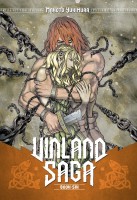
After some delay, the sixth omnibus of Makoto Yukimura’s magnificent historical manga series Vinland Saga was finally released in 2015, nearly a year after the previous installment. It was a year in which I waited anxiously—Vinland Saga is one of my favorite manga series currently being published in English and I hope that it does well enough that Kodansha Comics can continue to released the manga. (Currently, English-reading audiences are only guaranteed to see one more omnibus, but even if the translation ends there the series is well-worth reading.) The sixth Vinland Saga omnibus collects the eleventh and twelfth volumes of the original Japanese edition, both of which were released in 2012, the same year the series won a Kodansha Manga Award. The series has also earned Yukimura a Japan Media Arts Award. As was the case with the last few omnibuses, sixth also includes a question and answer section exclusive to the English-language edition in which Yukimura discusses the series.

As the result of the Danish invasion of England in the eleventh century, Canute has successfully taken control of the county. He must still find a way to maintain that control, though. He is no longer the weak young man he once was, having grown into a powerful and cunning king who will do anything necessary to establish his ideal society. In order to gain his current position Canute had to arrange for the death of his father. Now he is turning his ambition towards Denmark and his older brother, hoping to secure rulership there as well. Meanwhile, Thorfinn, a young man from Iceland and a former mercenary who was once Canute’s bodyguard, lives his life in slavery. However, after working diligently for years clearing forested land for his master, his freedom is tantalizingly close. Thorfinn, too, wants to one day shape a world free from war and violence, but his current circumstances make such hopes little more than dreams. But as the political turmoil in Denmark increases it becomes difficult to foretell anyone’s fate, whether they be slave or king.

Vinland Saga, Omnibus 6, page 120I continue to be immensely impressed by the depth of storytelling and the character growth and development found in Vinland Saga. Particularly striking is the nearly complete reversal in Thorfinn and Canute’s respective outlooks on life. Thorfinn, who was once a fearsome warrior dealing in death and destruction, wants nothing more than peace and a way to somehow atone for everything that he has done. Canute, on the other hand, originally abhorred violence but now willingly employs it, considering it to be a necessary evil for the sake of creating a prosperous kingdom and protecting its people. I also find it fascinating that as both Canute and Thorfinn continue to mature and make their way in the world they are each beginning to follow in the footsteps of and even embody the ideals held by their respective fathers, for better or for worse. Canute has learned to successfully use his power politically and strategically as a leader while Thorfinn now fully understands how destructive such power can be.

Violence and the dynamics of power are major themes in Vinland Saga. In particular, the series explores what it means to turn away from violence and if it is even possible for someone to do that with the world and human nature being what they are. Yukimura has so far done an excellent job showing how a violent society affects the people living within it and how difficult it is for them to change that culture when it is held as an ideal. Vinland Saga incorporates many exciting and engaging fight scenes and battles which, like the rest of the manga, are dramatic and well-drawn. However, that violence hasn’t been glorified by Yukimura. Instead, a large focus has been put on the tragic consequences that result from those encounters. The action can be brutal and shockingly gruesome, but perhaps even more important is the tremendous psychological impact on the characters as violence perpetuates more violence in a seemingly endless cycle. Vinland Saga remains an exceptional series; I’m looking forward to reading more of the manga a great deal.

Filed Under: REVIEWS Tagged With: Japan Media Arts Award, kodansha, Kodansha Comics, Kodansha Manga Award, Makoto Yukimura, manga, Vinland Saga

Manga Giveaway: Barakamon Giveaway

October 28, 2015 by Ash Brown

October has been a busy month at work for me, so I’m glad to see it wrapping up, but even better is the fact that it means it’s time for another manga giveaway here at Experiments in Manga! This month you’ll all have the chance to win a copy of Satsuki Yoshino’s Barakamon, Volume 1 as published by Yen Press. And, as always, the giveaway is open worldwide!

Barakamon, Volume 1

I grew up in a rural area and, for the most part, have fond memories of living in a small village in the countryside. Currently I live and work in a small city, which certainly has its benefits, but occasionally I find myself yearning for less people, more green, open spaces, and a somewhat slower pace of life. In part because of this, I find particular enjoyment in manga series like Barakamon which largely take place in the country; they remind me of living “back home.” There don’t seem to have been very many of these manga translated, so I especially appreciate them when I do happen to come across one.

So, you may be wondering, how can you win Barakamon, Volume 1?

1) In the comments below, tell me about your favorite manga that has at least one countryside or rural setting in it. (If you don’t have one, simply mention that.)
2) If you’re on Twitter, you can earn a bonus entry by tweeting, or retweeting, about the contest. Make sure to include a link to this post and @PhoenixTerran (that’s me).

It’s as easy as that. You all can earn up to two entries for this giveaway and have one week to submit your comments. Comments can also be sent to me directly at phoenixterran(at)gmail(dot)com if you have trouble with the comment form or if you prefer. I will then post your entry below in your name. The giveaway winner will be randomly selected and announced on November 4, 2015. Best of luck to everyone!

VERY IMPORTANT: Include some way that I can contact you. This can be an e-mail address in the comment form, a link to your website, Twitter username, or whatever. If I can’t figure out how to get a hold of you and you win, I’ll just draw another name.

Contest winner announced–Manga Giveaway: Barakamon Giveaway Winner

Filed Under: FEATURES, Giveaways Tagged With: Barakamon, manga, Satsuki Yoshino

My Week in Manga: October 19-October 25, 2015

October 26, 2015 by Ash Brown

My News and Reviews

I posted a couple of different things at Experiments in Manga last week in addition to the usual My Week in Manga feature. Having recently read and enjoyed Yukito Ayatsuji’s debut novel The Decagon House Murders, I made a point to finally get around to reading and reviewing his first novel released in English, Another. Though I felt a little cheated by one of the plot twists, overall the novel is a great mix of horror and mystery. I enjoyed the story so much that I plan on checking out the manga and anime versions, too. (Seems like a good candidate for an Adaptation Adventures feature.) My other post last week was some random musings on A Moment of Respite in Kohske’s Gangsta. Basically, a single scene from the sixth volume of the manga (more specifically, a sequence of three panels from that scene), inspired me to write more than a thousand words about some of the things that I particularly appreciate and love about the series.

A few things of interest found online last week: First of all, the most recent entry in Ryan Holmberg’s What Was Alternative Manga? column, Gottfredson’s Illegitimate Heirs: Tezuka Osamu and the Great Wall of 1945, was posted at The Comics Journal. Speaking of Tezuka, Stone Bridge Press will be publishing the manga The Osamu Tezuka Story: A Life in Manga and Anime in a single, massive volume. In other licensing news, NBM Publishing continues to release graphic novels in the Louvre Collection. Hirohiko Araki was the first Japanese creator to contribute to the series with the JoJo’s Bizarre Adventure spinoff Rohan at the Louvre, but In 2016, Jiro Taniguchi’s full-color Guardians of the Louvre will be translated.

Quick Takes

A Centaur's Life, Volume 4A Centaur’s Life, Volumes 4-5 by Kei Murayama. I love the world that Murayama has created for A Centaur’s Life. A fair amount of the worldbuilding can be found within the series’ narrative, but there’s also a ton of supplementary material between chapters—lessons in history and biology and such. The full introduction of a new character in these volumes, a transfer student who’s also an Antarctic snake person, allows for even more worldbuilding to be incorporated directly into the manga as she is learning about cultures outside of her own while the other students are learning about hers. The issues of race and discrimination that come up fairly frequently in A Centaur’s Life can sometimes be a little heavy-handed or simplistic, but the lessons learned are good ones. The series does tend to be fairly episodic, and even the individual stories and chapters can be fairly fragmented. They give glimpses into the characters and their lives without there necessarily being much of a plot. Generally, A Centaur’s Life is fairly charming and sweet though it has moments that, for one reason or another, are vaguely disturbing, too.

LDK, Volume 1LDK, Volume 1 by Ayu Watanabe. I’ve largely enjoyed most of Kodansha Comics’ recent shoujo series (or at least found something about them that I’ve liked even if as a whole they didn’t work for me), so I was looking forward to giving LDK a try. I believe that LDK is Watanabe’s first manga to be released in English. I’m not especially familiar with her or her series, but she seems to primarily work in shoujo romance. LDK falls squarely into that category. However, after only one volume, I remain completely unconvinced by the supposed romantic chemistry between who will obviously become the lead couple after they end up living together. Part of my difficulty probably stems from the fact that I don’t particularly like either of the characters involved. Shusei is frankly a jerk with apparently no sense of how to express his interest in another person without being an absolute creep. And sadly Aoi is so concerned about doing right by her best friend that she doesn’t actually listen to what she says or needs. On top of that, so far LDK is just a little too generic in both its story and artwork for me to feel truly engaged with the series.

Passion, Volume 1Passion, Volumes 1-4 written by Shinobu Gotoh and illustrated by Shoko Takaku. I actually read the first volume of Passion several years ago, but the series begins so unpleasantly (opening with what appears to be a rape scene) that it took me this long to get around to finishing it. I gave it a second chance for two reasons: I was assured by others that the series improves and I’m loving the artist’s more recent series I’ve Seen It All. While it’s still not a favorite of mine, Passion does get significantly better. That opening scene which was so awful has repercussions for everyone involved and ends up being handled rather well by the creators. Hikaru is a high school student who is desperately in love with Shima, one of the teachers at his school. He forces himself on Shima and, after a peculiar turn of events, the two initially pretend to be lovers. But then their relationship continues to deepen. It turns out Shima is terribly manipulative, but he does recognize that about himself and is extremely troubled by it. Passion takes place over the course of multiple years. It’s interesting to see how the characters grow and evolve while dealing with their bad decisions.

Filed Under: FEATURES, My Week in Manga Tagged With: Ayu Watanabe, Centaur's Life, LDK, manga, Passion, Shinobu Gotoh, Shoko Takaku

Random Musings: A Moment of Respite in Kohske’s Gangsta

October 23, 2015 by Ash Brown

Gangsta is an ongoing manga series created by Kohske that began serialization in Japan in 2011. The collected volumes of the manga are being published in English by Viz Media under its Signature imprint. So far, I have been loving the series.

Although the manga features a large and diverse cast of characters, the story primarily revolves around the Handymen: Alex Benedetto, a former prostitute recovering from involuntary drug use; Nicolas Brown, a deaf Twilight mercenary with incredible physical abilities; and Worick Arcangelo, a gigolo with an exceptionally accurate and vivid memory. Living in the city of Ergastulum, which was created to quarantine and control the superhuman Twilights, the three leads carry out all sorts of odd jobs for the police, the mafia and gangs, and individual citizens, everything from repairing buildings to finding lost cats to assassination hits.

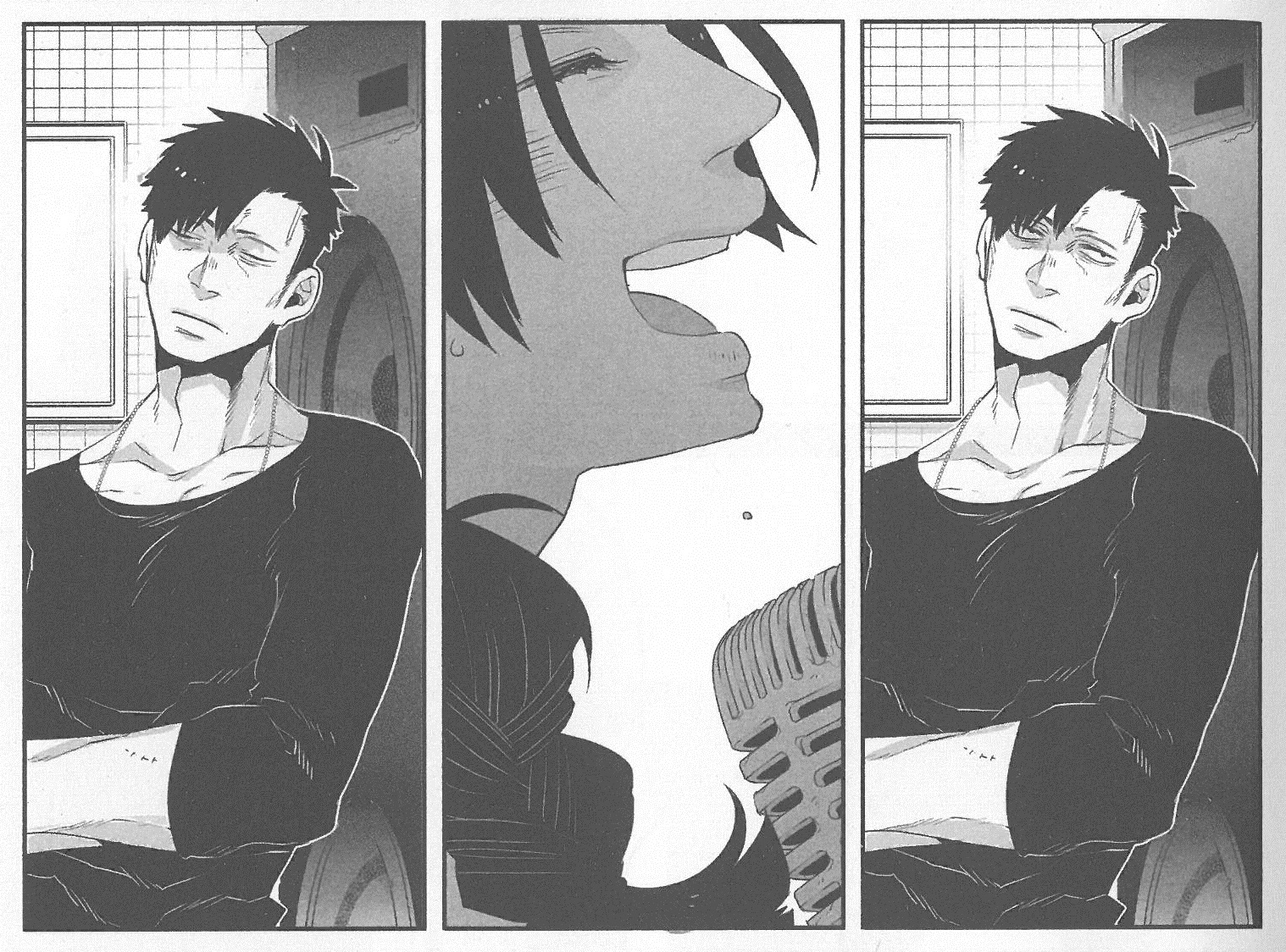
I have been thoroughly enjoying Gangsta ever since it first began being published in English. I like its dark, gritty atmosphere, intense action sequences, and engaging characters with complicated relationships and pasts. However, I only recently caught up with the sixth and most recent volume, released back in May. While reading the volume, I was particularly struck by a short sequence of panels which was part of a larger four-page scene:

Gangsta, Volume 6, page 51

At first glance, Nic could be standing next to anything—a door, a wall, a pillar, or what have you. I was initially so caught up in the subtle changes in his expression from one panel to the next that it actually took me a moment to realize that Nic was in fact leaning up against part of the sound system at Bastard (a club/brothel run by one of the mafia families that the Handymen are on good terms with). Nic may be deaf, but for an all too brief moment he’s enjoying Ally’s performance as she sings. He’s also literally feeling the music.

A bit of a personal side story: Back in my undergraduate days, the symphonic band that I was a part of would go on tour over spring break. There is one performance from my junior year that particularly stands out to me for two reasons. The first being that our lead trumpet player (who was also my roommate for the tour) was hit in the head by a tuba during intermission, didn’t let anyone know there was a problem, proceeded to play through the rest of the concert with a concussion, and ended up in the hospital that night as a result. The second reason (and the reason that I’m even bringing this all up) is that several members of that evening’s audience happened to be deaf. They sat together as a group with a clear view of the stage so that they could see the performance and they held balloons between their hands so that they could more easily feel the different vibrations created by the woodwinds, brass, and percussion.

Likewise, Nic standing near and actually leaning against one of the sound system’s speakers allows him to more fully experience the music of Ally’s performance. When I recognized this was what was happening, I immediately thought back to that concert in my junior year. I love Kohske’s attention to these sorts of details. They can be found throughout the series and bring an added level of realism and nuance to the manga’s characters and story. I also appreciate that Nic’s deafness isn’t used as a gimmick; it is an integral part of who he is as a person and how he experiences and interacts with his environment and the people around him.

This scene takes place during Ally’s second public performance as a singer at Bastard. The first was an effectively heartbreaking rendition of Ben E. King’s “Stand by Me,” her voice superimposed over the mayhem and death occurring in the streets just outside while Worick, Nic, and others risked their lives to trying save those of the Twilight refugees seeking shelter within the club. Tragically, the violence could not be withheld and ultimately spilled into the club itself. This makes Ally’s later performance even more significant, powerful, and emotionally resonant. Her singing this time is a celebration—it can be seen in the joy and happiness in her face and in the faces of those who are listening—providing healing for the survivors and a moment of peace between the tragedies of the past and the tragedies that will inevitably come.

The entire sequence, and specifically these three panels, capture that feeling and atmosphere astonishingly well. Kohske is remarkably skilled when it comes to pacing in Gangsta. Chaos and violence is balanced by quieter moments, pain and tragedy (of which there are plenty) is alleviated by humor and compassion. Gangsta has a narrative rhythm to it that continues to build tension without becoming unrelentingly bleak. Kohske knows when to push the action and when to hold back to allow the characters and the readers to recover, breathe, and process the ramifications of everything that has taken place.

What is also striking about this four-page scene is that there isn’t a single word of spoken dialogue or narration. Even what it is that Ally is singing is unknown. The scene is an entirely visual experience, relying exclusively on the strength of Kohske’s artwork to convey the emotions and narrative of the manga. It serves to emphasize what is happening in these particular three panels as well, accentuating Nic’s perspective as someone who can see but not hear the world around him. And then he closes his eyes, distancing himself even further from that world and from the people he cares about and who care about him.

In the very next instant, Nic is suddenly gone, off on a mission of his own devising that may very well get him killed. And he hasn’t told Ally or Worick or anyone else who truly matters about his plan. But this moment before he disappears is tremendously important—Nic is fully present as he absorbs with all of his senses Ally’s performance and the jubilation permeating the club, something that he will carry within himself when he leaves. Even while Nic is closing himself off, he still maintains and strengthens his connection to others. The space that he previously occupied is left disconcertingly empty; though initially unnoticed, his absence will be felt.

Nic knows what he’s going to do and what’s coming next even if nobody else does. Elation, sadness, energy, calm, regret, contentment, and a myriad of other things can all be found within this one scene. And the wider implications of it are surprisingly complex considering its simplicity. On the surface, Ally sings while others listen, but underneath it all is a turmoil of emotions and a tangle of intentions. In general I have found Kohske’s Gangsta to be an incredibly engaging manga, but this scene in particular has left a huge impression on me from both a visual and narrative standpoint.

Gangsta, Volume 6, page 51

Filed Under: FEATURES Tagged With: Gangsta, Kohske, manga

My Week in Manga: October 12-October 18, 2015

October 19, 2015 by Ash Brown

My News and Reviews

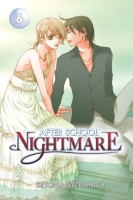
It was a two-review week at Experiments in Manga last week. First off, I reviewed the third and final volume of Hide and Seek by Yaya Sakuragi, which I enjoyed immensely. In general, I tend to like Sakuragi’s boys’ love manga, but I think that Hide and Seek has probably become my favorite. It’s a bit more serious and realistic than some of her other manga, but it still has a great sense of humor. The second review from last week, and the most recent addition to my ongoing monthly horror manga review project, was After School Nightmare, Volume 6 by Setona Mizushiro. The series continues to be both disconcerting and compelling; I’m looking forward to seeing how it continues to develop.

Elsewhere online: The Shojo Beat tumblr posted a short interview with Kyousuke Motomi. Tofugu presents Japanese Onomatopoeia: The Definitive Guide, which is pretty great. The BBC has a brief spot on Hajime Isayama. Coming out of the New York Comic Con, Women Write About Comics had a chat with Kodansha executives Hiroaki Morita, Kohei Furukawa, and Yasumasa Shimizu. Brigid Alverson reports on Kodansha’s panels at New York Comic-Con, which included Yohei Takami, the editor of Noragami, as a special guest. Masashi Kishimoto was in New York for NYCC as well. Deb Aoki covered Masashi Kishimoto’s NYCC visit for Anime News Network. Brigid Alverson reports on Kishimoto’s main panel. Weekly Shonen Jump Blog has some Kishimoto NYCC videos to share, including interviews and panels. Also, the recording from Kishimoto’s SoHo Apple Store visit is now available.

Quick Takes

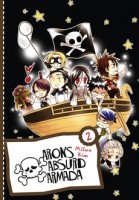
Aron's Absurd Armada, Omnibus 2Aron’s Absurd Armada, Omnibuses 2-3 (equivalent to Volumes 3-5) by MiSun Kim. I read the first Aron’s Absurd Armada omnibus quite a while ago. I largely enjoyed the full-color manhwa, which I believe had its start as a webtoon, and have been meaning to get around to reading the rest of the series. I’m not sure that binge-reading Aron’s Absurd Armada was really the way to go for optimal enjoyment, though. I still find the series to be consistently or at least vaguely amusing, and it even managed to make me laugh out loud a few times, but it’s a little hard to take in large doses. The humor isn’t particularly clever, mostly relying on the fact that almost every single character in the manhwa is incredibly shallow or dimwitted. As such, there’s not much depth to the story or characters. Surprisingly enough, Aron’s Absurd Armada actually does have a plot, granted it’s very meandering and almost stream-of-conscious. There are pirates and treasure, kingdoms and political intrigue, and a whole mess of other complicating factors. Aron’s Absurd Armada is indeed absurd.

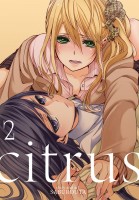
Citrus, Volume 2Citrus, Volumes 2-3 by Saburouta. Although I didn’t find some of the first volume of Citrus to be particularly realistic, I did find the intense emotions and drama to be engaging enough to be interested in continuing the series. The next two volumes follow in a similar vein—unbelievable in parts but still having the potential to become addictive. The series has begun to introduce prominent new characters as well. Not only is there another girl who has her eye on Mei, there’s also a young woman with designs for Yuzu. Mei’s father finally makes an appearance in the manga as well, albeit rather briefly. I’m not really entirely sure what to make of the man yet. Mei continues to be something of a mystery, too. One thing is for certain, though, a fair amount of Mei’s emotional issues, which have a huge effect on her interactions with other people, are tied up in her poor relationship with her father. As for the artwork, for the most part Citrus is drawn quite nicely in an overall attractive style that I like, but every so often there’s some weird anatomy going on which can be distracting.

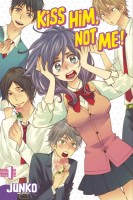
Kiss Him, Not Me!, Volume 1Kiss Him, Not Me!, Volume 1 by Junko. Serinuma is on fairly good terms with many of the hottest boys at her school, but what most people don’t know is that in her spare time she enjoys fantasizing about them in relationships with each other. She’s also a huge fan of the anime Mirage Saga and she’s devastated when her favorite character dies. Locking herself in her room for more than a week, she wastes away. Nearly unrecognizable (on the outside), she begins turning the boys’ heads when she returns to school. Personally, I would have preferred another gimmick than sudden weight loss to bring Serinuma to the attention of her schoolmates, but at least it’s not at all played seriously. In fact, there is very little that is serious about Kiss Him, Not Me!. Its ridiculousness is what makes the manga work. And it is funny. The humor primarily revolves around Serinuma being a hopeless otaku, specifically a fujoshi. Junko herself, who is also a boys’ love mangaka (I believe Mr. Mini Mart is currently her only other work released in English), is a fujoshi as well, so happily the jokes never feel mean-spirited.

Filed Under: FEATURES, My Week in Manga Tagged With: aron's absurd armada, Citrus, Junko, Kiss Him Not Me, manga, manhwa, MiSun Kim, Saburouta

After School Nightmare, Vol. 6

October 16, 2015 by Ash Brown

After School Nightmare, Volume 6Creator: Setona Mizushiro
U.S. publisher: Go! Comi
ISBN: 9781933617480
Released: January 2008
Original release: 2006

The sixth volume of the manga series After School Nightmare, an intense and dark psychological drama by Setona Mizushiro, was originally published in Japan in 2006. The English-language edition of After School Nightmare, Volume 6 was released by Go! Comi in 2008. Go! Comi is no more, so the entire series has gone out-of-print, but the manga still seems to be relatively easy to find. After School Nightmare is a series that honestly disturbs me, which isn’t necessarily a bad thing since in part it’s a horror manga. But while I find After School Nightmare to be disconcerting, I also find it to be oddly compelling. Mizushiro deals with some heavy issues in the series, including emotional, psychological, and physical abuse, trauma, and violence. The search for personal identity and the roles that gender and sexuality play in defining who a person is are major themes as well. In fact, it was those themes that first drew After School Nightmare to my attention.

Despite some lingering doubts, Mashiro made the decision to give up on his feelings for Sou in favor of his feelings for Kureha. Sadly for him, things aren’t turning out how he would have liked at all. Tying his masculinity to her insecurities, Mashiro wanted to feel needed by Kureha, to become her white knight and protector. But now Kureha is beginning to feel more confident in herself and trying to rely less on Mashiro. Suddenly finding himself without an acceptable role to play in their relationship, and no longer being able to meet the established though self-imposed requirements of what it means to be a man, Mashiro is thrown into turmoil. In the past he presented himself as a prince who would rescue those who were weaker than him, but it’s help that is no longer wanted nor needed. Just when he thought that he had everything finally figured out, Mashiro finds his relationships falling apart because they were built on his own insecurities and fears. He is desperate to be seen as a man by others and at the same time is terrified by the fact that he also yearns to express his femininity.

After School Nightmare, Volume 6, page 184Most of After School Nightmare takes place in one of three settings: the school grounds, the dormitories associated with the school, and the shared nightmares of the students participating in the special after school class required for their graduation. Granted, it’s not graduation in the usual sense. The students who successfully complete the course completely disappear from the campus and from the memories of those left behind, almost as if they never existed at all. The mysteries surrounding what it really means to graduate combined with the story’s limited settings create a marvelously ominous and claustrophobic atmosphere. As a result, when the series breaks from that narrow focus, it can be especially unsettling. In the sixth volume, for what I believe is the first time in After School Nightmare, a truly significant scene occurs away from the school entirely, which serves to emphasize Mashiro’s reluctance to deal with his issues head on. But it’s a moment of false freedom; he won’t be able to run away from his problems indefinitely without there being negative consequences.

The nightmares in After School Nightmare are intended to be an environment in which the students can work through their personal traumas and fears, but the participants are simultaneously stripped of many of their defenses and left incredibly vulnerable within the dreams as well. In theory, what happens in the dreams is meant to remain private and not to carry over into the waking world, but in practice that is rarely ever the case. Even so, most of Mashiro’s growth and maturation is thanks to those nightmares. It’s not until After School Nightmare, Volume 6 that he’s forced to really begin to recognize outside of them how selfish and self-centered his relationships with other people have been, how he’s using them to make himself feel better about himself, and how his actions affect others. In many ways, Mashiro’s waking life is just as much of a fantasy as the dreams he is made to share with his classmates, and both reality and nightmares can be troubling and traumatic. However, it’s the nightmares that are the more truthful and honest even though they can also be highly symbolic and strange. In the end, as horrifying as the dreams are, the denial and insidious falsehoods of reality may ultimately be the more damaging.

Filed Under: REVIEWS Tagged With: after school nightmare, Go! Comi, manga, Setona Mizushiro

Hide and Seek, Vol. 3

October 14, 2015 by Ash Brown

Hide and Seek, Volume 3Creator: Yaya Sakuragi
U.S. publisher: Viz Media
ISBN: 9781421579689
Released: March 2015
Original release: 2014

Yaya Sakuragi has had quite a few of her boys’ love manga translated and released in English: Tea for Two; Hey, Sensei?; Stay Close to Me; Bond of Dreams, Bond of Love; and, most recently, Hide and Seek. Hey, Sensei? was actually my introduction to boys’ love, and I tend to enjoy Sakuragi’s work, so I’ve made a point to read and collect it all. As for Hide and Seek, the third and final volume was originally published in Japan in 2014. The English-language edition was released in 2015 by Sublime Manga, the boys’ love imprint associated with Viz Media. Hide and Seek is technically a spinoff of Bond of Dreams, Bond of Love, but it stands completely on its own. However, readers familiar with Bond of Dreams, Bond of Love will likely appreciate the references made to the earlier series. Tea for Two is even more distantly related to Hide and Seek, the connection between the two being made indirectly through Bond of Dreams, Bond of Love. It’s not at all necessary to have read Tea for Two or Bond of Dreams, Bond of Love to enjoy Hide and Seek, but I do like how all three series are linked together.

It has been years since Shuji has been in a serious relationship. Although he’s still on good terms with his ex-wife, his marriage was a failure and he hasn’t done much more than casually play around since the divorce. But now, somewhat unexpectedly, Shuji finds himself in what may very well become something more long-term, and with another man no less. The relationship between Shuji and the young doctor Saji has had a few bumps along the way, and both of the men still occasionally feel insecure, but for the most part they’ve been able to move past the major drama. That doesn’t mean everything has been completely worked out, though. As grown adults, Shuji and Saji each have their own family responsibilities and careers to take into consideration. Shuji has his daughter Chii to look after and the business at his candy store isn’t as good as it once was while Saji is having a difficult time convincing his grandfather to allow him to take over the family’s local clinic. So, there are still a few matters that Shuji and Saji will need to address before their relationship can go much further.

Hide and Seek, Volume 3, page 68Although Hide and Seek tends to be more serious, mature, and realistic, especially when compared to its immediate predecessor Bond of Dreams, Bond of Love, at the same time there is still plenty of humor and lightheartedness to the series. For example, the major dilemma in the first chapter of Hide and Seek, Volume 3 revolves around Shuji “manning up” in order to cuddle, with delightful results. Shuji’s love of costume and roleplay comes up again, too, which has been something of a running joke in both Bond of Dreams, Bond of Love and Hide and Seek. I’ve really enjoyed seeing the relationship between Shuji and Saji develop as the series has progressed; they’re adorable and surprisingly sweet together, even considering (or perhaps even because of) their drastically different personalities. It’s obvious that they each care tremendously for other person. What makes their relationship work, and one of the things that I particularly love about Hide and Seek, is their willingness to push through their initial fear and embarrassment over expressing themselves and actually communicate with each other.

Seeing as I had enjoyed Sakuragi’s earlier works, I was fairly confident that I would like Hide and Seek, too. What I didn’t anticipate was just how much the series would end up appealing to me; I think it may now even be my favorite Sakuragi manga. I find this to be a little surprising because, although Saji is a type of character that I’m usually fond of, in general Shuji wasn’t. But over the course of Hide and Seek I came to really like and care about him. He has evolved from simply being supporting comic relief in Bond of Dreams, Bond of Love into a fully fledged, well-developed character in his own right. Much of Hide and Seek, Volume 3 is devoted to his family circumstances, which are revealed to be a little different than readers (and Saji, for that matter) were initially led to believe. Chii’s mother and her current boyfriend play a greater role, but the series implies and is open-ended enough that there is room for Saji, Shuji, and Chii to form a trio as well. Perhaps it’s optimism and wishful thinking on my part, but it makes me extremely happy that by the end of Hide and Seek, Chii may very well have gained two caring families.

Filed Under: REVIEWS Tagged With: Hide and Seek, manga, Sublime Manga, viz media, Yaya Sakuragi

  • « Go to Previous Page
  • Page 1
  • Interim pages omitted …
  • Page 12
  • Page 13
  • Page 14
  • Page 15
  • Page 16
  • Interim pages omitted …
  • Page 60
  • Go to Next Page »
 | Log in
Copyright © 2010 Manga Bookshelf | Powered by WordPress & the Genesis Framework