• Skip to primary navigation
  • Skip to main content
  • Skip to primary sidebar
  • Home
  • About Us
    • Privacy Policy
    • Comment Policy
    • Disclosures & Disclaimers
  • Resources
    • Links, Essays & Articles
    • Fandomology!
    • CLAMP Directory
    • BlogRoll
  • Features & Columns
    • 3 Things Thursday
    • Adventures in the Key of Shoujo
    • Bit & Blips (game reviews)
    • BL BOOKRACK
    • Bookshelf Briefs
    • Bringing the Drama
    • Comic Conversion
    • Fanservice Friday
    • Going Digital
    • It Came From the Sinosphere
    • License This!
    • Magazine no Mori
    • My Week in Manga
    • OFF THE SHELF
    • Not By Manga Alone
    • PICK OF THE WEEK
    • Subtitles & Sensibility
    • Weekly Shonen Jump Recaps
  • Manga Moveable Feast
    • MMF Full Archive
    • Yun Kouga
    • CLAMP
    • Shojo Beat
    • Osamu Tezuka
    • Sailor Moon
    • Fruits Basket
    • Takehiko Inoue
    • Wild Adapter
    • One Piece
    • After School Nightmare
    • Karakuri Odette
    • Paradise Kiss
    • The Color Trilogy
    • To Terra…
    • Sexy Voice & Robo
  • Browse by Author
    • Sean Gaffney
    • Anna Neatrour
    • Michelle Smith
    • Katherine Dacey
    • MJ
    • Brigid Alverson
    • Travis Anderson
    • Phillip Anthony
    • Derek Bown
    • Jaci Dahlvang
    • Angela Eastman
    • Erica Friedman
    • Sara K.
    • Megan Purdy
    • Emily Snodgrass
    • Nancy Thistlethwaite
    • Eva Volin
    • David Welsh
  • MB Blogs
    • A Case Suitable For Treatment
    • Experiments in Manga
    • MangaBlog
    • The Manga Critic
    • Manga Report
    • Soliloquy in Blue
    • Manga Curmudgeon (archive)

Manga Bookshelf

Discussion, Resources, Roundtables, & Reviews

BEST MANGA

The Best and Worst Manga of 2023

January 9, 2024 by Katherine Dacey

This weekend’s Nor’easter provided me a swell opportunity to finish my long-gestating Best and Worst Manga list for 2023. One of the things that tripped me up was the sheer volume of new work published last year; when I first started reviewing manga in 2006, it was hard to imagine a market that offered a title for every conceivable reader, from the Chainsaw Man enthusiast to the the romantic, the oenophile, the foodie, the soccer fan, the gore hound, the isekai buff, and even the middle-aged manga critic. Though I made a concerted effort to be as thorough as possible, I freely admit that my picks barely capture the sheer quantity and diversity of last year’s new releases. Instead, I focused on the titles that stayed with me weeks and months after I first read them, from the exuberant One Hundred Tales to the unnerving The Summer Hikaru Died. For additional perspective on 2023’s best and worst manga, I encourage you to check out the well curated lists at Anime News Network, Anime UK News, Asian Movie Pulse, The Beat, The Comics Journal, From Cover to Cover, Okazu, and The School Library Journal.
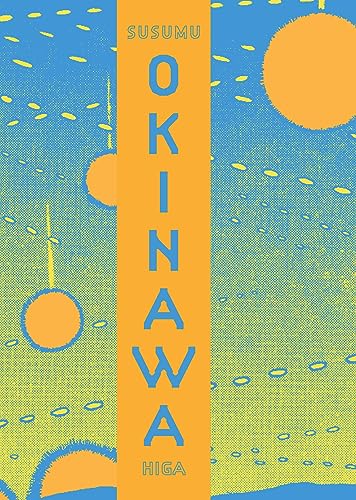
Best New Manga: Okinawa
Story and Art by Susumu Higa • Translated by Jocelyne Allen • Lettering by Patrick Crotty and Kayla E. • Fantagraphics
There are books that critics like, and books that readers like. I’d put Okinawa squarely in the first category, as it has all the hallmarks of a Serious Manga™: slightly naïve artwork, historically important events seen through the eyes of ordinary people, and detailed footnotes explaining the story’s cultural and linguistic nuances. If I sound a little cynical, I was; I put off reading Okinawa for months after its release because so many reviewers rehearsed the same talking points about how “harrowing,” “heartbreaking,” “complex,” and “haunting” it was. After reading Okinawa, however, I have to admit the critics were right: Okinawa is a deeply moving exploration of the island’s fraught relationship with Japan and the United States. It’s also a tribute to Susumu Higa’s parents, whose memories of World War II pervade many of Okinawa’s most affecting stories; a celebration of Okinawan resilience and spirituality; and the best manga I read in 2023.

Best New Drama: River’s Edge“Story and Art by Kyoko Okazaki • Translated by Alexa Frank • Vertical Comics
River’s Edge offers a gritty portrait of adolescence before chat rooms, cell phones, and social media, focusing on the slackers and misfits at a Tokyo high school. Haruna Wakakusa, the protagonist, is caught between her fierce sense of justice and her ambivalent feelings towards her on-again, off-again boyfriend Kannonzaki, a horny, hot-headed loser who bullies weaker classmates. Over the course of the story, Haruna forges an unlikely friendship with one of Kannonzaki’s targets, an aloof young man whose popularity with the girls belies his true sexual orientation. Okazaki’s spare, stylish linework is ideally suited to the material, as the character’s exaggerated facial features and ungainly proportions remind the reader of how confusing, weird, and uncomfortable it is to be on the physical cusp of adulthood. Okazaki also nails the casual cruelty and cluelessness of adolescence: her characters’ impulsiveness, selfishness, and inexperience often compel them to betray each other in small (and big) ways that feel true to life even when the plot teeters on the brink of melodrama.

Best Classic Title: One Hundred Tales
Story and Art by Osamu Tezuka • Translated by Iyasu Adair Nagata • Lettering by Aidan Clarke • ABLAZE
Over the course of his long career, Osamu Tezuka published three series based on the legend of Doctor Faustus, among them One Hundred Tales (1971), which ran in Weekly Shonen Jump. Tezuka takes a few liberties with the original story: his hero is not a brilliant scholar in search of knowledge but a lowly samurai who’s been sentenced to death for his employer’s misdeeds. In a fit of desperation, he sells his soul to a witch and is reborn as Fuwa Usuto, a dashing young man who wants two things: love and power. What follows is a rowdy picaresque, as Fuwo ventures into the lair of an alluring demon, saves his daughter from an arranged marriage, and insinuates himself into the house of a foolish daimyo in his quest to become more worldly and powerful. These episodes provide Tezuka ample opportunity to insert pop-cultural sight gags—Christopher Lee and Astro Boy both make fleeting appearances—but they also showcase Tezuka’s flair for character design and panel structure; the artwork is fluid and playful, equally suited to moments of exquisite silliness and heartbreaking sadness as Fuwo stumbles towards transcendence.

Best New Horror Series: The Summer Hikaru Died
Story and Art by Mokumokuren • Translated by Ajani Oloye • Lettering by Abigail Blackman • Yen Press
The Summer Hikaru Died begins with a familiar scene: two high school buddies are clowning around outside a convenience store, trading good-natured barbs. But something’s off, and midway through a seemingly ordinary conversation Yoshiki realizes that he’s talking to an impostor who’s the spitting image of his friend Hikaru. Though the mystery of what happened to the real Hikaru is resolved quickly, many questions remain: is it possible for Yoshiki to befriend “Hikaru” even though he has no real memories of their relationship? And what, exactly, is “Hikaru”? Mokumokuren resists the temptation to provide simple answers, relying instead on suggestion to create a tense, atmospheric story that skillfully blends elements of body horror, BL, and fantasy in a fresh, unsettling way.

Best New Cat Manga: Nights With a Cat
Story and Art by Kyuryu Z • Translated by Stephen Paul • Lettering by Lys Blakesly • Yen Press
Though there are dozens of great pet manga now available in English, Nights with a Cat has something genuinely new to offer: simple, observational storytelling that doesn’t shamelessly tug on the heartstrings or anthropomorphize our furry companions. The series explores the relationship between Fuuta and Kyuruga, his roommate’s cat. As someone who’s never lived with a cat before, Fuuta is fascinated by Kyuruga, marveling at Kyuruga’s anatomy—his pupils, his sandpaper tongue, his retractable claws—as well as Kyuruga’s ability to silently materialize in surprising places. Kyuryu Z doesn’t play these moments for laughs, choosing instead to emphasize how strange and amazing cats really are with illustrations that capture the fluidity of Kyuruga’s movements and the changeability of his moods. Recommended for new and long-time cat owners alike. (Reviewed at Manga Bookshelf on 5/21/23)

Best Ongoing Series: Go With the Clouds, North by Northwest
Story and Art by Irie Aki • Translated by David Musto • Vertical Comics
After a two-year wait, a new installment of Go With the Clouds, North by Northwest arrived in stores this fall, demonstrating once again why this odd, delightful, and occasionally thrilling story deserves a bigger audience. Strictly speaking, Go With the Clouds is a murder mystery, but Aki Irie refuses to observe the basic tenets of the genre, frequently interrupting her story for interesting diversions: a fitful romance between supporting characters, a brief lesson on Icelandic geography, a casual conversation between Kei, the main protagonist, and his trusty jeep. What prevents the story from being twee or mannered is its matter-of-fact tone. In the first chapter of volume six, for example, Kei uses ESP to track a kidnapping victim through the streets of Reykjavik by chatting up parked cars around the city, a goofy gambit that works thanks to Irie’s superb pacing and commitment to character development; Kei’s methodical approach suggests that his ESP is something he uses on an everyday basis, not something that manifests per the plot’s demands. Swoon-worthy art and twisty plotting add to the series’ considerable appeal. (Volumes one and two reviewed at The Manga Critic on 8/30/19).

Most Disappointing New Series: #DRCL: Midnight Children
Story and Art by Shin’ichi Sakamoto • Based on Bram’s Stoker’s Dracula • Translation Caleb Cook • Touch-Up & Lettering by Brandon Hull • VIZ Media
Let’s face it: Bram Stoker’s Dracula sucks, marred by turgid prose and a convoluted form. In the hands of other creators, however, Stoker’s ideas have thrilled, titillated, and shocked six generations of horror buffs. The introduction to #DRCL: Midnight Children suggests that Shin’ichi Sakamoto might be one of those creators, as he offers the reader a claustrophobic, suspenseful riff on Dracula‘s most famous chapter, “The Voyage of the Demeter.” The rest of volume one, by contrast, is a fever dream of short, incoherent scenes that bump up against each other like commuters on a rush-hour train. Anyone familiar with Stoker’s original novel will recognize the characters’ names but wonder why Sakamoto re-imagined Renfield as a nun who’s chained up in a dormitory room or Mina Murray as a short, scrappy redhead who’s an expert wrestler. (Also: a dead ringer for Anne of Green Gables.) It’s a pity that the story is so fragmented and overripe, as Sakamoto has a fertile imagination; the first volume is filled with hauntingly beautiful renditions of Dracula himself that instill a sense of awe and fear that’s missing from the rest of the story.
Filed Under: Manga, Manga Critic, Recommended Reading, REVIEWS Tagged With: ABLAZE, Aki Irie, Bad Manga, BEST MANGA, Cats, fantagraphics, Kyoko Okazaki, Mokumokuren, Osamu Tezuka, Shin'ichi Sakamoto, Susumu Higa, Vertical Comics, VIZ, yen press

The Best and Worst Manga of 2022

January 1, 2023 by Katherine Dacey

When I sat down to compose my Best of 2022 list, I was certain I’d compiled a similar one as recently as 2017, only to discover that I hadn’t done so in almost seven years. In looking over some of my earlier efforts, I hardly recognize myself: who was this person with the energy to review 40 or 50 books in a year? Or who thought that Yowamushi Pedal was the best new series of 2015? It felt a little daunting to revisit those lists, honestly, as I’ve often let my blog lie fallow for months at a stretch as I adjusted to a more demanding teaching schedule or a longer commute; I’ve been vowing to “bring back” The Manga Critic for years. Reading other bloggers’ year-end lists, however, inspired me to get back in the saddle and take stock of the manga I loved—and didn’t—in 2022.

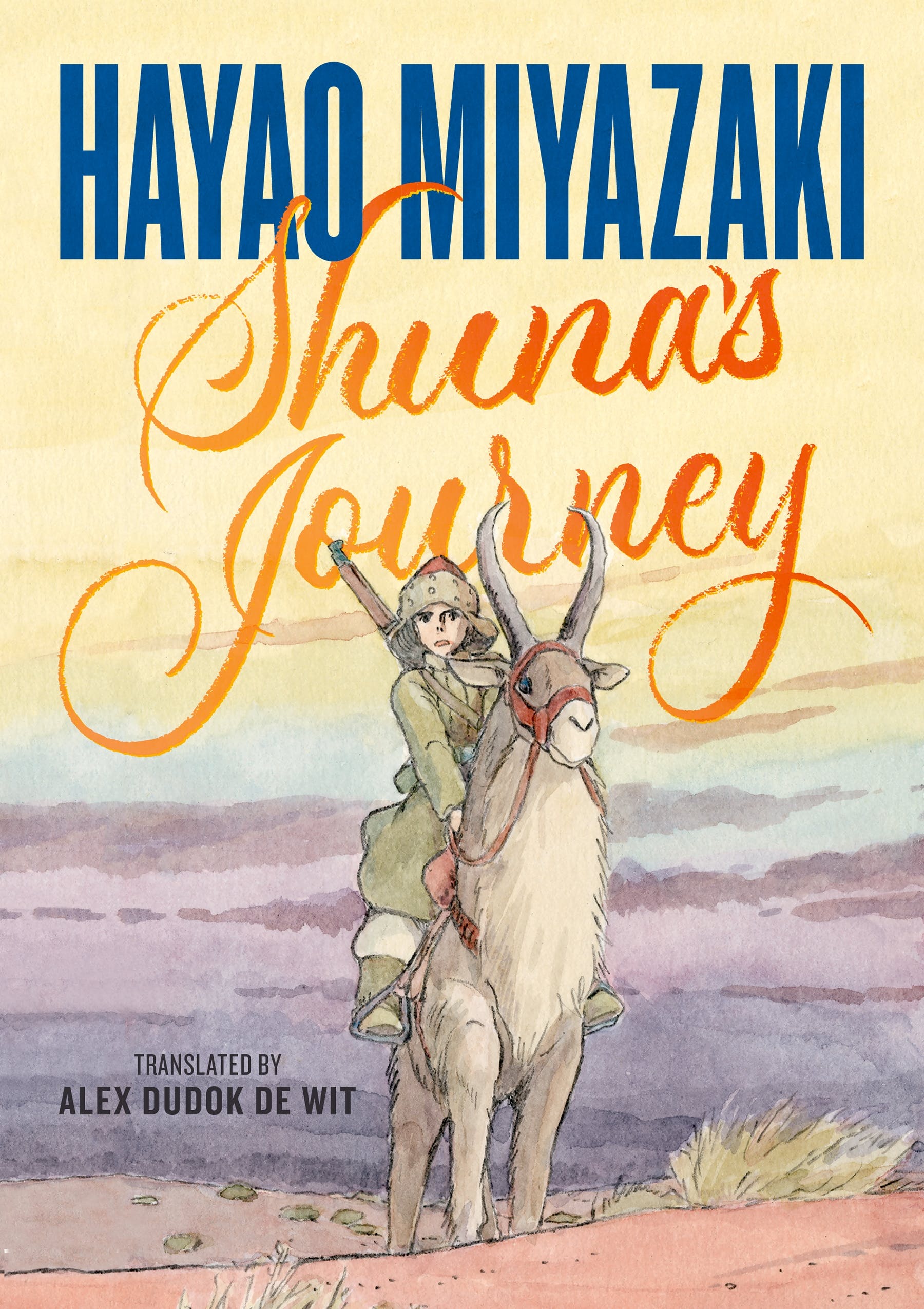
Best New Manga: Shuna’s Journey
By Hayao Miyazaki • Translated by Alex Dudok de Wit • First Second
In this deceptively simple work, Hayao Miyazaki creates a richly detailed world filled with beautiful, strange imagery that invites the reader to contemplate where and when the story takes place without definitively answering those questions. Miyazaki’s hero is just as mysterious as the landscapes he crosses; Shuna’s odyssey is not a journey of self-discovery but a practical quest that, despite its myriad hardships, leaves him fundamentally unchanged. Is a he a folkloric hero or a witness to environmental catastrophe? Miyazaki leaves that question unanswered as well, creating a work that’s more ambiguous and less didactic than Nausicaä of the Valley of the Wind or Princess Mononoke, but similar in its emphasis on the complex relationship between humans and the natural world.

Best Archival Project: Talk to My Back
By Yamada Murasaki • Translated by Ryan Holmberg • Drawn & Quarterly
“For six years now, I’ve never walked at a pace that was mine,” notes Chiharu, the protagonist of Yamada Murasaki’s sharply observed Talk to My Back. First published in the 1980s, Murasaki’s thirty-six vignettes chronicle the small pleasures and intense disappointments of a middle-class Japanese housewife. Through spare linework and judicious use of blank space, Murasaki conveys Chiharu’s quest to define herself outside the role of mother and wife, documenting Chiharu’s anger, frustration, and alienation in a restrained fashion that suggests how stifled and powerless Chiharu often feels. In a thorough, thoughtful companion essay, translator Ryan Holmberg explores Murasaki’s trailblazing role as an alt-manga creator; Murasaki was one of the first women artists to be featured in the pages of COM and Garo magazines, opening the door for creators such as Akino Kondo and Junko Mizuno. Here’s hoping that Drawn & Quarterly decides to publish more of Murasaki’s work in English.

Best New Sci-Fi Manga: Yokohama Kaidashi Kikou
By Hitoshi Ashinano • Translated by Daniel Komen • Adapted by Dawn Davis • Seven Seas
I’m not sure if I would have been as receptive to Yokohama Kaidashi Kikou five or ten years ago, as its low-key depiction of life in the aftermath of an environmental catastrophe might have struck me as hopelessly twee. With the worst of the pandemic behind us, however, I found the series’ emphasis on small, everyday moments more resonant; Hitoshi Ashinano convincingly evokes the rhythm of everyday life in a world of scarcity, minus the Hobbesian emphasis on violent competition. Alpha, the main character, is an android who divides her time between running a small cafe and roaming the coastline on her scooter, photographing the empty roads and submerged towns as well as the small, vibrant communities where people still find time to hold rowdy association meetings and stage elaborate firework displays. Her efforts to document humanity’s final chapter offer a wistful—and hopeful—meditation on what it means to persevere in the face of uncertainty and change.

Best New Romance: Kowloon Generic Romance
By Jun Mayuzuki • Translated by Amanda Haley • Yen Press
The aesthetic of Kowloon Generic Romance is pure 80s manga—think City Hunter or RG Veda—but the story and characters suggest the work of filmmaker Wong Kar-Wai, as Kowloon focuses on an intense but unconsummated flirtation between Reiko, a real estate agent, and Kudou, her brash, horny colleague. Like Kar-Wai, manga-ka Jun Mayuzuki is as enamored of settings as she is of characters, leading the reader on a languid tour of Kowloon’s shopping districts, cafes, back alleys, and apartment blocks, conveying how densely settled this city-within-a-city truly is. Though there are some minor elements of science fiction in play, the main attraction is the artwork and pacing; Mayuzuki devotes an entire chapter to depicting, in rapturous detail, Reiko’s evening ritual of enjoying a cigarette on her flat’s meager balcony, allowing the reader to experience the moment as Reiko does: a brief, wordless respite from the hustle and bustle of Kowloon.

Best New Comedy: Phantom of the Idol
By Hijiki Isoflavone • Translated by Max Greenway • Kodansha
In this delightfully bonkers series, a grumpy male pop star swaps bodies with the ghost of a former teen idol whose discipline and talent help transform Yuya into a charismatic, telegenic performer. The twist? Yuya’s been possessed by Asahi Mogami, a perky girl whose budding career was cut short by a car accident. The physical slapstick takes the humor in some unexpected directions as Asahi navigates the complexities of inhabiting the lazy Yuya’s body, while the dialogue offers plenty of sly pokes at the music industry, as well as some not-so-subtle reminders that pop stardom can be as grueling as it is exhilarating.

Best Manga I Thought I’d Hate: The Men Who Created Gundam
By Hideki Ohwada, Hajime Yatate, and Yoshiyuki Tomino • Translated by Jason Moses • Denpa
Of all the ways you could tell the story of Japan’s most famous robot franchise, it seems only right that Gundam creators Hideki Ohwada and Yoshiyuki Tomino opted for an over-the-top manga that dramatically recreates key moments in the series’ early history. The prevailing tone is reminiscent of a VH-1 Behind the Music special, complete with sudden reversals and last-minute triumphs; every line of dialogue is delivered with the kind of urgency usually reserved for a nuclear crisis, even when the conversation is focused on the more mundane aspects of creating a hit television show. Interspersed among the chapters are brief but useful essays connecting the storylines to real events, offering readers a more nuanced explanation of how Gundam helped the create the template for modern pop-cultural fandoms around the globe.

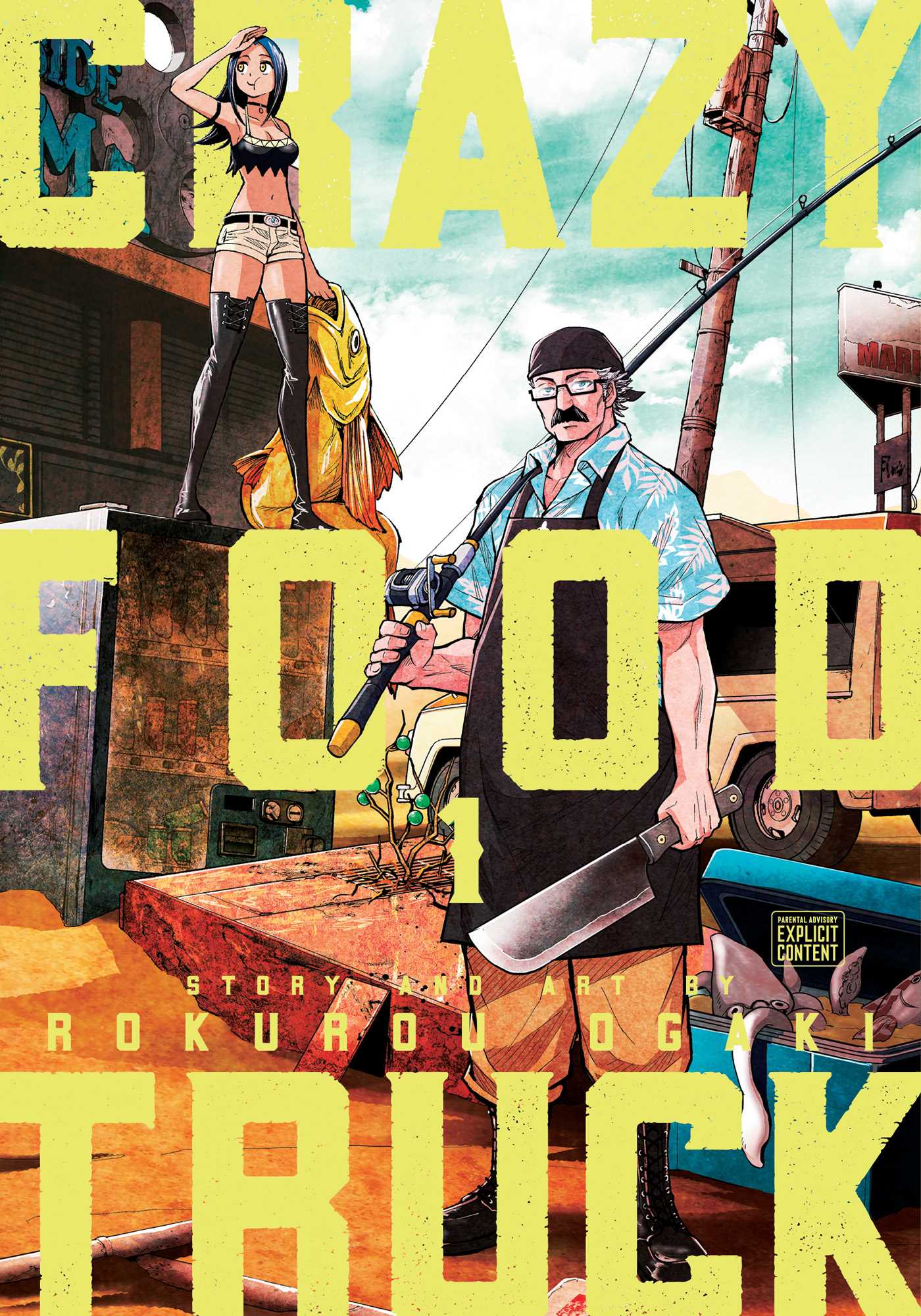
Worst Manga I Thought I’d Love: Crazy Food Truck
By Rokurou Ogaki • Translated by Amanda Haley • VIZ Media
On paper, Crazy Food Truck sounded like a blast, a cross between Mad Max: Fury Road and The Great Food Truck Race. In practice, however, Crazy Food Truck was surprisingly dull, serving up fight sequences as unimaginative as the food its hero serves his few paying customers. The central joke might be funnier if Gordon’s menu was so good that people would risk life and limb for his gourmet sandwiches, but when a BLT with mustard is his signature dish, it seems more like a failure of imagination than a real attempt at humor, especially when creator Rokurou Ogaki frequently reminds us that Gordon has mounted a cannon on top of his truck to ward off bad guys. Gordon’s sidekick Anisa is a one-note character, inserted into the narrative primarily for fan service that’s so indifferently executed it’s hard to muster any outrage over her penchant for nudity. I have no doubt this series rocked some reader’s world, but I found it flavorless. (Reviewed at The Manga Critic on 6/7/22)

Worst Manga I Read in 2022: Rooster Fighter
By Sou Sakuratani • Translated by Jonah Mayahara-Miller • VIZ Media
Rooster Fighter is a disappointment: the premise is too slight to sustain a long series, the script is strenuously unfunny, and the storylines are numbingly predictable. In every chapter, the nameless hero wanders into a new town, antagonizes and befriends the locals in equal measure, then kills a grotesque demon that’s been terrorizing the community. About the only good joke in whole series is how the rooster kills demons; anyone who’s lived on or near a farm will enjoy a rueful laugh or two at the hero’s superpower. Otherwise, this series is a total Cock-a-Doodle-Don’t. (Reviewed at Manga Bookshelf on 8/16/22)

Filed Under: Manga, Manga Critic, Recommended Reading, REVIEWS Tagged With: Bad Manga, BEST MANGA, Denpa Books, Drawn & Quarterly, First Second, Gundam, Hayao Miyazaki, Hijiki Isoflavone, Hitoshi Ashinano, Jun Mayuzuki, Kodansha Comics, Seven Seas, Yamada Murasaki, yen press

The Best and Worst Manga of 2015

January 6, 2017 by Katherine Dacey

After a two-year hiatus from blogging, I donned my critic’s cap again in 2015. I’ve enjoyed writing my quasi-weekly column, but composing a year-end list reminded me why I stepped off the reviewing treadmill in 2012: mediocre books! This year yielded a veritable bumper crop of so-so manga, titles that were competently executed but otherwise unmemorable thanks to an abundance of generic characters, cliché settings, and predictable plot twists; you’d be forgiven for feeling that you’d read many of 2015’s debuts before, even if the artists were new to the US market.

Lurking among the paint-by-number romances and boy-saves-world titles, however, were a few gems. I’ve done my best to highlight the titles that made me feel something, whether that feeling was love, hate, or a mixture of both. To that end, I’ve included my nominees for the worst manga of 2015 alongside the books that made me laugh and cry.

Yowamushi-Pedal-Volume-1Best New Series: Yowamushi Pedal
By Wataru Watanabe • Yen Press
You know the rap on sports manga: American readers won’t buy it, and don’t like it. Yowamushi Pedal might just change that, however, thanks to a story that plays well across the nerd-jock divide. Onoda, the hero, is a self-professed otaku whose weekly bike rides into Akihabara have transformed him into a secret Lance Armstrong clone. Though Onoda wants to revive his school’s anime club, his amazing hill-climbing skills and stamina get noticed by more seasoned riders, all of whom convince Onoda to join the cycling team. The series’ races are nail-biting, page-turning affairs, but it’s the in-between stuff that makes Yowamushi Pedal work. Onoda doesn’t just discover a new skill; he discovers a community of people who share his passion for riding and respect his talent. In short, Yowamushi Pedal is a coming-of-age story in which a bike becomes the nerdy hero’s vehicle—pun intended—for self-actualization.

One-Punch ManBest New Shonen Series: One-Punch Man
By ONE and Yusuke Murata • VIZ Media
One-Punch Man is the ultimate have-your-cake-and-eat-it-too manga. On the surface, it’s an affectionate spoof of shonen clichés that pokes fun at goofy costumes, over-the-top training sessions, and speech-prone villains. On a deeper level, however, One-Punch Man is a great adventure series about an ordinary but strong-willed individual who sets out to rid his city of monsters, only to discover that there’s a much greater threat to mankind than the lobster-men and were-lions that roam the streets. The result is a sincere, gut-bustingly funny manga that reads like a Silver Age superhero comic, splats and all.

Horimiya_cover1Best New Romance Manga: Horimiya
By Hero and Daisuke Hagiwara • Yen Press
Horimiya is one of 2015’s most pleasant surprises, a teen rom-com that avoids cliché situations by focusing on the characters’ lives outside school. At first glance, its lead characters look like opposites: Kyouko is the class queen, while Izumi is a quiet loner. When they bump into each other off campus, however, they quickly realize they have more in common than their carefully constructed identities would suggest–a realization that leads to friendship and flirtation. In less imaginative hands, Kyouko and Izumi’s budding romance would be subjected to endless tests–school plays, beach trips, hot transfer students–but the authors resist the urge to trot out these over-used scenarios, relying instead on more ordinary settings for comedic (and dramatic) grist. It’s the perfect antidote to the wacky misunderstandings that drive the plots of Cactus’ Secret, Special A, and a dozen similar titles.

Cat_DiaryBest New Gag Manga: Junji Ito’s Cat Diary: Yon & Mu

By Junji Ito • Kodansha Comics
Draw a Venn diagram that shows the overlap between Junji Ito fans and cat lovers, and you’ve found the small but perfect audience for Junji Ito’s Cat Diary, a collection of anecdotes about Ito’s beloved pets Yon and Mu. Though the manga’s jokes explore familiar terrain, Ito’s exaggerated reaction shots are priceless, capturing the mixture of love and disgust that cats inspire in their owners. (Imagine Edvard Munch drawing a gag manga about cats, and you get the general idea.) Ito is refreshingly honest about the way animals change the dynamic between people, too; in some of the manga’s most memorable scenes, Ito and his fiancée compete fiercely for their cats’ affection, plying Yon and Mu with toys, treats, and cuddles. Though the prevailing tone is campy, Ito’s obvious affection for his cats helps prevents the Diary from becoming too arch.

ludwig_kansiBest Historic Title: Ludwig B.
By Osamu Tezuka • DMP, Inc.
Left unfinished at the time of Osamu Tezuka’s death, Ludwig B. is a fictionalized biography of Beethoven. Tezuka only completed two volumes, but oh, those two volumes! Tezuka draws evocative scenes of Beethoven at the keyboard, using striking visual metaphors to convey the sound of Beethoven’s music. Tezuka also does a good job of capturing the dynamic between Beethoven and his father, revealing the extent to which Johann’s drinking, gambling, and stage-parenting cast a long shadow over Beethoven’s adult life. Purists should note that Tezuka takes frequent liberties with the historical record, creating a mustache-twirling villain named Franz Kreuzstein to serve as a foil for the young, determined Beethoven. If you’re not offended by such creative license, however, Ludwig B. offers an interesting glimpse into Beethoven’s development as a composer, and Tezuka’s lifelong fascination with Beethoven.

planetesBest Reprint Edition: Planetes
By Makoto Yukimura • Dark Horse
Listen up, manga publishers: if you’re going to do a new edition of a fan favorite, Dark Horse’s two-volume omnibus of Planetes is a swell example of how to do it right. The story has a crisp new translation, full-color pages, and a bigger trim size that gives Makoto Yukimura’s artwork room to stretch out. Better still, the new edition collects more chapters in each volume, allowing newcomers to read far enough into Planetes for Yukimura’s episodic character studies to gel into a more coherent story about space travel and social inequality; by the time newbies reach the end of volume one, they’ll be hooked, too.

sakamotoBest Manga I Thought I’d Hate: Haven’t You Heard? I’m Sakamoto
By Nami Sano • Seven Seas
In theory, Haven’t You Heard? I’m Sakamoto is a one-note samba: the titular character is handsome, good at everything, and unfailingly logical in all situations. In practice, however, Haven’t You Heard? is the Goldberg Variations of gag manga, taking stock scenes and putting a bizarre twist on them. The secret? Sakamoto is just a little too perfect, behaving more like a well-programmed android than a flesh-and-blood person. His peculiar brand of sangfroid confounds enemies and admirers alike; no one can decide if he’s cool or crazy, or where his loyalties might lie, making it impossible to predict how he’ll respond to each new challenge.

jojo_phantom_blood1Worst Manga I Thought I’d Love: JoJo’s Bizarre Adventure, Part 1: Phantom Blood
By Hirohito Araki • VIZ Media
At the risk of becoming the Armond White of manga critics, I’m nominating Hirohito Araki’s bone-crunching, chest-thumping saga for Most Exhausting New Series of 2015. That’s because Phantom Blood is a prime example of all-caps theater, the sort of manga in which every word balloon is filled with emphatic punctuation, and every plot twist seems like the brainchild of six teenage boys hopped up on Mountain Dew. In small doses, this more-is-more approach to storytelling can be amusing, but in longer installments, the cumulative effect of so much narrative excess is numb resignation; I didn’t feel entertained so much as punched in the face. (Reviewed at Manga Blog on 5/22/15.)

mizuki_hitlerMost Disappointing Manga: Shigeru Mizuki’s Hitler
By Shigeru Mizuki • Drawn & Quarterly
Shigeru Mizuki’s Hitler is one of the artist’s lesser works, uncomfortably see-sawing between character study and history lesson in its efforts to show us the man behind the Third Reich. Mizuki’s signature blend of cartoonish figures and photo-realistic backgrounds have been deployed to powerful effect in Non Non Ba and Onwards Towards Our Noble Deaths. Here, however, Shigeru’s hybrid style is a poor match with the subject; seeing Hitler reduced to a crude caricature makes it all too easy to view the book as a curiosity, rather than a serious meditation on evil. The virtual absence of the Holocaust is an even greater shortcoming; Shigeru Mizuki’s Hitler never grapples with the Fuhrer’s most disturbing legacy save for one blurry image of stacked corpses. Perhaps Mizuki felt the subject was too complex to explore in this biography, but it’s hard to imagine any dramatization of the Fuhrer’s life that fails to examine his virulent anti-Semitism.

* * * * *

So what are other folks saying about 2015’s best titles? My Manga Bookshelf colleagues just posted their Pick of the Year, with Ash Brown posting a separate, more detailed run-down of his favorite titles at Experiments in Manga. At the B&N Sci-Fi & Fantasy Blog, Brigid Alverson has posted separate lists for her favorite new and continuing series.

This article originally appeared at MangaBlog on December 30, 2015.

Filed Under: Classic Manga Critic, Manga, Manga Critic, Recommended Reading Tagged With: BEST MANGA, Dark Horse, DMP, Drawn & Quarterly, Osamu Tezuka, Seven Seas, VIZ, yen press

 | Log in
Copyright © 2010 Manga Bookshelf | Powered by WordPress & the Genesis Framework