• Skip to primary navigation
  • Skip to main content
  • Skip to primary sidebar
  • Home
  • About Us
    • Privacy Policy
    • Comment Policy
    • Disclosures & Disclaimers
  • Resources
    • Links, Essays & Articles
    • Fandomology!
    • CLAMP Directory
    • BlogRoll
  • Features & Columns
    • 3 Things Thursday
    • Adventures in the Key of Shoujo
    • Bit & Blips (game reviews)
    • BL BOOKRACK
    • Bookshelf Briefs
    • Bringing the Drama
    • Comic Conversion
    • Fanservice Friday
    • Going Digital
    • It Came From the Sinosphere
    • License This!
    • Magazine no Mori
    • My Week in Manga
    • OFF THE SHELF
    • Not By Manga Alone
    • PICK OF THE WEEK
    • Subtitles & Sensibility
    • Weekly Shonen Jump Recaps
  • Manga Moveable Feast
    • MMF Full Archive
    • Yun Kouga
    • CLAMP
    • Shojo Beat
    • Osamu Tezuka
    • Sailor Moon
    • Fruits Basket
    • Takehiko Inoue
    • Wild Adapter
    • One Piece
    • After School Nightmare
    • Karakuri Odette
    • Paradise Kiss
    • The Color Trilogy
    • To Terra…
    • Sexy Voice & Robo
  • Browse by Author
    • Sean Gaffney
    • Anna Neatrour
    • Michelle Smith
    • Katherine Dacey
    • MJ
    • Brigid Alverson
    • Travis Anderson
    • Phillip Anthony
    • Derek Bown
    • Jaci Dahlvang
    • Angela Eastman
    • Erica Friedman
    • Sara K.
    • Megan Purdy
    • Emily Snodgrass
    • Nancy Thistlethwaite
    • Eva Volin
    • David Welsh
  • MB Blogs
    • A Case Suitable For Treatment
    • Experiments in Manga
    • MangaBlog
    • The Manga Critic
    • Manga Report
    • Soliloquy in Blue
    • Manga Curmudgeon (archive)

Manga Bookshelf

Discussion, Resources, Roundtables, & Reviews

Reviews

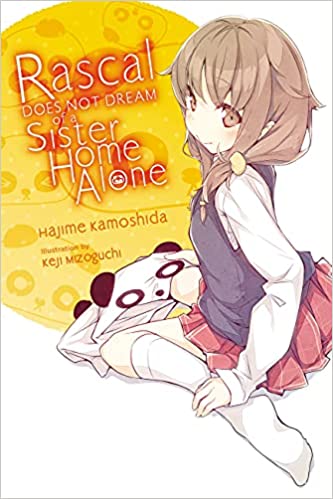
Rascal Does Not Dream of a Sister Home Alone

August 8, 2021 by Sean Gaffney

By Hajime Kamoshida and Keji Mizoguchi. Released in Japan as “Seishun Buta Yarou wa Orusuban Imouto no Yume wo Minai” by Dengeki Bunko. Released in North America by Yen On. Translated by Andrew Cunningham.

The first four books of the series had its main character, Sakuta, helping out a different girl each time who had what he termed “Adolescence Syndrome”, where an inner issue they were suffering from showed itself in an exterior way. Mai was turning invisible, Tomoe was time looping, Rio twinned herself, and Nodoka bodyswapped herself with her sister. Through all this, though, we were also learning of Sakuta’s own past – both his encounter with a high school girl named Shouko (who he rediscovers but not in high school) and his sister, whose reaction to bullying, and his frustration and reaction to her own pain, is what jumpstarted all of this. Now, at last, in this 5th book, we finally get to focus on Kaede. She’s more determined than ever to leave the apartment and go to school, to the point where she has a list of tasks in her diary. Together with Sakuta, can she succeed? Well, yes, but that’s not necessarily a wonderful thing for all involved.
Much of this book is about moving forward and trying to take a next step. For Sakuta that means actually applying himself. Mai, despite her celebrity, is going to college, and Sakuta wants to follow her there a year later. For Kaede, this means a whole lot of things. Just going to school is fraught with tensions, given that whenever she sees someone she doesn’t know, especially someone wearing her school uniform, she has a panic attack. She’s also re-exhibiting signs of her adolescence syndrome, which is definitely not a good thing. (Given that when this happened before, the authorities thought her mother abused her, I worried they might zero in on Sakuta, but thankfully this does not go there.) And there’s another, even larger issue: Kaede, as we discover here, has no memories from before two years ago. Given the way amnesia works, there’s a danger that she might lose herself no matter what the outcome.

There is a large chunk of this book that is very heartwarming. Seeing Kaede’s determination is great, trying to take small steps despite her terror. Sakuta strikes exactly the right notes, knowing when to push and when to retreat. The scenes at the zoo were magical, and brought a smile to your face… which of course makes the last fifth of the book all the more tear-jerking. It’s startling to see not just Kaede but also Sakuta re-develop symptoms from adolescence syndrome, and of course it happens when Mai is out of the city and can’t help him. Fortunately, he has Shouko – the older version – to help him once again. That said, she’s not Mai, and I wish that Mai had been there to talk him out of it. Mai remains the best part of this series. In any case, I’m not sure where Sakuta’s family relationship will go from here, but hopefully his romantic relationships will survive the cliffhanger. They probably will, she’s eminently sensible.

I joked on Twitter that the next two books would be light and fluffy – trust me, I saw the movie reviews, and while I don’t know what’s going to happen I know it’s a tear jerker. But so is this, in its own way, as we take a look at what makes up a person’s identity, and how fragile that can really be.
Filed Under: rascal does not dream, REVIEWS

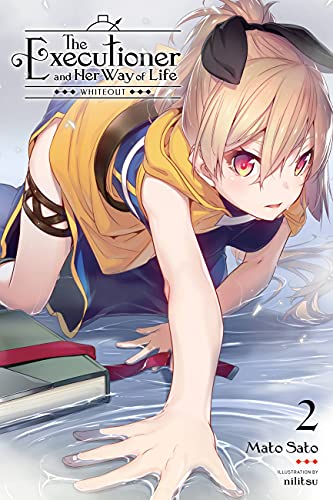
The Executioner and Her Way of Life: Whiteout

August 7, 2021 by Sean Gaffney

By Mato Sato and nilitsu. Released in Japan as “Shokei Shoujo no Virgin Road” by GA Bunko. Released in North America by Yen On. Translated by Jenny McKeon.

The second volume in this series picks up right where the first one left off, with Menou and Akari arriving in the Port City Libelle. Akari is here to have a vacation, Menou is here to try to kill her, and makes an attempt, but it fails as the others have. More worryingly, the terrorist organization we saw on the train in the first book has also got a hook into this city, and it appears to actually have the approval of the royal family – or at least the royal princess, who seems somewhat… detached from life. Menou’s not getting any help from the Church – they loathe her. The fight-loving princess finally meets her, but, unsurprisingly, just wants to fight. And Momo is doing her best to help, but things might be a little more difficult than any of them had assumed. Why is one of the four Human Errors out of her fog prison? Why does she know Akari? Even more chillingly, why does she know Menou?

So, first of all a warning: while this is not quite as bad as, say, Roll Over and Die 4, it is a very gore-filled and violent book. Pandæmonium is our villain here, and she’s a little girl who can essentially resurrect herself from her own body and blood – meaning that she can be killed endlessly and literally crawl out of her dead body. This is, needless to say, disquieting, both as a concept and as prose. She’s a classic type – the killer little girl – but that does not make her any less difficult to deal with. Akari’s own subplot is also rather chilling, as we get a lot more time in the head of the original Akari, the one who is not an airhead (though both are in love with Menou – indeed, that’s pretty much the one trait they share). The revelation from Book 1 is gone into further, and I wonder if a happy ending is truly possible for her – or if death is the only solution.

Not that the world has really had a solution to the isekai’d heroes before. We don’t get much more backstory, and a lot of it is filtered through Pandæmonium, who sees everything in terms of a movie, but it’s pretty clear there’s more going on here than just “the four human errors turned evil and were all destroyed”. For one thing, the one who put them down has also vanished from history… maybe. We get hints here and there as we go through this book that Menou’s past is tied to the human errors more than she’s aware of. (She’s also mostly figured out what Akari is doing, so it’s not simply making her ignorant on purpose.) As with the first book, everything ties back to her mentor Flare, who she gets her nickname (Flarette) from. Good news! They may reunite soon! That is the end of the good news.

Apologies for being somewhat oblique, but this is the sort of book that runs on mysteries, and I’m not ALWAYS a giant spoiler factory. If you’re reading this for the yuri, you may be disappointed – it’s there but isn’t a focus. If you’re reading this for lots of cool action, dark mysteries, and a bit of existential horror… OK, more than a bit… then this should serve you quite well. If you got off the Roll Over and Die train after Book 4 caught up to Japan, pick this up.

Filed Under: executioner and her way of life, REVIEWS

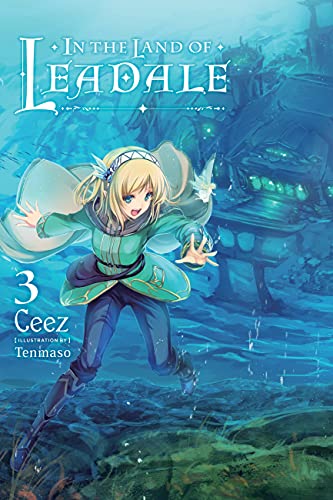
In the Land of Leadale, Vol. 3

August 5, 2021 by Sean Gaffney

By Ceez and Tenmaso. Released in Japan as “Leadale no Daichi nite” by Famitsu Bunko. Released in North America by Yen On. Translated by Jessica Lange.

As we get more and more into this series, I am starting to wonder if it may be more connected to Keina’s life than I had thought. I had assumed that the general horribleness of her life before getting trapped in this “game world” was basically for drama purposes, and indeed we get a flashback to the car accident that saw her permanently on life support and killed her parents here, as well as showing why she’s so much more ludicrously ovepowered than everyone else – she literally had nothing else to do but lie in the hospital and game. That said, the narrative also notes that she’d been ill her entire life, and also offhandledly says her family were somehow involved with Leadale’s production. And we also heard form some other players who got trapped in the game that its shutdown was a huge surprise, and no one could work out why. Things that make you go “Hmmm”. That said, most of this book is not concerned with that at all.

That’s not to say that the book is not concerned with the interweaving of “game world” and this world with real, actual people, as it very much is. Cayna starts to find that old “game events” are seeming to reactivate years later… only now killing all the NPCs is far less easy to shrug off. With the help of two other players, she helps to clear out one of them, but the villages that were wiped out remain very much wiped out, and Cayna ends up adopting the one survivor, a little girl. There’s clearly ominous stuff happening. That said, the other half of the book is pretty much just Cayna being Cayna. She’s creating beer and whiskey, she’s battling dark elves with ease, and she’s basically about 200 levels above everyone else. That said, social interaction is still an issue, especially now that she has to be a mom. Keina did not emotionally mature much in hospital… and it shows in Cayna.

Given we’re seeing a few more gamers who have ended up in this world (and woe betide them if they try to explain “well, see, 200 years ago” to the authorities) we get an answer to a question that was bound to crop up eventually: what about players who gamed as the other gender? Turns out the game did not let you do that… but that did not stop one player, who used an illegal mod to play as a woman. Now she’s in the game, and is having troubles. Fortunately, this book is almost entirely service-free, so the troubles are more “I talk like a brash guy in this body”, something Cayna finds amusing. We also get two more servants that Cayna calls upon (and then keeps around, since it’s unclear what happens to them when unsummoned). They’re a cat butler and cat maid, and they both hate each other a whole lot. Comedy ensues. Sometimes it’s even funny. Mostly, though, the laughs come from Cayna and her ludicrous power.

So yes, this remains a slow life series with a potentially dark, chewy center. I’m enjoying it quite a bit.

Filed Under: in the land of leadale, REVIEWS

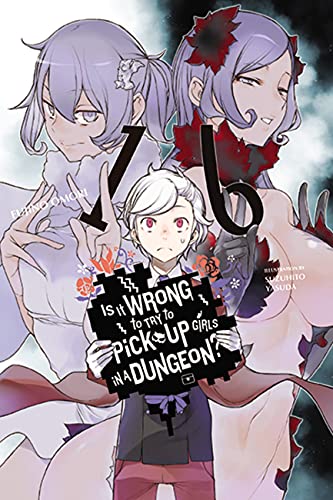
Is It Wrong to Try to Pick Up Girls in a Dungeon?, Vol. 16

August 2, 2021 by Sean Gaffney

By Fujino Omori and Suzuhito Yasuda. Released in Japan as “Dungeon ni Deai o Motomeru no wa Machigatte Iru Darou ka?” by GA Bunko. Released in North America by Yen On. Translated by Dale DeLucia.

Look, I know the spoiler. You know the spoiler. Most readers following this series have long since figured out the spoiler, if only as they googled the name and were redirected in a spoilery way. But yeah, this review is gonna talk about Syr, so if you say to yourself “oh, the shy but also sly waitress who likes Bell!”, I’d advise not reading this till you’ve read the book. We’ve seen Syr in action in one of the spinoff books, where she and Lyu go to a casino and she absolutely destroys a group of gamblers. But we’ve never quite seen Syr like this. This is Syr’s Last Stand. In the last volume we had a festival of remembrance, and in this one, hot on its heels, we have a festival of harvest. It’s meant to be a happy, joyous occasion, and is very popular with couples. As such, when Syr asks Bell out on a date, all hell breaks loose.

Admittedly it’s hard to pretend you’re avoiding a spoiler when the cover also heavily references the spoiler. So yeah, Syr is Freya. We all had guessed this by now, especially if we knew any mythology, and the derivation of the name Syr. That said, there’s another twist to it (hinted at in the Freya spinoff that came out last year) that makes things more interesting. For a good 3/4 of this book, however, this is really a cute romcom – something the author admits they were going for. Syr is, for obvious reasons, protected by the Freya Familia, and if she’s going to be dating Bell Cranel, then by God, she will be dating the BEST Bell Cranel, leading to a hilarious 5-day training from hell trying to teach Bell how to be a sexy boyfriend. (Poor Cassandra.) At the same time, Hestia is flipping out, and she and Aiz team up to follow Bell… as do Lyu and the rest of Syr’s co-workers. There’s funny moments, there’s sweet moments, there’s touching moments.

…and then it all goes to hell. Another slight spoiler, but the end of this book absolutely sets the table for the next arc, which I suspect is going to be “Freya Familia tries to kill all of Hestia Familia over and over again”. It has nothing to do with Bell figuring out Syr is Freya – he doesn’t. It’s simply that Syr left all her emotions and love on the table, begged Bell to accept her, and he CAN’T. He loves Aiz. (This is not stated explicitly with her name, but, um, see the previous 15 books). And it’s devastating and tragic until the last five pages or so, when you realize that oh shit, no, it’s going to be “fuck it, burn it all down” for Freya as she decides to have Bell Cranel By Any Means Necessary. It’s a stunning ending, and made me appreciate the comedy in this book all the more – I doubt we’ll see it in 17.

As with the wait between 15 and 16, 17 is not yet on Yen On’s schedule. Still, I hear 17 isn’t the end of the story arc either, so if you want to wait to binge, I’d advise against it. This works well as a stand-alone showing us what happens when someone who can get anyone she wants falls hard for the boy who won’t sleep with her because it would be wrong.

Filed Under: is it wrong to try to pick up girls in a dungeon?, REVIEWS

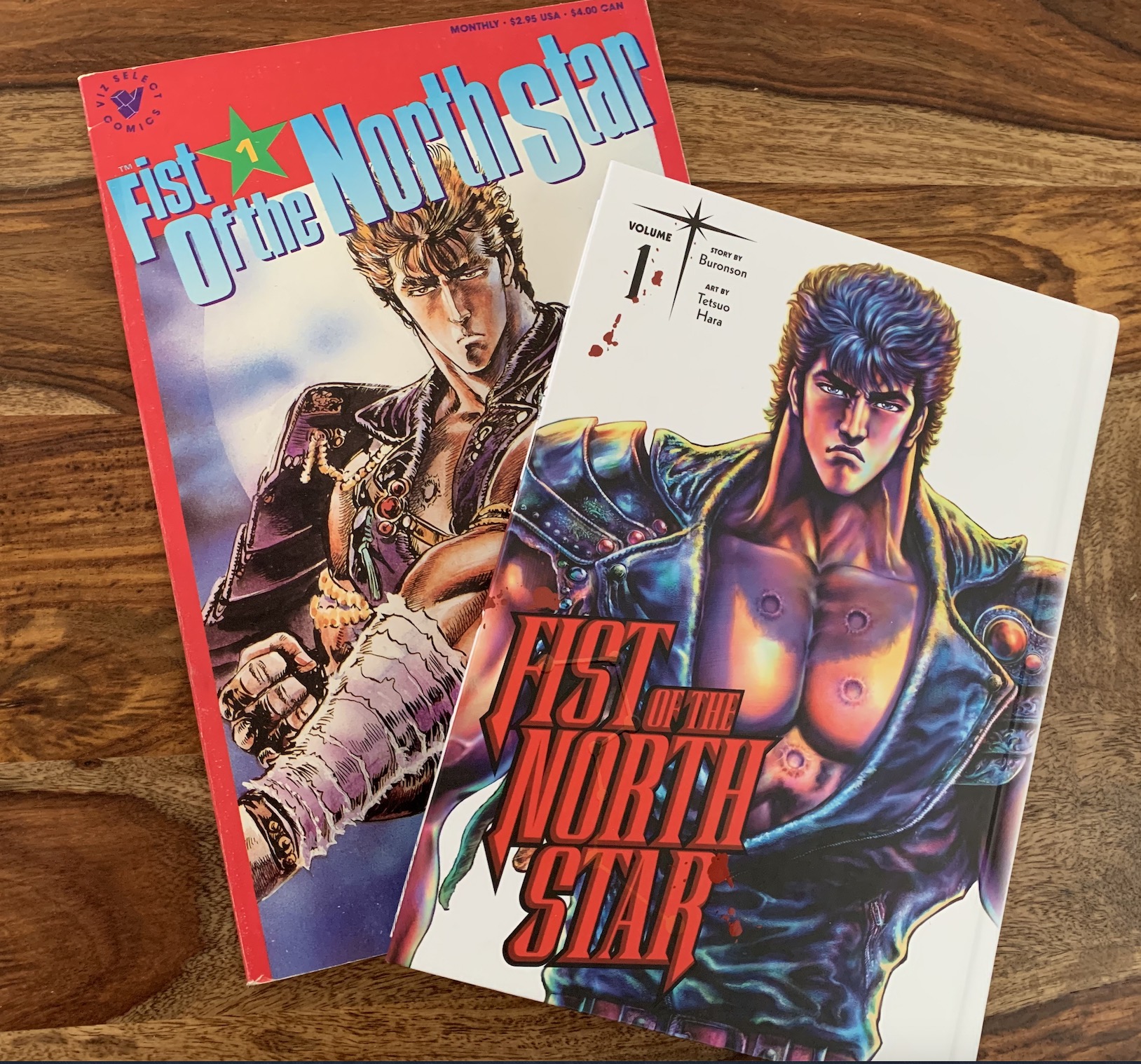
Fist of the North Star, Vol. 1

August 1, 2021 by Anna N

Fist of the North Star, Volume 1 by Buronson and Tetsuo Hara

Here’s a flashback for you and a demonstration of my advanced age, Fist of the North Star as it was produced back in 1989 as a flipped monthly comic and the new hardcover edition. I was curious what it would be like to read a whole volume of Fist of the North Star, after all the idea of a delayed attack (“You’re already dead!”) that results in blood explosions is pretty much a shonen cliche at this point, but what’s the source material like? While I did read the first chapter way back in the day I’d never read more of the story although I’ve read plenty of references and jokes about Fist of the North Star since then.

Fist of the North Star

Fist of the North Star takes place in the future after a cataclysmic event in the late 1990s has produced a world where water is scarce and people attempt to survive in a post-apocalyptic landscape of city-states. The enigmatic Ken travels from town to town, demonstrating is extreme stoicism and manliness as a practitioner of the martial art Hokuto Shinken. I was immediately struck by how much Fist of the North Star reminded me of the Mad Max series due to the roaming bands of motorcycle gangs. As the story opens a motorcycle gang called the Zeed discovers that their scouts have been killed with some sort of localized explosions coming from inside their bodies, and a parched Ken gets caught in a trap as he approaches a town. A young girl approaches his cage to give him water, and when another prisoner grabs her Ken fends him off easily in his weakened condition. Ken soon finds himself battling the Zeed for the town that captured him. The action scenes are dynamic and gory, with the lack of expression on Ken’s face contrasting with the horror and surprise of his enemies as they find vital parts of their bodies exploding. I enjoy all of Ken’s calm proclamations as he informs his enemies of his impending demise by naming martial arts techniques and flatly declaring “Scum like you cannot possibly kill me.” The art often plays with perspective, with Ken fighting enemies that appear to be two or three times his size, which creates a little bit of dramatic tension in the battles even though Ken’s victory is always assured.

Ken sets out on further adventures, accompanied by the young former prisoner named Bat, who provides ongoing amazement and commentary on Ken’s martial arts feats. As he approaches the city of the Southern Cross, he has to deal with confronting his past and the reader learns more about the pain and trauma that lead Ken to be the master of martial arts who still stops to protect the weak throughout the dystopic remains of human civilization. This volume packs in so much origin story I’m curious to see if the rest of the series is more episodic, or if even more of Ken’s past is revealed in future volumes. This is a great hardcover edition that historic shonen collectors should appreciate that will look nice on a bookshelf with the other recent deluxe volumes Viz has been producing.

Filed Under: Manga Reviews, REVIEWS Tagged With: Fist of the North Star, viz media

Combatants Will Be Dispatched!, Vol. 6

July 31, 2021 by Sean Gaffney

By Natsume Akimoto and Kakao Lanthanum. Released in Japan as “Sentouin, Hakenshimasu!” by Kadokawa Sneaker Bunko. Released in North America by Yen On. Translated by Noboru Akimoto.

Given this is a series about an evil organization, it’s not a surprise that there haven’t been very many heroes seen so far – at least not by the standard definition – and those we have seen have been quietly shuffled away as quickly as possible. Six and company are not battling against a heroic organization, they’re battling against the Demon Lord in order to gain control of this planet. And even that battle was taken care of last time. So it’s no surprise that we need something to fill the void, and it comes in the form of Adelie, a self-proclaimed Hero of Justice who has all of Amelia’s vim and vigor but none of her political savvy. She’s here to stir things up and set the table for the next arc, and she does a great job of it. Plus, for the second new character in a row, she doesn’t remind me immediately of someone from KonoSuba. The two series are gradually separating from each other.

The Demon Lord and her people have settled rather nicely into Six’s organization, as you can probably see by her presence on the cover. She continues to be the one person in the entire series that is sweet as pie and always means well. Even when she tries to remind herself she has to be evil now. Actually, Six’s group has sort of turned into a combination refugee camp and soup kitchen, and there’s not really a lot of evil points being acquired as we start the book. That said, though, there is someone who is going around causing chaos and ruining everything… and no, believe it or not, it’s not Snow either, as even Snow gets to have one or two moments of triumph in this book. No, it’s Adelheid Kruger, the Umbral Savior! She’s here to see how evil everyone in this Kingdom is, and she finds, well, Snow, who is happily taking bribe after bribe; Six and Alice, who are happy to throw anyone to the wolves for their own gain; and even Princess Tillis, who may seem to be trying to hold the kingdom together (she’s even doing her best to say Dick Festival now), but who may have the blackest heart of all…

This book is a lot of fun, even the ending battles. Everyone gets a chance to be cool and a chance to be incredibly dumb, which is the best reason to be reading this author. Rose shows that she cannot read the emotions of even the simplest minds; Grimm’s jealousy leads to more deaths and more curses,, and Snow is of course horrible all around. That said, Snow briefly turns into a real military soldier here when her entire life is on the line, and I loved the epilogue where it pointed out that, despite the bribery, she actually was being a very good governor and making sure everything ran smoothly. Combatants likes to look at the definition of what Good and Evil are and make people think harder about it.

That said, this is the last volume to date – despite the anime coming and going, there’s no sign of Vol. 7 over there. So it may be a while. Till then, this is a strong entry in a series where everyone is pretty scuzzy – but not TOO scuzzy.

Filed Under: combatants will be dispatched!, REVIEWS

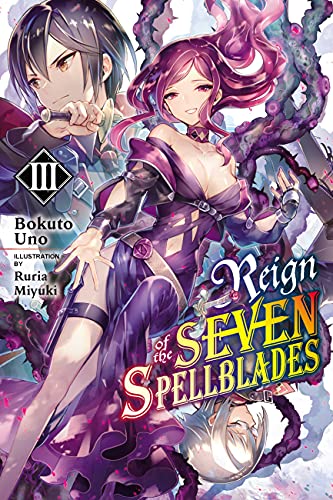
Reign of the Seven Spellblades, Vol. 3

July 30, 2021 by Sean Gaffney

By Bokuto Uno and Miyuki Ruria. Released in Japan as “Nanatsu no Maken ga Shihai suru” by Dengeki Bunko. Released in North America by Yen On. Translated by Alex Keller-Nelson.

The third volume in this series is very much “Part 2” of the second volume, as we ended with a nasty cliffhanger last time. Pete is in the hands of Ophelia, along with several other boys from the school, and is not expected to be found alive. Our heroes need to go after him, but the labyrinth is not off limits for no good reason, and there are also upper-year students also searching for them. Still, Nanao, Oliver and Chela are actually good enough to survive it, and are joined by a former enemy who turns out to be helping them… though not necessarily out of the goodness of her heart. While this is happening, we get the tragic backstory for Ophelia, who is a succubus whose scent can inflame male passions, and therefore not only had trouble making friends when she first got to school, but was slut-shamed to the point where it drove her to… well, bad actions. Can she be saved? Can she at least have a remotely peaceful death?

It was mentioned to me on Twitter that this series probably would work better in animated form than it does as prose, and I can certainly see why. There are an awful lot of cool battles here, and while they are definitely cool enough being described to us they cry out to be seen. Each of our six protagonists gets something to do… though Katie and Guy can only help in indirect ways, and Pete, of course, has to do something about their own kidnapped situation. Pete’s reversi nature is rapidly becomeing a far more well-known secret, which I suspect might have consequences in future volumes, especially given the fate of one of their support mechanisms here. And yes, Oliver is clever, Chela is clever, and Nanao is… well, NOT clever, but she’s very battle savvy, and her not cleverness can provide some of the few light moments in this book.

Those who have read my previous reviews know that I have been studiously avoiding mentioning a certain other well-known fantasy series that Seven Spellblades reminds everyone of, and that comes into play here as well, as a lot of what Ophelia goes through is reminiscent of another group in that series. That said, Ophelia’s is far darker and more tragic. Her backstory is welcome mostly as it shows us that she was once also a first-year who was slowly drawn into a group of friends, just like our heroes at the start of the first book. It shows us that we should not get too comfortable, and that any of of them could easily be sharing an equally tragic fate in the next few books. My money, in fact, is on Oliver, who may be the main character but also has far too many weak sports.

The main weak spot of this book is the ending, as the book simply stops like a Target Doctor Who paperback that has reached Page 128. I’m not sure if the author was trying to set a somber, downbeat book with that or was working to a pagecount, but either way, I think an epilogue would have been better here. That said, it’s still another strong volume in the series, and I eagerly await the fourth book, where apparently our heroes move up a year.

Also, love Milihand, and I really hope she sticks around as a regular character, or at least a mascot.

Filed Under: reign of the seven spellblades, REVIEWS

How to Melt the Ice Queen’s Heart, Vol. 1

July 29, 2021 by Sean Gaffney

By Kakeru Takamine and Ichigo Kagawa. Released in Japan as “Kouri no Reijou no Tokashi Kata” by Monster Bunko. Released in North America by Tentai Books. Translated by Alejandro de Vicente Suárez and Noor Hamadan.

We’ve discussed this before. In order to make the male lead of a romance – be it light novel, manga or game – appeal to the average reader who is basically plastering their face on his, they must have as few defining traits as possible. They should have middling to lower grades – but not actually failing – and either be average at sports or avoid them altogether. They tend to be members of the Go Home Club, unless of course the romance in question involves a club, which it usually does. This is all very well and good, but it always leads to the question: what on Earth does she see in him? In fact, “they”, because usually these sorts of books have multiple girls all falling for the hero. Fortunately, How to Melt the Ice Queen’s Heart, in addition to avoiding most of these pitfalls, has an excellent answer as to what she sees in him and why her heart melts: HE CAN COOK.

Asahi is a young man who is somewhat reserved, not really prone to sarcasm or cynicism, and his biggest problem seems to be dealing with his best friend and his best friend’s girlfriend – who are both very loud, energetic, and flirty with each other. He doesn’t pay much attention to his classmate Fuyuka, a stoic young woman who is the Ice Queen of the title – she avoids interpersonal relationships. One day, when she does not show up for school, he finds that not only does she live next door to him in the apartment complex, but she’s also suffering from a bad cold and high fever. Initially throwing off all attempts at his help, she finally gives in after passing out in the hallway. After he cares for her and makes her food to feel better, she tries to pay him back, at first with plain old cash (he refuses), then by helping him study. From here, romance blossoms.

There’s not really a great deal to this book beyond the romance – it is here for one thing and that is seeing these two nice kids slowly start to fall for each other. Naturally, Fuyuka’s ice queen reserve is more “socially awkward” than anything else, though she seems to have a tragic past. Asahi does not have a tragic past per se, but he does have two “famous” parents and their restaurant, which is the main reason he’s living by himself. The two mostly bond through cooking lessons (him) and study lessons (her), and we also get a sports festival which involves a prize which traditionally is given to the person you love, trying to hide your not-quite-relationship from the two Worst Best Friends out there, and how to negotiate a night out on Christmas Eve when it’s spent at a restaurant not only run by Asahi’s parents but literally named and themed after him.

It’s sweet. It’s heartwarming. It’s got virtually zero drama or wacky comedy shenanigans – there’s not even any fanservice! It is a light novel you could happily introduce to your parents – though beware if your parents are as goofy as Asahi’s. I liked this a lot.

Filed Under: how to melt the ice queen's heart, REVIEWS

Kuma Kuma Kuma Bear, Vol. 7

July 28, 2021 by Sean Gaffney

By Kumanano and 029. Released in Japan by PASH! Books. Released in North America by Seven Seas. Translated by Jan Cash & Vincent Castaneda.

Last time I talked about how one of the most interesting aspects of the Kuma Kuma Kuma Bear series for me was the fact that it kept getting dark, despite being about cute girls doing cute things. Naturally, this new volume therefore has none of that, with no dark moments and very little real conflict at all. It is almost pure fluff. Fortunately, I am at a point right now where I need pure fluff, so this book was like a nice balm to my soul. If there’s any conflict in the volume it comes from Fina, who is still terrified whenever she has to be around nobility, and here is passed off the Ellelaura and the actual King. She’s convinced that she’ll do something to screw up and get herself executed, and spends the entire time in a froth. Yuna, of course, does not understand this at all, not even when Fina spells it out for her later in the volume. Yuna has no issues interacting with anyone, of course.

We start off with Yuna going into the mines to deal with the pesky respawning golems. She’s joined by the friendly adventurer party we’ve seen before, and also opposed by a rival adventurer party, whose leader is quite a jerk. (Yuna, amusingly, compares the rival party to the Power Rangers.) Unfortunately, most of the things Yuna does to defeat enemies would also cause a cave-in, so trying to get to the golem that’s the cause of all of this is going to need a bit more strategy. After this, Yuna manages to score mithril knives for Fina and her sister (who is seven, but it’s never too early to give a child a knife) and some mithril weapons for herself. The rest of the book is made up ,mostly of cooking, as Yuna finds one of Morin’s relatives in the capital who wants to be a baker and sends her to Cremonia to meet up, and then invents strawberry shortcake.

In general, the funniest parts of this series involve either a) Yuna getting belittled for wearing the bear onesie, or b) Yuna having no concept of social customs, mores, or ethics. We get both of those here, with the highlight being when Yuna gives Fina the mithril knife – for free – and then tries to give her another one for her sister, and Fina simply loses it, berating Yuna in the middle of the street about how much mithril costs normally, and that Yuna cannot simply live her life not giving a crap about the economy, giving away all this and expecting nothing in return. This is especially true of Fina, a very serious girl who is unfortunately saddled with Yuna for a best friend. Other highlights include Yuna visiting the royal family with her bears in cub form, and finding it very hard to get Flora and the Queen herself from letting go of them.

So yeah, nothing much happens, but it’s cute. This is what folks think every volume in the series is like. That’s not really true, but this is fine too.

Filed Under: kuma kuma kuma bear, REVIEWS

Memoirs Most Charming, Part 1

July 27, 2021 by Michelle Smith

I’ve read a handful of charming memoirs lately, and more are on the way!

luckyguyI’m a Lucky Guy by Frank B. Gilbreth, Jr.

This was a reader suggestion from Anne!

Here, Frank B. Gilbreth, Jr. (writing without sister Ernestine, his sometime collaborator) recounts various happenings and misadventures from his early adulthood, beginning in 1929 when he’s headed off to college and ending somewhere around 1946, when he has returned from serving in the Navy and resumed his career as a newspaperman. These include things like going out for football whilst scrawny, being mistaken for a gun-toting gangster whilst attempting to hide booze (prohibition was still on) from the cops, pranking an odious professor (and, later, an odious superior officer), and repeatedly failing to live up to the standards of a demanding admiral to whom he has been assigned as aide.

On the whole, I found all of these stories entertaining, though the sole moment that made me laugh out loud was when Frank’s soon-to-be wife and mother-in-law completely excused the lascivious behavior of his friend, which a moment before had scandalized them, upon learning he was Methodist (their preferred denomination).

“You don’t think he’s a Ten Commandment breaker?” I asked.
“Why, I’d trust him any place,” Liz said indignantly.
“So would I,” said her mother. “I’ve always said that people shouldn’t be judged by circumstantial evidence.”
“You’re so right,” I assured her.
“Probably,” she continued, fishing around for a likely excuse, “probably—well, probably the doctor sent that girl over to your apartment to change the boy’s bandage, again, before he went to bed.”
I was tempted to break into a high-pitched giggle, but I looked at Liz and caught a warning.
“That’s probably just the way it happened,” I nodded gravely.

Unfortunately, it does seem Frank shares a little of the antipathy toward overweight people that his sister possesses. I don’t mind when he accurately describes a person’s physical characteristics—if a bosom is ample and an abdomen abundant, there’s really no getting around that—but when he makes comments about fellow student Sallye—whom he later proclaims to be “a real friend”—like no “male student in his right mind” would give her their fraternity pen, it’s just unnecessarily mean. True, Sallye has a tendency to be loud and overbearing, and I’m fairly sure that’s part of what he meant, but not the whole of it.

That criticism aside, I did enjoy this book and I’m glad I read it. Thanks, Anne!

Always Look on the Bright Side of Life: A Sortabiography by Eric Idle

Initially, although it was an enjoyable read, I wouldn’t have classified this “sortabiography” from the Monty Python co-founder as charming. Idle recounts his childhood, school days, introduction to the world of comedy, the formation of Monty Python, the run of the original series, and the Python movies without a tremendous amount of detail. He does elaborate more about his independent endeavors, and I especially appreciated learning more about the creation of The Rutles. Using the song “Always Look on the Bright Side of Life” as a sort of framework, Idle chronicles the various circumstances after The Life of Brian where he was called upon to sing it, ranging from Graham Chapman’s funeral to the Royal Variety Performance to the closing ceremony of the 2012 Summer Olympics.

As is common for a book of this type, there is a lot of name-dropping, but in this case a lot of the names were people I genuinely like, like Harry Nilsson, George Harrison, David Bowie, Stephen Fry, Peter Cook, Robin Williams, and Eddie Izzard. And, too, Idle toots his own horn rather frequently, which is admittedly justified when you’ve accomplished as much as he has, and makes sure readers know there were times in his life when he was having loads of sex.

Where he really shines, though, is penning touching tributes to friends who are no longer with us. My husband and I listened to Idle read the unabridged audiobook version together, and by the end of the chapter entitled “George,” we were both in tears. The chapter about Robin Williams is no less lovely. I cannot stress enough how wonderful these two chapters are; they alone are worth the price of admission. It does make one wonder why he doesn’t delve so deeply into the character of his comedy partners, and only makes a few mentions of Terry Jones’ dementia, but perhaps it is because they were all still living in 2018, when the book was published. I shall have to find out whether Idle penned any tributes to Jones on the sad occasion of his passing last year.

savagesLife Among the Savages and Raising Demons by Shirley Jackson

I’d heard such good things about these books, but my reaction to Life Among the Savages wasn’t what I expected. True, some of the “lightly fictionalized” anecdotes Jackson relates are somewhat amusing, like the family’s struggle to find a house to rent in Vermont, or insisting to the hospital intake person that her occupation is “writer” as opposed to “housewife,” or her son’s fascination with all the gory details after he gets hit by a car. But the vast majority of the stories involve her children behaving badly, and I had very little patience with these at all.

I imagine that other mothers sympathize with these episodes. Perhaps they see their own experience reflected, and so they laugh but also feel all warm inside, in a loving, maternal way. Not so me, I’m afraid. No, whenever the son showed arrogant condescension toward his mother, or her daughter became intolerably fixated on proper decorum, or one kid or the other was insolent and disrespectful, it just made me angry. In fact, I might have said “Shut the fuck up!” aloud a time or two. This is why it is probably a very good thing that I am not a parent.

Thankfully, Raising Demons contains less of that sort of thing (though significantly more than none). I really loved the section in which Jackson waxes nostalgic about her adolescent obsession with making clothespin dolls and her snarky description of life as a faculty wife (who is expected to have “hemming dishtowels” among her hobbies). The story of how she got a new refrigerator was a highlight, as well.

You’ll Never Believe What Happened to Lacey: Crazy Stories About Racism by Amber Ruffin & Lacey Lamar
Having seen and adored whimsical clips from The Amber Ruffin Show, I was very excited to see that Amber Ruffin and her older sister Lacey Lamar had written a book together. Although the topic is racist incidents the sisters have endured (mostly Lacey, who lives and works in Omaha), the approach at least attempts to be light-hearted. These aren’t stories where someone gets hurt or dies; instead, they elucidate the kind of crap Black people are just expected to swallow or forget.

I did laugh a few times, particularly at Ruffin’s effervescent line delivery—I listened to the unabridged audiobook read by the authors—but after a while, the unrelenting wave of absolutely flagrant ignorance and hate becomes overwhelming. The commentary on the stories is funny, but the situations themselves are stressful and horrible and eye-opening in the most abject, despair-inducing kind of way. I have never been one to deny that racism exists, but I admit to being surprised and horrified by a lot of these stories, espcially the awful things done to kids. A beautiful drawing torn to shreds, a group of teens accused of stealing car keys when none of them is old enough to drive, kids threatened at gunpoint by a crazy neighbor but nobody calls the cops because who will the cops believe… I also feel terribly naive for being surprised.

I’m glad I read this.

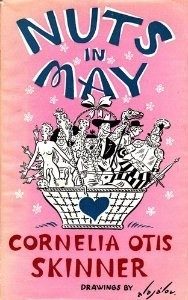
nutsinmayOur Hearts Were Young and Gay and Nuts in May by Cornelia Otis Skinner
Note: The former was co-written with Emily Kimbrough.

Our Hearts Were Young and Gay recounts the three months in the early 1920s that two young American women spend abroad in Europe, written when they are older (“Emily and I have now reached the time in life when not only do we lie about our ages, we forget what we’ve said they are.”) and nostalgic for more innocent days. It’s written in Cornelia’s voice, though Emily provides many of the details, and tells of the time their ship ran aground, the time Cornelia caught the measles and evaded quarantine, the time they met H. G. Wells and Emily made an embarrassing first impression, the time they mistook a brothel for a boarding house, the time bedbugs gave Cornelia a swollen lip “shining like a polished tomato,” the time their dogs piddled in a swanky Parisian restaurant, etc. For the most part, it’s quite amusing, but there are a few comments that expose the girls’ ignorant attitudes regarding people of other races and sexual preferences.

Rather than focusing on one particular adventure, Nuts in May is a collection of humorous yet unrelated anecdotes Skinner wrote for publications like The New Yorker. Topics include but are not limited to: actors being asked to lend their talents in aid of charitable organizations, a Protestant family’s audience with the Pope, people who laugh at anything, dizzying real estate transactions, and being interviewed by Dr. Kinsey. Occasionally, the tone turns more domestic and reminds me some of Shirley Jackson, such as in “Bag of Bones,” when Skinner’s son insists that the bones they find on a Colorado trail belong to a dinosaur, or “Those Friends of His,” about her son’s reticence on the origins of his friends who come to visit. The latter also makes reference to a car “teeming with hamsters,” which is a phrase and a visual that I adore. Indeed, there were quite a few giggles to be had, and I reckon I might seek out more of Skinner’s work in the future.

Filed Under: Books, Memoir, Nonfiction, REVIEWS Tagged With: Amber Ruffin and Lacey Lamar, Cornelia Otis Skinner, Eric Idle, Frank B. Gilbreth Jr., Shirley Jackson

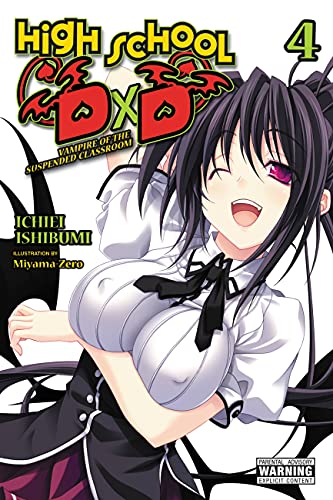
High School DxD: Vampire of the Suspended Classroom

July 27, 2021 by Sean Gaffney

By Ichiei Ishibumi and Miyama-Zero. Released in Japan by Fujimi Fantasia Bunko. Released in North America by Yen On. Translated by Haydn Trowell.

To a certain degree, all “harem” series (at least those with multiple girls all in love with the same guy) all suffer from the same major flaw, which is that the guy has to be fairly normal and dull. It might seem surprising that I’m saying this about Issei, someone who literally cannot go three pages without talking about tits some more. but it’s true. All the girls love Issei. They get jealous when he’s with another girl. They fight over him. They offer up their virginity to him. And why? Well, he’s nice to them? I mean, with Asia I get it, he literally is her savior. You could say the same for Rias, though it’s a higher bar to clear. But Akeno? Xenovia? Why does this lecherous dipshit who won’t even grope anyone without passing out offer such temptation? Well, frankly, it’s probably what he’s got inside him. The sacred gear, and the dragon that comes with it, make Issei an important player in the battle between the angels, fallen angels, and demons. That is… if there is a war.

No, Akeno is not the titular vampire (and I apologize for having to use the word titular when discussing High School DxD). I thought this might be her “focus” book, but while we do get some hefty revelations about her past, it’s clear her time is still to come. No, the new character here is Gasper Vladi, who is the vampire of the title, and who ticks off several more “light novel cliche” boxes. He’s a boy who everyone mistakes for a girl; he’s got cripplingly low self-esteem and a fear of interacting with others, and he’s ludicrously overpowered, as he can cause people to freeze in time… though, like Issei, his power has more weaknesses than strengths right now. That said, while trying to coax Gasper out of his shell, Rias’ group also have to deal with a peace conference, which risks blowing up before it begins.

Despite the previous paragraph, there’s not a lot that happens in this book compared to the previous three – it’s a lot of setup for the next few books, as we introduce a couple of major players who look like they’ll give Issei trouble (though one of them turns out to be more of a mecha otaku than anything else). Indeed, I was more surprised at things that didn’t happen. The book starts off by telling us about parent-teacher conferences, which will not only feature Issei’s parents going but also Rias’. Any other light novel series would make this a book of its own, but here it takes fewer pages than the pool battle between Rias and Akeno to see whose breasts get to be groped by Issei. The series manages to work for its target audience because it not only assumes its readership are horny teenage boys who don’t have the guts to cop a feel, but that all the women in this series are essentially ALSO that. It’s… weird.

Still, the one fight we got was pretty cool, and if there’s any series you can’t get mad at for staying on brand, it’s this one – there are breasts in High School DxD? Who knew? Recommended for those who read the fan translated PDFs years ago.

Filed Under: high school dxd, REVIEWS

Unnamed Memory, Vol. 3

July 26, 2021 by Sean Gaffney

By Kuji Furumiya and chibi. Released in Japan by Dengeki Bunko. Released in North America by Yen On. Translated by Sarah Tangney.

After a first volume where I had trouble with the characters, and a second volume where I had trouble with the way the story was laid out, here I didn’t have trouble with either, and as a result we get our strongest volume to date, a truly compelling read. Indeed, if it weren’t for the last fifth of the book, you might think that this was also the final volume. It certainly has a wedding on the cover art, but this is a light novel, not a shoujo manga, and I believe we still have three more books to go after this. The question is whether those books will star Oscar and Tinasha, who seems to get a fate that’s going to be hard to overcome at the ending. Before that, though, there’s everything you want in an Unnamed Memory book, and for once that includes requited love and some real sweetness – along with a bunch of sudden death battles, of course. I mean, Oscar and Tinasha can’t escape their own pasts. Or can they?

Tinasha has truly settled into life at the castle now, to the point that she’s truly startled when some little kids try storming her castle (she’s able to dissuade them). That said, villains we’ve seen before and villains who we do not yet know continue to try to make life terrible for her, and after yet another nearly fatal attempt on Oscar’s life, she is willing to give up and admit that OK, she may have feelings for this big lug and sure, they can get married I GUESS. This is actually a bigger deal than you might expect, as spiritual magic works by the age-old rules of “no virginity no strong magic” – fortunately Tinasha is strong enough that she still has strong magic, it’s just not LUDICROUSLY strong anymore. Bad timing on that front, too, as she has to fight another Witch, this one with a grudge.

The back half of the book is taken up to a great extent by one big battle, and it’s very well written, showing off how things go back and forth and also giving us a bit of the backstory of the Witch Who Cannot Be summoned, the one trying to take out Oscar and Tinasha. She’s the classic “I want to manipulate people because I get bored” sort, but her backstory is surprising and also touching. Then there’s that final story, where Oscar picks up an orb that he shouldn’t and is sent back into the past, to Tinasha’s old kingdom, before she becomes a witch. While there’s a bit of the classic time travel dilemma here, and in fact it drives the ending, the main reason this is cute is getting to see Oscar and teenage Tinasha interact, and seeing her falling for him hard despite the fact that this changes history. It’s adorable and bittersweet.

So, not to give away the ending, but now what? The afterward suggests we’ll be looking at some other people in the history of Oscar’s family, but I can’t really believe the author would choose to end things here, so I’m raising an eyebrow at that. That said, no matter what future volumes do, you should read this one.

Filed Under: REVIEWS, unnamed memory

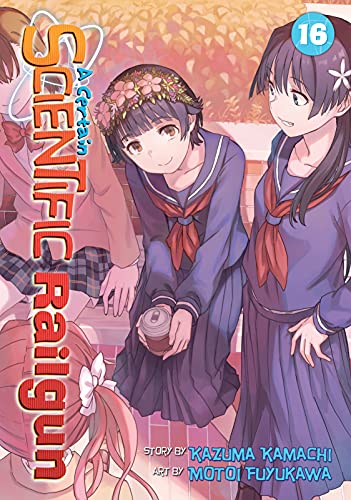
A Certain Scientific Railgun, Vol. 16

July 25, 2021 by Sean Gaffney

By Kazuma Kamachi and Motoi Fuyukawa. Released in Japan as “Toaru Kagaku no Railgun” by ASCII Media Works, serialization ongoing in the magazine Dengeki Daioh. Released in North America by Seven Seas. Translated by Nan Rymer.

The beloved and sadly very out of print Even a Monkey Can Draw Manga had one of its chapters dedicated to the subject of “power creep” in shonen manga, which Railgun definitely falls under, despite its magazine technically falling under the seinen umbrella. (Dengeki Daioh’s readership is basically “otaku, of any genre”.) If you have a bad guy that you defeat, then the next villain has to be slightly more powerful, and so on and so forth till you’re eventually fighting against the biggest threat in the entire universe, and it all gets a bit silly. Railgun has that issue, but not for its villains – instead, it’s the heroines who struggle with it. We’ve already seen Misaka nearly go out of control when they tried to force her to evolve to Level 6. Now here we see Uiharu, who is supposedly a Level 1 “thermos”, force-evolving her hacking powers to literally rewrite reality in order to save the day, which… I suspect we won’t be seeing down the road.

Of course, that is not the only thing that Uiharu does in this volume. This is her arc, after all, and after spending most of the last volume on ice, she’s back in command here, showing us the same strength that allowed her to stare down Kakine and suffer only a broken collarbone. We even see her – gasp! – use her ability, rather than her hacking, in order to escape from her guards, and it’s a very clever usage as well. That said, the bad guys also know what her weak spot is. Railgun’s yuri poster child may be Kuroko, but I suspect the number of fans who think Misaka and Kuroko will end up together is zero. But Uiharu and Saten have just as much if not more subtext, and this volume really hammers it home. Uiharu is so dedicated to Saten that she’ll suffer great pains to get to her. And when told Saten has been fatally poisoned, Uiharu almost turns evil, to the point where she is literally just a cloud of blackness… until Saten, who is dying but not dead, snaps her out of it, saying that’s not the path she should follow. The Fullmetal Alchemist fan in me was recalling a similar scene, let me tell you.

On the down side, it’s not that I dislike any of the young kids who are being forced by Academy City’s evil science department to become supervillains, it’s just… we’ve seen this backstory about eight different times in Railgun alone, and it’s hard not to have the first thing I think be “here we go again”. Honestly, it’s something of a wonder that Mikoto ended up as well-adjusted as she is, and she’s the one with a super fiery temper. The other problem is that the arc doesn’t end in this book – there’s one epilogue chapter to go… which means we’ll have to wait till (presumably) 2022 to see if Saten survived (signs point to yes) and if Uiharu remains the most powerful being in the world (signs point to no). That said, this volume is quite strong and fans of the series should love it.

Filed Under: a certain scientific railgun, REVIEWS

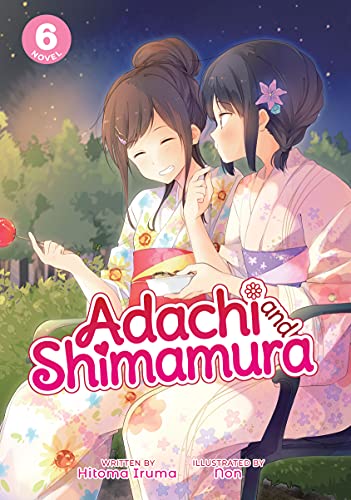
Adachi and Shimamura, Vol. 6

July 24, 2021 by Sean Gaffney

By Hitoma Iruma and Non. Released in Japan by Dengeki Bunko. Released in North America by Seven Seas. Translated by Molly Lee.

(I try not to spoil much, but honestly, if you read this you’ll guess what happens in it. Be warned.)

I’ve spent five volumes talking about Shimamura and her tendency to try not to feel too hard about things, which contrasts nicely with Adachi’s feeling very, very hard about everything… well, everything to do with Shimamura, that is. And if there’s any change that’s going to be happening, it’s going to have to be from Shimamura herself. Honestly, Adachi is expending all her energy not simply exploding in a giant cloud of gay. That said, good news: this is a big breakthrough volume for Shimamura, and probably the one that deals with her and her emotional reserve best. I don’t know that it works as well as it should – the author really relies on the reader connecting a lot of dots, and sometimes I don’t think they connect – but by the end of the book Shimamura is far more willing to reach out and deal with everything, including Adachi. Especially Adachi. Shimamura may not have worked out how she feels about Adachi just yet, but she’s definitely stopped ignoring the fact that Adachi is madly in love with her.

Sadly for Adachi, the first half of the book has Shimamura going to her grandparent’s place out in the country, so she’s going to have to suffer for a while on her own. Going back there, a place she’s spent many summers, fills Shimamura with memories, especially since the puppy which she played with when she was a little girl is now old and having trouble moving around like they used to. This causes Shimamura to think hard about her life, in particular the way that she’s chosen to close herself off from caring too much recently. When she returns (the return is the highlight of the book, for reasons I won’t spoil), she’s quick to phone Adachi, and they then agree to go out to another festival (I mean, it’s summer in Japan, there is always a festival somewhere). Oh yes, and before that they bathed together, which was… weird, but also led to Adachi confessing when she overheated. Will Shimamura finally face this fact and give Adachi a response? And will the response be something other than “well, OK, whatever”?

First off, I am spoiling one thing that does NOT happen in the book – the entire front of the book is setting the reader up for the dog to die. Hell, every time Shimamura sees the dog she herself is thinking that it’s going to be dead. But Adachi and Shimamura did not win the Newbery Medal, and therefore the dog does not die. I was relieved. As for Adachi and Shimamura, well, this is a turning point, certainly. I’m not sure it’s necessarily a good move all around – Adachi is worse than ever this volume, and I think if they ever animate it she’s going to have to simply be vibrating in place by the end. Shimamura has made great strides, and I was actually impressed with her through most of the book, but her response to Adachi still is more “sure, we’ll try that” rather than a big emotional investment. Which makes sense – honestly, even getting a small emotional investment is a victory.

So how will things progress from here? Will it be cute and teen romancey, or will it get realistic and have everything fly apart because these two are far too emotionally scattered to really connect right now? Still, Shimamura trying is infinitely better than the Shimamura we’ve had until now, so I’m in favor overall.

Filed Under: adachi and shimamura, REVIEWS

So I’m a Spider, So What?, Vol. 12

July 23, 2021 by Sean Gaffney

By Okina Baba and Tsukasa Kiryu. Released in Japan as “Kumo Desu ga, Nani ka?” by Kadokawa Books. Released in North America by Yen On. Translated by Jenny McKeon.

With this volume we have almost, but not quite, caught up with Shun’s “present” that we left off in the 6th volume. This book is the huge human/demon war that led to Shun becoming the Hero, with huge casualties on both sides. The book is essentially a war diary from various points of view, showing off the various battles going on around the world. We see the demons use revenge monkeys to completely destroy one fort; another demon army wiped out by Ronandt’s long-range magic; the cute childhood friend couple from Japan being a cute childhood friend adventurer couple here; Sophia saying “well, well, well, if it isn’t the consequences of my own actions”; Wrath basically winning easily; and the big final battle with Julius versus several demons, including Bloe and Agner, and White trying to cut the thread (so to speak) by bringing in a Queen Taratect to ruin everything. Which it does, but not quite in the way that she’d planned…

I talked about this last time as well, but I think the author has been trying their best to make sure that the reader cares about the human side and the demon side equally, and from what I’ve seen, that’s just not happening. In fact, honestly, the readers don’t want to see the demon side EITHER. The readers want spider. Lots of spider. Sorry to say, White is still a minor character in this book. She gets cute little sidebars explaining each battlefield in her usual hyperactive way, and we see her interactions with the demon lord, Bloe, and Sophia and the 10th unit. None of them really see White as we know her, though I think the demon lord is starting to figure it out. She’s also getting far more talkative and better at actually explaining her actions. Basically, White is maturing. This will be handy when they inevitably run into the giant pile of reincarnations we left off with ages ago, but can be frustrating right now.

The battles are well handled. As you might guess, this is mostly tragedy… with one exception. The story of Sophia’s adventures at school, complete with her version of the handsome jerk and the class president, are absolutely hilarious, especially given they all end up in the same military unit anyway. I hope we see more of them being absolute bitches at each other. And as I hinted above, everything about Kunihiko and Asaka’s relationship is adorable and heartwarming, and I don’t THINK they’re dead yet… (crosses fingers). But there’s lots of depressing stuff we knew was coming here, as all but one of the hero party gets wiped out, and it also takes out several major parts of the demon party as well. What’s more the demon lord and White didn’t even achieve their main objective – the one-kill anything sword is still around, and can now be used by the new hero against the demon lord. Annoying, that.

This is an excellent book, but the overall impression I get at the end is “can we PLEASE get back to the main storyline we started in Volume 1?”. Recommended for those who like war memoirs and cute lovesick girls getting crushed to death by giant spiders.

Filed Under: REVIEWS, so i'm a spider so what?

  • « Go to Previous Page
  • Page 1
  • Interim pages omitted …
  • Page 95
  • Page 96
  • Page 97
  • Page 98
  • Page 99
  • Interim pages omitted …
  • Page 346
  • Go to Next Page »
 | Log in
Copyright © 2010 Manga Bookshelf | Powered by WordPress & the Genesis Framework