• Skip to primary navigation
  • Skip to main content
  • Skip to primary sidebar
  • Home
  • About Us
    • Privacy Policy
    • Comment Policy
    • Disclosures & Disclaimers
  • Resources
    • Links, Essays & Articles
    • Fandomology!
    • CLAMP Directory
    • BlogRoll
  • Features & Columns
    • 3 Things Thursday
    • Adventures in the Key of Shoujo
    • Bit & Blips (game reviews)
    • BL BOOKRACK
    • Bookshelf Briefs
    • Bringing the Drama
    • Comic Conversion
    • Fanservice Friday
    • Going Digital
    • It Came From the Sinosphere
    • License This!
    • Magazine no Mori
    • My Week in Manga
    • OFF THE SHELF
    • Not By Manga Alone
    • PICK OF THE WEEK
    • Subtitles & Sensibility
    • Weekly Shonen Jump Recaps
  • Manga Moveable Feast
    • MMF Full Archive
    • Yun Kouga
    • CLAMP
    • Shojo Beat
    • Osamu Tezuka
    • Sailor Moon
    • Fruits Basket
    • Takehiko Inoue
    • Wild Adapter
    • One Piece
    • After School Nightmare
    • Karakuri Odette
    • Paradise Kiss
    • The Color Trilogy
    • To Terra…
    • Sexy Voice & Robo
  • Browse by Author
    • Sean Gaffney
    • Anna Neatrour
    • Michelle Smith
    • Katherine Dacey
    • MJ
    • Brigid Alverson
    • Travis Anderson
    • Phillip Anthony
    • Derek Bown
    • Jaci Dahlvang
    • Angela Eastman
    • Erica Friedman
    • Sara K.
    • Megan Purdy
    • Emily Snodgrass
    • Nancy Thistlethwaite
    • Eva Volin
    • David Welsh
  • MB Blogs
    • A Case Suitable For Treatment
    • Experiments in Manga
    • MangaBlog
    • The Manga Critic
    • Manga Report
    • Soliloquy in Blue
    • Manga Curmudgeon (archive)

Manga Bookshelf

Discussion, Resources, Roundtables, & Reviews

Reviews

Is It Wrong to Try to Pick Up Girls in a Dungeon?, Vol. 17

September 13, 2022 by Sean Gaffney

By Fujino Omori and Suzuhito Yasuda. Released in Japan as “Dungeon ni Deai o Motomeru no wa Machigatte Iru Darou ka?” by GA Bunko. Released in North America by Yen On. Translated by Dale DeLucia.

The term ‘gaslighting’ has gotten so overused lately that I hesitate these days to mention it in a review. But, I mean, the definition of gaslighting is ‘manipulate (someone) by psychological means into questioning their own sanity’, and that’s exactly what’s happening for most of this 17th volume of DanMachi, so… there we are. I expected this volume to be really dark, and indeed it was, with the first half of the book in particular being nothing but punches to the gut over and over again. But that’s something this author specializes in, and for once we don’t have to worry about the turnaround and hope spots coming in the next volume. No, this is not the end of the arc, but at least this book is allowed to come to a definite emotional conclusion, as Freya plays her last desperate card and ends up losing. Now it’s just a question of what’s going to happen to her… assuming that her Familia don’t just murder everyone.

After Syr is rejected by Bell at the end of the last book, Freya finally snaps. Hestia’s family is taken out in approximately two seconds, and Freya basically tells Hestia “give me Bell”. Hestia refuses, and Hermes reminds Freya of a rule that shows off to the reader the ludicrous timescale of this entire series. As a result, Freya decides to go all out and brainwash ALL OF ORARIO, including the Gods, into thinking Bell has always been with Freya Familia. The exceptions to this are a) Freya herself, b) Bell, who rapidly loses his mind when everyone seems to recognize him as someone else, c) Hestia, who fired off all her divine power at once to avoid this, and d) Asfi and Lyu, who were able to escape the city in time. Now Hestia has to figure out a way to stop this before bell finally breaks and accepts that he’s under a memory “curse”.

I joked on Twitter that Books 1-10 supposedly starred Hestia, but really starred Aiz, and that Books 11-20 were the same but with Lyu. Hestia has been Bell’s goddess, but as a character she’s always played a supporting role in the series, and sometimes barely shows up. Thus it’s nice to see her actually managing to save the day, and her entrance at the end is appropriately awesome. That said, once again the thing that saved Bell from cracking and giving in is not Hestia, or any of the other women in love with him, but Aiz. All of the women with strong attachments to Bell are less affected by Freya’s mind control (and bravo to Eina, who gets a great scene of defiance before she’s beaten down by EVEN MORE MIND CONTROL), but it’s seeing that Aiz is able to remember a different past with Bell, one where she trained him, that gives him hope and strength. All the other female leads are still chasing after her.

And so we’re ready for another War Game, with Freya Familiia vs… well, possibly everyone else, though I suspect the rules will winnow down the opposing team a bit. Still it, should be great fun to read whenever it comes out. It’s still not out in Japan. But this was an excellent psychological torture volume with a pump your fist ending.

Filed Under: is it wrong to try to pick up girls in a dungeon?, REVIEWS

Culinary Chronicles of the Court Flower, Vol. 7

September 11, 2022 by Sean Gaffney

By Miri Mikawa and Kasumi Nagi. Released in Japan as “Ikka Kōkyū Ryōrichō” by Kadokawa Beans Bunko. Released in North America digitally by J-Novel Club. Translated by Hunter Prigg.

I’m starting to get the feeling that the consummation that keeps getting put off between Rimi and Shohi is never actually going to happen. Leaving aside the fact that Rimi still thinks of herself as a mom more than a lover to him, there’s also the fact that the Chancellor exists. There are other aides in this book as well, and some of them like Rimi and some of them dislike Rimi, but they all seem to see Rimi as, well, as a real human being. The Chancellor, on the other hand, regards Rimi as this sort of otherworldly poisonous creature whose mere presence destroys the Emperor and everyone around him. Leaving aside the fact that there’s a name for that and it’s called “being the protagonist”, it does mean that Rimi is going to find becoming Empress very hard to do. We already knew that, of course, but it’s getting even harder, especially with the arrival of an even bigger rival than the Four Consorts: a better political marriage match.

Rimi is delighted to hear that the court will be seeing the return of Shar, ambassador from Saisakoku. Things get less delightful when the delegation also has an extra person, Princess Aisha. The princess is gorgeous, and is clearly there to deepen ties between the two countries. What’s more, the best way to do this would be to move Rimi quietly to the side and let Aisha be impress. It’s the sensible thing to do. That said, Shohi is reluctant, not just because he loves Rimi, but also because the young princess is a little hellraiser, running around the court like a bull in a china shop and taking very badly to any attempt to criticize her. When things finally blow up to the point that the princess runs away, Rimi and company need all the allies they can get to find her. Even if that means seeing Shusei again.

This series is mostly a romantic thriller, but I do appreciate that in every book there’s always one scene which is hysterically funny, and here it’s right in the center, with Princess Aisha showing off to the four consorts in a way that is both jaw-dropping and also makes you want to find a ball to see if she can balance it on her nose. The best part of the book is Rimi and Aisha’s relationship, as, even though she knows that Aisha is there to destroy everything Rimi has done up till now, she can’t help but try to make things better because she’s that sort of person. (She does, this, of course, with a meal, in case you’d forgotten what book you’re reading.) Shohi too continues to develop and grow into his Emperor title. If it weren’t for the Chancellor, there would be very little getting in the way of their union.

Sadly, there is the Chancellor, and another vicious cliffhanger. We’ll have to wait till next time to resolve it, but I remain addicted to this series… so much so that I look forward to Sugar Apple Fairy Tale in a few weeks from Yen On, by the same author.

Filed Under: culinary chronicles of the court flower, REVIEWS

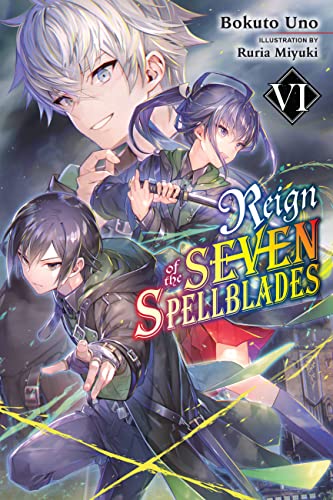
Reign of the Seven Spellblades, Vol. 6

September 8, 2022 by Sean Gaffney

By Bokuto Uno and Miyuki Ruria. Released in Japan as “Nanatsu no Maken ga Shihai suru” by Dengeki Bunko. Released in North America by Yen On. Translated by Andrew Cunningham.

It has to be said, when your goal is to kill a bunch of teachers and get away with it, it will become harder and harder as time goes on, mostly because the other teachers are starting to investigate. That’s the dilemma that Oliver and Company (I’m so sorry) find themselves in here, as the headmaster is starting to get very annoyed about these deaths, and is investigating absolutely everyone. That said, our conspirators do seem to have the next victim chosen, and their plan may very well be to upset her so much she spontaneously combusts in rage. That said, this book mostly deals with two things: 1) Oliver’s recovery from the last book, which is much harder than he expected and needs a drastic solution, and b) the tragic but triumphant story of Diana Ashbury, and a reminder once again that Reign of the Seven Spellblades as a series is likely to end with Nanao the sole survivor walking away from the smoking corpse of a campus.

First off, let’s get the one terrible thing about this book out of the way: there’s a creeper who is defined by a) his desire to rape another man, complete with lascivious grin, and b) his enormous erection, which is described far more than I would really like. He’s a massive negative stereotype, and it’s something of a relief that he doesn’t show up much more in this book. That said… this series is really, really horny. We recall Oliver’s magical handjob from two books ago, and now we get his burgeoning relationship with Nanao, where they’re not having sex but everyone assumes that they are. So honestly, when Oliver was having his soul problems I was expecting our sextet to come up with a more AO3-fanfic sort of solution. That said, their actual solution – a game of hug tag – is adorable and sweet.

And then there’s Ashbury. One of the things that this series hammers home over and over again is that much o the cast is obsessed with one thing or another, and with Ashbury it’s speed. She’s head and shoulders above anyone else, and the faculty have their eye on her to break the world record for speed on a broom… without the inevitable death that comes along with it. But even in this part of the book things are tied together in a shipping sort of way – Ashbury’s catcher (and, it’s implied, romantic partner) has been missing for the last two years, and so while she’s amazing, she’s not the amazing she wants to be. The final quarter of the book is absolutely stunning, and I also loved the bond that develops between Ashbury and Nanao, and wish we could see more of it. Still, this ending was pretty much the series in microcosm.

I haven’t even mentioned the student council elections, but that’s OK, because I suspect they will take up a lot of the next book. Till then, this is absolutely terrific to read, but can also be very painful. In a good way.

Filed Under: reign of the seven spellblades, REVIEWS

Knight of the Ice, Vol 11

September 6, 2022 by Anna N

Knight of the Ice Volume 11 by Yayoi Ogawa

I often feel a little wistful at the end of a series, especially one as consistently entertaining about Knight of the Ice, but the final volume concludes in a fashion that will satisfy readers, even though the outcomes were easy to foresee at the start of the series. As Kokoro prepares to take the ice at the Sochi Olympics, the field of skaters is shaken up by a dark horse contender with multiple quads from the United States. Kokoro also has to face a major competition without Chitose by his side to support him, since she’s recovering from necessary heart surgery. It is great to see the progression in Kokoro’s personality and how he’s able to make more decisions and assert himself as a skater, instead of drifting through life in an attempt to live up to his family’s expectations.

Ogawa nails the tension of Olympic ice skating as different skaters attempt to skate their best due to a variety of reasons, sometimes succeeding and sometimes having the small mistakes and spills that happen in competition. I always appreciate the paneling and action sequences of Knight of the Ice, which really serve to heighten the When Kokoro pops his quad lutz, readers are treated to a detailed discussion of scoring system issues, making the moments of Kokoro’s next decisions to modify his program on the fly even more dramatic. Even issues with Russian judges come into play as the final scores are tallied, making this manga enjoyable for a casual or more serious skating fan. One thing I really liked about this series was the way it developed all the supporting characters as well, and many of Kokoro’s compatriots get a sense of conclusion at the end of this volume as well.

One thing I appreciated was a bonus story that takes place before the first volume, which shows how Chitose and Kokoro reconnected after being close as childhood friends. It served as a nice way to think about how far they’ve both come as they’ve evolved over this series. I’m very glad that we’ve now gotten two Yayoi Ogawa series translated into English, but I have to say after reading both Kima wa Pet and Knight of the Ice, I feel a little greedy for more.

Filed Under: Manga Reviews, REVIEWS Tagged With: Josei, knight of the ice, kodansha

Modern Villainess: It’s Not Easy Building a Corporate Empire Before the Crash, Vol. 2

September 6, 2022 by Sean Gaffney

By Tofuro Futsukaichi and Kei. Released in Japan as “Gendai Shakai de Otome Game no Akuyaku Reijou wo Suru no wa Chotto Taihen” by Overlap Novels. Released in North America by Seven Seas. Translated by Alexandra Owen-Burns.

Oooof. I’m starting to suspect that having villainess books with modern ties is a mistake. Give me a villainess who’s in fake nobility land with some magic and a few broken engagements and I’m golden. But I’m remembering Villainess Reloaded, the story of the young woman who decided to solve everything by bringing a bigger gun. I had to drop that one as I was starting to get the sense that the heroine was morally bankrupt. There’s far less doubt here – Runa is appalling. In the game her life was destroyed because of the modern economy that crashed in 2008. She’s decided to fix the economy… but she’s still not changing her villainess ways. Indeed, she’s doubling down on them. When your heroine decides to build a gated community to protect the rich folks, you start to wonder if reading this series is an ethical problem. It’s a shame, because other than that insurmountable problem, the series is otherwise excellent.

The book essentially divides itself into two alternating sections. Half the time we’re watching Runa the capitalist, still trying to solve all of Japan’s debt problems. She has a time limit as well – the current government that she has so many ties to is falling, and the new government, headed by real-life prime minister Junichiro Koizumi, is far less favorable to powerful families like hers. The other half of the book is Runa’s life at school with her friends, where she does things like the culture festival, a snowball fight, etc. She’s still in grade school here, something that she emphasizes a great deal, but that does not stop her from having to worry about a fiance or hiring a new group of servants-cum-bodyguards. No one thinks that she’s just a cute little girl anymore.

The author REALLY nails Runa’s colors to the mast here. She attends the Republican National Convention in 2000, clearly supporting George W. Bush. She also meets with Norman Schwarzkopf and then-chairman of the Joint Chiefs of Staff Hugh Shelton for one of her many money-making schemes (though I suspect the author may have been thinking of Colin Powell there). Note that, aside from Koizumi (who is mentioned but never seen), none of these people are actually named in the book, but you know who they are. The main problem is that I can’t tell whether we’re supposed to condemn her actions or not. There are several people, throughout the book, who tell her to slow down and stop buying up all this failed debt, including her own brother and several of her minders. She even admits at one point she’s completely forgotten about the value of actual money. I think the main issue, unstated for the most part, is that she can’t stop seeing herself as the bad guy of the game this comes from. And she doesn’t really want to.

As I said, the writing here is good, and I want to see what happens next. But, as noted above, it may be morally and ethically wrong to read this series. Let the buyer beware.

Filed Under: modern villainess, REVIEWS

High School DxD: A Demon’s Work

September 5, 2022 by Sean Gaffney

By Ichiei Ishibumi and Miyama-Zero. Released in Japan by Fujimi Fantasia Bunko. Released in North America by Yen On. Translated by Haydn Trowell.

Generally speaking I’ve been able to skate by on these High School DxD reviews because I can usually somehow get past all of the boob talk and the “funny” comedy antics and even more boob talk to find something I can actually discuss like a reasonable reviewer, be it the fights, the character development (it does actually exist), or the overall plot of that particular book. So, you’ll have to pardon me if this review in particular seems to be a little lacking in content, as this is a short story volume. Meaning there is no overall plot, and no character development. Oh, and almost no fighting either. In its place, we have even MORE boob talk and “funny” comedy. As such, we are forced to fall back on the usual rule of light novel short story volumes: the longer the story, he better it actually is. That holds true here, as the last story in the book is the longest and one of the few that deserves attention.

In this book: 1) Issei and Rias try to help a woman who summoned a demon to help her love life… but she’s American, and her idea of Japan is more samurai-oriented. 2) Issei and Asia are told they need to get familiars, but Issei’s choices are all super powerful rather than super sexy. 3) Issei explains to the club the story of how he became obsessed with breasts, which involves a creepy old man corrupting a child. 4) The club has to play a tennis match against a rival in order to complete a club activity report. 5) Asia and Rias are turned into little kids by a spell gone wrong. 6) Azazel accidentally clones Issei three hundred times, and the clones are even more breast-obsessed than he is. 7) Sirzechs and Grayfia show up at Issei’s, and remind Rias that she has to perform a ciming of age ritual with a loved one… i.e. Issei.

There are precisely three stories in this book that cannot be summed up by the words “Oh my God, fuck off.” The first story is actually pretty funny, especially Susan’s misplaced sense of what Japan is actually like. The story of Asia and Rias as kids is at least mildly cute, and features Azazel abusing Issei in a much more acceptable manner than the other story he’s involved in. And the final story is the most involved. We meet the other Demon Kings for the first time, and we get another example of the “they are wearing an obvious disguise but no one notices this except the protagonist” joke, which always seems to work for me for some reason. Other than that, please see above. High School DxD may be unabashedly horny, but I have my limits, and they were pushed hard here.

Despite the presence of one or two non-sucking stories, this is a volume that can easily be skipped, IMO. Next time we should get a school trip… and hopefully a plotline.

Filed Under: high school dxd, REVIEWS

Rascal Does Not Dream of a Sister Venturing Out

September 3, 2022 by Sean Gaffney

By Hajime Kamoshida and Keji Mizoguchi. Released in Japan as “Seishun Buta Yarou wa Odekake Sister no Yume wo Minai” by Dengeki Bunko. Released in North America by Yen On. Translated by Andrew Cunningham.

The last two books in the series were pretty much crushingly emotional, with some genuine grief and horror in them, and I imagine that readers are hoping for a slightly more light-hearted volume at this point. Unfortunately, thay may have to wait a bit longer. The eighth Rascal book is not a tragic heartbreaker like the last arc. It’s merely a quiet, unflinching study of how Kaede is trying to get better and move on with her life, and how she’s being hindered not only by her own trauma over what happened in the past, but also the way that the Japanese school system works. And, of course, there’s “the other” Kaede, who hovers over this volume like a ghost, present and influential despite already being gone. Last time Sakuta was able to go back and save Mai from being killed, but there’s no way to really save “both” Kaedes, at least not at this point in the series. He just has to support her as best he can.

Sakuta is getting ready for Mai’s graduation, and being forced to think hard about his own future. Mai wants them to go to college together, so much so that she’s taking a year break to wait for him. This means that he needs to buckle down and actually study rather than being a lazy SOB, his natural state. Things are not helped by the fact that he’s having a dream of her as a small elementary school girl. That said, studying is going to have to take second place to Kaede, whose future is far more fragile. She’s now going to school again… but can’t actually leave the nurse’s office. There are a wide variety of high schools she could attend… but with a complete lack of grades for the last two years, it’s a high bar to clear. And to make matters worse, she’s determined to go to the same school Sakuta and Mai attend. Is that really something she can achieve?

I had forgotten that Japanese education is only compulsory through junior high, so high school is optional. This makes things very difficult for Kaede, though, as with a complete lack of junior high grades, it’s hard to get into a good high school, and that makes it hard to get a good job, etc. She’s made great strides, especially now that she has recovered her old memories, but there are still certain obstacles that still traumatize her, especially relating to her old school. And there’s an even bigger obstacle beyond that, one that has her feeling guilty and unloved. Despite that, Sakuta is an awesome older brother here. He’s trying to support what she says she wants to do, coming up with contingency plans on what to do if that fails, and not pressuring her. There’s also an extended section on remote learning schools that is very good at showing how they can be a help if you find the right one, while also showing that everyone automatically thinks they’re sketchy.

Aside from a plot twist near the end, which I found a bit unbelievable, this was an excellent volume in the series. I do wonder how it would be animated, though… perhaps that’s why there hasn’t been any ore of the anime since the movie. In any case, next time we resolve Sakuta’s new dream. Till then, fight on, Kaede!

Filed Under: rascal does not dream, REVIEWS

Kuma Kuma Kuma Bear, Vol. 11.5

September 2, 2022 by Sean Gaffney

By Kumanano and 029. Released in Japan by PASH! Books. Released in North America by Seven Seas. Translated by Jan Cash & Vincent Castaneda. Adapted by M.B. Hare.

As Kuma Bear has gone on, and gotten more attention, and particularly when it got the anime, the author has been slowly but subtly erasing its past a bit. I had remarked in my reviews of the first few books that one of the more interesting things about the series was the way that it would balance “cute girls doing bear things” plotlines with some very dark storylines. This short story volume features stories that were bonuses with in-store purchases and also some new stories, and also summarizes the events of Books 1-9. The dark storylines are not even mentioned in the summaries, and have zero stories featuring them. The author realizes that this world being terrible and needing Yuna to save it is not really why people want to read this series, and honestly that decision may be for the best. The undercurrent of “and that evil guy has also been raping those women” was always uncomfortable, and as for Yuna’s parents, well, I don’t think we’ll ever return to Japan, so we don’t need to care. In the meantime, there is bear.

As noted, these are stories that were originally either exclusives you got when you bought the books at a specific store, online short stories, or short stories from the original webnovel. There’s also ten or so new stories exclusive to this volume. One or two of them have Yuna’s POV, but for the most part they’re exactly what the short stories at the end of the main volumes are: a chance to see the same events from the perspective of different characters. There’s Fina’s stress about meeting nobles and royalty, Cliff’s stress about the fact that everything Yuna does changes the world, everyone’s stress at not being able to get the ever-so-popular bear books or bear plushies. There are no real revelations in this book except the most obvious one, which is that Yuna is less of a teen in a bear suit and more of an Act of God.

It really gets hammered home in this book how strange and inexplicable Yuna is to everyone who encounters her. Her desire to not attract attention to herself, discussed in previous books, is laughable here – any time she appears, she immediately does something that makes sure no one will ever forget about her. She’s not even an adventurer here: she’s a savior, changing everyone’s lives for the better (except perhaps the aggrieved Cliff, who ends up having to clean up after her when she nonchalantly does things like digging a tunnel through the mountain). We also get a bit more depth to minor characters like the guild masters, etc, though again, it’s only a tiny bit more. The problem with short stories that are exclusives and not part of the main work is that they can’t actually impact the main work – they have to be entirely optional.

So yes, you can probably skip this, but at the same time, if you’re already enjoying Kuma Bear, you’re probably the sort of person who’d enjoy this anyway. Also, it’s pretty long – there’s 50 short stories here, and the book itself is almost 400 pages. Inoffensive fun.

Filed Under: kuma kuma kuma bear, REVIEWS

Sabikui Bisco, Vol. 3

August 31, 2022 by Sean Gaffney

By Shinji Cobkubo and K Akagishi. Released in Japan by Dengeki Bunko. Released in North America by Yen On. Translated by Jake Humphrey.

Sabikui Bisco, as I noted on Twitter while reading this volume, bases itself around two aesthetics: “cool” and “gay”. Both of these aesthetics are present and correct in this third volume, which wraps up the story arc the author had in mind on creation, though it’s clear there are more volumes coming. Now, it may come as a surprise that I am saying that this volume of Sabikui Bisco is really gay, given that, over the course of the book, Bisco marries a woman and the book ends with the two of them going off on their honeymoon. And yes, that does happen. But it’s irrelevant. Bisco and Milo is still THE pairing in this book, and even the flashbacks to the memories of the villain falling in love with another woman have Bisco and Milo laid over the two of them. It’s ridiculous, but that’s part of this series’ charm. It runs on ridiculousness. Ah, I suppose that’s a third aesthetic.

We open with our heroes celebrating, complete with quasi-religious ceremonies. Unfortunately, we then get the arrival of this book’s Big Bad, Apollo. He’s determined to return Japan to the way it was in 2028, and to do so he has particles that will convert anything – building, animals, people – into cities. Now some folks are belching out tiny buildings, telephone poles and power lines. To make matters worse… or possibly better… Tirol ends up being possessed by an an aspect of the villain who is on our heroes’ side, and tries to explain what’s going on. What follows is a series of extended battles against the encroaching citification of everything. But in order to get to that point, as I said above, Bisco and Pawoo are going to have to get married. Because the villain runs on etiquette, and it would be rude to interrupt a wedding procession, even if it’s heading off to defeat you.

Again, this book runs on cool as much as gay, and the cool in this book is very cool. The sheer imagery of the cities popping out all over people is stunning, and it will be amazing if it’s ever animated. That said, there are a few issues I had with this book. About 2/3 of the way through, most of the major characters except for Milo and Bisco get killed off one by one, and I’ve read enough shonen manga to know that there was inevitably going to be a resurrection at some point. Not to spoil, but yep. Sabikui Bisco is a shonen manga in light novel form, and that sometimes means it has the bad aspects of shonen manga as well. And the fact that this book runs almost entirely on aesthetic means that there’s not an awful lot of depth to it. We are never really going to see a different, more shaded side to Bisco or Milo. They’re who they are. And while I was asking for more Tirol in future books, “possessed the entire time” was not what I meant.

Still, this book doesn’t really need to be good in the way other light novels need to be, it needs to be good in the way that One Piece or Fairy Tail are good. In that respect it passes with flying colors.

Filed Under: REVIEWS, sabikui bisco

Durarara!!SH, Vol. 4

August 30, 2022 by Sean Gaffney

By Ryohgo Narita and Suzuhito Yasuda. Released in Japan by Dengeki Bunko. Released in North America by Yen On. Translated by Stephen Paul.

Apologies to those wanting to know what this specific volume is like, but I need to briefly get a little meta. Ryohgo Narita, a ludicrously prolific writer from 2003-about 2015, has been dealing with a chronic illness. It’s made writing on a regular basis very difficult for him. What’s more, when he is well enough to write he has other projects that take precedence, because they’re owned by people other than him. The Bleach light novels. The as yet unlicensed Fate/Strange Fake novels. What does all this mean? It means that this volume of Durarara!!SH came out in 2016, and there has not been another one since. I will be writing the same thing about Baccano! in a few months time. As with Hunter x Hunter’s long hiatuses, it feels wrong to blame Narita for this extended absence. It does mean, though, that this volume was one where I hoped there might be, if not a definitive ending, at least a good stopping place. Alas, no. This is just another day in the life of these violent idiots.

Despite the presence of Anri on the cover of this volume, she’s mostly a supporting role in the book, and Mikado is mentioned but does not appear. Instead, once again, the lead role pretty much goes to Celty, who is grasping for a new purpose in life and wants to try going back to her old courier job, minus the complications that always hounded that job back when Izaya was around. Sadly for her, Izaya may be gone but complications remain. The drug that was going around two books ago is still around, despite the folks behind it having moved on. She’s being asked to locate the eldest son of a rich family, who is, as a lot of eldest sons do, getting involved with a bad crowd. And even though she’s a supporting player in this book, everything seems to revolve around Anri’s antique shop.

I admit that I was very amused about the subplot with the guy who was upset at Ikebukuro in general for treating him like a nameless character, not even someone important enough to be called a weak loser. I was amused because I had trouble remembering who he was as well. Honestly, in addition to the various references to Narita’s other series that litter this volume (Firo and Ennis, though unnamed, get a mention, and there’s a Vamp! subplot in here too), I feel as if I’m missing something in regards to the Natsugawaras, and would not be surprised if the backstory we hear about happened in an unlicensed side story. Other than that, this volume is a lot of fun. Narita calls it lighter than the others, and I agree. It also features the return of Kujiragi, who gets my favorite line in the whole book.

So yeah, good volume, and for now… that’s the end of Durarara!!. Unless Yen licenses the Izaya side novels. Which I highly doubt. Let’s hope that we eventually get some more and perhaps some closure.

Filed Under: durarara!!, REVIEWS

Secrets of the Silent Witch, Vol. 1

August 29, 2022 by Sean Gaffney

By Matsuri Isora and Nanna Fujimi. Released in Japan as “Silent Witch” by Kadokawa Books. Released in North America by Yen On. Translated by Alice Prowse.

A book can get away with a lot if it has a really strong main character. With that already in the bag, you can feel free to set a book at a university filled with arrogant nobles and petty bullying without worrying about the audience going “oh no, AGAIN?”. You can afford to make your love interest a sort of generic nice Prince dude who only gets vaguely interesting in the final page of the volume. You can even afford to make your book, a mystery, have an incredibly obvious villain, making the denouement a bit flat. You can do this because your main character is why everyone is going to be reading more of this. And Silent Witch (Yen On added the Secrets part, possibly to avoid a copyrighted title) is one of those series. Monica is terribly shy, terrible powerful, and most importantly terribly easy to love as a protagonist. We want to see her succeed, we want to see her very, very slowly get better at simple communication, and we want to see her kick eight kinds of ass.

Monica Everett is one of the Seven Sages, mages so powerful that they can take out a black dragon capable of destroying cities all by themselves. Unfortunately, she brings new meaning to the word “introverted”, so she normally holes up in a cabin in the middle of nowhere with only her familiar Nero for company. Then one day another of the Sages arrives and blackmails… sorry, asks Monica to help him with a task. She’s to go to Serendia Academy to be a bodyguard/minder for Prince Felix, who is currently part of a faction war regarding who will inherit the throne. The idea of going back to school (she already went to magic academy) and having to deal with people every day fills Monica with horror. But it’s probably a good thing that she’s there, as the problems at school don’t just involve magic, they involve math. Which is Monica’s other specialty.

Monica is wonderful. Prince Felix compares her multiple times to a squirrel, and you can see why. She tends to be a wreck around people, and essentially is the Silent Witch because speaking incantations out loud would be too difficult for her. But put her in front of anything to do with math or magical circles and she flips on a dime, becoming laser focused and determined to the point where you could hit her in the face with a fan and she would barely react. (Admittedly, part of that is that she doesn’t want to deal with whoever would be hitting her in the face with a fan.) I also loved Isabella, part of Monica’s cover story, who gets to play the villainous ojou-sama who bullies Monica at school and is SO HYPED, having read a ton of villainess books to bone up on this. The rest of the cast are also fun, and I look forward to Monica slowly winning them over in future books.

I think everything in this series will depend on how long Monica can keep her true identity as the Silent Witch a secret. Because I think if that gets out, several big things will happen at once. But till then, I am delighted to watch this math squirrel run through the academy of arrogant noble jerks in search of cookies and places with no other people.

Filed Under: REVIEWS, secrets of the silent witch

The Holy Grail of Eris, Vol. 2

August 28, 2022 by Sean Gaffney

By Kujira Tokiwa and Yu-nagi. Released in Japan as “Eris no Seihai” by GA Novels. Released in North America by Yen On. Translated by Winifred Bird.

The most frustrating thing about this volume is pretty much the same issue I had with the first one: the author is not telling the story I want to read most. Don’t get me wrong, I’m greatly enjoying seeing Connie sort of fumble around and slowly work out what happened ten years ago and why there’s a big chance it’s going to happen again. But frankly, I want the teenage years of Abigail O’Brian. I want a pirate adventure story, I want to see how she ended up at the center of everything and also a madam, I want to see how she inspires absolutely everyone around her. But I suspect all I will get will be the crumbs of backstory I get here, because the author does not want to tell an adventure story, they want to write a mystery. And this volume gives us a lot of answers in the main mystery, though the resolution is still a long ways away. And depends, most likely, on Connie, not Abigail.

Connie is getting closer to the truth, and that’s making a lot of people angry. They try to kidnap and kill her best friend to get her to stop. They murder several witnesses who would have undone all their careful planning. And they have a pesky reporter girl who, sadly, is very much an antagonist in this series. Fortunately, Connie does have a few allies. She has Scarlett, of course, who can still occasionally possess Connie when it’s for the greater good, and whose complicated backstory we learn here. She also has Randolph, her love interest, though both of them being the sort of person that love just bounces off of means that the romance part of the book is more frustrating than anything else. That said, the real selling point is what we find out here: exactly why Scarlett was executed.

I will, of course, not reveal that here – I like spoilers but am trying to get better at not saying them. Nevertheless, it turns out to be a far larger plot than Connie, Randolph, or indeed the reader had planned. It can sometimes be a bit of a stretch to realize that everyone we meet seems to be connected to everyone either in the present, the past, or both, but that’s mystery novels for you. And we also get a few detours that are tense, mostly as while the author is unlikely to kill off Connie or Randolph, they’ve shown they’re perfectly happy to kill off other characters. There actually may be a bit TOO much going on here, as there’s also the subplot of a powerful hallucinogenic drug once again becoming available among the nobility. Everything points to somebody trying to undermine the country. And the biggest bombshell is what some people are prepared to do to save the country. But again… spoilers.

The series has 4+ volumes out in Japan, but I have a suspicion that this arc, at least, will end with the next book. I definitely look forward to seeing what happens – just because the mysteries are solved doesn’t mean the problems have gone away.

Filed Under: holy grail of eris, REVIEWS

The Magical Revolution of the Reincarnated Princess and the Genius Young Lady, Vol. 2

August 27, 2022 by Sean Gaffney

By Piero Karasu and Yuri Kisaragi. Released in Japan as “Tensei Oujo to Tensai Reijou no Mahou Kakumei” by Fujimi Fantasia Bunko. Released in North America by Yen On. Translated by Haydn Trowell.

This is one of those books that starts slow but picks up speed as things go along. It’s essentially the second half of the first “arc” in this series, and we see Anisphia and Euphyllia dealing with the two remaining dangling plot threads: the man who kickstarted everything by publicly denouncing Euphie, and the young woman who was theoretically the cause of that. And any fan of villainess books will know that both of those plotlines are things that we’ve seen before. That said, this book does have an interesting twist that I don’t think we’ve really come across in regards to the “heroine” role. As for Anis’ brother, that’s a lot more serious plotline, and both he and Anis are forced to face up to the fact that the actions they take have far broader consequences than either of them would have liked. Although I think Algard already knew that, since… well, he has an agenda.

The book starts with Anis being forced to do a lot of things she doesn’t want to do. This includes having a conversation with her mother, who is determined enough to break past Anis’ eccentric behavior, as well as the Ministry of the Arcane, who know that Anis took down a dragon recently and want the dragon’s remains for their own use and not hers. In addition, Anis is trying to clear Euphie’s name, which means figuring out why otherwise sensible young nobles were so willing to go along with this public shaming, and what sort of hold Lainie, the former commoner who everyone has an opinion on, has over them. This will involve consulting one of Anis’ “bad friends”, Tilty, a noble who is essentially just as eccentric as Anis, if not worse.

The book’s first really good scene is at Tilty’s place, where we work out what’s up with Lainie and why she inspires the people around her to do emotionally unstable things when she’s around. It’s the sort of plot twist I’d have been incredibly impressed with if the color pages at the start of the book had not 100% spoiled it. Lainie herself is more sympathetic than I was expecting, especially once she comes to terms with the sort of person she is now. As for Anis and her brother, that’s the other really strong part of the book. Algard’s behavior is nightmarish, but it all stems from Anis’ hands-off, “I don’t want anything to do with royalty I just want to study magic” attitude, and even as she points out that he can’t act the way he is because he’s the prince, she understands that she essentially did the same thing. The question of succession is very much up in the air at the end of this book, and I hope it somehow gets resolved in a way that does not remove the yuri from this title, even if so far that’s pretty slight.

So yes, solid second volume, and it suggests that Anis is going to have to get more involved in the lives of those around her, even if it means less magical research. That said, I do hope we get a bit more “magic nerd” stuff between Anis and Euphie in the 3rd book.

Filed Under: magical revolution of reincarnated princess and genius young lady, REVIEWS

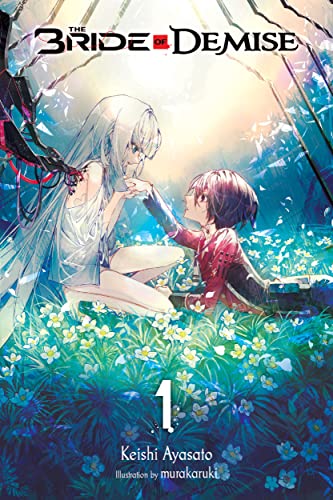
The Bride of Demise, Vol. 1

August 26, 2022 by Sean Gaffney

By Keishi Ayasato and murakaruki. Released in Japan as “Shūen no Hanayome” by MF Bunko J. Released in North America by Yen On. Translated by Jordan Taylor.

Sometimes an author, regardless of the material, simply reaches out, grabs you by the throat, and starts to throttle you with evocative prose. Keishi Ayasato is one of those authors. Torture Princess, their previous series, contains just about every type of thing that I normally avoid in fiction, and yet it’s one of my favorite LN series. Likewise, when I first saw the solicit for The Bride of Demise, my first thought was “ooooh, not my thing”. But then I saw the author and knew I would have to buy it. And I was right. As with Torture Princess, this series has a certain loving fascination with grand guignol horror in its writing, but this one is, and I can’t believe that I’m even typing this, a magical academy series. That almost cheapens it, and I would hate to see it compared with things like the various “Demon King Went to School and Was Super Badass” books. This is the story of a young man and his fated meeting with a living weapon.

Kou, an orphan whose parents were killed when he was young, is a Magical Research student at the academy. He and his fellow researchers learn about the Kihei, monstrous creatures who were essentially the reason this is a somewhat post-apocalyptic world. Then one day, while he ad his team are exploring a supposedly safe area to harvest kihei corpses for material, they’re attacked by some very strong kihei. Kou decides to sacrifice himself to save the others, and falls trough a glass ceiling into a garden… which is convenient, as this is very much like the dream that he keeps having during his waking hours. In that dream, he meets someone who promises she will be at his side for all eternity. Now it’s come true. She’s White Princess, she is his “bride”, and it feels like he’s known her for years.

This review will very much be talking about the first half of the novel, because the second half is a nest of spoilers that I do not want to be responsible for you learning. All the “holy shit!” moments are there, and they are fantastic. That said, the rest of the book is a lot of fun. Kou is now part of a special team of elite students, all with their own “bride”, and taught by a classic badass teacher with a dark side to him. Kou manages to befriend most of the group pretty quickly, partly because it turns out that he’s a lot better at combat against the kihei than anyone really expected. But really it’s Kou’s relationship with his bride that is the emotional core of this book. Their love for each other is very quick to develop and very strong, and also, again trying not to spoil, the cause of the entire second half of the book.

I rarely have to say “trust me” in my reviews, as everyone knows I spoil like a mad fiend. But trust me on this one. Unless you can’t abide blood and gore (you should steer clear in that case), The Bride of Demise is a fantastic debut. Indeed, my one complaint is that it feels finished in one volume. Where else does this series go? Vol. 2 is coming soon to tell us.

Filed Under: bride of demise, REVIEWS

Sasaki and Peeps – That Time I Got Dragged into a Psychic Battle in Modern Times While Trying to Enjoy a Relaxing Life in Another World: ~Looks Like Magical Girls Are on Deck~

August 25, 2022 by Sean Gaffney

By Buncololi and Kantoku. Released in Japan as “Sasaki to Pi-chan: Isekai de Slow Life o Tanoshi Mou Toshitara, Gendai de Inou Battle ni Makikomareta Ken” by Media Factory. Released in North America by Yen On. Translated by Alice Prowse.

This book is a mess. Saying that right off the bat, confident that even those who loved the title will agree. It’s trying to be a mess, after all. I’m not sure what the meeting of the author and their editor was like, but it feels very much like “I have four different ideas for a light novel, but I can’t decide which one to write.” “Why not write all of them?” “Four different books?” “No, no, the SAME book!”. It’s the sort of thing that requires a delicate hand and solid worldbuilding, and the series that comes closest to this, A Certain Magical Index, still can’t quite pull it off a lot of the time. Sasaki and Peeps doesn’t even try, content to simply revel in its mishmash qualities. It does eventually settle into one of its genres near the end, which makes it both better written and less interesting. I think we’re here for the car crash.

Plot 1: A salaryman in his late thirties, Sasaki, buys a pet Java sparrow, Peeps, who turns out to be a powerful macician from another world. Sasaki goes to this world, trading Japanese tech for gold and also learning magic. Plot 2: Learning magic means he gets in the way of a battle (in Japan, he and Peeps go back and forth) between rivals espers, and he is forcibly recruited into an esper organization trying to control those with powers. This goes far less well than you’d expect. Plot 3: His middle school next door neighbor, unnamed but abused and always sitting outside her front door, has a twisted crush on Sasaki that wars with her despair and suicidal thoughts. Plot 4: There’s a magical girl digging in the trash outside his apartment. This is the magical girl on deck from the subtitle, I assume.

Smoothness is not the selling point of this book. Which is a shame, as the last third of the book, which dedicates itself entirely to the isekai plotline, is the best written part, containing several excellent plot twists and a few cool battle scenes. That said, after watching the author and Sasaki flit around like… well, like a sparrow for most of the book, it feels wrong somehow. Sasaki should be a “potato” protagonist, but there’s a certain broken quality to him that shines through on occasion. His treatment of his neighbor like a stray cat that he keeps feeding is at least not as bad as, say, Higehiro, and I appreciate he did call social services, but he’s not helping there either. The book has no real romance as of yet, which is probably a good thing, as the female cast consist of a high school girl, a middle school girl, and two children.

Mostly the main problem with this book is it cannot settle down as to what it wants to be. That’s baked into the plot so it won’t get better, but I thought I’d mention that I think the plot is bad. The plot with the neighbor and the magical girl barely feature in the book, they’re just there as flavortext so far. That said, I may read a second volume, just to see if the author can keep this up. Or to see if the neighbor kills him.

Filed Under: REVIEWS, sasaki and peeps

  • « Go to Previous Page
  • Page 1
  • Interim pages omitted …
  • Page 73
  • Page 74
  • Page 75
  • Page 76
  • Page 77
  • Interim pages omitted …
  • Page 346
  • Go to Next Page »
 | Log in
Copyright © 2010 Manga Bookshelf | Powered by WordPress & the Genesis Framework