• Skip to primary navigation
  • Skip to main content
  • Skip to primary sidebar
  • Home
  • About Us
    • Privacy Policy
    • Comment Policy
    • Disclosures & Disclaimers
  • Resources
    • Links, Essays & Articles
    • Fandomology!
    • CLAMP Directory
    • BlogRoll
  • Features & Columns
    • 3 Things Thursday
    • Adventures in the Key of Shoujo
    • Bit & Blips (game reviews)
    • BL BOOKRACK
    • Bookshelf Briefs
    • Bringing the Drama
    • Comic Conversion
    • Fanservice Friday
    • Going Digital
    • It Came From the Sinosphere
    • License This!
    • Magazine no Mori
    • My Week in Manga
    • OFF THE SHELF
    • Not By Manga Alone
    • PICK OF THE WEEK
    • Subtitles & Sensibility
    • Weekly Shonen Jump Recaps
  • Manga Moveable Feast
    • MMF Full Archive
    • Yun Kouga
    • CLAMP
    • Shojo Beat
    • Osamu Tezuka
    • Sailor Moon
    • Fruits Basket
    • Takehiko Inoue
    • Wild Adapter
    • One Piece
    • After School Nightmare
    • Karakuri Odette
    • Paradise Kiss
    • The Color Trilogy
    • To Terra…
    • Sexy Voice & Robo
  • Browse by Author
    • Sean Gaffney
    • Anna Neatrour
    • Michelle Smith
    • Katherine Dacey
    • MJ
    • Brigid Alverson
    • Travis Anderson
    • Phillip Anthony
    • Derek Bown
    • Jaci Dahlvang
    • Angela Eastman
    • Erica Friedman
    • Sara K.
    • Megan Purdy
    • Emily Snodgrass
    • Nancy Thistlethwaite
    • Eva Volin
    • David Welsh
  • MB Blogs
    • A Case Suitable For Treatment
    • Experiments in Manga
    • MangaBlog
    • The Manga Critic
    • Manga Report
    • Soliloquy in Blue
    • Manga Curmudgeon (archive)

Manga Bookshelf

Discussion, Resources, Roundtables, & Reviews

Reviews

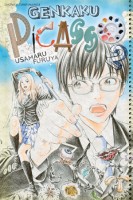
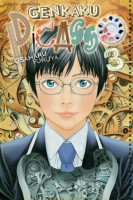
Genkaku Picasso, Vol. 3

January 24, 2014 by Ash Brown

Genkaku Picasso, Volume 3Creator: Usamaru Furuya
U.S. publisher: Viz Media
ISBN: 9781421539201
Released: May 2011
Original release: 2010

The third and final volume of Usamaru Furuya’s short manga series Genkaku Picasso was originally published in Japan in 2010. Viz Media released the English-language edition of the volume in 2011 under its Shonen Jump imprint. Genkaku Picasso was initially serialized in the manga magazine Jump SQ. Furuya mentions in the series’ afterword that he was somewhat surprised to have been approached to create a manga by one of the Jump SQ editors since he didn’t consider his previous work to have had much popular, mass appeal. (Furuya made his debut in the alternative manga magazine Garo and is particularly well-known for some of his more avant-garde work.) Genkaku Picasso was originally intended to be only two volumes long. Happily, Furuya was able to expand the series to three volumes, which allowed him to tie everything together in the way that he wanted. Although I enjoyed the first volume of Genkaku Picasso the manga starts out a little unsteady. But by the end, Furuya has created a fantastic series.

For most of his life, Hikari Hamura has been content to keep to himself and concentrate on his drawing. He’s earned himself the nickname of Picasso from his classmates (much to his dismay as he greatly prefers the work of Leonardo da Vinci), but up until recently they have mostly ignored him. Picasso is as strange and gloomy as he ever was, if not more so, but many of his classmates are beginning to feel drawn to him for some unknown reason. What they don’t realize is that Picasso has been helping to solve their personal problems. After nearly dying in a bizarre accident Picasso has gained a strange ability that allows him to see and draw the darkness that exists in another person’s heart. He can enter into those sketches, and by changing them he influences his classmates lives, hopefully for the better. This power is something that Picasso has tried to keep hidden from the others but it becomes difficult for them to disregard his increasingly odd behaviour, especially when he seems to know things that they would never reveal to someone else.

Genkaku Picasso starts out as a fairly episodic series. Generally, I found the longer stories–those lasting several chapters–to be more successful than the shorter ones as they feel less rushed and more thoroughly developed. It’s only really during the second volume that it becomes clear that there is also an overarching plot. The details of that larger story are completely reveled in the third volume of Genkaku Picasso. With a little bit of a lead in, “Hikari’s Story” takes up nearly half of Genkaku Picasso, Volume 3. It’s the longest story in Genkaku Picasso and is what pulls together the entire series. Up until this point in the manga, while Picasso has certainly been the protagonist, the stories have largely focused on his classmates and the issues that they are struggling with. But in “Hikari’s Story” their roles are reversed and it’s Picasso who needs help. It’s an extremely effective turn of events that brings the series full circle quite nicely.

The ending of Genkaku Picasso is actually a little heart-wrenching. Picasso starts the series almost a complete loner. Except for Chiaki, who hung out with him despite his protests, most of his classmates simply took no notice of him. Picasso was perfectly fine with this, or at least that’s what he told himself. As Genkaku Picasso progresses, Picasso slowly gathers people around him as he helps them with their problems. But it’s not until the third volume that he actually admits that he has friends and that he actually wants friends. Picasso has to be completely honest with himself and with the others, which in reality is a very terrifying thing to have to do. With “Hikari’s Story” the entire series becomes about Picasso and shows the tremendous amount of growth that he has gone through. I’m very glad that Furuya was able to extend Genkaku Picasso and give it a marvelous conclusion. Even considering its somewhat awkward start, Genkaku Picasso is a wonderful series. I thoroughly enjoyed its quirky humor and characters, its engaging artwork, and its somewhat peculiar but ultimately heartfelt story.
Filed Under: REVIEWS Tagged With: genkaku picasso, manga, Shonen Jump, Usamaru Furuya, viz media

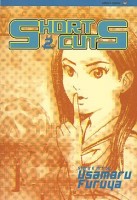
Short Cuts, Vol. 2

January 23, 2014 by Ash Brown

Short Cuts, Volume 2Creator: Usamaru Furuya
U.S. publisher: Viz Media
ISBN: 9781591160694
Released: August 2003
Original release: 1999

Originally serialized in Young Sunday, Short Cuts was Usamaru Furuya’s first manga created for a major, mainstream publication. It was also his first manga to be completely released in English. His debut work, Palepoli, was serialized in the alternative manga magazine Garo and has only partially been made available in English. (Select excerpts from Palepoli are available in Japan Edge: The Insider’s Guide to Japanese Pop Subculture and Secret Comics Japan: Underground Comics Now.) Short Cuts began its serialization in 1996, two years after Furuya made his manga debut. The second collected volume of Short Cuts was initially published in Japan in 1999. The English-language edition of the volume was released by Viz Media in 2003. This was after Pulp, the magazine in which Short Cuts was being serialized in English, was canceled. I very much enjoyed the first volume of Short Cuts and so am happy that both volumes, though sadly now out of print, were released.

Short Cuts is a darkly comedic and vaguely surreal gag manga and satire. Each cut–there are exactly one hundred of them in the second volume–is a short manga only a page or two in length. As in the first volume, there are some recurring jokes, characters, and setups, but even the related cuts can generally be read on their own. Any sort of overarching plot is nearly nonexistent. Kogals and the kogal subculture, which were particularly prominent in Japan while Short Cuts was initially being serialized, remain the most common topics in the manga. However, there are plenty of other subjects that Furuya uses for his material, often the stranger the better. He draws inspiration from Japanese pop culture and celebrities, other manga creators (frequently mimicking their individual styles in the process), and even history and contemporary politics.

In the afterword to the series, Furuya mentions that Short Cuts was initially intended to be “light, pop, and sexy” but as the series progressed it became a bit stranger until “old people and weirdos stood out.” I’m pretty sure Furuya includes himself when he is talking about weirdos. Increasingly, the gags in Short Cuts refer to the trials and tribulations of manga artists and illustrators. Furuya has several personal avatars in Short Cuts who either break the fourth wall to interact with the cuts or are the stars of their very own. With the second volume the humor in Short Cuts has become even more self-aware. Furuya is not afraid to make fun of himself or his manga. Another recurring character is a kogal named Mai. (The frequency of her appearances actually becomes a joke in and of itself.) She’s a delightfully peculiar young woman with an even odder family. In some ways, Mai and Furuya together are representative of the series as a whole and the relationship between creation and creator. The ending of Short Cuts–if a series without much of a plot can be said to have an “ending”–is actually rather touching because of this.

Short Cuts is a very strange manga, which is probably one of the major reasons that I like it so well. I enjoy Furuya’s chameleon-like artwork in the series as well as his absurd, dark, and surreal humor, all of which can admittedly be rather raunchy and vulgar from time to time. Many but certainly not all of the gags in Short Cuts rely on the reader having at least passing familiarity with Japanese culture and society, but there are plenty of notes from the translator included for those who might need a bit of extra help. Overall, I think I slightly preferred the first volume of Short Cuts over the second, though I can’t seem to identify exactly why that is. I was still consistently amused by Short Cuts, Volume 2 and Furuya can still make me laugh out loud. Short Cuts remains one of my favorite gag manga, but its peculiar sense of humor and sharp social commentary definitely won’t be to everyone’s taste.

Filed Under: REVIEWS Tagged With: manga, Short Cuts, Usamaru Furuya, viz media

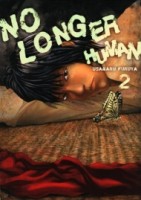
No Longer Human, Vol. 2

January 22, 2014 by Ash Brown

No Longer Human, Volume 2Creator: Usamaru Furuya
Original story: Osamu Dazai

U.S. publisher: Vertical
ISBN: 9781935654223
Released: December 2011
Original release: 2010

Usamaru Furuya’s manga series No Longer Human is an adaptation of Osamu Dazai’s 1948 semi-autobiographical novel No Longer Human. Furuya’s manga adaptation began serialization in Weekly Comic Bunch in 2009. The second volume of the series was published in Japan in 2010 while the English-language edition was released in 2011 by Vertical. No Longer Human was the second manga by Furuya that was published by Vertical, the first being the one-volume Lychee Light Club. Although Furuya’s No Longer Human is based on Dazai’s novel, he has taken a few liberties with his rendition, one of the most notable changes being that the story is now set in the 2000s instead of the 1920s and ’30s. Furuya has also inserted himself into the manga as a framing character. These changes, as well as others, are actually quite effective. It is not at all necessary to have read the original No Longer Human to appreciate Furuya’s interpretation of the story.

Yozo Oba attempted a double suicide with a club hostess named Ageha, but only she drowned while he survived. He’s come to the realization that although he doesn’t want to die, he doesn’t want to live, either. Yozo has long since been disowned by his family and the one person for whom he held any sort of honest feelings is now gone. He spends his days directionless and in despair, slowly recovering from a torturous situation partly of his one making. He desperately wants some meaning to his life, but has failed to discover what that might be. At one point he thinks he’s found it, only to have it snatched away from him. Yozo was once adored by all and even in his current pitiful state people are drawn to him and dare to care about him. He uses this to his advantage, putting on airs to get what he wants and needs, recognizing all the while how distasteful it is. Yozo uses people and he knows it. To him, life is still an act.

No Longer Human is a dark and troubling manga series. Yozo doesn’t treat himself well and treats those around him even worse. He is extremely manipulative and frankly can be a terrible person. And yet at the same time Yozo is a tragic figure; No Longer Human is heart-wrenching. While I don’t find his portrayal in the manga to be as sympathetic as it is in the novel, there are still points with which I can empathize. Yozo has a fear of people and their expectations of him that prevents him from being authentic. He’s repeatedly told that he is a good, sweet, and kind person, but this is the last thing he wants to hear. Yozo’s extraordinarily anxiety-ridden and conflicted over it because he see the life he is living as one big lie. He is very aware of his dishonesty and how he misleads people, but continues to do so because he is so desperate to be liked and accepted. Occasionally he manages to express some feelings of legitimate remorse and genuine caring, but more often than that it is already too late to undo any of the damage done.

No Longer Human, Volume 2 follow Yozo from the depths of despair to the heights of happiness and back again. Those glimmers of hope that Yozo will be able to turn his life around make his failure to do so even more anguished as he lets chance after chance to slip through his fingers. Furuya’s artwork in No Longer Human suits the story well, capturing Yozo’s internal and emotional turmoil and dragging the readers along for the ride. Furuya provides disconcerting glimpses into Yozo’s psyche, visually expressing his suffering through imagery of suffocation (harkening back to his near-drowning) and showing the ugliness he sees in the world. No Longer Human isn’t necessarily an easy read and it can be emotionally exhausting, but I find it to be incredibly compelling and difficult to turn away from as well. Yozo may not often be particularly likeable, but as with so many of the other characters in the series I can’t help but wish the best for him no matter how doomed he seems.

Filed Under: REVIEWS Tagged With: manga, no longer human, Osamu Dazai, Usamaru Furuya, vertical

Genkaku Picasso, Vol. 2

January 21, 2014 by Ash Brown

Genkaku Picasso, Volume 2Creator: Usamaru Furuya
U.S. publisher: Viz Media
ISBN: 9781421537542
Released: February 2011
Original release: 2009

Genkaku Picasso was the second multi-volume manga series by Usamaru Furuya to be released in English. The first was a seinen gag manga called Short Cuts which, like Genkaku Picasso, was published by Viz Media. Genkaku Picasso is very different from Short Cuts. It’s an example of one of Furuya’s few shōnen manga and is currently his only shōnen series available in English. Furuya is an extremely versatile artist, changing styles, genres, and demographics to suit his needs. He had his start in alternative manga, but Genkaku Picasso, while quirky, is a more mainstream title. Initially serialized in Jump SQ, the second volume of Genkaku Picasso was released in Japan in 2009. Viz Media published Genkaku Picasso, Volume 2 under its Shonen Jump imprint in 2011. I found the first volume of Genkaku Picasso to be intriguing, but more uneven and less compelling than some of the other manga by Furuya that I had read. But with the second volume, the series finds its footing.

After a bizarre near-death experience, Hikari Hamura, given the nickname Picasso by his classmates, finds himself in an even stranger predicament. Chiaki Yamamoto, a victim of the same accident that nearly killed Picasso, is now small enough to fit in his pocket and is sporting angel wings. Picasso himself has gained the ability to see into people’s hearts and minds. Compelled to draw what he sees, he can literally enter into the psyches of others through his illustrations. Using this newfound power, Picasso is able to help his fellow classmates. Not that he really wants to go to all that effort. In fact, he’d much rather be left alone to concentrate on his artwork. But unless he wants to let his arm rot away–another peculiar consequence of his accident–Picasso must do what he can to help those around him. With Chiaki’s assistance and prodding he has successfully resolved some of his classmates problems and has even gained a few friends in the process, but Picasso is still incredibly reluctant to get involved.

Although there has always been an ongoing story in the series, the beginning of Genkaku Picasso felt fairly episodic. However, with the second volume the series starts to become a bit more cohesive. The stories in the first volume seemed to be resolved a little too simply and cleanly, but as Genkaku Picasso progresses it becomes apparent that it’s not really that easy. Picasso has helped some of his classmates (though they are only aware of that subconsciously) but they continue to have problems; he hasn’t solved everything for them. The first volume’s stories had a “one and done” sort of feel to them while the issues in the second volume, even after they are initially resolved, are long-lasting challenges. They are things that the characters may very well struggle with for the rest of their lives. I much prefer this approach since realistically matters of the heart and mind are not so easily mended. I think Genkaku Picasso becomes a stronger, better series with the inclusion of these more complicated and nuanced narratives.

From the very beginning one of Genkaku Picasso‘s strengths has been its artwork, something that continues to be a highlight in the second volume. Furuya uses a variety of art styles in the series. Picasso enters the drawings he creates of other people’s hearts. They are filled with beautiful, surreal, and even disturbing imagery, allowing Furuya to creatively illustrate and explore the characters’ internal states of mind. But probably the greatest reason that I find the second volume of Genkaku Picasso to be more effective than the first is that the problems that Picasso must help to try to solve happen to be more relevant to me personally. For me, many of the stories in the first volume were little far-fetched while those in the second volume are a bit more realistic and universal. Most of them focus on love, romance, gender, or sexuality which are themes that I have a particular interest in. I could personally identify with the characters in Genkaku Picasso, Volume 2 in ways that I previously couldn’t. I did enjoy the first volume of Genkaku Picasso, but I was able to appreciate the second volume even more.

Filed Under: REVIEWS Tagged With: genkaku picasso, manga, Shonen Jump, Usamaru Furuya, viz media

Alice in the Country of Joker: Circus and Liar’s Game, Vol. 2

January 20, 2014 by Anna N

I enjoyed the first Alice in the Country of Hearts series much more than I expected to. I’ve since tried out some of the sequels here and there, and I think this series is one that I’ve enjoyed the most, just because the storyline seems to echo back to the first series in both theme and tone. While most of the other Alice series that I’ve read tend to focus more on what I think of as the core cast of characters, Alice in the Country of Joker introduces the Circus as a new place and the mysterious Joker accompanies the Circus. It is April season, which is a different and unsettling time for the inhabitants of Wonderland.

The second volume of the series continues with many of the things I enjoyed about the first. There are flashbacks to Alice’s previous life that hint at the psychological issues that might cause her to take refuge in Wonderland. Alice is reminded of her sister as she spends time with the obsessive white rabbit, Peter White. Blood Dupre continues his flirting campaign, but the influence of the Circus and the barrier that Nightmare placed in Alice’s mind are in conflict. There seems to be a cyclical conflict between the Circus and the rest of Wonderland, and Alice is trapped in the middle of it. The unsettling tone and hints of suspense were more of what I tend to look for in one of these many Alice stories. So far, this is the main spinoff series I would make a point of recommending to fans of the first Alice in the Country of Hearts. I still miss the art from Soumei Hoshino in the original series. There isn’t anything really wrong with the illustrations of the adapter here, but Hoshino’s art was more delicate and surreal, adding another dimension to the Wonderland portrayed in these stories.

Filed Under: REVIEWS

Fairy Tail, Vol. 32

January 20, 2014 by Derek Bown 1 Comment

fairytail32Fairy Tail, Vol. 32 | by Hiro Mashima | Yen Press – The Grand Magic Games start in earnest with a game of “The Hidden” where the contestants must discern which of their opponents is real, in a way that makes me think Hiro Mashima was playing a bit of Assassin’s Creed at the time he wrote this story. Gray and Juvia try to win it for Fairy Tail, but the sinister Raven Tail marks them and constantly harasses them until they end the game at the bottom ranks.

From there, the tournament continues into regular combat with Fairy Tail doing their best but due to outside influence both Lucy and Jellal (who is disguised as Mystogan) lose their battles, ending with both their teams in dead last. It all ends, after some other battles from the different competing guilds, with Charle making a dire prediction for their future.

Where I enjoyed the last volume a lot more than I thought I would, this volume was a couple steps backward for me. The biggest problem is that we see exactly why tournament arcs are such a tiresome trope in action manga. It’s nothing but fights for several chapters as we get through all the non-Fairy Tail wizards. That’s not to say the fights aren’t interesting. In fact Mashima does mix things up by including other types of competition, and Lucy and Jellal’s fights are well done. In Jellal’s case it’s a matter of just being really funny, but Lucy’s fight is another matter.

While the outside interference and unfair methods practiced by Raven Tail during Lucy’s fight really make us hate them, I find that the fight falls flat because I am unable to suspend my disbelief that nobody would notice that Flare is threatening Bisca and Alzack’s kid to keep Lucy from fighting back. Are we seriously supposed to believe that these two don’t even bother looking at their kid from time to time? Even if they aren’t worried about her being kidnapped, being surrounded by friends and all, isn’t it common practice for parents to at least glance at their child every once in a while? I’m pretty sure that if I were a parent I would like to keep my child at least in my peripheral vision.

And if they were keeping her in their peripheral vision, how did they not notice the speck of bright red that suddenly appeared in the corner of their eyes! It’s all used to make Natsu look cool, which we’ve had more than enough of, when a different manga artist would have played how obvious the whole thing was as a laugh.

But the biggest problem with the volume is the stretch of individual fights right towards the end. We get the big game, we get Lucy’s fight, but then suddenly we get a bunch of characters fighting that we don’t care about. And while Jellal and Jura’s fight is great, we’ve still been fatigued on fights in general by the end and the volume itself doesn’t leave a good taste in our mouths. So as far as essential volumes of Fairy Tail go this one is not among them. There certainly are worse volumes out there but were I not an avid collector, as most manga fans are, I’d consider skipping this one.

A major problem this time around, even compared to last month’s volume, is the excessive fanservice. The fight with Lucy and Flare is impossible to take seriously solely because most of the panel layout seems to be to show off the assets of the fighters in the most erotic way possible. I don’t like to dismiss Lucy as the fanservice character, since she has had some great moments in the series, but her inclusion in the story is feeling more like she’s the one selling all the copies of this series to a target demographic of teenagers who haven’t figured out how to type the word “hentai” into google.

And yet, complain though I might, I do still enjoy this series. This just happens to be a volume that doesn’t have the useful distraction of good story or humor to distract from Mashima’s descent into complete ecchi artist.

Filed Under: FEATURES & REVIEWS, MANGA REVIEWS, REVIEWS Tagged With: Fairy Tail, manga, MANGA REVIEWS

Excel Saga, Vol. 27

January 19, 2014 by Sean Gaffney

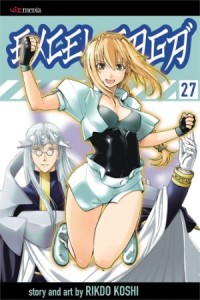
At last, after 11 years, we have the 27th and final volume of Excel Saga translated. To sum up my review, I was pretty much satisfied with the ending. it still managed to be very confusing, and I’m still a bit iffy on the details of Il Palazzo’s origin and the Cores, but emotionally, the story hits all the right beats, and thematically, it resolves itself beautifully. With that in mind, let’s go through some things one by one and see if we can dig deeper into things, though in no particular order.

excel27

Misaki and Iwata, first of all. We started the series off with Misaki as pretty much the only one in the entire group who had normal reactions. Indeed, the one time we were supposed to infer that she was upset and blushing deeply, she had her back to us so that we couldn’t see her expression. I have no doubt that Rikdo was doing this deliberately to save it all for this ending. Misaki’s had a very bad last few days, and her nerves were already starting to get a little shredded even while they were trapped in ACROSS’s base. Then she has to deal with Iwata, who she’s always had complicated romantic feelings towards, having sacrificed himself for her. Except… as they arrive back at their own base, it turns out that this was in fact a robot controlled by Iwata while his body healed – a fact that Umi is rather surprised everyone was not aware of.

While Iwata’s robot body has, at times, been occupied by various opposing forces, I think we have to accept that some of the time we’ve seen him act more maturely it has actually been him acting more maturely. Character development in Excel Saga is rather hit-and-miss, to be honest, but if we can accept that Misaki has come to terms with her feelings for Iwata – as she seems to do after the big reveal here – than we have to accept that Iwata has become less goofy and more heroic because of his own feelings for her. Honestly, saving her at the cost of his own life is the sort of super sentai thing that Iwata would love anyway, and I suspect even if that was his real body he’d have done the same thing.

In any event, after seeing Iwata’s malnourished but very much human body, alive and reasonably well, Misaki snaps and gives him a Big Damn Kiss. And then a Big Damn Beatdown. And then she finally cracks, sobbing helplessly in a full-page closeup, as we finally see everything catch up to her in the best/worst way possible. Naturally, for someone like Misaki this is the most humiliating thing imaginable, so it’s not surprising she immediately bolts. That said, after recovering she and Iwata have seemed to come to terms with whatever it is they have, and he’s even living with her (Mostly as he’s still legally dead), which she can deal with with only the most minor of blushes. It’s very heartwarming.

Watanabe and Sumiyoshi get less focus, but each also gets resolution in their lives, even if they can’t quite escape working for Kabapu. (I will leave the revelation that they’re all his descendents to the side, and then walk away and leave it to be thrown out by the waitress afterwards.) Watanabe gets his heart’s desire, only to have it ripped away from him when ACROSS revives and takes over the world. But then, at the very end, he does get Hyatt back, or at least “Ayasugi”. (This is actually a change from the ending in the Young King Ours magazine, but I’ll get into that later). Likewise, Sumiyoshi is alive and well, though how much he actually wanted the return of Ropponmatsu 2 into his life is questionable.

As for Shiouji and Umi… sigh. This is one of the bits of the ending I’m not thrilled with, to be honest. Shiouji being a lolicon has been with us since the moment he was introduced, though, and even though Rikdo tried to dial it back a bit and explain it through the introduction of Miwa, it’s never really gone away. As for Umi, well, she’s in love with Shiouji, and if he’s found a way to loli-fy her FOR SCIENCE, I can see her going along with it just to make him happy. But it’s not remotely healthy, as he himself indicates. I find it more interesting that Menchi ends up with Umi… I suppose it might be the closest thing to Teriha that Excel can give her. (This was also changed for the book ending.) In any case, let’s leave the scientist and his loli off to the side as well.

Momochi, it turns out, was nothing more or less than the most capable executive assistant in the world, and though I wish she’d gotten more depth, I will content myself with that. As for Kabapu, I’ve never really liked him, mostly as he’s not all that likeable. There’s a brief fakeout here where you think that Rikdo might actually kill him off, but in the end he’s back to laughing insanely and plotting wars against Il Palazzo, mostly as he really doesn’t know how to do anything else. It ends in his abject surrender much faster than usual, though, and he’s forced to dress in an embarrassing costume (not that he is remotely embarrassed by it) and join ACROSS himself Even post-invasion, he’s bored and wants to blow stuff up. Kabapu is an eternal child, really.

Hyatt and Elgala get to survive and live on Earth having some modicum of a regular life. This is a change, as I’ve noted earlier, from the original magazine ending, where Hyatt, Elgala and Menchi were forcibly abducted and taken on Il Palazzo’s ship along with Excel. It was an amusing ending, but it was a bit too cynical and comical, I expect. Seeing Hyatt get the change to start over with Watanabe (who is thankfully no longer remotely evil) and Elgala grump about life but at least no longer being a fugitive from justice, is more heartwarming. There’s also some interesting dialogue that implies that Hyatt and Elgala are similar to Excel in many ways, and it notes that Excel “fixed” them by returning them to the apartment complex like this – indeed, the core notes they were “unique failures”. Both have occasionally exhibited supernatural endurance – in Hyatt’s case, though undeath, and in Elgala’s by merely surviving being near Excel. They are untapped potential. I wish them well.

Sigh. OK, let’s talk Cores. There is still much of this I don’t quite get, I will admit, but suffice it to say that there seem to be multiple cores that can control multiple artificial humans. This is complicated by Tenmangu, Shiouji’s father and the maddest of the mad scientists we’ve seen. (Notably, his face is never quite shown, leaving him to look a lot like the hero of a dating sim – perhaps School Days, given what a loathsome man he is at heart.) He’s the one who’s seen controlling Il Palazzo – basically, he’s the “competent” Il Palazzo. There are also two cores, a chaos and an order core. The chaos core is the one that’s put into Miwa’s body – through Tenmangu – but I think it’s also what was “let out” by Excel’s hand at the cliffhanger for Vol. 26. This is the ‘horndog’ Excel we briefly see here – the core is enjoying being back in a human body, and is quite willing to experiment on Misaki, Umi, Il Palazzo, or anyone else who might want to get it on.

This leads me to a side note – how much does this tie into Holy Brownie? Holy Brownie is an untranslated/unscanlated fantasy series that Rikdo wrote for the tie-in magazine Young King Ours+ at the same time he was writing a lot of Excel Saga. It stars two ‘Brownies’ – Piola and Fio – who are sent to Earth by God to try and advance humanity by urging them to attempt impossible tasks. It was filled with nudity, sexual situations (sometimes involving minors), and comedic violence, and was a lot darker than the premise suggests, so do not ever expect to see it over here – it’s also out of print, so scanlations are also unlikely. In any case, the relationship between Il Palazzo and the Chaos Core possessing Excel reads a lot like Holy Brownie, it changes Excel’s hair black and develops ‘flat line’ eyes much like Holy Brownie, and things aren’t helped by the Core calling Il Palazzo ‘Pio’. Honestly, I expect even if I had read Holy Brownie translated, I’d still be confused, but clearly there’s a tie in somewhere here.

In any case. The Chaos Core has a lot of memories that look familiar to us – we’ve seen them as far back as Vol. 4, when Excel first got amnesia – and seem to imply that much of what went on throughout Excel Saga was carried out for the benefit of Il Palazzo. That said, Excel doesn’t really care much about any of this. We see a sort of ‘Herman’s Head’ landscape in her mind (yes, yes, go Google it), where the ‘default’ snarky Excel watches those memories and rails about how confused she is (probably speaking for the reader, to be honest). We also see Teriha, who is only concerned for the safety of Umi and the others – and once ‘reabsorbed’ into Excel, Excel suddenly grows concerned as well, so therefore we might think of Teriha as her conscience in some way. We also see a crabby military sergeant Excel type, who seems to represent the ACROSS soldier in her. The end of the manga implies she has almost infinite personalities that she can control, and the two amnesia arcs we saw in the series were different ones coming to the foreground.

Excel makes a very good point to Tenmangu here, though – she isn’t a follower who simply trails after Il Palazzo. She’s his John the Baptist, blazing a trail so that he may pass without hindrance. She’s the advance guard. And more to the point, her love for Il Palazzo is pure and innocent (given her implied creation by Il Palazzo, I think this is a good thing), so what really gets her to fight back and take over her own mind once more is the chaos core starting to make out with him – this makes her cry tears of blood. But take control she does, and once Excel is back in the house, there’s no stopping her. Remember the incompetent goofball of Vol. 1? Yeah, she’s long gone. Excel can eliminate the Chaos Core, beat the crap out of Tenmangu and make him her lackey, start a war (with many mini-Excels also strongly reminiscent of Holy Brownie) to take over Fukuoka, and eventually use a robot army to take over the world. This is how far she’s come.

…and then they’re ll bored, and decide to abandon earth and leave. Il Palazzo and Kabapu’s boredom has been an issue throughout the series, with each noting that, as Mai famously put it, “Victory is boring.” Excel has no desire to actually FIX Earth, despite its corrupt nature, or even run it via their secret organization. World Conquest is simply the end goal, and once that’s done, there’s nothing keeping her there (old ladies aside – nice final joke there, Rikdo). What matters is that she’s succeeded and pleased Lord Il Palazzo, and that the others who helped her are as reasonably happy as they can be. With that, it’s off to outer space, because that’s where Il Palazzo wants to go. It’s not a satisfying ending in terms of the plot so much as a satisfying ending in terms of the mood. The themes of Excel Saga are resolved.

Favorite moments in this volume:
—Possessed Excel groping Elgala and Misaki, one last blast of fanservice from our perverted author.
—the aforementioned crying blood
—the shot of Excel holding her arm back from killing everyone in the room
—”Umi, you’ve got to call her name LOUDER!”
—”Is it your core that feels sad?”
—’Il Palazzo’s dramatic rope pull to save the day (briefly)
—all of what follows, as Excel reaffirms her core values and defeats the Chaos Core
—”Whoa, check it out! It’s like a solidified mass of my abstract loyalty!”
—”Doing things is what I, Excel, do!” (What would Elgala say about Excel stealing her speech patterns?)
—the cliffhanger with Misaki falling into the abyss
—Iwata’s Big Damn Hero moment
—Misaki’s complete breakdown
—Elgala and Hyatt’s faith in Excel, complete with “she wouldn’t die even if you killed her”.
—Kabapu falling asleep, looking as ancient as he ever has.
—”IS THIS THE DRUNKARD’S DEN?!”
—seeing Dr. Black Jack and his nurse, as well as our favorite Matsumoto parodies, one last time
—the last third of the book essentially being Excel Saga’s Greatest Hits
—Golgo 13 Hyatt, with little chibi-Excels
—the “fuck everything” expression on Misaki, Iwata and Sumiyoshi’s faces
—Elgala strapped into a dangerous death machine, just because we needed her humiliated one last time
—”Suicide bombers are so lame.”
—Misaki dressed as an ACROSS member
—Kabapu’s ridiculously tight-crotched outfits.
—Excel browbeating Tenmangu
—the Excel Robot Army conquering the world in two pages
—Watanabe and “Miss Ayasugi” meeting cute – again – and Elgala’s disgust at this
—the final two page spread of Excel, happy and content in Il Palazzo’s arms

I offer tremendous thanks to Carl Gustav Horn, Kyoko Kondo, Viz Media, and everyone involved in bringing us this series. My love knows no bounds. It’s also entirely available digitally in North America, for which I thank Shonen Gahosha giving permission. I love this series to death. Go buy it. HAIL IL PALAZZO!

Filed Under: REVIEWS

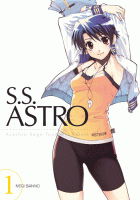
S.S. Astro: Asashio Sogo Teachers’ Room, Volume 1

January 15, 2014 by Ash Brown

S.S. Astro, Volume 1Creator: Negi Banno
U.S. publisher: Yen Press
ISBN: 9780759528987
Released: August 2008
Original release: 2007

S.S. Astro: Asashio Sogo Teachers’ Room is a yonkoma, or four-panel, manga created by Negi Banno. The first volume of S.S. Astro was originally published in Japan in 2007. Yen Press released the English translation of the manga in 2008, around the same time that it was licensing several other yonkoma manga series. As for S.S. Astro, only one volume was ever released. As far as I can tell, the series has been on hiatus since 2007 in Japan. Although I believe that Banno has created more S.S. Astro strips than those found in the first volume, there have not been enough to collect into a second volume. I have no idea if Banno plans to ever return to the S.S. Astro manga, but because so many years have passed it seems increasingly unlikely. S.S. Astro was actually one of the first yonkoma manga that I ever read. I originally came across it a few years back while searching for manga in English with yuri elements, which used to be a little more difficult to find than it is now.

Seven years after she graduated, Izumi Maki is back at her old high school. Except this time she’s one of the ones responsible for molding the young minds of Tokyo’s Asashio Integrated Public High School. It’s her first year as a teacher. Maki’s now in charge of both health and physical education classes, not to mention a home room with nearly forty students. (Now she just somehow needs to find a way to remember all of their names.) Maki’s not the only fresh blood at Asashio. Her good friend Yuko Nagumo, the new Japanese instructor, is also a first year teacher. The nursing teacher Setsuna Arai has a couple of years of experience on them and Maki’s backup teacher Kaname Karasuma, the instructor for the school’s English course, has even more. She also has a huge crush on Maki, not that Maki has noticed. Throw in all of the other teachers and their quirks, as well as Maki’s older brother, and high school is just as entertaining and complicated as it was the first time around.

Yonkoma manga tend to be fairly hit-or-miss for me, but in the case of S.S. Astro it’s mostly a hit. As with many four-panel manga, whether or not someone actually likes the series will depend on whether or not the reader likes the characters as they are. Although there are plenty of running jokes in S.S. Astro, the series tends to be episodic without much of an overarching plot and very little in the way of character development. Fortunately, I do like the characters. Quite a bit, actually. Maki’s a scatterbrain but earnest. Nagumo can put away an impressive amount of food and is closet fujoshi. Arai has a delightfully sadistic streak. Of the four main characters, Karasuma is the most responsible one, at least when she isn’t completely lovestruck. About halfway through the first volume of S.S. Astro the rest of the Asashio staff are more thoroughly introduced. Prior to that they were largely relegated to the background. I like the other teachers as well and wish more time could have been spent getting to know them better, too.

Quite a few manga licensed in English take place in a school setting. What helps to set S.S. Astro apart is that it focuses on the teachers rather than on the students. I find this to be a refreshing change of pace. One of the reasons that I’m particularly fond of S.S. Astro is that the manga focuses on the adults and their lives and relationships. Granted, the main cast are all relatively young and still in their twenties, but there are some older characters as well. Maki and the others can be immature at times, but in the end they are adults with adult responsibilities. Which is not to say there isn’t room for fun in S.S. Astro; being an adult has its perks, too. Video games, drinking parties, and a little bit of workplace romance (straight and otherwise) all have their place in the series. The artwork tends to be rather cute, too. In general, I find S.S. Astro to be fun and funny. S.S. Astro may not be a manga that I go out of my way to recommend to people, but it is one that I quite enjoy. I only wish that there was more of it.

Filed Under: REVIEWS Tagged With: manga, Negi Banno, S.S. Astro, Year of Yuri, yen press

Attack on Titan, Vol. 11

January 14, 2014 by Sean Gaffney

By Hajime Isayama. Released in Japan by Kodansha, serialization ongoing in the magazine Bessatsu Shonen Magazine. Released in North America by Kodansha Comics.

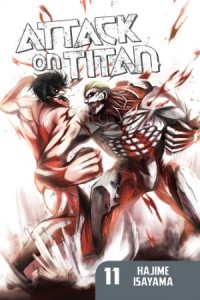
Sometimes you want lots of characters and plot development, with surprise revelations out the wazoo, aadn sometimes you just want to watch big guys beating the snot out of each other. We actually get both here, but it’s the latter that gets most of the attention, as the cover art will attest. As if to announce that his artistic skills have at last improved to ‘passable’, Isayama gives us a chapter almost entirely devoted to Titan-Eren being a seething ball of rage and trying to punch all his problems. Amusingly, it almost works this time.

attack11

The majority of this volume is devoted to the Armored and Colossal Titan trying to escape with Eren and Ymir, and Eren attempting to prevent that happening. This means the above-mentioned battle royale, and it’s actually a lot of fun. The use of the flashback is well-placed here, reminding us that Annie and Reiner may seem like obvious suspicious people now, but they were once our heroes’ trusted comrades. The interaction between Annie and Mikasa in particular is quite amusing, though as always I could do without Mikasa’s jealousy. Chapter 44 is named after a slogan in Mixed Martial Arts, and even as a Titan, Eren puts his moves to good use.

It’s all for naught, though, as the villains get away with what they came for. This does give us a chance to see a more vulnerable Mikasa, who has spent far too much time being either a supersoldier of a jealous would-be lover. Here we see a bit of the child that she was never allowed to be, and it’s very appropriate that Hannes be the one to show up and give her and Armin a pep talk. For all that Mikasa’s obsession with Eren is disturbing, at heart it’s the obsession of a girl who just wants to be near the one she loves most.

The second half of the volume teases us about revealing more information regarding Beast Titan and company, but in the end is far more interested in fleshing out its characterization. Reiner in particular is having difficulty coming to terms with his actions, and Ymir notes that he went so deep undercover that he actually seems to have separated the part of him that’s a soldier from the part of him that’s a Titan, and can’t really get them back together. (Bertolt doesn’t seem to have this issue, though it’s possible we’ll get to see more of his emotional issues next time.) As for Eren, possibly the funniest part of this volume is when he realizes that in order to get anywhere with Reiner, he has to control his emotions. This lasts about 3 pages before ending in screaming, as you would expect.

As for Ymir, it’s become clear she does *not* in fact know everything, but she can certainly make some educated guesses, and is just about to when Reiner threatens her obvious weak spot, and Ymir decides to clam up. (It’s played seriously, but I couldn’t help but imagine Reiner and Bertolt as the Vercotti Brothers from Monty Python – “Nice Krista you’ve got here, Ymir. Be a shame if something… happened.” “Yeah, fings break, don’t they, Ymir?”)

There’s even more that I could discuss (Hange is absolutely terrific in this volume), but I think you get the gist. Attack on Titan remains riveting reading. And we have at last ‘caught up’, so be prepared to wait till April to see what happens next. (Or just go to Crunchyroll and read up to the current chapter.)

Filed Under: REVIEWS

Nisekoi: False Love Vol 1

January 12, 2014 by Anna N

Nisekoi: False Love Vol 1 by Naoshi Komi

I don’t tend to track trends in English releases of shonen manga as much as I do shoujo manga, but it certainly seems like it has been some time since we’ve seen a shonen romantic comedy set in high school. Raku is the typical shonen protagonist who (say it together with me!) “just wants a normal high school life.” Unfortunately while Raku has set his goal as becoming a reliable civil servant, his desire to be boring and normal is foiled by the fact that he’s the heir to a yakuza clan. Raku also is dealing with the aftermath of an encounter in his youth, when he exchanged vows of love with a girl he cannot remember. He has a special pendant in the shape of a lock, and his faceless beloved is holding on to the key. But Raku doesn’t remember her name!

Raku starts school awkwardly failing to ask out the nicest and prettiest girl in school, Ondera. His romantic ambitions are foiled when a new girl appears in his class. Chitoge is cute, athletic, and brash and she and Raku naturally start bickering immediately. They are assigned desks next each other as well as duties after school and they spend most of their time arguing so much, their classmates start to wonder if they are especially close. Things get even worse for Raku when he agrees to pretend to be romantically involved with the daughter of a rival gang boss in order to preserve peace, only to find out that his new “girlfriend” is Chitoge. Under the watchful eyes of retainers from both families, Raku and Chitoge go through the motions of a weekend date, only to find out that their romantic status has been announced at school as well, leaving them no rest from their charade.

There’s plenty of humor in this title even though it doesn’t reach the laugh out loud heights of Oresama Teacher. Komi frequently draws rictus-like facial expressions when his characters are in the grips of strong emotions. While the love triangle in this book is predictable, it certainly isn’t more derivative than the typical shoujo title. Chitoge and Raku’s similar backgrounds and tendencies to freak out often make them seem like natural friends with something in common, whereas Ondera’s more retiring personality makes her someone that Raku can easily admire from afar even though he doesn’t know her very well. While I didn’t connect with this title the same way I do my treasured shoujo romances, for anyone looking for shonen romantic comedy I think this will be an enjoyable manga to read. The art is well-executed, the personalities of the characters are interesting if a bit broadly drawn, and random yakuza thugs make everything more fun.

Filed Under: REVIEWS Tagged With: nisekoi, Shonen, viz media

Romeo And Juliet

January 12, 2014 by Sean Gaffney

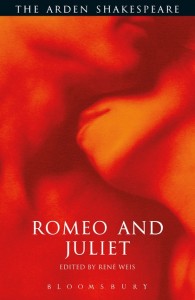
By William Shakespeare. First published in Britain in 1597 by John Dexter (Q1), then in 1599 by Cuthburt Burby (Q2). Review copy from ‘The Arden Shakespeare: Third Series’, edited by René Weis.

This actually came out in printed format a couple of years ago, but I never reviewed it, mostly as I don’t have much to say about Romeo And Juliet as a play. It’s sort of like giving your opinion on Hamlet – I’m not sure where to begin, or if my opinion is even relevant. I’d really never gotten as attached to it as I had to, say, Measure for Measure or Troilus and Cressida, though I can recognize its greatness. However, it coincidentally happened to be the first Arden Shakespeare release to come out as an ebook – I got mine on Kindle via Amazon – and so I thought I’d take a look, seeing what the ebook version can give to me, and also reassessing the play.

romeo

I generally prefer Shakespeare’s comedies to his tragedies, so it helps that this one is structured very much like a comedy till the deaths start happening, with lots of back and forth between servants and comedic sexual banter from Mercutio. But where in Much Ado the characters might get a bit angry at times, here almost everyone is constantly on edge – the first scene has the two families come to blows pretty much because they walk past each other – and therefore even comedic situations can ignite a spark. This is not helped by Mercutio (again), who practically goads Tybalt into killing him. Mercutio is much beloved as a character, mostly as he’s a more ‘modern’, with it guy compared to soppy Romeo and raging Tybalt, but he’s just as bad at keeping his temper and not doing dumb things.

And so tragedy does happen, as the crazy scheme to feign Juliet’s death till Romeo can come spirit her away goes soup. Juliet is one of the great female characters created by Shakespeare (which yes, was created for a young boy to perform), and it’s not just to avoid scandal that the actresses are usually much older than the ‘about to turn 14’ Juliet is. The audience is willing to suspend disbelief in order to see a truly stellar piece of acting, and Juliet gives a lot of fuel to burn there. Not to sell Romeo short – he starts off as a callow youth going through the motions of being lovestruck, but the way Shakespeare changes his vocabulary once he meets Juliet is one of the best parts of the play.

I actually found it easier to read this as an ebook – the printed version has the annotations (telling you what this Elizabethan term meant, etc.) on the bottom of the page, but your eyes still bounce up and down constantly as you track when the next note is. With the ebook you can tap to the endnote, then tap right back, making it flow better. The endnotes and annotations are positioned well – some ebooks have issues with endnotes, meaning you have to wait 30 seconds for the book to ‘catch up’ to you before you can return to the text, but not here. The only issue I had was with the facsimile of Q1 being too small to read on my phone, but larger ebook devices shouldn’t have that problem.

The scholarship here is good – Weis’ introduction is informative without overstaying its welcome, and the text fuses together Q1 and Q2 in ways that make sense (and are explained throughout), making this a very readable Romeo And Juliet. I suspect it was chosen to debut the ebook editions simply as it was one of the more recent books – formatting books like these doesn’t come quickly – and would not be surprised if Coriolanus, which came out in 2013, is the next one we see. In any case, those looking to dip their toes into Critical Editions of Shakespeare’s plays or just wanting a good readable ebook Romeo and Juliet should greatly enjoy this edition.

Filed Under: REVIEWS

The Fiend with Twenty Faces

January 10, 2014 by Ash Brown

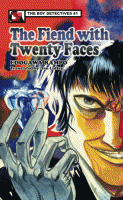
The Fiend with Twenty FacesAuthor: Edogawa Rampo
Illustrator: Tim Smith 3

Translator: Dan Luffey
U.S. publisher: Kurodahan Press
ISBN: 9784902075250
Released: March 2012
Original release: 1936

Edogawa Rampo, the pen name of Tarō Hirai, was one of Japan’s preeminent authors of the erotic grotesque nonsense movement. However, he was also well-known for his detective and mystery stories. Later in his career he even wrote a series for children called The Boy Detectives. The first and possibly best-known novel in this series was The Fiend with Twenty Faces, originally serialized in the boys adventure magazine Shōnen Club in 1936. The English translation of The Fiend with Twenty Faces by Dan Luffey was published by Kurodahan Press in 2012 with illustrations by Tim Smith 3. Although Rampo was a prolific and extremely influential author in Japan, relatively few of his works have been translated into English. So far, The Fiend with Twenty Faces is the only example of Rampo’s stories for a young audience to have been made available. As a fan of Rampo’s ero guro works, I was curious to read something a little different of his.

Terrorizing the wealthy of 1930s Tokyo is a criminal known only as Twenty Faces, a master of disguise who can change his appearance with such ease that no one has been able to uncover his true identity. Using his skills of disguise and his tremendous intellect, he steals whatever suits his fancy–priceless jewels, family heirlooms, works of art–nothing is safe. He has even been known to resort to kidnapping. To make things even worse, Twenty Faces announces exactly what it is he intends to steal and when. But even armed with this knowledge, no one has yet been able to put an end to his crime spree. The only person who might be a match for Twenty Faces is the famous detective Akechi Kogorō. Unfortunately, he is currently overseas working on an important case. However, he has left behind Kobayashi Yoshio, his young assistant and protégé, to attend to his affairs. Kobayashi may be extremely clever, but Twenty Faces is cleverer still. With Akechi away, there is little hope that the criminal can be stopped, but maybe Kobayashi can at least make things a little more difficult for him.

Rampo very clearly draws from other great mystery writers in his creation of The Boy Detective series in general and in The Fiend with Twenty Faces specifically. Influences from Maurice Leblanc’s series featuring the infamous gentleman thief Arsène Lupin and Arthur Conan Doyle’s mysteries with the master detective Sherlock Holmes can particularly be seen in The Fiend with Twenty Faces. Twenty Faces shares similarities with Lupin and Akechi exhibits many of the same skills that Holmes possesses. Having previously read many of Rampo’s short stories (at least those available in English), I was already familiar with Akechi from his mysteries aimed at adult audiences. I’m actually rather fond of Akechi and so was quite pleased when he made his appearance in The Fiend with Twenty Faces, even if it did take nearly half of the novel before he finally returns from overseas.

The Fiend with Twenty Faces was highly entertaining and a tremendous amount of fun. Despite being a mystery, the novel is a fairly straightforward adventure story written for a younger audience. As someone who is fairly well-read, I was able to anticipate most of the twists and turns in the plot of The Fiend with Twenty Faces. If something seemed to be too convenient or unlikely to be a coincidence, it’s most likely because it was. However, I still enjoyed the story a great deal. The characters are also fairly engaging. Twenty Faces himself is a bit of an arrogant bastard and his rivalry with Akechi is marvelous to watch unfold. I could easily imagine reading the novel aloud; Rampo’s writing addresses the reader directly and would be well-suited for performance with very little modification needed. I’m not sure if any more of the novels in The Boy Detectives series will be translated, but I’m glad to have had the opportunity to discover firsthand one of the other reasons why Rampo’s influence has been so enduring in Japan.

Filed Under: REVIEWS Tagged With: Boy Detectives, Edogawa Rampo, Kurodahan Press, Novels

Takasugi-san’s Obento, Vol. 1

January 9, 2014 by Sean Gaffney

By Nozomi Yanahara. Released in Japan by Media Factory, serialization ongoing in the magazine Comic Flapper. Released in North America by Digital Manga Publishing.

I must admit, as I got further and further into this series, it kept reminding me of a Hakusensha shoujo. The art style and tendency towards tinny textual comments in particular, not to mention that one of the characters is a straight up Expy of Shinobu from Teru Teru x Shonen. And sure enough, the author worked for Hakusensha for years doing one-volume short series for LaLa and LaLa DX before starting this series, her longest, for Comic Flapper. Flapper is sort of a seinen title, but in practice tends to be ‘shoujo for adult males’ a lot of the time. And for this title, the adult male is also the star of the show, as the titular Takasugi takes in his 12-year-old cousin after her mother dies.

obento1

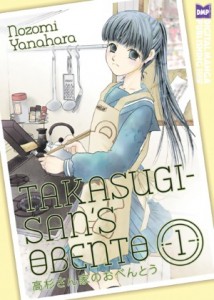
(The cover art has been slightly changed for the print edition, but this is the only image I could find.)

It’s honestly really hard not to compare this to Bunny Drop. Takasugi-san’s Obento has an awkward single male, around 31, who ends up being the relative who takes in a quiet and closed-off child still grieving for the death of her parent. Things are awkward but they slowly begin to bond and forge a life together, with the help of his workplace friends, one of whom begins to have a major crush on him. Takasugi seems to be somewhat bad at reading people’s hearts, despite having a Ph.D in Geography (I agree with Anna from Manga Report, by the way, clearly Cultural Anthropology is what’s implied here). Luckily, he improves over the course of the volume to a certain extent.

The interesting thing here is that he and Kururi, his cousin, end up bonding over their shared love of bentos, which his aunt made for him when he was growing up and then continued to make for Kururi when she was growing up. Kururi really comes alive when she’s comparison shopping and stressing over food prices, which are really important to her (to an extent her obsession with food almost reads like a function of her grief, but I think a lot of it was there to begin with). This is not a foodie manga by any means – you get no recipes, and will have to google to see what Kimpira Burdock is, as there are no translation notes – but the food seems to help tie everything together, both with Takasugi’s new family and with his friends and colleagues.

The series is seven volumes and still going in Japan. It’s also, unlike Bunny Drop, not scanlated and spoilered to hell and back. Which makes it all the more awkward that the first volume ends by showing us that 12-year-old Kururi has a giant crush on her 31-year-old cousin, and is drawing charts to see if they can get legally married. I’m hoping the series backs away from this pairing eventually – there is a running gag of everyone thinking Takasugi is a horribly creepy pervert that I had thought was there to show people the title wouldn’t go that way, and Kosaka (the colleague who has a crush on him) is adorable and I really want to see that relationship develop instead. But I can’t deny that this is Japan, and it’s possible that the manga might go down that road eventually. So if Bunny Drop burned you, consider yourself warned.

Overall, though, this was cute and adorable, and I managed to like all the characters quite a bit. I want to see Kururi grow and open up to others, and of course I want to see them eat more food. I will be checking out the next volume of this series (Due out in May, theoretically).

Filed Under: REVIEWS

Oishinbo, A la Carte: Fish, Sushi & Sashimi

January 8, 2014 by Ash Brown

Oishinbo, A la Carte: Fish, Sushi & SashimiAuthor: Tetsu Kariya
Illustrator: Akira Hanasaki

U.S. publisher: Viz Media
ISBN: 9781421521428
Released: July 2009
Original release: 2005
Awards: Shogakukan Manga Award

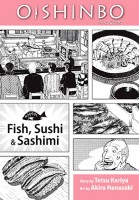
With over one hundred volumes, it is very unlikely that the award-winning food manga Oishinbo will ever be licensed in its entirety in English, especially considering that the series is still ongoing at this point. However, seven volumes of Oishinbo, A la Carte have been released by Viz Media under its Signature imprint. These volumes are thematic collections which select stories from throughout the series proper. Fish, Sushi & Sashimi was the fourth Oishinbo, A la Carte collection to be published by Viz and was released in 2009. However, in Japan Fish, Sushi & Sashimi was actually the fifth volume in the series and was published in 2005. As a lover of both food and manga, it probably shouldn’t be too surprising that I enjoy Oishinbo immensely. And I’m not the only one. The series, written by Tetsu Kariya and illustrated by Akira Hanasaki, has been in serialization since 1983 and in 1987 the creators received a Shogakukan Manga Award for their work.

Because Oishinbo, A la Carte is a selection of stories from Oishinbo, the overarching story of the original series is obscured. Instead of the ongoing plot, the focus of Oishinbo, A la Carte is very much on the food itself. Fish, Sushi & Sashimi collects eight different stories centered around fish. Sushi rolls are probably one of the first things that come to many people’s minds when considering Japanese fish dishes, but not a single one will be found in Fish, Sushi & Sashimi. Generally, the fare tends to be simpler and fish the primary ingredient. The fish specifically featured in Fish, Sushi & Sashimi include white trevally, chub mackerel, sweetfish, tiger blowfish, freshwater goby, flounder, salmon, and shinko, many of which are considered to be some of the best and most desirable or delectable fish in Japan. There is also a wide variety of preparations shown, everything from raw sashimi to fried tempura.

When dealing with fish as a source of food, freshness is key. This is true for most seafood, too, and is something that most people probably know. However, Fish, Sushi & Sashimi shows that there is much more involved in the freshness of fish than just how long it has been since it has been caught. Fish are very sensitive to changes in the environment in which they live. Simply put, quality fish come from quality waters. The healthier and less polluted those waters, the better the fish. Additionally, the same fish can taste significantly different due to seasonal changes, where it is caught (and how far it has traveled afterwards), or when in its life-cycle it is eaten. As is often the case in the Oishinbo, A la Carte stories that I have so far read, Fish, Sushi & Sashimi emphasizes the importance of locally sourced and sustainable foods, which is particularly true of fish.

One of the highlights of Oishinbo, A la Carte is Hanasaki’s artwork. The people tend to be stylized but the food is always realistically drawn. The catching and cleaning of the fish, the steps in the various dishes’ preparations, and the skilled knife-work employed are all important to Fish, Sushi & Sashimi. Because Fish, Sushi & Sashimi focuses on aquatic life both in and out of its natural environments, Hanasaki also has the opportunity to beautifully illustrate Japan’s oceans, rivers, and other waterways. Another thing that particularly struck me about this volume of Oishinbo, A la Carte was how many young people were included in the stories. Family drama has always been a part of Oishinbo with the intense father-son rivalry between Kaibara Yūzan and Yamaoka Shirō. It’s extremely entertaining to watch them battle it out over and with food, but it’s also nice to see some more wholesome family relationships in the series, too.

Filed Under: REVIEWS Tagged With: Akira Hanasaki, manga, Oishinbo, Shogakukan Manga Award, Tetsu Kariya, viz media, VIZ Signature

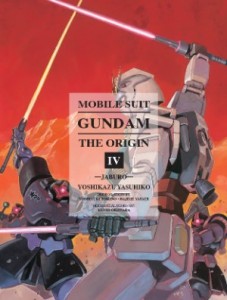
Mobile Suit Gundam: The Origin, Vol. 4

January 7, 2014 by Sean Gaffney

By Yoshikazu Yasuhiko; Original Story by Yoshiyuki Tomino and Hajime Yatate; Mechanical Design by Kunio Okawara. Released in Japan by Kadokawa Shoten, serialized in the magazine Gundam Ace. Released in North America by Vertical, Inc.

There are spoilers in this review for this volume of Gundam, though not future ones.

As you might imagine by the subtitle of this particular volume, our heroes finally reach Jaburo and are able to have the ship refitted. What’s more, surprise, everyone decides to enlist… though not everyone is happy about this. In the meantime, though, this is still Gundam, which means we get to experience the horrors of war, the death of beloved crew, and the ‘good guys’ behaving in a way that makes them look just as bad as the ‘bad guys’.

gundam4

I dpo wonder sometimes how much Yasuhiko is writing for new readers unfamiliar with things (like me), and how much of this is paced towards folks who know what’s going to happen from having watched the TV series. I ask this because Lieutenant Matilda, who walks around White Base with every male salivating around her, is basically a perfect soldier, and chose a job in the supply corps as it’s the best way she can serve in this time of need, is just walking around wearing a sign saying “Hi, I am going to die”. (One can argue that Ryu is as well, but he’s been around from the start. Indeed, Ryu and Matilda’s deaths being so close together was rather startling to me, and felt oddly paced.) I do wonder if Matilda’s foreshadowing was done deliberately as the author knew it wouldn’t be a surprise. In any case, she is a terrific character.

Speaking of which, I liked the differing reactions to the deaths of Matilda and Ryu. After Ryu dies, Hayato has a bit of an emotional breakdown, and Amuro tries to snap him out of it with a rousing speech and a “snap out of it” punch. Unfortunately, Amuro is still really emotional himself, so the whole thing degenerates into a fight. Later on, we meet Lt. Woody, who is in charge of the refit at Jaburo, and also Matilda’s fiancee. After Amuro tries to apologize for being unable to save her, Woody gives him the rousing speech he should have given to Hayato, with the backing of more maturity and experience. It was nice to see.

Not that experience means everything here. I had wondered why the kids were being SO horrible and obnoxious throughout the first half of this volume, then I got to Part Two, where they essentially save the day. These are war orphans, and they’re also little brats, but they’re smart as whips, and I will take a little unrealism in my story for the sake of them being awesome and getting rid of almost all those bombs within just a few minutes. This allowed Jaburo to get the jump on the Zeon attack, headed by Char (who is fantastic, and fails only due to a combined effort from Woody and Amuro) and Garcia (who is a cartoon villain who gets his cartoon villain comeuppance, though it’s worth noting that the series shows how dangerous cartoon villains can be when ordering actual troops to their deaths).

It will be interesting to see where things go from here. There’s several open plot threads, and not just in regards to the war. Amuro clearly has some type of PTSD, and getting psychotropic drugs from the medical crew at Jaburo so they can try and see if he’s a Newtype isn’t helping. Meanwhile, Bright and Mirai continue to get closer, despite her having a fiancee (something Bright reacts poorly too). At one point it looks as if he’s reading her thoughts, and I’m not sure if that’s deliberate or not. Volume 5 is called Char & Sayla, though, so I expect it will build on the revelation we got at the end of this volume. In any case, this is a series that everyone should be reading, and each volume builds on the last to make a real epic.

Let’s not talk Yokusaru Shibata dressing Sayla up as a buxom maid in the extras, though, which merely served to remind me why 81Diver isn’t licensed over here.

Filed Under: REVIEWS

  • « Go to Previous Page
  • Page 1
  • Interim pages omitted …
  • Page 259
  • Page 260
  • Page 261
  • Page 262
  • Page 263
  • Interim pages omitted …
  • Page 346
  • Go to Next Page »
 | Log in
Copyright © 2010 Manga Bookshelf | Powered by WordPress & the Genesis Framework