• Skip to primary navigation
  • Skip to main content
  • Skip to primary sidebar
  • Home
  • About Us
    • Privacy Policy
    • Comment Policy
    • Disclosures & Disclaimers
  • Resources
    • Links, Essays & Articles
    • Fandomology!
    • CLAMP Directory
    • BlogRoll
  • Features & Columns
    • 3 Things Thursday
    • Adventures in the Key of Shoujo
    • Bit & Blips (game reviews)
    • BL BOOKRACK
    • Bookshelf Briefs
    • Bringing the Drama
    • Comic Conversion
    • Fanservice Friday
    • Going Digital
    • It Came From the Sinosphere
    • License This!
    • Magazine no Mori
    • My Week in Manga
    • OFF THE SHELF
    • Not By Manga Alone
    • PICK OF THE WEEK
    • Subtitles & Sensibility
    • Weekly Shonen Jump Recaps
  • Manga Moveable Feast
    • MMF Full Archive
    • Yun Kouga
    • CLAMP
    • Shojo Beat
    • Osamu Tezuka
    • Sailor Moon
    • Fruits Basket
    • Takehiko Inoue
    • Wild Adapter
    • One Piece
    • After School Nightmare
    • Karakuri Odette
    • Paradise Kiss
    • The Color Trilogy
    • To Terra…
    • Sexy Voice & Robo
  • Browse by Author
    • Sean Gaffney
    • Anna Neatrour
    • Michelle Smith
    • Katherine Dacey
    • MJ
    • Brigid Alverson
    • Travis Anderson
    • Phillip Anthony
    • Derek Bown
    • Jaci Dahlvang
    • Angela Eastman
    • Erica Friedman
    • Sara K.
    • Megan Purdy
    • Emily Snodgrass
    • Nancy Thistlethwaite
    • Eva Volin
    • David Welsh
  • MB Blogs
    • A Case Suitable For Treatment
    • Experiments in Manga
    • MangaBlog
    • The Manga Critic
    • Manga Report
    • Soliloquy in Blue
    • Manga Curmudgeon (archive)

Manga Bookshelf

Discussion, Resources, Roundtables, & Reviews

Reviews

The Wedding of Marielle Clarac

November 1, 2020 by Sean Gaffney

By Haruka Momo and Maro. Released in Japan as “Marielle Clarac no Kekkon” by Ichijinsha Bunko Iris NEO. Released in North America by J-Novel Club. Translated by Philip Reuben.

Those who have been waiting patiently will be happy to hear that we do get the wedding of Marielle and Simeon in this book. That said, if you’re expecting a book filled with wedding prep and relaxation, think again – even with Marielle trying her best not to get involved in any incidents, she still gets abducted two days before her wedding. Which should not be a surprise – readers of this series are here for the detective thriller part of it just as much as the romantic back and forth, and so not only want Marielle in a wedding dress saying “I do”, but also Marielle escaping her captors in a boat and headed down a very fast river with no real strength to row her way out of it. That said, worry not, romance fans, as there are some delightful moments of that here as well, as the Duke who has been a thorn in their side for some time decides to make a last-minute effort to break them up… mostly as he’s bored.

With two days to go until the wedding, all Marielle and Simeon have to do is pick up the wedding rings, their “wedding eyeglasses”, and enjoy a nice afternoon at the fantasy equivalent of the local Marks and Spencer. Unfortunately various things happen, and for once they’re not really Marielle’s fault. She’s mistaken for someone else and her handbag is stolen, then she ends up involved in a jeweler’s efforts to try to stop the theft of a super-expensive ring… that is being made for the Duke. Then she’s kidnapped. In the second half of the book, after both the expensive ring AND her wedding rings are lost in the river, she and Simeon are forced to play a game as captives of the Duke and his wife… and if they lose, they have to call the wedding off. Even if, by then, the wedding is less than 18 hours away.

I admit it, I was rather surprised, when the wedding rings ended up in the drink halfway through the book, that we did not get them back by some weird coincidence at the end. That said, it does lead to a very sweet and very in character replacement. Marielle and Simeon are in fine form here, with her being the usual mix of level-headed straightforwardness and fangirlish squeeing and Simeon being… well, look, there’s a spoiler I won’t reveal here, but let’s just say it’s the highlight of the entire book and also leaves Simeon feeling as if he’s shamed himself forever. You will laugh a lot. There are also some old favorites who show up here… I’d say it’s a spoiler as well, but come on, of course Lutin is going to try to get in the way of everything again. We even get a nice epilogue from his po9int of view, showing a bit of the genuine feelings he has for Marielle… and how he has no plans of giving up just because they’re married.

Theoretically they should finally be able to consummate their marriage now (and Marielle, though naive, certainly seems eager to do so), but I’ve a suspicion that they may have to wait a bit. Till then, please enjoy another in a series of amusing romantic thrillers starring a young woman who claims to be plain and unassuming but is anything but.

Filed Under: marielle clarac, REVIEWS

Our Last Crusade or the Rise of a New World, Vol. 4

October 31, 2020 by Sean Gaffney

By Kei Sazane and Ao Nekonabe. Released in Japan as “Kimi to Boku no Saigo no Senjou, Aruiwa Sekai ga Hajimaru Seisen” by Fujimi Fantasia Bunko. Released in North America by Yen On. Translated by Jan Cash.

I’ve come to realize that Our Last Crusade falls into the same bucket that I put Strike the Blood and the complete works of Ichiro Sakaki, which is to say a series that does not stand out as all that good but succeeds by dint of being smoothly written and not really doing much that’s bad. It feels written in hopes of an anime, which is good news given that there’s one airing as I type this. Sadly, I was not able to get very far into it, mostly as I can tolerate characters like Mismis when they are words on a page, but find it almost impossible when they are tripping and falling onto their boobs in glorious color. This particular book picks up right where the last one left off, but manages to avoid sending our heroes into deathtrap number four and sends them on a vacation instead. Of course, where Iska goes, Alice is soon to follow… though not alone this time.

As hinted by the last cliffhanger, this volume features Sisbell, the youngest of the three sisters who are vying for the throne. Due to the nature of her powers, and the general scumminess of humanity, she has come to distrust everyone around her, especially her two sisters, Elletear and Alice. the only one she feels she can trust is the man who rescued her from the Empire one year previously – Iska. As for Iska and company, they’re sent on a forced vacation after the higher-ups realized how ,long they’d been in enforced combat. Which is very good news for them, as this gives them time to figure out what to do about Mismis’s Astral Crest. The group, after a long shopping scene that reminds me why this series tends to grate on me, heads to an independent desert nation that consists mostly of resort hotels. Sisbell is also there, and propositions Iska: will he join her? Unfortunately, the villain of the second book – and his mask – have also shown up.

Given the entire series deliberately runs on coincidences constantly bringing Iska and Alice together, I am not all that annoyed at events conspiring at the last moment to save Mismis form execution, and anyone and everyone showing up at the same desert city. And I was glad that we briefly got to see Mismis do a thing, even if it was unconsciously and we’re not really sure what she did. Sisbell is sympathetic, and I expect to see more of her as the books go on, though I’m almost positive she will serve as hostage fodder in some way. The ending fight with what amounts to a giant robot with lasers is a lot of fun and will likely look cool if the anime gets to this book. As for the romance between Iska and Alice, they’re separated most of the book again, so it’s mostly just constantly thinking about each other.

The cliffhanger, which is again excellent, implies that events are going to be headed towards the Alice side of the two nations for a while. Till then, enjoy a book that can best be described as “serviceable”, but at least also lacks the bad habits of many other light novels. It’s okay.

Filed Under: our last crusade or the rise of a new world, REVIEWS

Bibliophile Princess, Vol. 4

October 30, 2020 by Sean Gaffney

By Yui and Satsuki Sheena. Released in Japan as “Mushikaburi-hime” by Ichijinsha Bunko Iris NEO. Released in North America by J-Novel Club. Translated by Alyssa Niioka.

Last time I wrote about how the author of Bibliophile Princess seemed to be running out of ideas, and that the third book was, in large part, a retread of the first book. Apparently between that book and this one, according to the Afterword, the author’s writer’s block got even worse. So, if nothing else, this shows that sometimes a huge amount of pressure can be good for a person, as the fourth volume of Bibliophile Princess is the best in the series to date. Finally accepting that she can’t simply write the same love story over and over again, this time around politics, which have always simmered in the background of every book, come front and center and put Elianna in a position where she has to make decisions on her own in a crisis. All of this without Chris at her side – he’s busy trying to resolve things with the kingdom’s longtime enemy. And another subplot that’s been burbling underground through all the books finally comes to the surface, and it’s terrifying.

Elianna is being sent to Ralshen, a region that, for historical, political, and religious reasons does not have the best relationship with Sauslind. She’s taking Chris’ place as he’s negotiating some sort of peace deal with the war-loving Maldura. A lot of the nation’s past is explained to Elianna (and the reader) in this book; she’s already aware of it, of course, but needs to see how this affects things politically. There’s also a couple of examples of failed marriages, in particular one between a King and a Queen who disagreed over policy decisions, and Elianna is asked, if she and Chris came to such a crisis, what would she do? She’s not sure, frankly, and I don’t blame her – she’s only just come to terms with her feelings for Chris, and so far they’re pretty much agreed about most things.

We meet one of Elianna’s childhood mentors – a friend of her grandfather’s who she calls “Grandpa Teddy”, he’s also a general who has seemingly been supporting her relationship with Chris. But that ends here, and you are once again thrown up against the fact that the Bibliophile Princess world is so political that marrying for love is not something that can happen very often. Elianna finds her upcoming marriage to Chris is also a political marriage, and one that, in the past, has always led to war. She’s not going to let that happen, but it’s hard to buck tradition. Along the way, there’s mysteries to solve, which allows her to do the now-traditional scene where she looks at a book – or, in this case, a painting – and tells everyone what really happened. As for the crisis at the end, I won’t spoil, but it’s been hinted at since the beginning, and leads to an especially nasty cliffhanger.

There is a fluffy short story at the end, taking place mostly about 2 years prior to the main action. It’s OK, but honestly after that cliffhanger it feels out of place. In the meantime, Bibliophile Princess has grown up, much like its heroine, and I can’t wait to see where Vol. 5 takes us.

Filed Under: bibliophile princess, REVIEWS

Suppose a Kid from the Last Dungeon Boonies Moved to a Starter Town, Vol. 3

October 29, 2020 by Sean Gaffney

By Toshio Satou and Nao Watanuki. Released in Japan as “Tatoeba Last Dungeon Mae no Mura no Shonen ga Joban no Machi de Kurasu Youna Monogatari” by GA Bunko. Released in North America by Yen On. Translated by Andrew Cunningham.

This book continues to get the little things right. The humor is still very solid, and the main reason to read the series. The characterization is not really deep but it is fun, and it was nice to see the one main character I dislike get buried upside down in the dirt by the end of the book. The individual; situations, scenes, etc. are well-handled, and I really like the way that the action scenes are not just “Lloyd does everything” but have the rest of the cast all taking turns to take down the monster. That said, I have concerns about the main plot of the series… does it have one? There are more dark hints of future badness, as we meet another of Lloyd’s hometown friends who seems to be working for a Big Bad, but… look, this is a book where our hero is sent to a hotel in the country to be a bellboy. And it’s only Vol. 3.

An acquaintance of Chrome’s who is an ex-military man who now owns a hotel is desperate for staff, and so Lloyd is loaned out for their holiday season. Naturally, Lloyd is a one-man staff just by himself, instantly doing everything. Also naturally, all the rest of the cast separately make their way there as well. Riho wins at the horse races and treats herself to a luxury hotel; Selen is attending an arranged marriage meeting, much to her irritation; Allan is ALSO attending an arranged marriage meeting, and the dots can be fairly easily connected; and there’s a mysterious being draining the life force of people in the area, so Mena and Phyllo get sent to investigate. As it turns out, lots of people are investigating this. Good thing that Marie arrives to be a master detective. Which she totally is, uh huh. She’s not just here to see Lloyd or anything.

So there is a plot of sorts to this book – investigating who is behind the tree monsters that are draining life forces. Sadly, the culprit is not hard to guess. More importantly, aside from occasional hints that bad things will happen in a later book, I’m not sure where this series is headed. The second book added in a fighting tournament, and the third book took us on the road, so clearly “life at military academy” is not the goal here. Of course, the goal is Lloyd and his unique combination of total overpoweredness and ridiculous self-deprecation. And I do appreciate that the other characters are allowed to do their own thing and are not just a harem (though there’s aspects of that as well). It just sometimes feels like the fastest paced “slow life” series around. I wish it had more at its core than “be silly”.

Which is an odd thing to say about a broad comedy, and it’s possible I’m just being too grumpy. For most people, this is a fun and goofy comedy with lots of cute girls. Oh yes, and Lloyd too. Who, for this volume only, I like to imagine is voiced by Keith Moon.

Filed Under: REVIEWS, suppose a kid from the last dungeon boonies moved to a starter town

The Genius Prince’s Guide to Raising a Nation Out of Debt (Hey, How About Treason?), Vol. 4

October 28, 2020 by Sean Gaffney

By Toru Taba and Falmaro. Released in Japan as “Tensai Ouji no Akaji Kokka Saisei Jutsu ~Sou da, Baikoku Shiyou~” by GA Bunko. Released in North America by Yen On. Translated by Jessica Lange.

The title continues to be increasingly archaic, as there’s not even any scenes of Wein bemoaning how he can’t pawn his nation off on someone else and relax here. Indeed, he’s so busy he can’t even spare the time to go to the Empire’s Summit Conference, where the three brothers vying for the title of Emperor (and Lowellmina, who is also vying for the title but not officially) are getting together to try to hash things out. In reality, it’s mostly posturing, so Wein decides to send his little sister Falanya, who needs to gain some independence and become her own person. This succeeds beyond everyone’s wildest dreams; however, as is always the case with this series, events spiral out of control fast and Wein’s presence is required to stop what might be a very nasty conflict. And stop his sister getting married off. Oh yes, and defend himself from the charge of poisoning the eldest prince. Any sane man would collapse from the strain.

The highlight of the book was the journey that Falanya makes over the course of it. We’ve seen her briefly in the first three books, getting taught politics and history and being very bored with it, and also having a massive brother complex. This does not go away here (though thankfully it’s familial in nature – Wein/Ninym is Falanya’s OTP), but this book does see her forced to grow up fast, as well as fend off unseen assassins (OK, her bodyguard does this), unwanted proposals, evil princesses out to steal her brother (well, “evil” is perhaps incorrect here) and, most importantly, become fascinated with debate and parliamentary procedure to the point that, when the city the conference is in is in danger of being conquered, she can rally the populace with stirring speeches and save the day. She is fantastic all round here. And getting more like her brother every day.

As for Wein, I give him credit for actually staying home for a while, as I was thinking we’d get some comedy here of him secretly tailing Falanya because he’s worried. That doesn’t happen, but he does end up running himself ragged, having to race to the conference after all and then getting roped into the political nightmare that it happens to be. He’s in good form here, trying to gauge what everyone wants while not giving anything away himself. The Genius Prince books also have a very nice habit of one big surprising scene 3/4 of the way through each book, and the surprise this time is that it does NOT end with a corpse, but things are still very bad for Wein. I also like how his collapse near the end is not really part of a secret double-bluff or anything – it’s just exhaustion finally catching up with him. And it does allow us to see Ninym being something other than stoic and cool.

Overall, this is perhaps the best volume to date in a series that’s already excellent. Very highly recommended.

Filed Under: genius prince's guide to raising a nation out of debt, REVIEWS

Konosuba: An Explosion on This Wonderful World! Bonus Story: We Are the Megumin Bandits!

October 27, 2020 by Sean Gaffney

By Natsume Akatsuki and Kurone Mishima. Released in Japan as “Kono Subarashii Sekai ni Bakuen wo!” by Kadokawa Sneaker Bunko. Released in North America by Yen On. Translated by Kevin Steinbach.

Of course, this is just the 4th volume of the Megumin spinoff, really. But since it’s now caught up with the main series and is no longer a prequel (or possibly as the original was announced as a trilogy), we get a “Bonus Story” with more Megumin shenanigans. Yunyun is here as well, though the expansion of the cast means that she doesn’t really get a chance to do much other than play the tsukkomi and be pathetic. And, alas, Cecily is back as well, and continues to be the worst nun ever. That said, as the 10th volume of the main series hinted, we get a new addition to the group. Princess Iris is sneaking away from the royal residence every day, and quickly insinuates herself into Megumin’s group as the muscle (she certainly has the sword skills). Add a very reluctant thief, and you have all you could ever want in a KonoSuba spinoff.

The “plot”, such as it is, takes place mostly around Vol. 9 of the main series, though the last quarter or so takes place around the 11th book. Megumin has discovered Chris and Kazuma pulling off one of their Silver Haired Bandit raids, and finds herself fired up about the idea of stealing in order to defeat bad people (and also strangely attracted to the masked assistant). She decides to form her own group, quickly rounding up those I mentioned above… including Chris, who as you can imagine feels very awkward about all of this. After a brief detour where they try to figure out who a blond, handsome adventurer of legend is (it’s pretty obviously Dust, though the legend, as you might guess, is quite wrong in many places), they end up taking on a rival of Darkness’s who has a herd of monsters around her mansion deep in the forest. There has to be a reason, right?

There are a few flaws here. The last chunk of the book is back to Kazuma’s POV, which is fine but is not really what I signed up for with this Megumin-driven spinoff. And, as with the main series hinting about this series before we got it in English, the spinoff series hints about another as yet unlicensed spinoff series, this one starring Dust, that is familiar with Japanese readers. Mostly you get the fact that Yunyun and Dust have had adventures before, and she’s not happy about it. On the other hand, the parts of the book with Megumin thinking about her current state are excellent. She’s newly in love with Kazuma, but isn’t quite sure how that works, or even why she fell for him. She’s also trying to figure out how to be a “leader”, and Kazuma, who is mostly in non-dirtbag mode in this book, gives her some excellent advice. Fans of their pairing will be happy with this book.

There’s one more book in the series, which I’m sure we’ll get relatively soon. Till then, this is a solid KonoSuba spinoff with lots of laughs and some good Megumin character development.

Filed Under: konosuba, REVIEWS

Torture Princess: Fremd Torturchen, Vol. 5

October 26, 2020 by Sean Gaffney

By Keishi Ayasato and Saki Ukai. Released in Japan as “Isekai Goumon Hime” by MF Bunko J. Released in North America Yen On. Translated by Nathaniel Hiroshi Thrasher.

I have been preparing myself since the start of the first book for the fact that this series, which has an awful lot of gore, death, and icky things happening to everyone in the world, is going to have characters I care about die in horrible ways. That said, the author knows how to keep us coming back, and while Hina may have spent one of the volumes on ice, for the most part the main cast has made it though with a lot of pain and maiming but with their essential selves intact. That changes big time in this volume, in ways both surprising and not so surprising. No one is going to gasp at the idea that Izabella, the one noble Paladin in a corrupt church, is not going to have a fun time, and that turns out to be the case. Far more surprising it the fates of our two Torture Princesses themselves, as we get a book that sounds like it’s the penultimate volume (it’s not).

This volume picks up right where the last left off, with the reveal of the church’s big secret. After escaping thanks to Izabella making a noble sacrifice of herself, the rest of the cast go off to let the Butcher out of the gibbet Elisabeth left him in. Anyone surprised he isn’t there doesn’t know either the Butcher or books like these. Instead he leaves them a clue that takes them over the ocean to this world’s equivalent of the South Pole, where they might find the Saint – who everyone agrees they need to kill if they are to stop the world being completely annihilated. Fortunately, they have some allies here, as the Beastmen (mainly Lute) have also been led here. Unfortunately, the Church is here too, with yet another creepy child who essentially gives Kaito a Trolley Problem that he proves unable to solve. Then of course, we see what the Butcher has really been doing, and finally meet the Saint… which is not good news for our title character. Either of them.

I have to admit, Jeanne went from villain to ally awfully fast, and the book lampshades that it’s mostly due to Izabella. I’d been expecting Very Bad Things to happen to her for a while, so my only surprise here is that it wasn’t as bad as I expected. It did give Jeanne some nice character development that might have gone somewhere were it not for the end of the book. There’s also some lovely imagery regarding the Suffering Saint, who is less the Lamb of God taking on the sins of the world and more simply tired and worn. She wants a change, which Jeanne and Elisabeth are here to provide. Fortunately, Elisabeth and Kaito are very clever, so our heroes do find some way to carry on – it causes Kaito monumental pain, but let’s face it, that’s become almost a gag for humor purposes by this time. Now all he and the others have to do is stop the rest of the world going to war.

The first three books were an arc, and I suspect the same is true of the second three, so I’m pretty sure we’ll get an even more grandiose climax in the next volume. Till then, enjoy this dark, pitiless world and the creepy yet strangely awesome cast that walk through it. (Also, does anyone else get Jimi Hendrix in their head when they see Izabella?)

Filed Under: REVIEWS, torture princess

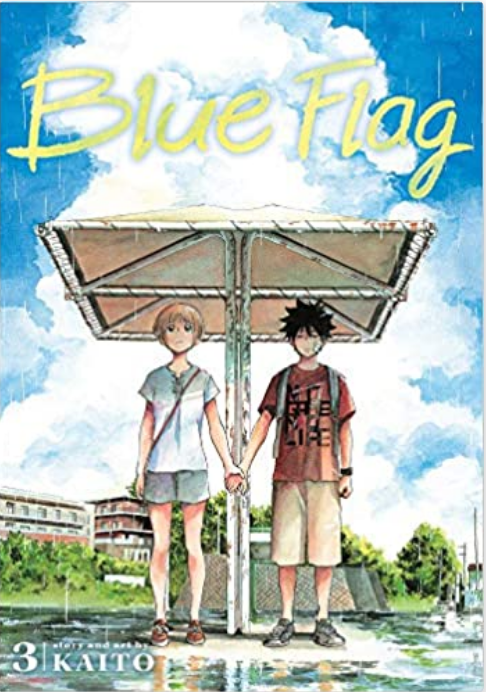
Blue Flag Vol. 3

October 25, 2020 by Anna N

Blue Flag Volume 3 by KAITO

Blue Flag continues to be an incredibly nuanced and introspective look at teenage life with an unconventional love quadrangle that shows characters intersecting in different ways, producing moments of self-reflection. As the volume opens Taichi has redeemed himself from a trauma in his childhood by saving a kitten from being struck by a car – only for his old friend Toma to break his leg saving Taichi. Toma’s stuck in the hospital and unable to lead his high school team to victory in the baseball championships but one of the biggest conflicts in this volume isn’t due to physical pain as Taichi’s crippling insecurity causes him to lash out at the people around him. Having an event that he genuinely feels guilty about causes him to feel even worse about himself.

Blue Flag Volume 3

Toma betrays his own feelings when Taichi comes to apologize, saying that Taichi’s life is more important than baseball and then attempts to cover it up by saying that Taichi is his best friend. Taichi is so used to comparing himself to Toma unfavorably that he’s not even able to really process this information, and it seems like his insecurity is preventing him from acknowledging the genuine friendship that Toma is offering. Taichi even lashes out at Futuba when she attempts to comfort him, pointing out that he’s only a means to an end for her crush on Toma. Masumi steps in to help Futuba process her feelings for both Taichi and Toma, but I hope in future volumes she gets a little more of the spotlight herself, instead of being a default teenage relationship counselor for the other kids.

Throughout this volume KAITO’s art portrays teenage drama and introspective moments with the same amount of facility and care. While there are plenty of dramatic incidents in each volume as the protagonists start trying to figure out who they are and what they want in terms of romantic relationships, it is clear to see that they are moving forward. While Taichi’s self-loathing is still ensnaring him he’s still moving forward in terms of having more of a genuine connection with other people than he’s had before. I’m hoping that these friendships help him feel better about himself and his place in the world as the series develops.

Filed Under: Manga Reviews, REVIEWS Tagged With: Blue Flag, Shonen, viz media

Ao Haru Ride, Vol. 13

October 25, 2020 by Anna N

Ao Haru Ride Volume 13 by Io Sakisaka

I have this issue sometimes when I really like a series and the final volume comes out, I tend to procrastinate reading it a little bit just because I don’t want the series to end. So the last volume of Ao Haru Ride has been sitting in my house for a couple weeks now before I decided to read it. This was a very satisfying concluding volume that showed the main characters settled into a relationship in a very adorable way that contrasts nicely with all the sadness and difficulty that they faced along the way.

Ao Haru Ride 13

Futuba and Kou are now firmly a couple and dealing with new issues, such as her wanting more reassurance about his feelings for her, and figuring out that while he might not verbalize his feelings as much he cares for her a great deal. As a couple with an established relationship they can even help out with Kominato’s extremely transparent plan to confess to Murao by agreeing to go on a double date that just coincidentally is happening on Valentine’s Day. While Futuba and Kou are plenty adorable with each other, the pain of the past isn’t forgotten, as seen in a misunderstanding when Futuba can’t find Kou at on the first day of school and is frightened that he’s disappeared again the way he did in the past. There were enough chapters showing Kou and Futuba in their new lives as a couple that felt like they were settled down with each other but looking forward to the future in the best way possible. The volume concluded with a surprise Strobe Edge bonus story, and it was a real treat to see those characters again. Ao Haru Ride dealt with teen romance in a complex way, layered with themes of loss and nostalgia that made it much more meaningful than the typical shoujo romance.

Filed Under: Manga Reviews, REVIEWS Tagged With: Ao Haru Ride, shojo beat, shoujo, viz media

I Shall Survive Using Potions!, Vol. 5

October 25, 2020 by Sean Gaffney

By FUNA and Sukima. Released in Japan as “Potion-danomi de Ikinobimasu!” by K Lanove Books. Released in North America by J-Novel Club. Translated by Hiroya Watanabe.

The series that makes me eat my words on a regular basis is back, and it continues to be the most FUNA series out there. Make My Abilities Average! may be more popular and have the anime, but this is straight no chaser stuff, with Kaoru, perhaps hearing me say last time that she was getting more normal, breaking out the personality traits that caused the 2nd volume to scare me so much. As with other works by the author, the attitude extends to every other woman she’s met (men are immune, with Emile being an exception), as Francette is eager to use her sword to remove limbs at the slightest excuse, Emile and Belle are perfectly trained freedom fighters, and even Mariel, the victim in the last book whose family were all killed off by an evil guy, we now find has the combination of being the head of the family, a friend of the Goddess, and the ability to talk to animals still being around has making her terrifying. Kaoru is not alone.

Theoretically Kaoru is still looking for a husband, though again the fact that she perpetually looks like a twelve-year-old is pretty much a nail in the coffin that she chooses to ignore. In reality, she’s settled in at this coastal city, happily selling her knick-knacks. Sadly, the world has caught up to her, as folks from her previous countries are investigating her shop to see if she is the Angel o the Goddess after all, and disguises and denial can only confuse them for so long. Then Layette decides, and not without cause, that she’s become too spoiled, and wants to go out without Kaoru sometimes. While this starts out as an amusing story showing off the overprotectiveness of everyone around her, it goes south fast when more goons arrive to kidnap Layette, and they’re not above nearly killing her orphan friends to do so. Honestly, after this, helping Mariel avoid getting married is a relaxing jaunt by comparison.

As with the second book, the 5th book revolves around a scene that makes you rear back a bit, layette’s attempted kidnapping. She had befriended several orphan kids earlier when exerting her independence (which I suspect is now gone, sadly) unleashes the fury of both Francette and Kaoru, Francette in particular as she was briefly away from guard duty using the necessary when this happened and curses her bodily functions. Kaoru is perfectly happy to torture bandits and hired goons to get the answers she needs, to the point where Francette cuts their arms off and Kaoru says she can reattach them… if they cough up info. It’s seriously terrifying, and reminds you what a loose cannon she is compared to Mile or Mitsuha. The latter half of the book ties all these plots together, as Kaoru discovers that those behind the kidnapping are the priests from the religious country she helped destroy. So she and her gang are headed back to the place where she began, this time hopefully with fewer cure-all medicines.

Make no mistake about it, this is still primarily funny. Indeed, it’s the humor that makes the rage and fury all the more jarring. It’s also hinted that Mariel, who regards Kaoru more as a god than as an angel, is perfectly happy to solve Kaoru’s relationship issues in yuri ways, though I doubt the book is going that way – FUNA tends to avoid romance in general. If you can stomach a lot of torture of bad guys, Potion Girl is still your go to source for the darker side of the overpowered little girl story.

Filed Under: i shall survive using potions!, REVIEWS

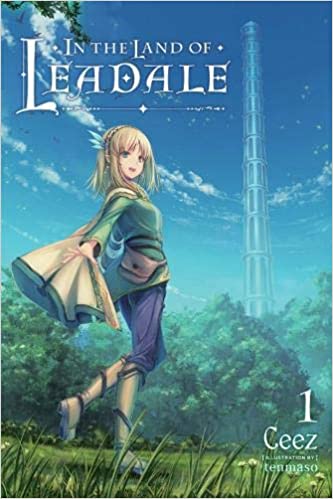
In the Land of Leadale, Vol. 1

October 24, 2020 by Sean Gaffney

By Ceez and Tenmaso. Released in Japan by Famitsu Bunko. Released in North America by Yen On. Translated by Jessica Lange.

I have to admit “it’s sort of like Overlord meets Kuma Kuma Kuma Bear” is not a sentence I thought I’d be typing, and yet here we are. In the Land of Leadale manages to use a bit of the premise and a few of the logistics of Overlord, but is decidedly non-evil in tone, and in the end is far more concerned about its heroine walking leisurely around this world and being superpowered. Indeed, its “isekai” premise doesn’t come up as often as I’d expect – it’s there mostly for Cayna to make comparisons about how things were in the game compared to her life in the land she now finds herself in, and to occasionally go overboard with stats (as this genre is wont to do), but Cayna is for the most part quite happy to be in Leadale, especially as she is now, and her goal, after realizing how different things are now from the game proper, is simply to go around and talk to people. And occasionally show that she is superhuman compared to everyone else. Much like Kuma Kuma Kuma Bear.

We only get a few bits and pieces of the life Keina Kagami had in Japan before this. She apparently has lost her parents, and is in a hospital bed, where she has been for several years (she mentions not getting to the end of elementary school). Fortunately, she has the VR game Leadale to entertain her, and she has grown to be one of the thirteen strongest players. Then one day a power outage takes out her life support briefly, and she dies… only to be reborn in Leadale as Cayna, her high-elf character. She is rather puzzled as to how she’s in a world based on her game, especially as this world seems to be two hundred years AFTER the game’s own timeline. Now she has to go around, investigate, track down the NPCs she made… erm, pardon me, her three children, and see if she can figure out what happened. Then, when she does get an explanation, she moves on and decides to simply live here as a superpowered ancient high elf woman (who still looks like a teenager, of course.)

The character voice of Cayna is tremendous, and kudos to Jessica Lange, the translator. Admittedly you might call it a flaw – Cayna sounds nothing like a bedridden, near-death Japanese teen might sound, but sounds exactly like you’d expect a flighty and practical high elf to sound. She’s mostly unflappable, though there are things that can set her off, such as when she unintentionally shows off her kick attack by shouting the attack name like a 13-year-old. She starts off in a backwater village and rapidly starts helping to cleanse its forest of monsters, upgrading its wells, and adding a public bath. By the end of the book she’s gone to the capital to meet her kids (two other high elves and an adopted dwarf), each of whom are still alive by dint of being from long-lived races. Unfortunately, what she finds is that the game ended, and that the 12 other top players all gathered for a final farewell, lamenting they weren’t thirteen. (This is why I mentioned Overlord.)

So what happens next? Well, she can always be an adventurer – she helps to catch an errant Prince who is constantly running away from home, and the end of the book has her guarding a merchant party from bandits (and suggesting that there may be other people here she knew from the game). Mostly, though, you want to read Vol. 2 and more because it’s fun to listen to Cayna’s narrative voice and see her going around being ludicrous. An excellent addition to the “slow life” genre.

Filed Under: in the land of leadale, REVIEWS

High School DxD: Diablos of the Old School Building

October 22, 2020 by Sean Gaffney

By Ichiei Ishibumi and Miyama-Zero. Released in Japan by Fujimi Fantasia Bunko. Released in North America by Yen On. Translated by Haydn Trowell.

Sometimes a series is released at exactly the right time to catch fan’s interest, gain momentum, and rise to the top of everyone’s list. Had High School DxD’s light novel come out in North America in 2014, around the same time as Yen On debuted Sword Art Online, I’ve no doubt it would have been quite popular. Indeed, the manga version came out around then, and I assume was probably popular. It’s got cute and sexy demons, battles between heaven and hell, harem building, some cool battle scenes, and lots of fanservice. That said, this is coming out in late 2020. It’s even late in being released after the announcement – everything else announced last year by Yen has long since come out, this was the lone straggler. As such, it can be hard to get into the mindset of remembering that this was quite influential and popular at the time, and not think “what’s the fuss all about?”. Particularly in regards to Issei, who is supposed to be a more perverse than usual LN hero but comes across as pretty nice, really.

Issei is a typical high school student in these sorts of series. Messy brown hair, thinks mostly of boobs, and has two male friends who are even worse than he is. Then one day… a girl confesses to him! Such bliss! Sadly, she turns out to be a fallen angel in disguise, and kills him dead. The remaining 155 pages are blank. Well, OK, no. He’s resurrected by his upperclassman Rias Gremory, who turns out to be a demon… and now Issei is as well. Turns out Issei has a Sacred Gear, i.e. a superpower. Quickly joining the Occult Research Club, which is a front for Rias and her fellows (sweetly sadistic Akeno, tiny and stoic Koneko, and token guy Kiba), Issei goes around trying to make deals with humans – i.e. demonic contracts. He’s not all that good at it, to be honest. Then he meets a young nun, Asia…

This is pretty solidly written all around, to be honest. The fanservice, while present in the illustrations, doesn’t really make its way into the text – there was less “boobies!” talk than I expected. Issei is the classic “I talk about girls all the time but am secretly a nice guy” protagonist. The rest of the cast is not as fleshed out – there’s hints of tragic backstories that will no doubt be covered in later books, but the only one we get here is Asia’s. The villain is the fallen angel who tricked Issei in the first place, and she’s the classic bad guy, to the point where Rias notes that Issei defeating her could only have happened because she talked too long and let him power up. I’m not a fan of the overly moe art style, but that’s not too much of a problem.

So the series ends up being pretty good, and I’ll probably read more, but after a number of years of titles that explore the same sort of characters, it’s not really groundbreaking at all. The most startling thing might be the fact that the cast seems to genuinely like the hero, so recommended for those who hate tsunderes, who are absent here.

Also, what does DxD stand for?

Filed Under: high school dxd, REVIEWS

Ascendance of a Bookworm: I’ll Do Anything to Become a Librarian!, Part 3: Adopted Daughter of an Archduke, Vol. 2

October 21, 2020 by Sean Gaffney

By Miya Kazuki and You Shiina. Released in Japan as “Honzuki no Gekokujou: Shisho ni Naru Tame ni wa Shudan wo Erandeiraremasen” by TO Books. Released in North America digitally by J-Novel Club. Translated by quof.

Let’s face it, Rozemyne has done a lot for the world she now lives in. From all of her printing achievements, which have the potential to change the world as everyone knows it, to even such things as shampoo, the footprint of Myne/Rozemyne is everywhere. However, there is a limit to what she can achieve. Ehrenfest is not going to slowly become modern-day Earth. What’s more, there is a disconnect between a) the way nobles think, b) the way Rozemyne thinks as a commoner who was raised into the nobility; c) the way Urano thinks as a former modern-day Japanese woman who’s been reincarnated with her memories; and d) Rozemyne’s natural eccentricity. As such, sometimes she doesn’t get how other people think, and other people assume that she is familiar with things that she absolutely is not. This becomes a big problem in this book, where Rozemyne taking some abused orphans from a local mayor turns out to have many, many repercussions.

Of course, Rozemyne has an additional problem that she has to deal with, which is that Ferdinand is not only assuming that she gets all the nuances and subtleties with which he speaks, but is also, in his own way, as eccentric as Rozemyne. He is the definition of “it would be easier if I just did everything myself”, and the fact that he can only makes life harder, especially as Rozemyne also falls into that category a lot. This leads to her having a near emotional breakdown when he tells her to solve the problem that she’s gotten herself into, implying that the entire TOWN has to die because of her actions. While Benno and the others are able to help Rozemyne flip the problem on its head (don’t think about how to kill the mayor, think about how to save everyone who is NOT the Mayor), Rosemyne and the reader are left with the harsh reality of a world that does not run on modern-day ethics and morals.

Fortunately, the rest of the book is not as serious as this. There’s a cool action scene as Rozemyne goes to the forest to get ingredients for the potion that will help her Devouring and the forest is overrun by monsters. More importantly, Wilfried once again whines about how easy Rozemyne has it, and she proposes changing roles for one day. This serves as a massive splash of cold water to the face of everyone involved with Wilfried, especially his father, who had been spoiling him without realizing that that had led to a young man who could not read, write, play any instruments, etc. There is some blistering dialogue here about how to educate young people, particularly those with short attention spans. It also shows off Sylvester as a very imperfect Archduke – he’s not a happy camper here, especially when his wife hears about this. Fortunately, Wilfried DOES have a good memory when he bothers to use it, so all is not lost.

There’s not as much of what made Bookworm tick in the early volumes – Benno and Lutz are here, but in supporting roles, and papermaking/bookmaking is also a side project compared to everything else. But it’s the expansion of Rozemyne’s world, and the fact that this world can be terrifying, that makes this arc of Bookworm the best yet.

Filed Under: ascendance of a bookworm, REVIEWS

Silver Spoon, Vol. 15

October 20, 2020 by Sean Gaffney

By Hiromu Arakawa. Released in Japan as “Gin no Saji” by Shogakukan, serialized in the magazine Weekly Shonen Sunday. Released in North America by Yen Press. Translated by Amanda Haley.

It took a long time for Silver Spoon to draw to a close in the pages of Weekly Shonen Sunday. Chapters would come out 2 or 3 at a time and then the series would go on hiatus for another 6 months. Rumor had it that the author was dealing with personal issues (and she was also drawing The Heroic Legend of Arslan at the same time). That said, the announcement that the series would be ending came as a surprise to fans, who found the ending a bit rushed. Thankfully, it reads better in volume form, and it’s a good ending, although having paired up Hachiken and Mikage at last Arakawa is prepared to lean back on making fun of them, which she’s far more comfortable with – by the final chapter the two still aren’t married, even while others from the series have children already. Still, it was never really about the romance, it was about the farming, and there’s plenty of that here.

This assumes, of course, that Hachiken can pass his exams. As always with him, it’s not his actual intelligence that’s the issue but his hideous luck, which is even worse than usual – he’s hit by a car and breaks his leg, and the exams are in the deep snow. Fortunately, he does indeed pass and everyone gets to graduate, with several pages of the main cast spouting off where they’re headed next, ranging from college (Hachiken, Mikage) to taking over the family farms (most of the others) to unemployed, as Yoshino was not able to hook up a cheese-related job that wasn’t suspicious by graduation, so is simply moving to France for a while. We then flash forward a few years, showing everyone’s futures, and see Hachiken heading into Russia for his business, where he’ll be working with a very familiar face…

I enjoyed the fact that Komaba appears at the end here, and is still interested in baseball. His arc was so important for the development of Hachiken and Mikage, and also served to reinforce the idea that financial success in a business like farming is not remotely guaranteed. The other fates of the character range from amusing (Yoshino’s French boyfriend, Tokiwa being married with a kid) to a sort of happy stasis (Hachiken and Mikage, who want to wait till he has financial stability till they get married, so have essentially stayed exactly the same). And Hachiken’s future is also in pigs, and farms, and Silver Spoon, in the end, has been about modern farming and the ways to keep it going even as technology, economic crises, and other problems make the job of “farmer” more of an anachronism. I think Hachiken will make it eventually… though he’d better factor is luck into their business plan somewhere.

At last all of Silver Spoon is out in English, after years of me begging Viz to license it. It ended up with Yen Press instead, who did a good job with it – my constant tweets of “why is this not licensed – right, it’s a farming manga” proved wrong but also right. It has been licensed. And it’s an amazing farming manga.

Filed Under: REVIEWS, silver spoon

Knight of the Ice Vols 2 and 3

October 19, 2020 by Anna N

Knight of the Ice Volumes 2 and 3 by Yayoi Ogawa

This series is rapidly becoming one of my favorite pandemic distraction manga, and I started it fully enthusiastic for a new Ogawa manga. I haven’t felt disappointed so far! The first volume did a good job setting up tiny magazine editor Chitose’s secret relationship with her childhood friend renowned figure skater Kokoro. While this is certainly a josei series, Kokoro’s extreme shyness and sheltered secret otaku lifestyle makes the romance aspect of the manga as slowly developing as any series with high school protagonists. This is a comfortable pace for the reader, because after the first volume the series is able to settle in for a little bit and introduce more of the supporting cast and further explore the world of high-stakes international figure skating.

Given that Chitose’s boss Sawada seems to be taking an unusual interest in one of his junior employees, it isn’t too surprising that she gets caught sneaking off in order to cast her magical girl spell on Kokoro right before he competes. When a fan spots Chitose and Kokoro together and starts posting rumors online, Kokoro’s dynamic and scary manager Moriyama invents the cover story that Chitose is part of Kokoro’s coaching team. As Chitose spends more consistent time with Kokoro, she begins to be more aware of her feelings and it is clear that Kokoro is using his feelings for his oldest friend to motivate him to perform even better in his sport. At the same time Sawada has an uncanny knack for popping up whenever Chitose is experiencing a moment of extreme distress.

As the figure skating season unfolds, Kokoro is able to turn in some of his best performances thanks to some unorthodox motivation from Chitose, but he’s also plagued by a nagging injury. While the slowly developing romance between Chitose and Kokoro keeps moving forward (there are kisses on the cheek!), I found myself enjoying the quirky supporting cast in the series more and more. Moriyama’s blunt pronouncements about just how far Kokoro can go with his potential relationship certainly provide a contrast to the more innocent romance that’s happening. Kokoro’s twin sisters intervene when another skater is about to get taken advantage of, and if Kokoro doesn’t have enough pressure to deal with it becomes more clear that his career and public image is being controlled behind the scenes by his father. Chitose is starting to become more confident about advocating for herself and her own feelings. Between skating drama, romance, family issues, and Ogawa’s quirky humor there’s plenty to keep a reader entertained in Knight of the Ice.

Filed Under: Manga Reviews, REVIEWS Tagged With: Josei, knight of the ice, kodansha

  • « Go to Previous Page
  • Page 1
  • Interim pages omitted …
  • Page 112
  • Page 113
  • Page 114
  • Page 115
  • Page 116
  • Interim pages omitted …
  • Page 346
  • Go to Next Page »
 | Log in
Copyright © 2010 Manga Bookshelf | Powered by WordPress & the Genesis Framework