• Skip to primary navigation
  • Skip to main content
  • Skip to primary sidebar
  • Home
  • About Us
    • Privacy Policy
    • Comment Policy
    • Disclosures & Disclaimers
  • Resources
    • Links, Essays & Articles
    • Fandomology!
    • CLAMP Directory
    • BlogRoll
  • Features & Columns
    • 3 Things Thursday
    • Adventures in the Key of Shoujo
    • Bit & Blips (game reviews)
    • BL BOOKRACK
    • Bookshelf Briefs
    • Bringing the Drama
    • Comic Conversion
    • Fanservice Friday
    • Going Digital
    • It Came From the Sinosphere
    • License This!
    • Magazine no Mori
    • My Week in Manga
    • OFF THE SHELF
    • Not By Manga Alone
    • PICK OF THE WEEK
    • Subtitles & Sensibility
    • Weekly Shonen Jump Recaps
  • Manga Moveable Feast
    • MMF Full Archive
    • Yun Kouga
    • CLAMP
    • Shojo Beat
    • Osamu Tezuka
    • Sailor Moon
    • Fruits Basket
    • Takehiko Inoue
    • Wild Adapter
    • One Piece
    • After School Nightmare
    • Karakuri Odette
    • Paradise Kiss
    • The Color Trilogy
    • To Terra…
    • Sexy Voice & Robo
  • Browse by Author
    • Sean Gaffney
    • Anna Neatrour
    • Michelle Smith
    • Katherine Dacey
    • MJ
    • Brigid Alverson
    • Travis Anderson
    • Phillip Anthony
    • Derek Bown
    • Jaci Dahlvang
    • Angela Eastman
    • Erica Friedman
    • Sara K.
    • Megan Purdy
    • Emily Snodgrass
    • Nancy Thistlethwaite
    • Eva Volin
    • David Welsh
  • MB Blogs
    • A Case Suitable For Treatment
    • Experiments in Manga
    • MangaBlog
    • The Manga Critic
    • Manga Report
    • Soliloquy in Blue
    • Manga Curmudgeon (archive)

Manga Bookshelf

Discussion, Resources, Roundtables, & Reviews

Reviews

Yona of the Dawn, Vol. 26

December 2, 2020 by Sean Gaffney

By Mizuho Kusanagi. Released in Japan as “Akatsuki no Yona” by Hakusensha, serialization ongoing in the magazine Hana to Yume. Released in North America by Viz Media. Translated by JN Productions, Adapted by Ysabet Reinhardt MacFarlane.

It can be hard to find the perfect cliffhanger o end a manga volume. Of course, with most ongoing series there is a cliffhanger of sorts, particularly in action series such as Yona of the Dawn. There are several obvious examples in this volume alone, each of which could probably have served perfectly well as the cliffhanger, particularly the second to last chapter in the volume. But there’s something so deliciously satisfying about this one, the sort of ending that gives the reader what they have wanted all along but not ENOUGH of it. Yona of the Dawn is usually a pitch perfect blend of political intrigue, action adventure, and a dash of romantic tension, and for most of Vol, 26, the focus is definitely on the first two. Even when we get to the romantic tension, it looks like the usual “misunderstandings abound!”. So we are both cheering and also laughing hysterically at how said misunderstandings are cleared up. You DESPERATELY want to read more.

As for the politics, not to spoil too much, but there is one less death than I was expecting when I finished Vol. 25. As it turns out, things can mostly be resolved with negotiation, though it takes a few more sacrifices and also everyone ganging up on the evil priest. This actually leads to the other great moment in the book, one that relies very much on Su-Won and how he is choosing to rule. The priest (whose name I keep forgetting, mostly as I tend to call him Wormtongue in my head) points out that Kouren captured and imprisoned the Legendary Dragon Warriors, to which he gets a “so what?” response. The priest is stunned that he does not want to use their magical cool powers to strengthen his position. (Technically this is what Yona is doing, but she is not doing it in the way the priest wants it to happen. The priest’s stunned face as Su-Won cuts all his arguments off at the knees is hysterical.

Other things to mention: Riri is here and awesome, though not as awesome as her retainers, who manage to gang up on Kouren and make sure she can’t tragically die leaning against a building or some other samurai thing. The other guys spend most of the book unable to move, alas, though they’re on the road to recovery by the end. It also helps sell that this is a problem that CAN be resolved with discussion and negotiation, rather than “I have a guy with a big hand, medusa eyes, a big kick, and Zeno.” Although it led to Yona’s misunderstanding, I really liked Hak’s chatter among his Wind tribe friends – she’s right, he acts like a totally different person around them, and while I don’t think it’s entirely her fault she’s never seen it, it does show off why they’re still not quite ready to get any closer than they are.

OR ARE THEY? Cannot wait till the next volume, which thanks to my backlog is already out. There’s always so much to talk about and love with Yona of the Dawn.

Filed Under: REVIEWS, yona of the dawn

The Asterisk War: Struggle for Supremacy

November 30, 2020 by Sean Gaffney

By Yuu Miyazaki and okiura. Released in Japan by MF Bunko J. Released in North America by Yen On. Translated by Haydn Trowell.

Ooof. We are deep into “tournament arc” here, folks, which means that a) the books are really not doing anything aside from showing off some cool fights, which means I have very little to write about, and b) it is fairly easy to guess who is going to be winning each of those fights. Ayato and Julis are not going to be losing at this point in time. Heck, even the “trying to figure out what the bad guys are doing” plot takes a back seat here, though it does lead to one of the funnier not-really-a-gag moments in the book when Orphelia straight up tells the other villains “oh yeah, I told Julis our plan six months ago.” After basically being absent from the last book, Julis gets more to do here, including what ends up being the best fight, but I suspect she is going to continue to be very unhappy for the next few volumes. Fortunately, the book has a secret weapon: Saya, aka Best Girl.

Claudia is on the cover, but barely in the book itself at all. Though she fares better than Kirin, who is totally absent. We get a series of fights, after briefly seeing Julis win her Round Four battle. First we see Ayato take on Rodolfo Zoppo, an arrogant ass who we dearly want to see get the shit beaten out of. Sadly, all of Ayato’s fights in this series have involved him barely winning, and that’s what happens here. Lester fights the Black Knight, and wins, but unfortunately is too injured to continue, so Julis gets a bye in Round 6. Speaking of Julis, as stated, she gets the best fight, taking on Xiaohui, who has returned from his Vision Quest and gotten stronger thanks to an old man on a mountain who doesn’t train him but lets him watch his everyday life. It’s a good reminder that Asterisk War runs on cliches. Saya takes on a girl who’s too amusing to take seriously. We get Robot vs. Robot, and the more evil robot wins. Silvia wins her match, which amounts to song vs. dance. And Orphelia manages to not only take out Hilda, but Hilda may in fact be permanently removed from the stage – her ending is ominous.

Apologies for the spoilers, but again, none of this is a surprise. You knew most of these people were going to win. Aside from Julis, as I noted, Saya gets the best moments, as she has the 2nd best fight, but more importantly is there to deliver a pep talk to Claudia and Rimcy, who are both feeling depressed and useless. Saya points out that she is an Unlucky Childhood Friend who spends every day handing around a hot tsundere princess and a meek sword prodigy, and also has to deal with the world’s top idol singer. They are all probably better fighters than her. They are all more likely to get Ayato’s love than her. But, as Saya wonderfully puts it, “so what?”. She refuses to simply stop trying. It’s not quite the end of the book, but it makes for a great emotional climax.

Unfortunately, it’s not enough to make up for 170 pages or so of fight after fight after fight. And I suspect we’ll get more of the same next time, though the cliffhanger does at least promise some emotional torture of Julis as well. Good times!

Filed Under: asterisk war, REVIEWS

Adachi and Shimamura, Vol. 4

November 29, 2020 by Sean Gaffney

By Hitoma Iruma and Non. Released in Japan by Dengeki Bunko. Released in North America by Seven Seas. Translated by Molly Lee.

Since my last review, the anime has been running, and it’s due to adapt up to this volume if it keeps at the pace it’s been using. The anime has helped me come to terms with Shimamura’s monologues somewhat – it cuts out the boring bits, which is to say 80% of them, and leaves us with what is essentially a teenage girl who is constantly doubting that she is even a functional human being. Given the evidence of this book, she is correct to worry. Not that Adachi is any better, as the start of second year shows, to her horror, that despite the “I want to be BEST friends!” of previous books, just a mere class change can mean Shimamura will be happy to drift away from her without another thought. So Adachi is ready to take the initiative. Confess? A ha ha ha no. But she’s ready to ask if they can eat lunch together, and later even ask if they can have a weekend sleepover. Baby steps, really.

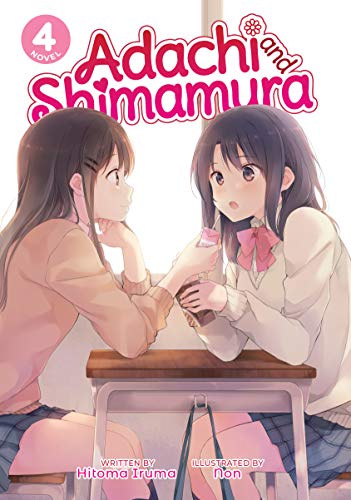
As you can possibly see from the cover art, Shimamura has stopped dyeing her hair and let it settle back into her natural ‘slightly lighter than Adachi’ brown. They’re in second year now, and Hino and Nagafuji are now in another class. (Not to worry, the two get their own little subplot, though I continue to wonder whether the author is also making them a couple or just having them be goofy.) Adachi is still in her class… but is still suffering from Adachiness. As a result, when three other girls ask if Shimamura can join them for lunch, she says sure. What’s more, her old childhood friend, Tarumi, has called up again after their disastrous February date, and really, really wants to try again. They hang out. They get matching bear bookbag charms! And Tarumi, as with Adachi, runs up against the massive wall that is Shimamura’s blithe indifference to almost anything.

I mentioned the subplot with Hino and Nagafuji, and there’s one with Yashiro as well. Indeed, it has been brought to my attention that almost every single character in the book who is not a regular – a fortune teller Adachi meets who gives her courage, another seeming alien girl that Nagafuji meets at Hino’s estate – is from one of Iruma’s other books. Hell, even Yashiro straight up says here she’s not the same Yashiro as the one from Denpa Onna. This is almost entirely lost on English-speaking readers (I had to have it all explained to me), but it does show off how these books are filled with “treats for the fans”, sometimes to the detriment of the actual plot. I also left out the start of the book, which is probably the best part of it, in which we realize that something important happened much earlier than we expected. It is a sign of how much this book is obsessed with the transient nature of teenage relationships that nobody remembers this.

That said, the biggest takeaway for me from this book is: man, everyone is trying their hardest to indirectly shout “I love you!” at Shimamura, but indirectness just is not cutting it. It does make me wonder how much longer, or how many more crossover cameos, this series can do before it begins to wear on the reader. Someone needs to tear down Shimamura’s wall.

Filed Under: adachi and shimamura, REVIEWS

Korea as Viewed by 12 Creators

November 28, 2020 by Katherine Dacey

This anthology of twelve short stories, six by Korean artists and six by French, follows the same basic template as Japan As Viewed by 17 Creators, offering brief, impressionistic scenes of contemporary Korean life. Though 17 Creators is a uniformly excellent work, its companion volume is not; the stories run the gamut from pedestrian to brilliant, with the Korean artists making the strongest contributions.

The unevenness of the collection is attributable, in part, to a home field advantage. Artists such as Choi Kyu-sok and Byun Ki-hyun tackle deeper, more penetrating topics than their French counterparts, exploring homelessness (“The Fake Dove”), sexual discrimination and violence (“The Rabbit”), and the decay of traditional social networks (“The Rain That Goes Away Comes Back”). Though the artists’ ambition sometimes outstrips their allocated space, all three stories boast beautiful, detailed artwork that suggests the rhythm and feeling of modern urban life. The French contributions, by contrast, are travelogues of one sort or another: in “Beondegi,” for example, Mathieu Sapin imagines what it would be like for a French-Korean woman to return to her parents’ home country, while in “Letters From Korea,” Igort offers brief descriptions of places he visited in Seoul. The weakest of the collection is Catel’s “Dul Lucie,” an uneventful travel diary filled with observations about “doll-like” and “sensual” Koreans that — in English, at least — leave a bad aftertaste of exoticism. Though the other French artists are not as patronizing, the stories feel shallow; imagine an essay about New York City written by someone who only visited Times Square, and you have some idea of how superficial these artists’ appreciation of Korea seems to be.

Two stories make this collection a worthwhile investment. The first is “Solgeo’s Tree,” by Lee Doo-hoo, in which a monk paints a mural so life-like that birds attempt to perch in its branches. Told with almost no dialogue, the story relies heavily on Lee’s exquisite pen-and-ink drawings to impart its Buddhist moral. The second is “A Rat in the Country of Yong,” Herve Tanquerelle’s playful, wordless story about a mouse visiting Seoul. The surrealistic imagery — skies full of dragon transports, streets filled with animal-eared people, pools inhabited by monstrous carp — and Chaplin-esque physical comedy evoke the strangeness and excitement of visiting a new city without falling into the trap of essentializing its people. Both comics attest to the vitality and richness of the “as viewed by” concept, and suggest what might have emerged from this sometimes insightful, sometimes banal French-Korean collaboration.

This review was originally published on September 6, 2010.

Korea as Viewed by 12 Creators
Edited by Nicholas Finet
Fanfare/Ponent Mon, 222 pp.
No rating

Filed Under: Manga Critic, Manhwa, REVIEWS Tagged With: Fanfare/Ponent Mon

Sword Art Online Alternative: Gun Gale Online: 4th Squad Jam: Start

November 28, 2020 by Sean Gaffney

By Keiichi Sigsawa and Kouhaku Kuroboshi, based on the series created by Reki Kawahara. Released in Japan by Dengeki Bunko. Released in North America by Yen On. Translated by Stephen Paul.

This book was always going to have a tough time living up to the previous one, and let’s face it: it does not. It’s a pretty good book, especially in the back half once the game starts, but it does show off the big flaw with this series as opposed to its parent: Sigsawa is not as good at writing Karen, Elza, etc. as he is at writing Llenn and Pitohui. He’s here for the gun battles, and all else is secondary (leaving aside the last book, which feels like an aberration at this point). As a result, when we see something that is a huge threat to Karen in this book, it doesn’t really come off as well, because we’re far more familiar with the fast pink blur whose ideal man is her gun (no, literally, she says that here) than the tall awkward rich girl. Things are not helped either by the presence of one of my least favorite Kawahara traits, now borrowed by this author as well: the smug villain who wants the girl to submit to him.

As noted, Karen is at an event her dad is attending, trying to be a wallflower, when she meets a short, fat man who tries to commiserate with her about height. They converse, he leaves, all is good. Then she gets a marriage proposal, which her dad suggests she accept. While this is going on, there’s a new Squad Jam starting. Four people is a bit small, so this time around Pitohui grabs Clarence and Shirley to fill their ranks – though Shirley wants no part of this, really. There are two big problems with this Squad Jam, at least in this first book. The first is that we have added zombie monsters, who are attracted when one of their number is killed by gunfire. The second is that Karen’s wannabe fiancee has shown up in the game – his avatar is just as wish fulfilling for him as hers is for her – and, using her real name, demands that if he beats her she has to go out with him.

So yeah, another smug guy who wants to control the woman he desires in a Sword Art Online book, yay. He doesn’t show up in the back half, fortunately, so I will put off my grumpiness till later. As I said, the back half of the story is better, and I always enjoy seeing how different the teams in the game are to their real-life personalities – Llenn’s team gets waylaid by literal suicide bombers in the Jam, who pose quite a problem, but seeing what they’re really like made it more amusing than anything else. Our team shows off good teamwork as well – minus Shirley, who cannot let go of her grudge towards Pitohui (who, to be fair, fuels it) and Clarence, who is a big goofball and not much else, frankly. And then there’s Llenn’s constant effort to finally have a showdown with SHINC, which – no surprises – gets derailed by the cliffhanger, showing, I suppose, that money can’t buy happiness, but it comes close.

So it’s a setup book where I’m not that fond of the setup. Still, Sigsawa knows how to write his gun battles. And this one is a 3-book arc, so I’d better settle in.

Filed Under: REVIEWS, sword art online

The Intuition of Haruhi Suzumiya

November 27, 2020 by Sean Gaffney

By Nagaru Tanigawa and Noizi Ito. Released in Japan as “Suzumiya Haruhi no Chokkan” by Dengeki Bunko. Released in North America by Yen On. Translated by Andrew Cunningham.

Been a long time, hasn’t it? In fact, this is my first time reviewing one of the novels, despite my Haruhi Suzumiya tag being filled with manga, 4-koma, and alternate universes. Not that this is a novel either. The first book to come out since 2011 is a collection of three short stories; one short, one medium, and one long. In terms of writing style and narrative voice, it’s a welcome return to form. Kyon sounds exactly like he always does, making arcane references to obscure topics in his metaphors while also professing to be the dumb one in the group. That said, I will note that anyone who is reading this wanting to see what happens after the Sasaki books, i.e. actual plot or character development, is going to find this quite lacking. There is a token mention of those books at the end of the final story, but for the most part that is not what Tanigawa is here to do. What is he here to do, you may ask? Tell us about Ellery Queen and John Dickson Carr.

The first short, Random Numbers, features the SOS Brigade visiting shrines, and has the only Kyon/Haruhi ship tease in the book. It’s cute. The second short story, Seven Wonders Overtime, is the weakest. The Mystery Club brings news that the school has no “seven mysteries”, aka Toilet Hanako, piano that plays by itself, etc. The Brigade tries to think of interesting but explainable mysteries before Haruhi can create more dangerous ones. The final story is the longest, taking up over 2/3 of the book. Tsuruya’s Challenge is, as I noted before, a love letter to the early 20th century mystery writers who loved to create mysteries that were essentially puzzle boxes, and Koizumi and T (a new character, member of the mystery club and owner of a very short nickname) spend ages extolling their virtues to the point that readers may grow tired. After this, though, they get a number of emails from Tsuruya which tell anecdotes from her trips with her rich father and also have a secret inside them.

The book works best if you’re a fan of Tsuruya, adding a lot of background to her character while also keeping it essentially the same. (No, we don’t learn her first name.) I was also fond of T, who is a great new character, and her calling Kyon “Kyam” makes me smile. Given the nature of the final story involves both the cast and the reader figuring things out, I will not go into too much detail, except to say that there is a LOT of Koizumi and Haruhi theorizes for pages and pages. One of the two afterwords in the book is a tribute to the Kyoto Animation creators for the Haruhi anime who perished in the fire. I suspect that (plus possibly Endless Eight) has led Tanigawa to write a story that would be very, very difficult to film in a way that a) makes things interesting, and b) does not give away its secrets. Kudos to Andrew Cunningham, by the way – this must have been an absolute bear to translate.

This is a hefty Haruhi book (not counting the 10-11 omnibus, only Book 7 is longer), so readers are getting good value for money. Whether they appreciate that value is another matter. As for me, I’m just happy to see the author writing again. The series is left open, so I hope it is not another nine years before the next in the series.

Filed Under: melancholy of haruhi suzumiya, REVIEWS

The World’s Strongest Rearguard: Labyrinth Country’s Novice Seeker, Vol. 4

November 26, 2020 by Sean Gaffney

By Tôwa and Huuka Kazabana. Released in Japan as “Sekai Saikyou no Kouei: Meikyuukoku no Shinjin Tansakusha” by Kadokawa Books. Released in North America by Yen On. Translated by Jordan Taylor.

Once again, I found this volume to be easy, peaceful reading, and once again I am at a loss to explain why as every time I try to describe it it sounds terrible. The same issues that plague previous books crop up here. The first half of the book features nothing happening. The main character has the personality of a herring, and yet has every single character in the series fawning over him. The battles are exciting, provided your idea of exciting is ‘reading other people’s transcripts of MMORPG fights”. Picking the proper stat is serious business. And, of course, everyone is horny on main for our hero but have generally agreed among themselves not to do anything (which is why when the married lady flirts with him they all team up to get upset). But again, there’s also nothing that immediately grates on me, nothing that says “OK, that did it, I now have an excuse to drop this”. It is serviceable wish-fulfillment of the highest order.

Arihito and company are still on the seventh floor, but have been making a bigger and bigger name for themselves. They’re still having trouble as the larger group on the floor, Beyond Liberty, are taking over the main hunting grounds and blocking others from going there. Oh yes, and they have a man whose skill is almost literally “pick up artist” who is a clear traitor. Something has to be done… after opening another cool treasure chest, choosing new skills, upgrading weapons, and getting a snazzy wool suit – and a gun, in case this wasn’t bad enough. They also need Beyond Liberty to go too far, which it does, and introduces yet another named Monster who is incredibly dangerous and who the main forces cannot remotely defeat. It’s up to our heroes, with the special guest Seraphina (again), to get the job done.

I know that we’d seen kids in this world before – indeed, Melissa is explicitly said to be the child of a human and demi-human – but I was still startled to see Daniella, a very pregnant adventurer, fighting on the front lines. Of course, it turns out that Beyond Liberty, like Elitia, has their own reasons for wanting to advance as fast as possible, but it does remind you that adventuring is the big thing here, and you either keep doing it constantly or you stagnate… which much of this floor has already decided to do. Ads for Arihito’s party, while everyone keeps praising him almost to the point of making one ill, the fact that his position is “rearguard” does mean that it’s the women in the party who get to do the really cool things. We are seeing some character development in Suzuna and Misaki, and they are very much becoming a family, albeit one that feels “warm” whenever their patriarch sleeps behind them.

So yeah, still not great. But it delivers what readers probably want, and if it tried to do something new and different it would likely be a disaster. Next time we see then going on a vacation, which means we should see even LESS happening. Fun times.

Filed Under: REVIEWS, world's strongest rearguard

Shortcake Cake Vols 9 and 10

November 26, 2020 by Anna N

Shortcake Cake Volumes 9 and 10 by suu Morishita

There’s around 5 volumes of revelations and drama packed into these two volumes of Shortcake Cake, but one of the advantages of finally finding out the truth about Riku and Rei’s relationship at last is that seeing the backstory and the emotional aftermath as Riku and his friends attempt to deal with their new reality inspires feelings of empathy in the reader. Morishita is adept at portraying a great deal of emotional nuance as the characters in Shortcake Cake start to puzzle out who they are and how their relationships are evolving.

The 9th volume opens with Shiraoka telling Ten and Chiaki the circumstances surrounding Riku’s past. It turns out that Rei’s mom, who was a teacher, adopted Riku after a student of hers left him as a baby in her classroom. Rei was a much-wanted child after a long struggle with infertility. While Rei’s parents tried to raise both boys with equal amounts of affection, Rei grew up attempting to establish his big brother bona fides even though Riku was only one month younger. Rei signed up for extra lessons in an unsuccessful attempt to get approval from his grandfather, who just seems flat-out emotionally abusive because he hates the fact that his daughter even got married in the first place. Rei’s resentment grew and grew, and when his parents died in a tragic car accident, he took the opportunity to kick Riku out. Shiraoka promptly took him in and raised him as an older brother. Aspects of Riku’s personality such as his sometimes ingratiating manner and desire to please but not actually get close to anyone are explained through the events in his past. When Riku’s long-lost older sister shows up at the boarding house he’s confronted with the choice of connecting to his biological family. The core of the story is how Ten and Chiaki are determined to continue to support Riku along with Shiraoka. While Rei has totally been a jerk, it is also clear that he’s lashing out in pain and unable to move on and find any kind of peace within himself.

One of the nice things about this volume is seeing Chiaki’s relentless overtures of friendship towards Riku and how he’s changed after hearing Riku’s story. Chiaki has avoided his overbearing older brother, but after seeing how Riku’s family broke down he’s decided to face his own family again. When Chiaki proclaims about Riku “I love him! He’s my one and only best friend!”, Riku says to himself that Chiaki is an idiot and Shiraoka responds “You’re pretty lucky to have met such a good idiot.” While Riku’s adoptive family might have been torn apart, he’s managing to put a found family together by finally allowing his friends to get to know him, and seeing this evolution take place over 10 volumes of Shortcake Cake is rewarding for the reader. While Riku goes on a visit to Chiaki’s family, Ten attempts to intervene with Rei. As this volume races towards a dramatic confrontation, I’m hoping that both Rei and Riku are able to find some sort of peace. Shortcake Cake‘s stories of found family combined with sibling estrangement make for a gripping story, and it is great to see how the core trio of Ten, Riku, and Chiaki have evolved together through their friendships.

Filed Under: Manga Reviews, REVIEWS Tagged With: shojo, shortcake cake, shoujo, viz media

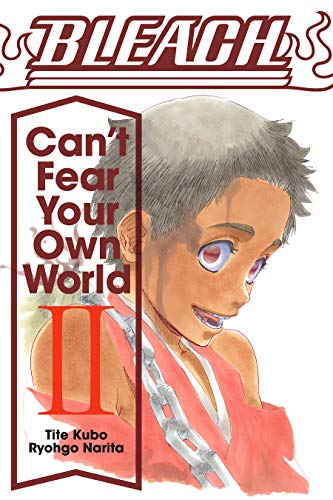
Bleach: Can’t Fear Your Own World, Vol. 2

November 23, 2020 by Sean Gaffney

By Ryohgo Narita and Tite Kubo. Released in Japan by Shueisha. Released in North America by Viz Media. Translated by Jan Mitsuko Cash.

There was a lot in the first volume of Can’t Fear Your Own World, Ryohgo Narita’s sequel to Bleach, which made me nostalgic for the good old days of the popular Bleach franchise. This second volume, on the other hand, kind of makes me nostalgic for the bad old days of the Bleach franchise. That’s not to say this book is not well written – it’s quite good at what it does. But there’s a very, very large chunk of the middle of the book that can be summed up as “some guys fight, and some more guys show up to interrupt the fight, then different guys fight while the first fighters watch, and then new people show up to interrupt THIS fight”, etc etc., until there are about 25 or so people all standing around watching a very small boy on top of a very large monster get excited. And, gotta admit, this is also the Bleach experience. Love it or hate it, Bleach would not be Bleach without epic fights that take forever with no real purpose.

The book can essentially be divided into two parts. Back in Karakura Town, Hisagi is interviewing Urahara for his ongoing news report about the events of the last few months, and also sort of trying to get some information out of him. Sadly, they are interrupted by Aura, a Fullbringer who seems to be connected to the Big Bad of this volume, and whose powers are not really like the other Fullbringers we’ve seen before. (Did you know Orihime was a Fullbringer? No? Never heard it mentioned before this book.) She’s taking advantage of the main cast of Bleach being out of town (they are rescuing Karin and Yuzu from some unnamed issue) to do what Tokinada wants. Back in Soul Society, as I noted before, everyone wants to fight everyone else. This ends up dragging together Soul Society captains (Shinji, Kenpachi, Shunsui), Arrancar (Tia, Nel, Grimmjow), Quincy (I can’t remember any of them), and Fullbringers (Tsukishima, Ginjo, etc.), and they all team up to go try to stop the Big Bad, if only as he’s unlikely to let them fight each other.

As you can see, a lot of this book relies on you remembering what happened in the Thousand Year Blood War arc, which I am not. I cannot tell any of these goombaws who Mayuri has resurrected and essentially made into his gofers from another, and honestly even if I did, the text would not read much differently. In Baccano and Durarara!!, Narita just barely manages to make his huge cast memorable – sadly, here he’s working from Kubo’s prior failure at it. On the bright side, every page or two has an amusing fun bit that will make you smile and keep you reading. Hiyori shows up, and is exactly as you’d expect her to be – she’d kick the reader in the shins if she could. Urahara manages to be very in character, and uses the same stupid written in blood message AGAIN (as I said, very in character). And take a shot every time someone wishes Ichigo were there, except no, do not do that.

This book is HUGE, twice the size of the first one, and absolutely did not need to be that long. But, well, if you’re writing something true to the Bleach experience, go big or go home. I expect next volume will mostly consist of one giant fight over the course of 290 pages. I also expect Grimmjow will STILL not get to fight Ichigo.

Filed Under: bleach, REVIEWS

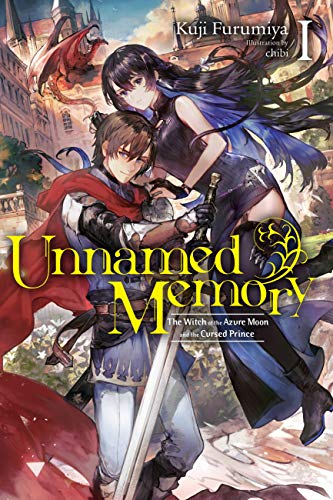
Unnamed Memory, Vol. 1

November 21, 2020 by Sean Gaffney

By Kuji Furumiya and Chibi. Released in Japan by Dengeki Bunko. Released in North America by Yen On. Translated by Sarah Tangney.

It has become increasingly rare in the Japanese light novel world to find a straightforward novel that can be called “fantasy”. Oh, the light novel market is riddled with fantasy novels, to the point where, 3-4 years ago, having anything licensed with non-supernatural content was a huge surprise. But they’re not the sort of fantasy I mean. Either they’re all based around game mechanics, or they’re literally trapped in a game-style worlds. And then there’s the Infinite Isekais, be it reincarnated souls or just “I was in my classroom and now I have a sword and three hot young girls” sorts. But there is something to be said for simply having a normal fantasy. Magic has rules, yes, but they aren’t the rules of Casting from MP. Our hero has a curse, but it’s not draining his HP bar. And that’s what we’re getting with Unnamed Memory, the story of a prince with a curse and the witch who’s trying to break it, and also the story of how the two of them are made for each other, even if she’s not admitting it yet.

Prince Oscar is our hero, and he has a curse: a witch cursed his family when he was a boy so that any woman who had his child would die. Now 20 years old and one of the strongest in his kingdom, he goes to another witch, rumored to grant any wish to those who can climb to the top of her tower, and ask her to break the curse. That said, once he meets the witch, Tinasha, he has a better idea: she can marry him, as witches are strong enough to break this curse. She refuses to do that, but she does agree to spend the next year with him at the castle, at first as the “witch’s apprentice” and then, once her cover is blown, out in the open. Over the course of the book they solve mysteries, defeat ancient evils, fend off threats from other countries, and banter. The banter is the reason to read the book.

First up, I will say I wish that we’d had a bit more depth to Oscar at first. We get to know him a bit better as the book goes on, but at first I trusted him about as much as Tinasha does, and it’s easy to see why she brushes off his constant attempts to get her to marry him. Tinasha fares slightly better, although her past is also mostly suggested in this first book. There’s also a couple of unpleasant scenes, one being a dream – brought on by the drug of another witch – which leads to him having to strangle Tinasha, a rather ugly solution I thought could be handled differently, as well as one attempted assault on her when Oscar gets jealous. I mention these as the things I didn’t enjoy, mostly because the rest of the book is otherwise excellent. A very good supporting cast, some cool battle scenes, and the interplay between the main cast is very well done indeed. The book reads smoothly and makes you want more.

So I wasn’t over the moon with it, and I think I need another book or two to like Oscar as much as the author wants me to, but otherwise I can see why this was one of the most anticipated LNs of the year. Especially recommended for those tired of the usual game stats light novels – this has none of that.

Filed Under: REVIEWS, unnamed memory

Outbreak Company, Vol. 15

November 19, 2020 by Sean Gaffney

By Ichiro Sakaki and Yuugen. Released in Japan by Kodansha Light Novels. Released in North America by J-Novel Club. Translated by Kevin Steinbach.

Last time, I said that I was tired of ending each volume of Outbreak Company wondering when it would come to an end. I guess they heard me, because this is definitely the start of the endgame. For one thing, leaving aside his horny dream fantasies (which seem to be written to give the artist an excuse to draw the girls naked in an otherwise relatively serious story), Shinichi seems to be taking a bit more seriously the fact that he has three different girls in love with him. Unsurprisingly, most of his thoughts on this involve Myusel, the obvious front runner. If they do become a couple, can they go back to Japan? She is half-elf and not a citizen, after all, and while the Japanese government is happy to help Shinichi while he works for them, he suspects that this help would dry up if not turn against him. That said, given they overheat merely holding hands at the moment, baby making is still something only in dreams for now.

The main plot involves Elvia’s kingdom of Bahairam suddenly turning into a disaster area, with constant earthquakes and buildings turning into pillars of fire. The reason seems to be whatever is in the “Dragon’s Den”, a secret facility, but those who know of it aren’t talking. Even worse, Myusel’s mother is delivering supplies to the Kingdom and ends up getting trapped in the devastation. She asks Clara and Amatena to immediately go and get Shinichi, who is the one person who might be able to fix this. How? We’re not sure, and neither is he. But now the rest of the cast (sans Petralka, who is unable to get away from the basic need to rule her kingdom) head out to find out what the heck is causing this and if there is any way of stopping it. And things get even more confusing when they meet an android replica of Theresa Bigelow, a North American army officer.

There have been hints of the big reveal planted throughout the series, and they’re especially blatant here, as the first chapter opens with Shinichi showing his class a copyright-altered Planet of the Apes to demonstrate to them the idea of those “kinds of endings”. It does make things a lot more interesting, and is handled very well. There’s also some cool action scenes, though again the author’s habit of throwing in constant nudity whenever he can is a bit irritating, especially when our heroes are being surrounded by “the nekkids”, as Minori calls them. Speakoing of which, this volume changes viewpoints quite a bit, and it’s nice to hear from people other than Shinichi’s POV, though I admit it’s not always that easy to see who’s narrating at first. And, fantasizing aside, Shinichi and Myusel are very cute here. Again, I still think if this ends with a choice at all it will be Myusel.

So a very good book in general, and should lead nicely to the next one to end the arc. The series ends with 18, though there’s a short story volume after that that I’m unsure will be licensed. If you’ve been reading this series all along, there’s no reason to stop now. Also,l I’m fairly certain you cannot gain a handle on military strategy just by reading Legend of Galactic Heroes, Petralka.

Filed Under: outbreak company, REVIEWS

A Certain Magical Index SS, Vol. 1

November 18, 2020 by Sean Gaffney

By Kazumi Kamachi and Kiyotaka Haimura. Released in Japan as “To Aru Majutsu no Index” by Dengeki Bunko. Released in North America by Yen On. Translated by Andrew Prowse.

Despite its name, and despite the fact that Yen On is releasing it after the main Index series, this is not particularly a short story volume. Instead, it’s four interlinked plot threads, which are presented as distinct chapters – he’s done this before. In Japan this came out between the 13th and 14th volumes of the main series, and it takes place there as well, with most of the cast worrying about what seems to be an inevitable war with the Roman Orthodox Church (which, to be fair, does happen). I am happy that we are finally seeing it here, though I will admit that a lot of its events would have had more impact if it had come out in its proper place. In particular, this volume introduces one of the main protagonists of the series – though honestly you’d never know it from the book itself, as he doesn’t even appear till 4/5 of the way in, and gets taken out by Touma like garbage. Which melds nicely with the book’s themes.

Introduced in this book: Shiage Hamazura, the aforementioned third protagonist. Sasha is also seen here as herself, rather than in “I am possessed by Gabriel” mode, though thanks to the Russian equivalent of Laura Stuart she’s walking around in a fetish outfit. We also meet Komaba Ritoku, though he sadly has the misfortune of running up against Accelerator, so he’s killed off here. He shows Accelerator the picture of a girl he’s trying to protect – his sister? Well, he’s dead now, so we will never know the identity of this mystery girl… well, unless Yen licenses New Testament. This volume also helps to solidify GROUP as part of the dark side of Academy City, and shows that they can grumpily work together when they want to – though they don’t here, as Accelerator and Musujime Awaki get their own separate fights.

There’s silliness at the start (how does Touma manage to pat Aisa on the back and knock her bra off?), which also leads to one of the few deliberately funny jokes in these books which usually try to be funny and fail – Touma’s heartfelt “I’m going to start studying English!” is a big LOL. Most of the book is introducing us to Skill-Out, a group of Level Zeroes trying to wreak havoc. Later books show them off as well, but, as Touma yells at Hamazura, they could have chosen to protect the weak (and indeed we see Komaba was doing this), instead of basically being a bad biker gang with explosives. We also meet once more Mikoto’s mother, the self-proclaimed “bisexual-disaster cougar”, who is also there for humor (not as funny) but also to possibly pull Mikoto out of Academy City due to impending war. Fortunately for the Railgun’s romantic prospects, Touma manages to impress her mom enough that she decides to leave her there. And, of course, Touma gets to punch the villain, in this case Hamazura, though notably instead of “breaking that illusion” he says Hamazura can break his own illusions himself.

So overall, this is very good setup for books 14-22, and you might want to go back and read those again if you have the time. Next time we’ll get the second SS book, which I understand is far more of a short-story volume than this one was, although I imagine they’re probably all interconnected as well.

Filed Under: a certain magical index, REVIEWS

Strike the Blood, Vol. 16

November 17, 2020 by Sean Gaffney

By Gakuto Mikumo and Manyako. Released in Japan by Dengeki Bunko. Released in North America by Yen On. Translated by Jeremiah Bourque.

After the last volume, which as I noted was “Strike the Blood: The Movie”, the first third of this book is very jarring indeed, as it seems to reboot the series with an entirely different cast. Kojou is on a different island – with his memories wiped – and has a different guardian, different companions, and they seem to spend their days learning how to be attack mages and dungeon crawling. He occasionally has brief flashes of his old life, but for the most part remains blank about it. And all is well, apart from the very obviously evil teacher and the fact that the ghost of Yukina keeps showing up and scaring students. Needless to say, it turns out that Kojou is NOT on a series reboot, but is instead trapped in a game – sort of. Also not really. The actual plot manages to bring back an organization from much earlier in the series, as well as the girl now dedicated to wiping out said organization. And, needless to say, has lots of cool fights.

The most interesting thing in the book is the introduction of Shizuri, Kojou’s new Watcher in this other world and the Girl Of The Book. It’s interesting that it starts off with her being a blatant Yukina clone, almost to the point of parody, but that actually ends up being what makes her work for me. OK, Shizuri is more ‘tsundere’ than ‘kuudere’, but in other ways they are much the same. This makes it easier to care about her more than the other two members of Kojou’s class group, who don’t have obvious analogues. Her backstory is suitably tragic, and, needless to say, she gets her blood drunk by Kojou at the end, meaning she is probably going to be added to the harem pile, which is already ridiculously high. I do wonder how she’ll fit in with the rest of the cast, particularly as the series has now ended in Japan, so we’re not far away from the final volume.

The reappearance of Yuuma is also a surprise, mostly as I’d forgotten she existed – as had most readers, I imagine. She is a refreshing dose of cool in a series whose heroines mostly tend to live or die on how much they can be angry at Kojou, though it’s unclear whether she’s merely back for this volume or will turn up again. I will argue that I was sort of hoping that one of the big plot beats of the last book – Nagisa now knows Kojou’s secret – would be brought up here. Having her hospitalized a month later and not really talking with anyone except Shizuri is kind of kicking the problem down the road. And, as always, the author’s attempts at humor are not very funny. “haha, you’re going to have to repeat a year because of constant saving the world” is eyebrow-raising, not laugh inducing. Though I was amused that 6 months in the other world taught Kojou to study.

Anime fans may be more spoiled than novel fans on the next book, as it appears to finally bring in the Children From The Future. Till then, this was a better than average Strike the Blood.

Filed Under: REVIEWS, strike the blood

Re: ZERO ~Starting Life in Another World~, Vol. 14

November 16, 2020 by Sean Gaffney

By Tappei Nagatsuki and Shinichirou Otsuka. Released in Japan by MF Bunko J. Released in North America by Yen On. Translated by Jeremiah Borque.

I’ve always been a fan of Emilia, so have been inclined to cut her more slack than she possibly deserved, as those who’ve seen my other reviews know. That said, I get the feeling that for most Re: Zero fans, reading Emilia has sort of been like me reading Subaru in the first six books – screaming at her and wondering why she’s so bad at everything. This has only been underlined in this fourth Arc, which supposedly was going to give far more focus to Emilia – to the point of writing the other main love interest out of the story entirely – and then she spends the first three books sobbing on the ground, unable to get past a test that Subaru sails through. Of course, Subaru’s ‘overcome your past’ was, let’s be honest here, not the hardest test in the world. And at least he remembered it. Emilia’s past has a tragic centerpiece, and she’s also had her memories erased to boot – learning all of this with no emotional support would break a lot of people. Luckily, she now has that emotional support.

As you can see by the cover art, we get most of Emilia’s backstory here, though some elements (who her birth parents are) are still left clouded. Her aunt Fortuna, though, who raises Emilia as a daughter, is 100% pure awesome, and also… has Subaru eyes, something that causes me concern but I’m not going to dwell on it too much. And next to them on the cover is… yeah, that’s Petelgeuse, known mostly as Geuse here. He’s not quite what I was expecting, being fairly overdramatic and self-loathing even before said tragic events. I am grateful we got a lot of Emilia being cute here, showing her as a typical curious kid who does not enjoy being locked in a tree all day. This is balanced out by the present-day Emilia and Echidna watching the events as they happen, with Echidna being very irritated at how well Emilia is taking everything. They have the best dialogue in the book.

Meanwhile, while waiting for Emilia’s test to finish, Subaru, Garfiel and Otto confront Roswaal, who is still not willing to give an inch, despite some things happening that his book does not talk about. As long as the book ENDS the same way, he says, that’s enough. There’s some funny stuff here, mostly involving Roswaal’s reaction to Otto, but it’s clear that if they’re going to stop Elsa and her fellow animal-tamer assassin from killing everyone at the mansion, they’re going to have to do it themselves. Fortunately, Garfiel much better at fighting than Subaru is. We also got more backstory here, provided by Shima and the Ryuzus (which sounds like a girl group; from the 60s) showing the backstory of the Sanctuary, Echidna’s past with Roswaal, and most importantly Beatrice’s relationship to all of them. If Subaru is going to succeed, he has to get Beatrice away from her library, and given that’s the cliffhanger ending to this book, it’s a tall order.

The arc ends with the next book, but there’s still a lot to solve. Can Subaru end this with no deaths? Can Emilia pass the 2nd and 3rd Trials? Will the reader even see the 2nd and 3rd trials? (Signs point to no.) And will Roswaal finally be forced to give in and support Emilia for real? Can’t wait to find out.

Filed Under: re: zero, REVIEWS

Owarimonogatari: End Tale, Part 03

November 15, 2020 by Sean Gaffney

By NISIOISIN and VOFAN. Released in Japan by Kodansha BOX. Released in North America by Vertical, Inc. Translated by Ko Ransom.

It’s been a long detour since we last saw Koyomi Araragi getting brutally murdered by Izuko Gaen at the end of the short story volumes. We’ve seen how Ogi came into his life, why he got so disaffected in his first year of high school, and finally finished up with everything he was doing in that very busy August. But now we’re FINALLY ready to wrap up all the plot points that have been bubbling under for the entire series. The history and state of the town ever since Kissshot Acerolaorion Heartunderblade arrived one year previously. The string of oddities that have popped up ever since, particularly Nadeko Sengoku’s transformation into a snake god. The “darkness” that erases things that break the rules, which removed Mayoi Hachikuji from the series. But mostly, everything Ogi has done ever since she arrived. Can Araragi wrap this all up? Despite being dead? And can he pass his exams? Heck, can he even go on a date with… um… what was her name again?

Oh right, Senjogahara, who graces our cover, and who is quick to point out that it’s been so long since she’s had a major role in the series she’s forgotten her character. Before we get to her, though, we get Mayoi Hell, where Araragi, as all vampires do, goes to Hell, meeting Mayoi there (she’s there for dying before her parents) and going on an extended recap of his life. This serves to remind him of his tendency to save the girl, and that if he had to do it again he’d do the exact same thing. After a long explanation of what’s been going on (he had to die to get rid of his vampirism, Gaen’s gonna revive him), and a brief “do I deserve to live” that gets the punching from Mayoi that it deserves, he returns… with Mayoi, who he basically kidnaps in a leglock. Which is very him. Aside from my usual issues with Mayoi (the “lol he’s sexually harrassing a grade schooler and it’s funny!) stuff, this was alright, though it suffered from endless exposition (more of that later).

Next we get Hitagi Rendezvous, the “sweet” center of the book, where Senjogahara takes Araragi on a date, something they have not done since Tsubasa Cat waaaaay back at the start of the series, and attempts, through various date activities, to get him to swear one thing for the rest of his life. Sadly, she keeps losing. This has some of the best writing in the series, apart from a brief interlude with Ogi interrupting Araragi’s dream (he falls asleep at a planetarium) to provide more exposition (more of this – yes, even more – later). Senjogahara has never been the tsundere she claims to be – she’s too straightforward for that – but here she does have some very odd push/pull dynamics, as she’s clearly dressing in a “Hanekawa” way as she thinks that’s what he finds attractive, but is also discussing their future together to the point of naming their daughter (Tsubasa, which Araragi finds “heavy”, and I think Hanekawa would agree). The ending of this one is the high point of the book.

This leaves Ogi Dark, where we finally get the true nature of Ogi revealed. It makes sense within the series – indeed, clever readers may have guessed it already – ties in with the series mythology, and also allows the basic conflict of “what do we do with aberrations” to come into play. Gaen, Hanekawa, Meme Oshino, and Ogi Oshino all have different ideas on how to deal with them. Unfortunately, sometimes they lead to bad things, as we saw with Ogi’s manipulation of Nadeko. Gaen tries to convince Araragi to take care of Ogi once and for all… treat her like the “Darkness” she’s pretending to be. But, of course, Ogi is not only the main villain of the series, and Araragi’s dark mirror (more on that next book), but also a girl that needs saving. Despite also getting bogged down in exposition (always a danger with Gaen in the story), the ending to this part was excellent, even giving us a “happily ever after”.

So my main complaint is the wordiness of the backstory and exposition (which isn’t going away) and the lolicon jokes (sadly also unlikely to go away), but for a series finale it’s mostly a winner. We even get a hint as to why Ogi is still around for Kanbaru’s book, and why’s he’s a guy in that one. That said, we aren’t QUITE done with Araragi – the final final book in this arc, End Tale (cont’d), is due out soon.

Filed Under: monogatari series, REVIEWS

  • « Go to Previous Page
  • Page 1
  • Interim pages omitted …
  • Page 110
  • Page 111
  • Page 112
  • Page 113
  • Page 114
  • Interim pages omitted …
  • Page 346
  • Go to Next Page »
 | Log in
Copyright © 2010 Manga Bookshelf | Powered by WordPress & the Genesis Framework