• Skip to primary navigation
  • Skip to main content
  • Skip to primary sidebar
  • Home
  • About Us
    • Privacy Policy
    • Comment Policy
    • Disclosures & Disclaimers
  • Resources
    • Links, Essays & Articles
    • Fandomology!
    • CLAMP Directory
    • BlogRoll
  • Features & Columns
    • 3 Things Thursday
    • Adventures in the Key of Shoujo
    • Bit & Blips (game reviews)
    • BL BOOKRACK
    • Bookshelf Briefs
    • Bringing the Drama
    • Comic Conversion
    • Fanservice Friday
    • Going Digital
    • It Came From the Sinosphere
    • License This!
    • Magazine no Mori
    • My Week in Manga
    • OFF THE SHELF
    • Not By Manga Alone
    • PICK OF THE WEEK
    • Subtitles & Sensibility
    • Weekly Shonen Jump Recaps
  • Manga Moveable Feast
    • MMF Full Archive
    • Yun Kouga
    • CLAMP
    • Shojo Beat
    • Osamu Tezuka
    • Sailor Moon
    • Fruits Basket
    • Takehiko Inoue
    • Wild Adapter
    • One Piece
    • After School Nightmare
    • Karakuri Odette
    • Paradise Kiss
    • The Color Trilogy
    • To Terra…
    • Sexy Voice & Robo
  • Browse by Author
    • Sean Gaffney
    • Anna Neatrour
    • Michelle Smith
    • Katherine Dacey
    • MJ
    • Brigid Alverson
    • Travis Anderson
    • Phillip Anthony
    • Derek Bown
    • Jaci Dahlvang
    • Angela Eastman
    • Erica Friedman
    • Sara K.
    • Megan Purdy
    • Emily Snodgrass
    • Nancy Thistlethwaite
    • Eva Volin
    • David Welsh
  • MB Blogs
    • A Case Suitable For Treatment
    • Experiments in Manga
    • MangaBlog
    • The Manga Critic
    • Manga Report
    • Soliloquy in Blue
    • Manga Curmudgeon (archive)

Manga Bookshelf

Discussion, Resources, Roundtables, & Reviews

Manga Critic

Manga Artifacts: Lycanthrope Leo

August 15, 2010 by Katherine Dacey

Back in the 1980s and 1990s, before publishers realized that they could sell manga to teenagers through Borders and Books-A-Million, VIZ and Dark Horse actively courted the comic-store crowd with blood, bullets, and boobs. It was a golden age for manly-man manga — think Crying Freeman and Hotel Harbor View — but it was also a period in which publishers licensed some bad stuff. And when I say “bad stuff,” I mean it: I’m talking ham-fisted dialogue, eyeball-bending artwork, and kooky storylines that defy logic. Lycanthrope Leo (1997), an oddity from the VIZ catalog, is one such manga, a horror story with a plot that might best be described as Teen Wolf meets The Island of Dr. Moreau with a dash of WTF?!

The Leo of the title is Leo Takizawa, a high school student with a cute girlfriend and a gruff father. In the days leading up to his seventeenth birthday, he surprises his track teammates with an astonishing, world-record performance in the hundred-meter dash. Dad, noticing Leo’s dramatic transformation from speedy string-bean to Carl Lewis challenger, realizes that his worst fear is coming true: Leo is on the verge of turning into a lycanthrope, a powerful shape-shifter capable of rending a man limb from limb. So Dad does what all caring, self-respecting parents in his situation would do: he lures his son into an abandoned cabin in the woods, then attempts to shoot him with a fancy crossbow — but not before he gives a long, impassioned speech explaining what Leo is and why lycanthropes are mankind’s avowed enemy. Dad’s garrulousness proves his undoing; like so many villains, he spends too much time delivering an expository monologue and not enough time getting down to business, thus providing Leo opportunity to assume his true form and take Dad out with one blow of his werelion’s paw.

Yes, you read that right: Leo is a werelion. I admit the idea has potential; it liberates the author Kengo Kaji from the conventions of Western were-lore — the silver bullets and full moons and gypsies — while allowing him to milk the human/animal dichotomy for its full dramatic potential. Alas, Kaji extends the were-concept to other, less majestic animals for a subplot involving a centuries-old conflict between carnivore and herbivore lycanthropes. (The meat-eaters favor wiping out mankind; the cud-chewers prefer peaceable co-existence.) The nadir of the anything-is-more-awesome-in-were-form, however, is Mayuko Asuka, a sexy young teacher who turns out to be… a were-flying squirrel. And an evil were-flying squirrel, I might add, one who isn’t above seducing a seventeen-year-old or attacking a lycanthrope who threatens to reveal too much of the carnivores’ world-domination plans.

Kenji Okamura’s artwork is awe-inspiring and awful simultaneously. On the one hand, he draws amazingly detailed monsters, rendering their fur and claws and muscle-bound chests with exquisite care, even when they’re ripping each other to pieces; imagine Sylvester Stallone in werewolf drag, and you have some idea of what the male lycanthropes look like in their animal forms. On the other hand, Okamura’s human characters look like they belong in a Fernand Léger painting, with their plastic, impassive faces. Okamura struggles to convey emotion convincingly; about the best he can do is depict Leo sweating profusely. (By my count, Leo loses twenty to thirty pounds of water weight over the course of the first volume.) Worse still, Okamura frames almost every scene from an odd vantage point that distorts the characters’ anatomy, making them look ridiculously stumpy or leggy; I honestly thought Leo was being bullied by a midget in several scenes, thanks to the extreme angle at which we view Leo’s tormentor.

If you’re wondering why you haven’t heard more about Lycanthrope Leo, that’s because VIZ suspended production on the series after just one volume, citing poor sales. It’s not hard to imagine why Leo didn’t connect with American readers; the art has a throwback-to-the-eighties look, while the story is so preposterous and self-serious that it doesn’t work as straight horror or camp. From a reader’s standpoint, the most disappointing thing about Leo is the abruptness with which the English edition ends; Kaji introduces a key character in the final chapters of volume one, leaving readers to wonder whether the carnivores and herbivores eventually achieve detente. Of course, you probably won’t care if they do, considering all the sweaty, frantic silliness that precedes the introduction of the wise were-buffalo; for all the howling and “unsheathing of steel claws,” Lycanthrope Leo is about as scary as a kitten.

Manga Artifacts is a monthly feature exploring older, out-of-print manga published in the 1980s and 1990s. For a fuller description of the series’ purpose, see the inaugural column.

LYCANTHROPE LEO, VOL. 1 • STORY BY KENGO KAJI, ART BY KENJI OKAMURA • VIZ COMMUNICATIONS • 224 pp. • NO RATING (GRAPHIC VIOLENCE, NUDITY, STRONG LANGUAGE)

Filed Under: Manga, Manga Critic, REVIEWS Tagged With: Seinen, VIZ

The Manga Hall of Shame: Color of Rage

August 12, 2010 by Katherine Dacey

RageCoverWhen reading historical manga, I grant the artist creative license to tell a story that evokes the spirit of an age rather than its details. What rankles my inner historian, however, are the kind of anachronisms that result from sheer laziness or paucity of imagination: modern slang, gross disregard for well-established fact. Alas, Color of Rage is filled with the kind of historical howlers that would make C. Vann Woodward or Leon Litwack gnash their teeth in despair.
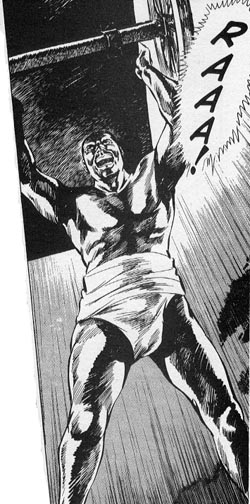
The story begins in 1783. Off the coast of Japan, a whaling ship sinks in turbulent seas, claiming the lives of all but two crew members: George, a Japanese man, and King, an African-American slave. The two wash ashore, cut away their shackles, and set out in search of a community where they can live peacefully — no small challenge, given how conspicuous King is among such a homogenous population. Of course, this being a manga by Kazuo Koike, George and King’s journey is anything but picaresque, as they bump up against the vigorous defenders of Edo-era status quo: ruthless daimyo, yakuza thugs, samurai-for-hire.

…

Read More

Filed Under: Manga Critic Tagged With: Bad Manga, Dark Horse, Kazuo Koike, Seinen

The Manga Hall of Shame: Color of Rage

August 12, 2010 by Katherine Dacey

When reading historical manga, I grant the artist creative license to tell a story that evokes the spirit of an age rather than its details. What rankles my inner historian, however, are the kind of anachronisms that result from sheer laziness or paucity of imagination: modern slang, gross disregard for well-established fact. Alas, Color of Rage is filled with the kind of historical howlers that would make C. Vann Woodward or Leon Litwack gnash their teeth in despair.

The story begins in 1783. Off the coast of Japan, a whaling ship sinks in turbulent seas, claiming the lives of all but two crew members: George, a Japanese man, and King, an African-American slave. The two wash ashore, cut away their shackles, and set out in search of a community where they can live peacefully — no small challenge, given how conspicuous King is among such a homogenous population. Of course, this being a manga by Kazuo Koike, George and King’s journey is anything but picaresque, as they bump up against the vigorous defenders of Edo-era status quo: ruthless daimyo, yakuza thugs, samurai-for-hire.

For such a far-fetched premise to work, its principal characters’ thoughts, words, and actions need to make sense in historical context, yet George and King behave like modern action heroes deposited in feudal Japan, not products of the eighteenth century. During scenes of limb-severing carnage, for example, they banter with the consummate skill of Harrison Ford and Will Smith, pausing occasionally to deliver speeches about finding a place where “color doesn’t matter” — a noble sentiment, to be sure, but one cribbed from a Civil Rights speech circa 1964, not an eighteenth century abolitionist’s tract. A similar sense of historical amnesia informs another scene in which King declares that conditions are worse for Japanese peasants than for slaves in the American South, leaving me to wonder how a slave working on a colonial plantation would have any comparative basis for making such an assertion or, frankly, any notion of the “American South,” given that the Revolutionary War was still in full swing at the time King was gang-pressed into whaling. Other historical oversights abound: how did a Japanese man end up in the galley of an American whaling ship? Where did George learn to speak fluent English? Who taught King to handle a sword? And so forth.

colorofrageinteriorThe bigger problem, however, is that King entertains notions of race, class, and gender that would have been as alien to American colonists as they were to Japanese farmers and overlords. His blind commitment to addressing inequality wherever he encounters it — on the road, at a brothel — leads him to do and say incredibly reckless things that require George’s boffo swordsmanship and insider knowledge of the culture to rectify. If anything, King’s idealism makes him seem simple-minded in comparison with George, who comes across as far more worldly, pragmatic, and clever. I’m guessing that Koike thought he’d created an honorable character in King without realizing the degree to which stereotypes, good and bad, informed the portrayal. In fairness to Koike, it’s a trap that’s ensnared plenty of American authors and screenwriters who ought to know that the saintly black character is as clichéd and potentially offensive a stereotype as the most craven fool in Uncle Tom’s Cabin. By relying on American popular entertainment for his information on slavery, however, Koike falls into the very same trap, inadvertently resurrecting some hoary racial and sexual tropes in the process.
Koike’s treatment of female characters, like his handling of racial issues, can be downright ugly. In a valiant effort to head off feminists at the pass, the editors acknowledge Koike’s propensity for writing “samurai-era yarns with a certain sense of chauvinist violence and pulpy sexiness.” Now I’m all for “pulpy sexiness” — doesn’t that sound like fun? But the casual mingling of sex and violence in Color of Rage crosses the line from mere chauvinism to outright misogyny. The nadir is a scene in which King strips a woman naked and crams dirt into her mouth until she chokes. Her crime: being turned on by the sight of King’s big, strapping body (which, I might add, artist Seisaku Kano treats as a kind of fetish-object throughout the book). Richard Wright might have known how to make the moment horrific, tragic, and peculiarly just, but someone as ill-versed in American history as Koike does not. The result is an uncomfortable mixture of kink and racism that hints at the story’s 1970s roots; one wonders what, exactly, Koike had read or seen to inspire such a florid racial fantasy.

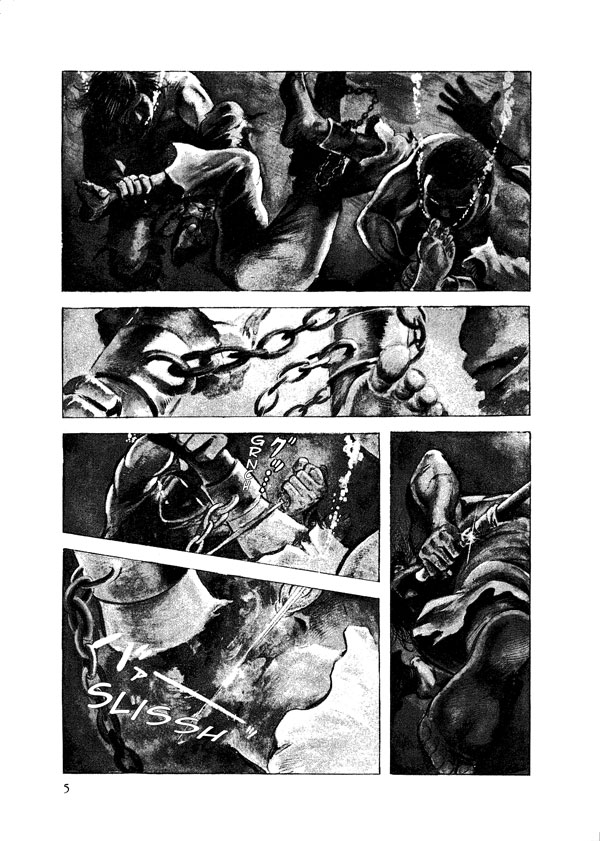
The artwork is a hodgepodge of styles and techniques. The best pages appear to be done in charcoal or pastels, and have the soft edges and expressionist lighting I associate with fin-de-siecle modernists such as Käthe Kollwitz. The opening scene, in particular, is beautifully rendered, a harrowing sequence of wordless, slightly abstract panels that reveals how George and King survived their maritime ordeal:

corv2

Most of the art, however, looks like homage to Goseki Kojima’s work on Lone Wolf and Cub, Samurai Executioner, and Path of the Assassin — not a bad thing, given Kojima’s superb draftsmanship and penchant for drawing memorable mugs. Seisaku Kano’s character designs are fine, but his fight scenes are poorly composed, a riot of swords, guts, and bodies in motion that fail to give the reader a clear picture of what’s happening. That might be an OK artistic choice once in a while, perhaps to suggest the chaos of hand-to-hand combat, but as the dominant mode of depicting action it soon grows tiresome, leaving the reader feeling more pummeled than entertained.

Though some of these criticisms could be leveled at Koike’s other work — Lady Snowblood, Crying Freeman and, yes, Lone Wolf and Cub — Color of Rage lacks something common to the aforementioned manga: a sense of play. Koike never takes himself too seriously in these other works, even when the plot takes a dark turn or two. In Color of Rage, however, his sincerity proves his undoing, as he tries to insert a noble black character into a world of vicious overlords and amoral samurai. King’s high-minded speeches and interventions clash violently with the story’s “pulpy sexiness” (for want of a better term), producing something that’s neither dramatically compelling nor fun to read. Die-hard Koike fans may feel the completist’s urge to buy Color of Rage — especially since Dark Horse has given it such a deluxe treatment — but casual readers will find much less here to love.

This is a revised version of a review that originally appeared at PopCultureShock on 5/14/2008.

COLOR OF RAGE • BY KAZUO KOIKE AND SEISAKU KANO • DARK HORSE • 414 pp. • RATING: MATURE (18+)

Filed Under: Manga, Manga Critic, REVIEWS Tagged With: Action/Adventure, Bad Manga, Dark Horse, Historical Drama, Kazuo Koike

The Qwaser of Stigmata, Vol. 1

August 11, 2010 by Katherine Dacey

qwaser_coverThough I frequently grouse about fanservice , I have a grudging respect for those artists who make costume failures, panty shots, and general shirtlessness play essential roles in advancing their plots. Consider Pretty Face, the story of a teenage jock who undergoes reconstructive surgery after a bus accident, only to end up looking like the girl he has a crush on (at least from the waist up). You don’t need to be a pervert to imagine how Yasuhiro Kano exploits the set-up for maximum T&A potential — even the hero gets groped and ogled, though Rando isn’t above leering at and lusting after girls himself. I loathe Pretty Face, yet I have to admit that Kano obviates the need for gusts of wind and breast-level collisions by making gender confusion such a fundamental part of his story; the fanservice may be gross and stupid, but it isn’t gratuitous.

Then there’s The Qwaser of Stigmata.

…

Read More

Filed Under: Manga Critic Tagged With: Shonen, Tokyopop

The Manga Hall of Shame: The Qwaser of Stigmata

August 11, 2010 by Katherine Dacey

Though I frequently grouse about fanservice , I have a grudging respect for those artists who make costume failures, panty shots, and general shirtlessness play essential roles in advancing their plots. Consider Pretty Face, the story of a teenage jock who undergoes reconstructive surgery after a bus accident, only to end up looking like the girl he has a crush on (at least from the waist up). You don’t need to be a pervert to imagine how Yasuhiro Kano exploits the set-up for maximum T&A potential — even the hero gets groped and ogled, though Rando isn’t above leering at and lusting after girls himself. I loathe Pretty Face, yet I have to admit that Kano obviates the need for gusts of wind and breast-level collisions by making gender confusion such a fundamental part of his story; the fanservice may be gross and stupid, but it isn’t gratuitous.

Then there’s The Qwaser of Stigmata.

Qwaser raises the panty-shot-as-plot-element stakes, then kicks Pretty Face down the stairs, taunts it, and takes its lunch money with a gimmick so offensive I’m almost embarrassed to type the words: the characters rely on breast milk for their superpowers. Those characters have chosen St. Mihailov Academy as ground zero for an epic showdown involving religious icons, nubile maidens, and weapons derived from the periodic table of the elements. (No doubt Dmitri Mendeleev is tossing in his grave right now.) From the standpoint of an artist writing for a shonen magazine like Monthly Champion Red, the parochial school setting provides the perfect vehicle for celebrating fetishes under the guise of world-building. No stone goes unturned, from busty nuns and busty schoolgirls to moe-bait characters in spectacles and knee socks; there’s even a bit of fan service for the ladies that takes the form of a smoldering priest in an eyepatch and a sullen, silver-haired Russian named Alexander “Sasha” Nikolaevich Hell. (Or “Her,” in the Tokyopop translation.)

As with most manga featuring combatants of the cloth, the religious iconography seems more a pretext for cool outfits than an integral part of the story. The characters occasionally pause to contemplate the Theotokos of Tsarytsin, a religious icon depicting the Virgin Mary nursing the baby Jesus, but why they want the icon remains mysterious; only by consulting the Wikipedia entry on Qwaser did I learn that this particular image is “fabled to alter the homeostasis of the world.” For a manga exploring a religion that’s sure to be a mystery to most of its readers, in- and outside Japan, it’s curious that no one ever discusses what Russian Orthodox Christians believe, how they practice their faith, or what caused doctrinal crises within the Russian Church — a pity, because as this Slavophile will tell you, there is a boffo manga to be written about the Old Believers’ showdown with Peter the Great. (Don’t believe me? Rent a DVD of the Mariinski Theater’s production of Khovanshchina, an opera so badass that several characters immolate themselves rather than submit to Peter’s will.) The few other references to religion are more window-dressing than anything else; Qwasers, those holy warriors of the periodic table, fight alongside “Maria Magdalens,” described by Wikipedia’s anonymous authors as “the alter-ego combat partner of a Qwaser whose primary function is to provide soma [breast milk] not unlike how one may refuel a car or even a warplane while in flight.” (After reading that sentence, I’m not sure which is more egregious: the Wikipedia authors’ attempt to write about Qwaser in a pseudo-scientific voice, or the manga-ka’s decision to call these women “Maria Magdalens.”)

If the fanservice and faux-religious elements weren’t quite enough to land Qwaser a spot in The Manga Hall of Shame, the dreadful artwork and ADD plotting put it over the top. The fight scenes are utterly incomprehensible, a blur of speedlines, explosions, and whirling dervishes punctuated by the occasional pin-up drawing of a character brandishing a weapon or enduring some unpleasant, sexually tinged violence. The plotting isn’t much better, as the story skips between cliche scenes of classroom bullying and tortured, confusing conversations between the series’ two principal female characters. The dialogue takes the cake for sheer awfulness, however; it’s the kind of series in which villains state the atomic weight of the elements they’re manipulating, exclaim nonsense like “My heart that burns will slice through you!”, and utter things so vile that that the publisher substitutes the word “bleep” for references to female genitalia and sexual congress.

The bottom line: The Qwaser of Stigmata is a shonen manga that aspires to the subversiveness of porn, but doesn’t have the imagination or the weirdness to rise to the level of genuine kink.

THE QWASER OF STIGMATA, VOL. 1: HOLY WARS IGNITE • ART BY KENETSU SATO, STORY BY HIROYUKI YOSHINO • TOKYOPOP • 200 pp. • RATING: MATURE (18+)

Filed Under: Manga, Manga Critic, REVIEWS Tagged With: Bad Manga, Fantasy, Tokyopop

Short Takes: Manga Hall of Shame Edition

August 9, 2010 by Katherine Dacey

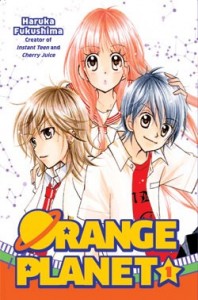
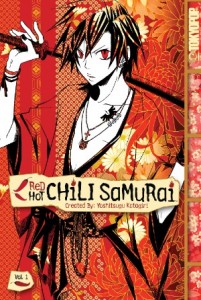
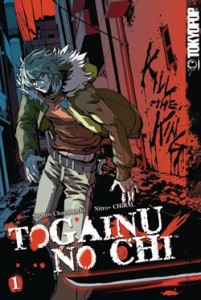
I have a special fascination with bad manga. And when I say “bad manga,” I’m not talking about stories that are merely cliche or derivative of other, better series — for better or worse, manga is a popular medium, and popular media survive, in part, by giving audiences what they want, even if that means more of the same — I’m talking about stories so ineptly drawn, so spectacularly dumb, or so offensive that they make Happy Cafe look like Phoenix by comparison. To judge from the coverage of this year’s San Diego Comic-Con, I’m not alone in my connoisseurship of wretched books; among the most widely reported panels was The Best and Worst Manga of 2010, in which a group of seasoned reviewers singled out titles for praise and punishment. To kick off my Bad Manga Week, therefore, I thought it would be a fun exercise to look at three of the titles that made the worst-of list to see if they were truly suited for inclusion in The Manga Hall of Shame. The candidates: Orange Planet (Del Rey), a shojo farce starring one clueless girl and three hot guys; Red Hot Chili Samurai (Tokyopop), a comedy about a hero who favors spicy peppers over PowerBars whenever he needs an energy boost; and Togainu no Chi (Tokyopop), an action-thriller that proudly boasts its origins as a “ground-breaking bishonen game.”

orangeplanet1ORANGE PLANET, VOL. 1

BY HARUKA FUKUSHIMA • DEL REY • 200 pp. • TEEN (13+)

Haruka Fukushima specializes in what I call “chastely dirty” manga for tween girls — that is, manga that places the heroine in compromising situations, teasing the audience with the prospect of a kiss or a grope that never quite materializes because the heroine is a good girl, thank you very much. In Orange Planet, Fukushima’s sex-phobic lead is Rui, a junior high student who lives by herself — she’s been an orphan since childhood — and pays for her apartment with a paper route. (That must be some paper route, considering she lives in a modern high-rise apartment and not, say, a cardboard box.) Rui is one corner of a highly contrived love square; the other three points are all standard shojo types, from the boy next door and the hot young teacher to the mystery man from the heroine’s past.

…

Read More

Filed Under: Manga Critic Tagged With: Bad Manga, del rey, Samurai, shojo, Shonen, Tokyopop

Short Takes: Manga Hall of Shame Edition

August 9, 2010 by Katherine Dacey

I have a special fascination with bad manga. And when I say “bad manga,” I’m not talking about stories that are merely cliche or derivative of other, better series — for better or worse, manga is a popular medium, and popular media survive, in part, by giving audiences what they want, even if that means more of the same — I’m talking about stories so ineptly drawn, so spectacularly dumb, or so offensive that they make Happy Cafe look like Phoenix by comparison. To judge from the coverage of this year’s San Diego Comic-Con, I’m not alone in my connoisseurship of wretched books; among the most widely reported panels was The Best and Worst Manga of 2010, in which a group of seasoned reviewers singled out titles for praise and punishment. To kick off my Bad Manga Week, therefore, I thought it would be a fun exercise to look at three of the titles that made the worst-of list to see if they were truly suited for inclusion in The Manga Hall of Shame. The candidates: Orange Planet (Del Rey), a shojo farce starring one clueless girl and three hot guys; Red Hot Chili Samurai (Tokyopop), a comedy about a hero who favors spicy peppers over PowerBars whenever he needs an energy boost; and Togainu no Chi (Tokyopop), an action-thriller that proudly boasts its origins as a “ground-breaking bishonen game.”

orangeplanet1Orange Planet, Vol. 1
By Haruka Fukushima • Del Ret • 200 pp. • Rated Teen (13+)
Haruka Fukushima specializes in what I call “chastely dirty” manga for tween girls — that is, manga that places the heroine in compromising situations, teasing the audience with the prospect of a kiss or a grope that never quite materializes because the heroine is a good girl, thank you very much. In Orange Planet, Fukushima’s sex-phobic lead is Rui, a junior high student who lives by herself — she’s been an orphan since childhood — and pays for her apartment with a paper route. (That must be some paper route, considering she lives in a modern high-rise apartment and not, say, a cardboard box.) Rui is one corner of a highly contrived love square; the other three points are all standard shojo types, from the boy next door and the hot young teacher to the mystery man from the heroine’s past.

Why any of them find her interesting is one of Orange Planet‘s great puzzles; Rui is ditzy, hysterical, and prudish, three qualities that men of all ages generally dislike in female companions. Why Rui would find any of them attractive is the series’ other, as all three boys behave like boors, popping into her bed unannounced (yes, you read that right) and offering her private “tutoring” sessions. The art is less offensive than the story, evocative of Natsumi Ando’s far better Kitchen Princess with its cast of pointy-chinned, doll-eyed characters and sparkling, rose-filled backdrops. The layouts are sloppily executed, careening from panels of awkwardly-posed bodies to extreme closeups of Rui looking terrified that one of the boys might actually lean in for a kiss. Maybe I would have found Orange Planet titillating when I was eleven or twelve, but I’d like to think that I was never quite that clueless about boys. Just sayin’.

Shameworthiness: Orange Planet earns a place in The Manga Hall of Shame for insulting girls’ intelligence with a wish-fulfillment story so slapdash it’s painful.

redhotchiliRed Hot Chili Samurai, Vol. 1
BY Yoshitsugu Katagiri • Tokyopop • 196 pp. • Rated Older Teen (16+)
If you crossed Popeye with Samurai Champloo, the results might look a lot like Red Hot Chili Samurai, a labored comedy about a hot-headed swordsman who snacks on peppers — the spicier, the better — to turbo-charge his combat skills. Like all good heroes, Kokaku has a posse of fellow butt-kickers that includes Ento, a sarcastic samurai in glasses; Ran, a feisty woman who vacillates between thinking Kokaku is cute and thinking he’s an ass; and Shou, a ninja who communicates exclusively through handwritten signs, a la Louis in The Trumpet of the Swan. The four tackle an assortment of stock villains, from a yakuza thug who runs a crooked gambling parlor to a pimp who preys on vulnerable young women. Each story follows the same basic template, serving up a predictable mixture of jokes about Shou’s reluctance to speak and Kokaku’s fixation with chili peppers (“Maybe you should give those things up,” one character tells him, “You’ll get hemorrhoids, you know.”), as well as anachronistic sight gags (one character invents a Polaroid-style camera) and scratching-the-fourth-wall observations about samurai manga conventions. Clumsy, speedline-heavy fight scenes and character designs that suggest Champloo doujinshi only reinforce the bad impression left by the script, which is filled with long, airless pauses that precede every joke or snappy comeback. Take my samurai — please!

Shameworthiness: Red Hot Chili Samurai is dull and repetitive to be sure, and poorly drawn to boot, but isn’t quite cringe-worthy enough to merit inclusion in The Manga Hall of Shame’s permanent collection.

togainuTogainu no Chi, Vol. 1 
By Suguro Chayamuchi and NITRO+ CHiRAL • Tokyopop • 200 pp. • Rating: Older Teen (16+)
Here are seven words that ought to strike fear into every manga reader’s heart: “Based on the ground-breaking bishonen game!” Not only is the tagline vague — what kind of game? how are bishonen involved? what makes it ground-breaking? — but it also suggests that the editorial staff couldn’t think of anything positive to say about a sci-fi adventure that ought, in theory, to appeal to folks who liked Battle Royale. Alas, Togainu no Chi plays like an ungainly mixture of slash fiction and Deadman Wonderland, depositing its pretty, vacant heroes into a future run by gangs who sponsor elaborate street-fighting tournaments. The post-apocalyptic setting is suggested primarily through dark, overly toned streetscapes filled with rubbish and crumbling pavement; one could be forgiven for thinking the story takes place somewhere under the Cross-Bronx Expressway and not a Japanese city circa “20XX A.D.” In fact, nothing about the setting really suggests the future, near or distant, save for a few cliche visual signifiers: sword-wielding characters in trenchcoats, bad guys with enormous tattoos and multiple piercings, the complete absence of daylight. The action sequences are as poorly executed as the backgrounds, a confusing mishmash of blood spatters and facial close-ups (usually as someone is yelling “Noooooo….”), while the dialogue see-saws between manly, expletive-laden exchanges and exposition-heavy speeches. Perhaps Togainu no Chi‘s biggest offense is the laziness of the storytelling; the author frequently interrupts the narrative to explain the rules of The Igura (the tournament at the heart of the story), yet it’s still not clear by the end of volume one how the game is actually played, though it does involve dog tags and playing cards. Or something like that.

About the best I can say for Togainu no Chi is that the menfolk are generically handsome, providing fanfic writers ample opportunity to pair the boys off for some manly adventures followed by some sweet, sweet lovin’.

Shameworthiness: Move that Picasso to the left — this one needs a space in the permanent Manga Hall of Shame gallery.

Filed Under: Manga, Manga Critic, REVIEWS Tagged With: del rey, Samurai, Tokyopop

The Best Manga You’re Not Reading: ES: Eternal Sabbath

August 6, 2010 by Katherine Dacey

Back in June, Brigid Alverson, Robin Brenner, Martha Cornog and I gave a presentation at the American Library Association’s annual conference called “The Best Manga You’re Not Reading.” Our goal was to remind librarians that manga isn’t just for teens by highlighting fourteen titles that we thought would appeal to older patrons. Response to our presentation was terrific, so I decided to make “The Best Manga You’re Not Reading” a regular feature here at The Manga Critic. Some months I’ll shine the spotlight on something obscure or out-of-print; other months I’ll feature a title that you may have heard about (or even read) because I think it has the potential to appeal to readers who aren’t necessarily mangaphiles. This month’s title — ES: Eternal Sabbath (Del Rey) — was one of Brigid’s picks, a sci-fi manga that she felt had strong visuals and a suitably creepy atmosphere. I couldn’t agree more, so I decided to revise an old review from my PopCultureShock days to explain why you ought to read this trippy, thought-provoking story about the perils of cloning and extrasensory perception.

es1ES: ETERNAL SABBATH, VOLS. 1-8

BY FUYUMI SORYO • DEL REY • RATING: OLDER TEEN (16+)

The vivid images that haunt us when we sleep seem like perfect fodder for art, yet we often produce dream-inspired work that’s much goofier and far less potent than our nocturnal imaginings: think of Salvador Dali’s unabashedly Freudian dream sequence in Spellbound (the one false note in an otherwise great thriller), or John Fuseli’s heavy-handed symbolism in The Nightmare (in which a Rubenesque sleeper is tormented by a ghostly horse and an incubus, the ultimate Romantic two-fer). These images fail to shock because they seem too mannered, too staid — in short, too neat, failing to capture the subconscious mind’s ability to juxtapose the banal with the fantastic. In ES: Eternal Sabbath, however, manga-ka Fuyumi Soryo (best known to American readers for the shojo drama Mars) steers clear of the cliches and overripe imagery that reduce so many dreamy works to kitsch, producing a taut, spooky thriller that reminds us just how weird and terrifying a place the mind can be.

…

Read More

Filed Under: Manga Critic Tagged With: del rey, Seinen

The Best Manga You’re Not Reading: ES: Eternal Sabbath

August 6, 2010 by Katherine Dacey

Back in June, Brigid Alverson, Robin Brenner, Martha Cornog and I gave a presentation at the American Library Association’s annual conference called “The Best Manga You’re Not Reading.” Our goal was to remind librarians that manga isn’t just for teens by highlighting fourteen titles that we thought would appeal to older patrons. Response to our presentation was terrific, so I decided to make “The Best Manga You’re Not Reading” a regular feature here at The Manga Critic. Some months I’ll shine the spotlight on something obscure or out-of-print; other months I’ll feature a title that you may have heard about (or even read) because I think it has the potential to appeal to readers who aren’t necessarily mangaphiles. This month’s title — ES: Eternal Sabbath (Del Rey) — was one of Brigid’s picks, a sci-fi manga that she felt had strong visuals and a suitably creepy atmosphere. I couldn’t agree more, so I decided to revise an old review from my PopCultureShock days to explain why you ought to read this trippy, thought-provoking story about the perils of cloning and extrasensory perception.

ES: ETERNAL SABBATH, VOLS. 1-8

BY FUYUMI SORYO • DEL REY • RATING: OLDER TEEN (16+)

The vivid images that haunt us when we sleep seem like perfect fodder for art, yet we often produce dream-inspired work that’s much goofier and far less potent than our nocturnal imaginings: think of Salvador Dali’s unabashedly Freudian dream sequence in Spellbound (the one false note in an otherwise great thriller), or John Fuseli’s heavy-handed symbolism in The Nightmare (in which a Rubenesque sleeper is tormented by a ghostly horse and an incubus, the ultimate Romantic two-fer). These images fail to shock because they seem too mannered, too staid — in short, too neat, failing to capture the subconscious mind’s ability to juxtapose the banal with the fantastic. In ES: Eternal Sabbath, however, manga-ka Fuyumi Soryo (best known to American readers for the shojo drama Mars) steers clear of the cliches and overripe imagery that reduce so many dreamy works to kitsch, producing a taut, spooky thriller that reminds us just how weird and terrifying a place the mind can be.

The first volume of ES introduces us to Shuro, a young man with the ability to read thoughts. Shuro uses the information he gathers from other people to impersonate their friends and family members, wiping their memories clean when he tires of the situation. His aimless routine is upended by a chance encounter with neuroscientist Mine Kujyou, who spots Shuro sauntering past a brutal crime scene in a state of utter indifference, as if he knew what was about to transpire. Her researcher’s instinct piqued, she begins to track Shuro’s movements, initiating a game of cat-and-mouse that quickly escalates into psychological warfare.
In a plot twist that would surely please Fox Mulder, a researcher from a clandestine government laboratory arrives on the scene, Smoking Man-style, to explain that Shuro is, in fact, a clone, created by scientists on the hunt for the “eternal sabbath,” a.k.a. eternal youth, gene. (The psychic powers powers are a happy by-product of the experiment.) Shuro escaped from his creators with fellow clone Isaac, an even more powerful, less scrupulous mind reader with a destructive agenda. Mine must then decide whether to assist Shuro and Isaac’s creator in re-capturing the wayward clones, or to allow Shuro to disappear back into the shadows and resume his impostor life of borrowed memories and feigned emotions.

To be sure, many of ES: Eternal Sabbath’s themes are science fiction staples: do scientists have an ethical obligation to treat engineered life forms with the same care as humans? Are there realms of knowledge and experience that cannot be quantified or explained through modern science? That such tried-and-true questions inform but never overwhelm the narrative is testament to Soryo’s storytelling skills. She creates a small, intimately linked cast whose conflicting desires, insecurities, fears, and friendships dramatize the series’ overarching theme, what does it mean to be human?, while underscoring the poignancy of the clones’ liminal status. (Isaac, as his name suggests, was intended as a sacrifice; his creators raised him for the sole purpose of studying and dissecting him.)

If her storytelling chops are strong, Soryo’s life drawing skills are not. Her character designs have a languid quality that makes them seem oddly placid in scenes fraught with conflict. Where Soryo shines are the dream sequences, which are visceral and unsettling. Some of the symbols she employs — horses, thorns — are familiar from television and movie dreams, yet the way in which she orchestrates these dreams is not, as she captures the peculiar rhythm and logic of a nightmare. One of the most effective sequences occurs right at the beginning of the series: a large insect emerges from a disturbingly organic mass that suddenly shatters into hundreds of living, moving pieces. The strangeness of the image, the abrupt shift in mood, the blurry line between inanimate and animate objects — these feel like an authentic product of the subconscious, and not a Freudian rebus to be decoded by the audience.

I could cavil about a few details (the translation is rather flat, as are Soryo’s pre-fab backgrounds), but on the whole, this eight-volume series has few wasted pages. The story moves at a brisk clip without sacrificing characterization or common sense; the art suggests the workings of the subconscious mind without silliness; and the ending is genuinely moving and surprising. Science fiction fanatics will find much to like here, as will horror buffs and readers who like the idea that women can kick butt in the sciences, Lawrence Summers and evil clones be damned.

This is an updated version of a review that appeared at PopCultureShock on 6/22/2008. The Best Manga You’re Not Reading is an occasional feature that highlights titles that aren’t getting the critical attention — or readership — they deserve. Click here for the inaugural column; click here for the series archive.

Filed Under: Manga, Manga Critic, Recommended Reading, REVIEWS Tagged With: del rey, Sci-Fi

Hyde & Closer, Vol. 1

July 28, 2010 by Katherine Dacey

hyde1Move over, Chucky — there’s a new doll in town.

His name is Hyde, and he’s a stuffed bear who wears a fedora, chomps cigars, and wields a chainsaw. (More on that in a minute.) Hyde belongs to thirteen-year-old Shunpei Closer, a timid junior high school student whose biggest talent is avoiding conflict. Watching Shunpei dodge bullies at school, it’s difficult to believe that he is, in fact, the grandson of Alysd Closer, a powerful, globe-trotting sorcerer with enemies on every continent. Keenly aware that his rivals might seek revenge against his family, Alysd created Hyde, a plush fighting machine capable of fending off attacks with a magical chainsaw. Hyde remained dormant for almost six years before the delivery of a mysterious package containing a murderous, knife-throwing sock monkey activated his abilities. (I can’t believe I just typed the phrase, “knife-throwing sock money,” but there it is.) Thus begins a kind of magical tournament manga that pits Hyde and Shunpei against an array of powerful sorcerers and their toy henchmen.

…

Read More

Filed Under: Manga Critic Tagged With: Shonen, shonen sunday, VIZ

Hyde & Closer, Vol. 1

July 28, 2010 by Katherine Dacey

Move over, Chucky — there’s a new doll in town. His name is Hyde, and he’s a stuffed bear who wears a fedora, chomps cigars, and wields a chainsaw. (More on that in a minute.) Hyde belongs to thirteen-year-old Shunpei Closer, a timid junior high school student whose biggest talent is avoiding conflict. Watching Shunpei dodge bullies at school, it’s difficult to believe that he is, in fact, the grandson of Alysd Closer, a powerful, globe-trotting sorcerer with enemies on every continent. Keenly aware that his rivals might seek revenge against his family, Alysd created Hyde, a plush fighting machine capable of fending off attacks with a magical chainsaw. Hyde remained dormant for almost six years before the delivery of a mysterious package containing a murderous, knife-throwing sock monkey activated his abilities. (I can’t believe I just typed the phrase, “knife-throwing sock money,” but there it is.) Thus begins a kind of magical tournament manga that pits Hyde and Shunpei against an array of powerful sorcerers and their toy henchmen.

You don’t have to be a ten-year-old boy to find the sight of karate-chopping, knife-throwing dolls amusing, though it certainly helps. There’s a gleeful, go-for-broke quality to the fight scenes that evokes the feeling of real childhood play, a sensation akin to chopping off your Barbie’s hair or staging an epic battle between your sister’s My Little Ponies and your Star Wars action figures. Making these scenes even more enjoyable is Hyde, who sounds like an affectionate parody of James Cagney, punctuating the combat with sharp, funny one-liners that wouldn’t be out of place in The Public Enemy.

Yet for all the energy and goodwill engendered by these scenes, Hyde & Closer tends to bog down in exposition masquerading as dialogue, thanks to its rather complicated mythology. The rules of engagement are different for each opponent, which means that Hyde spends part of every fight outlining his strategy for defeating the villain du jour. Hyde isn’t the only character who sounds, at time, more like an omniscient narrator than a participant in the action; the villainous sock monkey, for example, lectures Shunpei at great length about Alysd’s true identity, scoffing at Shunpei for thinking gramps was an archaeologist. “That’s his cover story,” the monkey explains. “I guess no one told you anything.” (Or, more accurately, “I guess that’s my opening to disabuse you of that silly notion!”)

The battle scenes are further encumbered by Shunpei’s self-flagellating outbursts, usually along the lines of “I’m pathetic!” or “It’s all my fault!” Each time Shunpei doubts himself, the action comes to a screeching halt until he can muster the courage to stop whimpering and start fighting. Shunpei is clearly meant to be the kind of average-joe character that readers can identify with, but it’s hard to imagine anyone over the age of ten or eleven finding him sympathetic; after all, his bodyguard is quite handy with a chainsaw. Call me crazy, but I’d find that rather empowering.

If the script is a little creaky, Haro Aso’s artwork is bold, stylish, and suitably sinister. Hyde, by far, is his best creation, with his enormous button eyes, rakishly tilted hat, and jagged seams; he’s the perfect mixture of beloved stuffed animal and thirties gangster, easily transforming from a benign, wide-eyed toy to a glowering menace. (In a nice touch, the stitches on Hyde’s mouth are stretched to their limit whenever he’s spitting dialogue or downing one of his signature drinks: honey on the rocks.) The villains, too, are imaginatively rendered, from the jack-in-the-box with shark-like teeth to the kokeshi with lethal, snaking hair. (Hommage to Junji Ito, perhaps?) The only downside to Aso’s art is his penchant for extreme camera angles. He draws his fight scenes from so many different perspectives — from the floor up, the ceiling down, or directly behind Hyde’s head — that it’s hard to track the characters’ movement through the picture plane; characters have a tendency to pop up in unexpected (and sometimes illogical) places.

Still, it’s hard to deny the appeal of stuffed animal cage matches or teddy bears who swagger like James Cagney, and for those two reasons, I’m going to stick with Hyde & Closer to see where Aso goes with his Fight Club-meets-Winnie the Pooh premise.

HYDE & CLOSER, VOL. 1 • BY HARO ASO • VIZ • 200 pp. • RATING: OLDER TEEN (16+)

Filed Under: Manga, Manga Critic, REVIEWS Tagged With: Action/Adventure, shonen sunday, VIZ

A Drunken Dream and Other Stories

July 22, 2010 by Katherine Dacey

The 1970s marked a turning point in the development of shojo manga, as the first time in the medium’s history that a significant number of women were working in the field. These “founding mothers” weren’t the first female manga artists; Machiko Hasegawa was an early pioneer with Sazae-san,[1] a comic strip that first appeared in her hometown newspaper in 1946, followed in the 1950s by such artists as Masako Watanabe, who debuted in 1952 with Suama-chan, Hideko Mizuno, who debuted in 1956 with Akakke Pony (Red-Haired Pony),[2] and Miyako Maki, who debuted in 1957 with Hahakoi Waltz (Mother’s Love Waltz). Beginning in the mid-1960s and continuing throughout the 1970s, more female creators entered the profession, thus beginning the quiet transformation of shojo manga from sentimental stories for very young readers to a vibrant medium that spoke directly to the concerns and desires of teenage girls.

Several figures played an important role in affecting this transformation. One was Osamu Tezuka, whose Princess Knight (1954)[3] is often erroneously described as “the first shojo manga.” (Shojo manga, in fact, dates to the beginning of the twentieth century, when magazines such as Shojo Sekai, or Girls’ World, featured comics alongside stories, articles, and illustrations.) An affectionate pastiche of Walt Disney, Zorro, and Takarazuka plays, Tezuka’s gender-bending story focused on a princess with two hearts — one female, one male — who becomes a masked crusader to save her kingdom from falling into the hands of a wicked nobleman. However conventional the ending seems now — Princess Sapphire eventually marries the prince of her dreams and hangs up her sword — the story was a rare example of a long-form adventure for girls; well into the 1950s, most shojo manga featured plotlines reminiscent of Victorian children’s literature, filled with young, imperiled heroines buffeted by fate until happily reunited with their families.

Another major influence was Yoshiko Nishitani, whose ground-breaking series Mary Lou appeared in Weekly Margaret in 1965. Mary Lou was among the very first shojo manga to feature an ordinary teenager as both the protagonist and romantic lead; its eponymous heroine suffered from the kind of everyday problems — a beautiful older sister, a boy who sends confusing signals — that invited readers to identify with her. Like Princess Knight, the gender politics of Mary Lou may strike contemporary Western readers as nostalgic at best, retrograde at worst, but Nishitani’s ability to make a compelling story out of ordinary adolescent experience struck a chord with Japanese girls, providing an important model for subsequent generations of shojo artists.

Moto Hagio and The “Founding Mothers” of Modern Shojo

In the hands of the Magnificent Forty-Niners and the other women who entered the field in the 1970s,  shojo manga underwent a profound transformation, giving rise to a new kind of storytelling that emphasized the importance of relationships and introspection, even when the stories took place in eighteenth-century France (The Rose of Versailles), Taisho-era Japan (Haikara-san ga Toru, or, Here Comes Miss Modern), or the distant future (They Were Eleven!). Inspired by Tezuka’s cinematic approach to storytelling, they sought to dramatize their characters’ inner lives with the same dynamism that Tezuka brought to car chases, fist fights, and heated conversations. Hagio and her peers placed a premium on subjectivity, trying their utmost to help readers see the world through the characters’ point of view, eschewing tidy grids for fluid, expressionist layouts, and employing an elaborate code of visual signifiers to represent emotions from love to anxiety — symbols still in widespread use today.

Moto Hagio was one of these shojo trailblazers, making her professional debut in 1969 with “Lulu to Mimi,” a short story that appeared in the girls’ magazine Nakayoshi. In the years that followed, she proved enormously versatile, working in a variety of genres: “November Gymnasium” (1971) explores a romantic relationship between two young men, for example, while The Poe Family (1972-76) focuses on a vampire doomed to live out his existence in a teenage boy’s body. Hagio is perhaps best known to Western readers for her science fiction’s unique blend of social commentary and lyrical imagery. A, A’, for example, examines the relationship between memory and identity, while They Were Eleven tackles the thorny question of whether gender determines destiny.

A Drunken Dream and Other Stories

The ten stories that comprise A Drunken Dream span the entire length of Hagio’s career, from “Bianca” (1970), one of her first published works, to “A Drunken Dream” (1985), a sci-fi fantasy written around the same time as the stories in A, A’, to “The Willow Tree” (2007), an entry in her recent anthology Anywhere But Here.

What A Drunken Dream reveals is an author whose childhood passion for Frances Hodgson Burnett, L.M. Montgomery, and Isaac Asimov profoundly influenced the kind of stories she chose to tell as an adult. “Bianca,” for example, is a unabashedly Romantic story about artistic expression. The main narrative is framed by a discussion between Clara, a middle-aged woman, and an art collector curious about the “dryad” who appears in Clara’s paintings. As a teenager, Clara secretly witnessed her younger cousin Bianca dancing with great abandon in a wooded glen, a child’s way of coping with the pain of her parents’ tumultuous relationship. Bianca’s dance haunted Clara for years, even though their acquaintance was brief. “The way [Bianca] danced… the way it made me feel… I can’t describe it in words,” the middle-aged Clara explains to her guest. “But the thrill of that moment still shines today, and still shakes me to my core. And it was my irresistible need to draw that which led me to become a painter.”

Other stories explore the complexity of familial relationships. “Hanshin: Half-God,” for example, depicts conjoined twins with a rare medical condition that leaves one brilliant but physically deformed and the other simple but radiantly beautiful. When a life-threatening condition necessitates an operation to separate them, Yudy, the “big sister,” imagines it will liberate her from the responsibility of caring for and about Yucy, never considering the degree to which she and Yucy are emotionally interdependent. In “The Child Who Comes Home,” the emphasis is on parent-child relationships, exploring how a mother and her son cope with the death of the family’s youngest member. Throughout the story, the deceased Yuu appears in many of the panels, though we are never sure if Yuu’s ghost is real, or if his family’s lingering attachment to him is making his memory palpable.

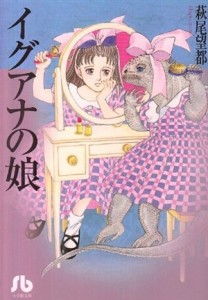
iguanagirlThe emotional core of A Drunken Dream — for me, at least — is Hagio’s 1991 story “Iguana Girl.” Rika, the heroine, is a truly grotesque figure — not in the everyday sense of being ugly or unpleasant, but in the Romantic sense, as a person whose bizarre affliction arouses empathy in readers. Born to a woman who appears human but is, in fact, an enchanted lizard, Rika is immediately rejected by her mother, who sees only a repulsive likeness of herself. Yuriko’s disgust for her daughter manifests itself in myriad ways: withering put-downs, slaps and shouts, blatant displays of favoritism for Rika’s younger sister Mami. As Rika matures, Hagio gives us tantalizing glimpses of Rika not as an iguana, but as the rest of the world sees her: a lovely but reserved young woman. As with “The Child Who Comes Home,” the heroine’s appearance could be interpreted literally, as evidence of magical realism, or figuratively, as a metaphor for the way in which children mirror their parents’ own flaws and disappointments; either way, Rika’s quest to heal her childhood wounds is easily one of the most moving stories I’ve read in comic form, a testament to Hagio’s ability to make Rika’s fraught relationship with her mother seem both terribly specific and utterly universal.
Perhaps the best compliment I can pay Hagio is praising her ability to make the ineffable speak through pictures, whether she’s documenting the grief that a young woman feels after aborting her baby (“Angel Mimic”) or the intense longing a middle-aged man feels for the college friends who abandoned him (“Marie, Ten Years Later”). Nowhere is this more evident than in the final story, “The Willow Tree.” At first glance, the layout is simple: each page consists of just two large, rectangular panels in which a woman stands beneath a tree, watching a parade of people — a doleful man and a little boy, a group of rambunctious grade-schoolers, a teenager wooing a classmate — as they stroll on the embankment above her. A careful reading of the images, however, reveals a complex story spanning many years. Hagio uses subtle cues — light, weather, and the principal character’s body language — to suggest the woman’s relationship to the people who walk past the tree. The last ten panels are beautifully executed; though the woman never utters a word, her face suddenly registers all the pain, joy, and anxiety she experienced during her decades-long vigil.

For those new to Hagio’s work, Fantagraphics has prefaced A Drunken Dream with two indispensable articles by noted manga scholar Matt Thorn.[4] The first, “The Magnificent Forty-Niners,” places Hagio in context, introducing her peers and providing an overview of her major publications. The second, “The Moto Hagio Interview,” is a lengthy conversation between scholar and artist about Hagio’s formative reading experiences, first jobs, and recurring use of certain motifs. Both reveal Hagio to be as complex as her stories, at once thoughtful about her own work and surprised by her success. Taken together with the stories in A Drunken Dream, these essays make an excellent introduction to one of the most literary and original voices working in comics today. Highly recommended.

A DRUNKEN DREAM AND OTHER STORIES • BY MOTO HAGIO, TRANSLATED BY MATT THORN • FANTAGRAPHICS • 288 pp.

NOTES

1. The Wonderful World of Sazae-San ran in newspapers from 1946 to 1974. The collected strips, comprising 45 volumes in all, have been perennial best-sellers in Japan, with over 60 million books sold. It’s imporant to note that Sazae-san is not shojo manga; the story focuses on a resourceful, strong-willed housewife and her family, a kind of Mother Knows Best story. Nonetheless, Machiko Hasegawa is an important figure in the history of the medium, both for the influence of her strip and her trailblazing role as a female creator.

2. For more information about Hideko Mizuno, see Marc Bernabe’s recent profile and interview at Masters of Manga.

3. Princess Knight has a long and complex publishing history. The original story appeared in Shojo Club from 1953 to 1956, was continued in Nakayoshi in 1958, and revived again for Nakayoshi in 1963. The third version is generally considered to be the definitive one; Tezuka re-worked a few details from the original version and re-drew the series. In 2001, Kodansha released a bilingual edition of the 1963 version which is now out of print.

4. Both essays originally appeared in issue no. 269 of The Comics Journal (July 2005).

FOR FURTHER READING

Bernabe, Marc. “What is the ‘Year 24 Group’?” Interview with Moto Hagio. [http://mastersofmanga.com/2010/06/hagioyear24] [Accessed 7/22/10.]

Gravett, Paul. Manga: 60 Years of Japanese Comics. New York: Collins Design, 2004.

Randall, Bill. “Three By Moto Hagio.” The Comics Journal 252 (April 2003). (Full text available online at The Comics Journal Archives.)

Shamoon, Deborah. “Revolutionary Romance: The Rose of Versailles and the Transformation of Shojo Manga.” Mechademia 2 (2007): 3-18.

Schodt, Frederick. Manga! Manga! The World of Japanese Comics. New York: Kodansha International, 1983.

Thorn, Matt. “The Multi-Faceted Universe of Shoujo Manga.” [http://www.matt-thorn.com/shoujo_manga/colloque/index.php] (Accessed 7/21/10.)

Thorn, Matt. “What Japanese Girls Do With Manga and Why.” [http://www.matt-thorn.com/shoujo_manga/jaws/index.php] (Accessed 7/21/10/)

Toku, Masaki, ed. Shojo Manga! Girl Power! Chico, CA: Flume Press, 2005.

Vollmar, Rob. “X+X.” The Comics Journal 269 (July 2005): 134-36.

WORKS BY MOTO HAGIO AND HER PEERS (IN ENGLISH)

Aoike, Yasuko. From Eroica With Love. La Jolla, CA: CMX Manga/Wildstorm Productions, 2004 – 2010. 15 volumes (incomplete).

Ariyoshi, Kyoko. Swan. La Jolla, CA: CMX Manga/Wildstorm Productions, 2005 – 2010. 15 volumes (incomplete).

Hagio, Moto. A, A’ [A, A Prime]. Translated by Matt Thorn. San Francisco: Viz Communications, 1997. (Reviewed at The Manga Critic on 5/31/10.)

Hagio, Moto, Keiko Nishi, and Shio Sato. Four Shojo Stories. Translated by Matt Thorn. San Francisco: Viz Communications, 1996. (Reviewed at The Manga Critic on 5/31/10.)

Mitsuse, Ryu and Keiko Takemiya. Andromeda Stories. New York: Vertical, Inc., 2007. 3 volumes. (Reviewed at The Manga Critic on 5/26/10.)

Takemiya, Keiko. To Terra. New York: Vertical, Inc., 2007. 3 volumes. (Reviewed at The Manga Critic on 5/23/10.)

Filed Under: Manga Critic Tagged With: Classic, fantagraphics, Magnificent 49ers, moto hagio, shojo

A Drunken Dream and Other Stories

July 22, 2010 by Katherine Dacey

The 1970s marked a turning point in the development of shojo manga, as the first time in the medium’s history that a significant number of women were working in the field. These “founding mothers” weren’t the first female manga artists; Machiko Hasegawa was an early pioneer with Sazae-san,[1] a comic strip that first appeared in her hometown newspaper in 1946, followed in the 1950s by such artists as Masako Watanabe, who debuted in 1952 with Suama-chan, Hideko Mizuno, who debuted in 1956 with Akakke Pony (Red-Haired Pony),[2] and Miyako Maki, who debuted in 1957 with Hahakoi Waltz (Mother’s Love Waltz). Beginning in the mid-1960s and continuing throughout the 1970s, more female creators entered the profession, thus beginning the quiet transformation of shojo manga from sentimental stories for very young readers to a vibrant medium that spoke directly to the concerns and desires of teenage girls.

Several figures played an important role in affecting this transformation. One was Osamu Tezuka, whose Princess Knight (1954)[3] is often erroneously described as “the first shojo manga.” (Shojo manga, in fact, dates to the beginning of the twentieth century, when magazines such as Shojo Sekai, or Girls’ World, featured comics alongside stories, articles, and illustrations.) An affectionate pastiche of Walt Disney, Zorro, and Takarazuka plays, Tezuka’s gender-bending story focused on a princess with two hearts — one female, one male — who becomes a masked crusader to save her kingdom from falling into the hands of a wicked nobleman. However conventional the ending seems now — Princess Sapphire eventually marries the prince of her dreams and hangs up her sword — the story was a rare example of a long-form adventure for girls; well into the 1950s, most shojo manga featured plotlines reminiscent of Victorian children’s literature, filled with young, imperiled heroines buffeted by fate until happily reunited with their families.

Another major influence was Yoshiko Nishitani, whose ground-breaking series Mary Lou appeared in Weekly Margaret in 1965. Mary Lou was among the very first shojo manga to feature an ordinary teenager as both the protagonist and romantic lead; its eponymous heroine suffered from the kind of everyday problems — a beautiful older sister, a boy who sends confusing signals — that invited readers to identify with her. Like Princess Knight, the gender politics of Mary Lou may strike contemporary Western readers as nostalgic at best, retrograde at worst, but Nishitani’s ability to make a compelling story out of ordinary adolescent experience struck a chord with Japanese girls, providing an important model for subsequent generations of shojo artists.

Moto Hagio and The “Founding Mothers” of Modern Shojo

In the hands of the Magnificent Forty-Niners and the other women who entered the field in the 1970s,  shojo manga underwent a profound transformation, giving rise to a new kind of storytelling that emphasized the importance of relationships and introspection, even when the stories took place in eighteenth-century France (The Rose of Versailles), Taisho-era Japan (Haikara-san ga Toru, or, Here Comes Miss Modern), or the distant future (They Were Eleven!). Inspired by Tezuka’s cinematic approach to storytelling, they sought to dramatize their characters’ inner lives with the same dynamism that Tezuka brought to car chases, fist fights, and heated conversations. Hagio and her peers placed a premium on subjectivity, trying their utmost to help readers see the world through the characters’ point of view, eschewing tidy grids for fluid, expressionist layouts, and employing an elaborate code of visual signifiers to represent emotions from love to anxiety — symbols still in widespread use today.

Moto Hagio was one of these shojo trailblazers, making her professional debut in 1969 with “Lulu to Mimi,” a short story that appeared in the girls’ magazine Nakayoshi. In the years that followed, she proved enormously versatile, working in a variety of genres: “November Gymnasium” (1971) explores a romantic relationship between two young men, for example, while The Poe Family (1972-76) focuses on a vampire doomed to live out his existence in a teenage boy’s body. Hagio is perhaps best known to Western readers for her science fiction’s unique blend of social commentary and lyrical imagery. A, A’, for example, examines the relationship between memory and identity, while They Were Eleven tackles the thorny question of whether gender determines destiny.

A Drunken Dream and Other Stories

The ten stories that comprise A Drunken Dream span the entire length of Hagio’s career, from “Bianca” (1970), one of her first published works, to “A Drunken Dream” (1985), a sci-fi fantasy written around the same time as the stories in A, A’, to “The Willow Tree” (2007), an entry in her recent anthology Anywhere But Here.

What A Drunken Dream reveals is an author whose childhood passion for Frances Hodgson Burnett, L.M. Montgomery, and Isaac Asimov profoundly influenced the kind of stories she chose to tell as an adult. “Bianca,” for example, is a unabashedly Romantic story about artistic expression. The main narrative is framed by a discussion between Clara, a middle-aged woman, and an art collector curious about the “dryad” who appears in Clara’s paintings. As a teenager, Clara secretly witnessed her younger cousin Bianca dancing with great abandon in a wooded glen, a child’s way of coping with the pain of her parents’ tumultuous relationship. Bianca’s dance haunted Clara for years, even though their acquaintance was brief. “The way [Bianca] danced… the way it made me feel… I can’t describe it in words,” the middle-aged Clara explains to her guest. “But the thrill of that moment still shines today, and still shakes me to my core. And it was my irresistible need to draw that which led me to become a painter.”

Other stories explore the complexity of familial relationships. “Hanshin: Half-God,” for example, depicts conjoined twins with a rare medical condition that leaves one brilliant but physically deformed and the other simple but radiantly beautiful. When a life-threatening condition necessitates an operation to separate them, Yudy, the “big sister,” imagines it will liberate her from the responsibility of caring for and about Yucy, never considering the degree to which she and Yucy are emotionally interdependent. In “The Child Who Comes Home,” the emphasis is on parent-child relationships, exploring how a mother and her son cope with the death of the family’s youngest member. Throughout the story, the deceased Yuu appears in many of the panels, though we are never sure if Yuu’s ghost is real, or if his family’s lingering attachment to him is making his memory palpable.

iguanagirlThe emotional core of A Drunken Dream — for me, at least — is Hagio’s 1991 story “Iguana Girl.” Rika, the heroine, is a truly grotesque figure — not in the everyday sense of being ugly or unpleasant, but in the Romantic sense, as a person whose bizarre affliction arouses empathy in readers. Born to a woman who appears human but is, in fact, an enchanted lizard, Rika is immediately rejected by her mother, who sees only a repulsive likeness of herself. Yuriko’s disgust for her daughter manifests itself in myriad ways: withering put-downs, slaps and shouts, blatant displays of favoritism for Rika’s younger sister Mami. As Rika matures, Hagio gives us tantalizing glimpses of Rika not as an iguana, but as the rest of the world sees her: a lovely but reserved young woman. As with “The Child Who Comes Home,” the heroine’s appearance could be interpreted literally, as evidence of magical realism, or figuratively, as a metaphor for the way in which children mirror their parents’ own flaws and disappointments; either way, Rika’s quest to heal her childhood wounds is easily one of the most moving stories I’ve read in comic form, a testament to Hagio’s ability to make Rika’s fraught relationship with her mother seem both terribly specific and utterly universal.

Perhaps the best compliment I can pay Hagio is praising her ability to make the ineffable speak through pictures, whether she’s documenting the grief that a young woman feels after aborting her baby (“Angel Mimic”) or the intense longing a middle-aged man feels for the college friends who abandoned him (“Marie, Ten Years Later”). Nowhere is this more evident than in the final story, “The Willow Tree.” At first glance, the layout is simple: each page consists of just two large, rectangular panels in which a woman stands beneath a tree, watching a parade of people — a doleful man and a little boy, a group of rambunctious grade-schoolers, a teenager wooing a classmate — as they stroll on the embankment above her. A careful reading of the images, however, reveals a complex story spanning many years. Hagio uses subtle cues — light, weather, and the principal character’s body language — to suggest the woman’s relationship to the people who walk past the tree. The last ten panels are beautifully executed; though the woman never utters a word, her face suddenly registers all the pain, joy, and anxiety she experienced during her decades-long vigil.

For those new to Hagio’s work, Fantagraphics has prefaced A Drunken Dream with two indispensable articles by noted manga scholar Matt Thorn.[4] The first, “The Magnificent Forty-Niners,” places Hagio in context, introducing her peers and providing an overview of her major publications. The second, “The Moto Hagio Interview,” is a lengthy conversation between scholar and artist about Hagio’s formative reading experiences, first jobs, and recurring use of certain motifs. Both reveal Hagio to be as complex as her stories, at once thoughtful about her own work and surprised by her success. Taken together with the stories in A Drunken Dream, these essays make an excellent introduction to one of the most literary and original voices working in comics today. Highly recommended.

A DRUNKEN DREAM AND OTHER STORIES • BY MOTO HAGIO, TRANSLATED BY MATT THORN • FANTAGRAPHICS • 288 pp.

NOTES

1. The Wonderful World of Sazae-San ran in newspapers from 1946 to 1974. The collected strips, comprising 45 volumes in all, have been perennial best-sellers in Japan, with over 60 million books sold. It’s imporant to note that Sazae-san is not shojo manga; the story focuses on a resourceful, strong-willed housewife and her family, a kind of Mother Knows Best story. Nonetheless, Machiko Hasegawa is an important figure in the history of the medium, both for the influence of her strip and her trailblazing role as a female creator.

2. For more information about Hideko Mizuno, see Marc Bernabe’s recent profile and interview at Masters of Manga.

3. Princess Knight has a long and complex publishing history. The original story appeared in Shojo Club from 1953 to 1956, was continued in Nakayoshi in 1958, and revived again for Nakayoshi in 1963. The third version is generally considered to be the definitive one; Tezuka re-worked a few details from the original version and re-drew the series. In 2001, Kodansha released a bilingual edition of the 1963 version which is now out of print.

4. Both essays originally appeared in issue no. 269 of The Comics Journal (July 2005).

FOR FURTHER READING

Bernabe, Marc. “What is the ‘Year 24 Group’?” Interview with Moto Hagio. [http://mastersofmanga.com/2010/06/hagioyear24] [Accessed 7/22/10.]

Gravett, Paul. Manga: 60 Years of Japanese Comics. New York: Collins Design, 2004.

Randall, Bill. “Three By Moto Hagio.” The Comics Journal 252 (April 2003). (Full text available online at The Comics Journal Archives.)

Shamoon, Deborah. “Revolutionary Romance: The Rose of Versailles and the Transformation of Shojo Manga.” Mechademia 2 (2007): 3-18.

Schodt, Frederick. Manga! Manga! The World of Japanese Comics. New York: Kodansha International, 1983.

Thorn, Matt. “The Multi-Faceted Universe of Shoujo Manga.” [http://www.matt-thorn.com/shoujo_manga/colloque/index.php] (Accessed 7/21/10.)

Thorn, Matt. “What Japanese Girls Do With Manga and Why.” [http://www.matt-thorn.com/shoujo_manga/jaws/index.php] (Accessed 7/21/10/)

Toku, Masaki, ed. Shojo Manga! Girl Power! Chico, CA: Flume Press, 2005.

Vollmar, Rob. “X+X.” The Comics Journal 269 (July 2005): 134-36.

WORKS BY MOTO HAGIO AND HER PEERS (IN ENGLISH)

Aoike, Yasuko. From Eroica With Love. La Jolla, CA: CMX Manga/Wildstorm Productions, 2004 – 2010. 15 volumes (incomplete).

Ariyoshi, Kyoko. Swan. La Jolla, CA: CMX Manga/Wildstorm Productions, 2005 – 2010. 15 volumes (incomplete).

Hagio, Moto. A, A’ [A, A Prime]. Translated by Matt Thorn. San Francisco: Viz Communications, 1997. (Reviewed at The Manga Critic on 5/31/10.)

Hagio, Moto, Keiko Nishi, and Shio Sato. Four Shojo Stories. Translated by Matt Thorn. San Francisco: Viz Communications, 1996. (Reviewed at The Manga Critic on 5/31/10.)

Mitsuse, Ryu and Keiko Takemiya. Andromeda Stories. New York: Vertical, Inc., 2007. 3 volumes. (Reviewed at The Manga Critic on 5/26/10.)

Takemiya, Keiko. To Terra. New York: Vertical, Inc., 2007. 3 volumes. (Reviewed at The Manga Critic on 5/23/10.)

Filed Under: Manga, Manga Critic, REVIEWS Tagged With: Classic, fantagraphics, Magnificent 49ers, moto hagio, shojo

Peepo Choo, Vol. 1

July 19, 2010 by Katherine Dacey

peepochooWhen I was fifteen and in the throes of my mope-rock obsession, I fantasized a lot about England, home to my favorite bands. I imagined London, in particular, to be a place where everyone appreciated the sartorial genius of Mary Quant, fashionable ladies accessorized every outfit with a pair of shit kickers, regular moviegoers recognized Eat the Rich as brilliant satire, and — most important of all — teenage boys appreciated girls with dry, sarcastic wits and gloomy taste in music. You can guess my disappointment when I finally visited England for the first time; not only was London dirty, expensive, and filled with tweedy-looking people who found my taste in clothing odd, many of the teenagers I met were fascinated by American pop culture, pumping me and my companions for information about — quelle horror! — LL Cool J. I could have died. Though I’ve gone through similar phases since then — Russophilia, Woody Allenomania — I’ve never been able to abandon myself to those passions in quite the same way, knowing somewhere in the back of my mind that all Muscovites weren’t soulful admirers of Shostakovich and that most book editors didn’t live in pre-war sixes on the Upper East Side.

…

Read More

Filed Under: Manga Critic Tagged With: Felipe Smith, peepo choo, Seinen, vertical

Peepo Choo, Vol. 1

July 19, 2010 by Katherine Dacey

When I was fifteen and in the throes of my mope-rock obsession, I fantasized a lot about England, home to my favorite bands. I imagined London, in particular, to be a place where everyone appreciated the sartorial genius of Mary Quant, fashionable ladies accessorized every outfit with a pair of shit kickers, regular moviegoers recognized Eat the Rich as brilliant satire, and — most important of all — teenage boys appreciated girls with dry, sarcastic wits and gloomy taste in music. You can guess my disappointment when I finally visited England for the first time; not only was London dirty, expensive, and filled with tweedy-looking people who found my taste in clothing odd, many of the teenagers I met were fascinated by American pop culture, pumping me and my companions for information about — quelle horror! — LL Cool J. I could have died. Though I’ve gone through similar phases since then — Russophilia, Woody Allenomania — I’ve never been able to abandon myself to those passions in quite the same way, knowing somewhere in the back of my mind that all Muscovites weren’t soulful admirers of Shostakovich and that most book editors didn’t live in pre-war sixes on the Upper East Side.

When we first meet Milton, the loser-hero of Felipe Smith’s visually dazzling Peepo Choo, he’s still innocent enough to believe that his love for anime makes him an honorary Japanese citizen. Milton proudly declares himself an otaku, viewing Japan as his spiritual home, a place where “everyone is nice,” “everyone cosplays,” and “everyone watches anime and reads manga.” “If I lived in Japan,” he tells himself, “I could be de me. The real Milton!” Looking at Milton’s life, it’s easy to see why Japan looms large in his imagination; when contrasted with his chaotic home — he shares a bedroom with eight rambunctious siblings — and crime-plagued Chicago neighborhood, Tokyo appears to be a model of order, a place where cuteness and civility prevail. What Milton discovers is that his Japan is nothing like the reality, a place populated by drunken salarymen, violent criminals, hairy cross-dressers, and puzzled commuters who wonder why he’s cosplaying on the subway. “There’s hostility in the air,” a deflated Milton observes upon spending his first day in Japan. “I know this feeling too well. I just never thought I’d feel it in Tokyo.”

Milton isn’t alone in his delusions; most of the characters in Peepo Choo are engaged in one form or another of culture shopping, trying on personae like so many pairs of jeans. There’s Jody, the jaded comic-store employee who adopts a street-thug pose and brags about his bedroom conquests, when, in fact, his sexploits amount to watching a lot of porn; there’s Takeshi, a wimp who reinvents himself as Morimoto Rockstar, a pimped-out yakuza whose greatest ambition is to emulate the Brick Side thugs (an imaginary Chicago gang); there’s Reiko, a voluptuous teen model who also cops a ghetto style and attitude, wearing enormous hoops and tiny shorts and backing up her demands for respect with foul language, middle fingers, and fisticuffs; and then there are the regulars at Enyo’s Collectibles, an anime-addled group of misfits who share Milton’s utopian vision of Japan.

To show us the unique lens through which each character views the world, Smith borrows a page from the William Faulkner playbook, switching “voices” as he moves from subplot to subplot. Milton’s story, for example, is punctuated by fantasy sequences that resemble a Takashi Murakami canvas; in Milton’s mind, even Japan’s landscapes have a pleasingly domesticated look, with smiling mountains and beaming suns presiding over a Noah’s Ark of anthropomorphic birds, cats, and hamsters. When Smith cuts to Gill, the hitman who runs Enyo’s Collectibles, the artwork becomes dark, ugly, and claustrophobic, evocative of such torture-porn films as Hostel and Saw. Smith shows us every blood splatter and cracked skull in gruesome, almost fetishistic detail, as Gill dispatches roomfuls of gangsters with gory abandon. (Gill even gets into character for his work, trading his suit and glasses for skull rings, a mohawk, and a Hannibal Lechter mask.)

Yet for all its technical virtuosity, there’s a hole at the center of Peepo Choo where its heart should be. Smith positively brutalizes his characters; in one scene, for example, two alpha girls dangle a bloody tampon in a classmate’s face, while in another, Takeshi disembowels a victim, carving a nonsense “Engrish” phrase into the man’s torso. The satirical intent of both scenes is obvious, but the crudeness of the satire feels more like provocation than actual commentary on manga cliches or Japanese fascination with American street life. The same goes for several sexually explicit passages in which Smith draws lusty women with watermelon breasts; it doesn’t take much imagination to see that he’s aping the visual language of Hustler and Playboy, but the scenes are too faithful to the source material to be anything more than affectionate parody.

Great satire is seldom generous or polite, but it shouldn’t be punitive, either, and that’s Peepo Choo‘s greatest shortcoming. Smith seems more intent on cranking up the sex and violence to eleven than making a real point about the ubiquity of either in seinen manga. I’m guessing — perhaps wrongly — that he’s hoping to implicate the audience in the characters’ rude behavior, to point out that it’s our own prurient interest in blood and boobs that drives creators to excess, but the point seems rather hollow when the artist himself seems to revel in his own ability to draw such mayhem. I wish I enjoyed Peepo Choo, as it’s obvious that Felipe Smith has the imagination and artistry to be a penetrating satirist; what Smith really needs is a little more empathy.

Review copy provided by Vertical, Inc.

PEEPO CHOO, VOL. 1 • BY FELIPE SMITH • VERTICAL, INC. • 252 pp. • RATING: MATURE (18+)

Filed Under: Manga, Manga Critic, REVIEWS Tagged With: Comedy, Felipe Smith, Vertical Comics

  • « Go to Previous Page
  • Page 1
  • Interim pages omitted …
  • Page 26
  • Page 27
  • Page 28
  • Page 29
  • Page 30
  • Interim pages omitted …
  • Page 39
  • Go to Next Page »
 | Log in
Copyright © 2010 Manga Bookshelf | Powered by WordPress & the Genesis Framework