• Skip to primary navigation
  • Skip to main content
  • Skip to primary sidebar
  • Home
  • About Us
    • Privacy Policy
    • Comment Policy
    • Disclosures & Disclaimers
  • Resources
    • Links, Essays & Articles
    • Fandomology!
    • CLAMP Directory
    • BlogRoll
  • Features & Columns
    • 3 Things Thursday
    • Adventures in the Key of Shoujo
    • Bit & Blips (game reviews)
    • BL BOOKRACK
    • Bookshelf Briefs
    • Bringing the Drama
    • Comic Conversion
    • Fanservice Friday
    • Going Digital
    • It Came From the Sinosphere
    • License This!
    • Magazine no Mori
    • My Week in Manga
    • OFF THE SHELF
    • Not By Manga Alone
    • PICK OF THE WEEK
    • Subtitles & Sensibility
    • Weekly Shonen Jump Recaps
  • Manga Moveable Feast
    • MMF Full Archive
    • Yun Kouga
    • CLAMP
    • Shojo Beat
    • Osamu Tezuka
    • Sailor Moon
    • Fruits Basket
    • Takehiko Inoue
    • Wild Adapter
    • One Piece
    • After School Nightmare
    • Karakuri Odette
    • Paradise Kiss
    • The Color Trilogy
    • To Terra…
    • Sexy Voice & Robo
  • Browse by Author
    • Sean Gaffney
    • Anna Neatrour
    • Michelle Smith
    • Katherine Dacey
    • MJ
    • Brigid Alverson
    • Travis Anderson
    • Phillip Anthony
    • Derek Bown
    • Jaci Dahlvang
    • Angela Eastman
    • Erica Friedman
    • Sara K.
    • Megan Purdy
    • Emily Snodgrass
    • Nancy Thistlethwaite
    • Eva Volin
    • David Welsh
  • MB Blogs
    • A Case Suitable For Treatment
    • Experiments in Manga
    • MangaBlog
    • The Manga Critic
    • Manga Report
    • Soliloquy in Blue
    • Manga Curmudgeon (archive)

Manga Bookshelf

Discussion, Resources, Roundtables, & Reviews

Reviews

Banished from the Hero’s Party, I Decided to Live a Quiet Life in the Countryside, Vol. 1

September 24, 2020 by Sean Gaffney

By Zappon and Yasumo. Released in Japan as “Shin no Nakama ja Nai to Yuusha no Party wo Oidasaretanode, Henkyou de Slow Life Surukoto ni Shimashita” by Kadokawa Sneaker Bunko. Released in North America by Yen On. Translated by Dale DeLucia.

I probably should not have read this only a few weeks after Roll Over and Die, as the first thought that came to mind is that when the woman is leaving the party she’s branded, sold into slavery, and left for dead, but when it’s the guy he just moves to the country, opens a shop, and gets a girlfriend almost instantaneously. That said, the whole “you are a disgrace to the party, go!” plot is apparently also a big thing in Japanese webnovels now, though so far it’s been less “the party” and more “that one asshole guy in the party”. In any case, our hero starting up his apothecary and hooking up with his former ally is only part of the story here, as we also flash back to the party in action, get a few glimpses of life as the hero, and, perhaps most importantly, talk endlessly about the magical systems in place in this world.

This is not a “game world” per se, but the plot hinges on a common game element: Gideon, the banished guy, was born at Level 30, and is the very definition of “the strong guy who joins your party early in the game to help you level up”. Unfortunately, when the party grows strong enough, this type of character usually leaves, and Gideon doesn’t do that – mostly as the Hero is his little sister. So when one of the party with a hate on for Gideon and a crush on the hero tells him he’s useless now, Gideon quietly accepts it, leaves the party, changes his name to Red, moves to a backwater sleepy town, and opens an apothecary. Luckily he’s helped in this by Rit, an adventurer and princess whose kingdom the hero’s party saved earlier. Rit has had a not-so-secret crush on Red since that time, and essentially invites herself into his shop, his home, and his bedroom. Together the two grow closer and have a nice quiet life. But what of the hero?

I’ll start off with the negatives: Red/Gideon is not the most magnetic hero. He fits the stock “boring adventurer guy” a little too well, and it feels ridiculous that he’s just quietly listen and leave the party without, y’know, asking anyone else in the party about it. There’s also a heaping helping of explanations about “blessings”, which are essentially the powers that people have, as well as the weak points that come with them. (Gideon, for example, cannot go past the Level 30 he was born with.) It’s interesting in regards to the ongoing story, but also tends to go on a bit too much. On the bright side, Rit is genuinely likeable. We get a large number of flashbacks showing her being a giant tsundere towards Gideon and everyone else, but now that she’s grown up and accepted her feelings, she’s quite fun and cheerful, and their romance is very sweet. Most importantly, though, are the last few pages. We learned very little about the little sister hero throughout the book except that she had something of a brother complex and was relatively emotionless. Towards the end we see the emotionlessness is a result of the many, many blessings she has, and that it has not been good for her mental health. I am definitely hoping to see more of her later on.

Overall, this does a good job trying to balance the “slow life” that its audience likely bought it for with actually having a plot and future character development. I do hope it has Red become a little less of the stock light novel hero in future books, though. But I’ll be reading more.

Filed Under: banished from the hero's party, REVIEWS

Yona of the Dawn, Vol. 25

September 23, 2020 by Sean Gaffney

By Mizuho Kusanagi. Released in Japan as “Akatsuki no Yona” by Hakusensha, serialization ongoing in the magazine Hana to Yume. Released in North America by Viz Media. Translated by JN Productions, Adapted by Ysabet Reinhardt MacFarlane.

Yona of the Dawn fits into a lot of genres. First, obviously, there’s shoujo manga, and the tropes of a young woman surrounded by good-looking men. There’s trying to save the kingdom fantasy stuff, with a bit of revenge fantasy mixed in, although as we see in this volume, revenge doesn’t really play into it as much as disappointment. Lately we’ve had military fantasy, with the entire plot of the last few books being “can we stop the inevitable war?”. But the last couple of chapters of this volume also bring home another genre that this series falls under: Yona is walking around with a bunch of superheroes, each of whom are using their powers to protect her and help other people. They don’t wear capes, but it otherwise checks out, and really gets hammered home in the last few pages of this book, where Yona’s “can’t we talk this out” plea is met by a bunch of arrows… that fail to hit her. Which, good, because Yona of the Dead is not a genre I want to see.

Yona’s talk with Su-won goes about how you’d expect, though I was very pleased to see Riri step in to defend her and remind everyone around them what Yona has been doing the last few years. (I admit I’ve lost track of the timeline, how long as Yona been on the run now?) The main problem here are the religious fanatics, who, as with almost all religious fanatics in manga/anime, turn out to be power-hungry villains. Killing off Kouren’s allies one by one, their goal is war by any means necessary. Fortunately, though they’re still grievously injured, the dragon warriors are able to step in and help to drive them back, even at the cost of their remaining stamina. And, as always with this series, we see whether idealism like Yona’s or Tao’s – even Tao finds herself wavering after seeing what the priests have been doing – can hold up under pressure.

There are some wonderful scenes interspersed throughout this volume, but my favorite may be Kouren pointing out, as I did, that Yona is running around with a bunch of superheroes at her command – why isn’t she simply taking out Su-Won by brute strength? Yona responds that “they aren’t tools to satisfy my personal grudges”, which is a great moment (though it also amuses me, as I’m pretty sure by now all of them would be very happy to help Yona do exactly that). As for the encounter with Su-Won, once again it’s not quite as earth-shattering as their past would expect, but she does learn that his pragmatism and her idealism are still at loggerheads, and that reconciliation is not happening anytime soon. As I said earlier, Yona could easily slide into revenge fantasy, but Yona doesn’t hate Su-Won enough for that to work.

As for the next volume, well, Yona isn’t full of arrows, so that’s good. We’ll see if she can stop the war, though. In the meantime, this is a shoujo manga, but it’s also so many other things.

Filed Under: REVIEWS, yona of the dawn

How a Realist Hero Rebuilt the Kingdom, Vol. 12

September 22, 2020 by Sean Gaffney

By Dojyomaru and Fuyuyuki. Released in Japan by Overlap Bunko. Released in North America digitally by J-Novel Club. Translated by Sean McCann.

Sadly, my begging to the author did not help, as Machiavelli is cited again in this volume. It was originally written in the webnovel version interspersed with Vol. 11, but they decided to split it up for book publication. Which is fine, but it does mean this book is very short. And what’s worse, it still needs side stories to make up the length… and has to start Book 13, to the point where the chapter numbering actually resets. Basically, in terms of bang for your buck, this is pretty slight. Fortunately, it does a little better when it comes to actual plot, introducing us at last to the Zem mercenaries and finding that they are not QUITE as villainous as the book has painted them to date. More importantly, though, we meet the late Duke Carmine’s daughter Mio, who is determined to get to the bottom of why her father did what he did. Souma had been planning to try to clear Georg’s name anyway, so this works out, but there are some other things to consider.

War is tough, after all, and though Georg did his best to try to keep casualties to a minimum, there are still soldiers who were killed in a battle that turns out to have been part of a massive con game, and their families won’t be happy with that. More importantly, of course, is the presence of Kagetora, the tiger-masked bodyguard who is absolutely not secretly Georg Carmine, no way, uh uh. Mio’s seriousness and general anger is something that Souma tries to curtail by the shortest route, and he does so by having Kagetora and Mio face each other in battle, something that manages to clue her in – and only her – as to what’s going on. (Less successful is Mio after this cathartic moment, when she becomes more comedic and starts throwing herself at Finance Minister Colbert… the author really does want to pair up absolutely EVERYONE, huh?)

The other big event in this book, aside from the cliffhanger that leads into Book 13 (which I’ll just discuss when that comes out) is the first in-person meeting of King Souma and Empress Maria. He needs the Empire’s help with their upcoming war, and knows that such a conversation can’t happen over video conference call. I liked that this showed off Maria being exceedingly clever, seeing what Souma is actually planning immediately, and also showcasing Jeanne’s frustration at being unable to catch up to her genius sister. That said, Maria’s (unheard by the reader) request of Souma is worrying, as it certainly sounds along the lines of “when I die, do this”. And here I was thinking they were going to work out a way to add her to Souma’s wives… oh yes, and the mad scientist group discusses the need to add drills to everything, which I still maintain is just a big Maria-sama Ga Miteru joke.

So, despite its slightness, this book succeeds at what it wants to do, although (like many, many light novel authors) the attempts at humor are not all that funny here. In any case, next time we get mermaids and dragons, and see another clever plan of Souma’s upended by a heroine inserting herself into the narrative.

Filed Under: how a realist hero rebuilt the kingdom, REVIEWS

Monster Tamer, Vol. 1

September 21, 2020 by Sean Gaffney

By Minto Higure and Napo. Released in Japan as “Monster no Goshujinsama” by Monster Bunko. Released in North America by J-Novel Club. Translated by Hikoki.

I will admit that the sole reason I gave this series a try was the Japanese light novel label it came from. A series from Monster Bunko! Titled Monster Tamer! Would there be… monsters? Rest assured, this book from the monster publisher with monster in the title has monsters in it. You may have guessed from the cover… possibly. Turns out the cute girl in the uniform is actually a monster as well. That said, what this genre really ends up being is the grim and gritty “abandoned by my classmates, I must soldier on, brooding and filled with hate, and monsters are the only ones that understand me” genre. Arifureta fans will find this very familiar. That said, Arifureta also has a heaping helping of humor that this book lacks. It wants to be taken seriously. Which is fine, but I must admit that emo teen’s emo narration made me rub my forehead a bit. There’s only so many times you can talk about how much you hate humanity, y’know?

Our hero (not on the cover as he’s a standard dull light novel protagonist guy) and his entire school are transported to another world one day. Some have cool, strong powers… and some do not. Very soon everyone starts to try to kill each other. Majima is essentially run over by a stampede of fleeing classmates and left for dead. He crawls to a cave and starts to get eaten by a slime… but then discovers he DOES have a power, as the slime is now his servant. His “monster party” ends up being the slime (who eats the corpse of fellow student Miho, which is why she looks like that on the cover), a ‘puppet’ monster that basically looks like a ball-jointed doll (helpfully, she makes armor with ‘breasts’ so we know she’s also female), and a non-monster, Mana, Miho’s underclassman and friend who they rescued from sexual assault by other classmates. Together they try to leave this forest and find other, non-murdering classmates… and avoid monsters that Majima can’t control.

As you can see, this book is the very definition of a high school kid wearing black so that he can be “edgy”. Majima does not let a chapter go by without telling us either a) he’s lost faith in humanity and hates them now, or b) how he has thrown aside his morals and become a terrible person. Certainly he does kill a few people, but as you’d expect with a Japanese light novel by now, they’re all rapists and bastards. Somewhat to my relief, the relationship between him and his monster servants is framed as more familial than romantic, at least on his end. The third monster we meet comes near the end of the book, and is… well, exactly what you’d expect given her monster type, but I assume we’ll develop her more in the 2nd book. I also appreciated that our hero’s power does not in fact mean he can fight at ALL – all the fights are his monster girls fighting to protect him.

That last bit might turn off other edgy teens who subscribe to the “I want my hero to win all the battles and bed all the women” school of thought. And honestly, given this is 16+ volumes and counting in Japan, I feel no need to read more. For those who enjoy this sort of “revenge/found family” story with a dark-ish tinge, this book will serve those needs quite nicely.

Filed Under: monster tamer, REVIEWS

Didn’t I Say to Make My Abilities Average in the Next Life?!, Vol. 10

September 20, 2020 by Sean Gaffney

By FUNA and Itsuki Akata. Released in Japan as “Watashi, Nouryoku wa Heikinchi de tte Itta yo ne!” by Earth Star Novels. Released in North America by Seven Seas. Translated by Diana Taylor. Adapted by Maggie Cooper.

I sort of shot myself in the foot in my last review by talking about how the author has been making Mavis more and more the co-star of these books along with Mile, and that’s a shame because it’s even more true in this book. I was expecting that she’d feature in the start, given the last book ended with a cliffhanger featuring her, but she also has a big role in the middle of the book. More to the point, while the author does say that Reina and Pauline’s magic is better than most, and we see that to a degree, Mavis is the one heading deep into Mile-only territory here. Sometimes this isn’t a good thing – we’ve given up on chiding her for her abuse of magical steroids – but sometimes it can also combine moments of tragic horror with utter silliness, such as when Mavis has her left arm completely destroyed by an elder dragon… and becomes, as Mile pastiches, the Six Million Dollar Woman.

We pick up where we left off, with Mavis making a Last Stand against the evil nobles trying to kill the princess… erm, the noble lady who is not a princess at all, ha ha ha. Naturally, despite Mavis thinking she did this on her own, the rest of the Crimson Vow are not far behind, and things are quickly settled, though not before a few more “a girl is crushing on me and this makes me uncomfortable” jokes. After that, as noted, they get challenged by three elder dragons, because their new leader is a young punk who wants to make a name for themselves. Naturally, the three dragons are taken out by the Crimson Vow, though not before Mavis loses her left arm defending Pauline, something that briefly causes Pauline to be devastated before it’s revealed Mile is a walking plot device. Finally, they meet up with the team that fought them for their academy exams, and for once get along with everyone, which is good as they have to face ANOTHER dragon.

Make no mistake about it, FUNA knows what we are here for, and it’s not drama or character development – possibly why Mavis’ addition to magical steroids is dropped here. The high point of this book, sorry to spoil, is everything about Mavis’ new bionic arm, which Mile whips up in an emergency so that she can continue to fight, and then leaves on because Mavis thinks that it’s cooler than regrowing her old, ordinary arm (which Mile can do as well). Again, this beggars belief were it not for the previous nine volumes of this series, and reminds you that there are other isekai OP protagonists, there is a big gap, and then there is Mile. That said, even Mile is not perfect, and I liked the end story showing that her “sure, let’s let the kids from the village trail along quietly” attitude can be deadly. Fortunately, well, Mavis has a bionic arm now.

As I said, this has, to an extent, come at the expense of Reina and Pauline, and I do hear that Vol. 11 focuses on the latter more. That said, this time around please enjoy the fact that, when they’re on the same wavelength, Mavis and Mile can be utterly bonkers and also complete powerhouses.

Filed Under: Didn't I Say to Make My Abilities Average in the Next Life?!, REVIEWS

Kuma Kuma Kuma Bear, Vol. 3

September 19, 2020 by Sean Gaffney

By Kumanano and 029. Released in Japan by PASH! Books. Released in North America by Seven Seas. Translated by Jan Cash & Vincent Castaneda. Adapted by Will Holcomb.

Last time I noted that Yuna didn’t really seem to have a purpose after coming to this world beyond wandering around. She seems to find one in this book, but it’s not what you’d think: her purpose is to make sure that people DON’T start talking about how strong and awesome and wonderful she is. Yuna values her anonymity, bear suit aside, and wants to have a “slow life” that becoming a famous adventurer would absolutely not give her. The trouble is that she also can’t seem to stop getting into trouble and/or having to save people, and she really is a nightmarish OP powerhouse. We gradually, by the end of the book, see her gravitating towards the traditional slow life job – she’s going to open a store – and yet there’s no doubt that the store is not going to be what we, the reader, will be seeing as the books go on. We will be seeing Yuna continue to acquire a fanclub of little girls. No, a literal fanclub.

The majority of this book takes place in the capital, which Yuna and Fina do indeed head towards as promised. On the way she captures a gang of bandits (who have been kidnapping and raping women, thus keeping to this series’ “one tonally awful event per book” quota), she meets Noa’s older sister, an academy student who is far stronger than most of her classmates, and thus Yuna is used to take her down a peg or two; manages to convince everyone that potatoes are not poisonous when prepared properly, and the same goes for cheese; draws an adorable picture book for the princess which is basically a childish retelling of her meeting Fina; and, oh yes, defeats ten THOUSAND goblins, orcs, wolves, wyverns, and one giant wyrm. By herself. On the bright side, this does actually get her to drain her magic a bit, though it’s still not enough to actually injure or trouble her.

This probably reads like a short story book, and to an extent that’s what the books are; Yuna does adventures, about 3/4 of which are warm fuzzy things, and 1/4 of which is fantasy game violence. Yuna remains rather emotionless at the best of times, but her heart is still in the right place, as the reason she kills all those monsters is that Noa was worried about her dad getting killed by them. By the end of the book, she’s returning to Crimonia, but I get the sense that the book will take us wherever Yuna can meet more guys who judge her by her appearance and thus have to be beat up, and young girls who are in awe of her. Noa has fan club cards made at the end of this book, as I noted, and I suspect numbers will go up fast. Which is probably a good thing; Yuna functions best when around others, and by herself can get somewhat callous and mean.

If you want a nice combination of slow life, ludicrously overpowered hero, cute girls beating up sexist jerks, and bears, this is your ideal series. If those things aren’t for you, your mileage may vary.

Filed Under: kuma kuma kuma bear, REVIEWS

Do You Love Your Mom and Her Two-Hit Multi-Target Attacks?, Vol. 6

September 18, 2020 by Sean Gaffney

By Dachima Inaka and Iida Pochi. Released in Japan as “Tsujo Kogeki ga Zentai Kogeki de Ni-kai Kogeki no Okasan wa Suki desu ka?” by Fujimi Fantasia Bunko. Released in North America by Yen On. Translated by Andrew Cunningham.

Just as the grandfather in The Princess Bride has to reassure us that “she does not get eaten by the sharks at this time” (or eels, I was always more a book person), I feel a need to reassure those people seeing the cover and emitting screeches of rage and horror that “he does not marry his mother at this time”. This is not to say there isn’t teasing to that effect – remember what series you’re reading. But it always walks up to the line but never crosses it, and that’s the case here as well. What this volume is is a short story collection, with several stories written for Dragon Magazine as well as a larger story written for this book. As with most short story volumes where this is the case, the original content is much better than the magazine imports. That said, the short story nature of the book does also add a new interesting wrinkle: Mamako really doesn’t do much in this book.

The first story takes place prior to Medhi joining the group (with a “let’s have a flashback” section so awkward I winced) and is mostly about goblins, which leads to an amusing pun that is also very Japanese. The second story is the worst, taking us back to the classroom full of NPCs, this time with Mamako as the teacher. This is a story for you if you love fanservice and Masato at his most immature. The main story is a two-parter, the first of which involves our party helping a mother whose daughter is a little TOO spoiled… and it turns out that’s the only thing stopping her from destroying the world. After that we meet the character designer for the game, along with her mother (of course), who has entered the game as she’s in love with the Prince that she created and wants to marry him. This is treated more seriously than I expected.

As always, the book rises and falls depending on how tolerable Masato is. When he’s showing he’s learned from his prior experiences and is actually being a normal teenage boy, the book is quite entertaining. When he’s doing nothing but whining and moaning, I once again ask myself why the hell I am reading this. Fortunately, most of the bad stuff is front loaded. Mone, the girl who needs to be spoiled, is a type that we didn’t quite have in the series yet – a love interest for Masato who actually admits she likes him. This does not sit well with our two reluctant mages. The most interesting part was at the end (it’s also the most amusing part – I won’t spoil why, but it involves Medhi and embarrassment, and it’s possibly the funniest the book has ever been) when Rika, the character designer, has to defend falling in love with a character in a game. There’s discussion of the fact that, since games are THIS interactive now, it’s not the same as, say, marrying a body pillow, as well as discussion of when to let your child go (something Mamako struggles with, obviously).

There’s also a bit more plot tease – by now it’s very obvious Porta’s mother is being held back till near the end of the series (assuming this ever ends) and we once again see a fantastic opportunity for Mamako to mention her husband… which she does not do at ALL. This is not Do You Love Your Dad?, and – more to the point – Mamako is the heroine, and the author knows Japanese readers won’t want to see her obviously paired up with anyone. (She’s both virgin AND mother!) In any case, after a rough start, this was a decent book, provided of course that you’ve gotten over the basic premise.

Filed Under: do you love your mom?, REVIEWS

Sword Art Online, Vol. 20: Moon Cradle

September 16, 2020 by Sean Gaffney

By Reki Kawahara and abec. Released in Japan by Dengeki Bunko. Released in North America by Yen On. Translated by Stephen Paul.

I’m not quite sure where the break is, but there was a big gap in time between Reki Kawahara starting the Moon Cradle arc in his webnovel version of Sword Art Online and his finishing it. The reason for the gap, of course, was that he was busy taking SAO and Accel World and making them actual published books. And I have to say, this book does feature a more mature style than I’m used to with this series, more in line with what he’d been doing with Progressive. There’s some wonderful prose descriptions of the Underworld here, and aside from a sneering villain (who even uses the word ‘confound’, a word only villains use), there’s not as much of the author’s usual bad habits. This book almost feels at times like it’s meant to be spinning off Ronie and Tiese into their own book series, serving as sort of a distaff Kirito and Eugeo for the next generation. But of course the issue there is that Kirito and Asuna are still around, and why call up Blue Beetle and Booster Gold when you can get Superman and The Flash?

We’re back in Centoria again after Kirito and Ronie’s adventures in the dark lands, but the threat of a civil war is still ongoing, and the investigation is proving frustrating, mostly as it would seem to involve people who can easily bypass the Taboo Index and also have tons of power. You would think it might be the Emperors and high nobles, but we’re shown a quick flashback at the start of the book that helpfully tells us they’ve all been killed off by our heroes. Fortunately, as it turns out, Tiese’s inability to let go of Eugeo sees her and Ronie visiting a mansion rumored to be haunted, and finding that it’s actually home to the very conspiracy they’re looking for. Can they stop the big bad by themselves? Well, no, it’s Kirito’s series still. But they do most of it. And their dragons are very cute.

The writing, as I noted at the start of this review, may be more mature, but the plotting still leaves something to be desired. He even admits in the afterword that most everything he sets up in these two books is left open-ended (including Ronie’s own love for Kirito, which Asuna muses on but never actually sits down with her to discuss), and it gives the whole volume a feeling of a series that got cancelled by Shonen Jump before it could really tell its story. There’s also a chapter with Ronie’s baby dragon going to get help, which involves befriending a rat and has a very Incredible Journey feel to it, but is also 100% pointless. I did really enjoy the scene with Kirito and Asuna getting ready for bed, which shows a relaxed ease to them as a couple (though honestly, Kirito still behaves like a kid a great deal of the time). Notably, they sleep in the same bed with pajamas on – after the first SAO book, any suggestion they’re a sexually active couple has been thoroughly absent.

So the prose is good here, but it leaves a reader dissatisfied if they were hoping for things to be tied up in a neat bow. But fear not, lovers of Kirito everywhere (there are some, right?), we’re getting a brand new arc next time that is not from a webnovel. Unital Ring brings us back to real-world future Japan, introduces a new game to confound everyone, and may bring back a few surprises from the past. But it won’t have Ronie or Tiese.

Filed Under: REVIEWS, sword art online

Chainsaw Man, Vol 1

September 15, 2020 by Anna N

Chainsaw Man Volume 1 by Tatsuki Fujimoto

Monster or demon hunting manga is a fairly common shonen manga scenario, but Chainsaw Man keeps it fresh, thanks to the introduction of chainsaws!? Actually Denji starts out in such a difficult situation, it is hard not to sympathize with him. He’s sold off some of his organs like his eye and he struggles every day to piece together a meager living from monster hunting, helped out by his pet demon dog Pochita who manages to look adorable despite having a chainsaw for a nose. Denji dreams of the day that he’ll have enough money to actually put jam on the slice of bread that makes up most of his meals, but it wouldn’t be the first volume of a shonen manga if there weren’t some powered up surprises in store for the hero.

There’s a level of off-kilter humor in Chainsaw Man that I find endearing. I found Denji heading into the woods to cut trees with his dog’s chainsaw nose extremely amusing. When Denji tells Pochita that if anything happens to him, the demon is free to take over his body and live his best life, his dog unexpectedly answers saying “I’ll give you my heart, in exchange show me your dreams.” Denji wakes up with his wounds from a recent attack healed, and a chainsaw pull sticking out of his chest. In some illustrated action sequences that show an impressive command of body horror, Denji cuts his way out of a pile of demons do to his sudden ability to manifest chainsaws on the top of his head and one of his arms. An attractive girl accompanied by additional agents suddenly appears and gives him a hug and introduces herself as a devil hunter for public safety. Makita offers him the choice to be slain as a demon or live as her pet, and she’s willing to provide incredibly yummy breakfasts.

Denji has difficulty integrating into his new Public Safety Demon Hunter squad, with some altercations with a new rival, and some funny slice of live scenes that showcase his unending devotion to jam at breakfast. There’s also plenty of juvenile humor as once Denji has the basics of food and shelter secured he promptly decides that his next mission in life is to touch some boobs. Overall, I found the monster fighting, buckets of gore, and humor in Chainsaw Man plenty amusing. Denji is an incredibly damaged but potentially powerful hero, so I’m definitely intrigued by seeing him chainsaw his way through further adventures.

Filed Under: Manga Reviews, REVIEWS Tagged With: Chainsaw Man, Shonen, Shonen Jump, viz media

Wataru!!! The Hot-Blooded Teen and His Epic Adventures in a Fantasy World After Stopping a Truck with His Bare Hands!, Vol. 1

September 15, 2020 by Sean Gaffney

By Simotti and RELUCY. Released in Japan as “Truck Uketome Isekai Tensei! Nekketsu Butouha Koukousei Wataru!!!” by Overlap. Released in North America by J-Novel Club. Translated by Adam Seacord.

There are times when you want a light novel that delves into the depths of the psychological consequences of being sent to another world, or what it means to have modern-day culture impinge itself on a medieval fantasy world. Perhaps you want to delve deep into what the power structures of a demon lord’s minions would really be like, and immerse yourself in gripping fights where you’re not even sure the hero will win. If this is what you crave… there are other light novels elsewhere, I’m sure. If, on the other hand, you love exclamation marks, shouting, and most everyone being as stupid as they can possibly be, including the author, then Wataru!!! is right up your street. This series is here to be dumb and loud and have a ton of fun, and nothing else. It can be a bit exhausting… indeed, I worry that future volumes may wear out the welcome… but it succeeds in what it wants to do. Which is mock isekais with everything it has.

The book begins with the subtitle, as our hero is suddenly accosted by a truck, and does indeed stop it, but then realizes that this would kill the driver, so lets himself be hit, and ends up… in another world! There he meets Aria, a standard heroine with a nagging tendency to get bloody head injuries (but don’t worry, she knows healing magic). She tells him that her parents have been kidnapped by the Demon Lord, who’s super strong. One of these facts seems to matter more to Wataru than the others, and so he sets off to defeat the demon lord to prove who’s stronger. In the interim, he gains another companion in enemy-turned-neutral friend Résistance, has a rap battle, has a battle of the bands, has a literary critique contest, and yes, also has quite a few fistfights. Throughout, though, he stays as hot-blooded as possible.

Gonna be honest, I enjoyed this book but I suspect its core audience is going to be small. Everything is shouting. An audiobook would be amazing but also the worst thing ever. Wataru is more nuanced than you’d think, being kind at heart, and also not the rock-headed muscle guy that you’d normally expect. (My favorite part of the book is the fact that he speaks his own sound effects, which are abbreviations of what he’s doing. He stops the truck while shouting “TRK!!!!!”.) Aria is a rather flakey heroine by design, and when she’s not getting devastating head injuries or cheering Wataru on, she also shows off her passion for Beyblade… erm, sorry, Payblade toys. (The book doesn’t have WcDonald’s, but we do get Tot Hopic, which also made me laugh.) Résistance is the closest to a normal character in the book, but even she has a soft spot for really tacky jewelry, which Wataru convinces her is not a character flaw.

So yes, there is more here than just shouting and silliness… but not much. I’m not sure it can carry a series. But for a single novel, it’s recommended. Read with earplugs.

Filed Under: REVIEWS, wataru

Rascal Does Not Dream of Petite Devil Kohai

September 14, 2020 by Sean Gaffney

By Hajime Kamoshida and Keji Mizoguchi. Released in Japan as “Seishun Buta Yarou wa Chibi Devil Kohai no Yume wo Minai” by Dengeki Bunko. Released in North America by Yen On. Translated by Andrew Cunningham.

This book had several hills to climb in order to win me over, to be honest. I enjoyed the romance in the first volume, and was not fond of it being torpedoed right off the bat in the cliffhanger. The heroine of this book, Tomoe, did not make all that good an impression on me in the first one. Time loop stories make me vaguely uncomfortable, hitting a certain level of “I get embarrassed reading this” in me. And fake dating stories also rub me the wrong way in actual books, though oddly I’m fine with it in fanfiction, mostly as it almost always leads to real dating. That said, it’s a testament to the writing skill of the author that I was able to enjoy the book regardless, and most of my objections stated above were put to rest fairly easily. (The one heroine per book thing is something I fear I will have to get used to.)

The time loop is helped by it only being relevant at the start and end of the book. Sakuta is caught in a loop of the same day… for three days, and then, when it breaks, he’s basically in the worst possible situation. This is due to the heroine of this book, Tomoe, who is not a literal devil but is a stand in for “Laplace’s Demon”. We saw her in book one kicking Sakuta’s butt (and getting kicked in the butt in return, something that Sakuta, being who he is, brings up over and over again in this book), and now she has a problem, one that she tried to get Sakuta to help with once the time loop breaks. In order to fend off the attention of another guy, they have to pretend to date for the rest of the semester. Of course, Sakuta is in love with Mai, which makes things just a bit difficult. And that’s not even getting into Tomoe hitting the “fanfiction” part of the trope and wanting to turn her fake dating real.

As with the first book, the main reason to read the series is Sakuta, who is both a very nice , upstanding guy and a completely terrible lech who just has no filter at all. This book provides a different heroine to react to this, and while Mai was basically doing her best Senjogahara impersonation, Tomoe is the sort of blush, stomp her feet and say “Geez!” at his antics. Tomoe is far more likeable in this book when she gets the entire novel to sell herself, and I really enjoyed her backstory, which also tied into the reason why Sakuta, who is still trying to tell Mai he loves her, agrees to do this at all. There are hints of future plot developments – the third book seems to feature Rio, and there’s some setup for that here, namely her not-so-hidden crush on her friend Yuuma, and there’s another shocking cliffhanger ending that will no doubt play out in future books somehow. And there’s a lot of fun humor, mostly because Sakuta exists.

To sum up, I was wary of this book, but it ended up being a lot of fun. I am definitely getting the next in the series.

Filed Under: rascal does not dream, REVIEWS

Bottom-Tier Character Tomozaki, Vol. 4

September 13, 2020 by Sean Gaffney

By Yuki Yaku and Fly. Released in Japan as “Jaku Chara Tomozaki-kun” by Shogakukan. Released in North America by Yen On. Translated by Winifred Bird.

We have reached the point in this series where Tomozaki is starting to get good at playing Hinami’s “game” of life, and for the most part he sails through her directives in this book. In fact, the first two thirds of this book are a great deal of relaxing fun, especially after the confrontation between our two leads in the last volume. Most of this chunk of the book revolves around the sports festival, where the boys and girls in the class will be competing. The role of girls’ captain is somewhat thankless, and is at first foisted off on one of the quiet wallflowers in the class, then by Izumi. The true stumbling block, though, is Erika Konno, the Queen Bee of the class, who does not want to try hard or care unless she has to. So Tomozaki’s task is to get Konno interested in the sports festival. And now that he’s become something of a social animal, he can even ask others for help as well.

Izumi gets a lot to do in this book, as she’s involved in every single plot and subplot. She and Nakamura make their relationship clearer, and they’re now going out. She’s also the one who’s most invested in another issue – due to Nakamura and his mother fighting, he’s not coming to school, and it’s taking a worryingly long time for them to make up. This was probably the funniest part of the book, as Hinami is very reluctant to get involved in this – until Atafami is brought up as the reason for the fight, when she suddenly changes her tune. As with previous books, Hinami is at her best as a character when we see her mask cracking, which it does several times here. The sports festival also goes well, and provides Tomozaki a chance to bond with the other boys in the class AND have a laughable anti-sports manga moment. Everything’s great, and the game is fun. What could go wrong?

…well, life is not a game you can stop playing when it ceases to be fun is the lesson we learn in the last third of the book, when Erika Konno moves from apathetic Queen Bee to nasty bully, picking on the shy girl in the class because, well, for the same reason that bullies always pick on the quiet kid. The book then gets really good again (the author is excellent at making the last fifth of so of each book really sing) when Tama-chan gets involved. She hasn’t been a big part of the series so far, and most of what we know about her is that she’s very serious and straightforward. That ends up being both a strength and a weakness when she confronts Konno, and we get an excellent look at how this sort of bullying can affect the mood of a classroom, and why the sympathy of a group is rarely with the bullied. We also see the previous crack in Hinami’s armor get larger – just as she was willing to get involved when Atafami was being dissed, here she’s ready to go to bat for her friend. That said, Tomozaki is not the only one growing and learning in this series.

The book ends with the problem unresolved, and given Tama-chan is on the next cover, I expect we’ll get a lot more of it. It’s a good way to end a great book in the series, one willing to deal with problems both small and large, and with an excellent view of classroom dynamics and mood. Forget “read this if you find Oregairu too depressing”, just read this, period.

Filed Under: bottom-tier character tomozaki, REVIEWS

86 –Eighty-Six–, Vol. 5: Death, Be Not Proud

September 12, 2020 by Sean Gaffney

By Asato Asato and Shirabii. Released in Japan by Dengeki Bunko. Released in North America by Yen On. Translated by Roman Lempert.

It’s only taken a few volumes for this to rise to near the top of my list of favorite Japanese light novels, and there are several reasons for it, but I’ll focus on one here: the author is very good at strong, memorable set pieces. I’ve talked before about how the most ordinary ideas can become magic with good writing and strong characterization, and that’s true here as well, though given the books we’ve seen lately trying to ape 86, perhaps the ideas aren’t that ordinary. But the best light novels also have one or two scenes that blow the reader away, something that when you are recommending the book to someone else you cannot help but gush over. 86 is particularly good at this, and there’s more than one in here, both dramatic and horrific. (If you’re looking for humor, this is not the series for you.) But a conversation between Shin, our hero, and Lerche, who is… well, a spoiler, upends the entire picture of what war is to an 86, and how war should be fought. Because don’t forget the main thrust of this series: war is awful.

The 86 and Lena are sent to the United Kingdom, which is a bit on the nose for books like these, but hey – which is also battling the Legion, and is now desperate enough to call in France… erm, the Federacy… because they’re running out of time to fix things. Fortunately, they have another genius to help guide the combat in Prince Vika, who will be leading an army of young women who are dead soldiers who have been resurrected, sort of, as essentially androids. They are there to fight the war, and are happy to do so, given that they’re not actually alive. The 86 find this a bit disturbing, but also do not seem to see the parallel between these girls and themselves. As for Lena, well, she’s still struggling with several issues – she still can’t understand Shin and tends to lean towards pity, that face that she’s clearly from the Republic earns her hatred, and perhaps worst of all, she’s forced to wear a skin-tight suit in order to better communicate and lead the soldiers under her command.

The last part is probably the one low point in this book – you get the sense the editors ask for one fanservice scene per book that they can hand to the illustrator. The high points in the book are numerous. The battles are vicious and nasty, with the Legion proving to be exceedingly clever even though they lack a personality. The way that the Sirins solve the problem of the siege is mesmerizing in its grotesqueness. There’s a secondary romance in this book starting between Anju and another soldier that manages to get farther than Shin and Lena have in five books. Indeed, by the end of the book they seem farther apart than ever, as Shin realizes that he knows absolutely nothing about Lena. But the highlight, as I said, is that scene between shin and Lerche, where Lerche, despite seemingly being an automaton, gradually grows more furious hearing about Shin vowing to continue the fight because if they let others fight for them they’d be “cowards”. It is, in its own way, an argument between two tools. But only one of these tools can stop being one and become human again.

This is still a brutal series, and if you dislike war-filled battlefields you may want to skip it. But it’s seriously one of the best books currently coming out, and I can’t wait for the 6th volume.

Filed Under: eighty-six, REVIEWS

The Temptation of Marielle Clarac

September 10, 2020 by Sean Gaffney

By Haruka Momo and Maro. Released in Japan as “Marielle Clarac no Saiai” by Ichijinsha Bunko Iris NEO. Released in North America by J-Novel Club. Translated by Philip Reuben.

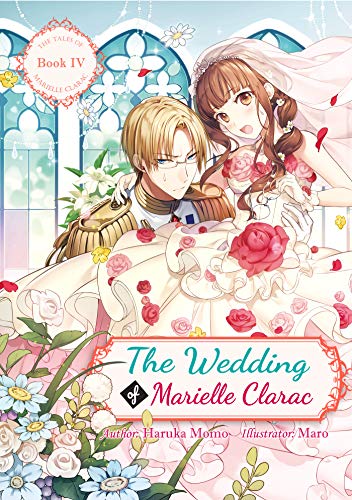
There have been a lot of J-Novel Heart series by now, of various shades and types, and one thing that Marielle Clarac has over the rest of them is that it’s easily the biggest in terms of page length. These are all chunky books, a good 50 or so pages longer than the average light novel, and filled with lots of plot complications and twists. It’s nice to see the reader getting some bang for their buck. Especially as, as with previous installments of the series, we have to alternate between Marielle’s crime solving persona and Marielle being a complete flibbertigibbet, going on about romantic and BL-laced tropes while also sometimes missing the obvious. But that’s why we’re here, and we wouldn’t have it any other way. Last time I said the wedding seemed imminent, and it still is (the next volume is called “The Wedding of…”), but first we have to deal with a bit of a crisis that might put a wrench in things. It’s hard to marry when your fiance is under arrest.

To Marielle’s horror, Simeon has been taken into custody for allegedly selling state secrets, and while it’s fairly obvious he isn’t doing that, she is ordered not to interfere in the investigation. As you can imagine, she does not obey this order at ALL, twisting around various vows and promises she makes with an increasingly frustrated Prince to try to see who is framing her beloved. Is it the childhood friend who seems to have a troubled past? Is it the gorgeous woman who wears pants and seems to be very friendly with Simeon indeed? (And does this mean that Simeon has had other women before Marielle?) Is it the gorgeous blond who looks like he stepped out of Rose of Versailles, who Marielle keeps getting saved by at odd moments? Is it Simeon’s puppy-like brother? (OK, it’s probably not.) Or is it the angry Naval commander with a vicious hatred of Simeon? The answer… is not TOO surprising, but well handled.

Now that Marielle and Simeon are a couple, and know of each other’s feelings, but are NOT married yet, there’s a lot of tension between them. Part of this is simply that they are really lusting after each other, and there are several almost kisses here, along with Simeon trying to exercise great restraint in not pushing Marielle up onto his desk and having his way with her. Balancing this is Marielle’s poor self-image, which continues to balance with her extroverted confidence – she’s accepted her plain looks, and so doesn’t get upset when they are pointed out. (Simeon does, as his brother finds out in a painful way.) This leads to some doubt and jealousy when she meets Rose, who also could have stepped out of the pages of Rose of Versailles. Among this is the usual thriller stuff, including a visit to a brother far shadier than the one Marielle usually sneaks into, and another wonderful conversation with Marielle’s nemesis Lady Aurelia, who will be best friends with her by Book 5 at the rate they’re going.

So another fun entry in the series, provided you can tolerate the heroine basically doing whatever the heck she wants with no regards to the consequences.

Filed Under: marielle clarac, REVIEWS

ROLL OVER AND DIE: I Will Fight for an Ordinary Life with My Love and Cursed Sword!, Vol. 1

September 9, 2020 by Sean Gaffney

By kiki and kinta. Released in Japan as “Omae Gotoki ga Maou ni Kateru to Omou na” to Gachizei ni Yuusha Party wo Tsuihou Sareta node, Outo de Kimama ni Kurashitai” by GC Novels. Released in North America by Seven Seas. Translated by Jason Muell.

Given the title, you’re probably expecting one of those slow life titles. Young woman is told she can’t be in the hero’s party, so she ends up living her life in the city as an H&R Block Accountant and getting into everyday troubles. Well, half of that is true. Unfortunately for Flum, this first volume definitely is not a “slow life” book, but a “gore-filled horror” book. There is yuri as well, of course, and that seems to be the main selling point for the book both in Japan and here, but for the most part the reader is here to read about graphic, somewhat appalling battles that our heroine is forced to fight in order to save her own life and that of Milkit, a fellow slave that she met while being tortured to death. Yeah, that’s right, it’s one of those slavery books as well.

As noted, Flum is part of the hero’s party to defeat the demons, mostly due to a prophecy. Unfortunately, Flum’s stats are all zero – and can’t be raised. This seemingly makes the entire party hate and turn against her, though most of this hatred springs from Jean, who decides to do something about it by selling her into slavery and abandoning her. Given that her stats are zero, she’s not a great slave either, so the slave owner decides to kill her (this is where she meets Milkit). Fortunately, the “cursed sword” part of the title comes into play here, and Flum discovers how her powers are really supposed to work. Unfortunately, after escaping, things are still not very slow life. She has to work as an adventurer to live, and ends up pissing off the local adventurer goons. Milkit has been so beaten down by slavery that she’s unable to think for herself. And, while trying to get a rare and illegal herb, she discovers that her name is far more important than she expected.

First things first, if you dislike death, blood and violence, drop this book like a hot potato. I was not kidding when I said this was a horror novel, particularly in the back half, where we meet up with a nigh unkillable scientific experiment. That said, the book ended up being quite readable. Flum is likeable and grows fast once she realizes that she CAN grow. I’m less happy with Milkit, especially her need to dress up as a maid call Flum her Master, but I will assume that her character arc is not yet finished and but it aside for now. (Their yuri scenes are all packed together at the end of the book, and are sickeningly cute). There’s also the start of the book, where we see Flum’s POV of the rest of the party, and she comes to the conclusion that they all find her a useless burden. The reader accepts this too, and when it later turns out not to be true, it feels a bit out of the blue.

All this and an adorable ten-year-old battle nun. (More nuns should use maces instead of rulers.) This is definitely not Adachi and Shimamura, but if you like your yuri filled with swordplay, magic and a whole lot of blood and guts, it could be right up your alley.

Filed Under: REVIEWS, roll over and die

  • « Go to Previous Page
  • Page 1
  • Interim pages omitted …
  • Page 111
  • Page 112
  • Page 113
  • Page 114
  • Page 115
  • Interim pages omitted …
  • Page 342
  • Go to Next Page »
 | Log in
Copyright © 2010 Manga Bookshelf | Powered by WordPress & the Genesis Framework