• Skip to primary navigation
  • Skip to main content
  • Skip to primary sidebar
  • Home
  • About Us
    • Privacy Policy
    • Comment Policy
    • Disclosures & Disclaimers
  • Resources
    • Links, Essays & Articles
    • Fandomology!
    • CLAMP Directory
    • BlogRoll
  • Features & Columns
    • 3 Things Thursday
    • Adventures in the Key of Shoujo
    • Bit & Blips (game reviews)
    • BL BOOKRACK
    • Bookshelf Briefs
    • Bringing the Drama
    • Comic Conversion
    • Fanservice Friday
    • Going Digital
    • It Came From the Sinosphere
    • License This!
    • Magazine no Mori
    • My Week in Manga
    • OFF THE SHELF
    • Not By Manga Alone
    • PICK OF THE WEEK
    • Subtitles & Sensibility
    • Weekly Shonen Jump Recaps
  • Manga Moveable Feast
    • MMF Full Archive
    • Yun Kouga
    • CLAMP
    • Shojo Beat
    • Osamu Tezuka
    • Sailor Moon
    • Fruits Basket
    • Takehiko Inoue
    • Wild Adapter
    • One Piece
    • After School Nightmare
    • Karakuri Odette
    • Paradise Kiss
    • The Color Trilogy
    • To Terra…
    • Sexy Voice & Robo
  • Browse by Author
    • Sean Gaffney
    • Anna Neatrour
    • Michelle Smith
    • Katherine Dacey
    • MJ
    • Brigid Alverson
    • Travis Anderson
    • Phillip Anthony
    • Derek Bown
    • Jaci Dahlvang
    • Angela Eastman
    • Erica Friedman
    • Sara K.
    • Megan Purdy
    • Emily Snodgrass
    • Nancy Thistlethwaite
    • Eva Volin
    • David Welsh
  • MB Blogs
    • A Case Suitable For Treatment
    • Experiments in Manga
    • MangaBlog
    • The Manga Critic
    • Manga Report
    • Soliloquy in Blue
    • Manga Curmudgeon (archive)

Manga Bookshelf

Discussion, Resources, Roundtables, & Reviews

Features & Reviews

In Another World with My Smartphone, Vol. 11

November 27, 2018 by Sean Gaffney

By Patora Fuyuhara and Eiji Usatsuka. Released in Japan as “Isekai wa Smartphone to Tomo ni” by Hobby Japan. Released in North America digitally by J-Novel Club. Translated by Andrew Hodgson.

I am somewhat tempted to copy/paste much of my review of Vol. 10, which would work just as well here. Most of this is relatively tolerable Smartphone, and there’s even a bit about 3/4 into the book which was reasonably horrific and well-written. But it wouldn’t be Smartphone without its worst trait ether, and given that fantasy China has basically been totally destroyed, it’s time to go after fantasy Arabia. We have more of Touya meeting up with really obvious villains, fat-shaming them, and killing them. Actually, I tell a lie. The villain is killed by a slave girl. He then returns as a zombie JUST so that Touya can humiliate the man himself. Smartphone has always had a bit of a “is this a parody or not?” aspect to it, and I honestly wish it would lean towards parody more. Even though the character introduction describes Touya as impulsive and dangerous, it’s not what I want to see.

As usual, the book is decided into sections that make it seem more like a short-story collection. Touya and company have another big competition to see who is worthy to become a knight in his kingdom. I appreciated that they weren’t just looking for strong fighters – one weak and feeble guy who has good knowledge of plants passes the test. There’s also a rather thuddingly over the top “racists are not welcome in our group here” sequence, but given where the world is in 2018 I’m OK with racism call-outs being obvious and overbearing. There are a few plot strands dangled that will likely be resolved in a book or two – they’ve found a hidden island that seems to be inhabited by people and giant monsters, making me wonder if we’re going to get Mothra showing up. We definitely get Gamera this time around, as the new Phrase monster is a giant turtle, who sadly is not a friend to all children. Oh, and we get four new gods, three of whom are pointless, and one of whom (the underage lush) is seriously annoying, to both me and Touya.

There’s a new Phrase alien who basically drops by to scout out the area and leaves, but he also manages to hook up with the rogue God that Touya and company have been trying to catch. The result is not pretty, as Sandora (the pseudo-Arabia run on slavery) loses an entire city to some sort of negative emotion virus. Worst of all, it eats their souls, so the people there can’t be reincarnated. It’s a chilling sequence, something that’s a rarity in the otherwise relaxed Smartphone, so it’s worth singling out. Unfortunately, we then get the Sandora plot itself, which I’ve gone on about already, but I will also note that the author’s (and Japanese light novel authors in general) casual attitude towards slavery irritates me, particularly the “well, the criminals can continue to be slaves” part, though at least he has Yumina and company sift out those wrongfully convicted.

Basically, a typical Smartphone volume, for good and ill. I wish it had more scenes of Touya and the girls all staying up after drinking too much coffee and less of Touya mocking fat ugly evil people and then killing them.

Filed Under: in another world with my smartphone, REVIEWS

Ran and the Gray World, Vol. 1

November 26, 2018 by Sean Gaffney

By Aki Irie. Released in Japan as “Ran to Haiiro no Sekai” by Enterbrain, serialized in the magazine Harta. Released in North America by Viz Media. Translated by Emi Louie-Nishikawa.

Sometimes you really do just read a book for the art. Oh, there’s other reasons to read Ran and the Gray World. The lead heroine is cute and rambunctious, and the plot spirals out from her ability to get into trouble and also her ability to transform into an older version of herself. Her family seems to consist of sensible men and eccentric but very powerful women, and her older brother is usually stuck trying to fix Ran’s messes. There’s some great humor, particularly with Ran’s interactions with a rich playboy. But let’s face it: You read this title for the gorgeous art. Every panel seems chock full of stuff, but it draws the eye in and makes you want to take your time reading it. It’s the type of story that you say is ‘crafted’ rather than written. And it makes me want to read more, despite the possibility of a trope from many other ‘young girl magically grows into adult’ stories cropping up.

We are introduced in the first chapter to Ran, a young tomboyish girl who is very interested in finding her shoes. We also meet her brother Jin, who has hidden said shoes for a reason. They’re shoes that help Ran to age about ten years, appearing to be a young woman but still with the mentality of a young child. This is a fairly common theme, especially in magical girl Japanese manga (Tezuka did it at least once, I know), but Ran’s not aging up to help save the world from bad guys – she’s just curious about everything, and wants to have fun. Ran lives at home with her brother and father, and at first I assumed that her mother had passed away, but I’m wrong – her mother is SO powerful she is needed to restrain what appears to be a door to hell, and thus can’t be all that involved with her daughter’s life, though she does write. And so Ran does things like taking a train (and hitchhiking) to try to find her, or attempting to learn to fly, etc.

When I say I read the manga for the art, I don’t mean that it’s filled with detailed backgrounds and the like, although those pop up as well (love the shot of Ran’s messy room). But the art I meant is more composition, the way the creator draws your eye in. The double-page spread of Ran in her adult form, shoes in deep close-up. The expressions on her face, which shows that she’s a clever but naive girl, who one day is likely going to be more powerful than her mother. And the endless grumpiness of her brother Jin, who did not sign up to be a minder but is anyway. I will warn of one ongoing plotline – Ran (in adult form) runs into an eccentric rich guy, who is immediately charmed by bother her looks and her seeming magical abilities. This is also a staple of “age up” titles, but I hope that it remains innocent, as Ran really is a young kid (and also, the guy is sort of a jerk). I am definitely interested in more of this series, and I note the author also has another title out next year from Vertical. One to watch out for.

Filed Under: ran and the gray world, REVIEWS

Apparently It’s My Fault That My Husband Has the Head of a Beast, Vol. 1

November 25, 2018 by Sean Gaffney

By Eri Shiduki and Kasumi Nagi. Released in Japan by Ichijinsha. Released in North America by J-Novel Club. Translated by David Evelyn.

I worry that the title of this 2-volume series may actually be putting readers off. Let’s face it, it sounds exactly like the sort of oververbose light novel title you’d see written by any other author, and makes people think that it will be of a similar character. It’s not. Technically Bakarina was also a romance novel, but it’s overly dense heroine and otome game mechanics made it appeal to a larger male audience too. This, though, is pure romance novel, written by a woman for other women. This is not to say that I don’t think male readers will like this title – it’s a great read. But it lacks the trappings of light novelness that everyone is used to, and that means it’s a title that can be read by women without having to worry about harems, or wacky chases in the nude, or any number of other anime tropes that you’d commonly see. This has romance novel tropes. A young, terminally shy and introverted princess. A prince with a curse who is blunt and melancholy. And a bucket. Yes, really.

Rosemarie is the second princess of a small agricultural nation, and has spent most of her life either indoors or in her garden due to one simple fact: when anyone shows negative emotions around her, their heads transform into that of beasts. This has led her to be terrified of most human contact, and when she’s incited to a ball in one of the larger, far more prosperous countries to the north, she sees it as something she will have to endure. But then she sees the country’s prince, Claudio, who over the course of the entire party does not have his head transform. Clearly he is the man of her dreams! They marry a few months later, and she learns the truth: everyone ELSE sees Claudio’s head as that of a beast – except her. Moreover, he says this is her fault because he rescued her as a child and she stole his mana (something she does not recall doing at all). And the marriage is a sham, as he regards her more like a thing than a wife. Fortunately, she has her maid. And her large metal bucket, which she wears on her head in times of great stress.

There is a fair bit of magic and fantasy involved in this, but that’s hardly uncommon in today’s romance novels, where the heroes can be vampires or werewolves. The main reason to read it is the growing relationship between Rosemarie and Claudio, who are both terminally bad at communicating with each other. He seems always angry, she seems always terrified, and there’s very little common ground to find. But find it they do, because Rosemarie has a determination to fix whatever she did wrong and make Claudio whole again, and Claudio realizes that he’s being a major jerk and that Rosemarie actually is looking out for his best interests. Which is good, as there’s an evil archbishop who would like Claudio to be out of the succession for the throne. That said, the plot is merely OK, and the humor mostly stems from Rosemarie’s desire to hide (the bucket reminds me a little bit of Akari’s House from Battle Athletes). You should read this for the excellent character work and sweet, if slow-going romance between the two leads. And one bucket.

Filed Under: apparently it's my fault that my husband has the head of a beast, REVIEWS

UQ Holder!, Vol. 15

November 24, 2018 by Sean Gaffney

By Ken Akamatsu. Released in Japan by Kodansha, serialization ongoing in the magazine Bessatsu Shonen Magazine. Released in North America by Kodansha Comics. Translated by Alethea and Athena Nibley.

There are spoilers in this review for the entire book, as well as the ending of Mahou Sensei Negima.

I’m actually tagging Negima in this review as well, because after a lot of faffing about, this is, finally, the Negima ending that actually resolves things. The entire volume reads as if Akamatsu is saying “Yeah, sorry about the end of Negima, I was fighting with Kodansha and threw a hissy fit, here’s a much better version of what happened.” The amusing thing, of course, is that UQ Holder doesn’t quite take place in the same universe as Negima – something explicitly spelled out by Tota here. The mysterious stranger from the cliffhanger of the last book (who turns out to be Chamo) is getting ready to show us a movie of what happened to Negi and company in Tota’s home world, through the dead eyes of Chachazero (which is really creepy when you think about it) when Dana bursts in, punches a middle school girl unconscious, and shows them an alternate universe “happy ending” – i.e. what happens in Negima’s home world.

That’s Nodoka and Yue on the cover, but sorry to break it to you, neither one of them wins the Negi sweepstakes. I had talked before about how the ending of Negima had him tell Asuna that he loved one of the girls, but didn’t say who, except Asuna’s surprise made it clear it wasn’t a) her, or b) one of the more obvious candidates. They do get to confess, and Negi turns them down, and it’s well-handled and very sweet. Then there’s Negi’s confession to the girl he actually does like. Given it wasn’t Asuna, the Naru-lookie likee, there’s only one other choice it could be given Akamatsu’s own preferences. It’s the OTHER Naru-lookie likee, Chisame. Again, you can see why Asuna was surprised but not THAT surprised. Chisame filled the role of Negi’s mentor and “common sense” throughout Negima, and he’s also commented on how pretty she is multiple times, much to her annoyance. The main issue is that Negi is far too young. Which is why, when he confesses, she shoots him down.

This leads to the funny parts of the book, as the ENTIRE CLASS was spying on them, and Ayaka in particular seems ready to burn Chisame to death with her mind for rejecting Negi. But Chisame’s right – despite all the many, many, MANY shotacon jokes in Negima, he really is too young to be dating. (She is also too young to be dealing with the fact that she really does like him too.) As such, we can swiftly move forward five years, to when Negi is sixteen, and show the final battle between him and the entity possessing his father. (Negi’s mother’s fate remains unknown – I assume she died at some point after he was born, but it’s never made clear.) The battle allows mostly everyone to take part (though the noncombatants are shown watching from the side in cat-eared spacesuits, and Eva and the three cheerleaders stay home) and lets Akamatsu do the only thing he loves more than nude harem chases – big fights with lots of punching.

After this epic battle, we move forward two more years and get the epilogue. Everyone lives happily ever after. Negi, now an adult, marries a grumpy, blushing Chisame (which makes Kyrie very happy – she’s likely noticed that she and Chisame are the same, and thus this increases her chances) and his recovered father marries Evangeline (I assume that he freed her from her curse at some point, though honestly she still looks about ten years old in the wedding photo.). I was amused at Tota pointing out the flaws inherent in Akamatsu’s own plotting – the entire happy ending depends on Asuna getting rescued via time travel, which many readers at the time called a giant cheat, and so does Tota, saying they have to get their own happy ending without cheating. (I didn’t have issues with the time travel in the original ending, as I felt it had been foreshadowed quite well.) Perhaps now Akamatsu can get on with moving forward with his new cast and dealing with the plot in their own universe… though given all the villains are essentially dark variations on the cast of Negima, this seems unlikely.

If you liked Negima but have not read UQ Holder, you should pick up this volume anyway – you really don’t need to know much about the latter to understand this, and it gives much better closure to the series. Just… five and a half years later.

Filed Under: negima, REVIEWS, uq holder

A Certain Magical Index, Vol. 17

November 23, 2018 by Sean Gaffney

By Kazumi Kamachi and Kiyotaka Haimura. Released in Japan as “To Aru Majutsu no Index” by ASCII Mediaworks. Released in North America by Yen On. Translated by Andrew Prowse.

Last time I mentioned that Fiamma of the Right’s plans for England sounded a bit like Brexit. Little did I know that the feeling would triple as I read this new volume, set almost entirely in the United Kingdom. The villains are trying to start a war with France – well, in reality France is a proxy for the Roman Orthodox and Russian Catholic Churches, but you know what I mean – and are discussing what happens with trading rights and shipping in the UK and sounding an awful lot like Theresa May, to be honest. This is entirely coincidental given that this book came out in Japan in March 2009, but it does given the danger a little extra frisson of reality. Which is more than can be said for Kamachi’s rewriting of English history – Henry VIII’s motives for breaking off with the Roman Orthodox church are made a lot more noble and grand than reality, and I suspect the court are telling Touma a sanitized version of the truth.

Introduced in this book: Queen Elizard, Princess Limeia, Princess Carissa, and Princess Vilian, who was in the last book but is officially named here. We also meet all of New Light, a Norse-based magical group and terrorist organization, which like most other organizations in Index has four people in it: Lesser, Bayloupe, Florice, and Lancis. Yes, it’s romanized as Lesser, so any fans of the fan spelling who are still getting the official version will be annoyed once more, as Lesser is honestly the only one of these four you’ll need to remember going forward. Timeline-wise, we’re about five days after the events of Book 16 – Itsuwa has returned to the UK, though after taking the time to heal up and briefly discuss the upcoming culture festival, Touma and Index join her. This means this is another magic-heavy book, so don’t expect lots of Mikoto here, though she at least does discuss Touma’s memory loss with him briefly.

This is the first volume of a two-parter, and so as you can imagine the book consists mostly of everything going wrong for our heroes. By the end of the book Index is captured and knocked out (punched in the stomach, no less), Kaori has just been beaten so badly that everyone is sneering at her, Agnes’s Roman Orthodox nuns are mostly captured aside from the ones whose names we can remember, and two of our supposed heroes are in reality betraying everyone – for the good of the nation, of course. Lesser (who is a hoot in general, you can see why she’ll be back) picks on Touma for being there at all, noting that as the only Japanese guy in the midst of a fight between UK denizens, he can’t possibly understand why anyone is doing anything. Of course, I have no doubt that is also Touma’s strength. We also see a bunch of former villains who are now theoretically on the side of good, also showing off – Sherry and Oriana, to be precise. At times Index reads very much like, well, an index, making sure that everyone gets a cameo.

So overall decent volume, though I will pick on the translation just a bit – I’m not sure if Laura Stuart’s English is supposed to be as bad as her Japanese, but a lot of the ‘slang’ in this book reads very badly if we’re meant to assume she is British. On the bright side, while we do have more of Kamachi’s attempts at being funny, one of them actually succeeds this time – the sequence in Buckingham Palace, starting with Touma, Index and the scones and progressing through the introduction of the Queen is very well done, and very funny. I tip my hat. (It also provided the cover image.) I also approve of one translation convention – everyone in charge in England refers to Index as “the Index” and treats her exactly like you would an encyclopedia, not a person. It’s very obvious and very well done. Index fans will want to pick this up, especially now that the third season of the anime has shown itself to be rushing everything so badly. You’ll want to see what actually happens.

Filed Under: a certain magical index, REVIEWS

Manga the Week of 11/28/18

November 22, 2018 by Sean Gaffney, Michelle Smith, Ash Brown and Anna N 1 Comment

SEAN: Time for some Black Friday manga titles. Maybe some of these will have low, low prices.

Cross Infinite World has another one-shot fantasy novel with Tia La Cherla. Normal guy meets mysterious girl with amnesia but tremendous powers.

Dark Horse gives us Yoshitaka Amano: The Illustrated Biography, which is what it says but also looks really lavish and able to justify its expensive price.

ASH: Oooh, that should be nice.

SEAN: Ghost Ship gives us a 4th volume of Yuuna and the Haunted Hot Springs, for all your ecchi needs.

J-Novel Club has a 2nd volume of Der Werwolf: The Annals of Veight and a 6th Outbreak Company.

Kodansha has a few print titles. We get a 3rd Grand Blue Dreaming, the Real Account 9-11 omnibus (I think – it’s been on this list before and then delayed), and The Seven Deadly Sins 29.

ASH: I will admit that Grand Blue Dreaming has made me laugh more than once.

SEAN: Digitally the debut is Blissful Land (Tenju no Kuni), which seems to be Kodansha’s answer to A Bride’s Story. It runs in Betsushonen, and is about a 13-year-old boy in Tibet and a mysterious bride who arrives one day. >_> OK, a *lot* like A Bride’s Story.

ANNA: Huh, do we need two of these series? I’m really behind on A Bride’s Story so I can’t imagine going out of my way to read a similar series when I need to get caught up on the original.

SEAN: There’s also a pike of ongoing digital for all. Ace of the Diamond 17, Ao-chan Can’t Study 2, Forest of Piano 8, Is Kichijoji the Only Place to Live? 5, Kakafukaka 3, Kira-kun Today 2, Liar x Liar 8, Peach Mermaid 3, and Those Summer Days 5. I have actually started one or two of these!

MICHELLE: I have only started one, so far, though there are several I will get around to sometime soonish. I hope.

SEAN: Seven Seas has no debuts, but a pile of ongoing series. Absolute Duo 4, Arifureta’s 3rd manga volume, the print edition of the 3rd Clockwork Planet novel, Devilman vs. Hades 3, The High School Life of a Fudanshi 4, Nirvana 3, and Saint Seiya: Saintia Sho 4.

Vertical debuts Katanagatari: Sword Tale. Despite the similar names, this is unrelated to the Bakemonogatari books except that it’s also by Nisioisin. It’s actually 3 novels in one – they were quite short, and he wrote one per month for a year. It’s set in the Edo era and has swords. What more could one need?

And Yen has a number of titles that got pushed back a week or two. We’ll start with an old title available in digital for the first time: Emma 1-10 (i.e not in omnibuses) is available digitally! As is Sekirei 19, whose core audience is… not the same as Emma’s.

ASH: I am still so incredibly happy that Yen Press rescued Emma.

ANNA: For sure a series that deserves to be in print!

SEAN: The light novel debut is one of the more anticipated titles of the year… for one reason or another. Do You Love Your Mom and Her Two-Hit Multi-Target Attacks? is the mom isekai the fandom never knew it wanted. Supposedly a “parody” of Japan’s current obsession with incest stories, I suspect as with most Japanese parodies it will have its cake and eat it too. The premise is simple: a young man is called to be a hero in a fantasy world. But his mom is there too. And is more powerful. And dotes on him to a disturbing degree. We shall see.

MICHELLE: I wish this were totally free of any possibly creepy vibes because the idea of going to another world with your mom is kind of amusing.

SEAN: In non-mom isekai light novels, we have Defeating the Demon Lord’s a Cinch (If You’ve Got a Ringer) 2, Durarara!! 11, Kingdom Hearts 358/2 Days: The Novel, The Saga of Tanya the Evil 4, and So I’m a Spider, So What? 4. Congrats to Tanya and Durarara!! for not being fantasy-based (Tanya’s still an isekai, though).

Lastly, two manga stragglers: Alice in Murderland 9 and A Bride’s Story 10.

ASH: I love A Bride’s Story so much.

SEAN: Will you be getting A Bride’s Story AND Blissful Land? What else?

Filed Under: FEATURES, manga the week of

Sword Art Online: Progressive, Vol. 5

November 21, 2018 by Sean Gaffney

By Reki Kawahara and abec. Released in Japan by ASCII Mediaworks. Released in North America by Yen On. Translated by Stephen Paul.

There are several reasons that I think that Reki Kawahara is happier writing the Progressive novels, but the primary one is that he really just loves writing Kirito and Asuna falling deeply in love with each other – something we get quite a bit of here. He admits in the afterword that he’s not entirely sure how this is going to mesh with canon – in the original series, Kirito and Asuna act like they’re casual acquaintances when we first see them. But as I’ve said before, I think he knows he doesn’t have to worry about that till about Floor 10, and they’re only on the sixth. What’s more, this is Progressive’s first two-parter – which is likely why it’s shorter than usual. If you dislike Kirito (it’s all his POV again) or don’t care for Kirito and Asuna as a couple, the entire Progressive series is skippable for you. For the rest of us, it’s pretty fun and adorable – well, mostly adorable. Those player killers keep coming back, and they’re after our heroes.

I had to remind myself what was going on in the plot, as it’s been two full years since the last volume (fortunately, we will have less of a wait for the next one). The new floor consists mainly of puzzles to be solved, such as sudoku or the sliding pieces puzzles. Kirito and Asuna try to breeze through the main quest in the town, helped along by Kirito’s beta knowledge, but a spanner is thrown into the works when they’re captured while under a paralysis spell (as part of the quest they’re doing) by Morte and his partner, who are ready for some killing. Kirito and Asuna are really starting to fear for their lives here – especially Kirito, who’s been attacked multiple times. Things aren’t being helped by the ongoing war between the two lead factions, and Kirito attempting to deftly not support either side. Fortunately, the two of them do also have their bond with Kizmel and the elves, and can (mostly) safely relax in her presence – even if that means sharing a hot spring. And a bed.

It does have to be said, this volume of Progressive also contains an awful lot of game mechanics. I’ve never been overly fond of these sort of things in light novels, and I’m not fond of it here. But power through the endless pages of Kirito describing how his sword movements work or which stat boost he should get next, because the meat of the book is Kirito and Asuna’s relationship. They’re simply cute, and honestly I think the only think holding them back right now is the strange sense of self-hatred Kirito gets about himself as a romantic lead (yes, I am aware how ironic this is given the SAO franchise as a whole) and Asuna’s embarrassment, though by the end of the book she not only “bundles” with him in a queen sized bed (in the Scottish sense of the word) but they’re connecting pinkies as they sleep so that they’re always aware of each other’s presence. Sword Art Online Progressive is, at heart, a love story.

It’s also only half done – there’s no cliffhanger, and the author admits this is basically “I wrote too long a book, so they cut it in half”. I’m definitely ready for the next half, and more shipping tease. Oh yes, and more Argo! She was barely in this one.

Filed Under: REVIEWS, sword art online

Bookshelf Briefs 11/20/18

November 20, 2018 by Ash Brown, Sean Gaffney and Michelle Smith Leave a Comment

Black Clover, Vol. 13 | By Yuki Tabata | Viz Media – As long as you’re writing a series which uses every cliche in the book, you may as well go all in and write a tournament arc, and that’s what we’re getting here. Surprisingly, Asta is not paired with Noelle, but with Mimosa, who I’ll be honest I had totally forgotten about. Given that Noelle fills the ‘tsundere’ love interest bucket, it only makes sense that Mimosa is the Hinata of Black Clover, being shy and tripping over her words in front of him. As for the battles themselves, they’re all good ways to spotlight folks who we don’t really get much chance to see in the main storyline. On the downside, so far they’re all very predictable outcomes. I’d like to see some people win who shouldn’t normally win. – Sean Gaffney

The Bride & the Exorcist Knight, Vol. 2 | By Keiko Ishihara | Seven Seas – We get more of the same here—good character development and action sequences. Shame that they’re really pushing the “I am twelve years old and suave as heck” plotline, and Anne does seem to be falling for him, though thankfully we haven’t advanced quite that far. One thing that did impress me was the fate of Anne’s parents, who would normally get killed off to jumpstart the plot in tales like this, especially given Anne’s status as a magical bride MacGuffin. There’s nothing really extraordinary here, but it’s good solid fantasy romance, and it at least makes noises occasionally about Anne being creeped out about Haru’s age. For fans of shoujo starring cute, cool boys. – Sean Gaffney

Delicious in Dungeon, Vol. 6 | By Ryoko Kui| Yen Press – Remember when this was a funny series about eating monsters? Last time I said the books were getting a bit darker. Here they take a running leap into grim as we continue to see how Laios and company are seen by everyone else around them—as reckless lunatics who endanger everyone around them. What’s more, Falin’s back, but that’s not good news—the slaughter that follows is a kick in the teeth. Honestly, after that sequence, seeing the “which is the original and which is the shapeshifter” plot was a welcome light relief, and the sequence with Laios helping Marcille with her nightmares was rather heartwarming. Still, Falin’s influence on everyone around her, death, and subsequent “came back wrong” are now THE reason to read this. – Sean Gaffney

Frankenstein: Junji Ito Story Collection | By Junji Ito | Viz Media – The first edition of Mary Shelley’s Frankenstein was originally published in 1818, so Viz Media’s release of Junji Ito’s rendition of the story is aptly timed for the two-hundred-year anniversary of the groundbreaking novel. Ito has made a few changes here and there—particularly towards the end—but for the most part the manga adaptation is very faithful to Shelley’s original and Ito’s artwork is well-suited to the more grotesque and disturbing elements of the tale. In addition to Frankenstein, the volume also collects a series of six short manga featuring Oshikiri, a young man who is very self-conscious about his short stature but whose real worries are of a more horrific and supernatural kind. (It doesn’t help that his home seems to be a portal to alternate dimensions.) Also included are two unrelated short horror manga as well as two short manga about the Ito family’s pet dog Non-non. – Ash Brown

Haikyu!!, Vol. 29 | By Haruichi Furudate | Viz Media – It’s all volleyball game this volume, so there’s no real plot I can talk about. We do continue to see character growth from Hinata and Tsukishima, who gets one of the cooler moments that also made me laugh when he talks about blocking the quick set. The other team is no slouch, though, particularly the twins, and our heroes are behind the eight ball most of the time. The opponent’s band is not helping either, which is why for once it’s Saeko who gets to have the Big Damn Heroes moment, arriving with Taiko Drums to drown out the band’s odd rhythms. Other than that, this volleyball manga continues to put the emphasis on volleyball. I’m about ready for it to go to every three months, to be honest, and it will be soon. – Sean Gaffney

Love at Fourteen, Vol. 8 | By Fuka Mizutani | Yen Press – Aside from Love at Fourteen‘s main couple, who are meant to be the cute and sweet default, the series makes a lot of unusual choices for its romantic pairings. Nagai and Hinohara continue to put the “ergh” in non-consensual teacher-student romance. Shiki and the school nurse bond over being tortured lesbians in love with a straight girl who isn’t going to love them back. And we get a new one here, as Kato, the really short boy in the class, ends up getting entangled with what appears to be a cute older girl… except she’s actually eleven. He’s fourteen, so we’re not anywhere Hinohara’s level of wrong, but Love at Fourteen really enjoys giving the reader heartwarming discomfort. – Sean Gaffney

Mob Psycho 100, Vol. 1 | By ONE | Published by Dark Horse – As a fan of One-Punch Man, I went into Mob Psycho 100 expecting to be amused and I’m sorry to say that never really happened. Shigeo Kageyama is an eighth grader with superpowers who works as an underpaid assistant for a fraudulent spirit medium named Arataka Reigen. Shigeo is called “Mob” because he’s an expressionless kid who blends into a crowd, and his desire to be attractive (and win the girl of his dreams) ultimately leads him into strange situations, like being recruited for a creepy cult. My interest was piqued, however, by the meter running throughout the volume (depicting an increasing percentage) and the payoff when it reached 100% was totally worth it. Plus, Reigen’s pep talk to Mob afterwards was completely unexpected and kind of heartwarming. In the end, I think I’ve been convinced to try another volume. – Michelle Smith

Waiting for Spring, Vol. 9 | By Anashin | Kodansha Comics – Both Towa and Aya have now confessed to Mitsuki and she doesn’t know what to do about it. I appreciate that Anashin shows why each boy feels the way that they do, and also that Mitsuki is completely forthcoming with Towa about everything that’s happening with Aya, so that no plot line ever hinges on “completely avoidable misunderstanding.” Instead, there’s more complicated drama, like Towa feeling frustrated that Aya keeps being in a position to heroically save Mitsuki (this time pulling a ligament saving her from being hit by a car) and wondering if perhaps they aren’t destined to be together. Instead of wallowing, however, he seemingly becomes more determined. It’s nice to see Towa start to become less reserved and I look forward to what volume ten will bring. – Michelle Smith

Wotakoi: Love Is Hard for Otaku, Vol. 3 | By Fujita | Kodansha Comics – About two-thirds of the way through this volume, Narumi and Koyanagi are relaxing at a hot sprint on a company trip. Koyanagi wonders if Narumi feels lonely because she’s barely seeing her boyfriend this trip, but she says that, given Hirotaka’s lack of social aptitude, she’s merely happy to see him getting along with other guy friends. Koyanagi points out that that’s a mature answer, but leaves her a little bored. I’m not bored with Wotakoi yet, but it does appear to me that it’s very dedicated to showing that our leads are all pretty happy, with most conflicts resolved over the course of a single chapter. Given the title, you’d expect a bit more, but while it’s still very sweet, love isn’t that hard for these otaku. – Sean Gaffney

Yotsuba&!, Vol. 14 | By Kiyohiko Azuma | Yen Press – Azuma does not believe in pumping out the chapters for this series—this is the second volume in five years. Still, it’s like we never went away, really. Last time we met Yotsuba’s grandmother, and this time it’s her aunt, who is meeting up with Koiwai in Tokyo so that he can get a car—which I assume will allow for greater scope of adventures in the future. This means that here we get Yotsuba & Tokyo, with much hilarity, including an alien invasion that needs to be stopped, and delicious food at an expensive hotel. Oh yes, and Fuuka and her friend Hiwatari do yoga with Yotsuba, which leads to much frustration as she’s as flexible as a young child and they are not. Yotsuba&! still has its magic; I just wish it was magical more often. – Sean Gaffney

Filed Under: Bookshelf Briefs

Wonderland, Vol. 1

November 20, 2018 by Sean Gaffney

By Yugo Ishikawa. Released in Japan by Shogakukan, serialized in the magazine Big Comic Superior. Released in North America by Seven Seas. Translated by Molly Rabbit. Adapted by Marykate Jasper.

I have to admit, I did not buy this manga for the premise. Horror is something I tend to be very wary of, and this read very much like it would be a “watch people get gorily murdered in visually arresting ways”. And, well, it is. But it’s the visually arresting part that kept me reading on. The author has been doing seinen stuff for years, ranging from action titles like Fighting Beauty Wulong to seinen skeeze like Yoiko, about an elementary school girl with the body of a fully grown adult. Lately, though, he’s been specializing in weird horror, and this certainly falls under that. It also falls under something that North America may have been growing sick of in the last few years – Alice in Wonderland take-offs. Unlike most that we see, there’s no Mad Hatter or Red Queen here, though, as it takes one premise – shrinking down to tiny size – and runs with it.

Our heroine is… not the girl on the cover. Instead it’s Yukko, a typical teen girl who wakes one morning to find that she’s shrunk down to the size of a doll. Her pet dog, now much bigger than she is, seems OK with this. Her pet cat… sees her as a tasty mouse, it would appear. Indeed, by the time Yukko gets her bearings and attempts to deal with this, both of her parents have been murdered by said cat. She tries to get out and get help… only to find the entire prefecture is suffering the same problem – they’re all tiny. Now she has to team up with other survivors and figure out how to remedy this… though that may take a backseat to just surviving, as the cats of the neighborhood REALLY love to beat these tiny humans to death. And then there’s Alice, who IS the girl on the cover. She seems to have animal ears, speaks at first in an alien tongue, and shows up mysteriously with no explanation. As the teaser for the second volume asks, who is she?

The story and character development here are, it has to be said, not great. Yukko is plucky, Alice is weird, and I really liked the dog, but for the most part these people are here to react to the scenery. But what scenery it is. The artist does a good job of showing off tiny humans vs. real-sized objects and animals, and how it’s become a matter of life and death almost immediately. I’d still call it a horror title – there’s lots of gory deaths here, and you spend a lot of the book waiting for the next she to drop. But the hint of a VAST GOVERNMENT CONSPIRACY makes me think it will end up more of a thriller than anything else, with Yukko and Alice teaming up to try to learn why this happened in the first place. I’m not sure if I’m into Wonderland for the long haul (it’s 6 volumes total), but this is a compelling enough start. Plus, let’s be honest, Big Comic Superior? When’s the last time we saw a title from there? This deserves your support for that alone.

Filed Under: REVIEWS, wonderland

My Next Life As a Villainess! All Routes Lead to Doom!, Vol. 1

November 19, 2018 by Sean Gaffney

By Satoru Yamaguchi and Nami Hidaka. Released in Japan by Ichijinsha. Released in North America by J-Novel Club. Translated by Shirley Yeung.

Sometimes you come into a title with a lot of buzz and hype and are greatly disappointed. This is not one of those times. I’d heard great things about this series, especially its humor and the “denseness” of its heroine, Katarina Claes (the series’ nickname is “Bakarina”). I’m pleased to say they seem to be accurate. This book is a hoot from beginning to end, as what could be yet another “protagonist dies and ends up in a game world” series – and yes, we’ve seen this premise before here even with a reverse harem – ends up getting bulldozed by Katarina stomping across the plot like a berserker. This is not to say that she’s evil – the opposite, in fact. She may be a loud tomboy, but Katarina’s innate niceness throws off the entire cast, and what should be her just trying to alter history so that she’s safe ends up being her creating a vortex of partners around her – male AND female.

The premise: a girl (we never do learn her original name) rushes out of her house after spending all night playing an otome game and gets kit by a car and killed. She wakes up in the game, as 8-year-old Katarina. Unfortunately, Katarina is the antagonist. IN Magical Academy seven years down the road, the spoiled and rich Katarina bullies and torments the player character heroine, and in the endings is either a) exiled penniless to the country, or b) killed. But now Katarina has the memories and the wherewithal to change her future. What’s more, she’s a rambunctious but basically nice girl, and so the arrogant haughtiness vanishes as she attempts to find various ways to fix things. She succeeds beyond her wildest dreams… but is completely unaware of the fact that her fiancee the Prince is now in love with her. As is her adopted brother. As is the Prince’s brother. As is her best friend Mary, showing that everyone falls for Katarina. Katarina notices absolutely none of this. After all, why would anyone be attracted to her? She has a villain face!

Like Obsessions of an Otome Gamer, this plays with its premise a bit and does not take itself seriously. Unlike Obsessions of an Otome Gamer, there’s no serious plotline to worry about. Everything here is for the sake of the comedy. The primary source of the comedy being Katarina’s thought process, which beggars belief at times… well, OK, all the time. Watch our heroine as she becomes an 8-year-old farmer, works on ways to create more convincing toy snakes to throw at her fiancee, and decides the solution to eating and drinking too much at tea parties is to take her own portable toilet the next time she’s there. Most of this volume deals with Katarina as a child, with only the final chapter having the now 15-year-old Katarina start university, and she still hasn’t met the heroine of the game. Still, I think she’s good. The book balances her narrative POV at the end of each chapter with the POV of the other characters, showing what they were like before they met her and how she changed their lives. It also has a good moral, spelled out at the end: treat people as human beings. Katarina is so blunt and straightforward that she can’t help but charm everyone she meets. (Also, kudos to the author for including the girls being in love with her but not making it for the sake of comedy – Mary and Sophia are the same as the guys, and there’s only one “but I’m straight!” from Katarina, said right after she’s spent a lot of time gushing about Mary’s beauty.)

I highly recommend Bakarina to light novel readers. You will laugh. You will cry… wait, no, you won’t. But you will laugh more. You will also wonder why Japanese authors try their hardest to avoid using the romanization “Gerald” (first Jellal and now Jeord).

Filed Under: my next life as a villainess, REVIEWS

Shortcake Cake, Vol. 2

November 18, 2018 by Anna N

Shortcake Cake Volume 2 by suu Morishita

The first volume of this series efficiently introduced the boarding house where most of the characters live, showed Ten to be a cheerfully blunt heroine, and hinted at an intriguing love triangle. The second volume provides more depth about the relationships between the characters along with some dramatic confrontations and too many flowers. As the volume opens, Riku is dealing with his feelings of rejection after Ten offhandedly asked if he liked her, and then turned him down, assuming that he was just being his normal overly flirtatious self. Chiaki quietly observes their interactions. Just when things are starting to calm down again, Rei shows up when Ten and Chiaki are walking home from school to issue the command “Be my Girlfriend!” Considering that his name for Ten is “Ugly”, she resists his allure easily, pointing out to him that he’s clearly never been in love. Rei is actually Riku’s younger brother, so his pursuit of Ten is more of a cry of attention than anything else.

shortcake cake 2

One of the things I enjoy about this series are the distinct character designs, but I have to say Rei’s almost feral facial expressions and perennial tired look make him appealing, even if he does have the emotional maturity of a baby squirrel. I enjoyed seeing how quickly Chiaki and Riku moved to help Ten out, even though she shows that she’s perfectly capable of defending herself. Shortcake Cake feels refreshing to read, mostly because many of the characters are in tune with their emotions and what they want. Leaving things unsaid or not knowing one’s own feelings are familiar shoujo conventions, and even if that will be happening a little bit in this series, Ten seems capable of handling it.

Filed Under: Manga Reviews, REVIEWS Tagged With: shojo beat, shortcake cake, shoujo, viz media

The Hero and His Elf Bride Open a Pizza Parlor in Another World

November 18, 2018 by Sean Gaffney

By Kaya Kizaki and Shiso. Released in Japan by Shueisha. Released in North America by Yen On. Translated by Kevin Steinbach.

First of all, you will note the lack of a volume number in the title – this seems to be a one-shot novel. And thank goodness for that. Not that I didn’t find this novel about a pizza hero and his cute, clumsy, and jealous elf fiancee (yeah, they don’t actually get married here) charming, but it’s really the sort of premise that can’t hold up over an extended period. It barely holds up over the course of this book, and it’s a very short book. But on its own, as something you’d read over an hour or so on a train ride or at the beach, it’s perfectly pleasant. The pizza is pretty much the most original thing about it – characters are of the sort that the moment you see their design you immediate know what they’re like and how they’ll talk. And that includes our hero, who is as generic as he appears. But he’s nice. And earnest. He also likes pizza.

Our hero is Kaito, a working drudge who is hit by a pizza delivery bike and killed, in the time honored Japanese light novel tradition. He needs a goddess who offers him three worlds he could reincarnate as a hero in – sword master, magic master, or pizza master. Sadly, Kaito is a bit overwhelmed and dithers too much, so the first two options are taken by other dead light novel protagonists, leaving him with pizza hero. (You get the sense that the goddess nudged events towards this happening, and also perhaps nudged Kaito into being a bit more pizza-obsessed than one normally is.) He’s reincarnated in a small town populated by thin elves who eat only vegetables and greens, at the behest of their Queen. Kaito will soon change that… with PIZZA! He’s also given the village leader’s daughter Lilia as an assistant/wife, and while Kaito finds the wife part disconcerting at first, he gradually falls for her.

There’s no real satire or deconstruction going on here, I will warn you – everything is pretty much what it seems. Lilia is essentially Index as an elf, with a truly voracious appetite and a tendency to get upset whenever Kaito speaks with any other girl. We also meet the Queen, Eleonora, who is haughty, stubborn, and loves pizza (they ALL end up loving pizza) but needs to keep up appearances. She also falls for Kaito, as does a rich yet ill girl, but given this is one volume and that volume ends with Kaito proposing to Lilia, there’s no real harem action besides “cute girls like the hero because he exists”. The plot is a series of short stories revolving around Kaito making pizza (he gets the knowledge and most of the ingredients via magical cards, with is very convenient) and making elves happy by serving pizza. Even the village-destroying dragon is won over by pizza.

Again, this is light, pleasant, and utterly inessential. If you’re looking for a quick read, or like pizza, it’s there for you.

Filed Under: hero and his elf bride open a pizza parlor in another world, REVIEWS

Amagi Brilliant Park, Vol. 2

November 17, 2018 by Sean Gaffney

By Shouji Gatou and Yuka Nakajima. Released in Japan by Enterbrain. Released in North America by J-Novel Club. Translated by Elizabeth Ellis.

This volume of Amagi Brilliant Park is not as shockingly cynical as the last volume (I suspect the author realized it might become an anime and needed to walk things back… indeed, the anime cut the surprising part of the ending to Book One entirely). That said, I also think that the story settles in a bit better for the long haul here, and while our two leads still feel a bit cliched (indeed, the prose occasionally shows self-awareness that it is a cliched light novel series), they don’t feel like they’re only made of cliches. The premise is much the same as last time – the deadline was kicked down the road, but the “get visitors and make money or get shut down” threat is still there. The money is more important than the visitors right now, as without a staff the park can’t function. And so Seiya thinks hard about how to get a) more money, and b) more staff. He has the help of Isuzu… sometimes, when she’s not under the influence of truth serum.

Princess Latifah (who hopefully will never become Queen, because boy would that be awkward) is on the cover, looking a lot more happy than she is in the book. She’s lost her memories from the first book (another thing the anime changed), and as such is both a) judging her past self harshly for being unable to come up with good solutions, and b) judging her current self harshly for being unable to live up to her past. Seiya tries to help, but I get the feeling that this is a plotline that’s going to be playing out over the course of the series. He’s also still harboring some feelings for her… though he also has some feelings for Isuzu, who he thinks might reciprocate them (the truth serum helped), but isn’t quite willing to actually ask when she could tell him, and afterwards of course she’s back to her normal curt self.

We do meet some new characters. One seems to exist only for the sake of a dumb gag, though she does seem sweet – I’m hoping the gag is not a running one. The other one seems to be a gung-ho high school girl who is determined to work at the park, and is not going to let foolish things like getting stabbed and needing immediate medical attention stop her. This sequence succeeded mainly due to its complete ridiculousness. As for Seiya, he’s still a somewhat morally questionable hero – the magic ability I mentioned he barely used in the first book is used here with a vengeance – but it’s all offscreen, and it’s used in order to help him gain blackmail material so that he can make a financial agreement with this world’s equivalent of Walmart. It’s not as jaw-dropping as the first book, but there’s still the sense that he’ll do anything to win, and Isuzu will simply stand next to him and ask if there’s anyone he needs shot.

The market for this is definitely teenage boys (Isuzu waking from a nightmare by having her gun emerge from between her legs and fire into the ceiling is possibly the most unsubtle joke I’ve seen in any light novel to date), but Amagi Brilliant Park is fun, easy to read, and still has a bit of a cynical, bitter taste to it.

Filed Under: amagi brilliant park, REVIEWS

Manga the Week of 11/21/18

November 16, 2018 by Sean Gaffney, Michelle Smith, Anna N, Ash Brown and MJ 1 Comment

SEAN: We give thanks for this manga, and it seems appropriate we start by giving thanks for a new manga company.

Denpa is releasing its first two titles next week. The first may be familiar to Crunchyroll manga readers. Inside Mari (Boku wa Mari no Naka) is a seinen series from Futabasha’s Manga Action, where our lead ends up inside the body of the girl he likes, and has to figure out what’s going on and how to act like her.

The other debut is PEZ, by Hiroyuki Asada, best known for Tegami Bachi: Letter Bee. It’s small (just 72 pages), but gorgeous, and published originally in the ROBOT anthology.

MICHELLE: Welcome, Denpa!

ASH: I am definitely interested in both of these (and everything else to come)!

MJ: Exciting!

SEAN: J-Novel Club also has two debuts next week. We start with Apparently It’s My Fault That My Husband Has the Head of a Beast. This one appears to definitely be geared towards female readers, and stars a Princess who shuts herself in because she sees people’s faces as beast heads. Then she meets a prince, who seems unaffected… at first.

The other debut is a one-shot, ECHO, based on a Vocaloid song, a la Kagerou Daze. I know nothing about it except it has excellent buzz.

And for more typical fare, we also have the 11th In Another World with My Smartphone.

This may have been on the list before, but dates slip, you know the drill. Kodansha has Battle Angel Alita: Holy Night and Other Stories, a collection set in the Alitaverse.

ASH: I suspect it’s something that I’ll get around to reading at some point.

SEAN: Print-wise, there’s also Cardcaptor Sakura: Clear Card 5, UQ Holder 15, and Wotakoi: Love Is Hard for Otaku omnibus 3. Honestly, I’m giving up on Amazon’s dates, as they seem to hate Kodansha right now, and going with the company site.

MICHELLE: Yay for more Wotakoi!

ASH: Yes, indeed! I really do love the series.

SEAN: Digitally, Kodansha debuts Good Dog, Cerberus! (Meiken Keru-chan), a one-volume manga about a cute but clumsy demon dog from Hell. It runs in Kodansha’s Aria, but is being marketed as all ages.

MICHELLE: The cover is crazy cute.

MJ: I’m a sucker for demon dogs from Hell.

SEAN: Also digitally, there is All Out! 7, Are You Lost? 2, Back Street Girls 5, Elegant Yokai Apartment Life 8, A Kiss, for Real 5, and Shojo Fight! 5.

MICHELLE: Shojo Fight! continues to be great.

ANNA: I need to catch up!

SEAN: One Peace has the sequel to the original I Hear The Sunspot, subtitled Limit.

ANNA: Loved the first volume.

ASH: I was really impressed by I Hear the Sunspot, so I’m looking forward to reading more.

MJ: I need this.

SEAN: Seven Seas has a bunch of stuff. Wonderland is the manga debut, and yes, it’s another horror take on the Alice story. This ran in Shogakukan’s Big Comic Superior, which almost never gets English licenses. Premise: everyone wakes up tiny! How can they survive?

Also debuting is a one-shot novel with the misleading title I Want to Eat Your Pancreas. No, it’s not a horror novel, and is well worth your time AND your pancreas.

ASH: I’ve heard good things.

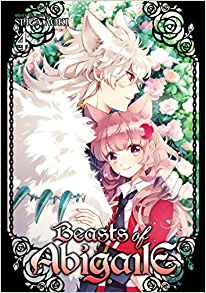
SEAN: There’s also the 5th Akashic Records of Bastard Magical Instructor, a 4th Beasts of Abigaile, the 6th Captain Harlock: Dimensional Voyage, the print version of the 4th Make My Abilities Average light novel, The 3rd and final Juana and the Dragonewts’ Seven Kingdoms, a 9th Shomin Sample, and the 3rd Toradora! novel.

MICHELLE: I look forward to reading more Beasts of Abigaile.

ANNA: Me too! It covers my need for goofy paranormal shoujo manga.

SEAN: Udon gives us more foodie isekai manga with a 2nd Otherworldly Izakaya Nobu.

ASH: While in some ways not as immediately compelling as some of the other fantasy foodie manga being released right now, I did rather enjoy the first volume.

SEAN: Vertical has the 2nd Delinquent Housewife!, and also packs the first 7 Monogatari novels into a nice box, which is sadly only available if you buy the books all over again. (You have been buying the books, right?)

We end with Viz, who also have a debut. Ran and the Gray World (Ran to Haiiro no Sekai) is an Enterbrain title from Harta, something which always makes me happy. It’s about a powerful but immature sorcerer and the big brother who has to be her minder.

MICHELLE: Otherworldly Izakaya, Delinquent Housewife, and Ran and the Gray World are all on my list!

ANNA: Ran and the Gray World looks nifty!

ASH: It really does!

They also have Children of the Whales 7, Mobile Suit Gundam Thunderbolt 9, the 3rd RWBY Anthology, and… drumroll please… Ooku: The Inner Chambers 14! Rejoice Manga Bookshelf writers!

MICHELLE: Verily, I am rejoicing!

ANNA: Indeed, I am rejoicing as well!

ASH: Rejoice! Rejoice!

MJ: What they said!

SEAN: So is your manga a turkey? (In a good way, of course.)

Filed Under: FEATURES, manga the week of

Invaders of the Rokujouma!?, Vol. 17

November 15, 2018 by Sean Gaffney

By Takehaya and Poco. Released in Japan as “Rokujouma no Shinryakusha!?” by Hobby Japan. Released in North America digitally by J-Novel Club. Translated by Warnis.

This is essentially a series of short stories taking place right after the events of the last two volumes, and is therefore as light and fluffy as you can imagine. Everyone goes to the beach, then everyone goes to a festival, then everyone goes to an amusement park. When the group aren’t going places, we see Yurika struggle to do all the homework she completely forgot about in two days, and we also see Koutarou’s father, who hasn’t shown up since the first volume, drop by to check on his son and meet his nine new daughters. I’m kidding only slightly, as the series is starting to make the not-too-shocking chess moves to allow this to be a full-fledged harem in the future. It’s always had this somewhat implicitly, but here two of the girls agree that if one of them marries Koutarou, the other is allowed to cheat with no worries. Honestly, at this point I think fans would be angry if he DID choose only one girl.

We do seem to have capped the number of girls at nine, however. Elfaria was certainly in love with Koutarou back when he was in the past, and it’s fairly obvious that she still harbors feelings for him, but she also knows that she can provide a role for him that the other girls can’t, which is to be a mother figure. Rokujouma is never really all that subtle with its character development, and has had the other girls talk about everything being on hold till Koutarou emotionally matures enough to be able to accept and move past his mother’s death. That said, given the rest of the girls are putting ‘Koutarou’s family’ first, it makes sense that Elfaria is thinking about being a mom for him, something the others aren’t able to do (Kiriha could pull it off, I think, but likely wants Koutarou romantically too much for that to happen).

Koutarou has developed since the series began – something the series is unashamedly fond of spelling out, as his dad tells him straight up in the last story how the old him would never have allowed himself to get this close to all those other girls. That said, my favorite chapter was probably (try not to be surprised) the Yurika one, which also shows off how much she has grown and changed despite still being the author’s go-to when he needs someone to whine and be pathetic (as we can see in the beach chapter, where she proves to be a hammer). Sure, she needs some motivation, mostly from Koutarou (he does a stick, then a carrot, which works very well), but I really did admire her refusal to get “magical help” to finish the homework, or to give up. I also liked that Shizuka noted there were errors in the work, but didn’t correct them – Yurika has to improve enough to get into college with Koutarou and Harumi, and that means fixing her own mistakes.

Of course, it also means dealing with the other evil magical girls, and the ending implies that the next book will feature their return. Rokujouma continues to truck along nicely, and even this slight volume provides smiles and chuckles.

Filed Under: invaders of the rokujouma!?, REVIEWS

  • « Go to Previous Page
  • Page 1
  • Interim pages omitted …
  • Page 198
  • Page 199
  • Page 200
  • Page 201
  • Page 202
  • Interim pages omitted …
  • Page 538
  • Go to Next Page »
 | Log in
Copyright © 2010 Manga Bookshelf | Powered by WordPress & the Genesis Framework