• Skip to primary navigation
  • Skip to main content
  • Skip to primary sidebar
  • Home
  • About Us
    • Privacy Policy
    • Comment Policy
    • Disclosures & Disclaimers
  • Resources
    • Links, Essays & Articles
    • Fandomology!
    • CLAMP Directory
    • BlogRoll
  • Features & Columns
    • 3 Things Thursday
    • Adventures in the Key of Shoujo
    • Bit & Blips (game reviews)
    • BL BOOKRACK
    • Bookshelf Briefs
    • Bringing the Drama
    • Comic Conversion
    • Fanservice Friday
    • Going Digital
    • It Came From the Sinosphere
    • License This!
    • Magazine no Mori
    • My Week in Manga
    • OFF THE SHELF
    • Not By Manga Alone
    • PICK OF THE WEEK
    • Subtitles & Sensibility
    • Weekly Shonen Jump Recaps
  • Manga Moveable Feast
    • MMF Full Archive
    • Yun Kouga
    • CLAMP
    • Shojo Beat
    • Osamu Tezuka
    • Sailor Moon
    • Fruits Basket
    • Takehiko Inoue
    • Wild Adapter
    • One Piece
    • After School Nightmare
    • Karakuri Odette
    • Paradise Kiss
    • The Color Trilogy
    • To Terra…
    • Sexy Voice & Robo
  • Browse by Author
    • Sean Gaffney
    • Anna Neatrour
    • Michelle Smith
    • Katherine Dacey
    • MJ
    • Brigid Alverson
    • Travis Anderson
    • Phillip Anthony
    • Derek Bown
    • Jaci Dahlvang
    • Angela Eastman
    • Erica Friedman
    • Sara K.
    • Megan Purdy
    • Emily Snodgrass
    • Nancy Thistlethwaite
    • Eva Volin
    • David Welsh
  • MB Blogs
    • A Case Suitable For Treatment
    • Experiments in Manga
    • MangaBlog
    • The Manga Critic
    • Manga Report
    • Soliloquy in Blue
    • Manga Curmudgeon (archive)

Manga Bookshelf

Discussion, Resources, Roundtables, & Reviews

Features & Reviews

Kuma Kuma Kuma Bear, Vol. 1

May 9, 2020 by Sean Gaffney

By Kumanano and 029. Released in Japan by PASH! Books. Released in North America by Seven Seas. Translated by Jan Cash & Vincent Castaneda. Adapted by Will Holcomb.

First of all, despite expectations, there really aren’t many bear puns in this book. Even the title, which I thought was one, is “くま クマ 熊 ベアー” which is simply ‘kuma’ in hiragana, katakana, kanji, and ‘bear’ in katakana. It’s ‘Bear Bear Bear Bear’. The author, Kumanano, translates to “I’m a bear”. and the heroine, Yuna, appears on the cover wearing a bear onesie with bear gloves and bear slippers. I’m telling you this up front because if you’re already annoyed, best not to read this. It is absolutely saturated with bear. Despite what I had thought, Yuna CAN remove the bear suit if need be… but she’s as powerful as a 15-year-old human girl when she does. WITH the bear suit, provided to her by the God who runs this world, she’s ludicrously overpowered. Which tells you at heart this is sort of for fans of Make My Abilities Average and its ilk. Do you like teenage girls beating up jerks and monsters? You’ll like this.

Yuna is a young girl who likes to game, sleep, eat,and not much else. She hasn’t gone to school ever since she found she can get rich working the stock market. Her parents briefly protested… so she paid them enough money to leave her forever. And they left! (I mention this because it jars very much with the overall tone of most of the book, and I am wondering if it will ever come up again.) Then one day, Yuna gets an upgrade to the game she’s playing, along with special equipment… the set of bear items. Then, she’s asked if she enjoys real life (no), if she has people who’ll miss her (no), and anything really important to her in reality (money). After this… again, try to contain your shock… she finds herself transported to a fantasy world that’s very much like the game she had been playing. In a bear onesie.

I spent a whole paragraph talking about the first 5 pages or so because the rest of the book is exactly what you’d expect. There’s stats (though not as many as Yuna would like, and all bear related), there’s guilds, there’s killing wolves and orcs, there’s mana gems, there’s jerk guys who look down on Yuna just because she’s a cute young girl in bear pajamas… this lasts until she beats him so much he needs medical attention. There’s also a cute girl risking her life for her family who Yuna essentially adopts as a little sister. Originality is absent here. That said, it reads quite well, and I was never bored, despite the same old things happening. The weakness may be Yuna, who tends to react with little emotion to much of anything, and thus can come off as a bit mean (shades of Potion Girl) or callous. That said, this book also lacks a lot of the bad habits of light novels, possibly as it has a female lead and is written for a female audience. There’s no descriptions of breasts, Yuna shows no signs of getting a romantic harem, and there’s no slavery. I appreciate that.

This is run-of-the-mill OP isekai, but unlike some others I’ve reviewed recently, its gimmick (bear) is handled very well, being funny and never really irritating. If you like bears, or just like young women walking around and being cool, this might be a good light read. Oh yes, and the illustrator also does The Devil Is a Part-Timer!, so if you like their work, also check it out.

Filed Under: kuma kuma kuma bear, REVIEWS

Bookshelf Briefs 5/7/20

May 7, 2020 by Ash Brown, Sean Gaffney and Michelle Smith Leave a Comment

The Ancient Magus’ Bride, Vol. 12 | By Kore Yamazaki | Seven Seas – As much as I continue to love this series overall, this particular volume had some highs and lows for me. When Chise’s new classmates are in a scene with her, I find them interesting (particularly her prickly roommate, Lucy) and enjoy seeing Chise successfully interact with peers when just a couple of volumes ago she had doubts about her ability to do so. That said, the conversations these characters have amongst themselves about their pureblood alchemical family drama are unimaginably boring. At the same time, there’s an important conversation between the leads in which Elias tries to clarify what he meant by “bride” and an eventful camping trip to Scotland at the end of the volume that sees Lucy in peril, both of which I greatly enjoyed. In the end, I’m as eager for the next installment as ever. – Michelle Smith

As Miss Beelzebub Likes, Vol. 9 | By Matoba | Yen Press – It would appear that the manga author is well aware that Eurydice is not the most popular character in this book, as the first part of it deals with her getting amnesia and forgetting she’s a shotacon… and having people reluctant to cure her. Big same. Elsewhere, it’s all about the three “main” couples in the series, none of whom are official but all of whom are teased to death. Astaroth and Sacchan are stuck on a seemingly deserted island, and both are feeling very awkward around each other. Beelzebub and Mullin are a couple but don’t actually seem to realize it, much to the frustration of others. Most importantly, Azazel and Belphegor hold a real conversation! It’s good setup for the final volume next time. Fluffy fun. – Sean Gaffney

Cherry Magic! Thirty Years of Virginity Can Make You a Wizard?!, Vol. 1 | By Yuu Toyota | Square Enix – The title of this one gave me the impression that it was going to be smutty, but the reality is anything but (at least so far). Kiyoshi Adachi is a gloomy, average, thirty-year-old virgin who has just discovered he can read the minds of the people he touches. When Adachi decides to see whether his seemingly perfect coworker, Kurosawa, has a secret nasty personality, he instead discovers that Kurosawa is romantically interested in him. As Adachi accesses more of Kurosawa’s thoughts throughout the volume, he realizes that he’s a genuinely good person and wants to get to know him better, but his lack of romantic experience means he gets overwhelmed easily. I think these guys make a cute couple and look forward to continuing the series. I also really enjoyed the bonus stories, especially the one about Adachi’s equally virginal friend and a delivery guy who bond over a kitty. – Michelle Smith

Gabriel Dropout, Vol. 8 | By Ukami |Yen Press – The main thrust of this volume is the arrival of Gabriel’s big sister Zeruel, who (as Gabriel knows) will flip her shit when she sees her behaving like a sloppy otaku, and (as Gabriel doesn’t know) has a massive sister complex about her. This amusingly leads to Gabriel acting like a perfect little angel and creeping everyone out. Fortunately, in a “who knows Gabriel best” trivia competition, Vignette’s knowledge of present Gabriel trumps Zaruel’s past knowledge. Speaking of Vignette, her demonic tendencies take another beating when another demon in the group refuses to see her as anything but an angel because she can’t be mean. Basically, be they angel or demon, everyone in this cast is a flake, so it’s all good. – Sean Gaffney

Kakushigoto: My Dad’s Secret Ambition, Vol. 2 | By Kouji Kumeta | Kodansha Comics (digital only) – This series continues to be the sweeter, more optimistic version of Zetsubou-sensei, and I’m OK with that. This is not to say that the author does not get a bit bitter about things that are in his wheelhouse, such as constant editor turnover (his current editor, who is a bit of a loser, is there because no one else will have Kakushi) and having to judge new entries in a manga competition (Kakushi judges fine, but is undercut by the stupid editor adding (lol) after every entry). Biting the hand that feeds him has always been Kouji Kumeta’s top skill. That said, it almost seems tempered by age and maturity here, particularly in the scenes with the father and daughter simply being a good family. Ominous future, though… – Sean Gaffney

Monthly Girls’ Nozaki-kun, Vol. 11 | By Izumi Tsubaki | Yen Press – Sometimes it happens that I just don’t have much to say about a volume of Monthly Girls’ Nozaki-kun. I like it best when some modicum of progress is made in one of the core relationships in the series, and for the most part (and despite the claim on the back cover that Wakamatsu finally learns Lorelai’s true identity) we don’t get that this time. Mostly it’s gags about otome games and hypnosis and what if Nozaki did a book signing. That said, there is a very nice tidbit at the end where Hori sincerely tells Kashima that he likes everything about her, and I hope that isn’t forgotten though I realize it’s extremely likely that nothing will come of it. In summation, I think I’m kind of reading this wrong, but ultimately I still enjoy it. – Michelle Smith

Prince Freya, Vol. 1 | By Keiko Ishihara | Viz Media – While several of Ishihara’s manga have now been released in English, Prince Freya is the first I’ve read. But I’m always happy to see more shoujo fantasy released, so I was looking forward to giving the series a try. The premise of the manga is pretty solid if not particularly innovative—Freya is a young woman who, due to unusual and deadly circumstances, is required to pose as Prince Edvard, the leader of her country. Ishihara has also laid the groundwork for some excellent court politics and intrigue. The pacing, however, especially in the introductory chapter, is extraordinarily fast. In addition, time and distance seem to have frustratingly little meaning in the series. And unless there’s some sort of spirit possession going on (which admittedly would be an interesting twist), Freya’s “becoming” Edvard in the first volume strains belief. But even considering its flaws, Prince Freya continues to intrigue me. – Ash Brown

Shoulder-a-Coffin Kuro Side Story: Nostalgic Travelogue | By Satoko Kiyuduki | Yen Press – This is nothing more than a series of short stories set during and after the main series, but if it allows us to spend more time with Kuro and friends, I’m 100% down with it. There’s moments of bittersweet tragedy in a story of a princess who sacrifices her life for the sake of her country. There’s amusing moments, such as Kuro and Sen having to play chess to escape a king’s wrath… a very strange game of chess. And there’s heartwarming, such as a young boy who grows older as he hears the stories of the travelers (including Kuro) who pass through his inn, eventually finding himself involved with some of the people he heard about. I love this series; it’s gorgeous and poignant. – Sean Gaffney

Sweat and Soap, Vol. 2 | By Kintetsu Yamada | Kodansha Comics – Now that our main couple has gotten together, it’s time to bring in some things to cause potential drama. The cute underling at work that’s in Kotaro’s department (and clearly has a crush on him) tries to uncover if he and Asako are dating… but fails. Also, he sees her like a little sister. Asako tells her mother she’s dating a guy… and she’s thrilled. The biggest issue in this volume may be Asako’s little brother Keita, who had to defend her from bullies as a kid and thus doesn’t trust anyone who might date his big sister. That said, a nice dinner at Keita’s restaurant (he’s a budding chef) does the trick, with Kotaro winning him over by simply being sincere. Both the sweat and the sex have lessened in this book, leaving pure sweetness. – Sean Gaffney

A Witch’s Printing Office, Vol. 2 | By Mochinchi and Yasuhiro Miyama | Yen Press – This started badly, with an entirely gratuitous boob shot distracting me from what turned out to be a pretty good plotline of a cooped-up rich kid wanting to get out into the world and read more… even if it turns out she might be reading her mom’s doujinshi. The basic premise of this series is that anyone and everyone can be happy buying and reading doujinshi, even if it’s monster guides or magic spellbooks. Yes, even the demon lord, who turns out to be quite nice. In fact, the real danger in this book is a natural one, as there’s a huge typhoon that threatens to take out the island that not-Comiket is held on. And there’s even a cliffhanger… is there another Japanese person trapped here? Aside from one bad bit of fanservice, still very good. – Sean Gaffney

Filed Under: Bookshelf Briefs

Manga the Week of 5/13/20

May 7, 2020 by Sean Gaffney, Michelle Smith, Ash Brown, Anna N and MJ 1 Comment

SEAN: Mid-May (Mother’s Day) and we’re feeling the loss of many books, though there’s still enough coming out that people should be kept busy.

ASH: Indeed! It certainly feels odd not going to TCAF this year, but I’ve still found plenty to read.

SEAN: We start with J-Novel Club, which has the 4th Ascendance of a Bookworm manga, Cooking with Wild Game 7, and Outer Ragna 2.

ASH: I’ve heard so many good things about Ascendance of a Bookworm; I really need to move it closer to the top of my to-be-read pile.

Newbie publisher Kaiten Books has its second release, which is Shed that Skin, Ryugasaki-san! (Mukasete! Ryugasaki-san), which is NOT based on a light novel but is in Overlap’s Comic Gardo anyway. It’s the sweet story of a lizard-like girl and a boy who really loves lizards. Can they find love?

Catching up on things I missed: Kodansha now has the rights to Loveless, presumably through their partnership with Ichijinsha, and has released all 13 volumes digitally as of last week.

Also out already from Kodansha via their partnership with Comixology is Drops of God Vols. 12-22.

In the “would have been print but isn’t yet” Kodansha titles, we find Beyond the Clouds 2 and Knight of the Ice 2.

MICHELLE: Knight of the Ice is so much fun.

ASH: I really liked the first volume!

ANNA: Me too, I’m looking forward to collecting this in print.

SEAN: On the actual digital front, we have Ace of the Diamond 26, The Dorm of Love and Secrets 4 (a final volume), Giant Killing 20, The Hero Life of a (Self-Proclaimed) “Mediocre” Demon! 2, and Tokyo Revengers 15.

MICHELLE: I’ll be reading 60% of these!

SEAN: Seven Seas has two debuts (digital, of course). The first is the Kuma Kuma Kuma Bear manga, based on the light novel we talked about a week ago. It runs in Shufu to Seikatsusha’s Comic Pash!, which is not a magazine I get to mention here very often.

More relevant to the Manga Bookshelf crowd is Sarazanmai: Reo and Mabu, a single volume BL manga from Gentosha’s RUTILE. From what I can tell, this is the prequel to the Sarazanmai anime/light novel series, which is from the pen of Kunihiko Ikuhara and whose light novel version Seven Seas is releasing later this year. Um, they’re cops, they’re lovers, they adopt a kid, there’s weird supernatural shit? Sounds like Ikuhara, all right.

MICHELLE: Hmm.

ASH: I’ll be reading this at some point.

MJ: Count me in on this.

SEAN: Also out next week: Classroom of the Elite 5 has a early digital release. There’s also Dungeon Builder: Demon King’s Labyrinth Is a Modern City 2, Magical Girl Site 12, and the 11th and final volume of Masamune-kun’s Revenge.

Square Enix has one digital release: The manga version of Wandering Witch, whose light novel is coming out from Yen On. This manga version is from Gangan Online. For fans of Kino’s Journey.

ASH: I do like Kino’s Journey…

MJ: Ohhhhh, I also love Kino. Hm.

SEAN: SuBLime has a 2nd volume of Given and the 3rd Yarichin Bitch Club.

MICHELLE: Yay, Given!

ASH: Yes! Looking forward to reading more.

ANNA: Looking forward to more Given!

MJ: Oh, no! I’mm behind!

SEAN: Finally, we have Viz. No debuts, but we get A Tropical Fish Yearns for Snow 3, Fullmetal Alchemist: Fullmetal Edition 9, Radiant 11, RIN-NE 33, Splatoon 9, Transformers: the Manga 2, and Yo-Kai Watch 14. (Yes, I know. I always forget Yo-Kai Watch exists.)

ASH: I’ve been enjoying A Tropical Fish Yearns for Snow quite a bit so far.

SEAN: Some interesting things. Are you buying any manga for your mom?

Filed Under: FEATURES, manga the week of

BL Metamorphosis, Vol. 1

May 7, 2020 by Sean Gaffney

By Kaori Tsurutani. Released in Japan as “Metamorphose no Engawa” by Kadokawa Shoten, serialization ongoing in the magazine Comic Newtype. Released in North America by Seven Seas. Translated by Jocelyne Allen. Adapted by Ysabet MacFarlane.

In troubled times, sometimes you just want to read something that puts a smile on your face and a song in your heart. Slice-of-life series can be all kinds of things, and this story of an old woman bonding with a teenager over BL manga fits perfectly. Ichinoi teaches calligraphy classes at her home, and is alone now that her husband has passed away. One day, the cafe she goes to closes down so she’s forced to go further into town, where she goes into a bookstore to cool off. Startled by how much of the store is now devoted to manga, she’s taken by a book with gorgeous artwork. She buys it, startling the bookstore clerk, Urara, because the book is BL – something Ichinoi is unaware of till she reads it later at home. That said, the love story within intrigues her, and she goes back to the bookstore for more – sparking a friendship with Urara.

The balance between the new friendship slice-of-life and the BL manga that connects the two is perfectly done. Ichinoi does not have a life that is wanting by any means, but she’s feeling lonely, and enjoys talking about the books with Urara. Urara is the sort of teen I’d describe as ‘naturally sullen”, and has trouble connecting with kids her own age, all of whom seem more together than she is. Discussing the books that Ichinoi is buying helps to break the ice, and Ichinoi is also a natural-born friend-maker, which Urara is very much not. By the end, they’re even going to a writer signing event, though the size of the event proves to be a surprise. It’s a very natural, well-paced budding friendship between two women with 50 years between them.

There is also discussion of the BL manga itself. Ichinoi last read manga back in the Aim for the Ace! days (1970s), so was unprepared for the BL relationship in the book she bought, but she immediately gets into the series. We see occasional pages from the series, showing a not-quite couple, both of whom seem to be bad at communicating their true feelings – one bright and outgoing, one inward and moody. The series is only three volumes long, and it only comes out every 18 months, so for Ichinoi there’s a very real worry she won’t live to see the end of it. The manga ties in with the protagonists’ lives so that it seems natural, and doesn’t overwhelm the day-to-day stuff (such as Urara’s crush on her childhood friend, which isn’t going anywhere as he’s dating someone else.

In the end, this is simply a terrific story, and I really want to see these two hang out and talk about BL manga or anything else they choose to. I’d also like to see more of their pasts – we see Urara had another childhood friend who’s no longer in her orbit, and the final chapter shows Ichinoi approaching a building (for the author signing) her husband wanted to take her to the top of but they never did. Absolutely recommended, whether you like BL or not.

Filed Under: bl metamorphosis, REVIEWS

Otherside Picnic, Vol. 3

May 6, 2020 by Sean Gaffney

By Iori Miyazawa and shirakaba. Released in Japan as “Urasekai Picnic” by Hayakawa Bunko JA. Released in North America by J-Novel Club. Translated by Sean McCann.

I’ve talked before about how this book is well served by the fact that Sorawo is our narrative voice. This means, of course, that we see what she thinks of Toriko’s words and actions, but don’t get Toriko’s own POV in reverse. The fun part lies when the reader is able to infer what Sorawo isn’t. Certainly Sorawo is correct that Toriko is obsessed with finding Satsuki, but she seems to equate that with a romantic longing, and on our end we’re not so sure. More to the point, Sorawo can be very savvy in some ways and not in others – there’s a scene where Toriko mentions the fact that she was brought up by two mothers, and it’s very clear she’s dropped this information on Sorawo to see how she’s going to react… because of course Toriko is in love with Sorawo, something that has been clear for some time but is increasingly textual as the book goes on. It’s good characterization, and the narrative POV helps sell it.

There’s three main stories in this volume. In the first, Toriko and Sorawo go back to the other world and try going in a different direction, but their rooftop picnic (love the idea of an actual picnic in this book) is interrupted by some time-stretching shenanigans and the ominous presence of Satsuki, who is invisible to Toriko but very visible – and terrifying – to Sorawo. The second story sees the return of Sorawo’s kohai Akari, who Sorawo continues to be wary and uncomfortable with, and Akari’s childhood friend Natsumi, who has unfortunately not done as the creepy urban legend told her to, and is suffering as a result. Finally, Sorawo and Kozakura are kidnapped by a cult, whose leader has a voice much like Toriko’s hand and Sorawo’s eye, and said leader really, really wants to meet Satsuki. Unfortunately for all concerned, she does.

I will admit, the actual urban legends/ghost stories presented here did not ring a bell for me, nor are they really supposed to for Japanese readers, I think, despite all the documentation of 20-year-old 2chan threads in the book’s appendix. Indeed, Sorawo makes an important distinction here, as she hates “I know a guy who this happened to” stories, which are far more likely to be made up, and looks for real “this happened to me personally” legends. As with the second volume, the scarier stuff is at the back half here, though those with teeth phobias may wince at the second story. This includes Sorawo herself, who upon being kidnapped and locked up brings to the fore another part of herself only concerned with survival (though honestly, there’s not much difference between this and her normal self, IMO – I think a lot of it may simply be her psyching herself up.) The climax of the book leaves one dead, one maimed, and one big Satsuki problem that still isn’t going away, but at least our heroines are OK.

This is getting an anime soon, apparently, and it will be interesting to see how they convey some of the concepts here – a lot of the horror themes work best on the page. As for this volume, it’s another strong one in the series, and I look forward to the fourth one, if only to see how – or if – Sorawo responds to Toriko’s words at the end.

Filed Under: otherside picnic, REVIEWS

Prince Freya, Vol 1

May 4, 2020 by Anna N

Prince Freya, Volume 1 by Keiko Ishihara

I really liked Ishihara’s other series The Heiress and the Chauffeur, which was only two volumes but left me wishing I could read a longer series by the author. I’m always up for shoujo fantasy, and “girl who must disguise herself as a boy” is one of my favorite plot elements so I have been eagerly waiting to read Prince Freya.

prince freya

Freya lives in the quasi-medieval setting that is very familiar to fantasy fans. She likes to casually jump off cliffs and is a well-beloved figure in her village, as she heads to town to fetch items for her ailing mother. Her adopted older brothers Aaron and Aleksi return home for a visit. Aaron is the famous Black Knight who guards the Prince and Aleksi seems mostly content to remain in his older brother’s shadow. There’s a bit of a budding romance between Aaron and Freya, but Freya quickly gets caught up in court intrigue though. Due to her habit of hanging out in high trees she overhears a plot to attack Aaron and the palace. She sneaks in and discovers that the prince ailing, and Freya is his exact duplicate. Far too quickly, she assumes his identity and manages to pull off a stupendous impersonation as the prince. This comes out of nowhere, I would have appreciated a brief 2 page prince training montage to at least address how on earth this happens. Freya’s Prince Edvard is both arrogant and charming, which contrasts with her more naturally retiring personality, putting aside the cliff-jumping and tree climbing.

There’s a terrible tragedy, but Freya is drawn even more into her deception after the prince dies and she has to make sense of what the small circle of courtiers around her is telling her to do as she continues to play along with hiding the prince’s death so the enemies of her country don’t catch on. The art is clear and expressive, and Freya and her quasi-adopted siblings are sympathetic characters. I’m hoping that the second volume has some time to slow down a little bit and let the story unfold a little more gradually. I’m very much looking forward to the second volume.

Filed Under: Manga Reviews, REVIEWS Tagged With: Prince Freya, shojo beat, viz media

Infinite Dendrogram: The Glory Selecter

May 4, 2020 by Sean Gaffney

By Sakon Kaidou and Taiki. Released in Japan by HJ Bunko. Released in North America by J-Novel Club. Translated by Andrew Hodgson.

Since my last review, the Dendro anime has come and gone… and probably best not to speak of it again. Hopefully it’s not a franchise killer like Index III. The novels are still ongoing, though, and this one is a prequel taking place before Ray enters the game. The mysterious admins behind the game are all based around Alice in Wonderland names, and the one called Jabberwock wants to create stronger players with the Superior designation. As such, he unleashes a nightmarish nearly impossible to kill dragon with multiple heads and sets it on poor Altar (this is another volume that shows us why the Kingdom was on its last legs when Ray arrived). Some incredibly powerful and cool folks go up against it… and fail horribly. So it’s up to Figaro (who wants revenge for his friend), Tsukuyo (who just wants to have fun) and Shu (who is a little more pissed off than we normally see him, and takes off the animal suits for the big battle) to save the day. The result is a good book… if you like battles.

We do meet another strong and briefly interesting character at the start of the book. Foltesla, the King of Swords and leader of a powerful battle group, is a player who is very invested in the game, loves to duel with Figaro (who also gets some backstory here, explaining why he’s always a solo player), and has a lovely NPC wife. Every single thing about him screams tragedy, and sure enough, that’s what happens, to the point where honestly it almost swamped the rest of the book for me. I don’t doubt he’ll eventually come back… there’s too much time devoted to him not to… but it does remind me once more that there are a luge number of books that involve “the NPCs are more real than we’d thought”. Sword Art Online Progressive has it as almost its entire plot, and Dendrogram also hammers on it. Figuring out what’s different about this game is part of the fun of reading it.

The battles are usually also part of the fun, and there are some good moments here, particularly involving the “King of Crime”,but it has to be said that there’s a lot of “hope you love gaming stats” talk here. Dendro is better than some at blending this with the actual prose, but when so much of the book is devoted to one battle against one giant monster, it can be a bit boring for those who aren’t stat heads. It doesn’t help that the outcome of the battle is not really in doubt… we know given that there are three lines of defense (Figaro, Tsukuyo and Shu) that all three will eventually have to fight, and we know that anyone else who tries to fight is going to end up vaporized. Also, the book really wants the dragon to talk, but it can’t, so the author tries to give the dragon dialogue it would have said if it did talk, and… it’s as awkward as it sounds.

So it’s a middling book in the series, one that unfortunately made me remember the tragedy rather than the triumph. Can we get back to the main plot next time?

Filed Under: infinite dendrogram, REVIEWS

Buck Naked in Another World, Vol. 1

May 3, 2020 by Sean Gaffney

By Madoka Kotani and Mochiusa. Released in Japan as “Shinyaku Isekai ni Tensei Shitara Zenra ni Sareta” by Mag Garden Novels. Released in North America by Seven Seas. Translated by Garrison Denim. Adapted by Matthew Grune.

When Seven Seas first tweeted about this license, I may have made a comment or two about it. Something about the title, the concept, and the cover art just set me off. It looked to be the culmination of every single bad light novel trend out there. Unfortunately, people responded to my blithe snarky comments with “ha ha, can’t wait to read your review!”. I realized only too late that this meant I actually had to review the thing. Oh well. How bad could it be? Things weren’t helped by the fact that, when it arrived on my phone, I found it was far longer than a book called “Buck Naked in Another World” had any right to be. This is a chunky volume. But, I finished it. And here I am, reviewing it. And I will tell you right up front: do not read this bad book. Tempting as it is to end the review there, let’s move on to a summary of the plot.

…no, wait, first I want to talk about that cover. I have to hand it to the artist: I don’t think I’ve ever seen a light novel hero I want to punch in the face on sight more than this guy. Look at that smug cocky grin. And we have the adoring mild-mannered girl on his left, and a big-breasted, eyepatch-wearing warrior on his right. More to the point, as you can tell, he’s not QUITE naked. Shuta (who everyone calls Shooter in this world) is a 30-something guy who floats from menial job to menial job, till one day he winds up in another world, naked. He’s at first arrested and put to even more menial jobs… naked except for a small loincloth, which you see on the cover. Gradually he wins over the population of the village he ended up in, gaining a wife and defeating monstrous wyverns. Then he goes to the big city, where due to his lack of identification he ends up tricked into slavery, and slaves are… you guessed it… naked.

Before I get into the naked thing, let’s talk about everything else wrong with this book. It almost reads like a checklist of things I dislike in light novels. It’s clearly based on a webnovel, and thus very long and not at all edited down. (In fact, judging by the ‘Shinyaku’ in the title, this isn’t even the first attempt at publishing it!) Slavery is here, because it’s a fantasy light novel, and it’s still irritating. There’s a scene where a woman pees herself in fear and Shooter will not shut up about it, something that remains very popular in these sorts of light novels as well for reasons I’d rather not think about. Shooter gains the affection of at least 6 different women over the course of the story, one of whom he marries, and does not do much except kill monsters and be nice to them to earn this affection. Moreover… OK, let’s get to the naked bit.

First of all, it is not clear until a side story at the very end why no one just gives this guy a pair of goddamn pants. I had gone into the book assuming it was some curse or such, but no. The village thinks that because he arrived naked, and does not immediately shriek for clothes, that this is just his thing. His wife (clearly embarrassed by his nudity, something Shooter interprets as fear) makes him g-string underwear, but says pants are above her station. When he’s enslaved, slaves are said to be naked, but again, he’s really the only slave we meet for more than two lines of text, so it’s still just him. Look, I get that you need to make your book stand out among all the other fantasy isekais. But… OK, let’s take Reborn As a Vending Machine. Ridiculous isekai premise, right? Harem of girls, right? Overpowered guy, right? However, if you took out ‘he’s a vending machine’, nothing in the story would work. But if you gave this guy clothes… nothing in this story would change at all, except we’d be spared a few wiener jokes from the narrator. There’s no goddamn reason for him to be naked except for clicks on your webnovel. At least rise above that low bar!

The translator and adapter do their best here… for good and ill, Shooter’s narration sounds like the sort of guy you’d imagine from the cover. In other words, you want to strangle him. Sadly, his smugness doesn’t help the mind-numbing worldbuilding that we get sprinkled throughout this, which is the main reason this is so long but is not worth it. And oh yes, for those who are buying the book featuring that a book with a title and girls like this has to have sex? Nope. Not at all. This book if irritating, dull, occasionally offensive, and far too long. Do not read it.

Filed Under: buck naked in another world, REVIEWS

Rascal Does Not Dream of Bunny Girl Senpai

May 1, 2020 by Sean Gaffney

By Hajime Kamoshida and Keji Mizoguchi. Released in Japan as “Seishun Buta Yarou wa Bunny Girl Senpai no Yume wo Minai” by Dengeki Bunko. Released in North America by Yen On. Translated by Andrew Cunningham.

(This review is based on a review copy provided by the publisher.)

A lot of times these days, licensed light novels tend to fall into two different categories: “we’re licensing this because the Japanese publisher knows there’s an anime in the works”, and “the anime has come and gone but this did not immediately vanish into obscurity the moment the anime ended so let’s take a flyer on it”. Rascal Does Not Dream of Bunny Girl Senpai seems to be the latter – it started Japanese publication in 2014, which makes it quite old by licensing standards. I haven’t seen the anime (yes, try to contain your surprise) but I’d certainly heard of it, with it seeming to occupy that odd position of both “high school romcom” and “vaguely supernatural things happen” that we see in Haruhi Suzumiya and others. That said, I did notice (and tweeted about) a major different I spotted: unlike all those novels with snarky first-person narrators whose inner thoughts we are buried in, Aobuta (its Japanese nickname) is third person. It makes a difference, believe it or not.

Our hero apparently already had a boatload’s worth of light novel events happen to him before the series began: Sakuta has a past, which has left him with huge gashes across his chest, a little sister who’s a shut-in, and a reputation at school that means he has precisely two friends. One day at the library he is startled to find Mai, an upperclassman of his and a famous actress… well, actress on hiatus… dressed as a bunny girl and walking around. No one pays any notice to her – but Sakuta can see her, much to her shock and dismay. As they gradually get closer he discovers that more and more people simply don’t notice that Mai exists, and it’s becoming something of a problem. Since he has experience of this thanks to his sister’s history of being bullied (which also involved mysterious supernatural consequences), he chooses to help her out. It helps that she’s really hot. It doesn’t help that he will say absolutely anything that comes out of his brain with no filter.

As I said, this is in third person, so while we can hear about Sakuta’s thoughts and decisions, we don’t get his specific thought process. This means that things that others, such as Kyon or Hachiman, might think to themselves for the benefit of the reader but not bother to say aloud he says aloud. This might actually make him more attractive to Mai, who is used to people not knowing how to talk to her and thus not talking to her at all. The relationship between the two is the best part of the book. I also like how he expects her, when they first meet, to behave like Senjogahara – the book is aware of its influences. Mai is a bit less sharp than that, but still falls into that basic type. In the second half of the book, as things turn more serious and Mai’s “no one can see me” condition turns potentially fatal, the two have a warmly growing bond that I want to see more of.

The book is part of a series, which not only makes for an annoying cliffhanger (expect a Groundhog Day loop next time) but also sometimes means things clearly meant for future novels are introduced here, no matter how awkwardly they may fit in. If Tomoe is the subject of the next book (as the title suggests), she’s going to have to be more interesting than she was here to win me over. (That said, she clearly wins out over the girlfriend of our hero’s best friend, who seems to be designed to be a Hate Sink so that the fandom can go after her and leave the rest of the cast alone.) In the end, I found Rascal Does Not Dream 1 (the titles will be changing with each book) to be an excellent stand-alone romance that seems to be a harem-ey ongoing series. As such, we’ll see what happens in the second book.

Filed Under: rascal does not dream, REVIEWS

Manga the Week of 5/6/20

April 30, 2020 by Sean Gaffney, Michelle Smith, Anna N, Ash Brown and MJ 3 Comments

SEAN: So, it’s May, and we’re in the middle of a pandemic. Let’s break down what that means, by publisher.

Viz/SuBLime and J-Novel Club have both indicated that their May print books are on schedule. Yen Press has moved a number of books to later months, and has a smaller May schedule that’s all in the last week of the month (the books on the list below are technically April holdovers). Tokyopop and Udon have both indicated that, despite Amazon listings, their May books are ‘TBA’ – I’m going to guess One Peace will fall in here as well, though I can’t confirm that. Dark Horse doesn’t have any May manga titles, and Denpa seems to have moved everything to June as well, though their lack of a release calendar on their site doesn’t help. Vertical moved all its May books to later in the year. Kodansha and Seven Seas have delayed their print releases to TBA (Ghost Ship is an exception), but are still releasing the books digitally on time.

Having done all that, let’s start with a publisher who’s none of the above. Fantagraphics has a box set of both volumes of Dementia 21 out next week. Definitely worth a look if you like creepy stuff.

ASH: True, that! I already have the individual volumes myself, but this is a great set for those who don’t.

MJ: I might consider this.

SEAN: Ghost Ship has Vol. 9 of Yuuna and the Haunted Hot Springs.

J-Novel Club has three print releases for us. An Archdemon’s Dilemma 5, Infinite Dendrogram 6, and JK Haru Is a Sex Worker in Another World: Summer.

On the digital end, we have the 3rd Faraway Paladin manga, The Greatest Magicmaster’s Retirement Plan 5, Grimgar of Fantasy and Ash 14++ (why is it avoiding 15?), Lazy Dungeon Master 10, the 3rd Master of Ragnarok and Blesser of Einherjar manga, and the 2nd Sweet Reincarnation manga.

ASH: Why is it avoiding 15??

SEAN: Kodansha is all digital, but let’s begin with what WOULD have been print, as we have L♥DK 15 and To Your Eternity 12.

ASH: To Your Eternity is such a good series.

SEAN: On the digital digital end, there’s no debut (the ‘debut a new title every week’ thing seems to be over), but we get All-Rounder Meguru 14, A Condition Called Love 3, Orient 2, Smile Down the Runway 9, and To Be Next to You 5.

MICHELLE: There may not be a weekly debut, but they really are getting out their newish shoujo titles super quickly!

SEAN: Seven Seas has a digital-first debut light novel, Kuma Kuma Kuma Bear. The Japanese meaning in the multiple kumas is apparently a tortured pun, but oh well. Kuma is a young VRMMO prodigy who is otherwise a shut-in, and (stop me if you’ve heard this one) is sucked into the game for real! Even worse, her equipment – while powerful – is cutesy bear pajamas. Can she survive in the game with her dignity intact? This seems funny, and at least Kuma seems unlikely to amass a large harem.

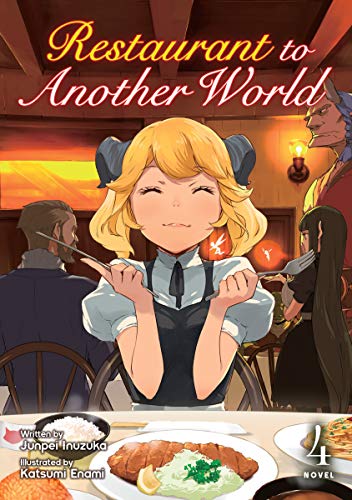
Seven Seas also has two “no print yet, but here’s the digital on time” releases: How Heavy Are the Dumbbells You Lift? 3, and Saint Seiya: Saintia Sho 10, and an “early digital light novel” release of Restaurant to Another World 4.

ASH: It definitely has a stong fanservice element, but I’ve largely liked what I’ve read of How Heavy Are the Dumbbells You Lift? so far.

SEAN: And so we move to Viz, which has everything you’d want in a first week of May. The debut is Not Your Idol (Sayonara Miniskirt), and thank God for title changes. It’s a shoujo manga from Ribon, though it also appears on Shonen Jump +, their digital platform. This is about a former idol who was attacked and decided to live as a boy afterwards. Now someone recognizes them. It feels like the sort of manga I tend to call a “potboiler”. We’ll see.

MICHELLE: I will definitely give it a shot!

ANNA: I’m curious about this one.

ASH: Same.

MJ: Cautiously interested.

SEAN: Also coming out from Shojo Beat: Daytime Shooting Star 6, Love Me Love Me Not 2, Shortcake Cake 8, and Snow White with the Red Hair 7.

MICHELLE: I’m reading all of these, though I look forward most to catching up on Shortcake Cake and Snow White with the Red Hair, as I’m a couple volumes behind now.

ANNA: I’m reading all of these too!

MJ: I’m so far behind on everything!

SEAN: On the Shonen Jump side, the debut is One Piece: Ace’s Story, the first in a series of light novels focusing on Luffy’s older brother.

There’s also Demon Slayer: Kimetsu no Yaiba 12, Dr. STONE 11, Haikyu!! 38, Kaguya-sama: Love Is War 14, My Hero Academia SMASH! 4, Samurai 8 2, and Twin Star Exorcists 18.

MICHELLE: Volleyboys!

ANNA: My kids are big Haikyu!! fans. One day I need to get caught up but we have every single volume.

ASH: I’m a bit behind, too, but Haikyu!! is a series I really enjoy.

MJ: Half my Twitter feed is obsessed with Haikyu!! but I must really be getting old, because my first reaction is, “Ack, so many volumes.”

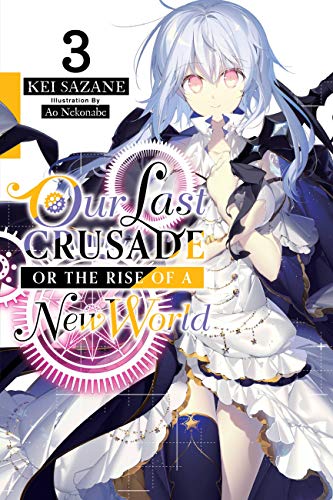
SEAN: Lastly, Yen Press had a few April titles that got bumped a week but aren’t affected by the pandemic. We get the 2nd manga volume of The Alchemist Who Survived Now Dreams of a Quiet City Life, Aoharu x Machinegun 17, Éclair Blanche (the 2nd Girls’ Love anthology in that series), Murcielago 14, the 2nd Our Last Crusade manga, and Skull-Faced Bookseller Honda-san 4, which is its final volume.

ASH: Skull-Faced Bookseller Honda-san, it is so good to see you one last time!

MJ: I still need to give Skull-Faced a chance.

SEAN: See? Even in a pandemic, there’s still plenty of stuff. What are you reading from home?

Filed Under: FEATURES, manga the week of

Silver Spoon, Vol. 14

April 30, 2020 by Sean Gaffney

By Hiromu Arakawa. Released in Japan as “Gin no Saji” by Shogakukan, serialized in the magazine Weekly Shonen Sunday. Released in North America by Yen Press. Translated by Amanda Haley.

This isn’t the last volume of Silver Spoon – that’s the next one, and I’ll get into why that’s controversial when I review it – but let’s be honest, for most readers of this series who were not in it for just the extensive farming talk, this volume is the payoff. This is not to say there isn’t still extensive farming talk – in fact, there’s more of it than ever. Arakawa is determined to drill into readers’ heads what making a living as a farmer in 21st century Japan is like, and by now the readers are close to understanding it, though probably not enough to actually start a farm. As our heroes get closer to graduation, we see expanding businesses, more pizza sales (though they don’t break even – always talk to Tamako first), and how to see your career prospects threatened by an extremely sketchy company looking for indentured servants in all but name. That said, the big plot here is Mikage and her exams.

The cover might seem ominous, with Hachiken and Mikage once again separated from actual romantic contact. And the exams are not easy – indeed, Mikage’s exam partner, Aikawa, ends up not passing – with Mikage getting a particularly vicious interviewer who suggests that her love of animals is because she hates dealing with people. Of course, as we’ve seen in the past, he’s not far off, but the days of deflecting and stepford smiles are over for Mikage, who gives a nice, heartfelt answer that amounts to both “I fell in love with this guy” and also “I was inspired to better myself because of everything he did”. As for Hachiken, frankly, he’s so worried he ends up in bed with gastritis. However, not to spoil too much, but things work out. In both ways – the 121st chapter is, as I said above, the payoff, and after a LOT of events conspiring against them (even equestrian helmets!), Hachiken and Mikage are a couple.

Now, Silver Spoon was never just about whether these two would get together, so there’s more to come here. For one, the other students find out – which naturally leads to the two of them being separated for all romantic holidays from now until graduation, because the boys are lovable assholes. There’s even another couple getting together – to contrast with Hachiken and Mikage’s tortured courtship, Sakae and Maruyama’s pairing is as blase as they come, and the two of them still think like farmers, as they have to discuss how the family businesses would merge in the event of their getting married. (Sakae also has some great lines as the biggest Mikage/Hachiken shipper in the cast.) Mikage’s parents also find out, which goes exactly the way you would expect. Basically, as with previous volumes of this series, every super heartwarming moment is undercut by extreme silliness.

So we head towards graduation, and seeing what everyone does next. Will there be enough pages to fully flesh everything out? Aheh. We’ll talk about that next time. Till then, enjoy what everyone was waiting for.

Filed Under: REVIEWS, silver spoon

The Extraordinary, the Ordinary, and SOAP!, Vol. 1

April 29, 2020 by Sean Gaffney

By Nao Wakasa and ICA. Released in Japan as “Hibon, Heibon, Shabon!” by ArianRose. Released in North America by J-Novel Club. Translated by C. Steussy.

I have talked before, and no doubt will again, about the fact that one of my favorite types of light novel is the kind that has, as its plot and character archetypes, not one original bone in its body, yet somehow still manages to win you over with the sheer power of good writing. I enjoy it so much because a) let’s face it, the old and familiar is like that hoodie that you always wear around the house – it’s your comfort food, but b) it shows the author has the skill to make you want to read more. This especially applies to the latest in a long line of shoujo light novels from J-Novel Club’s Heart imprint. I love that we’re finally getting so many light novels for women rather than men, but let’s face it, introducing a dozen or so of them in the space of about five months has been a bit wearing. So we start with a story about a common girl with a dull magic power who can SAVE THE WORLD!

The title in Japanese – Hibon, Heibon, Shabon! – is snappy and rhymes and is, unfortunately, nearly impossible to translate so that it does the same thing in English. Shabon is soap, and that’s what our heroine Lucia can do – her powers make soap bubbles that can clean even the most stubborn stains. After the death of her mother leaves her with a pile of debt, she moves to the king’s castle to find work as a laundrywomen and enjoys a fun, ordinary life – including having lunches with Sir Celes, a cute and handsome knight. Sadly, he’s away when the castle is attacked by horrible monsters one day, but Lucia, desperate and terrified, casts her soap magic on one… to find it suddenly calm and placid. Turns out her magic is a lot more than removing stains from clothing, it can also apparently remove the horrible mental and emotional stains from people. So she’s sent off to join the Sacred Maiden, who has been transported from another world to… wait, what?

Yes, the best part of the series, easily, is that this is in fact an isekai, but the girl who is transported from Japan is only a supporting character. Maria is supposedly the deus ex machina that will save them all, but things aren’t going very well. And actually, I tell a lie, because the best part of the series is the subtlety in its writing. As an example, Maria is shown to be selfish and horrible whenever we hear about her, but after Lucia a) hits her with Soap a few times to clean her clothes, and b) talks to her like a normal person rather than a savior of the world, Maria gets better. (Somewhat.) Is it Lucia’s magic or is it Lucia’s talking her down? It’s left open. The scene at the castle when the monsters are attacking is also expertly handled – there’s a real sense of terror from both Lucia and the residents of the castle, and it adds to the sense of depth in the books. As for the relationship between Lucia and Sir Celes, it’s cutely handled so far, and I liked that we added a bunch of other hot young/middle aged guys to the cast and Lucia is interested in precisely none of them – in fact, she thinks “is this what it’s like to have a dad?” with one big bruiser.

Good writing, a clever take on isekai, only a little fanservice (Lucia is somewhat busty, which is mentioned once or twice), and a winning heroine. Best of all, it’s only three volumes long, so there’s not a huge investment. And you’ll absolutely have to get the next book, as this one ends on a nasty cliffhanger. Very pleased with this series.

Filed Under: extraordinary ordinary and soap!, REVIEWS

My Next Life As a Villainess! All Routes Lead to Doom!, Vol. 5

April 27, 2020 by Sean Gaffney

By Satoru Yamaguchi and Nami Hidaka. Released in Japan as “Otome Game no Hametsu Flag Shika Nai Akuyaku Reijou ni Tensei Shite Shimatta…” by Ichijinsha Bunko Iris. Released in North America by J-Novel Club. Translated by Marco Godano.

It’s been a while since we last saw the light novel version of this series. Since last July, the anime has started to air and seems to be quite popular despite the fact that casuals will now ask novel fans why they spell Katarina with a K; the manga has started its second story arc, adapting the third novel; and a second manga has started with a spinoff idea of “what if Katarina fell and hit her head… when she was already bullying Maria at the Academy?”. Looking at my last review, I had wondered if the series would finally allow everyone to graduate next time. Well, the answer is no; this is a short story collection, taking place all over the Bakarina timeline, and therefore we don’t see her entering the Ministry of Magic or anything here. Instead we get a wide variety of tales, some good, some dull, and a few manga interspersed (the artist of the light novel illustrations is also the artist for the main manga series).

To start with the duller stories, Keith is a nice guy but tends to lead to tedious story beats, and that holds true here. Alan is slightly more interesting but “have a picnic and climb a tree” is still very slight. Raphael’s story seems to be there to remind us that that section of the cast exists, and the manga sections are fun but also very slight. The end of the book has a lot of tiny little stories from various minor members of the cast, showing how Katarina has impacted their lives. That said, there are also some very strong stories here. Katarina runs into a self-proclaimed rival who reminds me a bit of Nanami from the Utena series, and fares about as well; Nicol starts an arranged marriage process because he feels it’s his duty, only to run into a bunch of women who strangely don’t find “I’m doing this because I have to” enticing; Katarina and her girl friends/girlfriends all talk about romance; and Katarina’s snake making may upset her fiancee, but is a potential moneymaker.

The series is still ongoing in Japan, and I imagine is continuing its balancing act with Katarina being too dense to realize that everyone in her orbit is in love with her. That said, I do wonder if it’s showing signs that it might actually resolve with her making a choice, mostly as there are minor signs of “pairing the spares”, so to speak. Nicol’s final fiancee interviewee actually seems to go together very well with him, despite neither one wanting to get married to each other. Mary, usually one of the most hardcore Katarina fanatics, shows a brief moment of doubt after Alan rescues her from a creeper. That sort of thing. That said, that balances with the other thing this book hammers home, which is that Katarina is the best at it, but is certainly not alone in misreading the obvious intentions of everyone else. Even her own mother gets into the act, seeing only the annoying perpetual 8-year-old part of Katarina and missing the fact that she’s managed to become the most influential person in the entire kingdom.

So worth picking up, but lacks some of the impact of the other volumes. It’s also quite short. Will the next book finally have Katarina in the working world? And will she ever show any romantic feelings towards anyone at all? I look forward to finding out. Till then, there’s still the anime to watch.

Filed Under: my next life as a villainess, REVIEWS

Bloom Into You: Regarding Saeki Sayaka, Vol. 2

April 26, 2020 by Sean Gaffney

By Hitomi Iruma and Nakatani Nio. Released in Japan as “Yagate Kimi ni Naru: Saeki Sayaka ni Tsuite” by Dengeki Bunko. Released in North America by Seven Seas. Translated by Jan Cash and Vincent Castaneda. Adapted by Jenny McKeon.

A couple of quick notes before we get to the meet of this second of three novels concerning Sayaka before, during and after Bloom Into You. First of all, the book assumes you are familiar with events in the 7th manga volume, which just came out over here, and also assumes you know how the manga is going to end, at least vaguely. Secondly, this is written by the author of Adachi and Shimamura, and that’s a big surprise to me, as the two books could not have felt more different. Adachi and Shimamura deliberately meandered and stayed in one emotional beat for most of its first volume, despite the multiple narrators. Whereas this book, entirely narrated by Sayaka, absolutely knows where its endpoint is, and barrels along getting there, even as most of it involves an extended flashback showing Touko and Sayaka’s first year. If nothing else, this shows you that just because a book is a tie-in does not mean it’s just dashed off.

The book begins around the time of the manga, with Sayaka first meeting Yuu and noticing her relationship with Touko. The two have nice, frank discussions in ways that neither one of them could ever have with Touko (I’ll be honest I can’t remember which of these scenes, or maybe all, are from the manga as it’s been a while since those volumes), and then takes us up to Sayaka’s confession from the 7th manga volume. We then have an extended flashback, the bulk of he book, showing us Touko and Sayaka growing slowly closer over the course of the year, despite the walls both of them naturally keep up, and also showing Sayaka becoming aware of Touko’s circumstances… and not really doing much with that information. It’s a great look at why Yuu, rather than Sayaka, is the winner here. We then end with Sayaka in college, in what amounts to a trailer for the 3rd volume, meeting who I assume is her future partner.

Again, the best reason to read these novels is Sayaka’s POV. I may have criticized the author for her narratives in her own work, but handling someone else’s character she’s fantastic, and supported well here by the translators and adapters. Sayaka sounds exactly like we’d expect, both in dialogue and in her head, and I loved the constant use of Touko’s full name in her thoughts until they get to be friends – and note this is after Sayaka says that she’s in love with her! Sayaka’s experiences in the first book help her here, but that doesn’t mean that she doesn’t run into her problems, and her own decisions regarding the “safe” relationship with her best friend lead to it never getting past that. And there’s also Sayaka’s own natural reserve, which gets a little better here but is still there… while watching Touko crawl around her bedroom trying to chase one of Sayaka’s cats (thank god that got an illustration), Touko notes for the first time Sayaka’s face looks “relaxed”.

So yes, Sayaka matures here but is still very much a high school student when it comes to her emotional strength. I greatly look forward to the third book, which shows us Sayaka in college, and hopefully seeing how she builds on her love. I also look forward to rereading this one day after doing a reread of the manga, to better pick up the nuances at the start of it. All Bloom Into You fans, and yuri fans, should love this.

Filed Under: bloom into you, REVIEWS

Bookshelf Briefs 4/25/20

April 25, 2020 by Ash Brown, Sean Gaffney and Michelle Smith Leave a Comment

Caste Heaven, Vol. 1 | By Chise Ogawa | SuBLime – I have to wonder why I read this. The warning signs are right there on the back cover—once the ruthless king of his class’s secret social hierarchy, Yuya Azusa is dethroned and given a choice to “become the new king’s plaything… or service the entire class!” I had hoped for more psychological suspense, perhaps, but instead there is sexual assault (that the protagonist later says he enjoyed), threat of more sexual assault, several scenes in which the sadistic new king (a rich kid named Karino) inserts foreign objects into Azusa’s orifices, and once-proud Azusa growing clingy and desperate. The last two chapters are about a different pair who seem to have a healthier relationship, but the main story so put me on edge I kept waiting for the double-cross to happen. I’m still not convinced it won’t, but that doesn’t really matter as I likely won’t be reading further. – Michelle Smith

Hell’s Paradise: Jigokuraku, Vol. 1 | By Yuji Kaku | Viz Media – Gabimaru is a notorious assassin whose ninjitsu skills are so great that he’s nearly immortal. Unfortunately for him, that means he spends most of the first chapter of Hell’s Paradise being subjected to (and surviving) a series of increasingly gruesome executions. His death sentence is temporarily stayed by a highly skilled swordswoman who offers him an opportunity to earn a full pardon for his crimes. If Gabimaru can find and retrieve the elixir of life for the shogun, he will be released. But he’ll also be in direct competition with other convicts and not everything is as it seems. There are many aspects of Hell’s Paradise that I found reminiscent of Hiroaki Samura’s Blade of the Immortal (a manga that holds a special place in my heart), so it’s probably not too surprising that Kaku’s series appeals to me. I’m very curious to see where it goes from here. – Ash Brown

Hell’s Paradise: Jigokuraku, Vol. 1 | By Yuji Kaku | VIZ Media – I’m not ordinarily drawn to grim-looking Edo period manga with ninjas in it, but something about Hell’s Paradise intrigued me (maybe it was simply that striking cover) and, ultimately, I’m extremely glad I gave it a chance! The infamous assassin Gabimaru the Hollow always thought he felt no emotions until his wife proved otherwise. Set up by his clan for daring to want to leave their lifestyle, Gabimaru is sentenced to death, though he keeps resisting the various execution methods that are attempted. When he’s offered the chance of a pardon—and the chance to reunite with his wife and pursue a simple life together—he accepts, even if it means journeying to a mysterious island with a bunch of other bloodthirsty criminals in search of an elixir of immortality for the shogun. This is a pretty fascinating, if grisly, premise, and I’m very keen to see how it develops! – Michelle Smith

Himouto! Umaru-chan, Vol. 9 | By Sankakuhead | Seven Seas – Again, the basic theme of this series, which otherwise tends to run on “cute girls doing cute things,” is that sometimes you need to grow up and mature, even though it can be hard… but it doesn’t have to be right away. This can also sometimes lead to odd continuity—there’s a brief moment where Umaru imagines her brother moving out one day, and he’s clearly meant to be seen with Ebina… only Umaru doesn’t seem to have realized Ebina’s crush on her brother in reality. Despite that, this is another fun, fluffy volume in the series, with gags about trying (and failing) to cook, buying furniture, and being a bit nicer to your brother even though you think he’s a creep (that last is for Kirie). Fans should enjoy it. – Sean Gaffney

The Ideal Sponger Life, Vol. 5 | By Tsunehiko Watanabe and Neko Hinotsuki | Seven Seas – As ever with this series, the so-called “romantic rival” introduced at the end of the last volume, isn’t one at all, mostly becaase Zenjiro is still completely besotted with his bride, polygamy or no. The politics remains the reason to read this, and while our hero is getting better at it, he still screws up on occasion. He’s also up against a master, as seen on the cover, a goofy and over-the-top prince sort who is in reality using that as a front… but it’s so much a part of him that it’s very hard to tell the difference even if you’re an expert. As for Bona, she genuinely does bond with Zenjiro right away, causing Aura to get a bit jealous. Something might eventually come of that, but for the moment the series is content to be about glass and politics and not about haremettes. – Sean Gaffney

I’ll Win You Over, Sempai!, Vol. 3 | By Shin Shimoto | Kodansha Comics (digital only) – This is the story of a relentlessly positive girl (Koharu, who refuses to be rejected by her crush and so confesses to him day after day) and the tsundere object of her affections (Kanzaki-sempai, who repeatedly shoots her down). When I embarked upon this series, I thought it might be annoying and was delighted to instead find that I love it to pieces! Kanzaki-sempai is quirky and prickly yet also compassionate and Koharu truly cares about his happiness more than her own. In volume three, Kanzaki-sempai advises Koharu when her childhood friend confesses his love for her. There are many sweet moments where the main couple shows they really get each other, and though I do not love how often he calls her a moron, I’m still enjoying this series very much overall. Only two volumes to go, alas! – Michelle Smith

Komi Can’t Communicate, Vol. 6 | By Tomohito Oda | Viz Media – It’s good to see that although Komi is starting to make friends and get her thoughts across to people… even if it’s only just Tadano… she still has an amazing amount of difficulty with communication—the title is not any less wrong in the sixth book than it was in the first. Given that just talking to others is tough, karaoke proves a shivering nightmare, and even clothes shopping with her equally-bad-at-extroversion father is tough. As for the rest of the cast, well, the three guys who discuss which girl would be best as a girlfriend would be a bit creepy if it weren’t also pretty wholesome, and we meet a new guy who has resting thug face, so also has trouble communicating to people. Fun comedy. – Sean Gaffney

Ran the Peerless Beauty, Vol. 7 | By Ammitsu | Kodansha Comics (digital only) – Since I last briefed Ran the Peerless Beauty, not only has she gotten together with Akira, but we’ve even had the first female rival come and go. This volume is mostly about the first male rival, and I will admit he can be hard to take—he’s very blunt in the fact that he likes Ran, and tries to force a kiss on her at one point (she deflects him), so the reader is really not loving him. He also has a past with Akira that we’re starting to find out about, and comes from a farm/greenhouse family environment, so his story will continue to tie into the flowers motif. I admit it’s probably a good thing we have him, as Ran and Akira are so soggily sweet that they’re best taken in short, adorable doses. – Sean Gaffney

Sleepy Princess in the Demon Castle, Vol. 11 | By Kagiji Kumanomata | Viz Media – I also seem to have missed briefing the tenth volume of this. I’m sure it was funny, because this one is quite funny. The jokes are no longer “how does Syalis sleep,” though the final page does still end most chapters on her settling down for the night. Sometimes we see stressed-out demons ashamed she’ll see their old cringey photos. Sometimes it’s about Syalis trying to give out Valentine’s chocolates and not understanding the meaning of the word embarrassment. And in the funniest chapters, it IS about her sleeping, as she accidentally ingests some demonic No-Doz and also tries to have a “typical” girls’ pajama party that isn’t typical at all. I love this series. – Sean Gaffney

Something’s Wrong with Us, Vol. 1 | By Natsumi Ando | Kodansha Comics – Remembering my disappointment with the finale of Arisa, I wasn’t sure how I would like Something’s Wrong with Us, Natsumi Ando’s foray into josei suspense. Happily, I enjoyed it quite a bit! Our protagonist is Nao Hanaoka, a 21-year-old confectioner whose mother was accused of murder fifteen years ago and died while on trial for the crime. After Nao receives a note proclaiming her mother’s innocence, she’s willing to do anything to gain access to the renowned confectionary where it all happened and find out the truth, including agreeing to marry Tsubaki Takatsuki, who as a boy was the one to accuse her mother in the first place. She thinks that neither Tsubaki nor his cold and calculating mother recognize her—they knew her under a different name—but is that really the case? I hope the rest of the series is as fun as the first volume. – Michelle Smith

Teasing Master Takagi-san, Vol. 8 | By Soichiro Yamamoto | Yen Press – This series has proven that it works at its best when there’s more structure or more at stake. This isn’t to say that the chapters that are just “there’s a thing, Nishikata challenges Takagi, he loses, she teases him” aren’t funny and cute, because they are. But sometimes things get better when there’s a bit more than that, such as the start of this volume, which has… no, not the festival that was implied at the end of last time—not sure where that went… but Valentine’s Day, showing off Takagi having fun torturing Nishikata all day before and confessing in such a way that he would get a real answer if he manned up but he doesn’t. And as usual, Nishikata wins when he doesn’t try, like rock skipping. My favorite “teasing girl” series. – Sean Gaffney

Filed Under: Bookshelf Briefs

  • « Go to Previous Page
  • Page 1
  • Interim pages omitted …
  • Page 153
  • Page 154
  • Page 155
  • Page 156
  • Page 157
  • Interim pages omitted …
  • Page 538
  • Go to Next Page »
 | Log in
Copyright © 2010 Manga Bookshelf | Powered by WordPress & the Genesis Framework