• Skip to primary navigation
  • Skip to main content
  • Skip to primary sidebar
  • Home
  • About Us
    • Privacy Policy
    • Comment Policy
    • Disclosures & Disclaimers
  • Resources
    • Links, Essays & Articles
    • Fandomology!
    • CLAMP Directory
    • BlogRoll
  • Features & Columns
    • 3 Things Thursday
    • Adventures in the Key of Shoujo
    • Bit & Blips (game reviews)
    • BL BOOKRACK
    • Bookshelf Briefs
    • Bringing the Drama
    • Comic Conversion
    • Fanservice Friday
    • Going Digital
    • It Came From the Sinosphere
    • License This!
    • Magazine no Mori
    • My Week in Manga
    • OFF THE SHELF
    • Not By Manga Alone
    • PICK OF THE WEEK
    • Subtitles & Sensibility
    • Weekly Shonen Jump Recaps
  • Manga Moveable Feast
    • MMF Full Archive
    • Yun Kouga
    • CLAMP
    • Shojo Beat
    • Osamu Tezuka
    • Sailor Moon
    • Fruits Basket
    • Takehiko Inoue
    • Wild Adapter
    • One Piece
    • After School Nightmare
    • Karakuri Odette
    • Paradise Kiss
    • The Color Trilogy
    • To Terra…
    • Sexy Voice & Robo
  • Browse by Author
    • Sean Gaffney
    • Anna Neatrour
    • Michelle Smith
    • Katherine Dacey
    • MJ
    • Brigid Alverson
    • Travis Anderson
    • Phillip Anthony
    • Derek Bown
    • Jaci Dahlvang
    • Angela Eastman
    • Erica Friedman
    • Sara K.
    • Megan Purdy
    • Emily Snodgrass
    • Nancy Thistlethwaite
    • Eva Volin
    • David Welsh
  • MB Blogs
    • A Case Suitable For Treatment
    • Experiments in Manga
    • MangaBlog
    • The Manga Critic
    • Manga Report
    • Soliloquy in Blue
    • Manga Curmudgeon (archive)

Manga Bookshelf

Discussion, Resources, Roundtables, & Reviews

Features

Manga the Week of 7/6

June 30, 2016 by Sean Gaffney, Ash Brown, Anna N and Michelle Smith 2 Comments

SEAN: July, another big month for manga, because there are no small months for manga anymore. What’ve we got for the first week, aside from a pile of Viz (though we’ll be getting to that as well)?

Kodansha has the 6th volume of Devil Survivor. Is every manga title in Japan somehow based on Shin Megami Tensei?

And an 8th Your Lie in April, sure to be gut-punchingly heartwarming in a horrible way.

ASH: I finally just got caught up with this series! Pretty sure I already know how some things will turn out, but I’m still glad to see music manga being released.

SEAN: Seven Seas gives us a 5th volume of The Ancient Magus’ Bride, and I cannot wait, as it’s one of my favorite titles from them.

ASH: Same!

ANNA: I started the first volume and didn’t finish it for some reason. I should try again!

battlerabbits1

SEAN: Then there is the debut of Battle Rabbits. Judging by the title, you’d expect bad things, but no, this is a Zero-Sum series, so I doubt it’s boobies and fighting. It’s by the authors of 07-Ghost.

MICHELLE: Huh! This wasn’t on my radar.

ANNA: I’m interested, and also feeling guilty for not reading more 07-Ghost.

SEAN: A Centaur’s Life continues to be utterly strange and unpredictable, even as we reach Volume 9.

Vertical gives us a 3rd Nichijou, which is strange and unpredictable in a totally different way. I love it a lot.

MICHELLE: I enjoyed the first two more than I expected to, so am looking forward to this one.

SEAN: Now here’s the Viz. Behind the Scenes!! has a 2nd volume. I’m not used to series starting out caught up with Japan. This feels like it’s been a while since Book 1.

MICHELLE: It really has. I hope I like volume two more than the first.

ANNA: I liked the first one well enough!

SEAN: You’ll never guess who shows up at the end of the 67th volume of Bleach. No one could have predicted… no, wait, everyone did.

The Demon Prince of Momochi House continues Aya Shouoto’s demonic hold on all of North American manga publishing with its 5th volume. (Speaking of which, why hasn’t Kodansha picked up Super Darling?)

MICHELLE: At only two volumes, it definitely would seem to be an easy contender.

ANNA: I like Demon Prince, and thought the 4th volume was really strong.

SEAN: Dragon Ball Full Color Freeza Arc Volume 2. Yes, it’s still being re-released.

haikyu1

The big release this week is Haikyu!!, the new Jump sports manga – remember when that was box office poison? – about a volleyball team. It’s a monthly release, as this has already reached 22+ volumes in Japan. Friendship! Training! Victory!

MICHELLE: YAYYYYY!! Also… new volumes every month!

ASH: It’s an ambitious publishing schedule, but I think it might just pay off.

MICHELLE: Back in the day, this was more common. I want to say the entirely of Rurouni Kenshin came out this way, and there were periods of time in which Fruits Basket, GetBackers (someone rescue this), and InuYasha were all monthly releases, too.

ANNA: I am always stoked for more sports manga.

SEAN: Honey So Sweet has a 3rd volume. I’m hoping for more mild angst and mild romance. And more of that other girl.

And then there’s My Love Story!!, which has Vol. 9. It introduced a rival last time. Will he ruin everything? Will there be angst in my beloved shoujo sweetness?

MICHELLE: I will be snagging both of these.

ASH: I still adore My Love Story!!

ANNA: Looking forward to both titles very much!

SEAN: Naruto has a 15th 3-in-1. Perhaps you’ve heard of it.

And Jump’s most popular harem series continues with Nisekoi 16.

One-Punch Man 7! Has Saitama finally met someone who will take MORE than one punch? It’s looking likely!

ASH: I desperately need to catch up with this series. I really love Murata’s artwork, though.

ANNA: More punching!

SEAN: The other debut from Viz, 7th Garden, comes from Jump Square. From what I hear, it may appeal more to a Seven Seas demographic than a Viz one, as it seems a bit servicey? But hey, demons.

Twin Star Exorcists has a 5th volume, and I understand its anime is still chugging right along as well.

Lastly, there’s an 11th World Trigger.

What manga are you buying? What manga are you tragically breaking up with?

Filed Under: FEATURES, manga the week of

Manga Giveaway: Complex Age Giveaway

June 29, 2016 by Ash Brown

While I’m currently following a more relaxed posting schedule at Experiments in Manga if there’s one thing that you’ll be able to count on it’s the monthly manga giveaway. And as it is now nearing the end of the June, it’s time for another one! This month you all have a chance to win a copy of Yui Sakuma’s Complex Age, Volume 1 as recently published in English by Kodansha Comics. As always, this giveaway is open worldwide!

Complex Age, Volume 1

I reviewed the first volume of Complex Age not too long ago and was surprised by how much I could identify with a manga that focuses on cosplay. Not that I have anything against cosplay. Quite the contrary, I admire the enthusiasm and devotion that so many cosplayers display and enjoy seeing the results of their efforts; it’s just that cosplay isn’t something that I’m personally invested or involved in. Complex Age is one of the few manga I know of in which cosplay has such a prominent role, but I can think of a few others that incorporate it in passing as well. Perhaps unsurprisingly, I tend to enjoy them, but Complex Age was the first to really hit close to home for me.

So, you may be wondering, how can you win a copy of Complex Age, Volume 1?

1) Have you encountered cosplay in a manga? If so, tell me a little about it in the comments below! (If you haven’t, simply mention that.)
2) If you’re on Twitter, you can earn a bonus entry by tweeting, or retweeting, about the contest. Make sure to include a link to this post and @PhoenixTerran (that’s me).

It’s as simple as that. Everyone participating has one week to submit comments and can earn up to two entries each for this giveaway. If you prefer or if you have trouble with the comment form, you can also send your comments to phoenixterran(at)gmail(dot)com and they will be posted here in your name. The winner of the giveaway will be randomly selected and announced on July 6, 2016. Best of luck to you all!

VERY IMPORTANT: Include some way that I can contact you. This can be an e-mail address in the comment form, a link to your website, Twitter username, or whatever. If I can’t figure out how to get a hold of you and you win, I’ll just draw another name.

Contest Winner Announced–Manga Giveaway: Complex Age Giveaway Winner

Filed Under: FEATURES, Giveaways Tagged With: Complex Age, manga, Yui Sakuma

My Week in Manga: June 20-June 26, 2016

June 27, 2016 by Ash Brown

My News and Reviews

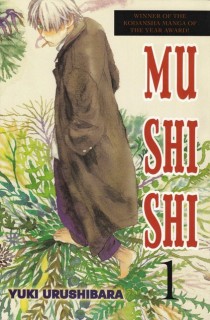
Not much news to report in regards to Experiments in Manga this past week, though I would like to take to the opportunity to thank everyone for the kind words, encouragement, and support as I work to find some life-work-blog-etc balance. (In case you missed it, I went into more detail in last week’s My Week in Manga.) Currently I’m working on an Adaptation Adventures feature for Mushishi for my horror manga review project, but it’s been delayed (yet again) as I needed to get my DVD player working in order to watch the live-action film. Hopefully, I’ll be able to finish the post up soon!

Elsewhere online, Libre responded responded to Digital Manga’s rather unprofessional announcement that the publishers were parting ways. (Apparently there was a breach of contract; from how Libre’s comments are phrased, I’m assuming it was on Digital Manga’s part.) Digital Manga will stop selling manga that were licensed from Libre on June 30th and posted a list of the discontinued titles on Twitter. Justin at The OASG interviewed Ajani Oloye, one of Kodansha Comics’ manga editors. In licensing news, Bruno Gmünder’s catalog for Fall 2016 lists two new collections from Mentaiko Itto in its Gay Manga line, a poster book and the manga The Boy Who Cried Wolf. (I highly enjoyed Itto’s previous English-language manga collection, Priapus, so this is good news for me.)

Quick Takes

Forget Me Not, Volume 2Forget Me Not, Volume 2 written by Mag Hsu and illustrated by Nao Emoto. While the catalyst behind Forget Me Not is the mystery woman who helped to save Serizawa’s life after he was in a motorcycle accident, so far the series spends most of its time exploring Serizawa’s past and lost loves. One of the most touching incidents in the second volume (at least for me) actually had nothing to do with Serizawa’s erstwhile romances—a classmate confesses to Serizawa that he’s gay and that he has feelings for him. Serizawa handles the situation remarkably well, especially when considering the social disasters so many of his other relationships end up becoming. But even those failed relationships are important for Serizawa’s growth as a person and show that good things actually can come about as the result of struggling with rejection. Serizawa is a much more interesting character than I initially gave him credit for. He’s a believably and realistically flawed person who makes stupid mistakes but isn’t generally acting out of malice. Serizawa does occasionally act like a complete jerk, but for the most part it’s unintentional. I like that the series shows how he matures, and in some cases doesn’t, over time.

Your Lie in April, Volume 3Your Lie in April, Volumes 3-7 by Naoshi Arakawa. It was the series’ emphasis on music that first brought Your Lie in April to my attention, and it’s still one of the thing that I like best about the manga. As a musician, I appreciate the characters’ efforts to express themselves through their art, though as a composer I can’t completely agree with the amount of disregard some of the characters show towards the original score. The more I read of Your Lie in April, the more I realize that while music is an important aspect of the series, at it’s very heart the manga is about messy and complicated love of varying types. Kosei’s relationship with his  mother is deeply intertwined with his relationship to music and everything else in his life stems from that. Everyone in the series seems focused on Kosei. It can all be very melodramatic and at times Your Lie in April narrowly avoids becoming overly sentimental. But then I, too, believe in the power of music. Kosei’s return to playing the piano is traumatic, but ultimately healing for him. Realistically, however, it music shouldn’t be a complete replacement for the emotional and psychological support that he needs to recover from years of abuse and the death of his mother.

Yowamushi Pedal, Omnibus 2Yowamushi Pedal, Omnibus 2 (equivalent to Volumes 3-4) by Wataru Watanabe. I’ve seen a fair amount of the Yowamushi Pedal anime so I know exactly what’s going to happen this early on in the original manga, but I still find the series incredibly enjoyable to read. I think that part of that has to do with the artwork; I really like Watanabe’s style in Yowamushi Pedal. The art is not at all what I would call pretty—in fact many people might even consider its roughness and angularity ugly—but it is very dynamic, energetic, and thrilling. Story-wise, the second omnibus is almost entirely devoted to the inaugural race of the first year members of the road racing club. Most of the team are experienced racers but Onoda, the lead of Yowamushi Pedal, most definitely is not. Since Onoda himself is learning the rules and techniques used in road cycling for the first time, Watanabe is able to take advantage of the opportunity to introduce the same concepts to readers who likewise might not be familiar with them. From time to time it does interrupt the flow of the narrative, but Yowamushi Pedal generally moves along at a good pace. I find the series very entertaining and I’m really looking forward to reading more.

Filed Under: FEATURES, My Week in Manga Tagged With: Forget Me Not, Mag Hsu, manga, Nao Emoto, Naoshi Arakawa, Wataru Watanabe, Your Lie in April, Yowamushi Pedal

Manga the Week of 6/29

June 23, 2016 by Sean Gaffney, Michelle Smith, Ash Brown, MJ and Anna N Leave a Comment

SEAN: The word for next week is “spinoff”, boys and girls. Can you say spinoff? I knew you could!

OK, let’s try to plow through. Dark Horse first, as always. Astro Boy Omnibus 4. Everyone loves Astro Boy.

Kodansha gives us the 2nd and final volume of Fairy Tail’s Gray-related spinoff (can you say that, boys and girls?) Ice Trail.

And a 4th Inuyashiki, with far less skintight leather than Gantz had but just as disturbing.

Livingstone has a 3rd volume. I’ve heard it called “quirky”.

And there’s a 3rd Maga-Tsuki as well, for more romantic comedy shenanigans.

jellyfish2

Lastly, and most importantly to the Manga Bookshelf team, Kodansha has a 2nd omnibus of Princess Jellyfish. Remember when getting this license was an impossible dream?

MICHELLE: Yay! I’m looking forward to this a lot.

ASH: Dream the impossible dream! Reach the unreachable star! (And then go buy Princess Jellyfish because it is wonderful.)

MJ: Good news!

ANNA: Still thrilled this is coming out here.
SEAN: One Peace picked up, almost without anyone realizing it, the license to Maria Holic and are re-releasing it in omnibuses. Fans of fake yuri and traps are sure to want to get it.

MICHELLE: If only it had been Maria-sama ga Miteru instead!

SEAN: Seven Seas gives us an 11th volume of A Certain Scientific Railgun, the spinoff (can you say that, boys and girls?) to Index. It’s just finished a serious arc, so I suspect that things will be a lot wackier this time around.

And there’s also a 4th volume of Magika Swordsman and Summoner, which some people clearly enjoy.

Udon has a 3rd volume of Persona 4, the manga spinoff (can you say that, boys and girls?) of the game.

ASH: I liked the first volume, but I’ve already fallen behind. I should correct that.

SEAN: Vertical has a spinoff (can you say that, boys and girls?) novel that I know some people have been waiting for. Attack on Titan: Lost Girls gives focus to two of the most seemingly stoic of the cast, Mikasa and Annie.

They also have a 5th volume of the “totally created by Americans, honest” series Ninja Slayer.

Yen Press has a number of digital releases. New volumes for Aoharu x Machinegun, Black Detective, and Corpse Princess. The final volume of Grim Reaper and Four Girlfriends and Little Witches’ Collier. And a 4th volume of Saki, for the Manga Bookshelf folks.

MICHELLE: Hm. The fanservice was starting to get to me, but I do still have some interest in Saki.

ASH: Saki! Speaking of impossible dreams, I’d still love to see a print release.

MJ: Same here!

SEAN: Yen On releases the 7th volume of A Certain Magical Index. Did you want more Roman Catholics in your Index? More nuns? What about a murderous military nun corps? Have I got good news for you!

Yen proper starts off with the 2nd volume of Akame Ga KILL! ZERO, another spinoff (can you say that, boys and girls?).

And Kaori Yuki shows us beautiful, beautiful death once more with a 4th Alice in Murderland.

Ani-Imo’s bizarre shoujo incestuous mind game antics come to an end with its 7th volume.

Barakamon has an 11th volume. Is Handa really going to have an arranged marriage? Signs point to no.

Black Bullet has a 4th manga volume of child killers and glorious depression.

It seemed like Bloody Cross announced it was ending several years ago, but it continues onward with its 11th volume.

We have a 4th Devil Is A Part Timer! High School!!, with 3 exclamation marks worth of fun. It’s a spinoff (can you say that, boys and girls?).

furuba1-1

The big release this week is a re-release, as Yen is putting out Fruits Basket in omnibus editions. The first two, covering Vol. 1-4, are due out next week. I absolutely cannot wait to read this all over again. Who’s your favorite Souma? I’m partial to Shigure and his black, black heart.

MICHELLE: I am excite, despite already owning most of the series in Japanese and all of it from TOKYOPOP. I love the entire “Mabudachi Trio” very much, but have the warmest, proudest love for Yuki.

ASH: Glad to see this coming back, and in such a nice edition, too. I’m also rather partial to Shigure myself, but there are so many fascinating characters in the series.

MJ: These are absolutely beautiful, and I’m so excited to see them! I checked back into an old 3 Things Thursday to see what I said back then, and apparently I chose Momiji! I’ll stand by that! Looking forward to an epic re-read.

ANNA: Yay! I’m pretty resistant to buying series all over again, but I am so glad that Fruits Basket is back, this series deserves a wide audience, and I’m sure there are people who missed it the first time around.

SEAN: There’s a 3rd Handa-kun, which is the spinoff (can you say that, boys and girls?) to Barakamon.

He’s My Only Vampire is starting to lose me a bit, but I know it ends in a few volumes or so. Here’s Vol. 7.

MICHELLE: Yeah. I’m going to soldier on to the end, though. Hopefully it’ll make more sense than Kiss of the Rose Princess.

SEAN: And a 3rd volume of Irregular at Magic High School spinoff (can you say that, boys and girls?) The Honor Student at Magic High School.

Third volumes galore! Here’s a 3rd for Of the Red, the Light and the Ayakashi.

MICHELLE: I’m looking forward to this one!

SEAN: If you enjoyed the Overlord light novel, why not try the manga (does this count as a spinoff)? The first volume is out next week.

And Rose Guns Days ends its Season One with its 4th volume, although future seasons are coming.

Servant x Service has a 2nd omnibus which wraps up that series. It proved to be a lot more character-focused than I expected for a fluffy workplace 4-koma.

The other debut this week is Space Dandy, which was originally an anime but now has this manga spinoff (can you say that, boys and girls?). If you enjoyed Cowboy Bebop and Samurai Champloo, this is in the same vein.

Lastly, a 2nd volume of Sword Art Online, Mother’s Rosary, which adapts the 7th light novel.

And with that, my running gag has come to an end. What are you getting this week?

Filed Under: FEATURES, manga the week of

My Week in Manga: June 13-June 19, 2016

June 20, 2016 by Ash Brown

My News and Reviews

Okay. So I don’t usually get very personal here at Experiments in Manga, but I feel it’s needed this time. Last week I had every intention of posting an in-depth review of Dawn, the first novel in Yoshino Tanaka’s renowned space opera Legend of the Galactic Heroes. But Thursday came along and I’d only managed to write a quarter of it and I finally had to admit to myself that it just wasn’t going to happen. And so while driving to and from taiko rehearsal that evening I took the opportunity to reevaluate some things and to try to find a sustainable solution for Experiments in Manga.

The last year and a half or so has been rough on me. Without going into unnecessary details, I have been under tremendous amount of stress at work, at home, and just in general with more and more responsibilities to take on and less and less time for myself. While my anxiety issues are fortunately mostly in check at the moment, being stressed out feeds directly into my depression which in turn feeds into being stressed out. It’s a miserable cycle that’s difficult to break. And it makes doing all of the things that I want to do nigh impossible, even if I actually had the time to do all of those things (which I don’t).

I can’t do much about the situation at work right now, and my options outside of work are limited, too, but one thing that I have complete control over is my blogging. While there are some very strong arguments to be made for me to completely give up writing at Experiments in Manga, that’s not really something that I’m prepared to do yet. However, I will be drastically changing my approach and will be writing less, at least for the time being. I’m hoping this won’t be permanent, but I will have to see how things go as I try to find some balance in my life.

And so: For now the My Week in Manga feature will continue to be posted as normal, as will the monthly manga giveaways. The Bookshelf Overload feature will still make an appearance every month, too. However, in-depth reviews and other long-form features will by necessity be posted more sporadically and won’t necessarily adhere to a specific schedule. To make up for this somewhat, the Quick Takes section of My Week in Manga will be expanded slightly to include my thoughts on novels and nonfiction works among other things. Even though overall I will be writing less, this means that I’ll be able to read more, and hopefully relax more, which will be very good for me.

Anyway! In happier news, according to the series’ translator, the second volume of Quantum Devil Saga: Avatar Tuner is scheduled for release later this year. (I reviewed the first volume when it was released and liked it so well that it made my list of notable works of 2014.) Kodansha Comics’ most recent creator spotlight features an interview with Akiko Higashimura. The latest manga Kickstarter campaign to launch is a project by Fakku and Toshio Maeda to release a remastered edition of Urotsukidoji: Legend of the Overfiend. Some pretty big news for fans of BL in translation, Japanese publisher Libre has cut its ties with Digital Manga. Sadly, though perhaps not especially surprising at this point, Digital Manga’s press release comes across as very passive aggressive and unprofessional.

Quick Takes

Persona Q: Shadow of the Labyrinth, Side: P3, Volume 2Persona Q: Shadow of the Labyrinth, Side: P3, Volume 2 by So Tobita. I haven’t actually played the Persona Q video game, but from what I hear from others, the manga adaptation remains true to its tone and main storyline. My knowledge of the original Persona Q, as well as my knowledge of Persona 3 and Persona 4 which directly tie into Persona Q, is admittedly cursory. Those who do not have at least some familiarity with the Persona franchise will be at a significant disadvantage when reading Persona Q, especially when it comes to understanding the characters and their personalities. Fortunately, I know enough to be able to appreciate the Persona Q for what it is—a fun and slightly silly adventure with puzzles, labyrinths, and cute artwork (much like the game itself, which I suspect I would greatly enjoy playing). The manga is very clearly an adaptation of an role-playing game as some of the side quests, boss fights, and other elements of gameplay remain quite evident, but the ways in which they are incorporated into the story are generally unobtrusive and make sense within the context of all that is going on.

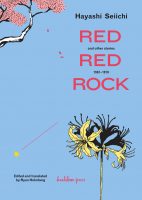
Red Red Rock and Other Stories, 1967-1970Red Red Rock and Other Stories, 1967-1970 by Seiichi Hayashi. As far as creators of alternative manga go, Hayashi is fairly well represented in English with several volumes of manga available in translation. The most recent is Red Red Rock and Other Stories, a collection of thirteen of Hayashi’s short avant-garde manga as well as an accompanying essay by the volume’s editor and manga historian Ryan Holmberg. Most of the stories come from the influential alternative manga magazine Garo, but two of the selections were actually created for the magazine A Woman’s Self. Out of all of Hayashi’s manga currently available in English, Red Red Rock and Other Stories is probably one of the least immediately accessible. While Hayashi’s imagery can be stunning and appreciated by all, some of the short manga in Red Red Rock and Other Stories will likely be nearly impenetrable for a casual reader. But that’s where Holmberg’s informative essay comes in handy, explaining some of the references and historical context needed to fully understand the collection. I enjoyed the manga in Red Red Rock and Other Stories, but I also appreciated being able to learn more about them.

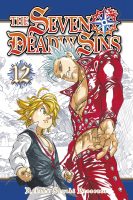
The Seven Deadly Sins, Volume 12The Seven Deadly Sins, Volumes 12-14 by Nakaba Suzuki. It’s been a while since I’ve read any of The Seven Deadly Sins, but I picked up the series again just in time for a major showdown. Granted, just about any of the fights that occur in The Seven Deadly Sins become epic battles simply because all of the combatants involved are so incredibly powerful. The action sequences are impressive, although sometimes it can be difficult to tell exactly what is going on. Some of the characters move so quickly only the results of their martial techniques are apparent. Occasionally Suzuki absolutely nails these sequences and they can be thrillingly effective, but just as often the action ends up being confusing. Suzuki also seems reluctant to actually kill anyone off which means the stakes don’t seem as high they should be. Well, except for the potential end of the world. At first it seems as though an apocalypse has been averted in these few volumes, but soon it become apparent it that it may have only been delayed. The Seven Deadly Sins still have plenty of fighting left to do, not only for the future of their world but also to overcome their past mistakes.

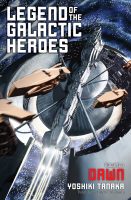
Legend of the Galactic Heroes, Volume 1: DawnLegend of the Galactic Heroes, Volume 1: Dawn by Yoshiki Tanaka. Thanks to Viz Media’s speculative fiction imprint Haikasoru, Tanaka’s award-winning Legend of the Galactic Heroes novels are finally getting an official English-language release. Although Dawn is largely a standalone novel, it feels even more like an extended prologue to the ten-volume work as a whole, providing an introduction to the setting and the war that is the focus of the series. Much of Dawn is devoted to two opposing factions, the Galactic Empire and the Free Planets Alliance, but there’s also the Phezzan Dominion, a third faction which ultimately isn’t as neutral as it first appears. While the cast of characters in Legend of the Galactic Heroes is fairly large, at this point the most is known about two rival strategists—the reluctant hero Yang Wen-li and the ambitious genius Reinhard von Lohengramm—and their closest cohorts. With strategists as some of the main characters, a fair amount of legitimate battle strategy is included in Dawn which I particularly liked. There’s also a significant amount of politics involved in the story and none of the factions come out of the first volume looking very good with their warmongering ways.

Filed Under: FEATURES, My Week in Manga Tagged With: Legend of the Galactic Heroes, manga, Nakaba Suzuki, Novels, Persona, Seiichi Hayashi, Seven Deadly Sins, Shin Megami Tensei, So Tobita, Yoshiki Tanaka

Manga the Week of 6/22

June 16, 2016 by Sean Gaffney, Michelle Smith, Ash Brown, MJ and Anna N Leave a Comment

SEAN: Third weeks of the month: almost like second weeks, but they seem different, mostly as Viz tends to put out its blogger-friendly titles here. What’s happening next week?

complexage1

Kodansha debuts a new seinen series that ran in Morning magazine, which means I am already well-disposed to it. Complex Age features a cosplay fanatic who is being forced to acknowledge reality, which is that she’s now an adult with adult concerns, and can’t pull off the 14-year-old magical girl look anymore. This should be good.

MICHELLE: Definitely looking forward to this one!

ASH: I actually just reviewed this! It is indeed good.

MJ: That actually does sound good.

ANNA: I’m intrigued.

SEAN: And Fairy Tail has reached 54 volumes, meaning I think it has achieved its goal of being the Kodansha version of One Piece quite well.

And speaking of juggernaut franchises trying to catch up with Japan, here’s the 15th volume of Noragami. (I think it catches up by next month.)

ASH: I’ve got some catching up to do, but I have been enjoying Noragami.

SEAN: Seven Seas gives us two more volumes of fighting and fanservice manga Freezing, with Vol. 9 and 10 in one omnibus.

And there’s also a second volume of Survival Game virtual reality manga Not Lives.

Vertical gives us a 2nd omnibus of quirky romantic comedy Mysterious Girlfriend X.

MICHELLE: It’s a salivaganza!

SEAN: Viz has a second omnibus of Goodnight Punpun, which reminds me to start feel guilty about being not even halfway through the first, even though its quality is obvious.

psycome1

ASH: The first omnibus was extraordinary, heartbreaking and surreal.

ANNA: I feel guilty I haven’t read the first volume yet too.
SEAN: Insurance madness continues with the 7th Master Keaton collection.

MICHELLE: I am woefully behind on this one.

ANNA: Me too!

SEAN: And there’s a 7th volume of amazingly popular Tokyo Ghoul.

Lastly, Yen On debuts a new series, Psycome. This is short for ‘Psycho Love Comedy’, and it comes from Enterbrain. Our hero is sent to prison for killing a dozen people (he’s actually innocent), and ends up in a prison filled with girls, all of whom are killers and all of whom proceed to obsess on him. This could be funny or dire, honestly. To be fair, it is a Yen On title that doesn’t involve fantasy worlds or gaming, though the prison itself seems like a fantasy. To be fairer, it’s only 6 volumes long, making it the rare Yen On license that isn’t ongoing in Japan.

Buy these manga or I’LL KILL YOU… nah, yandere doesn’t work when it’s me. What are you getting?

Filed Under: FEATURES, manga the week of

My Week in Manga: June 6-June 12, 2016

June 13, 2016 by Ash Brown

My News and Reviews

Last week at Experiments in Manga I posted May’s Bookshelf Overload. Largely in part due to my trip to TCAF and the generosity of Kodansha Comics, I ended up with a lot of comics and manga to add to my shelves in May. I was actually out of the state traveling for work for most of the week, but while I was gone I did manage to post an in-depth review of Yui Sakuma’s Complex Age, Volume 1 which is scheduled to be released later this month. I was completely taken by surprise by how strongly the manga resonated with me.

As for some of the interesting reading that I came across online last week: Kodansha Comics’ most recent creator spotlight, which includes links to interviews, videos, and more, focuses on Yoshitoki Oima. ICv2 interviewed Stu Levy about Tokyopop’s return to print publishing. At The OASG, Jenny McKeon shared part of her story about becoming a manga translator in comic form. Also, the most recent installment of The Sparkling World of 1970s Shojo Manga highlights Keiko Takemiya and her work.

Quick Takes

Kiss Him, Not Me!, Volume 3Kiss Him, Not Me!, Volumes 3-4 by Junko. I can’t help it. I do have some reservations about the occasional emphasis placed on Serinuma’s weight (although it does reflect more poorly on the other characters than it does on Serinuma herself), but Kiss Him, Not Me! honestly makes me grin. The story is ridiculous and over-the-top, as are Junko’s illustrations. The characters’ facial expressions and extreme reactions can be pretty spectacular. But there’s also some legitimate character development in the series to go along with the comedy. At times it can even be quite touching. One of the things that makes Kiss Him, Not Me! particularly refreshing is that although Serinuma is basically dealing with a reverse-harem situation, she doesn’t really have any sort of romantic interest in any of the other characters. Like the title suggests, she’d much rather her fujoshi fantasies be indulged. But at this point she does care a great deal about them all as friends, and she makes a great friend even if her suitors would like something more. The four boys and now also the one girl (who is a fantastic addition to the series) are slowly changing for the better and are becoming better people simply by knowing her.

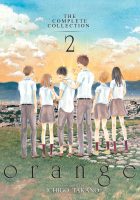
Orange, Omnibus 2Orange, Omnibus 2 by Ichigo Takano. The first manga to really floor me this year was the debut of Orange. I was a little worried how the second half of the series would turn out, but Takano handles the story very well, finding a good balance between hopefulness and bittersweetness. Orange is a series that deals very frankly, realistically, and powerfully with heavy subject matter like depression and suicide. Takano captures extraordinarily well what it can be like to have depression and how extremely difficult it can be not only for that person but for their loved ones as well. Orange recognizes that issues surrounding mental health are complicated and simple fixes don’t really exist. The manga is not always an easy read—honestly, it can be devastating and I’ll admit to reading through tears on multiple occasions—but it most definitely is a worthwhile series. The second omnibus is filled out by one of Takano’s earlier manga Haruiro Astronaut, a romantic comedy which plays around with shoujo tropes. After the hard-hitting emotional drama of Orange, Haruiro Astronaut comes across as a little frivolous, but it’s enjoyable and in the end I rather liked it’s goofiness.

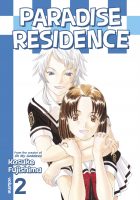
Paradise Residence, Volume 2Paradise Residence, Volume 2 by Kosuke Fujishima. I’m a little surprised by how much I’m enjoying Paradise Residence. Perhaps it’s because the series reminds me of some of the better parts of living in a dormitory and leaves me feeling a bit nostalgic for my college days. (Paradise Residence is about an all-girls high school, though, so the experience isn’t quite the same.) I was particularly fond of the chapter in the second volume in which everyone shows off their culinary skills and creations using low-budget ingredients and super-simple cooking techniques. (Actual recipes are included in the volume as well, which is a nice touch.) Paradise Residence is a fairly low-key comedy that relies more on the charming nature of its cast rather than on over-the-top humor, although sometimes the manga can be pretty ridiculous. The characters are generally likeable and their interactions are entertaining, providing much of the series’ appeal. However, their characterization does come across as somewhat shallow; some of the girls seem to be little more than a “type” or are stuck with a single gag instead being allowed to be fully-realized characters.

Filed Under: FEATURES, My Week in Manga Tagged With: Ichigo Takano, Junko, Kiss Him Not Me, Kosuke Fujishima, manga, Orange, Paradise Residence

Manga the Week of 6/15

June 9, 2016 by Sean Gaffney, Michelle Smith, Ash Brown, MJ and Anna N Leave a Comment

SEAN: Ah, the 2nd week of the month, the most common week for the Manga Bookshelf team to look over the releases and think “Wow, am I picking Magi as Pick of the Week again?”

MICHELLE: Heh.

SEAN: Dark Horse has a 2nd volume of Fate/Zero, sure to give us many more heartwarming moments so that it can crush them to bits in later volumes.

Kodansha Comics is likely counting down the days till Air Gear finishes, and they’re close with Vol. 35, but not yet.

And there’s a 5th volume of L♥DK, and I’m sure all is sweetness and light.

ASH: I know people who like the series, but personally I find it infuriating.

MICHELLE: I never went back after volume one.

SEAN: Paradise Residence has a 2nd volume, which is NOT an omnibus, so don’t be surprised at its slim size. There’s also a souped-up car, because Fujishima.

ASH: I’m enjoying Paradise Residence much more than I thought I would!

SEAN: And Kodansha also has a 2nd volume of their Persona Q spinoff, this one on the P4 side.

masamune

Seven Seas has a new debut, which seems to be a romantic comedy of sorts? Masamune-kun’s Revenge runs in Comic Ryu, and the premise sounds like it could be a disaster (guy becomes handsome to get revenge on ice queen who rejected him). I guess we will see how much it subverts its premise.

ASH: Hmmm.

SEAN: There’s also a 6th volume of Servamp, which has vamp… yeah, OK, the running gag is old. I will stop.

SubLime gives us a 2nd 2-in-1 omnibus of Don’t Be Cruel. But are their hearts true?

ASH: I haven’t heard much about Don’t Be Cruel, but enough to be curious about the manga.

MJ: I’m a bit curious as well.

MICHELLE: The blackmail plot doesn’t thrill me, but I can’t help but be amused by the fact that the volume numbers appear on tighty whities.

SEAN: And His Favorite has reached Volume 9, and the cover art is still amazing.

ASH: Uh oh! I’m apparently a couple volumes behind.

SEAN: Vertical gives us a 5th omnibus of Tokyo ESP.

MICHELLE: Yay! I believe this is launching a new arc.

SEAN: And yay, it’s a new volume of Magi! 18 volumes from Viz, and we’re still not tired of it.

MICHELLE: Nope!

ANNA: YAY MORE MAGI!!!!!!

SEAN: Viz also has a 2nd volume of Monster Hunter: Flash Hunter. Would a Flash hunter be against every one of us? (Wow, that was obscure.)

MICHELLE: I admit I didn’t get it, but my brain did think the sequel could perhaps be ‘QuickTime Hunter.’

SEAN: Lastly, the re-release of the Evangelion manga comes to an end with the 5th omnibus, containing the last two volumes. I actually quite liked this ending. It’s worth picking up.

Does something this week cry out to you?

Filed Under: FEATURES, manga the week of

My Week in Manga: May 30-June 3, 2016

June 6, 2016 by Ash Brown

My News and Reviews

Since it was the end of one month and the beginning of another, there were a couple of different things posted at Experiments in Manga in addition to the usual My Week in Manga feature. First of all, the Paradise Residence Giveaway Winner was announced along with a list of some manga licensed in English that feature boarding schools, dormitories, or other communal living arrangements. As for the first in-depth manga review of the month, I was absolutely thrilled to write about Shigeru Mizuki’s The Birth of Kitaro, the first volume of Drawn & Quarterly’s new Kitaro series designed to appeal to readers of all ages. I am so incredibly happy that more Kitaro manga is being released in English. I loved Drawn & Quarterly’s original Kitaro collection from back in 2013 (it was one of my most notable releases of the year), but if The Birth of Kitaro is any indication, I’m going to love this series even more.

I’m still keeping plenty busy at home and at work, but there were I couple things in particular that caught my eye online last week. For one, the fourth part of “The Sparkling World of 1970s Shojo Manga,” focusing on Moto Hagio, was posted at The Lobster Dance. Also, Seven Seas made a slew of new licensing announcements over the course of the week. The one that I’m most excited for is The Girl From the Other Side: Siúil, a Rún by Nagabe (coincidentally, Jocelyne Allen recently reviewed the first volume at Brain vs Book and it sounds fantastic), but Seven Seas has also picked up four more yuri manga—Milk Morinaga’s Secret of the Princess and Hana & Hina After School, Hiromi Takashima’s Kase-san and…, and Hachi Ito’s Kindred Spirits on the Roof—as well as Seiju Natsumegu’s Ghost Diary, Tsukasa Saimura’s Tokyo Undead, Kawakami Masaki and Hato’s There’s A Demon Lord on the Floor, and a collaboration with Mamenosuke Fujimaru to create an English-first manga, Captive Hearts of Oz.

Quick Takes

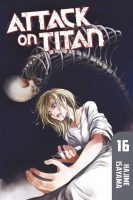
Attack on Titan, Volume 16Attack on Titan, Volumes 16-18 by Hajime Isayama. It’s been a little while since I’ve read Attack on Titan proper as opposed to one of the spinoff manga or novels. Granted, part of that is because the North American release of the manga has more or less caught up with the Japanese release; with number twists and turns in the series’ plot, I find that Attack on Titan generally works better for me if I can read several volumes at once. These three volumes delve into the backstories of several of the characters including Levi and, probably more importantly, Historia. There are also several important reveals regarding the nature of the world and of the Titans. Overall, an exciting few volumes with some legitimately interesting developments. Although the series is still ongoing, it feels as though Isayama is beginning to set up the series’ finale. I’m hoping for a satisfying conclusion, and I’m starting to believe that Isayama might actually be able to pull one off. With the sixteenth volume, Kodansha Comics has also started releasing special editions which are packaged with other merchandise. Some of the extras, like playing cards, I’m not personally interested in but others, like the No Regrets anime, I’m definitely glad to have.

Fairy Tail: Blue Mistral, Volume 2Fairy Tail: Blue Mistral, Volume 2 by Rui Watanabe. Recently, I’ve been sampling quite a few of Fairy Tail‘s spinoff manga being released in English. Some I’ve actually liked while others I’ve merely tolerated, so it was anyone’s guess as to whether or not I’d appreciate the franchise’s shoujo offering, Blue Mistral. I’m happy to say that, for the most part, it’s not a bad series at all. The plot of Blue Mistral, Volume 2 may seem to oversimplify what is really a rather complicated situation and some of story’s resolutions feel like they come a little too easily, but considering that the series original intended audience was preteens and early teens I don’t necessarily consider that to be a true fault. Actually, it’s kind of refreshing to read such a sweet, cheery, and bright version of the world and characters of Fairy Tail. Blue Mistral follows the adventures of Wendy Marvell, an impressively skilled twelve-year-old sky-dragon slayer magic user. She’s a likeable and earnest protagonist who believes in friendship and in helping others whenever she is able. Perhaps unsurprisingly, Blue Mistral‘s shoujo version of Wendy may be even more adorable than Fairy Tail‘s shounen version, in part because Watanabe’s artwork tends to be fairly cute.

Wild ButterflyWild Butterfly by Hiroki Kusumoto. It wasn’t until I was about halfway through reading Wild Butterfly that I realized that I had previously read another of Kusumoto’s manga, the first volume of Vampire’s Portrait. I didn’t especially like Vampire’s Portrait (I never got around to reading the second and final volume), but it did have one thing in common with Wild Butterfly—when called upon, Kusumoto can draw some fantastically frightening scenes with shocking reveals. Wild Butterfly is a collection of five unrelated short manga. Despite the fact that, because the volume was released under Digital Manga’s June imprint, “yaoi manga”  is emblazoned on the front cover, only one of the five stories could even arguably be considered boys’ love. Most of the stories have a bit of horror or some supernatural elements, although the titular “Wild Butterfly” is more of a period piece about the tragedy of war. There aren’t really any overarching themes in Wild Butterfly, but the stories do tend to be fairly melancholic and somber. The collection isn’t outstanding or particularly refined, but there are some interesting aspects to the stories. I did at least enjoy Wild Butterfly much more than I did the beginning of Vampire’s Portrait.

Filed Under: FEATURES, My Week in Manga Tagged With: attack on titan, Fairy Tail, Hajime Isayama, Hiroki Kusumoto, manga, Rui Watanabe

Manga the Week of 6/8

June 2, 2016 by Sean Gaffney, Ash Brown, Michelle Smith, Anna N and MJ 1 Comment

SEAN: June is busting out all over, especially in terms of sheer manga volume – this month will be punishing, starting with 25 books out next week.

kurosagiomnibus4

Dark Horse gives us the 4th – and presumably last for now – omnibus of The Kurosagi Corpse Delivery Service. Go get it if you haven’t already.

ASH: I’m really glad this series is getting a second chance. Apparently the omnibuses are doing better than the single volumes did.

SEAN: And the Evangelion spinoff Shinji Ikari Raising Project may be over in Japan, but we still have a couple volumes to go. Here’s Vol. 16.

And a 9th New Lone Wolf and Cub.

This isn’t on Amazon yet, but Diamond has a couple of DMP books out, so let’s list them as well. (Yes, DMP still does print books. On occasion.) Does the Flower Blossom? gets a 2nd volume.

MICHELLE: I’m still holding out hope for volume eleven of Itazura na Kiss!

SEAN: And we also get the 9th volume of The Tyrant Falls in Love.

ASH: The eighth volume made for a pretty solid conclusion to the series, so I’m curious to see where this one goes.

SEAN: Kodansha has a 5th volume of shoujo reverse harem series Kiss Him, Not Me!.

ASH: I find that I am rather enjoying this series.

SEAN: And Say “I Love You” has gotten to Volume 14, and I still insist on using those quotes, because I’m stubborn like that.

MICHELLE: Yay!

ANNA: So far behind on this series, maybe I can do a reading binge over the summer.

SEAN: Seven Seas has the third Mayo Chiki omnibus. Does this finish that up? (Or off?)

And Mushoku Tensei: Jobless Reincarnation’s third volume continues to prove that sometimes to get sales you have to license the title people already call it.

Seven Seas’ debut is The Other Side of Secret, which is from Media Factory’s Comic Alive, and I suspect will involve harem romance and possibly large breasts.

And now we have Viz, starting with Assassination Classroom getting to double digits.

Viz debuts a new Jump series, Black Clover. The premise looks to me like One Piece only with magic instead of pirates, but we’ll see how fun it is.

And there’s a 3rd Bloody Mary volume. Vampires!

ANNA: Yay! This series is goofy, but I enjoy all the angst.

SEAN: Dragon Ball’s 3-in-1 has hit lucky Vol. 13.

married1

Yay, another Josei Beat series debuts! Everyone’s Getting Married comes from the pages of Petit Comic, and I’ve generally been very fond of these types of series. Romance between non-high schoolers!

MICHELLE: I am looking forward to this debut!

ASH: As am I!

ANNA: I’m EXTRA looking forward to it!

MJ: I’m… skeptical, but hopeful? Viz’s josei series tend to be full of landmines for me.

SEAN: Food Wars! has a dozen volumes now, and it still makes me hungry.

Kamisama Kiss is up to Vol. 21, and the romance seems to finally be heating up, maybe? As much as Hana to Yume romance ever does?

Komomo Confiserie’s 4th volume continues to try to charm me despite its lack of loud, dense heroines.

MICHELLE: I continue to follow all of these.

ANNA: They are all good series, but Kamisama Kiss is a standout.

SEAN: One Piece has its 16th 3-in-1, which I think begins Thriller Bark?

QQ Sweeper doesn’t come out often enough for my tastes, but I am very happy Volume 3 is here.

MICHELLE: Me, too, though this is the end. Unless VIZ has also licensed the sequel!

ANNA: Aieee, I didn’t realize it was so short. I will cherish the three volumes even more.

MJ: This, this, this!! But is it really the end? Nooooo.

SEAN: And School Judgment ends with its third volume.

MJ: I with I’d liked this more.

MICHELLE: Me, too.

SEAN: Seraph of the End reaches Volume 9. Vampires!

So Cute It Hurts!! has Volume 7, and I will assume has kept its cuteness promises to the reader.

MICHELLE: I have never found it cute, to be honest.

ANNA: I have found it somewhat cute, but I enjoy eye patches and cross dressing in manga.

SEAN: It’s been nine months since a Tegami Bachi volume, so Vol. 19 is heavily anticipated by the fandom.

Lastly, we have a 34th volume of Toriko, which doesn’t make me as hungry as Food Wars!, but has more punching.

ASH: True!

SEAN: Are you picking up any of this deluge?

Filed Under: FEATURES, manga the week of

My Week in Manga: May 23-May 29, 2016

May 30, 2016 by Ash Brown

My News and Reviews

Last week, I was rather preoccupied with my move. The rest of the family and I are now successfully living in the new house, but we aren’t through with moving and there’s still plenty left to do. However, amidst all of the chaos, I was able to post this month’s manga giveaway and there’s still time to enter for a chance to win a copy of Paradise Residence, Volume 1 by Kosuke Fujishima. (The winner will be announced on Wednesday.) Although I wasn’t online much at all last week, there were still a few things that I heard about. Digital Manga announced a new imprint, PeCChi, which will focus on ecchi manga of various types, starting with The Secret Devil-chan by Emu as well as Me and the Impish Devil by Hideaki Yoshikawa. Digital Manga’s most recent Kickstarter project will be released under the Pecchi imprint if it succeeds—Kaworu Watashiya’s controversial Kodomo no Jikan which was previously licensed by Seven Seas but never published. And, completely unrelated, the third part of “The Sparkling World of Shojo Manga,” which focuses on Riyoko Ikeda and The Rose of Versailles Manga, was recently posted at The Lobster Dance.

Quick Takes

Fairy Girls, Volume 1Fairy Girls, Volume 1 by Boku. Hiro Mashima’s Fairy Tail has inspired a fair number of spinoff manga  and adaptations, several of which have been released in English relatively recently. Fairy Girls, featuring four of the most popular female characters from the Fairy Tail guild—Erza, Juvia, Lucy, and Wendy—is one such spinoff. The series takes place immediately following the Grand Magic Games arc in the original series, but for the most part doesn’t actually require the reader to know much at all about Fairy Tail to follow along. Actually, those who are familiar with Fairy Tail and love these characters might end up more frustrated than not with Boku’s version. Fairy Girls almost reads like an unfunny parody, but I don’t think that was at all the intention. I wanted to like the manga much more than I actually did seeing as the basic premise had such promise. Many of the women in Fairy Tail are great characters, but in Fairy Girls they come across as extremely shallow versions of their true selves. The fanservice in Fairy Girls is somewhat odd, too. Without going back to check the entire volume page-by-page, I believe Boku has managed to completely avoid any panty shots (almost conspicuously so) but the manga does frequently seem to be fairly boob-focused.

LDK, Volume 2LDK, Volume 2 by Ayu Watanabe. I know a few people who really enjoy LDK and so I want to like it, too, but at this point in the series I find it to be more infuriating than anything else. Maybe the manga gets better as it goes along, but I can’t say that I’m particularly interested in finding out since there is very little about the first two volumes that I actually enjoyed. Probably my biggest issue with LDK is that the series’ leading man, Shusei, shows absolutely no respect for Aoi, the series’ heroine, despite supposedly having feelings for her. The second volume of LDK introduces a romantic rival who, likewise, doesn’t actually seem to care about Aoi’s feelings. And I still remain unconvinced that any of the people involved legitimately love or even like any of the others. I believe LDK is intended to be a romantic comedy, but it just doesn’t seem to work as one for me, probably because the characters have failed to win me over. Even though some of the scenarios and situations in LDK are admittedly ridiculous and over-the-top (though not especially original), for whatever reason the humor just isn’t very funny as a whole and the balance between it and the manga’s more serious aspects is off.

Tramps Like Us, Volume 6Tramps Like Us, Volumes 6-9 by Yayoi Ogawa. As the series progresses, the basic premise of Tramps Like Us doesn’t really become any easier to explain without making it sound stranger than it is. Takeshi Gouda is a brilliant dancer trained in classical ballet who is trying to break into modern dance, but he is also Momo, the pet of Sumire Iwaya, a successful journalist who is under a lot of stress in both her love life and career. Their relationship is a very complicated and curious one but it’s very important to them both, which is why it’s concerning for them when it begins to change and they slowly begin to realize that their feelings for each other are less platonic and more romantic. Occasionally Tramps Like Us does feel a little directionless in these particular volumes, as though Ogawa is starting to lose narrative focus or trying to stretch the series longer than it necessarily needs to be. Some of the more stand-alone chapters, while still enjoyable, tend to come across as filler or bonus manga rather than being crucial to the story proper. Even so, I love the characters of Tramps Like Us (Sumire, Iwaya, and all the others) so am glad to be able to spend as much time as I can with them. I am enjoying Tramps Like Us immensely and look forward to reading the final third of the series.

Filed Under: FEATURES, My Week in Manga Tagged With: Ayu Watanabe, Boku, Fairy Tail, LDK, manga, Tramps Like Us, Yayoi Ogawa

Manga the Week of 6/1

May 26, 2016 by Sean Gaffney, Michelle Smith, Ash Brown, Anna N and MJ 1 Comment

SEAN: It’s a 5th week in may this June 1st, but unlike most 5th weeks there’s a lot coming out.

birthofkitaro

Drawn and Quarterly begins its series devoted to Shigeru Mizuki’s most iconic creation, Kitaro. They released a sampler a few years back, but this is a new multi-volume series that gives us the best Kitaro stories ever, as chosen by D&Q and approved by Mizuki himself before his death. I’ve reviewed it already, and it’s a must-read. Kid-friendly too, provided they’re OK with horror.

MICHELLE: Hmm…

ASH: I am thrilled we are getting more of Kitaro! The yokai activities in the back of the book are great, too.

SEAN: Two series from Kodansha wrap up. The first is the busily titled Persona Q: Shadow of the Labyrinth Side P3, with its 2nd and final volume.

The second is one I care about more, the 7th and final volume of A Silent Voice. Will our two leads reconcile with their friends? Will there finally be romance, or does that even matter? And how do you live on after seemingly destroying everything? Find out here.

ASH: This series has impressed me from the very beginning, I’m very curious to see how it ends.

SEAN: Yamada-kun and the Seven Witches now has more volumes than witches with Vol. 8.

Seven Seas has several new releases, starting with the third volume of A Certain Scientific Accelerator, which has another Misaka clone needing to be rescued. They tend to get kidnapped a lot.

Franken Fran has its 2nd omnibus, featuring more humor, more horror, and more skeevy covers putting off North American readers from enjoying the humor and horror. But honestly, doing new covers and upsetting the hardcore otaku would also put readers off. No win?

MICHELLE: You know you’ve been thinking too much about Neko Atsume when you accidentally read this title as ‘Sassy Fran.’

SEAN: Non Non Biyori’s 4th volume continues to show us how, in a small country village, nothing ever, ever happens.

And we get the 2nd and final volume of orange, whose adaptation starts this summer I greatly enjoyed the first volume, and can’t wait to see how it turns out. Will history be changed?

MICHELLE: I have been waiting for this for so long!

ASH: As have I! The first orange omnibus is one of my favorite releases of the year, I’m hoping the second won’t disappoint.

ANNA: I can see I should actually read the first volume of orange!

MJ: I have heard from everyone that I need to be reading this. So I need to be reading this.

MICHELLE: Forsooth!

SEAN: Vertical has the 2nd Seraph of the End novel.

And Yen Digital has several series getting new volumes. The final volume of Renaissance Eve, and new volumes for Aphorism, Crimson Prince, Grim Reaper and Four Girlfriends, Little Witch’s Collier, and Sekirei.

Lotsa interesting stuff here. What’s for you?

Filed Under: FEATURES, manga the week of

Manga Giveaway: Paradise Residence Giveaway

May 25, 2016 by Ash Brown

The end of May is almost here. I’m very aware of this fact since my family’s goal is to be completely moved in, or at least living in, the new house by the end of the month. So this last week of May is crunch time and I’m rather preoccupied, but there’s no way that I could forget this month’s manga giveaway! This time you’ll all have a chance to win Paradise Residence, Volume 1 by Kosuke Fujishima as published in English by Kodansha Comics, which means that the manga also includes Volume 0 as bonus material. And, as always, the giveaway is open worldwide!

Paradise Residence, Volume 1

As mentioned above, I’m currently in the process of moving. There’s been so much cleaning, painting, packing, unpacking, yard work, general maintenance, repairs and such going on that I’ve been keeping very busy. It’s also making me a little nostalgic for the days when I lived in dorms and cooperatives where most of that work wasn’t my responsibility (except for that one year I served as the maintenance manager for a 30-person household). Boarding schools and dormitories aren’t terribly uncommon when it comes to manga and in some series they even end up as one of the primary settings. With that many people living together in one place, there is plenty of opportunity for all sorts of antics and other drama to ensue. In addition to Paradise Residence, Yukie Nasu’s Here Is Greenwood immediately comes to mind as another example, as does the communal apartment in Akiko Higashimura’s Princess Jellyfish even though it’s not associated with a school.

So, you may be wondering, how can you win a copy of Paradise Residence, Volume 1?

1) In the comments below, tell me a little about one of your favorite manga that takes place in a dorm or other communal living arrangement. (If you don’t have a favorite, or haven’t read any, simply mention that.)
2) If you’re on Twitter, you can earn a bonus entry by tweeting, or retweeting, about the contest. Make sure to include a link to this post and @PhoenixTerran (that’s me).

Pretty easy, right? Participants have one week to submit comments and can earn up to two entries for this giveaway. Comments can also be sent to me at phoenixterran(at)gmail(dot)com if needed or if preferred. I will then post the entries in the comments here in your name. The winner of the giveaway will be randomly selected and announced on June 1, 2016. Good luck! (And now back to moving!)

VERY IMPORTANT: Include some way that I can contact you. This can be an e-mail address in the comment form, a link to your website, Twitter username, or whatever. If I can’t figure out how to get a hold of you and you win, I’ll just draw another name.

Contest winner announced–Manga Giveaway: Paradise Residence Giveaway Winner

Filed Under: FEATURES, Giveaways Tagged With: Kosuke Fujishima, manga, Paradise Residence

My Week in Manga: May 16-May 22, 2016

May 23, 2016 by Ash Brown

My News and Reviews

I ended up posting it a little later than I really intended, but my random musings on TCAF 2016 are now available to read. Although I didn’t make it to as many panels this year, I still had a great time and really enjoyed myself. I haven’t had a chance to listen to the audio yet, but I was also happy to discover that some of the panels that I missed The Sparkling World of Shojo Manga. In licensing news, Yen Press has picked up both the light novels and the manga for Death March to the Parallel World Rhapsody and Konosuba. Princess Jellyfish has been doing well enough for Kodansha Comics that the publisher is considering releasing more josei and seinen. In the meantime, expect to see more additions to the Attack on Titan franchise in English from Kodansha as well as Shuzo Oshimi’s manga Happiness. Also, Vertical Comics will be releasing Chihiro Ishizuka’s manga series Flying Witch.

Quick Takes

Attack on Titan: Before the Fall, Volume 7Attack on Titan: Before the Fall, Volume 7 written by Ryo Suzukaze and illustrated by Satoshi Shiki. I missed reading a few volumes of the Before the Fall manga, but I have read the original novel that it was based on so I didn’t expect that I would have much trouble picking the series up again. However, I think that the manga might actually be expanding on some of the material of the original, because I don’t recall things playing out exactly in the same way as they are in the manga. Or it could just be that it’s been so long since I’ve read the novel that I’ve managed to forget major plot points. Either way, I do like the way that Before the Fall expands the worldbuilding of Attack on Titan and how the prequel emphasizes some of the scientific and technological advances that are needed to make the main series work. Basically, the main character, in addition to having the requisite tragic backstory, is a test pilot (if that’s the right word) for what will eventually become the Vertical Maneuvering Equipment. A significant portion of the seventh volume of the Before the Fall manga is actually devoted to a field test which, like most encounters with the Titans, ist fraught with danger, disaster, and potential death.

Dicebox, Volume 1: WanderDicebox, Volume 1: Wander by Jenn Manley Lee. I discovered Lee’s ongoing comic Dicebox a couple of years ago while reading Comics: A Global History, 1968 to the Present where it was briefly mentioned. It piqued my interest so I thought I would give Wander, the first book out of four planned volumes (the second book is currently being serialized online), a try. I suspected that Dicebox would probably be a comic I would enjoy, but I didn’t expect that I would become so invested in the characters by the end of the first volume. Wander is almost completely driven by the characters and their relationships—the dramatic story boiling under the surface doesn’t become obvious until the final few chapters. Dicebox follows the lives of Molly and Griffin, two itinerant blue-collar workers moving from one job to the next, from one planet to the next. Molly tends to be fairly well liked, but Griffin, well she tends to piss people off, sometimes intentionally and sometimes not. Eventually it’s revealed that one of the reasons that Molly puts up with Griffin is that they are married. Dicebox is incredibly well-realized near-future science fiction. It’s also undeniably queer, and quite possibly has the widest representation of the variance of human gender and sexuality that I’ve ever come across in a single work of fiction, comic or otherwise. I’m loving Dicebox and definitely plan on reading more of the series.

Ninja Slayer Kills, Volume 2Ninja Slayer Kills!, Volume 2 by Koutarou Sekine. I can’t say that I was overly impressed by the first volume of Ninja Slayer Kills and I really wasn’t planning on following the series, but I ended up with a review copy of the second volume, so I figured I might as well give it a try. I am admittedly surprised, but I enjoyed the second volume much more than the first. Almost the entirety of the second volume is devoted to a flashback, which is easy to miss unless close attention is paid to the manga’s prefatory material. Some of my complaints about the manga remain the same—for a series that is so focused on fight scenes and mayhem, the action can be frustratingly difficult to follow—but other aspects have improved. For one, there is absolutely no mistaking at least one of the character designs. Agony visually looks something like a highly-sexualized version of Pinhead from Hellraiser, complete with an enormous crotch-bulge sprouting numerous needles. The design is more disturbing than sexy, but it is memorable. Ninja Slayer Kills is all about being as over-the-top as possible, often reading like an in-your-face parody. It’s deliberately absurd and ridiculously violent, intentionally making heavy use of cyberpunk ninja tropes taken to their extremes.

Filed Under: FEATURES, My Week in Manga Tagged With: attack on titan, comics, Dicebox, Jenn Manley Lee, Koutarou Sekine, manga, Ninja Slayer, Ryo Suzukaze, Satoshi Shiki

Random Musings: Toronto Comic Arts Festival 2016

May 20, 2016 by Ash Brown

TCAF 2016 Poster - Kazu Kibuishi

©Kazu Kibuishi

As of 2016, I have now attended the Toronto Comic Arts Festival (TCAF) for four years running. TCAF is still the only large comics event that I make a point to attended, although I guess technically I went to an anime/manga/cosplay convention earlier this year since I and the rest of the taiko group I’m a part of were featured guest performers. Anyway, I digress. TCAF is an amazing event and I’m able to enjoy a fair amount of it even though my anxiety (social and otherwise) sometimes prevents me from doing everything that I’d really like to. Each year I attend seems to be a little easier for me, though it’s still certainly not easy. But, I do think TCAF is totally worth trying to push through my issues when I can, which probably says a fair amount about the event itself.

Like last year, TCAF 2016 turned into a family trip, which made me happy. The four of us arrived in Toronto late Thursday afternoon, settled into where we were staying, stretched our legs in a nearby park (which was much needed after spending hours cooped up in the car), and eventually found something to eat for dinner before turning in for the night. Originally, I was hoping and planning to go to the opening of Shintaro Kago’s solo exhibition at Narwhal, but for a variety of reasons I ended up deciding to chill with the family all night instead. Which was also good, since for all intents and purposes TCAF ends up being a vacation of sorts for us all.

Friday, too, was more of a family day, although I did meet up with Jocelyne Allen (who translates Japanese novels and manga, and who is one of the interpreters for TCAF) for coffee in the morning. We chatted about taiko, translation, TCAF, Toronto, Tokyo and all sorts of other things, which was highly enjoyable. It was nice being able to find some time to talk with her in person since we primarily only know each other online and she’s understandably very busy during TCAF. Most of the rest of the day was spent exploring Toronto with the family, including the Royal Ontario Museum which had a really interesting exhibit—A Third Gender: Beautiful Youths in Japanese Prints—about gender and sexuality in Edo-era Japan. Finally, that evening I made my way to the tail end of Sparkler Monthly‘s annual TCAF mixer. It was a fairly small group when I got there, but a good time was had by all, myself included.

Saturday marks the beginning of TCAF proper, although there are plenty of related events that occur both before and after TCAF weekend. As was the case for the previous couple of years, I started off the 2016 festival in the in the exhibitors’ area before most of the main programming began. I ended up spending my entire comics budget for the weekend before the first day was over, but I was pretty happy with my haul which included some pre-orders, a couple of Kickstarter pickups, a few things I knew beforehand that I wanted to buy, as well as several unplanned, spur-of-the-moment purchases.

TCAF 2016 Poster - Kate Beaton

©Kate Beaton

This year I actually spent even more time on the exhibit floors buying comics, collecting sketches and signatures, and talking to creators than I have in the past. (A few highlights: I was particularly excited to meet Saicoink, whose comic Open Spaces and Closed Places I love, made a point to tell Kori Michele Handwerker how much Portals meant to me, and discovered some wonderful new-to-me creator’s like GQutie‘s Ronnie Ritchie.) That, combined with prioritizing the family more and considering the need for flexible schedules when dealing with a not-quite-two-year old, meant that I didn’t make it to as many panels this year. In some ways, TCAF 2016 for me felt more like TCAF-lite, but I still greatly enjoyed the festival and was thoroughly satisfied by all of the events, panels, and interviews that I was able to attend.

On Saturday, I ended up making it to four panels. The first was the Spotlight on Shintaro Kago, one of TCAF’s featured guests for 2016, who was interviewed by Youth in Decline’s Ryan Sands. Kago is particularly well-known for his horrific, erotic, and grotesque manga and illustrations. Many of Kago’s works are released ero-manga magazines. As he pointed out, his manga isn’t the type of work that would be published in Jump; there is a limited number of magazines (generally erotic or alternative) that would even consider releasing his work. But by submitting to ero-magazines, Kago is allowed a tremendous amount of editorial freedom. As long as the minimum erotic requirements are met, he is able to do almost anything that he wants to with his manga, including highly experimental techniques. An example of this is a work known in English as “Abstraction” which gained a fair amount of international attention when it was translated by a fan and posted online. When asked about his feelings regarding fan translations, Kago responded that in his case he was satisfied with his work becoming more readily available to a worldwide audience since the benefits he received from the original release (page rates, etc.) didn’t amount to much anyway. Another of Kago’s short manga, “Punctures,” was officially translated in English in the anthology Secret Comics Japan. Anecdotally, it was one of the few works by Kago that the editors felt would be safe enough to include and sell. At the beginning of his creative career, Kago actually wanted to be involved in making films. However, he realized that movies are very difficult to make alone, and since he didn’t have any friends to make movies with, he turned to manga as a way to express himself so that he wouldn’t need to rely on others.

After spending a bit more time wandering the exhibitor areas, I then made my way to the panel “Depictions of Sex in Comics” which was moderated by Rebecca Sullivan, a scholar specializing in sex and media as well as gender and cultural studies. The panel featured a variety of comics publishers and creators: Zan Christensen, Chip Zdarsky, Erika Moen, Cory Silverberg, C. Spike Trotman, and Shintaro Kago. Each of the panelists has their own approach to sex in regards to how it is related to and portrayed in their work, whether their focus is on sex education, erotica, some combination of the two, or something else entirely. One cultural difference that emerged during the conversation was that while erotic comics are currently seeing a resurgence in North America (Oni Press recently announced a new imprint devoted to sex positive comics, and there have been numerous, highly-successful crowd-funded projects for feminist and queer erotic comics in the last few years), the market for erotic manga in Japan has always been very strong. A very specific set of constraints exist in Japan in regards to the depiction of sex in media, what can and cannot be shown and so on, but the country probably has the most well-established and easily navigable erotic comics scene in the world. Many Japanese creators (including Kago himself) got their start working in erotic media before moving on to other and more mainstream projects. Interestingly, Kago also mentioned that BL isn’t necessarily always recognized as being “erotic” (possibly because its target demographic is women) and so in some ways the genre can actually get away with more than hentai aimed at heterosexual men which, in his experience, seems to come under public scrutiny and fire more quickly and more often.

Rokudenashiko's Manko-chan

Manko-chan… in 3D!

The third panel I attended on Saturday was Rokudenashiko’s Spotlight which was absolutely delightful. After a brief introduction by Rebecca Sullivan, Rokudenashiko began by telling her story of how she came to be a vagina artist and activist and how she was subsequently arrested multiple times. Accompanying Rokudenashiko’s talk was a slide show of some of her artwork, and she brought along some of her small sculptures to show as well, including a remote-controlled “Gundaman.” Much of what she talked about I was already familiar with having read her manga What Is Obscenity? (which I highly recommend), but it was wonderful to see and hear her in person. Just like her work, Rokudenashiko is incredibly charming, cheerful, and funny. The humor and cuteness that Rokudenashiko brings to her manga, illustrations, and sculptures is very deliberate on her part. She noted that many feminist creators dealing with similar subject matter frequently use their art to express their anger and sadness which makes for very heavy work. So instead, Rokudenashiko wanted to do something that was more lighthearted and amusing. It was only after she realized that some people couldn’t laugh and have fun with it that she became more aggressive in her activism efforts, but without ever losing her sense of humor and positivity in her artwork. However, some critics and academics don’t appreciate this, feeling that she’s making too light of a serious subject. Rokudenashiko was very pleased with her reception in North America, saying that the long lines of people waiting to meet her would never happen in Japan where most people are generally too embarrassed to engage so publicly even if they recognize her and are interested in and support what she is doing.

Last year at TCAF I attended a panel on manga translation which was fascinating, so when I saw the “Translation” panel listed as part of the programming for 2016 I was immediately interested. This year the panel was moderated by Deb Aoki and featured three panelists: Jocelyne Allen, who translates from Japanese to English, Samuel Leblanc, a Canadian creator primarily working in French whose debut comic Perfume of Lilacs was released in English, and the French creator Boulet who (after a disastrous attempt to work with fans) currently translates his own comics into English. Leblanc was able to work directly with his translator and was able to provide feedback on the translation being done whereas Allen very rarely had the opportunity to be in contact with the creators of the works that she was translating. Although each of the panelists brought their own perspective to the conversation, they all agreed that capturing the appropriate tone and style is one of the most difficult things about translation. That and the fact that it’s nearly impossible to make everyone happy with a translation since so many people are invested in it each for their own reasons, whether it be the original creators, the translators, the publishers, or the readers. Lately however, the trend in comics translation seems to err on the side of the artists’ original choices and intent rather than focusing on localization. There are also different types of translation work which require different sets of skills—translating comics isn’t the same as translating prose literature which isn’t the same as translating technical manuals and so on. One thing that can be particularly challenging for comics translation is that the amount of space allowed for text is often limited. The visual element of the comics can have a great impact on the interpretation of a scene and the resulting word choices as well.

TCAF 2016 Haul

It’s not everything, but it is most of this year’s TCAF haul

On Sunday I was only able to make it to two panels before heading back home. One of the reasons that I enjoy TCAF so much is that it is an incredibly queer-friendly and queer-positive event, both in the exhibitor areas and in its programming. I was especially looking forward to “Queer Science Fiction and Fantasy,” a panel moderated by Melanie Gillman and featuring Megan Rose Gedris, Jeremy Sorese, Dylan Edwards, Andrew Wheeler, Taneka Stotts, and Gisele Jobateh, all of whom are queer creators of queer comics. Historically, queerness in speculative fiction has been relegated to subtext, but more and more that queerness is becoming increasingly obvious and in some cases is even the focus of a work. Speculative fiction allows for the creation and exploration of worlds that reflect upon current societal issues while showing what other possibilities could exist. Several of the panelists mentioned that when they were growing up speculative fiction provided some of the only representation of queerness that they saw in media, such as alternative relationship and social structures or a wider variety of genders and sexualities. Frequently, it was the non-human characters that they were most easily able to identify with and the inherent queerness of speculative fiction helped them to understand and discover their own identities. (All of this rings very true for me, too.) Webcomics and self-publishing efforts have been huge in changing the landscape of the comics market to the point where more mainstream publishers, which are slow to evolve and risk-averse, are now reaching a tipping point where queer content isn’t being automatically rejected. Deliberately, intentionally, and unquestionably queer speculative fiction is an evolving genre. Whether they mean to or not, independent creators are currently defining the expectations, tone, language, and tropes that are being set for queer representation in comics and what queer speculative fiction looks like.

The final panel I attended on Sunday was “Discussing Diversity (More or Less)” which was moderated by David Brothers. The panelists included Karla Pacheco, Cathy G. Johnson, Gene Luen Yang, Anne Ishii (one of the marvelous people behind Massive Goods), Ant Sang, and Bill Campbell. Diversity is a huge buzzword right now and not just in comics and other media. (Even my workplace is trying to focus on issues surrounding diversity, so it’s something I’m thinking about a lot these days.) In many of the conversations taking place in North America, diversity is often broadly defined as being non-straight/white/male which, in reality, is actually most of the world. The panel’s incredibly refreshing approach to discussing diversity was simply to talk about it as if was normal, because it is, rather than treating it as an exception or something unusual. As the panelists spoke about their own personal experiences and work, several common themes emerged, probably the most important being that there absolutely is a market, and a need, for diverse media. Though it can be a deliberate initiative, diversity in comics is a natural and often unintentional extension of creators’ own lives, interests, identities, and perspectives. There is also a distinct difference between providing more diverse representation in mainstream media and allowing a more diverse pool of creators to participate and express themselves within that context. While it might be a starting place, non-straight/white/male characters being written by straight/white/male creators sets an extremely low bar in terms of diversity. New voices and perspectives are just as critical if not more so in order to ensure that the comics market remains healthy as it continues to grow and evolve.

Sadly, because the kidling was getting cranky, I had to leave the festival before the food in comics panel which I was really hoping to attend. I was sad to miss most of the “What Women Want” panel’s third year, too. But I have come to realize that even if I wasn’t leaving “early,” it is impossible to see and experience everything that TCAF has to offer and choices must be made. Actually, this is something that I’ve known since the very beginning. There are always going to be panels I miss or that conflict with one another, and after the fact I’m always going to end up discovering comics that I would have been interested in and creators that I wish I had known about. But even so, that doesn’t detract from my overall enjoyment of the event and I am tremendously happy with what I was able to attend this year. TCAF is such a truly wonderful festival. As always, I’m already looking forward to and planning for my trip to Toronto for the event next year.

Filed Under: FEATURES Tagged With: comics, manga, Rokudenashiko, Shintaro Kago, TCAF

  • « Go to Previous Page
  • Page 1
  • Interim pages omitted …
  • Page 45
  • Page 46
  • Page 47
  • Page 48
  • Page 49
  • Interim pages omitted …
  • Page 114
  • Go to Next Page »
 | Log in
Copyright © 2010 Manga Bookshelf | Powered by WordPress & the Genesis Framework