I have a review of a beautifully sad comic in the queue, and it got me wondering. What are some of your favorite tear-jerking comics? Which ones push your sad button in the right way?
Discussion, Resources, Roundtables, & Reviews
I have a review of a beautifully sad comic in the queue, and it got me wondering. What are some of your favorite tear-jerking comics? Which ones push your sad button in the right way?
By Kate Beaton. Released in North America by Drawn & Quarterly.
Kate Beaton is a very funny woman. This is the main reason to buy this collection. Her words are funny, her situations are funny, and her art is funny. That’s a triple-funny combo, folks, and it’s rare these days. People have been reading Hark! A Vagrant as an online webcomic for some time now, and I even have her original self-published book Never Learn Anything from History as well. This is the one to get, though, a handsome hardcover with a larger collection of stories, including all of her high points.

You should still go and check out the HAV archives at her website (here), as this is cherry picked to collect the best of her historical and literary humor, rather than the more random strip we see every week. We don’t get the strips about her own life, or a lot of the dashed-off sketches and earlier comics. There’s fun stuff there as well, including punchlines I don’t even have to look up to laugh about again. “It’s okay, you’re upset.” “Sometimes I pretend to be Neptune!” My own personal favorite, where Kate Beaton reads the letters of James Joyce, is also absent here.
But this strip is an excellent collection, and I have no issues with how it was cherry-picked. I mentioned remembering Kate’s punchlines, and that’s because she has an ear for dialogue that almost begs to be read aloud. It’s not necessarily accurate to its period – Dude Watching with the Brontes is funny *because* of the dissonance, and most of the historical sequences are done in modern tones – but its cadences are funny in and of themselves. They stick in your head, like the best kind of humor. “Jam!” is a classic example of a punchline that’s since become a meme.
Of course, this is helped along by the subject matter. Kate’s a smart cookie, and does not stop to explain the joke as she goes along. She trusts that you will know why Pearson vs. Diefenbaker is fun, and that you have already read The Great Gatsby in high school like the rest of us had to. I had worried all the Canadian strips would be gone, but there’s a large chunk of Canada here. Don’t get me wrong, the strips are funny even if you don’t know who Raskolnikov is, but if you *have* read Crime and Punishment it’s even funnier.
Lastly, Kate’s art is funny. This is sometimes forgotten in a medium where it’s frequently OK to just have funny words and have bland talking heads impart them. The art is caricature, but expressions are conveyed easily and succinctly. Anger and rage are particularly fun, as she draws an open mouthed angry moan that just elicits a giggle. Faces are clearly the emphasis here – Kate’s arms sometimes owe their influence to Mickey Mouse cartoons from the early 1930s – and the cartoons wouldn’t work without the words, but the art helps to accentuate each comic and bring out its best.
Drawn and Quarterly has done an excellent job here as well, with a nice handsome hardcover with a fantastic index at the back for the true history nerd in all of us who wants to skip straight to the strip about The Perfect Joy of St. Francis. It even has a sketch of a portly Napoleon on the cover, his attempt to look menacing somewhat undercut by also looking like he will squeak when he hits the ground like a child’s toy. If you haven’t experienced the fun of Hark! A Vagrant, this is the starting point. Go get it.
Editor’s note: While my own DMG experience has been stalled due to the disintegration of my localizing group (soon to be restarted, more on this soon!), the active group BoysLoveBangBang has agreed to share with us their Guild experience! Thanks, BLBangBang! – MJ
When I’m excited, my thoughts bubble up, suddenly exploding en masse. The result? Reader confusion. Today, not only am I excited about Digital Manga Publishing’s (DMP) unprecedented business model, the Digital Manga Guild (DMG), but I also want to share my personal experience so far with my localizing team, BoysLoveBangBang, and DMG. So, I’m gonna strap on the leather restraints and divide this journey into four categories: group formation; DMG interaction; the working process; and group interaction and beliefs.

Group Formation
BoysLoveBangBang, or the shortened version BLBangBang, was not without its set up discouragements, both from DMG itself and from within our group.
After announcing their—somewhat vague—comic guild idea, DMG needed time to define both their potential and procedures before attempting to clear the air for everyone interested in joining the guild. Understandable, but incredibly frustrating! Here was a brave and exciting promise: one that demonstrated awareness and appreciation of fan motivation and wanted to work with the long proven power of active enthusiasts!
Our original group members were all part of the experimental first wave of people applying to DMG. After submitting our qualifying tests, we had a considerable wait. I reread my grammar and style books and went through three shelves of my favourite manga before our individual approvals were completed and our members were linked. Finally, we were sent our contracts; BLBangBang put on its serious hat for contract discussions and group planning.
Next queue: DMG requires each member to send in their contract as a hard copy. Combined, our contracts flew over waving whitecaps, trucked down dusty roads, and weaved through rocky escarpment forests. DMG staff had to reunite all these lonely contracts into the BLBangBang family before any project assignments. Yup. Tick tock. We were ready for any genre, any mangaka–we just wanted to help with quality English manga availability.
We had trouble firming up our group roles. For a spell, we even had no translator. (Sounds kinda dismal so far, no?) We were saddened, but in comparison to setting up even the most conventional of new businesses, BLBangBang’s formation and partnership with DMG was bliss–full of eager people from both parties and reasonably smooth transitions. Oh yes, and a bit of luck…
This autumn, Apricotsushi, our translator, landed in our laps with a deliciously alluring squeal, and we gelled into who we are today: a fun-spirited, supportive, working team of: Alexandra Gunawan (Al), our group leader and letterer from the United States; Kimberly Lammens (Dutchie), our editor from Canada; and Anne Whittingham (Apricotsushi), our translator from Australia.
During our period sans translator, Al didn’t bow to Lady Luck; rather, she kept vigilant herself. When DMG offered a special project–a single title, already translated–she swiftly thrust herself up, and, over the sound of her chair clattering to the floor, she screeched happily: “PICK US! PICK US!” This project was Healing Music by Kaiya Tatsumi; it proved positively perfect for us. Not only did it breath fire back into our dampened spirits, but it also allowed us to learn the pitch and tone for our unique BLBangBang procedure.
Healing Music gave us clarity toward: our roles as editor and letterer; our needs regarding our new translator; and finally, our expectations of DMG. With the arrival of our first full package of three titles–Tweeting Love Birds volumes one and two by Yamamoto Kotetsuko and Want to Depend on You by Kinoshita Keiko–we’re now go-go-go, like a wild seme on an unsuspecting uke. Rawr! We’re approaching our three new titles with confidence, but we’re open to strengthening our fresh procedure with the addition of Apricotsushi!
DMG Interaction
Interaction with DMG holds two components: direct emails between BLBangBang and DMG; and the bimonthly teleconferences between DMG and the localizing group collective.
Direct Interaction
Al, our go-between for DMG and BLBangBang, gathers any questions or concerns, such as security issues, or technical and procedural problems, and sends them off pronto. At first, DMG’s responses, although still professional and friendly, retained a “slow and vague” modus operandi. Thankfully, that was short-lived. DMG administrators are now excellent, in both efficiency and clarity; they respond with reasonable promptness and satisfactory, respectful answers.
Al says: Group leaders must stay proactive in communication and follow up with DMG. If an email is sent that requires DMG response, I make sure I get it. It’s easy to get lost in DMG’s shuffle, so finding ways to politely assert and reassert our team’s agenda has been paramount. As group leader, it’s also been important to anticipate the paperwork DMG sends us. For example, the bundle of Schedule As we expected to receive following Healing Music was lost in a computer glitch on DMG’s end. If I hadn’t followed up immediately with our DMG contact when that email went astray, BLBangBang would have looked rather negligent!
Teleconferences
When DMG decided to maintain a regular time allotment for a live exchange with their localizers, I was pleased. We took turns listening in, working around our personal needs. At the conclusion of each meeting, the minutes would be shared with the rest of the group. Teleconferences were a useful channel at the beginning—it was a forum for DMG to share business information and status updates, and for localizers to raise concerns and questions. Perhaps because we started with DMG from the beginning, the teleconferences dwindled from useful to irritating repetition.
Encouragingly, DMG recently announced that they are holding themed teleconferences now. What a relief! With this focusing agenda and DMG’s growing activity, we’re returning to the live meetings with renewed interest.
The Working Process
The general procedures provided by DMG, although comprehensive, are somewhat tedious and disorganized from my perspective. “Wah!” I thought, rubbing my bleeding eyes and saying, “Calm down; type up your own version. You can own this monster!” And voila–a checklist that includes all of DMG’s fairly exacting requirements but now reshaped into my eye-friendly standards!
Onward to the project itself!
Roles
Apricotsushi is transforming Tweeting Love Birds from Japanese to English as I type! I’m willing myself to patience. I don’t want to be that child who whines: “Are we there yet?” Well done translations are not rushed translations–please ignore this brat, Apricotsushi!
I whip the script into shape and then fine tune it some more: a semi colon added here, a conversion to active tense there, and… would an em-dash clarify this dialogue, make it more expressive…? Add insightful team discussions on image-word flow choices and various translations we wish to grasp better in order to deliver smoother, and we finally arrive at the polished version of the script.
Al has enormous image and font files to juggle and manipulate. She does marvelously, with nary a complaint (that isn’t slathered in funny). Each project is going to be different: she informed me with a happy tinkle in her voice that the Japanese files for Healing Music were wonderfully sharp and mostly clean, but then she harrumphed, stating that the files for Tweeting Love Birds must be coaxed into submission with a lot of patience. I feel technical skills are not the only part of her lettering work; she’s also handles many aesthetic judgments.
After several quality checks for each chapter, the whole team is happy with the comic’s English flow and look.
Technology
Each localizing group has varying technological resources—hardware, operating systems, software–and varying ways they utilize their resources. For me, an agonizing death would await me without my two monitor set up: I read the translated script while looking at the Japanese images, making sure nothing is missing and all the image-word choices jive effectively; later, I view the cleaned and edited images at the same time as I type up quality control comments. As for my hardware, at first, my computer blew up when I tried to shove too much at it (those beautiful but beleaguering image files!). I may be old, but I can recognize the sound of a computer’s processor weeping: “Please stop. It hurts.” Being an anger management graduate, I stopped. My operation is now well-oiled: I only open one or two programs with one or two files displayed at a time.
Al: Uploads of updated files are done!
Dutchie: And they’ve begun their race to download into my computer! (“Race” may be the wrong word.” -_-)
Downloads and uploads on DMG’s FTP server are often s-l-o-w, but with our “rolling” procedure, all of us are constantly productive.
Finding Our Look
More than half way through Healing Music, we realized–after taking a look at how the manga files displayed on a variety of portable devices–that the font we were using was too small. We wisely talked it over, keeping our sailor curses to a minimum. With what I imagine was a charmingly profane gesture, Al finally huffed, “No problem—I’m fixing the files NAO.” (She later clarified: “It was less profane gestures and more irritated mouse smashing.”) I did my quality checks once again, and there you have it! Trés dramatic improvement! Trouble to worth ratio? Immeasurable!
Before we sent the final project in, we both read it from beginning to end once more. I tweaked style and grammar flow and made sure nothing was amiss. Al decided to stun me at the last minute: she took some of the artful Japanese sound effects and made her English subtitles into striking mimics!
As soon as the last page of Healing Music transferred into DMG’s final submissions folder, nervousness assailed me. My focus has long been researching and writing about the comic form and comic history–I’ve never actually helped a comic come to life! We had made quite a few independent choices and, although I firmly believed in the quality of our final work, I also hoped that our seniors in the comic industry would look on it with approval. We didn’t wait long for a response: production sent us a couple critiques to consider for next time; and both DMP and DMG representatives sent us encouraging words on the professionalism of our work and our ability to meet DMG’s high standards. After this fantastic feedback, I’m inspired and reinvigorated for our next project!
Less than two weeks after we finished our English version of Kaiya Tatsumi’s Healing Music, it’s a wonderful feeling to see it flashed about on DMP’s websites, and especially on emanga.com itself. (Kindle and Nook versions will be available mid to late November.)
Group Beliefs and Interaction
Al: . . . idk we could use “pervert” –is that less powerful of a word to you than “slut”?
Dutchie: . . . I dunno, but it’s just so RANDOM in the scene. No lead up and BLAM! Especially shocking word choice for this cute set of innocent lovers…
Dutchie: Uke’s eyes would be more like @_@ or T_T
Al: >_< yeah. It's pretty bad.
Dutchie: I’m sure the smexy times would be flat lined. LOL
Al: LOL poor limp dick
The above conversation regarding an extra story at the end of Healing Music may seem like an inessential, crass conversation, but it’s not. For all titles, as we absorb the characters, wishing to reflect the mangaka’s intent, we figure out what sort of flow is required. From the smallest “haa” to the biggest “smash,” we try to consider the impact of all the available choices. (I’ll let you know how that particular conversation turned out!)
Beliefs
All three of us have careers and/or are pursuing academic studies in addition to our DMG activities. We also have families that include long term partners. My partner, although not fully initiated in the esoteric world of self lubricating… erm… manga, is supportive of my passion and also technologically savvy, so that’s a boon for me! Al’s partner is… wondering how the hell she spent over $3,000 on manga so far this year. (Just wait until Yaoi Con…) Apricotsushi’s partner has her back, too!
We’re treating BoysLoveBangBang as if we’ve formed a small business together—as indeed we have from one perspective. It’s hard to find the right terms to use with DMG’s new business model. It’s a liminal place, for sure, but out of scary change often comes enrichment.
Everything we do we take seriously: from maintaining the comic’s artistic integrity, accuracy, tone and aesthetics to respecting one another. Each of us feels we are part of a whole; although we have individual roles to perform, we don’t “own” any one part of the process. This results in a solid piece! From the book blurb to the emotional impact of the polished final pages, we’re in it together.
Interaction
Groups operate best with tight communication between members, including awareness of each member’s personal life commitments. What else is involved in communicating? A heck of a lot of fortifying affirmation, constructive criticism, honesty, and humour.
Because we are not within a tangible distance of one another, and operate entirely over the internet, we’ve shared our personal contact information and set up a back-up emergency procedure. We use regular emails, Twitters, and scheduled Skype meetings (sometimes even with an agenda!) to connect.
Al has tackled the social networking and promotion for BLBangBang like a football star, utilizing both Twitter and Tumblr to add pretty colour and important information to our lives on a daily basis. Apricotsushi efficiently set BLBangBang up with a new Facebook page. What does Dutchie do? Blabs. Excessively and explosively.
We want to know what you’re thinking and talking about too! After all, this is a community effort, so why not chat with us! We can support one another, either as fellow localizers or simply as comic appreciators. In celebration of our first DMG release, we just had a manga giveaway. We’re planning more giveaways and other fun events! Please follow us at any of these sites!
And here’s the condensed conclusion to our completely practical, somewhat sensational, dirty talk discussion:
Al: “Dirty slut” may brain the readers. . . basically the Japanese literally says “[uke name] really erotic” and then “[seme name] is more erotic.”
Dutchie: So, they’re playfully arguing about who is more “ero.” “Dirty slut” replacement: “No, you’re the erotic/passionate/sensual one.”
Al: Preference?
Dutchie: Hmm. The seme is like an eager puppy… Passionate? Wait. Let me just go check the dictionary…
Dutchie: Passionate: “easily aroused or ruled by intense emotions.” We done step right, boy.
Al: ha ha –with a brofist!
Later…
Al: We’re done! Now I can start cleaning up the next one,Tweeting Love Birds! It’s been deadly! lol kiss kiss
Now, lifting my glass of sake, I make two toasts: first, to all localizers and DMG — may we continue striving for accomplished titles and effective guild dynamics, never forgetting our enjoyment that puts sparkle into everything; and second, to my fellow comic enthusiasts – may you all find comics that connect with your hearts and minds, regardless if you read them via traditional formats or this new, exciting electronic format!
Comparative Rankings Based on Consolidated Online Sales
last week’s charts
about the charts
##
Manga Bestsellers
1. ↔0 (1) : Sailor Moon 1 – Kodansha Comics, Sep 2011 [460.0] ::
2. ↔0 (2) : Sailor Moon 2 – Kodansha Comics, Nov 2011 [428.0] ::
3. ↑13 (16) : Naruto 52 – Viz Shonen Jump, Jul 2011 [383.9] ::
4. ↓-1 (3) : Fullmetal Alchemist 26 – Viz, Sep 2011 [366.8] ::
5. ↑5 (10) : Black Bird 10 – Viz Shojo Beat, Sep 2011 [356.6] ::
6. ↓-2 (4) : Sailor Moon Codename: Sailor V 1 – Kodansha Comics, Sep 2011 [346.5] ::
7. ↑21 (28) : Sailor Moon Codename: Sailor V 2 – Kodansha Comics, Nov 2011 [341.1] ::
8. ↑7 (15) : Maximum Ride 1 – Yen Press, Jan 2009 [332.2] ::
9. ↑3 (12) : Finder Series 4 Prisoner in the View Finder – DMP Juné, Aug 2011 [331.7] ::
10. ↑4 (14) : Black Butler 1 – Yen Press, Jan 2010 [329.3] ::
[more]
Top Imprints
Number of volumes ranking in the Top 500:
Yen Press 86
Viz Shojo Beat 81
Viz Shonen Jump 70
Kodansha Comics 38
Viz Shonen Jump Advanced 33
Vizkids 29
DMP Juné 18
Seven Seas 18
Tokyopop 17
HC/Tokyopop 15
[more]
Series/Property
1. ↔0 (1) : Sailor Moon – Kodansha Comics [1,031.3] ::
2. ↑1 (3) : Naruto – Viz Shonen Jump [748.9] ::
3. ↑1 (4) : Maximum Ride – Yen Press [716.2] ::
4. ↑4 (8) : Fullmetal Alchemist – Viz [663.7] ::
5. ↓-3 (2) : Negima! – Del Rey [656.4] ::
6. ↔0 (6) : Black Butler – Yen Press [621.7] ::
7. ↑3 (10) : Vampire Knight – Viz Shojo Beat [609.7] ::
8. ↓-1 (7) : Bleach – Viz Shonen Jump [577.5] ::
9. ↑4 (13) : Pokemon – Vizkids [569.2] ::
10. ↓-1 (9) : Black Bird – Viz Shojo Beat [558.6] ::
[more]
New Releases
(Titles releasing/released This Month & Last)
1. ↔0 (1) : Sailor Moon 1 – Kodansha Comics, Sep 2011 [460.0] ::
4. ↓-1 (3) : Fullmetal Alchemist 26 – Viz, Sep 2011 [366.8] ::
5. ↑5 (10) : Black Bird 10 – Viz Shojo Beat, Sep 2011 [356.6] ::
6. ↓-2 (4) : Sailor Moon Codename: Sailor V 1 – Kodansha Comics, Sep 2011 [346.5] ::
13. ↓-4 (9) : Negima! 31 – Kodansha Comics, Sep 2011 [319.3] ::
14. ↓-9 (5) : One Piece 58 – Viz Shonen Jump, Sep 2011 [314.3] ::
15. ↓-9 (6) : Bleach 36 – Viz Shonen Jump, Sep 2011 [303.7] ::
16. ↓-9 (7) : xxxHolic 17 – Kodansha Comics, Sep 2011 [297.1] ::
20. ↓-12 (8) : Dengeki Daisy 6 – Viz Shojo Beat, Sep 2011 [283.3] ::
24. ↑56 (80) : Vampire Knight 13 – Viz Shojo Beat, Oct 2011 [243.2] ::
[more]
Preorders
2. ↔0 (2) : Sailor Moon 2 – Kodansha Comics, Nov 2011 [428.0] ::
7. ↑21 (28) : Sailor Moon Codename: Sailor V 2 – Kodansha Comics, Nov 2011 [341.1] ::
11. ↑7 (18) : Sailor Moon 3 – Kodansha Comics, Jan 2012 [322.0] ::
26. ↓-7 (19) : Sailor Moon 4 – Kodansha Comics, Mar 2012 [231.1] ::
40. ↑21 (61) : Sailor Moon 5 – Kodansha Comics, Apr 2012 [192.4] ::
62. ↑41 (103) : Negima! 32 – Kodansha Comics, Nov 2011 [139.1] ::
72. ↑20 (92) : An Even More Beautiful Lie – DMP Juné, Jan 2012 [129.6] ::
74. ↓-6 (68) : Finder Series 5 Truth in the View Finder – DMP Juné, Dec 2011 [126.7] ::
91. ↑59 (150) : Negima! 33 – Kodansha Comics, Jan 2012 [111.2] ::
104. ↑43 (147) : xxxHolic 18 – Kodansha Comics, Dec 2011 [98.0] ::
[more]
Manhwa
179. ↓-81 (98) : Jack Frost 4 – Yen Press, Dec 2010 [61.8] ::
274. ↑113 (387) : Evyione: Ocean Fantasy 2 – Udon, Sep 2008 [43.9] ::
320. ↓-205 (115) : Jack Frost 3 – Yen Press, Jul 2010 [38.5] ::
401. ↓-241 (160) : Angel Diary 13 – Yen Press, Dec 2010 [31.1] ::
446. ↑new (0) : Heavenly Executioner Chiwoo 3 – Yen Press, Nov 2006 [28.0] ::
456. ↑new (0) : Heavenly Executioner Chiwoo 2 – Yen Press, Jul 2006 [27.5] ::
467. ↑new (0) : Heavenly Executioner Chiwoo 4 – Yen Press, May 2008 [26.5] ::
480. ↑185 (665) : Goong 12 – Yen Press, Sep 2011 [25.5] ::
496. ↑18 (514) : Bride of the Water God 8 – Dark Horse, May 2011 [24.2] ::
521. ↓-109 (412) : Laon 2 – Yen Press, May 2010 [22.7] ::
[more]
BL/Yaoi
9. ↑3 (12) : Finder Series 4 Prisoner in the View Finder – DMP Juné, Aug 2011 [331.7] ::
72. ↑20 (92) : An Even More Beautiful Lie – DMP Juné, Jan 2012 [129.6] ::
74. ↓-6 (68) : Finder Series 5 Truth in the View Finder – DMP Juné, Dec 2011 [126.7] ::
86. ↑5 (91) : Maelstrom (Kindle ebook) 1 – Yaoi Press, Jun 2011 [116.6] ::
126. ↑78 (204) : About Love – DMP Juné, Nov 2011 [86.0] ::
141. ↑90 (231) : Secrecy of the Shivering Night – DMP Juné, Dec 2011 [76.3] ::
148. ↑99 (247) : Mr. Convenience – DMP Juné, Nov 2011 [74.0] ::
198. ↑43 (241) : Maelstrom (Kindle ebook) 3 – Yaoi Press, Jul 2011 [58.1] ::
228. ↑103 (331) : Maelstrom (Kindle ebook) 4 – Yaoi Press, Jul 2011 [51.9] ::
237. ↑157 (394) : Private Teacher 2 – DMP Juné, Jan 2012 [50.1] ::
[more]
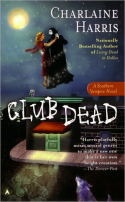 From the back cover:
There’s only one vampire Sookie Stackhouse is involved with (at least voluntarily) and that’s Bill. But recently he’s been a little distant—in another state, distant. His sinister and sexy boss Eric has an idea where to find him. Next thing Sookie knows, she is off to Jackson, Mississippi to mingle with the under-underworld at Club Dead. It’s a dangerous little haunt where the elitist vampire society can go to chill out and suck down some type O. But when Sookie finally finds Bill—caught in an act of serious betrayal—she’s not sure whether to save him… or sharpen some stakes.
Review:
It’s been more than a year since I promised “Club Dead, coming soon!” at the end of my review of Living Dead in Dallas. I didn’t forget the pledge; it just took me that long to be in the mood for another round of salacious vampire shenanigans. But what better time to revisit the series than Halloween Week? This one was such an improvement over the last, however, that I’m going to make a sincere effort to get caught up on the series.
Part of what makes Club Dead interesting is that there is so little Bill and when there is Bill, he’s wronging Sookie in ways that culminate with her disinviting him from her home. As the book begins, he is working on a top-secret assignment for “the queen of Louisiana” (there’s a lot of detail about the vampire hierarchy in this book) and tells Sookie he’s heading to Seattle to work on it. This turns out to be a lie, as she learns later that Bill is being held captive in Jackson and that he was preparing to pension her off and return to his vampire love, Lorena.
Despite the betrayal, Sookie agrees to help Eric (Bill’s superior, in a manner of speaking) find Bill and is matched up with a brawny werewolf named Alcide Herveaux, who can introduce her to the supernatural element in Jackson. Alcide’s got baggage of his own, so in addition to treading lightly around “the king of Mississippi” and the werewolves the king has hired to search for Bill’s girlfriend (thankfully, he never got her name), they’ve also got to avoid Alcide’s crazy ex, Debbie Pelt.
All of this is fairly entertaining—even if a large amount of the plot is contingent upon guys finding Sookie extremely hawt and wanting to boff her—but it did seem randomly strung-together at times. For example, after Bill is rescued the gang must next prevent the crucifixion of “Bubba” (Elvis in vamp form) and foil a convenience store robbery. I really liked the ending, though, and once again find myself hoping that Sookie will not forgive Bill’s transgressions, now weightier than ever before. Sure, it’s a little ridiculous how many guys are hot for her, but her steamy encounters with both Alcide and Eric are more fun to read than detailed sex scenes starring Bill. (The fact that Eric gets fleshed out a great deal is one of the best aspects of the book, actually.) Plus, Sookie’s reaction to these tempting guys is pretty amusing. “I was not pleased with my moral fiber!”
I find that I haven’t much to say about the book beyond this. It’s diverting and amusing and has even rekindled my curiosity about True Blood. It’s not fair to compare something like this against oh, say, Price and Prejudice, but for this particular genre, it exceeds expectations.
Reading a deranged drama by Osamu Tezuka always makes me want to read another deranged drama by Osamu Tezuka. They’re like peanuts. So the recent arrival of Tezuka’s The Book of Human Insects from Vertical (which is awesome) has triggered this craving and sent me on the hunt for the next possible gekiga license from the God of Manga. Fortunately, there’s one that’s already been published outside of Japan that sounds like it would be an excellent follow-up to Insects.

I’m not sure where Tezuka’s two-volume Barbara originated, other than that Kodansha originally published it, but it’s been released in French by the Akata imprint. Like Insects, it’s about a novelist, but that’s pretty much where the similarities end.
The novelist, Yosuke Mikura, is really popular, and two power brokers want to marry him off to their daughters to raise their own profiles. Little do they know that Mikura is kind of a super freak when it comes to amour, and he finds his own romantic prospect in the form of our titular gamin.
 Of course, Barbara has her own baggage. She’s described as a “young hippie alcoholic,” which is more than enough on its own to sell me on the title. Tezuka’s weird blend of sympathy and contempt for counter-culture characters is always riveting to read, and it usually results in a number of mean-spirited giggles, at least wherever I happen to be reading.
Better still, translations indicate that Barbara is kind of a bitch and gives our sex-crazed auteur a run for his money. Insects also left me eager to see another complex, difficult woman character emerge from Tezuka’s pen, and Barbara seems to fit the bill. (If she’d just been an inspiring waif, I’d have probably picked Gringo or something like that.)
Don’t get me wrong. I’d still love to read lots and lots of Tezuka’s general-audience work (Rainbow Parakeet comes to mind), but his whack-job seinen will always jump to the top of my to-read pile.
This brings us to a mini-contest. I happen to have a clean, extra copy of The Book of Human Insects, so here’s the deal: email me at davidpwelsh at yahoo dot com with your choice for a Tezuka license request by midnight Saturday, Oct. 15, and your name will go into the hopper to receive said copy of Insects. If you don’t need a copy but still want to weigh in on your Tezuka wish list, leave a comment! Or do both!
By Maru Nagao. Released in Japan by Shonen Gahosha, serialized in the magazine Nekopanchi. Released in the United States by Shonen Gahosha on the JManga website.
I’m not sure I’ve come across a title at JManga that so typifies what I wanted from the site – at least intellectually. This is a cat manga. From a magazine devoted entirely to cat mangas. About supernatural cat stories in the Edo period. And no, it’s not particularly adorable, though the cats can be cute. It’s not meant for a casual fan. It’s meant for hardcore manga readers who buy this magazine for cats and by god, they will have cats. (It also has one of the flaws of the site, which is the title is in Japanese with no English translation. I don’t mind the Japanese title, but at least tell me what it means. I think Jubei, Cat-Painter of Edo is close to an approximation.)

The plot is basically a series of supernatural mysteries, wrapped around our hero and his yokai cat-spirit. Jubei is a wandering painter, who specializes in painting cats – more specifically, a painting of a cat that will terrify the nice and other creatures from the Edo home. One reason his paintings are so good is they are semi-sentient, thanks to the magic of Nita, the aforementioned cat-spirit, who infuses the painting with some of his essence. We learn a little bit about Jubei as we go through this first volume, but for the most part the stories are about various cat owners, and the trials and tribulations they are going through with their pet. Jubei happens to be around at the time, and takes it upon himself to solve the mystery.
It was hard when I first read this not to think of Natsume’s Book of Friends. The art style is very similar, and a man and his wandering cat spirit solving mysteries, many of them featuring ghosts, also rings very close to home. But we aren’t really all that connected to Jubei the way we are to Natsume. Jubei seems to drift through the manga as he does through Edo. He has several admirers (a few women throughout are clearly attracted to him, but nothing comes of it), and is in fact the Edo Period’s version of a bishonen, complete with the hair, which the artist mentions is out of period but she didn’t want to cut it. I expect as we get more volumes we’ll learn about his backstory with Nita and see some depth, but the lead character is not the reason to read this manga.
On the other hand, the stories themselves are very well done. Sometimes a bit melodramatic, and designed to pull on the heartstrings of cat lovers, but that’s okay. You’re hear to read about cats being adorable, so some extent. Admittedly, there’s a lot more of cats being mysterious or aloof than there is adorable, but that’s okay. We see a cat who sacrifices his life to save his owner’s sight; a young man who realizes his cat may be MORE than just a cat; a pretty tea-shop worker with a tragic cat past; a stoic courtesan whose cat never leaves her side; and a samurai who is terrified of cats due to a haunting from when he was a child. Even the last story, which is mostly about a young man who’s about to be disinherited and is sent to Jubei’s master to try to find a profession, ends up being about how to paint cats, and how cat’s bodies move. You can’t say this doesn’t cater to its audience.
This is, I believe, the first Shonen Gahosha title we’ve ever seen over here that is not from their seinen otaku magazine Young King OURS. They really only have a few demographics as a publisher: Young King/Ours readers, porn readers (their Young Comic titles), and Nekopanchi, the magazine this title runs in. I’m happy to see something from the latter, which, as has been noted, is a classic example of something that would never otherwise have been licensed in Japan. Recommended, even if you’re not a cat lover.
British historian Phillip Guedalla famously described biography as “a very definite region bounded on the north by history, on the south by fiction, on the east by obituary, and on the west by tedium.” Were I to locate Gandhi: A Manga Biography on Guedalla’s map, its longest borders would be to the south and west: it’s both contrived and dull, a series of historical tableaux that do little to reveal Gandhi’s true humanity.
Most of the book’s problems stem from its scope, as author Kazuki Ebine attempts to cover Gandhi’s entire life in a mere 192 pages. Ebine treats us to brief glimpses of Gandhi’s childhood, when Gandhi was first exposed to the injustices of India’s caste system; his time in England, where he studied law; his time in South Africa, where he challenged the government’s classification of Indians as second-class citizens; and his time in India, where he used strikes, boycotts, and other forms of non-violent resistance to protest English rule.
Though Ebine carefully inserts major historical figures into the narrative, none of them are treated as individuals. Some are straw men, representing unenlightened points of view, while others are apostles, converted to the cause through the power of Gandhi’s words. Even Gandhi’s wife is relegated to a minor supporting role; her primary function within the narrative is to patiently reflect on her husband’s inherent courage and goodness, rather than interact with him as a partner, friend, confidante, or lover. (“Your duty is to lead people in a right direction,” she solemnly informs Gandhi.) Ebine attempts to portray her as the one person who truly knew Gandhi, but the relentless pace of the story prevents him from showing the natural evolution of their relationship.
The script is equally problematic, abounding in typos and grammatical errors. (“Pease enjoy this humble farewell party for you,” one character tells Gandhi.) The problems extend beyond mere editorial sloppiness: the dialogue would have benefited from a vigorous re-write, as it sounds more like a poorly translated Power Point presentation than natural conversation. In one crucial scene, for example, a young South African man confronts Gandhi with what amounts to an eighth grader’s gloss on the crisis in South Africa. “When I first heard your speech, I was so inspired as if you boiled in my blood!” he declares. “No one else has tried to rise up against the whites. As Indians, we have decided to fight together beyond the differences in religions.” Another character tells Gandhi, “By revoking Indians’ right to vote, they try to shut our mouth up regarding sovereignty” — an indignity up with which he will not put.
The biggest disappointment, however, is that Ebine makes such uninspired use of the comics medium. The artwork is plain and lifeless, relying too heavily on computer shortcuts and pre-fab backgrounds to create a genuine sense of place or time. Though Ebine depicts numerous violent confrontations, most of the layouts are an unvaried parade of talking heads addressing assemblies and conducting back-room negotiations. To judge from the characters’ facial expressions, these scenes are meant to be as dramatic as the brawls and massacres, but the monotony of the presentation robs these scenes of specificity and urgency.
The bottom line: readers who want an overview of Gandhi’s life and work may find this slim volume helpful, but readers hoping to move beyond what Mark Twain called the “clothes and the buttons of the man” will be sorely disappointed.
Review copy provided by Penguin Books.
 British historian Phillip Guedalla famously described biography as “a very definite region bounded on the north by history, on the south by fiction, on the east by obituary, and on the west by tedium.” Were I to locate Gandhi: A Manga Biography on Guedalla’s map, its longest borders would be to the south and west: it’s both contrived and dull, a series of historical tableaux that do little to reveal Gandhi’s true humanity.
Most of the book’s problems stem from its scope, as author Kazuki Ebine attempts to cover Gandhi’s entire life in a mere 192 pages. Ebine treats us to brief glimpses of Gandhi’s childhood, when Gandhi was first exposed to the injustices of India’s caste system; his time in England, where he studied law; his time in South Africa, where he challenged the government’s classification of Indians as second-class citizens; and his time in India, where he used strikes, boycotts, and other forms of non-violent resistance to protest English rule.
Though Ebine carefully inserts major historical figures into the narrative, none of them are treated as individuals. Some are straw men, representing unenlightened points of view, while others are apostles, converted to the cause through the power of Gandhi’s words. Even Gandhi’s wife is relegated to a minor supporting role; her primary function within the narrative is to patiently reflect on her husband’s inherent courage and goodness, rather than interact with him as a partner, friend, confidante, or lover. (“Your duty is to lead people in a right direction,” she solemnly informs Gandhi.) Ebine attempts to portray her as the one person who truly knew Gandhi, but the relentless pace of the story prevents him from showing the natural evolution of their relationship….
Library Wars is a predictable yet cozy series. There’s no doubt that Iku and Dojo are going to wind up together, and the plot does meander around their relationship with some cursory treatment of intellectual freedom and censorship issues. What I’ve really liked about the past two volumes is that instead of setting up predictable and artificial plot devices to keep the hero and heroine apart (Sudden Fiance! Artificial Misunderstanding! Evil Male Model!) the focus is on some of the secondary characters, giving us a chance to get to know the other characters better. The last volume focused on Komaki and this volume highlights Iku’s roommate Shibazaki.
Shibazaki has always been an interesting foil for Iku. She’s incredibly intelligent and self-possessed, which serves as a contrast to Iku’s impulsive and emotional behavior. Hikaru Asahina, a library patron, abruptly asks Shibazaki out and she agrees to see him after being pushed into the situation by a co-worker who is worried that her own crush is nursing some feelings for Shibazaki as well. Shibazaki thinks Asahina is a nice young man, but she becomes more interested when he mentions that he’s involved in studying issues centered around book burning. Asahina manages to crack through Shibazaki’s well-rehearsed facade. Some of his qualities remind Shibazaki a little bit of Iku, and we learn why she has a tendency to become attached to people who conduct their lives without pretense. Shibazaki was targeted by a bunch of mean girls in junior high, so in high school she dedicated herself to becoming popular with a cool and intellectual approach that resembled the practices of an undercover agent. Shibazaki’s personality traits of teasing reserve and constant deflection suddenly make a lot of sense!
Sibazaki’s slow approach to making another genuine friend is set against another storyline where everyone else in the library forces deals with a censorship issue. I thought this was a strong volume of Library Wars. The Shibazaki storyline was fresh and interesting, but there was plenty of Iku and Dojo action when they were dealing with the latest crisis of the week. I’m looking forward to the next volume.