• Skip to primary navigation
  • Skip to main content
  • Skip to primary sidebar
  • Home
  • About Us
    • Privacy Policy
    • Comment Policy
    • Disclosures & Disclaimers
  • Resources
    • Links, Essays & Articles
    • Fandomology!
    • CLAMP Directory
    • BlogRoll
  • Features & Columns
    • 3 Things Thursday
    • Adventures in the Key of Shoujo
    • Bit & Blips (game reviews)
    • BL BOOKRACK
    • Bookshelf Briefs
    • Bringing the Drama
    • Comic Conversion
    • Fanservice Friday
    • Going Digital
    • It Came From the Sinosphere
    • License This!
    • Magazine no Mori
    • My Week in Manga
    • OFF THE SHELF
    • Not By Manga Alone
    • PICK OF THE WEEK
    • Subtitles & Sensibility
    • Weekly Shonen Jump Recaps
  • Manga Moveable Feast
    • MMF Full Archive
    • Yun Kouga
    • CLAMP
    • Shojo Beat
    • Osamu Tezuka
    • Sailor Moon
    • Fruits Basket
    • Takehiko Inoue
    • Wild Adapter
    • One Piece
    • After School Nightmare
    • Karakuri Odette
    • Paradise Kiss
    • The Color Trilogy
    • To Terra…
    • Sexy Voice & Robo
  • Browse by Author
    • Sean Gaffney
    • Anna Neatrour
    • Michelle Smith
    • Katherine Dacey
    • MJ
    • Brigid Alverson
    • Travis Anderson
    • Phillip Anthony
    • Derek Bown
    • Jaci Dahlvang
    • Angela Eastman
    • Erica Friedman
    • Sara K.
    • Megan Purdy
    • Emily Snodgrass
    • Nancy Thistlethwaite
    • Eva Volin
    • David Welsh
  • MB Blogs
    • A Case Suitable For Treatment
    • Experiments in Manga
    • MangaBlog
    • The Manga Critic
    • Manga Report
    • Soliloquy in Blue
    • Manga Curmudgeon (archive)

Manga Bookshelf

Discussion, Resources, Roundtables, & Reviews

Blog

It Came from the Sinosphere: North City, Book of a Hundred Drawings

November 27, 2012 by Sara K. 4 Comments

The cover of 'North City, Book of a Hundred Drawings'

Would you like to sit down for coffee? Actually, I prefer tea myself. Let’s compromise and order a manhua instead.

The Stories

This manhua is a collection of three short stories, all of which are set in the year 1935. Each story include a young Japanese man who owns a cafe, “Hall of a Hundred Drawings,” in the heart of Taipei. He can detect the supernatural, and has a crow as a companion, called Ian.

The first story, “Soaring Boy,” is about the little brother of a waitress who comes to Taipei to visit her. At first he doesn’t understand why his sister wanted to leave their hometown to work in the city … but in the city, he sees an airplane for the first time.

In the second story, “Pantomime and Song,” the cafe owner encounters the ghost of an Atayal girl (the Atayal are one of the indigenous peoples of northern Taiwan). I’ve mentioned the Atayal before, and Vic Chou, one of the stars of Black & White, has Atayal heritage.

The third story, “Room of Memories,” describes how the young Japanese man acquired the building where he set up his cafe (hint: the building was haunted).

Background

This is a color illustration for the story ‘Soaring Boy’.

All of the stories in this collection were originally published in Creative Comics Collection, which I have previously discussed.

Akru is a regular contributor to Creative Comics Collection, and is one of my favorites. This is her second published manhua (and the first one collecting her work in Creative Comics Collection).

History

Taiwan was ruled by the Japanese for 50 years. Taiwanese people have mixed feelings about this period.

On the one hand, the Japanese did a great deal to improve Taiwan’s infrastructure, which was the foundation for Taiwan’s later prosperity. The train system was practically built by the Japanese, and more of Taiwan first became electrified under the Japanese. The Japanese spread modern medicine through Taiwan and greatly improved public health (a big deal in a densely populated tropical island). Many advances in gender equality also happened under the Japanese—they banned the practice of footbinding (even though their purpose was to suppress Chinese culture, it was still a plus for women), and the Japanese era was the first time it was feasible for a girl who was not from a rich family to get an education. Overall, governance under Japanese rule was considered quite good.

The problem was the inequality.

There were two education systems in Taiwan—one for Japanese people, and one for everyone else (guess which one got more and better resources). Japanese people were preferred for government jobs, particularly well-paying government jobs, etc. Though there were Taiwanese people who wanted independence, based on the histories I’ve read, most of the population would have been okay with Japanese rule if they had been treated as equal citizens.

Though the manhua doesn’t directly address the equality, it makes references to it. For example, it mentions the segregation of Taipei into Japanese and Taiwanese districts, and it’s worth noting that the owner of the cafe is Japanese, not Taiwanese.

Another legacy of Japanese rule was increased contact with the outside world, particularly the world beyond East Asia. While various European powers had colonized parts of Taiwan, none ever got deep control over the island, and it was actually Japan which spread many European and American ideas in Taiwan (baseball, for example).

1935 was probably the peak of the Japanese era in Taiwan. It was the year that the exhibition to celebrate 40 years of Japanese rule was held (which is featured in “Soaring Boy”). Taiwan had already become much more developed and wealthier, and was relatively peaceful. Yet that was before World War II make things turn for the worse.

Anyway, here is some footage of Taipei in the Japanese era.

Fashion

When it comes to 20th century fashion, the 1930s is definitely my favourite decade. What I like about 30s fashion is that it is so mature. It can be simple, severe, and practical, and still look great (little black dress FOR THE WIN). 1930s fashion can also look stunningly gorgeous … without losing its sense of proportion.

Taiwanese fashion in the 1930s has the distinction of blending Chinese, Japanese, and European influences.

Akru researched specifically how waitresses dressed in 1930s Taipei. Notice that it looks both a little Japanese and a little European.

Akru clearly loves 1930s Taiwanese fashion, as she features clothing very heavily in most of her stories for Creative Comics Collection. She says that one reason she is so interested in fashion from the Japanese era is that there are so many historical TV shows set in the Ming and Qing dynasties that everybody is familiar with the clothing from those eras … but most people are not familiar with the clothing of the Japanese era.

The Japanese man is bargaining for the building ... in a nice-looking coat.

And it’s not just Akru. Dihua street, which was a key commercial street in the Japanese era (specifically, it was the main commercial of Dadaocheng, which some of the characters visit in “Soaring Boy”) is now turning in a hub for young Taiwanese fashion designers. I’ve seen some of their exhibitions, and they certainly seem to be drawing from the neighborhood’s historic roots.

Artwork

Akru’s artwork is like good Chinese calligraphy – elegant, yet vigorous, yet balanced lines.

a demonstration of the linework

A girl standing with the city in the background

Let’s look at this picture. First of all, it’s got a nice hint of sepia while still being in color (this looks better when my cheap camera is not involved). And is has nice composition. We have the girl on the left as the focus. The round circle featuring the city makes a nice background—it adds “weight” to the right side of the picture, making it feel balanced, but without any object standing out it doesn’t take focus from the girl (it’s a good background, heh heh). There are some nice electric poles on the right adding more vertical lines to balance out the girl’s “weight,” but since they are nice and black, they don’t take away focus.

A pilot looks up from his cockpit on the right; a boy looks up into the sky on the left.

I like this composition too. The lack of objects in the center really conveys the openness of the sky.

The waittress and her kid brother are seeing the aquarium exhibit

Notice how on the right the swimmers seem to dive down on to the page. Notice on the center left how there is that panel (or un-panel?) which shows just the sister, brother, and white space. If that’s not a visual pause, I don’t know what is.

But I think one of the things I like most about Akru’s artwork is that she can make the ordinary seem wonderous. For example, the act of reading:

The Atayal Ghost is reading

Availability in English

Well, it’s not available in English. I think that’s too bad. I think that if any digital comics publisher showed an interest in licensing manhua, this would be a good choice—since it’s just one volume, it can’t be that great of an economic risk. Alternatively, since Creative Comics Collection is partially non-profit, it might be nice if they put forth a free English version online to promote Taiwanese culture.

Conclusion

The theme which binds all of these stories is that one has to step outside one’s comfort zone to really get to know the world. It might mean a boy from a rural town who visits the big city for the time, it might mean an Atayal girl who leaves her village to learn reading, writing, and Japanese, is might mean a young man from Japan who comes to Taiwan to open a cafe … and it just might mean a Manga Bookshelf reader moving from the city where she grew up to the other side of the Pacific Ocean.

This building is still around, in fact, I have spent a *lot* of time around this building.

No, seriously. The first and the last stories are set in they very same neighborhood that I lived in when I first moved to Taiwan. Okay, so I was there more than 70 years later, but still. I lived in a Japanese era building. I wandered the same streets the characters wandered, and the Japanese era left a very strong mark on the area. In fact, the same neighborhood is shown in Cheerful Wind.

I love this manhua because it taught me some news things about Taipei history. I love this manhua because it brings back memories. But most of all, I love it because, even across the gulf of time, I can identify with the characters.

Next Time: A Deadly Secret (TV series)


Sara K. is participating in this month’s Carnival of Aces. You can find her first post here … and yes, it just happens to be about a certain Chinese-language novel which she has previously discussed at Manga Bookshelf.

Filed Under: It Came From the Sinosphere Tagged With: Akru, Creative Comics Collection, manhua, Taipei, taiwan

Bookshelf Briefs 11/26/12

November 26, 2012 by MJ, Michelle Smith and Sean Gaffney Leave a Comment

This week, Michelle, MJ, & Sean check out recent releases from JManga, Yen Press, SuBLime Manga, and VIZ Media.


Ai Ore!, Vol. 7 | By Mayu Shinjo | VIZ Media – To be honest, I’m not sure why I’m still reading Ai Ore!. It’s a lazily written, episodic type of shoujo comedy that I just can’t like, and Akira as a character is especially grating to me. In this volume, he gets jealous of Kaoru, Mizuki’s childhood friend and former bandmate, and so embarks upon a career as a female idol just to get Mizuki’s attention. When this plan fails, he decides to make a serious bid for stardom, at which point Mizuki communicates her feelings for him in song (barf) and declares that he’s her prince (barf), causing him to abandon the project. On top of Akira’s personality changing half a dozen times over the course of the volume, everything that happens is just so stupid and pointless that I am profoundly relieved that my completist nature will only compel me to to endure one more volume of this mess. – Michelle Smith

Ninja Papa, Vol. 3 | By Yasuto Yamamoto | JManga – I think the author is starting to run out of ways to use his basic theme—I am a wimpish salaryman who nevertheless becomes a BADASS NINJA when pushed—as volume 3’s confrontations seem less over the top and silly, which was really the main reason to read this series in the first place. Honestly, there was too much salaryman and not enough ninja. We get the basic seinen themes restated – don’t let go of your dreams, stand up for what you believe in, even an ugly nebbish loser can attract gorgeous women. Halfway through things perk up when we get a flashback that shows us how Nobuo met his wife and began to doubt the ways of the clan. Unfortunately, his wife proves to be as just one-dimensionally sweet and wonderful in the past. There’s still cool ninja moves, but this series is starting to lose me. -Sean Gaffney

Punch Up!, Vol. 1 | By Shiuko Kano | SuBLime Manga – I’m late to the party on this title, which I only picked up after repeated recommendations in the comments of last week’s BL Bookrack: Best of 2012—and the reasons for those recommendations is pretty clear. Punch Up! is a smart, sexy title with just the right balance of honest characterization and guy-on-guy action for pleasing nearly any BL fan. Shiuko Kano serves up a host of messy characters in messy relationships (the best kind for storytelling, if you ask me), and if it all feels just a bit rushed, well, that’s the fantasy kicking in. That last bit is my only real quibble with the series so far, and I’m anxious to see if things slow down to a more believable pace over the next few volumes. Recommended. – MJ

RIN-NE, Vol. 10 | By Rumiko Takahashi | VIZ Media – It’s been a full year since I last reviewed RIN-NE, and most of what I said about it back then still applies, especially as relates to the part about nothing ever changing in the characters’ personal relationships. Still, I usually enjoy a volume of RIN-NE a bit more than this one, which has rather too much Ageha—a young, belligerent tsundere of a shinigami—for my liking. The chapters having to do with her contentious relationship with her contracted black cat are particularly draining. And speaking of—I need to start a tally box for how many ghosts died as a result of overwork and strain! Maybe this is a common problem in Japan or something. Anyway, Takahashi never fails to muster some fun moments, but there are certainly better volumes of RIN-NE (even if not substantially different). -Michelle Smith

Soul Eater NOT!, Vol. 2 | By Atsushi Ohkubo | Yen Press – The least interesting part of this spinoff for me is what seems to be attracting others – the moe cuteness. I find it far less cute than I’d like, and the faux-yuri shenanigans are simply grating, mostly as they’re so obviously tease with no payoff. That said, I did enjoy this volume more than Volume 1, for two reasons. First, we got to see the series (a prequel to Soul Eater proper) interact with the main title. Liz and Patti as grumpy, just-arrived-at-DWMA waitresses was a thing of beauty, and Maka reminds us once again why she’s the heroine of the main series. Secondly, the dark horror overtones that is a primary reason to read Soul Eater aren’t totally whitewashed here, as the cliffhanger is sudden, tragic and chilling. All of which shows I can never take anything by Ohkubo at face value. -Sean Gaffney

Filed Under: Bookshelf Briefs

Pick of the Week: GTO, Limit, Kurosagi, Sailor Moon

November 26, 2012 by Anna N, MJ, Michelle Smith and Sean Gaffney 3 Comments

MICHELLE: There’s not a very robust crop of new manga at Midtown this week, but there are some interesting items nonetheless. I’m tempted to call the second volume of Limit my pick, since it’s of a different breed of shoujo than is usually licensed here, but I just cannot deny the more feel-good pull of GTO: 14 Days in Shonan, which has now reached its sixth volume. Okay, yeah, it can be a little crass, but it’s got a good heart!

MJ: Well, since Michelle took up the banner for GTO: 14 Days in Shonan, I’ll be the one to go for the second volume of Keiko Suenobu’s Limit. From my review of the first volume: “Limit‘s biggest asset at this point, in my opinion, is Konno, its difficult protagonist. I call her “difficult” because I think it’s really tricky to get an audience invested in a main character whose motives are so morally weak and self-serving, but when done well, this can be really freaking effective.” And effective this is. Also, the artwork is freaking awesome. Definitely a must-buy for me.

SEAN: I thank my colleagues for leaving me with the choice I was going to make anyway. Kurosagi Corpse Delivery Service has become another one of *those* Dark Horse titles. You know, the critically acclaimed ones that come out once every decade? As such, I cherish each volume, and volume 13 looks to be giving us more wry humor, more mystery, and more gore. And probably more of Sasaki’s nipples, which have almost appeared more than Makino by this point. With its mystery, horror, and fanservice, it could almost be like Higurashi… except that one would never, ever call Kurosagi Corpse Delivery Service moe.

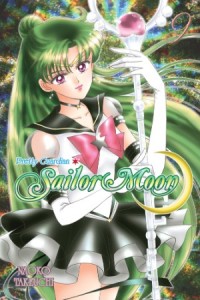
ANNA: I also lean towards Limit 2, but since that was already discussed I will note that the Sailor Moon Box Set is perfectly timed for anyone wanting to pick up the manga for the holidays! I’ve bought all the volumes as single issues already, but box sets are nice to give and get as presents! Plus, who wouldn’t be delighted by the chance to experience again all the sailor suits, battle cries, and swooshing cape of Tuxedo Mask?


Readers, what looks good to you this week?

Filed Under: PICK OF THE WEEK

The Hentai Prince and the Stony Cat, Vol. 1

November 26, 2012 by Sean Gaffney

By Sou Sagara and Okomeken. Released in Japan as “Hentai Ouji to Warawanai Neko” by Media Factory, serialization ongoing in the magazine Comic Alive. Released in North America by Digital Manga Publishing.

I must admit I was rather surprised to see a title from Comic Alive licensed by someone other than Seven Seas, and had to double check to make sure that this wasn’t BL-related in some way. (Not that Comic Alive would go anywhere near BL.) But no, DMP is dipping their toe in this market, and doing so with a title that seems a bit more low-key than what we’ve seen from other Comic Alive titles released in North America lately, even if it does have the same basic storyline and outlook.

The story stars Yoto, a typical teenage boy who spends most of his days trying to look at girls’ panties (OK, a typical Japanese teenage boy). He’s very good at denying he’s doing anything wrong, and fate seems to love him, as whenever he’s caught perving it gets mistaken for him doing something noble. He’s still bothered by this, however, being a decent pervert at heart, and wishes he could be more honest. Then he hears about a cat statue that grants wishes, and it seems to work nicely on his best friend. So he goes to visit it, and promptly runs into an embarrassed, panicky girl who also wants to wish on the cat statue – she wants to make it so her feelings aren’t so visible. Unfortunately, they both get their wishes – he now can’t tell a lie at all, even to save his getting beaten up, and she’s a perfect stoic on the outside, no matter what she may be feeling.

Wackiness, as they say, ensues. As you can see by my taking a paragraph to write out the plot, there’s not much to this. The two leads quickly realize how horrific this has become, but of course they can’t take their wishes back so easily. And things are livened up by your typical moe manga archetypes in the supporting cast. Yoto and Tsukiko are already cliched types (heck, Tsukiko manages to be two in one, as we see her both as the stressed out over-emotional girl *and* the stoic), and they’re joined by a busty track star who’s queen of the school and a blonde tsundere princess who finds her match in Yoto’s new blunt and straightforward persona. A light-hearted harem manga ensues.

I have not been all that fond of Comic Alive titles recently. I Don’t Like You At All, Big Brother! and Haganai both tended to irritate more than amuse me, mostly because I prefer my moe to be relaxed and soft rather than hyperactive and angry. But this wasn’t quite as bad as those two. The lead was just a shade more sympathetic, the tsundere had a bit more dimension to her, the plot invited antics while still being interesting. Yes, there’s still lots of talk of breasts and panties, and the plot is a simple ‘role reversal’ type thing we’ve seen before in, say, Your and My Secret, but this ended up being OK. I’d recommend it, but DMP hasn’t put Volume 2 on their upcoming list for 2013 (after they return from print hiatus), meaning we won’t see a new volume, if we do at all, for over a year. Thus, I can’t actually recommend it that much. But it’s not too bad.

Filed Under: REVIEWS

Manga Bestsellers: 2012, Week Ending 25 November

November 25, 2012 by Matt Blind 1 Comment

Comparative Rankings Based on Consolidated Online Sales

last week’s charts
about the charts

##

Manga Bestsellers

1. ↔0 (1) : Sailor Moon 8 – Kodansha Comics, Nov 2012 [457.1] ::
2. ↔0 (2) : Naruto 59 – Viz Shonen Jump, Nov 2012 [425.0] ::
3. ↑1 (4) : Vampire Knight 15 – Viz Shojo Beat, Nov 2012 [394.4] ::
4. ↑7 (11) : Death Note vols 1-13 box set – Viz Shonen Jump Advanced, Oct 2008 [375.3] ::
5. ↔0 (5) : Sailor Moon vols 1-6 box set – Kodansha Comics, Nov 2012 [336.9] ::
6. ↑2 (8) : Sailor Moon 3 – Kodansha Comics, Jan 2012 [322.9] ::
7. ↓-4 (3) : Rosario+Vampire Season II 10 – Viz Shonen Jump Advanced, Nov 2012 [320.5] ::
8. ↑1 (9) : Sailor Moon 4 – Kodansha Comics, Mar 2012 [318.1] ::
9. ↓-3 (6) : Sailor Moon 1 – Kodansha Comics, Sep 2011 [312.4] ::
10. ↑5 (15) : Sailor Moon 9 – Kodansha Comics, Jan 2013 [293.2] ::

[more]

Top Imprints
Number of volumes ranking in the Top 500:

Yen Press 109
Viz Shonen Jump 90
Viz Shojo Beat 58
Kodansha Comics 51
Viz Shonen Jump Advanced 42
Seven Seas 20
Dark Horse 16
Viz 14
Vizkids 10
HC/Tokyopop 9

[more]

Series/Property

1. ↔0 (1) : Sailor Moon – Kodansha Comics [1,104.3] ::
2. ↔0 (2) : Naruto – Viz Shonen Jump [840.3] ::
3. ↑1 (4) : Vampire Knight – Viz Shojo Beat [682.3] ::
4. ↓-1 (3) : Bleach – Viz Shonen Jump [639.7] ::
5. ↔0 (5) : Black Butler – Yen Press [576.4] ::
6. ↑1 (7) : Maximum Ride – Yen Press [535.7] ::
7. ↓-1 (6) : Rosario+Vampire – Viz Shonen Jump Advanced [506.2] ::
8. ↑6 (14) : Alice in the Country of Clover – Seven Seas [496.2] ::
9. ↑2 (11) : Death Note – Viz Shonen Jump Advanced [467.6] ::
10. ↓-1 (9) : Soul Eater – Yen Press [456.8] ::

[more]

New Releases
(Titles releasing/released This Month & Last)

1. ↔0 (1) : Sailor Moon 8 – Kodansha Comics, Nov 2012 [457.1] ::
2. ↔0 (2) : Naruto 59 – Viz Shonen Jump, Nov 2012 [425.0] ::
3. ↑1 (4) : Vampire Knight 15 – Viz Shojo Beat, Nov 2012 [394.4] ::
5. ↔0 (5) : Sailor Moon vols 1-6 box set – Kodansha Comics, Nov 2012 [336.9] ::
7. ↓-4 (3) : Rosario+Vampire Season II 10 – Viz Shonen Jump Advanced, Nov 2012 [320.5] ::
11. ↓-1 (10) : Blue Exorcist 8 – Viz Shonen Jump Advanced, Nov 2012 [284.1] ::
14. ↓-7 (7) : Negima! 36 – Kodansha Comics, Oct 2012 [272.7] ::
17. ↓-3 (14) : Bleach 50 – Viz Shonen Jump, Nov 2012 [260.7] ::
18. ↑10 (28) : Alice in the Country of Clover Cheshire Cat Waltz 3 – Seven Seas, Nov 2012 [257.8] ::
19. ↓-6 (13) : Bleach 51 – Viz Shonen Jump, Nov 2012 [248.7] ::

[more]

Preorders

10. ↑5 (15) : Sailor Moon 9 – Kodansha Comics, Jan 2013 [293.2] ::
24. ↑1 (25) : Sailor Moon 10 – Kodansha Comics, Mar 2013 [237.8] ::
31. ↔0 (31) : Sailor Moon 12 – Kodansha Comics, Jul 2013 [205.7] ::
34. ↓-2 (32) : Sailor Moon 11 – Kodansha Comics, May 2013 [197.4] ::
66. ↑8 (74) : Negima! 37 – Kodansha Comics, Jan 2013 [133.3] ::
87. ↑13 (100) : A Certain Scientific Railgun 6 – Seven Seas, Dec 2012 [112.8] ::
91. ↑15 (106) : Battle Angel Alita Last Order 16 – Kodansha Comics, Dec 2012 [108.2] ::
101. ↑7 (108) : Alice in the Country of Joker Circus & Liar’s Game 2 – Seven Seas, May 2013 [100.3] ::
102. ↑13 (115) : Battle Angel Alita Last Order 17 – Kodansha Comics, Feb 2013 [100.2] ::
108. ↑5 (113) : Negima! 38 – Kodansha Comics, Apr 2013 [95.6] ::

[more]

Manhwa

210. ↑68 (278) : Bride of the Water God 12 – Dark Horse, Nov 2012 [50.7] ::
213. ↓-109 (104) : March Story 4 – Viz Signature, Oct 2012 [50.0] ::
598. ↓-256 (342) : Black God 17 – Yen Press, Oct 2012 [13.6] ::
654. ↓-60 (594) : Bride of the Water God 11 – Dark Horse, May 2012 [11.2] ::
907. ↑97 (1004) : March Story 1 – Viz Signature, Oct 2010 [5.4] ::
914. ↑ (last ranked 11 Nov 12) : Hissing 4 – Yen Press, Jul 2008 [5.3] ::
965. ↑ (last ranked 23 Sep 12) : Laon 6 – Yen Press, Jul 2011 [4.5] ::
1028. ↑1476 (2504) : Shaman Warrior 5 – Dark Horse, Nov 2007 [3.5] ::
1054. ↑1435 (2489) : A Kiss for My Prince 1 – Infinity Studios, Aug 2006 [3.3] ::
1087. ↑ (last ranked 23 Sep 12) : Legend 9 – Yen Press, Sep 2010 [2.9] ::

[more]

BL/Yaoi

78. ↑25 (103) : Awkward Silence 2 – SuBLime, Oct 2012 [123.2] ::
110. ↓-3 (107) : Finder Series 6 Passion within the View Finder – DMP Juné, Jul 2012 [95.3] ::
137. ↑30 (167) : Alice the 101st 3 – DMP DokiDoki, Jan 2013 [75.5] ::
146. ↑551 (697) : Starting with a Kiss 2 – SuBLime, Nov 2012 [72.2] ::
186. ↓-38 (148) : Loveless 9 – Viz, Sep 2012 [57.2] ::
252. ↓-103 (149) : Honey*Smile – DMP Juné, Oct 2012 [42.8] ::
296. ↑103 (399) : Bond of Dreams, Bond of Love 2 – SuBLime, Nov 2012 [35.3] ::
317. ↑1460 (1777) : I’ve Seen It All 2 – DMP Juné, Dec 2012 [32.1] ::
321. ↑1824 (2145) : Ninth Life Love – DMP Juné, Dec 2012 [31.6] ::
329. ↑ (last ranked 30 Sep 12) : Caramel – DMP Juné, Dec 2012 [30.5] ::

[more]

Ebooks

33. ↑1 (34) : Maximum Ride 1 – Yen Press, Jan 2009 [198.5] ::
52. ↓-3 (49) : Maximum Ride 5 – Yen Press, Dec 2011 [162.2] ::
53. ↓-3 (50) : Naruto 57 – Viz Shonen Jump, Jul 2012 [161.6] ::
64. ↑11 (75) : Maximum Ride 2 – Yen Press, Oct 2009 [136.7] ::
81. ↑3 (84) : Maximum Ride 3 – Yen Press, Aug 2010 [120.3] ::
83. ↓-17 (66) : Naruto 56 – Viz Shonen Jump, May 2012 [115.8] ::
86. ↑4 (90) : Maximum Ride 4 – Yen Press, Apr 2011 [113.0] ::
109. ↑278 (387) : Rosario+Vampire 5 – Viz Shonen Jump Advanced, Feb 2009 [95.5] ::
127. ↓-39 (88) : Naruto 55 – Viz Shonen Jump, Mar 2012 [81.1] ::
131. ↑13 (144) : Naruto 1 – Viz Shonen Jump, Jul 2003 [79.2] ::

[more]

Filed Under: Manga Bestsellers Tagged With: Manga Bestsellers

Going Digital: November 2012

November 25, 2012 by MJ, Michelle Smith and Sean Gaffney 4 Comments

Welcome to the latest Going Digital, Manga Bookshelf’s monthly feature focusing on manga available for digital viewing or download. Each month, the Manga Bookshelf bloggers review a selection of comics we’ve read on our computers, phones, or tablet devices, to give readers a taste of what’s out there, old and new, and how well it works in digital form.

It’s all-browser, all the time this month, as MJtest drives JManga7 and Sean and Michelle take a look at some recent releases from JManga and VIZ. Device, OS, and browser information is included with each review as appropriate, to let you know exactly how we accessed what we read.


Platform

Test Drive: JManga7.com

It’s no secret that we’re pretty big fans of JManga.com here at Manga Bookshelf. Their ability to provide access to a wide variety of manga coupled with competitive pricing and an attentive ear to customer concerns has proven to more than make up for the service’s weak points—inconsistent translation quality and (so far) limited delivery options, to name a couple. Particularly for those of us who like epic, older shoujo, smart josei, idiosyncratic one-shots, or really anything in the yuri catalogue, JManga has been something of a miracle in terms of providing us much longed-for content we’d lost hope of ever seeing in print.

Just before New York Comic Con this year, JManga announced a new website, JManga7, where fans could read a rotating selection of free older chapters of their ongoing series each week, with the option to read the most recent chapters for a monthly subscription fee of $5.99. What does $5.99 buy you? Let’s find out!

The Good

JManga7’s catalogue is large and growing consistently, with new chapters arriving seven days a week. (JManga7, get it?) Heavy release days, such as Thursdays (pictured below), provide an abundance of new content for subscribers with wide-ranging tastes (and at least something for pickier readers each day). In the week I looked at, 48 new chapters were offered over the course of the week.

(click images to enlarge)

Though JManga7 suffers from the same limited delivery options as its sister site, its flash-based reader looks pretty good, loads quickly, and is easy to navigate.

Like most flash-based manga readers, JManga7 offers left and right arrows (that appear on mouseover) for quick page-to-page navigation, as well as the ability to see and skip to any page in the chapter. Links to buy full volumes at JManga are strategically placed at the top of each page.

The Less Good

Though JManga7’s catalogue looks fantastic at first glance, some titles (like Yukari Ichigo’s josei series Pride, which I clicked on excitedly, and another Shueisha favorite Crazy for You) seem to be a bit of a tease, offering only a few sample chapters and nothing more. Oddly, too, text that encourages the purchase of full volumes at JManga offers no direct link to do so. Even the offer to “Be the first to review this series!” is a hollow one, as attempts to click reveal it to be nothing more than static text.

Even titles with premium chapters available may prove disappointing for existing JManga customers. For instance, Setona Mizushiro’s BL epic Dousei Ai has chapters 10-14 currently available to premium JManga7 subscribers only. While this works well for new customers, fans who have already been buying the series at JManga (where it is currently available up to chapter 32) will find nothing new at JManga7. And while it’s obvious that part of JManga’s strategy is to encourage JManga7 fans to buy the full volumes, that leaves little incentive for existing fans to sign up for premium access.

Bottom Line

Much like JManga at the time of its initial launch, JManga7 feels a bit half-finished—burdened with features that appear to be not-quite-there and teaser content bulking up its fledgling catalogue. And though $5.99 a month is actually a pretty great deal for new readers who prefer low-committment, serialized content over serious collection, existing fans of JManga may be wondering what’s in it for them. – MJ


Web Browser

Rurouni Kenshin: Restoration, Chapters 1-5 | By Nobuhiro Watsuki | VIZ Media | Shonen Jump Alpha/VizManga.com | Windows 7, SeaMonkey 2.4.1 – Undoubtedly, there are bigger fans of Rurouni Kenshin than I, but it’s still a series for which I hold a great deal of fondness. I vividly remember picking up each volume of the manga as it was published each month (the first series to get that kind of accelerated release, I believe), and greatly enjoyed the anime, as well. (Well, not the often-atrocious filler episodes.) I firmly believe that the “Kyoto Arc” is one of the best storylines ever executed in shounen manga, and if other portions of the series were less well-done… well, I was inclined to be tolerant.

But now, here we have Rurouni Kenshin: Restoration. According to Shonen Jump Alpha‘s blurb, “To celebrate the upcoming live-action movie, Nobuhiro Watsuki reinvents the classic Rurouni Kenshin manga with all-new twists and turns.” I can understand why Watsuki might want to undertake such a project. In the first place, he’s never been able to replicate the success he had with Kenshin, and in the second, the original series does get off to a pretty slow start.

Restoration remedies this last issue by taking various shortcuts. Kenshin, Kaoru, and Yahiko meet under different circumstances, and villainous merchant Takeda Kanryu becomes a foe immediately. Neither Megumi nor Aoshi is under his employ, however, but he’s still got that gatling gun of which he is so fond. Sano still makes his first appearance as someone who’s been hired to fight Kenshin, but he already possesses his Mastery of Two Layers technique. The personalities of the characters are intact, though, so this streamlined introduction doesn’t ruffle my feathers too much.

Perhaps the most striking difference so far involves Saito Hajime. After six occasionally dull volumes, the original series is reinvigorated in the seventh with the introduction of Saito, who comes after Kenshin, grievously wounds Sano, lures Kenshin out with a note, and hangs out at the dojo for a while until Kenshin gets back, at which point they have an epic duel. It’s exciting stuff! He does eventually become an ally as they work together to combat madman Shishio during the Kyoto Arc, but they’re never truly friends.

In Restoration, we get our first glimpse of Saito in chapter three, which led me to wonder… how is Watsuki going to depict their battle this time? Surely, that’s one aspect of the story that needs no reinvention! The answer (at least so far) turned out to be… what battle? Instead, the guys meet and talk about how Kenshin is unable to find a place to belong in the new era. That’s it. So, basically, Watsuki just skips straight to the “uneasy allies” stage of their relationship.

Yeah, okay, I know this isn’t supposed to be a strict retelling. What would be the point in that? But the point remains… while there are definitely segments of the original manga that could benefit from a more streamlined approach, I would not classify anything from volumes seven through eighteen in that category. I’m kind of worried now about what will happen with the Kyoto Arc. Will it even exist? Do I want it to exist, given that it will be undoubtedly changed? I really don’t know.

At the moment, I still plan to check out new chapters of Restoration as they appear, but will maintain a dubious air whilst doing so. – Michelle Smith


Tokyo Cycle Girl, Vol. 1 | By Wadapen | Earth Star Entertainment, Comic Earth Star | JManga.com | Windows XP, Firefox 16.0
Sometimes you read a series because it immediately grips you, you latch on to a character right away, or you just have to find out what happens next. But those series don’t come along every day. Far more often you get the series that raise a smile, or have some potential, or pass the time. A series where your immediate reaction is “Yeah, I guess I’d read another volume of that.” Tokyo Cycle Girl is such a series. It does a lot of little things right, and is easy to follow, so is a nice, fast-paced, relaxing read. It only has one big flaw, which is a stunning lack of originality.

I need to mention that up front, as there’s a chance someone might think that this series might have something they haven’t seen eighty times before. Get those thoughts out of your head. This isn’t done in 4-koma style, but in every other aspect it follows at the feet of all the moe high school club manga circa Haruhi/K-On!/Lucky Star. The lead, Iruka, is a bubble-brain country girl who’s new to Tokyo, but filled with excitement, energy, and naive awe at absolutely everything about Tokyo. Katou, her roommate, has already grown used to the city, and finds Tokyo to be suffocating, with all the places and people looking the same to her. She’s a long-haired beauty, but seemingly cold and reserved. Of course, as Iruka finds out, she’s also very much a tsundere. Meanwhile, if I told you the other two main characters in this volume were a sporty tomboy who tends to speak first and think later and a yamato nadesico princess type whose aura of calm can make almost anyone bow to her, you wouldn’t be a bit surprised.

That said, aside from the stunning unoriginality, this manga doesn’t do anything else wrong. The author seems to know he’s dealing with types, so exaggerates them beyond belief right from the start. Iruka isn’t just perky, she’s beyond hyperactive, bouncing off the walls and floor when first reaching her dorm room. Yukimi isn’t just a perfect princess, but does a perfect tea ceremony the moment she and Iruka meet, and is already exuding enough ‘motherly’ vibes to fell the entire cast. The other interesting thing was the bicycle talk. All the characters ride bikes, ranging from the latest sport style to Iruka’s old-fashioned junior-high style bike. We get detailed looks at the various bike styles and accessories around Tokyo (along with frequent asides from the author), and bike knowledge definitely seems to be this series’ ‘hook’. Which is enough, along with the likeable cast, to keep me wanting to read more, even if this is The Return of K-On! Vol. 35, with Bicycles. -Sean Gaffney

Filed Under: Going Digital Tagged With: JManga, JManga7, Shonen Jump Alpha

Umineko: When They Cry, Vol. 1

November 25, 2012 by Sean Gaffney

Story by Ryukishi07; Art by Kei Natsumi. Released in Japan in two separate volumes as “Umineko no Naku Koro ni: Legend of the Golden Witch” by Square Enix, serialized in the magazine Gangan Powered. Released in North America by Yen Press.

The story of Higurashi: When They Cry may not be finished here in North America, but that doesn’t mean we haven’t seen people clamoring for its sequel. And so Yen has decided to bring it out even as Higurashi reaches its climax, in the more economical but deluxe-looking omnibus format. Not to worry, though: it’s a spiritual sequel rather than an actual one. Only one minor character from Higurashi shows up in Umineko, and we don’t meet her in this particular volume. But Umineko certainly has a lot of what drew people to Higurashi. Cute moe-style girls (who later turn out to have terrifying sides), heroes who use over the top perverse antics to hide a darker side, and of course giant piles of corpses drawn in gruesome detail.

It can be a little hard for me not to try to compare the protagonists of Umineko with their predecessors, especially since some of them don’t quite live up to those heights. Maria in particular is meant to have a certain Rika-esque aspect to her, but comes across as more bipolar than anything else. I must also agree with her mother: the uuu-uuu thing is really annoying, I’ll take nipah any day. As for Battler, I am reminded that I really disliked Keiichi at first, then grew to like him quite a bit, and I hope the same thing happens here. I also hope that, like Higurashi, the boob jokes and fetishes get less important as the volumes continue. I realize they’re there to provide contrast and relief before the main events, but let’s face it: they’re there for an otaku audience which isn’t me.

As for the story itself, I’m intrigued. Ryukishi07 has already stated that the goal here is not Higurashi’s (figure out who was behind the killings), leading me to think that the chances of everyone eventually living happily ever after are far less likely. The goal seems to be ‘is this a fantasy world or not?’, with its discussion of witches and black magic being countered by Battler (and Eva’s) staunch common sense and realistic view. I admit I’m inclined to believe there’s a human element as well, but then we’ve barely started this series, and still haven’t properly met ‘Beatrice’, the witch whose message is behind the whole thing. In addition, this series is about an extended family rather than a group of friends. It’s easy to bond with a group of close friends, who you can choose. Family’s harder, as you’re born with them. Notably, the parents in Umineko seem to be playing a much larger role than they did in Higurashi, and I’m not entirely sure if the children are supposed to be the heroes here, Battler’s POV or no.

Higurashi was never particularly subtle and somber, but it seems to me that Umineko takes things even further into a theatricality that almost embraces the grand guignol. Battler’s expansive gestures, the parents’ florid arguments regarding the inheritance, and of course the over-the-top mutilation of the corpses, all seem to be something that would be more appropriate for an opera house than a manga volume. That’s not to say I didn’t like it, though. Once you get used to the fact that everything is over the top, it becomes a much more readable series – even Maria’s supposed terrifying faces cause a grin and a ‘here we go again’.

In the end, this is a series with the same positives and negatives as Higurashi. If you can get past the groping fanservice and the grotesque murders, at its heart this is a mystery that will play out over the course of many volumes, and this is most likely merely meant as a taster introduction. Hopefully next volume we’ll meet the witch and get a few more answers. Then again, the first 2 volumes of Higurashi gave us no answers whatsoever…

Filed Under: REVIEWS

Off the Shelf: Strobe Edge, Umineko, Apple Blossoms

November 24, 2012 by MJ and Michelle Smith 7 Comments

MJ: Well, hello, Michelle! Happy Thanksgiving! And other expressions of holiday cheer!

MICHELLE: And the same to you! At this present moment, I am looking forward to a turkey sandwich in my future!

MJ: That sounds delicious! Have any manga to talk about while you munch away?

MICHELLE: Mochiron desu! I’ll start with the debut of Umineko: When They Cry, the latest license from Ryukishi07, who also created Higurashi: When They Cry.

Although I have read a couple of Higurashi side arcs, I still have yet to read the main series. When initial reviews for the first volume were positive, I actually checked it out in the store, but was turned off by the “byoing” sound effects accompanying a female character’s bosoms and returned the book to the shelf. After enjoying the side arcs, I did go back and collect a few volumes but I missed my chance to follow it from the beginning, which was why I wanted to give Umineko a chance. I almost didn’t make it, because the title is front-loaded with even more boob-centric shenanigans.

The story begins in October 1986. Members of the Ushiromiya family are gathering at Rokkenjima island for their annual reunion. Our protagonist is 18-year-old Battler, who has been estranged from the family for six years, so he’s seeing some of his cousins for the first time in while. In short order, he proposes performing an exam on a cousin his own age to see how much she’s grown, coerces a nine-year-old cousin to promise that she’ll grow up to “be a graceful lady and let me touch your boobs whenever I want,” and very nearly goes through with groping a ridiculously well-endowed servant who’s in no position to fend him off. He claims that he is joking around and just trying to provoke a reaction, but not surprisingly, none of the girls is amused.

Though Battler’s boob fixation pops up a few more times, the story thankfully begins to focus on the weird behavior of the family patriarch and the legend of a witch who is reportedly the source of the family fortune. While Battler’s parents squabble over their inheritance, his grandfather concludes his contract with the witch, freeing her to select members of the family as sacrifices, which she does in grisly fashion. Meanwhile, an epitaph accompanying a portrait of the witch provides instructions by which the deaths may be reserved. By the end of the volume, a nicely creepy atmosphere has been achieved.

All in all, though, the mystery is just intriguing enough to bring me back a second time. I don’t like the art. I don’t like Battler. I don’t like the nine-year-old cousin, Maria, who has a verbal tic that causes her to say “uuu” all the time. (Seriously, there’s one panel where her dialogue reads, “Uuu, uuu, uuu!! Uuu, uuu!! Uuu, uuu!! Uuu, uuu, uuu!!”) I don’t mean to insult readers who enjoy moe and fanservice, but it’s personally really difficult for me to endure them.

MJ: Wow… you know, I just don’t know if I have it in me to put up with the fanservice and the moe “uuu”-ing, even for a good mystery. Have I just become old and jaded?

MICHELLE: I don’t think so. It’s probably more a matter of “Life’s too short to read things I don’t like!” And honestly, I’m not sure this is even going to be a good mystery. I just kind of want to see what happens next. It’s entirely possible I’ll give up on it before the end.

Anyway, what have you been reading this week?

MJ: Well, after all the fantastic comments and feedback we received on last week’s BL Bookrack: Best of 2012, I found myself with a growing list of titles I felt I should try—particularly from SuBLime, which has been a tough imprint for me so far in terms of finding books I like. I decided to check out the first of these, Toko Kawai’s The Scent of Apple Blossoms, and this turned out to be a very good choice for me. As soon as I finished the first volume, I purchased the other two and gobbled them up whole.

You covered the series’ premise nicely in your review earlier this year, so I won’t go over it too thoroughly here. In short, Japanese-American Haruna works for a liquor seller in Japan. Part of his job includes trying to persuade local brewers to sell their products to his company to be sold in their shops and restaurants. While visiting an especially cranky brewer, he falls in love at first site with the master brewer’s grandson, Nakagawa. The first volume mainly consists of Haruna trying to wear down the master brewer while also pursuing his seemingly unrequited feelings for Nakagawa, but this is BL, so you know he’s going to succeed in his romantic adventures by the end.

The plot here is hardly the point, however. This story is incredibly, incredibly sweet, yet somehow never fluffy, and the relationships—even the protagonist’s generally unbelievable seduction of a straight man—feel natural and never rushed. Haruna’s American forthrightness is genuinely charming, and it’s easy to see why reserved Nakagawa would be both confounded and fascinated by it. Situations that might normally read as relentless non-con are magically saved by a combination of Nakagawa’s badass demeanor and Haruna’s straightforwardness and unwillingness to make a move without permission. And even the loathed (by me anyway) seme/uke thing is written in a way that feels weirdly natural.

The first volume brings the couple together just as expected, and at this point many writers would have to fabricate unbelievable conflicts just to keep the story going. But Haruna and Nakagawa’s vastly different personalities lend themselves to frequent bumps in the road that actually read as genuine. A favorite section of mine involves an ex-boyfriend of Haruna’s coming to town. This causes some of the conflict you might imagine—serious Nakagawa isn’t happy about the way easygoing Haruna keeps in touch with his exes, which leaves Haruna to figure out how to handle it all without lying to anyone—but Kawai refuses to make these characters into rigid stereotypes, so everything plays out with the kind of real emotional give-and-take you would expect to see in actual life. As a result, what could easily have read as pure melodrama is instead a thoughtful take on the nuances of friendships and romantic relationships, and learning to communicate honestly with one’s partner—only a lot more charming and fun than that sounds!

As a bonus, I also learned a lot about sake, and it really made me want to buy some. Is that a good thing? I’m going to decide that it is.

MICHELLE: I’m so glad that you liked this! I actually haven’t read the other two volumes yet, so you’ve inspired me to check them out.

If you’re interested in more Toko Kawai, I really liked CUT, Café Latte Rhapsody, and In the Walnut. I’m also really intrigued by Just Around the Corner, but I haven’t managed to read it yet.

I guess this amount of gushing means I’m a Toko Kawai fangirl!

MJ: I suspect I will be soon as well!

So, our mutual read comes from VIZ this week. Want to do the introductory honors?

MICHELLE: Sure!

Strobe Edge is a shoujo series from Shueisha—ten volumes total, originally serialized in Betsuma—that covers the well-trod terrain of a high school girl experiencing first love. Ninako Kinoshita is earnest and innocent, and though she joins her friends in admiring school heartthrob Ren Ichinose, she mostly thinks of it as a way to pass the time. When she actually has a chance to talk to Ren, however, and realizes how sweet and awkward he is in his effort to replace a cell phone charm he accidentally stepped on, she begins to feel closer to him. Up to this point, Ninako’s been content to accept the opinions of others as true—a shopkeeper says an apple is delicious, so it must be; my friends tell me what I feel for my friend Daiki is love, so it must be—but now she’s beginning to think for herself. What is it that she’s feeling for Ren?

It would be easy to label this as generic shoujo, and I really can’t claim that it’s forging new territory, but I found the characters to be likable and sympathetic. It’s total comfort-read material, more in the vein of a Kimi ni Todoke than a Black Bird (for which I am profoundly grateful!).

MJ: My experience with this book was fairly mixed, I’ll admit. About twenty pages in or so, I remember thinking (and actually saying out loud to the others in the room), “I’m so bored.” That was my initial reaction to Strobe Edge. “I’m so bored.” Yet, weirdly, even though that impression did not honestly change much over the course of the volume, by the time I reached its romantic cliffhanger ending, I felt extremely anxious to know what happens next.

And I think this may all come down to the likeableness of the story’s characters, as you mention. Despite the fact that I had difficulty getting invested in yet another high school crush, there were some characters I really felt for, and eventually this even included the story’s heroine, Ninako, though I’d had trouble connecting with her in the beginning. In particular, though, I felt immense sympathy for Daiki, who doesn’t have any confusion over what he feels for Ninako, yet is the one most being left out in the cold. And while I generally found Ninako’s endless waffling and naiveté over what “love” is—not that this isn’t a question all humans wrestle with, but man, how does a girl get to be in high school without having been saturated in the concept through books, TV, even advertisements, for heaven’s sake—she at least knows enough to stop stringing Daiki along after figuring it out.

MICHELLE: Yes, I really liked that about her, too. I guess it’s more of the “making up her own mind” progress, wherein she just instinctively knows that going out with Daiki while continuing to like Ren would be completely unfair. Speaking of unfair, I think Ren’s somewhat in the wrong for showing excessive kindness to Ninako while he already had a girlfriend, but he probably liked having the chance to connect with someone instead of remaining merely an object of distant adoration, so it’s hard to fault him, either.

Suffice it to say, I join you in your anxiety to know what happens next. There are a few wrinkles by the end that at least suggest the series will not tread the predictable path, but even if it does do that, I’d probably still enjoy it.

MJ: I suppose I probably will, too! Despite my early ambivalence, I clearly care at this point. Such is the nature of shoujo addiction.

Filed Under: OFF THE SHELF Tagged With: Strobe Edge, the scent of apple blossoms, umineko: when they cry, yaoi/boys' love

Bunny Drop, Vol. 7

November 24, 2012 by Sean Gaffney

By Yumi Unita. Released in Japan as “Usagi Drop” by Shodensha, serialized in the magazine Feel Young. Released in North America by Yen Press.

Please do not discuss Bunny Drop in the comments beyond Volume 7.

Everyone thinks a lot in Bunny Drop. I don’t just mean that we see their thoughts in addition to their dialogue, which we do, but that they think deeply all the time. Weighing decisions – and then wondering if they’re the correct ones – is something that Daikichi and Rin have done since this series began, and now that Rin is getting near graduating from school, she’s starting to think about her future. Which will involve having to resolve her past, and that means that she is finally going to have to meet Masako.

Yumi Unita knows that the best way to write a lovable, heartwarming manga is to make sure everything is as awkward as possible, so I was relieved to see that when Rin and Masako finally do meet, it wasn’t all hugs and tears and resolve to see each other every 2nd Saturday from now on. Rin still barely remembers Masako, even now – though we find out a reason for that here – and Masako may be moving on with her life and trying to be a better person, but she still acts like she regards Rin as a failed time in her life that makes her think lots of things she doesn’t want to. Masako’s childish qualities haven’t gone away, and it’s still very hard to sympathize with her. But we’re meant to be on Rin’s side here anyway.

Rin does a lot of soul searching here, spurred on partly by what happened with Kouki in Vol. 6 and partly through hearing about Reina getting a boyfriend (and then later watching it fall apart). She’s spent her last ten years growing up in an unconventional family, and realizes that she has a rather small pool of friends as well, mostly as she’s not doing clubs or sports, but going home to take care of Daikichi. I don’t think this is meant to be a dig on Daikichi himself – the general sense is that Rin really wants to do these things, and is likely better at cooking, etc., so has just stepped into this role at home.

Daikichi, meanwhile, is also growing older, and is having to deal with a serious injury for the first time – he puts his back out catching Rin when she falls off a stool. Given that he works in the shipping industry, this could be a big problem if it lingers. I was amused to see his co-workers coming over and reminiscing about their own back pains of the past, as well as Kouki’s mother telling Rin she had a back injury when she was in her twenties. But all this does is remind us how insular Daikichi’s own life has become as well. He doesn’t really hang out with co-workers anymore – his closest friend, in fact, may be Kouki.

So Rin is wondering about what it means to be a mother, and what it means to be a daughter. And realizing that the time may come when her life takes her away from Daikichi. And, unsurprisingly given how she’s grown up, she is not particularly fond of that day coming at all. That said, it’s not clear that day is coming soon in the manga either. The romantic drama we saw in Vol. 6 gets a brief mention here, but for the most part still appears to be over. So where does Rin go from here? Stay tuned for Vol. 8, coming out in April. Which may have a certain elephant that’s been lurking around the room. In the meantime, Vol. 7 gives us more of what we like about this series – thoughtful moments in the life of a kid who’s far too smart (but naive) for her own good.

Filed Under: REVIEWS

Give My Regards to Black Jack, Vols. 1-4

November 24, 2012 by Anna N

Give My Regards to Black Jack Volumes 1-4 by Shuho Sato

I’m not sure if many people in the English language manga blogosphere have reviewed Give My Regards to Black Jack. I know Kate at Manga Critic covered the first couple volumes. Give My Regards to Black Jack is an interesting example of digital manga, as it is released directly in Kindle format. It is only $2.99 per volume, so it it is also one of the better bargains out there for digital manga. It is a bit ballsy to reference Osamu Tezuka’s Black Jack in a modern medical procedural manga, and while there were aspects of the manga that I found very gripping, a story that took up volumes 3-4 made me question if I wanted to continue reading the series.

Saito is a just graduated medical intern, training to be a full-fledged doctor. He has a certain type of relentless optimism and a “can do” attitude that will be very familiar to anyone who has read manga before. Saito’s salary as an intern is so insignificant, he has to take on a night shift in the emergency room at a nearby hospital. Saito is entirely unprepared for the next phase of his life. He finds himself paired with an emergency room veteran for his first shift, and Dr. Ushida doesn’t have the time to babysit the new doctor when car accident victims start rolling in the hospital. Saito romantically assumes that the hospital is providing the best medical care for accident victims, but Ushida quickly disabuses him of the notion that altruism plays any part in what goes on in the hospital. They can bill more for traffic accident victims, so every patient experiencing severe trauma is actually a moneymaker. Saito is wondering if it is morally right to take the higher salary at his part-time job, but when he’s left alone to cover the emergency room he freezes instead of providing treatment because he has no experience doing major surgery. The head nurse has to call in the supervising physician.

The art in Give My Regards to Black Jack is workmanlike, but it doesn’t have that extra flair that would cause me to read the manga more for the art than the story. The accident victims and surgeries are quite detailed. Saito is portrayed as a wide-eyed innocent, while the other doctors sometimes look like detailed caricatures. Ushida looks rather horse-like, for example.

Give My Regards to Black Jack is a very didactic manga, as Saito’s adventures provide the author with plenty of opportunities to expound upon the problems with the Japanese National Health Care system, issues with medical billing, and problems with the hierarchical nature of intern training and hiring. These elements actually appealed to me a little more than Saito’s emotional struggles with becoming a new doctor, because I’m always a little fascinated at the way manga of this type will work random factoids into a larger story.

The second volume shows Saito rotating on to the cardiac care unit and struggling with a patient named Mr Miyamura whose physical condition makes it almost certain that he will not survive his scheduled surgery. The other doctors don’t believe in really giving the patient the full picture of what is going on, but Saito decides that he’s going to try to find a more qualified heart surgeon to treat his patient from outside his hospital, even if the result is political and professional suicide for himself. Saito is helped out by Ms Akagi, a cynical and world-weary nurse who just happens to know one of the best heart surgeons in Japan. Dr Kita is having his own crisis of faith as a surgeon, but meeting Saito causes him to take up the scalpel again.

The third volume opens with Saito dealing with political fallout from his actions, but he still has the time to check up on one of his colleagues who is thinking of dropping out of the program. Michiba’s grandfather is a neighborhood doctor, diagnosing colds and making a pittance of a salary. Michiba doesn’t want to end up like him. But Saito and Michiba see the impact an old-fashioned doctor can have when they go along on a house call to a live-long patient who is dying of terminal cancer.

The next story in this volume featured a situation that I had a great deal of difficulty connecting to as a reader. Saito is rotated on to neonatology, a placement that every intern before him has avoided. He’s assigned to care for premie twins whose parents refuse to bond with them over their fear that they will end up disabled. The father in particular just wants his sons to die, and since he’s a lawyer he is prepared to file suit if the hospital doesn’t withhold treatment from the babies. Give My Regards to Black Jack doesn’t hesitate to wallow in sentimentality but this was one situation where I thought the motivations of the parents wasn’t fully explored, and Saito’s reactions in pushing for the treatment of the infant to the extent where he was exploring parental rights and offering to raise the baby himself were so farfetched that they were unrealistic even for an overly sentimental medical procedural manga. While the reasons for the parents’ reactions were explored, it was really difficult for me to feel any sympathy for them whatsoever, so when the story wrapped up with a somewhat happy ending, it felt both unnecessary and in some ways unearned by the narrative.

This was my first experience buying manga for the Kindle app in my iPad, and it was a smooth reading experience. The pages turn with the orientation of a western book, but the manga itself was unflipped. $2.99 is a bargain for digital manga, and the medical procedural aspects of Give My Regards to Black Jack did appeal to me. I might give another couple volumes a try once Saito has rotated beyond neonatology to see if the rest of the series has more appeal than that particular storyline.

Filed Under: MANGA REVIEWS, REVIEWS Tagged With: give my regards to black jack

  • « Go to Previous Page
  • Page 1
  • Interim pages omitted …
  • Page 717
  • Page 718
  • Page 719
  • Page 720
  • Page 721
  • Interim pages omitted …
  • Page 1055
  • Go to Next Page »
 | Log in
Copyright © 2010 Manga Bookshelf | Powered by WordPress & the Genesis Framework