• Skip to primary navigation
  • Skip to main content
  • Skip to primary sidebar
  • Home
  • About Us
    • Privacy Policy
    • Comment Policy
    • Disclosures & Disclaimers
  • Resources
    • Links, Essays & Articles
    • Fandomology!
    • CLAMP Directory
    • BlogRoll
  • Features & Columns
    • 3 Things Thursday
    • Adventures in the Key of Shoujo
    • Bit & Blips (game reviews)
    • BL BOOKRACK
    • Bookshelf Briefs
    • Bringing the Drama
    • Comic Conversion
    • Fanservice Friday
    • Going Digital
    • It Came From the Sinosphere
    • License This!
    • Magazine no Mori
    • My Week in Manga
    • OFF THE SHELF
    • Not By Manga Alone
    • PICK OF THE WEEK
    • Subtitles & Sensibility
    • Weekly Shonen Jump Recaps
  • Manga Moveable Feast
    • MMF Full Archive
    • Yun Kouga
    • CLAMP
    • Shojo Beat
    • Osamu Tezuka
    • Sailor Moon
    • Fruits Basket
    • Takehiko Inoue
    • Wild Adapter
    • One Piece
    • After School Nightmare
    • Karakuri Odette
    • Paradise Kiss
    • The Color Trilogy
    • To Terra…
    • Sexy Voice & Robo
  • Browse by Author
    • Sean Gaffney
    • Anna Neatrour
    • Michelle Smith
    • Katherine Dacey
    • MJ
    • Brigid Alverson
    • Travis Anderson
    • Phillip Anthony
    • Derek Bown
    • Jaci Dahlvang
    • Angela Eastman
    • Erica Friedman
    • Sara K.
    • Megan Purdy
    • Emily Snodgrass
    • Nancy Thistlethwaite
    • Eva Volin
    • David Welsh
  • MB Blogs
    • A Case Suitable For Treatment
    • Experiments in Manga
    • MangaBlog
    • The Manga Critic
    • Manga Report
    • Soliloquy in Blue
    • Manga Curmudgeon (archive)

Manga Bookshelf

Discussion, Resources, Roundtables, & Reviews

Blog

Wandering Son, Vol. 5

October 23, 2013 by Ash Brown

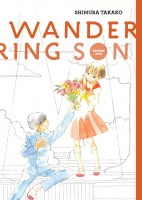
Wandering Son, Volume 5Creator: Takako Shimura
U.S. publisher: Fantagraphics Books
ISBN: 9781606996478
Released: September 2013
Original release: 2006

The fifth volume of Takako Shimura’s manga series Wandering Son was originally published in Japan in 2005 while the English-language edition of Wandering Son, Volume 5 was published by Fantagraphics in 2013. The entire series is being released in English as beautiful hardcovers; Fantagraphics’ treatment of the manga is simply lovely. Wandering Son is a series that has come to mean a tremendous amount to me on a very personal level. I am very grateful to Fantagraphics for pursuing the manga in English. Wandering Son is a wonderful story about growing up and personal identity with a very sincere and sensitive look at gender and sexuality. The series started out strong and it continues to be a powerful work. Although reading it can sometimes be traumatic for me because the story touches on issues that hit so close to home, I always look forward to reading the next volume of Wandering Son. I wish I didn’t have to wait for so long between volumes, but it’s always worth it.

With the beginning of seventh grade students are faced with a new school, new teacher, new classmates, and maybe even a few new crushes. In some ways junior high is a chance for a new start, but some problems are carried over from middle school. Shuichi’s close circle of friends has started to fall apart as romantic feelings get in the way and cause a fair amount of tension within the group. The rift between Takatsuki and Chiba has grown particularly wide. It seems as though the two of them may never be able to make up, despite the pain that their falling out has caused for the rest of their friends. Though they are still very close, things have become rather awkward between Shuichi and Takatsuki as well after Shuichi declared having feelings for Takatsuki and Takatsuki gently rejected them. Fortunately, Shuichi has Mako as a source of comfort and reason. It’s a good thing, too, as junior high and puberty have their own challenges; having someone to commiserate with is invaluable. Making new friends doesn’t hurt either, although sometimes that just complicates matters even further.

While the focus of Wandering Son, Volume 5 is still on Shuichi and Takatsuki and their families and friends, it’s interesting to see part of the manga being told from the perspective of their new teacher Manabu Saisho. It actually happens to be his first year teaching. He’s inexperienced and easily flustered, and his eagerness may end up getting him into trouble, but so far I (like Mako) find him charming. But as volatile as junior high and his students can be, I do worry for him a bit. And I worry for Shuichi and the others as well. Adolescence is upon them as are all the changes that entails, most of which cannot be ignored. Mortified after being publicly called out by the basketball coach, Takatsuki is faced with the embarrassing prospect of bra shopping while Shuichi and Mako are trying to come to terms with the fact that their voices will soon be changing. Even seemingly benign statements such as “they’ve grown taller again” are painfully bittersweet reminders of what is in store for them as they continue to physically mature.

Shimura does a fantastic job of layering the textual narrative of Wandering Son with its artwork. The manga’s composition is excellent. There is a particularly effective scene fairly early on in the fifth volume that takes place during the academic year’s opening ceremonies–the commencement speaker expresses the desire for everyone to talk together and encourage one another while the illustration clearly shows that Shuichi and the others can hardly bear to look at one another and that some of them aren’t even on speaking terms. Wandering Son is filled with deceptively simple moments like these in which the artwork and the text express far more together than they ever would alone. Wandering Son is told in such a way that it comes across as a sequence of closely related impressions or vignettes rather than a single, rigidly structured storyline. It’s quite effective in conveying the manga’s more emotive and introspective qualities. I continue to be impressed by Shimura’s work in Wandering Son and look forward to the next volume a great deal.
Filed Under: REVIEWS Tagged With: Fantagraphics Books, manga, Takako Shimura, Wandering Son

Post-NYCC Roundup

October 23, 2013 by Brigid Alverson

Sorry for the radio silence—I went to NYCC, and the two weeks after a con always seem to turn into a black hole as I write up a ton of different articles. It will take me a few days to catch up on all the news, but here’s the highlights:

Deb Aoki has written a comprehensive roundup of all the NYCC manga news, including appearances by Lone Wolf and Cub manga-ka Kazuo Koike and announcements by Kodansha Comics, Yen Press, and Vertical.

Tierney Sneed did a super article on women in comics, and the fact that a big portion of the fandom is female but publishers and con organizers do little to acknowledge that, for U.S. News & World Report. The story includes a short interview with me about the changes wrought by manga.

Erica Friedman of Okazu, who arrived home from Japan on the first day of NYCC, nonetheless managed to make it to the con and talked to Robert McGuire of GEN Manga and One Peace Books about One Peace’s new yuri acquisition, Whispered Words.

Lori Henderson discusses the NYCC news in her latest Manga Dome podcast at Manga Xanadu.

Business Insider took a look at Attack on Titan cosplay at NYCC.

In non-NYCC news…

The Manga Bookshelf team looks over this week’s new releases and discusses their Pick of the Week.

Erica Friedman explains why publishers sometimes can’t license a series, no matter how much the fans want them to. This is a great explanation of the two sides of manga licensing and should be required reading for anyone who posts on manga forums about what they want to see.

Connie C. takes a look at Junji Ito’s horror manga.

News from Japan: Yuki Urushibara will return to Mushishi with a two-chapter special in the January and February issues of Afternoon. Flame of Recca creator Nobuyuki Anzai and Lone Wolf and Cub manga-ka Kazuo Koike are both launching new series.

Reviews: Tom Gill writes about Yoshihiro Tatsumi’s Midnight Fishermen, which has not been published in the U.S., at The Hooded Utilitarian. Ash Brown looks back on a week’s worth of manga reading at Experiments in Manga. And the Manga Bookshelf team files this week’s Bookshelf Briefs.

Alice Vernon on vol. 1 of Attack on Titan (Girls Like Comics)
Sean Gaffney on vol. 8 of Attack on Titan (A Case Suitable for Treatment)
Kate O’Neil on vol. 6 of The Betrayal Knows My Name (The Fandom Post)
John Rose on vol. 14 of Black Butler (The Fandom Post)
Ken H on vols. 2 and 3 of The Flowers of Evil (Comics Should Be Good)
Matthew Alexander on vol. 2 of Sankarea (The Fandom Post)
Sean Gaffney on vol. 1 of Sherlock Bones (A Case Suitable for Treatment)
Kristin on vol. 16 of Toriko (Comic Attack)

Filed Under: MANGABLOG

Attack on Titan, Vol. 8

October 22, 2013 by Sean Gaffney

By Hajime Isayama. Released in Japan by Kodansha, serialization ongoing in the magazine Bessatsu Shonen Magazine. Released in North America by Kodansha Comics.

This review has spoilers for the big reveal that everyone on the internet already knows.

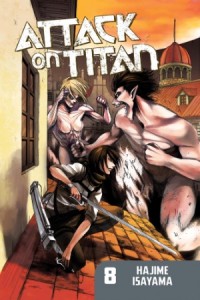
The eighth volume of Attack on Titan begins in a very interesting place, as we start off with a day in the life of Annie and her fellow military police. As you can imagine, they’re just as quirky a squad as our heroes, in their own way, but their bosses are no Erwin Smith – you sense a certain uncaring laziness to them. Annie gets into an interesting philosophical discussion on the nature of idealism and power, and I certainly get her point that at times it can be terrifying to have a true believer in charge of things. All this is upended, however, when she runs into Armin, freshly returned from the outside. Eren is about to be captured/dissected, and he has a plan…

attack8

Of course, all this is a ruse, as Armin has merely figured out what the rest of us suspected two volumes ago: Annie is the female titan. From the moment that we saw Eren could become a Titan, we wondered if it was something unique to him (likely due to his father), or if other titans had similar secret identities. There’s a rather amusing joke here where Armin describes the various subtle clues he discovered that led him to think Annie was the culprit, and then Mikasa chimes in “plus they look alike”. (Speaking of Mikasa, there’s an undertone of jealousy in her conversations about Annie I didn’t really like. I know she and Eren are close, but I really don’t want to see their relationship go down a romantic road.)

So there’s a big, city-destroying battle between Eren-Titan and Annie-Titan that ends with Annie encasing herself in amber in order to avoid getting captured and tortured. More importantly, we know certain Titans now have motivation beyond “kill and eat”. Certainly Annie, as a Titan, took delight in killing, particularly with Levi’s team members. But she also seems to have a troubled past with her own father (more similarities to Eren), and a deeper reason exists here. As for everyone else, the rest of the 104th squad are quickly quarantined in case, y’know, Titanism is contagious, but they all seem to be OK.

Then there’s the other big reveal in this episode (which is right about where the anime ended, if you want to start reading from that point on). In the fight with Annie, Mikasa destroyed a chunk of the outer wall. Inside… is a Titan, in suspended animation. A Colossal Titan. The revelation that the walls are full of Titans sort of waiting patiently for something is rather mind-boggling, and I wonder if the obviousness of the Annie reveal was to make this plot twist more impressive. It also finally ties in with the religious leaders who have popped up occasionally throughout this series, and who were clearly aware of the secret of the walls. Bringing devout believers into a series like this is unnerving – on purpose – but not quite as unnerving as seeing the formerly eccentric and happy Hange almost murder a man in cold blood. War does things to people,’s psyches, and war secrets do not help all that much.

The cliffhanger announces that Wall Rose has now been breached by Titans, so I presume Vol. 9 will have a lot more action. There’s many places this story could go from here, a pivotal volume in the series.

(Also, go look for the “Annie Are You OK” video on Youtube, and you will never get Smooth Criminal out of your head while reading this.)

Filed Under: REVIEWS

My Week in Manga: October 14-October 20, 2013

October 21, 2013 by Ash Brown

My News and Reviews

It was another two-review week last week. My Blade of the Immortal review project continues with Hiroaki Samura’s Blade of the Immortal, Volume 26: Blizzard. The volume includes the conclusion to the battle between Manji and Shira and it does not disappoint. The second review posted last week was for Tomoyuki Hoshino’s novel Lonely Hearts Killer. It’s not easy reading, and I didn’t like it quite as well as Hoshino’s collection of short fiction We, the Children of Cats, but I found it to be an intriguing work.

Last week I also had the opportunity to attend a fascinating lecture on queer theory, Japanese literature, and translation. I decided to share some of my random musings on the topics. So far the post seems to have been well received, which makes me pretty happy.

There were a couple of particularly interesting posts by Erica Friedman over at Yuricon last week. Her New York Comic Con report includes more information about One Peace Books’ licensing of Takashi Ikeda’s yuri manga Whispered Words. (I’m looking forward to the release of Whispered Words a great deal.) Also interesting was her post A Very Important Thing About Licensing Manga Fans Don’t Really Understand which explains a few of the complexities involved in licensing manga for English-reading audiences.

Quick Takes

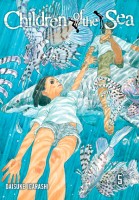
Children of the Sea, Volume 5Children of the Sea, Volume 5 by Daisuke Igarashi. In Japan, the fifth and final volume of Children of the Sea was released three years after the fourth volume was published. The English-language edition of the series likewise followed suit. But the end is finally here! I was actually surprised that the fifth volume was the conclusion of the series. To me it felt as though Igarashi had much more in store for Children of the Sea. I don’t know the circumstances surrounding the series’ end, but I am a little sad that he wasn’t able to develop it further. However, almost everything is tied up satisfactorily plot-wise and the series’ sense of mystery and awe remains intact. Children of the Sea is like modern myth. There is relatively little dialogue and narration in the fifth volume; Igarashi’s artwork really carries the manga at this point. And that artwork is absolutely beautiful. The attention given to the realistic details of the water and sea-life is stunning.

Devil's InfirmaryDevil’s Infirmary by Aco Oumi. Asakura is a physician at an all boys’ school who is not above accepting sexual advances from the students. Things get a little more complicated when Higurashi walks in on Asakura getting a blow job, but Asakura has a few compromising photographs with which to blackmail Higurashi into keeping quiet about it. Supposedly Asakura is in love with Higurashi, but I’m really not convinced. Their relationship is a very inappropriate one and Asakura, though he has a few redeeming qualities, is actually kind of creepy. (But Higurashi’s pretty cute.) At the same time, there are some legitimately funny and occasionally even hilarious moments in Devil’s Infirmary, too. One of Higurashi’s closest friends has a “sparkle problem” that unfortunately brings him unwanted attention from a few of the other students. It’s rather entertaining to see Higurashi try to pose as his boyfriend to deflect some of that interest. And then there’s Asakura’s mother who bribes her gay son into buying her yaoi manga.

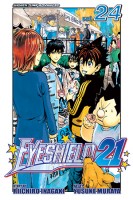
Eyeshield 21, Volume 24Eyeshield 21, Volumes 24-27 written by Riichiro Inagaki and illustrated by Yusuke Murata. By this point I am no longer surprised that I enjoy Eyeshield 21. I still don’t have a particular interest in American football (and I doubt I ever will even considering the number of years I spent in marching band), but the characters, comedy, and art in the series are great. These four volumes are devoted to the Kanto Tournament game between the Deimon Devil Bats and the Ojo White Knights, both teams fighting to advance one step closer to the Christmas Bowl. The Devil Bats are considered to have one of the best offenses in the tournament but the White Knights are considered to have the best defense. The White Knights also have Seijuro Shin–as perfect a player as there can be. The game ends up being very close, and therefore very exciting; Inagaki keeps the readers guessing right up to the very last second. Murata’s dynamic artwork continues to be one of the highlights of the series. His creative imagery is a little more restrained in these volumes, focusing more on the action of the game and slightly less on its psychological impact, but it’s definitely still there.

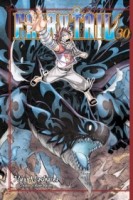
Fairy Tail, Volume 30Fairy Tail, Volume 30 by Hiro Mashima. With these volumes, Fairy Tail launches into a new story arc. The technique that Mashima uses–a time skip–isn’t all that unusual for a lengthy shounen manga series. What makes it different, and something that I personally haven’t encountered before, is that only part of the cast jumps ahead while most of the main characters are stuck in time. It makes it a little more interesting when returning after seven years that they have to come to terms with the fact that so many of their friends (and enemies) have changed and grown more powerful. The time skip also serves the purpose of “resetting” the story–Fairy Tail is once again one of the weakest guilds and has to fight its way back to the top. But instead of facing off with evil wizards and guilds, this time they’ll be competing in the Grand Magic Games. Honestly, I’m not quite as interested in this particular turn of events, but at least there should be some entertaining trials and competitions as a result.

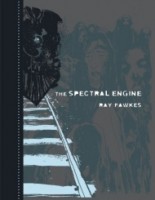
The Spectral EngineThe Spectral Engine by Ray Fawkes. I am not especially familiar with Ray Fawkes–an award-winning and frequently award-nominated Canadian creator–and so I was unaware of the upcoming release of The Spectral Engine. Happily, a review copy unexpectedly showed up in the mail. Otherwise, I would probably have completely missed it and that would have been a shame. The Spectral Engine is a great graphic novel and I’m glad I had the opportunity to read it. The artwork in particular is excellent, using dark, dripping lines and ink spatter reminiscent of the smoke and grime of the titular engine to effectively create an unnerving atmosphere appropriate for the ghost stories being told. The Spectral Engine weaves together thirteen tragic historic events from many different time periods and locations across Canada. These retellings are paired with their related modern-day hauntings and reports of unexplained phenomena. In many cases the names and lives of the dead have been forgotten, but their stories and legends live on.

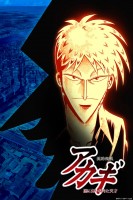
AkagiAkagi, Episodes 14-26 directed by Yuzo Sato. While the first half of Akagi had several different mahjong matches, the second half focuses on one: Akagi Shigeru versus Washizu Iwao. It also features a very special and slightly terrifying version of mahjong in which three-quarters of the tiles are transparent (which are beautifully animated). This reveals more of the players’ hands and greatly changing the dynamics of the game. (Though initially a fictional game, Washizu Mahjong sets now really do exist.) The game with Washizu also provides Akagi with something that he’s been looking for–a literal death match. Instead of money, he’s gambling with his blood and therefore his life. Akagi is a fearless and fearsome player and the game is ridiculously intense as a result. There’s skill, and there’s luck, but even more important are the psychological attacks used to provoke and manipulate the other players. Even when most of the tiles can been seen there’s still plenty of room for bluffing . I love mahjong and unsurprisingly I loved Akagi, too.

Filed Under: FEATURES, My Week in Manga Tagged With: Aco Oumi, Akagi, anime, children of the sea, comics, Daisuke Igarashi, Eyeshield 21, Fairy Tail, Hiro Mashima, manga, Ray Fawkes, Riichiro Inagaki, Yusuke Murata

Pick of the Week: Juicy Cider, No. 6, Summer Wars

October 21, 2013 by Michelle Smith, Ash Brown, Sean Gaffney and MJ Leave a Comment

potw-10-21MICHELLE: There’s not a lot to choose from this week, but I think I’m going to go with Juicy Cider. Yes, the plot sounds generic, but I have enjoyed other BL works by Rize Shinba (most notably Intriguing Secrets), so I suspect it will be better than it seems.

ASH: I think I’m going to have to go with No. 6 this week. I would describe the manga as a “traditional” dystopia and there doesn’t seem to be very many examples of these in English. Plus, I’m really enjoying watching the relationship between Rat and Shion develop.

SEAN: Summer Wars for me. The characters look cute, the premise is intriguing, and I haven’t seen the movie it’s based on, so am relatively unspoiled. For once.

MJ: I’m rather torn this week, though not from an abundance of choices, but rather from a lack of them. Still, I feel pretty confident going with Summer Wars. I greatly enjoyed the filmmakers’ earlier work, The Girl Who Leapt Through Time, as well as Vertical’s demonstrated taste in manga adaptations, namely 5 Centimeters Per Second, so I’m optimistic, for sure. This book is definitely on my list.

What looks good to you this week?

Filed Under: PICK OF THE WEEK

Bookshelf Briefs 10/21/13

October 21, 2013 by Sean Gaffney, Michelle Smith and Anna N 2 Comments

This week, Sean, Michelle, & Anna look at recent and upcoming releases from Seven Seas, Vertical, Inc., and Viz Media.


clover-cheshire-6Alice in the Country of Clover: Cheshire Cat Waltz, Vol. 6 | By QuinRose and Mamenosuke Fujimaru | Seven Seas – Despite the fact that once again this is half the main story and half a side story, it feels like a complete book because the side story also features Alice and Boris, rather than Crimson Empire. As for the main story, as always Ace steals every scene that he’s in. Ace and Boris contrast very well here, given that Boris, despite his jealousy, just wants Alice to be happy and at peace. Whereas, as Ace says flat out, he finds Alice most interesting when she’s stressed, vacillating, and indecisive. If you recall that this manga is sourced from a visual novel, this works quite well: Boris (and some of the others) want Alice to finish the game and find an ending, Ace wants anything but that. We’ll see how this resolves in 7, the final volume. – Sean Gaffney

devil11A Devil And Her Love Song, Vol. 11 | By Miyoshi Tomori | Viz Media – I had thought that the issues with Maria’s voice would be easily solved at the start of this volume, but nope. This volume turns out to be the one where most of the plot ends regarding Maria’s past are tied up, as we see that the tragedy in her past that has caused her such pain has also effected everyone else connected to that tragedy – her father, her grandparents, everyone. I found the way the last name “Cross” was tied into the plot to be a bit mind-numbingly coincidental, but hey, it’s a shoujo manga. So with Maria’s issues now mostly resolved, and Shin finally realizing that he can’t keep using his hand with it injured like that, we wrap up here, right? Wrong. Two volumes to go, and the cliffhanger for this one, with Maria saying “nothing can possibly go wrong now”, is very ominous. – Sean Gaffney

happymarriage2Happy Marriage?!, Vol. 2 | By Maki Enjoji | Viz Media – The line between miscommunication being a necessary tool to tell the plot of your shoujo manga and miscommunication being the last straw that makes your reader give up and drop the title can be very fine indeed, and the fact that I’m only 2 volumes into a 10-volume series and already vacillating on it doesn’t bode well. Not that I don’t understand the characters. Despite being husband and wife, it’s a paper marriage, so there’s that sense of ‘I should give her some space’ on Hokuto’s part – which is easy for him anyway, as he’s the sort to be very subtle and oblique. Meanwhile, Chiwa’s idea of working for another company isn’t bad, but one run by a former flame? That’s bad. This is the volume where Happy Marriage?! had to make its plot longer, and sometimes you can see the stretching. – Sean Gaffney

midnight2Midnight Secretary, Vol. 2 | by Tomu Ohmi | Viz Media – I’m still enjoying this supernatural romance about Kaya, an unusually dedicated secretary and her developing feelings for her vampire boss Kyohei. This volume centers around Kaya acknowledging her feelings for her boss and deciding to pull away, because there’s probably not much future for a woman with extra tasty blood and a man who regards human women largely as snacks. This doesn’t go well, as Kyohei likes to have Kaya around for more reasons than he is willing to admit to himself. The woman brimming with emotions and her emotionally withholding target of affection is a fairly common romance scenario, but the moody art, emotional turmoil, and paranormal elements combine to make this manga very enjoyable. – Anna N.

sickness2Sickness Unto Death, Vol. 2 | By Hikaru Asada and Takahiro Seguchi | Vertical, Inc. – Well, that didn’t go the way I expected at all. Which was, of course, the point. One of the best things about this serieds is the way it sets up situations and then pulls the rug out from under you. There’s also some really terrific analysis of coping with trauma, and I like how it shows Kazuma trying to help as a therapist but still being far too close to the situation (there’s really an awful lot of sex in this book, probably to attract Young Animal readers). As for the ending, I found it rather disquieting, and it made me ask lots of questions I’m not sure I wanted the answers to. Which I’m pretty sure is absolutely 100% intentional. I’m not sure this is a series that can be easily loved, but I think it has a high reread quality, and I’m very pleased Vertical put it out. – Sean Gaffney

strobeedge7Strobe Edge, Vol. 7 | by Io Sakisaka | Viz Media – This is really one of my favorite currently running shoujo series, with sympathetic characters and an engaging supporting cast that helps divert me from noticing that the relationship between naive Ninako and super-popular and enigmatic Ren is developing very slowly. Now that Ren is no longer in his previous relationship and Ninako, Ren, and Ando are all in the same classroom at school the potential for love triangle developments is high. This volume focuses a bit more on Sayuri and her old boyfriend, who it turns out was Yutaro, Much of the volume deals with Ninako’s struggles with continuing to relate to Ren as a friend only, while Sayuri and Yutaro finally achieve a bit of unexpected but welcome closure. – Anna N

sweetreinSweet Rein, Vol. 1 | By Sakura Tsukuba | Viz Media – If the name Sakura Tsukuba looks familiar, that’s because CMX published two of her series (Land of the Blindfolded and Penguin Revolution) back in the day. And that probably explains why Sweet Rein feels kind of like CMX shoujo to me. It’s a short series (complete in three volumes, it looks like) that works for all ages and has some fluffy fantasy elements, but which is still a little off the beaten path. For example, the leads in this series are a bonded Santa/reindeer pair. Yup. So far, drama comes from sad little kids with cancer in need of miracles and bishounen grandpa ghosts warning the reindeer boy that what he feels for his master isn’t genuine love. It may inspire mockery, but the overall feel so far is kind of cozy and old-school and the chibi reindeer are insanely cute. I think that’s enough to sustain me for three volumes. – Michelle Smith

Filed Under: Bookshelf Briefs

Random Musings: Queer Theory, Japanese Literature, and Translation

October 20, 2013 by Ash Brown

I recently had the opportunity to attend a lecture by J. Keith Vincent, a professor at Boston University whose primary research interests include queer theory, Japanese literature, and translation. The lecture he presented was “Out Gays” or “Shameless Gays”? What Gets Lost, and What is Gained, when U.S. Queer Theory is Translated into Japanese?. The talk is a work in progress and was the third version of the presentation that he has given. In this case, it was tailored for an audience that already had a background in both queer and Japanese studies. I found the lecture to be absolutely fascinating and wanted to share a few of my thoughts.

At this point, queer theory is at least twenty-three years old and can be traced back to as early as the 1990s in the United States if not before. In Japan, queer theory has only become prominent within the last ten years or so. Queer theory continues to develop and evolve and it still has a tremendous amount to say about sexuality, language, and power–subjects that are very important in literature as well. Because language plays such a critical role in queer theory and sexual politics, it makes sense that by extension translation also has a significant role to play when introducing concepts from one culture or language into another.

Vincent makes the argument that the very act of translation is in itself a queer practice. While the original work will always remain the same, new translations provide new interpretations, analyses, and contexts. Natsume Sōseki’s novel Botchan, which has had no less than six translations in English, is one example. As times and ways of thinking change, translation is something that is always in process and can never really be declared definitive–it’s more of an art than a science, which is not to say that there cannot be poor or inaccurate translations. This impossibility of translation can be seen as a metaphor for the impossibility of identity in queer theory.

When dealing with queer sexuality in translation–whether in works of fiction or nonfiction–there are several things to take into consideration. Though hopefully not as common now as it once was in the past, queer sexuality was often left out of translated works or otherwise altered during the domestication of the text. On the other hand, translation may actually erase the homophobia (or other phobias) that exist in a text if the translator is worried about its offensiveness. This, too, is problematic. Probably one of the most difficult tasks for a translator is to accurately convey the tone of the original in another language.

In some cases, translation warps or distorts queer sexuality, especially when there are words or concepts which don’t have a direct correlation from one language to another or which don’t carry the same cultural context when translated. For example, the use of term “queer” is becoming more common in Japanese (written in katakana), but the word doesn’t have the same history or negative connotations that it does in English. Similarly, Japanese terms like “nanshoku” or “okama” don’t have an exact one-to-one English equivalent. Word choice in translation is critical and those choices can completely change the meaning, interpretation, or nuance of a work.

While the focus of Vincent’s lecture was on queer theory and literature in translation, both into and from Japanese, the issues encountered when attempting to translate queer sexuality are also encountered when dealing with other topics. A great translation requires that the translator has fluency in all of the languages and cultures involved as well as a strong understanding of a work’s history and subject matter. Simply put, translation, like identity, is complicated.

Filed Under: UNSHELVED

Lonely Hearts Killer

October 18, 2013 by Ash Brown

Lonely Hearts KillerAuthor: Tomoyuki Hoshino
Translator: Adrienne Carey Hurley
U.S. publisher: PM Press
ISBN: 9781604860849
Released: November 2009
Original release: 2004

After reading Tomoyuki Hoshino’s collection of short fiction We, the Children of Cats, I knew that I wanted to read more of his work. And so I turned to the novel Lonely Hearts Killer, Hoshino’s first and currently only other volume available in English. Lonely Hearts Killer was originally published in Japan in 2004, making it a later work than most of the stories collected in We, the Children of Cats. Adrienne Carey Hurley’s translation of Lonely Hearts Killer was released in 2009. She initially had a difficult time finding a publisher for the novel. However, like We, the Children of Cats, Lonely Hearts Killer was ultimately released by PM Press under its Found in Translation imprint. Because We, the Children of Cats left such a huge impression on me, I was especially curious to read a long-form work by Hoshino.

When a young and popular emperor unexpectedly dies with only his sister to succeed him, the country is left stunned and directionless. Some people are so affected by his death that they are “spirited away,” a phenomenon which leaves them in a near catatonic state. Shōji Inoue is not one of those people. A young and privileged experimental filmmaker living off his parents, he is fascinated by society’s reaction to the emperor’s death. When he learns that Mikoto, the boyfriend of Iroha–a former classmate, fellow filmmaker, and friend–is among the group of people to have suffered a breakdown, he is intensely curious. But Inoue and Mikoto’s meeting triggers an even greater tragedy and Iroha is left behind to deal with the aftermath. Years later Iroha is working at a remote lodge owned by her friend Mokuren, away from the prying eyes of the mass media which blames her in part for the epidemic of suicides and murders that have swept the country. At the same time, the mass media is one of her only remaining ties to the rest of the world.

Lonely Hearts Killer is told in three parts by three different narrators, each building on and critiquing those that precede them. “The Sea of Tranquility” is seen from Inoue’s perspective, “The Love Suicide Era” is Iroha’s response, and Mokuren’s commentary concludes the novel in “Subida Al Cielo.” Each chapter leads further away from the initial incident in both time and association while simultaneously providing more information about it and capturing the escalation of fear and death. Lonely Hearts Killer is a chronicle of the end of an era; the world is turned upside down and society’s values are inverted. The novel can be both disconcerting and disorienting. People become so consumed by a culture of fear that they come to rely and depend on it. Any challenge to the system is seen as dangerous and the media’s role in its perpetuation is largely ignored by the general population. Things become so twisted around and perverted that it is those who would try to refuse to participate in the violence around them who are deemed abnormal and deviants by society at large.

In addition to the novel itself, the English edition of Lonely Hearts Killer also includes an introduction by the translator and a newly written preface by the author as well as a question and answer session between the two. I found this material to be particularly valuable in putting the work into a greater context. The death of an emperor and the demise of the emperor system is a rare topic in Japanese literature. Lonely Hearts Killer is a very political work although much of its message is left up to the readers’ individual interpretations. The novel has the potential for multiple analyses, including both anarchist and pacifist readings. I personally appreciate this ambiguity; it’s one of the reasons that I find Hoshino’s work as a whole to be so interesting. As I’ve come to expect, Hoshino’s writing requires active engagement and thought on the part of his readers. The novel isn’t particularly easy reading, but the ideas, concepts, and themes that Hoshino deals with in Lonely Hearts Killer are incredibly unsettling, intriguing, and fascinating.

Filed Under: REVIEWS Tagged With: Found in Translation, Novels, PM Press, Tomoyuki Hoshino

Manga the Week of 10/23

October 17, 2013 by Sean Gaffney, Michelle Smith, MJ and Ash Brown 2 Comments

SEAN: Be thankful for the small amount of manga coming out this week. The three weeks after this are absolutely brutal, with over 15-20 titles each week from various companies. But this week — lull!

juicyciderWe welcome back Digital Manga Publishing with some new BL fare. Unfortunately, Juicy Cider’s synopsis sounds so mind-numbingly generic that I can barely stay away to get through its four lines. There’s childhood friends, unrequited crushes, and from the looks of the cover one quiet and serious boy in glasses and one happy go lucky boy. Which sounds nothing like any other BL title ever.

Priceless Honey is the other DMP offering, being a collection of short stories that are “steamy”, and where the happy go lucky boy has been replaced by a smirking, slightly older guy.

MICHELLE: I wish I had something to say about either of these two, but alas, I do not.

MJ: I admit they don’t look promising to me. Not promising at all.

ASH: Like Juicy Cider, it would appear that Priceless Honey has a megane danshi as well. Shiuko Kano has had a lot of her manga released in English by multiple publishers, so I assume that she has at least a small following.

SEAN: I probably should not mock DMP’s yaoi given that I’m still enjoying Kodansha’s Missions of Love. It’s such a guilty pleasure – Volume 5’s cover looks more like softcore porn than any of the previous ones, making me continue to boggle that this runs in Nakayoshi. But as long as the cast continues to be unlikeable, I’ll continue to be fascinated. It’s like the opposite of everything else I enjoy.

No. 6, Vol.3 continues to confuse numerologists and bookstore shelvers everywhere. It’s also Kodansha. Between this title and Disgaea 3, my ability to make World Cup jokes will live on forever.

summerwars1MICHELLE: I didn’t hate the first volume, but I somehow never managed to buy/read volume two.

ASH: I’m actually rather fond of No. 6 and its leads. I found the second volume to be better than the first, so I hope the trend continues with the third!

SEAN: Lastly, Vertical debuts another manga based on a movie, with the first volume of Summer Wars, from the creators of The Girl Who Leapt Through Time. Vertical had a lot of success with 5 Centimeters Per Second, so it’s no surprise they’d get this. I personally hope it’s less melancholy.

MJ: I’m looking forward to this for sure. I loved The Girl Who Leapt Through Time, and though I wasn’t necessarily crazy about the manga adaptations of the same story, the fact that I haven’t actually seen this movie may help me on that front. And y’know, I trust Vertical. I really enjoyed the manga adaptation of 5 Centimeters Per Second, so I’m counting on their good taste to bring us a winner.

SEAN: Taking a week off before the deluge? Or trying out something new?

Filed Under: FEATURES, manga the week of

Sherlock Bones, Vol. 1

October 17, 2013 by Sean Gaffney

By Yuma Ando and Yuki Sato. Released in Japan as “Tanteiken Sherdock” by Kodansha, serialized in the magazine Weekly Shonen Magazine. Released in North America by Kodansha Comics.

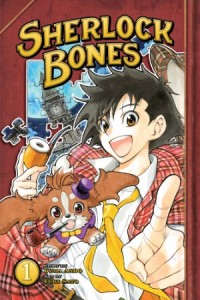
It’s a rather odd time here in North America, where we have had a series of Sherlock Holmes adaptations of various stripes over the last couple of years. JManga had a Holmes volume up that was sort of supernatural horror with bishonen Holmes. Young Miss Holmes pays close attention to the canon even as it welds in a precocious niece. And now we have Sherlock Bones, where Sherlock is reincarnated as a dog in modern-day Japan, and fights crime with the help of a young boy who gets to be his Doctor Watson. As you can imagine, this one is geared more towards younger readers, but certainly it’s not juvenile. We’re dealing with murders here.

sherlockbones1

The author is used to this type of detective mystery, of course, being the creator of Kindaichi Case Files under another pseudonym. The story is the important thing here, and Sherlock’s presence is merely a vehicle for it (as well as for a few weak “Sherlock is a dog now” jokes). Unlike Young Miss Holmes, so far the creators seems to have very little use for the Watson canon, only using the broadest strokes such as Sherlock’s pipe. As for Watson, or rather Takeru Wajima, he’s a typical shonen protagonist, bieng fairly normal but with a stubborn stick-to-it-ivness that will serve him well in dealing with Sherlock’s whims.

The book starts us off with a fairly easy attempted murder where the clues are all laid out in the open, before moving on to the main story involving a crime where the murderer is fairly obvious, but we have to figure out motive, means, etc. Indeed, motive proves to be the key here, as we learn that the culprit isn’t just evil like that but has a deeply tragic reason for committing the crime. It helps that the victim isn’t that nice a kid – but he’s still a KID, so there’s not that much sympathy.

This runs in Shonen Magazine, so the mysteries aren’t meant to be all that hard to solve, and you can usually come up with the solution at the same time as Sherlock does. Of course, since it does run in Shonen Magazine, there’s also a bit of fanservice focus on boobs ‘n butts, though certainly less than you’d see in Fairy Tail or Negima. In the end, this is a mystery anthology series along the lines of Case Closed or Kindaichi, with “Sherlock Holmes is a dog” as the gimmick. We do see a girl who’s meant to be a love interest of some sort, though given the nature of the series she could easily be killed off in Volume 2 for all I know. But for the most part I expect this to be episodic, which makes it a good series to dip in and out of without worrying too much about missing anything. It’s cute and fun, if not all that gripping.

Filed Under: REVIEWS

  • « Go to Previous Page
  • Page 1
  • Interim pages omitted …
  • Page 643
  • Page 644
  • Page 645
  • Page 646
  • Page 647
  • Interim pages omitted …
  • Page 1048
  • Go to Next Page »
 | Log in
Copyright © 2010 Manga Bookshelf | Powered by WordPress & the Genesis Framework