• Skip to primary navigation
  • Skip to main content
  • Skip to primary sidebar
  • Home
  • About Us
    • Privacy Policy
    • Comment Policy
    • Disclosures & Disclaimers
  • Resources
    • Links, Essays & Articles
    • Fandomology!
    • CLAMP Directory
    • BlogRoll
  • Features & Columns
    • 3 Things Thursday
    • Adventures in the Key of Shoujo
    • Bit & Blips (game reviews)
    • BL BOOKRACK
    • Bookshelf Briefs
    • Bringing the Drama
    • Comic Conversion
    • Fanservice Friday
    • Going Digital
    • It Came From the Sinosphere
    • License This!
    • Magazine no Mori
    • My Week in Manga
    • OFF THE SHELF
    • Not By Manga Alone
    • PICK OF THE WEEK
    • Subtitles & Sensibility
    • Weekly Shonen Jump Recaps
  • Manga Moveable Feast
    • MMF Full Archive
    • Yun Kouga
    • CLAMP
    • Shojo Beat
    • Osamu Tezuka
    • Sailor Moon
    • Fruits Basket
    • Takehiko Inoue
    • Wild Adapter
    • One Piece
    • After School Nightmare
    • Karakuri Odette
    • Paradise Kiss
    • The Color Trilogy
    • To Terra…
    • Sexy Voice & Robo
  • Browse by Author
    • Sean Gaffney
    • Anna Neatrour
    • Michelle Smith
    • Katherine Dacey
    • MJ
    • Brigid Alverson
    • Travis Anderson
    • Phillip Anthony
    • Derek Bown
    • Jaci Dahlvang
    • Angela Eastman
    • Erica Friedman
    • Sara K.
    • Megan Purdy
    • Emily Snodgrass
    • Nancy Thistlethwaite
    • Eva Volin
    • David Welsh
  • MB Blogs
    • A Case Suitable For Treatment
    • Experiments in Manga
    • MangaBlog
    • The Manga Critic
    • Manga Report
    • Soliloquy in Blue
    • Manga Curmudgeon (archive)

Manga Bookshelf

Discussion, Resources, Roundtables, & Reviews

Blog

Pick of the Week: PictureBox & Other Stories

November 11, 2013 by Ash Brown, Sean Gaffney, Michelle Smith, Anna N and MJ Leave a Comment

potw-11-11ASH: Though there aren’t quite as many titles coming out this week as there were in the past couple of weeks, there are still plenty of manga to choose from. Personally, I’m torn between two releases: the first omnibus in Shigeru Mizuki’s Showa: A History of Japan from Drawn & Quarterly and the first volume in PictureBox’s new series Masters of Alternative Manga, Gold Pollen and Other Stories by Seiichi Hayashi. In the end, I think I’m leaning slightly more towards the beautiful hardcover edition of Gold Pollen. Alternative and underground manga aren’t often released in English; I’m happy to show PictureBox my support because I’d love to see more of it.

SEAN: I was going to pick Showa anyway, so no worries about it not appearing here. I’ve loved the Mizuki manga we’ve gotten so far from D&Q, and seeing a history of one of the most volatile periods of modern Japan, interspersed with more awesome yokai folklore, is simply too good to pass up. A must buy.

MICHELLE: I’m awfully glad we’ve got things like Gold Pollen and Showa coming out, but I can’t lie—my heart belongs to Blue Morning, volume three. Definitely my pick for best BL of the year.

ANNA: I’m glad we have those things coming out too, but to be honest, I’m probably going to read the latest volume of 07-Ghost before I read other things that are being released this week. So that is my pick!

MJ: It’s so tempting to fall back on an enduring standby this week, with the sixth 3-in-1 edition of Fullmetal Alchemist making its way to the shelves. There are few shounen manga that have occupied such a prominent place in my heart, and my admiration for its brilliant creator, Hiromu Arakawa, is steadfast and true. But comfort of old favorites is, this week, overshadowed by my excitement over PictureBox’s new collection of Seiichi Hayashi manga, Gold Pollen and Other Stories, so I must echo Ash’s pick. Not only does this release offer me a prolonged glimpse at an era of manga from which I’ve read very little, but it’s also a gorgeous, high-end release—large trim, hardcover, full-color. I can’t wait to take a close look at it. I’m thrilled, too, that this is just the first in PictureBox’s alternative manga series.

What looks good to you this week?

Filed Under: PICK OF THE WEEK

Bookshelf Briefs 11/11/13

November 11, 2013 by Sean Gaffney, Anna N and Michelle Smith Leave a Comment

This week, Sean, Anna, & Michelle look at recent releases from Viz Media and Vertical, Inc.


knights5Knights of Sidonia, Vol. 5 | By Tsutomu Nihei | Vertical, Inc. – There is quite a good space battle towards the end of this, but as usual I’m focused on other things. The reason that I keep coming back to Sidonia is the balance it maintains between different aspects. I will never get over how this is still a wacky harem manga, complete with Nagate being a clueless dope and Izana running off in best cliched “I hate you!” form. But I will also never get over the scene with Tahiro’s possession – and, I have to assume, death – which is some of the sickest body horror I’ve ever seen, and is done slowly and silently so that you revel in its horribleness. These are both in the same manga! And yes, there is also a great Star Wars-style battle with SPEED GAUNA and Nagate showing off his awesome skills as well. It’s become a must-read title. – Sean Gaffney

Knights of Sidonia, Vol. 5 | By Tsutomu Nihei | Vertical, Inc. – I honestly never thought I’d love a mecha-centric manga like I do Knights of Sidonia, but then again, this is not your average mecha manga. Humanity’s desperate fight for survival never lets up—which isn’t to say the series is devoid of light moments, only that they are few and far between—and just when it seems they’ve possibly got a leg up on the enemy, the enemy grows more clever while an unknown threat begins to grow within Sidonia itself. The characters have become even more endearing, too, especially Izana Shinatose, Tanikaze’s “middle-gendered friend,” and this is the kind of series where people can easily end up dead—dead en masse, in fact—so watching them fly into battle can be a somewhat stressful reading experience, but oh so addictive and rewarding. I’m counting the days until volume six! – Michelle Smith

oresama15Oresama Teacher, Vol. 15 | By Izumi Tsubaki | Viz Media – The class trip that I thought would take the entire volume only took half of it, but things are all the better for it. First, we get just enough time devoted to Mafuyu trying once again to hide her past, Yui realizing that his deep cover role is a lot deeper than I suspect he’s truly comfortable with, and Saeki once again being ridiculous. To my surprise, though, I also loved the second half. I didn’t think much of Shibuya when he was introduced, as he was putting up a very false front. Now, with everyone else off on the trip, we can delve closer into that, and see what happens when he runs up against someone he can’t read like a book. As for our latest mini-villain, Komari… well, she’s finding the exact same thing happening to her. Clearly these two are made for each other. Depth is always welcome in my favorite shoujo comedy. – Sean Gaffney

Oresama Teacher, Vol. 15 | By Izumi Tsubaki | Viz Media – I’m a bit in awe of the capacity of this series to seem absolutely silly and hilarious even as the cast grows and almost nothing happens in terms of forward-moving plot. The class trip is funny, and I especially enjoyed Saeki’s unholy obsession with ping pong. While sometimes the large cast gets a bit tricky to keep track of, the story shift in the latter half of the volume to Shibuya fending off Komari’s aggressive cuteness is both amusing and intriguing from a character development standpoint. It is always nice to have a manga to turn to that always makes me smile, and Oresama Teacher delivers every time. – Anna N

slamdunk31Slam Dunk, Vol 31 | By Takehiko Inoue | Viz Media – The final volume! It feels a bit like the end of an era. I didn’t think this basketball game could get any more intense, but the tension and strain were palpable as the underdog heroes of Shohoku High face the final minutes of their battle against Sannoh. There’s a bit of bittersweet resolution as Sakuragi and Rukawa acknowledge each other as teammates in the closing moments of the game. I feel like this series has just been a wonderful gift, seeing Inoue’s style and storytelling skills evolve and grow over the 31 volumes of this series serves as a master class in manga appreciation. I would happily have read 31 more volumes of this series, yet it is utterly appropriate that Sakuragi gets the last word, delivered with his characteristic confidence to conclude the volume. – Anna N

strobeedge7Strobe Edge, Vol. 7 | By Io Sakisaka | Viz Media – I would like to note that it is starting to beggar belief that every single ex of every single character is converging on the same school now. But, having gotten that out of the way, this was a solid volume of Strobe Edge. The focus on Sayuri was appreciated, and showed how experiences (and indeed lack of communication) from past relationships can affect future ones. I’d argue that even more than most shoujo manga, this series reads like a primer for first love, with the characters talking about their feelings out loud far more than we normally see. Sadly, Ninako and Ren are rather static right now, as they enjoy their close friendship and think “This is enough, right?” Well, no, it’s really not, and I think Ren is going to be the first to break. We shall see… – Sean Gaffney

vn17Vampire Knight, Vol. 17 | By Matsuri Hino | Viz Media – For the past several volumes of Vampire Knight, I’ve noted that I’ve enjoyed its mood and flavor, but really haven’t been able to follow the plot from one volume to the next. That’s getting worse and worse, and this volume can only coast on style for so long before I start to skim. We’re clearly in endgame, but most of what’s happening involves Kaname trying to kill Sara and Yuki trying to stop him, and everything else here is pretty much added window dressing to those two things. There’s some attempt at development for Ichijo, and some romantic sacrifice by Souen, but honestly it’s been 17 volumes, I should not still be turning to the back to remember who everyone is. Still, the art is gorgeous, and everyone suffers beautifully. It’s the manga equivalent of Rococo art. – Sean Gaffney

Filed Under: Bookshelf Briefs

My Week in Manga: November 4-November 10, 2013

November 11, 2013 by Ash Brown

My News and Reviews

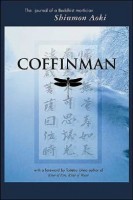
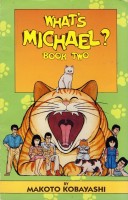
Last week I announced the winner of the Sankarea manga giveaway. The post also includes a list of zombie manga that has been licensed in English, for those who might be interested. Considering the recent popularity of zombies, I was actually a little surprised to discover there weren’t more. I also posted two reviews last week. The first was for Makoto Kobayashi’s What’s Michael, Book Two, a fantastic cat manga sent to me by a Manga Bookshelf reader for review. My second review from last week was for Coffinman: The Journal of a Buddhist Mortician by Shinmon Aoki, which was the inspiration for Yōjirō Takita’s award-winning film Departures.

And now for a few things that I’ve come across online over the last couple of weeks. Crunchyroll Manga is now up and running. Deb Aoki wrote a good article about it for Publishers Weekly–Kodansha, Crunchyroll Talk Global ‘Simulpub’ Manga . At A Case Suitable for Treatment, Sean took a quick look at the manga series currently being offered through the platform–Kodansha and Crunchyroll Partnership: What Are We Getting?. Mostly unrelated, Kodansha posted on its Tumblr account a great summary of why some manga may never be licensed in North America, even if it’s really good. Rob Vollmar’s essay for World Literature Today “Dark Side of the Manga: Tezuka Osamu’s Dark Period” is actually from last year, but was recently brought to my attention again. And finally, the Comic Book Legal Defense Fund focused on Gene Luen Yang’s Boxers & Saints (which I think is one of the best comics to be released this year) as part of its Using Graphic Novels in Education column.

Quick Takes

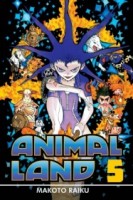
Animal Land, Volume 5Animal Land, Volumes 5-8 by Makoto Raiku. It took a few volumes for Animal Land to really grow on me, but now that it has I find that I quite like the series. The occasional focus on scatological humor feels a bit out-of-place to me, though it seems to have become less common as the series progresses. The artwork in Animal Land is a little strange–a combination of realism and anthropomorphism–but generally engaging. The characters, particularly Taroza, are very likeable. I have enjoyed watching him grow up. A newborn at the beginning of the series, by the end of the eighth volume he has become a young man who has had to face the hard truths about his idealism. Taroza wants to put an end to the cycle of killing and eating, but to do so will require him to throw all of Animal Land into turmoil. He is not the only one who has an interest in shifting the power dynamics of the world–four other humans have made themselves known and have their own ideas about how things should be. I was a little surprised to see a bit of science fiction and time travel work its way into Animal Land, but I am very curious to see how things continue to develop.

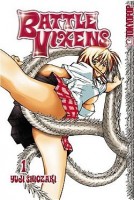
Battle Vixens, Volume 1Battle Vixens, Volume 1 by Yuji Shiozaki. Supposedly, Battle Vixens (aka Ikki Tousen) is somehow based on, or at least inspired by the classic Chinese historical novel Romance of the Three Kingdoms. Had I not known this going into the series, I’m not sure I really would have picked it up from reading the first volume. As far as I can tell, the references are barely there. (Which reminds me, I really do need to get around to finishing Romance of the Three Kingdoms.) What is readily apparent from the first page of the manga is that the English title, Battle Vixens was aptly chosen. The series is all about the fights and the fan service. There might be some sort of plot, too, but after only one volume I am still incredibly confused as to what is actually supposed to be going on. Basically there’s this girl, Hakufu Sonsaku, with a sizable chest and the penchant for getting into brawls. Towards what end? I am unsure. She simply seems predisposed to violence and having her clothes ripped off of her in the process. For a series based on fights the action unfortunately tends to be somewhat difficult to follow, but some of the panels have great composition.

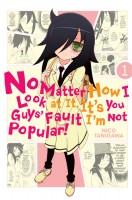
Watamote, Volume 1No Matter How I Look at It, It’s You Guys’ Fault I’m Not Popular!, Volume 1 by Nico Tanigawa. Okay, I’m just going to refer to this series by its Japanese abbreviation WataMote because I can never seem to remember the title in its entirety. (Plus, it’s really long.) WataMote is simultaneously one of the most funny and depressing manga that I’ve read recently. The story follows Tomoko Kuroki, an extraordinarily awkward and socially inept young woman who has just started high school. Most of her “life experience” has come from reading manga and playing video games, which may explain why she has difficulty interacting with her classmates. They mostly just ignore her or at least tolerate her existence. Occasionally she tries to be more than the weirdo in the corner, but it doesn’t often turn out well for her. I care about Tomoko and find her to be a sympathetic character which is why her trials and errors, though humorous, can also be a bit painful to watch. WataMote isn’t exactly mean-spirited, but it’s not particularly pleasant either. Her interactions with her younger brother are fantastically awkward (granted, all of Tomoko’s relationships are awkward), but there are some glimpses of familial love, too.

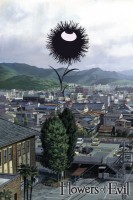
Flowers of EvilFlowers of Evil directed by Hiroshi Nagahama. Based on the manga series by Shuzo Oshimi, the Flowers of Evil anime series is a phenomenal adaptation. It’s one of the rare cases where I might actually prefer the anime over the original manga. That being said, the anime is definitely not a series that everyone will be able to enjoy. First of all, the pacing is excruciatingly slow. It worked for me and I think it creates marvelous tension, but someone who needs a bit more action and forward movement from their anime will be very frustrated. Not much actually happens from episode to episode; the focus is more on the inner turmoil and crises of the characters. The animation also relies heavily on rotoscoping techniques, resulting in a style that doesn’t personally bother me, but I know plenty of people who can’t stand it. I think it was suitable for Flowers of Evil, creating a slightly disconcerting and surreal mood that fits the unsettling atmosphere and darker nature of the series. The use of music and silence in the series is also quite remarkable. The twisted triangle of a relationship between Kasuga, Nakamura, and Saeki is intense. The Flowers of Evil anime captures it perfectly using art film-like sensibilities.

Filed Under: FEATURES, My Week in Manga Tagged With: animal land, anime, Battle Vixens, Flowers of Evil, Makoto Raiku, manga, Nico Tanigawa, Watamote, Yuji Shiozaki

K-On! High School

November 11, 2013 by Sean Gaffney

By Kakifly. Released in Japan by Houbunsha, serialized in the magazine Manga Time Kirara Carat. Released in North America by Yen Press.

And so at last we come to the end of the K-On! gravy train, with the sequel that never really made sense. With the college series, at least we had several things going for it: it had the original characters we’d loved from the start, we could see their continued development and growth as a band, and they could finally stop telling school jokes. Well, that last one didn’t really happen, but still. But with the High School volume, we have one remaining main character, whose best moments came when she was interacting with Yui, who’s gone. She’s put together with a few of the supporting cast and two new girls. It’s not really that much of a surprise to see this is the less compelling of the two stories.

konhs

That said, Kakifly is making an effort, and this isn’t a total slog. Probably the best joke in the entire book comes right at the start, with Azusa deciding to ditch the pigtails to give herself a more mature, sempai-esque image. This doesn’t last long at all. Then Ui, who we all recall is identical to Yui despite not being a twin, takes her hair down and starts to glomp Azusa. The gag is then carried further when Ui announces she’s really Yui, who snuck back to high school just to snuggle some more. As Azusa herself notes, this makes perfect sense because Yui only thinks with her senses. Of course, it is still Ui in the end, having mastered the art of taking a joke to its logical conclusion. (I could do without the dumb bust-size capper, though.)

We get two new characters added to the threesome (sorry, did I forget to mention Jun? It’s because she makes that little impression on me), one of whom is there to emphasize similarities and one of whom is there to be different. The moment Sumire appeared we were going to compare her to Mugi just based on appearance alone, so it was a good choice to actually make her be Mugi’s maidservant. They’re both sweet and mellow, but Sumire tends towards the shy end of the spectrum, whereas Mugi… tends more towards the yuri end. As for Okuda, the quiet stoic girl is a type we hadn’t yet seen in the series, and it’s amusing to see her total lack of ability at singling or playing instruments, as well as seeing how she brings something to the club anyway.

Of course, this title was always going to be short-lived by virtue of 3/5 of its cast already being third-years. Azusa and company do their one big concert, it goes pretty well… but that’s it, it’s time for them to graduate. I’d hoped we’d get a better sense of whether Azusa would try to continue a band with Ui and Jun or just join back up with Afterschool Tea Time, But there’s not even that much closer, the series just sort of stops. There’s nothing actively boring or bad about this, and it was reasonably fun to read. But you forget most of it 90 minutes later, and the problem is that of all the K-On books, this one was the least necessary.

Filed Under: REVIEWS

Coffinman: The Journal of a Buddhist Mortician

November 10, 2013 by Ash Brown

CoffinmanAuthor: Shinmon Aoki
Translator: Wayne Yokoyama
U.S. publisher: Buddhist Education Center
Released: January 2002
Original release: 1993

Shinmon Aoki’s Coffinman: The Journal of a Buddhist Mortician was originally brought to my attention when I learned that Yōjirō Takita’s 2008 film Departures (which I love) was loosely based on the work. I came across the title again when I was looking into embalming practices in Japan. Embalmers are a rarity in a country where cremation soon after death is almost exclusively practiced. Instead, bodies are generally prepared for funeral by a nokanfu, or “coffinman.” Aoki’s autobiographical Coffinman was initially published in Japan in 1993. The Buddhist Education Center released the book in English in 2002 with a translation by Wayne Yokoyama. Also included in the volume is a foreword by Taitetsu Unno, the author of River of Fire, River of Water, a major work and introduction to Pure Land Buddhism in English.

Nearly thirty years before writing Coffinman, Shinmon Aoki pursued the unusual career more out of necessity than by choice when he and his family were facing bankruptcy. The profession, as well as others that deal with the dead, is looked down upon and even reviled by some, the taboo and impurity associated with death extending to those who make their living from it. After becoming a coffinman, Aoki lost friends and was shunned by family members. When his wife discovered what his new job entailed even she was incredibly upset by it. But Aoki provided an important and needed service to those left behind to grieve the loss of their loved ones as well as for the dead who had no one to mourn for them. Working so closely with corpses day after day put Aoki in a position to understand what death and life really means in both physical and spiritual contexts. It’s not happy work, but death is also not something to fear.

Coffinman is divided into three chapters but can also be seen as consisting of two parts. The first two chapters, “The Season of Sleet” and “What Dying Means” make up the first part of Coffinman. In them Aoki relates personal anecdotes and stories about his career as a coffinman–how he came to be employed, people’s reactions to him and the job, how working in an environment surrounded by death changed him and his way of thinking, and so on. He frequently uses poets and poetry as a way to express his thoughts to the reader. The third and longest chapter, “The Light and Life,” makes up the second half of the book. Although Aoki’s personal recollections can still be found in this section, the focus turns to the role of death in Shin Buddhism (the largest sect of Japanese Buddhism) from a layperson’s perspective.

Particularly when reading the second half of Coffinman it does help to have some basic understanding of Buddhism. However, it is not absolutely necessary as plenty of end notes are provided for guidance. Additionally, Aoki’s style of writing is very personable and approachable even for those who might not have a familiarity with Buddhism. Many of Aoki’s philosophical musings, such as those dealing with the relationship between religion and science or how society as a whole has come to view life and death, are not only applicable to Buddhist ways of thought. Although there is a strong sense of spirituality throughout the book, it is only the second half that focuses on the more religious aspects of the subject matter. As interesting as I found Aoki’s reflections on Buddhism, what appealed to me most about Coffinman were the more autobiographical elements of the work–the impact that becoming a coffinman had on his life and how that career fits into the culture of Japan.

Filed Under: REVIEWS Tagged With: Nonfiction, Shinmon Aoki

Attack on Titan, Vol. 9

November 9, 2013 by Sean Gaffney

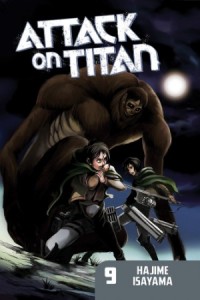
By Hajime Isayama. Released in Japan by Kodansha, serialization ongoing in the magazine Bessatsu Shonen Magazine. Released in North America by Kodansha Comics.

(Note: This review is based on a review copy provided by the publisher. So was the Sailor Moon review yesterday, come to think of it. Also, DO NOT discuss spoilers for Vol. 10-present in the comments, even if it is legal on Crunchyroll now. Also, this review spoils shamelessly everything before Vol. 10.)

There’s so much to talk about in Volume 9 of Attack on Titan that there’s no way I can get to everything. So I apologize to Mike, who tried to have an awesome battle scene but showed off his human frailty instead, and Beast Titan, who is fascinating and clearly very important from here on out, and the horrible tragedy of Connie’s village, and Eren, who finds new resolve – again – in finding ways to destroy titans. Because I’m going to talk about Sasha right now.

attack9

It’s not exactly a secret that I am very fond of Sasha. Her scene in Volume 4 was not only funny, but came at a point where the author was finally trying to differentiate the non-stars from each other and help us remember who they were. We saw her resolve even in the face of stark terror when she chooses to join the Survey Corps, and see that resolve fail in action when she begs for her life after a Titan gets the upper hand. She, along with Connie and Jean, represent the “normal folks” of the 104th Trainees. And now she’s on a mission to notify the Northern villages that Titans are coming – including her own village.

The way this chapter is framed is fascinating, though I do wonder if I only see that because of extracanonical knowledge. The author apparently planned in this chapter to kill Sasha off, only to have his editor say “Doesn’t it feel like the wrong time to do that?”. And really, up until the moment Sasha slips out of the Titan’s wet, bloody grip, the whole chapter feels like an epic farewell. She was able to rescue the kid, and now she goes out fighting in a glorious death scene that contrasts against Mike’s stand against Beast Titan in the previous chapter.

We get a flashback to her father, which establishes Sasha as conservative, set in the old traditional ways, and (of course) ravenous. He calls her a “bit of a coward”, which apparently sticks in her craw, as it doesn’t seem like too long after that she’s joining up. We also get another flashback, seeing Sasha interacting with Krista and Freckled Girl Always With Krista, showing Sasha has been trying to hide her natural accent and talk formally so she doesn’t sound like a hick. Freckled Girl objects to her not being herself, while Krista notes that no matter how she acts, Sasha IS herself by definition. It’s a cute flashback, even if Sasha is somewhat puzzled as to why she’s thinking it as she heads for her death. We even get the “yes, my life was filled with moments like these” musings we always see before a character is killed off.

Except she doesn’t. She uses her hunting skills to get arrows in the Titan’s eyes, has a narrow escape, and meets up with the one survivor of the village, a little kid who has met up with… her own village, who are alive and OK. Including her father, who is rather stunned that the cool woman who took down a Titan as his daughter. So instead of going out in a blaze of glory, the entire chapter is recontextualized as a women coming into maturity, realizing what is selfish and what is selfless, and gaining the respect of her family. Love it.

By the way, Freckled Girl is actually relevant enough to get a picture in the front of the book now, though she’s listed as “Name Unknown”, which might surprise anyone reading this volume, who has forgotten that her name was never revealed till now. It’s a surprise as THE ENTIRE INTERNET knows her name. Luckily, we learn it here as well, in Sasha’s flashback, as Krista calls her Ymir. Hrm… where have we heard that name before? Not since Vol. 5, so the reader might be forgiven for forgetting. Hange doesn’t forget, though, and is stunned to find that someone named Ymir is among the 104th Trainees… especially as Krista seems to be hiding a big secret as well.

The Attack on Titan manga tends to veer back and forth between big revelations that are well signposted in advance (Annie’s true identity, Ymir) and things that come pretty much as “Wait, WHAT?” moments. Krista having a secret identity and being the one person who can choose to say why the Walls Are Full Of Titans is the latter. I suppose you can connect her general kindness to all things to a religious upbringing, but it still seems a bit much. That said, I like that we are slowly giving the rest of the squad their own backstories and motivations, and presumably we’ll hear about Reiner and Bertholt at some future date.

In the meantime, everyone wants to find Krista, which is a problem, as she and Ymir are trying to figure out where the wall is broken and how Titans got in. (The wall isn’t broken, but let’s leave that aside for now.) We get a nice little character sketch of her and Ymir here: Ymir wants Krista safe, and if that means being a coward or acting like an obnoxious jerk, well, that’s what it takes. Krista, meanwhile, placed 10th in the trainee exams, and knows that Ymir should have been there – indeed, may have been higher – but slacked off so Krista could get the choice to go with the MPs. Krista, of course, didn’t. Krista suspects that Ymir is always next to her because of her family, but Ymir notes no, it’s for her own sake.

The two search squads, having not found a hole in the wall, and forced by Titans to hole up in an old abandoned castle. This includes Ymir, Christa, Bertholt, Connie, and Reiner. First, off, we have an amazingly over the top scene where Connie, who has seen the devastation of his village with no actual bodies, and also a Titan who looks a lot like his mother, starting to wonder if his village all became Titans, similar to Annie. Ymir promptly laughs and starts mocking Connie in an amazingly loud voice while sweating, changing the subject away from humans who can turn into Titans entirely. It’s hard not to see this as incredibly suspicious.

They go scrounging for food, and we now hit the scene that forced the yaoi and yuri fandoms to unite as one in one giant pile of squee. Reiner sees Ymir in a storeroom looking at cans, and she jokes about guys creeping into a girl’s room at night. Ymir says she didn’t think that Reiner was the sort to be interested in girls, to which he responds that he didn’t think Ymir was the sort to be interested in guys. Attack on Titan is, at heart, a military-themed sci-fi thriller, with romance really, really low on the list. So seeing two characters casually joking about being gay in a non-romantic setting is just amazing. And if we weren’t guessing that Ymir was always around Krista because she was in love with her, we certainly are now. Also, she can apparently read ancient writing that no one else can.

Sadly, a Titan assault interrupts this before we can find out more, and we finally get to a cliffhanger. What a volume. I’m not sure the pacing always works (admittedly Ymir has been in the background since the start, but her sudden rise to main character status is still a bit of a shock), and there are still the usual art issues. But this is an amazing page-turner, and I fully support any shoehorned-in characterization as long as it deepens and expands their relationships with each other. And it’s nice to see an expanded sexuality in the series as well. In the end, how much did I enjoy this volume? Well, I wrote a review that’s almost three times as long as my normal reviews. Get it.

Filed Under: REVIEWS

What’s Michael?, Vol. 2

November 8, 2013 by Ash Brown

What's Michael?, Book TwoCreator: Makoto Kobayashi
U.S. publisher: Studio Proteus
ISBN: 9781560600787
Released: February 1991
Original release: 1985
Awards: Kodansha Manga Award

Before there was Konami Kanata’s Chi’s Sweet Home there was Makoto Kobayashi’s What’s Michael?, proving that the international appeal of cats and cat manga is nothing new. What’s Michael? began serialization in Comic Morning in 1984 and ran for five years and nine volumes, winning a Kodansha Manga Award in the process. In addition to English, at least part of the series has been translated into French, German, and even Polish. What’s Michael?, Book Two is the second of two volumes to be released in English by Studio Proteus. The volume, published in 1991, collects material that was originally released in Japan in 1985. Although only two volumes of What’s Michael were released by Studio Proteus, Dark Horse later released the series almost in its entirety. (Some strips were left out due to potentially objectionable content.) Unfortunately, both the Studio Proteus and Dark Horse editions of What’s Michael? are long out of print.

Michael is an orange tabby tomcat, an American Shorthair with plenty of personality and representative of all cats and their quirks. What’s Michael? follows him and his interactions with other cats and humans, who are often just as peculiar as the felines they love. There’s the man who seems to be a living cat-magnet, the couple who didn’t completely think through the combination of claws and their new wicker furniture, the man who put far too much thought into living with a cat, a girl who delights in pestering Michael, the yakuza who despite their hardened demeanor have a soft spot in their hearts when it comes to four-legged fuzzballs, and all of the other people who can’t get enough of or who have had way too much of cats. Michael’s fellow felines, along with all their foibles and charms, also make frequent appearances. The result is an entertaining and highly amusing collection of short cat manga.

What’s Michael? works so well because Kobayashi is exceptionally attuned to cats and their behavior as well has how humans react when confronted by that behavior. Everything in What’s Michael? I have seen before with the cats, family members, and friends that I have known, which is what makes it so delightfully funny. One of the things that impressed me the most about What’s Michel?, Book Two was how little of the comedy relied on dialogue, which makes sense considering that cats don’t really communicate through words. Instead, Kobayashi relies on the actions, reactions, and overreactions of the cats and other characters to drive the humor of the series. And he succeeds magnificently–What’s Michael? is hilarious. It really is a shame that the series is currently out of print and somewhat difficult to find in English; it’s definitely worth tracking down.

Although there are recurring characters and running jokes, and even a few continuing storylines, What’s Michael? is largely episodic in nature. Before reading What’s Michael?, Book Two, I had only seen a few random chapters from the series; my unfamiliarity did not at all detract from my enjoyment of the volume. Each strip is only six pages long and range from the completely realistic to the utterly fantastic, but they are all authentic representations of the nature of cats and their owners. What’s Michael? is a genuinely funny and slightly surreal manga. Cat lovers will especially appreciate the series, but even those without a particular affinity for felines should at least occasionally find What’s Michael to be amusing. I know that I enjoyed What’s Michael?, Book Two immensely and would love to read more of the series, but then I live with cats and am quite familiar with their antics. Kobayashi captures them perfectly in What’s Michael?.

Filed Under: REVIEWS Tagged With: Kodansha Manga Award, Makoto Kobayashi, manga, Studio Proteus, What's Michael

Pretty Guardian Sailor Moon Short Stories, Vol. 2

November 8, 2013 by Sean Gaffney

By Naoko Takeuchi. Released in Japan as “Bishoujo Senshi Sailor Moon” by Kodansha, serialized from various sources. Released in North America by Kodansha Comics.

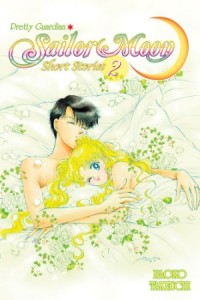
And so we come to the final final volume of the Sailor Moon manga. Kodansha has indicated there’s an artbook coming along, but for the moment, this is it. And I really wish that it ended better. I’ve been a huge supporter and preacher for this entire series, pointing out how awesome it is, and thus it saddens me that this collection of three short stories has only one that really measures up to the standards set by the series in the past. And no, that’s not the one the anime chose to adopt into a movie. (I do give big props for that cover, though, which has a post-coital Usagi and Mamoru in bed, with Usagi winking at the viewer. Fourth-wall breaking has always been in the Sailor Moon manga to a degree, but this really takes it in new directions of cute.)

smss2

Let’s start with the story that takes up over half this volume, Princess Kaguya’s Lover. This was adapted into the 2nd of the 3 Sailor Moon movies, Sailor Moon S. And indeed that’s quite deliberate: Takeuchi wrote it with a movie in mind. I don’t think it ran in a magazine, but instead appeared straight in the original tankobon. It also stars Luna. Luna, Artemis, and Diana have gotten dramatically less focus in the manga than they did in the anime, which ironically helps the story a bit here. We’ve never seen Artemis pining over Luna quite as much as we do in animated form, so there’s less bafflement at Luna’s treatment of him. And the invasion of yet another female villain poised to destroy the world is handled with the usual Sailor Moon aplomb. At heart, though, this is a love story about a cat and a human, and that’s just sort of uncomfortable, even if Sailor Moon does transform Luna into a human so she can say goodbye to her (already in love with his childhood friend) crush. (Also, Venus and Jupiter have birthdays 6 weeks apart! Throw them separate parties, sheesh.)

Casablanca Memory is the reason to pick up this volume, as it’s excellent. Given Rei had to share a short story with Minako last time (and that really was Minako’s more than Rei’s), it’s fitting she gets one of her own. This takes place early on in the Senshi’s lives, around the time they first met Jupiter. Rei’s background has been quietly mentioned before, but this story is all about it: her father is a prominent politician with no time for family, and has assistants to remember things like “when is Rei’s birthday” and “get her something nice.” Her mother was a quiet supporter of her father, but fell ill and died, which Rei has never forgiven him for. Then there’s Kaido, the assistant of Rei’s father, who’s like an older brother to her… or maybe something more. The story isn’t perfect – it’s never clear if Kaido is possessed or was posing as a Dark General all this time, and his death is also very ambiguous. But it really gives you a good sense of Rei, and is at least very much in character.

And so we come to Parallel Sailor Moon, the final story in the manga, and the nadir of the series. This was written a couple of years after the series ended for an artbook, and the author noted it was in an alternate universe AND THANK GOD, because everyone in this is shallow and awful. Takeuchi has, throughout the manga, had a bad habit of making her characters shallow and annoying for the sake of humor. Since this story is all humor, that’s all we get. The premise has our heroines all grown up and married, with kids of their own, and apparently not senshi as they all live in modern-day Tokyo. They’re all noted to be daughters of prominent families who had arranged marriages, and the kids are “wise above their years” cynics who would not be out of place on an 80s ABC sitcom. Usagi has had a 2nd child, Ko. Ko is hyper-annoying and loves to eat, and everyone hates her. There’s not even the “we love Usagi for all her faults” here, except for one panel where they realize she’s in trouble. It’s just “Ugh, her.” I just… I identify with the characters more than anything, so seeing them portrayed like this hurts my soul. I laughed once the entire story, when Hotaru remarked about how they were going to take over the world as civil servants. That was it.

There are a few extras here, with a timeline for the series (real-life timeline, i.e. publishing dates) and Takeuchi’s description of visiting Cape Kennedy to see space shuttle launches. But overall, despite Rei being cool and beautiful, this book is for those who want t have the complete collection, and I suspect that of all the re-releases it will be the one I dip into least. Still love Sailor Moon, though.

Filed Under: REVIEWS

Manga the Week of 11/13

November 7, 2013 by Sean Gaffney, Ash Brown, MJ, Anna N and Michelle Smith 2 Comments

SEAN: This week isn’t quite as bad as the previous two, but there’s still a chunky bit of stuff coming onto the shops.

Dark Horse has the 3rd of their Lone Wolf & Cub omnibuses. That’s a chunky item hitting the shops all by itself, and very good value for money it is too.

ASH: I’m happy to see Lone Wolf & Cub being re-released. The larger format means I have a better chance of actually being able to read the text, too.

MJ: I’ve been so happy to have a fresh opportunity to fall in love with this series. And fall in love, I have!

ANNA: Nice! I need to check this out again, I think I only read the first five or so volumes of the original series but I did enjoy it.

SEAN: We have a trio of releases from DMP. Lies Are A Gentleman’s Manners certainly wins the title of the week award, but I know nothing else about it. The description seems to involve LSD and blackmail.

ASH: I don’t know much about this one, either. But, megane alert!

MJ: Thanks to David Welsh, I’m thrilled to see anything from Opera, so count me in!

Moon and Blood 4 is still doing its mini-manga thing.

And Triton of the Sea finishes up with its 2nd omnibus. Are we getting near the end of print Tezuka releases, headed for a digital-only future?

ASH: I think we’re getting close. There are only two forthcoming Tezuka print releases that I’m currently aware of: The Mysterious Undergound Men and The Crater.

showa

SEAN: Drawn & Quarterly has been putting out a lot of Shigueru Mizuki lately, and this is one of his big magnum opus projects. Showa 1926-1939: A History of Japan seems to actually be half history book and half yokai (come on, can we really expect no yokai in a Mizuki book?), as we switch between his childhood and the events that shaped Japan. I can’t wait for this one. There’s a sequel, covering World War II, out in the spring.

MICHELLE: Oh, that *does* sound interesting.

ASH: I’m very much looking forward to this series. If the first two omnibuses do well, we should see two more.

MJ: Ditto!

ANNA: This looks cool.

SEAN: Kodansha has Cage of Eden 12, with more extinct animals, action sequences, and naked teenage girls bathing in rivers.

Another intriguing debut is Black Bard, which One Peace Books is putting out as a done-in-one omnibus. From Media Factory’s oddball shoujo magazine Comic Gene, and the plot sort of sounds like Shoulder-A-Coffin Kuro, only less depressing.

ASH: I’m definitely checking this one out. I just can’t pass up the music and magic combo.

MJ: Again, what Ash said!

ANNA: I am reserving judgement until the first reviews get posted, but it does sound interesting.

SEAN: One Peace also has the 4th of the reissue volumes of Crayon Shin-chan, which has been their main manga product to date, though with Black Bard they’re starting to expand. Shin-chan is pure kiddie fun, though be aware it’s a kid’s idea of fun, not a parent’s.

Picturebox has been known for having some old-school seinen, and this week is no different with the release of Gold Pollen and Other Stories. Actually, instead of seinen, it’s more pure alternative, and sounds quite interesting in an “indie comix” way.

ASH: I’ve already got my copy of this one! Picturebox has been doing some really interesting manga releases this year and the production quality has been top-notch. Gold Pollen is the first volume in its Masters of Alternative Manga series; I’m very curious to see what else will be picked up.

MJ: I’m pretty anxious to see this!

SEAN: SubLime has the 3rd volume of Blue Morning, which I understand has garnered some praise from other corners of the Manga Bookshelf. Anyone want to chime in?

MICHELLE: I described it as “more like a genuine period drama than BL romance with some token period frills.” The characters are well developed and complex, too, and I really couldn’t recommend it more highly.

MJ: I’m really enjoying this series, and Michelle’s recent review has made me anxious to dig into this volume!

police1

SEAN: “I am hot.” “I am also hot.” “And naked.” “I too am naked.” “We fight crime.” “In an erotic way.” “We are… Spiritual Police.” “From SubLime Manga, November 6.” “Revel in our hot bods.” “And sultry gazes.”

MICHELLE: Bwa-ha-ha!

MJ: <3

SEAN: Vertical dips into the world of post-apocalyptic sci-fi with From the New World Vol. 1. I really didn’t like the first volume, but others may disagree with me.

ASH: I’ve been told the manga follows the novels more closely than the anime adaptation, but I’m really not sure what to think about this series yet.

SEAN: 07-Ghost Vol. 7 comes as close as it ever will to being symmetrical.

MICHELLE: Sigh. Somehow I am now really, really far behind on this.

MJ: I’m mesmerized by the near-symmetry.

ANNA: I need to get caught up! I enjoy this series.

SEAN: Fullmetal Alchemist 3-in-1 Vol. 6 introduces Olivier Armstrong, which is the best possible reason to buy it, as she is amazing.

MJ: Yes. Yes she is.

Speaking of omnibuses, Inu Yasha’s VizBIG Edition is up to Vol. 17, which I’m sure is also an exciting and thrilling part of the story, probably.

MICHELLE: I have actually never finished InuYasha. I have the last ten volumes hanging around, ready for me to read them, but I have been delaying it for years now. Kind of like how I never watched that one episode of TNG and thus it is not actually finished for me.

SEAN: Lastly, Rin-Ne ambles slowly along with lucky Vol. 13. Perhaps Sakura will show an emotion this time around… nah, never gonna happen. Still, it’s enjoyable spirit comedy.

MICHELLE: I have a warm spot in my heart for RIN-NE despite its lack of forward momentum of any kind.

SEAN: Any favorites?

Filed Under: FEATURES, manga the week of

Weekly Shonen Jump Recap: October 28, 2013

November 6, 2013 by Derek Bown 2 Comments

Naruto

Naruto Ch. 652
Please take a good close look at the following image, people that still like Naruto. Take a good long look and realize what your manga about ninja has come to.

Naruto Tug of War

That’s right. The climactic battle has come down to a tug of war. I have no words. And really, anything I say couldn’t possibly convey exactly how ridiculous this manga has gotten more effectively than that single image from the chapter.

I probably would read a tug of war manga if that were a thing, but I came here for ninja battles, not a giant tug of war for demon energy. And if it feels like I’m saying tug of war too much that’s because it’s a silly name and I want to be sure that everyone realizes how ridiculous it is to finish off a battle with a tug of war.

Tug of War.

Bleach Ch. 554
The reveal that apparently Quincy have some kind of super powered form aside…actually, no let’s not put that aside. That makes no sense whatsoever. With the Arrancar having a different form made sense, their entire powerbase was based on changing shapes. With the Soul Reapers it made sense because the concept of swords changing shape was introduced very early on in the series. So of course they’d have an ultimate form. But with Quincies there is nothing about their power that suggests they would have any kind of ultimate form. Their power lies in gathering and manipulating spirit particles, they get more powerful by getting more spirit particles. So how are they suddenly able to take on a more powerful form?

And I know that most of the powers in this series have some kind of power up form, but with the Fullbringers it worked because their introductory arc introduced everything there was to know about their powers. But the Quincies have been around since basically the beginning of the series. So to suddenly change their powers like this is just jarring.

Though, I do love Komamura’s new armor, and I love seeing Shinji get the better of Bambieta using just his Shikai. It may be OP, but I gotta love seeing someone that doesn’t rely on their bankai all the time.

One-Punch Man Bonus Chapter
This was a pretty pointless chapter, and that’s what made it so much fun. You could probably call this series “The Daily Lives of Superheroes” and fill it with a bunch of inane events that would still be plenty fun to read about. In fact, I’d love that idea, taking the concept that Saitama is unbeatable and instead just show his daily life with the monster attacks being incidental events. Which is what this chapter basically was. So more please.

World Trigger Ch. 36
I would complain that there was far too much explaining in this chapter, except the payoff was worth it. I would love to see more intelligent fights from battle manga, since I get tired of the old “I’m more powerful than you, but now you are more powerful than me oh no!” that too many manga resort to. Show me some clever strategery and I’ll be happy. I may still hold a grudge for almost thirty chapters of pointlessness, but if I get more battles like this one I might just consider forgiving the terrible start this manga had.

World Trigger

Nisekoi Ch. 96
I do hope that the twist next chapter isn’t that Marika is sick. Because we already know that. It’s not like it’s some kind of surprise, so trying to pull a dramatic reveal on information we’re already aware of would be a major faux pas.

As massively non-pc as someone like Mikage would be, I get a good laugh out of her antics. And of course Tsugumi manages to be the butt (or bust?) of the joke once again. Though I did like that she complains about this and previous bad touch situations.

Chitoge’s reaction to Raku and Marika’s supposed relationship was of course perfect. The only way it works is that Chitoge actually tries to be cool about it at first, assuming that it’s just another one of those weird situations they get into. It isn’t until after she’s convinced that the relationship is real that she overreacts. After so many other manga go the easy route of “misunderstanding then punching” it’s refreshing to see some characters act a little more genre savvy.

Seraph of the End Ch. 3
We’re just three chapters in and it’s official. I hate this manga. I hate how it keeps trying to justify the bland high school setting, I hate how it acts like it’s post-apocalyptic but insist on keeping the trappings of the most generic shonen manga. I hate that the main character goes beyond shonen enthusiasm and becomes a legitimately stupid character. Characters like Naruto, Luffy, and Goku may have their stupid moments, but they back it up by actually being intelligent in fights. This guy, I still refuse to waste space remembering his name, is just flat out stupid. The worst part is that he’s apparently not supposed to have the “I’m an idiot shonen hero” gag going on. And yet, somehow we end up with a character who is legitimately worse than the dumbest of shonen heroes.

And what’s up with the “Virginity is bad” junk? Is that the creative team just trying to be edgy? Or hip and with it? Either way it’s an attempt at humor that falls as flat as the rest of this series.

Oh, and look there! The kid who was bitten by a vampire in the first chapter came back as a vampire and we’re supposed to be surprised!? It would take a five year old reading this manga to be surprised by that twist. Literally the entire world knows that if a vampire bites you, you become a vampire. How is this meant to be a surprise!?

And why has he aged? Vampires are dead! They cannot age! Even Twilight got that part right! (Mostly) You hear that manga? Twilight did a better job at writing vampires than you are!

Seraphs End

Toriko Ch.255
I’m legitimately surprised Ichiryu is alive. I thought for real that he was going to die, especially after all the buildup the past several chapters. But, other than that twist the rest of the chapter mostly just shows people dealing with the meteor spice, and for the most part it looks like everyone will be fine. Still, a very fun chapter.

Toriko

Dragonball Z Ch. 37
Goku continues to win, breaking the chapter by chapter flow that we’d established prior. Which works well because it allows the reader the illusion that the battle may be over soon. Which of course we know is not true, or at least those of us reading this series for anything but the first time. I have to continue wondering, why is Goku’s Kamehameha yellow when the one in the anime was blue?

Dragon Ball Z


So with three chapters in, what does everyone think about Seraph? Let me know in the comments if I’m overreacting or if it’s not pissing me off enough.

If you want to hear more, check out the Manga^3 Podcast Archives.

Filed Under: FEATURES & REVIEWS, WSJA Recaps Tagged With: bleach, blue exorcist, Dragon Ball Z, Jako The Galactic Patrolman, naruto, nisekoi, One Piece, one punch man, toriko, world trigger

  • « Go to Previous Page
  • Page 1
  • Interim pages omitted …
  • Page 639
  • Page 640
  • Page 641
  • Page 642
  • Page 643
  • Interim pages omitted …
  • Page 1048
  • Go to Next Page »
 | Log in
Copyright © 2010 Manga Bookshelf | Powered by WordPress & the Genesis Framework