• Skip to primary navigation
  • Skip to main content
  • Skip to primary sidebar
  • Home
  • About Us
    • Privacy Policy
    • Comment Policy
    • Disclosures & Disclaimers
  • Resources
    • Links, Essays & Articles
    • Fandomology!
    • CLAMP Directory
    • BlogRoll
  • Features & Columns
    • 3 Things Thursday
    • Adventures in the Key of Shoujo
    • Bit & Blips (game reviews)
    • BL BOOKRACK
    • Bookshelf Briefs
    • Bringing the Drama
    • Comic Conversion
    • Fanservice Friday
    • Going Digital
    • It Came From the Sinosphere
    • License This!
    • Magazine no Mori
    • My Week in Manga
    • OFF THE SHELF
    • Not By Manga Alone
    • PICK OF THE WEEK
    • Subtitles & Sensibility
    • Weekly Shonen Jump Recaps
  • Manga Moveable Feast
    • MMF Full Archive
    • Yun Kouga
    • CLAMP
    • Shojo Beat
    • Osamu Tezuka
    • Sailor Moon
    • Fruits Basket
    • Takehiko Inoue
    • Wild Adapter
    • One Piece
    • After School Nightmare
    • Karakuri Odette
    • Paradise Kiss
    • The Color Trilogy
    • To Terra…
    • Sexy Voice & Robo
  • Browse by Author
    • Sean Gaffney
    • Anna Neatrour
    • Michelle Smith
    • Katherine Dacey
    • MJ
    • Brigid Alverson
    • Travis Anderson
    • Phillip Anthony
    • Derek Bown
    • Jaci Dahlvang
    • Angela Eastman
    • Erica Friedman
    • Sara K.
    • Megan Purdy
    • Emily Snodgrass
    • Nancy Thistlethwaite
    • Eva Volin
    • David Welsh
  • MB Blogs
    • A Case Suitable For Treatment
    • Experiments in Manga
    • MangaBlog
    • The Manga Critic
    • Manga Report
    • Soliloquy in Blue
    • Manga Curmudgeon (archive)

Manga Bookshelf

Discussion, Resources, Roundtables, & Reviews

Blog

What Did You Eat Yesterday, Vol. 1

March 30, 2014 by Anna N

What Did You Eat Yesterday? Vol 1 by Fumi Yoshinaga

What Did You Eat Yesterday?
is one of those holy grail manga that I thought would be tough to get here in America in translated form, so you can imagine my delight when Vertical announced that they would be publishing it. No one does slice of life foodie manga like Yoshinaga, so I was looking forward to this series about a gay couple and the food they eat.

Shiro Kekei is a lawyer for his day job, determined to take on boring cases that will allow him to leave work by 6 every day. He doesn’t share much about his personal life at work, seeming very aloof. Shiro’s enthusiasm comes out when he’s shopping for and preparing food for his outgoing boyfriend Kenji who works at a salon. Ordinarily reading someone’s thoughts as they scan the supermarket for bargains and contemplate the nuances of the seasoned rice that they are cooking wouldn’t be all that exciting, but Yoshinaga’s wit and humor makes these every day occurrences fascinating. What Did You Eat Yesterday? is all about food, but Yoshinaga also includes details of character interaction that make you want to spend more time with the people she introduces. Shiro’s mother calls him and browbeats him about not being out at work, yelling over the phone “Proclaim it loud and proud! Being homosexual is nothing to be ashamed of!” Shiro zealously guards his privacy, while Kenji brags about his hot lawyer boyfriend at work while he’s cutting hair.

Shiro has another close friend outside of work, an older housewife who he bonds with over their shared love of cooking, and they meet in an amusing way. Seeing the contrast between Shiro’s job as a lawyer and the hobby that takes up so much of his interior life is interesting, as well as the way the different personalities Shiro and Kenji complement each other. There are a few recipes in the book, and for the dishes that Shiro prepares that aren’t as fully described, it would be easy to track down a recipe online. I did find myself wondering towards the end of the book if I could start using my rice cooker more creatively. This was a pleasure to read, from the opening scenes to the next volume preview that includes a list of all the foods the reader can expect to see in volume 2.

Filed Under: REVIEWS Tagged With: vertical, what did you eat yesterday?

Sword Art Online: Aincrad

March 30, 2014 by Sean Gaffney

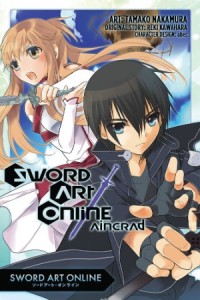
By Reki Kawahara, abec, and Tamako Nakamura. Released in Japan in two separate volumes by ASCII Mediaworks, serialized in the magazine Dengeki Bunko. Released in North America by Yen Press.

I have to admit that this one took me entirely by surprise. I wasn’t really expecting much when Yen announced this. “Oh no, we are trapped in a virtual reality game where we must fight or die” is something that has become almost as overdone as “oh no, what are these strange feelings I have for my older brother” in anime/manga, and watching people cut things with swords has never been my thing. I also don’t game. It’s also based off of a light novel series, and I was thus expecting the manga spinoff to be somewhat rushed (and indeed, it does feel rushed) and filled with fanservice (actually very little of this, save one “oh no, I accidentally fell into her breasts” scene that just made me sigh loudly). However, it was the relationship between the two leads that drew me in. Because it is a genuine relationship. Wasn’t this a harem manga?

sao1

Backing up a bit, the premise has 10,000 players in a new immersive fantasy game trapped by its sadistic creator, who wants them to get to the 100th level of the game. Oh yes, and if they die in the game, they die in real life. Our hero is Kirito, who was one of the game’s beta testers (but unaware this was going to happen), and is fairly cool and aloof to everyone he meets. Our heroine is Asuna, a nice girl with drive and purpose who wants to join forces with Kirito so they can finish this faster and finally go home. Clearly they are destined for each other, despite a rocky start. I wonder how many volumes it will take before they realize their true feel… oh, wait, OK, that was fast.

For all the flaws that occurred to me after I finished the volume, the thing I loved most was the relationship between Kirito and Asuna. There’s an immediate attraction, they both risk their lives for each other, and because there is a setting in the game for ‘let’s have sex’, they do so (non-explicitly) about halfway through the book. And then get married. And even briefly have an adopted kid, though it turns out this is more than it seems, and ends in tears for both of them. They’re just really likeable kids, and bring out the best in each other – Asuna is someone that Kirito desperately needed, particularly after his last attempt at working with others.

I’m not sure that this is the sort of relationship that will last when they end up back in the real world and aren’t dealing with adrenaline rushes and near death experiences. The volume ends with Kirito (sorry, Kazuto… damn fake names) awake in a hospital, resolving to find Asuna but it’s very open ended, and given the series is 13+ light novels in Japan, I expect it may not be as simple as it seems. I’ve also been told that future volumes of this series (or at least the anime adaptation thereof) are far more… contested, shall we say. And I will admit that Kirito does seem to have the scent of ‘boring invincible hero’ to him, though honestly, I’ve read Index/Railgun, and it’ll surprise me if anyone tops Touma. As for me, I am quite content with what I saw in this volume, and will be eagerly awaiting the light novel when it appears next month. Despite all the swords, this was sweet and romantic.

Filed Under: REVIEWS

Real, Vol. 5

March 29, 2014 by Ash Brown

Real, Volume 5Creator: Takehiko Inoue
U.S. publisher: Viz Media
ISBN: 9781421519937
Released: July 2009
Original release: 2005
Awards: Japan Media Arts Award

When I first started reading Takehiko Inoue’s prize-winning manga series Real, I didn’t expect to appreciate it as much as I do. Real has actually become one of my favorite series. I wasn’t particularly interested in wheelchair basketball, one of the main subjects of Real, although that has since changed. Instead, I was initially drawn to the manga because it was created by Inoue, whose artwork I greatly admire. I also am very impressed by his storytelling skills, especially in Real, but also in his other manga available in English, Slam Dunk and Vagabond. As much as I enjoy those two series, in the end it’s Real that I find to be the most compelling. It is a very powerful work. I’ve said it many times before, but it is still true–I honestly believe Real to be one of the best comics that is currently being released in English. The fifth volume of Real was originally collected in Japan in 2005 while the English-language edition, released under Viz Media’s Signature imprint, was published in 2009.

Ever since his motorcycle accident, Nomiya’s life has been falling apart. Although he has tried to earn his drivers’ license, it has taken him quite some time since he is terrified to be on the road. Nomiya is even more terrified of facing Natsumi, the young woman who was in the accident with him. While Nomiya was barely injured, Natsumi has lost the ability to walk and must now use a wheelchair. Nomiya blames himself for the accident and Natsumi’s current condition. The guilt has nearly brought his life to a standstill. He wants to do all that he can to move forward, but this means confronting his fears and confronting Natsumi. Unsurprisingly, she’s not particularly interested in seeing Nomiya, either–she blames him for the accident, too. Her rehabilitation is going well, but Natsumi’s life has been changed forever. Takahashi’s rehabilitation has actually taken a turn for the better, too, after a visit from Nomiya that ends rather badly. It’s been about six months since Takahashi’s own accident which cost him the use of his legs, but he has recently shown enough improvement that he will soon be able to leave the hospital.

Whereas the previous volumes of Real thoroughly introduced the lead characters–Nomiya, Togawa, and Takahashi– and explored their personal, internal struggles, the fifth volume addresses some of the more practical problems and challenges experienced by those who are disabled in an world and environment designed for the able-bodied. This can particularly be seen when Takahashi is considering returning to Nishi High to finish school. Not only is he not yet in a position where he can take of himself, the school itself isn’t at all accessible to someone in a wheelchair and the needed accommodations are prohibitively expensive. These external issues and concerns are inexorably tied to how Takahashi and the others view themselves and and see themselves as people of worth. Takahashi in particular is obsessed with ranking people and assigning them value. He used to consider himself one of the elite, but now his self-worth has been severely compromised. It’s understandable that this is something that he continues to struggle with, especially as he no longer feels that there is a place for him.

Takahashi isn’t the only one suffering from a crisis of self-worth in the series. A major theme in Real deals with what it means to be a good person and a decent human being. Takahashi’s attitude and efforts to be the best in whatever he does comes across as extremely arrogant, but people are beginning to see through his facade of perfection. Nomiya has made, and continues to make, plenty of mistakes in his life, but his honest desire to improve himself and the care and acceptance that he offers others show that he is a much better person than he recognizes. This search for self-worth isn’t limited only to the series’ leads, either. All of their friends and family members are struggling with it as well. In a particularly heart-wrenching development, Togawa’s close friend Yama, who has always been vibrant and maintained an admirably positive outlook, is frightened of who is becoming now that his disease is overtaking his body and mind. Inoue’s characterizations in Real are fantastic. The series is compelling because it is so easy for anyone to identify with the personal struggles being portrayed in the manga even if the characters’ particular situations are unique.

Filed Under: REVIEWS Tagged With: Japan Media Arts Award, manga, real, Takehiko Inoue, viz media, VIZ Signature

Catching Up with Lynley and Havers

March 28, 2014 by Michelle Smith

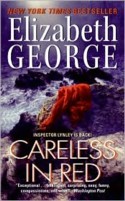
carelessinredCareless in Red
It’s been a while since I talked about an Elizabeth George book on the blog. I did read With No One as Witness, but spent so long digesting my reaction to the surprise ending (which had, admittedly, been spoiled for me by the author’s website) that I forgot many of the other details. And I started the next book, What Came Before He Shot Her, but as it doesn’t revolve around our main characters and is massively depressing, I quickly abandoned it. Skipping ahead to Careless in Red runs counter to my typical completist sensibilities, but I’m glad I did, even if it is rather lame in various respects.

In short, a murder has been committed in a surfing town in Cornwall where many of the residents are sex-obsessed. The culprit is revealed to be exactly who I thought it was (though I didn’t know why) and then everyone proceeds to have a sudden change of heart. The much-put-upon husband casts off his horrid wife. The rebellious son decides to make a sincere attempt at learning his father’s business. The cantankerous grandpa decides to honor his granddaughter’s wish to become a nun. (Seriously, why were they even in this book? Their only contribution to the mystery was that the victim had once made a comment to the girl that she relayed to the police.) At least Lynley is the protagonist in this one and, even though we aren’t treated to any sections from her point of view, Havers has a decent role, as well. I swear she just brightened up the whole book when she appeared. I do so love Havers.

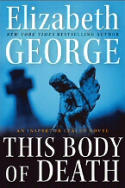
thisbodyofdeathThis Body of Death
Isabelle Ardery, a character from Playing for the Ashes who didn’t even merit a mention in my review of that book, is back, taking on the Acting Detective Superintendent role vacated by Lynley. And boy, is she unsympathetic. She’s an alcoholic for one and makes several bad decisions (often seemingly out of pride or pique) regarding the case at hand (a young woman has been murdered in a local cemetery). She is able, though, to get Lynley to come back to Scotland Yard, and in the end the thoroughly broken pair ends up as lovers. While I do not like her at all, it is at least in character for Lynley to have terrible taste in women (Deborah, anyone?) aside from Lady Helen.

Havers has more to do this time (yay!) but I object to some extreme rationalization at the end regarding her unwillingness to call for backup. Yes, Havers is very stubborn, but I just got the feeling that George knew a reasonable officer would’ve called for backup in the situation Havers found herself in, but in order to get her big, dramatic conclusion to work, she had to get Havers to wait. Also, is George trying to insinuate that Havers is in love with Lynley? Her reaction to Lynley and Ardery’s relationship makes me wonder. I really don’t want this to be true. They should be like Donna and The Doctor.

Overall, though, This Body of Death is an improvement over Careless in Red. The case is more interesting and twisty, with various elements that connect well in ways I did not predict. The only really obvious revelation—and I’m honestly not sure it was supposed to be a surprise to the reader, given the way the book is structured—regards one character’s involvement in a past crime. Not the best Elizabeth George, but not terrible, either.

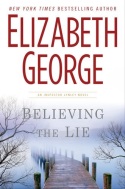
believingthelieBelieving the Lie
AUGH! I HATE DEBORAH ST. JAMES SO FREAKING MUCH! I mean, I have intensely disliked her for some time, but her idiotic actions in this book, most irritatingly excused by Lynley and Simon, have caused my feelings to progress into outright hatred. When Lynley is tasked with quietly verifying that the accidental drowning of a rich dude’s nephew really was an accident, he enlists Simon and Deborah’s help. Deborah, true to irrational form, becomes obsessed with ferreting out a secret held by one of the peripheral characters and ends up running off on her own to pursue it, which ultimately leads to tragedy. And, of course, it all has to do with having babies, which is Deborah’s primary fixation, even though she’s such a damned moron that I’d feel bad for any kid growing up under her care.

The rest of the book wasn’t so great, either. Though it finishes with much drama, it starts off terribly dull. One subplot I could’ve done without entirely involved a tabloid reporter who was having trouble finding a story salacious enough to suit his editor. He ultimately served almost no purpose whatsoever, except to give Deborah a ride on several occasions. And I was mad at myself for getting a bit misty-eyed over the resolution to another subplot, since it replicates almost exactly one that appeared just two books ago! Lynley seems to be sleepwalking through most of what occurs, and though something spurs him at the end to begin trying to move on from Helen’s death, I’m not exactly sure what that was.

Once again, the best bits were the Havers bits. The volume ends with a cliffhanger that will lead us into the next book, and I’m glad I won’t have to wait years for it. I’m a little worried that Barbara is going to do something to jeopardize her career at Scotland Yard, but if it can lead to happiness in her personal life, or even a glimmer of hope for future happiness, it will probably be worth it.

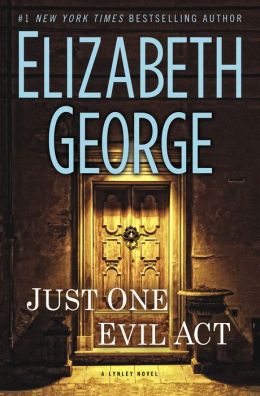
justoneevilactJust One Evil Act
I wanted so much to love this book, but it persisted in being so thoroughly frustrating and awful that in the end, I very nearly hate it instead.

Angelina Upman, mother of Havers’ sweet nine-year-old neighbor Hadiyyah, returns to her former lover’s life briefly before absconding with her daughter to Italy, where her new man awaits. Azhar (Hadiyyah’s father) does something stupid to try to get Hadiyyah back, Angelina eventually ends up dead, and Barbara does so very, very many thunderingly stupid things throughout that she’s probably tarnished forever now in my eyes, which makes me quite sad indeed. It’s completely in character for her to do what she can for Azhar. I mean, I get that, and I get how he and his daughter are practically the only thing in her life besides her job, but she persists in believing she can bend a tabloid journalist to her will, but it only ever gets her further into the shit. (Meanwhile, readers are treated to innumerable, interminable conversations between the two of them. George also throws in tons of random Italian words throughout; it’s both annoying and pretentious.)

I wanted a book with Havers triumphant. A Havers showing that, despite her problems with professionalism and authority, she really has something amazing to offer. Instead, the best parts of this book were other people, namely Lynley, who makes progress in getting over Helen, and the charming Italian detective, who seems kind of sweet on Barbara.

It literally took me months to finish this. I cannot recommend it. And yet… can I give up a series I have stuck with for so long? Time will tell, I suppose.

Filed Under: Books, REVIEWS Tagged With: Elizabeth George

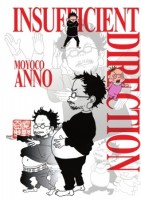
Insufficient Direction

March 28, 2014 by Ash Brown

Insufficient DirectionCreator: Moyoco Anno
U.S. publisher: Vertical
ISBN: 9781939130112
Released: February 2014
Original release: 2005

I picked up the first few volumes of Moyoco Anno’s manga series Happy Mania more on a whim than anything else. After reading them I immediately went out and tracked down all of the manga by Anno available in English that I could find. I have been a fan ever since and even went so far as to host the Moyoco Anno Manga Moveable Feast. Anno is an extraordinarily talented creator. I adore her work and so was extremely happy when Vertical released Insufficient Direction in 2014. Originally published in Japan in 2005, the manga is a somewhat fictionalized account of Anno’s married life with her husband Hideaki Anno of Neon Genesis Evangelion fame. Now, I know quite a few people who were interested in Insufficient Direction primarily because of the Hideaki Anno connection. In addition to being one of the manga’s main subjects, an essay in which he discusses Insufficient Direction is also included as part of the volume’s extra materials. But for me, my interest in Insufficient Direction was all about Moyoco Anno. I was excited to have the chance to learn a little more about her and her life directly from her own perspective.

Rompers (aka Moyoco Anno) and Director-kun (aka Hideaki Anno) are getting married. It just so happens that Director-kun is one of the “big four” of Japanese otaku. A director of both film and anime, he is also a huge fan and obsessive collector of Japanese pop culture. Rompers has her own otaku tendencies and enjoys manga, anime, and such, but she has tried to keep those impulses under control in order to lead a more “normal” life. However, Rompers’ marriage to Director-kun makes that almost impossible and she slowly becomes bona-fide ota wife. Although Rompers obsesses over some of her own interests, it’s nothing when compared to Director-kun. Instead of denying her otakuness, Rompers begins to embrace it, partly out of self-preservation. She and Director-kun are able to share their love of Japanese television, anime, and manga, but how much is too much? Their home quickly fills with their collections and they can be embarrassingly enthusiastic over the smallest bits of trivia. In the end, it is a way of life and they love it (although Rompers continues to have some reservations). But more importantly, they love each other.

There are a ton of references to tokusatsu, anime, manga, and other Japanese pop culture and celebrities. In fact, there are thirty pages of annotations to help interested readers keep a handle on everything. Sometimes reading the notes actually takes longer than reading the chapters they’re associated with. However, understanding all of the minutia and details isn’t absolutely needed to enjoy Insufficient Direction; simply recognizing the extreme levels of geekiness and nerd cred involved should be enough. Rompers and Director-kun make an adorable and loving couple. The reason that there are so many pop culture references isn’t just because that is what they are interested in, it’s also one of the ways they connect and communicate with each other. Entire conversations can be held that consist of nothing but quotes from anime and other media. Singing theme songs at the top of their lungs brings them even closer together. Vacations and excursions are based on locations from films and television shows. Fortunately, because they do share so many interests, they usually can happily spend time enjoying them as a couple.

Although Insufficient Direction is fictionalized–mostly to emphasize the more humorous aspects of Rompers and Director-kun’s relationship–I find it to be entirely and completely believable. As a bit of an otaku myself, I am very familiar with relationships that work in similar ways to theirs and am all too aware of some of the challenges faced by avid collectors. Insufficient Direction shows both of the Anno’s to be very relatable people. At least I could certainly identify with them. Insufficient Direction is quirky, smart, and very funny. Compared to some of Anno’s other manga, the artwork in Insufficient Direction tends to be simpler in style, suitable for what basically amounts to a real-life gag manga. The individual chapters are short and there isn’t really an overarching plot so much as there is an ongoing challenge for Rompers and Director-kun to put up with each other’s quirks and interests. There’s quite a bit of good-natured teasing in Insufficient Direction and quite a bit of love, not just for each other but for art and entertainment as well. I found Insufficient Direction to be a very enjoyable read and am very happy to have it in English.

Filed Under: REVIEWS Tagged With: manga, Moyoco Anno, vertical

Manga the Week of 4/2

March 27, 2014 by Sean Gaffney 5 Comments

SEAN: Before we begin with next week’s books, apologies to Yen Press, as I accidentally forgot one of THIS week’s books in my last post. Wolf Children: Ame and Yuki is a deluxe omnibus hardcover based off the movie franchise, and in a similar vein to Summer Wars. It’s definitely worth your time.

MJ: I’ll definitely be reading it!

eden14

SEAN: Now let’s see what actually is out next week, and we’ll start with a long-awaited release from the purgatory of Dark Horse Poor-Selling Manga. Eden: It’s An Endless World has reached its 14th volume, a mere 2 1/2 years after its 13th. That said, it’s here now, and I’m sure it will be worth the wait for its many… well, selected fans.

MICHELLE: I am ashamed to admit that I actually completely forgot this series existed.

SEAN: There’s also the 4th Lone Wolf and Cub omnibus, for the finest in samurai revenge manga.

ASH: I’m still glad that Dark Horse found a way to keep this series in print. Plus, I can actually read the tiny text in the larger omnibus edition.

MJ: Agreed!

SEAN: And Dark Horse also has the 2nd Shinji Ikari Detective Agency, which I believe is also the final volume. This shoujo take on Evangelion ran in Kadokawa’s oddball shoujo magazine Asuka, and is for Shinji and Kaworu fans in particular.

This month’s Alice in the Country of Clover gives us a new love interest, in case we were tired of Blood or Elliot. Nightmare has sort of been an eccentric mentor to Alice in the previous books, we’ll see how he steps up into the role of lead male here, in his eponymous book.

MICHELLE: Ooh. I’ve always rather fancied Nightmare.

SEAN: I’m pretty sure this 5th Dance in the Vampire Bund omnibus wraps up the main series.

grimoire3

I’m not sure why the final Dictatorial Grimoire volume is separated out from the others with the Red Riding Hood suffix, but in any case, feel free to think of it as Vol. 3.

This volume of Strike Witches: Maidens in the Sky is also the final one for this particular series, but expect more Strike Witches spinoff manga soon.

Bleach has hit Vol. 60! Though if you take out the chapters involving someone showing off their Bankai, it’s actually only 15.

MJ: Heh.

SEAN: Dragon Ball is still in Full Color for this 2nd volume, and I think is still actually Dragon Ball Z. Someone needs to verify this for me.

The 8th and final Hana-Kimi omnibus will interest even fans who got it the first time around – this has the “After School” chapters that got a separate release in Japan, but I don’t think were ever published here until now.

ANNA: Oh! I have all the original volumes, but I might be picking this up if there are new extra chapters!

Happy Marriage?! gets halfway there with Vol. 5, so I guess we’re halfway to happiness? At least there’s sexy times now.

MICHELLE: This brings to mind an Anya quote about being “upside down and halfway to happy land.” :)

ANNA: I do enjoy this series!

MJ: As do I!

SEAN: I believe that with the publication of this volume of Hunter x Hunter, the 32nd, we are caught up with Japan, where its creator is on another extended hiatus.

librarywars11

I love Library Wars, and simply can’t wait to dig into this 11th volume. It’s gotten better as it’s gone along, too. Shoujo action at its best (well, OK, Dengeki Daisy is better, but not by much).

MICHELLE: Library Wars has definitely gotten better as it has progressed, to the point where I’m surprised by how much I like it now.

ASH: I always loved the premise of Library Wars and am happy to see the series starting to really live up to its potential.

ANNA: I have also always loved this series, even if it helps to suspend disbelief a lot at the idea of library censorship battles being fought with military action. It really does get better as it goes along.

SEAN: After One Piece 70 earlier this month, and Bleach 60, we naturally have Naruto 65, splitting the difference. Is Sasuke still evil?

And because today is Shonen Multiples Of Five Jump Day, here’s Nura: Rise of the Yokai Clan 20.

Sweet Rein 2 has taken a while to come out, but I’m hoping this volume of a Santa and her reindeer will be as quirky yet sweet as the first one.

MICHELLE: I’ll be reading it!

ANNA: This is a very cute series.

SEAN: Toriko, you are ruining Shonen Multiples Of Five Jump Day! Sheesh. Vol. 21 indeed… Go to your room!

MICHELLE: *snerk*

SEAN: Lastly, will our heroine be able to hold onto her princely voice at last and move up in the voice acting world? Here’s Vol. 4 of Voice Over: Seiyu Academy to tell us.

There’s pretty much something for everybody here. What are you getting?

Filed Under: FEATURES, manga the week of

Soul Eater, Vol. 19

March 27, 2014 by Sean Gaffney

By Atsushi Ohkubo. Released in Japan by Square Enix, serialization ongoing in the magazine Shonen Gangan. Released in North America by Yen Press.

The high point of this volume for me was the flashback to Liz and Patti’s past, and how they met Kid. This was spoiled a bit by Soul Eater Not – which came out in Japan after this volume, but well before it here – but seeing Liz as an angry, cynical girl willing to take on the world as long as she and her sister find happiness – is striking given her current personality. The sequence of wordless panels showing the two of them working with Kid, realizing what an eccentric dork he is, and laughing at his obsessions is beautifully done, and leads to Liz realizing that Patti has gone from being merely crazed to genuinely being happy and cheerful. This causes her to have an emotional breakdown, as she realizes she may never get to thank Kid for everything he did for them. Luckily, Patti and Tsubaki are there to give out hugs.

souleater19

This also ties in with what’s going on with Kid, as Liz in her Brooklyn days wished for everyone else to stop existing as long as there was just her and Patti, and Kid opened up their worldview. (This is not helping my obsession with this OT3 at all, let me tell you.) Now it’s Kid who wishes for that, longing for the symmetry of nothingness. His fight with Black*Star, though it has a few cool moves, really ends up being more Black*Star talking him down, reminding him that total annihilation is the easy way out, and that trying to create balance from what’s already there, twisted though it may be, is the duty of a true shinigami. Black*Star is uncomplicated – he wants power so he can protect and help everyone, not for any ‘take over the world’ style goal.

As for Maka and Soul, the end of their arc shows what happens to those who can’t let go of their anger, as we see Giriko literally tear himself – or herself – apart with all the rage that’s been building up inside.Maka and Soul are better than that, and can accept things and move on – which is why they’re able to get out of the Sloth chapter, where moving on is the last thing it wants anyone to do. And so all our heroes unite so that Kid, stepping up and taking the leadership role he has inherited, can finally battle Noah, who has been busy punishing all the teachers who are trying to battle him in our heroes’ place. (Poor bear guy! I’ll miss you!)

Last time we had Maka unable to really get Soul because she didn’t really like Miles Davis’ Bitches Brew (she should try some of the first Quintet, such as Relaxin’). This time we have Justin’s madness work its way out by way of Radiohead songs. Ohkubo loves to bring Western music references into Soul Eater, and this one is particularly jarring – it likely just sounds like mad gibberish if you don’t know the song, but for a Radiohead fans, “Fitter, Happier” is one of the creepier songs off OK Computer, done with a ‘computer-style’ vocoder vocal. It’s a song meant to seem deeply wrong and also a bit sad, something that applies well to Justin here, who has gone into full minion mode here, determined to resurrect the evil god (even called a Great Old One here, in case the Lovecraft refs weren’t obvious enough).

Summing up: Soul Eater. Still one of the best shonen manga out there. Go get it. And it’s out digitally in 2 weeks too!

Filed Under: REVIEWS

Manga Giveaway: Battle Angel Alita Giveaway

March 26, 2014 by Ash Brown

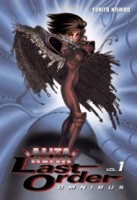
Perhaps because March follows the shortest month of the year it seems to have lasted a particularly long time for me. Granted, that feeling may attributed to how incredibly busy I’ve been recently. Regardless, the end of March is almost here, which means it’s time for another manga giveaway! This month you’ll all have the chance to win the first omnibus in Yukito Kishiro’s Battle Angel Alita: Last Order as published by Kodansha Comics. The omnibus collects the first three volumes of the series as well as additional stories by Kishiro not previously released in English. As always, the giveaway is open worldwide!

Battle Angel Alita: Last Order, Omnibus 1

It’s not at all a secret that I am a fan of androids (I blame the absurd amount of Isaac Asimov that I read in my youth), so it probably isn’t too surprising that I’m rather fond of cyborgs as well. That’s one of the reasons that Battle Angel Alita particularly appeals to me. The existence of ancient Martian martial arts and space karate in the series doesn’t hurt, either. In general, cyborgs aren’t a particularly uncommon element in near future science fiction and I’m aware of quite a few from manga specifically. Much as with android stories, I enjoy stories about cyborgs because they allow creators a way to explore what it means to be human in interesting ways.

So, you may be wondering, how can you win a copy of the first Battle Angel Alita: Last Order omnibus?

1) In the comments below, tell me a little about your favorite cyborg from manga. (If you don’t have one, you can simply mention that.)
2) For a second entry, name another manga that features a cyborg that hasn’t been mentioned yet by me or by someone else.
3) If you’re on Twitter, you can earn a bonus entry by tweeting about the contest. Make sure to include a link to this post and @PhoenixTerran (that’s me).

That’s all there is to it. Each person can earn up to three entries for the giveaway and has a week to submit comments. If you have trouble leaving a comment, or if you would prefer, entries may also be submitted via e-mail to phoenixterran(at)gmail(dot)com which will then be posted in your name. The giveaway winner will be randomly selected and announced on April 2, 2014. Best of luck to you all!

VERY IMPORTANT: Include some way that I can contact you. This can be an e-mail address, a link to your website, Twitter username, or whatever. If I can’t figure out how to get a hold of you and you win, I’ll just draw another name.

Contest winner announced–Manga Giveaway: Battle Angel Alita Giveaway Winner

Filed Under: FEATURES Tagged With: Battle Angel Alita, manga, Yukito Kishiro

Food Wars!, Vol. 1

March 25, 2014 by Sean Gaffney

By Yuto Tsukuda and Shun Saeki. Released in Japan as “Shokugeki no Soma” by Shueisha, serialization ongoing in the magazine Weekly Shonen Jump. Released in North America by Viz.

The initial reaction to a series is very important, even if it turns out later that it changes. And just like some people read one volume of a series and can’t get over the unlikeable characters, even knowing that their development is the purpose of the narrative, so sometimes I read the start of a new Jump series and am so appalled by a piece of fanservice that I debate whether I even want to continue. I am happy I did end up continuing for the most part, as once you get past the service this is a very good start to a comedic Jump cooking manga, with an engaging male lead. But were I in a bookstore browsing, I think I’d have hit that initial two-page spread and put it right back.

foodwars1

For those wondering what I’m talking about, the manga stars Soma, the boy pictured on the cover. He’s worked in his father’s small local restaurant his entire life, and has inherited his father’s ability to cook yummy food… along with his desire to experiment, even if that experiment turns out to be a taste disaster. And, like a lot of cooking/foodie manga out there, there are many shots of those eating reacting to the food that they taste in a metaphorical way. Indeed, this is not the first manga to have a girl taste something and imagine herself naked. But since the food Soma made is bad, and since the food Soma made has squid as its main ingredient, we get his childhood friend (who promptly vanishes from the narrative, by the way, despite being on the cover and getting a short story at the end) envisioning herself being tentacle raped by a squid.

This really put me off. I was assured by others on Twitter that the service dies down a bit as the series goes on, but we do get at least two other shots in this volume of women basically moaning in orgasm while being sexually assaulted by food, sometimes with bonus little SD-Somas gathered around them leering lasciviously. (The real life Soma, being a Jump hero, seems to have little interest in women.) It sets a tone for the series in general that I ended up disliking. (One might argue I read a lot of series with female nudity used constantly, particularly in Shonen Magazine. But those are generally ‘tee hee, look at the naked bodies in the bath/hot springs’. The reactions here all have a flavor of assault that simply discomfits me, even if it’s all meant to be reactions to food that’s in their head.)

And I wouldn’t have been so annoyed if the series itself had not been as good otherwise. As I said, Soma makes a great protagonist, being confident but not cocky, loving his food and taking offense at those who belittle it, and being generally nice even to the arrogant, haughty girl who seems to be the series’ main female lead (though that’s not certain yet; we do get another potential female lead towards the end, the polar opposite, of course). The food preparation looks fun and completely absurd, things you want in a cooking manga. The premise involves Soma attending an elite cooking school, and I’ve no doubt that much of this will involve class wars and “how dare you speak like that to one whose plate you are not worthy to lick clean”, etc. And that egg dish does sound fantastic. (There is a recipe, of course.)

So I’ll be continuing with the series, which is getting its digital release a few months before it hits print in August. But I still feel compelled to point out it has that unpleasant ‘fanservice assault’ element to it, so I’ll be reading it while keeping a wary eye out for more. Thus, cautiously recommended to fans of Jump comedies and hardcore foodie manga people.

Filed Under: REVIEWS

My Week in Manga: March 17-March 23, 2014

March 24, 2014 by Ash Brown

My News and Reviews

Experiments in Manga featured two manga reviews as well as something a little different last week. First up, I took a look at Saki Nakagawa’s Attack on Titan: Junior High, Omnibus 1. It’s a rather absurd and ridiculous series, but I was amused. The manga does require some familiarity with both Attack on Titan and Attack on Titan fandom to fully appreciate it, though. Not too long ago, I read Jeffrey Angles’ Writing the Love of Boys which introduced me to the work of Kaita Murayama. Not much about Murayama has been written in English, and only two of his short stories have ever been translated, but I was interested in learning more about him and his work. The result was a Spotlight on Kaita Murayama. (I’m actually very happy with how the post turned out!) Finally, as the actual March Madness begins, I posted the penultimate review in my own Manga March Madness–Real, Volume 4 by Takehiko Inoue, which delves more deeply into Togawa’s past. Real is a fantastic series, and one of my favorite manga.

And now for a few things found online! Vertical’s tumblr often has something interesting to read. Last week’s response to a question about licensing old Tokyopop titles was particularly informative. I enjoy House of 1000 Manga, but the most recent column focuses on Usamaru Furuya and his work, which I’m always happy to read more about. Sequart has a great interview with Kumar Sivasubramanian, the translator of some of my very favorite manga. Gay Manga posted an excellent article about the censorship of a billboard designed by artist Poko Murata promoting HIV awareness which also addresses some of the history of gay artwork in Japan. And in other censorship news, it looks like the manga series Barefoot Gen, after running into some trouble last year, may end up being banned again in parts of Japan.

Quick Takes

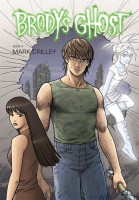
Brody's Ghost, Book 4Brody’s Ghost, Book 4 by Mark Crilley. It’s been quite a while since I’ve read any of Brody’s Ghost, but I do enjoy the series. Each installment is frustratingly thin though (each is less than a hundred pages) and only one book is released per year. Once the story is finished, I’d love to see Brody’s Ghost collected into a single omnibus. I think the series would benefit from being read in larger chunks or all at once. Which is not to say the individual books aren’t enjoyable. Each one has a great mix of action, story, and character development. I enjoy Crilley’s artwork, too. I also enjoy the bonus content that Crilley includes, outlining some of his design choices and storytelling decisions. In this particular volume of Brody’s Ghost, Brody is doing everything that he can to track down the Penny Murderer, including impersonating a detective. His ex-girlfriend, who he still cares about, may very well be the next victim and he is desperate to prevent that from happening. Things are even more complicated now that he has discovered that Talia–the ghost who pressured him into the investigation–has been lying to him.

FlutterFlutter by Momoko Tenzen. I appreciate it when a boys’ love manga includes a character who is actually openly gay, so that aspect of Flutter particularly appealed to me. Mizuki is that man–a respected and skilled project leader at his company. He presents himself as someone who is extremely well put together, but that public face is deliberately crafted to hide his weaknesses and insecurities. Asada is one of Mizuki’s coworkers. He finds himself inexplicably drawn to Mizuki. After the two of them are assigned to the same project they get to know each other, first as friends and then as something possibly more as Mizuki begins to drop his guard around Asada. Flutter is a slowly paced and relatively quiet manga, which is somewhat surprising as Mizuki’s backstory is fairly melodramatic. However, that melodrama is completely lacking from Mizuki and Asada’s somewhat awkward relationship; I enjoyed watching it develop. Asada’s personality is very kind and candid and his inability to hide what he is thinking and feeling is adorable. This open honesty is just what Mizuki needs, whether he realizes it or not.

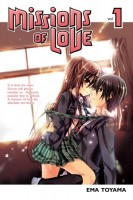
Missions of Love, Volume 1Missions of Love, Volumes 1-4 by Ema Toyama. I’ll admit it, I’m addicted to Missions of Love. I actually began reading the series with the fifth and sixth volumes, but I enjoyed them enough that I wanted to go back and read it from the beginning to learn how the whole mess between Yukina, Shigure, Akira, and Mami came to be. Missions of Love isn’t the most believable series and some of it is admittedly silly, but I don’t think I would enjoy the manga as much as I do if Toyama took a more serious or realistic approach. The story itself might be somewhat ridiculous, but the complicated relationships and emotions are real enough. Ultimately, that’s what appeals to me about Missions of Love–the intensity of the characters’ feelings paired with a plot that can be over-the-top. In the beginning, Yukina and Shigure don’t even like each other which is what allows them to resort to blackmail and manipulation. But as the series progresses, they come to care for and rely on each other in a way that is incredibly twisted. All of the relationships in Missions of Love are like that. I can’t help but want to watch the emotional chaos and turmoil unfold.

The Mysterious Underground MenThe Mysterious Underground Men by Osamu Tezuka. The Mysterious Underground Men is the second volume in Ryan Holmberg’s Ten-Cent Manga series which explores classic manga influenced by classic American comics and cartoons. Tezuka, often called the grandmaster of contemporary manga and anime, has had many of his works released in English. Granted, only a small fraction of his total output has been translated. As much as I appreciate Tezuka’s manga and his importance as a creator, I’m actually much more interested in the work of other classic mangaka who are less likely to be licensed. Initially, I wasn’t even planning on reading The Mysterious Underground Men. But because I was so impressed by the first volume of Ten-Cent Manga, I decided to give it a try after all. I’m glad that I did, not so much for the manga itself (which I did enjoy), but more for the supplementary material–Tezuka’s afterword, in which he describes The Mysterious Underground Men as his first story manga, and Holmberg’s essay which puts the manga into historical context, specifically noting its Western pop culture influences.

Time of EveTime of Eve directed by Yasuhiro Yoshiura. It’s not a secret that I have a fondness for stories about androids, so it probably shouldn’t be too surprising that I liked Time of Eve, a six episode anime series that was first released online. The series revolves around an unusual cafe, the titular Time of Eve, where humans and androids can interact while ignoring the laws that normally separate them. The cafe has only one rule, that there is to be no discrimination between the two groups. Rikuo discovers the cafe while looking into the unexpected behavior of “Sammy,” his household’s android. Along with his close friend Masaki, Rikuo’s assumptions about androids and how humans treat them are challenged as he gets to know the other customers at the cafe. Time of Eve doesn’t break any new ground when it comes to androids and makes good use of Asimov’s Three Laws of Robotics. I’ve read and watched so much android fiction that nothing about the series surprised me (including what were supposed to be dramatic reveals), but I still found the anime to be immensely enjoyable.

Filed Under: FEATURES, My Week in Manga Tagged With: anime, Brody's Ghost, comics, Ema Toyama, manga, Mark Crilley, missions of love, Momoko Tenzen, Osamu Tezuka, Ten-Cent Manga, Time of Eve

  • « Go to Previous Page
  • Page 1
  • Interim pages omitted …
  • Page 615
  • Page 616
  • Page 617
  • Page 618
  • Page 619
  • Interim pages omitted …
  • Page 1048
  • Go to Next Page »
 | Log in
Copyright © 2010 Manga Bookshelf | Powered by WordPress & the Genesis Framework