• Skip to primary navigation
  • Skip to main content
  • Skip to primary sidebar
  • Home
  • About Us
    • Privacy Policy
    • Comment Policy
    • Disclosures & Disclaimers
  • Resources
    • Links, Essays & Articles
    • Fandomology!
    • CLAMP Directory
    • BlogRoll
  • Features & Columns
    • 3 Things Thursday
    • Adventures in the Key of Shoujo
    • Bit & Blips (game reviews)
    • BL BOOKRACK
    • Bookshelf Briefs
    • Bringing the Drama
    • Comic Conversion
    • Fanservice Friday
    • Going Digital
    • It Came From the Sinosphere
    • License This!
    • Magazine no Mori
    • My Week in Manga
    • OFF THE SHELF
    • Not By Manga Alone
    • PICK OF THE WEEK
    • Subtitles & Sensibility
    • Weekly Shonen Jump Recaps
  • Manga Moveable Feast
    • MMF Full Archive
    • Yun Kouga
    • CLAMP
    • Shojo Beat
    • Osamu Tezuka
    • Sailor Moon
    • Fruits Basket
    • Takehiko Inoue
    • Wild Adapter
    • One Piece
    • After School Nightmare
    • Karakuri Odette
    • Paradise Kiss
    • The Color Trilogy
    • To Terra…
    • Sexy Voice & Robo
  • Browse by Author
    • Sean Gaffney
    • Anna Neatrour
    • Michelle Smith
    • Katherine Dacey
    • MJ
    • Brigid Alverson
    • Travis Anderson
    • Phillip Anthony
    • Derek Bown
    • Jaci Dahlvang
    • Angela Eastman
    • Erica Friedman
    • Sara K.
    • Megan Purdy
    • Emily Snodgrass
    • Nancy Thistlethwaite
    • Eva Volin
    • David Welsh
  • MB Blogs
    • A Case Suitable For Treatment
    • Experiments in Manga
    • MangaBlog
    • The Manga Critic
    • Manga Report
    • Soliloquy in Blue
    • Manga Curmudgeon (archive)

Manga Bookshelf

Discussion, Resources, Roundtables, & Reviews

Blog

Manga the Week of 10/29

October 24, 2014 by Sean Gaffney, Ash Brown, Anna N, MJ and Michelle Smith 2 Comments

SEAN: I think Yen Press has set a record for most volumes released in a single week. (At least for that publisher… I suspect Viz has it beat overall there.) Let’s start with what isn’t Yen, though.

Blade of the Immortal is perilously close to finishing, and it also hits its 30th volume this week from Dark Horse. Wasn’t it the last series still published in 32-page floppies to give in and go volume-only?

ASH: I’m not certain, but I think that’s true. Either way, I’m very happy that Dark Horse continued to release the series. Nearly two decades later, this is the penultimate volume in English!

ANNA: That’s pretty epic! I loved the artwork in the first few volumes of this series, but I didn’t really stick with it for the long haul. No question that this is a big achievement.

SEAN: Attack on Titan: No Regrets has its 2nd and final volume, in which Levi’s two childhood friends survive and go set up a nice house somewhere, no doubt. Wait, no, this is Attack on Titan.

ASH: I rather enjoyed the first volume of this spinoff, so I’ll be picking up the second volume, too.

SEAN: I’ve gotten too far behind on Fairy Tail to make jokes about its plot, so hey! Fairy Tail 43!

There’s a double dose of Alice this week, from two different publishers. Seven Seas gives us the 6th volume of my favorite spinoff of the series, Alice in the Country of Joker: Circus and Liar’s Game.

Vertical has The Garden of Words, one of the more optimistic works by Makoto Shinkai. That’s not saying much, of course. I reviewed it here.

MJ: As a Shinkai fan, I’m a pretty interested in this. I’ve enjoyed manga adaptations of his films in the past, including 5 Centimeters Per Second. So, yeah. I’m on board.

ASH: Me, too! (Though, I’ll admit I haven’t actually gotten around to watching the anime, yet…)

barakamon1

SEAN: In case you missed the digital release of Another, the horror novel Yen put out last year, we now have an omnibus print edition under the Yen On label.

MJ: This looks interesting to me as well!

SEAN: Alice in the Country of Diamonds ~Wonderful Wonder World~ is part artbook, part guide to the PSP game, and part fan thing, with interviews, manga, etc. If you like Alice, it’s all here.

Barakamon is an anticipated new series from Yen, about a calligrapher who is sent to a remote island after losing his temper; the plot is basically “fish out of water”, but it’s apparently quite well done.

MJ: Again, I’m interested. This actually is turning out to be a pretty intriguing week!

MICHELLE: I was just reading the description for this on Yen’s site the other day. It definitely looks appealing!

ASH: This is one of the series from Yen that I’ve been most looking forward to reading.

ANNA: This does sound really intriguing.

SEAN: Black Butler hits its 18th volume, and I’ll bet you two to one that Ciel and Sebastian are investigating something-or-other.

Bloody Brat gives us a 2nd volume of wacky antics with the cast of Blood Lad, to contrast with the wacky antics already present in the main series.

MJ: Always up for more wacky antics in this universe.

MICHELLE: Me, too. It just suits my humor. I actually found that the main series is funnier than the spinoff, at least in the first volume, but I’ll actually be reading volume two this evening for… reasons.

judge5

SEAN: A Bride’s Story is now an annual release, but that’s more ‘caught up with Japan’ than anything else. It’s still a terrific title everyone should read.

MJ: It’s been a while, indeed. This can’t come too soon.

ASH: Anything by Kaoru Mori is always a must for me. (Also, Yen is bringing back Emma!)

ANNA: I need to get caught up on this series. I agree that anything by Kaoru Mori is a must have.

SEAN: Doujinshi Anthologies (non-porn) are a staple of popular Japanese franchises, but we rarely see them over here. Yen has made a few exceptions, and after seeing The Misfortune of Kyon and Koizumi a while back, we now have The Celebration of Haruhi Suzumiya, which binds together three similar volumes into one big omnibus.

Inu x Boku SS had quite a plot twist last time, one that leaves the series seemingly with no one left to carry on. Where it goes from here will be the big reason to read this 5th volume.

Given the author drew the Time-Killing Arc, one of my favorite Higurashi arcs, I wish I liked Judge better than I do. Survival Game is just not my favorite genre. Here’s the penultimate volume.

Kingdom Hearts 358/2 Days has its fourth volume, and yeah, I got nothing.

I’ve said it before and I’ll say it again – the gag manga The Melancholy of Suzumiya Haruhi-chan, whose 8th volume ships this week, is a better adaptation of the source than the main manga. Not more accurate. But better.

No Matter How I Look At It, It’s You Guys’ Fault I’m Not Popular! has its 5th volume ship, and the only thing that makes me more uncomfortable than reading it is having to type out its full title. Still good, just cringe inducing.

ASH: Yeah, it can be a bit hard to read, but it is a good series.

ubelblatt1

SEAN: Hey, remember Oninagi? Had 3 volumes out about 5 years ago from Yen? Not very good? Ever wonder where that final fourth volume ever got to? Well, wonder no more. Here ‘tis.

ASH: Oh, wow, I’m not familiar with this series at all! It’s still great to see it being completed in English, though.

ANNA: I’m going to sit in the corner and whimper for all the unfinished series I’d like to see completed in English.

SEAN: Another Madoka Magica tie-in also wraps up, this being A Different Story.

I was surprised to see the dark fantasy series Ubel Blatt licensed, but unsurprised to hear it will be coming out in omnibus form, given its length. This first one collects Vol. 0 (a special prologue) and 1, but is labeled 0 to confuse everyone.

MJ: I’m cautiously interested. “Dark fantasy” can go either way for me.

MICHELLE: Same here. I must say, too, I’m kind of relieved that series I don’t follow about are wrapping up; I always feel guilty when I’ve nothing to say about them.

SEAN: Lastly (at long last), there the 2nd omnibus of Umineko When They Cry: Alliance of the Golden Witch. We’re getting closer than ever to defining what magic is, which in turn will help us to understand Beatrice. And by we, I mean the reader. Not Battler, he’s still useless.

Despite all these titles, is there nothing here that can satisfy you? And if so, why? Look at them all.

Filed Under: FEATURES, manga the week of

3 Things Thursday: It’s Problematic

October 23, 2014 by MJ 10 Comments

As we near the end of my first full year at my new job, I’ve once again been finding more time to read and talk about manga (and hurray for that, I’d like to say). As a side-effect of that, my once music-centric Tumblr has seen an increase in manga-related posts and reblogs. This is mostly a perfectly fine thing, but given Tumblr’s fandom-heavy vibe, I think it’s safe to say that I must have experienced some kind of temporary loss of wits a week or so ago when I chose that as my venue for a brief rant on a popular(ish) manga ‘ship. Fortunately, Tumblr fans were fairly kind to me over the incident, but really, what was I thinking?

If you dared to click, you’ll know by now that my rant centered on a particularly destructive and tragic canon relationship between the two male leads of CLAMP’s Tokyo Babylon, and my lack of ability to understand why or how fans could actively ‘ship a pairing that was born pretty blatantly out of deception, cruelty, and (at best) sick curiosity. And I’ll admit that, though I now have a deeper understanding of their devotion to the ‘ship, I simply can’t get on board. As much as I love Tokyo Babylon (and I really, really love Tokyo Babylon), I’ll never be able to view Seishirou’s carefully calculated seduction of Subaru (and its significant collateral damage) as anything but horrible.

“Well, that’s just fine,” you say, “Judge McJudgy-pants.” And okay, I see your point. And before you add “hypocrite” under your breath, I’ll be the first to admit… YES. I have some pretty problematic ‘ships in my own catalogue. And even if maybe no part of them ever murdered anyone’s sister (ahem) I can’t deny that there are… issues. Really serious issues. Sometimes. Okay. Whatever. *sigh*

3 Problematic Relationships I Accidentally Love (or something like that):

1. Hachi/Nobu (NANA) – She’s a married lady (*@#!@^&#*^@&* Takumi grrrrrrr) whose poor judgement and inability to deal with romantic confrontation completely destroyed him and he’s a sweet but kind of codependent musician whose weakness and privileged upbringing will almost assuredly cause him to lose his current girlfriend (like it did with Hachi, whether he knew it or not). But even after all this time, and increasing unlikelihood that we’ll ever find out what really happens in this series, I CAN’T LET IT GO. Like Nobu, I’m always going to be hanging on to that tiny piece of hope, even when it’s obviously, irretrievably gone. And like Nobu, I’ll probably hate Takumi forever. Screw Hachi’s legal and emotional commitments. And… her children? GAH. Um. She belongs with Nobu. Damnit. Sorry, that’s just the way things are. Also, along these totally destructive and morally questionable lines? Shin/Reira. I ‘ship it. Sorry, I just do. Here, have some pictures:

(click image to enlarge – read right-to-left)

2. Seth/Shonach (Moon Child) – This one is really tough for me, but there’s a part of me that can’t let it go. So. Seth is a genderless fish alien who has yet to mature into female mermaid form (yes, seriously, this is a thing), and Shonach is a freaking human jerk who fails to recognize the awesomeness he has at hand. It’s hard for me to admit that I ‘ship this pairing at all, because, well… from our discussion of the series: “… it really bothers me that his [Shonach’s] obsession with Benjamin’s [Seth’s sister] beauty (her beauty only—he doesn’t care about her as a person at all, really) keeps him from being able to appreciate the best parts of Seth, to the point that even at the end, when Seth has matured into a female, he can only see her as Benjamin. That the only expression of true affection Seth ever really gets from Shonach is when he believes she is Benjamin really breaks my heart.” Also, that my personal justification for the ‘ship (“because Seth wants it”) is pretty much exactly the same as one fan’s justification of her Subaru/Seishirou ‘shipping (“because Subaru wants it”) has not escaped my notice.

(read right-to-left)

3. Ritsuka/Soubi (Loveless) – I can’t even really believe I’m putting this on the list, because not only is it just wrong on so many levels, but I don’t even want it as a romantic or sexual relationship. But the difference between this age-inappropriate ‘ship (Ritsuka: twelve; Soubi: … not twelve) and a few others I notably enjoy (Amu/Ikuto in Shugo Chara!, Alice/Rin in Please Save My Earth) is that, though it is the only one that is not explicitly romantic, it is by far the most sexualized, and there’s no getting around that. Yun Kouga does not let us get around that, as I’ve lamented many times. So I feel that to not include it on this list would be pretty dishonest. No, I don’t want to see Ritsuka and Soubi’s relationship become more romantic/sexual than it currently is. No, I am not even comfortable with what it currently is. Yes, I want them to be able to be together and stay together, whatever that means, because Soubi (especially) needs it—you know what, they both need it, and I’m sort of willing to accept that that’s probably awful. And. Yeah.

(read right-to-left)

loveless-abandonment1
loveless-abandonment4
loveless-abandonment3

So there’s my own sort-of ‘shipping shame. What about you?

Filed Under: 3 Things Thursday Tagged With: loveless, moon child, nana, shipping

Manga Dogs, Vol. 1

October 23, 2014 by Sean Gaffney

By Ema Toyama. Released in Japan as “GDGD-DOGS” by Kodansha, serialized in the magazine Aria. Released in North America by Kodansha Comics.

Ema Toyama’s career over here in North America has been a bit slow to build. Pixie Pop came out back in the Tokyopop days, and if I recall had a heroine who was a bit flat. Del Rey then brought over I Am Here!, whose heroine, while slightly better, was still not quite there. Then came Missions of Love, which introduced us to the love quadrangle from hell. Yukina is on a whole other level from her other heroines, and even though some fans are grumping about her losing her ‘snow princess’ facade as she falls in love, there’s no doubt she’s fascinating. And now we have Kanna, the heroine of Manga Dogs, a high school girl who’s also an active manga artist with a story in the back end of a shoujo magazine. What will her character development be like?

mangadogs1

As it turns out, any character developemnt is completely irrelevant! Because Manga Dogs is not another shoujo romantic comedy. Toyama has said in the past how Kumeta Koji is one of her favorite authors, particularly Sayonara, Zetsubou-sensei and Katteni Kaizo. It shows here. Manga Dogs is an episodic gag manga mocking the manga industry, with Kanna surrounded by three pretty but vapid young men who are determined to become rich and famous drawing manga. The goal here is not to see which young man in the reverse harem Kanna will end up with, but to see if she can keep her sanity and health (already somewhat iffy given her weekly deadlines).

I’d joked on Twitter that, like Missions of Love, Manga Dogs had a main cast who were basically horrible, but Kanna is the Tsukkomi here, which makes a difference. By now the Western audience should be used to this type of humor, but I will say that if you dislike jokes that are framed as “Character A says something stupid, character B shouts at them that the thing they said is stupid”, with optional table flip, this isn’t the title for you. Kanna is mostly the straight man, though even she backslides at times, such as when she’s gathering reference photographs, or forgets she’s not drawing a BL manga.

Toyama jokes in her endnotes about Bakuman, and there is the occasional nod at showing what the life of a manga author is like, but it always takes a backseat to the gags. There are also many little references that fans of manga will get interspersed throughout – my favorite was the gentle mocking of the magazine Manga Dogs runs in, Aria. Aria is a smallish, cult shoujo magazine (though the Levi manga may have changed that), and the boys comparing it to Shonen Jump and Shonen Sunday is ridiculous (we do, at last, get a new guy who mentions Magazine – but he turns out to be a villain).

There’s not much to this manga in the end – so far the emotional depth is zero – but no one’s going to read it for that anyway. They have Missions of Love for that. This is 100% stupid comedy, and it does it quite well. It’s also only 3 volumes long, so won’t risk going on long past what folks expected, like… well, also like Missions of Love.

Filed Under: REVIEWS

Bookmarked! 10/22/14

October 22, 2014 by Katherine Dacey

A few weeks ago, we promised that we’d be introducing some new features to complement our regular link-posts. Today we’re launching the first of those columns, Bookmarked! Every Wednesday, Brigid and I will discuss what’s sitting on our nightstands, and invite someone from the mangasphere to join the conversation. Our first guest is Deb Aoki, who’s been a force in manga journalism for almost a decade. Deb was the editor of About Manga from 2007 to 2013, and is currently a contributor to Publisher’s Weekly. She also runs her own website Manga Comics Manga, which offers a mixture of reviews and commentary.

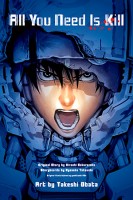
all_need_killKate: First up for me is Takeshi Obata’s adaptation of All You Need Is Kill. The premise is equal parts Ground Hog Day and Stormship Troopers: a soldier dies on the battlefield, only to relive the same day over and over again. Naturally, he takes advantage of this time-loop to learn more about his alien foes, honing his hand-to-tentacle combat skills with each ill-fated mission. Though it’s a boffo premise for a story, the execution–in manga form, at least–is mediocre. The combat scenes are rendered with gory zest, but the aliens themselves aren’t terribly frightening; if anything, they look like irradiated dust mites. The manga also suffers from a bad case of Explanation-itis, with too many text boxes filling gaps in the story. My verdict: skip the manga and read Hiroshi Sakurazawa’s original novel instead.

I’m also reading My Love Story!! a new-ish shojo title that’s been getting good buzz around the web. The key to its success, I think, is the artwork. Though most of the characters conform to shojo norms—button-cute faces, artfully tousled hair—Takeo, the hero, looks like a graduate of Cromartie High, a big bruiser with a gorilla’s face. His size and fearsome appearance are, of course, played for laughs, but artist Kazune Kawahara also plays against type, revealing Takeo’s gentler (and nimbler) side through brief but hilarious vignettes involving treed cats, imperiled children, and falling i-beams.

What I like best about My Love Story!!, however, is the friendship between Takeo and Sunakawa, his impossibly handsome, cool friend. Sunakawa finds Takeo’s social cluelessness exasperating, but remains staunchly loyal to his buddy. As someone who’s had her fill of cocky shonen characters, I found it refreshing to see Takeo discuss his anxieties to Sunakawa so openly; younger female readers may be pleasantly happy to discover that boys worry about their looks and “it” factor as much as girls do, even if it isn’t socially acceptable to admit such fears. And if that last sentence made you say, “Holy Phil Donahue, Batman!” rest assured that Takeo and Sunakawa’s exchanges are blunt and funny, not touchy-feely; Sunakawa never sugar-coats his advice to Takeo. (He’s a big proponent of the “She’s just not that into you” school of keepin’ it real.)

Yoshino_Barakamon_V1_TP

Brigid: Barakamon is the story of an up-and-coming calligrapher, Seishuu Handa, who retreats to a remote island after putting his career in jeopardy by getting physical with an expert who calls his work “highly conformist.” There’s a lot of city-slicker-goes-to-the-country humor, with the locals invariably getting the better of Seishuu—especially the children, who have turned his rented house into their own clubhouse and have no intention of letting it go. The chief miscreant is a very young girl named Naru who is cute and inquisitive but suffers from the irritating habit of referring to herself in the third person. Manga-ka Satsuki Yoshino has a weak sense of anatomy—the characters often look like a pile of clothes with no structure underneath, and the parts of the body are frequently out of proportion—but she also does a good job of evoking the open, rural area and the playfulness of the children. This is a charming book with broad humor and a nice sense of atmosphere.

My Love Story 2

Deb Aoki
My Love Story!! Vol. 2: Spring has sprung, and now that cute, sweet and petite Yamato and huge, big-hearted hulk Takeo are officially GF/BF, things are headed toward their happily ever after, right? Well, KINDA. Now Yamato wants to introduce her super cool boyfriend to her friends via a group date, and has a bit of a rude awakening when her friends are less than impressed with his uh, “gorilla-like” appearance. Will their love survive when friendship gets in the way?

My Love Story!! was one of my picks for best new manga at San Diego Comic-Con this year, and that was based on only one volume! Now that the second volume is out, the question is, can Kawahara (the creator of another fave shojo romantic comedy, High School Debut) and Aruko keep the ball rolling on what basically seems like a one-joke-wonder? Based on what I’ve seen in volume 2, it looks like they’re just getting started.

I don’t want to spoil the laughs, but there are several scenes in My Love Story!! vol. 2 that made me genuinely guffaw. Seeing Takeo wearing a skimpy apron as he works at a “Bro Café” and listening to his matter-of-fact interactions with his mom (who unsurprisingly, was a former pro wrestler) reminded me that this ensemble of quirky characters still has lots of comedy left to mine, I hope they keep it comin’.

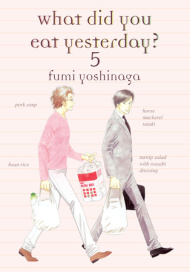
What Did You Eat Yesterday? Vols. 4 & 5 : I was down with the whole concept of What Did You Eat Yesterday? almost as soon as Vertical announced that they licensed it for publication in English—but somehow, volumes 4 and 5 really sealed the deal for me.

Written and drawn by Fumi Yoshinaga (Ooku, Antique Bakery, Flower of Life, All My Darling Daughters, and more BL than you can shake a stick at), What Did You Eat Yesterday? seems at first like just a foodie-centric slice of life story about couple in Tokyo who just happen to be gay. Kenji is a hairdresser, who’s basically out, while Shiro the lawyer keeps his sexual preferences under wraps for professional reasons. What they have in common (besides their love for each other) is their shared love of good food. And not super fancy food either—Yoshinaga focuses on simple recipes that are inexpensive and relatively easy to make.

While the first few volumes set up the basic premise for the series and introduces us to the characters, volumes 4 and 5 make it very clear that being gay in Japan is not as simple as boys love manga would have you believe.

Kenji and Shiro deal with the everyday issues that remind them that their lives, while happily domestic, can be somewhat complicated. There are little moments that bring this point home to the reader, particularly as we observe Shiro’s discomfort as he’s forced to consider his relationship with Kenji and his relationship with his gay-ness. Shiro feeling self-conscious while they’re dining out with another gay couple or purposely standing apart while riding the subway together. Shiro enduring being cheerfully greeted with “Hey, it’s the gay guy!” by his well-meaning neighbors. Getting a request from a gay friend to help arrange the adoption of his long time partner, so his estranged family won’t automatically inherit his estate. Talking about wanting or not wanting kids, and how it’s not so easy when you’re gay in Japan. Turning down an offer to be on a TV show because it would be too difficult to maintain one’s privacy. After years of seeing fantasized M/M manga romances in BL/yaoi manga, it’s eye-opening to see the realities of gay life in Japan depicted in such a matter-of-fact way.

Mind you, there’s still a lot of witty, gentle humor in these books, so it’s not preachy or dreary. Yoshinaga is too skillful a storyteller and too funny to let things get too heavy-handed. I hope that there’s still more volumes of this manga planned for publication—but that may depend on more people getting turned on to its subtle, quirky charms. So go pick it up, why don’t you? I’d love to read volume 6 and beyond, and every additional reader who buys this manga will certainly help ensure that this will happen.

Manga Dogs 1

Manga Dogs, vol. 1: Kanna Tezuka is a high school girl with a secret: She’s a published professional manga artist, albeit one whose first series is near the bottom of the popularity rankings in her magazines—but hey, it’s still better than the three hunky but clueless schlubs who are her classmates in her manga art class.

The trio, Fumio Akatsuka, Fujio Fuji, and Shota Ishinomori have big dreams of manga superstardom, but very little actual talent. When the trio discover that they have a pro in their midst, they beg Kanna to be their manga mentor. Can she keep making manga, hit her deadlines and not go nuts listening to her classmates’ delusions of comics grandeur?

A quirky satire of manga making by the creator of I Am Here! and Missions of Love, Manga Dogs is kind of like the goofy younger sister of Bakuman. It definitely doesn’t take comics creation as a career as seriously as Tsugumi Ohba and Takeshi Obata’s manga about making manga, but come on, does it have to?

Manga Dogs has loads of manga in-jokes for hardcore fans (for example, Shota Ishinomori’s name is a play on “shota”, a word used to refer to underage boys and Shotaro Ishinomori, the legendary comics creator of Cyborg 009 and Kamen Rider), and enough general-purpose slapstick to make it a fun read. A very nerdy read with filled with excruciating mishaps for the heroine, and several pages of translation notes to clue readers into its many in-jokes, but fun anyway. Not for everyone, but for the manga obsessed, this new shojo comedy delivers lots of light-hearted. goofy fun.

Filed Under: MANGABLOG

The Summit of the Gods, Vol. 4

October 22, 2014 by Ash Brown

The Summit of the Gods, Volume 4Author: Baku Yumemakura
Illustrator: Jiro Taniguchi

U.S. publisher: Fanfare/Ponent Mon
ISBN: 9788492444632
Released: October 2013
Original release: 2003
Awards: Angoulême Prize, Japan Media Arts Award

One of my favorite manga series is The Summit of the Gods. The manga, a five-volume series written by Baku Yumemakura and illustrated by Jiro Taniguchi, is an adaptation of Yumemakura’s award-winning novel The Summit of the Gods. The manga adaptation itself is also an award-winning work, taking home an Angoulême Prize and a Japan Media Arts Award in addition to winning and being nominated for numerous other awards. The Summit of the Gods, Volume 4 was originally published in Japan in 2003 while the English-language edition was released by Fanfare/Ponent Mon in 2013. It may have taken ten years for the volume to have appeared in translation, but it was definitely worth the wait. The Summit of the Gods is a phenomenal series with fantastic artwork, and engaging story, and marvelously flawed, realistic characters. Even considering some of their incredible talents and abilities, not to mention their enormous personalities, the manga’s characters remain believable and sympathetic.

For the past several years the legendary Japanese mountain climber Jouji Habu has been illegally living and climbing in Nepal. He has been preparing for more than a decade to attempt something believed by most to be impossible–climbing Mount Everest’s summit via its southwest face solo, in the winter, and without oxygen. Even teams of climbers have failed to reach the summit and return alive using a southwest route under much less stringent conditions than those proposed by Habu for his ascent. His attempt will be so dangerous that he hasn’t even tried to obtain a climbing permit, knowing that it will be denied. As a result, very few people are aware of exactly what it is Habu is about to do. One of those people is Makoto Fukamachi, a photographer and mountain climber whose interest in Habu was originally sparked by a camera that he found which may have belonged to George Mallory. But now Habu is determined to reach the summit of Mount Everest and Fukamachi is determined to record his astonishing feat, following him as far as he possibly can.

The one thing that I found slightly unsatisfying about the previous volume of The Summit of the Gods was the story’s temporary shift of focus off of the actual mountain climbing in the series. In retrospect, it makes sense to have that small break as the fourth volume more than makes up for it–almost the entire manga is devoted to Habu and Fukamachi’s preparations for and the first part of their respective climbs of Mount Everest. And it is awesome, in the traditional sense of the word. Taniguchi’s artwork in The Summit of the Gods can be breathtaking with its stunning landscapes and massive mountain vistas. The scale alone feels intimidating and awe-inspiring. Taniguchi has not only beautifully and realistically captured the snow, ice, and rock of Mount Everest, he has also devoted an impressive amount of attention to the details of mountain climbing and the equipment needed to survive. The Summit of the Gods is a manga series fortunate to have superb artwork as well equally strong writing.

The Summit of the Gods, Volume 4 brings to the forefront not only the physical struggles of the characters but their psychological battles as well. The series is intense. Over the course of the last few volumes it has been made very clear how perilous mountain climbing can be. Even under better conditions than Fukamachi and Habu are now facing it has been shown that the smallest mistake can easily end in injury or death. There is a very real and strong possibility that neither one of the men will survive the climb and the sense of danger is constant. Habu and Fukamachi are each facing the mountain head on and in the process must confront alone their own pasts, failings, and limitations. The loneliness of their climb, the isolation they experience on the mountain as well as in their lives, the sacrifices and risks made to achieve what they have and come as far as they have, all of this and more is exceedingly important to the series. The Summit of the Gods remains a tremendously compelling manga; I look forward to reading the final volume a great deal.

Filed Under: REVIEWS Tagged With: Angoulême Prize, Baku Yumemakura, Fanfare/Ponent Mon, Japan Media Arts Award, Jiro Taniguchi, manga, summit of the gods

Morning Manga Spotlight: Antique Bakery

October 21, 2014 by MJ 7 Comments

For those who missed this column’s introduction, this is a new, weekly spotlight featuring books from my own personal manga collection that I’ve offered up as a library to my teen students. And since talking on and on about manga series I love is my usual role here, it only made sense to adapt the column from its origins on Facebook to my true home as a manga blogger. I hope you’ll enjoy!

ab4After spending my first installment of this new column to recommend an out-of-print 27-volume epic, I’m going to take the second to make things a little easier, at least on one front. This week’s spotlight manga is also out of print and (unlike Basara) not yet enjoying new life, digital or otherwise. On the other hand, this series is regularly available for sale on eBay, and my students can be rest assured that I own no fewer than three copies of it in full, so there are plenty of books to go around. Furthermore, this series is only four volumes long, making it easily digestible for nearly any manga appetite.

And speaking of appetite, what could be more enticing than the combination of Fumi Yoshinaga and food? If you’ve enjoyed more recent of her series such as Yen Press’ Not Love But Delicious Foods Make Me So Happy! or Vertical’s ongoing What Did You Eat Yesterday? I’m sure your answer must be “not much.” That’s my answer, too, and has been since the very first time I picked up a copy of Antique Bakery.

Debuting in Shinshokan’s idiosyncratic shoujo magazine Wings in 2000, this short series (about four men in Tokyo running a western-style bakery) is notable in several ways. First, it falls very close to the beginning of Yoshinaga’s departure from her BL roots (following up on the much less ambitious Garden Dreams), while still including gay characters (something still much too rare in manga). In 2002, it won the Kodansha Manga Award for shoujo (and was nominated for a 2007 Eisner award during its run here in the US). It’s been adapted into an anime series, a Japanese live-action drama, and—most successfully, in my view—a Korean feature film (students, I own this on DVD), and was for many of us our first introduction to Yoshinaga’s glorious wit, delicious dialogue, and distinctive art style.

Students who have been with our studio for a while may remember a long-ago summer session that included a class I called “Acting & Manga” in which we looked at several specific scenes from various manga series to study the way silence and physicality impact a scene. One of these scenes was from Fumi Yoshinaga’s later series Flower of Life (probably my favorite of her older works), but she uses these tools just as effectively in Antique Bakery.

As an example, Michelle and I once examined a scene for Let’s Get Visual, using scans from the Japanese original to demonstrate how clearly the artwork tells the story, even without words. Though Yoshinaga has been criticized by some for favoring similar looks in character designs, it’s impossible to deny the expressiveness of her artwork overall, and that’s always been a huge draw for me.

On the other hand, an even greater draw is her wonderfully witty, wordy dialogue—the likes of which I’ve yet to encounter from any other manga artist. Her silences may be powerful, but her words are warm and utterly delicious. And despite the drama depicted here, one of her greatest strengths is humor, which flows through the entirety of Antique Bakery, even in its darkest moments—and some moments are surprisingly dark. This is no lightweight series, yet it leaves the reader walking on air. It is a true delight.

Antique Bakery is available to any of my students 13 and up to borrow. (For non-student readers here’s at least one you could check into). But that’s not all! I own a fairly large collection of Fumi Yoshinaga’s work in English, and while some of it is definitely for older readers, there’s plenty of everything to go around. For a taste of what’s available, you can check out my 2010 Fumi Yoshinaga Week post, and she has several newer works available as well.

Filed Under: Morning Manga Spotlight, UNSHELVED

Magical Girl Apocalypse, Vol. 1

October 21, 2014 by Sean Gaffney

By Kentaro Sato. Released in Japan as “Mahou Shoujo Of The End” by Akita Shoten, serialized in the magazine Bessatsu Shonen Champion. Released in North America by Seven Seas.

Those who know my usual reviewing patterns and preferences may be surprised to see that I’m reviewing this title at all, and you’re mostly right. I picked this one up expecting that it wasn’t going to be my cup of tea, but wondering if it was some sort of magical girl deconstruction along the lines of Madoka Magica (which, ironically, I also don’t like). Unfortunately, at least in this volume, the ‘magical girl’ part is mostly irrelevant. The monsters here could be demons, angels, or clowns for all that it matters. They are a massive force of death and gore, who just happen to be magical girls. They certainly do bring the apocalypse, though. That said, I did want to review this title, as it’s a classic example of a title that I personally dislike but where I recognize its good qualities that other readers will greatly appreciate.

mga1

The buildup to said apocalypse is short, only taking up the first few pages. Our hero, Kii, is (sigh) an average everyday high school student, who wants to get through his school days peacefully. Sometimes this means ogling the class beauty from afar, sometimes it means turning away when his childhood friend is getting viciously bullied in a nearby bathroom. As he takes a test, he looks outside and notices his teacher stopping a young girl who is dressed quite oddly. That’s her on the cover. The girl then proceeds to blow his head off with her ‘wand’, then goes after the rest of the school. As the slaughter commences, it turns out that the entire world is being invaded by so-called magical girls, who are also able to reanimate the dead to do their bidding.

That last sentence is the most telling. This is, at heart, a zombie manga. There’s a lot of lovingly detailed horror and gore, and much of the second half involves escaping the school and winnowing down our already small cast. Our hero survives, of course, along with his bullied childhood friend (they would appear to have the closest thing this title has to a possible romance) and a busty upperclassman. They make it out into the city, and find that it’s no better out there. Is there anything to do besides wait for everyone to die?

The author certainly has a sense of style in the way he depicts the mass slaughter. The gore is almost artistic in places, as well as finding new levels of sadism, especially in the scene where a magical girl crumples up about 200 people into a living ball, hefts them high into the air, then lets them drop to their death. The combination of gore and fanservice (busty upperclassman is VERY busty, and we’re not allowed to forget it) makes this a fantastic series for young men who would be reading anything in Shonen Champion, the magazine where this runs. Indeed, in some ways it reminds me of a less silly version of Franken Fran, the cult horror manga from the same publisher.

It’s totally not a series I’ll be continuing, but don’t let that stop you. If you like survival manga, zombie manga, horror manga, or just lovingly detailed depictions of cute high school kids getting their heads blown off, this title will not disappoint you, as it does all those things very well.

Filed Under: REVIEWS

Brigid Talks to Takeshi Obata

October 20, 2014 by Brigid Alverson

I had a once-in-a-lifetime opportunity to interview Death Note manga-ka Takeshi Obata at New York Comic-Con. On our agenda: Bakuman, Hikaru no Go and, of course, Death Note.

Kodansha will be reissuing an oldie but goodie: Hitoshi Iwaaki’s body-snatching classic Parasyte.

In other licensing news, DMP will be launching a Kickstarter campaign to fund the publication of six Tezuka titles including Rainbow Parakeet, The Three-Eyed One, and The Vampires.

Justin Stroman of Organization Anti-Social Geniuses interviews Robert McGuire of GEN Manga, which started out publishing serialized manga in digital and print format and is now focusing on print graphic novels.

Spooky Pokemon designs by Junji Ito? Yes, please!

Over at Nagareboshi Reviews, Sarah examines the horror element in Tezuka’s beloved medical drama Black Jack.

Reviews: Shaenon Garrity sings the praises of Kurosagi Corpse Delivery Service in the latest House of 1,000 Manga column, while Adam Stephanides investigaes Shintaro Kago’s Superconducting Brain Parataxis. Here at Manga Bookshelf, Sean Gaffney and Michelle Smith post brief reviews of the latest VIZ volumes.

Lori Henderson on vols. 1-7 of Attack on Titan (Manga Xanadu)
Leroy Douresseaux on vol. 52 of Case Closed (Comic Book Bin)
Sean Gaffney on The Garden of Words (A Case Suitable for Treatment)
Rebecca Silverman on vol. 1 of I Am Alice: Body Swap in Wonderland (Anime News Network)
Matthew Warner on vol. 4 of Inu X Boku S.S. (The Fandom Post)
Matthew Warner on vol. 12 of Library Wars: Love & War (The Fandom Post)
Rebecca Silverman on vol. 1 of Manga Dogs (Anime News Network)
John Rose on vol. 3 of Neon Genesis Evangelion Omnibus (The Fandom Post)
Kate O’Neil on vol. 21 of Pandora Hearts (The Fandom Post)
Sarah on vol. 22 of Soul Eater (Nagareboshi Reviews)
Anna N. on vol. 2 of Spell of Desire (Manga Report)
Jocilyn Wagner on vol. 1 of Sweet Blue Flowers (Experiments in Manga)

Filed Under: MANGABLOG

Bookshelf Briefs 10/20/14

October 20, 2014 by Sean Gaffney and Michelle Smith Leave a Comment

It’s all Viz all the time this week, as Sean and Michelle check out some recent releases.

foodwars2Food Wars!: Shokugeki no Soma, Vol. 2 | Story by Yuto Tsukuda, Art by Shun Saeki | Viz Media – Unwillingly sent to the prestigious Totsuki Culinary Institute by his father, cocky protagonist and aspiring chef Soma Yukihira learns more about the school in this volume, including meeting his eccentric dormmates, checking out the after-school research societies, and having his first experience with a shokugeki, which is a public, school-sanctioned challenge with another student. And, of course, he triumphs over expensive ingredients with his simple but delicious food. Really, this is your typical shounen battle manga model just with cooking, but I can’t help it—I am kind of loving it. All of the food prep is really fun to watch, and even though the fanservice is prevalent, because it chiefly occurs when characters (including guys) get their clothes blown off by Soma’s food, it really reads more as silly than salacious, as when one particularly buxom gal is depicted covered with strategically placed minced onions. I look forward to volume three! – Michelle Smith

happymarriage8Happy Marriage?!, Vol. 8 | By Maki Enjoji | Viz Media – As you read this volume, you get the sense that we’re in the book’s endgame, and that things are finally starting to be wrapped up. This is not to say we don’t get our usual lack of communication leads to anger leads to misunderstandings, but the two are finally trying to understand how their partner thinks. Even if, for Chiwa, this also comes with very little in the way of goals. Hokuto here makes up with his father as much as he’s ever going to, so we’re left with one last bit of melodrama, which is Chiwa having her life threatened through a series of ‘accidents’. This is never going to be my favorite josei title from Shojo Beat, but this one has less aggravation than usual. – Sean Gaffney

nura23Nura: Rise of the Yokai Clan, Vol. 23 | By Hiroshi Shiibashi | Viz Media – More fighting, as you’d expect, leaving not a lot to talk about. If you enjoy shonen fights, you’ll enjoy this. It was fun seeing Yura teaming up with Tsuchigumo, though her tsundere antics have grown a little old. Most of what I enjoyed in this volume was little things, such as Nura’s mother teasing Tsurara about her crush on him, or the parody comics on the cover flaps where Kana confesses to being a magical girl.As for the plot, well, more mid-range bosses defeated, more unlikely groups who hate each other decide to work together to defeat a greater evil, and it looks like it’ll all end up at a big castle in the sky. No one is buying Nura 23 casually, but if you like supernatural fighting stuff, this should whet your appetite. – Sean Gaffney

oresamateacher17Oresama Teacher, Vol. 17 | By Izumi Tsubaki | Viz Media – The first half of this volume wraps up the Yui storyline, retelling events from the previous chapters from his own perspective, and forcing him to confront his own feelings, something he naturally avoids. After this things lighten up considerably, as Mafuyu goes home for summer break, and attempts to paint her new school life in a girly way, which succeeds not at all, and frustrates her to the point that she has to spar with Kangawa at a festival. I like how Mafuyu is presented as being a badass gang leader in a positive way, with the narrative not trying to judge her at all. Of course it helps that this is a comedy, and I suspect Hayasaka’s past will be the next big arc, unless it’s being saved for the finale. – Sean Gaffney

toriko24Toriko, Vol. 24 | By Mitsutoshi Shimabukuro | Viz Media – Komatsu gets the cover here, and with good reason, as much of the volume is devoted to a tournament arc in which he features. He’s now famous enough to be on the list of 100 best chefs in the world, so he gets an automatic invite to the world famous cooking competition. This serves as a jumping point for something that Toriko does very well: ludicrous people that do ludicrous things with food. The introductions alone take up an enormous amount of space, as we’re introduced to dozens of people who I hope we don’t have to remember. Komatsu may not be as fast or strong, but food loves him, and that’s enough to get him into the quarterfinals. Can’t wait to see what happens next. – Sean Gaffney

Voice Over!: Seiyu Academy, Vol. 7 | By Maki Minami | Viz Media – Hime is marking time at this point, with her male alter ego getting lots of minor roles in an effort to build up a CV, and unintentionally getting Mizuki to fall for her even more (even though Senri Kudo is clearly the endgame in this romantic comedy with almost no romance). I was more interested in the second half, Tsukino, Hime’s shy friend from school. As you might have guessed, her quiet, meek voice is due to a bullying she suffered in her previous school, and though the message of the chapters does seem to be “I have to be stronger”, it is at least framed in a positive way, and ties into the roles that one has to accept as a voice actor. This volume was slighter than the others, but still fun. – Sean Gaffney

voiceover7Voice Over!: Seiyu Academy, Vol. 7 | By Maki Minami | Viz Media – While I certainly cannot argue that Voice Over! breaks any new shoujo ground, the fact remains that I honestly find it an enjoyable read, even though in this volume we’re treated to the old “locked in a storage room with my love interest” cliché. In large part that’s due to Hime’s dedication to her career, and the fact that before and after this brief trip into tropeland, she’s worrying about whether she’s made any progress during a summer in which she got a lot of work experience. On top of this, I can actually see why Male Lead #2 might fancy her, and Minami actually succeeds in making me verklempt at the cheesiest of things, and, you know, I think I’m done being ashamed about that. That’s right. I like Voice Over! and I don’t care who knows it! – Michelle Smith

Filed Under: Bookshelf Briefs

Pick of the Week: Partly Sunny

October 20, 2014 by Sean Gaffney, Michelle Smith, Ash Brown, MJ and Anna N Leave a Comment

potwSEAN: I suspect that most of Manga Bookshelf will be of a Sunny disposition this week. So I’ll pick out the Alice in the Country of Diamonds light novel, Bet on My Heart. Alice has always done very well for Seven Seas, so you’d think that this would be a gimme for them to pick up. But the company is known for being highly reluctant to get any novels after their past struggles, so I’m hoping this one is really something special. Plus we can look at Alice’s trauma in prose form now!

MICHELLE: When you put it like that, I feel bad that I likely won’t be checking it out. I’m just kinda overdosed on the whole Alice thing. But yes, I am definitely keen on this week’s release of a new volume of Sunny, which I am nowhere near tired of.

ASH: Sunny is definitely a must buy, but I’m actually going to take this opportunity to pick the final volume of No. 6. The series has gotten better and better with each installment and so I’m hoping that the conclusion will be a satisfying one. After being disappointed with the rushed ending of the No. 6 anime, I’m particularly interested in seeing how the manga will handle it.

MJ: I’m certainly buying Sunny—of that there’s no doubt. But since that’s already been chosen, I’m actually going to reach off the list this week to take a chance on the first volume of NETCOMICS’ Give to the Heart. It was officially released in stores last week, but NETCOMICS has been so far off our radar for the past couple of years, that it nearly skipped my notice completely. As I mentioned in last week’s 3 Things Thursday, I’ve had mixed feelings about the author’s prior series, but I’m feeling up for a bit of a risk when it comes to new women’s manhwa. I’m fairly heartened by the series’ first user review on the NETCOMICS website, which reads, simply, “This book gave me a reason to live longer.” I’ll take it!

ANNA: I’m going to go with Vagabond for my pick. Takehiko Inoue’s exploration of the life of Miyamoto Musashi is a modern day manga masterwork, and every new volume deserves to be celebrated.

What looks good to you this week?

Filed Under: PICK OF THE WEEK

  • « Go to Previous Page
  • Page 1
  • Interim pages omitted …
  • Page 597
  • Page 598
  • Page 599
  • Page 600
  • Page 601
  • Interim pages omitted …
  • Page 1065
  • Go to Next Page »
 | Log in
Copyright © 2010 Manga Bookshelf | Powered by WordPress & the Genesis Framework