• Skip to primary navigation
  • Skip to main content
  • Skip to primary sidebar
  • Home
  • About Us
    • Privacy Policy
    • Comment Policy
    • Disclosures & Disclaimers
  • Resources
    • Links, Essays & Articles
    • Fandomology!
    • CLAMP Directory
    • BlogRoll
  • Features & Columns
    • 3 Things Thursday
    • Adventures in the Key of Shoujo
    • Bit & Blips (game reviews)
    • BL BOOKRACK
    • Bookshelf Briefs
    • Bringing the Drama
    • Comic Conversion
    • Fanservice Friday
    • Going Digital
    • It Came From the Sinosphere
    • License This!
    • Magazine no Mori
    • My Week in Manga
    • OFF THE SHELF
    • Not By Manga Alone
    • PICK OF THE WEEK
    • Subtitles & Sensibility
    • Weekly Shonen Jump Recaps
  • Manga Moveable Feast
    • MMF Full Archive
    • Yun Kouga
    • CLAMP
    • Shojo Beat
    • Osamu Tezuka
    • Sailor Moon
    • Fruits Basket
    • Takehiko Inoue
    • Wild Adapter
    • One Piece
    • After School Nightmare
    • Karakuri Odette
    • Paradise Kiss
    • The Color Trilogy
    • To Terra…
    • Sexy Voice & Robo
  • Browse by Author
    • Sean Gaffney
    • Anna Neatrour
    • Michelle Smith
    • Katherine Dacey
    • MJ
    • Brigid Alverson
    • Travis Anderson
    • Phillip Anthony
    • Derek Bown
    • Jaci Dahlvang
    • Angela Eastman
    • Erica Friedman
    • Sara K.
    • Megan Purdy
    • Emily Snodgrass
    • Nancy Thistlethwaite
    • Eva Volin
    • David Welsh
  • MB Blogs
    • A Case Suitable For Treatment
    • Experiments in Manga
    • MangaBlog
    • The Manga Critic
    • Manga Report
    • Soliloquy in Blue
    • Manga Curmudgeon (archive)

Manga Bookshelf

Discussion, Resources, Roundtables, & Reviews

Blog

Astro Boy Sequel in the Works

October 1, 2014 by Brigid Alverson

The Manga Bookshelf team discusses their Pick of the Week.

Ride Back creator Tetsuro Kasahara is writing a prequel to Osamu Tezuka’s Astro Boy; the prequel, which is being supervised by Tezuka’s son, Makoto Tezuka, will launch in December in Monthly Hero’s Magazine and will cover the period before Astro Boy was “born.”

At the Tokyopop website, James Perry II talks about the his global manga Orange Crows; the first volume was published by Tokyopop and he self-published the second volume some time later.

News from Japan: A One Piece spinoff, following the further adventures of Monkey D. Luffy and the Straw Hat Pirates, will launch in December in Shueisha’s Saikyo Jump magazine. Bunny Drop manga-ka Yumi Unita has a new series in the works, Para Para Days, a romantic comedy that will launch in the next issue of Big Comic Spirit.

Reviews: The gang at Manga Bookshelf files this week’s Bookshelf Briefs. Ash Brown discusses a week’s worth of manga reading at Experiments in Manga.

A Library Girl on Angel (A Library Girl’s Familiar Diversions)
A Library Girl on Angel Nest (A Library Girl’s Familiar Diversions)
Lesley Aeschliman on vol. 4 of Attack on Titan (Lesley’s Musings… on Manga)
Kristin on vol. 1 of Black Rose Alice (Comic Attack)
Ash Brown on vol. 3 of Dororo (Experiments in Manga)
Sean Gaffney on vol. 6 of GA: Geijutsuka Art Design Class (A Case Suitable for Treatment)
Kristin on vol. 1 of The Heroic Legend of Arslan (Comic Attack)
Naru on vol. 2 of Kingdom Hearts (Organization Anti-Social Geniuses)
A Library Girl on vols. 1 and 2 of Mad Love Chase (A Library Girl’s Familiar Diversions)
Lori Henderson on vols. 1 and 2 of Monster Soul (Manga Xanadu)
Anna N on vol. 2 of My Love Story! (Manga Report)
Johanna Draper Carlson on vol. 7 of Sherlock Bones (Comics Worth Reading)
Sean Gaffney on vol. 4 of Shoulder-A-Coffin Kuro (A Case Suitable for Treatment)
Lori Henderson on Sword Art Online: Aincrad (Manga Xanadu)
Sean Gaffney on Time Killers (A Case Suitable for Treatment)
Alice Vernon on Umineko: When They Cry (Girls Like Comics)
Johanna Draper Carlson on vols. 2 and 3 of What Did You Eat Yesterday? (Comics Worth Reading)
Filed Under: MANGABLOG

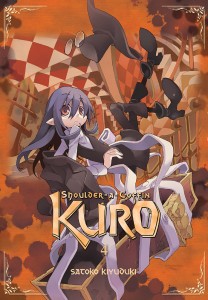
Shoulder-a-Coffin Kuro, Vol. 4

September 30, 2014 by Sean Gaffney

By Satoko Kiyuduki. Released in Japan as “Hitsugi Katsugi no Kuro – Kaichu Tabi no Wa” by Houbunsha, serialization ongoing in the magazine Manga Time Kirara. Released in North America by Yen Press.

Sometimes, when I’m reading a series with as much ambiguity as this one, I find it difficult to discern which parts I should be picking apart as clues to what’s going on, and which parts I should just let wash over me as part of the overall mood. That’s slowly starting to go away – we get more information on Kuro, Sen and the witch here than in any previous volume – but there’s still large chunks of the story where I feel like I’m trying to connect the dots without a pencil. Luckily, the style and mood of the series are still superior, so it’s an excellent read even if I am sometimes baffled at what’s really going on.

kuro4

The volume opens right away with a lot more info than previous ones, as we see a young, grumpy man meet a cute young girl who he reluctantly takes in as his apprentice. The girl is clearly meant to be a young, innocent(ish) Kuro, but the man eludes us at first, until the horrific cursing itself, which we finally see in a bit more detail, and which rebounds horribly on not just Kuro but her master as well. After this flashback, the story (seemingly) picks up where it left off in Volume 3, with Kuro still in a coma and Nijuku and Sanju patiently waiting for her while trying to deal with the fact that her face is starting to fade in their young memories the longer they wait.

Kuro has never been a bright and upbeat series (it’s a contrast with the overtly happy and content GA Art Design Class), but this volume really seem to go above and beyond by dwelling on Kuro’s search for the one who cursed her, which also ties into what is clearly Kuro’s deathwish. We see several stories with Kuro traveling by herself, meeting people who are going on a long train journey, and she plans to go with them but doesn’t seem optimistic. Sure enough, as the train is about to leave she realizes she suddenly left her hat and coffin – which she never lets leave her sight – outside on the platform. You don’t have to read Night of the Galactic Railroad to know what this is a metaphor for.

Once awake and recovered, Kuro’s journey continues, but even then it seems to be a bit more fatalistic. She meets a young girl waiting for her parents who have never come home, and helps convince her to move on with her life. We see a long forgotten kingdom that destroyed itself in search of a perfection that doesn’t actually exist. And Sanju gets a nasty lesson regarding the fragility of things that are not her when she rips the arm off another girl’s cat by “playing too hard”, and they have to deal with the consequences. Kuro makes it very clear in this book that the two young girls she travels with are her “baggage” keeping her tied to this world, far more so than finding the witch who cursed her, and one worries what will happen when they finally have to part.

Shoulder-a-Coffin Kuro comes out so infrequently that it can be a hard series to connect with at times, but when you do it rewards the connection handsomely, being thoughtful, intelligent, moody, and somewhat depressing. Kuro’s heavy coffin is a metaphor, but it’s also real, and seeing her without it feels deeply wrong. I do wonder if the next volume might be the last – we seem like we’re near the end of our journey. There will likely be a long wait till we find out, though.

Filed Under: REVIEWS

Viz brings Takeshi Obata to NYCC

September 29, 2014 by MJ 5 Comments

If there is one thing that readers of this website can be sure of (okay, there are a number of things, but that’s not the point), it is that I am a Takeshi Obata fangirl. Not only have I repeatedly made noise about the fact that his collaboration with Yumi Hotta, Hikaru no Go, was the series that first got me into manga, I’ve celebrated his work, dissected it, drooled over it, and nearly fainted at the prospect of more. Hikaru no Go was also one of only two shounen series to make my manga top ten a few years ago.

Given all this information, you might well imagine my excitement over Viz’s announcement today that they will be bringing Obata-sensei to New York Comic Con this year. Unfortunately, that excitement is tempered by intense disappointment on my part, as this will be the first NYCC in many years that I am unable to attend. While I’m weeping in the corner, here are the details for those who will be present:

The acclaimed artist of smash hit manga (graphic novel) series such as DEATH NOTE, BAKUMAN, HIKARU NO GO, RALΩGRAD and ALL YOU NEED IS KILL will appear at several events during the 2014 New York Comic Con. Taking place October 9th- 12th at the Jacob Javits Convention Center, New York Comic Con is the East Coast’s biggest pop culture convention. Full details on the show are available at: www.NewYorkComicCon.com.

During the convention, Takeshi Obata will appear in person on two panels, on Thursday October 9th as part of VIZ Media’s WEEKLY SHONEN JUMP panel and on Friday October 10th with an overview of his incredible catalog of works. He will make an exclusive signing appearance at the Javits Convention Center on Thursday evening.

Takeshi Obata will also make a pair of additional appearances around New York as part of ReedPOP’s New York Super Week on Friday October 10th at Kinokuniya Book Store and Saturday October 11th at Barnes & Noble.

Fans are invited to stop by the VIZ Media Booth (#1944) on Thursday October 9th for details and to secure advance tickets for the exclusive New York Comic Con Takeshi Obata signing, taking place the same day at 7:30pm at the Javits Center. Signing tickets will be distributed on a first come/first served basis promptly at 1:00pm and again at 4:30pm. (There will be no advance line-up until 15 minutes before ticket time). Each attendee that secures a ticket will receive an exclusive shikishi signing board that Obata will autograph.

Fans may also select from a wide array of Obata manga titles available for purchase at the VIZ Media booth, including special advance copies of his newest work, ALL YOU NEED IS KILL, a deluxe omnibus manga treatment of the Hiroshi Sakurazaka’s hit sci-fi novel that inspired the action blockbuster Edge of Tomorrow starring Tom Cruise. It will debut under VIZ Media’s Shonen Jump Advanced imprint on November 4th. Other acclaimed Obata manga titles including DEATH NOTE, BAKUMAN。, HIKARU NO GO and RALΩGRAD will also be available for purchase.

VIZ Media, ReedPOP and The Japan Foundation welcome Takeshi Obata at the following New York Comic Con Panels:

THE FUTURE OF WEEKLY SHONEN JUMP Panel Featuring Takeshi Obata
Thursday, October 9th; 6:00pm – 6:45 pm; Javits Center – Room 1A10
Join the staff of VIZ Media’s WEEKLY SHONEN JUMP as well as editors from Japan’s Weekly Shonen Jump magazine to welcome Takeshi Obata for an enlightening personal discussion on what’s new and what’s next for the long-running manga anthology which launched best-selling titles such as NARUTO, BLEACH, ONE PIECE, DRAGON BALL as well as Obata’s BAKUMAN。and DEATH NOTE series.

WEEKLY SHONEN JUMP PRESENTS: Manga Artist Takeshi Obata
Friday, October 10th; 5:00pm – 5:45pm; Javits Center – Room 1A10
Join special guest Takeshi Obata along with his editor, Koji Yoshida, for an insightful conversation about Obata’s beginnings as an artist, his extensive history working in the manga industry, and the creative process behind his works. Don’t miss this extraordinary opportunity!

Takeshi Obata also will participate in a pair of special off-site signings as part of New York Super Week.

New York Super Week takes place October 3rd – 12th immediately preceding New York Comic Con and is a unique immersive pop culture event where the entire island of Manhattan becomes a playground for a colorful array of superheroes, villains, cosplayers, artists, celebrities and passionate fans of from all over the world that gather to take part in a variety of themed events all over the City including concerts, comedy shows, gaming events, lectures, podcasts, storytelling, food tastings.

Information & tickets to New York Super Week events are available now at: www.NewYorkSuperWeek.com

Takeshi Obata Kinokuniya Signing Event
Friday, Oct. 10th, 8:30pm
Kinokuniya Book Store, 1073 Avenue of the Americas, New York, NY 10018
Attend a special free evening event with Takeshi Obata, a pivotal figure from Japan’s vibrant manga industry. All participants must secure a Super Week event ticket and will receive a free autographed Shikishi signboard with the on-site purchase of one of Obata’s works. (*Note: Obata will only sign the provided shikishi and on-site purchased book)
Free tickets for this event can be secured here.
.

Takeshi Obata Barnes & Noble Signing Event
Saturday, Oct. 11th, 6:00pm
Barnes & Noble – Tribeca, 97 Warren St, New York, NY 10007
Barnes & Noble and VIZ Media welcome Takeshi Obata for another free exclusive appearance as part of New York Super Week. All participants must secure a free Super Week event ticket in advance and will receive an autographed Shikishi signboard with the on-site purchase of one of Obata’s works. (*Note: Obata will only sign the provided shikishi and on-site purchased book)
More information on this event may be viewed here.

*weep* *weep*

Filed Under: UNSHELVED

Bookshelf Briefs 9/29/14

September 29, 2014 by Sean Gaffney, Michelle Smith and Anna N Leave a Comment

This week, Sean, Michelle, & Anna look at recent releases from Seven Seas, Kodansha Comics, & Viz Media.

knight2Alice in the Country of Clover: Knight’s Knowledge, Vol. 2 | By QuinRose and Sai Asai | Seven Seas – I will say this for the creators they rarely take the easy way out and have Alice come to terms with everything and accept that she is loved. She’s a tough nut to crack for a reason – she’s a mess of repressed traumas and griefs, and her low self-image will not let her accept what the others are offering. On the down side, as a long-running manga series where each volume is “who will she end up with and how”, this can be frustrating for the reader, as they really would like Alice to get past her self-esteem issues and choose a man. And of course, in this particular series Ace only loves Alice when she *is* screwed up. This makes for fun times, mostly. – Sean Gaffney

arata19Arata: The Legend, Vol. 19 | By Yuu Watase | Viz Media – Why has it taken me this long to figure out that Kadowaki and Arata are rather like Yui and Miaki from Fushigi Yuugi, in that they are former friends with a history of betrayal who are now foes in a fantasy land? In any case, this volume features the battle against Isora, a sho who fights with runes, basically. After Arata cannot answer whether he considers Kadowaki to be his friend or his enemy, Kadowaki himself suddenly shows up to rescue Arata, who later returns the favor, and it’s all kind of great. Kadowaki is able to understand Isora’s villainous motivations, but Arata seems to realize he really needs to tell Kadowaki that he doesn’t hate him, despite all the torment he suffered at his hands. I’m a sucker for a good redemption story, so found this to be quite a good and satisfying volume. – Michelle Smith

D-Frag2D-Frag!, Vol. 2 | By Tomoya Haruno | Seven Seas – This manga is dedicated to wringing maximum humor from every single character it can. Kazama may be the straight man, but even he’s not above a gag or two, even if it’s just about his being a tsukkomi. As for Takao, her tsundere tendencies are surpassed only by her ability to be physically, mentally and emotionally abused by the rest of the cast. The big surprise here may be Sakura, one of the more forgettable girls in Volume 1; here we see her happy, smiling nature never goes away, even when it should; her takedown of Kazama’s willingness to coast and a brutal and shocking swerve in an otherwise silly and goofball series. But make no mistake about it; darker moments or no, D-Frag! is still all about the humor. – Sean Gaffney

panzer2Girls Und Panzer, Vol. 2 | By Girls Und Panzer Project and Ryohichi Saitaniya | Seven Seas – I have to assume that the audience for this series is going to be drawn to the “cute girls at school doing stuff” premise, rather than the tank battles. It’s still meant to be moe. That said, hope you like tank battles; this manga is devoting as much time as possible to the battlefield and seeing our heroes under fire. Akiyama, the star of the manga series and hyperactive tank fan, is given a command of her own as the new tank hasn’t had time to get a crew yet. She does a commendable job, as her otaku tank knowledge allows her to stay calm in battle. And, of course, everyone learns a valuable lesson about friendship. This manga remains light-hearted and fun, and lovingly filled with tanks. – Sean Gaffney

kamisama16Kamisama Kiss, Vol 16 | By Julietta Suzuki | Viz Media – I am really enjoying this storyline, where human turned shrine goddess Nanami has to go back in time to save her fox spirit Tomoe from a terrible curse. The Tomoe she encounters in the past is violent and selfish, but even in his unenlightened state, he finds himself drawn to the human girl despite his better judgement. This volume focuses on the way Nanami’s life becomes further entwined with Yukiji, the human who previously captured Tomoe’s heart. Suzuki’s manga seem to often be at bit more episodic than intricately plotted, but it is interesting to see how both Tomoe’s past and future are bound up in Nanami’s actions. While Nanami tries to fulfill her quest, Akura-oh is stirring up even more trouble. I’m looking forward to seeing if Nanami and Tomoe’s relationship progresses even more when they next meet in the future. – Anna N

library12Library Wars: Love & War, Vol. 12 | Original Concept by Hiro Arikawa, Story and Art by Kiiro Yumi | Viz Media – Iku and Dojo go for their chamomile tea date and are adorable. Then they have to pretend to be a normal couple out shopping in order to procure some items for a disguise for an author whose novel was used as the inspiration for terrorist attacks (and now his freedom to write is in jeopardy). And they are adorable. And then Tezuka and Shibazaki foil an attempt to kidnap the author and share some adorable moments of their own. All in all, there were quite a few scenes of proto-couple-y goodness, which I appreciated. At one point, Iku talks of reading the imperiled author’s works for the characters rather than the plot, and I realized… that’s exactly how I feel about Library Wars. The plots always feel flimsy and silly, but they put together characters that I like in a gentle shoujo way, and I can’t really complain about that. – Michelle Smith

midnight7Midnight Secretary, Vol. 7 | By Tomu Ohmi | Viz Media – When the first volume of Midnight Secretary failed to fully win me over, I procastinated on continuing it. However, I’m glad I didn’t let that first impression prevail indefinitely, because it turned out to be a pretty enjoyable series, and Kaya’s professional competence and dedication to her job were a highlight throughout. In this final volume, Kyohei has been expelled from the vampire clan for refusing to give up on his relationship with Kaya, but the clan isn’t quite done meddling, and is indirectly responsible for Kaya’s mother realizing that her daughter is in love with a vampire. That angst doesn’t last too long, and soon wedding plans are underway and there is talk of a baby that is, like, destined to be vampire Jesus or something. All in all, it was a better-than-expected supernatural romance! – Michelle Smith

deadly4The Seven Deadly Sins, Vol. 4 | By Nakaba Suzuki | Kodansha Comics – There’s really a ton of backstory being dished out in this series, and at times it feels it’s coming a bit too fast – here we get an explanation of why King is so angry at Ban, a demonstration of his “other form”, Elaine’s tragic backstory, and adding King to the chain of ‘loves someone else’ that’s been building up. What with Elizabeth now finding her sister working for the other side, there’s precious little time for the comedy or fanservice that was present in previous volumes. And I find that’s a good thing – Melodias is far more likeable as a dark and mysterious hero than he is when he’s trying to feel Elizabeth up. Odd as it seems for me to say, more serious stuff in the future, please!. – Sean Gaffney

Filed Under: Bookshelf Briefs

Pick of the Week: Priapus & more

September 29, 2014 by Ash Brown, Sean Gaffney, Michelle Smith, Anna N and MJ 2 Comments

potwASH: It’s a very small shipping list this week for manga, but it also contains one of the volumes that I’m especially excited to see being released in English—Mentaiko Itto’s Priapus. After Gengoroh Tagame’s work, Priapus will be the first gay manga to receive a wide release in English as Bruno Gmünder expands its Gay Manga line. Itto’s work will probably appeal to a broader audience as well, seeing as Tagame’s can be rather…intense.

SEAN: It’s not really in my wheelhouse, but I can’t deny that Priapus should definitely be the pick of the week. That said, I’ll go with a title I will actually be reading, which is the new volume of My Little Monster, a fun shoujo series from our friends at Kodansha.

MICHELLE: I’m in the same boat as Sean. Priapus could be awesome, but the one I’m guaranteed to buy is the latest installment of My Little Monster. It’s in my Amazon cart as we speak!

ANNA: It is cool that more gay manga is being made available in English! That being said, I’m excited for the latest volume of Gundam: The Origin. I’m looking forward to setting aside a long afternoon soon to get caught up on all the space battles and Char Aznable being all Aznably.

MJ: I’ll bring things full-circle here, because the only thing on my list this week is Priapus. I’m thrilled that it is being released, and even though I realize I’m not its intended audience, I’m pretty psyched to read it as well.

What looks good to you this week?

Filed Under: PICK OF THE WEEK

My Week in Manga: September 22-September 28, 2014

September 29, 2014 by Ash Brown

My News and Reviews

Last week unintentionally turned into an Osamu Tezuka Week at Experiments in Manga…sort of. First of all, this month’s manga giveaway features Tezuka’s Triton of the Sea. Tell me a little about the merfolk you’ve encountered in manga for a chance to win the first omnibus of the series. (The winner will be selected and announced on Wednesday, so you still have a little time!) I also reviewed Dororo, Volume 3. Out of all of Tezuka’s manga that has so far been released in English, Dororo is one of my personal favorites. It’s currently available from Vertical in an omnibus edition which contains the entire series, however it may not be reprinted. I highly recommend picking up a copy sooner rather than later if it seems like a series you’d be interested in. And then for something completely different, over the weekend I reviewed the tenth-century classic The Tale of the Cavern (also known as The Tale of the Hollow Tree) which has absolutely nothing to do with Tezuka, but everything to do with music, love, and Heian-era court life.

In other news, the second volume of Lianne Sentar’s Tokyo Demons is now available for purchase as an ebook from the Sparkler Shop, which means the print edition will be released in the near future as well! (If you missed my early review of the novel, I loved it.) And speaking of Sparkler, the membership drive is still going on. If Sparkler Monthly doesn’t get at least 1,000 subscribers it most likely won’t be able to continue beyond its second year, which would make me extraordinarily sad. Please consider supporting Sparkler Monthly, if you can!

Elsewhere online, Shonen Jump is soliciting questions for Takeshi Obata, who will be a guest at New York Comic Con this year. If, like me, you can’t make it out to NYCC, Obata’s panel will thankfully be streamed live online. (Hopefully it will also be recorded.) In London, the Cartoon Museum is currently showing the exhibit Gekiga: Alternative Manga from Japan. To coincide with the exhibition, The Cartoonists’ Club of Great Britain wrote a brief introduction to gekiga. Finally, Vertical released a particularly interesting post on its Tumblr account about manga’s English-language market and specifically about the pricing of books.

Quick Takes

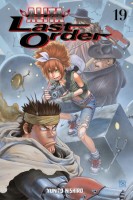
Battle Angel Alita: Last Order, Volume 19Battle Angel Alita: Last Order, Volume 19 by Yukito Kishiro. Last Order was my introduction to the Battle Angel Alita universe. It’s probably best described as an alternate ending to the original series. While I was never as taken with Battle Angel Alita as much as other people seem to be, there were parts that I really enjoyed: interesting characters and character designs, martial arts, great action scenes, and so on. But the plot just never seemed to pull together in a way that satisfied me. I didn’t realize or expect that the nineteenth volume would be the final volume of Last Order. It’s also one of the most frustrating volumes as Kishiro seems to rush through the story in order to bring everything to some sort of conclusion and, in my opinion, fails to do so. Even more disappointing is the fact that Alita doesn’t even really make much of an appearance in it. Apparently there is yet another Battle Angel Alita series that will soon be starting in Japan, but I have no idea how it relates to Last Order. There was certainly enough left confused and unresolved in Last Order that there’s plenty of material for Kishiro to choose from.

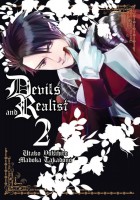
Devils and Realist, Volume 2Devils and Realist, Volume 2 written by Madoka Takadono and illustrated by Utako Yukihiro. Although I mostly enjoyed the first volume of Devils and Realist, I was unsure how far I wanted to pursue the series and so decided to read at least one more volume. After reading the second installment, I can say that I’ll probably be reading even more of Devils and Realist in the future. Generally stronger than the first volume and more even in tone, the second volume takes a slightly more serious and dramatic turn. The series’ humor is still present though, interspersed among the more life-threatening events of the manga and the story’s other dangerous mysteries. Yukihiro’s artwork and character designs are very attractive, and as a whole there are some definite homoerotic undertones to the manga as well. Readers’ enjoyment of Devils and Realist will probably largely depend on how well they like the lead and his personality. I, for one, am greatly amused by William’s refusal to believe in the supernatural despite it staring him in the face as he stubbornly tries to come up with any other possible explanation for the strangeness going on in his life.

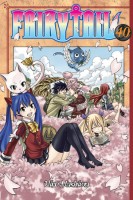
Fairy Tail, Volume 40Fairy Tail, Volumes 40-42 by Hiro Mashima. I’ve only read two series by Mashima–Fairy Tail and Monster Soul–but out of those two, I find that Fairy Tail is the better manga. The long Grand Magic Games tournament arc has now finally reached its conclusion with the fortieth volume. While I did find some of the Games enjoyable, for the most part I’m happy to be moving on to battles that actually have some real purpose and meaning behind them beyond securing bragging rights; I tend to enjoy Fairy Tail more when it feels like there’s something at stake. I’m glad to see the beginning of a new story arc that promises just that–things are starting to get a bit more serious again. (Granted, there was the whole dragon invasion during the Games arc; the possibility that the world will be destroyed is a pretty big deal.) It also looks like Gray will be getting some significant page time, too, which I’m not going to complain about. The Fairy Tail Guild’s latest mission requires Gray to confront his painful memories and past tragedies. It isn’t a pleasant experience for him, but he is also able to draw incredible strength from it.

Hetalia: Axis Powers, Volume 6Hetalia: Axis Powers, Volume 6 by Hidekaz Himaruya. Perhaps by this point I should no longer be surprised, but I always seem to unexpectedly learn something new whenever I read Hetalia. Sometimes it’s a historical tidbit, and sometimes it’s actually something more closely related to current events. This particular volume of Hetalia features micronations and Molossia makes an appearance among several others. (I had never even heard of Molossia before, and it’s in Nevada!) The Nordic states are also an important part of the sixth volume, which includes Iceland. (Ever since writing a report on Iceland in the sixth grade, I’ve always been interested in and fond of the country, so I did get a kick out of that.) Often the humor in Hetalia does require some familiarity with or prior knowledge of world history and politics to really appreciate it, so in the process of trying to make sense of some of the jokes I find that I’m learning about all sorts of interesting things. Admittedly, Hetalia frequently makes use of stereotypes as part of its gags, which some people may find offensive and has generated a fair amount of controversy.

Filed Under: FEATURES, My Week in Manga Tagged With: Battle Angel Alita, Devils and Realist, Fairy Tail, Hetalia, Hidekaz Himaruya, Hiro Mashima, Madoka Takadono, manga, Utako Yukihiro, Yukito Kishiro

Yen Grabs ‘Big Hero 6’ Manga

September 29, 2014 by Brigid Alverson

Yen Press has the license for the manga based on the Disney film Big Hero 6. The manga has just launched in Kodansha’s Magazine Special, and not only is it the first manga to precede a Disney film, it’s also the only comic adaptation of the film currently in the works. I talked to Kurt Hassler of Yen Press about their plans for the book—and why Yen got the license and not Kodansha Comics.

Crunchyroll has added two new manga series to its digital service, The Lucifer and Biscuit Hammer and Kippo to Catalog.

This past week was Banned Books Week, and Lori Henderson takes the opportunity to look at some manga that have been challenged in school and public libraries in recent years. Sarah does the same at Nagareboshi Reviews.

Erica Friedman has the latest yuri update in her Yuri News Network post at Okazu.

Justin Stroman interviews a manga fan who lives in the United Arab Emirates; Dubai has both a Kinokuniya and a Borders, despite the fact that the chain has shut down in the U.S. (But it sounds like a zombie Borders—they have Del Rey titles but nothing recent).

News from Japan: Claymore will come to an end in the November issue of Jump Square.

Reviews

John Rose on vol. 1 of Bloody Brat (The Fandom Post)
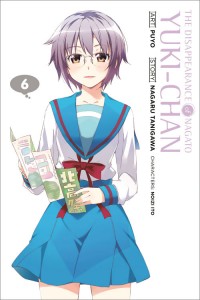
Sean Gaffney on vol. 6 of The Disappearance of Nagato Yuki-Chan (A Case Suitable for Treatment)
TSOTE on vol. 1 of Farewell Yamato (Three Steps Over Japan)
Justin Stroman on vol. 1 of The Heroic Legend of Arslan (Organization Anti-Social Geniuses)
John Rose on The Misfortune of Kyon and Koizumi (The Fandom Post)
Sakura Eries on vol. 3 of My Little Monster (The Fandom Post)
Leroy Douresseaux on vol. 22 of Nura: Rise of the Yokai Clan (The Comic Book Bin)
G.B. Smith on vol. 1 of The Seven Deadly Sins (The Fandom Post)
Matthew Warner on vol. 1 of Terra Formars (The Fandom Post)

Filed Under: MANGABLOG

The Disappearance of Nagato Yuki-chan, Vol. 6

September 28, 2014 by Sean Gaffney

By Nagaru Tanigawa and Puyo. Released in Japan as “Nagato Yuki-chan no Shoushitsu” by Kadokawa Shoten, serialization ongoing in the magazine Young Ace. Released in North America by Yen Press.

In my last review of this title, I seemed somewhat grumpy. The manga had gotten to a place that seemed ideal to wrap up, but trundled past and kept going anyway, with any love confessions quietly brushed under the carpet. I have no doubt that, with the main manga having ended in Japan, and no light novels or anime on the horizon, there is strong impetus to keep the remaining cash-cow spinoffs running. That said, I enjoyed this volume a lot more than the last, as Puyo settles in to do what he does best: take the Haruhi characters, soften them and give them alternate traits without quite turning them into another person, and write as many heartwarming, smile-inducing scenes as possible.

yuki-chan6

I had discussed Kyon’s confession (and Yuki not hearing it) last time, and while I’m annoyed he backed off, I’m pleased to see that his experience with the alternate Nagato has affected him. He can’t pretend to go out with Sasaki, even if it’s to help her deal with a guy that’s being too forward, because it wouldn’t be right to Nagato’s feelings. Not the Nagato he knows, but the alternate Nagato. This is very Kyon, and nice to see in a series which lacks his sarcastic inner monologue and thus sometimes has him be more of a cipher than necessary. As for Sasaki, like the rest of the female cast, she seems to be aware she loves Kyon but unwilling to admit it directly. You get the sense that the ‘date me to fend off my admirer’ plan was a bit of a ruse.

Possibly the funniest moment in the series involves Mikuru, another character who’s been reduced to a minor role in this spinoff due to the AU. Here she sees Nagato trying to decide what to do about Kyon seemingly having a better choice in Sasaki, and plays up the part of the wise older student, telling Yuki that jealousy is a perfectly valid feeling to have. That said, when Yuki asks how best to approach Kyon, Mikuru gradually falls apart, as it’s clear she has little to no experience in that area either. (Yuki and Mikuru in this series are somewhat defined by the friendship they have with more extroverted, pushy people who spur them on.) Mikuru being a “failure as a sempai” is hilarious, and Yuki’s response to this is sweet.

Haruhi spends most of the volume on the edges, as she’s pissed off at Kyon and Yuki for not letting her do a band with the literature club. Interesting, the ENOZ thing happened at last year’s cultural festival, where Haruhi was just a visitor, only with Tsuruya playing the brilliant guitarist. Even more interestingly, she gets Mikuru to willingly join the band on tambourine for this year (Mikuru is less shell-shocked by Haruhi here, even if she still has confidence issues). This all leads up to the last scene in the book, though, where Haruhi goes to get Ryoko to make sure she attends the concert. Ryouko snarks on her bunny outfit, but the important thing is Haruhi willingly thanking her for taking care of getting the band on the schedule, and Ryouko saying she did it as a friend, not as a class rep. (Also, ship tease out the wazoo, but that’s just me.)

I haven’t even gotten into all the tiny little Haruhi refs buried in here (I wonder if the Endless Eight joke was in the original Japanese…), or the fact that of COURSE Kuyou is at Haruhi and Sasaki’s school in this AU, and of COURSE she’s meek and shy just like Yuki is, and of COURSE she has an adorable meet cute with Taniguchi. This is not exactly a series to read if you want surprise, or, if I’m being honest, depth. But it’s got a good heart, which is pretty much its entire reason for being, and in that respect fulfills the reader’s needs. Haruhi fans should be pleased once more.

Filed Under: REVIEWS

The Tale of the Cavern

September 27, 2014 by Ash Brown

The Tale of the CavernAuthor: Minamoto no Shitagō
Translator: Ziro Uraki
Publisher: Shinozaki Shorin
ISBN: 9784784104376
Released: 1984
Original release: 10th Century

While reading The World of the Shining Prince: Court Life in Ancient Japan, I encountered quite a few references to a work of fiction called Utsuho Monogatari. Written in the late tenth century, most likely by the famous scholar and poet Minamoto no Shitagō, it is considered to be one of the first, if not the first, long-form narratives of Japan. That in and of itself caught my attention, but I became even more interested in reading Utsuho Monogatari (sometimes written as Utsubo Monogatari) when I learned how important of a role music played in the tale and that it was an immediate precursor to and major influence on The Tale of Genji. However, I did have a bit of trouble finding a translation of the complete work. Thankfully, with some help from other readers of classic Japanese literature, I discovered Ziro Uraki’s 1984 English translation from the Japanese publisher Shinozaki Shorin The Tale of the Cavern. (Somewhat unusual, as the title is more often translated in English as The Tale of the Hollow Tree.) Uraki was also the first person to translate Utsuho Monogatari from tenth-century Japanese into modern Japanese.

During the reign of Emperor Saga lived a young nobleman named Toshikage who was admired for his beauty, talent, and learning. At the age of sixteen he was ordered to join the embassy to China. However, the three ships that set sail for the continent encountered a large tempest and Toshikage, shipwrecked on the coast of Persia, was the only survivor. It would be many, many years before Toshikage would be able to return to Japan, bringing with him impressive musical skill and a collection of mystical koto gifted to him by the Heavens during his wanderings. These koto and the secrets to playing them–songs that could cause great storms and make the earth tremble or heal those who heard them–would be kept and cherished by his family for four generations. Toshikage’s descendents and their musical abilities were highly sought after, bringing them both strife and fortune in politics as well as love. Their lives would become closely entwined with those of the other nobility in the capital and even with those of the members of the Imperial family itself.

While the beginning of The Tale of the Cavern contains many fantastical elements, the rest of the novel tends to be much more realistic, following the political and romantic affairs of its many characters. However, the magic never entirely disappears from the tale and the novel both begins and ends with the magnificence and marvel of music. Proficiency in the arts–music, calligraphy, dance, poetry, and so on–was a highly desired quality among Heian-era nobility. Those who had such skill in The Tale of the Cavern were rewarded for their diligent study and natural talent, rising quickly through the ranks and securing advantageous marriages and promotions for themselves and their relatives. In addition to music, poetry in particular was a very important part of both court life in Heian-era Japan and in the novel iteself. The Tale of the Cavern is filled with poetry and numerous declarations of love–skillful wordplay was appreciated nearly as much as a person’s status and influenced the regard and esteem in which they were held by others.

As a story of music and love, I couldn’t help but be drawn to The Tale of the Cavern. I don’t think it will necessarily appeal to a general, modern audience, but readers who are interested in classical Japan and Japanese literature would be fortunate to read the novel. (If they can find it, that is.) The narrative does wander a bit, and the plot of the story isn’t especially driving, either. The individual chapters and the characters and events in them are related, but they aren’t always closely tied together; it can sometimes be difficult to tell just exactly how much time has passed between one and the next. Even so, The Tale of the Cavern provides a fascinating glimpse into Heian court life and all of the social and political maneuverings involved; granted, with a heavy dose of romance and just a touch of the fantastic and supernatural added to the novels’ more realistic elements. But I, for one, was glad to have the opportunity to read Utsuho Monogatari in its entirety.

Filed Under: REVIEWS Tagged With: Minamoto no Shitagō, Novels

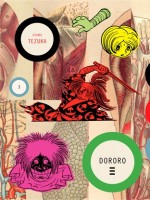
Dororo, Vol. 3

September 26, 2014 by Ash Brown

Dororo, Volume 3Creator: Osamu Tezuka
U.S. publisher: Vertical
ISBN: 9781934287187
Released: August 2008
Original run: 1968-1969
Awards: Eisner Award

Osamu Tezuka was an extraordinarily prolific and influential creator of manga and anime. So far, only a small fraction of his total output has been released in English. Out of those, one of my personal favorites is his short manga series Dororo. With yokai, an accursed swordsman, and the inclusion of historical elements, I can’t help but like Dororo. Although eventually releasing an omnibus containing the entire series, initially Vertical published Dororo in three separate volumes which earned an Eisner Award in 2009. Dororo, Volume 3, released in 2008, contains the portion of the series that was originally serialized in Japan between 1968 and 1969. It was also during that time period that Dororo went on hiatus. Tezuka abandoned the manga for a year, leaving it without an ending, before returning to it when the Dororo anime series began. The manga was then given a proper conclusion, albeit a much shorter one than was first envisioned. The finale admittedly ended up being a bit rushed, but I love Dororo anyway.

Chased by demons and in turn chasing them down, Hyakkimaru is slowly regaining his forty-eight missing body parts one at a time; each demon he defeats brings him closer to becoming whole. Often it’s not the terrifying supernatural beings that Hyakkimaru must really worry about, though. Humans–with all of their failings, greed, and lust for power–can be just as dangerous as any monster. Hyakkimaru’s father, who selfishly sacrificed his own son’s body in exchange for demonic aid, has become an oppressive warlord. Hyakkimaru isn’t the only one suffering because of his father’s ambitions. The country is being torn apart by war and it’s the farmers and commoners who are being forced to support and fight for leaders they didn’t choose. Dororo, Hyakkimaru’s young traveling companion, also has a family legacy left to deal with. The diminutive thief’s late father was a bandit who amassed a significant amount of wealth. The map to the location of his treasure was tattooed upon his child’s back and now Dororo is pursued by those who want the riches for their own corrupt purposes.

Dororo is one of Tezuka’s transitional works as he began to develop more mature, adult-oriented stories in contrast to his more lighthearted manga generally intended for younger audiences. Dororo addresses serious issues like war and discrimination, but it also incorporates charm, humor, and bittersweet joy. One particular bright spot to balance the darker elements of the series is the titular Dororo. The small thief has led a hard life and can empathize with others and their misfortunes, becoming an exuberant and enthusiastic champion for their causes, while somehow remaining optimistic and cheerful in the face of all the unfairness and tragedy. Hyakkimaru, on the other hand, has an even more dire past than Dororo and has grown weary of the injustices in the world. But the time Hyakkimaru has spent with Dororo as they travel across Japan has changed him. Dororo’s positivity has rubbed off on Hyakkimaru and he has come to care for the youngster immensely. Whether Hyakkimaru realizes it or not, he desperately needed someone like Dororo in his otherwise bleak life.

The relationship that develops between Hyakkimaru and Dororo is only one component of many that makes me appreciate what Tezuka is doing with the series, even if it did end up being truncated. I was initially drawn to Dororo because of Hyakkimaru’s horrifying origin story and his fight to regain what he lost, searching for somewhere to belong and wanting nothing more than to live in peace. His specific situation may be unique, but that desire to be accepted by others is nearly universal. I also liked the supernatural elements in Dororo and how Tezuka slowly shifts the focus of the series to issues more firmly based in reality. The demons and monsters never completely disappear from Dororo, but as the manga progresses the historical influences and more realistic aspects of the manga become increasingly prominent. Among other things, Tezuka’s artwork and storytelling in Dororo takes inspiration from traditional legends and tales, samurai films, and events from Japan’s Warring States period, but he also incorporates his own touches and imagination and pulls it all together in a way that only Tezuka can.

Filed Under: REVIEWS Tagged With: dororo, Eisner Award, manga, Osamu Tezuka, vertical

  • « Go to Previous Page
  • Page 1
  • Interim pages omitted …
  • Page 586
  • Page 587
  • Page 588
  • Page 589
  • Page 590
  • Interim pages omitted …
  • Page 1048
  • Go to Next Page »
 | Log in
Copyright © 2010 Manga Bookshelf | Powered by WordPress & the Genesis Framework