• Skip to primary navigation
  • Skip to main content
  • Skip to primary sidebar
  • Home
  • About Us
    • Privacy Policy
    • Comment Policy
    • Disclosures & Disclaimers
  • Resources
    • Links, Essays & Articles
    • Fandomology!
    • CLAMP Directory
    • BlogRoll
  • Features & Columns
    • 3 Things Thursday
    • Adventures in the Key of Shoujo
    • Bit & Blips (game reviews)
    • BL BOOKRACK
    • Bookshelf Briefs
    • Bringing the Drama
    • Comic Conversion
    • Fanservice Friday
    • Going Digital
    • It Came From the Sinosphere
    • License This!
    • Magazine no Mori
    • My Week in Manga
    • OFF THE SHELF
    • Not By Manga Alone
    • PICK OF THE WEEK
    • Subtitles & Sensibility
    • Weekly Shonen Jump Recaps
  • Manga Moveable Feast
    • MMF Full Archive
    • Yun Kouga
    • CLAMP
    • Shojo Beat
    • Osamu Tezuka
    • Sailor Moon
    • Fruits Basket
    • Takehiko Inoue
    • Wild Adapter
    • One Piece
    • After School Nightmare
    • Karakuri Odette
    • Paradise Kiss
    • The Color Trilogy
    • To Terra…
    • Sexy Voice & Robo
  • Browse by Author
    • Sean Gaffney
    • Anna Neatrour
    • Michelle Smith
    • Katherine Dacey
    • MJ
    • Brigid Alverson
    • Travis Anderson
    • Phillip Anthony
    • Derek Bown
    • Jaci Dahlvang
    • Angela Eastman
    • Erica Friedman
    • Sara K.
    • Megan Purdy
    • Emily Snodgrass
    • Nancy Thistlethwaite
    • Eva Volin
    • David Welsh
  • MB Blogs
    • A Case Suitable For Treatment
    • Experiments in Manga
    • MangaBlog
    • The Manga Critic
    • Manga Report
    • Soliloquy in Blue
    • Manga Curmudgeon (archive)

Manga Bookshelf

Discussion, Resources, Roundtables, & Reviews

Blog

Maria the Virgin Witch, Vol. 1

March 10, 2015 by Sean Gaffney

By Masayuki Ishikawa. Released in Japan as “Junketsu no Maria” by Kodansha, serialized in the magazine good! Afternoon. Released in North America by Kodansha Comics.

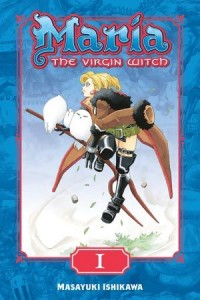
There is a scene in the show Arrested Development that has become a meme, where a character finds a bag in the fridge labeled “Dead Dove – Do Not Eat” and, curious, opens it to find… a dead dove. He responds “I don’t know what I expected.” I sort of feel the same way about the first volume of this new fantasy manga. I knew going in it was by the author of Moyashimon. This is a series known for its eccentric humor. And yet somehow the premise led me to expect that it would be a fairly dark and serious piece. Thus, when confronted with a Volume 1 that was quite silly in many places, I felt a bit nonplussed. It’s filled with eccentric humor. I don’t know what I expected.
maria1

The titular witch is in medieval France, trying to stop the English and French killing each other by any means necessary. So far this has involved using a succubus as her familiar to seduce specific people before the battle, making them uselessly aroused. There’s two problems with this: a) Maria is doing this as she has no experience whatsoever, not even being sure what a male looks like; and b) there’s a lot of pederasty in the army and Church as well, leaving an adult-looking succubus high and dry. Maria tries creating a second succubus to seduce other men, but he ends up being sort of like a Ken doll. Add to this that the Archangels are upset with Maria taking a personal interest in the Lord’s work (the Lord taking a very hands off approach to humans all wanting to kill each other) and you have a very angry and frustrated heroine.

While there is a serious battle towards the end, much of this is played for laughs, particularly Maria’s virginity, which she desperately wants to be rid of but is too repressed to really do much about (witness her reaction to her succubus moaning about her “sore jaw”). By the way, the book is rated T for Teen, but I’d have bumped it up a notch, as there’s frank talk of multiple sexual practices and a few of George Carlin’s 7 Words You Can Apparently Say In Manga. It’s not M-for-mature stuff (Maria’s too innocent for that), but I still raised an eyebrow a few times.

I do feel that the author should commit himself one way or the other, as I don’t know that the humor and serious plotline are balanced properly. There is a nice little story here involving how much a “witch”, someone with powers beyond mere humans, should involve herself with God’s creation – indeed, the presence of God’s archangels makes this explicit. But there’s a certain juvenile snickering about Maria’s virginity that made me sigh, and it provided the largest dose of the humor. Things aren’t helped by Maria and her succubus and incubus all looking very similar (they’re all based on her), so that when they’re standing together having a conversation it can be very hard to tell them apart.

If this were a long-running series, I’m not sure whether I’d feel inspired to continue. But there’s apparently only two more volumes, so I think there’s enough interest here to keep going, provided the reader knows what he’s going to get. Don’t be surprised at your dead dove.
Filed Under: REVIEWS

Remembering Yoshihiro Tatsumi – Updated

March 9, 2015 by Brigid Alverson

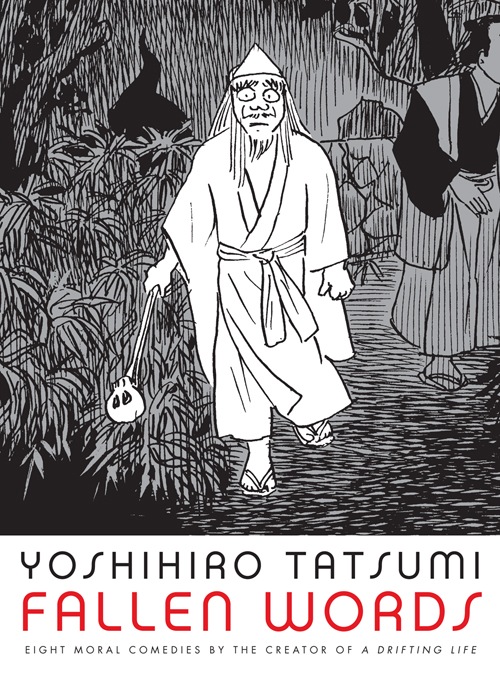
Fallen Words

Manga-ka Yoshihiro Tatsumi has died at the age of 79. Paul Gravett broke the news on his blog, saying that he got an e-mail from director Eric Khoo, who directed a documentary about the artist, saying simply, “Sensei is dead.”

Tatsumi was a pioneer of manga for adults, which he called “gekiga,” or “dramatic pictures,” as opposed to “manga,” which means “whimsical pictures.” During the course of his long career he won numerous awards, including the Osamu Tezuka Cultural Prize (Japan), the Angouleme Prix Regards Sur le Monde (France), and numerous Eisner, Harvey, and Ignatz awards (U.S.). Drawn and Quarterly has published six of his works in English: The Push Man and Other Stories, Abandon the Old in Tokyo, Good-Bye, Black Blizzard, A Drifting Life, and Fallen Words.

As word of his death spread, several people shared their stories of meeting Tatsumi.

Peggy Burns of Drawn & Quarterly, Tatsumi’s publisher:

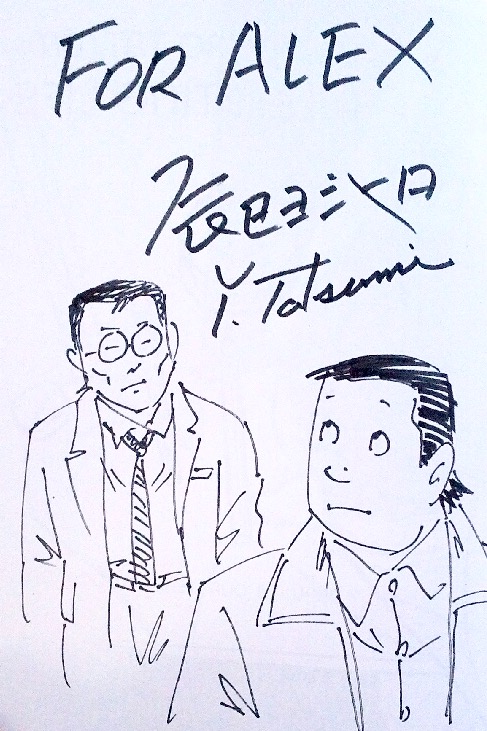
I was lucky enough to spend two weeks with him and his wife on his two trips to North America, two of the most fulfilling times of my career. He was gentle, sweet and kind and would always get me to tell him stories about my kids. Anne Ishii and I spent two days with him stock signing in NYC, where he would do the most ornate drawings in each books, over hundred of books received this special treatment. We kept trying to get him to speed up, and tried to tell him he didn’t have to do such ornate drawings. He told us: If when in his twenties, when he was broke and trying to make it as an artist that in his 70s, he and his wife would be flown to the USA, the very least he can do, is a drawing for each of the people who will buy the books.

Alex Cox

Alex Cox remembers meeting Tatsumi and his wife when they visited his Brooklyn comics shop. At that time, Tatsumi was only beginning to realize how popular his early works were in this country:

As Tatsumi left, I had no idea how to address him, unaccustomed as I am to Japanese etiquette. I bowed and said “Arigato, Tatsumi-Sensei,” hopefully using the correct honorific (and pronunciation) to address a master of his craft. He stalled momentarily before shaking my hand warmly.

Closing in on age 70, he was still getting used to the idea that he was considered Sensei by thousands of people on the other side of the world.

Adrian Tomine, Tatsumi’s editor at Drawn and Quarterly:

It didn’t take long for me to discover that, despite differences of age, geography, history, etc., Tatsumi-sensei reminded me very much of all the other great cartoonists I’ve had the fortune of becoming friends with. He could be taciturn and occasionally inscrutable, but in the right circumstances, he’d open up with humor, inquisitiveness, and an unflagging excitement about the process of making comics. I’d studied and learned from his work since I was a teenager, but I think Tatsumi’s humility, generosity, and artistic determination were as inspirational to me as any of his stories. I had several occasions–usually when one of us was dashing off to catch a plane–to offer my best attempt at a bow and to say “thank you,” but I always felt that I hadn’t been clear or emphatic enough, and that he was too modest to fully accept all that I was thanking him for.

Here’s a handful of other links about Tatsumi; post your favorites in the comments and I’ll add them here.

Deb Aoki’s 2009 interview with Tatsumi
Ryan Sands covers Tatsumi’s 2009 appearance at TCAF
The Toronto Star’s 2009 interview with Tatsumi
Dwight Garner’s review of A Drifting Life in the New York Times

Update: Here are some more posts and tributes that have appeared in the week after Tatsumi’s death:

Jocelyne Allen, who was Tatsumi’s translator at TCAF and also the translator of Fallen Words, shares some memories and discusses his short story collection Kessakusen
Ryan Holmberg’s obituary at The Comics Journal, a detailed account of Tatsumi’s life that also puts his accomplishments in context
Gary Groth’s very in-depth interview with Tatsumi, first published in 2007
Bruce Weber’s obituary in the New York Times
Elaine Woo’s obituary in the Los Angeles Times

Filed Under: MANGABLOG

My Week in Manga: March 2-March 8, 2015

March 9, 2015 by Ash Brown

My News and Reviews

And the honor of the first in-depth manga review for the month of March at Experiments in Manga goes to Tetsu Kariya and Akira Hanasaki’s Oishinbo, A la Carte: Vegetables which, as is probably fairly obvious, is a food manga about vegetables. I tend to enjoy the Oishinbo, A la Carte collections, finding them to be both educational and entertaining. Vegetables is a good volume, but it does get pretty political. I also posted a list of manga featuring immortals last week as part of the announcement of the UQ Holder! Giveaway Winner. February’s Bookshelf Overload was posted as well, which can mostly be summarized by me yelling “JooooooJoooooo!”

I was fairly busy last week, but a few things did catch my eye online. Viz Media’s Shojo Beat imprint announced two new licenses: Bloody Mary by Akaza Samamiya and Honey So Sweet by Amu Meguro. Seven Seas had a pretty big surprise, too—it’s opened a division focused on producing anime and manga themed tabletop games. First up? A deck-building game based on Space Dandy. Tofugu posted a great article about choosing the best yokai books available in English. I’ve reviewed two of the books mentioned—Yokai Attack: The Japanese Monster Survival Guide and The Night Parade of One Hundred Demons: A Field Guide to Japanese Yokai—and have read some of the others, so I can confirm that it’s a worthwhile list. Also, Paul Gravett has a lovely post remembering mangaka Yoshihiro Tatsumi, who passed away over the weekend.

Quick Takes

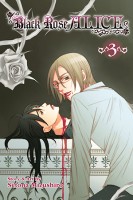
Black Rose Alice, Volume 3Black Rose Alice, Volume 3 by Setona Mizushiro. After a brief detour into lighter territory in the second volume, the third volume Black Rose Alice has taken a definite turn for the darker again. The series can be legitimately disconcerting and oddly provocative at the same time. Alice is getting to know all of the vampires in the nest a little better, but it’s Leo who is in the lead for her affections. The twins are somewhat immature and Dimitri is intentionally trying to not get involved with her, so Leo seems to be Alice’s obvious choice for procreation. Going through with it will lead to both of their deaths, so she is taking her time in making the decision, wanting to feel confident that her choice is the correct one. However, time is not on Leo’s side; his death is already imminent. Alice is unaware of this, though she does notice him acting out-of-character. Black Rose Alice is a strange and disturbing series. As a whole the vampire mythology that Mizushiro has created continues to be unlike any other that I’ve encountered. There is a very dark eroticism to the story as well. Occasionally there are more humorous moments, but they only serve to emphasize the underlying horror of the series.

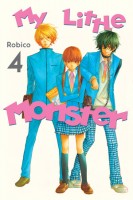
My Little Monster, Volume 4My Little Monster, Volumes 4-6 by Robico. The third volume back-pedaled from the progress that the story and characters had made in the first two volumes and now with these three it seems as though My Little Monster is stuck in some sort of mire. I still like the characters, most of whom are quirky or weird in one way or another, but I find it immensely frustrating that the series just isn’t going anywhere. Actually, other than the awkward romance, I’m not entirely sure what the overarching story is even supposed to be at this point. However, there is definitely one heck of a love polygon going on. But even with so many unrequited feelings, there doesn’t seem to be as much drama as would be expected. In some ways, that’s actually a little refreshing. It’s nice that the characters can enjoy one another’s company even considering the romantic rivalries. I am glad to see that Haru’s volatile and frequently violent emotional state hasn’t been romanticized, although occasionally it is used for a bit of humor. In part, My Little Monster is intended to be a comedy, but these volumes are generally a bit more serious overall. There are still some genuinely funny and endearing moments, though.

Not Enough TimeNot Enough Time by Shoko Hidaka. Because I’m enjoying her ongoing series Blue Morning so much, and to make the wait for the next volume a little easier, I’ve made a point to read more of Hidaka’s manga. Not only was Not Enough Time Hidaka’s debut in English, it was also her first volume of boys’ love manga to be released in Japan. Even though it’s an early work, Hidaka’s storytelling and nuanced characterizations were already quite excellent. Her artwork is lovely, too. Not Enough Time is a collection of six short boys’ love manga, some of which share a few recurring characters while others are completely unrelated. One lead couple consists of two high school students, but all of the other romances in the volume are between adult men. The basic settings and overall scenarios of the stories collected in Not Enough Time aren’t particularly unusual or unique. What makes them stand out is Hidaka’s willingness to allow the relationships to be complicated and messy; the endings aren’t always wrapped up happily or neatly. Instead, there is a sense of ambiguity and the feeling that characters’ lives continue on well after the manga has concluded. I thoroughly enjoyed the collection.

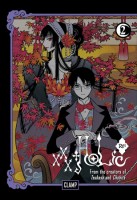
xxxHolic: Rei, Volume 2xxxHolic: Rei, Volume 2 by CLAMP. After two volumes, I’m not yet convinced that CLAMP knows exactly where Rei is going as it feels a bit aimless. I find that I’m much less interested in the episodic stories of the series than I am in its underlying plot. Only ominous hints are given as to what is going on, just enough to keep the manga engaging. Watanuki is as clueless as the readers are at this point (if not more so), though he is becoming increasingly suspicious about his precarious situation. Both Yuko and Domeki obviously know what is what, but they either can’t or won’t tell him. Rei may be somewhat haphazard story-wise, but I really do enjoy the series’ striking artwork. It might not be absolutely necessary to have read xxxHOlic to follow Rei, but I do get the feeling that the manga will be more meaningful to those who have at least passing familiarity with the original series. (I should actually get around to finishing xxxHolic one of these days, especially now that it’s back in print; I’ve only ever read the first few volumes or so.) I’m very curious to see how Rei ties back into xxxHolic proper, or if it ever does. The third volume of Rei has been released in Japan, but apparently the series is currently on hiatus.

Filed Under: FEATURES, My Week in Manga Tagged With: Black Rose Alice, clamp, manga, My Little Monster, Robico, Setona Mizushiro, Shoko Hidaka, xxxholic

Oresama Teacher, Vol. 18

March 8, 2015 by Sean Gaffney

By Izumi Tsubaki. Released in Japan by Hakusensha, serialization ongoing in the magazine Hana to Yume. Released in North America by Viz.

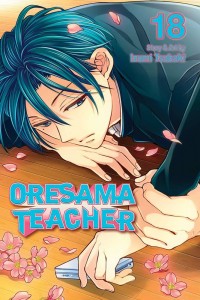
Most of the last several volumes have been seeing each member of the student council try to shut down the Public Morals club, and failing. As to why they’re doing it, well, we’re told that it’s due to Takaomi having a bet with the head of the school, and that his ‘opponent’ is said head’s grandson. But we’ve seen from the very start that this is not really correct. Every time we try to figure out why Hanabusa is doing this, besides “for the lulz”, it’s vanished like smoke. Indeed, as the volumes piled up and each of the Student Council members, by virtue of interacting with Mafuyu and her friends, became better people, you began to get suspicious that this was all a setup and that what Hanabusa is really doing is a form of extreme therapy.

oresama18

And indeed, that’s absolutely correct. It’s made explicit by Hanabusa’s comment to Hayasaka, saying that if Mafuyu had arrived a little later on she’d have seen Hayasaka on the Student Council instead of the Public Morals club. We even get scenes of most of the old members showing how much they’ve grown – Kanon is able to interact with her childhood tormenter again, Komari’s nature is starting to be better understood even by people who aren’t Aki, and as for Momochi…

As yes, Momochi. When a villain turns out to be not a villain after all, there needs to be someone stepping in to take their place. Having Momochi turn out to be shady after all is not exactly a surprise, as her mysterious smirking nature has been played up from the moment we met her – she essentially comes off as an evil Michiru Kaioh from Sailor Moon. Seeing her try to manipulate Mafuyu and Hayasaka is not particularly a surprise. Seeing her drug both of them, and apparently attempting to brainwash Hayasaka into forgetting all his happy memories, is a big surprise. I wasn’t really prepared for this manga to take so serious a turn, even with the mystery of Hayasaka’s past sticking out like a sore thumb. It’s disturbing, and makes a great cliffhanger.

This is not to say that the humor has suddenly vanished from the series – it’s just as funny as ever. Most of it is admittedly packed into the first half, which wraps up Mafuyu going back home for the break with a test of courage. Yui is along for the ride, and ropes others into his own special brand of insanity, leading to some wonderful looks of pity and disgust on Mafuyu and Kangawa’s faces. No one does that flat stare of “wtf? Seriously, wtf?” quite like Tsubaki. And there’s also a beach chapter, with the boys showing off their eccentric (or not) swim trunks, and Okegawa being given a forcible reminded that Mafuyu is a girl by having her wear a bikini. And then we have Mafuyu’s attempts to learn to swim, which would make Rumiko Takahashi proud.

So things aren’t going to get all dark and grim, but I do suspect that Hayasaka will soon be taking a forcible leave of absence from the club soon, and that fixing whatever psychological damage he’s sustained may be the next arc. As for Momochi, is *she* just a simple villain? Or, like Hanabusa, is there something else driving her? She seems focused on Hayasaka, dismissing Mafuyu entirely. Sadly, we’ll have to wait a bit for the next volume (it only came out in Japan 5 months ago), but I’m sure it will be worth it.

Filed Under: REVIEWS

Bookshelf Overload: February 2015

March 7, 2015 by Ash Brown

JooooooJoooooo! It’s finally here! By far the manga I was most excited to get my hands on in February was Hirohiko Araki’s JoJo’s Bizarre Adventure, Part 1: Phantom Blood, Volume 1. I’m thankful for the manga’s recent anime adaptation, otherwise I’m not sure we would have ever seen the series licensed in English. Viz has done a beautiful job with the release. (I hope to have an in-depth review of the volume in the near future.) Other February manga releases that I was particularly happy to see included Prophecy, Volume 2 by Tetsuya Tsutsui, the second omnibus of Satoshi Mizukami’s Lucifer and the Biscuit Hammer (the first volume surprised me, and I’m very curious to see where the series goes), and Gangsta, Volume 5 by Kohske. I’m also looking forward to reading the second Milkyway Hitchhiking omnibus, a gorgeous full-color manhwa by Sirial. And because February usually means Valentine’s Day sales on romance manga, I managed to pick up a random assortment of boys’ love manga by creators whose other work I’ve enjoyed in the past for a great price.

Manga!
Akame ga Kill!, Volume 1 written Takahiro, illustrated by Tetsuya Tashiro
Alice in the Country of Clover: Ace of Hearts by Mamenosuke Fujimaru
Alice in the Country of Clover: Nightmare by Yobu
Assassination Classroom, Volume 2 by Yusei Matsui
A Centaur’s Life, Volume 5 by Kei Murayama
Devils and Realist, Volume 4 written by Madoka Takadono, illustrated by Utako Yukihiro
From the New World, Volume 7 written by Yusuke Kishi, illustrated by Toru Oikawa
Gangsta, Volume 5 by Kohske
His Favorite, Volume 7 by Suzuki Tanaka
Intriguing Secrets by Rize Shinba
JoJo’s Bizarre Adventure, Part 1: Phantom Blood, Volume 1 by Hirohiko Araki
Juicy Cider by Rize Shinba
Little Cry Baby by Keiko Kinoshita
Love at Fourteen, Volume 1 by Fuka Mizutani
Lucifer and the Biscuit Hammer, Omnibus 2 by Satoshi Mizukami
Mars, Volumes 1-15 by Fuyumi Soryo
Mars: Horse with No Name by Fuyumi Soryo
My Little Monster, Volume 4 by Robico
No Matter How I Look at It, It’s You Guys’ Fault I’m Not Popular!, Volume 6 by Nico Tanigawa
Obediant One by Yutakamaru Kagura
Prophecy, Volume 2 by Tetsuya Tsutsui
The Seven Deadly Sins, Volume 4 by Nakaba Suzuki
Shy Intentions by Shoko Takaku
Star by Keiko Konno
Tale of the Waning Moon, Volumes 2-4 by Hyouta Fujiyama
Tsubasa: Reservoir Chronicle, Omnibus 1 by CLAMP
Ubel Blatt, Omnibus 1 by Etorouji Shiono
Wild Butterfly by Hiroki Kusumoto
Witchcraft Works, Volume 3 by Ryu Mizunagi
xxxHolic, Omnibuses 1-3 by CLAMP

Manhwa!
Milkyway Hitchhiking, Omnibus 2 by Sirial

Comics!
Fast Friends written by Dale Lazarov, illustrated by Michael Broderick
Huddle! by Ngozi Ukazu
The Unicorn and the Woodsman by Kate Brown

Novels!
Secondhand Memories by Takatsu

Anime!
Carried by the Wind: Tsukikage Ran directed by Akitaro Daichi
Wolf Children directed by Mamoru Hosoda

Filed Under: Bookshelf Overload, UNSHELVED

The Shojo Beat Goes On… With New Licenses

March 6, 2015 by Katherine Dacey

Before we get to this week’s news round-up, we have news of our own: Manga Blog turns ten this month! Brigid has some anniversary features in the works, so stay tuned and help her celebrate a memorable decade of blogging. Now for the links…

Bloody-Mary

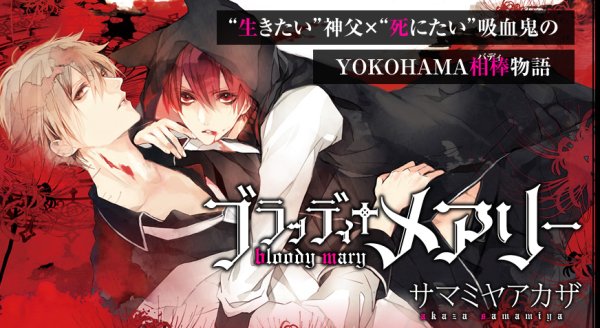
Shojo lovers rejoice: VIZ has just licensed Akaza Samamiya’s vampire drama Bloody Mary and Amu Meguro’s romantic comedy Honey So Sweet. The former drops in December 2015, the latter in January 2016. Also joining the VIZ line-up are several digital-only offerings: Calling You, Girls Bravo, Ratman, and Someday’s Dreamers: Spellbound. All four series debut this month, alongside the first volume of Tokyo Ghoul.

Seven Seas unveiled two new acquisitions this week, The Testament of Sister New Devil and My Monster Secret. Both series are scheduled for publication in early 2016.

That’s Life When You’re a Woman, a candid look at what it’s like to be a single, 31-year-old woman in Japan, is now available via the free Manga Box app.

Three manga crack the BookScan Graphic Novel Bestseller Chart for February 2015. Spoiler alert: one of them is Attack on Titan.

Akame ga KILL! tops this week’s New York Times Manga Best Seller list.

Kodansha Comics is looking for summer interns at their New York office.

Over at the Barnes & Noble Sci-Fi & Fantasy Blog, Brigid Alverson shines a spotlight on March’s most exciting new manga releases.

Jiraiya, whose work was featured in Massive: Gay Erotic Manga and the Men Who Make It, will be visiting Los Angeles, San Francisco, and New York this month to meet with fans.

TCJ columnist Joe McCulloch pays tribute to Golgo 13 creator Taiko Saito, one of the last “living connections to the early gekiga generation of Japanese comics.”

Deb Aoki reports from Tokyo on the symposium following the Manga Translation Battle Awards; she breaks it down into a couple of topics, then sums up the discussion of each one (localization, manga sales in Japan vs. the U.S., what makes a good translation) in a series of Tweets and responses from translators and others. Deb also compiles an excellent Storify post on Mahou Shounen Breakfast Club, a webcomic that, as Heidi MacDonald explains, triggered a fierce debate about authenticity, appropriation, and the “white gaze.”

News from Japan: Shiro Amano is bringing Kingdom Hearts II to an end with the 10th volume. Monthly Newstype will be publishing manga adaptations of two Project Itoh novels: Harmony and the impossible smutty-sounding Genocidal Organ. Both novels have translated and published in English by VIZ’s Haikasoru imprint.

Reviews: Shaenon Garrity dedicates this week’s House of 1000 Manga column to one of my favorite manga, the weirdly wonderful Apocalypse Meow. Manjorin and her fellow Anti-Social Geniuses discuss what they read last month, while the Manga Bookshelf team posts brief reviews of Cage of Eden, Magi, and One Piece.

Megan R. on The All-New Tenchi Muyo! (The Manga Test Drive)
Ken H. on vol. 3 of Attack on Titan: Before the Fall (Sequential Ink)
Lori Hendrson on vol. 2 on Attack on Titan: No Regrets (Manga Xanadu)
Wolfen Moondaughter on vol. 3 of Black Rose Alice (Sequential Tart)
Wolfen Moondaughter on vol. 10 of Happy Marriage?! (Sequential Tart)
Ash Brown on vol. 1 of Hide and Seek (Experiments in Manga)
Sean Gaffney on vol. 1 of JoJo’s Bizarre Adventure: Phantom Blood (A Case Suitable for Treatment)
Anna N. on vol. 1 of Meteor Prince (Manga Report)
Leroy Douresseaux on vol. 8 of Nisekoi: False Love (Comic Book Bin)
Ash Brown on Oishinbo A la Carte: Vegetables (Experiments in Manga)
Johanna Draper Carlson on vol. 2 of Prophecy (Manga Worth Reading)
Sean Gaffney on vols. 13-14 of Ranma 1/2 (A Case Suitable for Treatment)

Filed Under: MANGABLOG

Oishinbo, A la Carte: Vegetables

March 6, 2015 by Ash Brown

Oishinbo, A la Carte: VegetablesAuthor: Tetsu Kariya
Illustrator: Akira Hanasaki

U.S. publisher: Viz Media
ISBN: 9781421521435
Released: September 2009
Original release: 2006
Awards: Shogakukan Manga Award

When it comes to food manga, the long-running and sometimes controversial Oishinbo is one of the most successful series in Japan. Written by Tetsu Kariya and illustrated by Akira Hanasaki, the popular Oishinbo is well over a hundred volumes long and earned its creators a Shogakukan Manga Award in 1987. I don’t expect Oishinbo to ever be released in English in its entirety, but Viz Media did license seven volumes of Oishinbo, A la Carte–thematic collections of stories selected from throughout the series. Oishinbo, A la Carte: Vegetables is technically the nineteenth A la Carte volume, published in Japan in 2006, but in 2009 it became the fifth collection to be released in English under Viz Media’s Signature imprint. If I recall correctly, Oishinbo, A la Carte: Japanese Cuisine was the very first food manga that I ever read. Since then, I have enjoyed slowly making my way through the other A la Carte collections available in English, and so was looking forward to a serving of Vegetables.

While Vegetables collects Oishinbo stories from different points the series, it also includes some of the earliest arcs. One of the primary, ongoing plotlines of the manga is the competition between Yamaoka, a newspaper journalist heading the “Ultimate Menu” project, and his estranged father Kaibara, who is developing the “Supreme Menu” for a rival paper. The three-part “Vegetable Showdown!” that opens the volume is only their second official battle for culinary dominance. Appropriately for a volume about vegetables (since getting kids to eat them is apparently a worldwide struggle), many of the stories feature children discovering that produce like eggplants, bean sprouts, and carrots might not be so bad after all. At least when they’re prepared well. Adults preconceived notions are challenged in the manga as well, not just about how vegetables are prepared and taste but also about how they are grown and produced. The stories in Vegetables often follow produce from the field to the table.

Oishinbo, A la Carte: Vegetables, page 90Oishinbo frequently delves into the politics of food and the series’ characters (and I would assume by extension its creators) have very strong opinions about the matter. Vegetables joins the previous two A la Carte collections in English–Fish, Sushi & Sashimi and Ramen & Gyōza–in particularly stressing the importance of quality ingredients and in arguing very strongly for food that has been safely, responsibly, sustainably, and often locally produced. So far, however, Vegetables seems to be the volume that is most blatant in its activism, villainizing the use of herbicides and pesticides. Opposing viewpoints are briefly entertained, but it is very clear which side of the debate Oishinbo supports. The environmentalist message in Vegetables can be very heavy-handed. Organic produce is often ideal for a number of the reason explained in Vegetables, but the reality is perhaps much more complicated and nuanced than the manga might lead readers to believe.

Overall, I think that Vegetables may actually be one of the weaker A la Carte volumes to have been released in English, but I still enjoyed it. Oishinbo is a series that is educational as well as entertaining and Vegetables is no exception. Although not particularly subtle about its politics, the manga is informative, the individual stories exploring different aspects of produce from how they are grown to what a chef should keep in mind when preparing them. When it comes to vegetables, Oishinbo would seem to argue for simplicity. Produce grown in ideal conditions and in their native environments require very little to enhance their natural goodness and flavor. A dish may be refined, but if the ingredients are of high quality to begin with it does not need to be overly complex. Sometimes only a bit of salt is all that is called for. Food is a major source of the drama in Oishinbo and is often what drives the manga’s plot. And even when it’s not, food–and in this particular volume vegetables–always plays a significant supporting role.

Filed Under: REVIEWS Tagged With: Akira Hanasaki, manga, Oishinbo, Shogakukan Manga Award, Tetsu Kariya, viz media, VIZ Signature

Manga the Week of 3/11

March 5, 2015 by Sean Gaffney, Ash Brown, Anna N, Michelle Smith and MJ Leave a Comment

SEAN: A small second week of the month, but with a lot of variety.

For comedy fans, we have the 4th volume of D-Frag! from Seven Seas.

d-frag4

And they’re also giving us the 2nd and final volume of Girls Und Panzer prequel Little Army.

Sublime has been fairly quiet lately. Are they playing hide and seek? Or just publishing Hide and Seek? Vol. 3 ships next week.

ASH: I reviewed the first volume just last week; I’ll be very happy to have the complete series on my shelves.

SEAN: I remain surprised, but not at all disappointed, that Knights of Sidonia is as long as it is. 13 volumes and counting from Vertical Comics!

ANNA: Ugh, I need to get caught up on this series! I do really like it!

MICHELLE: Yay, more Sidonia!

ASH: Should be a good time!

MJ: Add my voice to the chorus of “Yay!”

SEAN: We’re nearly at the end of 07-Ghost, but not quite. There is a 15th volume, though.

ANNA: Maybe I will read all of it in a marathon session when it is done.

MICHELLE: Yeah, despite good intentions I have not managed to resume this one.

SEAN: And a 21st of Arata the Legend, which surely has erased Fushigi Yuugi from everyone’s heads by now.

ANNA: Not to diss Arata, but I am super excited about the new Fushigi Yuugi series that was recently announced.

MICHELLE: Eh?!?!?! I missed it! Please tell me it’s Byakko Kaiden.

ANNA: It is!!! EEEE!!!!!!!

MICHELLE: !!!! I am all asquee!

MJ: WOOT!

SEAN: Ranma 1/2 is always at its best when Takahashi allows herself to stretch with a longer storyline, and the “Ranma Gets Weak” one stretches out over half this seventh omnibus. I review it here.

rrk1

I also reviewed Aya Kanno’s Requiem of the Rose King, a new Shojo Beat series that is nothing like Otomen except its art is gorgeous. It’s her take on Shakespeare’s Henry VI and Richard III.

ANNA: I have this, haven’t read it yet, but it sounds great!

MICHELLE: Oooh. I’m kind of a Richard III fangirl.

ASH: This is actually one of the series I’m most looking forward to this year.

MJ: I’m definitely on board with this!

SEAN: Lastly, there’s a 17th volume of Rin-Ne, which is also at its best when Takahashi allows a longer storyline, but sadly we see that far less often.

MICHELLE: RIN-NE is pleasant. I have a few volumes here that I haven’t been dying to read, though.

SEAN: Oh manga’s heart wrapped in an obi’s hide! What are you getting next week? (Also, ten points to whoever gets that without googling it.)

Filed Under: FEATURES, manga the week of

Ranma 1/2, Vols. 13 & 14

March 5, 2015 by Sean Gaffney

By Rumiko Takahashi. Released in Japan by Shogakukan, serialized in the magazine Shonen Sunday. Released in North America by Viz.

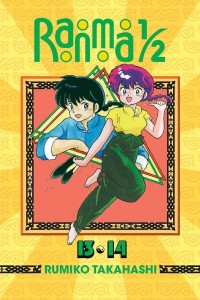
Having spent most of the last few Ranma reviews talking about how Ranma is essentially filled with shallow unlikeable characters who do funny things, and that the fan might get upset at a perceived lack of serious examination of them, we now get the thirteenth volume, where Takahashi shows off that, when she decides to write a longer, more serious plotline, she can carry it off. The moxibustion storyline is one of the high points of the series, showing off many of the characters at their best. Not their most noble, or most likeable, but a place where we can sympathize with and root for them.

ranma13-14

The basic premise is that Happosai gets really pissed off at Ranma and hits him with an attack that makes him permanently weak – and when asked how to cure it, points out that he’s evil so why should he have bothered to learn the cure? (Note this doesn’t actually answer the question.) Naturally, the now weak Ranma gets attacked by all his past rivals – Kuno, Kuno’s father, Mousse, even Gosunkugi – and can’t do anything about it. You’d think Ryouga would be in here as well… but Ryouga can’t stand anyone who picks on the weak. Which Ranma now is. Ironically, this is what hurts Ranma most of all, and he takes off with his father, Ukyou and Akane to try to figure out how to fix this.

Ranma’s pride and confidence is both his strong and weak point, and having been stripped of his martial artist strength we see how intensely bound up his life is in the Art. It’s especially frustrating because of his burgeoning feelings for Akane – still mostly coming out as deflecting insults – but now that he can’t even take over her dojo he feels unworthy to even speak with her. Notably, he has no compunctions about taking Ukyou along with him rather than Akane – but that’s because Ukyou is providing food, once again he simply doesn’t see her as a romantic interest. Luckily, having heard about the fuss, Cologne comes along as well – Shampoo has returned to China, very conveniently as she’d make this storyline too chaotic – and teaches Ranma a martial arts move that doesn’t require strength in order to succeed.

There were some things in this volume I didn’t care for – getting Ryouga angry enough to attack Ranma by assuming he sexually assaulted Akane made me groan – but for the most part it was excellent, showing off Ranma, Akane, and Ryouga’s strong points. (Ryouga and Ukyou fans take note – when Ukyou sees Ryouga suffering through a nightmare, her first response is to hit him with a mallet so that he’ll sleep harder. Just sayin’.) Of course, there’s also a Vol. 14 in here, and while it’s not terrible, it does suffer by having to follow what comes before it. The strongest story in it is probably the one with Ryouga’s calligraphy martial-arts, which again shows that Takahashi can mine ANYTHING for ridiculous comedy. I also liked that Ranma said Ryouga is the only one he considers his rival – I think he’s serious, too.

We’ve seen Akane unable to swim before, but this is the first major storyline where we see she is heroically, ridiculously unable to swim – even wearing a life preserver is not enough. The two funniest storylines in the volume are also the shortest. In one, Ranma finds his panda-disguised father living it up at a mansion, and has to deal with the “weak, sickly” spoiled brat who has adopted the bear – lots of mocking of shoujo art here. As for Happosai as Santa Claus, teaching two young children how to be just like him, the very premise is horrifying, so much that even Happy realizes he can’t do this, though he ends up making himself ill trying not to be evil. The kids are adorable, and the ending fits perfectly.

So, to sum up: when she tries, Takahashi can make these characters more three-dimensional and realistic, to excellent effect. But most of the time, we see them being jerks to each other for comedic effect, and that’s fine as well.

Filed Under: REVIEWS

Meteor Prince, Vol 1

March 5, 2015 by Anna N

Meteor Prince Volume 1 by Meca Tanaka

Meteor Prince is a super cute shoujo series that is ideal to read if you need a break from the winter blahs. It is in some ways like a kinder, less manic version of Urusei Yatsura, because the heroine of the story Hako is cursed with an incredible run of bad luck. The latest incident occurs when a naked alien prince suddenly appears and announces that she’s his soulmate. The alien prince Io is a bit of a benign horndog, as he is constantly asking Hako if she is ready to mate, but at the same time he is always in the right place at the right time to protect her from all the accidents that seem to constantly happen in her vicinity. When Hako protests that she can’t have a relationship with someone she’s not in love with, Io promptly yells “Let’s fall in love!” and their courtship begins.

Hako has a supporting cast of friends in the form of the paranormal research club, who stick close to her despite her bad luck because they are so interested in exploring unexplained phenomena. They are also fascinated by the sudden appearance of the alien, but also want to look out for Hako. Despite Io’s initial approach of dropping out of the sky naked and asking teenage girls to be the mother of his children, he’s actually incredibly enthusiastic about the new environment he’s exposed to on Earth, and his devotion to Hako is absolute. Hako and Io actually end up striking a bit of a friendship, through the usual high school milestones that a reader would usually expect in a shoujo manga. There are plenty of funny hijinks, but what I enjoyed most about this title was the genuine warmth and caring shown in the unlikely romance between Hako and Io.

Tanaka’s art switches between slapstick humor and exaggerated emotions as Hako tries to dodge her bad luck with more contemplative moments like when Io sits and communes with birds for the first time. Her art is engaging, with Hako inspiring feelings of sympathy and Io managing to look both regal and occasionally bizarre, which is exactly what a reader might expect from an alien prince.

This is only a two volume series, and sometimes I’m a little hesitant to recommend such short series because often they seem a bit unfinished or partially developed. I felt satisfied as a reader after reading the first volume of Meteor Prince. I’d be happy if it had gone on for several volumes, but the core of the story was just delightful and entertaining. I expect that this is going to be one of the rare two volume series that gets a permanent place on my bookshelves. I’ve been hoarding Tanaka’s four volume series for Tokyopop, Pearl Pink, and now I’m much more motivated to read that too, since Meteor Prince seems so charming.

Filed Under: REVIEWS Tagged With: meteor prince, shojo beat, shoujo, viz media

  • « Go to Previous Page
  • Page 1
  • Interim pages omitted …
  • Page 556
  • Page 557
  • Page 558
  • Page 559
  • Page 560
  • Interim pages omitted …
  • Page 1049
  • Go to Next Page »
 | Log in
Copyright © 2010 Manga Bookshelf | Powered by WordPress & the Genesis Framework