• Skip to primary navigation
  • Skip to main content
  • Skip to primary sidebar
  • Home
  • About Us
    • Privacy Policy
    • Comment Policy
    • Disclosures & Disclaimers
  • Resources
    • Links, Essays & Articles
    • Fandomology!
    • CLAMP Directory
    • BlogRoll
  • Features & Columns
    • 3 Things Thursday
    • Adventures in the Key of Shoujo
    • Bit & Blips (game reviews)
    • BL BOOKRACK
    • Bookshelf Briefs
    • Bringing the Drama
    • Comic Conversion
    • Fanservice Friday
    • Going Digital
    • It Came From the Sinosphere
    • License This!
    • Magazine no Mori
    • My Week in Manga
    • OFF THE SHELF
    • Not By Manga Alone
    • PICK OF THE WEEK
    • Subtitles & Sensibility
    • Weekly Shonen Jump Recaps
  • Manga Moveable Feast
    • MMF Full Archive
    • Yun Kouga
    • CLAMP
    • Shojo Beat
    • Osamu Tezuka
    • Sailor Moon
    • Fruits Basket
    • Takehiko Inoue
    • Wild Adapter
    • One Piece
    • After School Nightmare
    • Karakuri Odette
    • Paradise Kiss
    • The Color Trilogy
    • To Terra…
    • Sexy Voice & Robo
  • Browse by Author
    • Sean Gaffney
    • Anna Neatrour
    • Michelle Smith
    • Katherine Dacey
    • MJ
    • Brigid Alverson
    • Travis Anderson
    • Phillip Anthony
    • Derek Bown
    • Jaci Dahlvang
    • Angela Eastman
    • Erica Friedman
    • Sara K.
    • Megan Purdy
    • Emily Snodgrass
    • Nancy Thistlethwaite
    • Eva Volin
    • David Welsh
  • MB Blogs
    • A Case Suitable For Treatment
    • Experiments in Manga
    • MangaBlog
    • The Manga Critic
    • Manga Report
    • Soliloquy in Blue
    • Manga Curmudgeon (archive)

Manga Bookshelf

Discussion, Resources, Roundtables, & Reviews

Blog

A Somewhat Belated License Roundup

March 15, 2015 by Sean Gaffney

I’ve been meaning to do this for some time, but every time I prepared to write up the new licenses, some other publisher would announce that they were going to make new announcements in a few days and I’d decide to put it off again. But they’re really piling up now, and what with the con season starting soon I thought I’d best just get in what I have right now. Let me know if I missed anything. If nothing else, we can safely assume that the manga market ‘recovery’ is in full swing.

Two new Shonen Jump licenses. The first is Kagamigami, by the author of Psyren. It’s a supernatural detective series, and thus fits nicely into the rest of what’s currently popular in Shueisha’s shonen titles. It just debuted.
Boku_no_Hero_Academia_Volume_1

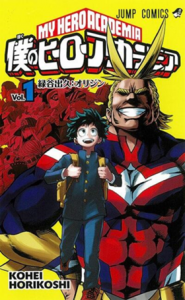
The other license is very unsurprising, as it’s the new breakout Jump hit. Boku no Hero Academia is from the author of Barrage, if anyone remembers Barrage. No? Right, moving on… it’s about a world of superheroes, and a young man who’s one of the select few who DOESN’T have them. Is he bullied? Take a wild guess. There’s a lot of over-the-top hot-blooded shouting, and the whole thing is a pile of fun.

There’s also four new Shojo Beat licenses. QQ Sweeper is a Shogakukan title from Betsucomi, by the author of Dengeki Daisy. I don’t know much about it, but the mere fact that it’s by the creator of Dengeki Daisy makes it a must buy.

Another title is from a very familiar author, it’s the latest from Arina Tanemura. 31 Ai Dream (Idol Dreams for NA) is about a woman who, regretting her choices in life and seeing her high school crush at their reunion with another woman, considers suicide. But then she gets a second chance (as one inevitably does). This is actually running in Hakusensha’s Melody (a shoujo/josei hybrid magazine) rather than her usual Ribon or Margaret stuff for Shueisha, so I suspect it may be a bit darker or more mature.

And recently they announced two more. From Kadokawa’s shoujo magazine Asuka we have Bloody Mary, which, well, vampires.

More interesting to me is Honey So Sweet, despite seeing ‘meek girl, gruff seemingly scary boy’ as the premise. It runs in Bessatsu Margaret.

Crunchyroll has a new digital license, Persona Q: Shadow of the Labyrinth. I assume this is based on the Persona series of video games, about which I know very little except that many of my friends and acquaintances are obsessed with it. There seem to be two versions, one for P3 and one for P4, that run in Shueisha’s Bessatsu Shonen Magazine and Shonen Sirius, respectively.
testament4

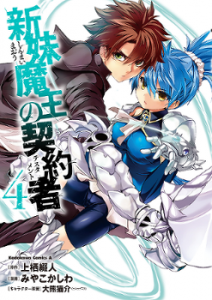
Seven Seas had a tabletop game announcement, and good luck to them. Moving on: they also announced some manga. Shinmai Maou no Keiyakusha (The Testament of Sister New Devil) is based on the light novel of the same name (no, they haven’t licensed that – you do know this company, right?), it features a young man who finds his father has remarried and he has two new sisters – only they’re a demon lord and a succubus. It runs in Kadokawa Shoten’s Shonen Ace, and will definitely appeal to those who read that description and did not roll their eyes.

Jitsu wa Watashi wa roughly translates as “Actually, I’m a…” and the cover features various characters all holding fingers to their mouths in the standard Ssssh! gesture. It apparently features a young man who is known for being unable to lie, and his run-in with various girls who all have secrets to keep, mostly supernatural. If you guessed that a harem ensues, you’re right. Hijinks also ensue. The art is very popular as well, though be warned those are some big mouths. This runs in Akita Shoten’s Weekly Shonen Champion, which rarely gets much attention over here.

Vertical had some new stuff to talk about. Ninja Slayer is a novel series supposedly created by two Americans, though many suspect this is just a cute marketing gimmick on Enterbrain’s part. In any case, it also has several spinoff manga, one of which, Ninja Slayer: Machine of Vengeance, ran in Kadokawa’s Comp Ace magazine. I believe it’s complete in one volume.

Seraph of the End is a manga series that Viz has licensed, which features, you guessed it, vampires. But it’s based on a novel series that Kodansha puts out, and Vertical have licensed the original novels. I wasn’t wild about the manga, but might give the books a try.

Lastly, and most importantly, we have Kizumonogatari, part of the long-running Monogatari series by Nisioisin, creator of Medaka Box, which you may have heard me banging on about once or twice, and Zaregoto, a series I deeply loved that did very poorly indeed over here. This is actually the third of the series, but takes place before any of the others, and the agent recommended starting with it. I absolutely cannot wait for it. By the way, Vertical have said they’ve ONLY licensed this book – they may license more if it sells well. Ergo, please buy this book. I will be pushing it hard. (And we all know how much my opinion drives sales.) I’d give you a cover image, but it’s part of the ‘Kodansha Box’ line, so the covers are all boxed art.
rosegunsdays

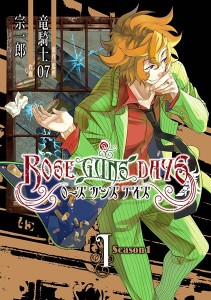
And Yen Press also has a few new things. To my delight, we have a new manga based off of Ryukishi07’s sound novels. This time it’s Rose Guns Days, which is not connected to the same universe as Higurashi or Umineko. Telling an alternate history of post-war Japan, Yen has licensed ‘Season One’, which ran in Gangan Joker. The artist is Soichiro, who also did Alliance of the Golden Witch in the Umineko series.

Final Fantasy Type-0 Gaiden: Hyōken no Shinigami could possibly be a part of the massive Final Fantasy universe. Something about the name suggests that to me. It ran in Shonen Gangan.

Horimiya has an intriguing history. There was a webcomic called Hori-san to Miyamura-kun which GFantasy picked up and released 10 volumes of, and it also spawned an anime. Now it’s getting an official manga with a different (most say better) artist, and that’s 6 volumes and counting and also running in GFantasy. The plot seems to be a sweet and sometimes angsty romantic comedy, and it has the usual ‘is this shonen or shoujo?’ feel you see in many GFantasy titles.

Lastly, Yen On had a new announcement, one many of us have been expecting for some time: The Irregular at Magic High School. This was the #1 light novel franchise over the past year, even managing to beat out Sword Art Online and Kagerou Daze. Its male lead seems to be the emotionless stoic badass, which I suspect may be part of its appeal after years of average schlubs starring in these sorts of vehicles. It’s got quite a few volumes… but honestly, after Index, nothing surprises me anymore. It has a couple of manga spinoffs… oddly, Yen haven’t licensed the Square Enix one, but have instead opted for the Dengeki Daioh version, The Honor Student at Magic High School, retelling the story from a different perspective. This might work out well – I’ve dropped a few manga adaptations that just tell the novel straight up.

That should do it for now. Which of these has you most excited?
Filed Under: NEWS, UNSHELVED

Mushishi, Vol. 2

March 13, 2015 by Ash Brown

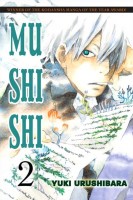
Mushishi, Volume 2Creator: Yuki Urushibara
U.S. publisher: Del Rey
ISBN: 9780345496447
Released: July 2007
Original release: 2002
Awards: Japan Media Arts Award, Kodansha Manga Award

Yuki Urushibara’s debut manga series Mushishi is a work that is quite dear to me. I discovered it more by accident than anything else, but Mushishi quickly became one of my favorite manga when it was first released in English and it remains a series that I enjoy immensely. Urushibara has taken cues from traditional Japanese folklore and mythology, creating a series with a quiet yet creepy atmosphere and a subtle sense of horror that relies on the interactions between humans and natural powers beyond their control. Mushishi has inspired multiple anime adaptations, which are also excellent, as well as a live-action film. The series has also been honored with a Japan Media Arts Award and a Kodansha Manga Award. Mushishi, Volume 2 was originally published in Japan in 2002. The volume was first released in English by Del Rey Manga in 2007. It is now available digitally by Kodansha Comics, but I hope that one day Mushishi will be brought back into print.

Mushishi, Volume 2 collects five stories, some of which are among my personal favorites in the series. “The Mountain Sleeps” finds Ginko coming to the aid of a fellow mushishi who is feared to have gone missing. “The Sea of Brushstrokes” tells the tale of a young woman whose family has collected stories about mushi for generations, becoming the guardians of a vast library of valuable knowledge. Ginko travels to a remote island that can only be accessed once every lunar month due to the tides and currents in “They That Breathe Ephemeral Life.” Back on the mainland, he joins up with a man wandering the countryside searching for a rare type of mushi in “Rain Comes and a Rainbow Is Born.” In the final story, “The Green Veil,” Ginko must convince a recently married couple to give up their children, none of whom are human despite their outward appearances.

Mushishi, Volume 2, page 86Mushishi tends to be fairly episodic, though the stories do share similar elements. The individual chapters don’t necessarily build directly on one another, but they do expand and develop more and more about the world Urushibara has created. What I particularly enjoy about Mushishi, Volume 2 is how it places Ginko within the greater context of the relatively small community of mushishi. He is only one mushishi out of many, sharing some likenesses with the others in his profession but also exhibiting personal differences. It is revealed in the second volume of Mushishi that one of the reasons Ginko is constantly traveling from place to place is that he attracts mushi; if he doesn’t keep moving the area around him will become infested. However, as is also seen in Mushishi, Volume 2, some mushishi are able to make permanent homes for themselves. In some extreme cases, they even become trapped by their duties, unable to leave without causing great harm to others.

Mushishi, Volume 2 reinforces one of the most important themes of the series—the sanctity of life and the deep respect that it deserves—and emphasizes the need for humans to coexist with mushi. These concepts are explored in various ways throughout Mushishi. In the second volume, Ginko in particular is shown to give priority to human lives, but he also avoids destroying mushi whenever possible. However, some mushishi seem to take great delight in the eradication of the mushi they encounter. This lack of compassion and understanding by mushishi as well as other humans can be problematic; they try to exert their control over, manipulate, and use to their advantage these creatures which are frequently beyond their ken, often with tragic results. At times mushi can be dangerous if left completely unchecked, but just as dangerous is unrestrained human arrogance.

Filed Under: REVIEWS Tagged With: del rey, Japan Media Arts Award, Kodansha Manga Award, manga, mushishi, Yuki Urushibara

Manga the Week of 3/18

March 12, 2015 by Sean Gaffney, Ash Brown, MJ, Michelle Smith and Anna N 3 Comments

SEAN: Enjoy this last mild week of manga, before March 25’s apocalyptic deluge.

justsohappens

Starting off, we have not a manga per se, but something that deserves attention nonetheless. Just So Happens is coming out from Abrams as a graphic novel, and details a Japanese woman who lives in London but has to return to Japan for a funeral. Early reviews are excellent.

ASH: Oh, I’m glad you mentioned this! The previews I’ve seen look great.

MJ: Wow, this does look interesting.

SEAN: We’re at the 2nd to last volume of Oh My Goddess! from Dark Horse, and I still can’t quite believe I’m typing that.

Attack on Titan has its 15th volume come out from Kodansha, even as the first volume remains in the NYT bestseller lists.

And My Little Monster hits Vol. 7, even as it seems to have hit a sort of angst holding pattern.

ASH: I do like the quirky cast of characters, but I hope to see a bit more story development with this volume.

MICHELLE: I’ve fallen a few volumes behind on this one, I’m afraid.

SEAN: There’s also a 7th volume of the Seven Deadly Sins.

Kokoro Connect has rapidly developed into an excellent title for me, and I’m pleased to see Seven Seas has the third one out next week.

servamp1

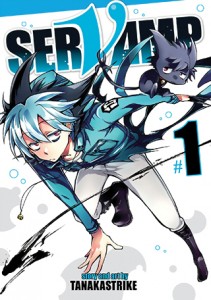
Servamp is the debut volume of the week. It runs in Media Factory’s oddball shoujo magazine Comic Gene and, obviously, has vampires – a whole pile of them. The artist is known for BL, but there’s not much tease in the first volume, which I reviewed here.

ASH: I know quite a few people who are excited for Servamp; I may have to give it a look despite being a little tired of vampires.

MICHELLE: I definitely have vampire fatigue. Especially vampires who fall in love with teenagers.

ANNA: Even I have a touch of vampire fatigue.

SEAN: And another Strike Witches spinoff comes to an end with the 2nd One-Winged Witches.

Viz has its second Master Keaton volume, with more exciting insurance action and inept interpersonal relations.

ASH: Hooray for more Urasawa (et al.)!

MICHELLE: Definitely looking forward to this one!

MJ: Same!

ANNA: I liked some chapters of the first volume better than others, but you really can’t go wrong with Urasawa.

SEAN: A 3rd Resident Evil will give you all your horror needs.

Unless your horror needs are filled by a 5th Terra Formars.

ASH: Still not a fan of the roach design, but the over-the-top fight sequences are pretty great.

SEAN: Any choice purchases next week?

Filed Under: FEATURES, manga the week of

Servamp, Vol. 1

March 12, 2015 by Sean Gaffney

By Strike Tanaka. Released in Japan by Media Factory, serialization ongoing in the magazine Comic Gene. Released in North America by Seven Seas.

In general, I’m very reluctant to talk about a manga or anime being unoriginal, mostly as many of my absolute favorite titles have been made of of little bundles of cliches. Particularly shoujo titles, and Comic Gene is sort of a shoujo-ish magazine, if you squint. That said, after reading the first volume of Servamp, my general reaction was “that was pretty good, but I feel I’ve read it all before”. It might just be that I am simply vampire’d out – the North American market is absolutely glutted with vampire manga, with more and more coming every month, and Servamp (Vampire Servant, in case you were unaware) is another example of the genre. That said, it’s not actually a bad volume, just a little worn.

servamp1

Our hero Mahiru is a serious young man who tends to get irritated easily (though that gets toned down later in the book when he meets another young man who also gets irritated easily), but is more defined by his inability to stand aside when there are people that need help. He even picks up stray cats on the street, which proves to be his undoing when said cat turns out to actually be the immortal vampire Kuro. Not that Kuro is all that impressive – he’s lazy as hell, not wanting to show off his strength even when it would save lives. Turns out he is one of seven (at least we’re told seven at the start) vampires based on the Seven Deadly Sins, and Kuro happens to be Sloth. But Mahiru won’t let him slack, especially when someone appears to be going on a vampire killing spree in the city.

This description likely makes the title sound more serious than it is. There’s lots of light-heartedness iin this series, particularly in the interaction between Mahiru and Kuro. As you can see from the cover art, Kuro has this sort of sleepy hangdog look that’s funny even when he’s at rest, and his desire for food/drink/sleep just gets even funnier because of it. Later in the series we meet more eccentric vampires, including Love (asks Mahiru to check out his “boobies”, despite being male) and Wrath (the sole female character, who has a pissed-off expression on her face in order to “look cool”). And the one major death we actually see is semi-handwaved away the following day, for reasons as yet unknown.

So it’s put together well, but again, there’s a sense you’ve seen this all before. The use of the Seven Deadly Sins as eccentric weirdos is unfortunate coming after Kodansha’s license of a shonen series with a similar premise. Mahiru’s grumpy straight-man lead reminds me a bit of Devils and Realist, and honestly there’s also a bit of Alice here as well, in terms of his gradually acquiring a bunch of seeming killers around him. (The author has apparently done BL in the past, but there’s no real teasing here, though Love seems very camp.) Even the cliffhanger ending made me say “yeah, I was expecting that surprise.” It’s well told, and fans of manga with lots of handsome young men or supernatural action series might enjoy it. But I hope to be at least startled by a plot or character in the future.

Filed Under: REVIEWS

Boogiepop at Dawn

March 11, 2015 by Ash Brown

Boogiepop at DawnAuthor: Kouhei Kadono
Illustrator: Kouji Ogata

Translator: Andrew Cunningham
U.S. publisher: Seven Seas
ISBN: 9781934876060
Released: August 2008
Original release: 1999

Technically, Boogiepop at Dawn is the sixth volume in Kouhei Kadono’s series of Boogiepop light novels illustrated by Kouji Ogata, however it serves as a prequel to the entire work. Seven Seas jumped to releasing Boogiepop at Dawn after publishing the first three Boogiepop novels in English—Boogiepop and Others and Boogiepop Returns: VS Imaginator, Part 1 and Part 2. It was a decision that made sense: the entire series wasn’t able to be translated, Boogiepop at Dawn ties in directly with the early novels, and the volume was partially the basis for the Boogiepop Phantom anime. Boogiepop at Dawn was originally published in Japan in 1999 while Andrew Cunningham’s English translation was released by Seven Seas in 2008 (two years after the first three books). I discovered the Boogiepop franchise late, after the novels and manga available in English had already gone out of print, but I have still been thoroughly enjoying the series and looked forward to reading Boogiepop at Dawn

As an agent working for the secretive Towa Organization, Scarecrow is responsible for finding other humans who, like him, have extraordinary psychic and physical abilities and strengths. The Towa Organization is very interested in these remarkable people; by controlling them it hopes to control the course of human evolution. Scarecrow’s search is made easier by the fact that he poses as Kuroda Shinpei, a private detective; he is able to continue his primary investigation while working more mundane cases. Scarecrow meets Kirima Nagi, a young woman who has been hospitalized with an undiagnosed but painful condition, while searching for evidence against another Towa agent whose loyalty has been called into question. Nagi has the potential to become one of those exceptional, highly-evolved people he is searching for, but instead of reporting her to the Towa Organization, Scarecrow decides to go against his orders, saving her life by risking his own and triggering a sequence of events that will leave multiple people dead.

Boogiepop at Dawn, page 7Although Boogiepop at Dawn is a prequel, it really is intended to be read by those who are already familiar with Boogiepop in general and with the first few volumes of the series specifically. But for those readers who are, Boogiepop at Dawn is spectacular and a very satisfying addition. Ostensibly the volume is the origin story of Boogipeop—a supernatural entity in conflict with the Towa Organization who is also keeping watch over the super-evolved humans, destroying them when necessary—and to a small extent it is. But Boogiepop actually makes very few appearances in the volume. However, Boogiepop at Dawn does provide an extensive background for another of the series’ primary characters, Nagi, and explains the purpose of the Towa Organization. Many of the other protagonists and antagonists from the earlier Boogiepop novels make a showing as well, which ties everything together very nicely. I was particularly pleased to learn more about Nagi’s father, Kirima Seiichi, an author of peculiar importance to the series whose story hasn’t been fully revealed until now.

Boogiepop at Dawn is a collection of four closely connected narratives with an additional framing story that bookends the volume. Most of the stories focus on Nagi, either directly or tangentially. Much like the other Boogiepop novels, Boogiepop at Dawn employs elements from a number of different genres, but it may safely be called speculative fiction as a whole. All melded together in the volume are bits of mystery and detective work, horror, action and martial arts, the supernatural, and science fiction. Boogiepop at Dawn is engaging and at times chillingly dark with heavy psychological components. The individual stories are seen from different perspectives, at various points following Scarecrow, Seiichi, a serial murderer, and an assassin. Boogiepop is mostly a presence in the background, but an important one nonetheless. Boogiepop at Dawn is also similar to the earlier volumes of the series in that it does not adhere to a strictly chronological structure, but it’s fascinating to seen the beginnings of the plot threads that will become so entangled in the other novels.

Filed Under: REVIEWS Tagged With: Boogiepop, Kouhei Kadono, Kouji Ogata, Light Novels, Novels, Seven Seas

Tempted by Viz Digital Bundles

March 10, 2015 by Anna N

The bundles Viz has been running recently for digital manga are great deals! In many cases previously I’ve already had the print manga for the featured bundles, so I haven’t taken advantage of them. I forgot to get in on the One Piece bundle that was available before, but there are some great bundles currently available that I’m about to buy.

Cross Manage – I haven’t heard much of Cross Manage before, but $10 for a sports manga seems like a great bargain to me!

Claymore Vols 1-10 – I have a few scattered print volumes of Claymore, and I enjoyed reading the first three volumes of this series. $20 for a solid shonen fantasy manga is a great deal, and I’m probably going to buy this for myself.

10 volumes of Nana is a crazy deal for some great manga! I would totally be buying this if I hadn’t collected all the print volumes as they were coming out.

I also own all of Biomega already, but this is a wonderfully illustrated series that features a talking bear with a machine gun. Lovely art and action sequences. If you have to buy only one manga that features a talking bear with a machine gun, buy this one!

There are some other great sampler bundles for you to check out a variety of first volumes.

Filed Under: UNSHELVED

The Magical World of Mangatime Kirara ☆ Magica

March 10, 2015 by Erica Friedman 1 Comment

mtkm16When an anime or manga franchise is exceptionally popular in Japan, it is often marked with special issues of a current magazine, or a short run of a dedicated magazine of it’s own. You can see examples of this with a long-lived franchise like Gundam. Gundam has been around for decades in one form on another – so long that it is effectively a genre unto itself. One almost expects that the anime and manga world honors Gundam with a dedicated magazine.

The Puella Magi Madoka Magica franchise was almost the complete opposite. It was designed from the outset to fully saturate the Japanese market. Anime and manga, otaku merchandising, high end accessories, make-up, clothing (for men and women), bags, movies…for a while you couldn’t walk through a shopping arcade in Japan without stumbling across something that was Madoka-themed. And so, although the series is not long-lived in any meaningful way, it isn’t all that surprising that Hobunsha, the publisher of the many Mangatime Kirara imprint magazines also has a Mangatime Kirara ☆ Magica (まんがタイムきらら☆マギカ) magazine. (Hobunsha is also the publisher of all the spin-off stories of the Magica franchise.)What did surprise me was the magazine’s longevity. It’s currently at 18 issues. If you’ve ever tried to publish a magazine, you know that that is a lot of content. For a relatively recent series, it’s an amazing amount of content.

Mangatime Kirara ☆ Magica is a hybrid magazine. Because it is focused on a specific franchise, the pages include gag comics, slice-of-life, action, comedy and tragedy stories. The characterizations are as much “fanon” as they are canon, with popular pairings and fandom-created character quirks used freely. But, this magazine is, ultimately, a corporate created tie-in meant for fans of the series, rather than truly fan-created derivative work.

The magazine does have a website, which is mostly focused on selling the manga, artbooks and other tie-in publications for the series. The website has individual spin-offs and publications reading samples, costs and purchase data and not much more. Because this is specialty magazine, there are no circulation numbers available. The magazine costs 780 yen an issue ($6.52 at time of writing) for 250 pages, plus a series-themed gift. (The above issue came with a fetching clearfile of Devil Homura, as seen on the cover. Which is why I bought it. ^_^)

This is a magazine for fans of this series, full stop. No one else would care to read 200+ plus pages of jokes about Kyouko being hungry, or Mami at home or maid Madoka. But for 18 volumes so far, enough people do that Mangatime Kirara ☆ Magica is alive and well, with stories of Magical Girls living banal lives in our world and fighting Witches in their magical world.

Mangatime Kirara ☆ Magica from Hobunsha: http://www.dokidokivisual.com/madokamagica/

Filed Under: Magazine no Mori Tagged With: Erica Friedman, Hobunsha, Magazine no Mori, Manga Magazine, Puella Magi Madoka Magica

Bookshelf Briefs 3/10/15

March 10, 2015 by Anna N, Sean Gaffney and Michelle Smith Leave a Comment

This week, Sean, Anna, & Michelle look at recent releases from Viz Media and Kodansha Comics.

happymarriage10Happy Marriage?!, Vol. 10 | By Maki Enjoji | Viz Media – After being stabbed protecting Hokuto from an assailant, Chiwa drags her feet on showing her husband the letter his late father had delivered to her after his funeral. Eventually, the truth comes out and, to protect Chiwa from family machinations, Hokuto proposes a divorce, after which he promptly disappears. It was a foregone conclusion that this series would end with a happily ever after, so though there is angst here, there is no sense of urgency. Even the revelation of who was behind the attempt on Hokuto’s life (and the death of his mother) is completely ho-hum, though I guess I appreciate that the guilty party’s motivations made sense. Plot isn’t the point of a series like this, anyway. If you enjoyed previous volumes of Happy Marriage?!, this conclusion (however inevitable) is still worth checking out. – Michelle Smith

honeyblood0Honey Blood: Tale 0 | By Miko Mitsuki | Viz Media – Even though I am so over stories in which immortal men fall in love with teenage girls, I did like the bittersweet aspect of Honey Blood‘s ending, so I appreciate the opportunity to read the three one-shot stories that preceded the serialized version. The things that bugged me are still present, but so too is the acknowledgment that the couple is basically doomed for a dark future. Two unrelated stories round out the volume: one about a pair of childhood friends who wait too long to confess their feelings, and the other about a tomboy who feels like she needs to completely transform herself (physically and behaviorally) in order to attract the boy she likes. That’s a horrible message, obviously, but it was kind of cute, too. In the end, Mitsuki did some intriguing things with some stock concepts, and I hope we see more from her in the future. – Michelle Smith

kamisama17Kamisama Kiss, Vol. 17 | By Julietta Suzuki | Viz Media – We’ve finally cone to the end of the ‘past’ storyline, and Nanami has done most everything she needs to do. As a result, much of this volume is simply seeing the results of her past meddling, as it affects the important players: Tomoe, Yukiji, and Akura-Oh. After that, we finally get to see the fruits of her labors, even if it requires a brief detour to 20 years ago so that Mikage knows that she’s the one who is able to save Tomoe where he can’t. And the payoff is beautiful, something that fans of this series have been waiting for since it began. I’d be happy if it ended here, but there’s plenty more to go in Japan (Vol. 21 is due out next month), so instead let’s go out on both Nanami and Yukiji’s ecstatic faces for now. – Sean Gaffney

seraph-4Seraph of the End: Vampire Reign, Vol. 4 | by Takaya Kagami, Yamato Yamamoto, and Daisuke Furuya | Viz Media – I continue to be impressed with the amount of worldbuilding and character development on display in this action packed manga about the last dregs of humanity turning to demonically infused weapons to fight off vampires in a futuristic dystopia. After the adopted brothers Yu and Mika found their paths diverging, with one joining a group of vampire hunters and the other becoming a vampire, the inevitable confrontation occurred in this volume, and the results were so intriguing. Mika sees Yu being used by vampire hunters and Yu vows to save Mika from his new vampire family. The opposing groups are neither good or bad, and with some interesting facts being divulged about Yu’s chosen side, I’m very interested to see where this story is heading next. – Anna N

wallflower34The Wallflower, Vol. 34 | By Tomoko Hayakawa | Kodansha Comics – Even after 34 volumes, the core message of The Wallflower has been fairly consistent, albeit occasionally abused for the sake of comedy. ‘Don’t make yourself into something you’re not because of anyone’s opinion’ drives this series, and Sunako’s consistent inability to become ‘the lady’ her aunt wants is due to this. In this volume, we see the tomboyish Machiko get told her relationship with Yuki isn’t romantic enough, and a lonely spoiled brat learning that it is possible to have fun like a normal child and that her grandfather really does love her. As for Kyohei and Sunako, that takes a back seat here, but given the manga is wrapping up soon, I imagine that the next volume will take care of that. – Sean Gaffney

Filed Under: Bookshelf Briefs

Pick of the Week: Requiem of the Rose King

March 10, 2015 by Ash Brown, Michelle Smith, Anna N, Sean Gaffney and MJ 1 Comment

rrk1ASH: Although it’s a smaller shipping list this week there are still plenty of great manga being released. But if I’m going to be honest, I only have eyes for the debut of Aya Kanno’s Requiem of the Rose King, one of the manga I’m most looking forward to this year. Shakespearian-inspired drama and appealing artwork? Yes, please!

MICHELLE: As much as I love Knights of Sidonia and am happy that another volume is coming out, I am also going to pick Requiem of the Rose King because I have more than a passing fancy for Richard III and am intrigued to see how Kanno will handle his story.

ANNA: I have to go with Ash and Michelle in picking Requiem of the Rose King. It is certainly one of the most interesting shoujo releases I’ve heard about in quite some time.

SEAN: What they said.

MJ: What he said they said.

What looks good to you this week?

Filed Under: PICK OF THE WEEK

Sparkler Monthly picks up Orange Junk

March 10, 2015 by MJ 2 Comments

Orange-Junk-cover2-571x800We’ve got some exciting digital comics news to break today! As of, well, right now, Manga Bookshelf favorite Chromatic Press (Sparkler Monthly) is the official publisher of shoujo-style comedy series Orange Junk, formerly one of the most popular comics at the (mostly) fan-funded Inkblazers.com, which officially shut down earlier this year.

From Mexican comic artist Heldrad, Orange Junk is billed as an affectionate parody of shoujo comedy tropes, and though it certainly delivers on that front, early signs indicate that it stands to offer quite a bit more. Like most truly successful parody, Orange Junk mocks its influences by becoming them, in all the best ways possible.

For the uninitiated, here’s the premise:

“When Louise’s wealthy family loses everything, she has to pull herself up by her bootstraps and start over in a new high school – where the smartest boy is the meanest, and the hottest boy is the weirdest. But Louise needs tutoring, so the three become a team… It’s a riches to rags school story with a whole lot of screaming. In the vein of Monthly Girls’ Nozaki-kun and Ouran High School Host Club, Orange Junk is a comedic love letter to shojo’s ridiculous, beloved traditions. “

In short, Orange Junk is warm-hearted, hilarious, smartly drawn, and skillfully constructed to both entertain and satisfy fans of shoujo manga. And they’re not kidding about the screaming.

The series’ revised back chapters are available in full today, along with a downloadable ebook of the first four chapters (a second ebook will be available later this month), and new chapters of the series will begin running in Sparkler‘s April issue (Issue 21). Ebooks retail for $6.00. For those who yearn for print, the first volume or so is expected out this summer. In the meantime, treat yourself to some delicious shoujo goodness, free of charge, right now at Sparkler Monthly.

Filed Under: NEWS, UNSHELVED Tagged With: Chromatic Press, heldrad, orange junk, sparkler monthly

  • « Go to Previous Page
  • Page 1
  • Interim pages omitted …
  • Page 555
  • Page 556
  • Page 557
  • Page 558
  • Page 559
  • Interim pages omitted …
  • Page 1049
  • Go to Next Page »
 | Log in
Copyright © 2010 Manga Bookshelf | Powered by WordPress & the Genesis Framework