• Skip to primary navigation
  • Skip to main content
  • Skip to primary sidebar
  • Home
  • About Us
    • Privacy Policy
    • Comment Policy
    • Disclosures & Disclaimers
  • Resources
    • Links, Essays & Articles
    • Fandomology!
    • CLAMP Directory
    • BlogRoll
  • Features & Columns
    • 3 Things Thursday
    • Adventures in the Key of Shoujo
    • Bit & Blips (game reviews)
    • BL BOOKRACK
    • Bookshelf Briefs
    • Bringing the Drama
    • Comic Conversion
    • Fanservice Friday
    • Going Digital
    • It Came From the Sinosphere
    • License This!
    • Magazine no Mori
    • My Week in Manga
    • OFF THE SHELF
    • Not By Manga Alone
    • PICK OF THE WEEK
    • Subtitles & Sensibility
    • Weekly Shonen Jump Recaps
  • Manga Moveable Feast
    • MMF Full Archive
    • Yun Kouga
    • CLAMP
    • Shojo Beat
    • Osamu Tezuka
    • Sailor Moon
    • Fruits Basket
    • Takehiko Inoue
    • Wild Adapter
    • One Piece
    • After School Nightmare
    • Karakuri Odette
    • Paradise Kiss
    • The Color Trilogy
    • To Terra…
    • Sexy Voice & Robo
  • Browse by Author
    • Sean Gaffney
    • Anna Neatrour
    • Michelle Smith
    • Katherine Dacey
    • MJ
    • Brigid Alverson
    • Travis Anderson
    • Phillip Anthony
    • Derek Bown
    • Jaci Dahlvang
    • Angela Eastman
    • Erica Friedman
    • Sara K.
    • Megan Purdy
    • Emily Snodgrass
    • Nancy Thistlethwaite
    • Eva Volin
    • David Welsh
  • MB Blogs
    • A Case Suitable For Treatment
    • Experiments in Manga
    • MangaBlog
    • The Manga Critic
    • Manga Report
    • Soliloquy in Blue
    • Manga Curmudgeon (archive)

Manga Bookshelf

Discussion, Resources, Roundtables, & Reviews

Blog

The Ring of Saturn

June 10, 2015 by Ash Brown

The Ring of SaturnCreator: KaiJu
Publisher: Chromatic Press
ISBN: 9780993861178
Released: May 2015
Original run: 2014

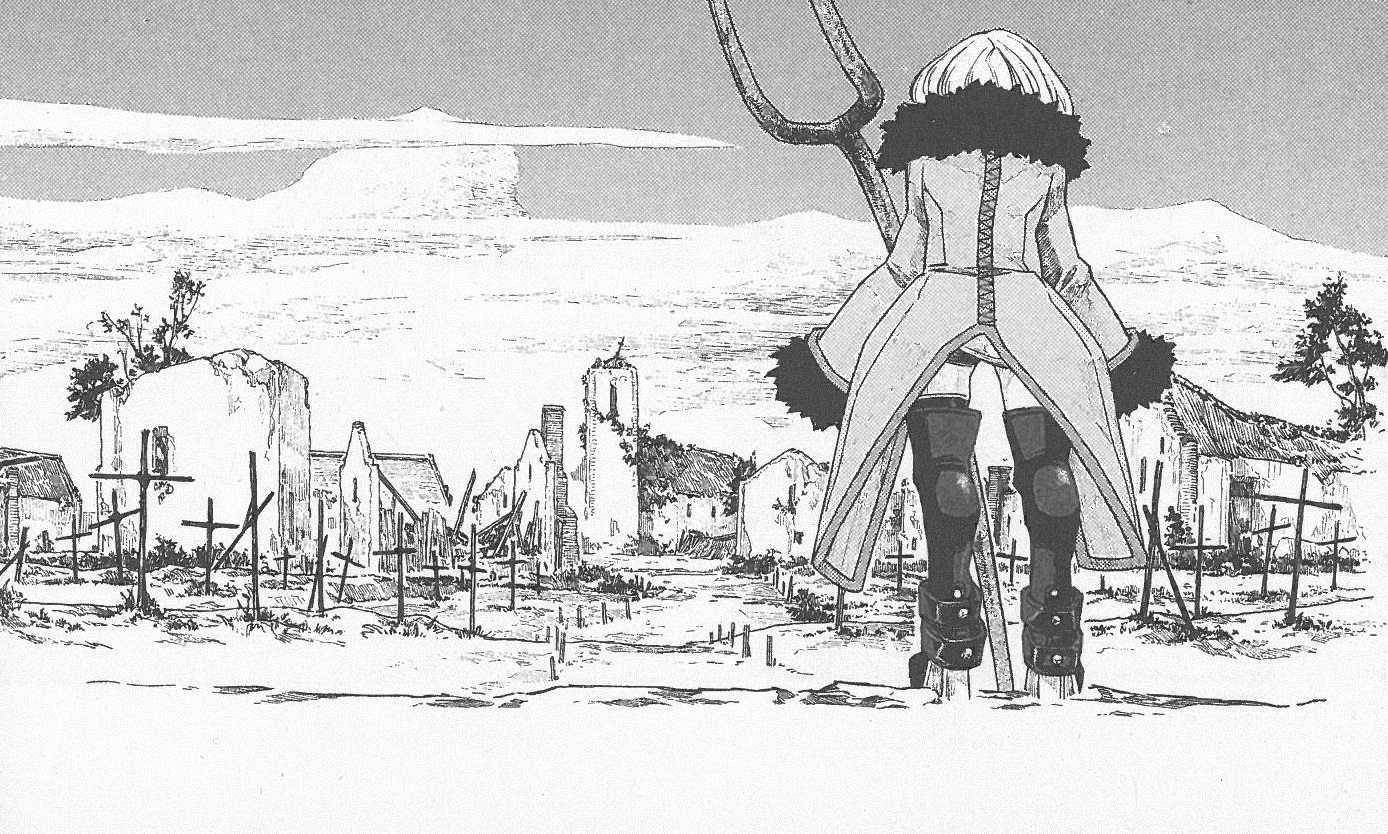
The Ring of Saturn was the first work that I read by KaiJu, a creative team made up of animator Jennifer Xu and cartoonist Kate Rhodes. A short three-part comic, The Ring of Saturn was first serialized online in Chromatic Press’ multimedia magazine Sparkler Monthly in 2014. The comic was collected as an ebook soon after and then in 2015 the print edition was released. I initially read The Ring of Saturn online as it was being serialized and was very impressed by the comic, so I was looking forward owning a physical copy. The gorgeous cover artwork was what first caught my attention, but the comic’s musical elements and historical drama immediately appealed to me as well. Although The Ring of Saturn stands completely on its own, the comic is actually a side story, a pilot of sorts, for a much larger work pitched by KaiJu to Chromatic Press. Based on the strength of The Ring of Saturn alone, I hope to one day see that project come to fruition. In the meantime, I’m very happy to have The Ring of Saturn.

Miriam Frayne is a student of Gustav Holst, the Director of Music at the prestigious St. Paul’s Girls’ School. Although a skilled pianist with a passion for music, she is confounded by the solo arrangement of Holst’s “Saturn, the Bringer of Old Age.” She simply can’t seem to grasp its meaning or feeling, much preferring the rousing “Jupiter” movement of the suite which better suits her exuberant temperament and style of playing. It’s that energy that captures the attention of Rasim Rahal, a young astronomer who is intrigued by Holst’s work. At first Miriam is annoyed by Raz, but she soon finds herself warming up to him. Although he’s not the only one to express enjoyment of Miriam’s performance of “The Bringer of Old Age,” she herself continues to be dissatisfied and frustrated with it. And while Miriam continues to struggle with “Saturn” her country is locked in a struggle of its own—The Great War. Though seemingly far removed from her quiet life at school, the war is something that will affect everyone, including Miriam.

The Ring of Saturn, pages 69-70One of the things that I love about The Ring of Saturn is how the music forms a parallel to the narrative of the comic and to Miriam’s development as a character. The music serves as a metaphor for growth and change in a way that is remarkably effective and which never comes across as trite. “Jupiter, the Bringer of Jollity” is a flashy piece with a sense of brilliance. As Miriam describes it, it steadily moves forward with purpose. “The Bringer of Jollity” captures Miriam as she is at the beginning of the comic—youthful and fervent, though perhaps a little naive when it comes to some of the harsher realities of life and of war. But by the end of The Ring of Saturn, Miriam is finally able to understand and even identify with “The Bringer of Old Age.” She has had to grow up, and with that maturity she is able to approach the music and her life more fully. She is no longer the person she once was, which can be seen in both how she acts and in how she plays. Miriam has become wiser with age and with experience.

Music, which is beautifully conveyed visually throughout The Ring of Saturn, is a critical component of the work. The Ring of Saturn also one of the few comics that I know of in which a composer, and a historical one at that, plays an important role. And it’s certainly the only one that I’m aware of that features Holst. While the details in The Ring of Saturn aren’t quite as intricate, KaiJu’s work in the comic reminds me of some of the manga by Kaoru Mori in both its artwork and in how history is incorporated into its setting and story. The Ring of Saturn is historical fiction and so some freedom has been taken with historical fact, but the feeling of era is there. I also enjoyed the comic’s witty and poetic dialogue. The Ring of Saturn is a short comic, well under a hundred pages, but it is also satisfyingly complete. Reading it again I love it just as much as I did the first time and have perhaps come to appreciate even more what KaiJu has accomplished with The Ring of Saturn.
Filed Under: REVIEWS Tagged With: Chromatic Press, comics, kaiju

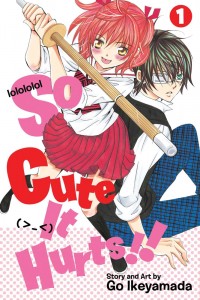
So Cute It Hurts!!, Vol. 1

June 10, 2015 by Sean Gaffney

By Go Ikeyamada. Released in Japan as “Kobayashi ga Kawai Sugite Tsurai!!” by Shogakukan, serialization ongoing in the magazine Shoujo Comic (“Sho-Comi”). Released in North America by Viz.

In general, I’m a sucker for over-the-top comedic shenanigans in a shoujo manga, but it can be very difficult to actually achieve this. The author has to be ridiculous while still keeping the reader interested, and suspend disbelief without hanging it by the neck. It can also be very easy to slide into drama, particularly if you run in a magazine like Sho-Comi. When done right, though, it can be pure fun. I think the first volume of So Cute It Hurts!! shows a lot of promise, and while not perfect, has enough fun that I will be reading more.

scih

The author was previously best knows for Suki Desu Suzuki-kun!!, an 18-volume series that I thought might be licensed by Viz but never was. (Not that you’d know that by the back of this book – all the extras are included, including the cast of SDSK talking to us about the new title.) This new one is 11 volumes and counting, and for once actually feels like it was planned out to be a long series rather than a short one that catches on and gains plot points afterwards. Our heroes are identical twins, one male and one female. Mitsuru is good at athletic things, a bit of a playboy, and a bit of a delinquent. Megumu is a history otaku who plays Edo-period datesims. Together, they do not fight crime at all – in fact, they don’t really interact as much as you’d expect. But when Mitsuru’s grades are in danger, he asks his lookalike sister to swap with him for the week and take the tests for him.

To her credit, she refuses. Of course, he then proceeds to switch anyway, as he’s that sort. Mitsuru spent the first volume annoying me, to be honest, and I had to occasionally remind myself that his character development is part of the point. He does despise bullying, of course, like all manga heroes, and when he comes across a deaf girl who is being harassed by the queen of the school, he not only falls head over heels but starts to study sign language. As for Megumu, she’s in at the deep end at the boys’ school, not even trying to act like her brother and accidentally winning fights by tripping and headbutting the opponent’s crotch. She does meet a sexy aloof guy, though. With an eyepatch.

If all of this sounds melodramatic, you are absolutely correct. Naturally, the deaf girl seems to be in love with the eyepatch guy. Naturally, the Queen of the School ends up falling for Mitsuru (in another disguise), and absolutely everyone is completely amazed at the feelings in their heart! The humor is broad but fun. I like that the twins never even bother to try to imitate each other beyond the outfit swap, and how it works anyway. I like Mitsuru’s cocky ‘I can’t believe I’m this cute’ persona, which provides the title for us but also tells me he’s being set up for a fall. I like how Megumu may be a shy girl falling in love, but she’s still happy to rabbit on about Masamune for minutes on end in front of her crush.

this first volume doesn’t knock it out of the park. It’s fun but slight, and I hope it will continue to develop its characters as it goes along. If you’re a Shojo Beat fan, this should please you.

Filed Under: REVIEWS

Bookshelf Briefs 6/9/15

June 9, 2015 by Michelle Smith, Sean Gaffney and Anna N Leave a Comment

This week, Michelle, Sean, & Anna look at recent releases from Seven Seas and Viz Media.

dfrag5D-Frag!, Vol. 5 | By Tomoya Haruno | Seven Seas – I must admit we got off to a slow start with this volume, as the lunchbox plot was dull, and yet another Momotaro parody never took off. But once we introduced our new adversary, Tama, D-Frag! goes back to doing what it does best – humiliating its entire cast for the sake of comedy, while at the same time allowing them to be completely awesome. Tama fits right into the manga, and shows off a surprising childhood side of the seemingly indomitable Chitose (and Roka being an adorable yet incredibly weird baby). Actually, it’s Sakura who now gets the role of the indomitable fighter. Add in a few jokes about Takao’s chest (because without those, how would you know you were reading D-Frag!?), and it adds up to a strong finish. – Sean Gaffney

foodwars6Food Wars!: Shokugeki no Soma, Vol. 6 | By Yuto Tsukuda and Shun Saeki | Viz Media – It’s time for a new arc, and Totsuki Institute’s Fall Classic, a “grand stage for fierce cooking battles,” seems poised to offer some tremendous shounen tournament fun featuring quite a few new characters. Before it kicks off, though, Soma’s dad stops by to encourage his son by trouncing him in an invigorating breakfast challenge (it’s nice to see Soma lose for a change!) and Soma realizes his scent-fu is not up to par when confronted with a master of spices. I’d forgotten how much this series reminds me of The Prince of Tennis, but volume six evoked those feels once again. It also, alas, evoked some ews with ickier-than-usual fanservice, though even Soma had his clothes blown off by some potent curry, so I guess that evens things out a bit. The volume ends just as the classic begins, so I am definitely looking forward to volume seven! – Michelle Smith

girlspanzer4Girls Und Panzer, Vol. 4 | By Girls Und Panzer Projekt and Ryohichi Saitaniya | Seven Seas – This is a franchise, of course, and most of those who are buying the manga will already be familiar with the anime, which ends in the same way. (I imagine the light novel, which focuses on Saori, ends the same – don’t expect it licensed anytime soon.) So the manga, unlikely to show off more thrilling action scenes (though they are done very well indeed) shows us instead more of its focus character, Yukari, and her love of tankery. It can sometimes feel a bit odd – the emotional core of the story is Niho’s, and seeing it viewed through Yukari’s prism feels off. But overall, I think this was an excellent adaptation, and I’m surprised I enjoyed it as much as I did. Sweet and fun. – Sean Gaffney

kamisama18Kamisama Kiss, Vol. 18 | By Julietta Suzuki | Viz Media – It almost felt like this series could end at the conclusion of the time-traveling arc, what with Nanami and Tomoe officially becoming a couple, but I’m glad it didn’t. It’s actually refreshing for her to get back to her old life, studying for finals so that she can go on the class trip to Okinawa. While I don’t love that Nanami is another in the long line of scholastically challenged shoujo heroines, I did like her being motivated by Tomoe’s resolve to absorb human knowledge, since he intends to be a more permanent part of her world. Too, the class trip brings greater definition to Nanami’s closest school friends and affords Nanami the opportunity to be very brave in attempting to save one of them from an aggrieved yokai. I admit to being a little lost about this whole Kirihito storyline, but was nonetheless thoroughly entertained. – Michelle Smith

kiminitodoke21Kimi ni Todoke: From Me to You, Vol. 21 | By Karuho Shiina | Viz Media – Sometimes, narratives I am consuming for entertainment purposes portray the agonies of youth so acutely that said consumption becomes a bit stressful. Such is the case with Kimi ni Todoke’s 21st volume, in which the cast enters their final year of high school and must decide what to do about their futures. I absolutely love that Sawako is nudged into pursuing her own goals more aggressively—it’s great to see her feeling energized about something—and the idea of Ayane going off alone to see new things and become the confident person she knows she isn’t, even though others think differently, is great. (We can has spinoff?!) But there are some hints that at least one relationship might end (and if it doesn’t, that’s probably worse) and many exciting yet bittersweet days are to come. It’s great, but it hurts. It’s great because it hurts. – Michelle Smith

seraph5Seraph of the End: Vampire Reign, Vol. 5 | By Takaya Kagami and Yamato Yamamoto – I continue to enjoy the worldbuilding in this manga. The past two volumes were mostly concerned with training and fighting, so I was interested to see some of the backstory of the Japanese Imperial Demon Army get filled in when Yuichiro is called before some members of the high-ranking Hiragi family and subjected to an interrogation. The leader learns why Shinoa is disaffected from her family and also why despite his rank, Gurren is a target of suspicion. Yuichiro is determined to master his demonic weapons, hold on to his new found family, and try to turn his long-lost friend Mika into a human again. We’ll see if he can pull that off in the next few volumes. Seraph of the End is still an engaging series five volumes in. – Anna N

Filed Under: Bookshelf Briefs

Pick of the Week: Short stack

June 9, 2015 by Sean Gaffney, Michelle Smith, Ash Brown and MJ 1 Comment

potwSEAN: It’s a quiet week all around, with lots of continuing series. I’ll give a pick to one that’s ending, the 4th and final volume of Girls Und Panzer. I had originally thought this to be along the lines of Strike Witches, but to my surprise it’s a sweet and heartwarming school comedy, which just happens to have a completely ludicrous premise. Add in a final volume that includes a very well-drawn and understandable tank battle over multiple terrains, and I will admit that my maiden’s trembling heart was moved.

MICHELLE: I must choose between two frontrunners this week, and since I’ve picked Magi fairly recently, I think I’ll go with Say I Love You. this time. I’m a few volumes behind, but I look forward to picking up volume eight and getting caught up!

ASH: I think I’m going to have to go with Say I Love You, too. It’s been such a consistently good series.

MJ: I’m pretty much at a loss this week, so I’ll go off-list and mention that the KAIJU’s short comic Ring of Saturn just recently became available in paperback from the Sparkler Monthly shop! I reviewed Ring of Saturn back in January, when it was still an ebook only, and found a lot to love. Now all you old-school paper books folk can discover it too! PS: There’s a deleted scene from volume three of Off*Beat in the latest issue of Sparkler Monthly, and it’s pretty freaking adorable. You want it, Off*Beat fans. Trust me.

What looks good to you this week?

Filed Under: PICK OF THE WEEK

My Week in Manga: June 1-June 7, 2015

June 8, 2015 by Ash Brown

My News and Reviews

Happy June, everyone! I’ve been super busy (I seem to say that a lot, don’t I?) but was still able to post a few things here at Experiments in Manga last week. The winner of the Ema Toyama Twosome manga giveaway was announced. That post also includes a list of manga available in English that feature novelists and other writers. The honor of the first in-depth manga review for the month of June goes to Masayuki Ishikawa’s Maria the Virgin Witch, Volume 2. Ishikawa seems to be trying to do a lot with such a short series (it’s only three volumes), maybe a bit too much. Even if he’s not able to successfully pull everything off, I still find Maria the Virgin Witch to be an intriguing series and want to read the rest of it. Finally, over the weekend I posted the Bookshelf Overload for May. I had a pretty big haul of manga and comics last month; I largely blame TCAF.

Elsewhere online there’s been some interesting reading to be found. Justin interviewed Kate Dacey (aka The Manga Critic) over at Organization Anti-Social Geniuses. Kate was one of my biggest manga blogging inspirations, so I’ve been very happy to see her recent return. Sean Kleefeld brought my attention to a panel on the history of manhwa. Drawn & Quarterly recently released the massive anthology Drawn and Quarterly: Twenty-Five Years of Contemporary Cartooning, Comics, and Graphic Novels. Joe McCulloch specifically looks at the volume’s manga content. Mangabrog has a translation of a conversation between Naoki Urasawa and Hisashi Eguchi. Last but not least, two licensing announcements were made last week that I’m very excited about: Viz Media is finally releasing a print edition of One-Punch Man by ONE and Yusuke Murata and Drawn & Quarterly is releasing more of Shigeru Mizuki’s GeGeGe no Kitaro! (I loved the publisher’s first Kitaro collection.)

Quick Takes

Welcome to the N.H.K., Volume 1Welcome to the N.H.K., Volumes 1-4 by Kendi Oiwa. Originally published in print by Tokyopop, Viz Media recently announced that it would be releasing Welcome to the N.H.K. digitally in the very near future. Tatsuhiko Takimoto’s original Welcome to the N.H.K. light novel was fantastic and I thoroughly enjoyed the anime adaptation, too. It was only a matter of time before I read Kendi Oiwa’s manga adaptation, though I am a little surprised that it’s taken me this long to get around to it. It has been a while since I’ve read or watched the other versions of Welcome to the N.H.K., but so far the manga is closer to the anime than it is to the novel, except that it seems a little more streamlined and perhaps even a little raunchier. Satou is a college dropout and hikikomori who has been targeted by Misaki, a young woman who is determined to rehabilitate him despite her own oddities and personal issues. In some ways, the more recent Watamote is reminiscent of Welcome to the N.H.K. Both series feature protagonists who are extremely socially awkward and both series can be hilarious, but they can also be somewhat depressing and painful to read at times, too. But, I am enjoying the manga version of Welcome to the N.H.K. a great deal.

xxxHolic: Rei, Volume 3xxxHolic: Rei, Volume 3 by CLAMP. Initially, I felt that it wasn’t necessary to have read xxxHolic in order to enjoy xxxHolic: Rei. However after reading the third volume, I feel I need to revise that opinion. It’s still not absolutely necessary to have read xxxHolic, but Rei makes a lot more sense and is much more meaningful if a reader has that background. I’ve actually not finished reading the entirety of xxxHolic, so while I was able to get the basic gist of what was going on in Rei, I did feel I was missing out on some important context while reading the third volume. However, I really like what CLAMP is doing with the series and I’m looking forward to reading the part of xxxHolic where Rei ties in directly. Rei has developed a marvelously ominous atmosphere that has a surreal, dreamlike quality to it. CLAMP’s high-contrast artwork in the series is great, too. At first, Rei felt directionless as though CLAMP didn’t really know what to do with the series, but the third volume begins to bring everything together in a way that actually makes sense. Of course, this also means the Tsubasa: Reservoir Chronicles connection is becoming more pronounced as well, which can sometimes feel forced.

Ze, Volume 7Ze, Volumes 7-9 by Yuki Shimizu. Despite it being a series that I tend to enjoy, it’s actually been a few years since I’ve read any of Shimizu’s supernatural boys’ love manga Ze. Although there is some dubious content (which doesn’t really surprise me much at this point), these three volumes reminded me what it is about Ze that I like so much: Shimizu has a knack for creating fascinatingly intense and complex relationship and power dynamics. The seventh and eighth volumes explore the backstories of Kotoha and Konoe; I was very satisfied with the explanation of their peculiar relationship and personalities. (Granted, most of the characters and relationships in Ze are pretty strange.) Ze, Volume 8 focuses on Shoui and Asari. Most of the story arcs have been two volumes long, but perhaps because their relationship has been developing in the background over the course of the series, the eighth volume is the only one specifically devoted to the couple. These three volumes are also very important in setting up the next and what I believe is the final story arc which will reveal more of Waki’s tragic history. I had forgotten how much of an asshole he can be, so I am curious to find out what made him the person he is.

Filed Under: FEATURES, My Week in Manga Tagged With: clamp, Kendi Oiwa, manga, Welcome to the N.H.K., xxxholic, Yuki Shimizu, ze

One Punch Man Goes to Print; Avengers/Attack on Titan Crossover Now Available

June 8, 2015 by Brigid Alverson

Unlimited FafnirCrunchyroll is adding Unlimited Fafnir to its digital manga lineup.

Viz announced last week that they will publish a print edition of One Punch Man, and Zainab Akhtar explains why she’s pysched. this series is nominated for an Eisner Award, and as far as I can tell it’s the first digital-first manga to get the nomination.

The Manga Bookshelf team takes a look at this week’s new manga.

One Piece is taking a week off.

One volume or another (usually more than one volume, actually) of Attack on Titan has been on the New York Times manga best-seller list for 100 weeks now.

If you missed the Avengers/Attack on Titan crossover comic that came out on Free Comic Book Day, you can now download it for free.

Erica Friedman posts the latest Yuri Network News at Okazu.

Matthew Meylikhov counts down ten manga everyone should have on their shelves. Of course, the main purpose of a list like this, I always say, is to give people something to argue about, and the readers deliver in the comments.

Sean Kleefeld posts an interesting video about the history of manhwa and North Korean comics.

13th Dimension has an exclusive preview up of Batmanga #49.

News from Japan: ANN has a list of the biggest print runs from three of the biggest manga publishers in Japan. Tohru Fujisawa is taking a break from his latest GTO spinoff GTO: Paradise Lost, until this winter. The 13th volume of Five Star Stories will be out in July, the first volume in nine years.

Reviews

G.B. Smith on vol. 2 of The Disappearance of Nagato Yuki-Chan (The Fandom Post)
Ken H on Dream Fossil (Sequential Ink)
Leroy Douresseaux on vol. 14 of Itsuwaribito (The Comic Book Bin)
Sean Gaffney on vol. 21 of Kimi ni Todoke (A Case Suitable for Treatment)
Steve Bennett on The Legend of Zelda: A Link to the Past (ICv2)
Laura on vols. 1 and 2 of Love at Fourteen (Heart of Manga)
A Library Girl on Not Love But Delicious Foods Make Me So Happy (A Library Girl’s Familiar Diversions)
Matthew Warner on vol. 6 of Say I Love You (The Fandom Post)
Julia Smith on vol. 2 of Spell of Desire (The Fandom Post)
Rebecca Silverman on vol. 6 of Wolfsmund (ANN)

Filed Under: MANGABLOG

Bookshelf Overload: May 2015

June 7, 2015 by Ash Brown

So, over the last few years, I’ve come to expect that May will have a very large number of comics and manga that I want to buy and I try to plan accordingly. I generally fault attending the Toronto Comic Arts Festival for most of this. Being exposed to so many great creators makes me want to bring home their work. And on top of that, I have the usual slew of preorders to deal with in May, too. I made some great out-of-print finds last month as well. I was very happy to finally complete my collection of Yayoi Ogawa’s Tramps Like Us, for one. Although I believe it was technically released in April, my copy of Menatiko Itto’s Priapus arrived in May (which I promptly reviewed). As for other May preorders, I was very excited for the beautiful license rescue of Kaoru Mori’s Emma. Though I haven’t read it yet, I was also pleased to see Tadao Tsuge’s Trash Market, a collection of short manga from an important Garo mangaka, released. I continue to be incredibly grateful that Shimura Takako’s Wandering Son is being translated into English. I have no idea when the next volume is scheduled to be published, but the eighth volume is now available. (Review to come soon!) I’ll be reviewing Kaiju’s The Ring of Saturn in the very near future as well since it was recently released in print. May also saw the publication of two of the best comics that I’ve read so far this year: Noelle Stevenson’s Nimona and Yoshitoki Oima’s A Silent Voice, Volume 1.

Manga!
Alice in the Country of Clover: Cheshire Cat Waltz, Volumes 6-7 by Mamenosuke Fujimaru
The Ancient Magus’ Bride, Volume 1 by Kore Yamazaki
Aquarion Evol, Volume 2 written by Shoji Kawamori, illustrated by Aogiri
Attack on Titan: Junior High, Omnibus 3 by Saki Nakagawa
Black Rose Alice, Volume 4 by Setona Mizushiro
Cretian Cow by Gengoroh Tagame
Dorohedoro, Volume 15 by Q Hayashida
Dream Fossil by Satoshi Kon
Drug and Drop, Volume 2 by CLAMP
Emma, Omnibus 1 by Kaoru Mori
Fairy Tail, Volume 48 by Hiro Mashima
Food Wars!: Shokugeki no Soma, Volume 6 written by Yuto Tsukuda, illustrated by Shun Saeki
Gangsta, Volume 6 by Kohske
The Heroic Legend of Arslan, Volume 3 by Hiromu Arakawa
JoJo’s Bizarre Adventure, Part 1: Phantom Blood, Volume 2 by Hirohiko Araki
Legend of Zelda: A Link to the Past by Shotaro Ishinomori
Love Stage!!, Volume 1 by Eiki Eiki
Lucifer and the Biscuit Hammer, Omnibus 3 by Satoshi Mizukami
Maria the Virgin, Volume 2 by Ishikawa Masayuki
My Little Monster, Volume 8 by Robico
My Neighbor Seki, Volume 2 by Takuma Morishige
Noragami: Stray God, Volume 4 by Adachitoka
Peach Girl, Volumes 1-8 by Miwa Ueda
Peach Girl: Change of Heart, Volumes 1-10 by Miwa Ueda
Priapus by Mentaiko Itto
Say I Love You, Volume 7 by Kanae Hazuki
A Silent Voice, Volume 1 by Yoshitoki Oima
The Seven Deadly Sins, Volume 8 by Nakaba Suzuki
Terra Formars, Volume 6 written by Yu Sasuga and illustrated by Ken-ichi Tachibana
Tramps Like Us, Volumes 7-10, 13-14 by Yayoi Ogawa
Trash Market by Tadao Tsuge
Wandering Son, Volume 8 by Shimura Takako
What Did You Eat Yesterday?, Volume 8 by Fumi Yoshinaga
Witchcraft Works, Volume 4 by Ryu Mizunagi
xxxHolic: Rei, Volume 3 by CLAMP
Yamada-kun and the Seven Witches, Volume 2 by Miki Yoshikawa

Manhwa!
Give to the Heart, Volume 3 by Wann

Comics!
Bookhunter by Jason Shiga
Cry to the Moon by Various
An Entity Observes All Things by Box Brown
Hot/Cold by Alisha Jade
I Grew Up Beautiful by Alisha Jade
Ink for Beginners: A Comic Guide to Getting Tattooed by Kate Leth
King City by Brandon Graham
Mighty Star and the Castle of the Cancatervater by A. Degen
MTS by Alisha Jade
Nimona by Noelle Stevenson
Sea Urchin by Laura Knetzger
Second Quest written by Tevis Thompson, illustrated by David Hellman
Shades of A by T. A. Kimpton
A Stray in the Woods by Alison Wilgus
Sunstone, Volume 1 by Stjepan Sejic
The Ring of Saturn by Kaiju
Towerkind by Kat Verhoeven
Usagi Yojimbo: Senso by Stan Sakai
Valor edited by Isabelle Melançon, Megan Lavey-Heaton
Weeping Flower, Grows in Darkness by Kris Mukai
Wonderland written by Tommy Kovac, illustrated by Sonny Liew
Wuvable Oaf by Ed Luce
Zero by Ken Nimura

Light Novels!
The Devil Is a Part-Timer, Volume 1 by Satoshi Wagahara

Novels!
The Master Key by Masako Togawa

Nonfiction!
Gay Erotic Art in Japan, Volume 1: Artists from the Birth of Gay Magazines by Gengoroh Tagame

Anime!
Free!: Iwatobi Swim Club directed by Hiroko Utsumi
Ghost Hunt by Rei Mano
Golden Boy directed by Hiroyuki Kitakubo
Horus: Prince of the Sun directed by Isao Takahata

Filed Under: Bookshelf Overload, UNSHELVED

Kimi ni Todoke, Vol. 21

June 7, 2015 by Sean Gaffney

By Karuho Shiina. Released in Japan by Shueisha, serialization ongoing in the magazine Bessatsu Margaret (“Betsuma”). Released in North America by Viz.

I’ve been reviewing this title in the ‘Bookshelf Briefs’ section for a long time. There’s been a lot going on since my last review, but one thing that amused me is that I was discussing Kento never shutting up, saying the wrong thing, and generally being extroverted all over the pages of what’s trying to be a quiet, peaceful manga. And hey, guess what’s still happening! After a brief period where I was beginning to like him and hoping he and Yano would work out, he’s back to being my least favorite. Meanwhile, another old villain makes a reappearance, and as she has in the past, spurs Sawako to try to apply herself and chase her dreams.

knt21

Given how Kurumi was originally introduced to act as a contrast to Sawako’s purity and general niceness, it’s highly amusing to see that they both want to pursue similar careers – though only Kurumi really gets this, and she is properly annoyed by it. In fact, Kurumi spends most of the volume on a low boil, possibly as all the main characters have hooked up with each other and she’s watching them all be happy. But Sawako has bigger concerns – she’s finally found happiness with Kazehaya, and while she doesn’t want to leave the town, she does envision going to a college that would temporarily separate them. While Kazehaya knows this and decides to try to pull his grades up so that he can go to college as well, he makes it clear to Sawako that this is her choice and she should feel confident in it. As always, they’re both really sweet.

Yano has never been described as sweet, but she’s usually tried to be the most mature of the bunch, and the most level-headed. Now we’re starting to see that facade crumble, particularly around Pin, who is easily able to see through her facade to the anxious teenager beneath it. And it’s fairly clear that, while Yano is happy with what she currently has with Kento, he’s not really factoring in what she really wants – college in Tokyo, a much farther distance away than the others are talking. It’s also far more difficult, and Pin admits she needs to pull her grades even higher if she wants sure success. (Pin is pure awesome in this volume, by the way, and while teacher/student romances are iffy, I totally get why this is also a ship.)

So while Yano frets, Kento is there… to propose to her, saying he wants to spend the rest of his life waking up next to her. Kento has always been forward and blunt, but my jaw actually dropped at this moment, and I wondered if it was a setup for something more. I got my answer later in the volume, where Pin has a disastrous meeting with him, where Kento admits he’d like to study interior design, but going to the same college as Yano is more important. His face in this scene is a sort of goofy, happy-go-lucky type that makes me want to hit it, as he’s not thinking about Yano here at all. To make things worse, she actually hears this outside the teacher’s office. Kento wants Yano as his girlfriend/wife, but seems to take it as read that she’ll be OK with this. And she isn’t.

A cliffhanger seems to show Kento starting to realize that something is wrong, but we’ll have to wait for a bit to see if it sinks in, or if things continue to go south. In the meantime, this remains must-read shoujo, and if you dislike angst, there’s always Sawako and Kazehaya, whose stressful situations are resolved through honest communication. Funny, that.

Filed Under: REVIEWS

The Manga Revue: The Ancient Magus’ Bride and Evergreen

June 5, 2015 by Katherine Dacey

Are there publishers whose work you avoid? I’ll cop to feeling that way about Seven Seas, a company whose manga generally tilt too far towards the ecchi end of the spectrum for an old broad like me. In the last few months, however, the company has made some unexpected licensing announcements–The Ancient Magus’ Bride and Orange among them–that made me wonder if I’d unfairly dismissed their catalog. In an exploratory spirit, therefore, I’m dedicating this week’s column to two new Seven Seas titles: The Ancient Magus’ Bride and Evergreen.

magus1 The Ancient Magus’ Bride, Vol. 1
By Kore Yamazaki
Rated OT, for Older Teens
Seven Seas, $12.99

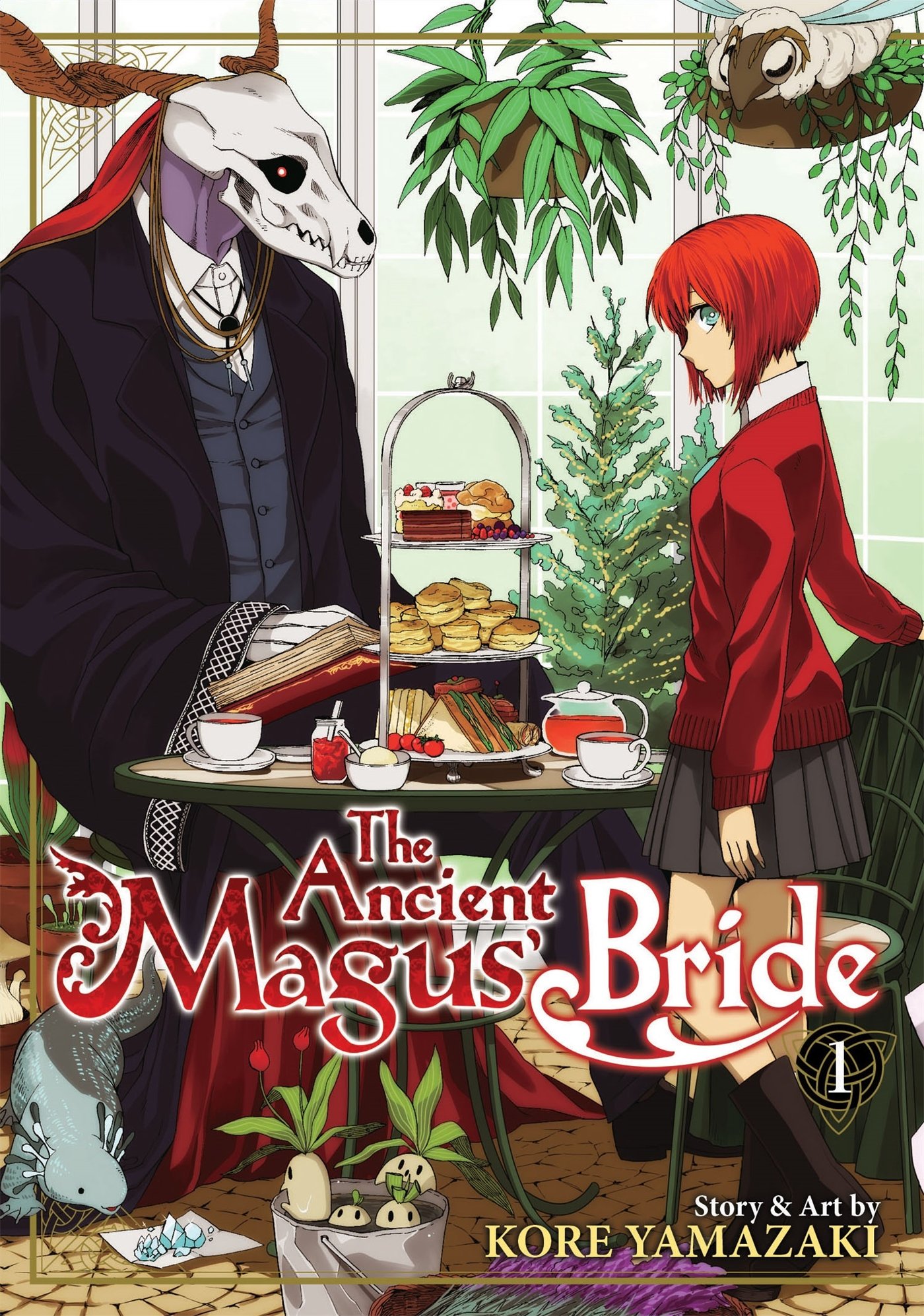
One part The Name of the Flower, one part Apothecarius Argentum, The Ancient Magus’ Bride freely commingles elements of romance, fantasy and horror, then seasons the mix with old-fashioned melodrama. The title refers to Chitose, a fifteen-year-old orphan with an unwanted gift: she can see fairies, ghosts, and other supernatural beings. For most of her life, she’s been passed between relatives and shunned by her peers. When sorcerer Ellias Ainsworth purchases her from an unscrupulous aunt and uncle, however, Chitose embarks on a new life as his apprentice and, perhaps, his bride-to-be.

I’d be the first to admit that the storylines often feel like they’ve been pinched from other fantasy manga, right down to a scene in which Ainsworth rescues Chitose from a malicious fairy. (Quick–name two Shojo Beat titles with a similar plot twist!) Though the plot has a been-there, read-that quality, Kore Yamazaki’s imaginative character designs and meticulously rendered backgrounds do not; his vision is so particular that the reader is plunged into Ainsworth and Chitose’s world as a participant, not a casual observer. The series’ other redeeming strength is its emotional honesty. Yamazaki convincingly depicts the characters’ grief and isolation without resorting to voice-overs or pointed dialogue–an impressive feat, given the plot’s reliance on such Victorian-lit staples as dead mothers and callous relatives.

The verdict: Although I’m not wild about the prospect of a May-December relationship between Chitose and Ainsworth, I’ll gladly soldier through another volume.

evergreen1Evergreen, Vol. 1
Story by Yuyuko Takemiya, Art by Akira Kasukabe
Rated OT, for Older Teens
Seven Seas, $12.99

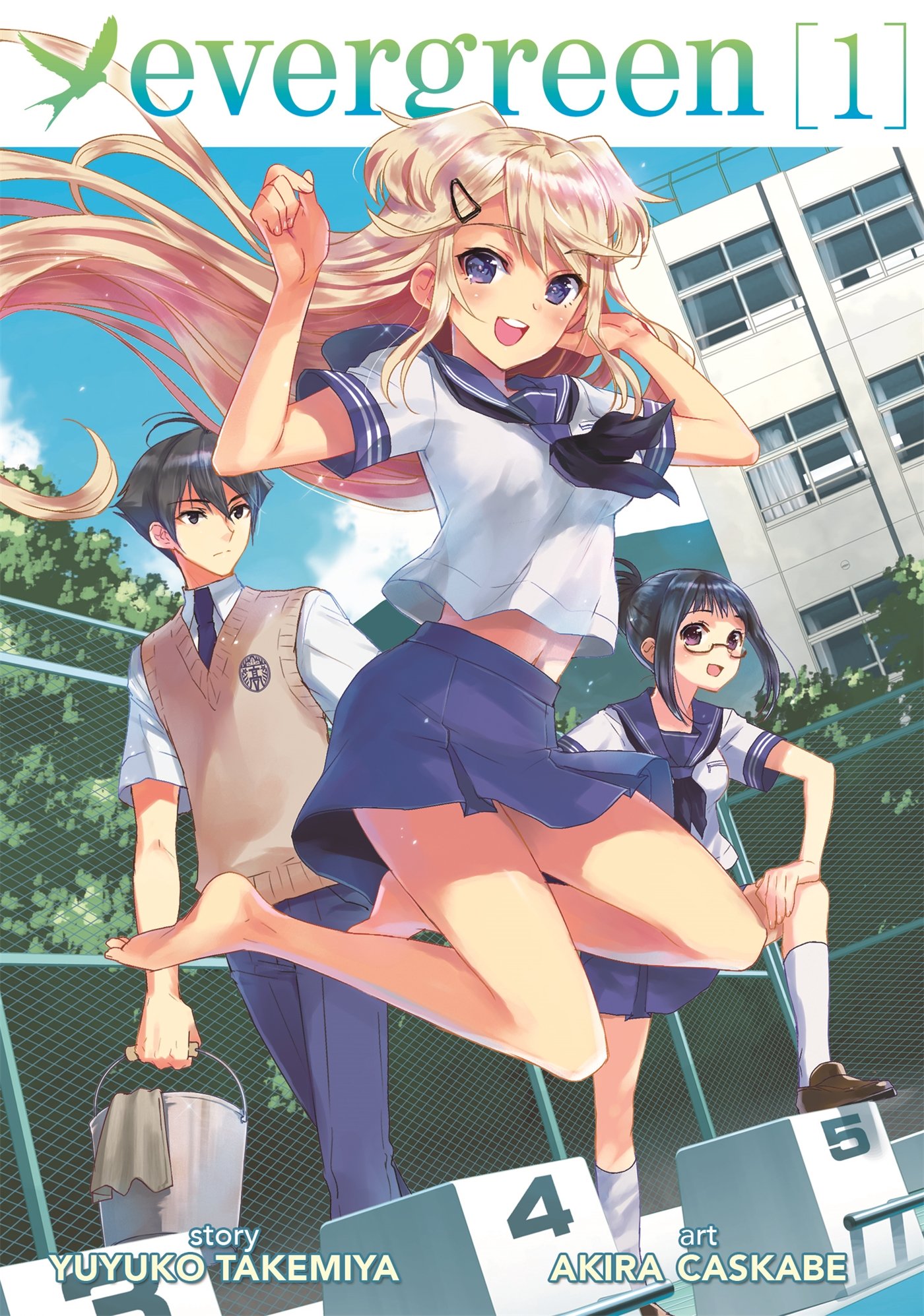
Full disclosure: I usually loathe the costume failures, manic pixie dream girls, and improbable harems that are stock-in-trade of shonen romances. Imagine my surprise, then, when I discovered Evergreen, a smart coming-of-age story that devotes twice as many pages to the hero’s complicated emotional life than it does the heroine’s predilection for wearing swimsuits.

What distinguishes Evergreen from, say, Suzuka, is its principal character’s palpable angst. Hotaka bears a figurative and literal scar from childhood: not only did he lose his father at an early age, Hotaka also had open-heart surgery to treat the very condition that claimed his father’s life. (In other words, he’s earned the right to be unhappy, unlike the heroes of Suzuka, Love Hina, and countless other shonen romantic comedies who brood without real cause.) As a result, Hotaka vacillates between fierce self-loathing and cautious optimism in a way that seems genuinely adolescent. His conversations, nightmares, and interior monologues reveal the degree to which Hotaka’s fear of being judged prevents him from forging a meaningful connection with dream girl Niki Awaya, the “tawny haired” captain of the girls’ swim club.

Lest I make Evergreen sound like a colossal bummer, rest assured that Hotaka’s angsty monologues are balanced by slapstick and jokes. Hotaka’s fellow manga club members, for example, bring a welcome jolt of comic energy to the proceedings, functioning as the series’ low-rent Greek chorus. There’s also a soupçon of fanservice for folks who like that sort of thing; artist Akira Kasukabe never misses an opportunity to depict Awaya in her bathing suit. (Actually, it’s a pretty chaste suit by shonen manga standards; you could swim laps in it without flashing anyone.) Awaya’s objectification is balanced by a positive portrayal of On-Chan, the sole female member of the manga club and Hotaka’s self-appointed wingman. On-Chan’s can-do attitude, enthusiasm for manga, and mean left hook aren’t novel traits, exactly, but taken as a whole, make her one of the more appealing, empowered female characters in the Seven Seas catalog.

The verdict: A pleasant surprise; count me in for volume two.

Reviews: TCJ columnist Joe McCulloch takes an in-depth look at Drawn and Quarterly: Twenty-Five Years of Contemporary Cartooning, Comics and Graphic Novels, focusing on contributions from Yoshihiro Tatsumi and Shigeru Mizuki. Elsewhere on the web, Ken H. reviews Dream Fossil, a collection of short stories by Satoshi Kon, while Tony Yao tackles Orange, a time-traveling drama that offers a candid look at teen depression.

Sarah on vol. 1 of The Ancient Magus’ Bride (Anime UK News)
Tessa Barber on Anomal (No Flying No Tights)
Wolfen Moondaughter on vol. 4 of Black Rose Alice (Sequential Tart)
Megan R. on Bloody Monday (The Manga Test Drive)
Leroy Douresseaux on vol. 6 of Food Wars! Shokugeki no Soma (Comic Book Bin)
Megan R. on Girl Friends (The Manga Test Drive)
Lori Henderson on vols. 9-10 of Goong: The Royal Palace (Manga Xanadu)
Sheena McNeil on vol. 3 of Hide and Seek (Sequential Tart)
Joseph Luster on vol. 13 of Knights of Sidonia (Otaku USA)
Seth Hahne on vol. 1 of Last Man (Good OK Bad)
Alice Vernon on vol. 1 of Log Horizon (Girls Like Comics)
Sean Gaffney on vols. 5-6 of Lucifer and the Biscuit Hammer (A Case Suitable for Treatment)
Ash Brown on vol. 2 of Maria the Virgin Witch (Experiments in Manga)
Jason Thompson on vols. 1-2 of Meteor Prince (ANN)
Joseph Luster on vol. 2 of My Neighbor Seki (Otaku USA)
Leroy Douresseaux on vol. 70 of Naruto (Comic Book Bin)
Amanda Vail on vols. 1-4 of Noragami: Stray God (Women Write About Comics)
Ian Wolf on vol. 1 of A Silent Voice (Anime UK News)
Theron Martin on vol. 1 of Sword Art Online: Girls’ Ops (ANN)
Rebecca Silverman on vol. 1 of Tokyo Ghoul (ANN)
Sheena McNeil on vol. 27 of Toriko (Sequential Tart)
Terry Hong on vol. 8 of What Did You Eat Yesterday? (Book Dragon)
Sakura Eries on vol. 2 of Yukarism (The Fandom Post)

Are you a blogger who regularly reviews manga? Want to see your reviews included in our weekly round-ups? Leave a comment below so we can keep tabs on your latest reviews!

Filed Under: MANGABLOG, REVIEWS

Maria the Virgin Witch, Vol. 2

June 5, 2015 by Ash Brown

Maria the Virgin Witch, Volume 2Creator: Masayuki Ishikawa
U.S. publisher: Kodansha
ISBN: 9781632360816
Released: April 2015
Original release: 2011

I was somewhat wary when I picked up Masayuki Ishikawa’s manga series Maria the Virgin Witch to read. I wasn’t really sure what to expect from it, especially considering part of the story is explicitly focused on the heroine’s virginity and sexuality. No that that is necessarily a bad thing, it just has the potential to go very wrong, very quickly. But because the series is by Ishikawa, whose Moyasimon I enjoy immensely, in the end I decided to give Maria the Virgin Witch a try. (At some point, I’ll likely take the time to watch the manga’s recent anime adaptation as well.) Although there were a few things that bothered me about the series’ first volume, by and large I was intrigued and enjoyed the manga, certainly more so than I had initially anticipated that I would. I liked the basic premise of the manga, particularly the quirky characters, and so I wanted to see what Ishikawa would do with the rest of the series. Maria the Virgin Witch, Volume 2 was first released in Japan in 2011. The English-language edition of the volume was published by Kodansha Comics in 2015.

Having drawn too much attention to herself by dramatically interfering with the affairs and wars of humankind, the young, idealistic witch Maria has been given an ultimatum by the Archangel Michael. Maria as been forbidden to display her powerful magic in front of humans or else forfeit her life. Additionally, should she ever lose her virginity she will lose her powers as a witch, putting her in a position where she must either choose her own happiness or the happiness of others. Since Michael has better things to do than spend all his time watching over a rogue witch, he leaves his messenger Ezekiel behind to ensure that Maria follows the rules. Whether Ezekiel is actually successful is another matter entirely. Maria still feels very strongly about aiding those who ask for her help and bringing an end to the war between England and France. With some assistance from her familiars Artemis and Priapus, she is able to take advantage of a few loopholes in Ezekiel’s charge, but it’s likely only a matter of time before Michael puts a stop to that, too.

Maria the Virgin Witch, Volume 2, page 74Maria the Virgin Witch continues to be a strange combination of crude humor largely revolving around sex (or the lack thereof) and more serious philosophical and theological questioning. The introduction of Ezekiel allows Ishikawa to more fully explore Maria’s motivations and her view of the world and all that she believe is wrong with it. If God and his angels won’t step in to put an end to humanity’s wars and violence—even when people are praying for just that—Maria sees it as her responsibility to fulfill that role since it is within her power, albeit in a much more limited fashion. She acknowledges that she is no god; she is not omnipotent, neither is she omniscient. She can only do what she can. The second volume of Maria the Virgin Witch reveals that Maria is very much an outlier in her way of thinking. Other people and other witches who have the ability to influence the course of the war actually want to drag it out as long as possible. To do so is to their advantage. They believe the position held by Maria to be incomprehensible and incredibly naive. But some, including Ezekiel, find that their assumptions and beliefs are challenged by Maria’s idealism and earnestness and are forced to reexamine them.

Although the series is set during the Hundred Years War and references actual events and people, the second volume of Maria the Virgin Witch makes it very clear that the manga is less historical fiction and more fantasy fiction. While interesting, the worldbuilding of the series is actually a little confused, or at least not thoroughly explained. Magic has always been a large part of Maria the Virgin Witch, as have demons, monsters, angels, and other divine beings (including Valkyries for some reason), but the second volume introduces a mythical and mortal non-human race to the mix. There’s nothing inherently wrong with this, but it seems to come out of nowhere and means that the manga loses some if its focus, which is something that is particularly important for a short series like Maria the Virgin Witch to maintain. With only one volume in the main series remaining, I’m afraid that Ishikawa may not be able to fully develop all of the elements and themes that he is trying to incorporate. Even so, I still find Maria the Virgin Witch to be an intriguing although somewhat uneven series; I’m very curious to see how it ends.

Filed Under: REVIEWS Tagged With: kodansha, Kodansha Comics, manga, Maria the Virgin Witch, Masayuki Ishikawa

  • « Go to Previous Page
  • Page 1
  • Interim pages omitted …
  • Page 541
  • Page 542
  • Page 543
  • Page 544
  • Page 545
  • Interim pages omitted …
  • Page 1049
  • Go to Next Page »
 | Log in
Copyright © 2010 Manga Bookshelf | Powered by WordPress & the Genesis Framework