• Skip to primary navigation
  • Skip to main content
  • Skip to primary sidebar
  • Home
  • About Us
    • Privacy Policy
    • Comment Policy
    • Disclosures & Disclaimers
  • Resources
    • Links, Essays & Articles
    • Fandomology!
    • CLAMP Directory
    • BlogRoll
  • Features & Columns
    • 3 Things Thursday
    • Adventures in the Key of Shoujo
    • Bit & Blips (game reviews)
    • BL BOOKRACK
    • Bookshelf Briefs
    • Bringing the Drama
    • Comic Conversion
    • Fanservice Friday
    • Going Digital
    • It Came From the Sinosphere
    • License This!
    • Magazine no Mori
    • My Week in Manga
    • OFF THE SHELF
    • Not By Manga Alone
    • PICK OF THE WEEK
    • Subtitles & Sensibility
    • Weekly Shonen Jump Recaps
  • Manga Moveable Feast
    • MMF Full Archive
    • Yun Kouga
    • CLAMP
    • Shojo Beat
    • Osamu Tezuka
    • Sailor Moon
    • Fruits Basket
    • Takehiko Inoue
    • Wild Adapter
    • One Piece
    • After School Nightmare
    • Karakuri Odette
    • Paradise Kiss
    • The Color Trilogy
    • To Terra…
    • Sexy Voice & Robo
  • Browse by Author
    • Sean Gaffney
    • Anna Neatrour
    • Michelle Smith
    • Katherine Dacey
    • MJ
    • Brigid Alverson
    • Travis Anderson
    • Phillip Anthony
    • Derek Bown
    • Jaci Dahlvang
    • Angela Eastman
    • Erica Friedman
    • Sara K.
    • Megan Purdy
    • Emily Snodgrass
    • Nancy Thistlethwaite
    • Eva Volin
    • David Welsh
  • MB Blogs
    • A Case Suitable For Treatment
    • Experiments in Manga
    • MangaBlog
    • The Manga Critic
    • Manga Report
    • Soliloquy in Blue
    • Manga Curmudgeon (archive)

Manga Bookshelf

Discussion, Resources, Roundtables, & Reviews

Blog

Jojo’s Bizarre Adventure, Part 1: Phantom Blood, Vol 2

July 19, 2015 by Anna N

JoJo’s Bizarre Adventure: Part 1, Phantom Blood, Volume 2 by Hirohiko Araki

I enjoyed the first volume of JoJo’s Bizarre Adventure, and I was looking forward to see if the second volume continued with the unrelenting manliness and general crazy action. I wasn’t disappointed.

The second volume continues with the battle between Jonathan Joestar and Dio, who has completely been taken over by the evil stone mask. Dio can suck the life force out of people to heal his wounds, and the corpses become zombies, which can certainly be a problem for anyone trying to take Dio down. Jonathan is determined to destroy the monster who killed his father, and fights back through impossible odds, burning down his own mansion and fighting through the pain as Dio breaks both his arms. I continue to be delighted by the character of Robert Edward O. Speedwagon, mostly because I find it amusing when Jonathan yells “Get out of the way Speedwagon!” during battle. Also, Speedwagon’s tendency to stay on the sidelines while injured allows him to provide running commentary on all the battles.

With the Joestar mansion being burned down, and Dio both impaled on a statue and crushed beneath a pillar, one might think that Jonathan’s battle was done, but this is not the case. He meets his long-lost love Erina again as she tends his wounds, and once he is somewhat healed he meets a strange mentor named Baron Zeppeli, who decides to teach Jonathan the ways of mastering Hamon energy to become even more powerful.

In the meantime, Dio has pulled himself out of the wreckage and continue to grow more and more powerful, aided by some additional evil allies. Jonathan and Zeppeli go to confront Dio, but will his vampirific power overcome their new martial arts discipline?

It is a bit unusual for me to be truly surprised by action scenes in a manga, but JoJo’s Bizarre Adventure really does deliver on this front, with surprising plot twists and innovative ways for everybody to power up. The stakes grow higher and the battles grow more impressive as both Jonathan and Dio gain power. The art is still a bit on the crude side, but undeniably energetic. Some of the fights take place against the backdrop of a low-hanging moon, which just makes everything look even more epic. What random character named after a rock band will appear next? I’m looking forward to the third volume to find out.
Filed Under: REVIEWS Tagged With: JoJo's Bizarre Adventure, viz media

Ranma 1/2, Vols. 17-18

July 19, 2015 by Sean Gaffney

By Rumiko Takahashi. Released in Japan by Shogakukan, serialized in the magazine Shonen Sunday. Released in North America by Viz.

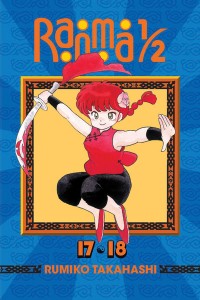
A word of warning here: I love Nabiki Tendo. Love love love her. I don’t deny that if I were ever to meet her in real life I’d run away, but she’s fictional, so I am free to openly admire a confident confidence trickster who decides to mess with Ranma and Akane purely because it amuses her… and also to get some of Ranma’s cash, of course. This volume is the first one where she’s really had an arc focusing on her, and she’ll only have one more after this (about 7 omnibuses from now). So most of what folks consider ‘canon’ comes from the 6-chapter story in this volume, where, after a huge fight – again – Akane decides that Nabiki can be Ranma’s fiancee instead.

ramna17

Of course, like every other story in the series, Nabiki’s presence here is to help show how Ranma and Akane are perfect for each other, while also demonstrating why it’s taking forever to get them to admit that. Akane’s hair-trigger temper is seen here several times, topped only by Ranma’s amazing tendency to say exactly the wrong thing and not understand why anyone would get angry. If you combine this with their mutual innocence and gullibility, it’s no wonder that Nabiki can play them both like fiddles. It helps that Nabiki is one of the few women in the series not attracted to Ranma – at one point she decides to wrap things up, thinking “wouldn’t want him to get TOO attached to me.” I also like that she’s not perfect – her plan to sell Ranma to the highest bidder is done in by Shampoo, Kodachi and Ukyou deciding that killing Nabiki would achieve the same end (yes, Ukyou is also there, just slightly less murderous), and she misreads Ranma as genuinely trying to hit her towards the end. She should know better. She also shows a bit of concern that her plan might genuinely break Ranma and Akane up, which is sweet.

Of course, there’s a lot more in this omnibus than Nabiki, but it’s not quite as interesting. Picolette Charin’s story is wrapped up in a fairly weak way, though the force-feeding was pretty clever. The entire second half of the volume, though, is taken up with a new minor villain, who has the unfortunate name of Pantyhose Taro. In fact, his name drives the plot – he got the name from Happosai, who happened to be at the springs where the young baby had drowned and christened him as if it was a baptism – and his tribe forbids name changes unless it’s the one who gave the name. So Pantyhose Taro has a grudge, and is also possessed of possibly the most ridiculous Jusenkyou curse of all, a yeti riding an ox carrying an eel and a crane spring. This translates to a hideous huge monster, but Pantyhose Taro is fine with that – it’s the name he hates.

Most of this volume is taken up, unfortunately, with a lot of fights and with Akane getting kidnapped and used as bait – again. Luckily, there’s also some sharp humor as well, mostly at Taro’s expense. Pantyhose Taro ends up being the inverse of the usual manga villains – usually they never appear again in the manga, but the anime has them return. Here it’s the anime that didn’t bother to bring Pantyhose Taro back, but we’ll see him again soon. We’re halfway through Ranma 1/2 now, and next time we’ll get a few more amusing one-shots, as well as the development of two new devastating attacks for Ranma and Ryouga.

Filed Under: REVIEWS

The Manga Revue: Fragments of Horror

July 17, 2015 by Katherine Dacey

I’m too squeamish for horror movies–the blood alone is enough to send me screaming for the exits. But horror manga? That’s in my wheelhouse, as manga allows me to engage with the material as much–or as little–as I wish. Junji Ito’s work is largely responsible for showing me the possibilities of comic book horror; I don’t think I’ll ever forget the image of an enormous great white shark climbing a flight of stairs in pursuit of his next meal, or an entire village consumed by a voracious plague of… spirals. (It’s scarier than it sounds.) So when VIZ announced that they would be publishing a new collection of Ito stories, I knew I would buy it. But does Fragments of Horror deliver? Read on for the full scoop.

fragments_horror_vizFragments of Horror
By Junji Ito
Rated T+, for older teens
VIZ Media, $17.99

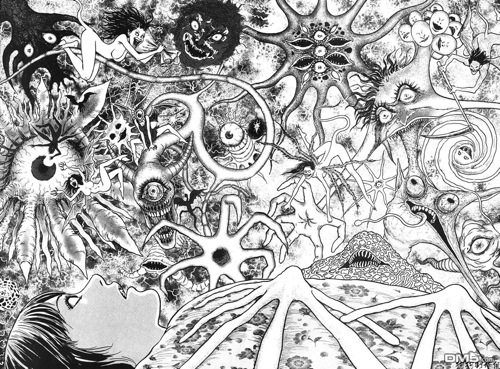
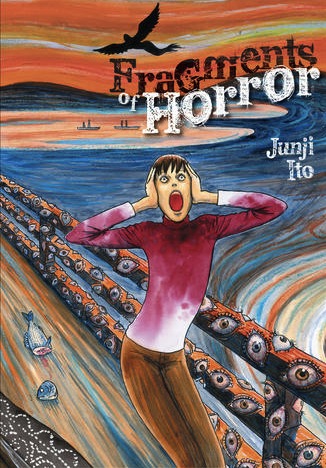
Uncanny–that’s the first word that comes to mind after reading Junji Ito’s Fragments of Horror, an anthology of nine stories that run the gamut from deeply unsettling to just plain gross. Ito is one of the few manga-ka who can transform something as ordinary as a mattress or a house into an instrument of terror, as the opening stories in Fragments of Horror demonstrate. Both “Futon” and “Wood Spirit” abound in vivid imagery: apartments infested with demons, floors covered in eyes, walls turned to flesh, rooves thatched in human hair. Watching these seemingly benign objects pulse with life is both funny and terrifying, a potent reminder of how thin the dividing line between animate and inanimate really is.

Taut–that’s another word I’d use to describe Fragments of Horror. Each story is a model of economy, packing 60 or 70 pages of narrative into just 20 or 30. “Dissection Chan,” for example, explores the forty-year relationship between Tatsuro, a surgeon, and Ruriko, a woman who’s obsessed with vivisection. In a brief flashback to Tatsuro’s childhood, Ito documents the unraveling of their friendship, capturing both Ruriko’s escalating desire to cut things open and Tatsuro’s profound shame for helping her procure the tools (and animals) necessary for her experiments. Three or four years have been packed into this seven-page vignette, but Ito never resorts to voice-overs or thought balloons to explain how Tatsuro feels; stark lighting, lifelike facial expressions, and evocative body language convey Tatsuro’s emotional journey from curious participant to disgusted critic.

Not all stories land with the same cat-like tread of “Dissection Chan.” “Magami Nanakuse,” a cautionary tale about the literary world, aims for satire but misses the mark. The central punchline–that authors mine other people’s suffering for their art–isn’t executed with enough oomph or ick to make much of an impression. “Tomio • Red Turtleneck”  is another misfire. Though it yields some of the most squirm-inducing images of the collection, it reads like a sixteen-year-old boy’s idea of what happens if your girlfriend discovers that you’ve been stepping out on her: first she’s angry at you, then she’s angry at the Other Woman, and finally she forgives you after you grovel and suffer. (In Tomio’s case, suffering involves grotesque humiliation with a cockroach–the less said about it, the better.)

Taken as a whole, however, Fragments of Horror is testament to the fecundity of Ito’s imagination, and to his skill in translating those visions into sharp, unforgettable illustrations like this one:

ito_horror_interior

PS: I recommend pairing this week’s review with 13 Extremely Disturbing Junji Ito Panels, a listicle compiled by Steve Fox. (The title is a little misleading: the images are unsettling, but are generally SFW.)

Reviews: Sean Gaffney reads Pandora in the Crimson Shell and Magika: Swordsman and Summoner so that you don’t have to. At Women Write About Comics, Amanda Vail compares the light novel and manga versions of The Devil is a Part-Timer!

Connie on vol. 3 of Alice in the Country of Clover: Knight’s Knowledge (Slightly Biased Manga)
Jennifer Wharton on vols. 1-6 of The Betrayal Knows My Name (No Flying No Tights)
Lesley Aeschliman on vol. 55 of Case Closed (WatchPlayRead)
Kristin on vol. 1 of The Demon Prince of Momochi House (Comic Attack)
Sean Gaffney on vol. 1 of First Love Monster (A Case Suitable for Treatment)
Frank Inglese on vols. 3-4 of Food Wars! Shokugeki no Soma (Snap 30)
Megan R. on Fushigi Yugi: Genbu Kaiden (The Manga Test Drive)
Connie on vol. 6 of Gravitation (Slightly Biased Manga)
Dave Ferraro on The Legend of Zelda: A Link to the Past (Comics and More)
Wolfen Moondaughter on vol. 13 of Library Wars: Love and War (Sequential Tart)
Connie on vol. 6 of Love Pistols (Slightly Biased Manga)
Ash Brown on vol. 4 of Mushishi (Experiments in Manga)
Lesley Aeschliman on vol. 5 of My Love Story!! (WatchPlayRead)
Leroy Douresseaux on vol. 10 of Nisekoi: False Love (Comic Book Bin)
Joe McCulloch on Pandora in the Crimson Shell (The Comics Journal)
Sheena McNeil on vol. 28 of Pokemon Adventures: Emerald (Sequential Tart)
Wolfen Moondaughter on vol. 1 of Requiem of the Rose King (Sequential Tart)
Leroy Douresseaux on vol. 18 of Rin-ne (Comic Book Bin)
Matthew Alexander on vol. 10 of Sankarea: Undying Love (The Fandom Post)
confusedmuse on Skip Beat! (Organization Anti-Social Geniuses)
Kate O’Neil on vol. 4 of Soul Eater Not! (The Fandom Post)
Sheena McNeil on vol. 4 of Spell of Desire (Sequential Tart)
Courtney Sanders on vol. 1 of Twin Star Exorcists (Three If By Space)
Ken H. on vol. 5 of Witchcraft Works (Sequential Ink)
Matthew Alexander on vol. 6 of Wolfsmund (The Fandom Post)
Matthew Alexander on vol. 5 of World Trigger (The Fandom Post)
Lesley Aeschliman on vol. 3 of Yukarism (WatchPlayRead)


Filed Under: MANGABLOG, REVIEWS Tagged With: Fragments of Horror, Junji Ito, Manga Review, viz media

A Sky Longing for Memories: The Art of Makoto Shinkai

July 17, 2015 by Ash Brown

A Sky Longing for MemoriesCreator: Makoto Shinkai
Translator: Maya Rosewood
U.S. publisher: Vertical
ISBN: 9781941220436
Released: June 2015
Original release: 2008

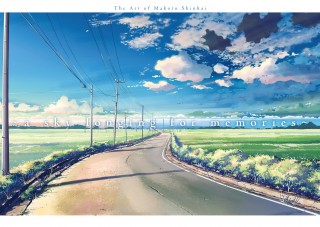
I was introduced to the work of Makoto Shinkai through his animated film 5 Centimeters per Second, which left a huge impression on me. The beautifully melancholic story about lost and unrequited love was simple enough, but the visuals were stunningly gorgeous. A Sky Longing for Memories: The Art of Makoto Shinkai is an artbook that was originally released in Japan in 2008, the year after 5 Centimeters per Second debuted. I was very pleased when Vertical Comics announced its intention to publish an English-language edition. That volume was ultimately released in 2015 with a translation by Maya Rosewood. Vertical hasn’t released very many artbooks, but A Sky Longing for Memories is a good fit for the publisher. Not only has Vertical published other nonfiction works about Japanese film, it has also released two Shinkai manga: 5 Centimeters per Second and The Garden of Words.

A Sky Longing for Memories primarily consists of stills and background artwork from four of Shinkai’s projects initially released between 2002 and 2007. Prominently featured are three of his animated films—5 Centimeters Per Second, The Place Promised in Our Early Days, and Voices of a Distant Star—as is the television commercial he created for Shinano Mainichi Shimbun, “Say Something Important.” More than half of A Sky Longing for Memories is devoted to 5 Centimeters Per Second, the volume opening with some of Shinkai’s most visually refined and impressive work. The three sections that follow are dedicated to each of the earlier films and “Say Something Important.” Also included in the volume is a glossary—useful for readers who are unfamiliar with some of the technical terms used in the animation industry—as well as “Makoto Shikai’s Colors,” a section exploring the methods and techniques used by Shinkai, and “Testimonials of Makoto Shinkai’s World,” a collection of brief interviews with Shinkai and ten other members of Shinkai Works.

Although A Sky Longing for Memories can simply be appreciated and enjoyed as a collection of stunning artwork, the volume also provides insight into the creative processes and artistic direction required to achieve such impressive images. Many of the individual pieces are accompanied by brief descriptions of the decisions that were made in their overall design in addition to the specific considerations and techniques used in their creation. It’s unclear who actually wrote much of the text in A Sky Longing for Memories, but from the context it would seem to either be one (or several) of Shikai’s staff members or someone else who was close to the work being done. Either way, I was glad for the inclusion of the various descriptions and explanations; I don’t have a strong background in visual art or design and so found A Sky Longing for Memories to be illuminating and intellectually stimulating as well as beautiful to look at.

One of the key components of Shinkai’s style is his use of color. With this in mind, Vertical has taken great care to faithfully reproduce Shinkai’s artwork in A Sky Longing for Memories; the volume uses thick, glossy paper on which the colors in particular are beautifully presented. Simply put, it’s a gorgeous book of gorgeous illustrations. A Sky Longing for Memories reveals Shinkai not only as a talented artist but also as a skilled director. While he solely handled almost every aspect of Voices of a Distant Star except for the film’s music, by the time 5 Centimeters per Second was produced Shinkai was guiding and coordinating the work of an entire staff. Interestingly, most of the team members were traditionally trained artists from outside of the animation industry who had to learn digital techniques and illustration methods on the job. As can be seen from A Sky Longing for Memories, the result of their combined efforts is spectacular.

Filed Under: REVIEWS Tagged With: 5 centimeters per second, anime, Artbooks, makoto shinkai, Nonfiction, vertical, Vertical Comics

First Love Monster, Vol. 1

July 17, 2015 by Sean Gaffney

By Akira Hiyoshimaru. Released in Japan as “Hatsukoi Monster” by Kodansha, serialization ongoing in the magazine Aria. Released in North America by Yen Press.

First off, this is another one of those titles where, no matter how good the execution is, recommending it to friends is just going to be problematic. “See, the twist is that the male lead is really 11 years old… STOP CALLING THE COPS, DAMMIT!” Manga and anime romance has skewed young pretty much since inception, but 13-14 used to be the low end, with most of it taking place in high school. Lately, though, we’re seeing more and more series with younger and younger characters, and even if they aren’t getting in relationships they’re sexualized in some way (hi, No Game No Life). And of course this is written for Aria, which has increasingly become Kodansha’s ‘eccentric’ shoujo magazine. Come into this knowing that the premise is questionable.

hatsukoi1

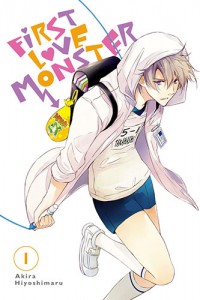
The good news is that the author and the cast also know the premise is questionable, and call it out throughout the entire volume. Our heroine is caught up in the flush of first love based both on looks and the fact that he saved her life in a cool manner, but is aware this is deeply wrong. Everything Kanade does emphasizes that he’s not ‘mature for his age’ in anything but appearance – he’s still playing in sandboxes. If this were a case where she were in college and he was in high school, it would be like any other shoujo romance out there, but the fact that he’s 11 adds a frisson of wrongness that just doesn’t go away. It drives the entire title.

Honestly, I kept expecting this to be creepy and make me stop reading, but it never did. It has so many elements that could have gone badly. If the 11-year-old hero had also been mentally/emotionally mature… if the heroine had not been sheltered and naive herself, as well as starved for affection… even the appearance of the characters, which the author says in a note her editor had her change, as the original was a normal-sized girl with a short guy (she liked the huge difference between then, so when told to make the girl tiny, made him huge to contrast), ends up massively improving the product.

There’s also lots of humor – this doesn’t take itself seriously, and I laughed out loud at the introduction of Kanade’s equally huge classmates, as well as their Detective Conan-eaque leader. The one thing I really disliked was Taga, the college age guy who attempts to sexually assault Kaho because… well, because that’s what happens in these sorts of titles to provide conflict, and I wish it didn’t. Naturally, he gets away with a busted lip and nothing else, and is free to emotionally abuse the heroine later. Luckily, the rest of her roommates are more supporting, but that guy needs to go away.

As with so many titles I’ve reviewed lately, if the premise squicks you, don’t get First Love Monster. But the author actually respects and treats the leads sympathetically, without setting up the heroine for comedic humiliation faces. That means I’m intrigued, and will get the next volume to see where it goes.

Filed Under: REVIEWS

Manga the Week of 7/22

July 16, 2015 by Sean Gaffney, Ash Brown, Michelle Smith and Anna N Leave a Comment

SEAN: Oooooh man, here we go again. Let’s just buckle down.

gantz36

We’re aaaaaalmost done with Dark Horse’s release of Gantz, but not quite. Vol. 36.

ASH: So close!

SEAN: Kodansha has a 9th My Little Monster, which hopefully will continue the development the 8th volume had.

MICHELLE: Yay!!!

SEAN: Seven Seas gives us a 5th volume of SF action series Arpeggio of Blue Steel, my favorite of the ‘young girls and military’ licenses.

Viz has another volume of its Monster Perfect Edition, the 5th. Expect happiness and rainbows.

ASH: This is the volume with the epic library scene, isn’t it? And who doesn’t love libraries?

ANNA: Honestly this is the one title this week that I’m happy about, because I do want to tackle reading Monster at some point. Sometime after I read all my stockpiled volumes of 20th Century Boys.

SEAN: And a 5th Resident Evil, with puppies and kittens.

Lastly, Terra Formars 7, with love and peace for all. Please do not try to read all three Viz releases at once this week. You will die.

ASH: That is a distinct possibility.

drrr1

SEAN: And now Yen. Light novels first. The 4th Accel World should resolve the cliffhanger from the last one. Will Chiyuri be a traitor? I highly doubt it.

The debut this week is the highly anticipated Durarara!!. Yen has had the manga for some time now, but the novels are also excellent.

MICHELLE: Hm! I liked the manga more than I thought I would, but drifted away when the Saika Arc started.

ASH: I really should give at least one of the versions of Durarara!! a try at some point.

SEAN: Log Horizon’s 2nd volume will hopefully give us the hinted plot from Vol. 1 about the twins, if the cover doesn’t lie.

And there’s a 2nd No Game No Life, which I hope will have less naked 11-year-olds and more awesome mind games.

On the manga side, we have the 4th Accel World manga, still not the novel.

A third Akame Ga KILL! will live up to its name, if the previous two are any indicator.

Black Butler hits a new milestone with Vol. 20. It’s sad when a series catches up with Japan, isn’t it?

MICHELLE: I continue to read this, even though I am not madly in love with it.

ANNA: I stopped after the first couple volumes.

diaptmanga2

SEAN: A Certain Magical Index’s manga will continue to adapt Novel 1 with Vol. 2. Really, we need graphs and charts.

The Devil Is A Part-Timer! joins the growing list of manga adaptations of light novels also coming out, with Vol. 2 of the main manga. Wait till next month, it gets more confusing.

ASH: Heh. That it will.

SEAN: And now we get DRRR’s manga, which has a 3rd volume of the Yellow Scarves arc. At least that novel won’t be out till 2016.

Final Fantasy Type-0 Side Story, Vol. 1: The Ice Reaper is one of those manga whose title pretty much sums it up. I think the Main Story manga came out with the English release of the game.

First Love Monster is another one of those Aria shoujo titles, which means we’ve no idea what we’re going to get. The artist has done some Book Girl manga adaptations.

MICHELLE: It looks sort of kooky, but that might be fun!

ANNA: I will wait to see if Michelle likes it before reading it!

SEAN: Inu x Boku SS has an 8th volume – will it reset again? Or just give us more yokai action?

prisonschool1

More manga adaptations of light novels, as we get a 2nd Kagerou Daze, which finishes adapting the first LN and starts the 2nd.

Karneval oddly ended up on the worst manga of the year list at SDCC, though I found the first omnibus more… diffuse than anything else. Vol. 2 will have more focus, maybe?

ASH: More focus would be good.

ANNA: I was curious about the first volume, but now I’m sort of glad I skipped it.

SEAN: Another Puella Magi Madoka Magica spinoff begins, with Homura’s Revenge. Can’t be a depressing manga with a title like that!

Prison School is a much anticipated omnibus that many said was too ecchi to actually get a North American release. But no, here it is. I wonder what it’s about?

ASH: B-but it’s by the creator of Me and the Devil Blues! (I’ll admit, I’m curious about this one.)

So I Can’t Play H! has a 2nd volume, and gloriously no light novel license yet, meaning I only have to worry about this for the moment.

Lastly, we get the final – I checked this time – volume of Soul Eater NOT!, bringing the Soul Eater franchise as a whole to a close.

Is there something in this giant list that catches your eye?

Filed Under: FEATURES, manga the week of

Pick of the Week: Pick of a Future Week?

July 16, 2015 by Michelle Smith, Anna N, Sean Gaffney and Ash Brown 1 Comment

rov1MICHELLE: I’m feeling in the mood for some Takahashi, so I reckon my pick of the week is going to be RIN-NE. That said, my real affection this week is directed towards Udon Entertainment for licensing The Rose of Versailles!

ANNA: I think I’m just going to pick Rose of Versailles every week for the next few months.

SEAN: Sticking with Takahashi, I’m picking the new Ranma 1/2 omnibus, mostly as I love Nabiki Tendo. You may assume I am over the moon about Rose of Versailles as well.

ASH: I am beyond thrilled that Udon was able to license Rose of Versailles, but this week I’ll happily (and appropriately) be distracting myself from the wait for its release with the utterly charming and delightful My Neighbor Seki.

What looks good to you this week (or in future months)?

Filed Under: PICK OF THE WEEK

Mushishi, Vol. 4

July 15, 2015 by Ash Brown

Mushishi, Volume 4Creator: Yuki Urushibara
U.S. publisher: Del Rey
ISBN: 9780345499233
Released: May 2008
Original release: 2003
Awards: Japan Media Arts Award, Kodansha Manga Award

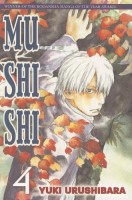
Although the ten-volumes series Mushishi was Yuki Urushibara’s professional debut as a mangaka, it has been very well-received by both critics and fans. The manga began its serialization in 1999 and would go on to win a Japan Media Arts Award in 2003 and a Kodansha Manga Award in 2006 among other honors and recognitions. Mushishi, Volume 4 was originally published in Japan in 2003. In 2008, Del Rey Manga released the first English-language edition which is now sadly out-of-print. However, as of 2014, the volume has been made available digitally by Kodansha Comics. Mushishi was a series that I stumbled upon when it was initially being released in English. The manga quickly became and continues to be one of my favorite series; Mushishi was one of the first manga that I made a point to collect in its entirety. I love the series’ quiet, creepy atmosphere, its emphasis on life and nature, and the influence of traditional Japanese culture and folklore on the stories being told.

Mushishi, Volume 4 collects five stories. The volume opens with “Picking the Empty Cocoon,” telling the tale of a family with close connections to both mushi and mushishi. They are the caretakers of uro, a particularly useful but dangerous type of mushi. In “One-Night Bridge,” Ginko is invited to a remote village in a deep valley to investigate the case of a young woman who fell to the bottom of the gorge but somehow survived. Except that she’s never been the same since her accident. Plants growing out of season allow a brother and sister to weather harsh winters in “Spring and Falsehoods,” but the mushi that cause the phenomenon aren’t as benign as they first appear. In the fourth story, while traveling through the mountains, Ginko stumbles upon a small family living in a vast bamboo grove. They seem to be trapped there, unable to leave no matter how hard they try; they always end up circling back to their home. The volume concludes with “The Sound of Trodden Grass,” which provides a little more insight into Ginko’s past.

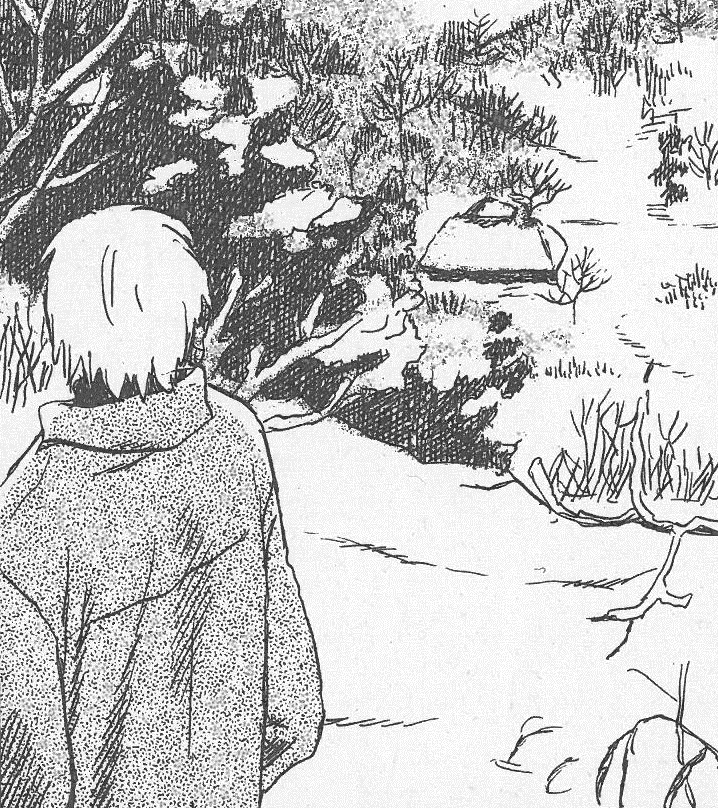
Mushishi, Volume 4, page 112For the most part, Mushishi tends to be fairly episodic. Except for the presence of Ginko, out of all of the stories included in the fourth volume only “The Sound of Trodden Grass” has an explicit connection to any of the other chapters in the series, and it’s only a tangential one. Although none of the stories in Mushishi, Volume 4 are directly related to one another plot-wise, there was one similarity shared between them all that particularly struck me: the prominent role played by families. Looking back, this actually isn’t at all an uncommon theme in Mushishi—families, as well as other tightly knit communities and groups, are frequently featured in the manga. However, through the illness and other problems that follow them, mushi are shown to cause great strife in those relationships. Circumstances caused by mushi’s existence can drive people apart, but in some cases they may actually draw them together. Familial ties are strong and not easily broken, but mushi’s close connection to nature and life and death (including those of humans) is sometimes in conflict with them and they are just as enduring.

The stories in Mushishi are often reminiscent of folktales and legends originating from Japan; Urushibara clearly draws some inspiration directly from that lore. For example, “In the Cage” with its children born of bamboo recalls the story of Kaguya-hime. The fourth volume of Mushishi is influenced by Japanese history, as well. “The Sound of Trodden Grass” features a group of wanderers displaced by mushi known as the Watari who are based on the Sanka people of Japan. (This is even more meaningful to me now after having read Kazuki Sakuraba’s novel Red Girls: The Legend of the Akakuchibas in which the Sanka also play a part.) Some of Mushishi‘s stories can be rather spectacular, with mushi causing phenomena verging on the paranormal, while others are more subdued. Mushi are said to be very close to the original form of life and are therefore inseparable from nature, but they remain mysterious. Mushishi is a collection of tales that delve into that terrifying unknown. Urushibara combines elements of folklore and history along with her own imagination to successfully create a series that feels familiar while still being new.

Filed Under: REVIEWS Tagged With: del rey, Japan Media Arts Award, Kodansha Manga Award, manga, mushishi, Yuki Urushibara

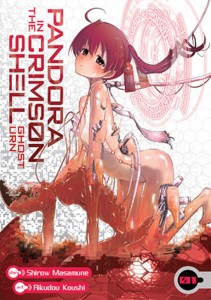
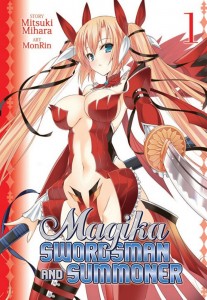
Double Dose of Seven Seas: Pandora in the Crimson Shell: Ghost Urn vs. Magika: Swordsman and Summoner

July 15, 2015 by Sean Gaffney

Pandora in the Crimson Shell: Ghost Urn by Shirow Masamune and Rikudou Koushi. Released in Japan as “Koukaku no Pandora – Ghost Urn” by Kadokawa Shoten, serialization ongoing in the magazine Newtype A. Magika: Swordsman and Summoner by Mitsuki Mihara and MonRin. Released in Japan as “Magika no Kenshi to Shoukan Maou” by Media Factory, serialization ongoing in the magazine Comic Alive. Released in North America by Seven Seas.

As I’ve said before, my tendency to give all Volume 1’s a shot even if I suspect they won’t be my thing at all gets me into a lot of difficulties, particularly with Seven Seas, which is very much an all or nothing company with me. They debuted two new titles this month, one of which not only has the amazing writer-artist team of Shirow Masamune and Rikudou Koushi (leaving Viz means he gets his u’s back), but managed to be on SDCC’s worst manga of the year list despite having been out a total of 5 days when the panel ran. The other one is a harem fantasy from my old nemesis, Comic Alive. Two otaku-pandering titles enter, only one can leave – which one did I like more?

ghosturn1

Pandora gets off to a poor start with that cover, featuring our heroine bursting, semi-mude, from some sort of mosaiced plastic casing. We then get color pages of another heroine dressing up in tiny lingerie. This title definitely does not skimp on the fanservice, as we’ll see throughout the volume. The basic premise involves Nene, our heroine, getting involved with a confident young woman who may actually be a supervillain and her cyborg companion. Nene is also a cyborg and highly idealistic, saying that she wants to see world peace. Sadly, she arrives at her island destination to find a robot gone amok, and only she and Clarion (the other cyborg) can hope to stop it.

On pure skeeze factor, Pandora in the Crimson Shell wins hands down. The sequences where Nene has to finger Clarion in her vaginal ‘port’ are risible, though admittedly I wouldn’t put it past Shirow based on past titles. Speaking of which, the credits show quite a committee working on this title. Rikudou is the main artist in charge, but I had felt that I could only see his art style occasionally, and that may be why. His sense of humor, thankfully, is sometimes more apparent, particularly in the Excel-ish intrepid reporter and the dry tones of Uzal Delilah. The action sequences, which make up much of the second half, are… decent. Basically, if it weren’t for the horrible service and constant sexual assault hints, I may actually have enjoyed this. Sadly, the service and assault is all over the book.

msas1

Magika Swordsman and Summoner is our second title, and reads like a modern-day light novel checklist (appropriate, it’s based on a light novel). Our hero is the lowest of his class at magic school, not good for much yet but stirring water around. He’s also the only male in a class of females. He has an adopted sister (older than him, but acts younger as they only found that out recently), who harbors incestuous feelings for him. At the school, he meets a busty airheaded woman who turns out to be student council president, as well as an angry young blonde who seems very upset that he doesn’t recognize her, for some reason. Oh yes, you can also add in a quiet, stoic elf-girl and a shy girl who can’t deal with men. When he summons an amnesiac diva with no powers (which gets him in trouble, as she may be evil), he discovers he has to form a harem of 72 women in order to become the Harem King.

If you started throwing up halfway through that, you may get the feeling I had while reading this title. Everything about it is from Tropes 101, be it the Magic Academy stuff or the Harem stuff, though I admit 72 is aiming high – even Negima didn’t quite go for that many women. (Yes, it’s from reports of the houris that accompany Muslim martyrs after they die.) Seven Seas’ back cover notes that fans of Dragonar Academy and Zero’s Familiar will enjoy it, and I can’t argue with that – it’s certainly more of the same. The one redeeming feature is the hero, who seems a decent sort and is very uncomfortable with the whole harem concept. We’ll see how long that lasts. Or rather, other readers will.

In general, if you’re going to be a bad manga and keep me interested, it’s best to do it with style. Neither of these titles are things I’d recommend to anyone except SS’s core otaku audience. But honestly, Ghost Urn made me wonder how the cliffhanger might be resolved, whereas with S&S I just didn’t care. On balance, I have to give the edge to Shirow, Rikudou and company here.

Filed Under: REVIEWS

My Week in Manga: July 6-July 12, 2015

July 13, 2015 by Ash Brown

My News and Reviews

So, apparently last week was Shark Week, an annual event on the Discovery Channel. I don’t watch much television or pay attention to programming schedules, therefore it was a complete coincidence that both of the manga that I reviewed last week happened to include sharks! First up was my review of the deluxe hardcover omnibus of Junji Ito’s (comedy?) horror manga Gyo: The Death-Stench Creeps. It’s an incredibly gross and absurd manga and will certainly not be to everyone’s taste. I was entertained by its outrageousness, but overall much prefer his earlier work Uzumaki: Spiral into Horror. The second review last week was of The Legend of Kamui, Volume 1, an influential historical drama by Sanpei Shirota. The manga was actually one of the earliest series to be released in English back in the 1980s. Fortunately, it’s still relatively easy to find even though it’s long been out-of-print. I really wish that more of the series had been translated, though; The Legend of Kamui is excellent.

A couple of interesting things that I came across last week: Shojo Beat’s tenth anniversary celebration continues with five questions for Julietta Suzuki and Haikasoru posted a translation of a conversation between authors Paolo Bacigalupi and Taiyo Fujii from 2013. (I recently reviewed Fujii’s debut novel Gene Mapper, and reviewed Bacigalupi’s novel The Windup Girl, which has been very well received in Japan, at my old review blog Experiments in Reading several years ago.) Last week was the San Diego Comic-Con, but most of the news and announcements seemed to be repeats of Anime Expo. However, there was one newly announced license that was huge: Udon Entertainment will be releasing Riyoko Ikeda’s influential shoujo classic Rose of Versailles! Among other good news, Udon rescued Moyoco Anno’s marvelous shoujo series Sugar Sugar Rune, which makes me very happy. (I reviewed Del Rey’s edition of the first volume a couple of years back.) Udon will also be releasing Yomi Sarachi’s Steins;Gate manga. Kodansha has picked up Kousuke Fujishima’s manga series Paradise Residence. Dark Horse will be re-releasing Hiroaki Samura’s epic Blade of the Immortal in an omnibus edition which is great news since some of the individual volumes are out-of-print and hard to find. (The series is also a favorite of mine.) A couple of other interesting SDCC/manga-related posts: myths from the Manga Publisher Roundtable and a summary of 2015’s Best and Worst Manga panel. Oh, and Shigeru Mizuki’s Showa: A History of Japan won an Eisner Award!

Quick Takes

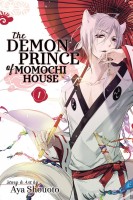
The Demon Prince of Momochi House, Volume 1The Demon Prince of Momochi House, Volume 1 by Aya Shouoto. There were mainly two things that initially drew my attention to The Demon Prince of Momochi House, the beautiful and somewhat provocative cover illustration and the promise of beautiful and somewhat provocative yokai. Himari Momochi unexpectedly inherits a house when she turns sixteen. As an orphan, it’s the only connection that she has to a family that she has never known. But when she arrives, she discovers a couple of complicating factors: the house is a gateway between the human and supernatural realms, and it is already occupied. Honestly, the story’s setup feels a little forced and employs a few well-worn shoujo tropes; it remains to be seen whether or not Shouoto will do anything clever with them. However, the artwork is attractive and I actually really do like the underlying premise of the manga. Although I wasn’t blown away by the first volume of The Demon Prince of Momochi House, I did enjoy it. The series has great potential and the manga certainly delivers on its promise of beautiful spirits. While I’m not in a rush to read the next volume, I’ll likely continue with the series to see if it develops into something really special or if it will merely remain something that is enjoyable in passing.

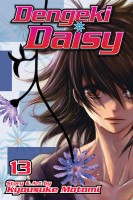
Dengeki Daisy, Volume 13Dengeki Daisy, Volumes 13-16 by Kyousuke Motomi. It’s been awhile since I’ve read Dengeki Daisy, but it is a manga that I tend to enjoy. Since the final volume of the series was released in English relatively recently, I figured it was about time for me to catch up. Dengeki Daisy isn’t always the most realistic or believable series—frequently things will happen because they’re convenient for the sake of moving the story forward or are being used as a punchline rather than being a convincing development—but it’s still pretty great. The manga also handles the romance between Teru and Kurosaki very well, especially considering the eight-year gap in their ages. Interestingly, while the last volume quickly wraps up the main story, it’s actually mostly devoted to a small collection of side and bonus stories, generally of a humorous nature. The volume also includes Motomi’s debut manga, “No Good Cupid.” It’s kind of a fun send off for the series, especially as the final story arc is focused more on intense action and drama rather than the manga’s humor or the quirkiness of its characters. However, I always find Motomi’s author notes and commentary to be endlessly entertaining. I definitely plan on reading more of her work in the future.

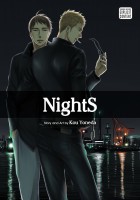
NightSNightS by Kou Yoneda. Only a few of Yoneda’s boys’ love manga have been released in English, but I enjoy her work immensely and would love to see even more of it licensed. NightS is a collection of stories: “NightS,” about a transporter for the yakuza and an older man with whom he becomes entangled (in more ways than one); “Emotion Spectrum,” a high school romance with a bit of a twist on the usual sort of love triangle; and “Reply,” featuring the blossoming relationship between a car salesman and a mechanic. Although the anthology is called NightS, “Reply” is actually the longest and most involved work in the volume. But even the shorter manga feature well-developed stories and characters. They each come across as an individual with a distinctive personality. This is a particularly important aspect of Yoneda’s manga since the plots tend to be very character focused and driven—people and their relationships, romantic or otherwise, are key to her stories. There is a maturity to the storytelling, as well. And a great sense of humor. Though they aren’t comedies, at times the manga collected in NightS can be quite funny. Also, Yoneda’s artwork is excellent; especially impressive is her use of light and shadow to create drama, mood, and atmosphere.

Filed Under: FEATURES, My Week in Manga Tagged With: Aya Shouoto, demon prince of momochi house, Dengeki Daisy, Kou Yoneda, Kyousuke Motomi, manga

  • « Go to Previous Page
  • Page 1
  • Interim pages omitted …
  • Page 535
  • Page 536
  • Page 537
  • Page 538
  • Page 539
  • Interim pages omitted …
  • Page 1049
  • Go to Next Page »
 | Log in
Copyright © 2010 Manga Bookshelf | Powered by WordPress & the Genesis Framework