• Skip to primary navigation
  • Skip to main content
  • Skip to primary sidebar
  • Home
  • About Us
    • Privacy Policy
    • Comment Policy
    • Disclosures & Disclaimers
  • Resources
    • Links, Essays & Articles
    • Fandomology!
    • CLAMP Directory
    • BlogRoll
  • Features & Columns
    • 3 Things Thursday
    • Adventures in the Key of Shoujo
    • Bit & Blips (game reviews)
    • BL BOOKRACK
    • Bookshelf Briefs
    • Bringing the Drama
    • Comic Conversion
    • Fanservice Friday
    • Going Digital
    • It Came From the Sinosphere
    • License This!
    • Magazine no Mori
    • My Week in Manga
    • OFF THE SHELF
    • Not By Manga Alone
    • PICK OF THE WEEK
    • Subtitles & Sensibility
    • Weekly Shonen Jump Recaps
  • Manga Moveable Feast
    • MMF Full Archive
    • Yun Kouga
    • CLAMP
    • Shojo Beat
    • Osamu Tezuka
    • Sailor Moon
    • Fruits Basket
    • Takehiko Inoue
    • Wild Adapter
    • One Piece
    • After School Nightmare
    • Karakuri Odette
    • Paradise Kiss
    • The Color Trilogy
    • To Terra…
    • Sexy Voice & Robo
  • Browse by Author
    • Sean Gaffney
    • Anna Neatrour
    • Michelle Smith
    • Katherine Dacey
    • MJ
    • Brigid Alverson
    • Travis Anderson
    • Phillip Anthony
    • Derek Bown
    • Jaci Dahlvang
    • Angela Eastman
    • Erica Friedman
    • Sara K.
    • Megan Purdy
    • Emily Snodgrass
    • Nancy Thistlethwaite
    • Eva Volin
    • David Welsh
  • MB Blogs
    • A Case Suitable For Treatment
    • Experiments in Manga
    • MangaBlog
    • The Manga Critic
    • Manga Report
    • Soliloquy in Blue
    • Manga Curmudgeon (archive)

Manga Bookshelf

Discussion, Resources, Roundtables, & Reviews

Blog

Strike the Blood, Vol. 2

January 22, 2016 by Sean Gaffney

By Gakuto Mikumo and Manyako. Released in Japan by ASCII Mediaworks. Released in North America by Yen Press.

I’d mentioned in my review of the first volume that Strike the Blood reads like a series that was written in anticipation of being made into an anime. Having now completed the second volume, I’ll go a little further – it reads almost like a novelization, as if the anime had come first. This is actually good in many respects – the fight scenes are excellent and highly easy to visualize, and the normal pauses you see in these sorts of series where the plot is slowly explained are kept to a minimum. It does mean that I have the same issues I had with the first volume, though – the character types are all too predictable, as are the plot twists.
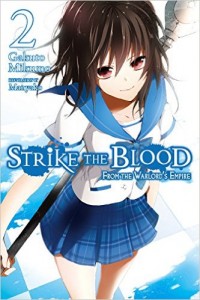
stb2

As a case in point, we have Sayaka, Yukina’s former roommate and friend and the orphanage devoted to taking girls and making them into magical superstars. She has a giant hate-on for Kojou, of the sort that we know will turn to love by the end of the book, because of course he’s not like those *other* evil vampires. She also has a pseudo-lesbian obsession with Yukina, which I expect will be promptly dropped now that it’s fulfilled its function as minor yuri bait. It’s disappointing, because while Yukina and Asagi also have elements of cliche written into their characters (elements which are exaggerated a bit more in this second volume), they both manage to feel like read young teenage girls, while Sayaka reads like a caricature.

The worldbuilding here fares better, as we once again see a series that knows it won’t be cancelled for a few volumes, so is content to spin out a few interesting subplots and not actually do anything with them. Koujo’s younger sister is clearly possessed by something, but we never quite find out what. Likewise, Asagi’s hacking abilities are starting to go beyond ‘teen genius’ and into legendary abilities. We meet another powerful vampire here, Vatler, and while he also has his share of cliched behavior, his smug “I did it for the lulz” attitude is more tolerable than Sayaka’s angry not-lesbian.

I will likely be reading more of this, despite my grumping. The prose is some of the smoothest we’ve seen in a Yen On release, with very little of the awkward narrative stuttering you see with a lot of first-person light novel narratives. And as I said earlier, the action scenes are genuinely exciting and not confusing, which is impressive given how much destruction is racked up here. The villain is a terrorist, and you get the sense that the author had seen Die Hard before writing him, as he’s very much in the Alan Rickman vein of “polite yet murderous”. There’s also a character from the first volume who returns – that did surprise me, though sadly it also involved maid fetishism. So it’s a good series, but I do wish that I wasn’t able to see the blueprint it works off of so easily.

Filed Under: REVIEWS

Manga the Week of 1/27

January 21, 2016 by Sean Gaffney, Ash Brown, Michelle Smith, Anna N and MJ 1 Comment

SEAN: It’s time to bury you in manga releases once more, folks. What do the companies have up their sleeves?

ASH: All right, let’s do this!

Kodansha has the 12th and penultimate volume of My Little Monster. I can’t believe it’s ending so soon.

MICHELLE: I know! Thankfully, Say I Love You. is still ongoing.

noragami10

SEAN: Noragami has hit double digits, likely to the delight of Kodansha.

ASH: I’m a few volumes behind, but I have been enjoying Noragami.

SEAN: And there’s a 12th volume of The Seven Deadly Sins.

Seven Seas has a bunch of stuff for us. Akuma no Riddle intrigued me more than I was expecting, so I look forward to the second volume.

MICHELLE: I need to investigate this one.

SEAN: Magical Girl Apocalypse does not intrigue me at all, but it has its fans who will enjoy this 6th volume.

And possibly the polar opposite of that title, Non Non Biyori has a 3rd volume.

Lastly, there’s an omnibus Vol. 1 release of the manga Orange, which has been up digitally on Crunchyroll, but Seven Seas now gives us a print release. It originally ran in Betsuma, then moved to Manga Action, showing it can be both shoujo and seinen. I think this is the first half.

ASH: I’ve heard good things and am looking forward to this one!

ANNA: Huh, I think I’m now officially intrigued.

MICHELLE: Me, too!

MJ: I’m always surprised when I’m interested in a Seven Seas release, but here we are!

SEAN: Vertical gives us another omnibus of Chi’s Sweet Home, with Vol. 4-6. Adorable kitties!

MICHELLE: Yay, kitties!

MJ: Chiiiiiii!

SEAN: And now it’s time for the Yen deluge. First up is Yen On. The Isolator was a new series by the author of Sword Art Online and Accel World, new enough so that it’s been a year since the first volume. Vol. 2 should be interesting.

kagerou3

And there’s a third volume of somewhat surreal teenage superpowers novel Kagerou Daze.

Yen Digital has a bunch of new titles coming out, and I’ll just note the complete volumes. Aphorism 2, Crimson Prince 2, Renaissance Eve 2, Scarlet Empire 3, and Sekirei 2. For those who enjoy tablet reading, try one of these series out.

On to actual print manga titles from Yen Press. There’s a 6th Accel World manga, which should be in the middle of one of the angstiest arcs.

Akame Ga KILL! reaches Vol. 5, continuing to try to excite us with capital letters and exclamation points.

Alice in Murderland 3 doesn’t have capital letters or exclamation points, but it has murder. Isn’t that enough?

A Certain Magical Index 4 decides it’s best to skip the boring vampire girl and move right to what readers really want, the sister clones.

The Devil Is A Part-Timer! 4 also adapts the novels for those who prefer exciting artwork with your plotting.

Final Fantasy Type-0 Side Story Volume 3 still remains very difficult to say.

First Love Monster’s 3rd volume will remind its readers of the discomfort they felt while reading Bunny Drop, I suspect.

Horimiya’s first volume was absolutely terrific, and I am delighted to see the 2nd one out next week.

MICHELLE: Me, too! The first volume was a lovely surprise!

ANNA: I’m intrigued again!

MJ: This is the volume I’m looking forward to most this week, I think!

SEAN: How to Raise a Boring Girlfriend (aka Saekano) is based on a light novel Yen doesn’t have the license for. It seems to feature an otaku hero and his collection of eccentric female acquaintances, just like every single other light novel ever.

Kagerou Daze also has a 4th manga volume out.

wwb1

Log Horizon has a manga spinoff coming out, The West Wind Brigade, focusing on bishonen guild leader Sojirou.

Puella Magi Madoka Magica has a 2nd volume of its manga adaptation of the Rebellion movie.

So I Can’t Play H! has a 4th volume.

Sword Art Online has a 2nd volume of its side story Girls’ Ops, focusing on the female characters who get progressively ignored by the novels.

And it also starts to adapt a new arc, with the first Sword Art Online: Phantom Bullet volume.

MJ: I wish I was more interested in the manga adaptations of SAO, but they haven’t thrilled me.

SEAN: Taboo Tattoo is the other new title from Yen this month, running in my old nemesis, Media Factory’s Comic Alive. I have low expectations, but we shall see.

Triage X has reached Volume 11, despite all the prayers to the gods and curses I’ve attempted to put on it.

There’s a 5th Ubel Blatt omnibus, helpfully called Ubel Blatt 4. You know, if it had a light novel series, which Yen licensed with the same numbering, Amazon might literally explode into shards trying to keep track.

ASH: Ha! (It probably would.)

SEAN: Umineko When They Cry finishes up another arc, and if it helps this is definitely the low ebb of the series. From here out, things can only get better. Well, mostly better. Somewhat better?

And lastly, there’s an 11th omnibus of Until Death Do Us Part. Or its British version, Until Death Us Do Part.

MICHELLE: Aaaand now I have The Kinks in my head!

SEAN: Aside from staring at me blankly for that last obscure joke, what’s everyone doing next week?

Filed Under: FEATURES, manga the week of

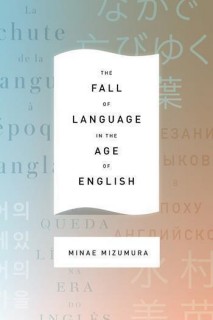
The Fall of Language in the Age of English

January 20, 2016 by Ash Brown

The Fall of Language in the Age of EnglishAuthor: Minae Mizumura
Translator: Mari Yoshihara and Juliet Winters Carpenter
U.S. publisher: Columbia University Press
ISBN: 9780231163026
Released: January 2015
Original release: 2008
Awards: Kobayashi Hideo Award

Currently, only two major works by Minae Mizumura have been translated into English. The first, and one of the best works of literature that I’ve read in recent years, was A True Novel. More recently, the English-language edition of Mizumura’s first nonfiction work, The Fall of Language in the Age of English, was released, published in 2015 by Columbia University Press with a translation by Juliet Winters Carpenter (who was also the translator for A True Novel) and Mari Yoshihara. The Fall of Language in the Age of English is actually a revision of its Japanese counterpart, Mizumura rewriting portions of the book, most notably the final chapter, to better suit a non-Japanese audience. The Fall of Language in the Age of English caused something of a stir when it was originally published in Japan in 2008—the work won a Kobayashi Hideo Award, became a commercial success, and even sparked some amount of controversy.

Mizumura opens The Fall of Language in the Age of English with a personal account of her participation in the University of Iowa’s International Writing Program in 2003. Afterwards, Mizumura, who studied French and French literature at Yale, proceeds to outline the rise and fall of French as one of the world’s universal languages. She then discusses the concept and role of universal languages, the development of local languages into national languages, and the relationships among the three in general before specifically turning to the emergence of Japanese as a national language. From there Mizumura describes what she calls the miracle of modern Japanese literature, shedding further light upon its peculiar evolution and how it came to be considered a major world literature. Mizumura then addresses the current prevalence of English and its spread before closing with what she sees as the possible futures in store for non-English languages in the digital age.

The Fall of Langauge in the Age of English is an immensely readable and engaging work examining the place of literature, national languages, and translation in a world in which English increasingly dominates. In addition to the main text, The Fall of Language in the Age of English also includes a newly-written preface by Mizumura specifically for the English-language edition of the work, an introduction by the translators, notes, a selected bibliography, and an index. The volume is written in a very approachable manner and is intended for a general audience, Mizumura presenting ideas and concepts clearly and eloquently. I happen to already have a particular interest in the subject matter of language (I even once seriously considered pursing a career in translation or linguistics), but no specialist knowledge is needed to read, understand, or enjoy The Fall of Language in the Age of English.

I found The Fall of Language in the Age of English to be utterly fascinating. The work deftly combines many differing elements together into a single, coherent whole—autobiography, history, linguistics, literary criticism, and so on. Mizumura begins by examining language and writing from a very personal perspective before placing her experiences within a greater context. She shows how geopolitical circumstances allowed Japanese language and literature to initially develop and flourish and how those circumstances now place them in danger of becoming obsolete in the worldwide arena. Language, culture, and power are all inherently and inextricably intertwined. Though The Fall of Language in the Age of English warns of what could be lost if national languages and literatures are allowed to decline unabated, Mizumura doesn’t come across to me as fatalistic or alarmist, believing there is still time to establish efforts to nourish and ensure the preservation and importance of non-English languages, cultures, and literatures.

Filed Under: REVIEWS Tagged With: Minae Mizumura, Nonfiction

My Monster Secret, Vol. 1

January 19, 2016 by Sean Gaffney

By Eiji Masuba. Released in Japan as “Jitsu Wa Watashi Wa” by Akita Shoten, serialization ongoing in the magazine Weekly Shonen Champion. Released in North America by Seven Seas.

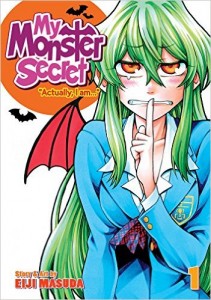
I’ve been a little wary of the recent influx in “monster girl” manga, even though I do enjoy several of the titles. It can be a fun genre, but its nature lends itself to a sort of fanservice that I’ve grown out of over the years, and so I always approach new titles wondering how many of them are all large-breasted succubi and accidentally spilling milk all over someone’s face. Thankfully, there are also exceptions, and to its credit Seven Seas has not really leaned one way or the other in licensing the monster girl genre, but simply spread its net wide to gather up everything. And this means that we have titles like My Monster Secret, which has the subtitle “Actually, I Am…”, a literal translation of its original title. Which is just a fun silly comedy with no fanservice in sight.

secret1

The literal title is presumably meant to be followed by a fill-in-the-blank, with the first girl on the cover conveying “Actually, I Am… a Vampire.” She’s Shiragami, who is supposed to be cool and aloof, and who our hero has totally fallen for. In reality, she’s mostly cool so that people don’t see her fangs, and the aloof becomes goofy fairly quickly, though at times you can see the author struggling to see how “ditzy” he should make her. Acting as her foil is Asahi, a boy whose poker face is entirely absent, to the point where he’s actually shunned a bit by the class for his total inability to keep anything a secret. The trouble is that Shiragami’s secret isn’t just a love letter, she’s in big trouble if it’s found out. What’s a boy who can’t lie to do?

The plot and characters spin out as you’d expect. There’s the teenage newshound girl we’ve seen in many an anime, only this time she’s portrayed as straight up evil, which is refreshing. We also see another supposed stoic cool girl, only this one turns out to be an alien – something that should have been more obvious from the giant screw on the back of her head, which opens up to reveal her much tinier self. If you think all of this leads to over the top reactions and lots of falling over, you’re absolutely right. The goal here is comedy, with I expect some heartwarming interspersed as the series goes on.

The main reason I really enjoyed the first volume of the series is the art style, which is appealing yet odd. It’s somewhat reminiscent of Lucifer and the Biscuit Hammer, with very wide mouths and expressive screams. No one’s really attractive here, which is not what I was expecting – I’d thought the vampire and alien would be standard “beautiful”, but even they’re drawn to look strange more than anything else. Basically, the art helps the comedy. If you’re looking for a “monster girl” title just to say that you’ve read one… well, wait a month and get Franken Fran. But if you want two, this is a good choice. It’s relatively clean, especially for a Champion series, and genuinely amusing.

Filed Under: REVIEWS

Requiem of the Rose King, Vol 3

January 18, 2016 by Anna N

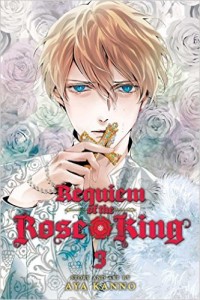
Requiem of the Rose King Volume 3 by Aya Kanno

This manga just keeps getting better and better as Kanno adds even more royal intrigue to her unique story of Richard III and the Wars of the Roses.

The second volume closed with Richard embodying a demonic spirit of vengeance when he discovered that his father was killed. The third volume opens with Richard’s older brother Edward, the new king, making questionable decisions about women. Edward is utterly captivated by the widow Elizabeth Woodville, who secretly detests the House of York. She maintains Edward’s interest by continually refusing him until he is desperate enough to make her his queen, going against the other alliances his court is arranging for him. Richard proves to be an unenthusiastic ally in Edward’s courtship, going along with his brother on hunting trips to provide cover for Edward’s visits to Elizabeth. When Edward is staying in a hunting cabin, he again meets the wayward Lancaster King Henry. Richard and Henry are drawn to each other, without fully knowing who each other are.

Henry’s dreamy outlook on life has made him one of the few people who relates to Richard as just Richard, without the “demon child” legend that has poisoned everyone against him. But Henry’s distance from his own family ensures that when his son Edward discovers the men together, his jealousy over his father’s relationship with Richard looks like it is going to have horrible consequences.

Kanno’s art continues to be both dark and lavish, fitting the settings and themes of this tragic story excellently. I’m always in awe of her facility with facial expressions and how it contributes so well to character development. Just a couple panels of Elizabeth Woodville’s gleefully staring eyes as she contemplates her plans for Edward establish that she’s up to no good. Henry’s abstracted expression show him to not fully live in the world, while Richard’s sensitivity and hesitancy in trusting Henry is clearly portrayed. This continues to be such a standout title in Viz’s current publishing lineup.

rerok3

Filed Under: REVIEWS Tagged With: requiem of the rose king, VIZ, viz media

Pick of the Week: Teenage Kicks

January 18, 2016 by Sean Gaffney, Ash Brown, MJ and Anna N Leave a Comment

shoreSEAN: Intellectually, I know that A Girl On The Shore is the obvious choice here, but I know I’m going to wince and cringe all through its highly realistic and painful depictions of teenage life. So instead I will pick the 5th volume of A Silent Voice, which… will do the same thing, to be fair.

ASH: Well, since I’ll still have a couple of opportunities left to pick A Silent Voice and since Sean has already picked it himself, I’ll choose A Girl on the Shore this week. Inio Asano’s work can be difficult and certainly isn’t always the most comfortable to read, but it does tend to be compelling.

MJ: I’ll also go with A Girl on the Shore. I expect this will, indeed, be painful, but I kinda like that quality in a manga. My own teen years are still pretty vivid for me, which I think tends to draw me to this kind of work, so my expectations are high.

ANNA: I feel like any new Inio Asano work should be an automatic Pick. A Girl on the Shore is my choice as well.

Filed Under: PICK OF THE WEEK

My Week in Manga: January 11-January 17, 2016

January 18, 2016 by Ash Brown

My News and Reviews

It was entirely unintentional, but last week was apparently the week for sevens—both of my in-depth manga reviews last week were for the seventh installment of their respective series. They both happen to be manga currently licensed by Kodansha Comics, as well, which was also a coincidence.  On Wednesday, I reviewed the seventh omnibus of Vinland Saga by Makoto Yukimura. The series continues to be magnificent. The seventh omnibus might be the last of the series to be released in English, which would truly be a shame. The volume does bring to a close one of the series’ major story arcs, but I really hope more of Vinland Saga will be able to be translated. The second review, part of my monthly horror manga review project, was of Yuki Urushibara’s Mushishi, Volume 7. Mushishi continues to be one of my favorite manga. I’m really enjoying my reread of the series and the opportunity to write about it in more detail. One other thing I wanted briefly to mention was a Kickstarter project to help Yamakiya Taiko, a wonderful youth taiko ensemble from Fukushima, raise money to defray the cost of their upcoming trip to the United States in March. I’ll actually be playing with the group a bit while they’re in Michigan, so I especially hope that the campaign succeeds.

Quick Takes

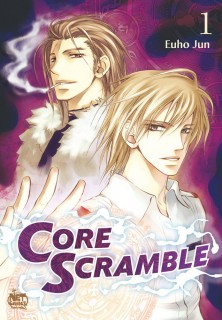
Core Scramble, Volume 1Core Scramble, Volume 1 by Euho Jun. I’ve been slowly making my way through Netcomics’ new series which is what brought Core Scramble to my attention. That and the promise of boys’ love mixed with science fiction, fantasy, and action. At this point, romance doesn’t seem to be the priority of Core Scramble, though there is some sexual harassment thrown in. Chaeun is a fairly average soldier—one of many fighting in a war against swarms of extra-dimensional monsters invading the planet—but he has developed a knack for surviving situations that many seasoned veterans would consider hopeless. His tenacity has impressed his comrades as well as those who would like to take advantage of the invasion for their own purposes. The first volume of Core Scramble spends quite a bit of time establishing the series’ setting, explaining how the world’s magic, science, and inter-dimensional portals function and interact. Infodumps are a regular occurrence and break up the flow of the story itself, but I suspect that this shouldn’t be as much of an issue for the series’ later volumes. Granted, there are only two more.

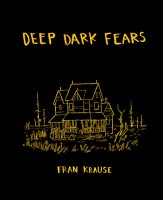
Deep Dark FearsDeep Dark Fears by Fran Krause. What started out as a project to illustrate all of his irrational fears eventually evolved into an ongoing series of  online comics in which Krause would not only draw his own fears but the fears submitted by his readers as well. Just over a hundred of those comics have now been brought together in the print collection of Deep Dark Fears, about half of them being newly published while the other half were selected by Krause as some of his favorites from online. While the subject matter can be disturbing and occasionally even grotesque, the comics themselves are actually quite charming. Krause doesn’t comment on or judge any of the fears but simply presents them as they are, irrational but still discomfiting whether they be based on known falsehoods learned as children or overactive imaginations as adults. Deep Dark Fears is a great collection of short comics about strange and bizarre fears. Some are only a single panel long while others may be a few pages, but they all leave an impression. I’m not sure if Krause has plans for additional print collections, but the series continues to grow online.

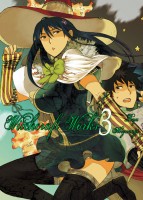
Witchcraft Works, Volume 3Witchcraft Works, Volumes 3-7 by Ryu Mizunagi. Although I quite enjoyed the first two volumes of Witchcraft Works, I recently realized that I had fallen behind in actually reading the series. After catching up I can say that there are still things that I like about the manga, but I also find myself slightly less enamored with it than I once was. Primarily, I continue enjoy the reversal of stereotypical gender roles. If it wasn’t for that, I think the series would have bored me fairly quickly, even despite its other entertaining quirks. With the seemingly endless of author’s notes, it’s obvious that Mizunagi has put plenty of thought into the world of Witchcraft Works, but it isn’t always incorporated well into the story itself which is unfortunate. This seems to especially be a problem during the series’ battle and action-oriented story arcs where it feels like the characters spend more time explaining things they already know to one another rather than fighting, though they do eventually get around to that, too. Witchcraft Works is a great looking manga, though, Mizunagi’s visual style working wonders with all of the magic and mayhem. But ultimately, I think what I want is a little more substance to accompany all the spectacle.

Filed Under: FEATURES, My Week in Manga Tagged With: comics, Core Scramble, Euho Jun, Fran Krause, manga, manhwa, Ryu Mizunagi, Witchcraft Works

Bookshelf Briefs 1/18/16

January 18, 2016 by Sean Gaffney and Michelle Smith Leave a Comment

Sean and Michelle are back with a bevy of briefs!

attackjrhigh4Attack on Titan Junior High, Vol. 4 | By Saki Nakagawa | Kodansha Comics – It continues to be difficult to tell the players without a scorecard in this spinoff that parodies every other spinoff as well. So we see Kuklo and Sharle having their own very silly adventures, and the canonically dead parents of Eren, as well as the “long-lost” sister of Krista/Historia, both show up and are as silly as the rest. That said, the series is not content to coast on running gags and repetition, and we see several types of humor I would not otherwise have expected—the most startling being a sequence where Sasha has to play the straight man to three people even more idiotic than she is. Attack on Titan is a giant goof, and the translation is as loose as ever, but it’s still fun. – Sean Gaffney

certainaccel2A Certain Scientific Accelerator, Vol. 2 | By Kazuma Kamachi and Arata Yamachi| Seven Seas – We’re still in the ‘let’s set up a bunch of chaos’ point in this manga’s story, so there’s lots of things introduced to hang a plot on. Estelle manages to revive the corpse of one victim to serve as a familiar and bodyguard, which is probably just as well as Accelerator is learning that after getting shot by Amai Ao there’s a limit to his own endurance. And one of the Misaka clones gets involved as well, though sadly it looks as though she is there purely to be in peril (you can tell as she’s not 10032, whose peril is limited to the Index series). Oh yes, and there’s a secret organization of thugs whose secrets are now coming out… far too easily. It’s chaotic, but Kamachi fans will find much to enjoy. – Sean Gaffney

demonprince3The Demon Prince of Momochi House, Vol. 3 | By Aya Shouoto | VIZ Media – Even though I generally like bittersweet, episodic supernatural tales, something about this volume seems unfocussed. First, we get the conclusion to the story about a ghostly classmate visiting Momochi House, which leads into a couple of chapters about an entity named Kasha. No one will really tell Himari much about him, so I don’t know if we’re being set up with a series antagonist or what. And then there’s a banquet in which Aoi/Nue is required to seal away a powerful demon. I liked this last story the best, even though Himari was eyerollingly impetuous, probably because it evoked a Natsume’s Book of Friends sort of tone. In the end, though this series isn’t great and the characters are still too shallow for my liking, I still enjoy reading it and plan to continue. – Michelle Smith

sweet1Honey So Sweet, Vol. 1 | By Amu Meguro | VIZ Media – I can’t really put into words what quality in a shoujo series makes me suspect it ran in Margaret or one of its offshoots, but Honey So Sweet definitely has it. Nao Kogure only agrees to go out with seeming delinquent Taiga Onise to avoid making him angry, but soon discovers the many sweet and thoughtful sides to him. That rumor about him starting a fight with upperclassmen, for instance? It was because they were tormenting a turtle, whom Onise has now made his adorable pet. It’s not overly cutesy, though, and though Onise seems like a real catch, Nao first has to get over her belief that she’s actually in love with her uncle. (Yeah, long story.) In the end, I enjoyed this very much and look forward to volume two! – Michelle Smith

mylovestory7My Love Story!!, Vol. 7 | By Kazune Kawahara and Aruko | Viz Media – I’ve often speculated during this series that Sunakawa might be asexual. Not that I expect a shoujo romantic comedy to actually make that choice, but his complete lack of romantic interest is featured here in this seventh volume, where we meet a girl who’s spent almost her entire life admiring him from afar. Notably this is extremely well handled—she’s not really called out for it, just shown how there are better ways, such as actually interacting with Sunakawa. In the end, though, he likes her but is not interested. Is it that he really likes Takeo? Or doesn’t like anyone right now? All this is interspersed with the usual adorableness of our lead couple, the main reason that folks read this series. – Sean Gaffney

natsume19Natsume’s Book of Friends, Vol. 19 | By Yuki Midorikawa | Viz Media – Natsume and his grandmother usually get contrasted in this series, and we see more of that here, as the interactions he has include not just close friendships like Tanuma and casual school friends he used to have like Shibata, but also reluctant working relationships with creepy yet effective Matoba. Of course, this doesn’t necessarily mean that Reiko is his polar opposite, but we do see in a flashback story how difficult she finds basic interaction, be it human or yokai. Even as she does good deeds, she insists that it’s for her own selfishness. You’d never catch our Natsume doing that. And of course, there are lots more wonderful and terrifying yokai sprinkled throughout. – Sean Gaffney

onepunch4One-Punch Man, Vol. 4 | By ONE and Yusuke Murata | Viz Media – We continue to expand our superhero-filled world in this volume, and see it’s just as political and selfish as you’d expect—a lot of glory hounds. Saitama, of course, doesn’t care about any of that, which is a good thing, as even when he’s saving the city from being devastated by a meteor he still causes a huge ton of damage. Still, he’s getting noticed. Meanwhile, we see a few other minor heroes, and I realize that this is likely going to be one of those shonen series with a huge cast that I can’t possibly tell apart. The fact that it’s still only the fourth volume worries me. Still, as long as they keep the action scenes cool and Saitama funny enough, I’ll keep following along while scratching my head. – Sean Gaffney

roseguns1v2Rose Guns Days Season One, Vol. 2 | By Ryukishi07 and Soichiro | Yen Press – I am again reminded that this is not at all a series that would have been picked up were it not for the name of Ryukishi07 attached to it. He’s not having to worry about mysteries here, or even all that much horror. Instead we get to see a bunch of scenes devoted to showing off the difference between an idealist and a cynic. The narrative, as well as the majority of the characters, is as cynical as they come in this Japan gone wrong. But the meta-narrative expects us to side with Rose and her desperate shiny hopefulness that everyone would be really swell if we all just helped each other. I am hoping that future volumes will give Rose depth to help us respect her position. – Sean Gaffney

Filed Under: Bookshelf Briefs

Ranma 1/2, Vols. 23-24

January 17, 2016 by Sean Gaffney

By Rumiko Takahashi. Released in Japan by Shogakukan, serialized in the magazine Shonen Sunday. Released in North America by Viz.

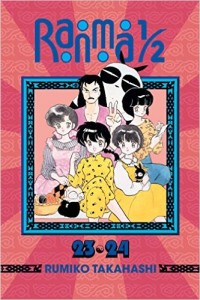
Ranma fandom these days is a different beast from where it was in the halcyon days of 1996-1997. Then it was striding the anime world like a colossus, at least in North America, and not even Sailor Moon seemed to have quite as many people discussing or writing fanfics about it. Nowadays it’s a small fish in a big pond, somewhat forgotten but retaining a nostalgic glow. This has, however, allowed some newer aspects of fandom to infiltrate, notably the BL fandom. Back in the day there was BL, but it seemed to get drowned out by all the male fans arguing about which girl Ranma should end up with. The idea that the best man for Ranma might be Ryouga is something that is dealt with in this volume, albeit not in a serious way.

ranma23-24

Ryouga comes across yet another magical item that will help him to win Akane, this time a fishing rod whose mark on a body leaves it with ever-increasing feelings of love. To be fair to Ryouga, he does seem to have moral qualms about using such a device to win Akane over. To be unfair to Ryouga, he tries it regardless. And when it hits Ranma, Ranma starts feeling very friendly indeed towards Ryouga. It starts off as washing his clothes and cooking for him, But as the mark expands, things get more serious, to the point where Takahashi feels obliges to urn Ranma female for the rest of the story. Akane, of course, becomes convinced that Ryouga is using the rod on Ranma because he can’t confess to him. Not exactly progressive, but honestly, this is exactly the sort of plot hook that many a BL story could work with. It’s also the best story of the first half of the book, which otherwise deals with annoyances such as Pantyhose Taro’s return (boring), Akane’s cooking (very boring), and Gosunkugi winning an enchanted suit of armor (really super boring and bad).

Luckily, the second half of the volume, is fantastic, and consists of one long story – indeed, there’s a cliffhanger, so it will carry over to the next volume. Herb is a villain who gives Ranma a challenge that he hasn’t really had to face in a long time, and his goofy yet deadly sidekicks Lime and Mint are just as dangerous – Ryouga is even brought to the point of death, though thankfully is able to triumph due to his super-depression. It allows Ranma to be clever and analytic again, one of my favorite sides of him, as he’s unable to see how Herb’s martial arts works – and how it’s actually LESS powerful than expected – without knowing the secret – like Ranma, Herb changes to female in cold water. This is the first time we’ve seen someone with the same exact curse as Ranma, and it helps to showcase their different styles – Herb has modesty, for one, something Ranma does not care about a bit. We also briefly see Ryouga and Mousse work together with Ranma, even if they have murderous motivation at the start. They make a good team.

Ranma sometimes seems a bit hoary and sexist (and homophobic as well) compared to some of the more popular works today, but Takahashi’s creativity usually shines through, and fans of the series will find most of this omnibus highly rewarding.

Filed Under: REVIEWS

Mushishi, Vol. 7

January 15, 2016 by Ash Brown

Mushishi, Volume 7Creator: Yuki Urushibara
U.S. publisher: Del Rey
ISBN: 9780345505590
Released: May 2009
Original release: 2006
Awards: Japan Media Arts Award, Kodansha Manga Award

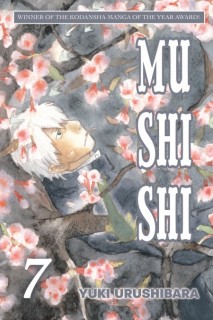
Mushishi, Volume 7 by Yuki Urushibara was originally published in Japan in 2006. It was the first volume of the award-winning manga series to be released after the first of several anime adaptations began airing. 2006 was also the year that Mushishi earned Urushibara a Kodansha Manga Award, having previously won a Japan Media Arts Award in 2003. In English, the seventh volume of Mushishi was initially published in print in 2009 by Del Rey Manga and then was later re-released in a digital edition by Kodansha Comics in 2014 along with the rest of the series. Mushishi is one of my favorite manga and one of the first series that I made a point to follow and collect as it was being released in translation. I love the manga’s atmosphere, subtle horror, and the obvious influence that traditional Japanese folklore and legends have had on Urushibara’s storytelling in the series.

The seventh volume of Mushishi collects four stories. Interestingly, the mushi in these particular chapters tend to be somewhat tangential to the real issues that the characters are struggling with. While the mushi have an impact on the way events unfold and develop, it is the interaction between people that forms the core of the individual stories. “Lost in the Blossoms” is about several generations in a family of skilled landscapers who obsessively care for the embodiment of a peculiarly beautiful and ancient cherry tree. In “The Mirror in the Muck,” a young woman falls ill after the man she loves leaves her behind, her love sickness putting her life in real danger. A young boy has become a host to a mushi that attracts lightning in “At the Foot of Lightning,” but the even greater problem is the nearly nonexistent relationship between him and his mother. The volume concludes with the series’ first multi-part story, “The Ragged Road,” about the head of the Minai, a clan of mushishi responsible for investigating forbidden mushi no matter what the personal cost.

Mushishi, Volume 7, page 3While Mushishi generally tends to be episodic, “The Ragged Road” directly ties in with an early story, “The Sea of Brushstrokes,” collected in Mushishi, Volume 2. The Minai family serves under the Karibusa family which is responsible for recording and protecting information about mushi; the fate of both families is intertwined with that of the forbidden mushi. I especially like “The Ragged Road” because it further develops the world of Mushishi. The other three stories in Mushishi, Volume 7 technically do as well, but because they’re only loosely connected to previous chapters their contributions to the series’ lore generally add more breadth rather than depth. Still, bits of the characterization of Ginko, the manga’s protagonist, continue to be revealed with the telling of each story, showing just how much of an outsider he is even within the community of mushishi.

Although the plots of the individual stories collected in Mushishi, Volume 7 aren’t directly connect to one another, they do all share some similar themes. In some ways, the manga feels more horror-like than some of the previous installments of the series. Mushi in the case of this volume are creatures that can steal away a person’s senses, identity, life, or even soul. But as terrifying as that can be, the most chilling thing that Ginko encounters aren’t mushi but failed human relationships. I find these four stories to be some of the most heartbreaking in the series for that reason. Ginko is faced with situations where, while he can deal with the mushi, he is powerless to completely ease the distress of the people involved and their troubled families. However, as sad and tragic as some of the stories in Mushishi can be, there’s still an underlying sense of hope that in time people will be able to heal and move forward through their pain.

Filed Under: REVIEWS Tagged With: del rey, Japan Media Arts Award, Kodansha Manga Award, manga, mushishi, Yuki Urushibara

  • « Go to Previous Page
  • Page 1
  • Interim pages omitted …
  • Page 505
  • Page 506
  • Page 507
  • Page 508
  • Page 509
  • Interim pages omitted …
  • Page 1049
  • Go to Next Page »
 | Log in
Copyright © 2010 Manga Bookshelf | Powered by WordPress & the Genesis Framework