• Skip to primary navigation
  • Skip to main content
  • Skip to primary sidebar
  • Home
  • About Us
    • Privacy Policy
    • Comment Policy
    • Disclosures & Disclaimers
  • Resources
    • Links, Essays & Articles
    • Fandomology!
    • CLAMP Directory
    • BlogRoll
  • Features & Columns
    • 3 Things Thursday
    • Adventures in the Key of Shoujo
    • Bit & Blips (game reviews)
    • BL BOOKRACK
    • Bookshelf Briefs
    • Bringing the Drama
    • Comic Conversion
    • Fanservice Friday
    • Going Digital
    • It Came From the Sinosphere
    • License This!
    • Magazine no Mori
    • My Week in Manga
    • OFF THE SHELF
    • Not By Manga Alone
    • PICK OF THE WEEK
    • Subtitles & Sensibility
    • Weekly Shonen Jump Recaps
  • Manga Moveable Feast
    • MMF Full Archive
    • Yun Kouga
    • CLAMP
    • Shojo Beat
    • Osamu Tezuka
    • Sailor Moon
    • Fruits Basket
    • Takehiko Inoue
    • Wild Adapter
    • One Piece
    • After School Nightmare
    • Karakuri Odette
    • Paradise Kiss
    • The Color Trilogy
    • To Terra…
    • Sexy Voice & Robo
  • Browse by Author
    • Sean Gaffney
    • Anna Neatrour
    • Michelle Smith
    • Katherine Dacey
    • MJ
    • Brigid Alverson
    • Travis Anderson
    • Phillip Anthony
    • Derek Bown
    • Jaci Dahlvang
    • Angela Eastman
    • Erica Friedman
    • Sara K.
    • Megan Purdy
    • Emily Snodgrass
    • Nancy Thistlethwaite
    • Eva Volin
    • David Welsh
  • MB Blogs
    • A Case Suitable For Treatment
    • Experiments in Manga
    • MangaBlog
    • The Manga Critic
    • Manga Report
    • Soliloquy in Blue
    • Manga Curmudgeon (archive)

Manga Bookshelf

Discussion, Resources, Roundtables, & Reviews

Blog

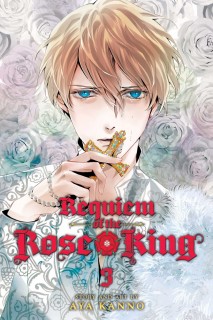
Requiem of the Rose King, Vol. 3

February 11, 2016 by Ash Brown

Requiem of the Rose King, Volume 3Creator: Aya Kanno
U.S. publisher: Viz Media
ISBN: 9781421582597
Released: January 2016
Original release: 2015

Aya Kanno’s manga series Requiem of the Rose King has quickly become one of the releases that I most look forward to from one volume to the next. I’m not particularly surprised by this, though—I’ve enjoyed many of Kanno’s past works, and she has proven to be quite versatile when it comes to genre and style. In the case of Requiem of the Rose King, Kanno has taken direct inspiration from the historical plays of William Shakespeare, more specifically the Wars of the Roses cycle consisting of Henry VI and Richard III. Even if Kanno hadn’t been involved with the manga, this would have been more than enough to catch my attention. But Kanno is involved and she brings her own touches to the story, giving it a dark fantasy-tinged atmosphere in addition to exploring gender and identity in an interesting and engaging way. With all of that and more, I have been completely taken with Requiem of the Rose King, and so was glad when the third volume of the series, originally released in Japan in 2015, was published in English by Viz Media in 2016.

The battle has been won and the House of York reigns victorious, but the struggle for the English crown continues; the war is far from being over. The deposed King Henry seems content to wander the countryside, the weight of rulership lifted from his shoulders, but the rest of the Lancasters are plotting to return their family to power and reclaim the throne. The hold that the newly established King Edward has on the England is in more peril than he realizes. In addition to the threat that the Lancasters pose, there are others among the nobility who are againt the House of York’s usurption of the throne. The widowed Elizabeth Woodville is prepared to take advantage of Edward’s womanizing ways in order to bring about his and his family’s downfall; besotted with Elizabeth, he puts his own desires before the security of the kingdom, risking the loss of the support of France. His younger brother Richard is one of the few people to recognize the danger, but Richard isn’t yet in a position to avert the potentially calamitous outcome.
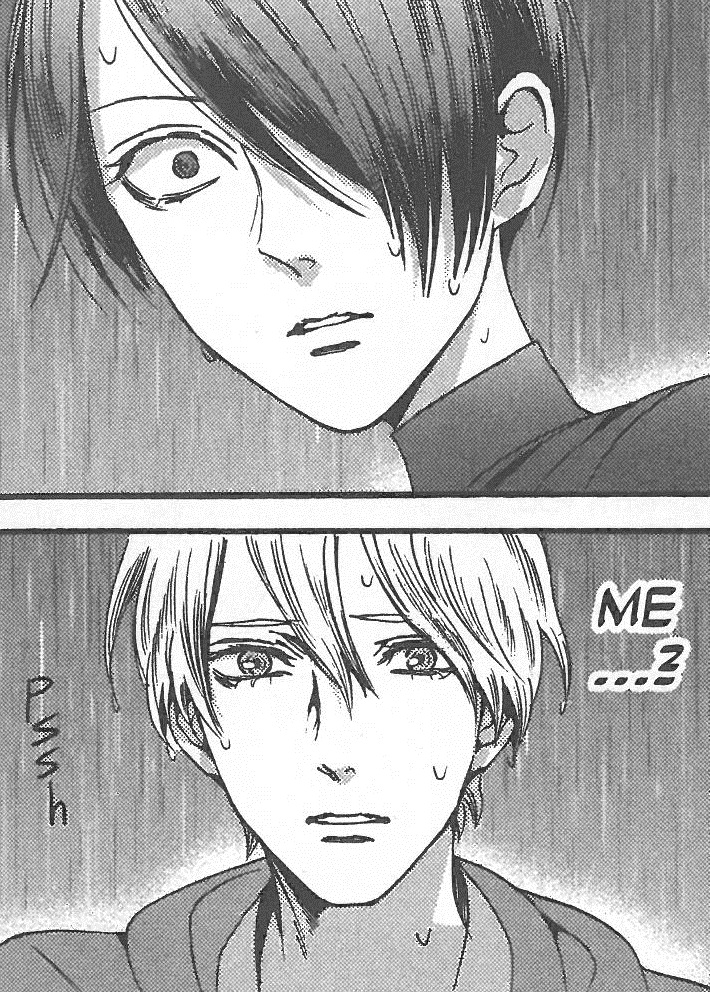
Requiem of the Rose King, Volume 3, page 68I continue to be fascinated by Kanno’s interpretation of Richard, a young man who has been irrevocably harmed by the the rejection and hatred of his mother who sees him and his body as imperfect and demonic. He has a difficult time connecting with people because of the anxiety surrounding his self-identity, an issue made even worse by the recent death of his father on the battlefield. Henry is a perfect foil for Richard and is in many ways his opposite, which throws Richard’s perception of himself and of the world into confusion. Richard has resigned himself to loneliness and darkness, even while Henry seeks his company. The two men spend a fair amount of time together in Requiem of the Rose King, Volume 3, neither of them knowing who the other truly is and that their families are enemies. Much as Edward and Elizabeth’s relationship may doom the kingdom, Richard and Henry’s awkward friendship can only result in tragedy with far-reaching consequences.

Personal strife is mixed with political turmoil in Requiem of the Rose King, each feeding into the other as events unfold. With multiple people expressing interest in obtaining the crown, whether in jest or in all seriousness, the social structures and relationships among the English nobility have become extraordinarily precarious during a time of tenuous peace. This underlying chaos is also reflected in how Kanno approaches the story of Requiem of the Rose King. Many times several scenes overlap with one another, tied together thematically rather than chronologically. Pasts, presents, and possible futures all intertwine and are simultaneous revealed. This can be somewhat disconcerting at first and at times challenging to follow, but I do like the overall effect and drama that it brings to the series, emphasizing the individual characters’ experiences as memories, reality, and visions merge together. Requiem of the Rose King has an almost dreamlike quality to it and I find that I fall more deeply under its thrall with each passing volume.

Filed Under: REVIEWS Tagged With: Aya Kanno, manga, requiem of the rose king, viz media

Manga the Week of 2/17

February 11, 2016 by Sean Gaffney, Ash Brown, MJ, Michelle Smith and Anna N Leave a Comment

SEAN: There’s one title I’m really excited about next week, but there are several other books of interest. Let’s go through them, starting, as ever, with Dark Horse. (If a manga company started beginning with A-C, they’d clean up.)

fatezero1

Fate/Zero is a prequel to the insanely popular visual novel franchise Fate/Stay Night, taking place 20 years prior. It still has Saber (Arturia version) in it, though, no worries.

If you missed it the first time, there’s a 3rd Kurosagi Corpse Delivery Service omnibus, with Vol. 7-9.

ASH: Still a great series; glad that Dark Horse found a way to keep it in print!

SEAN: Vampire Hunter D has reached its 23rd novel. I think Dark Horse put out the first one in 1922 or something like that.

ASH: Ha! Indeed, something like that.

SEAN: One Peace has a 3rd volume of the light novel Rise of the Shield Hero.

Seven Seas gives a 9th Dragonar Academy, which continues to attempt to titillate its core audience, and while I am not remotely that, I hear it does a good job.

It may surprise some to see me getting so excited about a “monster girl” series, particularly given my ambivalent attitude towards their recent popularity. But Franken Fran is not just any monster girl series . Fans have been waiting for its blend of grotesque horror and pitch-black humor to be licensed for years, and Seven Seas now obliges us with 4 big omnibuses, of which this is the first. Get this, folks (well, over-18 folks).

MJ: Well, you’ve sold me! :D

ASH: This is the series I’m most intensely curious about this week.

SEAN: I missed another one last week: there’s a 2nd digital-only volume of Crown of Thorns, by the Hana Yori Dango author.

MICHELLE: I’m not sure Franken Fran is for me, but I’m definitely excited about more Crown of Thorns!

ANNA: ACK! I forgot to get the first volume of Crown of Thorns! Oh well, it is an excellent excuse to binge-read!

SEAN: Tokyo Ghoul’s 5th volume, out next week via Viz, will sell more copies than all the other titles in this list combined.

ASH: I’ve fallen behind on the series, but I’m happy to see it doing so well for Viz.

SEAN: And there’s a 3rd Ultraman, also from Viz, which I really should know more about than I do.

Go get Franken Fran. What else will you get?

Filed Under: FEATURES, manga the week of

School Judgment, Vol. 1

February 10, 2016 by Sean Gaffney

By Nobuaki Enoko and Takeshi Obata. Released in Japan as “Gakkyu Hotei” by Shueisha, serialized in the magazine Weekly Shonen Jump. Released in North America by Viz Media.

It can sometimes be difficult, particularly for a Western audience, to remember that Weekly Shonen Jump’s demographic remains young boys in Japan, with the ideal age between 8 and 13 years old. They know the reality of writing for children, which is kids want to read about other kids a few years older than they are, which is why the less fantasy-oriented Jump series feature a bunch of middle and high schoolers. (Speaking of which, when did Bleach last attend high school anyway?) But sometimes there is a series which does give us elementary schoolers, and we have that in School Judgment. There’s a catch, though – some of the students are lawyers, and what follows is, if not exactly a ipoff of the Ace Attorney franchise, at least highly influenced by it.

school1

It becomes fairly clear a few pages into this series that you really have to leave your suspension of disbelief at the door. While true for most Jump series, the combination of 12-year-old lawyers, some of whom are also ex-convicts, and 4-year-old baby judges may make a few people at least raise an eyebrow. But it fits with the manga’s overall mood, which is over the top, a bit loud, and somehow both painfully earnest and deeply cynical at the same time. The main reason that it succeeds is the hero, Abaku, is *not* your standard Jump hero. In fact, he’s more like the cynical, grinning mentor who’s gradually won over by the shiny idealism of the normal hero. No idealism here – Abaku is obnoxious, superior, selfish, and acts refreshingly like a 12-year-old at times.

The cases we see and characters we meet are fairly standard shonen fare – the boy with the pudding bowl haircut is disliked by everyone, who knew? There’s scholastic rivalry, nascent crushes, and intense drama over whether or not to eat the classroom’s pet fish. In the midst of all this, we start to get a bit of a larger ongoing plot – Abaku clearly has a past, and may have at one point been imprisoned in Japan’s maximum security elementary school prison island. (I’m not making this up, you know.) He’s in that classroom for a reason. I was less impressed with the prosecuting attorney, Pine, who seems to be the standard “I pretend to be sweet but am secretly angry all the time” girl, destined to always lose to our heroes. I hope she gains depth in the next volume.

This is not terrific by any means – the mysteries are rather perfunctory, and I’m not sure I agree with using the Japanese word “ronpa” throughout instead of just translating it as “cross-examination” or somesuch. And the baby judges are a hideously stupid idea. Despite Obata’s usual excellent art, this reads like the work of a Jump newbie, and it will not surprise anyone to hear it only has 2 volumes to go. But it held my attention, and is ridiculous in a way that makes you smile wryly, rather than just want to put the book down. Worth a look.

Filed Under: REVIEWS

Pick of the Week: Some Shonen Sunday

February 9, 2016 by Michelle Smith, Sean Gaffney, Ash Brown and Anna N Leave a Comment

magi16MICHELLE: As predicted, my pick of the week is super easy this time. Magi all the way!

SEAN: I love Magi to bits, but it’s time for my twice-yearly pick of Hayate the Combat Butler, still my go-to manga for silly humor and unresolvable harems.

ASH: The manga release that I’m probably the most interested in this week is Giganto Maxia. As a fan or Berserk I feel like I should give it a try, even if some of Miura’s other works haven’t really done much for me.

ANNA: Magi for me too! Magi forever!

Filed Under: PICK OF THE WEEK

Bookshelf Briefs 2/8/16

February 8, 2016 by Sean Gaffney and Michelle Smith Leave a Comment

Sean and Michelle review a sizable pile of new releases from a sizable percentage of manga publishers.

assclass8Assassination Classroom, Vol. 8 | By Yusei Matsui | Viz Media – Viz may never have licensed Supernatural Detective Neuro, Matsui’s prior series, but at least we can get an in-joke about it here. As for this volume itself, it’s very good at showing that our class is learning well, but still can make mistakes and grow from them. We see the specialty of various kids who hadn’t gotten the spotlight before, and Karma makes a nice comeback after being brought down during the exams. As always, though, it ends up being Nagisa who drives things forward—both on the humorous side, as he has to cross-dress apparently for nothing but the class’ amusement, to the serious side, as he faces off against a nasty and insane foe with murder in mind. Really fantastic. – Sean Gaffney

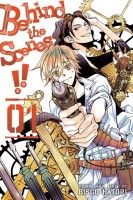
behind1Behind the Scenes!!, Vol. 1 | By Bisco Hatori | VIZ Media – Oh, how I wanted to love this. As someone who once concluded a review of the first volume of Ouran High School Host Club with the words “could not possibly be more highly recommended,” it is with a heavy heart that I confess that I found Behind the Scenes!! profoundly underwhelming. Ranmaru Kurisu is a somewhat spazzy protagonist who spends a lot of time in freak-out mode, and though he does occasionally save the day for the special effects crew he joins, the plots are all pretty lame. It doesn’t help that the leader of the group is constantly urging Ranmaru to “evolve,” either. However, as disappointing and unfunny as this first volume was, I find I just can’t give up yet. Hatori loyalty compares me to stick with it ‘til all hope is gone. – Michelle Smith

food10Food Wars!: Shokugeki no Soma, Vol. 10 | By Yuto Tsukuda and Shun Saeki | Viz Media – A lot of battle manga, which Food Wars! definitely is, end up having some sort of ethical battle between someone who is fighting and winning for the right reasons (our hero), and one fighting for the wrong ones (this volume’s villain, Mimisaka). It’s a great plot for your typical “young boy” manga, as it shows off a lot of negative traits and then shows why they’re bad. Mimisaka enjoys enraging and then humiliating his opponents, as well as taking their most prized possessions. He also tends to imitate his opponents. I suspect he’ll have more trouble with Yukimura than any other. In the meantime, it’s Western-style cooking next time around, and I expect we’ll see a lesson being learned. – Sean Gaffney

shoreA Girl on the Shore | By Inio Asano | Vertical Comics – The back cover blurb describes this short series as “challenging,” and boy, is that apt. Initially, I thought that adjective mostly referred to the way Koume Sato, cruelly used by the boy she likes, initiates a sexual arrangement with Keisuke Isobe, who has liked her for years, while repeatedly belittling him and rejecting his desire for a real relationship. What ensues between them is explicit and a bit twisted, and by the time Sato is ready to admit that she does genuinely like Isobe, it’s a case of too little, too late. But really, it’s the way things end—and the struggle to decide if it’s hopeful or terribly bleak—that I found most difficult to accept. I can’t go into more detail without spoilers, but I have many feels! I definitely recommend the series, especially for the stellar sense of place Asano evokes, but be warned… it really is challenging! – Michelle Smith

kamisama20Kamisama Kiss, Vol. 20 | By Julietta Suzuki | Viz Media – So our main couple have admitted their feelings, and a time-travel trip to the past has resolved any other women who may have been troublesome. Now, of course, we need to add more complications to the mix, and it’s a rather obvious one—Nanami may be the local shrine god, but she’s still a human, and a life with Tomoe is going to feel like no time at all for him, and end in inevitable tragedy. He’s aware of this as well, of course, and seemingly far more concerned about it, which leads to him making a rare stupid mistake. Of course, this also ties into the main plot, which still chugs along—Akura-Oh is around in the modern world, and is not going to simply sit around and let Tomoe and Nanami happily ever after. Always fun. – Sean Gaffney

mlm12My Little Monster, Vol. 12 | By Robico | Kodansha Comics – There is a 13th volume of My Little Monster, but my guess is it’s filled with side stories, as things wrap up here for our lead couple and their beta couple friends. Given that it’s a final volume, I don’t want to spoil too much, but suffice to say that there are a lot of heartwarming and satisfying scenes here, and there’s a nice flash forward to about 3-4 years later that gives us a Shizuku who looks amazing. I also freely admit that Natsume is my favorite character in the series, and she gets a lot to do as well, including a great sultry look that makes Sasayan’s eyes bug out. I started off not sure if I’d like this, mostly as Haru was simply out of control. Seeing him develop has been an experience, and one worth the read. – Sean Gaffney

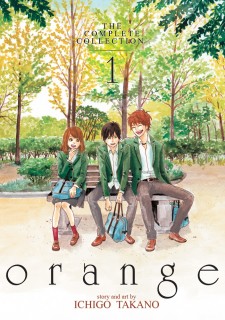
orangeorange: The Complete Collection, Vol. 1 | By Ichigo Takano | Seven Seas – I have read and truly enjoyed a LOT of manga, but that “I’m so glad this series is part of my life” feeling that I got with orange is rare indeed. Simply put, this is a story about a timid heroine who must change herself—following instructions somehow sent to her by her future self—to change the future and prevent a beloved classmate from committing suicide. Such a setup could easily play out as cheesy, but the execution is anything but, and neither does the “you need to show people that you care” message ever turn preachy. Instead, there’s just great characters and supportive friends (including another pair for the “heroine’s awesome protective friends” list) trying to do their best to pull someone through a difficult time. It’s only February, but I just might have found my top contender for the Best of 2016! – Michelle Smith

silent5A Silent Voice, Vol. 5 | By Yoshitoki Oima | Kodansha Comics – Desperately trying to pretend that absolutely nothing is wrong while suffering inside is, unfortunately, something I think most of us have experience seeing. We get it throughout this volume, mostly from Shoya, who’s forced to return to the elementary school where this all began and admit to his new high school friends what he did then. And of course there’s Shoko, who my guess is has never stopped believing that everything that happened isn’t her fault in some way, and she finally breaks after we see all their newfound friends fighting and separated. Given there are two volumes to go after this, I assume the cliffhanger will be resolved in some way, but believe it or not, things should get worse before they get better. – Sean Gaffney

yamada6Yamada-kun and the Seven Witches, Vol. 6 | By Miki Yoshikawa| Kodansha Comics – There’s a lot of stuff happening here, but it’s variations on what we’ve seen before. We find out that the ‘manipulated’ minions are not as manipulated as we’d expect, and we find out that the witch behind it all is really not all that evil, just a high schooler with high school problems, which can be solved by Yamada-kun and his blunt but honest ways. It’s actually pretty sweet in a number of places, and there’s several funny scenes, including the bonus chapter where Yamada (in Urara’s body) has to stay over at Itou’s apartment. But in terms of plot or characterization of our regulars, it’s more of the same. I hope the next volume moves things forward a bit. – Sean Gaffney

Filed Under: Bookshelf Briefs

The Manga Revue: Behind the Scenes!!

February 8, 2016 by Katherine Dacey

It’s a snowy day here in Boston, giving me the perfect excuse to tunnel under a blanket and read a goofy, light-hearted story. My escapism of choice: Bisco Hatori’s latest series, Ouran University Host Club Behind the Scenes!!

BehindTheScenes-01Behind the Scenes!!, Vol. 1
By Bisco Hatori
Rated T, for teens
VIZ Media, $9.99

Behind the Scenes!! embodies what’s good–and not so good–about Bisco Hatori’s storytelling.

In the plus column, Hatori has a knack for writing ensemble pieces in which the principal characters exhibit a genuine fondness for one another. The stars of her latest series are Shichikoku University’s Art Squad, a scrappy outfit that makes props for the Film Club–or, more accurately, clubs, as there are several students groups competing for the Art Squad’s services, each with their own aesthetic objectives. Ranmaru, the series’ protagonist, gets a crash course in film making when he stumbles into the middle of an Art Squad project: a low-budget horror flick. As penance for disrupting the shoot, Ranmaru joins the Art Squad and is quickly pressed into service painting props, folding paper cranes, and building a fake hot spring.

These scenes–in which Ranmaru and the gang tackle set-design challenges–are among the series’ most enjoyable. Not only do they give us a sneak peek at the movie-making process, they also show us how the club members’ friendly overtures embolden the timid, self-doubting Ranmaru to let go of his painful childhood and become part of a community. In one exchange, for example, Ranmaru tells a fellow squad member about a black-and-white film that made a powerful impression on him. Hatori cuts between scenes from this imaginary film and Ranmaru’s face, registering how powerfully Ranmaru identified with the film’s principal character, a toy robot who dreams of flying. The symbolism of the toy is hard to miss, but the directness and simplicity with which Hatori stages the moment leavens the breezy tone with a note of poignancy.

In the minus column, Hatori often strains for comic effect, overwhelming the reader with too many shots of characters mugging, shouting, and flapping their arms. The Art Squad’s interactions with various student directors give Hatori license to indulge this tendency; the auteurs’ snits and whims frequently force the Art Squad members to behave more like the Scooby Doo gang–or Hollywood fixers–than actual college students juggling coursework and extra-curriculars. (The Art Squad even has a goofy dog mascot.)

At the same time, however, these wannabe Spielbergs bring out the best in Hatori’s draftsmanship. Each one’s personality is firmly established in just a single panel: one looks like a refugee from Swingin’ London (or perhaps an Austin Powers film); another dresses like a Taisho-era author, swanning around campus in a yukata; and a third sports a shaggy mane, Buddy Holly glasses, and a female entourage. The efficiency with which Hatori introduces these characters, and the range of personalities they embody, demonstrate just how crisp and distinctive her artwork can be. That Hatori’s heroes are visually bland by comparison says less about her skills, I think, than it does her desire to make Ranmaru’s new “family” seem normal–well, as normal as anyone who specializes in making fake zombie guts can be.

The bottom line: Tentatively recommended. If Hatori can tone down her characters’ antic behavior, Behind the Scenes!! could be a winner.

Reviews: Sean Gaffney and Michelle Smith post a fresh crop of Bookshelf Briefs. Also new at Manga Bookshelf: Sean tackles the first volume of orange (no, that’s not a typo), Anna N. reviews Takeshi Obata’s kiddie-thriller School Judgment, and Ash Brown weighs in on Hiroaki Samura’s stylish (and bloody) manga Die Wergelder. Further afield, translator Jocelyn Allen posts her annual doujinshi round-up.

Sara Dempster on The Angel of Elhamburg (No Flying No Tights)
Matthew Warner on vol. 5 of Ani-Emo (The Fandom Post)
Michael Burns on vols. 7-8 of Barakamon (AniTAY)
Johanna Draper Carlson on vol. 12 of Chi’s Sweet Home (Comics Worth Reading)
Adam Brunell on vol. 12 of Deadman Wonderland (ComicSpectrum)
SKJAM! on Dream Fossil (SKJAM! Reviews)
Josh Begley on vol. 2 of Emma (The Fandom Post)
Patrick Moore on vol. 1 of Honey So Sweet (Bentobyte)
Sean Gaffney on vol. 1 of How to Raise a Boring Girlfriend (A Case Suitable for Treatment)
Ken H. on Junji Ito’s Cat Diary: Yon & Mu (Sequential Ink)
Kory Cerjak on vol. 13 of Magi (The Fandom Post)
Megan R. on Millennium Prime Minister (The Manga Test Drive)
Rebecca Silverman on vol. 12 of My Little Monster (Anime News Network)
Exile on vol. 1 of My Monster Secret (AniTAY)
Jocelyn Allen on Night Worker (Brain vs. Book)
Matthew Warner on vol. 2 of Puella Magi Tart Magica (The Fandom Post)
Matt on vol. 5 of A Silent Voice (AniTAY)
Terry Hong on vol. 2 of Ultraman (Book Dragon)
Nick Creamer on vol. 2 of UQ Holder! (Anime News Network)
Frank Inglese on Uzumaki Naruto: Illustrations (Snap 30)
Sheena McNeil on vol. 3 of Yo-Kai Watch (Sequential Tart)


Filed Under: MANGABLOG, REVIEWS Tagged With: Bisco Hatori, Manga Review, shojo beat, viz media

My Week in Manga: February 1-February 7, 2016

February 8, 2016 by Ash Brown

My News and Reviews

I posted a few different things at Experiments in Manga last week. For starters, the Love at Fourteen Giveaway Winner was announced. The post also includes a list of some of the manga available in English which feature a bit of romance. Last week I also reviewed Tokyo Decadence: 15 Stories by Ryu Murakami which in some ways is about love, or at least lust. Due to be published later this year, the collection is engaging but definitely not for everyone as some of the stories are quite disturbing. Over the weekend January’s Bookshelf Overload was posted for those of you curious about what made it onto my shelves last month. I also had a taiko gig over the weekend that took up a fair amount of time. As a result of that and other some other life stress, I’ve fallen a bit behind on my writing (just when I thought I’d finally gotten ahead!), so there’ll likely only be one review coming this week instead of the two that were originally planned.

Quick Takes

Orange, Omnibus 1Orange, Omnibus 1 by Ichigo Takano. I had heard very good things about Orange and so was greatly looking forward to reading the manga, but I honestly didn’t anticipate that the series might become one of my favorite releases of the year. (It all depends on exactly how the story plays out in the second and final omnibus.) Orange sensitively deals with some fairly heavy subject matter, including suicide and crippling regret, but at the same time the manga also has a lighter sweetness to it. The manga is both heartwrenching and heartwarming, a melancholic story about close relationships and human connection. Admittedly, Naho is incredibly dense when it comes to recognizing other people’s feelings for her, even when they basically come right out and tell her, which can be a bit exasperating. But overall, the feelings and emotions in Orange ring true, especially as the series progresses and it’s revealed just why everyone is behaving in the ways that they are. I can see Orange ending either in tragedy or in happiness and I’m very curious to see which it will be.

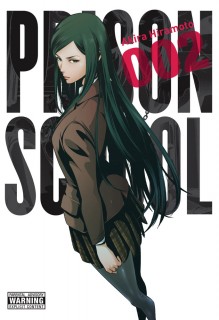
Prison School, Omnibus 2Prison School, Omnibus 2 by Akira Hiramoto. The first omnibus of Prison School established the manga as a series that is simultaneously appalling and strangely engaging. This of course assumes that readers aren’t immediately offended by its highly sexualized and incredibly vulgar nature to begin with. Prison School is definitely not a series for everyone even if, surprisingly, it has its sweet moments. The second omnibus very much continues in the same vein, so the initial shock caused by the manga’s obscenity, over-the-top fanservice, and ridiculous premise has diminished some. Even so, Prison School is a page-turner. The series has been building up to Kiyoshi’s escape attempt, resulting in a situation that gets progressively worse as time goes by. Seeing just how bad things can possibly get (which is pretty bad) is one of Prison School‘s major draws. That and Hiramoto’s impressive skills as an artist. The manga’s content will certainly not be to everyone’s taste, but it’s hard to deny Hiramoto’s talent.

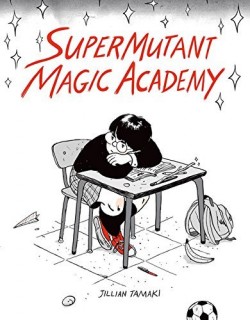
SuperMutant Magic AcademySuperMutant Magic Academy by Jillian Tamaki. Originally a webcomic, the best of SuperMutant Magic Academy has now been collected into a single volume along with newly-created content. I hadn’t actually read any of the comic while it was being released online, but I was obviously missing out—SuperMutant Magic Academy is great stuff. The comic takes place in a high school where students study magic and learn to control their superpowers (sort of an odd mix between Harry Potter and X-Men that bizarrely works), all while dealing with the more normal sorts of teenage angst and anxiety. Except for the series’ lengthy finale, created specifically for the collected volume, most of SuperMutant Magic Academy consists of single-page, and in some cases single-panel, gag comics.There’s no real overarching plot, but there are recurring characters and running jokes. Some of the social commentary can be fairly biting, but SuperMutant Magic Academy is very funny, frequently absurd, and wholly enjoyable.

Filed Under: FEATURES, My Week in Manga Tagged With: Akira Hiramoto, comics, Ichigo Takano, Jillian Tamaki, manga, Orange, Prison School

Bookshelf Overload: January 2016

February 7, 2016 by Ash Brown

Another month has passed and my manga collection continues to grow and evolve. The nice thing about December and January is that I usually end up with at least a few gift cards (and gifts), so I can splurge a bit even though I’m actively reducing the number of manga and books I’m buying at the moment. There are a few things that I definitely didn’t want to miss out on though, such as  Requiem of the Rose King, Volume 3 by Aya Kanno (review to come soon!) and Orange, Omnibus 1 by Ichigo Takano, which at the moment is a strong candidate for becoming one of my favorite series of the year. Also released in January, though I’m not sure when I’ll be able to actually get around to reading it, was Casey Brienza’s Manga in America: Transnational Book Publishing and the Domestication of Japanese Comics, one of the very few works about the North American manga industry. I also managed to snag an early copy of Tokyo Decadence, a “best of” collection of short stories by Ryu Murakami due to be released in March. (I recently posted my review of the volume which, though engaging, definitely won’t be to everyone’s taste.) Also arriving in January, though technically I believe it was released in December, was one of Chromatic Press’ most recent paperbacks, KaiJu’s delightful Mahou Josei Chimaka . (Unsurprisingly, I reviewed that one, too!)

Manga!
Aldnoah.Zero: Season One, Volume 1 by Olympus Knights
Brave Dan by Osamu Tezuka
Clockwork Apple by Osamu Tezuka
Even So, I Will Love You Tenderly by Kou Yoneda
A Girl on the Shore by Inio Asano
Kamisama Kiss, Volumes 2-4 by Julietta Suzuki
Kaze Hikaru, Volumes 8-11 by Taeko Watanabe
My Love Story!!, Volume 7 written by Kazune Kawahara, illustrated by Aruko
Natsume’s Book of Friends, Volumes 4-8 by Yuki Midorikawa
Of the Red, the Light, and the Ayakashi, Volume 1 written by HaccaWorks*, illustrated by Nanao
Orange, Omnibus 1 by Ichigo Takano
Requiem of the Rose King, Volume 3 by Aya Kanno
The Tyrant Falls In Love, Volume 9 by Hinako Takanaga

Comics!
Bug Boys, Volume 1: Welcome to Bug Village by Laura Knetzger
Mahou Josei Chimaka by KaiJu
Shades After by T. A. Kimpton
The Tipping Point edited by Various

Novels!
A Little Life by Hanya Yanagihara

Anthologies!
Biogenesis by Tatsuaki Ishiguro
Tokyo Decadence: 15 Stories by Ryu Murakami

Nonfiction!
Manga in America by Casey Brienza
Sake Confidential by John Gauntner

Anime!
Ouran High School Host Club directed by Takuya Igarashi

Filed Under: Bookshelf Overload, UNSHELVED

How To Raise A Boring Girlfriend, Vol. 1

February 7, 2016 by Sean Gaffney

By Fumiaki Maruto and Takeshi Moriki. Released in Japan as “Saenai Kanojo no Sodatekata” by Kadokawa Shoten, serialization ongoing in the magazine Dragon Age. Released in North America by Yen Press.

I think you have to be very careful when part of your work has “boring” in the title. I’m not sure if the original Japanese conveys quite the same meaning, but if the core of the work is that you feature a heroine who is meant to be uninteresting, then you’re already climbing up a larger hill than normal. Now, of course, this is something of a comedy, and the point of the whole exercise is that we have a hero who is surrounded by stereotypes of the standard light novel girl, and yet he decides to take the average, nebbish girl and turn her into heroine material. Unfortunately, at least by the end of this first volume, most of what I get from it is that the other two girls really *are” more interesting.

saekano1

That is not, of course, the boring girl in the foreground – it’s Eriri, the hero’s tsundere childhood friend who’s a famous doujinshi artist who has at least four different traits for a harem romance. The actual boring girl is sitting in the seat at the back. Our hero’s other close friend is Utaha, who is a bestselling novelist and fills the ‘cool yet snarky’ part of the otaku equation. Naturally, they dislike each other hovering over our hero Tomoya, who is something of an otaku who has grand ideals for a dating sim, but no actual talent to turn them into anything beyond cliches. He needs his two friends to actually do the work and make it good… particularly since his heroine in this dating sim is based on Megumi, who is simply there.

This is one of those series where Yen On did not pick up the light novel it’s based on, and I suspect that it would do better without the manga format. The writer of the original story jokes about the fact that the titular heroine “will never be in the center of the panel frame”, but even a cursory glance can tell you that’s not true – Megumi is present and paid attention to throughout, she’s just dull. This is the sort of series that cries out for exaggeration, and I could see her being drawn in a way like Sunako from The Wallflower, who only appears out of “superdeformed” mode in cool moments. Instead, Megumi’s presence and the delivery of the lines feel like the author explaining a joke that isn’t as good as they think it is. The premise is that we’re meant to wonder why this obvious visual novel hero is pulling away from the two cliched girls to find the ordinary one. But as a reader, I know why – cliched or not, Eriri and Utaha are far more interesting than Megumi is, and I’d like to actually know about *them*. Saekano (not to be confused with apocalyptic romance Saikano) sells its tedium a bit too well.

Filed Under: REVIEWS

Tokyo Decadence: 15 Stories

February 5, 2016 by Ash Brown

Tokyo Decadence: 15 StoriesAuthor: Ryu Murakami
Translator: Ralph McCarthy
U.S. publisher: Kurodahan Press
ISBN: 9784902075786
Released: March 2016
Original release: 1986-2003

Ryu Murakami is a fairly prolific and multi-talented creator. In addition to being an author, he is also a filmmaker and has been involved in the music industry as well. Several of Murakami’s novels have been translated into English, many of them by Ralph McCarthy, including Audition and Popular Hits of the Showa Era which were my introduction to Murakami’s work. McCarthy is also responsible for compiling and translating Tokyo Decadence: 15 Stories, a sort of best-of collection bringing together fifteen of Murakami’s short stories originally published in Japan between 1986 and 2003. Nine of the stories had previously been translated and released in a variety of different periodicals, but the translations have been revised for their inclusion in Tokyo Decadence. The remaining six are being published in English for the first time. Published by Kurodahan Press in 2016, I was fortunate enough to be selected to receive an advanced copy through LibraryThing’s Early Reviewers program.

The fifteen stories included in Tokyo Decadence are selected from five of Murakami’s short story collections and are presented chronologically. “Whenever I Sit At a Bar Drinking Like This,” “I Am a Novelist,” “It All Started Just About a Year and a Half Ago,” and “Each Time I read Your Confession” are from Run, Takahashi! and are all at least tangentially related to the baseball player Takahashi Yoshihiko. (It was this collection that seems to have ignited McCarthy’s passion for Murakami’s work.) The stories from Topaz—”Topaz,” “Lullaby,” and “Penlight”—are about call girls while the stories from Ryumiko’s Cinematheque—”The Last Picture Show,” “The Wild Animals” and “La Dolce Vita”—would appear to be at least semi-autobiographical. “Swans,” “Historia de un Amor.” “Se Fué,” and “All of Me” are taken from Swan, and most have something to do with Cuban dance and music and even share a few characters. Tokyo Decadence closes with the titular story from the collection At the Airport.

Having previously read some of Murakami’s work, I was rightfully prepared for Tokyo Decadence to be engaging while revealing a viciously dark sense of humor and dealing in gut-churning blood and gore. What I didn’t expect was that some of the stories, or at least parts of those stories, would be legitimately charming, compelling, and even occasionally heartwarming. Among the tales of gruesome murder, insanity, lust, obsession, and a myriad types of abuse are moments of love and humanity. That being said, Tokyo Decadence is very much a graphic and explicit collection of mature short stories, often disturbing and dark with very few characters who are anything but self-absorbed or self-indulgent. The stories are well-written, but the warped depravity and intensely twisted psychology exhibited will certainly not be to every reader’s taste and will likely offend or be found off-putting by many.

Surprisingly, Tokyo Decadence starts in a fairly lighthearted vein before delving into its more devastating and grotesque aspects. The portrayals of the various characters in the collection aren’t particularly flattering. Many of them are rather disturbed individuals, making Murakami’s use of first-person narration especially discomfiting. Interestingly, quite a few of the stories are actually seen from a woman’s perspective. This of course doesn’t soften the seedier nature of Tokyo Decadence which is quite frank in its exploration of sex and violence, the two subjects often closely intertwined with each other. Although some of the stories arguably lose some of their impact out of context from their original collections, overall I found Tokyo Decadence to be an interesting, engaging, and varied anthology; I would be very curious to read more of Murakami’s short fiction in translation.

Thank you to Kurodahan Press for providing a copy of Tokyo Decadence for review.

Filed Under: REVIEWS Tagged With: Kurodahan Press, Ryu Murakami

  • « Go to Previous Page
  • Page 1
  • Interim pages omitted …
  • Page 502
  • Page 503
  • Page 504
  • Page 505
  • Page 506
  • Interim pages omitted …
  • Page 1049
  • Go to Next Page »
 | Log in
Copyright © 2010 Manga Bookshelf | Powered by WordPress & the Genesis Framework