• Skip to primary navigation
  • Skip to main content
  • Skip to primary sidebar
  • Home
  • About Us
    • Privacy Policy
    • Comment Policy
    • Disclosures & Disclaimers
  • Resources
    • Links, Essays & Articles
    • Fandomology!
    • CLAMP Directory
    • BlogRoll
  • Features & Columns
    • 3 Things Thursday
    • Adventures in the Key of Shoujo
    • Bit & Blips (game reviews)
    • BL BOOKRACK
    • Bookshelf Briefs
    • Bringing the Drama
    • Comic Conversion
    • Fanservice Friday
    • Going Digital
    • It Came From the Sinosphere
    • License This!
    • Magazine no Mori
    • My Week in Manga
    • OFF THE SHELF
    • Not By Manga Alone
    • PICK OF THE WEEK
    • Subtitles & Sensibility
    • Weekly Shonen Jump Recaps
  • Manga Moveable Feast
    • MMF Full Archive
    • Yun Kouga
    • CLAMP
    • Shojo Beat
    • Osamu Tezuka
    • Sailor Moon
    • Fruits Basket
    • Takehiko Inoue
    • Wild Adapter
    • One Piece
    • After School Nightmare
    • Karakuri Odette
    • Paradise Kiss
    • The Color Trilogy
    • To Terra…
    • Sexy Voice & Robo
  • Browse by Author
    • Sean Gaffney
    • Anna Neatrour
    • Michelle Smith
    • Katherine Dacey
    • MJ
    • Brigid Alverson
    • Travis Anderson
    • Phillip Anthony
    • Derek Bown
    • Jaci Dahlvang
    • Angela Eastman
    • Erica Friedman
    • Sara K.
    • Megan Purdy
    • Emily Snodgrass
    • Nancy Thistlethwaite
    • Eva Volin
    • David Welsh
  • MB Blogs
    • A Case Suitable For Treatment
    • Experiments in Manga
    • MangaBlog
    • The Manga Critic
    • Manga Report
    • Soliloquy in Blue
    • Manga Curmudgeon (archive)

Manga Bookshelf

Discussion, Resources, Roundtables, & Reviews

Blog

Ravina the Witch?

July 13, 2017 by Katherine Dacey

Cute characters behaving badly — that’s been Junko Mizuno’s MO since her professional debut twenty years ago. Her latest work, Ravina the Witch?, is more picture book than manga, eschewing panels and word balloons for glossy, full-color illustrations, but the story it tells is pure Mizuno: a young woman meets a witch, inherits her wand, and then wanders the countryside meeting depraved men whose hobbies run the gamut from S&M to binge-drinking.

There’s a little more to the story, of course, since Mizuno loves to embroider a simple narrative with odd details. Ravina, we learn, was raised by crows in a junkyard, impervious to human custom and language. Once exiled from her home — by eminent domain, no less! — Ravina uses her new-found powers to cure disease, embarrass a cruel tyrant, and make mushrooms dance. She also finds time to work as a dominatrix and do crossword puzzles with an enormous owl. Oh, and she’s almost burned at the stake for being a witch.

As the plot suggests, Ravina sits somewhere between fractured fairytale and feminist rumination. Mizuno clearly recognizes the way in which female healers are viewed as both powerful and subversive; why else flirt with the idea that Ravina might be a witch, the quintessential symbol of dangerous femininity? Yet Mizuno’s obsession with food complicates any understanding of Ravina as a feminist text. In almost all of her works, from Pure Trance to Ravina the Witch?, Mizuno’s female characters binge, purge, and pop diet pills with ferocious abandon. Mizuno plays these scenes for uncomfortable laughs, blurring the line between criticism of the characters’ self-destructive behavior and critique of the cultural attitudes that fuel it. Ravina, for example, doesn’t just eat a meal; she gorges herself on animals, pies, and bottles of wine, with Cabernet-stained drool seeping down her chin. It’s not clear if Mizuno is showing us how the other characters see Ravina — as a repulsive, unstoppable force of nature — or if Mizuno is celebrating Ravina’s obvious pleasure in eating, defying social expectations that she be restrained, demure, or self-abnegating — in short, refusing to be lady-like in the presence of food.

The ambiguity of these binge-eating scenes stems, in part, from Mizuno’s trademark Gothic kawaii style, which subverts the true horror of what’s she depicting; even the most ruthless characters have soft, round faces that belie their rotten natures. (Heck, her maggots are cute.) Her illustrations are framed by a pleasing assortment of pastel doodles, with flowers, ravens, curlicues, and smiley-faced cabbages filling the nooks and crannies of every page. Although Mizuno is no stranger to full-color comics — all three of her VIZ titles are printed in color — Ravina is printed on glossy paper stock that enables Mizuno to exploit the natural shine and texture of metallic paints to striking effect, mitigating the flatness of her character designs and backgrounds with tactile accents.

Though Ravina the Witch? feels like a step forward for Mizuno’s artistry, story-wise it reads more like a remix of Cinderalla and Princess Mermaid. There’s nothing wrong with mining the same vein of inspiration to produce new works, but when your storytelling approach is this mannered, there are only so many times you can rehearse the same schtick before it feels tired. I’m not sure where Mizuno goes from here, but a gonzo sci-fi adventure, a crime procedural, or even a high-school comedy might give her fresh opportunities to stretch herself without rehashing the same Grimm plotline.

RAVINA THE WITCH? • BY JUNKO MIZUNO • TITAN COMICS • NO RATING (MATURE THEMES) • 48 pp.

Filed Under: Manga, Manga Critic, REVIEWS Tagged With: Alt-Manga, Fantasy, Junko Mizuno, Titan Comics

Manga the Week of 7/19/17

July 13, 2017 by Sean Gaffney, Ash Brown, Anna N, MJ and Michelle Smith Leave a Comment

SEAN: Duck folks, here comes another week.

MICHELLE: Quack!

SEAN: We start off with Dark Horse, which has a 2nd volume of Hatsune Miku: Rin-chan Now!

They also have the first in a series of collections of H.P. Lovecraft manga, The Hound and Other Stories. These are by Tanabe Gou, who seems to specialize in Lovecraft horror manga adaptations, and ran in Enterbrain’s Comic Beam (something Dark Horse actually point out, showing how big a name Comic Beam now has among Western manga fans).

ASH: Wow, two Dark Horse titles in one week? I don’t really have a particular interest in Hatsune Miku, but The Hound and Other Stories looks to be very intriguing.

SEAN: J-Novel has 3 titles coming out next week, as they continue to increase their publications. We get the 2nd Arifureta: From Commonplace to World’s Strongest, which is very, very “what teenage boys with a power fantasy want”.

ASH: For those who prefer physical media, it was recently announced that Seven Seas will be working with J-Novel to release Arifureta in print, too.

SEAN: And we have the 4th I Saved Too Many Girls and Caused the Apocalypse, which I find slight but amusing.

And the 4th Mixed Bathing in Another Dimension, a title I enjoy far, far more than its fanservicey title deserves. Can’t wait.

Kodansha still has digital Del Rey rescues, with Alive 19 and School Rumble 21 (which may be its 2nd to last, depending on whether Kodansha cares about the one-volume School Rumble Z or not).

There’s a pile of print releases for once, starting with Aho Girl, a broad 4-koma series (which Kodansha itself noted they rarely do) about the titular girl, who is… well, as the title says. It runs in Weekly Shonen Magazine, and is best known as the 4-koma that isn’t Seitokai Yakuindomo.

In/Spectre seems like it may be coming to a climax, though I’m not sure how many volumes the manga will be. This is the 5th.

In digital news, there’s a 3rd Kasane coming out.

Princess Jellyfish has a 5th omnibus, as they try to save the farm by putting on a show in best Judy Garland/Mickey Rooney style.

MICHELLE: Hee. I’m looking forward to this. It’s less depressing than Tokyo Tarareba Girls!

ASH: I’m still thrilled this series was picked up for a print release. (Also, here’s hoping that Kodansha’s recent “digital-first” trend is truly digital-first and that we’ll eventually see titles like Tokyo Tarareba Girls in print, too.)

ANNA: Looking forward to this as well!

SEAN: Kodansha also has the 7th Sweetness and Lightning.

ASH: I’m really enjoying Sweetness and Lightning. It can be bittersweet and absolutely adorable in turns.

SEAN: The other print debut is Waiting for Spring, a “shosei” manga from Dessert about a shy girl who gets some life lessons from a group of handsome men. Despite that description making me wary, it’s apparently pretty cute and fluffy.

MICHELLE: I am cautiously optimistic.

ANNA: Might be worth a shot!

SEAN: The last Kodansha title this week is the 6th Welcome to the Ballroom. Will we finally get a more permanent dance partner for our lead?

One Peace has a 5th Kuma Miko, which some comics shops may have gotten already. It’s highly beariable.

Seven Seas has a 2nd volume of cute yuri title Hana & Hina After School.

ASH: I tend to enjoy Morinaga’s manga, but I still liked Hana & Hina After School more than I was expecting.

SEAN: There’s also a 4th Lord Marksman and Vanadis.

And lastly, a 7th volume of Magika Swordsman and Summoner (has he hit 72 yet?).

Vertical’s big debut is the first volume of Mobile Suit Gundam WING. This is actually the Endless Waltz manga – OK, the longer and better variation of the Endless Waltz manga – and currently runs in Gundam A magazine. Will it have Relena Peacecraft, that’s my question…

Vertical also has the 9th and penultimate volume of Nichijou. You’ll never guess the plot twists!… wait, no, Nichijou. You’ll never guess the random gags!

Viz’s Terra Formars has reached 18 volumes. My word.

MICHELLE: Jeez.

SEAN: Yen On’s titles mostly ship the week after next, but next week does give us the 3rd and 4th Sword Art Online: Progressive volumes digitally.

Yen’s manga titles are (mostly) shipping next week, starting with the 11th Akame Ga KILL!.

A mere 4 years after the last volume, here is the 7th The Betrayal Knows My Name. That should excite folks.

MJ: Woo hoo!

SEAN: A Certain Magical Index’s manga reaches double digits, and I think is still adapting the 7th novel.

And Death March to the Parallel World Rhapsody has a 4th book.

Yay, a book I’m buying! An 8th Horimiya, a series I always look forward to.

MICHELLE: Me, too.

ASH: It is a great series.

SEAN: More light novel adaptations with the 7th Danmachi manga.

A print debut for a digital-only title from a while back, now getting an anime, Kakeguri – Compulsive Gambler combines the thrills of survival game-style manga with the joys of gambling.

ASH: While it’s not Kaiji, I’m still rather curious about this series.

SEAN: MORE light novel adaptations with the 4th KonoSuba manga.

Liselotte & Witch’s Forest has its 5th volume, which may catch us up with Japan – the author has been busy with her incredibly mediocre sequel to Fruits Basket lately.

MICHELLE: Yeah. Sigh.

SEAN: And an 8th Monthly Girls’ Nozaki-kun, which I think has also caught up with Japan, though that’s for more normal reasons.

MICHELLE: I might have to hoard this one for a rainy day.

ASH: I can’t blame you for that; Monthly Girls’ Nozaki-kun is SO GOOD! It always makes me happy to read it.

SEAN: Watamote, whose title is too exhausting to type out, has its 10th book.

The Royal Tutor is moving fast now that it’s in print – here’s Book 2.

ASH: The first volume was a little goofy, but fun!

SEAN: And we get a 2nd Smokin’ Parade.

And a 13th Spice & Wolf – is the manga wrapping up soon?

There is also a 7th Taboo Tattoo.

Lastly, we have a 13th volume of Triage X, which is lucky for me as I’m not reading it.

SOOOOOOO much. What interests you?

Filed Under: FEATURES, manga the week of

Bookshelf Overload: June 2017

July 13, 2017 by Ash Brown

After the ridiculousness of May’s Bookshelf Overload, the number of manga, comics, and other books that I picked up in June seems completely reasonable. But even though it was a small month, it was still a great month. First of all, one of the manga I was most looking forward to this year was released–Kabi Nagata’s My Lesbian Experience with Loneliness. (Although the work is more than deserving of it, I won’t be doing a formal, in-depth review, but I did write a Quick Take of it a few weeks ago.) I was also particularly excited for the debut of Satoru Noda’s Golden Kamuy and the continuation of Makoto Yukimura’s Vinland Saga in June. Hirohiko Araki’s Manga in Theory and Practice: The Craft of Creating Manga should also present an interesting read once I finally get the chance to get around to it. Currently, though, I’m reading Kazuki Sakuraba’s novel A Small Charred Face. It isn’t due to be released until September, but the folks at Haikasoru were kind enough to send me an advanced copy. I really enjoyed Sakuraba’s Red Girls: The Legend of the Akakuchibas and have been looking forward to the translation of A Small Charred Face for quite some time. So far, it’s been fantastic; look for a review to come soon!

Manga!
After Hours, Volume 1 by Yuhta Nishio
Dorohedoro, Volume 21 by Q Hayashida
Erased, Omnibus 2 by Kei Sanbe
Golden Kamuy, Volume 1 by Satoru Noda
Goodnight Punpun, Omnibus 6 by Inio Asano
Liselotte & Witch’s Forest, Volumes 1-3 by Natsuki Takaya
My Lesbian Experience with Loneliness by Kabi Nagata
Pet Shop of Horrors, Volume 9 by Matsuri Akino
Prison School, Omnibus 7 by Akira Hiramoto
The Royal Tutor, Volume 1 by Higasa Akai
Sweetness and Lightning, Volume 5 by Gido Amagakure
Ten Count, Volume 4 by Rihito Takarai
Vagabond, Omnibuses 10-12 by Takehiko Inoue
Vinland Saga, Omnibus 9 by Makoto Yukimura
The Water Dragon’s Bride, Volume 1 by Rei Toma

Comics!
Bara Emergency, Collection 1 by Nero O’Reilly
Boundless by Jillian Tamaki
Boy, I Love You edited by Kou Chen, Emily Forster, and Eric Alexander Arroyo.
Combed Clap of Thunder by Zach Hazard Vaupen
Cosmic Commandos by Chris Eliopoulos
Deanthology: Collected Works of Dechanique, 1995-2016 by Deanna Echanique
Destiny, NY, Volume 1 written by Pat Shand, illustrated by Manuel Preitano
Let’s Speak English by Mary Cagle
Not Drunk Enough, Volume 1 by Tessa Stone
Siegfried, Volume 3 by Alex Alice
Space Battle Lunchtime, Volume 2 by Natalie Riess
Steam Clean by Laura Kenins

Novels!
The Great Passage by Shion Miura
The Sacred Era by Aramaki Yoshio
Slow Boat by Hideo Furukawa
A Small Charred Face by Kazuki Sakuraba
Sound! Euphonium by Ayano Takeda

Nonfiction!
The Cultural Revolution: A People’s History, 1962―1976 by Frank Dikötter
Manga in Theory and Practice: The Craft of Creating Manga by Hirohiko Araki

Filed Under: Bookshelf Overload, UNSHELVED

Monthly Girls’ Nozaki-kun, Vol. 8

July 13, 2017 by Sean Gaffney

By Izumi Tsubaki. Released in Japan as “Gekkan Shoujo Nozaki-kun” by Square Enix, serialization ongoing in the online magazine Gangan Online. Released in North America by Yen Press. Translated by Leighann Harvey.

For the most part, the Nozaki-kun manga has tried to stick to a relatively small cast, which pairs up into convenient couples (romantically or otherwise). Nozaki and Chiyo, Hori and Kashima, Seo and Wakamatsu. Mokoshiba used to be the odd one out, but lately he’s been paired with Nozaki’s brother Mayu. That said, there are a lot of other people in the story who’ve had impact, and this volume of Nozaki shows Tsubaki expanding the world a bit more to get them involved. So we see more of Seo’s brother, who gets a whole arc to himself, and we see Wakamatsu’s basketball team, struggling to deal with Seo focusing on all of them rather than Wakamatsu. That said, the core of the book is still our heroes – especially this late in the series, as everyone is starting to realize they’re in love, but never quite realize it in the right way.

A lot of this book takes place in the cafe where Seo’s brother works as a waiter – they need to take on more help, and due to a series of wacky misunderstandings (in Nozaki-kun? SHOCK!) think that his sister is a fragile flower. So they end up hiring Kashima instead, who I will admit makes the perfect waiter, but is also trying to do a part-time job when she should be rehearsing. As a result, the job becomes the rehearsal, and Seo’s brother is somewhat horrified to find that the customers are all fellow drama club members – and that one of them is punching his waiter in the face. He also meets Wakamatsu, which leads to even more hilarious misunderstandings as they both get a completely wrong first impression, then make it worse with everything else they say. Also, Waka is now the only person in the entire universe who doesn’t know Seo is Lorelai. (And by the way, Kashima’s impression of Seo was possibly the funniest thing in the volume.)

Elsewhere, Sakura is still obsessed with Nozaki to the point of ridiculousness. It’s odd to recall back at the start of the series where, aside from lovesickness, she was the sane one. Now she’s just another exaggerated joke gone mad, seeing beta work and Nozaki in her every waking moment. Which, let me assure you, is a good thing – she’s hilarious when she goes over the top. Seo, meanwhile, seems to have come to terms internally with her feelings for Wakamatsu, but is expressing them the best way she knows how – by being amazingly irritating. And then there’s Nozaki’s manga, which continues to make you wonder how it ever comes out and doesn’t get cancelled – his attempts at a unique and original plot are thwarted by a box filled with ridiculous suggestions, and his attempts to draw ‘extra stories’ in the 2-3 pages left for the volume just lead to Mamiko straight up eating a bird. Or at least that’s what it looks like. And then there’s Nozaki’s little sister, who seems to be an odd cross between him and Sakura.

Summing up: Nozaki-kun is still flat out funny, and I love it to bits. I will have to hold onto the love for a while, though; we’ve caught up with Japan, so the next volume may be some time. Get this one immediately, though.

Filed Under: monthly girls' nozaki-kun, REVIEWS

Re: ZERO ~Starting Life in Another World~, Vol. 4

July 12, 2017 by Sean Gaffney

By Tappei Nagatsuki and Shinichirou Otsuka. Released in Japan by Media Factory. Released in North America by Yen On. Translated by ZephyrRz.

It took me far longer than I’d expected to finish this volume of Re: Zero, mostly because I had to pause and stop reading every time Subaru was an absolute idiot. Now, one might argue that the entire premise of the series is that Subaru is an idiot and grows and learns through a series of bitter, horrible experiences, and they’d be right. But this book in particular was filled with (mostly) well-meaning, decent people trying to help Subaru, and his ignoring and steamrollering through them because, deep down, he’s sure that he’s meant to be the protagonist of a story starring him. And in the end it all comes crashing down around him. He’s not dead, but he’s lost Emilia, and to him that may well be worse than death. Fighting against the injustice of the worst is very gritty and shonen, but it does help if you are something other than just this schlub in a tracksuit.

I’ve often said that the fourth book in a series is usually where you can tell the difference in writing between “maybe this will be a success” and “this is a success”, and Re: Zero is no exception. The cast, which had by design been small and intimate in the first three books, grows exponentially, as we’re introduced to all the various factions that are presenting themselves to lead the country – including Emilia, of course, who is understandably worries and upset and really does not need her pet loose cannon dropping in. As expected, Emilia is getting the cold shoulder for her heritage and her looks. That said, the other four candidates each have something that also makes the committee to help choose them want to scream and shout,l so she’s in with a better chance than you’d expect. Oh yes, and we see the reintroduction of Felt, the backalley thief from Book One who was spirited away. Spoiler: she’s a long-lost princess! Luckily, she’s still the Artful Dodger at heart.

In this mess we have Subaru, who was told by Emilia to stay behind and get healed while she deals with this alone, which he agrees to and then promptly disobeys the second she leaves. She knows that if he watches the ceremony at the palace, he’d only get really upset and make a scene. Then he ends up at the ceremony, gets very upset and makes a scene. To be fair to Subaru, he is kicking against the right people here. The knights are arrogant and elitist. They’re also badasses, and he is not. His ending fight with Julius is ridiculous and pathetic, showing that grim determination can only take you so far, and serving to destroy his bond with Emilia once and for all (or at least till a future book).

The book is well-written, and I genuinely want to see m ore, especially as it’s now been two whole books since Subaru last died. And I also want to see more from Rem, who is still far and away the most popular character in the series but is barely in this volume. So I’d call the book a success. But read it in small stages, and you may need to see your dentist afterwards. Let’s hope Subaru gains wisdom next book, though I’m not holding my breath.

Filed Under: re: zero, REVIEWS

Plum Crazy! Tales of a Tiger-Striped Cat, Vol. 1

July 11, 2017 by Sean Gaffney

By Natsumi Hoshino. Released in Japan as “Kijitora Neko no Koume-san” by Shonen Gahosha, serialization ongoing in the magazine Neko Panchi. Released in North America by Seven Seas. Translated by Nan Rymer.

Cat manga have been around in North America for a very long time, but never in any great number. Fans with a long memory will recall the years Dark Horse put out What’s Michael? (which I desperately wish would get a re-release), and Vertical has recently been releasing the adorable Chi’s Sweet Home. Japan loves their cats. Japan loves their cats so much, in fact, that one company has a magazine devoted only to cat manga, Neko Panchi. Technically classified as josei, it runs the gamut from supernatural cat manga, to Edo-period cat manga to funny cat manga to cat manga with romance (between humans, I hasten to add). There’s something for everyone. And now we have this title, the story of a cat owned by a young teenage boy and his ditzy mother, and her travails when a new kitten is added to the family. If you like cute cats, you will not be disappointed.

That said, apologies if this review seems to be grasping for ways to fill out the word count. This is not the sort of title where you can spend time talking about the depth of the plot of the characters. We have: Plum, the titular cat, who alternates between being the long-suffering older cat dealing with the excitable and troublemaking new kitten Snowball; Taku, a teenage boy who seems to be Plum’s owner, and loves cats but is for the most part responsible and level-headed; his youthful-looking mother, who loves cats and is for the most part NOT responsible or level-headed, but it’s fun watching her be a ditz; and Taku’s classmates, one of whom is an animal wikipedia whose job it is to provide exposition, and the other of whom owns a raccoon (yes, for once, it is an actual raccoon). As for the plot – cat gets into trouble, cat deals with kitten, cat celebrates Christmas, mom has dream sequence with endless cats of various kinds… the plot is cats.

This is cute, and cat fans will enjoy it. Most of the humor stems from either Snowball, the new kitten in the family, and Plum’s reaction to same, or the antics of Taku’s somewhat immature mother. The art fits the story well, with the cats drawn for maximum awwwww and the humans looking like they would if this ran in any other josei magazine like Feel Young. It’s apparently 16 volumes and running in Japan, which shows that it knows how to do the cat manga thing properly. I’m not sure if I’m down for 16 volumes of this, but I’ll definitely be picking up more of the series, as it’s a nice light snack of a manga to read after you’ve taken in something heavy. All cat lovers should enjoy this.

Filed Under: plum crazy!, REVIEWS

Pick of the Week: Write To Me And Escape

July 10, 2017 by Sean Gaffney, Michelle Smith, Katherine Dacey, Anna N and Ash Brown Leave a Comment

SEAN: So the Kodansha digital debuts I mentioned are actually moved to the 18th. This means my pick shall me an “older” digital-only title, The Full-Time Wife Escapist. The escapes are the best part.

MICHELLE: In the Kodansha digital realm, I’m definitely looking forward to the fourth volume of The Full-Time Wife Escapist. My real pick, though, is the second volume of Dreamin’ Sun, as I enjoyed volume one quite a bit.

KATE: Oof — this is some slim pickings. My suggestion: skip the manga aisle this week and watch GLOW instead. It’s a valentine to 80s pop culture that recognizes what a weird and sometimes awful decade it was. Great performances, snappy dialogue, and a big, appealing cast of characters made GLOW five of the best hours of TV I’ve seen this year.

ANNA: I find The Full-Time Wife Escapist such a fun series. I enjoy the unconventional not romance combined with slice of life activities and occasional discussions about the economy. That’s my pick!

ASH: While I’m curious to see where Dreamin’ Sun is heading, my pick this week is the final Legendary Edition of Akira Himekawa’s all-ages The Legend of Zelda manga. Up until this point I had resisted collecting the series, but the new edition’s larger trim sizes, additional content, and great design makes for an immensely appealing package.

Filed Under: PICK OF THE WEEK

My Week in Manga: July 3-July 9, 2017

July 10, 2017 by Ash Brown

My News and Reviews

Last week at Experiments in Manga I announced the winner of the Summer Spookiness manga giveaway. The post also includes some of the manga available in English that incorporate Japanese folklore, ghosts, or urban legends in some way. Otherwise, it was a rather quiet week except for the fact that on Friday evening I discovered that the room I was storing a bunch of my books in had flooded thanks to a broken radiator pipe. So, a fair amount of my Friday night and weekend was spent on recovery efforts and assessing the damage. All things considered, I came out of the whole thing pretty well. Although I did lose some material, and it was heartbreaking, I was able to save the majority of the books. (I’m really glad I took the preservation and conservation class during library school!) Fortunately, only two of the severely damaged books were truly irreplaceable. One is just about dry enough now that I can start to try pressing it back into shape and the other is currently in the freezer. They won’t necessarily be pretty, but they should still be readable when I’m through.

Anyways! On to the licensing news and announcements made during the final days of Anime Expo: Among other things, Kodansha Comics revealed the details behind the new Eternal Edition of Naoko Takeuchi’s Pretty Guardian Sailor Moon, confirmed the print edition of CLAMP’s Cardcaptor Sakura: Clear Card, and announced Yukito Kishiro’s Battle Angel Alita: Mars Chronicle. (Kodansha is also continuing its trend of calling manga digital-first with no real indication that a print edition will ever emerge.) As for Kodansha’s sister company Vertical Comics, we have City by Keiichi Arawi, Moteki by Mitsuro Kubo, Strangulation by Nisioisin, and My Boy by Hitomi Takano to look forward to. Seven Seas announced a number of manga and light novels, too: Ryo Shirakome and Takayaki’s Arifureta; Yuu Kamiya, Tsubaki Himana, and Sino’s Clockwork Planet; Eiichi Shimizu and Tomohiro Shimoguchi’s Getter Robo Devolution; Akihito Tukushi’s Made in Abyss; Coolkyoushinja and Mitsuhiro Kimura’s Miss Kobayashi’s Dragon Maid: Kanna’s Daily Life; Kina Kobayashi’s Nameless Asterism Shoutarou Tokunou’s New Game; the continuation of Ichigo Takano’s Orange; Yuyuko Takemiya and Yasu’s Toradora; and Nozomu Tamaki’s Soul Liquid Chambers. Also, Udon Entertainment plans on publishing the Daigo the Beast and Infini-T Force manga. (Still waiting for Udon’s Rose of Versaille and Sugar Sugar Rune to make an appearance, though.)

Quick Takes

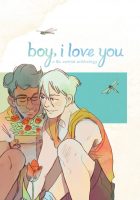
Boy, I Love YouBoy, I Love You edited by Kou Chen, Emily Forster, and Eric Alexander Arroyo. I had the delightful opportunity to meet the editors and a few of the other contributors of Boy, I Love You while at TCAF, but as one of the anthology’s Kickstarter backers I was well-aware of the anthology before that and was greatly looking forward to its release. The volume brings together six comics and one illustrated prose story by seven different creators, all of which take inspiration from the more wholesome aspects of the boys’ love genre. It’s a delightful collection with an appealing range of stories, everything from slice-of-life to mecha space battles. If I had to choose a favorite (which is difficult to do because all seven contributions are honestly great) it would probably be Forster’s “Mix Plate” which incorporates themes of family and food along with the comic’s central romance. The focus of the stories in Boy, I Love You is primarily on relationships and how the characters’ navigate them and their feelings. While as a whole the anthology is fairly chaste–the physical closeness that’s shown between the men is largely limited to a few kisses and embraces–the intimacy expressed in the stories is undeniable. Boy, I Love You is a highly enjoyable and heartfelt anthology of queer stories.

Dreamin' Sun, Volume 1Dreamin’ Sun, Volume 1 by Ichigo Takano. Orange, the first of Takano’s manga to be released in English translation, left a huge and personally significant impression on me. As a result, when Dreamin’ Sun was licensed for an English-language edition, too, it immediately caught my attention. Shimana Kameko is terribly unsatisfied with her life and so, without putting much thought into it, she decides to run away from home. While playing hooky from school she meets Fujiwara Taiga in a nearby park, a man who has left home for an entirely different reason–he’s been kicked and locked out of his house for being drunk. He offers to rent Kameko a room but among other things she will have help retrieve the keys first. I unquestionably love the quirky and increasingly large cast of Dreamin’ Sun, but the story itself is somewhat lackluster at this point. I’m also finding it a little difficult to believe that Kameko’s father would so readily let his high school daughter move out of their home. However, the narrative does hint at a familial backstory that hasn’t yet been fully revealed which may go far to help explain his decision. While Dreamin’ Sun isn’t nearly as compelling as Orange, I certainly wouldn’t mind reading more of the series. The first volume was goofy and a little ridiculous, but not at all in a bad way.

Erased, Omnibus 2Erased, Omnibus 2 (equivalent to Volumes 3-4) by Kei Sanbe. While the beginning of Erased took a little while to fully click with me, by the end of the first omnibus I was thoroughly hooked on the series. After inexplicably traveling back in time to his childhood, Satoru Fujinuma is doing all that he can to try to stop a series of kidnappings and murders he knows is about to happen. Thanks to a strange ability that he calls “Revival,” he has been able to change things in his past before, but saving the lives of his classmates and friends is proving to be an extraordinary challenge. Sanbe’s artwork in Erased can be a little inconsistent and unrefined at times, but the story has become truly gripping. Not only is Satoru faced with trying to solve the deadly mysteries from earlier in his life, in the present day he’s also being skillfully framed for the murder of his mother and he must find a way to prove his innocence. The two situations are closely linked together and Satoru is understandably desperate to find answers. There are also some really touching moments in Erased as Satoru grows as a person–although he’s worried for their safety and doesn’t want to endanger anyone, he’s finally able to start accepting help from and form meaningful relationships with other people.

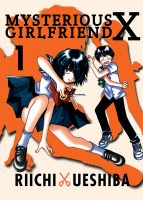
Mysterious Girlfriend X, Omnibus 1Mysterious Girlfriend X, Omnibus 1 (equivalent to Volumes 1-2) by Riichi Ueshiba. I had already heard a fair amount about Mysterious Girlfriend X before reading the first omnibus, but I wasn’t at all anticipating how surprisingly charming the series would be. Ueshiba’s illustrations can actually be pretty cute, too. That being said, Mysterious Girlfriend X is an incredibly weird manga and many people won’t be able to get past the drool and literal swapping of spit around which much of the story revolves. Akira Tsubaki is a fairly normal high school student but his first girlfriend, the newly transferred Mikoto Urabe, most definitely is not. If she is destined to have a close bond with someone, she is able to convey her feelings to them through her drool and she can likewise understand their feelings from their drool. She’s also phenomenally talented when it comes to using scissors, either artistically or in self-defense, and she always keeps a pair tucked away in her panties. Much about Urabe unknown, but after tasting her drool, Tsubaki can’t seem to help but fall in love with her. In general, Mysterious Girlfriend X tends to be somewhat episodic in nature although Tsubaki and Urabe’s strangely heartwarming relationship can be seen to very slowly progress over the course of the first omnibus.

Filed Under: FEATURES, My Week in Manga Tagged With: comics, Dreamin' Sun, Erased, Ichigo Takano, Kei Sanbe, manga, Mysterious Girlfriend X, Riichi Ueshiba

Bookshelf Briefs 7/10/17

July 10, 2017 by Michelle Smith and Sean Gaffney Leave a Comment

The Ancient Magus’ Bride, Vol. 7 | By Kore Yamazaki | Seven Seas – It is becoming increasingly apparent that, whatever his own emotional turmoil, Elias made the right decision in bringing Chise into his fold, as we keep hearing about her value as a specimen rather than a young girl. Actually, that line of thinking rolls through this entire volume, as a baby dragon is snatched to be used in experimentation and auctioned off to the highest bidder. Fortunately, an increasingly powerful Chise is there, and is working hard to retrieve it. Unfortunately, we keep getting more hints that she’s simply not going to live to be middle-aged, much less an old woman. As for Elias and Chise, she seems more like an older sister now than a bride. Still fantastic. – Sean Gaffney

Anonymous Noise, Vol. 3 | By Ryoko Fukuyama | VIZ Media – Huh. I didn’t think I’d ever grow to truly like Anonymous Noise, but I have to say that it’s beginning to grow on me. For the first time, when In No Hurry to Shout makes their TV debut and Nino scream-sings her feelings after an unpleasant encounter with Momo, I actually kind of bought into the idea of the manga being about a kickass band. Of course, the plot soon detours into love polygon angst, with Nino loving Momo, who’s a jerk to her for no apparent reason, and Yuzu loving Nino, and Miou loving Yuzu, and even a random angsty bit of foreshadowing from the drummer, who has barely registered as a character up to this point. I certainly don’t love this series, but I’m not ready to give up on it yet. – Michelle Smith

DAYS, Vol. 3 | By Tsuyoshi Yasuda | Kodansha Comics (digital only) – Seiseki High is progressing through the Interhigh Tokyo Preliminaries. Tsukamoto continues to be the weakest member of the team, but he’s still enjoying himself so much that he’s doing all that he can to hang on to his spot. His dedication inspires the much-more-talented Jin Kazama not to slack off, either. As before, we learn more about some of the other teammates and their personalities and strengths—this time it’s Kimishita, a second-year who stresses whenever Tsukamoto is on the field because he’s not a viable pass recipient. Yet, even he ends up impressed by Tsukamoto’s efforts to improve in this area, and it’s eventually revealed that the whole team has benefited from this energic newbie, as they increased their stamina while striving to avoid being shown up by the shrimp. Good stuff! – Michelle Smith

Flying Witch, Vol. 2 | By Chihiro Ishizuka | Vertical Comics – While Makoto continues to be the least-secret witch ever, she at least is impressing (somewhat) her cousin Chinatsu, who is now asking them to train her in being a witch. I suspect that this may end up being the main plot going forward, though that may be putting too much faith in Flying Witch to have a plot. Witches or no, it’s a slice-of-life series at heart, and so it’s content to meander along. We also meet Akane’s friend Inukai, who at first seems to be an example of Akane’s overly uncaring nature, but in reality turns out to be a lesson on the dangers of getting too drunk. It’s a cute and fun title, but don’t expect excitement—this is a series where weeding gets multiple chapters. – Sean Gaffney

Honey So Sweet, Vol. 7 | By Amu Meguro | VIZ Media –First-year Miyabi Nishigaki has a crush on Taiga. He remains oblivious throughout the majority of the volume, but it’s really bothering Nao. Of course, being Nao, she doesn’t want to be annoying or come across as unreasonable, so she only finally says something after Miyabi invites herself along with the gang to a festival and not only wears the exact yukata Nao is wearing, but even emulates her actions, including a creepy moment where she tries to spoonfeed Taiga some of her shaved ice. Because Nao and Taiga are incredibly nice, instead of wondering about Miyabi’s mental health, they feel bad for not considering her feelings. Eventually everyone reconciles. It’s a decent volume with plenty of cute moments for our leads, but I hope Meguro-sensei dispenses with love rivals for the next, and final, volume. – Michelle Smith

Kuma Miko: Girl Meets Bear, Vol. 5 | By Masume Yoshimoto | One Peace Books – Honestly, we’ve gotten to the point where I feel the series needs more of the bear. And, I mean, there’s already a fair amount of bear in here. The scenes where he has to pretend to be the village mascot in a highly realistic suit are cute, as is his stress about Twitter. The difficulty is that when the focus is not on him, it turns to Machi, whose total social ineptness really raises the bar for every other socially inept manga character. The scenes of her trying to use a computer are more painful than funny. She works better bouncing off of Hibiki, whose constant simmering anger is an oasis of calm compared to Machi’s stress. Mostly, though, this series continues to be highly variable. – Sean Gaffney

No Game No Life, Please!, Vol. 1 | By Kazuya Yuizaki and Yuu Kamiya | Yen Press – The actual No Game No Life main manga adaptation got one volume out and then seemed to fall into limbo, so to a certain extent this may be the closest we get to more of the manga. As you might guess by the title, the series focuses on Izuna, the Werebeast girl with a mind for games and a mouth for swearing. As you’d expect given this is No Game No Life, there’s a certain amount of perverse fanservice, but in fact it’s actually a lot less than I feared. Mostly this serves as a collection of short stories starring Izuna, as she grows and learns about games and actual life lessons. She even learns from Steph! Gasp! If you enjoy NGNL and wish the manga continued, this is worth picking up. – Sean Gaffney

RIN-NE, Vol. 24 | By Rumiko Takahashi | VIZ Media – RIN-NE continues with its episodic Shonen Sunday stylings. The first half is incredibly dull, relying largely on more gags involving Anematsuri-sensei’s crystal ball, but the second half is actually kind of neat. A large reward is offered to whomever defeats a black fox spirit. The best tool for the job is a specific scythe, which happens to pick Sakura as its owner. A smitten Rinne enjoys coaching her on how to use the thing, and even wonders if she has the aptitude to be a shinigami. Stupid me, I actually got my hopes up for a second that this would be some kind of turning point in the manga, but no. Although Sakura does gain a greater appreciation for the job Rinne performs, she’s content to move on once she fulfills her quota, leaving the scythe ready to choose someone else. It was reasonably entertaining while it lasted, though! – Michelle Smith

Filed Under: Bookshelf Briefs

Invaders of the Rokujouma!?, Vol. 4

July 10, 2017 by Sean Gaffney

By Takehaya and Poco. Released in Japan as “Rokujouma no Shinryakusha!?” by Hobby Japan. Released in North America digitally by J-Novel Club. Translated by Warnis.

I’m not certain if this is deliberate or accidental, but so far in Rokujouma each starring heroine has been the one featured on the PREVIOUS cover. Sanae features on the cover of Book 2, and gets most of her development in 3. Theia features on the cover of 3, and gains the most development (and a rival) in this book. And, judging by the cliffhanger ending, the next volume will focus primarily on Yurika, who’s on the cover of this volume. Of course, given this is a harem comedy with a large cast, everyone gets something or other to do in this book. But there’s no doubt the main thrust is the play that Theia writes using her own planet’s history, and how much it resonates with some of the cast. And, as I noted above, we get another candidate for the throne as well, who seems to be the mad scientist type, and is perfectly OK with killing others if she can get away with it. Fortunately, this is a comedy.

The other beneficiary of this school play is Harumi, who is a knitting club member rather than a drama club member, but everyone agrees that she has the look and feel of the princess that Theia has “creates”. The gag, of course, being that she only turns into a good actor – only identifies with how the princess is feeling about being separated from her knight – when it’s Koutarou who’s playing opposite her. In fact, it feels like a bit more than a gag, and there are hints that there may be some serious reincarnation or something similar going on here. Of course, this makes for a great excuse to have Koutarou, also not a Drama Club member, play the Blue Knight, which allows Theia to give him rigorous knightly training with a suit of armor that fits him abnormally well. I;ve often said that Vol. 4s tends to be the ones where the plot is greatly expanded as the publisher tells the author it won’t be cancelled immediately, and that seems to be the case here.

The others don’t get as much to do – though I noted that Yurika saved the day without anyone realizing it again, a running gag that suits her misfortune. We do see that after the events of the previous volume, everyone is getting along much better – aside from the occasional abuse of Yurika because, well, that’s what happens to her – there’s little jealousy or typical harem antics going on here. I suspect the ship here may end up being a poly one (in fact, many of J-Novel’s current licenses have legal or implied polygamy – coincidence?), but it’s handled well enough, and poly ships also help to avoid all that “who is best girl?” nonsense. Rokujouma is never going to win any awards for originality or good writing, but it’s like a good beef stew, a meat and potatoes sort of book you can read anytime. Recommended to fans of the genre.

Filed Under: invaders of the rokujouma!?, REVIEWS

  • « Go to Previous Page
  • Page 1
  • Interim pages omitted …
  • Page 420
  • Page 421
  • Page 422
  • Page 423
  • Page 424
  • Interim pages omitted …
  • Page 1048
  • Go to Next Page »
 | Log in
Copyright © 2010 Manga Bookshelf | Powered by WordPress & the Genesis Framework