• Skip to primary navigation
  • Skip to main content
  • Skip to primary sidebar
  • Home
  • About Us
    • Privacy Policy
    • Comment Policy
    • Disclosures & Disclaimers
  • Resources
    • Links, Essays & Articles
    • Fandomology!
    • CLAMP Directory
    • BlogRoll
  • Features & Columns
    • 3 Things Thursday
    • Adventures in the Key of Shoujo
    • Bit & Blips (game reviews)
    • BL BOOKRACK
    • Bookshelf Briefs
    • Bringing the Drama
    • Comic Conversion
    • Fanservice Friday
    • Going Digital
    • It Came From the Sinosphere
    • License This!
    • Magazine no Mori
    • My Week in Manga
    • OFF THE SHELF
    • Not By Manga Alone
    • PICK OF THE WEEK
    • Subtitles & Sensibility
    • Weekly Shonen Jump Recaps
  • Manga Moveable Feast
    • MMF Full Archive
    • Yun Kouga
    • CLAMP
    • Shojo Beat
    • Osamu Tezuka
    • Sailor Moon
    • Fruits Basket
    • Takehiko Inoue
    • Wild Adapter
    • One Piece
    • After School Nightmare
    • Karakuri Odette
    • Paradise Kiss
    • The Color Trilogy
    • To Terra…
    • Sexy Voice & Robo
  • Browse by Author
    • Sean Gaffney
    • Anna Neatrour
    • Michelle Smith
    • Katherine Dacey
    • MJ
    • Brigid Alverson
    • Travis Anderson
    • Phillip Anthony
    • Derek Bown
    • Jaci Dahlvang
    • Angela Eastman
    • Erica Friedman
    • Sara K.
    • Megan Purdy
    • Emily Snodgrass
    • Nancy Thistlethwaite
    • Eva Volin
    • David Welsh
  • MB Blogs
    • A Case Suitable For Treatment
    • Experiments in Manga
    • MangaBlog
    • The Manga Critic
    • Manga Report
    • Soliloquy in Blue
    • Manga Curmudgeon (archive)

Manga Bookshelf

Discussion, Resources, Roundtables, & Reviews

Blog

Clockwork Planet, Vol. 2

November 16, 2017 by Sean Gaffney

By Yuu Kamiya, Tsubaki Himana, and Sino. Released in Japan by Kodansha. Released in North America by J-Novel Club. Translated by fofi.

The first volume of Clockwork Planet felt very faithful to its genre. We’re introduced to the weirdo hero, identifiable to the core readers mostly due to his robot fetish, and much of the book is through his eyes. As such, Marie seemed to be the typical shonen heroine – romance aside, she was constantly yelling and hitting the hero while also secretly being impressed by him, which is the standard operating procedure for this type of heroine. So I was rather surprised in this second volume to see Marie get the bulk of the audience sympathy and POV. It doesn’t exactly shift to her – she did get a lot of attention in the first book as well. It’s just Naoto seems to be moving further away from us as the series goes on. This is lampshaded towards the end of the book, when it’s hinted he’s actually a reincarnation of something much bigger. Even his perversion seems more… messianic.

The plot of Book 2 is pretty much ‘deal with the fallout from Book 1’, as our heroes travel to the next clockwork town over only to find it disturbingly empty save for a horrible monster death machine deep in the basement. They also see AnchoR, who is the younger sister robot girl to our vicious robot heroine RyuZU, and is unfortunately being brainwashed at the moment, so that will have to be dealt with. (Actually, it’s dealt with pretty quickly and easily – for once, this sort of light novel sequence does buildup better than fight scenes.) Along the way we see how much of this is just the government trying to keep itself in power (a lot). I actually like how this is handled, with Marie being the one unable to immediately figure out everything right away. This is not because she’s stupid (as RyuZU implies) or oblivious to anything but robots (as Naoto is), it’s because she is a big shining ball of idealism who tries to pass herself off as a complete cynic, and has trouble imagining people being truly evil.

This is still written by Yuu Kamiya, author of No Game No Life, and as such you’re going to get a lot of tasteless service here as well. Mostly this is pointless or annoying (AnchoR seems to be a “little sister lolicon” robot purely for those reasons), but occasionally he hits a home run, such as the content of the secret “coded” message for Marie, which was so appallingly explicit I laughed out loud. I’m not certain what the original Japanese was, but you won’t see language like that in Sword Art Online, even if you did paste Chapter 16.5 into your book. And aside from Naoto, who remains mostly static because he’s becoming messianic, there was good character development here. It’s also impressive that I like Marie so much given how much of the book shows her yelling, screaming, or kicking people in the head. There are many times I wanted to do the same thing to everyone she was dealing with.

Clockwork Planet is not terrific, but I do have a lot of fun reading it, particularly Marie. It will be interesting to see if the series, like Marie, can keep going without looking the idealism that it seems to have. Honestly, judging from the cliffhanger, things aren’t looking good.

Filed Under: clockwork planet, REVIEWS

SP Baby, Vol. 1

November 15, 2017 by Anna N

SP Baby Volume 1 by Maki Enjoji

I’m a pretty big fan of Enjoji’s series Happy Marriage so I was excited when it was announced that Shojo Beat would be bringing out another series of hers. While Happy Marriage has an undercurrent of tension (spoiler alert! no one is getting married yet), the first volume of SP Baby is more of a comedic workplace romance.

Tamaki Hasegawa is struggling to find a full-time job. She needs to better support both herself and her little brother who is about to enter college. She has an ordinary life where one of the highlights is her helpless pining for her long-time friend Natsu who works in a flower shop. One day she sees one man chasing another on the street and jumps in to help by attempting a kick to the head of the threatening man. He promptly catches her ankle, leaving her at a loss on what to do next. After it becomes clear that the two men in question know each other, Tamaki apologizes for interrupting a lover’s quarrel and runs away. Her adventures are not over because the next day she’s shoved into a car carrying Kagetora Sugou, the man who she attempted to defend. He gives her a suit with a short skirt and announces that he’s going to interview her for the full-time job of being his bodyguard.

Kagetora is a nice contrast from Ryu in Everyone’s Getting Married. Kagetora is of course rich, but there’s an odd open-hearted innocence in his mannerisms and actions, like when he gives the people he works with nicknames that are usually reserved for cats. He alludes to having met Tamaki in the past, which is something that she has no memory of. Tamaki embarks on her new job, which necessitates dealing with some intense training in martial arts as well as finally getting her driver’s license. While it is obvious that her new boss is romantically interested in her, Tamaki keeps reminding herself of her so far one-sided affection for Natsu.

Enjoji’s art is always solid, and she easily captures the extreme emotions that Tamaki deals with as she ends up on an impromptu date with Kagetora or gives in to her lighting-fast violent reflexes. By the end of SP Baby, I was rooting for this very odd couple and wanting to see more of this story unfold. February is a long time to wait for the next volume! I recommend this title if you enjoy josei comedies with heroines who have a tendency to kick people in the head.

Filed Under: Manga News, REVIEWS Tagged With: Josei, shojo beat, sp baby, viz media

Manga the Week of 11/22/17

November 15, 2017 by Sean Gaffney, Michelle Smith, MJ, Ash Brown and Anna N 1 Comment

SEAN: The November Crush continues, and there’s no respite. Let’s dive right in.

We start with novels, as Haikasoru has the 5th volume of Legend of the Galactic Heroes.

MICHELLE: Every time I say I really will read this series and every time I mean it, but every time I fail to accomplish it.

ASH: I’m a little behind myself, but I am enjoying the series.

ANNA: I have the first book but I haven’t read it yet.

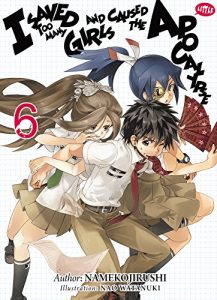
SEAN: J-Novel Club has the slightly less dignified 6th volume of I Saved Too Many Girls And Caused the Apocalypse.

Kodansha is digitally still giving us Del Rey rescues – here’s Princess Resurrection 20.

There’s also a new pile of their current digital-only series. We have Elegant Yokai Apartment Life 3, I’m in Love and It’s the End of the World 2, Kasane 7, Real Girl 7, Space Brothers 30, and Until Your Bones Rot 2.

Print has some heavy hitters as well, starting with the Deluxe Edition of Battle Angel Alita. This is the first series, which old-timers will recall came out from Viz back in the pamphlet comic days, though I believe this is a new translation/orientation. This is also a hardcover omnibus.

Cells at Work! has a 5th volume out next week.

MICHELLE: I have missed learning about neutrophils and the like.

ASH: I get such a huge kick out of this series.

ANNA: We have a couple volumes at my library!

SEAN: And we get a 2nd Kiss Me at the Stroke of Midnight, whose first volume I found… needed to be more quirky.

MICHELLE: Heh. I will at least be checking this out.

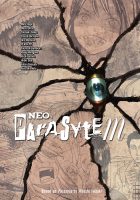
SEAN: And if you enjoyed the anthology Neo Parasyte f, you’ll love the 2nd volume, Neo Parasyte m.

ASH: I’m looking forward to this! Moto Hagio is one of the contributors, among other things.

SEAN: One Peace has a 12th volume of Maria Holic, which somehow remains popular, I suppose.

Speaking of series I can’t kill with fire from my mind, Seven Seas has a 3rd How to Build a Dungeon.

And also a 2nd Red Riding Hood and the Big Sad Wolf.

Their debut is Slumbering Beauty, which comes from Yumi Unita, the creator of Bunny Drop. It runs in Rakuen Le Paradis, which will always get my attention, and is apparently a “modern day fairy tale”. (No wife husbandry this time around, please.)

MICHELLE: I’m very interested in this one!

ASH: As am I! (Also, I didn’t realize it was a series until just now.)

ANNA: Huh, I liked Bunny Drop until I know how the story was going to end, so I’m curious about this.

SEAN: Vertical also has a big debut. We can’t get Saint Young Men just yet, but we can get the author’s other hit, Arakawa Under the Bridge. It’s very strange, and ran in Square Enix’s Young Gangan. I believe Crunchyroll also has it digitally.

MJ: I’m so on board for this.

ASH: I greatly enjoyed the anime adaptation, so I’m very excited to read the original manga. Hopefully this may help pave the way for more of Nakamura’s work in translation.

ANNA: Strange manga from Vertical is my (occasional) jam!

SEAN: And not to be outdone, Viz gives us the debut of Children of the Whales (Kujira no Kora wa Sajou ni Utau). a dark mystery that appropriately runs in Akita Shoten’s Mystery Bonita. It looks very swank.

MICHELLE: “Dark mystery” is right up my alley.

ASH: If nothing else, the first volume’s cover art is gorgeous, but the story sounds intriguing as well.

ANNA: Will be checking this out for sure.

SEAN: Viz also has a 5th Mobile Suit Gundam Thunderbolt (Gundam manga two weeks in a row? Go back in time and tell the fans in 1999 that this is a thing.)

And rejoice, there is a 13th volume of Ooku! It’s down to once a year, but the anticipation makes it better.

MICHELLE: Verily, I rejoice.

MJ: As doth I!

ASH: Forsooth!

ANNA: Indeed.

SEAN: Lastly (for Viz), if you like Tokyo Ghoul, there’s an artbook out called Illustrations: zakki.

And now for Yen, starting with the light novels. If you like Re: Zero but hate Subaru, you’ll love this spinoff series, Re: Zero EX. This first volume focuses on the past of Crusch and Felis.

We are getting many light novels in the coming months with very, very silly premises, and this may be one of the most interesting. So I’m a Spider, So What? is a standard “class of students are transported to fantasy world and given cool powers” work. However, our heroine is a spider. Which is considered a monster, so she has to fear for her life. Just the word ‘heroine’ makes me happy here.

MJ: I feel like if there’s a chance for me to get into light novels, this would be it. Can it do the job?

ASH: It is nice to have a heroine for a change of pace!

SEAN: And if you wanted to see more of the cast of your name, there’s a book of stories out next week called Another Side: Earthbound.

Yen Press has the complete in one omnibus Corpse Party: Book of Shadows, a sequel to the kill em off mystery series.

Forbidden Scrollery debuts. Technically a fantasy with lots of yokai and pretty art, it’s also a spinoff of the popular bullet hell game Touhou. I am hoping you don’t need any backstory to enjoy it.

ASH: I didn’t realize it was a spinoff, but the yokai definitely have my attention. Also, the book-related magic.

MJ: I like yokai and pretty art.

SEAN: Kakegurui: Compulsive Gambler has a 3rd print edition.

Log Horizon: The West Wind Brigade has been losing my attention lately, so I hope its 7th volume steps up its game.

If you want to read all of Pandora Hearts, and you love packaging, get the PandoraBox, which features all the volumes enclosed in a gorgeous trunk.

MJ: I can’t possibly justify this purchase, but I can recommend!

SEAN: Comic Gene is known for weird series, and the last debut next week certainly falls in that category. A Polar Bear in Love is the adorable tale of the titular polar bear and his love for a seal. Fun ensues.

Lastly, we get the 2nd your name manga.

Think we’re done? We’re not remotely done! Tune in the week after next for even worse November madness!

Filed Under: FEATURES, manga the week of

Sword Art Online Alternative: Gun Gale Online, Vol. 1

November 15, 2017 by Sean Gaffney

By Keiichi Sigsawa, Kouhaku Kuroboshi, and Tadadi Tamori, based on the series created by Reki Kawahara. Released in Japan by ASCII Mediaworks, serialized in the magazine Dengeki Maoh. Released in North America by Yen Press. Translated by Stephen Paul.

The Sword Art Onlione franchise has done a lot of worldbuilding over the course of the series, detailing no less than four different games/VR environments. Some are more popular than others, but I think Gun Gale Online struck a cord with a lot of gamers, as usually these sorts of novels concentrate on sword-based fantasy RPGs – as indeed Sword Art Online did for its first four volumes. So the idea of combining that sort of immersion with a game filled with all sorts of guns, rifles, and lightsaber–sorry, beam swords was incredibly appealing. As for the publisher, I imagine having a spinoff series that did not have to be overseen by Kawahara as much as the others was a plus – the number of regular SAO cast in this first volume is zero. So if you want to read about Gun Gale Online but hate Kirito, have I got a series for you.

This manga is, like a lot of Sword Art Online, based off of a novel. Unfortunately, the novel has not been licensed here as of yet. It’s by Keiichi Sigsawa, who some may know as the creator of Kino’s Journey. Our heroine is Karen, an incredibly tall girl who went to a women’s college to try to change her self-conscious self, but found when she got there that most of the other students already knew each other, and she’s still huge, so she’s mostly a social outcast again. She decides to try to forget about it by playing a VRMMO… but every one she tries gives her another tall avatar. As a last resort, she tries Gun Gale Online, and finds that – finally – she’s short and cute. Now she and her pink gun (OK, Bambi) can have as much tiny fun as they want! (I am reminded of Log Horizon, where Akatsuki originally played as a huge male assassin because “games allow you to be something you’re not”.

We see Llenn (her screen name) gradually getting used to the game with the help of another player, Pitohui, who is the very definition of “obviously evil”, not that this seems to register with Llenn. As she gets a gun and starts to go after other players, she begins to have a lot of fun – botjh because her small form is very good at this sort of thing and also because, well, it’s a game, and in a game, killing others can be fun. That said, this is SAO, so we know those sorts of feelings are always dangerous, especially when helped along by Pitohui, who seems to be trying to make Llenn into a tiny little killing machine. (There is a very disturbing scene in reality midway through the book, showing a young woman (I really hope it’s a young woman, she looks far too young) on top of a guy, sexing him up while also threatening him regarding the upcoming GGO match. It’s heavily suggested this is Pitohui in real life, and does not bode well for our heroine. It also feels oddly out of place.)

The rest of the book is gun battle fun, as Llenn gets a partner who seems taciturn and scary at first but eventually shows he’s a nice enough guy. Are they good enough to win a tournament even though there’s only two of them? Even if their opponents look to literally be JSDF? What is Pitohui scheming? And can we really get through an SAO spinoff without Kirito showing up at all? Find out in the next thrilling volume!

Filed Under: REVIEWS, sword art online

Astra Lost in Space, Vol. 1

November 14, 2017 by Katherine Dacey

While the US manga market has plenty to offer teen readers, there’s a dearth of titles for kids who have aged out of Yokai Watch but aren’t quite ready for Bleach or Soul Eater. Astra Lost in Space, a new addition to the VIZ catalog, is a perfect transitional title for ten, eleven, and twelve-year-olds who want to read “real” manga: its slick illustrations and adventure-driven plot feel just edgy enough for this group, while the content falls safely within the boundaries of what’s appropriate for the middle school crowd.

The plot of Astra Lost in Space may remind older fans of Moto Hagio’s sci-fi classic “They Were Eleven”: nine high school students find themselves stranded aboard a spaceship whose communication system has been disabled. With only a few days’ supply of water and food on board, the group is forced to improvise a plan for making the five-month journey home. Their solution: hopscotching between planets — let’s call them “Class M” for the sake of convenience — where an abundant supply of water, plants, and animals await harvesting.

As you might guess, the planet-of-the-week formula provides artist Kenta Shinohara (Sket Dance) ample opportunity to draw menacing fauna and flora, and stage imaginative action sequences. In the volume’s best scene, for example, team captain Kanata Hoshijima leap-frogs across a field of sky-high lily pads to rescue the group’s youngest member from a flying, six-legged monster. Shinohara lavishes more attention to detail on Kanata’s long jump technique than on the turgon itself, breaking down each of Kanata’s jumps into discrete steps recognizable to any track-and-field fan: the approach, the takeoff, the hang, and the landing. In a further nod to realism, Shinohara shows us the physical toll that each jump exacts from Kanata; we can practically hear Kanata’s heaving breaths as he readies himself for the next one, an effective gambit for casting doubt on Kanata’s ability to reach Funicia.

For all the skill with which this rescue is staged, Shinohara can’t disguise the fact his characters feel like they’re the products of a Shonen Jump reader’s poll, rather than original creations. Kanata, for example, is a walking, talking checklist of shonen hero traits: he’s strong, friendly, over-confident, and burdened with a tragic backstory that gives him the will to persevere in any situation, no matter how dire. He also happens to be a decathlete, a fact that’s revealed as he rescues Funicia from the turgon’s grip. (At least that explains his javelin-throwing skills.) The other characters are less developed than Kanata, but will seem familiar to anyone who’s read three or four Shonen Jump titles: there’s Quittierre, a pretty rich girl whose tantrums conceal a good heart; Aries, a cute spaz who makes Edith Bunker look like a genius; Zack, a calm, smart boy who speaks in complete paragraphs; Charce, a boy who’s so handsome he sparkles; and a handful of less-defined characters who — according to the Third Law of Manga Plot Dynamics — will either be monster fodder or directly responsible for their classmates’ terrible predicament.

Manga novitiates, however, will be less troubled by these nods to convention, thanks to the story’s brisk pacing, smart-looking layouts, and game attempts at humor. Though there’s a mild bit of fanservice and “fantasy violence” (VIZ’s term, not mine), parents, teachers, and librarians should feel comfortable allowing middle school students to read Astra.

N.B. The first 45 chapters are currently available through the VIZ website for anyone wishing to screen the story for younger readers. Volume one of Astra is also available in a Kindle edition, and will be available in a print edition that’s slated for a December 5th release.

ASTRA LOST IN SPACE, VOL. 1 • STORY AND ART BY KENTO SHINOHARA • TRANSLATED BY ADRIENNE BECK • VIZ • 204 pp. • RATED T for TEEN

Filed Under: Manga, Manga Critic, REVIEWS Tagged With: Kenta Shinohara, Sci-Fi, Shonen, Shonen Jump, VIZ

Paying to Win in a VRMMO, Vol. 5

November 14, 2017 by Sean Gaffney

By Blitz Kiva and Kuwashima Rein. Released in Japan as “VRMMO wo Kane no Chikara de Musou suru” by Hobby Japan. Released in North America digitally by J-Novel Club. Translated by Elizabeth Ellis.

This is more of an ensemble effort than any of the previous books. Pay2Win has added quite the large cast over the course of the series, and most of them are present and correct trying to take down whoever has stolen Ichiro’s account. (The mystery as to who has done this, by the way, is almost nil – it’s very obvious. That said, the mystery isn’t the point.) Everyone does what they do best – The Kirihitters try to look cool and fail miserably, Amesho gets her fanboys to valiantly sacrifice themselves hoping she’ll look their way, and Iris’ sharp tongue ends up being weaponized, as (to her chagrin) it’s generally agreed that her spiteful words are her defining trait. That said, the bulk of the characterization here goes to Sakurako/Kirschwasser, who is allowed to use “any means necessary” to defeat the fake, and Sera, who’s gender is finally made clear and who shows they are probably the savviest character in the series.

For all that the last Afterword mentioned that the publishers were uncomfortable with giving too much attention to Sakurako (she being explicitly over 25 and therefore “not a heroine”), but she does get quite a bit to do here. That said, most of it is comic relief. I’ve said before how I think Pay2Win works best when it’s funny, and that still applies, as Sakurako’s sudden access to unlimited amounts of money (and approval to use it from her boss) sets her on a slippery slope that ends up almost being a metaphor for addiction. It’s something that’s understandable for almost anyone who’s played a game – even I, casual that I am, know the terror of “just buy 3 hammers for $1.99 to get past that stupid Candy Crush level”. Here, of course, it’s taken up to 11, as you’d expect, and the fallout is hilarious and also painful – you feel sort of bad for her.

Then there’s Sera/King Kirihito, explicitly said to be female here. The afterword has a very interesting reveal, which is that in the webnovel version of VRMMO, Sera was male. I wonder if this too was changed at editorial request, though the author also says an audience vote was part of it. That said, there are a few lines in this book which suggest Sera sees themself as non-binary, and that suits me fine, so let’s go with that. Sera’s brilliancy at games extends to other arenas here, and I raised an eyebrow seeing them keep up with the American technobabble going on despite the fact that Sera speaks Japanese. Sera also understand the ways of the heart a bit better than Asuha does.

There’s only one volume of this series left, and it seems about the right place to end it. We need to see what’s going to happen with the suddenly doomed little startup that NaroFan is part of, and also hopefully resolve Iris’ design issues a bit, though the answer to that may be “sometimes things just don’t work out”. In any case, this continues to be a series that won’t wow anyone, but should make them smile. Also, Ichiro is perhaps at his least irritating in this book!

Filed Under: paying to win in a vrmmo, REVIEWS

Bookshelf Briefs 11/13/17

November 13, 2017 by Michelle Smith and Sean Gaffney Leave a Comment

Anne Happy, Vol. 7 | By Cotoji | Yen Press – It’s sports festival time, and out heroines are doing their best to at least survive the events, though in Botan’s case that may be difficult. The volume consists of what you’d expect—everyone’s quirk is in full force, the Unlucky Class ends up very very far behind in the rankings, mostly as they’re up against a sports class that compete in national events. Sayama continues to attempt to get over her terminal shyness, and makes small strides. Small strides is in fact the point of this series, as the class in general is doing OK but not well enough to make it in the world. This may become more important later on. In the meantime, Anne Happy is unassuming and cute, with minimal ambition. If you enjoy cute girls falling over, you’ll like it. – Sean Gaffney

Black Clover, Vol. 9 | By Yuki Tabata | Viz Media – We wrap up the Battle with the Midnight Sun here, and our heroes spend some significant time recovering—though for Asta, that time may end up being far longer than he’d really like. We also end up seeing Yuno again. Remember Yuno? Asta’s rival who we saw at the very start of the series? He’s back, and of course is ridiculously strong. The rivalry between him and Asta has ridiculous amounts of BL tease, because this is a Jump manga, but I’m fine with that. There was also a nice non-reveal with a masked captain of Yuno’s unit, who turned out to be masked for different reasons than we’d thought. In any case, new arc should start soon, as we try to figure out how to heal permanent damage. – Sean Gaffney

Demon King Daimaou, Vol. 3 | By Shoutaro Mizuki and Souichi Itou | J-Novel Club – There is one reason that the jaded light-novel fan should give this book a try, and that’s the appearance of the villain, Mister X, who is over the top crazy and in his desire for villainy and despair that is “Art!” reminds me of nothing less than an evil Great Gonzo. Other than that, it’s situations normal at Daimaou, Inc. We get a bit more depth for Hiroshi, Akuto’s fanboy, but it doesn’t really work nearly as well for me, as the characterization feels off from the prior two books. And there are the heroines, with Korone getting a nice fakeout “I am going back to be executed” moment, Keena being Akuto’s conscience, and Junko being, well, Junko. Daimaou is a perfect buy for those who have to buy everything. – Sean Gaffney

Dreamin’ Sun, Vol. 4 | By Ichigo Takano | Seven Seas – This was a super shoujo-riffic volume of manga, even though there are some funny bits too (particularly the bonus comic). Shimana encourages Zen’s brother, Ken, not to give up on his boxing ambitions, and in gratitude he shows her Fujiwara’s high school yearbook, which only brings up more questions. In between, there are Christmas presents and bittersweet longing and earnest conversations about dreams. Also, there are at least three and probably more scenes that involve Shimana tearfully running away from a conversation and slamming a door. It’s repetitive, yes, but at least she doesn’t ever spend very long in a sulk. I enjoy Asahi stirring the pot and Zen being a good, sweet friend, but I’m not sure I want Shimana and Fujiwara to get together. He’s right—she is still a kid. Maybe Zen will win her over in the end with his panda wiles. – Michelle Smith

The Girl from the Other Side: Siúil, a Rún, Vol. 3 | By Nagabe | Seven Seas – The beginning of this volume is super tense! Shiva’s aunt has come for her, accompanied by several of the soldiers that only recently were trying to kill her, and Teacher does his best to rescue her, to no avail. One particularly impactful page-turn, revealing Teacher struck by many arrows, made me realize that because this series is so unique, there’s no variations-on-a-theme template to rely upon and, as a result, I really believed Teacher could actually die. He doesn’t, but what happens when Shiva gets back to the village is dramatic enough, along with a cliffhanger about her real origins. The art continues to be a delight, as well—I particularly love the panels that emphasize Shiva’s smallness and the nonverbal depiction of Teacher’s devastation after she’s gone. Now to manage the four-month wait for volume four! – Michelle Smith

Girls’ Last Tour, Vol. 3 | By Tsukumizu| Yen Press – The odd finally manages to win out over the cute for this volume of Girls’ Last Tour, though that’s not necessarily a bad thing. We see again and again how depressingly apocalyptic this world the girls are traveling through is, and on more than one occasional it almost leads to their horrible deaths. They also meet someone in the final section, though this is a robot rather than a human—but the essential story beats remain the same. And there’s even some fanservice for anyone interested. I’ve said before that this reminds me of Strawberry Marshmallow, and I wouldn’t be surprised if this was Miu’s bizarre self-insert fic with her and Chika—though I suspect it’d earn her a smack or two. Oddly compelling. – Sean Gaffney

Kuma Miko: Girl Meets Bear, Vol. 6 | By Masume Yoshimoto | One Peace Books – Well, I did ask for more of the bear, and I certainly get that here. Unfortunately, I also get another bear, who’s painted as the obsessed female stalker of our main bear. The humor that follows, showing a tsundere bear trying to be seductive (and failing), only works about one third of the time. It doesn’t help that the series already has a tsundere, Hibiki, and we get an amusing chapter devoted to imagining what might make her actually confess. Honestly, though, the highlight was the final chapter, where the bear tries to get Machi to take a train as part of his “make her a functioning adult” plan. It doesn’t work—she gets on the wrong train, and is now at the ocean. Will she die? Probably not. – Sean Gaffney

Murcielago, Vol. 4 | By Yoshimurakana | Yen Press – This series continues to play to a very limited audience, the sort who likes lesbians and likes sociopaths, and REALLY likes the combination of the two. If that pleases you, this volume will too, though be warned another sympathetic cutie is butchered horribly. As for Kuroko, she’s actually out of commission for part of this, having been brainwashed by the head villainess of the book. Fortunately, we needed some more characterization for Chiyo, Kuroko’s yakuza girlfriend who’s in a state of constant rage from, well, dealing with Kuroko’s tendency to bed anyone female. Spoiler: she’s badass. As for Rinko, the child killer from last time… well, I don’t want to spoil it. Suffice to say I laughed, but it was rueful. Murcielago is hilarious and you will feel bad. – Sean Gaffney

My Monster Secret, Vol. 8 | By Eiji Masuda | Seven Seas – I suspect it’s going to be harder and harder to drag out the “we’re not really dating” card after the ending of this volume. Which is fine, as I will freely admit that the relationship between Asahi and Youko is one of the two best reasons to read this book. The other is the humor, and there’s plenty of that on display as well, as we see angel feathers that make people act out the Seven Sins; Koumoto-sensei celebrating another birthday of being a single woman, as no one will let her forget; and Nagisa getting turned big (as opposed to being in her alien suit) in order to once again fire up the love triangle. There’s stuff that doesn’t work (anything with Shimada), but this series still has more hits than misses. – Sean Gaffney

Requiem of the Rose King, Vol. 7 | By Aya Kanno | VIZ Media – Wow. And also “holy crap.” I’m going to completely forego any spoilers this time, because the surprises in this volume need to be experienced as they come. Suffice it to say that Richard does not handle the revelation about Henry’s true identity well, and Henry doesn’t handle captivity and his lusty feelings for Richard well, either. All of these sad, broken people being crushed by… well… the game of thrones. Although a smidge of me still dares to hope Richard will find happiness by the end of the series, the ending of this volume suggests otherwise. I actually had to look up whether the series was concluding in the next volume, though that doesn’t appear to be the case. I should have known better than to choose something else for pick of the week, even if it was my beloved Chihayafuru! – Michelle Smith

Toriko, Vol. 40 | By Mitsutoshi Shimabukuro | Viz Media – Still counting down towards the end of this series. At least Toriko gets to add another item to his menu, meaning he only has two to go. But unfortunately, this one is more about the ridiculous fights than the ridiculous food, and whenever that happens it’s never good news. The author is better at food porn. He’s also better at ho yay, as the reunion of Toriko and Komatsu is loaded with an absolute ridiculous amount of subtext—I would not blame readers for forgetting Rin exists. As for the evil plot, it creeps incrementally forward, leading to a cliffhanger as Toriko and company finally challenge God. I’m finishing the series as I’ve already read 40 volumes, but it’s only for the hardcore now. – Sean Gaffney

Filed Under: Bookshelf Briefs

I Hear the Sunspot

November 13, 2017 by Anna N

I Hear the Sunspot by Yuki Fumino

I Hear the Sunspot was a delightful surprise, and not a title that I expected to see One Peace Books license. For those of you who have been wishing for some slice of life character-driven shounen-ai manga, this title will easily fulfill your manga cravings.

I Hear the Sunspot traces the developing friendship between a couple of college students. Kohei, a student with hearing difficulties who keeps himself isolated from his classmates. Taichi is an outspoken semi-slacker who finds it difficult to keep a full-time job. Taichi is also perpetually hungry. After accidentally stumbling on one of Kohei’s hiding spots, Taichi finds himself gifted with Kohei’s lunch after staring at it with hungry eyes. The entire exchange is wordless on Kohei’s part and Taichi checks up on him with other students afterwards, finding out that Kohei needs volunteer note takers in order to support his studies.

One of the things I liked so much about this series was Fumino’s art. She has a great facility with facial expressions, where Taichi’s open, smiling mannerisms contrast with Kohei’s carefully cultivated almost expressionless looks as he is repeatedly confronted by someone who isn’t going to take “No” for an answer in his attempts at friendship. Taichi turns out to be a less than stellar note taker due to his habits of falling asleep or zoning out in class, but Kohei pays him for his efforts by bringing him extraordinarily delicious lunches. Kohei gradually begins to open up more thanks to Taichi’s efforts to include him in regular school activities, and the slice of life school stories mixed with small scenes showing the depth of this new friendship made I Hear the Sunspot a pleasure to read.

One of my favorite moments in the book was when Taichi finds himself in conversation with a girl who asks about Kohei in a really intrusive way, clearly indicating that she is invested in the idea of herself acting benevolent to a person with a disability. Taichi gets angry, and his reaction is just on the edge of being a little too upset, to the point where I started to wonder if he was romantically jealous in addition to wanting to protect his new friend. Character driven moments like this are why I Hear the Sunspot is now one of my favorite manga of the past year. I’m happy to hear that One Peace Books is also picking up at least one of the sequel volumes, and I’m so curious to find out what happens next in this slowly developing romance.

Filed Under: Manga Reviews, REVIEWS Tagged With: I Hear the Sunspot, One Peace Books

My Week in Manga: November 6-November 12, 2017

November 13, 2017 by Ash Brown

My News and Reviews

The Bookshelf Overload for October was posted at Experiments in Manga last week, giving a quick summary of some of the interesting manga, anime, and other media that made their way into my home last month. Otherwise, it was a fairly quiet week at the blog, and it’s going to be even quieter this week. I’m currently work on my next in-depth review, but I suspect that it won’t be ready to reveal to the world until sometime next week. (Hopefully it will be worth the wait.) As for other interesting things recently found online: Brigid Alverson wrote up a recap of an interview with Fairy Tail creator Hiro Mashima from this year’s New York Comic Con for Barnes & Noble and over at Crunchyroll Evan Minto interviewed Frederik L. Schodt, a manga translator, scholar, and personal friend of Osamu Tezuka.

Quick Takes

Shirley, Volume 1Shirley, Volume 1 by Kaoru Mori. Only the first volume of Shirley was ever released in English. It’s now well out-of-print, but it’s also well-worth picking up. I would love to see Yen Press release the entire series in a handsome omnibus that would be at home next to the new edition of Mori’s Emma. I believe that most if not all of the short manga in the first volume of Shirley precede Emma, but the collection was only published after the first volume of Emma was released. The artwork is simpler than that found in Mori’s most recent series in translation, A Bride’s Story, but it is still quite lovely and evocative. As a whole, Shirley is a charming work. Mori’s love of maids is quite evident. The first volume collects five episodic chapters which follow Bennett Cranley and the titular Shirley Madison, a young maid that Bennett hires, in addition to two other stories unrelated by plot although they both also feature Edwardian-era maids. Shirley is only thirteen when she starts working for Bennett and they develop a close, if somewhat unusual, relationship as a result. While Shirley is a very capable maid she is still young–at times its as though she’s more like Bennett’s ward rather than her employee. She’s a sweet, likeable girl, so it’s easy to see why Bennett would be so taken with her.

The Witch BoyThe Witch Boy by Molly Knox Ostertag. I first learned about The Witch Boy while at the Toronto Comic Arts Festival earlier this year. Ostertag was on the panel “LGBTQ Comics Abroad” along with several other creators when she mentioned the upcoming publication of the graphic novel; I immediately added it to my list of comics to pick up when it was released. Ostertag is probably best known as the artist of the ongoing webcomic Strong Female Protagonist and has collaborated as an illustrator on several other comics projects as well. However, The Witch Boy is her debut work as both author and artist. The graphic novel is aimed at middle grade readers, but the comic will be able to be appreciated by adult audiences as well. Aster comes from a family of magic users–the women are taught the secrets of witchery while the men are expected to learn how to shapeshift, a tradition which is strictly adhered to. Much to his family’s dismay, Aster would much rather study with the girls than roughhouse with the boys. Forbidden from learning the women’s magic despite his talent for it, Aster longs for his family to accept his true self. The Witch Boy is a beautiful story with a wonderful message; I hope to read more of Ostertag’s writing in the future.

Attack on Titan: The Anime GuideAttack on Titan: The Anime Guide by Ryosuke Sakuma and Munehiko Inagaki. Kodansha Comics almost exclusively publishes manga, although over time a few other things have been released as well, most of which are in some way a part of the massively successful Attack on Titan franchise. One of the more recent non-manga offerings is Attack on Titan: The Anime Guide, a full-color volume consisting of artwork, character designs, process overviews, and other background information relating to the first season of the Attack on Titan anime. The Anime Guide will mostly appeal to readers who are already devoted fans of Attack on Titan. What interested me most were the numerous interviews included in the book. The most notable is the lengthy interview with and conversation between Hajime Isayama and Tetsuro Araki, the original creator of Attack on Titan and the series director of the anime respectively. (Isayama saw the anime as an opportunity to improve upon or even correct aspects of the manga with which he wasn’t completely satisfied.) The interviews with the anime’s chief animation directors, Titan designer, action animation directors, scriptwriter, voice actors, and theme song musicians were also interesting to read.

Filed Under: FEATURES, My Week in Manga Tagged With: anime, attack on titan, comics, Kaoru Mori, manga, Molly Knox Ostertag, Munehiko Inagaki, Nonfiction, Ryosuke Sakuma, Shirley

Pick of the Week: King Me

November 13, 2017 by Sean Gaffney, Michelle Smith, MJ, Ash Brown, Anna N and Katherine Dacey Leave a Comment

MICHELLE: I would pretend to moan and groan here about having to decide between Requiem of the Rose King and Chihayafuru, but although I really and sincerely do love Requiem of the Rose King, for me and my sports manga fixation, there’s really no contest. Chihayafuru forever!!!

SEAN: I like Chihayafuru as well, though I’m falling behind. My pick is Requiem of the Rose King, though, as it remains one of the most compulsively readable shoujo out there, even if Shakespeare might be spinning in his grave a bit.

KATE: This week, I only have eyes for one title: volume three of Delicious in Dungeon, one of 2017’s best new manga. It’s funny, breezy, and surprisingly well plotted, despite its monster-of-the-week formula. As I noted in my review of volume one, Dungeon reads like a mash-up of a workplace sitcom and a cooking show (albeit one with seriously unappetizing recipes).

ASH: There are so many things that I’m interested in this week, it’s difficult for me to choose just one! There’s Frau Faust and Requiem of the Rose King for classically-inspired tales with interesting twists and Delicious in Dungeon with its brilliant mix of food and fantasy. For official picks I often lean towards debuts, though, and I’m very glad that A Strange and Mystifying Story was rescued–I’m curious to see if I like the series as well as I did the first time it was translated.

ANNA: There’s so much great manga coming out this week! For me though, any time Requiem of the Rose King comes out, that’s an automatic pick for me. This unique adaptation of Richard the III is always mesmerizing.

MJ: I’ve been pretty swamped this week, and haven’t had a chance to really look things over, but did somebody say Requiem of the Rose King? You can always count me in for that.

Filed Under: PICK OF THE WEEK

  • « Go to Previous Page
  • Page 1
  • Interim pages omitted …
  • Page 398
  • Page 399
  • Page 400
  • Page 401
  • Page 402
  • Interim pages omitted …
  • Page 1048
  • Go to Next Page »
 | Log in
Copyright © 2010 Manga Bookshelf | Powered by WordPress & the Genesis Framework