• Skip to primary navigation
  • Skip to main content
  • Skip to primary sidebar
  • Home
  • About Us
    • Privacy Policy
    • Comment Policy
    • Disclosures & Disclaimers
  • Resources
    • Links, Essays & Articles
    • Fandomology!
    • CLAMP Directory
    • BlogRoll
  • Features & Columns
    • 3 Things Thursday
    • Adventures in the Key of Shoujo
    • Bit & Blips (game reviews)
    • BL BOOKRACK
    • Bookshelf Briefs
    • Bringing the Drama
    • Comic Conversion
    • Fanservice Friday
    • Going Digital
    • It Came From the Sinosphere
    • License This!
    • Magazine no Mori
    • My Week in Manga
    • OFF THE SHELF
    • Not By Manga Alone
    • PICK OF THE WEEK
    • Subtitles & Sensibility
    • Weekly Shonen Jump Recaps
  • Manga Moveable Feast
    • MMF Full Archive
    • Yun Kouga
    • CLAMP
    • Shojo Beat
    • Osamu Tezuka
    • Sailor Moon
    • Fruits Basket
    • Takehiko Inoue
    • Wild Adapter
    • One Piece
    • After School Nightmare
    • Karakuri Odette
    • Paradise Kiss
    • The Color Trilogy
    • To Terra…
    • Sexy Voice & Robo
  • Browse by Author
    • Sean Gaffney
    • Anna Neatrour
    • Michelle Smith
    • Katherine Dacey
    • MJ
    • Brigid Alverson
    • Travis Anderson
    • Phillip Anthony
    • Derek Bown
    • Jaci Dahlvang
    • Angela Eastman
    • Erica Friedman
    • Sara K.
    • Megan Purdy
    • Emily Snodgrass
    • Nancy Thistlethwaite
    • Eva Volin
    • David Welsh
  • MB Blogs
    • A Case Suitable For Treatment
    • Experiments in Manga
    • MangaBlog
    • The Manga Critic
    • Manga Report
    • Soliloquy in Blue
    • Manga Curmudgeon (archive)

Manga Bookshelf

Discussion, Resources, Roundtables, & Reviews

Blog

Kokoro Connect: Asu Random, Part 2

October 1, 2020 by Sean Gaffney

By Sadanatsu Anda and Shiromizakana. Released in Japan by Famitsu Bunko. Released in North America by J-Novel Club. Translated by Molly Lee.

This is, as the author notes, the longest book in the series. It’s not as long as some other light novels in my collection, but in terms of Kokoro Connect it’s pretty chunky. And it does what we’ve always known the series does well and want it to continue doing: traumatize our protagonists as much as possible. They’ve gotten their wish to be put in the place where the other students are trapped, but I’m not sure they were prepared for everyone to think of them as the villains who won’t tell the truth about why they’re really trying to do this. (Because if they tell the truth, they lose.) Even worse, the student council seems to be their adversaries, friends they’ve known their whole high school life are breaking apart, relationships are fracturing, and, yes, people are STILL losing their memories. Kokoro Connect is VERY good at making everything seem completely hopeless about the halfway point of each book, and that’s what we get here. That said, the real hopelessness comes with the special bonus round.

Given the series is essentially a metaphor for teenage hormones and growing up, it’s less of a surprise than expected that the conflict in the first three-quarters of this book is “should we punch each other till we forget everything and disappear?”. Needless to say, the CRC are not in favor of punching. Unfortunately, it turns out “guys, we just have to stand together and unite!” doesn’t actually achieve concrete things, while the punching, while no one knows if the things it causes are good or bad, is at least something to do. What’s more, of course, the CRC are being painted as the suspicious, untrustworthy kids, which, well, is not 100% wrong? Through no fault of their own, they can’t open up about this. That said, the solution they do come up with (start small with their closest friends, then work outward) ends up being fine. Well, almost fine.

Whoops! The last quarter of the book is the seeming worst case scenario – Heartseed does a takeback and everyone really does lose their memories. This is not as emotionally volatile as the first section of the book, but hurts more, because seeing the club interacting with each other like they’re casual acquaintances is just too depressing. Fortunately, all the things they did in Book 9, while mostly erased by Heartseed and company, do manage to clue them in that something is wrong (kudos to the first years) and they end up retracing the steps of the moments in the series where they became the closest of friends… and, for two couples, where they confessed. Kokoro Connect always reads like a roller coaster where it’s just one big down and one big up, and this is the same. It’s a feel good ending.

That said, there is one more book of short stories still to go. But man, this was one of the most emotionally draining light novels I’ve read, managing a lot of supernatural content while ALSO being a slice-of-life high school romance series. Highly recommended, especially to anime fans who want to see what happens next.

Filed Under: kokoro connect, REVIEWS

Bookshelf Briefs 9/30/20

September 30, 2020 by Ash Brown, Sean Gaffney and Michelle Smith Leave a Comment

Accomplishments of the Duke’s Daughter, Vol. 6 | By Reai and Suki Umemiya | Seven Seas – Another series down to “once a year” release—I had to jog my memory at the start to recall what had been happening. Many things are going wrong for our heroine, who is trying to be strong and tough but is also starting to break down, and I felt that the scenes with her and Dean struck just the right balance of comforting and letting the heroine cry without making her seem weaker. This sets the stage for her comeback, which is extraordinary. (And also has a corrupt Church, a constant in Japanese light novels, though at least here there are also honest and good religious people in it.) That said, eventually Dean’s identity will come out, and I do wonder how this very good “villainess” isekai will handle it. – Sean Gaffney

The Ancient Magus’ Bride: Jack Flash and the Faerie Case Files, Vol. 1 | By Yu Godai, Mako Oikawa, and Kore Yamazaki | Seven Seas – A faerie switched at birth for a human child, Jack never fit in in either world. Only in the mortal realm could she earn money for anime collectibles, however, so she decided to make herself into a tough, capable woman like her literary heroes and set up shop as a detective. Together with her fellow changeling, Larry the werewolf, Jack takes on supernatural cases in New York City. In this volume, Lindel tasks them with tracking down a missing dragon egg. I liked the resources Jack uses to obtain information, which include a dapper theatre ghost and a spell with components of rat whiskers and taxi tires because “Nobody out there knows this city better than them.” I still found this a bit hard to get into, though, especially the parts involving a perpetually tearful off-off-off-off-Broadway actress and her pickpocket boyfriend. Still, I will check out volume two! – Michelle Smith

Black Clover, Vol. 22 | By Yuki Tabata | Viz Media – At long last, this interminable arc comes to an end. I enjoyed a lot of it, but I cannot deny it should have been about two volumes shorter. Most of the book is taken up by shonen battles, with the villain being nigh unkillable, the heroes almost breaking themselves to stop him, etc. Fortunately, the day is saved, and even the Wizard King turns out to be… sort of alive again? Shota fans should be happy. Asta fans perhaps less so—the sheer amount of damage done to the kingdom in this arc means someone has to be blamed, and give Asta has the “dark evil magic” it’s gonna be him, especially when he takes the incredibly obvious bait they use to get him to fight. Oh well, if Asta were smart, this wouldn’t be Black Clover. – Sean Gaffney

Don’t Toy with Me, Miss Nagatoro, Vol. 3 | By Nanashi | Vertical Comics – Part of the problem with titles like this and the other teasing works (Takagi-san less so as Nishikata doesn’t fall into the category) is that they are, at heart, the classic “extroverted girl acts overtly extroverted to bring introverted guy out of their shell,” and that’s not really a plot that feels comfortable in the Gen Z days, where you’re more likely to say “why doesn’t she just let him be in his quiet, safe space?” And by she I mean they, as Nagatoro’s two friends appear far more often here, which offers some good two-way teasing action, as they clearly see her crush on him, if not why. It’s still sort of hard to read, but if you pretend he’s more OK with it than he actually is, this is cute. – Sean Gaffney

Failed Princesses, Vol. 1 | By Ajiichi | Seven Seas – The concept of “popular girl meets unpopular girl” is a common one in yuri manga, and we do indeed hit several of its tropes in this first volume. The amusing thing is that Kanade, the shy outcast girl, is perfectly aware of how things are supposed to go, and keeps pulling back a bit to try to save Nanaki from, well, making herself an outcast by associating with the wrong people. The best part of the volume is that Nanaki really doesn’t give two shits about any of that, and seems set on making Kanade her best friend… and also making her over, which backfires a bit as Kanade cleans up nicely. I hear this gets a bit dramatic later, but for the moment it’s a cute and fluffy proto-yuri story. – Sean Gaffney

In/Spectre, Vol. 12 | By Kyo Shirodaira and Chashiba Katase | Kodansha Comics – The first story in this volume is another “Rikka tries to make people understand Kotoko is an evil Machiavellian schemer,” this time with one of her ex-classmates, but again the response seems to be “we know she’s a manipulative bitch, but she’s a good person anyway.” The larger story, which will continue into the next book, seems to be a chance to write Kuro and Kotoko as an actual romance, as the man we meet here and his relationship with a yuki-onna… as well as his penchant for attracting misfortune… very much parallel them. That said, they’re very cute together, which is why I hope he avoids the murder charge he’s now being investigated for. Still a favorite. – Sean Gaffney

Interviews with Monster Girls, Vol. 8 | By Petos | Kodansha Comics – The author knows what people want to see, but also knows that the best way to get readers is to drive them crazy by not showing it. We finally get what we’ve been begging for here, as Tetsuo asks Sakie out on a date. (This is after rejecting Kyouko’s love confession, both because she’s his student and also, as he is forced to admit, as he likes Sakie.) The stage is set for the date… and the rest of the book is thus spent with the three main student girls going to Kyouko’s for a fireworks viewing and meeting her family. They’re good chapters, and I really liked showing how difficult Kyouko has it as a dullahan in terms of everyday life, but GOD, please get back to the teachers, I beg you! – Sean Gaffney

Kaguya-sama: Love Is War, Vol. 16 | By Aka Akasaka | Viz Media – The series has gotten to the point where the more rewarding chapters are the ones as part of a larger arc. Not that the one-shot chapters are bad—though Maki’s journey to India may be the most pointless thing in this entire series to date, we do get Chika’s iconic “shut up or I’ll kill you” here. But the larger arcs, featuring Miyuki and Kaguya attempting to date without interruptions, and setting up Ishigami and Iino for a romance—though given the number of limbs broken in this book, and Iino’s own horrible lack of self-awareness, it may be a ways out—are better. This series is still hilarious, but we’ve come to read it more for the heartwarming moments. Heck, there’s even some serious drama here. Very good. – Sean Gaffney

Nineteen | By Ancco | Drawn & Quarterly – Although it was translated and released second in English, Nineteen is a precursor to Ancco’s internationally award-winning manhwa Bad Friends. The volume collects thirteen short comics originally published in Korea over a decade ago which absolutely remain relevant to today’s world. While understandably not as polished as some of Ancco’s later work—one can observe her style evolving and growing over the course of the collection (which is fascinating)—the comics still carry significant emotional weight and impact. Nineteen includes diary comics, which tend to be more lighthearted, as well as harder-hitting fictional stories, many of which also have autobiographical inspiration. As a whole, the collection explores themes of young adulthood, growing up, and complicated family relationships. In particular, there is a compelling focus on the relationships among daughters, mothers, and grandmothers. Some of the narratives can be rather bleak, but a resigned sense of humor threads through Nineteen, too. – Ash Brown

Ran the Peerless Beauty, Vol. 8 | By Ammitsu | Kodansha Comics (digital only) – Shoujo manga that has couples getting together BEFORE the end of the series is inevitably going to have an arc dealing with how far the lead couple should go now that they’re dating, and this is Ran’s turn, as she and Akira and their friends go to a beach house Ran’s family owns and have some beach fun. Unfortunately, the cast gets winnowed down one by one until it’s just the two of them… and her overprotective father, who arrives in time to provide the cliffhanger and no doubt ensure that nookie does not ensue. Not that I think it should—these two kids are even purer than the couple from Kimi ni Todoke, and I think they should mature a bit more before going further. Plus, watching them blush and kiss is wonderful. – Sean Gaffney

Spy x Family, Vol. 2 | By Tatsuya Endo | Viz Media – Having spent our first volume establishing that our found family can really come to love each other deep down, this volume shows off how they are also, at heart, fundamentally awkward and unable to socialize normally. This is unsurprising—hints of Loid’s life we’ve seen show him as a war orphan, Yor is a contract killer, and Anya basically grew up being experimented on by bad guys. As the school soon finds, this leads to issues. The second half of the book introduces Yor’s sister-obsessed little brother Yuri, who turns out to be a torture expert for Loid’s enemies. As always, half the fun is that everyone except Anya has no idea who their real selves are, and the cliffhanger tells us we’re in for some hilarious family fun. I love this. – Sean Gaffney

Spy x Family, Vol. 2 | By Tatsuya Endo | VIZ Media – After a brief spell atop the waiting list, Anya officially makes it into Eden Academy. Loid is anxious to progress to the next stage of his mission and, believing there’s not much chance of turning Anya into an elite scholar like his agency wants, focuses instead on having her befriend the younger son of his target. It does not go to plan, of course. Anya is very cute in this volume, and I also really appreciated how Loid genuinely listens to Yor and values her input. The arrival of Yor’s brother, a member of the secret police, is going to be a fun complication, and another cast member with a secret, but my favorite part of this series is probably always going to be how much love these three are already feeling for each other. So unique and good! – Michelle Smith

Sword Art Online: Hollow Realization, Vol. 6 | By Tomo Hirokawa, based on the story by Reki Kawahara | Yen Press – The weakness of this manga is the same as always—it’s written to tie into the games, and features several characters I just don’t recognize, which can be a problem given this is the big final let’s-save-the-world ending. That said, this is still a decent SAO title. Kirito gets to be cool and badass, but because this isn’t written just by Kawahara others do as well, and it’s a nice balanced effort that focuses on heroine Premiere. I also really liked the point where all the NPCs are worried when everyone has to log out for several days for maintenance. While I’ll still remember this as the “SAO only everyone is alive” manga, I enjoyed reading it, when I wasn’t confused. – Sean Gaffney

Filed Under: Bookshelf Briefs

Past Life Countess, Present Life Otome Game NPC?!

September 29, 2020 by Sean Gaffney

By Sorahoshi and Yuki Kinami. Released in Japan as “Moto Hakushaku Reijou wa Otome Game ni Sansen Shimashita” on the Shōsetsuka ni Narō website. Released in North America by Cross Infinite World. Translated by Amber Tamosaitis.

First off, this book comes out of the gate with a killer premise. We’ve talked before about the idea of a “reverse isekai”, where a fantasy denizen dies and is reincarnated in modern Japan, but this is, I believe, the first time we’ve seen it in English. And Urara (formerly Annerosa Ortegamo) is not just in modern-day Japan… she’s in a Japan based on an otome game! She only hears about this when she meets Shizuku, a girl who, as it turns out, is the ‘poor girl reincarnated as the heroine of the otome game she loves’ that we HAVE seen before. Only Urara ends up charming the pants off of everyone, while Shizuku ends up being subjected to horrible comedy violence much of the time. What I just described is about the first fifteen pages of a 320-page book. The good thing about this book is it takes a multi-layered ‘reincarnation’ premise and makes us enjoy slowly meandering towards the ending.

The book is based straight off of a webnovel, rather than a webnovel that’s been picked up and edited by a publisher. This is the modus operandi for Cross Infinite World, and it tends to lead to books that are pleasantly long and stuffed with content, including things that would probably get cut down for length elsewhere. The benefit of this is that the character development feels less rushed and more natural, particularly with Shizuku, who starts the book as unlikeaqble as she possibly can be and slowly, over the course of the next two hundred or so pages, becomes Urara’s best friend. She doesn’t particularly change per se, but we get to know her past and her (somewhat warped) reasoning, and more to the point, she likes Urara, once she’s determined that Urara does not, in fact, have her eyes on one of the many male targets in this “otome game”, but is instead falling for… a woman?

Well, OK, no. The book gets this out of the way a fifth of the way through it, which probably was a wise move, as leaving the revelation that Chouko is a guy who dresses as a girl for family reasons for the ending would likely have angered yuri romance fans. Because wow, this reads like a yuri romance otherwise. The school they attend feels very Maria-sama Ga Miteru, though it’s co-ed, and if you can imagine a romance between Sachiko and Shimako you come closest to seeing how Chouko and Urara interact. The guys, unfortunately, do not come across as well, and I do admit that throughout most of the book I kept having to remind myself who was who, though eventually you learn to separate out Shinmyou (the jerk) and Shimozuru (the one who falls for Shizuku). There is also an epilogue set in Urara’s past life that left a very bad taste in my mouth, and I did not really like the implication at all. It added murder and mental torment to what was otherwise a nice, sweet romance novel.

But you can just stop before reading that. Most of this is the equivalent of a long, leisurely boat ride down the river that takes up the entire afternoon. It’s not all that concerned with anything but its heroine and her “perfect princess” manners causing everyone to turn her way. It’s a good read.

Filed Under: past life countess present life otome game npc?!, REVIEWS

Pick of the Week: Who’s a Pretty Boy, Then?

September 28, 2020 by Sean Gaffney, Michelle Smith, MJ, Anna N and Ash Brown Leave a Comment

SEAN: There are a few other titles I’m interested in this week, including the new one by the Barakamon author, but there’s no doubt about it: Pretty Boy Detective Club is absolutely the one I want to read most.

MICHELLE: I really must agree. There are definitely other things I am happy about too, but this is really the standout. I’ve never read anything by NISIOISIN before, but cannot resist pretty boy detectives!

MJ: There’s not a lot that interests me this week, but the one thing that does catch my eye puts me on the same wavelength with my colleagues so far. It’s Pretty Boy Detective Club for me!

ANNA: Who would I be to stop this wave of enthusiasm for Pretty Boy Detective Club? I’ll just go with the flow this week.

ASH: As curious as I am about Pretty Boy Detective Club, I think I may actually be even more curious about Yoshi no Zuikara: The Frog in the Well Does Not Know the Ocean. I enjoyed Barakamon a great deal, but somehow missed that another manga by the creator was going to be released in English!

Filed Under: PICK OF THE WEEK

So I’m a Spider, So What?, Vol. 9

September 28, 2020 by Sean Gaffney

By Okina Baba and Tsukasa Kiryu. Released in Japan as “Kumo Desu ga, Nani ka?” by Kadokawa Books. Released in North America by Yen On. Translated by Jenny McKeon.

This is definitely a book that has most of its important content at the back, saving its biggest scene for the final chapter and epilogue. That’s not to say there isn’t a lot of other things going on here. White is learning good ways to regain more of her powers (get drunk); our ogre/oni is finally taken down and made somewhat sane again, and decides to just GO by Wrath now; our vampire has decided that she’s tired of being weaker than the rest of the group and decides to essentially bathe herself in evil to catch up, which works quite well – at least for this book; and probably most importantly, the demon lord arrives back in her domain and orders the war to recommence, despite the fact that the demons simply don’t have the manpower to win. She is not winning friends, though her extreme power means she’s certainly influencing people. Oh yes, and White goes to Japan. Of all the series to have a ‘return to Japan’ arc, this was not one I was expecting.

The entire series has sort of hammered this home, but this volume in particular wants you to realize how horrible most of the demon lord’s group is at communicating. Ariel is best of the lot, mostly as she has the Chatty Cathy part of Kumoko’s brain. The dissonance between White’s narrative voice and her actual outward expressions is well known to us, but here we see how it’s really causing problems, mostly as Sophia thinks that White is a lot more pissed off and angry than she actually is. Not that Sophia is any better, given her default mode seems to be ‘tantrum’. Really, this motley crew would get along with the cast of Overlord; they’re all basically broken evil people, and adding Wrath to the mix is unlikely to change any of that.

But yeah, the big part of the book is when White, who has realized how easy it is for her to teleport now, ends up going back to Japan. Fortunately, she arrives at the school in the middle of the night, and going home quickly finds D, who explains herself to White, who had figured out a lot of this already. I’m not sure the reader had; some of this was foreshadowed, but a lot of it was deliberately hidden from us, possibly to make the reveal that much bigger. The interesting thing here is White’s reaction to the fact that D not only manipulated her entire life, but did it for such a petty, vapid reason. White is justifiably furious… but also reacts the way a child would to their parent, feeling intense love just for the fact that D throws her a bone and says White can have “freedom”. It feels a lot like an abusive relationship, and I don’t think we’re supposed to love it, and it’s not helped by White’s hyperactive narration.

So I don’t know if this is a game changer (I doubt White will be acting any differently), but it’s certainly a startling revelation. In the meantime, we edge closer to war, meet some characters who I seem to recall getting killed off earlier in the series/later in the timeline, and are reminded once more that Potimas is the absolute worst. I’m still enjoying this, despite everyone being pretty terrible.

Filed Under: REVIEWS, so i'm a spider so what?

Adachi and Shimamura, Vol. 3

September 27, 2020 by Sean Gaffney

By Hitoma Iruma and Non. Released in Japan by Dengeki Bunko. Released in North America by Seven Seas. Translated by Molly Lee.

There was a wondrous moment about two-thirds of the way through this book which really made me sit up and take notice. No, Adachi did not actually work up the nerve to confess – heck, even Valentine’s chocolate proves to be almost too much for her to handle. No, Yashiro did not wave goodbye and go back to her own planet, though the author remains very good about keeping it up in the air as to whether she’s an alien of a chuuni. But for one, brief, shining moment, Shimamura was interesting. She met up with a friend from her old school, who seemed to want very much to rekindle their friendship, and Shimamura being who she is, “sure, OK, I guess” was the response. We see the two of them travel on the train together, go to the mall together… and it is the most painful, awkward thing you will ever see. It’s unclear what Shimamura actually gets from this consciously, but unconsciously I think the answer is clear: Adachi is not like other friends.

As noted above, we are right around Valentine’s Day. Adachi wants to exchange chocolates, which she communicates to Shimamura in the most awkward panicky way possible. Shimamura, who has come to the conclusion that Adachi is simply desperate for basic human contact due to her family situation, agrees with this. The two then have what amounts to normal pre-Valentine’s adventures, mostly separate, though they do meet up for video games at Hino’s place. Adachi thinks far too much about astrology, tries to make homemade chocolate and then backs off completely, and is essentially a complete mess. Shimamura runs into not one but TWO old friends from school, and realizes that she barely even remembers anything they did anymore. That said, she also gets the bulk of dealing with Yashiro. When the 14th finally comes, we get a clear winner, and it’s Shimamura.

It was suggested to me on Twitter that Shimamura might be suffering from depression. Certainly I’d argue she’s suffering from malaise, which influences most of her actions and makes her the passive narrator that drives me crazy. It’s a funny running gag that Adachi imagines Shimamura’s response to doing anything and it’s always the equivalent of “meh”. This pays off here in two ways. First, the scenes with Tarumi help to show off that Shimamura struggles as much as Adachi with basic human responses, in particular the idea of “what friendship is”. Tarumi wants to rekindle their relationship (and, the reader suspects, perhaps wants a bit more than that), but Shimamura just is not able to respond to that at all, and finds the whole thing uncomfortable. This is contrasted with the final scene, where Adachi coincidentally retraces the same route Shimamura took with her old friend… only now with Adachi, and she’s laughing and having a ball. She GETS the difference. It pays off with the message Shimamura paid for, which is, for her, a grand gesture. And Adachi… well, she gets a hug? Which she will remember for a long time to come.

This series, if I’m being honest, still tries my patience most of the time. But there were moments in this book when I could actually feel Shimamura attempting to make an effort, and that almost made it worth it. I suspect we won’t get Vol. 4 till the anime finishes, so enjoy this now, right before it starts.

Filed Under: adachi and shimamura, REVIEWS

I’m in Love with the Villainess, Vol. 1

September 26, 2020 by Sean Gaffney

By Inori and Hanagata. Released in Japan as “Watashi no Oshi wa Akuyaku Reijou” by GL Bunko. Released in North America by Seven Sas. Translated by Jenn Yamazaki. Adapted by Nibedita Sen.

I will admit, I knew very little about this series and was not really expecting much. It’s publisher, GL Bunko, seems to specialize in yuri light novels. This was a webnovel first, like so many others before it, and is another take on the popular “trapped in an otome game” genre, only this time instead of being cast as the villainess our protagonist gets to be the heroine. It does not really seem to concerned at first with setting up how she ends up in this world – she simply finds herself there in class, in front of her favorite character. It does not really bode well. And yet, she’s a very likeable character who’s fun to read. Then, as you go on, you realize that there really is a lot of thought being put into this, that a lot of the subtle (and not so subtle) hints pay off down the line, and by the last quarter of the book it’s become absolutely terrific.

Our heroine is Rae, who is the Maria Campbell of this series, a commoner who attends a school that, until recently, was reserved exclusively for nobles. However, now that magic has been discovered, commoners with abilities are being admitted. Rae is ALSO a former OL from Japan, overworked and unhappy, whose sole joy was playing the otome game Revolution… and analyzing it… and writing fanfiction about it. Particularly about the “villainess”, Claire. So when she finds herself now in the game’s world, as Rae, with the ability to interact with Claire every day… well, she could not be happier. She proceeds to insert herself into Claire’s life, first at school and then, as if that weren’t enough, as one of her maids. That said, the book is not simply happy go lucky shenanigans… remember the name of the otome game.

As I said, this book starts off pretty “same old, same old” to soften you up, though Rae’s general joie de vivre makes the narration run at a higher level. Claire is seemingly the standard “cartoon bully” you see in games like these, but we get to know more about her and see her more nuanced sides and grow to like her just as much (unlike Katarina Claes, Claire also has some depth in the game as well, it seems). There is also an honest discussion of sexuality, which uses the word lesbian, and also talks about the things that people tend to believe about them, which you almost never see in books like these. And then there’s the last quarter, where Rae declares that she’s not a political person and that her sole goal is to be with Claire, but politics is not something she can escape, and she does not hesitate to abuse her knowledge of the game to help save the girl she loves.

That love is still one-sided, at least by the end of this book, though Claire’s “I hate you” statements are getting weaker and weaker. More to the point, the book makes me absolutely ravenous to read the next two, despite the fact that the covers for the Japanese books are HUGE spoilers. I absolutely recommend it, even to those sick of otome game villainess stories.

Filed Under: i'm in love with the vilainess, REVIEWS

Manga the Week of 9/30/20

September 24, 2020 by Sean Gaffney, Michelle Smith, MJ and Ash Brown 1 Comment

SEAN: Try to remember the kind of September when manga was slow and discussion was mellow. Ready? Then follow.

MJ: (Follow, follow, follow, follow, follow, follow, follow, follow…)

SEAN: Going by their website, Denpa Books finally has the 2nd omnibus of Gambling Apocalypse Kaiji.

ASH: Happy to see this series get back on track!

SEAN: Seven Seas’ ero label Ghost Ship has FOUR titles out, including a debut. Welcome to Succubus High! (Succubus Gakuen No Inu!!) is a Takeshobo title from Web Comic Gamma Plus. An average boy is transferred to an all-girls school full of succubuses to teach them about men. Naturally, he does NOT want to have sex with any of them, because this is a Ghost Ship title and not a Fakku title. The line may be far away, but it’s there.

Other Ghost Ship titles out are Creature Girls 4, Yokai Girls 11, and Yuuna and the Haunted Hot Springs 10.

J-Novel Club has a trio of titles. The Combat Baker and Automaton Waitress 8, Cooking with Wild Game 9, and A Wild Last Boss Appeared! 2.

Kodansha, again, has no print titles. Digitally, we have a debut: My Best (♀) Butler (Ore no Shitsuji (♀) ga Iketeiru), a Dessert title that I could describe the plot of but instead I’ll just note it’s another “poor girl is toyed with by rich boys” series and go with that.

MICHELLE: Pretty much.

MJ: Ugh.

SEAN: I’ve made a decision to stop reporting Kodansha’s “early digital” series as they simply change the date at the very last minute too often. So, in digital-only land, we have Heaven’s Design Team 5, Lovesick Ellie 11, the 16th and final volume of My Boy in Blue, Princess Resurrection Nightmare 6, and Seven Shakespeares 13. As you can see, this week is devoted to “new volumes of titles we’ve caught up to Japan on”.

MICHELLE: I’m glad for more Lovesick Ellie!

SEAN: One Peace Books has The Reprise of the Spear Hero 2.

Seven Seas has three debuts. The Ancient Magus’ Bride: Wizard’s Blue (Mahou Tsukai no Yome Shihen.108 – Majutsushi no Ao) is another spinoff of the popular fantasy manga, it runs in Mag Garden’s Manga Door, and has been described as a genderswapped version of the parent series.

We Swore to Meet in the Next Life and That’s When Things Got Weird! (Raise o Chikatte Tensei Shitara Taihen na Koto ni natta) is from ichijinsha’s Zero-Sum Online. Two lovers vow to meet again in their next life. They do! Except she’s a 39-year-old OL, and he’s still in high school! This sounds… uncomfortable but cute if you ignore the premise.

MICHELLE: I will probably check out both of these, albeit with a certain degree of trepidation.

MJ: I. Hm.

ASH: Things did indeed get weird there.

SEAN: The digital-first light novel is Muscles Are Better Than Magic! (Mahou? Sonna Koto yori Kinniku da!), a fantasy comedy about a guy who’s trained forever and the elf girl who needs his help.

Also out next week: Didn’t I Say to Make My Abilities Average?! 10 (print), How to Build a Dungeon 6, The Invincible Shovel 2 (print), Mushoku Tensei light novel 8 (digital first), and Servamp 14.

Vertical has two titles. On the manga end, we get the 2nd Blood on the Tracks.

Pretty Boy Detective Club (Bishounen Tanteidan) is a novel written by NISIOISIN, but it’s a far cry from the Monogatari or Zaregoto series – it’s a reverse harem! A young woman trying to find a star that appears only once every ten years ends up being helped by, well, the title club.

MICHELLE: I cannot resist this.

MJ: Okay, maybe need this.

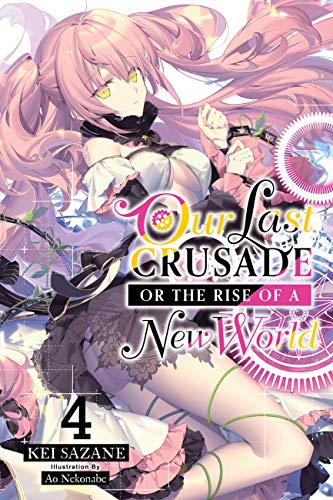
SEAN: Yen also has some runoff from last week. Yen On gives us a 4th Our Last Crusade or the Rise of a New World.

Yen Press debuts Yoshi no Zuikara: The Frog in the Well Does Not Know the Ocean, a Gangan title from the creator of Barakamon, about a fantasy manga artist trying desperately to draw realistic manga.

MICHELLE: Huh. The Yoshino series was not on my radar.

ASH: Oooh, I am intrigued!

SEAN: Lastly, we get Éclair Rouge, the latest in this yuri anthology series.

More to discuss than I thought. Fantastick. What are you getting?

Filed Under: FEATURES, manga the week of

Banished from the Hero’s Party, I Decided to Live a Quiet Life in the Countryside, Vol. 1

September 24, 2020 by Sean Gaffney

By Zappon and Yasumo. Released in Japan as “Shin no Nakama ja Nai to Yuusha no Party wo Oidasaretanode, Henkyou de Slow Life Surukoto ni Shimashita” by Kadokawa Sneaker Bunko. Released in North America by Yen On. Translated by Dale DeLucia.

I probably should not have read this only a few weeks after Roll Over and Die, as the first thought that came to mind is that when the woman is leaving the party she’s branded, sold into slavery, and left for dead, but when it’s the guy he just moves to the country, opens a shop, and gets a girlfriend almost instantaneously. That said, the whole “you are a disgrace to the party, go!” plot is apparently also a big thing in Japanese webnovels now, though so far it’s been less “the party” and more “that one asshole guy in the party”. In any case, our hero starting up his apothecary and hooking up with his former ally is only part of the story here, as we also flash back to the party in action, get a few glimpses of life as the hero, and, perhaps most importantly, talk endlessly about the magical systems in place in this world.

This is not a “game world” per se, but the plot hinges on a common game element: Gideon, the banished guy, was born at Level 30, and is the very definition of “the strong guy who joins your party early in the game to help you level up”. Unfortunately, when the party grows strong enough, this type of character usually leaves, and Gideon doesn’t do that – mostly as the Hero is his little sister. So when one of the party with a hate on for Gideon and a crush on the hero tells him he’s useless now, Gideon quietly accepts it, leaves the party, changes his name to Red, moves to a backwater sleepy town, and opens an apothecary. Luckily he’s helped in this by Rit, an adventurer and princess whose kingdom the hero’s party saved earlier. Rit has had a not-so-secret crush on Red since that time, and essentially invites herself into his shop, his home, and his bedroom. Together the two grow closer and have a nice quiet life. But what of the hero?

I’ll start off with the negatives: Red/Gideon is not the most magnetic hero. He fits the stock “boring adventurer guy” a little too well, and it feels ridiculous that he’s just quietly listen and leave the party without, y’know, asking anyone else in the party about it. There’s also a heaping helping of explanations about “blessings”, which are essentially the powers that people have, as well as the weak points that come with them. (Gideon, for example, cannot go past the Level 30 he was born with.) It’s interesting in regards to the ongoing story, but also tends to go on a bit too much. On the bright side, Rit is genuinely likeable. We get a large number of flashbacks showing her being a giant tsundere towards Gideon and everyone else, but now that she’s grown up and accepted her feelings, she’s quite fun and cheerful, and their romance is very sweet. Most importantly, though, are the last few pages. We learned very little about the little sister hero throughout the book except that she had something of a brother complex and was relatively emotionless. Towards the end we see the emotionlessness is a result of the many, many blessings she has, and that it has not been good for her mental health. I am definitely hoping to see more of her later on.

Overall, this does a good job trying to balance the “slow life” that its audience likely bought it for with actually having a plot and future character development. I do hope it has Red become a little less of the stock light novel hero in future books, though. But I’ll be reading more.

Filed Under: banished from the hero's party, REVIEWS

Yona of the Dawn, Vol. 25

September 23, 2020 by Sean Gaffney

By Mizuho Kusanagi. Released in Japan as “Akatsuki no Yona” by Hakusensha, serialization ongoing in the magazine Hana to Yume. Released in North America by Viz Media. Translated by JN Productions, Adapted by Ysabet Reinhardt MacFarlane.

Yona of the Dawn fits into a lot of genres. First, obviously, there’s shoujo manga, and the tropes of a young woman surrounded by good-looking men. There’s trying to save the kingdom fantasy stuff, with a bit of revenge fantasy mixed in, although as we see in this volume, revenge doesn’t really play into it as much as disappointment. Lately we’ve had military fantasy, with the entire plot of the last few books being “can we stop the inevitable war?”. But the last couple of chapters of this volume also bring home another genre that this series falls under: Yona is walking around with a bunch of superheroes, each of whom are using their powers to protect her and help other people. They don’t wear capes, but it otherwise checks out, and really gets hammered home in the last few pages of this book, where Yona’s “can’t we talk this out” plea is met by a bunch of arrows… that fail to hit her. Which, good, because Yona of the Dead is not a genre I want to see.

Yona’s talk with Su-won goes about how you’d expect, though I was very pleased to see Riri step in to defend her and remind everyone around them what Yona has been doing the last few years. (I admit I’ve lost track of the timeline, how long as Yona been on the run now?) The main problem here are the religious fanatics, who, as with almost all religious fanatics in manga/anime, turn out to be power-hungry villains. Killing off Kouren’s allies one by one, their goal is war by any means necessary. Fortunately, though they’re still grievously injured, the dragon warriors are able to step in and help to drive them back, even at the cost of their remaining stamina. And, as always with this series, we see whether idealism like Yona’s or Tao’s – even Tao finds herself wavering after seeing what the priests have been doing – can hold up under pressure.

There are some wonderful scenes interspersed throughout this volume, but my favorite may be Kouren pointing out, as I did, that Yona is running around with a bunch of superheroes at her command – why isn’t she simply taking out Su-Won by brute strength? Yona responds that “they aren’t tools to satisfy my personal grudges”, which is a great moment (though it also amuses me, as I’m pretty sure by now all of them would be very happy to help Yona do exactly that). As for the encounter with Su-Won, once again it’s not quite as earth-shattering as their past would expect, but she does learn that his pragmatism and her idealism are still at loggerheads, and that reconciliation is not happening anytime soon. As I said earlier, Yona could easily slide into revenge fantasy, but Yona doesn’t hate Su-Won enough for that to work.

As for the next volume, well, Yona isn’t full of arrows, so that’s good. We’ll see if she can stop the war, though. In the meantime, this is a shoujo manga, but it’s also so many other things.

Filed Under: REVIEWS, yona of the dawn

  • « Go to Previous Page
  • Page 1
  • Interim pages omitted …
  • Page 246
  • Page 247
  • Page 248
  • Page 249
  • Page 250
  • Interim pages omitted …
  • Page 1047
  • Go to Next Page »
 | Log in
Copyright © 2010 Manga Bookshelf | Powered by WordPress & the Genesis Framework