• Skip to primary navigation
  • Skip to main content
  • Skip to primary sidebar
  • Home
  • About Us
    • Privacy Policy
    • Comment Policy
    • Disclosures & Disclaimers
  • Resources
    • Links, Essays & Articles
    • Fandomology!
    • CLAMP Directory
    • BlogRoll
  • Features & Columns
    • 3 Things Thursday
    • Adventures in the Key of Shoujo
    • Bit & Blips (game reviews)
    • BL BOOKRACK
    • Bookshelf Briefs
    • Bringing the Drama
    • Comic Conversion
    • Fanservice Friday
    • Going Digital
    • It Came From the Sinosphere
    • License This!
    • Magazine no Mori
    • My Week in Manga
    • OFF THE SHELF
    • Not By Manga Alone
    • PICK OF THE WEEK
    • Subtitles & Sensibility
    • Weekly Shonen Jump Recaps
  • Manga Moveable Feast
    • MMF Full Archive
    • Yun Kouga
    • CLAMP
    • Shojo Beat
    • Osamu Tezuka
    • Sailor Moon
    • Fruits Basket
    • Takehiko Inoue
    • Wild Adapter
    • One Piece
    • After School Nightmare
    • Karakuri Odette
    • Paradise Kiss
    • The Color Trilogy
    • To Terra…
    • Sexy Voice & Robo
  • Browse by Author
    • Sean Gaffney
    • Anna Neatrour
    • Michelle Smith
    • Katherine Dacey
    • MJ
    • Brigid Alverson
    • Travis Anderson
    • Phillip Anthony
    • Derek Bown
    • Jaci Dahlvang
    • Angela Eastman
    • Erica Friedman
    • Sara K.
    • Megan Purdy
    • Emily Snodgrass
    • Nancy Thistlethwaite
    • Eva Volin
    • David Welsh
  • MB Blogs
    • A Case Suitable For Treatment
    • Experiments in Manga
    • MangaBlog
    • The Manga Critic
    • Manga Report
    • Soliloquy in Blue
    • Manga Curmudgeon (archive)

Manga Bookshelf

Discussion, Resources, Roundtables, & Reviews

Blog

The Best and Worst Manga of 2022

January 1, 2023 by Katherine Dacey

When I sat down to compose my Best of 2022 list, I was certain I’d compiled a similar one as recently as 2017, only to discover that I hadn’t done so in almost seven years. In looking over some of my earlier efforts, I hardly recognize myself: who was this person with the energy to review 40 or 50 books in a year? Or who thought that Yowamushi Pedal was the best new series of 2015? It felt a little daunting to revisit those lists, honestly, as I’ve often let my blog lie fallow for months at a stretch as I adjusted to a more demanding teaching schedule or a longer commute; I’ve been vowing to “bring back” The Manga Critic for years. Reading other bloggers’ year-end lists, however, inspired me to get back in the saddle and take stock of the manga I loved—and didn’t—in 2022.

Best New Manga: Shuna’s Journey
By Hayao Miyazaki • Translated by Alex Dudok de Wit • First Second
In this deceptively simple work, Hayao Miyazaki creates a richly detailed world filled with beautiful, strange imagery that invites the reader to contemplate where and when the story takes place without definitively answering those questions. Miyazaki’s hero is just as mysterious as the landscapes he crosses; Shuna’s odyssey is not a journey of self-discovery but a practical quest that, despite its myriad hardships, leaves him fundamentally unchanged. Is a he a folkloric hero or a witness to environmental catastrophe? Miyazaki leaves that question unanswered as well, creating a work that’s more ambiguous and less didactic than Nausicaä of the Valley of the Wind or Princess Mononoke, but similar in its emphasis on the complex relationship between humans and the natural world.

Best Archival Project: Talk to My Back
By Yamada Murasaki • Translated by Ryan Holmberg • Drawn & Quarterly
“For six years now, I’ve never walked at a pace that was mine,” notes Chiharu, the protagonist of Yamada Murasaki’s sharply observed Talk to My Back. First published in the 1980s, Murasaki’s thirty-six vignettes chronicle the small pleasures and intense disappointments of a middle-class Japanese housewife. Through spare linework and judicious use of blank space, Murasaki conveys Chiharu’s quest to define herself outside the role of mother and wife, documenting Chiharu’s anger, frustration, and alienation in a restrained fashion that suggests how stifled and powerless Chiharu often feels. In a thorough, thoughtful companion essay, translator Ryan Holmberg explores Murasaki’s trailblazing role as an alt-manga creator; Murasaki was one of the first women artists to be featured in the pages of COM and Garo magazines, opening the door for creators such as Akino Kondo and Junko Mizuno. Here’s hoping that Drawn & Quarterly decides to publish more of Murasaki’s work in English.

Best New Sci-Fi Manga: Yokohama Kaidashi Kikou
By Hitoshi Ashinano • Translated by Daniel Komen • Adapted by Dawn Davis • Seven Seas
I’m not sure if I would have been as receptive to Yokohama Kaidashi Kikou five or ten years ago, as its low-key depiction of life in the aftermath of an environmental catastrophe might have struck me as hopelessly twee. With the worst of the pandemic behind us, however, I found the series’ emphasis on small, everyday moments more resonant; Hitoshi Ashinano convincingly evokes the rhythm of everyday life in a world of scarcity, minus the Hobbesian emphasis on violent competition. Alpha, the main character, is an android who divides her time between running a small cafe and roaming the coastline on her scooter, photographing the empty roads and submerged towns as well as the small, vibrant communities where people still find time to hold rowdy association meetings and stage elaborate firework displays. Her efforts to document humanity’s final chapter offer a wistful—and hopeful—meditation on what it means to persevere in the face of uncertainty and change.

Best New Romance: Kowloon Generic Romance
By Jun Mayuzuki • Translated by Amanda Haley • Yen Press
The aesthetic of Kowloon Generic Romance is pure 80s manga—think City Hunter or RG Veda—but the story and characters suggest the work of filmmaker Wong Kar-Wai, as Kowloon focuses on an intense but unconsummated flirtation between Reiko, a real estate agent, and Kudou, her brash, horny colleague. Like Kar-Wai, manga-ka Jun Mayuzuki is as enamored of settings as she is of characters, leading the reader on a languid tour of Kowloon’s shopping districts, cafes, back alleys, and apartment blocks, conveying how densely settled this city-within-a-city truly is. Though there are some minor elements of science fiction in play, the main attraction is the artwork and pacing; Mayuzuki devotes an entire chapter to depicting, in rapturous detail, Reiko’s evening ritual of enjoying a cigarette on her flat’s meager balcony, allowing the reader to experience the moment as Reiko does: a brief, wordless respite from the hustle and bustle of Kowloon.

Best New Comedy: Phantom of the Idol
By Hijiki Isoflavone • Translated by Max Greenway • Kodansha
In this delightfully bonkers series, a grumpy male pop star swaps bodies with the ghost of a former teen idol whose discipline and talent help transform Yuya into a charismatic, telegenic performer. The twist? Yuya’s been possessed by Asahi Mogami, a perky girl whose budding career was cut short by a car accident. The physical slapstick takes the humor in some unexpected directions as Asahi navigates the complexities of inhabiting the lazy Yuya’s body, while the dialogue offers plenty of sly pokes at the music industry, as well as some not-so-subtle reminders that pop stardom can be as grueling as it is exhilarating.

Best Manga I Thought I’d Hate: The Men Who Created Gundam
By Hideki Ohwada, Hajime Yatate, and Yoshiyuki Tomino • Translated by Jason Moses • Denpa
Of all the ways you could tell the story of Japan’s most famous robot franchise, it seems only right that Gundam creators Hideki Ohwada and Yoshiyuki Tomino opted for an over-the-top manga that dramatically recreates key moments in the series’ early history. The prevailing tone is reminiscent of a VH-1 Behind the Music special, complete with sudden reversals and last-minute triumphs; every line of dialogue is delivered with the kind of urgency usually reserved for a nuclear crisis, even when the conversation is focused on the more mundane aspects of creating a hit television show. Interspersed among the chapters are brief but useful essays connecting the storylines to real events, offering readers a more nuanced explanation of how Gundam helped the create the template for modern pop-cultural fandoms around the globe.

Worst Manga I Thought I’d Love: Crazy Food Truck
By Rokurou Ogaki • Translated by Amanda Haley • VIZ Media
On paper, Crazy Food Truck sounded like a blast, a cross between Mad Max: Fury Road and The Great Food Truck Race. In practice, however, Crazy Food Truck was surprisingly dull, serving up fight sequences as unimaginative as the food its hero serves his few paying customers. The central joke might be funnier if Gordon’s menu was so good that people would risk life and limb for his gourmet sandwiches, but when a BLT with mustard is his signature dish, it seems more like a failure of imagination than a real attempt at humor, especially when creator Rokurou Ogaki frequently reminds us that Gordon has mounted a cannon on top of his truck to ward off bad guys. Gordon’s sidekick Anisa is a one-note character, inserted into the narrative primarily for fan service that’s so indifferently executed it’s hard to muster any outrage over her penchant for nudity. I have no doubt this series rocked some reader’s world, but I found it flavorless. (Reviewed at The Manga Critic on 6/7/22)

Worst Manga I Read in 2022: Rooster Fighter
By Sou Sakuratani • Translated by Jonah Mayahara-Miller • VIZ Media
Rooster Fighter is a disappointment: the premise is too slight to sustain a long series, the script is strenuously unfunny, and the storylines are numbingly predictable. In every chapter, the nameless hero wanders into a new town, antagonizes and befriends the locals in equal measure, then kills a grotesque demon that’s been terrorizing the community. About the only good joke in whole series is how the rooster kills demons; anyone who’s lived on or near a farm will enjoy a rueful laugh or two at the hero’s superpower. Otherwise, this series is a total Cock-a-Doodle-Don’t. (Reviewed at Manga Bookshelf on 8/16/22)

Filed Under: Manga, Manga Critic, Recommended Reading, REVIEWS Tagged With: Bad Manga, BEST MANGA, Denpa Books, Drawn & Quarterly, First Second, Gundam, Hayao Miyazaki, Hijiki Isoflavone, Hitoshi Ashinano, Jun Mayuzuki, Kodansha Comics, Seven Seas, Yamada Murasaki, yen press

Hell Mode ~ The Hardcore Gamer Dominates in Another World with Garbage Balancing, Vol. 2

January 1, 2023 by Sean Gaffney

By Hamuo and Mo. Released in Japan as “Hell Mode – Yarikomi Suki no Gamer wa Hai Settei no Isekai de Musō Suru” by Earth Star Novels. Released in North America by J-Novel Club. Translated by Taishi.

Having now circled back to read the 2nd book in this series, which came out about a year ago, I find that I will be struggling to write a review of it, because so many of the strengths and weaknesses in the book are the same as the previous volume. In general, whenever Allen is NOT using his summons to fight things, I am reasonably entertained. It’s an interesting reincarnation fantasy where we’re learning about the world at the same time as the main character is, and the climax of the book is action that is actually exciting and cool. Unfortunately, the weakness of this book is that it’s still written for game heads, and I do not give a rat’s ass about how many summons it takes to screw in an orc’s lightbulb this time around. Plus, this is a one-man series still. Cecil plays slightly more of a role here than Krena did in the first, but sadly most of that role is to run away or get kidnapped.

After the events of the first book, Allen is now at a Baron’s house, serving as the servant to the young lady of the house, Cecil. Of course, we don’t really see much of his servant duties. Instead, we see him leaving the city to go out and hunt monsters, experimenting with different types of birds, beasts, stone creatures, and even fish that can buff you. He also starts taking out goblins, then moves up to orcs, which gains him the attention of the local soldiers, who see that he is clearly not Talentless but turn a blind eye. Things change when (it’s implied because pf Allen’s activities) the local dragon moves to the other side of his mountain, meaning that the poor city will soon be able to be rich again. Unfortunately, there are evil nobles who want to change that reality.

The last quarter of the book really is the best part. Allen and Cecil’s escape from what amounts to a dirigible is exciting and also ludicrous (break both legs? Use a leaf and heal myself instantly!). You’d think someone who was a 2-level magic user might try to contribute a bit, but I’ll put it down to Cecil being sheltered. We also get a much better look at the world itself, as after saving his daughter the baron tells Allen the real secrets about this world… and how it ties into his Japanese self selecting “hell Mode” in the first place. Of course, what this ends up meaning is that we’re going to be going to a different locale for the third book in a row, though at least Cecil will be coming along (and I suspect we’ll see Krena again too). I really enjoy the plot, and wish that I didn’t have to wade through 150 pages of experimentation to get to it.

The series is out up to Book 5, but I’m taking a break here so I can read in increments another book people have been demanding I try. In any case, recommended for those who enjoy books with lots of gaming talk in them, as well as books where the hero is not immediately OP but has to work to be OP.

Filed Under: hell mode, REVIEWS

Reign of the Seven Spellblades, Vol. 7

December 31, 2022 by Sean Gaffney

By Bokuto Uno and Miyuki Ruria. Released in Japan as “Nanatsu no Maken ga Shihai suru” by Dengeki Bunko. Released in North America by Yen On. Translated by Andrew Cunningham.

This is not, in general, a light and fluffy series in the least. However, with the exception of the start and final pages of this volume, this is definitely one that is on the lighter side. For one thing, our main group of six are now in their third year, and we’re long past their finding out how this school works – they know it well by now. Everyone (except Chela, who is sadly ignored for almost this entire volume, and who I hope gets some nice plot bits in 8 to make up for it) gets a chance to show off, especially Pete, Guy and Katie, who each get a nice bit at the start that allows them to be the elder student advising the newbies. This is especially welcome for Guy, who has honestly the least character development of the six. As for Oliver and Nanao, well, they get the bulk of the book to themselves, as always. Everyone is a protagonist, but some are more protagonist than others.

This book is the start of what amounts to a Tournament Arc, as there’s a Combat League competition coming up, and since there’s so no real stand-out winner in the election yet, it’s going to be a factional battle. Fortunately, the initial stages are grouped by year, meaning Oliver and company don’t have to fight Seventh-Years. That said, he and Nanao will need a third, as Chela’s dad clearly designed this year’s complicated rules, so she wants to keep a low profile. Fortunately, they have everyone’s favorite ball of sunshine, Yuri, to be on their team. (Guy, Katie and Pete also form a team, and get a chunk of the book to show off as well.) Their team will be up against three others that they’re unfamiliar with, which is a pain. Oh yes, and a seventh-year student is stealing other student’s bones.

That last bit is what forms the serious part of this book, and it is quite creepy, though it remains unclear how much permanent damage it actually does… or what the end goal is. It does show off Yuri’s worrying tendency to go after mysteries the way that the Scooby Doo gang do, and Oliver has to be the voice of reason multiple times throughout trying to keep him from haring off and getting himself killed. Other than that, this book is mostly here to show off everyone’s cool magic fighting. It does a very good job, and there are lots of interesting applications, but Oliver and Nanao are leagues above everyone else in their year, and that fact does not change with anything that we see in this volume. We also get to see the 4th/5th year and 6th/7th year fights, the latter of which is most interesting as it shows off Vanessa Aldiss, who loves to fight and who clearly is not above killing people if there aren’t rules in place. It’s clearly meant to show readers that the next Oliver v. teacher battle will be even harder and more vicious.

So yes, good volume. Needs More Chela. Not much to say.

Filed Under: reign of the seven spellblades, REVIEWS

In the Land of Leadale, Vol. 7

December 30, 2022 by Sean Gaffney

By Ceez and Tenmaso. Released in Japan as “Leadale no Daichi nite” by Famitsu Bunko. Released in North America by Yen On. Translated by Jessica Lange.

One of the main reasons to read the Leadale series is to see the dissonance between Cayna as a centuries-old high elf who has great-grandchildren and can casually wipe out a continent with Cayna, who is a teenager who spent almost her entire life in a hospital bed and is still learning how to act like a normal person while also having the aforementioned massive power. That dissonance is felt keenly in this volume. At least twice in the book, Cayna overreacts to a situation so much that she causes terror in those around her. She claims that Opus is the dangerous loose cannon, but he (and the reader) know the actual truth. Watching the anime recently helped remind me of this, as there were a lot of viewers who could not get past Cayna’s “comedic violence” towards people, and the violence is no longer quite as comedic. She needs to get a handle on herself, especially now that she knows the true nature of where she is.

Cayna and Opus spend a lot of the start of the book looking around for the magic projector that will allow them to livestream the upcoming fighting tournament, which results in a sort of mini-tour of all the previous towers and shows off the eccentricities of the people who own them. This includes moving the giant turtle so it looks slightly less like it’s about to destroy the nearby city… as well as running into another relative, an elf queen who is rather enthusiastic about meeting Cayna. Unfortunately, now that Opus and Cayna are walking around together, her kids are starting to notice that Opus sounds exactly like who she said their dad was, which requires some last-second lying to avoid the topic. And then we get the tourney itself, which Cayna sits out but even so manages to accidentally ruin.

The world in general seems to treat Cayna as a natural disaster, and honestly the world isn’t wrong. She doesn’t react to things the way anyone would expect, mostly as she’s a teenager who never had a normal life being forced to deal with things that worry, upset, or embarrass her. She also looks like a cute l’il elf girl, so can occasionally be underestimated, though any of the players actually in this world who are able to see (or more accurately not see) her stats will be running away fast. She’s smart enough to know not to enter the tourney, but she then goes and gives Shining Saber one of her ludicrous monster swords, which results in the entire arena getting destroyed as he fights his opponent so hard that no one can continue. The reason I harp on this is because, unfortunately, I don’t think we’re going to see a lot of development with Cayna maturing. The series realizes that her overreactions are funny. So I will attempt to not take it too seriously. There are many funny bits here, which helps.

Leadale is never going to be great, but it’s always entertaining, and it’s a good read if you like fun fantasy with OP girls.

Filed Under: in the land of leadale, REVIEWS

Manga the Week of 1/4/23

December 30, 2022 by Sean Gaffney, Michelle Smith, Ash Brown and Anna N 1 Comment

SEAN: 2023! What’s new and exciting?

No debuts for Viz Media, but we do get Blue Box 2, Dr. STONE 24, The Elusive Samurai 4, Kubo Won’t Let Me Be Invisible 5, Moriarty the Patriot 10, My Love Mix-Up! 6, Prince Freya 8, Queen’s Quality 16, and Romantic Killer 2.

MICHELLE: I’m looking forward to more Blue Box and My Love Mix-Up!.

ASH: Same! And throwing Queen’s Quality into the mix, since I’ve been enjoying (but still falling behind with) that one, too.

ANNA: Lots of things I need to get caught up on, maybe that will be my New Year’s resolution.

SEAN: Seven Seas debuts three titles. I’m Kinda Chubby and I’m Your Hero (Saenai Boku wa Kimi no Hero) is a BL title from Comic Qurie. An aspiring young actor worries that his weight is getting in the way of his career… but finds he has a fanboy in a young baker!

MICHELLE: This looks fun. I hope it is.

ASH: Me, too; looking forward to giving it a try!

SEAN: Seven Seas continues to put out cat manga. We see the debut of My Sister, The Cat (Imouto wa Neko), a MAGXiv title about a young man whose mother passed away, so another family adopts him… except they’re human-sized cats.

ASH: There does seem to be a renaissance of cat manga.

SEAN: And a third debut, with no cats. No Longer Allowed In Another World (Isekai Shikkaku) runs in Shogakukan’s Yawaraka Spirits, and asks the important question “what if the protagonist of the No Longer Human novel wound up in an isekai with cute girls and awesome powers?”. The answer: he’s not happy.

ASH: Wait, what? That is a question I never thought to ask!

SEAN: Also from Seven Seas: Dragon Goes House-Hunting 8, How NOT to Summon a Demon Lord 15, Lazy Dungeon Master 2, My Senpai is Annoying 9, Night of the Living Cat 2, PULSE 2, Succubus and Hitman 3, and The Titan’s Bride 2.

MICHELLE: I forgot Dragon Goes House-Hunting exists.

SEAN: Kodansha’s release calendar is back, hooray! In print we see the debut of Am I Actually the Strongest?, whose ebook came out in 2020. There’s also The Iceblade Sorcerer Shall Rule the World 3.

Digitally there may be a last minute announcement, but it ain’t here yet, so we get Kounodori: Dr. Stork 31, The God-Tier Guardian and the Love of Six Princesses 3, Matcha Made in Heaven 3, Raised by the Demon Kings! 4, Shangri-La Frontier 9, and The Shape-Shifting Witch’s Kiss 2.

ASH: Matcha Made in Heaven is still a delightful title.

ANNA: I read the first volume and really liked it, as usual I am behind.

SEAN: And Kodansha Books reminds us they exist with the debut of Am I Actually the Strongest? (Jitsu wa Ore, Saikyou deshita?), not to be confused with the print debut of the manga also coming out next week. Thought to be weak but actually strong, abusive parents, etc. Kodansha knows what’s popular these days.

Two debuts for J-Novel Club, and they’re both manga. Lady Rose Just Wants to Be a Commoner! (Lady Rose wa Heimin ni Naritai) is from Kadokawa’s Flos Comic, and features our heroine reincarnated as the villainess of an otome game… AFTER the bad end. Oops.

ASH: Oops, indeed.

SEAN: The Coppersmith’s Bride (Cuprum no Hanayome) runs in Harta (yay!) and features a college student who is happy to be dating a guy who’s nuts about smithing. But when he proposes to her, she has a bit of a freak out.

ASH: But will there be forging fun facts?

SEAN: Also from J-Novel Club: DUNGEON DIVE: Aim for the Deepest Level 2, Marginal Operation 16 (the final volume), Slayers 17, Tearmoon Empire 9, and To Another World… with Land Mines! 5. Slayers 17 isn’t the “final” volume per se, but it’s the last one published to date.

ASH: That’s an important distinction to make.

SEAN: Ghost Ship has Parallel Paradise 12 and Who Wants to Marry a Billionaire? 4.

Digital Manga Publishing, who I tend to forget exists, has a debut with Pure Love’s Sexy Time (Ero Ki), a BL series that was part of the DMG digital group. I’ve haerd this is for BL fans who like dumbasses.

MICHELLE: I’m glad DMP is still releasing stuff!

ASH: I’ll admit to being conflicted, but I do like a fair number of the publisher’s books.

SEAN: DMP also has Twittering Birds Never Fly 7.

Denpa Books gives us Rakuda Laughs! (Rakuda ga Warau), a Comic Ryu title about a yakuza triggerman’s chaotic life.

ASH: I’ve been waiting for this one; Katsuya Terada has had very few works released in English.

SEAN: Dark Horse gives us an 11th omnibus of GANTZ.

Airship has the print debut of The World’s Fastest Level Up, and also print volumes for Irina: The Vampire Cosmonaut 3 and The Weakest Tamer Began a Journey to Pick Up Trash 2.

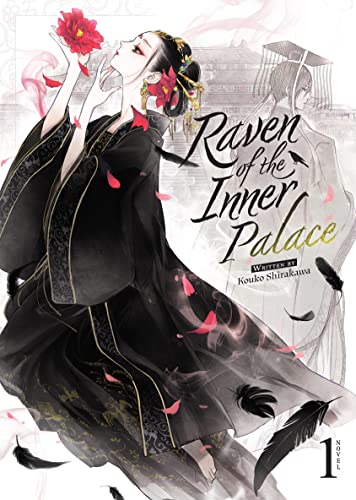
In early digital, we get Raven of the Inner Palace (Koukyuu no Karasu), which just had an anime recently. A mysterious concubine, who may be old, may be young, but definitely uses magic, is called before the Emperor.

ASH: This one seems promising to me.

SEAN: And we also see Kuma Kuma Kuma Bear 13.

Is this 2023 enough for you? Do you want 2022 back?

MICHELLE: Absolutely not.

ASH: Nah, that’s okay.

ANNA: No thank you.

Filed Under: FEATURES, manga the week of

Bookshelf Briefs 12/29/22

December 29, 2022 by Sean Gaffney and Michelle Smith Leave a Comment

Catch These Hands!, Vol. 3 | By murata | Yen Press – This volume takes us back to Takebe’s initial thought process: all her former gang friends have gotten married and had kids, so she feels the need to change herself and stop being a grumpy thug. The problem is that she clearly doesn’t actually want to do this, she just feels that she needs to do it—and this ends up causing the first serious argument between her and Soramori. Honestly, the main reason we enjoy this series so much is seeing Takebe as a grumpy cuss, as well as seeing these two talk the only way they really know how—by beating the crap out of each other. We get that here, let’s hope it leads to less violent ways to resolve conflict… though honestly, it probably won’t. An underrated yuri series. – Sean Gaffney

The Gay Who Turned Kaiju | By Kazuki Minamoto | Yen Press – Takashi Arashiro moved to Tokyo for high school, full of dreams of the person he could become there. Instead, he ends up bullied and, after he overhears the beloved teacher who was his only source of hope expressing disgust for gay people, he desperately wishes to be something other than gay and is instantly transformed into a kaiju. For the most part this is a story about acceptance, and though the message can be a little heavy-handed at times, it’s still satisfying to see Arashiro serve some harsh truths to the oblivious Kuroda-sensei. I also really appreciated that the story did not end the way I had anticipated. However, I am troubled that both Arashiro and another gay character end up groping straight guys without their consent, with the former saying, “If you put up a fight I’ll bite your head off.” I don’t know why that was necessary. – Michelle Smith

Murcielago, Vol. 20 | By Yoshimurakana | Yen Press – As this series has gone on it’s focused far less on Kuroko and her attempts to molest every woman she meets (though she does try that here), and more about enveloping the reader in horror stories. It’s basically an anthology now, and this volume’s story involves an And Then There Were None-style plotline where Kuroko and company end up stranded at a hot springs resort with a family that keeps getting killed off in various ways that have something to do with a girl named Ayako who was indirectly killed by them a while back. There’s not much detecting going on in this one, to be honest—the suspects keep dying too fast. For fans of gore. – Sean Gaffney

Touring After the Apocalypse, Vol. 1 | By Sakae Saito | Yen Press – For those who enjoyed Kino’s Journey and Girls’ Last Tour, this is another in a line of series that can be described as “post-apocalyptic travelogue.” Youko may be the last human on Earth, as she was in a shelter when some unnamed disaster hit. She’s accompanied by Airi, an android who seems to be half companion, half bodyguard. Together they’re motorbiking around Japan, trying to find the places that Youko’s sister took instagram photos of and seeing what they look like now. As you’d expect, a highlight of this series is the artwork, showing off decay and destruction, but it doesn’t feel as bleak and depressing as the other two series I mentioned. We’ll see where it leads us. – Sean Gaffney

Tsubaki-chou Lonely Planet, Vol. 1 | By Mika Yamamori | Yen Press – In many ways, Tsubaki-chou Lonely Planet is a fairly generic shoujo manga. Fumi Ohno, a plucky and practical heroine with domestic skills aplenty, ends up homeless after her father’s debts cause them to be evicted. She becomes a live-in housekeeper for a young and handsome novelist who seems rude at first, but soon exhibits a kinder side. He protects her from a panty thief. She thinks, literally, “Just what…. is this feeling?” Another potential love interest is introduced in the form of a transfer student and it’s someone Fumi met once in the past. Though the story beats were extremely familiar, I still enjoyed this a good bit. Perhaps it’s the Margaret factor. The expressive art also helps, as does the fact that the transfer student (at this stage, at least) is holding a pretty ridiculous grudge against Fumi. I look forward to seeing how this develops. – Michelle Smith

Witch Hat Atelier, Vol. 10 | By Kamome Shirahama | Kodansha Comics – Witch Hat Atelier started with Coco, and she’s still the primary protagonist, but it’s nice to see that the other girls in the group are also getting their own plotlines. Unfortunately, those plotlines are starting to look as dark as Coco’s is. She’s busy trying to save Custas from a turn to evil, but we also see Agott struggling with trying to come up with something extraordinary to show everyone who abandoned her, and Tetia is meeting royalty and I fear soon will discover that bubbly optimism tends to smash up against cold, hard reality. Which we also see in this volume, as a relationship is destroyed due to Custas’ rampage. I don’t think this series will get very dark, but it does get somewhat dark. – Sean Gaffney

You Like Me, Not My Daughter?!, Vol. 1 | By Kota Nozomi and Tesshin Azuma | Seven Seas – We rarely get this sort of manga in English anymore, the type that I would characterize as “romantic sex comedy.” Based on a light novel, it stars Ayako, a 30-ish woman who works in publishing and raises her niece/adopted daughter Miu, who is turning fifteen. Ayako has had zero time to devote to romance, so is delighted to see that Miu’s childhood friend, Takumi, a college boy, looks like he might confess. As the title might suggest, Takumi likes her instead. This is exactly what it looks like, basically. If you like to see hot moms stress out over whether they should date guys over ten years younger than them, while also having lots of shower and bath scenes, there are worse titles. – Sean Gaffney

Filed Under: Bookshelf Briefs

Rascal Does Not Dream of a Knapsack Kid

December 29, 2022 by Sean Gaffney

By Hajime Kamoshida and Keji Mizoguchi. Released in Japan as “Seishun Buta Yarou wa Randoseru Girl no Yume wo Minai” by Dengeki Bunko. Released in North America by Yen On. Translated by Andrew Cunningham.

My favorite episode of Urusei Yatsura (the original, not the 2022 reboot) has Lum end up in various alternate universes and unable to get back to the correct one. We see one where everyone is the opposite gender, one where her father actually invaded and everyone hates her, etc. Towards the end, she finds a world where everything seems to be absolutely perfect… including an Ataru who actually looks to be as handsome as she sees him, saying that he loves her. The look on her face when she hears “I love you” and knows that it’s the wrong world again may be the most heartbreaking moment in the series, topped only by her little “bye bye” as she flees, trying again to get back to HER Ataru. If you’re wondering what all this has to do with Rascal Does Not Dream, then I urge you to read this volume, which may be Sakuta’s best to date.

Things are going reasonably well for Sakuta. He’s still studying hard so he can go to college with Mai, Kaede has decided to start high school at the remote learning place, and he and Mai remain lovey-dovey (or at least as lovey-dovey as Mai ever gets). There’s even more good news coming – Sakuta and Kaede’s mother is getting released from the hospital and being allowed to go home, and she wants to see Kaede. Sakuta is naturally worried about how things will go, and does his best to be a good big brother and strong grownup for his sister. And indeed, things go very well. The reunion is a big success! The only trouble is that Sakuta is still running into the little girl version of Mai. Oh, yes, and one other problem – no one can see him anymore.

The callback to the very first book (though Sakuta does not wear a bunny girl outfit, or even consider it, which makes me sad) is appropriate given that this book pretty much resolves all the major plot points that were outstanding in the series to date. Sakuta’s parents were a constant invisible pressure on the series, but we only saw his father rarely, and we never saw his mother till this book. The middle part of this book is hideously depressing, especially when (helped by the child Mai) he does get back to a world where people can see him… but it’s the wrong one, and just makes him feel inadequate. Fortunately, Rio and Mai are the same no matter what universe, and give him some support… but unfortunately, the solution is something Sakuta will have to work out on his own.

This is not the final book in the series, but it feels like it is, with Sakuta’s entire third year being skipped as we jump to his graduation. There is more to come, and indeed there are teases for future books in this one, including a new character from Sakuta’s past. For this book, though, it’s all Sakuta. He ma never get a cover picture because of the genre he’s in, but if he did, this would be the book. Also: “Other Sakuta: fix your shit” is hilarious.

Filed Under: rascal does not dream, REVIEWS

The Magical Revolution of the Reincarnated Princess and the Genius Young Lady, Vol. 3

December 28, 2022 by Sean Gaffney

By Piero Karasu and Yuri Kisaragi. Released in Japan as “Tensei Oujo to Tensai Reijou no Mahou Kakumei” by Fujimi Fantasia Bunko. Released in North America by Yen On. Translated by Haydn Trowell.

In my review of the 2nd volume I mentioned that it wrapped up the first arc in the series, to which I can only say: oops. That said, I am absolutely not complaining. This may not be the final book in the series (there’s at least two more out in Japan), but it’s definitely The Payoff. Following directly on from events in the last book, it has tons of conflict, but it’s all character-based and 100% understandable. It gets into worries about isekai/reincarnation journeys that I always love to see in those books, and also delves into the past of this kingdom and why trying to change it in the future is something that’s going to be very hard and yet absolutely necessary. Basically, this book is everything you wanted to see in this series wrapped up. Anisphia has come a long way from the Chaos Gremlin of the first book. (Not to worry, the anime starts next week, and from what I’ve seen, they’re hammering on that aspect.)

After the events of the last book, Algard has been sent off into exile, meaning that there’s only one really obvious candidate in line for the throne: Anisphia. She proceeds to put on a brave face, buckle down, and accept her fate in a way that devastates everyone around her, because they all know her far too well. This includes Euphyllia, who knows her better than anyone and refuses to accept Anisphia giving up her happiness and becoming a shell of her former self. To that end, she goes searching for a way to bypass Anisphia and find another heir to the throne… and finds there is another way, but it would involve a ton of sacrifice of her own. With both Anisphia and Euphyllia playing a weird game of chicken in trying to sacrifice their own love and joy for the sake of each other, who’s going to blink first?

As I mentioned above, my favorite part of the book was the look at Anisphia’s interiority, particularly something that she’s been half in denial about this entire time. She may have abdicated early in her life, but being a Princess is a very important part of her, and a reason that she’s constantly working herself to death. She also finally confesses to Euphyllia that she’s a reincarnation, and talks about her life back in her other world… as well as what that means to her current self. We’ve seen reincarnation isekai (particularly “villainess” titles) have our reincarnated heroine “overwrite” the original personality when they regain their memories, but here we see Anisphia’s horror at the very idea of doing that. And there’s also the fact that she was reincarnated as a royal that needs to use magic to rule but one who can’t use magic. That unfairness drives her, and also nearly breaks her. Spoiler: there’s a lot of crying in this.

But there’s kissing as well, and I was amused at the book dancing around the fact that the obvious solution is joint rule, but that would involve the country acknowledging their relationship, and I don’t think we’re quite there yet. That said, this was the best in the series by far. I don’t know if I want to see it adapted in the anime – if it is, the anime will have been quite rushed – but it’s a must-read for yuri fans.

Filed Under: magical revolution of reincarnated princess and genius young lady, REVIEWS

The Invincible Little Lady, Vol. 1

December 27, 2022 by Sean Gaffney

By Chatsufusa and fuumi. Released in Japan as “Dōyara Watashi no Karada wa Kanzen Muteki no Yō Desu ne” by GC Novels. Released in North America by J-Novel Club. Translated by Roman Lempert.

I’ve talked before about the fact that I think avoiding cliches is an overrated issue. There have been several fantastic light novels and manga out there that use the same old thing: reincarnated in another world, noble’s daughter publicly shamed, let’s start a new high school club, etc. But as long as they keep the audience’s interest and have a good story to tell using those same old hoary elements, that’s fine. That said… I have my limits. I like to think that the artist read a bunch of popular webnovels and thought to themselves “now here’s MY spin on this idea!”. Sometimes, though, I don’t get that impression. I get the impression that the writer really has no goal or desire beyond “get clicks, get published”. And unfortunately that’s the impression I got with The Invincible Little Lady, a novel that doesn’t really put a foot wrong when it comes to fun characters and amusing scenes, but which feels like it lacks a soul.

Stop me if you’ve heard this one before: a Japanese person lives their life weak and sickly, never leaving the hospital. As they finally pass on, they desperately wish for a strong body that will never lose to anything. Amazingly, God then announces that their wish is granted. Now she’s Mary Regalia, a duke’s daughter and the apple of her father’s eye, in a fantasy land of magic, monsters and swords. As she grows older, she starts to realize that God did the job a little too well. She’s immortal, can’t be harmed, and her strength is off the charts. Same with magic. She needs a maid to cater to her every whim… because if she puts on her own clothes, she tears them, and teacups shatter in her hands if she’s not careful. These are the stats of a great hero! But all she wants to do is life a quiet, peaceful life!

So yeah, if you thought of In the Land of Leadale, or Didn’t I Say to Make My Abilities Average?, you aren’t alone. The author said in the afterword that they had read a bunch of webnovels and just sat down and started banging out one of their own, so it’s not surprising. And to be fair, it’s much better than it should be. The book for the most part avoids sexual assault, slavery, or the other isekai pitfalls. There’s not much fanservice aside from (sigh) Mary bemoaning her small chest and commenting on the chest size of others. It even attempts to have an in-world explanation for why she’s so ludicrously strong – she comes from a family that has ludicrous strength in it already, so no one is surprised. It ticks all the right boxes. But… why should I read more? What is the purpose of the series? I can’t find an answer after the first volume, and that’s a big flaw.

So yes, Sean vs. GC Novels has led to another loss for Sean. This is a well-written book that should appeal to those who want something to read on a plane or the beach. But I want more.

Filed Under: invincible little lady, REVIEWS

Pick of the Year: Small Publishers and Big Genres

December 26, 2022 by Sean Gaffney, Michelle Smith, Ash Brown and Katherine Dacey Leave a Comment

SEAN: It’s the end of the year, and as always I’ve forgotten 90% of what I read back in March and April. I will thus make my pick a collective pick, as this year had so many new Villainess Novels. Be it reincarnated in an otome game, a duke’s daughter who is publicly shamed, or just a depressed young woman who’s trying to quietly live through her teenage years so she can enter a convent, the Villainess genre has proven surprisingly wide, and I’ll be delighted to read even more of it in 2023.

MICHELLE: I didn’t read as much as I wanted to this year—blast that infernal “life crap” that always seems to intrude—but of what I did read, my favorite was Lost Lad London. Getting a real mystery in manga form is rare enough, and one that acknowledges racism and sexism is unheard-of. I am both looking forward to and lamenting the third and final volume, due out in a few weeks.

ASH: I likewise haven’t had as much time to devote to manga this past year as I would have liked. However, despite some sub-genres seeming to have flooded the market, I’ve been impressed (and pleased!) to see the wide variety manga being released these days. In particular, or in general, I’d like to make small, niche, manga publishers my pick of the year. Specifically, Glacier Bay Books continues to produce highly engaging releases and Star Fruit Books has brought Hideshi Hino back in English as part of a steadily developing catalogue of interesting print manga.

KATE: I want to echo what Ash is saying about small presses such as Glacier Bay Books and Star Fruit: they’re bringing all kind of cool, off-beat titles to the American market that otherwise wouldn’t be translated. In a market that’s so thoroughly saturated in isekai titles and formulaic high school romances, it’s great to have some meaningful alternatives, so I’m making these two presses my “manga of the year.”

Filed Under: PICK OF THE WEEK

  • « Go to Previous Page
  • Page 1
  • Interim pages omitted …
  • Page 144
  • Page 145
  • Page 146
  • Page 147
  • Page 148
  • Interim pages omitted …
  • Page 1050
  • Go to Next Page »
 | Log in
Copyright © 2010 Manga Bookshelf | Powered by WordPress & the Genesis Framework