• Skip to primary navigation
  • Skip to main content
  • Skip to primary sidebar
  • Home
  • About Us
    • Privacy Policy
    • Comment Policy
    • Disclosures & Disclaimers
  • Resources
    • Links, Essays & Articles
    • Fandomology!
    • CLAMP Directory
    • BlogRoll
  • Features & Columns
    • 3 Things Thursday
    • Adventures in the Key of Shoujo
    • Bit & Blips (game reviews)
    • BL BOOKRACK
    • Bookshelf Briefs
    • Bringing the Drama
    • Comic Conversion
    • Fanservice Friday
    • Going Digital
    • It Came From the Sinosphere
    • License This!
    • Magazine no Mori
    • My Week in Manga
    • OFF THE SHELF
    • Not By Manga Alone
    • PICK OF THE WEEK
    • Subtitles & Sensibility
    • Weekly Shonen Jump Recaps
  • Manga Moveable Feast
    • MMF Full Archive
    • Yun Kouga
    • CLAMP
    • Shojo Beat
    • Osamu Tezuka
    • Sailor Moon
    • Fruits Basket
    • Takehiko Inoue
    • Wild Adapter
    • One Piece
    • After School Nightmare
    • Karakuri Odette
    • Paradise Kiss
    • The Color Trilogy
    • To Terra…
    • Sexy Voice & Robo
  • Browse by Author
    • Sean Gaffney
    • Anna Neatrour
    • Michelle Smith
    • Katherine Dacey
    • MJ
    • Brigid Alverson
    • Travis Anderson
    • Phillip Anthony
    • Derek Bown
    • Jaci Dahlvang
    • Angela Eastman
    • Erica Friedman
    • Sara K.
    • Megan Purdy
    • Emily Snodgrass
    • Nancy Thistlethwaite
    • Eva Volin
    • David Welsh
  • MB Blogs
    • A Case Suitable For Treatment
    • Experiments in Manga
    • MangaBlog
    • The Manga Critic
    • Manga Report
    • Soliloquy in Blue
    • Manga Curmudgeon (archive)

Manga Bookshelf

Discussion, Resources, Roundtables, & Reviews

Ash Brown

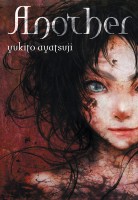
Another

October 21, 2015 by Ash Brown

AnotherAuthor: Yukito Ayatsuji
Translator: Karen McGillicuddy
U.S. publisher: Yen Press
ISBN: 9780316339100
Released: October 2014
Original release: 2009

Another is a horror mystery novel written by Yukito Ayatsuji which was originally serialized in Japan between 2006 and 2009 before being collected into a single volume later that year. The novel was then released again in 2011 in two separate volumes. It is that edition upon which the English translation by Karen McGillicuddy is based. Another was initially released digitally in English by Yen Press in two volumes in 2103, but in 2014 it was published as a single-volume hardcover under the newly established Yen On light novel imprint. In addition to being Ayatsuji’s first novel to be translated into English, Another is probably his most widely-known work, especially outside of Japan. This is in part due to the fact that Another was adapted as a manga series and as an anime series, both of which have been licensed in English, as well as a live-action film. Although I’ve known about Another for a while, it actually wasn’t until I read Ayatsuji’s debut novel The Decagon House Murders that I was inspired to pick it up.

Yomiyama North Middle School’s third-year Class 3 is cursed. For some strange reason, the students of that class and their immediate families seem to be more susceptible to dying. Some years pass by without any casualties while other years see multiple deaths every month. The curse is said to be tied to an incident which occurred twenty-six years ago. A popular student named Misaki died, but the entire class was in such denial that Misaki’s spirit manifested. Now more than two decades later, Misaki’s story has been embellished and retold so many times that it’s difficult to tell how much of it is rumor and urban legend and how much is really true. Koichi Sakakibara recently transferred into Class 3 and isn’t sure what to believe and nobody is being particularly forthcoming about the situation. The curse could just simply be a ghost story, but his classmates and teachers are honestly frightened of something. And soon after Koichi’s arrival, a new series of deaths begin.

Another is a marvelous combination of mystery and horror. The first half of the novel explores the “what” and “why” of the increasingly odd situation while the second reveals the “how” and “who.” As a transfer student, Koichi is an outsider. He isn’t as knowledgeable as the other people involved, and they are reluctant to share information with him, so Koichi is largely left to investigate on his own. Eventually he gains some dubious allies, the most important being a young woman named Mei Misaki who may or may not actually exist. Ayatsuji excels at creating a constant air of uncertainty in Another—he introduces just enough creepiness and doubt that readers, like Koichi, are left questioning everything. While logical analysis is a valid option, the weirdness of the situation and the possibility of supernatural interference makes the more mundane, straightforward answers feel suspect. Additionally, Koichi himself is shown to be a somewhat unreliable narrator, and it’s his perspective of the unfolding events that drives Another.

Ayatsuji is particularly well-known for his inventive stories with dramatic twists. Another definitely falls into that category, the plot taking multiple clever and surprising turns over the course of the novel. However, without spoiling things, there was one major reveal towards the end that left me feeling cheated, especially when most of the other developments were so engaging. Retrospectively, the reveal does fit into the overall narrative, and there were some clues hinting at it scattered throughout the novel, but it isn’t foreshadowed as well as it could have been. As a result, I found it to be very unsatisfying. The revelation is shocking and certainly leaves an impact, but I think that had the information been shared earlier in the novel it could have been used even more effectively. Despite this one notable complaint, I actually quite enjoyed Another. The mystery was intriguing, the horror was disconcerting, and blended together they formed a chilling novel that was highly readable and kept me eagerly turning the pages.

Filed Under: REVIEWS Tagged With: Another, Novels, Yen On, yen press, Yukito Ayatsuji

Pick of the Week: First Volumes and Complete Sets

October 19, 2015 by Sean Gaffney, Michelle Smith, Ash Brown and MJ Leave a Comment

claymore1SEAN: I was going to go with L♥DK for this week’s pick, but then sadly I read it. So instead, with a minimal number of things I’m excited about, I will pick Udon’s first volume of Kill La Kill. The anime got huge buzz, both good and bad, on the Twitters and the Tumblrs, and I look forward to seeing what the excitement is all about.

MICHELLE: Oh, no! But I guess, in the absence of anything else I was planning to get, that I will still pick L♥DK anyway. With much trepidation.

ASH: I seem to be hearing a lot of good things about Claymore recently, but I’ve never actually read any of the manga. So, I’m definitely eyeing the giant box set that’s being released this week.

MJ: This feels like the right time to give another boost to Claymore, one of my very favorite shounen series. It’s dark, it’s thrilling, it’s filled with incredible female characters… what’s not to like? I don’t have any need for Viz’s new box set myself, but I’d encourage anyone to consider it! It’s a fantastic series.

Filed Under: PICK OF THE WEEK

My Week in Manga: October 12-October 18, 2015

October 19, 2015 by Ash Brown

My News and Reviews

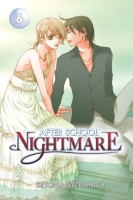
It was a two-review week at Experiments in Manga last week. First off, I reviewed the third and final volume of Hide and Seek by Yaya Sakuragi, which I enjoyed immensely. In general, I tend to like Sakuragi’s boys’ love manga, but I think that Hide and Seek has probably become my favorite. It’s a bit more serious and realistic than some of her other manga, but it still has a great sense of humor. The second review from last week, and the most recent addition to my ongoing monthly horror manga review project, was After School Nightmare, Volume 6 by Setona Mizushiro. The series continues to be both disconcerting and compelling; I’m looking forward to seeing how it continues to develop.

Elsewhere online: The Shojo Beat tumblr posted a short interview with Kyousuke Motomi. Tofugu presents Japanese Onomatopoeia: The Definitive Guide, which is pretty great. The BBC has a brief spot on Hajime Isayama. Coming out of the New York Comic Con, Women Write About Comics had a chat with Kodansha executives Hiroaki Morita, Kohei Furukawa, and Yasumasa Shimizu. Brigid Alverson reports on Kodansha’s panels at New York Comic-Con, which included Yohei Takami, the editor of Noragami, as a special guest. Masashi Kishimoto was in New York for NYCC as well. Deb Aoki covered Masashi Kishimoto’s NYCC visit for Anime News Network. Brigid Alverson reports on Kishimoto’s main panel. Weekly Shonen Jump Blog has some Kishimoto NYCC videos to share, including interviews and panels. Also, the recording from Kishimoto’s SoHo Apple Store visit is now available.

Quick Takes

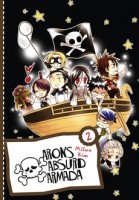
Aron's Absurd Armada, Omnibus 2Aron’s Absurd Armada, Omnibuses 2-3 (equivalent to Volumes 3-5) by MiSun Kim. I read the first Aron’s Absurd Armada omnibus quite a while ago. I largely enjoyed the full-color manhwa, which I believe had its start as a webtoon, and have been meaning to get around to reading the rest of the series. I’m not sure that binge-reading Aron’s Absurd Armada was really the way to go for optimal enjoyment, though. I still find the series to be consistently or at least vaguely amusing, and it even managed to make me laugh out loud a few times, but it’s a little hard to take in large doses. The humor isn’t particularly clever, mostly relying on the fact that almost every single character in the manhwa is incredibly shallow or dimwitted. As such, there’s not much depth to the story or characters. Surprisingly enough, Aron’s Absurd Armada actually does have a plot, granted it’s very meandering and almost stream-of-conscious. There are pirates and treasure, kingdoms and political intrigue, and a whole mess of other complicating factors. Aron’s Absurd Armada is indeed absurd.

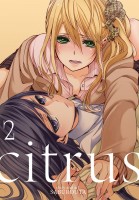
Citrus, Volume 2Citrus, Volumes 2-3 by Saburouta. Although I didn’t find some of the first volume of Citrus to be particularly realistic, I did find the intense emotions and drama to be engaging enough to be interested in continuing the series. The next two volumes follow in a similar vein—unbelievable in parts but still having the potential to become addictive. The series has begun to introduce prominent new characters as well. Not only is there another girl who has her eye on Mei, there’s also a young woman with designs for Yuzu. Mei’s father finally makes an appearance in the manga as well, albeit rather briefly. I’m not really entirely sure what to make of the man yet. Mei continues to be something of a mystery, too. One thing is for certain, though, a fair amount of Mei’s emotional issues, which have a huge effect on her interactions with other people, are tied up in her poor relationship with her father. As for the artwork, for the most part Citrus is drawn quite nicely in an overall attractive style that I like, but every so often there’s some weird anatomy going on which can be distracting.

Kiss Him, Not Me!, Volume 1Kiss Him, Not Me!, Volume 1 by Junko. Serinuma is on fairly good terms with many of the hottest boys at her school, but what most people don’t know is that in her spare time she enjoys fantasizing about them in relationships with each other. She’s also a huge fan of the anime Mirage Saga and she’s devastated when her favorite character dies. Locking herself in her room for more than a week, she wastes away. Nearly unrecognizable (on the outside), she begins turning the boys’ heads when she returns to school. Personally, I would have preferred another gimmick than sudden weight loss to bring Serinuma to the attention of her schoolmates, but at least it’s not at all played seriously. In fact, there is very little that is serious about Kiss Him, Not Me!. Its ridiculousness is what makes the manga work. And it is funny. The humor primarily revolves around Serinuma being a hopeless otaku, specifically a fujoshi. Junko herself, who is also a boys’ love mangaka (I believe Mr. Mini Mart is currently her only other work released in English), is a fujoshi as well, so happily the jokes never feel mean-spirited.

Filed Under: FEATURES, My Week in Manga Tagged With: aron's absurd armada, Citrus, Junko, Kiss Him Not Me, manga, manhwa, MiSun Kim, Saburouta

After School Nightmare, Vol. 6

October 16, 2015 by Ash Brown

After School Nightmare, Volume 6Creator: Setona Mizushiro
U.S. publisher: Go! Comi
ISBN: 9781933617480
Released: January 2008
Original release: 2006

The sixth volume of the manga series After School Nightmare, an intense and dark psychological drama by Setona Mizushiro, was originally published in Japan in 2006. The English-language edition of After School Nightmare, Volume 6 was released by Go! Comi in 2008. Go! Comi is no more, so the entire series has gone out-of-print, but the manga still seems to be relatively easy to find. After School Nightmare is a series that honestly disturbs me, which isn’t necessarily a bad thing since in part it’s a horror manga. But while I find After School Nightmare to be disconcerting, I also find it to be oddly compelling. Mizushiro deals with some heavy issues in the series, including emotional, psychological, and physical abuse, trauma, and violence. The search for personal identity and the roles that gender and sexuality play in defining who a person is are major themes as well. In fact, it was those themes that first drew After School Nightmare to my attention.

Despite some lingering doubts, Mashiro made the decision to give up on his feelings for Sou in favor of his feelings for Kureha. Sadly for him, things aren’t turning out how he would have liked at all. Tying his masculinity to her insecurities, Mashiro wanted to feel needed by Kureha, to become her white knight and protector. But now Kureha is beginning to feel more confident in herself and trying to rely less on Mashiro. Suddenly finding himself without an acceptable role to play in their relationship, and no longer being able to meet the established though self-imposed requirements of what it means to be a man, Mashiro is thrown into turmoil. In the past he presented himself as a prince who would rescue those who were weaker than him, but it’s help that is no longer wanted nor needed. Just when he thought that he had everything finally figured out, Mashiro finds his relationships falling apart because they were built on his own insecurities and fears. He is desperate to be seen as a man by others and at the same time is terrified by the fact that he also yearns to express his femininity.

After School Nightmare, Volume 6, page 184Most of After School Nightmare takes place in one of three settings: the school grounds, the dormitories associated with the school, and the shared nightmares of the students participating in the special after school class required for their graduation. Granted, it’s not graduation in the usual sense. The students who successfully complete the course completely disappear from the campus and from the memories of those left behind, almost as if they never existed at all. The mysteries surrounding what it really means to graduate combined with the story’s limited settings create a marvelously ominous and claustrophobic atmosphere. As a result, when the series breaks from that narrow focus, it can be especially unsettling. In the sixth volume, for what I believe is the first time in After School Nightmare, a truly significant scene occurs away from the school entirely, which serves to emphasize Mashiro’s reluctance to deal with his issues head on. But it’s a moment of false freedom; he won’t be able to run away from his problems indefinitely without there being negative consequences.

The nightmares in After School Nightmare are intended to be an environment in which the students can work through their personal traumas and fears, but the participants are simultaneously stripped of many of their defenses and left incredibly vulnerable within the dreams as well. In theory, what happens in the dreams is meant to remain private and not to carry over into the waking world, but in practice that is rarely ever the case. Even so, most of Mashiro’s growth and maturation is thanks to those nightmares. It’s not until After School Nightmare, Volume 6 that he’s forced to really begin to recognize outside of them how selfish and self-centered his relationships with other people have been, how he’s using them to make himself feel better about himself, and how his actions affect others. In many ways, Mashiro’s waking life is just as much of a fantasy as the dreams he is made to share with his classmates, and both reality and nightmares can be troubling and traumatic. However, it’s the nightmares that are the more truthful and honest even though they can also be highly symbolic and strange. In the end, as horrifying as the dreams are, the denial and insidious falsehoods of reality may ultimately be the more damaging.

Filed Under: REVIEWS Tagged With: after school nightmare, Go! Comi, manga, Setona Mizushiro

Manga the Week of 10/21

October 15, 2015 by Sean Gaffney, Michelle Smith, Ash Brown, MJ and Anna N 2 Comments

SEAN: Even though this is the quietest week of a big month… it’s still fairly big.

Dark Horse has a third volume of Oreimo: Kuroneko, for those who wanted a better ending than the canonical one, i.e. everyone.

ldk1

Kodansha has the debut of a new shoujo series, L♥DK. It’s the sort I describe as a ‘potboiler’, and I think it will do well with those who love soap opera situations.

MICHELLE: I will be checking this one out. If it’s cracktastic, I hope it’s in a good way!

ASH: Soap opera situations? I am intrigued.

MJ: Who doesn’t love a good soap opera?

ANNA: I know I do!

SEAN: One Peace has a 2nd light novel for Rise of the Shield Hero.

Seven Seas caters to its fanbase with a second volume of Magika Swordsman and Summoner.

And also has a 3rd volume of Nurse Hitomi’s Monster Infirmary, which has monster girls and more ecchi antics.

And we round off our trio of otaku titles with Pandora in the Crimson Shell: Ghost Urn 2, which is drawn by Rikdo Koshi as if he never left the world of hentai doujinshi, and is written by Masamune Shirow as if he didn’t either.

Udon gives us the first volume of the Kill La Kill manga, which, if even one-tenth of the folks who gush about the anime on the internet purchase it, will sell like hotcakes.

ASH: I hope it does! Udon always does an excellent job with its manga; I’d like to see the publisher offer more.

ninjaslayer1

SEAN: Vertical has the first of the Ninja Slayer manga (not to be confused with the Kodansha-licensed spinoff Ninja Slayer Kills) by the possibly imaginary American team of Bradley Bond and Philip “Ninj@” Morzez.

ASH: I wasn’t enamored with the spinoff, but I do plan on giving this series a try.

SEAN: If you always wanted to read Claymore but were waiting for a way to get all 27 volumes in one box set, Viz is the answer to your prayers.

MJ: Ooooooh, nice!

SEAN: And there’s also a 6th volume of the Special Edition of Monster, possibly with added depressing bits.

MICHELLE: I didn’t realize that these special editions had bonus material!

ASH: Do they?!

SEAN: They don’t, I was being silly. :)

MICHELLE: Oh, good!

SEAN: Lastly, there’s 3rd volume of runaway zombie hit Tokyo Ghoul.

Which of these varied titles most appeals to you?

Filed Under: FEATURES, manga the week of

Hide and Seek, Vol. 3

October 14, 2015 by Ash Brown

Hide and Seek, Volume 3Creator: Yaya Sakuragi
U.S. publisher: Viz Media
ISBN: 9781421579689
Released: March 2015
Original release: 2014

Yaya Sakuragi has had quite a few of her boys’ love manga translated and released in English: Tea for Two; Hey, Sensei?; Stay Close to Me; Bond of Dreams, Bond of Love; and, most recently, Hide and Seek. Hey, Sensei? was actually my introduction to boys’ love, and I tend to enjoy Sakuragi’s work, so I’ve made a point to read and collect it all. As for Hide and Seek, the third and final volume was originally published in Japan in 2014. The English-language edition was released in 2015 by Sublime Manga, the boys’ love imprint associated with Viz Media. Hide and Seek is technically a spinoff of Bond of Dreams, Bond of Love, but it stands completely on its own. However, readers familiar with Bond of Dreams, Bond of Love will likely appreciate the references made to the earlier series. Tea for Two is even more distantly related to Hide and Seek, the connection between the two being made indirectly through Bond of Dreams, Bond of Love. It’s not at all necessary to have read Tea for Two or Bond of Dreams, Bond of Love to enjoy Hide and Seek, but I do like how all three series are linked together.

It has been years since Shuji has been in a serious relationship. Although he’s still on good terms with his ex-wife, his marriage was a failure and he hasn’t done much more than casually play around since the divorce. But now, somewhat unexpectedly, Shuji finds himself in what may very well become something more long-term, and with another man no less. The relationship between Shuji and the young doctor Saji has had a few bumps along the way, and both of the men still occasionally feel insecure, but for the most part they’ve been able to move past the major drama. That doesn’t mean everything has been completely worked out, though. As grown adults, Shuji and Saji each have their own family responsibilities and careers to take into consideration. Shuji has his daughter Chii to look after and the business at his candy store isn’t as good as it once was while Saji is having a difficult time convincing his grandfather to allow him to take over the family’s local clinic. So, there are still a few matters that Shuji and Saji will need to address before their relationship can go much further.

Hide and Seek, Volume 3, page 68Although Hide and Seek tends to be more serious, mature, and realistic, especially when compared to its immediate predecessor Bond of Dreams, Bond of Love, at the same time there is still plenty of humor and lightheartedness to the series. For example, the major dilemma in the first chapter of Hide and Seek, Volume 3 revolves around Shuji “manning up” in order to cuddle, with delightful results. Shuji’s love of costume and roleplay comes up again, too, which has been something of a running joke in both Bond of Dreams, Bond of Love and Hide and Seek. I’ve really enjoyed seeing the relationship between Shuji and Saji develop as the series has progressed; they’re adorable and surprisingly sweet together, even considering (or perhaps even because of) their drastically different personalities. It’s obvious that they each care tremendously for other person. What makes their relationship work, and one of the things that I particularly love about Hide and Seek, is their willingness to push through their initial fear and embarrassment over expressing themselves and actually communicate with each other.

Seeing as I had enjoyed Sakuragi’s earlier works, I was fairly confident that I would like Hide and Seek, too. What I didn’t anticipate was just how much the series would end up appealing to me; I think it may now even be my favorite Sakuragi manga. I find this to be a little surprising because, although Saji is a type of character that I’m usually fond of, in general Shuji wasn’t. But over the course of Hide and Seek I came to really like and care about him. He has evolved from simply being supporting comic relief in Bond of Dreams, Bond of Love into a fully fledged, well-developed character in his own right. Much of Hide and Seek, Volume 3 is devoted to his family circumstances, which are revealed to be a little different than readers (and Saji, for that matter) were initially led to believe. Chii’s mother and her current boyfriend play a greater role, but the series implies and is open-ended enough that there is room for Saji, Shuji, and Chii to form a trio as well. Perhaps it’s optimism and wishful thinking on my part, but it makes me extremely happy that by the end of Hide and Seek, Chii may very well have gained two caring families.

Filed Under: REVIEWS Tagged With: Hide and Seek, manga, Sublime Manga, viz media, Yaya Sakuragi

Pick of the Week: Magi and Mermen!

October 12, 2015 by Michelle Smith, Ash Brown, Sean Gaffney, MJ and Anna N Leave a Comment

magi14MICHELLE: Alas, there’s not a whole lot that I’m looking forward to in next week’s round of releases, but I am always happy for a new volume of Magi: The Labyrinth of Magic, so the 14th installment of same earns my pick of the week.

ASH: The releases this week run a whole gamut of genres, but I’ve recently been in the mood for some new comedy. Merman in My Tub looks as though it should be suitably ridiculous, so that’s one I’ll definitely be picking up to try.

SEAN: I’ll bite the bullet and go for Kiss Him, Not Me this week. Not overly enthused due to the weight loss thing, but if it manages to be suitably ridiculous and hammer on the fujoshi aspect, it could be a winner.

MJ: I admit it’s a sketchy week for me. I’m at a loss for a completely sure pick, but I think I’ll join Ash and take a chance this week on Seven Seas’ Merman in My Tub. I don’t exactly have the greatest trust in Seven Seas when it comes to publishing manga that’s really to my taste, but I gotta admit this looks fun. I’ll give it a try!

ANNA: There’s not a lot this week coming out that appeals to me, so I’m going to join Michelle in picking Magi. One day I will get caught up on that series!

Filed Under: PICK OF THE WEEK

My Week in Manga: October 5-October 11, 2015

October 12, 2015 by Ash Brown

My News and Reviews

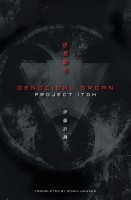
Last week was a slower week at Experiments in Manga, but I am steadily coming to terms with the fact that I’m leading an increasingly busy life and that it’s okay to have slow blogging weeks. (Though I still wish I had the time to read and write more.) Anyway, last week I announced the Devils and Realist Giveaway Winner. The post also includes a list of some of the manga available in English that feature demons and devils. I also reviewed Project Itoh’s debut novel Genocidal Organ which is an excellent, intelligent work of near future science fiction. I’ve now read almost everything of Itoh’s that has been translated (I still need to pick up his Metal Gear Solid novel) which makes me a little sad since it’s all so good and I want more.

New York Comic Con was last week and there were some exciting license announcements to come out of that. Kodansha Comics will be releasing an Attack on Titan anthology collecting Western creator’s takes on the franchise (considering some of the artists and writers involved, this should be great) and has licensed Hounori’s Spoof on Titan and Hiroki Katsumata’s I Am Space Dandy. Viz Media announced a slew of new print titles: Mitsu Izumi’s 7th Garden, Yūki Tabata’s Black Clover, Izumi Miyazono’s Everyone’s Getting Married, Haruichi Furudate’s Haikyu!!, Tadatoshi Fujimaki’s Kuroko’s Basketball, Keiichi Hikami and Shin Yamamoto’s Monster Hunter, and Mizuho Kusanagi’s Yona of the Dawn. (I was very happy to see more sports manga and josei in that mix!) And Yen Press will be releasing Mikoto Yamaguchi’s Scumbag Loser, Makoto Kedōin and Toshimi Shinomiya’s Corpse Party: Blood Covered, Masafumi Harada, Sung-woo Park, and Red Ice’s Space Dandy, Yuji Iwahara’s Dimension W, and Cotoji’s Unhappy Go Lucky! as well as several new light novels.

Unrelated to NYCC (but still very interesting), manga-translator and yokai expert Zack Davisson was a guest on That Girl with the Curls podcast talking about all sort of things Japan-related. Actually, Davisson has been making the podcast rounds and was recently interviewed at Kaijucast, too, which happens to be featuring yokai all this month. Also of note, Connie at Slightly Biased Manga has posted a nice introduction/guide to all the various Alice in the Country of manga and light novels for anyone who may be intimidated the sheer number of titles involved.

Quick Takes

Devil Survivor, Volume 1Devil Survivor, Volume 1by Satoru Matsuba. Shin Megami Tensei is a huge and popular franchise of video games spanning multiple series and spinoffs which has spawned numerous anime and manga adaptations. Matsuba’s Devil Survivor is one of those, based on a 2009 tactical RPG for the Nintendo DS system. I’m always a little wary of manga adaptations of video games but was still interested in Devil Survivor. Unfortunately, it’s painfully obvious that the manga originated from a game. Although the story has some great mystery and action elements, as well as religious cults, demons, and so on, the original game mechanics are blatant in the story, made even more obvious by the characters’ use of handheld consoles. I’m not completely writing off the Devil Survivor manga, but honestly, I was disappointed with the first volume. I’m hoping that in the future the series will focus more on the story and characters, which have some great potential, and develop into something that takes advantage of the manga medium and feels less like watching someone else play a video game.

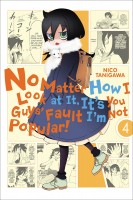
No Matter How I Look at It, It’s You Guys’ Fault I’m Not Popular!, Volume 4No Matter How I Look at It, It’s You Guys’ Fault I’m Not Popular!, Volumes 4-6 by Nico Tanigawa. In general Watamote tends to be fairly episodic, but time does slowly pass; the rhythm of school life drives the series along even if there isn’t much plot or character development per se. However, more and more recurring characters and running jokes are introduced and smaller story arcs form. The basic premise of Watamote is unchanging—Tomoko is an extremely awkward young woman whose social skills (or really the lack thereof) are entirely informed by the video games and manga that she’s interested in, many of which are rather raunchy. Occasionally she makes an effort to fit in with her classmates, but more often than not it backfires in terribly embarrassing ways. Watamote can be very funny in a painful and incredibly crass sort of way. Some but not all of the humor requires the reader to be at least vaguely familiar with Japanese pop culture, especially anime, manga, and video games. But there are copious translation notes available and the manga is usually fairly successful in conveying the basic gist of any given joke.

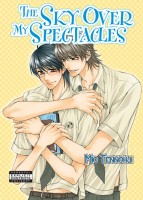
The Sky Over My SpectaclesThe Sky Over My Spectacles by Mio Tennohji. I will readily admit that I have a thing for glasses; in addition to having to wear them myself, I really like how they look on other people. One of the leads in titular story of The Sky Over My Spectacles has a similar fetish, which is what initially drew the collection of boys’ love manga to my attention. (The Sky Over My Spectacles was actually one of the first boys’ love manga that I ever read.) The four main manga collected in the volume—”The Sky Over My Spectacles,” “Let’s Fall in Love,” “Let’s Meet at 1 p.m.,” and “Tell Me You Love Me with Earnest Eyes”—all tend to be fairly upbeat and even surprisingly cute and sweet. Although there’s a bit of drama to be found, nothing ends in tragedy, which I appreciate. I also enjoy the light sense of humor present throughout the stories in the collection. The titular, and longest, manga is probably my favorite, though. In it, Azuma, whose glasses fetish is infamous, has developed a crush on one of his male, glasses-wearing classmates but then discovers that his feelings remain unchanged even when the glasses come off.

Filed Under: FEATURES, My Week in Manga Tagged With: Devil Survivor, manga, Mio Tennohji, Nico Tanigawa, Shin Megami Tensei, Watamote

Genocidal Organ

October 9, 2015 by Ash Brown

Genocidal OrganAuthor: Project Itoh
Translator: Edwin Hawkes
U.S. Publisher: Viz Media
ISBN: 9781421542720
Released: August 2012
Original release: 2007

Although Genocidal Organ was the third novel by Project Itoh to be translated and released in English, in Japan the book was actually his debut work as an author. My introduction to Itoh’s fiction was through the award-winning Harmony, his first novel to be translated into English, which I greatly enjoyed and found to be an intelligent, thought-provoking work of science fiction. I was also greatly impressed by his two short stories: “The Indifference Engine,” collected in The Future is Japanese, and “From Nothing, With Love,” found in Phantasm Japan. Thus, reading Genocidal Organ, released by Viz Media’s Haikasoru imprint in 2012 with a translation by Edwin Hawkes, was an obvious choice for me. The publication of Genocidal Organ in Japan in 2007 established Itoh as a talented author to watch out for. Sadly, he died two years later at the age of thirty-four from cancer. But Itoh and his work haven’t been forgotten. In 2014 it was announced that three of his novels, including Genocidal Organ, were to be adapted as feature-length animated films.

Ever since the attack on the World Trade Center on September 11, 2001, American citizens have more or less willingly given up their privacy and freedoms in order to feel safer from perceived terrorist threats. Much of the world has followed suit and there are very few places left where a person isn’t closely monitored and recorded, the immense amounts of data and metadata collected being saved indefinitely, waiting to be complied at a moments notice. In order to maintain this life of extreme hyper-surveillance there are people who must deal in death. Clavis Shepherd is one such man, an assassin who is a part of the Special Operations of the United States Military. He has killed countless people in service of his country—men, women, even children—but his recent missions have all had one target in common, an American linguist by the name of John Paul. Time and again the man seems to manage to slip away just before Shepherd’s unit arrives, leaving behind one developing country after another devastated by civil war and genocide.

Genocidal Organ is a novel that is absolutely saturated with death. It’s something that Clavis cannot escape in either his personal or professional life, whether he’s asleep or awake. Killing other people is his job and aided by modern science and medicine he is largely able to accept that, but his work is still tremendously damaging psychologically. But it’s not until Clavis had to make the decision whether or not to remove his mother from life support after she was in an accident that mortality really became personal to him. From there, his mental stability begins to steadily unravel as he is haunted by all of the death that he has seen and the death for which he has been responsible. Genocidal Organ can be horrific and tragic, gruesome and visceral. Clavis has been both a participant in and a witness to some truly terrible things—war and genocide that lay waste to entire countries and populations and all that accompanies that devastation. And, as an assassin for the government, he knows that he’s not an innocent bystander in how events unfold.

First and foremost, Genocidal Organ is Shepherd’s own personal narrative as he struggles to come to terms with his role as an assassin, but his story is couched in a much larger one dealing with global policy and international politics. Itoh has successfully incorporated many different genre styles in order to create a compelling and cohesive novel. In addition to all of the action and espionage, there are also the mysteries surrounding Paul as the “King of Genocide,” and an exceptionally strong philosophical and intellectual bent to the story as Genocidal Organ examines the worth of life and cost of freedom. Itoh presents an incredibly insightful perspective of the Untied States as a world power. Although it is perhaps more critical and frank than most American authors would likely attempt, the perspective is one that still feels surprisingly authentic. (It’s also very clear that Itoh was particularly well-versed in Western literature and popular culture.) Ultimately, though at times heavy-handed, Genocidal Organ is a fascinating and engaging novel of the near future; I remain convinced that Itoh was an author of exceptional talent.

Filed Under: REVIEWS Tagged With: Haikasoru, Novels, Project Itoh, viz media

Manga the Week of 10/14

October 7, 2015 by Sean Gaffney, Ash Brown, Michelle Smith, MJ and Anna N 1 Comment

SEAN: It’s the week of NYCC, so let’s keep this Manga the Week of short and sweet.

Dark Horse has a 10th Lone Wolf and Cub omnibus.

ASH: I really need to sit down and catch up with Lone Wolf and Cub now that it’s being released in an edition I can actually read…

kisshim1

SEAN: Kodansha debuts a series that some may have already seen on Crunchyroll’s manga site, the very well titled Kiss Him, Not Me. A warning: there is ‘sudden weight-loss makes me attractive’ here, as in Let’s Dance a Waltz. That said, the annoying premise is used entirely for comedy here, as our heroine is far more interested in pairing her hot guy suitors with each other.

MICHELLE: Yeah, I saw the weight loss thing and it disinclined me to investigate further. I’ll wait on others’ reviews of this one.

MJ: Ugh, not that again.

SEAN: Noragami is up to Volume 7 and making me wish I’d kept up with it, as it’s apparently insanely popular now.

ASH: Very popular! I’ve been enjoying it, too.

SEAN: From Seven Seas, Dance in the Vampire Bund II: Scarlet Order 3. Sean 0.

If you missed the Love in Hell volumes from a while back, there’s a Complete Collection coming out, also from Seven Seas.

The Seven Seas debut is Merman in My Tub, from Media Factory’s oddball magazine Comic Gene. If Monster Girls are a big hit, will Monster Guys sell just as well? Especially if there’s BL subtext?

MJ: Hm. Maybe?

merman1

ASH: I’m willing to give it a try!

ANNA: Hasn’t there already been a merman BL/yaoi title published over here? Is this an established genre?

SEAN: SubLime gives us a 3rd volume of The World’s Greatest First Love. Amazon seems to be listing Vol. 4 for next week as well, but I’m not sure if that’s accurate.

ASH: Yeah, I’m pretty sure it’s not. Volumes 3 throu 5 were delayed some.

SEAN: And Vertical has a 7th Witchcraft Works. They’ve almost caught up with Japan.

ASH: Another series I need to catch up on myself!

SEAN: Viz has a 56th volume of Case Closed, and will never, ever catch up with Japan, but at least it’s still coming out regularly.

Deadman Wonderland continues to head for a climax, but it’s not there yet with Vol. 11.

Lastly, we get a 14th volume of Magi, which continues to features our leads separating to have their own adventures/level up.

MICHELLE: Yay, Magi!

ANNA: Woo hoo for Magi!

SEAN: Anything from this list catch your eye?

Filed Under: FEATURES, manga the week of

Manga Giveaway: Devils and Realist Giveaway Winner

October 7, 2015 by Ash Brown

Devils and Realist, Volume 1And the winner of the Devils and Realist Giveaway is… Hanna!

As the winner, Hanna will be receiving the first volume of Madoka Takadono and Utako Yukihiro’s Devils and Realist as published by Seven Seas. For this giveaway, I asked that participants tell me a little about their favorite manga that featured devils or demons. Black Butler by Yana Toboso was mentioned quite frequently, but there were some others named, too. Check out the giveaway comments for all of the responses!

Some of the manga in English featuring devils or demons:
Angel Sanctuary by Kaori Yuki
Berserk by Kentaro Miura
Black Butler by Yana Toboso
Blood Blockade Battlefront by Yasuhiro Nightow
Blood Lad by Yuuki Kodama
Bloody Cross by Shiwo Komeyama
Blue Exorcist by Kazue Kato
Cat Eyed Boy by Kazuo Umezu
The Demon Ororon by Mizuki Hakase
Demon from Afar by Kaori Yuki
Demon Love Spell by Mayu Shinjo
The Devil Is a Part-Timer by Akio Hiiragi
Devil Survivor by Satoru Matsuba
Dorohedoro by Q Hayashida
From Far Away by Kyoko Hikawa
Gaba Kawa by Rie Takada
High-School DxD by Hiroji Mishima
Inuyasha by Rumiko Takahashi
Jiu Jiu by Touya Tobina
The Monkey King by Katsuya Terada
Love in Hell by Reiji Suzumaru
Nura: Rise of the Yokai Clan by Hiroshi Shibashi
The Sacred Blacksmith written by Isao Miura, illustrated by Kotaro Yamada
Seraph of the End written by Takaya Kagami, illustrated by Yamato Yamamoto
Seimaden by You Higuri
Stray Little Devil by Kotaro Mori
Wish by CLAMP

The above list is by no means exhaustive, but it does provide a wide range of manga for anyone looking for a devilish or demonic read. Seinen, shoujo, shounen; comedy, drama, horror, romance… all sorts of variations on the theme! As always, thank you to everyone who took time to share your favorites with me. Hope to see you again for the next giveaway!

Filed Under: Giveaways, UNSHELVED Tagged With: Devils and Realist, Madoka Takadono, manga, Utako Yukihiro

Pick of the Week: Almost a Clean Sweep

October 6, 2015 by Sean Gaffney, Michelle Smith, Ash Brown, Anna N and MJ Leave a Comment

qqsweeper1SEAN: Everything comes to an end, and we have three major series ending this week. My pick is for the final volume of Oh My Goddess!. It’s the 2nd manga series I ever read, after Ranma 1/2, and I’ve literally been reading it as long as I’ve read manga. Seeing it come to an end is surprising – I honestly thought it would run forever, like Sazae-san. Here’s hoping Keiichi and Belldandy finally get the honeymoon they’ve deserved for the last 25 or so years.

MICHELLE: And while some things end, others begin, like the latest series from Kyousuke Motomi (Beast Master, Dengeki Daisy), QQSweeper! I’m partway through the debut volume now and enjoying it immensely, so it easily earns my Pick of the Week award.

ASH: QQ Sweeper is my pick, too! Although I still need to read Beast Master, I really enjoyed Dengeki Daisy, even more than I expected that I would. I’m definitely looking forward to the debut of Motomi’s newest series in English.

ANNA: I enjoyed Dengeki Daisy very much, and while QQ Sweeper doesn’t feature another older hacker janitor/schoolgirl romance, Motomi’s delightfully quirky storytelling habits make it my pick of the week. I’m looking forward to seeing what happens with this more supernatural shoujo series.

MJ: I admit that I fizzled out early on Dengeki Daisy, but QQ Sweeper hooked me right away. It hits all my contemporary shoujo sweet spots, and I really can’t wait to read the next volume. This is absolutely my pick of the week.

Filed Under: PICK OF THE WEEK

My Week in Manga: September 28-October 4, 2015

October 5, 2015 by Ash Brown

My News and Reviews

A few different things were posted at Experiments in Manga last week. First of all, it’s time for the most recent monthly giveaway. The winner will be announced on Wednesday, so you all still have a chance to enter to win the first volume of Madoka Takadono and Utako Yukihiro’s Devils and Realist. The honor of the first in-depth review for October goes to Jim Zub and Steve Cummings’ Wayward, Volume 2: Ties That Bind, which continues to successfully meld the history and legends surrounding yokai with a brand new story. The series, which I’m thoroughly enjoying, would probably make a great entry point for manga fans who would be interested in exploring American-style comics. Finally, over the weekend I posted September’s Bookshelf Overload.

As for some of the interesting things that caught my attention elsewhere online last week: Foreign Policy has a nice piece about evolving LGBT rights in Japan and the role that manga like Wandering Son and boys’ love has played in it; Otaku USA has an interview with the (in)famous mangaka and tentacle master Toshio Maeda; it looks as though Masahiko Matsumoto’s long-awaited Cigarette Girl is currently scheduled for release in 2016 by Top Shelf; and Digital Manga, despite the trouble it seems to be having actually publishing anything in print these days, has launched its newest Tezuka Kickstarter aiming to release Wonder 3 and, as a stretch goal, The Film Lives On.

Quick Takes

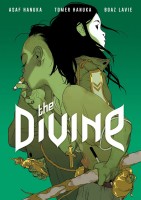
The DivineThe Divine by written by Boaz Lavie and illustrated by Asaf Hanuka and Tomer Hanuka. The striking color artwork of The Divine is what first caught my attention. (It looked vaguely familiar, and indeed, it turns out that Tomer created the cover art for Haikasoru’s recent Battle Royale releases.) The graphic novel follows Mark, an explosives expert, who travels to a remote Southeast Asian country on a military contract. The mission seems relatively straightforward—blowing up a mountain, supposedly to help the locals gain better access to its rich mineral resources—but Mark ends up caught up in the local civil war when he’s captured by a group of young rebels. Mixing mythology and modern warfare and the supernatural with man-made terrors, the comic is graphic in its blood and violence. The artwork is consistently great, but I found the narrative to be a little uneven and none of the characters are particularly likeable. The Divine was in part inspired by a photograph of the twelve-year-old Htoo twins from Burma, the leaders of the God’s Army guerrilla group in the 1990s. Although I did enjoy The Divine, I think I’d actually be even more interested in seeing a direct retelling of their story.

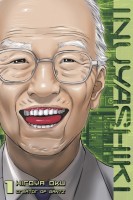
Inuyashiki, Volume 1Inuyashiki, Volume 1 by Hiroya Oku. It’s been a long while since I’ve read any of Gantz, the series that Oku is most well-known for, but I was still curious about Inuyashiki, his most recent series to be released in English. Almost unheard of in manga available in translation, which largely tends to be targeted at a younger audiences, one of lead characters, the titular Ichiro Inuyashiki, is nearly sixty years old. In fact, he looks even older than that. The first volume of Inuyashiki seems to mostly be a prologue for the rest of the series, establishing the premise of the manga and introducing the characters who will become the major players. Oku makes a point to emphasize just how sad and miserable Inuyashiki’s life is before killing him and another innocent bystander off in a freak accident. Granted, they are then both resurrected as extraordinarily powerful, weaponized cyborgs. In the case of Inuyashiki, he’s using his new-found abilities for good, and in spectacular fashion, too. As for the other victim, I don’t expect that he’ll be quite as magnanimous. Inuyashiki, as ridiculous as its setup is, has a promising start. I’m rather curious to see the direction Oku will be taking the series.

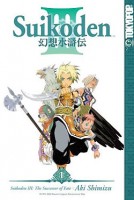
Suikoden III: The Successor of Fate, Volume 1Suikoden III: The Successor of Fate, Volumes 1-5 by Aki Shimizu. Although I am aware of the RPG series, I haven’t actually played any of the Suikoden video games. I was specifically interested in the Suikoden III manga adaptation for two reasons: the entire Suikoden series is loosely based on the Chinese classic Water Margin, and I generally enjoy Shimizu’s work (which also tends to have a Chinese influence). An overview of the previous two Suikoden stories is provided before the manga gets underway; it’s a nice, but largely unnecessary addition. The Successor of Fate seems to stand well on it own, so far. The manga doesn’t really feel like a video game adaptation, either, which I was happy to discover. References are made to past events (and past games, technically), but for the characters that history is shrouded in myth and legend. At this point The Successor of Fate hasn’t really made itself stand out from most other epic fantasy series, but its a solid beginning and, despite a few infodumps, there are plenty of things to like: a large cast of characters (including quite a few women in prominent roles), prophecies and magic, politics and intrigue, battles that rely on strategy as much as strength, and so on.

Filed Under: FEATURES, My Week in Manga Tagged With: Aki Shimizu, Asaf Hanuka, Boaz Lavie, comics, Hiroya Oku, Inuyashiki, manga, Suikoden, Tomer Hanuka

Bookshelf Overload: September 2015

October 4, 2015 by Ash Brown

Makoto Yukimura’s Vinland Saga is back! The publication of the manga’s sixth omnibus was one of my most anticipated releases for September. I was also very excited for Requiem of the Rose King, Volume 2 by Aya Kanno, which I’ve already managed to review. I was happy to see the second volume of The Ancient Magus’ Bride by Kore Yamazaki as well. September was also a successful month for me in regards to out-of-print shoujo series like Red River by Chie Shinohara. (I’m hoping to find Kyoko Hikawa’s From Far Away, next.) I stocked up on more Japanese crime and mystery novels in September, too, partly inspired by my recent reading of Yukito Ayatsuji’s The Decagon House Murders. I’m actually currently reading Another by the same author and should have a review up in the relatively near future.

Manga!
The Ancient Magus’ Bride, Volume 2 by Kore Yamazaki
Haven’t You Heard? I’m Sakamoto, Volume 1 by Nami Sano
Love Stage!!, Volume 3 by Eiki Eiki
Lucifer and the Biscuit Hammer, Omnibus 4 by Satoshi Mizukami
Master Keaton, Volume 4 written by Hokusei Katsushika, Takashi Nagasaki, illustrated by Naoki Urasawa
Mobile Suit Gundam: The Origin, Volume 11: A Cosmic Glow by Yoshikazu Yasuhiko
One-Punch Man, Volume 1 written by One, illustrated by Yusuke Murata
Pandora Hearts, Volumes 2-3 by Jun Mochizuki
Planet Ladder, Volumes 1-7 by Yuri Narushima
Red River, Volumes 1-28 by Chie Shinohara
Requiem of the Rose King, Volume 2 by Aya Kanno
Showa: A History of Japan, 1953-1989 by Shigeru Mizuki
A Silent Voice, Volume 3 by Yoshitoki Oima
Terra Formars, Volume 8 written by Yu Sasuga, illustrated by Ken-ichi Tachibana
Vinland Saga, Omnibus 6 by Makoto Yukimura
Witchcraft Works, Volume 5 by Ryu Mizunagi
Yamada-kun and the Seven Witches, Volume 4 by Miki Yoshikawa
The Young Magician, Volumes 1-13 by Yuri Narushima

Manhua!
Monkey King, Volume 1: Birth of the Stone Monkey by Wei Dong Chen
Three Kingdoms, Volume 1: Heroes and Chaos written by Wei Dong Chen, illustrated by Xiao Long Liang

Comics!
Deep Dark Fears by Fran Krause
Flutter, Volume 2: Don’t Let Me Die Nervous written by Jennie Wood illustrated by Jeff McComsey
Hark! A Vagrant by Kate Beaton
Heart in a Box written by Kelly Thompson, illustrated by Meredith McClaren
Ikebana by Yumi Sakugawa
Julio’s Day by Gilbert Hernandez
Little By Little by Guilt|Pleasure
Nanjing: The Burning City by Ethan Young
Never Learn Anything from History by Kate Beaton
Oh Joy Sex Toy, Volume 2 by Erika Moen
Peacock Punks written by Dale Lazarov, illustrated by Mauro Mariotti Janos Janecki
Sacred Heart by Liz Suburbia
Step Aside, Pops by Kate Beaton
Speculative Relationships, Volume 2 edited by Tyrell Cannon and Scott Kroll
Unflattening by Nick Sousanis
The Usagi Yojimbo Saga, Omnibus 4 by Stan Sakai

Novels!
Attack on Titan: The Harsh Mistress of the City, Part 2 written by Ryo Kawakami, illustrated by Range Murata

Novels!
Another by Yukito Ayatsuji
Honeymoon to Nowhere by Akimitsu Takagi
The Informer by Akimitsu Takagi
The Inugami Clan by Seishi Yokomizo
Patriotism by Yukio Mishima
The Tattoo Murder Case by Akimitsu Takagi
The Tokyo Zodiac Murders by Soji SHimada

Anime!
JoJo’s Bizarre Adventure, Season 1 directed by Kenichi Suzuki and Naokatsu Tsuda.

Filed Under: Bookshelf Overload, UNSHELVED

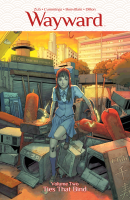
Wayward, Vol. 2: Ties That Bind

October 2, 2015 by Ash Brown

Wayward, Volume 2: Ties That BindCreator: Jim Zub and Steve Cummings
Publisher: Image Comics
ISBN: 9781632154033
Released: August 2015
Original run: 2015

Ties That Bind is the second volume of the American comic series Wayward, created by Jim Zub and Steve Cummings and released by Image Comics. Anything having to do with yokai immediately catches my attention, and I had previously read and enjoyed some of Zub’s earlier work, so I was very interested in reading Wayward. I thoroughly enjoyed the first collected volume in the series, String Theory, meaning that there was absolutely no question that I would be picking up the second, too. (Well, at least that was the case before I learned that a deluxe omnibus edition was going to be released—then there was a difficult choice to be made.) Ties That Bind, published in 2015, collects the sixth through tenth issues of Wayward which were originally serialized between March and July 2015. Also included is an introduction by Charles Soule as well as several yokai essays by Zack Davisson which I especially appreciate. For this particular volume, Zub is credited for the story and Cummings for the line art while the credit for the color art goes to Tamara Bonvillain and color flats to Ludwig Olimba.

Emi Ohara’s life follows a simple, predictable routine. Without much variation from day to day she wakes up, goes to school, and returns home. But Emi yearns to have the exciting lives that the heroines of her favorite shoujo manga enjoy. Little does she know that she’ll get what she wished for, but not at all in the way that she expected—Emi discovers she has the ability to manipulate her body and the materials around her in astonishing ways. Suddenly, among other strange developments, her touch is able to melt and mold plastic and her arm can take on the characteristics of metal and glass. At first she thinks it’s all a dream, but then she is chased down by a group of monstrous kitsune only to be rescued by Ayane and Nikaido, two young people who have their own special powers and who are also the yokai’s targets. It’s been three months since the other members of their group, Rori and Shirai, disappeared during the chaos of an epic confrontation with a faction of yokai. At this point Ayane and Nikaido are welcoming any allies they can find, and that includes Emi.

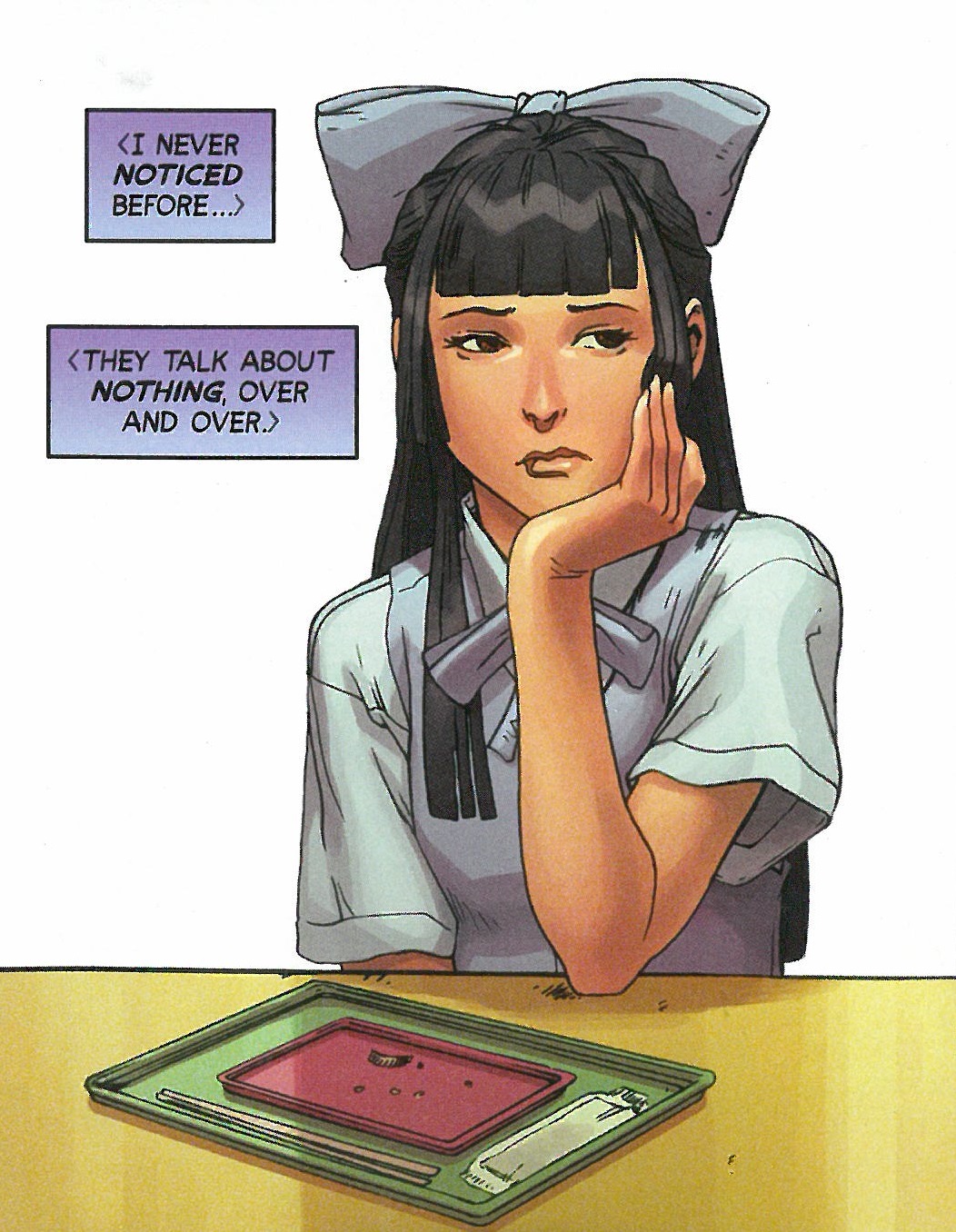
Wayward, Volume 2, page 40Whereas String Theory largely followed Rori’s perspective of the supernatural events unfolding in Tokyo, much of the focus of Ties that Bind is on Emi. Some of the contrasts between the young women as two of the leads in the story are particularly interesting. Rori, who is half-Japanese and half-Irish, is often considered to be an outsider within Japanese society. Emi, on the other hand, is a “proper Japanese girl,” dutiful and obedient even though she finds that role to be increasingly suffocating. Rori is a Weaver with the ability to alter reality and change a person’s fate. (Just how incredibly powerful and far-reaching her talents truly are is still in the process of being revealed, but the continuing development and evolution of her skills in Ties That Bind is impressive.) However, Emi, who like Rori is sensitive to patterns and seems to be able to at least partially identify the course of fate and destiny, feels trapped and unable to make meaningful choices or to change the direction of those events that have already been set in motion.

At times, Wayward can be an extremely violent series. Ayane’s way of taking charge of the situation is to go on the attack, dragging Nikaido and Emi along with her. The yokai, threatened by the very existence of the supernaturally-gifted teens, are more than willing to fight back. The resulting battles are intense, bloody, and even gruesome. But the yokai aren’t united in their efforts—Ties That Bind introduces the tsuchigumo, or dirt spiders, who would seem to have their own agenda. I love that Wayward incorporates the lore and, especially in the case of the dirt spiders, the history surrounding yokai. The series’ interpretation of yokai and traditional tales is its own and is closely integrated with an entirely new, contemporary story. Wayward effectively creates a cohesive and compelling narrative that can be enjoyed by readers who are already familiar with yokai as well as by those who are not. Ties That Bind brings together new characters, new conflicts, and new plot threads while expanding and further developing those that had already been established. Wayward is an excellent series with great art, characters, and story; I’m definitely looking forward to the next volume.

Filed Under: REVIEWS Tagged With: comics, Image Comics, Jim Zub, Steve Cummings, Wayward

  • « Go to Previous Page
  • Page 1
  • Interim pages omitted …
  • Page 94
  • Page 95
  • Page 96
  • Page 97
  • Page 98
  • Interim pages omitted …
  • Page 140
  • Go to Next Page »
 | Log in
Copyright © 2010 Manga Bookshelf | Powered by WordPress & the Genesis Framework