• Skip to primary navigation
  • Skip to main content
  • Skip to primary sidebar
  • Home
  • About Us
    • Privacy Policy
    • Comment Policy
    • Disclosures & Disclaimers
  • Resources
    • Links, Essays & Articles
    • Fandomology!
    • CLAMP Directory
    • BlogRoll
  • Features & Columns
    • 3 Things Thursday
    • Adventures in the Key of Shoujo
    • Bit & Blips (game reviews)
    • BL BOOKRACK
    • Bookshelf Briefs
    • Bringing the Drama
    • Comic Conversion
    • Fanservice Friday
    • Going Digital
    • It Came From the Sinosphere
    • License This!
    • Magazine no Mori
    • My Week in Manga
    • OFF THE SHELF
    • Not By Manga Alone
    • PICK OF THE WEEK
    • Subtitles & Sensibility
    • Weekly Shonen Jump Recaps
  • Manga Moveable Feast
    • MMF Full Archive
    • Yun Kouga
    • CLAMP
    • Shojo Beat
    • Osamu Tezuka
    • Sailor Moon
    • Fruits Basket
    • Takehiko Inoue
    • Wild Adapter
    • One Piece
    • After School Nightmare
    • Karakuri Odette
    • Paradise Kiss
    • The Color Trilogy
    • To Terra…
    • Sexy Voice & Robo
  • Browse by Author
    • Sean Gaffney
    • Anna Neatrour
    • Michelle Smith
    • Katherine Dacey
    • MJ
    • Brigid Alverson
    • Travis Anderson
    • Phillip Anthony
    • Derek Bown
    • Jaci Dahlvang
    • Angela Eastman
    • Erica Friedman
    • Sara K.
    • Megan Purdy
    • Emily Snodgrass
    • Nancy Thistlethwaite
    • Eva Volin
    • David Welsh
  • MB Blogs
    • A Case Suitable For Treatment
    • Experiments in Manga
    • MangaBlog
    • The Manga Critic
    • Manga Report
    • Soliloquy in Blue
    • Manga Curmudgeon (archive)

Manga Bookshelf

Discussion, Resources, Roundtables, & Reviews

Ash Brown

Manga Giveaway: Love at Fourteen Giveaway

January 27, 2016 by Ash Brown

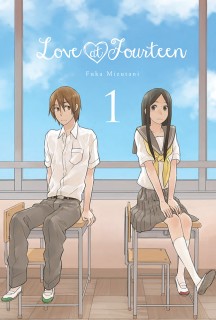
January is almost over so here it is, Experiments in Manga’s first manga giveaway of the year! Let’s get right to it: For this giveaway you will all have the opportunity to enter for a chance to win Love at Fourteen, Volume 1 created by Fuka Mizutani and published in English by Yen Press. And, as always, the giveaway is open worldwide!

Love at Fourteen, Volume 1

Had I been thinking about it thematically, a giveaway for Love at Fourteen—a sweet and somewhat nostalgic story of first love—would have been nicely suited for a February or March giveaway because of Valentine’s Day or White Day, respectively. Then again, my love of manga and my love of spreading that love cannot be contained or limited to a single month! Looking at it that way, and following a peculiar train of logic, a manga giveaway featuring a love story would be more than appropriate any time of the year. Thus, Love at Fourteen! Because, why not?

So, you may be wondering, how can you win Love at Fourteen, Volume 1?

1) In the comments below, tell me a little about your favorite manga love story. (If you don’t have one, simply mention that!)
2) If you’re on Twitter, you can earn a bonus entry by tweeting, or retweeting, about the contest. Make sure to include a link to this post and @PhoenixTerran (that’s me).

And there you have it! Each giveaway participant can earn up to two entries and has one week to submit comments. Entries can also be emailed directly to me at phoenixterran(at)gmail(dot)com if needed or preferred. I will then post the comments here in your name. The giveaway winner will be randomly selected and announced on February 3, 2016. Best of luck to you all!

VERY IMPORTANT: Include some way that I can contact you. This can be an e-mail address in the comment form, a link to your website, Twitter username, or whatever. If I can’t figure out how to get a hold of you and you win, I’ll just draw another name.

Contest winner announced–Manga Giveaway: Love at Fourteen Giveaway Winner

Filed Under: FEATURES, Giveaways Tagged With: Fuka Mizutani, Love at Fourteen, manga

Pick of the Week: Orange Crush

January 25, 2016 by Michelle Smith, Sean Gaffney, Ash Brown, MJ and Anna N Leave a Comment

orangeMICHELLE: Decisions, decisions! I love My Little Monster and it’s almost over. Orange has definitely got me intrigued. But, if I’m honest, what I’m most eager to experience is the second volume of surprise delight Horimiya. Go buy eet!

SEAN: My pick this week is definitely Orange, and I really enjoy it when Seven Seas picks up a series like this that’s out of their usual wheelhouse. A touching, sweet, somewhat tragic teen romance with time travel overtones. What’s not to love?

ASH: Orange is my pick, too! Although I plan on reading reading several of this week’s releases, the debut of Orange is the one I’m most interested in. I’ve heard good things about the series, so I’ve been looking forward to it.

MJ: I’m interested in Orange for sure, but this week I’ll hop on board with Michelle and the second volume of Horimiya! So, so charming, I honestly can’t wait.

ANNA: Out of everything coming out this week, I’m most interested in Orange, so that is my pick!

Filed Under: PICK OF THE WEEK

My Week in Manga: January 18-January 24, 2016

January 25, 2016 by Ash Brown

My News and Reviews

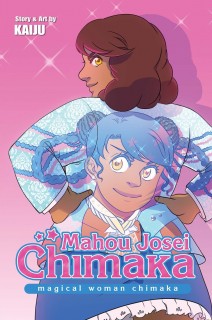
Two in-depth reviews were posted at Experiments in Manga last week. The first was of The Fall of Language in the Age of English by Minae Mizumura, a fascinating and immensely readable work of nonfiction about literature and language. (Mizumura’s A True Novel also greatly impressed me, so at this point I’ll basically read anything written by her; if only more would be translated!) The second review was of KaiJu’s Mahou Josei Chimaka, one of Chromatic Press’ most recent paperback releases and a delightfully entertaining parody of and a loving homage to the magical girl genre. The comic is playful, humorous, and a lot of fun.

Elsewhere online: The Toronto Comic Arts Festival has announced its first round of featured guests. The list includes Rokudenashiko, whose manga What Is Obscenity? will be making its English-language debut at the festival. Bruno Gmünder will be bringing The Passion of Gengoroh Tagame back into print later this year in a newly revised and expanded edition. Ryan Holmberg’s most recent What Was Alternative Manga? includes a translation of a discussion between Hayashi Seiichi and Sasaki Maki. And on Twitter, Digital Manga is hinting at a launch of another classic manga Kickstarter, only this time it won’t be Tezuka.

Quick Takes

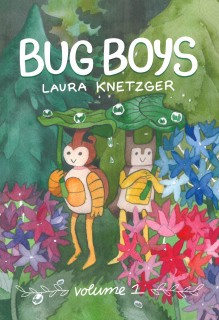
Bug Boys, Volume 1: Welcome to Bug VillageBug Boys, Volume 1: Welcome to Bug Village by Laura Knetzger. Although I’ve read and enjoyed a few of Knetzger’s short autobiographical comics, I picked up Bug Boys more by chance than anything else. I’m so glad that I did, because I’m absolutely loving this comic. Originally a series of self-published mini-comics, the first book was recently released by Czap Books. The hefty volume collects all of the previously released Bug Boys comics in addition to new, never-before-seen content. The comics are mostly black-and-white, but Knetzger also occasionally uses color. The story follows Rhino-B and Stag-B, two young beetles and best friends living in Bug Village, as they grow up, go on adventures, and explore their world. It’s all incredibly cute and touching, even when the two of them are dealing with some fairly big, weighty issues. Friendly enough for children, but also thoroughly enjoyable for adults, Bug Boys is one of the most wonderfully delightful and charming comics that I’ve read in a very long time. I’ll definitely be keeping an eye out for more of the series and for more of Knetzger’s work.

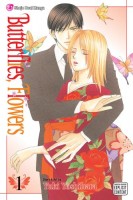
Butterflies, Flowers, Volume 1Butterflies, Flowers, Volume 1 by Yuki Yoshihara. Once wealthy aristocrats, the members of the Kuze family have fallen on hard times. They no longer have any servants and have instead become the masters of a soba noodle shop. Choko is now searching for separate employment, only discovering after the fact that her new boss, Masayuki Domoto, is the son of the family’s old chauffeur. Butterflies, Flowers is a somewhat peculiar romantic comedy that’s hard to take seriously. Granted, I don’t think that the manga is really intended to be taken seriously. And I’ll admit, the first volume of the manga made me laugh on several occasions. The power dynamics in Butterflies, Flowers are all over the place, so it’s difficult to know what to expect from one page to the next, especially where Choko and Domoto are involved. At first Choko doesn’t have much confidence—working in an office is a new experience for her—but every once in a while she’ll take charge of the situation. As for Domoto, he frequently switches from being an overbearing and demanding boss to being completely subservient to the woman and family that used to employ his father.

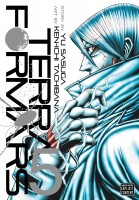
Terra Formars, Volume 5Terra Formars, Volumes 5-8 written by Yu Sasuga and illustrated by Ken-ichi Tachibana. It’s been a while since I’ve read any of Terra Formars, but it wasn’t too difficult to pick it up again where I left it—even considering the various plot twists, the series is pretty easy to follow and tends to be fairly action-oriented. By far the best thing about Terra Formars for me are the over-the-top battles between super-powered combatants. Not only have humans been crossed with insect genetics, there are examples of those who have been crossed with birds, mammals, aquatic creatures, plants, and even bacteria, giving the individuals a wide variety of incredible abilities. Realistic? Perhaps not, but the resulting battles are epic. (Surprisingly, Terra Formars has actually taught me quite a few things about plants and animals.) The political maneuvering back on Earth, while being portrayed in a very dramatic fashion, frankly doesn’t interest me that much. However, it is that drama that largely propels what little story the series has. It also means that the modified humans end up having to fight each other in addition to the Martian inhabitants.

Filed Under: FEATURES, My Week in Manga Tagged With: Bug Boys, butterflies flowers, comics, Ken-ichi Tachibana, Laura Knetzger, manga, Terra Formars, Yu Sasuga, Yuki Yoshihara

Mahou Josei Chimaka

January 22, 2016 by Ash Brown

Mahou Josei ChimakaCreator: KaiJu
Publisher: Chromatic Press
ISBN: 9781987988017
Released: December 2015
Original run: 2014-2015

Mahou Josei Chimaka, or Magical Woman Chimaka, is the second long-form comic by KaiJu, a creative team made up of Kate Rhodes and Jennifer Xu, that I’ve had the opportunity to read. The three-chapter comic was originally serialized online in Sparkler Monthly between 2014 and 2015 before being collected and released in both digital and print book editions by Chromatic Press later in 2015. I love everything that Chromatic Press is involved with, but I was especially looking forward to Mahou Josei Chimaka for a number of reasons. Most notably, I was greatly impressed by KaiJu’s previous comic The Ring of Saturn (which also released by Chromatic Press) and have been closely following the team’s work ever since. It also didn’t hurt that in large part Mahou Josei Chimaka is a loving homage to and parody of the magical girl genre. That and it also it ends up being a sweet romance between two women.

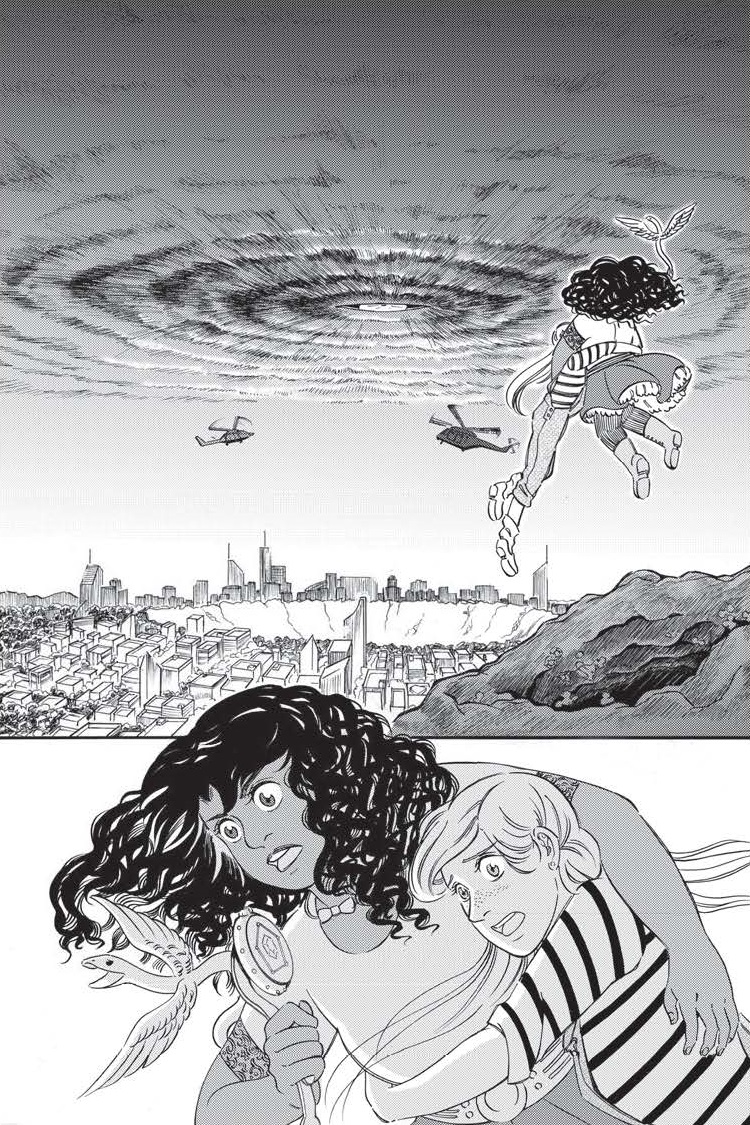
Fifteen years ago Shimmer Shimmer Skypatcher Chimaka faced her greatest nemesis and lost, failing to protect her city. While Chimaka was able to temporarily repel the threat, a large portion of the city was laid to waste and left a giant, lifeless crater. Now her enemy has returned, intending to finish the job, only Chimaka isn’t a magical girl anymore. Her life fell apart after that fateful, disastrous encounter and, although she’s back on her feet again, the magic is gone. Chimaka now spends her days working as a scientist at Squid Petroleum and nights drinking with her colleague Pippa with whom she has become very close. But with the return of her old enemy, along with the persistence of a certain government agency which uncovered her past, Chimaka needs to find a way to regain her powers. The ever cheerful Pippa is determined to do all that she can to help Chimaka, but the task that the two of them face is a difficult and daunting one—Chimaka must once more become Shimmer Shimmer Skypatcher if she wants to save the world.

Mahou Josei Chimaka, page 94Mahou Josei Chimaka is crafted to especially appeal to readers who are fans of the magical girl genre (or, in this particular case, the magical woman genre) and who are interested in a slightly different approach than is often seen. While it’s not absolutely necessary to be familiar with the common tropes and themes of the genre—Mahou Josei Chimaka is completely enjoyable as a story in its own right—readers who are will be in a better position to truly appreciate the entirety of the comic and its satire. The elements one would expect to see in a magical girl story are all present in Mahou Josei Chimaka, including but certainly not limited to animal companions, transformation sequences, dazzling accessories, and an emphasis on the power of love. But these have all been slightly skewed through the lens of Chimaka’s growth into cynical adulthood. And yet, while KaiJu’s interpretation of the magical girl genre is honest and mature, it doesn’t become dark and depressing.

Mahou Josei Chimaka is a delightfully funny and charming comic. Much of this comes from the contrasting but complimentary personalities of the comics’ two leading women and the sweetness of their blossoming relationship, but as a whole Mahou Josei Chimaka is very playful. KaiJu has a great sense of humor which comes through not only in the story and characters, but in the artwork as well. The artists alternate between using more realistic illustrations and those that are exaggerated for great comedic effect. The final chapter does perhaps rush the story’s climax a bit as the creators pull out all the stops for the epic final battle, but it’s a sort of intentional ridiculousness that’s highly entertaining. Although preventing the end of the world is serious business, Mahou Josei Chimaka mixes in silliness in the best sort of way. I enjoyed the comic on my first read but I find that I like it even more after reading it again; Mahou Josei Chimaka is a great deal of fun.

Filed Under: REVIEWS Tagged With: Chromatic Press, comics, kaiju

Manga the Week of 1/27

January 21, 2016 by Sean Gaffney, Ash Brown, Michelle Smith, Anna N and MJ 1 Comment

SEAN: It’s time to bury you in manga releases once more, folks. What do the companies have up their sleeves?

ASH: All right, let’s do this!

Kodansha has the 12th and penultimate volume of My Little Monster. I can’t believe it’s ending so soon.

MICHELLE: I know! Thankfully, Say I Love You. is still ongoing.

noragami10

SEAN: Noragami has hit double digits, likely to the delight of Kodansha.

ASH: I’m a few volumes behind, but I have been enjoying Noragami.

SEAN: And there’s a 12th volume of The Seven Deadly Sins.

Seven Seas has a bunch of stuff for us. Akuma no Riddle intrigued me more than I was expecting, so I look forward to the second volume.

MICHELLE: I need to investigate this one.

SEAN: Magical Girl Apocalypse does not intrigue me at all, but it has its fans who will enjoy this 6th volume.

And possibly the polar opposite of that title, Non Non Biyori has a 3rd volume.

Lastly, there’s an omnibus Vol. 1 release of the manga Orange, which has been up digitally on Crunchyroll, but Seven Seas now gives us a print release. It originally ran in Betsuma, then moved to Manga Action, showing it can be both shoujo and seinen. I think this is the first half.

ASH: I’ve heard good things and am looking forward to this one!

ANNA: Huh, I think I’m now officially intrigued.

MICHELLE: Me, too!

MJ: I’m always surprised when I’m interested in a Seven Seas release, but here we are!

SEAN: Vertical gives us another omnibus of Chi’s Sweet Home, with Vol. 4-6. Adorable kitties!

MICHELLE: Yay, kitties!

MJ: Chiiiiiii!

SEAN: And now it’s time for the Yen deluge. First up is Yen On. The Isolator was a new series by the author of Sword Art Online and Accel World, new enough so that it’s been a year since the first volume. Vol. 2 should be interesting.

kagerou3

And there’s a third volume of somewhat surreal teenage superpowers novel Kagerou Daze.

Yen Digital has a bunch of new titles coming out, and I’ll just note the complete volumes. Aphorism 2, Crimson Prince 2, Renaissance Eve 2, Scarlet Empire 3, and Sekirei 2. For those who enjoy tablet reading, try one of these series out.

On to actual print manga titles from Yen Press. There’s a 6th Accel World manga, which should be in the middle of one of the angstiest arcs.

Akame Ga KILL! reaches Vol. 5, continuing to try to excite us with capital letters and exclamation points.

Alice in Murderland 3 doesn’t have capital letters or exclamation points, but it has murder. Isn’t that enough?

A Certain Magical Index 4 decides it’s best to skip the boring vampire girl and move right to what readers really want, the sister clones.

The Devil Is A Part-Timer! 4 also adapts the novels for those who prefer exciting artwork with your plotting.

Final Fantasy Type-0 Side Story Volume 3 still remains very difficult to say.

First Love Monster’s 3rd volume will remind its readers of the discomfort they felt while reading Bunny Drop, I suspect.

Horimiya’s first volume was absolutely terrific, and I am delighted to see the 2nd one out next week.

MICHELLE: Me, too! The first volume was a lovely surprise!

ANNA: I’m intrigued again!

MJ: This is the volume I’m looking forward to most this week, I think!

SEAN: How to Raise a Boring Girlfriend (aka Saekano) is based on a light novel Yen doesn’t have the license for. It seems to feature an otaku hero and his collection of eccentric female acquaintances, just like every single other light novel ever.

Kagerou Daze also has a 4th manga volume out.

wwb1

Log Horizon has a manga spinoff coming out, The West Wind Brigade, focusing on bishonen guild leader Sojirou.

Puella Magi Madoka Magica has a 2nd volume of its manga adaptation of the Rebellion movie.

So I Can’t Play H! has a 4th volume.

Sword Art Online has a 2nd volume of its side story Girls’ Ops, focusing on the female characters who get progressively ignored by the novels.

And it also starts to adapt a new arc, with the first Sword Art Online: Phantom Bullet volume.

MJ: I wish I was more interested in the manga adaptations of SAO, but they haven’t thrilled me.

SEAN: Taboo Tattoo is the other new title from Yen this month, running in my old nemesis, Media Factory’s Comic Alive. I have low expectations, but we shall see.

Triage X has reached Volume 11, despite all the prayers to the gods and curses I’ve attempted to put on it.

There’s a 5th Ubel Blatt omnibus, helpfully called Ubel Blatt 4. You know, if it had a light novel series, which Yen licensed with the same numbering, Amazon might literally explode into shards trying to keep track.

ASH: Ha! (It probably would.)

SEAN: Umineko When They Cry finishes up another arc, and if it helps this is definitely the low ebb of the series. From here out, things can only get better. Well, mostly better. Somewhat better?

And lastly, there’s an 11th omnibus of Until Death Do Us Part. Or its British version, Until Death Us Do Part.

MICHELLE: Aaaand now I have The Kinks in my head!

SEAN: Aside from staring at me blankly for that last obscure joke, what’s everyone doing next week?

Filed Under: FEATURES, manga the week of

The Fall of Language in the Age of English

January 20, 2016 by Ash Brown

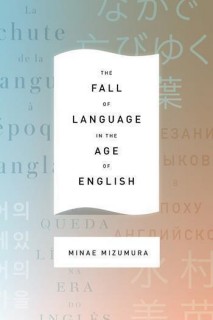
The Fall of Language in the Age of EnglishAuthor: Minae Mizumura
Translator: Mari Yoshihara and Juliet Winters Carpenter
U.S. publisher: Columbia University Press
ISBN: 9780231163026
Released: January 2015
Original release: 2008
Awards: Kobayashi Hideo Award

Currently, only two major works by Minae Mizumura have been translated into English. The first, and one of the best works of literature that I’ve read in recent years, was A True Novel. More recently, the English-language edition of Mizumura’s first nonfiction work, The Fall of Language in the Age of English, was released, published in 2015 by Columbia University Press with a translation by Juliet Winters Carpenter (who was also the translator for A True Novel) and Mari Yoshihara. The Fall of Language in the Age of English is actually a revision of its Japanese counterpart, Mizumura rewriting portions of the book, most notably the final chapter, to better suit a non-Japanese audience. The Fall of Language in the Age of English caused something of a stir when it was originally published in Japan in 2008—the work won a Kobayashi Hideo Award, became a commercial success, and even sparked some amount of controversy.

Mizumura opens The Fall of Language in the Age of English with a personal account of her participation in the University of Iowa’s International Writing Program in 2003. Afterwards, Mizumura, who studied French and French literature at Yale, proceeds to outline the rise and fall of French as one of the world’s universal languages. She then discusses the concept and role of universal languages, the development of local languages into national languages, and the relationships among the three in general before specifically turning to the emergence of Japanese as a national language. From there Mizumura describes what she calls the miracle of modern Japanese literature, shedding further light upon its peculiar evolution and how it came to be considered a major world literature. Mizumura then addresses the current prevalence of English and its spread before closing with what she sees as the possible futures in store for non-English languages in the digital age.

The Fall of Langauge in the Age of English is an immensely readable and engaging work examining the place of literature, national languages, and translation in a world in which English increasingly dominates. In addition to the main text, The Fall of Language in the Age of English also includes a newly-written preface by Mizumura specifically for the English-language edition of the work, an introduction by the translators, notes, a selected bibliography, and an index. The volume is written in a very approachable manner and is intended for a general audience, Mizumura presenting ideas and concepts clearly and eloquently. I happen to already have a particular interest in the subject matter of language (I even once seriously considered pursing a career in translation or linguistics), but no specialist knowledge is needed to read, understand, or enjoy The Fall of Language in the Age of English.

I found The Fall of Language in the Age of English to be utterly fascinating. The work deftly combines many differing elements together into a single, coherent whole—autobiography, history, linguistics, literary criticism, and so on. Mizumura begins by examining language and writing from a very personal perspective before placing her experiences within a greater context. She shows how geopolitical circumstances allowed Japanese language and literature to initially develop and flourish and how those circumstances now place them in danger of becoming obsolete in the worldwide arena. Language, culture, and power are all inherently and inextricably intertwined. Though The Fall of Language in the Age of English warns of what could be lost if national languages and literatures are allowed to decline unabated, Mizumura doesn’t come across to me as fatalistic or alarmist, believing there is still time to establish efforts to nourish and ensure the preservation and importance of non-English languages, cultures, and literatures.

Filed Under: REVIEWS Tagged With: Minae Mizumura, Nonfiction

Pick of the Week: Teenage Kicks

January 18, 2016 by Sean Gaffney, Ash Brown, MJ and Anna N Leave a Comment

shoreSEAN: Intellectually, I know that A Girl On The Shore is the obvious choice here, but I know I’m going to wince and cringe all through its highly realistic and painful depictions of teenage life. So instead I will pick the 5th volume of A Silent Voice, which… will do the same thing, to be fair.

ASH: Well, since I’ll still have a couple of opportunities left to pick A Silent Voice and since Sean has already picked it himself, I’ll choose A Girl on the Shore this week. Inio Asano’s work can be difficult and certainly isn’t always the most comfortable to read, but it does tend to be compelling.

MJ: I’ll also go with A Girl on the Shore. I expect this will, indeed, be painful, but I kinda like that quality in a manga. My own teen years are still pretty vivid for me, which I think tends to draw me to this kind of work, so my expectations are high.

ANNA: I feel like any new Inio Asano work should be an automatic Pick. A Girl on the Shore is my choice as well.

Filed Under: PICK OF THE WEEK

My Week in Manga: January 11-January 17, 2016

January 18, 2016 by Ash Brown

My News and Reviews

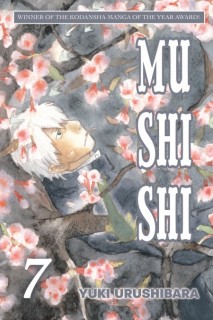
It was entirely unintentional, but last week was apparently the week for sevens—both of my in-depth manga reviews last week were for the seventh installment of their respective series. They both happen to be manga currently licensed by Kodansha Comics, as well, which was also a coincidence.  On Wednesday, I reviewed the seventh omnibus of Vinland Saga by Makoto Yukimura. The series continues to be magnificent. The seventh omnibus might be the last of the series to be released in English, which would truly be a shame. The volume does bring to a close one of the series’ major story arcs, but I really hope more of Vinland Saga will be able to be translated. The second review, part of my monthly horror manga review project, was of Yuki Urushibara’s Mushishi, Volume 7. Mushishi continues to be one of my favorite manga. I’m really enjoying my reread of the series and the opportunity to write about it in more detail. One other thing I wanted briefly to mention was a Kickstarter project to help Yamakiya Taiko, a wonderful youth taiko ensemble from Fukushima, raise money to defray the cost of their upcoming trip to the United States in March. I’ll actually be playing with the group a bit while they’re in Michigan, so I especially hope that the campaign succeeds.

Quick Takes

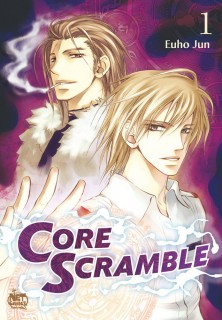
Core Scramble, Volume 1Core Scramble, Volume 1 by Euho Jun. I’ve been slowly making my way through Netcomics’ new series which is what brought Core Scramble to my attention. That and the promise of boys’ love mixed with science fiction, fantasy, and action. At this point, romance doesn’t seem to be the priority of Core Scramble, though there is some sexual harassment thrown in. Chaeun is a fairly average soldier—one of many fighting in a war against swarms of extra-dimensional monsters invading the planet—but he has developed a knack for surviving situations that many seasoned veterans would consider hopeless. His tenacity has impressed his comrades as well as those who would like to take advantage of the invasion for their own purposes. The first volume of Core Scramble spends quite a bit of time establishing the series’ setting, explaining how the world’s magic, science, and inter-dimensional portals function and interact. Infodumps are a regular occurrence and break up the flow of the story itself, but I suspect that this shouldn’t be as much of an issue for the series’ later volumes. Granted, there are only two more.

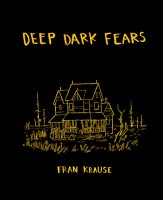
Deep Dark FearsDeep Dark Fears by Fran Krause. What started out as a project to illustrate all of his irrational fears eventually evolved into an ongoing series of  online comics in which Krause would not only draw his own fears but the fears submitted by his readers as well. Just over a hundred of those comics have now been brought together in the print collection of Deep Dark Fears, about half of them being newly published while the other half were selected by Krause as some of his favorites from online. While the subject matter can be disturbing and occasionally even grotesque, the comics themselves are actually quite charming. Krause doesn’t comment on or judge any of the fears but simply presents them as they are, irrational but still discomfiting whether they be based on known falsehoods learned as children or overactive imaginations as adults. Deep Dark Fears is a great collection of short comics about strange and bizarre fears. Some are only a single panel long while others may be a few pages, but they all leave an impression. I’m not sure if Krause has plans for additional print collections, but the series continues to grow online.

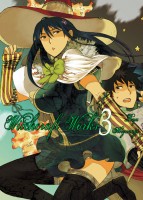
Witchcraft Works, Volume 3Witchcraft Works, Volumes 3-7 by Ryu Mizunagi. Although I quite enjoyed the first two volumes of Witchcraft Works, I recently realized that I had fallen behind in actually reading the series. After catching up I can say that there are still things that I like about the manga, but I also find myself slightly less enamored with it than I once was. Primarily, I continue enjoy the reversal of stereotypical gender roles. If it wasn’t for that, I think the series would have bored me fairly quickly, even despite its other entertaining quirks. With the seemingly endless of author’s notes, it’s obvious that Mizunagi has put plenty of thought into the world of Witchcraft Works, but it isn’t always incorporated well into the story itself which is unfortunate. This seems to especially be a problem during the series’ battle and action-oriented story arcs where it feels like the characters spend more time explaining things they already know to one another rather than fighting, though they do eventually get around to that, too. Witchcraft Works is a great looking manga, though, Mizunagi’s visual style working wonders with all of the magic and mayhem. But ultimately, I think what I want is a little more substance to accompany all the spectacle.

Filed Under: FEATURES, My Week in Manga Tagged With: comics, Core Scramble, Euho Jun, Fran Krause, manga, manhwa, Ryu Mizunagi, Witchcraft Works

Mushishi, Vol. 7

January 15, 2016 by Ash Brown

Mushishi, Volume 7Creator: Yuki Urushibara
U.S. publisher: Del Rey
ISBN: 9780345505590
Released: May 2009
Original release: 2006
Awards: Japan Media Arts Award, Kodansha Manga Award

Mushishi, Volume 7 by Yuki Urushibara was originally published in Japan in 2006. It was the first volume of the award-winning manga series to be released after the first of several anime adaptations began airing. 2006 was also the year that Mushishi earned Urushibara a Kodansha Manga Award, having previously won a Japan Media Arts Award in 2003. In English, the seventh volume of Mushishi was initially published in print in 2009 by Del Rey Manga and then was later re-released in a digital edition by Kodansha Comics in 2014 along with the rest of the series. Mushishi is one of my favorite manga and one of the first series that I made a point to follow and collect as it was being released in translation. I love the manga’s atmosphere, subtle horror, and the obvious influence that traditional Japanese folklore and legends have had on Urushibara’s storytelling in the series.

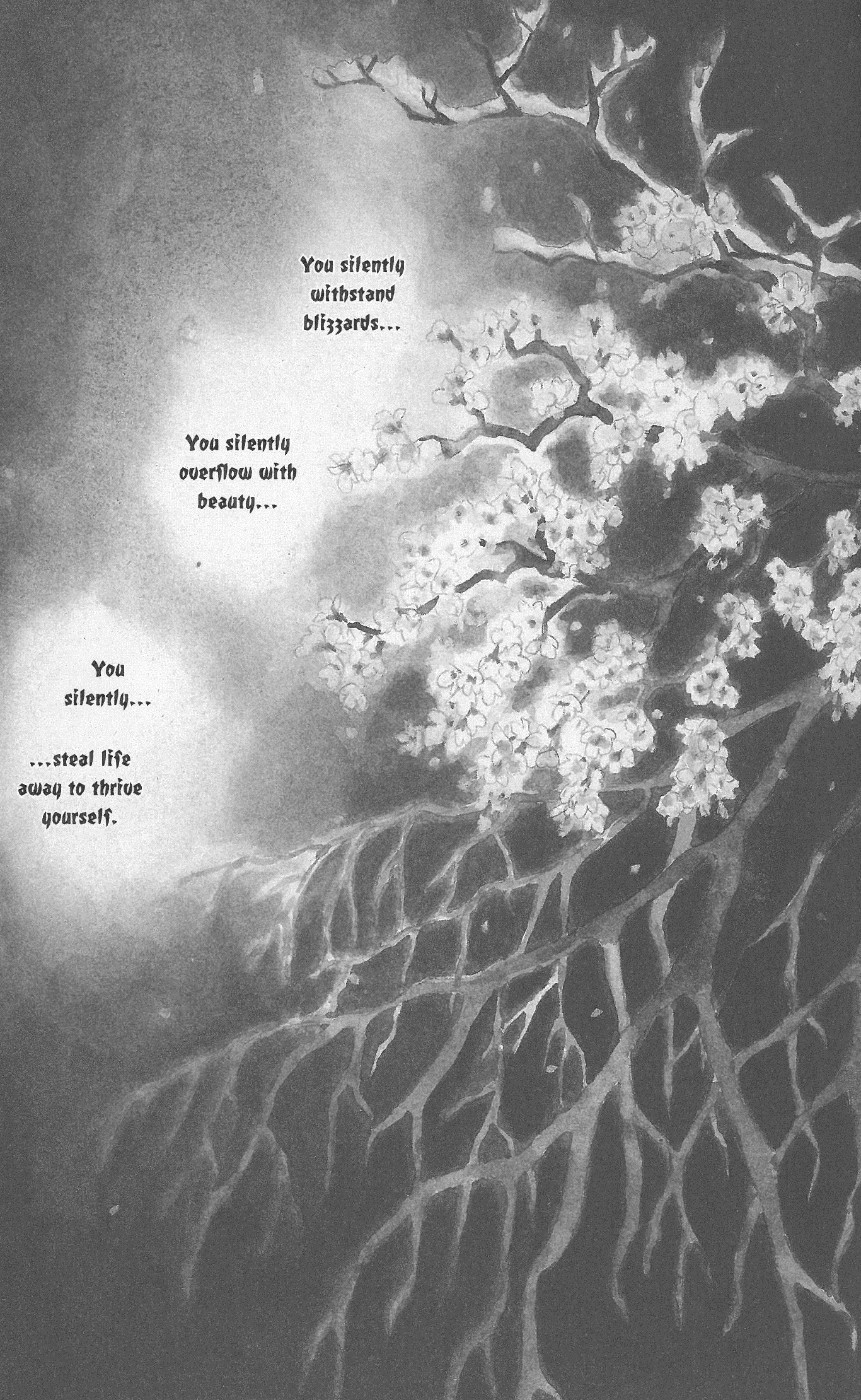
The seventh volume of Mushishi collects four stories. Interestingly, the mushi in these particular chapters tend to be somewhat tangential to the real issues that the characters are struggling with. While the mushi have an impact on the way events unfold and develop, it is the interaction between people that forms the core of the individual stories. “Lost in the Blossoms” is about several generations in a family of skilled landscapers who obsessively care for the embodiment of a peculiarly beautiful and ancient cherry tree. In “The Mirror in the Muck,” a young woman falls ill after the man she loves leaves her behind, her love sickness putting her life in real danger. A young boy has become a host to a mushi that attracts lightning in “At the Foot of Lightning,” but the even greater problem is the nearly nonexistent relationship between him and his mother. The volume concludes with the series’ first multi-part story, “The Ragged Road,” about the head of the Minai, a clan of mushishi responsible for investigating forbidden mushi no matter what the personal cost.

Mushishi, Volume 7, page 3While Mushishi generally tends to be episodic, “The Ragged Road” directly ties in with an early story, “The Sea of Brushstrokes,” collected in Mushishi, Volume 2. The Minai family serves under the Karibusa family which is responsible for recording and protecting information about mushi; the fate of both families is intertwined with that of the forbidden mushi. I especially like “The Ragged Road” because it further develops the world of Mushishi. The other three stories in Mushishi, Volume 7 technically do as well, but because they’re only loosely connected to previous chapters their contributions to the series’ lore generally add more breadth rather than depth. Still, bits of the characterization of Ginko, the manga’s protagonist, continue to be revealed with the telling of each story, showing just how much of an outsider he is even within the community of mushishi.

Although the plots of the individual stories collected in Mushishi, Volume 7 aren’t directly connect to one another, they do all share some similar themes. In some ways, the manga feels more horror-like than some of the previous installments of the series. Mushi in the case of this volume are creatures that can steal away a person’s senses, identity, life, or even soul. But as terrifying as that can be, the most chilling thing that Ginko encounters aren’t mushi but failed human relationships. I find these four stories to be some of the most heartbreaking in the series for that reason. Ginko is faced with situations where, while he can deal with the mushi, he is powerless to completely ease the distress of the people involved and their troubled families. However, as sad and tragic as some of the stories in Mushishi can be, there’s still an underlying sense of hope that in time people will be able to heal and move forward through their pain.

Filed Under: REVIEWS Tagged With: del rey, Japan Media Arts Award, Kodansha Manga Award, manga, mushishi, Yuki Urushibara

Manga the Week of 1/20

January 14, 2016 by Sean Gaffney, Ash Brown, Michelle Smith and MJ 1 Comment

SEAN: Next week’s releases really run the gamut of styles and genres. Let’s see what we’ve got.

Kodansha gives us a 2nd volume of Devil Survivor, meaning I am now officially behind.

And a 5th A Silent Voice, which I am definitely caught up on.

ASH: A Silent Voice continues to be a very strong series.

SEAN: And there’s also a 6th Yamada-kun and the Seven Witches. I am also caught up here. Will we see more witches?

ASH: Time will tell!

SEAN: On the Seven Seas end, we have a 2nd volume of Golden Time, from the Toradora! author.

And the debut of The Testament of New Sister Devil, which sounds like it might hit every single current popular fetish out there, and a few more besides. We’ll see if I’m wrong.

shore

Vertical gives us A Girl on the Shore, a complete omnibus of an Inio Asano series from the cult and sadly cancelled Manga Erotics F magazine. It’s Inio Asano, so I expect good, if depressing, things.

MICHELLE: This should be interesting.

ASH: I’m very much looking forward to this release.

MJ: Okay, this. Yes, this.

SEAN: And there’s a 6th volume of My Neighbor Seki, which is possibly the antidote if you’re read too much Inio Asano at once.

ASH: Ha!

SEAN: Viz gives us a 5th Master Keaton volume, having pushed it back from its original December release date.

MICHELLE: I need to resume my catchup efforts!

ASH: As do I!

MJ: Always welcome!

SEAN: And a 7th Monster Perfect Edition.

MICHELLE: Yay, Monster!

ASH: Monster is one of my favorite Urasawa series. I’m so glad to see it back in print!

SEAN: And Terra Formars has reached double digits with Volume 10.

Most of Yen’s stuff is the week after next, but two novels seem to be coming out next week as of this writing. Pandora Hearts has finished its Caucus Race light novels with the third volume, so at least MJcan’t get any further behind.

MJ: Oops?

SEAN: And there’s a 2nd volume of Strike the Blood, which will hopefully feel more genuine and less calculated than the first volume did.

Does something from this list sing to you? Crying out, “read me and be sad yet enriched”? Or perhaps “Read me and get suggestive succubi who say oniichan a lot”?

Filed Under: FEATURES, manga the week of

Vinland Saga, Omnibus 7

January 13, 2016 by Ash Brown

Vinland Saga, Omnibus 7Creator: Makoto Yukimura
U.S. publisher: Kodansha
ISBN: 9781612628035
Released: September 2015
Original release: 2013-2014
Awards: Japan Media Arts Award, Kodansha Manga Award

I honestly believe Makoto Yukimura’s Vinland Saga to be one of the best manga series currently being released in English. An epic tale of revenge, idealism, and the tremendous cost of violence, Vinland Saga is an incredibly engaging work with impressively compelling characters. In addition to being a personal favorite of mine, over the course of its publication the series has also won a Japan Media Arts Award and a Kodansha Manga Award among other honors. Kodansha Comics has been releasing Vinland Saga in English as a series of hardcover omnibuses. The seventh omnibus, released in late 2015, collects the thirteenth and fourteenth volumes of the manga originally published in Japan in 2013 and 2014 respectively. The seventh omnibus of Vinland Saga also includes two exclusives: the continuation of “Ask Yukimura,” where Yukimura responds to questions about the series, and a four-panel tribute comic by Faith Erin Hicks, another creator whose work I greatly admire.

After years of hard labor, Thorfinn’s freedom was near at hand until he and his fellow slave Einar became involved in an escape attempt. They helped Arnheid, Ketil’s favorite slave and mistress, aid her enslaved husband as he tried to run away from another farm. The attempt failed, resulting in multiple deaths. Now the three of them—Thorfinn, Einar, and Arnheid—must face the terrible consequences of their actions. Meanwhile, Ketil and his sons are returning from Jelling with King Canute and his finest warriors following close behind. In addition to dealing with his slaves, Ketil must also prepare for Canute’s inevitable attack before the farm falls into chaos. Canute plans on taking Ketil’s farm and wealth for his own in order to expand his kingdom, determined to create a paradise on earth for all who suffer from war and violence. Although he would prefer a peaceful resolution, Canute is more than prepared to stake his claim through questionable political maneuvering and force.

Vinland Saga, Omnibus 7, page 92Like so many of the other omnibuses of Vinland Saga, the seventh is brutal and at times even gruesome. The artistic detail and research that Yukimura has applied to the portrayal of the day-to-day lives of eleventh-century nobility, warriors, merchants, and slaves has also been applied to the battles and wars they wage. Men and women are beaten to the brink or point of death; limbs are severed; skulls are crushed; eyes are gouged out—Vinland Saga is an intense and violent series. But that violence isn’t idealized or glorified by Yukimura. Even while an individual’s martial skill and battle prowess are respected and admired, violence is shown to be the truly terrible and destructive force that it is, not just physically, but mentally and emotionally as well. Some of the most important themes in Vinland Saga revolve around violence, how it impacts people and society, and whether it can be avoided or whether humanity is trapped in a never-ending cycle of bloodshed.

In addition to the plot of Vinland Saga as a whole, violence and its effects are also crucial to the development of the individual characters. Many of them are trying to break free from the violence that pervades their lives, facing moral quandaries over how to enact their ideals. The characters of Vinland Saga aren’t safely philosophizing over what is ethical, they are literally risking their lives for what they believe in. But even when their ultimate goals are the same, they approach them differently. Canute is now in a position of power as king and will use any method necessary to ultimately achieve his earthly paradise. Thorfinn, on the other hand, is reluctant to use violent force in order to gain peace. And there are plenty of other characters in the series who fall somewhere between these two perspectives. Seeing the realistic interplay among all of these different worldviews in the series has been immensely engrossing. Vinland Saga is well-worth reading even in part, but I sincerely hope to see the rest of the series translated as well.

Filed Under: REVIEWS Tagged With: Japan Media Arts Award, kodansha, Kodansha Comics, Kodansha Manga Award, Makoto Yukimura, manga, Vinland Saga

Pick of the Week: Unanimity

January 12, 2016 by Michelle Smith, Sean Gaffney, Anna N, Ash Brown and MJ Leave a Comment

roseking3MICHELLE: Well, Sean predicted it. My pick of the week is Requiem of the Rose King. While I’m linking to what my compatriots have said, go see why MJnamed this series her Pick of 2015.

SEAN: Unlike the rest of the team, I’m reading several things this week. But yeah, the one that’s clearly head and shoulders above the rest is Requiem of the Rose King. It’s an obvious Pick.

ANNA: I agree, Requiem of the Rose King is such a standout series it is my Pick as well!

ASH: Like Sean, there are actually several releases that I’m looking forward to this week, including Lone Wolf & Cub and His Favorite, but by and far the one that I’m most excited about is the third volume of Requiem of the Rose King. I’m adoring the series.

MJ: Since Requiem of the Rose King was my Pick of the Year, it can’t be a huge surprise that I’m in agreement with everyone else. That’s the Pick for me!

Filed Under: PICK OF THE WEEK

My Week in Manga: January 4-January 10, 2016

January 11, 2016 by Ash Brown

My News and Reviews

The new year is now well on its way, and I finally feel like I’m getting back into my writing groove; my regular posting schedule has mostly returned, though there might be a slight interruption in February. Anyway. In addition to the regular My Week in Manga feature, there were two other posts at Experiments in Manga last week. The first was the announcement of the Merman in My Tub Giveaway Winner which also includes a compiled list of some of the giveaway participants’ favorite manga that were released in 2015. The second post last week also happened to be the second in-depth manga review for the year—JoJo’s Bizarre Adventure, Part 1: Phantom Blood, Volume 3 by Hirohiko Araki. It’s such a ridiculous, over-the-top series, but I’m sincerely enjoying it.

As for some of the interesting things I’ve discovered online recently: The news was previously leaked, but Dark Horse has now officially announced its two new manga licenses, Kenji Tsuruta’s Wandering Island and CLAMP’s RG Veda. I thought I had mentioned it a few weeks ago when it first launched (apparently I forgot), but Digital Manga’s boys’ love imprint Juné has a new Kickstarter project to publish four titles by Sakira in print. At least three of the four manga were Digital Manga Guild publications that were previously only available digitally. The project has already succeeded, but Digital Manga’s plan is to put a fair amount of the money pledged into restocking/reprinting some of its older, hard-to-find boys’ love titles. Finally, over at MangaBlog, Kate Dacey, Brigid Alverson, and Deb Aoki talk about some of their most anticipated manga of 2016, many of which happen to be some of my most anticipated releases as well.

Quick Takes

Itazura na Kiss, Volume 4Itazura na Kiss, Volumes 4-6 by Kaoru Tada. For the most part, I’m continuing to enjoy Itazura na Kiss. At this point in the series, Naoki and Kotoko are in college, each trying to figure out what to do with their lives. Kotoko’s infatuation with Naoki is the most important impetus for her to do just about anything, whether it be joining the tennis club, becoming a waitress, or trying her hand at office work. Normally, this would probably annoy me, but I appreciate her gusto, individuality, and willingness to follow through with what she’s started. Even though Kotoko is so incredibly focused on Naoki, her world actually doesn’t completely revolve around him and she’s not defined by him either, which I think is what makes her character work for me. Were it otherwise, I don’t think that I would enjoy the series nearly as much. Naoki continues to be aloof and more often than not a jerk. One particular instance in which Kotoko is unnecessarily treated very poorly could have been avoided entirely if he would have just had the courtesy to tell her what was going on, and there was no good reason for him not to. Thankfully, this sort of behavior isn’t romanticized or idealized in the manga.

Love in All Forms: The Big Book of Growing Up QueerLove in All Forms: The Big Book of Growing Up Queer edited by Serafina Dwyer. I follow the work of Kori Michele Handwerker who contributed to Love in All Forms which is how I first learned about the collection. I was also thrilled to discover that Jennifer Doyle, another artist whose work I enjoy, was also a contributor. The anthology collects fourteen comics by queer creators about queer children. Most of the creators were actually new to me, so I’ve definitely found some new artists to follow. As for the comics themselves, some of the stories are based in reality, while others are fantasy or science fiction, but they all deal with love and personal identity in one way or another. Many of the characters skew towards the feminine side of the gender non-conforming spectrum, but there’s a nice range of representation in the anthology with an emphasis on acceptance. Generally the stories tend to be fairly optimistic, which is marvelously refreshing. The name of the anthology might be a little misleading, or at least overly broad or ambitious, but it’s a lovely collection of beautifully heartfelt and touching queer comics.

Yowamushi Pedal, Omnibus 1Yowamushi Pedal, Omnibus 1 (equivalent to Volumes 1-2) by Wataru Watanabe. I’ve watched and enjoyed part of the Yowamushi Pedal anime adaptation, so I wasn’t especially surprised by any of the developments found in the original manga. Even so, the first omnibus was great fun and I enjoyed it a great deal. Onoda is a fan of anime and manga whose surprising natural talents and regular trips by bicycle to Akihabara using less than ideal equipment have granted him some impressive cycling skills. He doesn’t even recognize his own abilities, though, not at all identifying with the more athletically inclined students at his school. But after several curious turns of events, he finds himself joining the bicycle road racing club. Watanabe isn’t very subtle when working information about cycling and bicycles into the story, which can be a little jarring, but the manga is still entertaining and I really like the characters. I’m glad that Yen Press is taking a chance on a long-running sports manga (the series is already over forty volumes in Japan and is still ongoing) and I sincerely hope that Yowamushi Pedal is a success.

Filed Under: FEATURES, My Week in Manga Tagged With: comics, itazura na kiss, Kaoru Tada, manga, Wataru Watanabe, Yowamushi Pedal

JoJo’s Bizarre Adventure, Part 1: Phantom Blood, Vol. 3

January 8, 2016 by Ash Brown

JoJo's Bizarre Adventure, Part 1: Phantom Blood, Volume 3Creator: Hirohiko Araki
U.S. publisher: Viz Media
ISBN: 9781421578804
Released: August 2015
Original release: 1988

Although I had been previously aware of the manga series for some time, my real introduction to Hirohiko Araki’s multi-generational shounen epic JoJo’s Bizarre Adventure was in 2012 through the standalone spinoff Rohan at the Louvre. I then proceeded to read the third story arc Stardust Crusaders, at the time the only other part of JoJo’s Bizarre Adventure to have been released English. It wasn’t until 2015 that Phantom Blood, the very beginning of JoJo’s Bizarre Adventure was translated, published in a beautiful hardcover edition under Viz Media’s Shonen Jump imprint. When Phantom Blood was originally collected in Japan it was released in five volumes between 1987 and 1988. However, in 2002 it was re-released in three volumes which is what Viz Media’s edition is based on. Phantom Blood, Volume 3, published in English in 2015, is largely equivalent to the fourth and fifth volumes of the original Japanese release.

Having arrived in Wind Knights Lot in pursuit of his adoptive brother Dio, Jonathan Joestar must first successfully defeat two of Dio’s strongest undead minions and then traverse a town with a population that is steadily being turned into a hoard of zombies before he even has the chance to confront his brother. The Dark Knight Blueford, who is filled with hatred for the world and loyalty to Dio, is determined to take JoJo’s life. The other knight, Tarukus, is also exceptionally skilled when it comes to dealing out death and takes great delight in it. Should JoJo and his allies manage to survive their encounter with these two undead foe, they face an even more formidable adversary in Dio. Having used an ancient stone mask to turn himself into a vampire, Dio has gained untold strength and powers. Fortunately, JoJo is a quick and talented study—under the tutelage of Baron Zeppeli he has been able to begin to master Hamon energy, the only thing other than the sun itself that can harm to Dio.

JoJo's Bizarre Adventure, Part 1: Phantom Blood, Volume 3, page 147JoJo’s Bizarre Adventure truly is a bizarre series; Phantom Blood makes this very clear from the very start. From the characters’ weird anatomy and disproportionate musculature to the story’s strange mix of melodrama, horror, and fantastic martial arts, Phantom Blood doesn’t just strain readers’ suspension of disbelief, the manga completely shatters it. Entire backstories are revealed in the time it takes for characters to tumble down cliff sides; combatants continue to live on after suffering injures that even the undead couldn’t survive; fights quickly escalate to unbelievable extremes, opponents continuously outdoing and outmaneuvering one another. Although the “why” of what’s going on is sometimes questionable, even considering Araki’s pseudo-scientific explanations, most everything is blatantly narrated by the participants and observers, so it’s fairly easy to at least follow the “what” of all of the strangeness. JoJo’s Bizarre Adventure is admittedly ridiculous and absurd, but that’s part of what makes the series so entertaining.

Phantom Blood is a relatively short series, especially when compared to the later story arcs of JoJo’s Bizarre Adventure. While Phantom Blood is a complete story in its own right, if often feels even more like a prologue to the rest of the series, laying the groundwork for all of the weirdness and machismo to come. Phantom Blood introduces the noble Joestar family—Jonathan in particular being especially gallant and large-hearted, even towards his enemies—but even more important is the introduction of Dio, an extraordinary villain. As Araki points out in the volume’s author notes, what make Dio so terrifying isn’t his impressive powers or brute strength, it’s his stunning ability to control others. Dio is arrogant but extremely charismatic, gaining many willing followers and easily manipulating those who aren’t. Phantom Blood is frequently gruesome and grotesque, with over-the-top violence, outrageous story developments, and audacious, larger-than-life characters. JoJo’s Bizarre Adventure is a peculiar work, but I’m definitely looking forward to reading the next arc, Battle Tendency.

Filed Under: REVIEWS Tagged With: Hirohiko Araki, JoJo's Bizarre Adventure, manga, Shonen Jump, viz media

Manga the Week of 1/13

January 7, 2016 by Sean Gaffney, Ash Brown, Anna N, Michelle Smith and MJ 1 Comment

SEAN: Traditionally, the first and fourth weeks of the month are the largest, as Week 1 is where Viz releases it’s Jump and Beat titles, and Week 4 is usually Yen Press. Weeks 2 and 3 therefore vie for the remaining attention, containing less spectacular stuff – Viz puts out Sunday imprints in Week 2, but otherwise it can be a hodgepodge. (Week 3, to complete the analysis, is Viz’s Signature stuff.) Is there anything vying for attention in next week’s small batch?

Dark Horse gives us an 11th volume of its Lone Wolf and Cub omnibus.

ASH: I’m finally making a point to get caught up with Lone Wolf and Cub; it’s a really great series.

SEAN: Seven Seas has a trio of releases. Arpeggio of Blue Steel is a cut above the usual ‘girls are ships/planes/whatever’ genre, and I look forward to Vol. 6 next week.

secret1

The words “monster girls” may cause the entire Manga Bookshelf team to groan, but the debut of My Monster Secret from Seven Seas is intriguing – people I trust have told me it’s very funny and well-written. It’s from Weekly Shonen Champion, also home to Yowamushi Pedal, which it resembles not at all.

And we have a third Pandora in the Crimson Shell: Ghost Urn, which… yeah, I can’t, really. I do hear it has an anime soon.

SubLime has an 8th volume of His Favorite, whose covers always look great, and has some fans here, I think.

ASH: That it does!

SEAN: Viz gives us 57 varieties of Case Closed, one for each volume it has out to date.

There’s a lot of fun stuff in the first half of the 12th Ranma 1/2 omnibus – including the famous “fishing rod of love” story – but let’s be honest, old-school fans will mostly want to read this for Herb. He shows up in the 2nd half.

Lastly, and thankfully for Manga Bookshelf writers desperate for a Pick of the Week, there’s a 3rd volume of Requiem of the Rose King, which is still in the Henry VI plays but possibly not for much longer.

ASH: Definitely the one volume that I’m most looking forward to this week!

ANNA: This is the ONLY volume I’m looking forward to this week!

MICHELLE: Yup. Same here.

MJ: Okay, this is probably predictable since I actually chose this series as my Pick of the Year, but: ME, me, me me me. Me. Yes, me. Me, too.

SEAN: What whets your appetite for next week?

Filed Under: FEATURES, manga the week of

  • « Go to Previous Page
  • Page 1
  • Interim pages omitted …
  • Page 89
  • Page 90
  • Page 91
  • Page 92
  • Page 93
  • Interim pages omitted …
  • Page 140
  • Go to Next Page »
 | Log in
Copyright © 2010 Manga Bookshelf | Powered by WordPress & the Genesis Framework