• Skip to primary navigation
  • Skip to main content
  • Skip to primary sidebar
  • Home
  • About Us
    • Privacy Policy
    • Comment Policy
    • Disclosures & Disclaimers
  • Resources
    • Links, Essays & Articles
    • Fandomology!
    • CLAMP Directory
    • BlogRoll
  • Features & Columns
    • 3 Things Thursday
    • Adventures in the Key of Shoujo
    • Bit & Blips (game reviews)
    • BL BOOKRACK
    • Bookshelf Briefs
    • Bringing the Drama
    • Comic Conversion
    • Fanservice Friday
    • Going Digital
    • It Came From the Sinosphere
    • License This!
    • Magazine no Mori
    • My Week in Manga
    • OFF THE SHELF
    • Not By Manga Alone
    • PICK OF THE WEEK
    • Subtitles & Sensibility
    • Weekly Shonen Jump Recaps
  • Manga Moveable Feast
    • MMF Full Archive
    • Yun Kouga
    • CLAMP
    • Shojo Beat
    • Osamu Tezuka
    • Sailor Moon
    • Fruits Basket
    • Takehiko Inoue
    • Wild Adapter
    • One Piece
    • After School Nightmare
    • Karakuri Odette
    • Paradise Kiss
    • The Color Trilogy
    • To Terra…
    • Sexy Voice & Robo
  • Browse by Author
    • Sean Gaffney
    • Anna Neatrour
    • Michelle Smith
    • Katherine Dacey
    • MJ
    • Brigid Alverson
    • Travis Anderson
    • Phillip Anthony
    • Derek Bown
    • Jaci Dahlvang
    • Angela Eastman
    • Erica Friedman
    • Sara K.
    • Megan Purdy
    • Emily Snodgrass
    • Nancy Thistlethwaite
    • Eva Volin
    • David Welsh
  • MB Blogs
    • A Case Suitable For Treatment
    • Experiments in Manga
    • MangaBlog
    • The Manga Critic
    • Manga Report
    • Soliloquy in Blue
    • Manga Curmudgeon (archive)

Manga Bookshelf

Discussion, Resources, Roundtables, & Reviews

Ash Brown

My Week in Manga: August 29-September 4, 2016

September 5, 2016 by Ash Brown

My News and Reviews

The end of August has come and gone, but there’s still time to enter Experiments in Manga’s most recent giveaway. This time around you all have the opportunity to enter for a chance to win the first three volumes of Sui Ishida’s Tokyo Ghoul. (The winner will be announced on Wednesday.) Other than that, it was a fairly quiet week at Experiments in Manga. I was actually on vacation last week, too. I wasn’t online much, but I did catch that Viz Media will be releasing Hidenori Kusaka and Satoshi Yamamoto’s Pokémon Omega Ruby & Alpha Sapphire manga as well as a Pokémon Pocket Comics box set.

Quick Takes

Kiss Him, Not Me!, Volume 5Kiss Him, Not Me!, Volumes 5-6 by Junko. The overall narrative of the last few volumes of Kiss Him, Not Me! has fallen into a noticeable pattern; the series focuses on Serinuma’s potential romantic interests one after another in turn, each of them becoming the subject of their very own mini story arc which briefly delves into their relationship with Serinuma and how they have changed (generally for the better) because of it. Much to my surprise, yet another character has been introduced who has developed feelings for Serinuma, though just how serious he is is somewhat ambiguous. Granted, it’s mostly because of him that everyone ends up confessing their own feelings to Serinuma. As for Serinuma herself, she still seems to be completely uninterested in romance, though she is enjoying having a larger group of friends. Kiss Him, Not Me! continues to be an over-the-top romantic comedy that doesn’t take itself at all seriously. Even when the basic story elements start to feel a little repetitive (such as when Serinuma goes on a date with each of her admirers) the series is unpredictable and varied enough that it remains both entertaining and engaging. The characters aren’t especially deep, and there’s plenty about the series that’s unbelievable, but Kiss Him, Not Me! is silly fun.

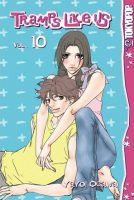
Tramps Like Us, Volume 10Tramps Like Us, Volumes 10-14 by Yayoi Ogawa. I am so glad that I made a point to collect Tramps Like Us when I did; the series is now very much out of print and unlikely to be rescued. (Although, considering the recent expansion in Kodansha’s digital offerings, there might yet be some hope there.)  I’m really not sure why it took me so long to actually get around to reading Tramps Like Us, because I ended up loving the manga and its characters. The basic premise is somewhat strange and the series frequently takes off on flights of fantasy, but somehow the emotions and relationship dynamics still manage to be incredibly real and relatable. The final volume of the series did feel a little rushed to me, and everything might have been tied up a little too nicely, but I still found the slightly bittersweet but predominantly happy ending to be very satisfying. Some of the developments weren’t really that surprising; it was only a matter of time before Sumire and Momo/Takeshi had to face what their relationship had become and actually do something about it. Although she has to give some things up, Sumire is able to find a balance between her career, home life, and love life that makes her happy. And I have to admit, although it might ultimately be a little idealistic, the ending made me happy, too.

Your Lie in April, Volume 8Your Lie in April, Volume 8-9 by Naoshi Arakawa. As a musician, I’m naturally drawn to manga in which music is featured in some way. And so, because music plays a very prominent role in Your Lie in April, the series immediately caught my attention. Arakawa captures the deep emotional connection a person can have with music remarkably well in Your Lie in April. My own relationship with music is a complicated one, so I’m glad to see that sort of complexity reflected in the manga as well. Generally, however, the series does tend more towards the angst associated with performance rather than the joy of music. Many of the characters are pouring their whole selves into their art; being a musician can be both a thrilling and terrifying experience. Effectively expressing oneself through music is a tremendous accomplishment, but frequently this is accompanied by fear and worry that one will never be good enough. Still, there are wonderful moments in Your Lie in April in which the characters are able to break through their insecurities. While music is an important part of Your Lie in April, probably even more important are the relationships between the characters, even if Kosei still seems oblivious to the fact that he means so much to so many different people.

Filed Under: FEATURES, My Week in Manga Tagged With: Junko, Kiss Him Not Me, manga, Naoshi Arakawa, Tramps Like Us, Yayoi Ogawa, Your Lie in April

Manga the Week of 9/7

September 1, 2016 by Sean Gaffney, Ash Brown, Anna N and Michelle Smith Leave a Comment

SEAN: It’s September! Summer vacation is over, time to go back to school, and a whole lot of manga seems to be coming to a close.

Dark Horse has a 10th New Lone Wolf and Cub. There are swords in it.

parares3

Paradise Residence wraps up with its third volume, It felt fairly inconsequential, but then so did Oh My Goddess! much of the time.

ASH: I actually didn’t realize the series was only three volumes.

SEAN: Seven Seas has a 5th volume of Citrus, whose cover looks suggestive, but if it’s like previous volumes it will have more angst than seduction.

And a 5th Non Non Biyori, which has yuri tease but otherwise could not be more different than Citrus.

Vertical gives us a 4th volume of Nichijou, which is funny and weird, not necessarily in that order, but always worth getting.

And now the rest is Viz. Bloody Mary has a 4th volume, and, well, vampires.

ANNA: I enjoy this because the vampires are so pretty, and I think secretly in love with each other.

SEAN: Dragon Ball has its final 3-in-1, the 14th. Worry not, however, because…

There’s a 3rd Dragon Ball Full Color Freeza Arc, and that’s not done yet! There will always be Dragon Ball in Oceania.

I liked Everyone’s getting Married’s first volume, and am interested in seeing how far it goes with its premise. Vol. 2 next week.

MICHELLE: I’m looking forward to this one.

ASH: Somehow, I’ve already fallen behind. I’ll need to change that.

ANNA: So good! I’m always happy when there’s a regular josei series coming out.

SEAN: Haikyu! is still monthly, with its third volume. My guess? Volleyball practice.

MICHELLE: With the new defense specialist kid!

ASH: I’m really enjoying this series!

ANNA: I am too, it just keeps getting better and better.

SEAN: Idol Dreams continues to come out at a very slow rate, which is what happens when you catch up to Japan almost immediately. Will Volume 3 still be uncomfortable? We shall see.

ANNA: Still here for any Arina Tanemura series.

SEAN: Also caught up with Japan is Kimi ni Todoke, but that’s OK, it’s always worth the wait, even at Vol. 25.

komomo5

Komomo Confiserie wraps up with its 5th volume. It wasn’t a Special A, or even a Voice Over, but it was pretty good.

MICHELLE: Yeah, I certainly didn’t hate it, but I don’t know that I’d reread it.

ANNA: I liked it, but I agree, probably not a series I’d reread every few years.

SEAN: Nisekoi 17 is the first one to be released after the manga has ended in Japan. Will sales still be good? And is the harem safe? Think of the poor harem!

One Piece’s 17th 3-in-1 has reached Thriller Bark, which I wasn’t fond of at the time but has grown on me after the endless Dressrosa arc.

One-Punch Man 8! PUNCHING!

ASH: INDEED!

ANNA: SO MUCH PUNCHING!

SEAN: Seraph of the End 10! SERAPHING!… OK, no, that doesn’t work. Vampires?

ANNA: I’ve fallen behind on this series but I enjoy the vampires, complex worldbuilding, and angst.

SEAN: Skip Beat! is not coming to an end anytime soon, despite reaching its 37th volume. That said, we do reach a plot I’ve been waiting for since the first volume.

MICHELLE: I actually do not know anything about the plot in this volume, so now I am all excite.

ANNA: I don’t know either, but I’m always excited for Skip Beat! May it run eternally.

SEAN: World Trigger is up to a dozen volumes. And I still have almost nothing to say about it.

And lastly, the 9th and final volume of Yu-Gi-Oh Zexal, which totally wraps up the franchise forever and ever… wait, there’s already a new series solicited. Nevermind.

So what’cha want?

Filed Under: FEATURES, manga the week of

Manga Giveaway: Tokyo Ghoul Trio

August 31, 2016 by Ash Brown

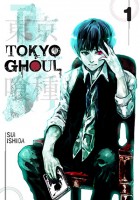
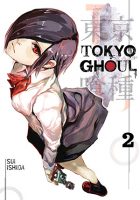
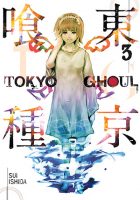
Not only is it the last Wednesday of August, it’s the last day in August which means it’s yet again time for Experiments in Manga’s monthly giveaway! This month you’ll all have the opportunity to win not one, not two, but three volumes of Sui Ishida’s Tokyo Ghoul as published in English by Viz Media. The giveaway is open worldwide, too!

Tokyo Ghoul, Volume 1Tokyo Ghoul, Volume 2Tokyo Ghoul, Volume 3

Tokyo Ghoul has been doing very well for Viz Media. The first volume has currently been on the New York Times’ Best Sellers list for fifty-nine weeks strait. The eighth and most recent volume is currently at the top of that list, and other volumes are frequently found on it, too. While I haven’t followed the series closely beyond the first few volumes, there are still quite a few things I like about the manga. In addition to the series’ dark and gritty aesthetic, I particularly appreciate that the protagonist must come to terms with who he is, struggling to find his new identity after a near-death experience leaves him part-ghoul and part-human. In general I find explorations of personal identity to be engaging and Tokyo Ghoul‘s supernatural variation on the theme to be interesting.

So, you may be wondering, how can you win the first three volumes of Tokyo Ghoul?

1) In the comments below, tell me a little about your favorite half-human from manga. (If you haven’t encountered any half-humans, simply mention that.)
2) If you’re on Twitter, you can earn a bonus entry by tweeting, or retweeting, about the contest. Make sure to include a link to this post and @PhoenixTerran (that’s me).

Not too difficult, is it? Participants in the giveaway can earn up to two entries and have one week to submit comments. If you have trouble with comment form or if you prefer, comments can be sent directly to phoenixterran(at)gmail(dot)com. The comments will then be posted here in your name. The winner of the giveaway will be randomly selected and announced on September 7, 2016. Best of luck to you all!

VERY IMPORTANT: Include some way that I can contact you. This can be an e-mail address in the comment form, a link to your website, Twitter username, or whatever. If I can’t figure out how to get a hold of you and you win, I’ll just draw another name.

Contest Winner Announced–Manga Giveaway: Tokyo Ghoul Trio Winner

Save

Filed Under: FEATURES, Giveaways Tagged With: manga, Sui Ishida, Tokyo Ghoul

Pick of the Week: For a Few Yen More

August 29, 2016 by Michelle Smith, Sean Gaffney, Anna N and Ash Brown Leave a Comment

emma5MICHELLE: What a dilemma! A new volume of Fruits Basket versus a new volume of Yowamushi Pedal! I love both series, but I think the advantage here has to go to the content that hasn’t been released here before, in which case it’s Yowamushi Pedal by a handlebar!

SEAN: An embarrassment of stuff this week. Emma, Furuba, Nozaki-kun, YowaPeda, and light novels galore. My pick is the second Baccano! novel, because Jacuzzi and Nice are sweeties, and Ladd and Lua are terrifying, albeit in different ways.

ANNA: There is so much stuff coming out! I have to go with the title I’m most likely to read very soon, which is Nozaki-kun.

ASH: Wow, it’s a really great week for Yen Press manga! I’ll definitely be picking up Yowamushi Pedal and Monthly Girls’ Nozaki-Kun, but my official pick of the week goes to the final omnibus volume of Emma. I’m so glad that the series was rescued! I’m looking forward to completing my collection.

Filed Under: PICK OF THE WEEK

My Week in Manga: August 22-August 28, 2016

August 29, 2016 by Ash Brown

My News and Reviews

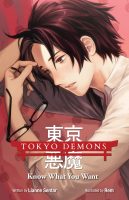
A new review was posted last week at Experiments in Manga! I’ve been meaning to get around to it since the book was first released back in February, but I’ve finally written up my thoughts on Know What You Want, written by Lianne Sentar. It’s a collection of short, sexually-charged side stories related to Tokyo Demons which is a series that I absolutely love. Reading Know What You Want isn’t necessary to understand the main series, but it does provide more character development, worldbuilding, and background information. Also, like Tokyo Demons proper, the stories can often be heartwrenching.

As for other interesting things found online: Two Tsutomu Nihei interviews were recently posted, one from Brigid Alverson for Barnes & Noble and one from Deb Aoki for Anime News Network. Taiyo Nakashima has a write up of a dialogue between Tetsuo Hara and Kentaro Miura for the Silent Manga Audition website. Publishers Weekly’s podcast More to Come recently featured Frederik L. Schodt discussing Osamu Tezuka. The second episode of the Translator Tea Time podcast is now available. Also at The OASG, eleven translators of anime and manga answer how they learned Japanese.

Quick Takes

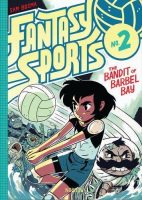
Fantasy Sports, Volume 2: The Bandit of Barbel BayFantasy Sports, Volume 2: The Bandit of Barbel Bay by Sam Bosma. I adored the first volume of Fantasy Sports. While I was looking forward to the next volume, I was also a little afraid that it wouldn’t live up to expectations. Happily, The Bandit of Barbel Bay is just as good as the first Fantasy Sports. I actually may have somehow enjoyed it even more. After defeating an ancient mummy in an epic game of basketball in order to secure an impressive amount of treasure, Wiz and Mug are trying to return to the pyramid of the Order of Mages when they end up robbed and stranded in Barbel Bay. This time they will have to win an ultimate volleyball tournament if they want to escape with the treasure and their lives. All goes well until they must face the champions of Barbel Bay, a pair of twins with godlike powers who rule the court. The story definitely has its fair share of silliness, but there’s also something sinister about the Order of Mages that is slowly being revealed. The Bandit of Barbel Bay is fantastic. Bosma’s artwork and colors are great; the characters are wonderful (the twins in particular are highly entertaining); the comic’s sense of humor is marvelous. Fantasy Sports is an absolute delight and incredibly charming; I can’t wait for the next volume to be released!

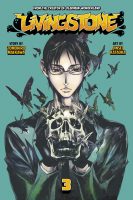
Livingstone, Volume 3Livingstone, Volume 3 written by Tomohiro Maekawa and illustrated by Jinsei Kataoka. For the most part, Livingstone continues to be a largely episodic manga. However, there is also an underlying story about Amano and the truth behind his existence that seems to be taking some precedence. Livingstone is apparently only four volumes (for some reason I thought it was longer than that), so I suspect that the fourth volume will largely be devoted to Amano. I was actually a little surprised by some of the recent developments in Livingstone and their implications–either I completely misunderstood some of the worldbuilding in the series or the creators have completely changed what they originally established. Either way, while the ambiguity is a little frustrating, overall I do find the series interesting. The individual stories, all of which deal with death in some way, range from uplifting to depressing although the series does have comedic undertones. Kataoka’s artwork fits the tone of the series well, creating a vaguely unsettling and disconcerting atmosphere while still managing to convey the humor. (One of primary reasons I was interested in Livingstone to begin with was actually because of Kataoka’s involvement.) Livingstone is a kind of a strange and uneven manga, but I’m still curious enough to want to see how it concludes.

Real Account, Volume 3Real Account, Volume 3 written by Okushou and illustrated by Shizumu Watanabe. The end of the second volume of Real Account included a major revelation about Ataru and ended with a pretty major twist on top of that. Not everything thing has been explained yet about that particular development, but the third volume abandons Ataru entirely to follow a new lead, Yuma. The creators do mention that Ataru isn’t completely gone from the series, but he doesn’t make even a token appearance in the third volume. Yuma is understandably similar to Ataru in many key ways, but the sudden shift in protagonists doesn’t work especially well. Despite knowing a fair amount of Yuma’s backstory before the volume begins, readers aren’t given much opportunity to really empathize with him before he’s thrown into the same life-or-death game as Ataru. And while I understand why the series is emphasizing how alike Yuma and Ataru are, the first chapter of the third volume feels extremely repetitive. For those reasons, I didn’t enjoy this particular installment of the series as much as the two that came before, but the series is still intriguing and the social media-inspired games are clever (though I did feel a bit cheated by some of their solutions). And I did appreciate that the third volume showed more of what is happening outside of Real Account, too.

Filed Under: FEATURES, My Week in Manga Tagged With: comics, Fantasy Sports, Jinsei Kataoka, Livingstone, manga, Okushou, Real Account, Sam Bosma, Shizumu Watanabe, Tomohiro Maekawa

Tokyo Demons: Know What You Want

August 26, 2016 by Ash Brown

Tokyo Demons: Know What You WantAuthor: Lianne Sentar
Illustrator: Rem, Romy-chan, Tacto

Publisher: Chromatic Press
ISBN: 9780993861185
Released: February 2016

Ever since reading You’re Never Alone, the first novel in Lianne Sentar’s Tokyo Demons, I have been nearly consumed by everything even tangentially related to the trilogy. I find Tokyo Demons to be remarkably engaging and as the series has progressed I have become increasingly invested in both the story and its characters. Tokyo Demons has a small but very loyal fanbase, so perhaps it isn’t too surprising that it became one of the flagship titles not only for Chromatic Press and the Sparkler Monthly magazine but also for Cherry Bomb, an imprint that provides an opportunity for Sparkler Monthly creators to explore more mature, sexually-charged stories and themes. Know What You Want, released in 2016, is the first Cherry Bomb collection to be compiled. It brings together four Tokyo Demons Cherry Bomb stories–”Building Up,” “Coming Down,” “Never Again,” and “Save Me/Don’t Save Me”–originally published online between 2014 and 2015. The volume also includes illustrations by Rem and Romy-chan and collects “Once,” a related short story previously released in You’re Never Alone, and “Unsaid,” a comic illustrated by Tacto which was created specifically for Know What You Want.

Some of the stories collected in Know What You Want take place before the beginning of Tokyo Demons, effectively serving as prequels, while others actually take place during the events of the main series. Rather than being organized chronologically, the stories are arranged by character beginning with Ayase and Jo who are the two primary point-of-view protagonists of Tokyo Demons. “Building Up” shows Ayase consciously and subconsciously struggling to come to terms with her complicated and conflicted feelings for Kiyoshi while “Coming Down” delves into some of the more unfortunate parts of Jo’s past. The following three pieces–”Once,” “Never Again,” and “Save Me/Don’t Save Me”–form a triptych which turns to Sachi, a somewhat unexpected Tokyo Demons fan favorite, and more specifically to the shifting dynamics of his relationship with Kadoyuki. (Appropriately enough, Sachi is also the character featured on the collection’s front cover.) Know What You Want closes with “Unsaid” which examines Miki, another member of the series’ extended cast, and the painful ramifications of his devotion to Mitsuko.

"Coming Down"Know What You Want epitomizes what Cherry Bomb is all about. The content is mature but it has purpose and meaning behind it. While there is sex, the real focus is on the characters and their relationships with themselves and with one another. The stories collected in Know What You Want provide additional background details and greater insight into the characters and story of Tokyo Demons. The situations portrayed are alluded to within the novels, but reading Know What You Want isn’t at all necessary to understand the main series. Readers who aren’t interested in erotica can still enjoy Tokyo Demons without needing to delve into Know What You Want, but those who are will discover that the collection expands and deepens the already impressive characterization and worldbuilding present in the trilogy. To varying degrees, all of the stories in Know What You Want can stand on their own satisfactorily, but the collection is really intended for people who have read and who are familiar with Tokyo Demons–the stories lose some of their impact and underlying meaning if removed from the context of the series as a whole.

The Tokyo Demons Cherry Bomb stories have been affectionately termed miserotica by both their creators and fans and rightfully so. Know What You Want is an intentionally uncomfortable, heartwrenching, and heartbreaking collection. Many of the characters in Tokyo Demons are teenagers who come from broken or nearly nonexistent families and homes. They are young, awkward, and apt to make terrible but well-meaning decisions in their social and emotional immaturity. While they are strong in some ways they are fragile in others, understandably desperate for and terrified of intimacy and human connection. The characters of Tokyo Demons are all incredibly well-developed and relatable, but it’s Sachi with his heightened empathy who tends to be the character with whom I most personally resonate. Partly because of this, the fraught relationship between Sachi and Kadoyuki is one of my favorites in the series, so I’m happy to see it receive so much attention in Know What You Want. “Save Me/Don’t Save Me” is a particularly powerful and moving piece (I have honestly cried every time that I’ve read it), but the entire collection is a provocative exploration of the complexities of love, longing, and acceptance.

Filed Under: REVIEWS Tagged With: Cherry Bomb, Chromatic Press, Lianne Sentar, Rem, Romy-chan, Tacto, Tokyo Demons

Pick of the Week: Old Friends and Repeat Offenders

August 22, 2016 by Sean Gaffney, Michelle Smith and Ash Brown 1 Comment

itazura11SEAN: I admit, if it weren’t for Yen On not delaying two of their books this week, I might not have anything to pick at all. As it is, I’ll pick the 8th volume of A Certain Magical Index. Kuroko may drive me crazy with her “comedy lesbian” antics, but it’s still a great read for me.

MICHELLE: I don’t really read light novels much, so I *am* in the position of not having something to pick. So, instead I will pick Itazura Na Kiss volume eleven, which came out last week. Get yours from Akadot!

SEAN: And only from Akadot, it would seem. Grump.

ASH: As for me, I’ll be taking advantage of this slower week to try to catch up on The Heroic Legend of Arslan!

Filed Under: PICK OF THE WEEK

My Week in Manga: August 15-August 21, 2106

August 22, 2016 by Ash Brown

My News and Reviews

After a somewhat tumultuous year, last week marked the sixth anniversary of Experiments in Manga! Though at one point I was very stressed out about the fate and state of the blog, I’m now honestly looking forward to year seven, even if I’m not able to write as much anymore. Thank you to everyone who has read and supported Experiments in Manga in the past, present, and future!

Elsewhere online, Speculative Fiction in Translation interviewed Tyran Grillo, translator of Yusaku Kitano’s award-winning Mr. Turtle, the most recent offering from Kurodahan Press. And Barnes & Noble posted a list of 8 Great Japanese Books in Translation That Aren’t by Haruki Murakami. It’s a great list–I’ve only reviewed one of the novels included (Manazuru by Hiromi Kawakami), but I’m very fond of Keigo Higashino‘s work and several of the other books are very high on my to-be-read pile.

Quick Takes

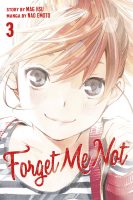
Forget Me Not, Volume 3Forget Me Not, Volume 3 written by Mag Hsu and illustrated by Nao Emoto. I was taken a little by surprise by how much I enjoyed the first two volumes of Forget Me Not and so I was looking forward to reading the third volume as well. The series delves into the life and past loves of Serizawa, a young man who so far has been shown to have very little luck when it comes to romance. Some of his relationship woes can be credited to the fact that he’s still immature and inexperienced, but that’s starting to become less and less of an excuse for him now that he’s in college. Perhaps because of that, the third volume of Forget Me Not didn’t work quite as well for me as the previous volumes did. It is very clear that the relationships shown in the third volume are heading towards an absolute train wreck. Considering the beginning of the series it’s already a known fact that Serizawa ends up alone and full of regret, but it’s still painful to watch the whole mess unfold. I feel just as badly for the two young women involved as I do for Serizawa. They both like him and he likes them both; Serizawa just hasn’t been able to figure out exactly what that means yet. Apparently, he still has quite a bit of growing up left to do. Despite my frustration with the most recent volume of Forget Me Not, I am curious to see how this unfortunate past ties in with the mystery of Serizawa’s current situation.

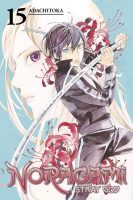
Noragami: Stray God, Volume 15Noragami: Stray God, Volumes 15-16 by Adachitoka. Although the series’ quirky humor hasn’t completely disappeared, Noragami has become increasingly dark and dramatic over time. Adachitoka does still find appropriate moments within the series to insert a bit of levity, but for me what makes the manga compelling is its characters. The real heart of the much of the conflict in Noragami–the frequently unpredictable relationships between the various gods as well as the turbulent relationships between the gods and mortals–has once again been thrust to the forefront of the series with the manga’s most recent story arc. One thing that I found particularly interesting about these two volumes of Noragami is that Adachitoka introduces several deities of indigenous origins in addition to recognizing the existence of foreign gods. I’m not sure that they will necessarily have a large role to play in the series (then again, it seems as though they might), but this expansion is marvelous from a worldbuilding perspective, especially as Noragami is currently dealing heavily with the court and political intrigue of the Heavens. Along with that also comes a few tremendous fight sequences. Ocassionally some of the individual actions can be a little difficult to follow amidst the chaos of battle, but overall the scenes are effective and at times even impressive.

Ten Count, Volume 1Ten Count, Volume 1 by Rihito Takarai. Although the art style in Ten Count looked familiar to me, I actually didn’t make the connection at first–Takarai was the artist of the short boys’ love series Seven Days which I loved. Ten Count, however, is a very different manga than Seven Days. Even before it was licensed in English, I was aware of Ten Count. It’s a massively popular boys’ love manga, but the series also has a fair number of detractors and understandably so. Only one volume in and Ten Count is already a deliberately uncomfortable and troubling story with dark psychological elements, dubious ethics, and emotional manipulation. The manga follows Shirotani, a young man with a severe obsessive-compulsive disorder which has remained untreated since it first manifested. After a chance meeting Shirotani catches the attention of Kurose, a clinical psychotherapist who would seem to have some emotional issues of his own. Kurose takes a particular and decidedly unprofessional interest in Shirotani, offering to help Shirotani deal with his condition off-the-record and off-the-clock. Without realizing it, as Shirotani begins to be able to more easily function within society, he has also become more and more reliant on Kurose. Romantic it certainly is not, but at least for the moment I’m part of the group that finds Ten Count compelling and definitely plan on reading more.

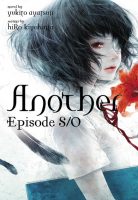
Another: Episode S/0Another: Episode S/0, novel by Yukito Ayatsuji, manga by Hiro Kiyohara. While I was left feeling a little cheated by how some of the major reveals were handled in the horror-mystery novel Another, for the most part I did like the book. And so I was excited when Yen Press licensed both the not-exactly-sequel Another: Episode S (the main action of the novel takes place during the original Another but is only tangentially related) and the short prequel manga Another 0, releasing them together in a single, beautiful hardcover volume. (Out of all the North American manga publishers, Yen Press has had some of the best book designs of late.) Sadly, Episode S has many of the same narrative problems found in Another, namely important reveals that, while they make sense, seem a bit unfair to the readers. I actually really liked the plot twists themselves in Episode S, it’s just that their execution falls short; once again left feeling unsatisfied by the story’s developments. Tonally, Episode S is a little different from Another–while it’s still a ghost story of sorts and there are some marvelously disturbing scenes, the mystery is emphasized far more than the horror. The atmosphere of Another 0, written and illustrated by the creator who helmed the Another manga adaptation, is much closer that of Another. The prequel relies heavily on readers’ familiarity with the original while Episode S largely stands on its own.

Ultimate Conditioning for Martial ArtsUltimate Conditioning for Martial Arts by Loren Landow. From an athletic standpoint, I have found several of the books published by Human Kinetics to be useful resources in supplementing my study of traditional Okinawan karate. Ultimate Conditioning for Martial Arts, one of the publisher’s most recent titles, can technically apply to any martial artist, but the book does tend to be geared more towards athletes and competitors. Landow also assumes that readers already have basic knowledge of anatomy, physiology, and sports training methods. While perhaps not suitable for absolute beginners, Ultimate Conditioning for Martial Arts does provide a good starting point for established martial artists who want to begin incorporating speed, agility, and conditioning work into their training. In addition to providing suggested conditioning exercises and programs, Landow also incorporates an overview of relevant and closely-related topics such as the evaluation and establishment of fitness baselines, warmups and flexibility, rest and recovery, and nutrition. The book includes a generous number of helpful photographs to accompany the descriptions of the specific exercises, but the photographs selected aren’t always the ones that would be most illustrative or useful. Additionally, rather than explaining the particular functions and applications of the individual exercises, Landow tends to broadly generalize and categorize their benefits. This lack of specificity and guidance can make the creation of an individualized conditioning program challenging for someone who has never developed one before. Ultimate Conditioning for Martial Arts groups commonly practiced martial arts disciplines together as either striking and kicking arts or wrestling and grappling arts. Landow suggests specific conditioning exercises for each category but also emphasizes the benefits of using a blended approach when developing a training program. Mixed Martial Arts is the only discipline that’s addressed in-depth but Ultimate Conditioning for Martial Arts is still broadly applicable to other martial arts and a valuable resource, providing a fine overall introduction to conditioning and endurance training.

Filed Under: FEATURES, My Week in Manga Tagged With: Adachitoka, Another, Forget Me Not, Hiro Kiyohara, Loren Landow, Mag Hsu, manga, Nao Emoto, Nonfiction, Noragami, Novels, Rihito Takarai, Ten Count, Yukito Ayatsuji

Manga the Week of 8/24

August 18, 2016 by Sean Gaffney, Michelle Smith, Anna N and Ash Brown Leave a Comment

SEAN: The dog days of August are really dragging in my opinion, and there isn’t much coming out this week I’m picking up. But I’ll tell you about it anyway, as it’s what I do.

rgveda1

Dark Horse has the first omnibus re-release of the old CLAMP series RG Veda, which I seem to recall I found the most difficult to get into of their early works. Perhaps Michelle or MJcan enlighten me further?

MICHELLE: I have actually never read RG Veda, either!

ANNA: I read a few volumes of RG Veda, and I agree it is hard to get into.

SEAN: Kodansha is next. Fairy Tail has a 3rd volume of its Wendy-focused spinoff Blue Mistral.

And a 5th volume of The Heroic Legend of Arslan, which may not come out that often but it’s drawn by Arakawa so who cares?

ANNA: I haven’t read this yet, I clearly need to rethink my life priorities.

ASH: I’ve read the first few volumes and definitely plan on reading more.

SEAN: And there’s a 6th volume of L♥DK, which continues to be oh-so-bad for us.

One Peace has a 5th volume of its novel Rise of the Shield Hero.

Seven Seas has a 2nd volume of horror manga Hour of the Zombie, which does not even pretend to be cute or fluffy before going for shocks.

There’s a 4th 4-koma volume of Merman in My Tub.

ASH: I’ve read a few volumes of this series, too, and was generally amused.

SEAN: And a 3rd volume of odd survival-game-ish Not Lives.

Vertical has the 6th Tokyo ESP omnibus – it’s catching up with Japan a bit, so this may slow down soon.

MICHELLE: I do like this series, but I’m a couple of volumes behind now.

Almost all of Yen’s August releases got pushed back a week, but there are two titles mysteriously unaffected at major retail sites, so I will list them here accordingly. The 8th A Certain Magical Index novel gives us a different POV narrator, as Mikoto’s stalker junior Kuroko gets her own series of adventures.

And The Irregular at Magic High School’s 2nd volume wraps up its first arc.

Do you want something from this list, or is it just too hot to read?

Filed Under: FEATURES, manga the week of

Random Musings: Six Years of Experiments in Manga

August 18, 2016 by Ash Brown

I did it! Experiments in Manga is officially six years old! While a respectable achievement in its own right, this anniversary is even more meaningful to me because I honestly wasn’t sure I was going to make it through the year. As many regular readers of Experiments in Manga know, I have needed to significantly cut back on how much I’m writing. I explained a bit about the change in posting schedule and what to expect couple of months ago, but basically my already limited amount of free time has been dramatically reduced. The causes, while time-consuming, haven’t all been bad, though. I’ve bought a house and my family has moved, which will be fantastic in the long run even if it was initially extremely stressful. After passing an audition in February, I’m now playing taiko semi-professionally. (Being an established, performing musician means a tremendous amount to me personally since for many years I had given up on that even being a possibility; I would love to make my living through music one day.) I’m also still trying to adjust to this whole parenthood thing, too.

But even with all that and more going on in my life, I have managed to find a way to keep Experiments in Manga going in some small capacity, so I’m going to celebrate that fact. At Experiments in Manga’s peak I was posting on average four features each week; now I’m doing my best to post two. It hurts to have cut back so much and I’d love to write more but, because writing is so difficult for me to begin with and because I’m so incredibly busy, that’s not a sustainable option for me at the moment. By necessity, at least for the foreseeable future, most in-depth features will rely on me being truly inspired to write. This might not actually be a bad thing; what I’m lacking in quantity I do hope that I can at least make up for in quality. (Though to be completely honest, I’m not at all confident about my ability to do so!)

Anyway, enough of all of that! I have been reading and writing about manga, Japanese literature, and other tangentially related items for six years! Six years! That’s pretty impressive, especially when considering the circumstances. Even though I’m writing less, looking back over the past year I am still happy with much of what I’ve been able to do. The manga and comic reviews that seemed to be particularly popular (or at least most frequently read/visited) from the last year included Hiroaki Samura’s Die Wergelder, Omnibus 1, Inio Asano’s A Girl on the Shore, Rokudenashiko’s What Is Obscenity?, Studio Kôsen’s Windrose, Volume 1, and Yui Sakuma’s Complex Age, Volume 1. I was also able to successfully wrap up my horror manga review project which featured Setona Mizushiro’s After School Nightmare and Yuki Urushibara’s Mushishi.

As for the non-manga reviews from the last year that people seemed to be particularly interested in there was Project Itoh’s Genocidal Organ, Yukito Ayatsuji’s The Decagon House Murders, the tenth volume of Mechademia, Soji Shimada’s The Tokyo Zodiac Murders, and Ryu Murakami’s short story collection Tokyo Decadence. (I’ve apparently been reading a fair amount of Japanese mystery and crime fiction of late, which is reflected in that list.) Although I’ve written mostly reviews at Experiments in Manga, the features that I often end up enjoying working on the most tend to be the non-reviews like my write-up of TCAF 2016 or my overview of Mushishi adaptations. The post from the last year that was probably my personal favorite was A Moment of Respite in Kohske’s Gangsta, some random musings sparked by a single scene in the manga. Generally, these types of features require significantly more inspiration than standard reviews, but I suspect that they may become slightly more common going forward as I shift my approach to writing at Experiments in Manga.

One last thing: I’d like to thank all of my readers, past and present, old and new. When I started Experiments in Manga it was in part to connect more with other readers and fans of manga and I think that it helped me to do that. I primarily write for myself, but it makes me tremendously happy to know that at least on occasion other people actually do find the site useful or interesting. I love hearing from people who have given something a try or have learned about something new because of what I’ve written here. I hope that in the coming year Experiments in Manga can continue to inspire people even if I’m not able to write as much as I once was. Thank you to everyone for your kindness and support over the last year and for sticking with me! It’s time to get started on year seven.

Filed Under: UNSHELVED Tagged With: Experiments in Manga

Pick of the Week: Wolf Boys and Lizard Heads

August 15, 2016 by Michelle Smith, Sean Gaffney, Ash Brown and Anna N 1 Comment

dorohedoro19MICHELLE: I am somewhat reluctant to claim That Wolf-Boy Is Mine! for my pick of the week, since I know almost nothing about it and it could be dreadful, but the fact remains that it’s what I’m going to be buying, so I guess it wins by default.

SEAN: I am interested in Wolf-Boy, but I do have a go-to pick this week, so I will pick the 19th volume of Dorohedoro, filled with gore and gyoza.

ASH: Gore and gyoza! That’s a pretty good tag line for Dorohedoro. It’s such a strangely delightful and disconcerting series, and my pick for this week as well.

ANNA: There’s not much that is really grabbing me this week, I guess Wolf Boy? Meh.

Filed Under: PICK OF THE WEEK

My Week in Manga: August 8-August 14, 2016

August 15, 2016 by Ash Brown

My News and Reviews

Two posts went up at Experiments in Manga last week in addition to the usual My Week in Manga feature. The first was the Bookshelf Overload for July in which I talk a little about my manga purchases for the month and the fact that I went a little overboard during some recent sales. The second was a brief wrap-up of my recently completed horror manga review project; it took me around a year and a half to review each volume in Setona Mizushiro’s After School Nightmare and Yuki Urushibara’s Mushishi. I’d like to do another review project in the future (and have readers of Experiments in Manga vote on the featured manga as they have for the past two projects), but since I’m currently following reduced posting schedule I’m going to hold off on that for the moment.

Elsewhere, NPR recently released a segment featuring food manga like Food Wars. (Interestingly, NPR was actually where I first learned of Death Note.) The seventh part of “The Sparkling World of 1970s Shojo Manga” was posted at The Lobster Dance and focuses on Sailor Moon and Revolutionary Girl Utena. Also posted last week were not one, but two interviews with Naoshi Arakawa, the creator of Your Lie in April, from when he was visiting the United States for Anime Expo: Misaki C. Kido interviewed Arakawa for Kodansha Comics while Deb Aoki interviewed Arakawa for Anime News Network. And since I’m mentioning interviews, manga translator Zack Davisson was also interviewed over at The Comics Journal about Shigeru Mizuki’s Kitaro.

Finally, a bit of licensing news: Viz Media announced at Otakon that it would be releasing Akira Himekawa’s The Legend of Zelda: Twilight Princess, Kyousuke Motomi’s Queens Quality (the sequel to QQ Sweeper), and Takako Shimura’s Sweet Blue Flowers. For me, the most exciting and unexpected license was Sweet Blue Flowers. Digital Manga previously had the rights to the series but only released one volume of a less-than-stellar digital edition. (Jocilyn Wagner posted a guest review of the manga here a while back.) Before that, a version of Sweet Blue Flowers was available through the now defunct JManga. Shimura’s Wandering Son is a tremendously important series to me, so I’m very happy that Sweet Blue Flowers will be receiving the attention it deserves. Ideally, if the series does well, it could hopefully encourage Fantagraphics to release more of Wandering Son.

Quick Takes

Haven't You Heard? I'm Sakamoto, Volume 2Haven’t You Heard? I’m Sakamoto, Volumes 2-4 by Nami Sano. I greatly enjoyed the first volume of Haven’t You Heard? I’m Sakamoto, so it was only a matter of time before I got around to finishing the rest of the series. I love the manga’s absurdity, humor, and over-the-top scenarios. First and foremost, Haven’t You Heard? I’m Sakamoto is a comedy, but it also has heart–the fourth and final volume in particular is surprisingly touching. While I’m sure I would have enjoyed reading more Haven’t You Heard? I’m Sakamoto, four volumes seems to be the right length for the series. It’s short enough that the the gags still feel fresh and unexpected, but long enough that the manga develops an underlying story to accompany its primarily episodic nature. The entirety of Haven’t You Heard? I’m Sakamoto follows Sakamoto’s first year of high school. As a transfer student it might be expected that he would have some trouble fitting in, and he seems so blissfully unaware socially that he never really does, but everyone adores him, even those who want to hate him. No matter what the circumstances, Sakamoto takes everything in cool, collected stride, frequently facing down and disarming the school’s delinquents with his utter kindness and friendship. Haven’t You Heard? I’m Sakamoto is a ridiculous series and I’m very happy that it’s available in English.

Say I Love You, Volume 10Say I Love You, Volumes 10-14 by Kanae Hazuki. Although I enjoy Say I Love You, for whatever reason it’s not a series that makes me want to rush to find out what happens next, and so I’ve managed to fall behind. But every time that I read Say I Love You, I am greatly impressed by the manga. The slow, natural development of the story and characters is actually a large part of the series appeal; a manga doesn’t have to be full of action to be dramatic and engaging. These few volumes introduce two underclassmen (a brother and sister who are twins) as important characters in an already large cast. At first, I was a little uncertain about their addition to the series, but I’ve grown to really like them. The realistic and earnest portrayal of teenage sexuality in Say I Love You is particularly well done. The characters are maturing and discovering not only who they are as individuals, but who they are in relation to other people. What I especially appreciate about Say I Love You is that sex isn’t necessarily idealized or treated as an end goal, it’s simply one potential part of a relationship which in fact often makes things even more messy and complicated. The characters in Say I Love You are at the point in their lives in which they are transitioning from adolescence into adulthood. In addition to worrying about their friendships and romances, they are concerned about the immediate future.

Sweetness & Lightning, Volume 1Sweetness and Lightning, Volume 1 by Gido Amagakure. I tend to enjoy food manga so will gladly read at least the first volume of a new series which is even tangentially related to the genre. Sweetness and Lightning most definitely fits squarely within the genre–it even contains recipes–but I was particularly interested in the series because it features a single dad who is responsible for caring for his daughter after her mother passes away. He’s a terrible cook so for months they’ve been living on convenience store food and prepackaged, ready-made meals, but when he sees how happy Tsumugi is after eating a home-cooked dinner (not even a dinner really, but a serving of rice), he decides to learn how to cook himself. Helping him is Kotori, one of the students in his high school math class, whose mother owns a restaurant. Kotori sees Inuzuka as a surrogate father, but there also seems to be the possibility that she may develop romantic feelings for him as well. The first volume of Sweetness and Lightning was adorable. Tsumugi is a cute kid, the love and care that Inuzuka shows is endearing, and sharing food with others is joyful experience for Kotori. At this point the three of them together make for a delightful combination. Sweetness and Lightning also has an air of melancholy about it as the characters are dealing with loneliness and loss. Inuzuka does all that he can to make Tsumugi happy, but being a single parent isn’t at all easy.

Filed Under: FEATURES, My Week in Manga Tagged With: Gido Amagakure, Haven't You Heard I'm Sakamoto, Kanae Hazuki, manga, Nami Sano, Say I Love You, Sweetness and Lightning

Random Musings: Wrapping Up the Horror Manga Monthly Review Project

August 12, 2016 by Ash Brown

MushishiLiveActionOver the last few years one of the features at Experiments in Manga has been a monthly manga review project. What makes these reviews any different from the rest found on the site? Not much, really, except that the readers of Experiments in Manga actually helped to choose the manga that would be featured. The subject of my third monthly manga review project was put up for a vote about a year and a half ago. I narrowed down the genre to horror–using a very broad definition of horror–and selected five options from which readers could pick: After School Nightmare by Setona Mizushiro, Dorohedoro by Q Hayashida, Mushishi by Yuki Urushibara, Nightmare Inspector by Shin Mashiba, and Tokyo Babylon/X by CLAMP.

Much to my surprise, there ended up being a tie between After School Nightmare and Mushishi. So, instead of trying to come up with some arbitrary way to choose one series over the other, I decided that I would simply review both of them. Between December 2014 and July 2016 I alternated between the two series until I had reviewed every volume of the manga. I also wrote a bonus Adaptation Adventures feature for Mushishi which provided a brief overview comparing and contrasting some of the series’ adaptations. One thing that I personally found interesting about this particular review project was that while I already knew that I loved Mushishi (I simply hadn’t previously written much about it at Experiments in Manga), After School Nightmare was a manga that I had started but never finished and so didn’t know what my overall impression of the series would be.

As was the case with my past two review projects (namely Blade of the Immortal and the Year of Yuri), I greatly enjoyed delving into After School Nightmare and Mushishi as part of the horror manga review project. Though both series share some similarities, such as strong psychological elements, a unsettling atmospheres, and an ominous sense of foreboding, they are still very different from each other. One particularly notable difference between the two is how each manga approaches and treats themes of life and death. Life in Mushishi is something that is held as sacred in which one person is part of a much greater whole; in After School Nightmare, life consists of trials and tribulations that must be personally overcome and is something that must be actively claimed as one’s own.

Found below are the links to the individual in-depth reviews and features associated with the horror manga monthly review project. Though not specific to the review project itself, tags for both After School Nightmare and Mushishi are also available for browsing.

After School Nightmare
After School Nightmare, Volume 1
After School Nightmare, Volume 2
After School Nightmare, Volume 3
After School Nightmare, Volume 4
After School Nightmare, Volume 5
After School Nightmare, Volume 6
After School Nightmare, Volume 7
After School Nightmare, Volume 8
After School Nightmare, Volume 9
After School Nightmare, Volume 10

Mushishi
Adaptation Adventures: Mushishi
Mushishi, Volume 1
Mushishi, Volume 2
Mushishi, Volume 3
Mushishi, Volume 4
Mushishi, Volume 5
Mushishi, Volume 6
Mushishi, Volume 7
Mushishi, Volumes 8, 9, and 10

Filed Under: UNSHELVED Tagged With: after school nightmare, manga, mushishi, Setona Mizushiro, Yuki Urushibara

Manga the Week of 8/17

August 12, 2016 by Sean Gaffney, Michelle Smith, Ash Brown and Anna N Leave a Comment

SEAN: The dog days of August are here, but there’s still manga to keep you cool.

If you like Neon Genesis Evangelion but wish there was less drama and more high school harems, then Dark Horse has you covered with an omnibus re-release of the first 3 volumes of The Shinji Ikari Raising Project. At 16+ volumes, this spinoff is actually longer than the original manga.

Kodansha gives us a 6th volume of reverse harem comedy Kiss Him, Not Me!.

wolfboy1

The debut this week is also shoujo, from Kodansha’s breakaway hit magazine Aria. It’s called That Wolf-Boy Is Mine! No prizes for guessing what the lead boy’s amazing secret is, and I’ve heard it compared to Fruits Basket a bit.

MICHELLE: I’ll be checking this one out, and the Fruits Basket comparison is reassuring, since I was worried it’d feel more like Twilight or something.

ASH: I’ll admit, I’m a bit curious about this one.

ANNA: I’m curious too, but I will reserve judgement until after you guys read it!

SEAN: One Peace gives us another omnibus of not-really-yuri license rescue Maria Holic. I think this catches us up, so volumes after this should be new.

Vertical has a 2nd volume of To the Abandoned Sacred Beasts.

Viz gives us a 19th volume of Dorohedoro, which I always look forward to, even if I still am a bit lost on the whole Caiman/Kai/Ai thing.

ASH: This week may have relatively few releases, but it does still have Dorohedoro!

SEAN: And an 8th volume of Tokyo Ghoul, still popular.

Lastly, for all your tokusatsu needs, there’s a 5th volume of Ultraman.

Is there a title here that piques your interest?

Filed Under: FEATURES, manga the week of

Bookshelf Overload: July 2016

August 10, 2016 by Ash Brown

I was weak in July and succumbed to temptation. Barnes & Noble had its big 3-for-2 manga sale which, when combined with already discounted prices and additional coupons, meant I was able to get a ton of manga for an average of more than 50% off the cover price. So, I tragically took the opportunity to catch up on a bunch of series like Dorohedoro, Food Wars!, Haven’t You Heard? I’m Sakamoto, Monthly Girls’ Nozaki-kun, My Love Story!!, and more. While I was rather happy about this, my wallet was less than pleased (even if it did comparatively take less of a beating than it normally would otherwise). Oh, and then I somewhat unintentionally ended up with a used set of Yakitate!! Japan for an outrageously good price. None of that was really planned, though, so I’ll have to to keep my purchasing better in check over the next few months.

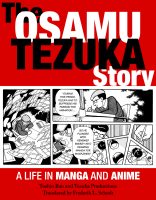
As for July’s manga preorders, I was especially excited for the second omnibus of Akiko Higashimura’s Princess Jellyfish (which was technically released at the end of June), the return of Kohske’s Gangsta, the absolutely enormous edition of Toshio Ban’s The Osama Tezuka Story: A Life in Manga and Anime, and the first volume of Leiji Matsumoto’s Queen Emeraldas. I was also excited to see that my copy of Yona of the Dawn, Volume 1 by Mizuho Kusanagi showed up early  (its official release date was in August), and I ended up enjoying Haikyu!!, Volume 1 by Haruichi Furudate even more than I thought I would. Netcomics’ two most recent releases–the full-color His House by Hajin Yoo (the creator of Totally Captivated) and Intense by Kyungha Yi–are some of the most beautifully designed and presented books that I’ve seen from the publisher. I’m also really looking forward to watching The Empire of Corpses, which is based on a novel by Project Ito and Toh Enjoe that hasn’t been translated into English. Considering that I love the work of both authors, I do hope that one day it will be, though!

Manga!
Ajin: Demi-Human, Volume 7 by Gamon Sakurai
The Ancient Magus’ Bride, Volume 5 by Kore Yamazaki
Dorohedoro, Volume 17-18 by Q Hayashida
Emma, Omnibus 4 by Kaoru Mori
Food Wars!: Shokugeki no Soma, Volume 10-12 written by Yuto Tsukuda, illustrated by Shun Saeki
FukuFuku: Kitten Tales, Volume 1 by Kanata Konami
Gangsta, Volume 7 by Kohske
Haikyu!!, Volume 1 by Haruichi Furudate
Haven’t You Heard? I’m Sakamoto, Volumes 2-4 by Nami Sano
Horimiya, Volume 2 by Hero
Knights of Sidonia, Volume 15 by Tsutomu Nihei
Monthly Girls’ Nozaki-kun, Volumes 2-3 by Izumi Tsubaki
My Love Story!!, Volumes 8-9 by Kazune Kawahara
My Neighbor Seki, Volumes 5-7 by Takuma Morishige
Mysterious Girlfriend X, Omnibus 1 by Riichi Ueshiba
Nichijou: My Ordinary Life, Volume 1 by Keiichi Arawi
Of the Red, the Light, and the Ayakashi, Volume 3 by Nanao
One-Punch Man, Volumes 4-7 written by One, illustrated by Yusuke Murata
The Osama Tezuka Story: A Life in Manga and Anime by Toshio Ban
Ouran High School Host Club, Volume 17 by Bisco Hatori
Princess Jellyfish, Omnibus 2 by Akiko Higashimura
Prison School, Omnibus 4 by Akira Hiramoto
QQ Sweeper, Volumes 2-3 by Kyousuke Motomi
Queen Emeraldas, Volume 1 by Leiji Matsumoto
Sweetness & Lightning, Volume 1 by Gido Amagakure
Wandering Island, Volume 1 by Kenji Tsuruta
Yakitate!! Japan, Volumes 4-26 by Takashi Hashiguchi
Yona of the Dawn, Volume 1 by Mizuho Kusanagi

Manhwa!
His House, Volume 1 by Hajin Yoo
Intense, Volume 1 by Kyungha Yi

Comics!
Alphabet edited by Jon Macy and Tara Madison Avery
Cook Korean! by Robin Ha
Dirty Diamonds, Volumes 1-6 edited by Claire Folkman and Kelly Phillips
Fantasy Sports, Volume 2: The Bandit of Barbel Bay by Sam Bosma
Kamikaze, Volume 1: Run, Rabbit, Run by Alan Tupper, Carrie Tupper, and Havana Nguyen
The Meat Cake Bible by Dame Darcy
Monstress, Volume 1: Awakening by Marjorie Liu and Sana Takeda
Southern Cross, Volume 1 by Becky Cloonan, Andy Belanger, and Lee Loughridge
Stand Still, Stay Silent, Volume 1 by Minna Sandberg
Summerland by Paloma Dawkins
We All Wish for Deadly Force by Leela Corman

Novels!
Legend of the Galactic Heroes, Volume 2: Ambition by Yoshiki Tanaka
The Vegetarian by Han Kang

Anime!
The Empire of Corpses directed by Ryoutarou Makihara

Filed Under: Bookshelf Overload, UNSHELVED

  • « Go to Previous Page
  • Page 1
  • Interim pages omitted …
  • Page 80
  • Page 81
  • Page 82
  • Page 83
  • Page 84
  • Interim pages omitted …
  • Page 140
  • Go to Next Page »
 | Log in
Copyright © 2010 Manga Bookshelf | Powered by WordPress & the Genesis Framework