• Skip to primary navigation
  • Skip to main content
  • Skip to primary sidebar
  • Home
  • About Us
    • Privacy Policy
    • Comment Policy
    • Disclosures & Disclaimers
  • Resources
    • Links, Essays & Articles
    • Fandomology!
    • CLAMP Directory
    • BlogRoll
  • Features & Columns
    • 3 Things Thursday
    • Adventures in the Key of Shoujo
    • Bit & Blips (game reviews)
    • BL BOOKRACK
    • Bookshelf Briefs
    • Bringing the Drama
    • Comic Conversion
    • Fanservice Friday
    • Going Digital
    • It Came From the Sinosphere
    • License This!
    • Magazine no Mori
    • My Week in Manga
    • OFF THE SHELF
    • Not By Manga Alone
    • PICK OF THE WEEK
    • Subtitles & Sensibility
    • Weekly Shonen Jump Recaps
  • Manga Moveable Feast
    • MMF Full Archive
    • Yun Kouga
    • CLAMP
    • Shojo Beat
    • Osamu Tezuka
    • Sailor Moon
    • Fruits Basket
    • Takehiko Inoue
    • Wild Adapter
    • One Piece
    • After School Nightmare
    • Karakuri Odette
    • Paradise Kiss
    • The Color Trilogy
    • To Terra…
    • Sexy Voice & Robo
  • Browse by Author
    • Sean Gaffney
    • Anna Neatrour
    • Michelle Smith
    • Katherine Dacey
    • MJ
    • Brigid Alverson
    • Travis Anderson
    • Phillip Anthony
    • Derek Bown
    • Jaci Dahlvang
    • Angela Eastman
    • Erica Friedman
    • Sara K.
    • Megan Purdy
    • Emily Snodgrass
    • Nancy Thistlethwaite
    • Eva Volin
    • David Welsh
  • MB Blogs
    • A Case Suitable For Treatment
    • Experiments in Manga
    • MangaBlog
    • The Manga Critic
    • Manga Report
    • Soliloquy in Blue
    • Manga Curmudgeon (archive)

Manga Bookshelf

Discussion, Resources, Roundtables, & Reviews

Ash Brown

Pick of the Week: Pink, Titans

November 25, 2013 by Ash Brown, Michelle Smith, Sean Gaffney, Anna N and MJ 1 Comment

potw-11-25ASH: There are a few interesting things being released this week, but there is one volume that especially stands out for me: Kyoko Okazaki’s Pink. Originally published in 1989, the manga is of the earliest successes from one of the most influential mangaka in josei. I was greatly impressed by Okazaki’s Helter Skelter, also released by Vertical this year, so I’m particularly looking forward to reading Pink.

MICHELLE: Pink is definitely the one I’m looking forward to the most. I am also amused by how innocuous its cover looks, given the plot synopsis!

SEAN: I am looking forward to Pink, which sounds great. My Pick, though, is for the 9th volume of Attack on Titan. It really is quite a pivotal volume, with all the various plot bits that have been dropped over the last several books coming together and making sense. Plus we get a great cliffhanger into what looks like an even more pivotal Volume 10. This is not the runaway breakout hit of 2013 for nothing.

ANNA: I am also very much looking forward to Pink. I’m so glad Vertical has decided to bring out some quality josei titles!

MJ: Well, I pretty much already declared Pink as my pick of the week, and I have no good reason to contradict myself, so my choice this week is clear. I really enjoyed Helter Skelter, and I’m thrilled that we’re seeing more Okazaki this quickly. Thanks, Vertical!

What looks good to you this week?

Filed Under: PICK OF THE WEEK

My Week in Manga: November 18-November 24, 2013

November 25, 2013 by Ash Brown

My News and Reviews

I’ve never run a poll before, so I’m probably more excited about this than I should be, but you all currently have the opportunity to vote on my next monthly manga review project. I’ve narrowed it down to five different options–a mix of individual series and thematic collections–and am letting readers decide which manga I will be focusing on next. Check out the post for all the details. The poll will run through the end of November, so please come and vote!

Last week I posted my review of Hinoki Kino’s manga No. 6, Volume 3. I am very happy to be able to say that the series continues to improve. I’m really looking forward to the next volume. And for your reading pleasure, here are a couple of interesting articles that I happened across online last week: A Short History Of Japanese Sign Language (with a fascinating connection to manga) and Are Comics Too Hot For Apple?, about the impact of Apple’s inconsistent policies when it comes to digital comics, including manga.

Quick Takes

Darkside BluesDarkside Blues written by Hideyuki Kikuchi and illustrated by Yuho Ashibe. I think I’ve suspected it for a while, but reading Darkside Blues seems to confirm it–Kikuchi may have some great ideas and settings for his stories, but he can’t quite seem to focus long enough to pull them all together into something coherent. Darkside Blues features many of the elements that I’ve come to expect from Kikuchi’s work: a mix of near-future technology, magic, and bizarre horror; evil organizations bent on taking over the world, crushing those that would stand in their way; a tall, dark, and handsome (well, androgynously beautiful) anti-hero. I’m fairly certain the manga is related to Kikuchi’s Demon City universe, or at least it makes reference to it. There are some great scenes here and there, but the story as a whole is a mess and doesn’t make much sense. Kikuchi claims that the story is complete, but it feels like a small part of something much larger. However, I did like Ashibe’s artwork, and so will probably look into tracking down Bride of Deimos because of that.

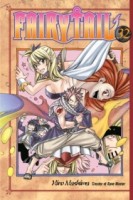
Fairy Tail, Volume 32Fairy Tail, Volume 32 by Hiro Mashima. Now that the preliminaries are over, the Grand Magic Games proper have begun. Eight teams will be competing in the Games which consists of a mix of event challenges and battles. The teams themselves represent guilds that have been encountered in the series before as well as a few new ones. One thing that irked me a little was that there are actually two teams from Fairy Tail participating. That in itself didn’t bother me, but the fact that it was played up as a surprise (to both the readers and the characters) was unconvincing. Also, it has been established that Fairy Tail has always been one of the weakest guilds to participate in the Games, so I find it a little difficult to believe that not one but two teams made it past preliminaries this year. That annoyance aside, the event challenge in this volume was actually pretty interesting. I appreciate that the players have to put some actual thought and strategy into it instead of simply relying on who can out-magic the other. Magical skill certainly helps, but being clever is important, too.

I'll Be Your SlaveI’ll Be Your Slave by Miki Araya. I’ll admit it. I laughed. Several times. Out loud, even. I’ll Be Your Slave is so incredibly ridiculous, and intentionally so, that I just couldn’t help it. Moriya is having a difficult time finding the perfect model for his project when he happens across Ouno, a beautiful but extraordinarily lazy teenager. Fortunately, Ouno’s job will basically amount to him sitting around and looking pretty. He’s easily tired and loses interest in things quickly, but if he doesn’t want to put the effort into doing something he simply lets someone else do it for him. (This even includes walking from place to place.) Moriya is more than willing to pamper Ouno. Mopping up sweat? Check. Foot massages? Check. Sex? Sure, why not! I’ll Be Your Slave is definitely more of a comedy than it is a romance. The humor is great and the over-the-top reaction shots–complete with dramatic poses and bursts of sparkles–are hilarious. The characters admittedly don’t have much depth to them, but that’s also part of what makes the manga so funny.

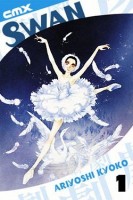
Swan, Volume 1Swan, Volumes 1-3 by Kyoko Ariyoshi. While I appreciate and admire dance and dancers, and even watch dance performances from time to time, I’ve never had a particular interest in ballet. That’s probably the primary reason that it took me so long to get around to reading Swan. (It’s also out of print and some of the volumes can be a little hard to find.) But, I kept hearing how wonderful Swan was, so I finally made a point of seeking it out. I should have done it sooner, because it really is a fantastic series. I may not be a dancer but I am a trained musician; there are many parallels between the two arts seen in Swan with which I can personally identify. The importance of basics. The grueling practices that push the body, mind, and soul to their breaking points. The good-natured competition and the vicious rivalries. The passion, drama, frustration, and desire that go hand in hand with creative expression. The complete joy experienced with success and the utter despair felt at failure. Swan is incredible; I can’t wait to read more.

Filed Under: FEATURES, My Week in Manga Tagged With: Darkside Blues, Fairy Tail, Hideyuki Kikuchi, Hiro Mashima, Kyoko Ariyoshi, manga, Miki Araya, swan, Yuho Ashibe

Random Musings: Picking My Next Monthly Review Project

November 22, 2013 by Ash Brown

Now that I have completed my monthly Blade of the Immortal review project it is time for me to tackle something new. And, as promised, I am putting it up to a vote and letting readers of Experiments in Manga help decide what that will be. I am looking for a project that will last roughly six months to a year, isn’t a sword-fighting epic or period piece (basically, a different genre than Blade of the Immortal), and is something that I’m interested in reviewing. Don’t expect any scathing posts to come out of this project—this is manga that I already know that I like or for which I have an established affinity. To aid in the selection of my next monthly review project, I have narrowed down the choices to the following five options:

Mermaid Medley
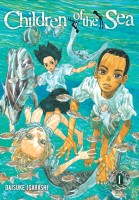
Children of the Sea, Volume 1I keep hearing that mermaids are the next big thing, but they’ve been around for a while. I don’t have a particular interest in mermaids, but I do love water and legends. Using a loose definition of “mermaid,” this option will include in-depth reviews of  Daisuke Igarashi’s Children of the Sea, Young-Hee Kim’s Evyione: Ocean Fantasy, Rumiko Takahashi’s Mermaid Saga, and Osamu Tezuka’s Triton of the Sea. I might try to do something with Reiko Shimizu’s Moon Child, too.

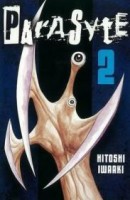
Parasyte by Hitoshi Iwaaki
Parasyte, Volume 2Parasyte may very well be my favorite horror manga. It’s also one of my favorite manga series in general, so I’ve wanted to give it a little more attention at Experiments in Manga. Originally published by Tokyopop back in its Mixx days, Parasyte was later picked up by Del Rey Manga. Del Rey Manga is no more, but happily Kodansha Comics rescued the series. (Upcoming live-action and anime adaptations were recently announced, too!) I’ve already reviewed the first volume of Parasyte, so this option will include in-depth reviews of the remaining volumes.

Real by Takehiko Inoue
Real, Volume 1I honestly believe that Real is one of the best comics currently being released in English, and I haven’t reviewed a single volume of the series. But I love it. Inoue’s artwork and storytelling is fantastic and his characters have incredible depth. Even if you’re not into sports (in this case wheelchair basketball), this series is well worth checking out. This option will include in-depth reviews of all twelve volumes currently available in English as well as reviews of any future volumes that are released.

Usamaru Furuya
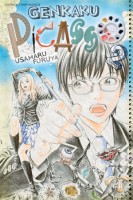
Genkaku Picasso, Volume 2The first Manga Moveable Feast that I hosted at Experiments in Manga featured the work of Usamaru Furuya. At that time I reviewed the first volume of each of his series available in English, and I’ve always meant to get around to reviewing the rest of them. This option will include in-depth reviews of Genkaku Picasso, No Longer Human, and Short Cuts. If I’m feeling ambitious, I may also attempt to review Furuya’s artbook Flowers (which hasn’t been released in English.)

Year of Yuri
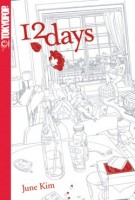
12 DaysIn the past I’ve read and reviewed yaoi and boys’ love manga. I’ve also read and enjoyed yuri manga, but for some reason have never gotten around to actually writing any in-depth reviews. It’s probably about time I change that. This option will include twelve in-depth reviews of manga and other comics with yuri and/or lesbian themes. I haven’t finalized the list yet, but expect a variety of genres, demographics, and styles. Some titles will be out-of-print, but I will review more recent releases as well.

So, what’ll it be? My fate is in your hands.

(The poll will be open through the end of November!)

Filed Under: UNSHELVED Tagged With: manga

Manga the Week of 11/27

November 21, 2013 by Sean Gaffney, Michelle Smith, Ash Brown, MJ and Anna N 4 Comments

SEAN: I love the end of the month. It’s so quiet and peaceful.

ainokusabi8

DMP has the 8th volume of the Ai no Kusabi novel series, which I think is the final volume of this epic sci-fi master/slave BL tale. It’s 1980s-tastic!

MICHELLE: I remember watching the OVA of this (possibly at a convention) and being THOROUGHLY confused.

ASH: It’s nice to see this series finally completed in English, especially after a nearly four-year hiatus.

MJ: If only this was a manga instead of a novel. “1980s-tastic” has a much stronger hold on me when there’s lots of artwork involved.

ANNA: I love 1980s-tastic manga art!

SEAN: Kodansha gives us Attack on Titan 9. I went on about this volume at length in my review. At great length. Seriously, I just wouldn’t shut up. Also, I can now say Ymir! Hooray!

ASH: I’ll admit it: I’ve become hooked on Attack on Titan. I’m glad the series is doing so well for Kodansha, too.

SEAN: There’s also the 2nd and final volume of Sailor Moon Short Stories, which I also reviewed. I recommend getting it for Rei Hino. Also, that wraps it up for the manga, barring any artbook releases in the future.

Seven Seas has another 2-volume omnibus of Witch Buster, which I am so unfamiliar with I can’t even muster up some witty wordplay banter.

ASH: The only thing I really know about Witch Buster is that it’s original title was Witch Hunter.

pink

SEAN: Vertical has Pink, by Kyoko Okazaki. I’ve been waiting for this since it was first announced. It’s from an earlier period in her career than Helter Skelter, and has a crocodile. Hence, everyone should read it.

MICHELLE: I’m really looking forward to this one!

ASH: As am I! I’ve really been enjoying Vertical’s josei titles this year.

MJ: I suspect this will make a strong showing in our upcoming Pick of the Week column. It’s certainly mine!

ANNA: I am glad for the reminder that this is coming out, because I’m going to order it! Helter Skelter was one of the more distinctive manga that I’ve read recently, so I am very much looking forward to Pink.

SEAN: Yen has the 2nd volume of Judge, which is shipping this week instead of last for some reason. See, it’s missing deadlines like that that would get you killed first in a survival game manga.

Speaking of missing deadlines, I forgot to mention that last week the 10th and 11th volumes of the Haruhi Suzumiya light novels shipped as one big omnibus. This catches us up with Japan, at last novel-wise, and is one of the best yet, provided you’re used to the Japanese light novel narration style, which involves a torrent of words and introspection.

What manga are you thankful for?

Filed Under: FEATURES, manga the week of

No. 6, Vol. 3

November 20, 2013 by Ash Brown

No. 6, Volume 3Creator: Hinoki Kino
Original story: Atsuko Asano

U.S. publisher: Kodansha
ISBN: 9781612623573
Released: October 2013
Original release: 2012

Hinoki Kino’s No. 6 manga is one of two adaptations available based on Atsuko Asano’s series of science fiction novels No. 6. My introduction to the story was through the anime series, but I am very glad to see the manga being released in English as well. No. 6, Volume 3 was originally published in Japan in 2012. The English-language edition was released by Kodansha Comics in 2013. Although the manga and the anime both share the same character designs and basic story, they are both different interpretations of the original novels. The manga, which is currently still an ongoing series, actually began serialization before the anime adaptation began airing. I quite enjoyed the No. 6 anime–except for its rushed original ending–which is why I was particularly interested in reading Kino’s manga. I felt the first volume was a bit uneven, but the second volume improved in both world-building and pacing, so I was looking forward to reading the third.

Even though at one point he was considered to be among No. 6’s elite, Shion is now a fugitive hiding outside of the city in West Block. Currently he is living with Rat who has already saved Shion’s life on several occasions and who himself is listed as a violent criminal by No. 6. Fortunately, the city seems to have very little interest in what is going on outside of its walls, so the two young men should at least be safe for the time being. In fact, Shion seems to be adapting surprisingly well to life in West Block, although his kindheartedness and naivety still have a tendency to get him into trouble. Inside the city, Shion’s mother is still afraid for her missing son’s safety and Shion’s childhood friend Safu wants to do anything that she can to find him. The risks involved in searching for Shion are not small and both of the women are under close surveillance by the authorities. A single mistake could lead to their arrest or convenient disappearance.

The relationship between Rat and Shion has always been an important part of the No. 6 manga. This hasn’t changed with No. 6, Volume 3, but the volume also further develops the relationships between them and the other characters. The pacing of the third volume is happily a bit slower than the first two which allows more time for Kino to better explore those relationships. Particularly telling is Rat’s interactions with Dogkeeper and how different they are from his interactions with Shion. Rat normally doesn’t hesitate to manipulate and intimidate other people and is more than willing to resort to violence. It’s his way of distancing himself from others in an attempt to avoid being hurt or taken advantage of. There is a small amount of kindness to be found in Rat’s personality, but he keeps it very well hidden. Shion is Rat’s complete opposite in this and seems to be made up of nothing but kindness, though he certainly has become less of a pushover than he once was.

It’s not only that Shion, Rat, and the others have different personalities, it’s that they have completely different worldviews and ways of thinking. This is a sources of strife in their relationships, but from this conflict comes subtle changes in their attitudes. Shion has an effect on those around him and he in turn is slowing changing as well. As an outsider in West Block, Shion asks questions that no one else would think to ask; he’s not as naive as he first appears, simply more open-minded and optimistic. Those used to living in the harsh environment of West Block have lost that idealism, and in time Shion may lose it as well as he is confronted with the terrible reality of West Block and the truth behind No. 6. He is strangely accepting of his own situation and exile, but when it comes to those he cares about he feels compelled to protect them at any cost, even if it puts him in danger. Each volume of the No. 6 manga continues to improve; I’m definitely looking forward to seeing where Kino takes things next.

Filed Under: REVIEWS Tagged With: Atsuko Asano, Hinoki Kino, kodansha, Kodansha Comics, manga, no. 6

My Week in Manga: November 11-November 17, 2013

November 18, 2013 by Ash Brown

My News and Reviews

Last week was apparently “Blade of the Immortal Week” here at Experiments in Manga. I finally got around to reading and reviewing Blade of the Immortal: Legend of the Sword Demon, a novel written by Junichi Ohsako with illustrations by Hiroaki Samura, which is a re-imagining of the early part of the manga series. Honestly, I was disappointed with it and would only recommend the novel to fellow Blade of the Immortal completists. I also reviewed Blade of the Immortal, Volume 27: Mist on the Spider’s Web. With that review, I have now caught up with the English released of the Blade of the Immortal manga series. And so, I wrote some random musings on Wrapping Up the Blade of the Immortal Monthly Review Project.

And now for a few interesting things found online last week. SciFi Japan has a great interview with Zack Davisson, the translator for the recently released Showa: A History of Japan by Shigeru Mizuki. The School Library Journal’s Good Comics for Kids has an interesting roundtable on Gene Luen Yang’s Boxers & Saints. Takako Shimura’s Wandering Son, Volume 4 is one of the nominees for the 2014 Rainbow Book List. (As is Julie Maroh’s Blue Is the Warmest Color, for that matter.) And finally, Kodansha Comicss participated in Reddit’s Ask Me Anything. I haven’t had the chance to read through all of the comments yet, but what I’ve read so far has been interesting.

Quick Takes

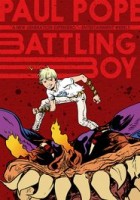
Battling BoyBattling Boy by Paul Pope. I have enjoyed Paul Pope’s work in the past and so I was very excited for the release of Battling Boy, his most recent graphic novel. What I didn’t realize was that it was the first volume in what will be at least a two-volume series, not including the recently announced prequel The Rise of Aurora West. It was a little frustrating to reach the end of Battling Boy just when things were really starting to pull together only to discover that it stops without any sort of conclusion and not even much of a cliffhanger. Still, Battling Boy is a tremendous amount of fun and I did enjoy it. I appreciate Pope’s offbeat humor and slightly surreal and absurd storytelling. The artwork’s pretty great, too. Following the eponymous demigod Battling Boy as he struggles to complete his coming-of-age ceremony and become a hero, the graphic novel is Pope’s original take on the superhero origin story. While he brings his own touch to the genre, there are plenty of influences from other comics (such as Batman and Thor to name two) that can be seen in the work.

Endless RainEndless Rain by Yuuya. I’ve not had particularly good luck with the boys’ love that I’ve been reading recently and Endless Rain hasn’t changed that. I can’t say that I enjoyed this one-shot much at all. Despite having a happy ending (which I am not at all convinced would happen) the manga isn’t particularly pleasant and includes what basically amounts to forced prostitution. The plotting is sloppy, the narrative is difficult to follow and at times doesn’t make any sense, and the characterization is inconsistent. With Hyougami’s vendetta against the Kasuga family and the bad blood between Akira Kasuga and his father Endless Rain had some potential, but Yuuya doesn’t quite pull it off. Maybe if the manga was a little longer it wouldn’t have been such a mess. As it is, Yuuya tries to cram in too much and it ends up rushed. The only part of Endless Rain that I really liked was Iwao–a scarred and severe-looking yakuza who dotes on Akira’s younger brother. Contrary to his appearance, he’s actually a very sweet guy. Unfortunately, he only briefly shows up as a side character.

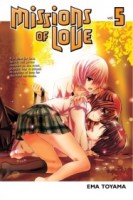
Missions of Love, Volume 5Missions of Love, Volume 5 by Ema Toyama. Although I am familiar with the basic premise of Missions of Love, I haven’t actually read any of the series until this volume. When I heard the manga described it seemed so trope-filled that I just couldn’t muster up any interest in it despite the rather provocative covers. But now I’m kind of sorry that I missed out on the earlier volumes. Yes, there are quite a few tropes being used, but the twisted romantic relationships are mesmerizing even if they aren’t particularly healthy. None of the characters are really very nice people and their interactions are a mess of lies and manipulation. Missions of Love is very suggestive and scandalous even though all that really happens in this volume (well, except for the emotional exploitation) is a bit of ear nibbling. I can see why others call Missions of Love addicting; I know that I want to read more. The only thing that really annoyed me about Missions of Love is how Yukina’s glasses are drawn (or rather how the aren’t drawn)–the lines used are so minimal that they barely seem to exist at all.

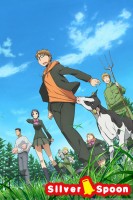
Silver SpoonSilver Spoon directed by Tomohiko Ito. Based on the award-winning manga series Silver Spoon by Hiromu Arakawa (which was in part inspired by her experiences growing up on dairy farm), the Silver Spoon anime adaptation is quite well done. The series is very forthright and honest about where food comes from, including the raising and slaughtering of animals for meat. I know that particular subject will distrub some viewers, but I think it is something that is important for people to understand and the anime does handle it very well. Many of its characters are also conflicted over it. One of the major story lines of Silver Spoon has to do with Hachiken, the protagonist, trying to come to terms with what it is he eats. However, life and the taking of it is treated with immense respect in the series. I myself grew up in a farming community among the cows, corn, and soybeans (my neighbors actually happened to be dairy farmers), and so I could appreciate Silver Spoon‘s realistic portrayal of the challenges faced by those who make their living caring for animals and crops.

Filed Under: FEATURES, My Week in Manga Tagged With: anime, Battling Boy, comics, Ema Toyama, manga, missions of love, Paul Pope, Silver Spoon, Yuuya

Pick of the Week: Mostly Sunny

November 18, 2013 by MJ, Michelle Smith, Anna N, Ash Brown and Sean Gaffney Leave a Comment

potw-sunny-yotsubaMJ: Once again, there’s quite a bit on this week’s shipping list, including a new volume of the much beloved Yotsuba&!, but one title stands out clearly from the crowd for me. That would be volume two of Taiyo Matsumoto’s Sunny, due out this week from Viz. From my review of the first volume: “The book’s structure and pacing seem so in tune with a child’s sense of time—that feeling of impatience on top of the endless landscape of imagination. These kids have more reasons than most to escape into their fantasy worlds, but they spend just as much time being shuffled along the familiar routines of childhood. Meals, school, sleep, play—their daily lives are similar to most young kids, but with an edge of anxiety most of us were privileged to do without. And it’s these points of anxiety that make Sunnyfeel moving and real, and not a nostalgia piece in the slightest.” Yes, I will be buying this. I really can’t wait.

MICHELLE: I’m with MJ on this. I reviewed volume two for this week’s Bookshelf Briefs and it was every bit as masterful and moving as volume one. Perhaps more so. Really, I find words inadequate to describe its greatness, so just go read it already.

ANNA: I’ll have to join in on the love for Sunny, this is clearly the standout title for the week.

ASH: It’s Matsumoto’s Sunny for me this week, too. I had the pleasure of being at TCAF for the series’ English debut, and I’ve been looking forward to the second volume’s release ever since.

SEAN: I’m picking Yotsuba&!, because I dislike unanimity, and also it’s hella fun.

What looks good to you this week?
Filed Under: PICK OF THE WEEK

Random Musings: Wrapping Up the Blade of the Immortal Monthly Review Project

November 16, 2013 by Ash Brown

Manji - Blade of the ImmortalHiroaki Samura’s Blade of the Immortal was one of the first manga that I ever read and it was the first series that I made a point of collecting. Even before I started writing at Experiments in Manga, I was reading and reviewing Blade of the Immortal. However, I wasn’t very consistent or timely with those reviews. And so, early in 2012, I began a monthly review project in which, beginning with the seventh volume, I would read and review one volume of Blade of the Immortal every month.

Nearly two years later, I have reached the twenty-seventh volume and my reviews have finally caught up with the English release of the series. I also plan on reviewing the new volumes of Blade of the Immortal as they are published. Assuming Dark Horse continues releasing Blade of the Immortal as it has been, there should be a total of thirty-one volumes in the English-language edition and we’ll see the end of the series in 2015.

Deliberately focusing on a single series month after month was an interesting experience and one that I enjoyed. I believe that it allowed me to see overarching plots and themes more clearly; it forced me to really look at what was going on and I noticed details that I might not have otherwise. Overall, I found it to be a valuable exercise in reviewing. So much so that I’ll soon be taking up a new monthly review project. I’m putting it up to a vote, too, so be on the lookout!

The links to all of my Blade of the Immortal reviews have been conveniently collected below, including the links to my reviews of Samura’s Blade of the Immortal artbook and the novel based on the manga written by Junichi Ohsako. (Some of the older reviews were written before I had read much manga and before I really knew what I was doing; I find them rather embarrassing, so please be forgiving.)

The Art of Blade of the Immortal
Blade of the Immortal: Legend of the Sword Demon

Blade of the Immortal, Volume 1: Blood of a Thousand
Blade of the Immortal, Volume 2: Cry of the Worm
Blade of the Immortal, Volume 3: Dreamsong
Blade of the Immortal, Volume 4: On Silent Wings
Blade of the Immortal, Volume 5: On Silent Wings II
Blade of the Immortal, Volume 6: Dark Shadows
Blade of the Immortal, Volume 7: Heart of Darkness
Blade of the Immortal, Volume 8: The Gathering
Blade of the Immortal, Volume 9: The Gathering, Part II
Blade of the Immortal, Volume 10: Secrets
Blade of the Immortal, Volume 11: Beasts
Blade of the Immortal, Volume 12: Autumn Frost
Blade of the Immortal, Volume 13: Mirror of the Soul
Blade of the Immortal, Volume 14: Last Blood
Blade of the Immortal, Volume 15: Trickster
Blade of the Immortal, Volume 16: Shortcut
Blade of the Immortal, Volume 17: On the Perfection of Anatomy
Blade of the Immortal, Volume 18: The Sparrow Net
Blade of the Immortal, Volume 19: Badger Hole
Blade of the Immortal, Volume 20: Demon Lair
Blade of the Immortal, Volume 21: Demon Lair II
Blade of the Immortal, Volume 22: Footsteps
Blade of the Immortal, Volume 23: Scarlet Swords
Blade of the Immortal, Volume 24: Massacre
Blade of the Immortal, Volume 25: Snowfall at Dawn
Blade of the Immortal, Volume 26: Blizzard
Blade of the Immortal, Volume 27: Mist on the Spider’s Web
Blade of the Immortal, Volume 28: Raining Chaos
Blade of the Immortal, Volume 29: Beyond Good and Evil
Blade of the Immortal, Volume 30: Vigilance
Blade of the Immortal, Volume 31: Final Curtain

Filed Under: UNSHELVED Tagged With: Blade of the Immortal, Hiroaki Samura, manga

Manga the Week of 11/20

November 15, 2013 by Sean Gaffney, Ash Brown, MJ, Anna N and Michelle Smith 4 Comments

SEAN: Another one of those weeks that brings something for everyone.

berserk37

It has been a year and two months since the last volume of Berserk from Dark Horse. (This is the fault of the Japanese author, let’s note, whose reputation for breaks is limitless.) Now, at last, we have the next volume.

ASH: YES! Berserk is one of my favorites. Well, early Berserk is one of my favorites. But I’m always happy to see a new volume of the series released.

MJ: I have never read Berserk, but I’ll admit that Dark Horse’s announcement about the new volume made it all sound very exciting.

SEAN: Oh My Goddess 45 contains one of the most amazing, ballsiest retcons I have seen in ages. It set fandom alight, and I look forward to reading it in this new volume, also from Dark Horse.

Fairy Tail’s speedup is nearing the end, but not quite there yet, so here’s Vol. 32, which is still at the start of the Grand Magic Games arc.

Sherlock Bones also has its 2nd volume, which will feature more from the sort-of love interest of the boy (the dog does not, as far as I know, have a love interest).

ASH: Well, there is Takeru’s sister who reminds Sherdog an awful lot of Irene Adler…

mum

SEAN: Picturebox is having a busy month. This week we get the second in their Ten Cent Manga series, featuring a well-known name – Osamu Tezuka, with The Mysterious Underground Men, one of his very first works.

ASH: I’ll admit, I’m a little burned out on Tezuka, but the Ten Cent Manga series is pretty great.

MJ: I’m with Ash here, but I’ll still probably read it.

SEAN: The longest Alice in the Etc. series to date comes to an end with the 7th and final volume of Cheshire Cat Waltz. Will Alice and Boris live happily ever after? Is happily ever after really a desirable result here? We shall see.

ANNA: I have to say, I don’t care very much about this series, but I just started Alice in the Country of Joker. That’s one thing to be said for all the many Alice in series, something for everyone.

Sickness Unto Death wraps up with its second volume. I reviewed it here.

Hey, remember Dogs? It’s at the ever popular yearly release schedule (not due to sales – Japan has a yearly schedule as well), and is sure to be stylish.

sunny2

Sunny was a nicely introspective manga when the first volume landed in the spring, so I am quite looking forward to Vol. 2.

ASH: As am I! It’s a beautiful, deluxe release, too.

MICHELLE: Me, too! I’m reviewing it for the next Bookshelf Briefs, in fact!

ANNA: I very much enjoyed the first volume of this series and the deluxe format makes a nice holiday gift!

MJ: I really can’t wait to read this. Michelle & I adored Volume 1.

SEAN: I have run out of things to say about Yen’s BTOOOOM!, so I will note that since this is Volume 4 I added an extra O to the title.

MICHELLE: *snerk* I gave up after the craptacular second volume.

SEAN: A quick detour to the manwha side, as Vol. 8 of Jack Frost is out. I lost track of this back at the start. Is the girl still getting decapitated constantly?

MJ: Probably.

SEAN: Soul Eater 17 contains one of the most popular sequences in the entire series. I won’t say anything more, other than: Rule 63.

Lastly, speaking of yearly releases, it’s Yotsuba&! time. Featuring Halloween, camping, and Asagi’s friend (and that’s all she is, despite yuri fans everywhere wishing it were otherwise) Torako. Ever volume of this series puts a smile on my face.

ASH: I can’t believe how far behind I am with Yotsuba&!. I should address this issue immediately.

MICHELLE: Yay, Yotsuba&!.

ANNA: I am terribly behind as well.

MJ: New Yotsuba&! is always a welcome sight!

SEAN: What appeals to you most?

Filed Under: FEATURES, manga the week of

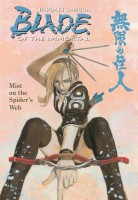
Blade of the Immortal, Vol. 27: Mist on the Spider’s Web

November 15, 2013 by Ash Brown

Blade of the Immortal, Volume 27Creator: Hiroaki Samura
U.S. publisher: Dark Horse
ISBN: 9781616552152
Released: September 2013
Original release: 2010
Awards: Eisner Award, Japan Media Arts Award

Mist on the Spider’s Web is the twenty-seventh volume in the English-language edition of Hiroaki Samura’s Blade of the Immortal manga series. Released by Dark Horse in 2013, Mist on the Spider’s Web is more or less equivalent to the twenty-sixth volume of Blade of the Immortal published in Japan in 2010. Blade of the Immortal is an award-winning series. Over the course of its long publication history the manga has earned Samura a Japan Media Arts Award and an Eisner Award among other honors. Blade of the Immortal is also a series of which I am particularly fond, so I am glad to see Dark Horse sticking with the manga through to its end. Mist on the Spider’s Web takes place during the fifth and final major story arc of Blade of the Immortal. The previous volume, Blizzard, was particularly good and so I was very interested to see where Samura would take things next with Mist on the Spider’s Web.

While Rin, Manji, and the others are recovering from their final confrontation with Shira, the hunt for the remaining Ittō-ryū swordsmen continues. The main group is well on its way to Hitachi under the guidance of senior members Abayama Sosuke and Kashin Koji. Before making their escape they hope to reunite with their leader Anotsu Kagehisa who has been delayed after his attack on Edō Castle. The three other Ittō-ryū fighters who also took part in the strike are either dead, missing, or severely wounded. Habaki Kagimura is in pursuit, chasing down the Ittō-ryū and its allies. He and his Rokki-dan warriors–death row convicts with little choice but to aid Habaki in his quest–are charged with annihilating the rogue sword school. The pressure on the Ittō-ryū continues to mount as more and more of Anotsu’s enemies draw ever closer.

If it wasn’t already apparent, Mist on the Spider’s Web makes it very clear how far the Ittō-ryū has fallen since its glory days. The most talented swordsmen are slowly being killed off, the new members are few and inexperienced, and the group has had to abandon some of its core ideals and principles just for the chance of survival. It is becoming increasingly likely that the Ittō-ryū may simply cease to exist in its entirety. The sword school is a mere shadow of what it once was. The Ittō-ryū, which destroyed so many other martial groups and caused so much chaos, is now faced with its own demise. However, its members are prepared to fight to the very end and by any means necessary. Despite the questionable methods that the Ittō-ryū has employed to reach its goals, Anotsu wasn’t entirely wrong in his ambitions. It is a little disheartening to see the Ittō-ryū’s idealism fading away.

Mist on the Spider’s Web has some fantastic action sequences, but there’s also quite a bit of standing around and talking, too. It can be somewhat tedious at times, but it does make sense within the context of what is going on. In general the focus of Blade of the Immortal on the Ittō-ryū has been directed towards its fighters, but the group also has members that rely more on their mental capacities rather than on their martial capabilities. Anotsu has always been shown to be a particularly impressive strategist in addition to being a skilled swordsman, but in Mist on the Spider’s Web it is old man Kashin who demonstrates his worth through his devious intelligence. He doesn’t need physical strength to overcome his enemies, only careful thought, thorough planning, and little bit of time. Of course, time is one of the things that the Ittō-ryū has less and less of these days.

Filed Under: REVIEWS Tagged With: Blade of the Immortal, Dark Horse, Eisner Award, Hiroaki Samura, Japan Media Arts Award, manga

Blade of the Immortal: Legend of the Sword Demon

November 13, 2013 by Ash Brown

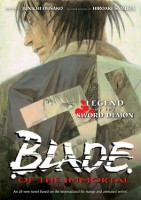
Blade of the Immortal: Legend of the Sword DemonAuthor: Junichi Ohsako
Illustrator: Hiroaki Samura

U.S. publisher: Dark Horse
ISBN: 9781595823380
Released: January 2010
Original release: 2008

Hiroaki Samura’s Blade of the Immortal was one of the first manga series that I began reading and it remains one of my personal favorites. When I learned that a novel based on the manga had been written I immediately picked it up. However, it did take me quite some time to actually get around to reading it. Blade of the Immortal: Legend of the Sword Demon, written by Junichi Ohsako with illustrations by Samura, was originally published in Japan in July 2008–the same month the anime adaptation of Blade of the Immortal began airing. I don’t know much about the author (Legend of the Sword Demon is the only novel by Ohsako to have been released in English), but I do know that Ohsako is a fellow fan of Blade of the Immortal. The English-language edition of Legend of the Sword Demon was translated by Camellia Nieh and released in 2010 by Dark Horse. Unsurprisingly, Dark Horse is also the publisher responsible for releasing the Blade of the Immortal manga and artbook in English.

Rin was the only daughter of Asano Takayoshi, the head of the respected Mutenichi-ryū sword school. A few years past he was brutally murdered before her very eyes, her mother was raped and abducted, and Rin was abandoned and left alone to fend for herself. Her family was destroyed at the hands of a group of renegade swordsmen known as the Ittō-ryū and their leader Anotsu Kagehisa. Now Rin is seeking her revenge, hiring an outlaw known only as Manji as her bodyguard. Rumored to be immortal, Manji has vowed to kill one thousand evil men to atone for hist past misdeeds. But is the Ittō-ryū truly evil? Whether it is or isn’t, Manji and Rin aren’t the only ones seeking the group’s demise. This complicates matters a great deal and it becomes difficult for Rin and Manji to determine who are friends and who are foes. Any alliances made in the fight against the Ittō-ryū can only be assumed to be temporary.

Legend of the Sword Demon is a very quick read. The story is a re-imagining of the early part of the Blade of the Immortal manga series. While the novel has some unique content of its own, including a dangerous enemy not found anywhere else, many of the scenes will be familiar to those who have read the original. All of the most popular characters make an appearance in the novel as well. (This was actually one of the conditions set by the publisher when the novel was initially commissioned.) Legend of the Sword Demon mostly focuses on the action of the story. Very little descriptive detail is given and the characters aren’t particularly fleshed out, either. It is interesting to see a slightly different take on Blade of the Immortal, but Legend of the Sword Demon almost requires that readers have a fairly firm grounding in the original series to really appreciate what Ohsako is doing with the story and characters. There might be enough in the novel to entice new readers to pick up the manga, but I am not at all confident of that.

In the end, I was actually rather disappointed with Legend of the Sword Demon. I can’t really recommend the novel to anyone but those who are Blade of the Immortal completists (a group of people to which I admittedly belong). Ultimately, Legend of the Sword Demon is a very insubstantial work and somewhat shallow, lacking the depth present in the manga series. It feels as though the novel is nothing more than tie-in promotional material. Ohsako may be a devoted fan of Blade of the Immortal but Legend of the Sword Demon isn’t long enough nor complex enough to really establish itself as noteworthy. It’s fun in places, but Legend of the Sword Demon is largely forgettable. The real highlight of the volume is Samura’s cover art and the handful of full-page illustrations that he created specifically for the novel. Otherwise, Legend of the Sword Demon is something that most people probably won’t regret passing over.

Filed Under: REVIEWS Tagged With: Blade of the Immortal, Dark Horse, Hiroaki Samura, Junichi Ohsako, Light Novels, Novels

Pick of the Week: PictureBox & Other Stories

November 11, 2013 by Ash Brown, Sean Gaffney, Michelle Smith, Anna N and MJ Leave a Comment

potw-11-11ASH: Though there aren’t quite as many titles coming out this week as there were in the past couple of weeks, there are still plenty of manga to choose from. Personally, I’m torn between two releases: the first omnibus in Shigeru Mizuki’s Showa: A History of Japan from Drawn & Quarterly and the first volume in PictureBox’s new series Masters of Alternative Manga, Gold Pollen and Other Stories by Seiichi Hayashi. In the end, I think I’m leaning slightly more towards the beautiful hardcover edition of Gold Pollen. Alternative and underground manga aren’t often released in English; I’m happy to show PictureBox my support because I’d love to see more of it.

SEAN: I was going to pick Showa anyway, so no worries about it not appearing here. I’ve loved the Mizuki manga we’ve gotten so far from D&Q, and seeing a history of one of the most volatile periods of modern Japan, interspersed with more awesome yokai folklore, is simply too good to pass up. A must buy.

MICHELLE: I’m awfully glad we’ve got things like Gold Pollen and Showa coming out, but I can’t lie—my heart belongs to Blue Morning, volume three. Definitely my pick for best BL of the year.

ANNA: I’m glad we have those things coming out too, but to be honest, I’m probably going to read the latest volume of 07-Ghost before I read other things that are being released this week. So that is my pick!

MJ: It’s so tempting to fall back on an enduring standby this week, with the sixth 3-in-1 edition of Fullmetal Alchemist making its way to the shelves. There are few shounen manga that have occupied such a prominent place in my heart, and my admiration for its brilliant creator, Hiromu Arakawa, is steadfast and true. But comfort of old favorites is, this week, overshadowed by my excitement over PictureBox’s new collection of Seiichi Hayashi manga, Gold Pollen and Other Stories, so I must echo Ash’s pick. Not only does this release offer me a prolonged glimpse at an era of manga from which I’ve read very little, but it’s also a gorgeous, high-end release—large trim, hardcover, full-color. I can’t wait to take a close look at it. I’m thrilled, too, that this is just the first in PictureBox’s alternative manga series.

What looks good to you this week?

Filed Under: PICK OF THE WEEK

My Week in Manga: November 4-November 10, 2013

November 11, 2013 by Ash Brown

My News and Reviews

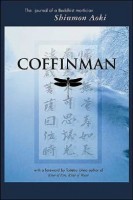
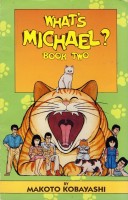
Last week I announced the winner of the Sankarea manga giveaway. The post also includes a list of zombie manga that has been licensed in English, for those who might be interested. Considering the recent popularity of zombies, I was actually a little surprised to discover there weren’t more. I also posted two reviews last week. The first was for Makoto Kobayashi’s What’s Michael, Book Two, a fantastic cat manga sent to me by a Manga Bookshelf reader for review. My second review from last week was for Coffinman: The Journal of a Buddhist Mortician by Shinmon Aoki, which was the inspiration for Yōjirō Takita’s award-winning film Departures.

And now for a few things that I’ve come across online over the last couple of weeks. Crunchyroll Manga is now up and running. Deb Aoki wrote a good article about it for Publishers Weekly–Kodansha, Crunchyroll Talk Global ‘Simulpub’ Manga . At A Case Suitable for Treatment, Sean took a quick look at the manga series currently being offered through the platform–Kodansha and Crunchyroll Partnership: What Are We Getting?. Mostly unrelated, Kodansha posted on its Tumblr account a great summary of why some manga may never be licensed in North America, even if it’s really good. Rob Vollmar’s essay for World Literature Today “Dark Side of the Manga: Tezuka Osamu’s Dark Period” is actually from last year, but was recently brought to my attention again. And finally, the Comic Book Legal Defense Fund focused on Gene Luen Yang’s Boxers & Saints (which I think is one of the best comics to be released this year) as part of its Using Graphic Novels in Education column.

Quick Takes

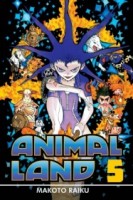
Animal Land, Volume 5Animal Land, Volumes 5-8 by Makoto Raiku. It took a few volumes for Animal Land to really grow on me, but now that it has I find that I quite like the series. The occasional focus on scatological humor feels a bit out-of-place to me, though it seems to have become less common as the series progresses. The artwork in Animal Land is a little strange–a combination of realism and anthropomorphism–but generally engaging. The characters, particularly Taroza, are very likeable. I have enjoyed watching him grow up. A newborn at the beginning of the series, by the end of the eighth volume he has become a young man who has had to face the hard truths about his idealism. Taroza wants to put an end to the cycle of killing and eating, but to do so will require him to throw all of Animal Land into turmoil. He is not the only one who has an interest in shifting the power dynamics of the world–four other humans have made themselves known and have their own ideas about how things should be. I was a little surprised to see a bit of science fiction and time travel work its way into Animal Land, but I am very curious to see how things continue to develop.

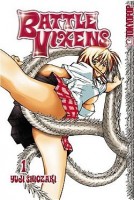
Battle Vixens, Volume 1Battle Vixens, Volume 1 by Yuji Shiozaki. Supposedly, Battle Vixens (aka Ikki Tousen) is somehow based on, or at least inspired by the classic Chinese historical novel Romance of the Three Kingdoms. Had I not known this going into the series, I’m not sure I really would have picked it up from reading the first volume. As far as I can tell, the references are barely there. (Which reminds me, I really do need to get around to finishing Romance of the Three Kingdoms.) What is readily apparent from the first page of the manga is that the English title, Battle Vixens was aptly chosen. The series is all about the fights and the fan service. There might be some sort of plot, too, but after only one volume I am still incredibly confused as to what is actually supposed to be going on. Basically there’s this girl, Hakufu Sonsaku, with a sizable chest and the penchant for getting into brawls. Towards what end? I am unsure. She simply seems predisposed to violence and having her clothes ripped off of her in the process. For a series based on fights the action unfortunately tends to be somewhat difficult to follow, but some of the panels have great composition.

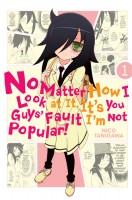
Watamote, Volume 1No Matter How I Look at It, It’s You Guys’ Fault I’m Not Popular!, Volume 1 by Nico Tanigawa. Okay, I’m just going to refer to this series by its Japanese abbreviation WataMote because I can never seem to remember the title in its entirety. (Plus, it’s really long.) WataMote is simultaneously one of the most funny and depressing manga that I’ve read recently. The story follows Tomoko Kuroki, an extraordinarily awkward and socially inept young woman who has just started high school. Most of her “life experience” has come from reading manga and playing video games, which may explain why she has difficulty interacting with her classmates. They mostly just ignore her or at least tolerate her existence. Occasionally she tries to be more than the weirdo in the corner, but it doesn’t often turn out well for her. I care about Tomoko and find her to be a sympathetic character which is why her trials and errors, though humorous, can also be a bit painful to watch. WataMote isn’t exactly mean-spirited, but it’s not particularly pleasant either. Her interactions with her younger brother are fantastically awkward (granted, all of Tomoko’s relationships are awkward), but there are some glimpses of familial love, too.

Flowers of EvilFlowers of Evil directed by Hiroshi Nagahama. Based on the manga series by Shuzo Oshimi, the Flowers of Evil anime series is a phenomenal adaptation. It’s one of the rare cases where I might actually prefer the anime over the original manga. That being said, the anime is definitely not a series that everyone will be able to enjoy. First of all, the pacing is excruciatingly slow. It worked for me and I think it creates marvelous tension, but someone who needs a bit more action and forward movement from their anime will be very frustrated. Not much actually happens from episode to episode; the focus is more on the inner turmoil and crises of the characters. The animation also relies heavily on rotoscoping techniques, resulting in a style that doesn’t personally bother me, but I know plenty of people who can’t stand it. I think it was suitable for Flowers of Evil, creating a slightly disconcerting and surreal mood that fits the unsettling atmosphere and darker nature of the series. The use of music and silence in the series is also quite remarkable. The twisted triangle of a relationship between Kasuga, Nakamura, and Saeki is intense. The Flowers of Evil anime captures it perfectly using art film-like sensibilities.

Filed Under: FEATURES, My Week in Manga Tagged With: animal land, anime, Battle Vixens, Flowers of Evil, Makoto Raiku, manga, Nico Tanigawa, Watamote, Yuji Shiozaki

Coffinman: The Journal of a Buddhist Mortician

November 10, 2013 by Ash Brown

CoffinmanAuthor: Shinmon Aoki
Translator: Wayne Yokoyama
U.S. publisher: Buddhist Education Center
Released: January 2002
Original release: 1993

Shinmon Aoki’s Coffinman: The Journal of a Buddhist Mortician was originally brought to my attention when I learned that Yōjirō Takita’s 2008 film Departures (which I love) was loosely based on the work. I came across the title again when I was looking into embalming practices in Japan. Embalmers are a rarity in a country where cremation soon after death is almost exclusively practiced. Instead, bodies are generally prepared for funeral by a nokanfu, or “coffinman.” Aoki’s autobiographical Coffinman was initially published in Japan in 1993. The Buddhist Education Center released the book in English in 2002 with a translation by Wayne Yokoyama. Also included in the volume is a foreword by Taitetsu Unno, the author of River of Fire, River of Water, a major work and introduction to Pure Land Buddhism in English.

Nearly thirty years before writing Coffinman, Shinmon Aoki pursued the unusual career more out of necessity than by choice when he and his family were facing bankruptcy. The profession, as well as others that deal with the dead, is looked down upon and even reviled by some, the taboo and impurity associated with death extending to those who make their living from it. After becoming a coffinman, Aoki lost friends and was shunned by family members. When his wife discovered what his new job entailed even she was incredibly upset by it. But Aoki provided an important and needed service to those left behind to grieve the loss of their loved ones as well as for the dead who had no one to mourn for them. Working so closely with corpses day after day put Aoki in a position to understand what death and life really means in both physical and spiritual contexts. It’s not happy work, but death is also not something to fear.

Coffinman is divided into three chapters but can also be seen as consisting of two parts. The first two chapters, “The Season of Sleet” and “What Dying Means” make up the first part of Coffinman. In them Aoki relates personal anecdotes and stories about his career as a coffinman–how he came to be employed, people’s reactions to him and the job, how working in an environment surrounded by death changed him and his way of thinking, and so on. He frequently uses poets and poetry as a way to express his thoughts to the reader. The third and longest chapter, “The Light and Life,” makes up the second half of the book. Although Aoki’s personal recollections can still be found in this section, the focus turns to the role of death in Shin Buddhism (the largest sect of Japanese Buddhism) from a layperson’s perspective.

Particularly when reading the second half of Coffinman it does help to have some basic understanding of Buddhism. However, it is not absolutely necessary as plenty of end notes are provided for guidance. Additionally, Aoki’s style of writing is very personable and approachable even for those who might not have a familiarity with Buddhism. Many of Aoki’s philosophical musings, such as those dealing with the relationship between religion and science or how society as a whole has come to view life and death, are not only applicable to Buddhist ways of thought. Although there is a strong sense of spirituality throughout the book, it is only the second half that focuses on the more religious aspects of the subject matter. As interesting as I found Aoki’s reflections on Buddhism, what appealed to me most about Coffinman were the more autobiographical elements of the work–the impact that becoming a coffinman had on his life and how that career fits into the culture of Japan.

Filed Under: REVIEWS Tagged With: Nonfiction, Shinmon Aoki

What’s Michael?, Vol. 2

November 8, 2013 by Ash Brown

What's Michael?, Book TwoCreator: Makoto Kobayashi
U.S. publisher: Studio Proteus
ISBN: 9781560600787
Released: February 1991
Original release: 1985
Awards: Kodansha Manga Award

Before there was Konami Kanata’s Chi’s Sweet Home there was Makoto Kobayashi’s What’s Michael?, proving that the international appeal of cats and cat manga is nothing new. What’s Michael? began serialization in Comic Morning in 1984 and ran for five years and nine volumes, winning a Kodansha Manga Award in the process. In addition to English, at least part of the series has been translated into French, German, and even Polish. What’s Michael?, Book Two is the second of two volumes to be released in English by Studio Proteus. The volume, published in 1991, collects material that was originally released in Japan in 1985. Although only two volumes of What’s Michael were released by Studio Proteus, Dark Horse later released the series almost in its entirety. (Some strips were left out due to potentially objectionable content.) Unfortunately, both the Studio Proteus and Dark Horse editions of What’s Michael? are long out of print.

Michael is an orange tabby tomcat, an American Shorthair with plenty of personality and representative of all cats and their quirks. What’s Michael? follows him and his interactions with other cats and humans, who are often just as peculiar as the felines they love. There’s the man who seems to be a living cat-magnet, the couple who didn’t completely think through the combination of claws and their new wicker furniture, the man who put far too much thought into living with a cat, a girl who delights in pestering Michael, the yakuza who despite their hardened demeanor have a soft spot in their hearts when it comes to four-legged fuzzballs, and all of the other people who can’t get enough of or who have had way too much of cats. Michael’s fellow felines, along with all their foibles and charms, also make frequent appearances. The result is an entertaining and highly amusing collection of short cat manga.

What’s Michael? works so well because Kobayashi is exceptionally attuned to cats and their behavior as well has how humans react when confronted by that behavior. Everything in What’s Michael? I have seen before with the cats, family members, and friends that I have known, which is what makes it so delightfully funny. One of the things that impressed me the most about What’s Michel?, Book Two was how little of the comedy relied on dialogue, which makes sense considering that cats don’t really communicate through words. Instead, Kobayashi relies on the actions, reactions, and overreactions of the cats and other characters to drive the humor of the series. And he succeeds magnificently–What’s Michael? is hilarious. It really is a shame that the series is currently out of print and somewhat difficult to find in English; it’s definitely worth tracking down.

Although there are recurring characters and running jokes, and even a few continuing storylines, What’s Michael? is largely episodic in nature. Before reading What’s Michael?, Book Two, I had only seen a few random chapters from the series; my unfamiliarity did not at all detract from my enjoyment of the volume. Each strip is only six pages long and range from the completely realistic to the utterly fantastic, but they are all authentic representations of the nature of cats and their owners. What’s Michael? is a genuinely funny and slightly surreal manga. Cat lovers will especially appreciate the series, but even those without a particular affinity for felines should at least occasionally find What’s Michael to be amusing. I know that I enjoyed What’s Michael?, Book Two immensely and would love to read more of the series, but then I live with cats and am quite familiar with their antics. Kobayashi captures them perfectly in What’s Michael?.

Filed Under: REVIEWS Tagged With: Kodansha Manga Award, Makoto Kobayashi, manga, Studio Proteus, What's Michael

  • « Go to Previous Page
  • Page 1
  • Interim pages omitted …
  • Page 135
  • Page 136
  • Page 137
  • Page 138
  • Page 139
  • Interim pages omitted …
  • Page 145
  • Go to Next Page »
 | Log in
Copyright © 2010 Manga Bookshelf | Powered by WordPress & the Genesis Framework