• Skip to primary navigation
  • Skip to main content
  • Skip to primary sidebar
  • Home
  • About Us
    • Privacy Policy
    • Comment Policy
    • Disclosures & Disclaimers
  • Resources
    • Links, Essays & Articles
    • Fandomology!
    • CLAMP Directory
    • BlogRoll
  • Features & Columns
    • 3 Things Thursday
    • Adventures in the Key of Shoujo
    • Bit & Blips (game reviews)
    • BL BOOKRACK
    • Bookshelf Briefs
    • Bringing the Drama
    • Comic Conversion
    • Fanservice Friday
    • Going Digital
    • It Came From the Sinosphere
    • License This!
    • Magazine no Mori
    • My Week in Manga
    • OFF THE SHELF
    • Not By Manga Alone
    • PICK OF THE WEEK
    • Subtitles & Sensibility
    • Weekly Shonen Jump Recaps
  • Manga Moveable Feast
    • MMF Full Archive
    • Yun Kouga
    • CLAMP
    • Shojo Beat
    • Osamu Tezuka
    • Sailor Moon
    • Fruits Basket
    • Takehiko Inoue
    • Wild Adapter
    • One Piece
    • After School Nightmare
    • Karakuri Odette
    • Paradise Kiss
    • The Color Trilogy
    • To Terra…
    • Sexy Voice & Robo
  • Browse by Author
    • Sean Gaffney
    • Anna Neatrour
    • Michelle Smith
    • Katherine Dacey
    • MJ
    • Brigid Alverson
    • Travis Anderson
    • Phillip Anthony
    • Derek Bown
    • Jaci Dahlvang
    • Angela Eastman
    • Erica Friedman
    • Sara K.
    • Megan Purdy
    • Emily Snodgrass
    • Nancy Thistlethwaite
    • Eva Volin
    • David Welsh
  • MB Blogs
    • A Case Suitable For Treatment
    • Experiments in Manga
    • MangaBlog
    • The Manga Critic
    • Manga Report
    • Soliloquy in Blue
    • Manga Curmudgeon (archive)

Manga Bookshelf

Discussion, Resources, Roundtables, & Reviews

Ash Brown

Manga the Week of 9/4

August 29, 2013 by Sean Gaffney, Michelle Smith, Ash Brown, MJ and Anna N 4 Comments

SEAN: As I’ve noted before, Diamond Comics and Amazon’s street dates are looking farther apart than ever before. As a result, this list is a fusion of Amazon (the major, book-company publishers) and Midtown Comics (the comics-first publishers).

Dark Horse brings us the 4th volume of Blood Blockade Battlefront, the alliterative series from the Trigun creator.

shinji1

There’s also a new Evangelion spinoff coming out as well, with the first volume of Shinji Ikari Detective Diary. From the description, it sounds like this is aimed squarely at the BL Evangelion shippers, in much the same way that the Raising Project manga is aimed at harem fans.

Fanfare/Ponent Mon has the 4th volume of mountain climbing manga Summit of the Gods, one of those “blogger popular” titles I keep meaning to catch up on but have never quite done so. It is supposed to be excellent, though.

MICHELLE: Oh, nice! I really like Jiro Taniguchi, but have been waiting for this series to come out in full before reading it. I think there’s one more volume still.

ASH: Oh! I’m one of the reasons this is a “blogger popular” title. Summit of the Gods is easily my favorite Jiro Taniguchi collaboration; I’m very happy to see that Fanfare/Ponent Mon is continuing to release the series. Only one more volume to go after this!

MJ: Count me in for this one as well!

SEAN: Amazon has Wandering Son 5 listed for November 2nd. If Kodansha is the publisher that is consistently always arriving at bookstores first and comic shops later, Fantagraphics is the classic example of the opposite. Here’s Wandering Son 5, hitting comic shops. In this volume, I believe we get to high school and introduce some new supporting players.

MICHELLE: I am lamentably several volumes behind with Wandering Son, but it’s still nice to see new volumes make their appearance!

ASH: We actually have a few years of junior high to get through before reaching high school, but you’re right about the new supporting characters.

ANNA: I really need to catch up on this series!

MJ: I adore this series, and I can’t wait to read volume five, whenever it appears!

ymh3

SEAN: Seven Seas has the final volume of one of my favorite series from them, Young Miss Holmes by Kaoru Shintani (of Area 88 fame). This omnibus, containing Books 5-7, is even larger than the previous two, and is filled with mysteries, mayhem, and killer maids. There’s a sequel in Japan, featuring 17-year-old Christie continuing to solve crimes. Seven Seas has noted its possible license (Slightly Older Miss Holmes?) depends on sales of the first, so go get it! Also, there’s only one Conan Doyle story in here (the rest are originals based on ‘unseen cases’, so less danger of offending Holmes purists.

ANNA: I somehow missed that this was by the mangaka of Area 88! I still have all my ancient Eclipse Comics/Viz editions of Area 88 stashed in a box somewhere. Now, I might finally pick up Young Miss Holmes. I hope there are scenes of people in flight suits with floppy hair looking incredibly emo in Young Miss Holmes, because Area 88 was awesome at that.

SEAN: There’s also a 2nd omnibus from Seven Seas, with Vols. 3-4 of Zero’s Familiar. I was surprised that the dark shroud of fan opinion surrounding the tsundere heroine turned out to be more of a off-white silk scarf more than anything, and wonder if my opinion will stay the same as we go further into this fantasy harem series.

I presume that those who read Bleach either have done so for years, or are likely never to do so. But if you’ve been catching up via the omnibus, the 3 volumes collected in the 6th one are some of the very best, and remind me of those olden days when Kubo could pace properly.

MJ: Agreed. I have much nostalgia for those early volumes, and this is a particularly strong little set.

SEAN: Demon Love Spell has been one of Shinjo’s best titles at walking that fine line between ‘sexy, forceful guy’ and ‘complete ass’, and I’m hoping that Vol. 4 continues that balance.

ANNA: I have just read this and it was hilarious. This is rapidly becoming my favorite Shinjo series, despite my long-standing fondness for Sensual Phrase.

MJ: I’m absolutely addicted to this series.

SEAN: Dragon Ball has an omnibus as well, and it’s hit Vol. 2. New Dragon Ball readers are born every day! This omnibus is probably for them more than those of us who bought the VIZBig, or the original volumes. Or the digital volumes. And stay tuned for Dragon Ball cranial ports, coming in 2015.

midnightsecretary1

Midnight Secretary has a lot of good buzz. So much good buzz, in fact, that Viz has already licensed another title by the same author before this one has even come out. You know they trust it will do well. And why will it do well, you ask? One word: vampires. That said, the heroine is also apparently an excellent draw, and is not your usual Petit Comic office lady. I’m very intrigued about this one. Can’t wait.

ANNA: I think this will be a must get for paranormal romance manga fans. I am also looking forward to this. I mean, the title alone is fantastic.

MJ: Agreed on all counts!

SEAN: The 6th Naruto omnibus is out. I still need to catch up on this title. So… ninjas?

ASH: Yes. Ninja. Lots and lots of ninja.

SEAN: One Piece has reached Vol. 68. There is an awful lot of fighting happening here, and several of our heroes continue to be in the wrong bodies, leading to humorous situations. Recommended as top-drawer entertainment.

MICHELLE: I continue to love One Piece.

SEAN: Last time, Psyren turned its attention to our villains, and did a damn good job of fleshing them out. I expect it will go back to the heroes this time, as we’re getting near a climax (I think we’ve only 5 volumes to go).

MICHELLE: I need to catch up on Psyren. So many books (and responsibilities), so little time.

SEAN: And Strobe Edge hits its second half with Vol. 6. We may have resolved one of the obstacles standing between our two lovebirds last time, but the course of true love definitely doesn’t run smooth in this title. Something bad’s going to happen, I can feel it. Be there to read it when it does.

MICHELLE: I really love Strobe Edge, and I admit I kinda wouldn’t mind seeing something bad happen.

ANNA: This is one of those shoujo series that just seems to get better as it goes along.

MJ: This is a strong week for addictive shoujo, I see. Lovely, lovely.

SEAN: Any manga jump out at you this week?

Filed Under: FEATURES, manga the week of

Manga Giveaway: Blood Lad Giveaway

August 28, 2013 by Ash Brown

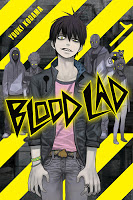
It’s the last Wednesday in August which means it’s the first day in Experiment in Manga’s monthly manga giveaway! Up for grabs this time around is the first omnibus volume of Yuuki Kodama’s Blood Lad manga as published by Yen Press, which is equivalent to the first two volumes of the original Japanese release. Since the anime is currently airing, I thought there might be some renewed interest in the series. As per usual, the contest is open worldwide!

BloodLad1

Vampires seem to be a perennial favorite in film and literature. Manga is no exception and vampires abound. They show up in many different genres–action, comedy, horror, romance (just to name a few)–and appear in all of the major demographics. Shōjo? Matsuri Hino’s Vampire Knight. Shōnen? Hirohiko Araki’s JoJo’s Bizarre Adventure. Josei? Tomu Ohmi’s Midnight Secretary. Seinen? Yuuki Kodama’s Blood Lad. (And that’s just off the top of my head…there are many, many more examples I could provide.) Generally, I prefer my vampires to be real monsters, terrifying creatures that pose a genuine threat to the humans around them. But I’ll admit, I am greatly amused by Staz in Blood Lad. He’s such an otaku goofball that I can’t help but like him.

So, you may be wondering, how can you win a copy of Blood Lad, Omnibus 1?

1) In the comments below, simply tell me who your favorite vampire in manga is and why. (Be sure to mention which manga they’re from, too.)
2) For a second entry, name a vampire manga that hasn’t been mentioned yet by me or by someone else.
3) If you’re on Twitter, you can earn a bonus entry by tweeting about the contest. Make sure to include a link to this post and @PhoenixTerran (that’s me).

And there you have it! Each person can earn up to three entries; you have one week to submit your comments. If you have trouble leaving comments, or if you would prefer, you can e-mail me your entries at phoenixterran(at)gmail(dot)com and I will post them in your name. The giveaway winner will be randomly selected and announced on September 4, 2013.

VERY IMPORTANT: Include some way that I can contact you. This can be an e-mail address, link to your website, Twitter username, or whatever. If I can’t figure out how to get a hold of you and you win, I’ll just draw another name.

Contest winner announced–Manga Giveaway: Blood Lad Giveaway Winner

Filed Under: FEATURES Tagged With: blood lad, manga, Yuuki Kodama

Pick of the Week: Chi & More!

August 26, 2013 by MJ, Michelle Smith, Sean Gaffney, Ash Brown and Anna N Leave a Comment

potw8-26MJ: It’s a bit of a slow week for me coming up, filled with things I’ve fallen behind on, things I don’t read, and things I might read but haven’t just yet. And then there’s Chi. If there’s any manga guaranteed to bring a smile out of me, even in my crankiest moments, it’s the warm, funny, occasionally sad, but consistently adorable Chi’s Sweet Home. Volume ten gets my pick this week. There’s simply nothing else that will do.

MICHELLE: I’m in the same boat, and feel just the same about Chi. It’s a guaranteed mood-lifter, and something that I not only like, but my coworker’s elementary-school-aged daughter likes, too. Perfect gateway manga for kids!

SEAN: I’d love to make it a unanimous pick this week, but oh no, Chi, you have to suit up and fight the Titans so you can defend your family! Attack on Titan has become one of the biggest hits of this entire year, partly due to a strong anime, but mostly due to a great story, and the author finally fleshing out his characterization of our desperate heroes. I’d argue Vols. 4-5 are where it really began to kick in, and the new Vol. 6 will probably only ramp up the tension further. Now if only the art could get a little better…

ASH: My initial reaction was to select the most recent volume of Chi’s Sweet Home as well. It’s been nearly a year since we’ve last seen that delightful little kitten romping around. But, I think I might have to join Sean in picking the sixth volume of Attack on Titan this week. The artwork has admittedly been inconsistent and even downright bad at times, but I have been thoroughly engaged with the story and worldbuilding from the very beginning of the series.

ANNA: I’m going to go with Crimson Empire just because I do plan to pick it up soon, and based on the first volume I suspect it is a good manga to read when you want to turn your brain off. Also, I find the assassin maid reverse harem scenario amusing.

What looks good to you this week?

Filed Under: PICK OF THE WEEK

My Week in Manga: August 19-August 25, 2013

August 26, 2013 by Ash Brown

My News and Reviews

Well, the biggest news from last week (at least for me and Experiments in Manga) is that I have officially joined the Manga Bookshelf family of blogs. I posted an introductory post for new readers and anyone else interested in learning a little more about me or Experiments in Manga. I’m still getting used to WordPress, and I still have some cleaning up to do, so if you notice anything amiss, I’d appreciate you letting me know!

I also posted a review of Edogawa Rampo’s collection of short stories Japanese Tales of Mystery and Imagination. Originally released in 1956, the volume was Rampo’s English-language debut. I had previously read and enjoyed Rampo’s novella Strange Tale of Panorama Island which is why I sought out more of his work. (And on a related note: Suehiro Maruo’s The Strange Tale of Panorama Island is also marvelous.)

I also had the opportunity to help out manga critic Jason Thompson last week (who I credit as one of the major reasons I became so interested in manga.) If you’re in Vancouver, Washington this coming Sunday, Jason is presenting “Manga Hell: The Worst Manga Ever Translated” at Kumoricon. It should be pretty great. I was able to provide some images of choice pages from Kazuo Koike and Ryoichi Ikegami’s notorious manga series Wounded Man. (I first learned about Wounded Man thanks when it was selected for Kate Dacey’s Manga Hall of Shame.)

On to a few interesting things found online! I either completely missed this when it was first announced or simply forgot about it, but Bento Books has licensed five novels from Hayakawa Publishing: Hiroko Minakawa’s Pleased to Dissect You, Yuka Nakazato’s Silver Wings of the Campanula, Yu Godai’s, Quantum Devil Saga: Avatar Tuner, Volume 1, Akimaro Mori’s The Black Cat Takes a Stroll, and Issui Ogawa’s Many Many Sheep. It’s an intriguing mix of fantasy, science fiction, and mystery and quite a change of pace from Bento’s first release Math Girls.

In other licensing news, Sean Gaffney has a roundup of the Japan Expo announcements from this weekend. Finally, if you have the time I recommend giving the most recent ANNCast episode a listen–Super Manga Pals Forever. The always marvelous Deb Aoki and Rebecca Silverman join host Zac Bertschy to talk about the manga they’ve been reading and discuss the use of rape and taboos as plot elements in entertainment media. (Warning: Spoilers for the ninth volume of Yumi Unita’s Bunny Drop if by some chance you haven’t been spoiled already.)

Quick Takes

Attack on Titan, Volume 6 by Hajime Isayama. Despite the issues that I have with the art in Attack on Titan, which admittedly has been improving, I continue to be utterly absorbed and engaged by the story. The sixth volume picks up right where the fifth volume left off with the appearance of a new, seemingly intelligent, but still incredibly dangerous titan. It’s mostly one long action sequence as the titans tear through the ranks of the Survey Corps. Unsurprisingly, there are quite a few messy deaths. However, there’s a bit of character development as well. In particular, more is reveled about the members of the Special Operations Squad charged with guarding Eren who are also responsible for killing him should he get out of hand. The ending sets things up nicely for some major plot reveals in the next volume. Fortunately Kodansha has sped up the series release, so it won’t be too long of a wait to find out what happens next.

Awkward Silence, Volumes 1-3 by Hinako Takanaga. I tend to be fond of Takanaga’s boys’ love manga and so was happy when SuBLime picked up one of her ongoing series. Normally, I’m annoyed by manga where the plot hinges on a problem that would immediately be solved if the characters would just talk to one another. But in the case of Awkward Silence I didn’t mind as much because there is a very good reason that the characters don’t–Satoru has a difficult time expressing himself. It’s an integral part of his character and integral part of the story. One of the points of the series is that he and his boyfriend Keigo learn to overcome this. Their relationship is really quite sweet. Beginning with the third volume Awkward Silence starts to focus more on two of the secondary characters. (At least they started out as secondary characters.) Personally, I don’t find their relationship to be nearly as interesting. While still enjoyable, it feels more generic. Unlike the main couple, so far it’s missing something to really set it apart.

Saiyuki Reload, Volumes 4-6 by Kazuya Minekura. Although I was a little disappointed with the first three volumes of Saiyuki Reload, much preferring the earlier series Saiyuki, I think that Minekura has started to find her stride again. These volumes finish up the long flashback/backstory segement which included a look at Gojyo and Hakkai’s past when they were living together. (I’m a sucker for Hakkai, so I rather enjoyed that.) From there, Saiyuki Reload starts in on a new story arc, giving the plot the focus and direction that it needed. While the first few volumes of the series didn’t seem to be going anywhere, with the introduction of Hazel things are starting to get a bit more interesting. Sanzo and crew are faced with several moral conundrums and suddenly their journey west has some urgency behind it again. And speaking of The Journey to the West–the influences of the original work can definitely be seen. They aren’t always particularly prominent and Minekura is often very free with her interpretations, but The Journey to the West can still be found in there somewhere.

Tough, Volumes 1-6 by Tetsuya Saruwatari. Only six volumes of Tough were ever released in English. The series is actually a translation of Saruwatari’s Kōkō Tekken-den Tough and shouldn’t be confused with its sequel series which in Japan was called Tough. The fights are by far the best thing about Tough. Although the martial arts are taken to the extremes there are some legitimate styles and techniques being used. The manga is ultimately over-the-top, although dubious plausibility is maintained. Tough is violent and frequently brutal. The fighters deliver and sustain immense amounts of damage. Saruwatari doesn’t hesitate to show the resulting blood and broken bones. The few women, too, are shown to be martially capable. (Unfortunately they don’t make much of an appearance after the first volume.) The story, on the other hand, is nearly nonexistent and the attempts at humor fall flat. For the most part the plot is just an excuse to have men beat each other to a pulp. The actual fights are much more interesting than the weak justifications behind them.

X, Omnibus 6 (equivalent to Volumes 16-18) by CLAMP. Well, here it is, what is very likely to be the last volume of X. The series went on hiatus in 2003 and it doesn’t seem that CLAMP will be returning to it anytime soon. I read the first volume of X a few years ago but didn’t think much of it. I gave the series another try when Viz began to release the omnibus volumes and I’ve been hooked ever since. There are many fans frustrated by the series’ lack of ending, waiting for the final battle which may never come; I suppose I can now be counted among them. Still, I thoroughly enjoyed X in all of its epic, melodramatic, twisted, and tragic glory even if it can be a bit ridiculously excessive at times. CLAMP also uses some of the most intriguing page layouts that I’ve seen. They are very effective in conveying the emotional and dramatic moments in the story, of which the series has more than its fair share. Love and death are very closely intertwined in X and there is plenty of heartbreak to be had.

FujikoMineLupin the Third: The Woman Called Fujiko Mine directed by Sayo Yamamoto. This series has style–the animation is distinctive but appealing, the jazz-influenced soundtrack fits it perfectly, the storytelling is mature and has both darkness and levity. Familiarity with the Lupin III franchise isn’t necessary to enjoy the series; The Woman Called Fujiko Mine is a different take on the characters and story and can stand alone. Fujiko Mine is a thief and femme fatale. She is very much in charge of her sexuality and is more than willing to use it to get what she wants. It shouldn’t be too surprising, but nudity is a fairly frequent occurrence in the anime, but it is handled tastefully and artistically. In the last four episodes, things take a surprising turn for the strange when the revelation of Fujiko’s backstory really beings. Up until that point the series seemed largely to be an episodic collection of the various heists with which Fujiko was involved. There were hints of what was to come and most everything is tied together rather nicely in the end.

Filed Under: FEATURES, My Week in Manga Tagged With: anime, attack on titan, awkward silence, clamp, Hajime Isayama, Hinako Takanaga, kazuya minekura, Lupin III, manga, Saiyuki, Tetsuya Saruwatari, Tough, X

Experiments in Manga at Manga Bookshelf

August 23, 2013 by Ash Brown

Experiments in Manga has joined Manga Bookshelf! The site will no longer be updating at Blogger, so if you have bookmarks in place you may want to update them to http://experimentsinmanga.mangabookshelf.com/. Although I won’t be removing the old site, all of the content and comments have been moved to the new one. I’m hoping to make the transition as smooth as possible but I still have a bit of tidying up to do. I’ve tried my best to get everything to redirect properly, but if you notice anything missing or strange please do let me know. Thanks for your help and thanks for sticking with me! And now:

A huge welcome to new readers of Experiments in Manga and an even bigger thank you to returning readers!

My name is Ash Brown. I’m a musician by training, a librarian by profession, a blogger by choice, and a manga addict by nature. My interest in Japan and Japanese culture actually extends far beyond manga and includes other literature, art, music, language, food, and probably anything else you can imagine. I practice traditional Okinawan karate-do (specifically Shōrin-ryū and Shūdōkan) as well as kobujutsu. I also happen to be a member of a taiko ensemble. Oh, and I love riichi mahjong. I’m pretty bad at it, though.

My day job has absolutely nothing to do with manga (although once I did catalog a collection of underground and independent comics; that was pretty cool.) Experiments in Manga is a personal site that I write and maintain entirely in my free time. I would actually like to write more than I do, but unfortunately that free time is very limited. Besides, I like to spend some of my waking hours actually reading, too.

I started Experiments in Manga in 2010 (mostly for myself) as a way to interact with the manga blogging community to a greater extent and to help keep track of all the manga that I read. And I read a lot of manga. Depending on who you ask I either have a very eclectic taste or no taste at all. I’m extremely open-minded and difficult to offend. I read and enjoy manga from just about every genre and aimed at any demographic or audience.

What can you expect from Experiments in Manga? Typically, I release three or four posts a week, including the weekly My Week in Manga feature. I also write in-depth reviews, among other things. Not surprisingly, the primary focus of Experiment in Manga is on manga but I also cover Japanese literature and write about tangentially related subjects and other things that interest me as well. I currently hold a monthly manga giveaway which allows me to quite literally share my love of manga. It also gives me an excuse to make lists. I love lists.

I am absolutely delighted to be joining the Manga Bookshelf Battle Robot. I’ve been a devoted reader of Manga Bookshelf since I discovered the site and some of my most admired manga bloggers are associated with the group. I consider it a great honor to be invited to join. I’m truly looking forward to working with everyone at Manga Bookshelf and hope that readers (new and old) will find Experiments in Manga at least occasionally interesting or useful!

Filed Under: UNSHELVED Tagged With: Experiments in Manga

Japanese Tales of Mystery and Imagination

August 21, 2013 by Ash Brown

Author: Edogawa Rampo
Translator: James B. Harris
U.S. publisher: Tuttle
ISBN: 9784805311936
Released: May 2012
Original release: 1924-1950

After reading and enjoying Edogawa Rampo’s novella Strange Tale of Panorama Island I decided to seek out more of his work. What better way to start than with Rampo’s debut in English? Japanese Tales of Mystery and Imagination, translated by James B. Harris and first published in 1956, was reissued in 2012 by Tuttle Publishing with an additional and quite useful foreword by Patricia Welch putting the collection and Rampo into historical and literary context. Despite Rampo’s prolificacy, influence, and popularity in Japan, relatively few volumes of his work are available in English although his short stories can often be found in anthologies. In addition to being Rampo’s introduction to English-reading audiences, Japanese Tales of Mystery and Imagination is particularly interesting in that Rampo worked very closely with Harrison on its translation.

Japanese Tales of Mystery and Imagination collects nine of Rampo’s short stories selected to represent some of his best work. Eight of the nine stories were originally written in the 1920s. The collection opens with what is perhaps Rampo’s most well-known story “The Human Chair.” (At least, it was the story with which I was most familiar before reading the volume.) Next is “The Psychological Test” which features Rampo’s famous detective Kogorō Akechi. “The Caterpillar” is another story I was previously aware of and for a time was even banned in Japan. The collection continues with “The Cliff.” Written in 1950, it is the most recent example of Rampo’s work in the volume. Other tales of mystery include “The Twins,” “The Red Chamber,” and “Two Crippled Men” while other tales of imagination include “The Hell of Mirrors” and “The Traveler with the Pasted Rag Picture.” Though, as Welch points out in the foreword, Rampo frequently blurs the lines of genre and many of the stories have significant crossover.

Rampo is an incredibly clever and imaginative writer. Even when working with similar themes and plot elements, each story in Japanese Tales of Mystery and Imagination exhibits Rampo’s creativity in narrative technique and structure and he throws in enough plot twists that they all feel fresh. Each story is a little peculiar and each story is vaguely disconcerting–the erotic and the grotesque and macabre are no strangers to Rampo’s work–but in the end the tales are all different from one another. The culprits of his crimes stories are often undone by their arrogance, belief in their infallibility, or on occasion their guilty consciences, but the paths to their downfalls vary. Rampo’s more fantastic tales rely on subtle and not so subtle horror, but their thrills and terrors are all distinctive.

Japanese Tales of Mystery and Imagination is a captivating collection of short stories and would make a fine introduction to Rampo’s work for the uninitiated. If I had to choose, I think that I personally prefer Strange Tale of Panorama Island and its outrageousness slightly more, but the selections in Japanese Tales of Mystery and Imagination show evidence of the elements in the novella that I particularly enjoyed: the tight plotting, the light style of narration with slight touches of humor, the unexpected turns in the story, the inherent strangeness of the characters and their accounts. Japanese Tales of Mystery and Imagination has stood the test of time well. Nearly fifty years after it was first released, and more than a half-century since the stories were originally written, the volume remains an intriguing and engaging collection.

Filed Under: REVIEWS Tagged With: Edogawa Rampo, Tuttle

My Week in Manga: August 12-August 18, 2013

August 19, 2013 by Ash Brown

My News and Reviews

Two reviews, and some big news! First up was my review of Blade of the Immortal, Volume 24: Massacre by Hiroaki Samura. As you might suspect from the title, it’s a rather bloody volume. It also features what I think is one of the best visually executed battles in the series. I also reviewed Yukio Mishima’s novel Forbidden Colors which is a bit twisted but extremely engrossing and very good. Like his earlier novel Confessions of a Mask, it deals with homosexual themes and includes autobiographical elements.

As for the big news! Over the weekend Experiments in Manga celebrated it’s third anniversary and I wrote quite a lengthy post about it. If you don’t feel like reading the whole thing, here’s the really important bit: I am delighted to announce that in the very near future Experiments in Manga will be joining the Manga Bookshelf network of blogs!

I was traveling quite a bit last week (a couple of my friends were getting married), so I’m a little out of touch when it comes to some of the most recent manga news. However, there is one thing that I want to be sure to pass along. I personally don’t read much manga digitally, but Organization of Anti-Social Geniuses has a fantastic post looking at all the legal ways to read digital manga in 2013.

Quick Takes

The Last of the Mohicans by Shigeru Sugiura. The Last of the Mohicans is the first volume in editor Ryan Holmberg’s Ten-Cent Manga series, exploring classic manga influenced by popular culture and comics from the United States. In addition to the manga itself, the volume also includes an article by Sugiura and an extensive essay by Holmberg which puts The Last of the Mohicans into context. For me, this was probably the greatest appeal of the volume. I more or less enjoyed the manga, but I valued to an even greater extent learning about its history and Sugiura’s influences. I don’t know that The Last of the Mohicans will necessarily entice casual manga readers, but for those interested in comics history it’s great.

Math Girls Manga, Volume 1 written by Hiroshi Yuki and illustrated by Mika Hisaka. Based on the Math Girls series of novels, the manga focuses a little more on the romance and a little less on the math, but it still can teach a thing or two about it. Unfortunately, errors slipped into the English edition and some of the mathematical symbols are missing. Seeing as Math Girls is about, well, math, this is somewhat problematic. But if you can ignore that, Math Girls is a rather delightful and charming manga. Math lovers in particular will appreciate it, but as with the novels it’s possible to skip over the math-intensive sections and just enjoy the story. I wouldn’t mind seeing more of the Math Girls manga, but I suspect there won’t be another volume released anytime soon.

Strawberry Chan, Volumes 1-2 by Ai Morinaga. I picked up Morinaga’s Strawberry Chan manga on a whim. The series consists of two volumes, The Gorgeous Life of Strawberry Chan and The Super Cool Life of Strawberry Chan. The manga is fairly episodic and each chapter is very short. The titular Strawberry Chan is a small pet frog owned by Taro Akiyoshi, a sadistic high school student who delights in tormenting him. Despite his cruelty, Strawberry Chan adores his master. And then there’s Taro’s roommate who’s legitimately in love with Strawberry Chan and a masochistic classmate who just wants Taro to abuse him instead of the frog. Strawberry Chan is utterly ridiculous, random, and all sorts of wrong. I loved it.

Three Wolves Mountain by Bohra Naono. So far, only two of Naono’s manga have been released in English. Yokai’s Hunger largely frustrated me but I thoroughly enjoyed Three Wolves Mountain; it’s easily my favorite manga out of the two. It’s an odd mix of comedy, drama, and the supernatural, but Naono makes it work this time. Kaya Susugi is a cafe owner by day and a grave keeper by night who ends up taking in Tarou and Jiro Tsukihara, two werewolf brothers. Susugi is used to being alone but becomes very close with both of the brothers, but especially with Jiro who has fallen in love with him. I wasn’t expecting Three Wolves Mountain to become such a family affair, but parents, siblings, and even cousins all have their role to play in the story. Three Wolves Mountain is great stuff.

Filed Under: FEATURES, My Week in Manga Tagged With: Ai Morinaga, Bohra Naono, Hiroshi Yuki, manga, Math Girls, Mika Hisaka, Shigeru Sugiura, Strawberry Chan, Ten-Cent Manga

Random Musings: Three Years of Experiments in Manga

August 18, 2013 by Ash Brown

Three years? Three years?! Three years ago today I began writing at Experiments in Manga in an attempt to share my love of manga and Japanese literature. Well, to be perfectly honest I started the blog for myself, but I am delighted that other people have on occasion found it to be helpful and interesting. It’s been a lot of work and I certainly have plenty of room for improvement, but I have largely been enjoying myself. I’m rather pleased that I’ve been able to keep the blog going this long.

So what am I particularly proud of looking back on the year? One of my biggest accomplishments was hosting the Moyoco Anno Manga Moveable Feast. I’ve been regularly participating in the Feast since December 2010, but this was only the second time that I acted as host. It wasn’t quite as nerve-wracking as the first time, but I was still very anxious about it. I like to think that it went well. Not as many people participated in the Feast as did in the first one I hosted, but the contributions were great.

I don’t tend to get very personal in my posts at Experiments in Manga, but I made one notable exception last year–Random Musings: A Note of Thanks for Wandering Son. This article was very difficult for me to write because it was so extremely and intimately personal. I had no idea what the response to it would be. Much to my relief, it was very well received. As nervous as I was, I ended up being very glad that I put myself out there writing it.

Another post from the last year of Experiments in Manga that seemed to go over well was Finding Manga: Right Stuf. Finding Manga and the closely related Discovering Manga are two features that I’ve really been meaning to update more frequently. I’ll have to make a point to try to do that over the next year. I tend to focus on reviews at here at Experiments in Manga, but it’s fun to mix it up every once in a while, too.

Two of my reviews from the past year have been particularly popular. My review for The Passion of Gengoroh Tagame: The Master of Gay Erotic Manga has been, by far, one of the most frequently visited pages at Experiments in Manga in the blog’s entire history. I was pretty excited about the manga–the first volume of Tagame’s work to be released in English–so hopefully the review has been useful. I was rather surprised to see how popular my review of Tomoyuki Hoshino’s volume of short fiction We, the Children of Cats proved to be. The review did receive some support from the publisher, so that probably helped. We, the Children of Cats is a difficult but very good collection.

And speaking of reviews: I continued my Blade of the Immortal review project. Every month I have been reviewing one volume of the series. Although Blade of the Immortal is still being published in English, I have just about caught up with Dark Horse’s release. I will continue to review the series as the new volumes come out, but I plan on taking on another monthly review project as well. I’ll be putting it to a vote, too, so look out for a poll in the near future if you’d like to help choose which manga I focus on next.

Over the last year I was able to consistently release at least two “extra” posts a month. This pace has seemed to work pretty well for me and tends to be manageable. I still run into the problem where there’s more that I want to write about but I simply don’t have the time. In general, my coverage of manga has increased and I post at least one manga-centric feature or review a week. At this point the balance between manga posts and non-manga posts is close to where I want it, but I may have over-compensated a bit. I miss reading and reviewing non-manga materials to the same extent that I used to do.

Oh! And some big news before I close: I am very pleased to announce that I and Experiments in Manga will soon be joining the Manga Bookshelf network of blogs. I was greatly honored and very excited to be invited to the group and after much careful thought and deliberation I decided to accept. Not much will actually change here at Experiments in Manga, but by being a member of Manga Bookshelf I’ll have even more opportunities to write about and discuss manga. More information about the move will be coming very soon. I am really looking forward to it and am delighted to be joining a group of manga bloggers that I sincerely admire.

Finally, but perhaps most importantly, I would like to thank everyone who has read and supported Experiments in Manga over the years. As I previously mentioned, I started Experiments in Manga mostly for myself, but I sincerely appreciate all of my readers. Whether you’re a regular reader or just drop by on occasion, thank you so much! I hope that I can continue to build upon what I’ve already done and make Experiments in Manga even better over the coming year.

Filed Under: UNSHELVED Tagged With: Experiments in Manga

Forbidden Colors

August 16, 2013 by Ash Brown

Author: Yukio Mishima
Translator: Alfred H. Marks
U.S. publisher: Alfred A. Knopf
ISBN: 9780375705168
Released: February 1999
Original release: 1951/1953

In Japan, Yukio Mishima’s novel Forbidden Colors was released in two parts. The first eighteen chapters were compiled in 1951 while the collection with the final fourteen chapters was published in 1953. The English translation of Forbidden Colors by Alfred H. Marks was first published by Alfred A. Knopf in 1968. Like Mishima’s earlier novel Confessions of a Mask, Forbidden Colors deals with prominent homosexual themes, although the two works approach the material in vastly different ways. Also like Confessions of a Mask, and many of Mishima’s other works, Forbidden Colors contains some autobiographical elements. In addition to being my introduction to Japanese literature, Mishima and his works fascinate me. I’ve been slowly making my way through all of his material available in English, but I was particularly interested in reading Forbidden Colors.

After being betrayed time and again the aging author Shunsuke Hinoki has developed an intense hatred of women. Seeking revenge, he enters into a peculiar arrangement with a beautiful young man by the name of Yuichi Minami. Yuichi has come to realize that he loves men and is tormented by what that means living in a society which doesn’t accept homosexuality. Shunsuke is willing to assist Yuichi in hiding his secret by helping to arrange his marriage and to develop a reputation as a philanderer. In exchange, Yuichi promises Shunsuke to make the women he seduces miserable. They may fall in love with him, but he will never love them in return. The agreement is advantageous for both men. Yuichi will have a perfect cover allowing him the freedom to explore his sexuality–no one would suspect a married man and a womanizer to have male lovers–and Shunsuke will have the revenge he so greatly desires.

Shunsuke is an unapologetic misogynist. His anti-women rhetoric can be difficult to take, but without it the plot of Forbidden Colors would never go anywhere. It is necessary and important as the story’s catalyst. Mishima has very deliberately created a distasteful character who at the same time is enthralling in his extremes. Yuichi, despite being loved by all, isn’t a particularly pleasant person, either. However, I did find his portrayal to be much more sympathetic. He’s vain and self-centered, but he also has an air of naivety and innocence about him. Both men and women fall victim to his charms but Yuichi himself is often manipulated as well. Forbidden Colors is an absorbing tale as Yuichi struggles to keep his two lives separate, sinking deeper into Japan’s underground gay community while trying to keep up appearances in his public life. It’s an outlandish battle of the sexes that is hard to look away from and no one comes out unscathed.

Forbidden Colors explores and deals with a number of dualities: homosexuality and heterosexuality, love and hatred, youth and old age, beauty and ugliness, truth and deceit, cruelty and kindness, morality and immorality, and so on. Mishima plays the dichotomies off one another, but also reveals how closely intertwined they can be. The complexities of the characters’ relationships show that opposites are rarely just that and how at times in the end they aren’t really all that different. Yuichi, for example, comes to genuinely care for his wife but in his twisted way of thinking expresses that love through cruelty. There is a certain logic to his decision and his concern is real, though someone else might not reach the same conclusion. At it’s heart Forbidden Colors is a fairly dark story with erotic underpinnings and characters who, though often unlikeable, are captivating. I found the novel to be incredibly engrossing.

Filed Under: REVIEWS Tagged With: Novels, Yukio Mishima

Blade of the Immortal, Volume 24: Massacre

August 14, 2013 by Ash Brown

Creator: Hiroaki Samura
U.S. publisher: Dark Horse
ISBN: 9781595827517
Released: October 2011
Original release: 2008
Awards: Eisner Award, Japan Media Arts Award

Massacre is the twenty-fourth volume in the English-language release of Blade of the Immortal, Hiroaki Samura’s long-running manga series. Earlier on in the series’ release, Dark Horse divided the volumes by storyline rather than by number of chapters. Because of this, many of the individual volumes are slightly different in the English-language edition compared to the original Japanese release of Blade of the Immortal. Massacre, published by Dark Horse in 2011, collects the same chapters as the twenty-third volume of the Japanese edition of the series which was released in 2008. At this point, the manga has entered its final major story arc. The previous two volumes, Footsteps and Scarlet Swords, provided the necessary set up which allows Samura to really let loose in Massacre. As can be assumed from the title, it’s a rather bloody volume.

As agreed, the Ittō-ryū is leaving Edō after being banished from the city. However, the rogue sword school is still being chased by Habaki Kagimura and his Rokki-dan warriors as well as by Rin Asano and her bodyguard Manji. But what the pursuers don’t yet realize is that there are key members missing from the group of Ittō-ryū said to be making its way to the port in Hitachi: the sword school’s leader Anotsu Kagehisa and three of its elite fighters–Magatsu Taito, Ozuhan, and Baro Sukezane. The four highly skilled swordsmen have their own task to complete, a bold raid on Edō Castle through one of its most heavily guarded entrances. It’s a brash move that, if successful, will leave quite an impression in its wake, not to mention a high body count. The Ittō-ryū has already been identified as a threat, but they are prepared to show just how dangerous they can be.

Samura’s artwork in Blade of the Immortal has always been something that has particularly appealed to me about the series, but his kinetic style works especially well in Massacre. A large part of the volume is devoted to the daring attack on Edō Castle; the sequence is one of the most effectively choreographed and visually executed battles in Blade of the Immortal thus far. The Ittō-ryū is a group of swordsmen sharing the same ideals and martial philosophy more than it is a strictly enforced style. This can especially be seen in Massacre simply by watching how the Ittō-ryū’s elite fight. They all use different weapons and techniques and each has his own aura. Anotsu’s elegance, Magatsu’s cruder dynamism, Ozuhan’s speed and uninhibited wildness, and Baro’s strength and power are all readily apparent. They fight well as individuals, but also work well together as a team.

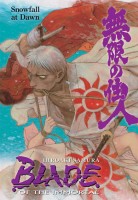
Although the focus of Massacre is on the raid of Edō Castle–a quickly paced, action packed, violent, and rather impressive escapade–several other important things happen in the volume as well. For the last few volumes of Blade of the Immortal Shira has been on the fringe of the story, but his prominence is quickly growing. He may have lost a limb or two over the course of Blade of the Immortal but his extreme sadistic streak and penchant for sexual violence remain. Shira is as terrifying as ever. Also making his return to the series was Ayame Burando, which I was surprised but happy to see. He and Manji even end up having a heart-to-heart about atonement and the meaning of evil. These are themes that play a major role in Blade of the Immortal, one of the reasons that I like the series so well. As always, I’m looking forward to reading the next volume, Snowfall at Dawn.

Filed Under: REVIEWS Tagged With: Blade of the Immortal, Dark Horse, Eisner Award, Hiroaki Samura, Japan Media Arts Award, manga

My Week in Manga: August 5-August 11, 2013

August 12, 2013 by Ash Brown

My News and Reviews

The Boys’ Love Manga Moveable Feast came to an end last week. Khursten at Otaku Champloo did a fabulous job as the host and posted some great content. Sadly, it may be the last Manga Moveable Feast to be held, at least in the foreseeable future. I did have one last offering for August’s Feast before it ended: I announced the 801 Manga Giveaway Winner. The post also includes a wishlist of boys’ love manga. (And speaking of manga giveaway winners, the winner of the Umineko giveaway from a few months ago created a video of the unboxing of her prize.)

Last week I also posted two in-depth reviews. The first was for Suehiro Maruo’s The Strange Tale of Panorama Island. I have literally been waiting for this manga for years and am thrilled that it is finally available in English. Last Gasp has done a beautiful job with the release. The manga is an adaptation of Edogawa Rampo’s novella Strange Tale of Panorama Island which I reviewed earlier this year. The second review that I posted last week was for Isuna Hasekura’s light novel Spice & Wolf, Volume 8: Town of Strife I. Although I had previously enjoyed the series, with this volume Spice & Wolf has finally lost its charm for me.

I also updated the Resources page, adding a couple of sites. Last week I mentioned Deb Aoki’s new site Manga Comics Manga which is definitely worth checking out if you haven’t already. I also recently discovered Seth T. Hahne’s review site Good Ok Bad. I really like the site which includes reviews of manga in addition to other comics and graphic novels.

On to other interesting things found online! Nippon.com has the very interesting article Urasawa Naoki Talks with Top European Artists. The most recent Speakeasy podcast at Reverse Thieves is about American comics recommended for manga readers. Reverse Thieves also posted a review with Melissa Tanaka talking about her work translating Mobile Suit Gundam: The Origin. (I loved the first volume of the series and my review of the second should be coming soon.) If you’re interested in what Viz Media is up to these days, ICv2 has a two part interview with Leyla Aker and Kevin Hamric and Comic Book Resources has an interview with Ken Sasaki.

Also last week was Otakon. Sean Gaffney at A Case Suitable for Treatment takes a quick look at some of the recent manga announcements. Vertical has licensed Fumi Yoshinaga’s What Did You Eat Yesterday? which I am extremely excited about. Viz Media is bringing Naoki Urasawa’s Monster back into print in a deluxe omnibus edition. I already own the series and probably won’t be double-dipping, but I’m very happy to see this re-release. Finally, Seven Seas will be publishing Milk Morinaga’s most recent yuri series Gakuen Police. I really enjoyed Morinaga’s Girl Friends and Kisses, Sighs, and Cherry Blossoms Pink, so I plan on picking up Gakuen Police, too.

Quick Takes

Animal Land, Volumes 1-4 by Makoto Raiku. I’m not sure why I was so reluctant to read Animal Land but after repeated urging from a few fans of the series I decided to finally give it a try. And I’m very glad that I did. It took me a volume or so to really settle into the story, but I definitely want to read more. Taroza is a human who was abandoned as a baby only to be rescued and raised by a young female tanuki in a world of animals. The art in Animal Land is kind of strange, mixing realism, anthropomorphism, and just plain goofiness even within the same species. Despite its cuteness, the story in Animal Land can be very dark. It’s also not particularly subtle, but it is engaging. Animal Land surprised me; so far it’s a great series.

Ichiro by Ryan Inzana. Ichiro is a young man living with his Japanese mother in New York City after his American father dies. When her work takes them both to Japan, Ichiro has the chance to get to know his grandfather who he’s never met and learn more about the country’s history and culture. One night he unexpectedly stumbles into an even stranger world. I did find the sections dealing with Ichiro’s real life to be much more compelling than his adventures in the land of the gods and immortals. However, I really liked the blend of story, mythology, and reality in Ichiro and I loved the artwork. Inzana smoothly shifts his style of art and use of color throughout the graphic novel depending on the tale being told in a very effective way.

Limit, Volumes 5-6 by Keiko Suenobu. Limit has been very hit-or-miss for me. Overall, I did like it, but I had a few problems with the story. There weren’t plot holes per se, but significant suspension of disbelief is required. (I’m still trying to figure out how Usui’s bandage ended up on the ground and why no one seemed to hear the helicopters.) But the series had some truly great moments and intense, dramatic group dynamics. The fear that the characters deal with as they struggle to survive is almost palpable. I liked most of the fifth volume which revealed some great plot twists, but found the final volume to be rather unsatisfying. Everything is tied up too neatly and nicely and there’s a fair amount of moralizing.

Triton of the Sea, Omnibus 1 (equivalent to Volumes 1-2) by Osamu Tezuka. I was delighted when Triton of the Sea was licensed as part of one of Digital Manga’s Kickstarter projects. Although I don’t have a particular affinity for merfolk, I have always enjoyed stories involving oceans and other bodies of water. Triton is a merman, one of the last of his kind when his clan is wiped out by Poseidon, the king of the sea. Unaware of his true nature, Triton is adopted by a human family. As he grows older he is drawn into a fight against Poseidon. Triton of the Sea isn’t as strong or as innovative as some of Tezuka’s other manga, but it’s still a solid adventure story. I particularly enjoyed Triton’s relationship with his family and his interactions with humans.

Filed Under: My Week in Manga Tagged With: animal land, comics, Keiko Suenobu, Limit, Makoto Raiku, manga, Osamu Tezuka, Ryan Inzana, Triton of the Sea

Spice & Wolf, Volume 8: Town of Strife I

August 11, 2013 by Ash Brown

Author: Isuna Hasekura
Illustrator: Jyuu Ayakura

Translator: Paul Starr
U.S. publisher: Yen Press
ISBN: 9780316245463
Released: April 2013
Original release: 2008

Town of Strife I is the eighth volume in Isuna Hasekura’s light novel series Spice & Wolf, illustrated by Jyuu Ayakura. The previous volume, Side Colors, was actually a collection of three side stories; Town of Strife I picks up the story immediately following Spice & Wolf, Volume 6. As indicated by its title, Town of Strife I is the first part of a two-volume story, a first for Spice & Wolf. Town of Strife I was originally published in Japan in 2008. Paul Starr’s English translation of the novel was released by Yen Press in 2013. Spice & Wolf is a series that I have been enjoying much more than I thought I would. Although I wasn’t particularly taken with most of Side Colors, I was interested in getting back to the main story again with Town of Strife I.

Having had quite the adventure on the Roam River, Kraft Lawrence, a traveling merchant, and Holo the Wisewolf, a centuries-old spirit in the form of a young woman, have finally made their way to the port town of Kerube with a new companion in in tow–Col, a young student they encountered along the river. Together the three of them are following a curious rumor: a search is on for the bones of a northern town’s guardian deity. Many people think the story is some far fetched fairytale, but Lawrence, Holo, and Col know very well that there could be some truth behind the rumors. Upon their arrival at Kerube Lawrence seeks the aid of Eve, a former noblewoman and a skilled merchant in her own right. He’s been burned once before in his dealings with her, but Eve’s impressive network of connections may be their best chance of finding the bones.

One of the things that I have always enjoyed about Spice & Wolf is the relationship and developing romance between Lawrence and Holo. By this point in the series, Lawrence has lost some of his awkwardness when it comes to Holo. While I suppose this means he’s grown as a character, I do miss the more easily embarrassed Lawrence. With the addition of Col to the mix, the dynamics of Holo and Lawrence’s relationship has also changed. Their battles of wits and their good-natured bickering and teasing which once seemed so natural now feel forced as if the two of them are putting on some sort of performance for the boy. More often than not, Holo and Lawrence are verbally sparring for show in Town of Strife I and it’s not nearly as entertaining. Ultimately I do like Col (everyone in Spice & Wolf likes Col), but his presence in the story is somewhat distracting.

Not much happens in Town of Strife I; it mostly seems to be setting up for the second volume in the story arc. Hasekura promises that Lawrence will get to be “really cool” in the next volume and Town of Strife I does end on a great cliffhanger, but I’m not sure that I’m actually interested in finding out what happens. Unfortunately, the series has finally lost its charm for me. The characters know one another so well and their conversations are so cryptic that the story is difficult to follow. The narrative lacks sufficient detail and explanations leaving readers to puzzle out the characters’ motivations and actions. This has always been the case with Spice & Wolf but what makes it particularly frustrating in Town of Strife I is that the volume doesn’t even have a satisfying ending and doesn’t stand well on its own. Hasekura claims that he needed two volumes to tell this particular story, but considering how tedious much of Town of Strife I is, I’m not convinced.

Filed Under: REVIEWS Tagged With: Isuna Hasekura, Jyuu Ayakura, Light Novels, Novels, Spice and Wolf, yen press

The Strange Tale of Panorama Island

August 9, 2013 by Ash Brown

Creator: Suehiro Maruo
Original story: Edogawa Rampo

U.S. publisher: Last Gasp
ISBN: 9780867197778
Released: July 2013
Original release: 2008

I have been looking forward to Suehiro Maruo’s The Strange Tale of Panorama Island with great anticipation ever since the license was announced by Last Gasp in 2009. After years of delay, the manga was finally released in English in 2013 as a gorgeous, large-format hardcover. Maruo’s The Strange Tale of Panorama Island was originally released in Japan in 2008. The manga is an adaptation of the renowned author Edogawa Rampo’s novella Strange Tale of Panorama Island which was initially serialized between 1926 and 1927. (Coincidentally, the novella was also released in English for the first time in 2013.) After reading Edogawa’s Strange Tale of Panorama Island, I couldn’t think of a more perfect artist to adapt his work than Maruo. I didn’t think it was possible, but I was somehow even more excited for the release of Maruo’s The Strange Tale of Panorama Island after reading the original.

As the Taishō Era draws to a close, failed novelist Hirosuke Hitomi finds himself behind in his rent and the prospect of his work being published slim. His latest novel, The Tale of RA, is a utopian fantasy which allows him to dream about what he would do if he had limitless riches. His editor encourages him to write about something closer to his real life instead. Months later Hitomi is confronted with an almost impossible opportunity that could be straight out of his novel. His former classmate Genzaburō Komoda, to whom he bears an uncanny resemblance, has unexpectedly died, leaving behind an immense fortune. Devising an outlandish scheme to take Komoda’s place and take control of his wealth, Hitomi plans on devoting all of it to the creation of a hedonistic paradise, Panorama Island. The plan proceeds surprisingly well, but there is still one person who could reveal Hitomi as a fake–Komoda’s wife.

I have been an admirer of Maruo’s work ever since I first discovered it. At this point, only two other volumes of Maruo’s manga have been published in English: Mr. Arashi’s Amazing Freak Show and Ultra-Gash Inferno. As I have come to expect, Maruo’s illustrations in The Strange Tale of Panorama Island are exquisite. With its sensuality, eroticism, and shades of the macabre and grotesque, Maruo’s artwork is ideally suited to Rampo’s story. Even in all of its beauty, The Strange Tale of Panorama Island has an ominous and vaguely disconcerting atmosphere that is extraordinarily effective in setting the mood of the work. Hitomi’s paranoia and madness is captured in ink for all to see. And then there’s the island itself–Maruo’s portrayal is breathtaking with stunning reveals, careful attention to detail, and beautiful design and perspective work. The art in The Strange Tale of Panorama Island is simply marvelous.

Maruo’s The Strange Tale of Panorama Island is a superb adaptation and a spectacular work in its own right. The manga is not at all a slavishly executed interpretation. While staying true to Rampo’s original, Maruo allows himself to put his own touches and flourishes on the story. The ending is admittedly abrupt and somewhat disorienting (this was true of the novella as well), but what comes before more than makes up for this weakness. In part, Maruo’s The Strange Tale of Panorama Island is about the end of one era and the beginning of the next, the start of a new life after the old has been discarded. Hitomi begins as a penniless author only to become intoxicated with his own ideas as he slips into a life of debauchery and excess. Maruo’s vision of his descent is both captivating and unsettling, alluring and abhorrent. In the end, I am absolutely thrilled that The Strange Tale of Panorama Island is finally available in English.

Filed Under: REVIEWS Tagged With: Edogawa Rampo, Last Gasp, manga, Suehiro Maruo

Manga Giveaway: 801 Manga Giveaway Winner

August 7, 2013 by Ash Brown

And the winner of the 801 Manga Giveaway is…Linda Liu!

As the winner, Linda will be receiving a new copy of Shiuko Kano’s boys’ love collection Affair as published by 801 Media. This giveaway was a part of the Boys’ Love Manga Moveable Feast and so I asked entrants to tell me about a boys’ love or yaoi mangaka that they would like to read more of in English. (See the 801 Manga giveaway comments for all of the responses and juicy details.) I’ve compiled the list of creators who were mentioned along with any of their manga that I know of that have been licensed in English. (Or, in the case of CLAMP, a small selection of their available manga.) A great way to encourage publishers to release more of mangaka’s work in English is to make that sure their current offerings do well!

First, those creators who have yet to be licensed in English:

Nojiko Hayakawa
Junko
Akira Kamuro
Neko Kanda
Yonezou Nekota
Hiroi Takao

And now, those creators currently available in English:

CLAMP (a small selection)
Cardcaptor Sakura
Clover
Legal Drug
Tokyo Babylon
Wish
X

Lily Hoshino
Alone in My King’s Harem
Chocolate Surprise
Love Quest
Mr. Flower Bride
Mr. Flower Groom
My Only King

Saika Kunieda
Future Lovers

Asumiko Nakamura
Utsubora: The Story of a Novelist
(not boys’ love, but still very good!)

Muku Ogura
Castle Mango
Secrecy of the Shivering Night
Sentimental Garden Lover

Kaim Tachibana
Boys Love
Pieces of a Spiral

Kotetsuko Yamamoto
Blooming Darling
Doki Doki Crush
Love and Trap 
Mad Cinderella
New Beginnings
Tweeting Love Birds

Thank you to everyone who visited Experiments in Manga and entered the giveaway! I hope to see you all again for the next one, too.

Filed Under: UNSHELVED Tagged With: manga, Manga Moveable Feast, Shiuko Kano

Bookshelf Overload: July 2013

August 2, 2013 by Ash Brown

I had some great luck in finding out of print manga in July: my collection of the ultimate edition of the Battle Royale manga is finally complete; I’m now only missing one print volume of Shotaro Ishinomori’s Cyborg 009; and I came across an entire set of Kyoko Ariyoshi’s Swan (or at least the volumes that were released in English.) More importantly, I managed to get them all below cover price, which is saying something. Other July manga acquisitions included a near-complete collection of Ai Yazawa’s Nana for an incredible price. I had been borrowing Nana from my local library; I’ve been debating picking up a copy of my own because it’s so good. I couldn’t pass up the opportunity and finally caved. But the manga I was most excited about in July was Suehiro Maruo’s The Strange Tale of Panorama Island. I have literally been waiting for this release for years. Expect a review soon!

Manga!
Animal Land, Volumes 1-4 by Makoto Raiku
Battle Royale: Ultimate Edition, Volumes 5 written by Koushun Takami, illustrated by Masayuki Taguchi
Black Jack, Volume 7 by Osamu Tezuka
Cyborg 009, Volume 8 and 10 by Shotaro Ishinomori
The Flowers of Evil, Volume 6 by Shuzo Oshimi
The Gorgeous Life of Strawberry Chan by Ai Morinaga
Hide and Seek, Volume 1 by Yaya Sakuragi
The Last of the Mochicans by Shigeru Sugiura
Limit, Volume 6 by Keiko Suenobu
Loveless, Omnibus 4 by Yun Kouga
Math Girls Manga, Volume 1 written by Hiroshi Yuki, illustrated by Mika Hisaka
Nana, Volumes 1-20 by Ai Yazawa
Ral Ω Grad, Volumes 1-4 written by Tsuneo Takano, illustrated by Takeshi Obata
Sengoku Basara: Samurai Legends, Volume 1 by Yak Haibara
The Strange Tale of Panorama Island by Suehiro Maruo
The Super-Cool Life of Strawberry Chan by Ai Morinaga
Swan, Volumes 1-15 by Kyoko Ariyoshi
Triton of the Sea, Omnibus 1 by Osamu Tezuaka
The Twin Knights by Osamu Tezuka
Velveteen & Mandala by Jiro Matsumoto
Wolfsmund, Volume 1 by Mitsuhisa Kuji

Manhwa!
Aron’s Absurd Armada, Omnibus 2 by MiSun Kim

Comics!
Demeter by Becky Cloonan
Every/Body: An Open Discussion of Gender and Body by Various
Meat Cake by Dame Darcey
NNN by Dan Kim
Samurai: A Digital Tribute to Men by Various

Light Novels!
Orochi no Kishi written by Itoshi, illustrated by Lehanan Aida

Novels!
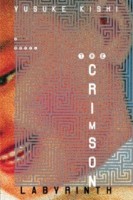
The Crimson Labyrinth by Yusuke Kishi
The Goddess Chronicle by Natsuo Kirino
Kafka on the Shore by Haruki Murakami

Anthologies!
The Edogawa Rampo Reader by Edogawa Rampo
Japanese Tales of Mystery and Imagination by Edogawa Rampo

Anime!
Fullmetal Alchemist: Brotherhood directed by Yasuhiro Irie
The Garden of Words directed by Makoto Shinkai
X: The Movie directed by Rintaro

Music!
Kodo vs. Yosuke Yamashita in Live

Filed Under: UNSHELVED

  • « Go to Previous Page
  • Page 1
  • Interim pages omitted …
  • Page 135
  • Page 136
  • Page 137
  • Page 138
  • Page 139
  • Page 140
  • Go to Next Page »
 | Log in
Copyright © 2010 Manga Bookshelf | Powered by WordPress & the Genesis Framework