• Skip to primary navigation
  • Skip to main content
  • Skip to primary sidebar
  • Home
  • About Us
    • Privacy Policy
    • Comment Policy
    • Disclosures & Disclaimers
  • Resources
    • Links, Essays & Articles
    • Fandomology!
    • CLAMP Directory
    • BlogRoll
  • Features & Columns
    • 3 Things Thursday
    • Adventures in the Key of Shoujo
    • Bit & Blips (game reviews)
    • BL BOOKRACK
    • Bookshelf Briefs
    • Bringing the Drama
    • Comic Conversion
    • Fanservice Friday
    • Going Digital
    • It Came From the Sinosphere
    • License This!
    • Magazine no Mori
    • My Week in Manga
    • OFF THE SHELF
    • Not By Manga Alone
    • PICK OF THE WEEK
    • Subtitles & Sensibility
    • Weekly Shonen Jump Recaps
  • Manga Moveable Feast
    • MMF Full Archive
    • Yun Kouga
    • CLAMP
    • Shojo Beat
    • Osamu Tezuka
    • Sailor Moon
    • Fruits Basket
    • Takehiko Inoue
    • Wild Adapter
    • One Piece
    • After School Nightmare
    • Karakuri Odette
    • Paradise Kiss
    • The Color Trilogy
    • To Terra…
    • Sexy Voice & Robo
  • Browse by Author
    • Sean Gaffney
    • Anna Neatrour
    • Michelle Smith
    • Katherine Dacey
    • MJ
    • Brigid Alverson
    • Travis Anderson
    • Phillip Anthony
    • Derek Bown
    • Jaci Dahlvang
    • Angela Eastman
    • Erica Friedman
    • Sara K.
    • Megan Purdy
    • Emily Snodgrass
    • Nancy Thistlethwaite
    • Eva Volin
    • David Welsh
  • MB Blogs
    • A Case Suitable For Treatment
    • Experiments in Manga
    • MangaBlog
    • The Manga Critic
    • Manga Report
    • Soliloquy in Blue
    • Manga Curmudgeon (archive)

Manga Bookshelf

Discussion, Resources, Roundtables, & Reviews

Ash Brown

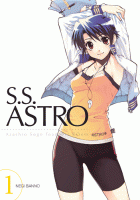
S.S. Astro: Asashio Sogo Teachers’ Room, Volume 1

January 15, 2014 by Ash Brown

S.S. Astro, Volume 1Creator: Negi Banno
U.S. publisher: Yen Press
ISBN: 9780759528987
Released: August 2008
Original release: 2007

S.S. Astro: Asashio Sogo Teachers’ Room is a yonkoma, or four-panel, manga created by Negi Banno. The first volume of S.S. Astro was originally published in Japan in 2007. Yen Press released the English translation of the manga in 2008, around the same time that it was licensing several other yonkoma manga series. As for S.S. Astro, only one volume was ever released. As far as I can tell, the series has been on hiatus since 2007 in Japan. Although I believe that Banno has created more S.S. Astro strips than those found in the first volume, there have not been enough to collect into a second volume. I have no idea if Banno plans to ever return to the S.S. Astro manga, but because so many years have passed it seems increasingly unlikely. S.S. Astro was actually one of the first yonkoma manga that I ever read. I originally came across it a few years back while searching for manga in English with yuri elements, which used to be a little more difficult to find than it is now.

Seven years after she graduated, Izumi Maki is back at her old high school. Except this time she’s one of the ones responsible for molding the young minds of Tokyo’s Asashio Integrated Public High School. It’s her first year as a teacher. Maki’s now in charge of both health and physical education classes, not to mention a home room with nearly forty students. (Now she just somehow needs to find a way to remember all of their names.) Maki’s not the only fresh blood at Asashio. Her good friend Yuko Nagumo, the new Japanese instructor, is also a first year teacher. The nursing teacher Setsuna Arai has a couple of years of experience on them and Maki’s backup teacher Kaname Karasuma, the instructor for the school’s English course, has even more. She also has a huge crush on Maki, not that Maki has noticed. Throw in all of the other teachers and their quirks, as well as Maki’s older brother, and high school is just as entertaining and complicated as it was the first time around.

Yonkoma manga tend to be fairly hit-or-miss for me, but in the case of S.S. Astro it’s mostly a hit. As with many four-panel manga, whether or not someone actually likes the series will depend on whether or not the reader likes the characters as they are. Although there are plenty of running jokes in S.S. Astro, the series tends to be episodic without much of an overarching plot and very little in the way of character development. Fortunately, I do like the characters. Quite a bit, actually. Maki’s a scatterbrain but earnest. Nagumo can put away an impressive amount of food and is closet fujoshi. Arai has a delightfully sadistic streak. Of the four main characters, Karasuma is the most responsible one, at least when she isn’t completely lovestruck. About halfway through the first volume of S.S. Astro the rest of the Asashio staff are more thoroughly introduced. Prior to that they were largely relegated to the background. I like the other teachers as well and wish more time could have been spent getting to know them better, too.

Quite a few manga licensed in English take place in a school setting. What helps to set S.S. Astro apart is that it focuses on the teachers rather than on the students. I find this to be a refreshing change of pace. One of the reasons that I’m particularly fond of S.S. Astro is that the manga focuses on the adults and their lives and relationships. Granted, the main cast are all relatively young and still in their twenties, but there are some older characters as well. Maki and the others can be immature at times, but in the end they are adults with adult responsibilities. Which is not to say there isn’t room for fun in S.S. Astro; being an adult has its perks, too. Video games, drinking parties, and a little bit of workplace romance (straight and otherwise) all have their place in the series. The artwork tends to be rather cute, too. In general, I find S.S. Astro to be fun and funny. S.S. Astro may not be a manga that I go out of my way to recommend to people, but it is one that I quite enjoy. I only wish that there was more of it.

Filed Under: REVIEWS Tagged With: manga, Negi Banno, S.S. Astro, Year of Yuri, yen press

Pick of the Week: Spreadsheets FTW

January 13, 2014 by Sean Gaffney, Michelle Smith, Anna N, Ash Brown and MJ 2 Comments

excel27SEAN: My Pick of the Week is obvious to anyone who reads this site at all. It is Excel Saga. The final Excel Saga. You should all BASK IN ITS GLORY! BOW, FOOLISH MORTALS! BOW TO THE FINAL VOLUME OF EXCEL SAGA!

MICHELLE: Huh. I somehow feel this strange compulsion to choose Excel Saga. Weird. Anyway, my pick of the week is Excel Saga. No, wait, I meant to say NightS. Quite frankly, I don’t really know what it’s about, but I liked Kou Yoneda’s No Touching At All so much that I’m willing to bet it’ll be good.

ANNA: Actually there isn’t much that really excites me this week, but I recently went to my public library and picked up a ton of manga! So my pick of the week is the manga selection at your local public library!

nightsASH: Public library manga are always a great choice! But I think I’m with Michelle this week. The manga I’m most looking forward to is NightS. I really enjoy Kou Yoneda’s work, so I’m happy to see more of it being released in English. Though, I guess there’s some manga called Excel Saga being released this week, too?
MJ: In reality, I’m most likely with Michelle and Ash. I’ll be picking up NightS for sure. But in the interest of extending Sean’s giddy mood for at least another day, I’ll say only this: Save a manga critic. Buy Excel Saga.

What looks good to you this week?

Filed Under: PICK OF THE WEEK

My Week in Manga: January 6-January 12, 2014

January 13, 2014 by Ash Brown

My News and Reviews

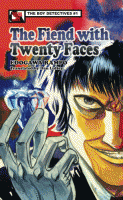
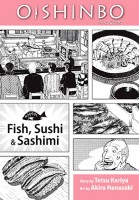
Two reviews were posted at Experiments in Manga last week! The honor of the first in-depth manga review of the month (and of the year, for that matter) goes to Tetsu Kariya and Akira Hanasaki’s Oishinbo, A la Carte: Fish, Sushi & Sashimi. I love food, I love manga, and so I love Oishinbo, too. I happen to really like fish and sushi as well, so I particularly enjoyed this volume. I also posted a review for Edogawa Rampo’s mystery adventure The Fiend with Twenty Faces which is the first novel in his series The Boy Detectives. I’ve read some of his stories and essays written for adults, but this was his first work for younger audiences that I read. It’s a lot of fun.

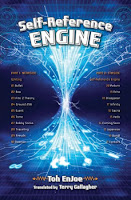
As for news and other interesting things found online: The English translation of Toh EnJoe’s Self-Reference Engine (one of my most notable release of 2013) has been nominated for a Philip K. Dick Award. The University of Michigan will be hosting an international conference on Natsume Sōseki from April 18 through April 20. (If you happen to be in Michigan around then, it’s be free and open to the public!) After months of no news, it looks like those who supported the Kickstarter for Osamu Tezuka’s The Crater may actually receive their rewards. And finally, Joe McCulloch takes a look at some of Suehiro Maruo’s most recent work over at The Comics Journal. Now if only more of his manga would be licensed in English!

Quick Takes

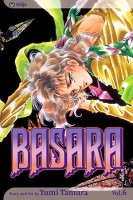
Basara, Volume 6Basara, Volumes 6-10 by Yumi Tamura. I love this series so much! It really is a shame that Basara is going out-of-print in English, but at least Viz has begun to release it digitally as well. The story is epic and engaging and the characters are complex and multi-layered. These particular volumes of Basara include the Okinawa story arc, which I especially enjoyed. It’s very interesting to see how Tamura is using events and politics from throughout Japan’s history to inform her post-apocalyptic world and culture. There are definite echos from the Warring States period, World War Two, and so on. Just as it was historically, in Basara Okinawa is a separate country from Japan that maintains its own traditions, relies heavily on trade, is largely at the mercy of foreign military influence, and is beset by natural disasters. Also, it’s the homeland of karate, which plays a part in some of the battles. (As a karateka myself, I couldn’t help but appreciate this.) I’m really looking forward to reading more of the series.

Entangled CircumstancesEntangled Circumstances by Kikuko Kikuya. I ended up enjoying Entangled Circumstances much more than I thought I would. I found the first chapter or so to actually be a little boring, but by the end of the volume Entangled Circumstances had managed to turn itself into a rather funny, and even a little sweet, boys’ love story. Actually, bonus chapters after the main story were the funniest and probably the favorite part of the manga for me because of that. Shibui and Himeko were once college classmates, but now they work at the same advertising agency. Himeko’s been in love with Shibui for a while now, but after a past awkward love confession, things have been strained between the two men. Often they seem to act like high schoolers rather than full-grown adults, so it’s difficult to take Entangled Circumstances completely seriously. It’s a lighthearted and fluffy sort of manga. The manga is nothing extraordinary, and I don’t know that I will necessarily need to read it again, but it was quite enjoyable.

ZooZoo by Andy MacDonald. I haven’t read the original novel Zoo, a science fiction thriller written by James Patterson and Michael Ledwidge, but MacDonald’s graphic novel adaptation somehow came into my possession, so I figured I’d give it a try. Since I haven’t read the original, I can’t definitively say how the graphic novel works as an adaptation, but I get the impression that MacDonald has been very faithful to the source material. The Zoo graphic novel can be somewhat text-heavy and some of the plot lines are a little compressed (though not exactly rushed) but I was never confused as to what was going on. Even so, I may have rolled my eyes a bit at the plot’s development and some of the rather predictable “twists.” Unfortunately, Zoo just doesn’t have that original or great of a story to begin with and I had a difficult time suspending my incredulity. The ending in particular was rather disappointing. Zoo starts out as a fairly action-packed, and bloody, doomsday scenario, but its heavy-handed moral can be a bit much.

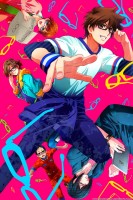
MeganebuMeganebu! directed by Soubi Yamamoto. I already knew that I enjoyed Yamamoto’s visual style from her previous work and so I wasn’t disappointed by Meganebu!‘s brightly colored and slightly eccentric animation. Even so, it took a few episodes for the series to really grow on me. There’s not really much of a plot to Meganebu!. There are the members of the Glasses Club and their continuing efforts to create a pair of glasses with X-Ray vision (with some very unexpected and explosive results) but mostly the series just follows their daily lives and the trouble they all get into. Once I got over the fact that Meganebu! is fairly pointless, I could sit back and enjoy its peculiar sense of fun. As a glasses wearer myself, I could particularly appreciate all of the humor surrounding eyeglasses. To the members of the Glasses Club, glasses are more than just a fashion accessory. Neither are they simply used to correct vision. Glasses have the power to change the world. Meganebu! is an absurd anime, but I’ll admit to enjoying it.

Filed Under: FEATURES, My Week in Manga Tagged With: Andy MacDonald, anime, basara, comics, Kikuko Kikuya, manga, Meganebu, Yumi Tamura

The Fiend with Twenty Faces

January 10, 2014 by Ash Brown

The Fiend with Twenty FacesAuthor: Edogawa Rampo
Illustrator: Tim Smith 3

Translator: Dan Luffey
U.S. publisher: Kurodahan Press
ISBN: 9784902075250
Released: March 2012
Original release: 1936

Edogawa Rampo, the pen name of Tarō Hirai, was one of Japan’s preeminent authors of the erotic grotesque nonsense movement. However, he was also well-known for his detective and mystery stories. Later in his career he even wrote a series for children called The Boy Detectives. The first and possibly best-known novel in this series was The Fiend with Twenty Faces, originally serialized in the boys adventure magazine Shōnen Club in 1936. The English translation of The Fiend with Twenty Faces by Dan Luffey was published by Kurodahan Press in 2012 with illustrations by Tim Smith 3. Although Rampo was a prolific and extremely influential author in Japan, relatively few of his works have been translated into English. So far, The Fiend with Twenty Faces is the only example of Rampo’s stories for a young audience to have been made available. As a fan of Rampo’s ero guro works, I was curious to read something a little different of his.

Terrorizing the wealthy of 1930s Tokyo is a criminal known only as Twenty Faces, a master of disguise who can change his appearance with such ease that no one has been able to uncover his true identity. Using his skills of disguise and his tremendous intellect, he steals whatever suits his fancy–priceless jewels, family heirlooms, works of art–nothing is safe. He has even been known to resort to kidnapping. To make things even worse, Twenty Faces announces exactly what it is he intends to steal and when. But even armed with this knowledge, no one has yet been able to put an end to his crime spree. The only person who might be a match for Twenty Faces is the famous detective Akechi Kogorō. Unfortunately, he is currently overseas working on an important case. However, he has left behind Kobayashi Yoshio, his young assistant and protégé, to attend to his affairs. Kobayashi may be extremely clever, but Twenty Faces is cleverer still. With Akechi away, there is little hope that the criminal can be stopped, but maybe Kobayashi can at least make things a little more difficult for him.

Rampo very clearly draws from other great mystery writers in his creation of The Boy Detective series in general and in The Fiend with Twenty Faces specifically. Influences from Maurice Leblanc’s series featuring the infamous gentleman thief Arsène Lupin and Arthur Conan Doyle’s mysteries with the master detective Sherlock Holmes can particularly be seen in The Fiend with Twenty Faces. Twenty Faces shares similarities with Lupin and Akechi exhibits many of the same skills that Holmes possesses. Having previously read many of Rampo’s short stories (at least those available in English), I was already familiar with Akechi from his mysteries aimed at adult audiences. I’m actually rather fond of Akechi and so was quite pleased when he made his appearance in The Fiend with Twenty Faces, even if it did take nearly half of the novel before he finally returns from overseas.

The Fiend with Twenty Faces was highly entertaining and a tremendous amount of fun. Despite being a mystery, the novel is a fairly straightforward adventure story written for a younger audience. As someone who is fairly well-read, I was able to anticipate most of the twists and turns in the plot of The Fiend with Twenty Faces. If something seemed to be too convenient or unlikely to be a coincidence, it’s most likely because it was. However, I still enjoyed the story a great deal. The characters are also fairly engaging. Twenty Faces himself is a bit of an arrogant bastard and his rivalry with Akechi is marvelous to watch unfold. I could easily imagine reading the novel aloud; Rampo’s writing addresses the reader directly and would be well-suited for performance with very little modification needed. I’m not sure if any more of the novels in The Boy Detectives series will be translated, but I’m glad to have had the opportunity to discover firsthand one of the other reasons why Rampo’s influence has been so enduring in Japan.

Filed Under: REVIEWS Tagged With: Boy Detectives, Edogawa Rampo, Kurodahan Press, Novels

Manga the Week of 1/15

January 9, 2014 by Sean Gaffney, MJ, Ash Brown, Michelle Smith and Anna N 2 Comments

excel27

SEAN: This is it, folks! The 27th and final volume of Excel Saga ships next week! There will be laughs! Romance! Resolution! … Perhaps less resolution than we would like, but hey! Everyone in the entire world will be buying this volume!

MJ: Or we will at least pretend to, in order to keep you smiling.

SEAN: So, what are you reading this week?

…

Oh right, there are other releases as well, which are being nice enough to share their release date with the majesty that is the final volume of Excel Saga, so I suppose I should discuss them.

Kodansha has the 6th volume of Missions of Love, which keeps riding the edge between trashy good and trashy bad, but as long as it keeps riding that edge, I’ll keep reading.

ASH: As will I!

MICHELLE: I read the first couple of volumes last year and just never went back to it.

SEAN: There’s also the 3rd Sherlock Bones volume, combining mysteries and cute dogs as only Japan can.

And for those who enjoyed Tokyo Mew Mew and wish it had a followup, well, here’s Tokyo Mew Mew A La Mode in one omnibus. It is not controversial at all, and is beloved by all TMM fans. Really. Trust me.

SubLime has the 6th volume of His Favorite, whose cover is slightly less silly looking than previous ones, but which hopefully is still just as much fun for BL fans. I’ve heard good things about this series.

MJ: I’ll be looking forward to see how well this series wears, six volumes in.

SEAN: A brief reminder that NONE of these series are Excel Saga. Ask your local bookseller for EXCEL SAGA 27 by name. Accept no imitations!

nights

SubLime also gives us a short story collection with the oddly capitalized title NightS. The S stands for… who knows. Seme? Sadist? Saucy?

ASH: I have no idea, but I do know I love Kou Yoneda’s work. I’ve been looking forward to this release.

MICHELLE: Me, too. I really liked No Touching At All.

MJ: Apparently, it stands for $. I’ll be picking it up, too.

SEAN: Vertical has the 3rd volume of Medieval manga Wolfsmund, which I have no doubt will continue to be depressing as hell, but I know some others on the Bookshelf enjoy it.

ASH: Yeah, that would be me. The first two volumes were extremely dark and intense to say the least.

SEAN: Viz has the 8th volume of 07-Ghost, still packed with ghosts, gods, and bishops, and still featuring heavily in my “I need to catch up with that” list.

MICHELLE: And mine, as well.

MJ: And mine!

ANNA: Mine too. I need to schedule a catch up with 07-Ghost day, because I did really enjoy the first few volumes, and the subsequent volumes keep piling up.

SEAN: And there’s Vol. 49 of Case Closed, which began in Japan in 1994, and thus manages to be the only series on this list older than Excel Saga. It is also 22+ volumes longer than Excel Saga. And it also has some very well written mystery and suspense… which, by the way, Excel Saga also had, to the surprise of those expecting what the anime gave them.

So, to sum up, Excel Saga. Final Volume. Get It. And some other stuff. What are you getting next week (hint: Excel Saga)?

MICHELLE: *snerk*

MJ: Yep. Totally Excel Saga. Yep.

ANNA: What is this about? I’m assuming it is about office workers and spreadsheets.

SEAN: You will all be first against the wall when Il Palazzo conquers the world. Hrmph.

Filed Under: FEATURES, manga the week of

Oishinbo, A la Carte: Fish, Sushi & Sashimi

January 8, 2014 by Ash Brown

Oishinbo, A la Carte: Fish, Sushi & SashimiAuthor: Tetsu Kariya
Illustrator: Akira Hanasaki

U.S. publisher: Viz Media
ISBN: 9781421521428
Released: July 2009
Original release: 2005
Awards: Shogakukan Manga Award

With over one hundred volumes, it is very unlikely that the award-winning food manga Oishinbo will ever be licensed in its entirety in English, especially considering that the series is still ongoing at this point. However, seven volumes of Oishinbo, A la Carte have been released by Viz Media under its Signature imprint. These volumes are thematic collections which select stories from throughout the series proper. Fish, Sushi & Sashimi was the fourth Oishinbo, A la Carte collection to be published by Viz and was released in 2009. However, in Japan Fish, Sushi & Sashimi was actually the fifth volume in the series and was published in 2005. As a lover of both food and manga, it probably shouldn’t be too surprising that I enjoy Oishinbo immensely. And I’m not the only one. The series, written by Tetsu Kariya and illustrated by Akira Hanasaki, has been in serialization since 1983 and in 1987 the creators received a Shogakukan Manga Award for their work.

Because Oishinbo, A la Carte is a selection of stories from Oishinbo, the overarching story of the original series is obscured. Instead of the ongoing plot, the focus of Oishinbo, A la Carte is very much on the food itself. Fish, Sushi & Sashimi collects eight different stories centered around fish. Sushi rolls are probably one of the first things that come to many people’s minds when considering Japanese fish dishes, but not a single one will be found in Fish, Sushi & Sashimi. Generally, the fare tends to be simpler and fish the primary ingredient. The fish specifically featured in Fish, Sushi & Sashimi include white trevally, chub mackerel, sweetfish, tiger blowfish, freshwater goby, flounder, salmon, and shinko, many of which are considered to be some of the best and most desirable or delectable fish in Japan. There is also a wide variety of preparations shown, everything from raw sashimi to fried tempura.

When dealing with fish as a source of food, freshness is key. This is true for most seafood, too, and is something that most people probably know. However, Fish, Sushi & Sashimi shows that there is much more involved in the freshness of fish than just how long it has been since it has been caught. Fish are very sensitive to changes in the environment in which they live. Simply put, quality fish come from quality waters. The healthier and less polluted those waters, the better the fish. Additionally, the same fish can taste significantly different due to seasonal changes, where it is caught (and how far it has traveled afterwards), or when in its life-cycle it is eaten. As is often the case in the Oishinbo, A la Carte stories that I have so far read, Fish, Sushi & Sashimi emphasizes the importance of locally sourced and sustainable foods, which is particularly true of fish.

One of the highlights of Oishinbo, A la Carte is Hanasaki’s artwork. The people tend to be stylized but the food is always realistically drawn. The catching and cleaning of the fish, the steps in the various dishes’ preparations, and the skilled knife-work employed are all important to Fish, Sushi & Sashimi. Because Fish, Sushi & Sashimi focuses on aquatic life both in and out of its natural environments, Hanasaki also has the opportunity to beautifully illustrate Japan’s oceans, rivers, and other waterways. Another thing that particularly struck me about this volume of Oishinbo, A la Carte was how many young people were included in the stories. Family drama has always been a part of Oishinbo with the intense father-son rivalry between Kaibara Yūzan and Yamaoka Shirō. It’s extremely entertaining to watch them battle it out over and with food, but it’s also nice to see some more wholesome family relationships in the series, too.

Filed Under: REVIEWS Tagged With: Akira Hanasaki, manga, Oishinbo, Shogakukan Manga Award, Tetsu Kariya, viz media, VIZ Signature

Pick of the Week: Wandering Son & More!

January 6, 2014 by Ash Brown, Michelle Smith, Sean Gaffney, Anna N and MJ Leave a Comment

potw-1-7-14ASH: Well, as Sean put it, I hope you like manga! Seems like there is a ton of guilty pleasures and other great manga being released this week. But even though there are plenty of titles that I’m interested in reading, my heart belongs to the most recent volume of Takako Shimura’s Wandering Son. It’s such a beautifully written and drawn series and I love the deluxe treatment that Fantagraphics has given it. Wandering Son is an incredibly important series to me personally; I’m still thrilled that it’s being released in English at all.
MICHELLE: I’m so behind on Wandering Son that I feel like a hypocrite picking it, so instead I’m going to pick a shoujo favorite: Natsume’s Book of Friends, now in its 15th volume. This series doesn’t come out too frequently, as we’re almost caught up to Japan, so each new installment is like a treasured gift. The series is warm and lovely, but not without its dramatic moments. I recommend it most highly!

SEAN: And I too will go with a shoujo favorite, as I pick the 18th volume of Kimi ni Todoke. Seeing the character development of the five other main leads (yes, yes, even Kento, though I admit it grudgingly) has been excellent, but seeing Sawako’s growth has been positively sublime. Every new volume of this series always gets devoured the day I get it, and this one will be no exception.

ANNA: I’m going to have to go with DMP’s Takasugi-san’s Obento. Food manga is one of those underrepresented genres for translation, so I always feel compelled to highlight it. This slice of life story centered around bento is sure to entertain anyone who enjoys the demonstration of care that goes into a well-designed lunch.

MJ: To bring this column full-circle, I’m going to go back to Ash’s pick, because it’s mine too. Though I’m thoroughly enjoying a number of the series whose latest volumes are being released this week, including Strobe Edge, Midnight Secretary, and the shoujo favorites mentioned by my colleagues, nothing comes close to my feelings for Shimura’s Wandering Son. Not only is it lovingly translated and produced, but I find it very personally gratifying—perhaps differently than Ash does, but with similar strength. This series made my list of best continuing series in 2012, and you can count on it appearing in 2013’s list as well.

What looks good to you this week?


In case you missed it, check out our Pick of the Year – 2013!

Filed Under: PICK OF THE WEEK

My Week in Manga: December 30, 2013-January 5, 2014

January 6, 2014 by Ash Brown

My News and Reviews

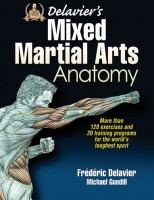
Last week I announced the 4-Koma for You Winner. In case you’re looking for something to read, the post includes a list of yonkoma manga that have been released in print in English, too. I also posted December’s Bookshelf Overload last week, for those of you interested in following my adventures in buying way too much manga and other media. Finally, over the weekend I posted a review of Delavier’s Mixed Martial Arts Anatomy. This is one of the most tangentially related reviews I’ve written at Experiments in Manga. Why is it here? Simply because I’m a karateka and found it to be a useful book. It’s a great strength training resource for any martial artist. Plus, it has lots of illustrations.

I’ve more or less been on vacation for the last two weeks, so I haven’t been online much except to make sure that things were updated here at Experiments in Manga. Even so, there were two things in particular that caught my eye recently. First and foremost, the Massive anthology of gay manga originally scheduled to be published by PictureBox has been picked up by Fantagraphics! Right now, it looks like we should see the release sometime in October 2014. The other news that I was excited to hear about is that we’ll be getting a second season of the Mushishi anime nearly ten years after the first season aired. I loved Yuki Urushibara’s original manga (which is now unfortunately out-of-print in English) and I loved the first anime series so I’m looking forward to the second season a great deal.

Quick Takes

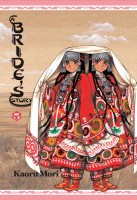
A Bride's Story, Volume 5A Bride’s Story, Volume 5 by Kaoru Mori. The art in A Bride’s Story always blows me away. Mori’s illustrations are so beautiful and detailed that it’s no surprise that there’s such a long wait in between each volume’s release. Most of the fifth volume of the series is devoted to the wedding between the twins and their husbands-to-be. The best word that I can think of to describe this volume is “joyous.” Mori shows the preparations that both families make for the happy occasion–a celebration that lasts an entire week. There’s dance and song, levity, plenty of food, and numerous guests. It’s extremely satisfying to see the entire community’s participation in the event. The manga as a whole is a gorgeous work, but the wedding itself is quite lovely. I enjoyed seeing the twins’ story develop. Their outgoing personalities might be annoying for some readers, but in the end I found the two of them to be quite endearing. Now begins the long wait for the next volume of A Bride’s Story.

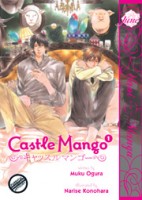
Castle Mango, Volume 1Castle Mango, Volume 1 written by Narise Konohara and illustrated by Muku Ogura. Despite what the cover and title page of Digital Manga’s release indicate, Konohara wrote Castle Mango while Ogura was responsible for the artwork. Konohara is the same author who wrote About Love, which I quite enjoyed, so I was interested in reading Castle Mango. Both manga are slightly atypical boys’ love stories. Instead of being straightforward man-meets-man romances, the stories are more layered. There is an emphasis on well-developed characters and actual plot; it’s not just about getting guys into bed with each other. The leads of Castle Mango are rather unusual as well. Yorozu’s family owns and runs a love hotel while Tagame is a well-known porn director. Yorozu more or less blackmail’s Tagame into a relationship in order to keep him away from his brother, but he doesn’t even really like the older man. Their story is concluded in the second and final volume of Castle Mango. I’m very curious to see how things unfold, so I’ll definitely be picking it up.

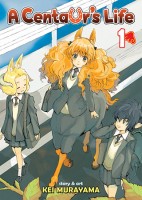
A Centaur's Life, Volume 1A Centaur’s Life, Volume 1 by Kei Murayama. One of several “monster girl” manga recently released by Seven Seas, A Centaur’s Life is far less ecchi than the other titles. Plus, this one includes plenty of monster boys in addition to the monster girls, which I greatly appreciate. The manga is definitely centered around the series’ young women, though. The titular centaur is Kimihara Himeno; the manga is mostly a slice-of-life story which follows her and her other high school friends. (As a side note, I adore Himeno’s wild mass of hair on the cover.) Some people might find reading the first chapter a little uncomfortable as the story revolves around the girls’ privates, but following chapters are much less questionable. Overall, the manga was rather charming. And I am interested in learning more about the world that Murayama has imagined; it seems that some significant thought has been put into it. Although not the focus of the series, politics, law, cultural differences, disputes between races, and history have all been taken into consideration.

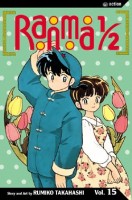
Ranma 1/2, Volume 15Ranma 1/2, Volumes 15-20 by Rumiko Takahashi. It’s been so long since I’ve read any of Ranma 1/2 that I had forgotten how much I love the series. After the main characters and basic premise are established, the manga becomes fairly episodic so it’s easy to pick up part way through the series and still know what’s going on. I find Ranma 1/2 to be hilarious and particularly enjoy the absurd martial arts that Takahashi comes up with. These particular volumes feature martial arts based around eating food extremely quickly and cheerleading, just to give two examples. I like the characters and I like the story, as silly and superfluous as it can be. Akane and Ranma seem to be no closer to getting married than they were at the beginning of the series. They argue quite a bit, but there are moments of genuine affection, too. Granted, those moments are frequently interrupted and don’t tend to last very long. The series’ off-the-wall comedy won’t be to everyone’s taste, but for me Ranma 1/2 is highly entertaining and a lot of fun.

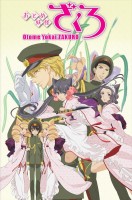
Otome Yokai ZakuroOtome Yokai Zakuro directed by Chiaki Kon. The Otome Yokai Zakuro anime is based on an ongoing manga series by Lily Hoshino (which hasn’t been licensed in English.) The story takes place in an alternate version of Japan’s Meiji Era in which yokai and humans coexist. The office of Spirit Affairs is created in order to improve relations between the two groups. It’s made up of a small contingent of military officers and half-spirit girls who team up to work together. I’ll admit, I liked the first part of the series which explored the concerns over Japan’s Westernization and loss of traditions through the conflicts between humans and yokai much more than I did its end. Seeing as the opening has a bit of a spoiler in it, the series’ major plot twist was clearly planned well in advance, but it just didn’t seem to flow well as a whole as the narrative suddenly changes direction. The romantic subplots are broadcast from the very first episode–it’s obvious who will be falling in love with who–so none of those developments were particularly surprising or unexpected, either.

Filed Under: FEATURES, My Week in Manga Tagged With: anime, Bride's Story, Castle Mango, Centaur's Life, Kaoru Mori, Kei Murayama, manga, Muku Ogura, Narise Konohara, Otome Yokai Zakuro, Ranma 1/2, Rumiko Takahashi

Delavier’s Mixed Martial Arts Anatomy

January 4, 2014 by Ash Brown

Delavier's Mixed Martial Arts AnatomyAuthor: Frédéric Delavier and Michael Gundill
Illustrator: Frédéric Delavier

U.S. publisher: Human Kinetics
ISBN: 9781450463591
Released: October 2013
Original release: 2012

Delavier’s Mixed Martial Arts Anatomy was released by Human Kinetics in 2013. The volume is a translated and revised edition of Frédéric Delavier and Michael Gundill’s Musculation Pour le Fight et les Sports de Combat, originally published in France in 2012. Delavier and Gundill have collaborated with each other on many works focusing on strength training, bodybuilding, and anatomy, several of which have been released in English by Human Kinetics. I was particularly interested in Delavier’s Mixed Martial Arts Anatomy since I myself am a martial artist. I have had some cross-training in other styles (namely tai chi, aikido, and hung gar), but my primary focus in the martial arts has been on traditional Okinawan karate, specifically Shōrin-ryū and Shūdōkan, as well as kobujutsu. Even though I’m not currently active in mixed martial arts, I anticipated that Delavier’s Mixed Martial Arts Anatomy would still be applicable to my own martial arts training. I was very pleased when I was selected to receive a review copy of the work through LibraryThing’s Early Reviewers program.

After a short introduction that establishes why martial artists should pursue strength training, Delavier’s Mixed Martial Arts Anatomy is divided into three major parts: “Principles of Strength Training,” “Strength Training Exercises for Fighting,” and “Training Programs.” The first part covers the basics of strength training and how it can be applied by martial artists to complement their martial arts training. The section specifically focuses on techniques used to increase strength, power, and flexibility, to improve conditioning and endurance, and to prevent injury and support recovery. The strength training exercises are arranged by their practical applications: strengthening the neck, jaw, and core, improving punches, strikes, and kicks, and developing better grabs, pulls, chokes, and throws. The section devoted to training programs provides examples of basic, specialized, and customized strength training programs and circuits.

Delavier’s Mixed Martial Arts Anatomy could have just as easily, and perhaps more accurately, been called Strength Training for Martial Artists. The book outlines strength training principles, exercises, and programs that have been modified for use within any martial arts or combat sports context, and not just specifically in mixed martial arts. Traditional bodybuilding exercise have been modified to mimic fighting conditions to more effectively develop muscle strength and endurance for practical rather than simply aesthetic applications. There is also an emphasis on compound exercises over isolation exercises since martial arts require the use and engagement of the entire body instead of individual muscle groups. Delavier’s Mixed Martial Arts Anatomy focuses on five goals: increasing muscle mass and weight, increasing strength, increasing power, improving isometric endurance, and improving muscular endurance.

Fighters and martial artists who are just beginning to supplement their regular practice with strength training will benefit the most from Delavier’s Mixed Martial Arts Anatomy. However, those who are more experienced should also be able to find useful information and valuable recommendations in the volume. Delavier and Gundill do assume at least some basic familiarity with the use of weights, bands, and other equipment, but for the most part the book is suitable for beginners. All of the exercises described include variations which allow them to be adjusted to better suit a martial artist’s particular fighting style, body type, or current level of experience or strength. The risks and martial benefits of each exercise are also included which further helps to customize and tailor a program for a martial artist’s individual needs. Delavier’s Mixed Martial Arts Anatomy is a fantastic volume–accessible, well-organized, as well as practical. I know that my own training has already benefited from what I’ve learned by reading it.

Thank you to Human Kinetics for providing a copy of Delavier’s Mixed Martial Arts Anatomy for review.

Filed Under: REVIEWS Tagged With: Frédéric Delavier, Michael Gundill, Nonfiction

Bookshelf Overload: December 2013

January 3, 2014 by Ash Brown

I’m pretty pleased with my manga haul in December. I finally gave in and bought a complete set of Yumi Tamura’s series Basara on ebay. I ended up paying a little more than I really wanted (some of the volumes are very out of print), but the fact I had a couple of gift cards to use made me feel a little better about the whole transaction. Plus, the seller threw in copies of the two Basara artbooks as a bonus. As for preorders this month, my copy of Gengoroh Tagame’s Endless Game arrived which made me pretty happy. The English translation is actually the manga’s debut; it hasn’t even been collected in Japan yet. The next volume of Q Hayashida’s Dorohedoro was also released in December. We only get three Dorohedoro volumes a year, so I’m always excited when a new volume comes out. I got a great batch of queer comics in December which I’m looking forward to reading, too.

Manga!
Attack on Titan, Volume 10 by Hajime Isayama
Basara, Volumes 1-27 by Yumi Tamura
Between the Sheets by Erica Sakurazawa
Dorohedoro, Volume 11 by Q Hayashida
Endless Game by Gengoroh Tagame
Fairy Tail, Volume 33 by Hiro Mashima
Hetalia: Axis Powers, Volumes 4-5 by Himaruya Hidekaz
Knights of Sidonia, Volume 6 by Tsutomu Nihei
Lies Are a Gentleman’s Manners by Marta Matsuo
Mobile Suit Gundam: The Origin, Volume 4: Jaburo by Yoshikazu Yasuhiko
No. 6, Volume 4 by Hinoki Kino
Otomen, Volume 17 by Aya Kanno
Pink by Kyoko Okazaki
Red Colored Elegy by Seiichi Hayashi
Sankarea: Undying Love, Volume 4 by Mitsuru Hattori
Sekine-kun no Koi, Volumes 1-3 by Haruka Kawachi
Smuggler by Shohei Manabe
Soul Rescue, Volumes 1-2 by Aya Kanno
Wild Com. by Yumi Tamura

Manhwa!
Evyione: Ocean Fantasy, Volume 1 by Young-Hee Kim

Comics!
Flutter written by Jennie Wood, illustrated by Jeff McComsey
QU33R edited by Rob Kirby
Queerotica edited by Allie Kleber
What’s Normal Anyway? by Morgan Boecher

Artbooks!
Basara: Earth by Yumi Tamura
Basara: Flame by Yumi Tamura
The Sky: The Art of Final Fantasy by Yoshitaka Amano

Anime!
Sword of the Stranger directed by Masahiro Andō

Film!
Zoo directed by Various

Filed Under: Bookshelf Overload, UNSHELVED

Manga the Week of 1/8

January 2, 2014 by Sean Gaffney, Ash Brown, MJ, Anna N and Michelle Smith 3 Comments

SEAN: Well, the holidays are over. HOPE YOU LIKE MANGA. We have, between Amazon and Comic Shop sources, 26 titles coming out this week (some of which have already shipped from certain distributors, yes). Buckle up, folks, we’ll be here a while.

ASH: Excellent. I happen to love manga.

MJ: Yes, yes, yesssssss.

SEAN: Dark Horse has the 2nd Trigun Maximum omnibus. I’m hoping that in larger form the art will somehow make more sense.

Digital Manga Publishing has had a slow return from Print Hiatus, but they seem to be back with a vengeance this week. First we have A Century of Temptation, a vampire/barista romance. The author is best known here for Brave 10 (from DMG) and Sengoku Basara (from Udon).

ANNA: Wow, vampire/barista romance? I am somewhat intrigued.

ASH: Indeed! I had somehow missed that particular detail.

MJ: Well, huh.

SEAN: Volume 2 of Depression of the Anti-Romanticist wraps things up, hopefully with less depression and less anti-romance. Given its BL demographic.

minimart

Mr. Mini-Mart certainly wins the cute cover of the week award. A NEET shut-in tries to hold down a job at a convenience store, but must deal with his loud, outgoing coworker. Will romance develop? (Spoiler: yes.)

MICHELLE: Heehee. I approve of the presence of a kitty. I wonder if it figures into the story?

MJ: I’m completely on board with this. I almost don’t care what’s inside.

SEAN: Also with a cute cover, President Momoi-kun is, I inform my fellow Manga Bookshelf writers, an Opera manga. It also looks to be very silly indeed, with lots of funny gags in among the BL. Intriguing.

MICHELLE: I like that the lead dude is crushing on an older, married coworker!

MJ: Anything from Opera deserves a look, so count me in!

SEAN: And in DMP’s one non-BL title, we have – finally – Volume 1 of Takasugi-san’s Obento, which feels like it was pushed back about eight times. A grad student has to take in his cousin after her mother dies, and they learn to bond through cooking. The cousin is twelve, so I think this is meant to be more of a family bonding. It’s 7+ volumes in Japan, and runs in one of my favorite magazines, Comic Flapper, so I definitely want to try this out.

MICHELLE: Me too!

ANNA: I read this when it was available digitally, and liked it! We get food manga so seldom, titles like these are a treat.

ASH: More food manga is always a good thing.

MJ: I’m so glad to see this in print!

SEAN: Fantagraphics shipped the 6th volume of Wandering Son when I wasn’t looking, so most of you may have it already. We’ve talked before about why this should be a must-buy title for all of you.

MICHELLE: I am so dreadfully behind on Wandering Son. Catching up will be one of my resolutions, methinks.

ANNA: Ugh, me too! Too much manga!

ASH: I am still eagerly waiting for my copy to arrive. I can’t wait!

MJ: Same here!

SEAN: Kodansha has Fairy Tail 34, still in the Grand Magic Games arc. I’m falling behind on my Fairy Tail, need to catch up.

Seven Seas expanded greatly in 2013, and this shows no sign of stopping now that it’s 2014. We start with the 2nd and final volume of Alice in the Country of Hearts: The Mad Hatter’s Late-Night Tea Party, which continues the romance between Alice and Blood Dupre.

snowwhite2

Dictatorial Grimoire has the 2nd in the Snow White arc, featuring its Alice in the Country of Hearts genderswap-esque plot. I was more interested in Vol. 1 than I expected, so will check the 2nd out.

ASH: I haven’t read the first volume yet, but I am tempted.

SEAN: Monster Musume was a giant hit, and everyone except me seemed to love it. Proving, if nothing else, that I do not drive the taste of most manga readers. Vol. 2 should make even more people happy.

ASH: Monster Musume was a huge success for Seven Seas! I had no idea it was such a popular series.

SEAN: Zero’s Familiar wraps up with the 3rd omnibus, containing Vols. 6-7. Fear not, though, the sequel has been licensed and is coming in the spring.

Flowers of Evil has gotten to Volume 8. Is it still just as twisted? I’m curious.

ASH: The cover art for this story arc is absolutely beautiful.

MJ: I’m still pretty well engaged with this series, so bring it on!

SEAN: And there is the traditional Pile Of Viz. Bleach has a 7th 3-in-1 omnibus, getting towards the end of the Soul Society arc, which many people feel it has never bettered.

Hana-Kimi also gets its 7th 3-in-1. If I recall, it should wrap up with the 8th. Bleach, not so much.

ANNA: I love Hana-Kimi!

SEAN: I adore every single volume of Kimi ni Todoke that comes out, even now that it’s at Volume 18. The cast start to think about their futures around this point, as graduation is near.

MICHELLE: I’m looking forward to this one, too. It’s a definite favorite.

ANNA: Viz does great shoujo.

midnight3

SEAN: Midnight Secretary 3 continues to combine office lady romance with vampire romance, and is doing a damn fine job of it. I expect more intrigue to happen here.

ANNA: I do enjoy this series.

MJ: As do I.

SEAN: Oh look, another 3-in-1 Volume 7. This is Naruto.

Natsume’s Book of Friends 15! Another series I always love to read. I wish it had more Taki in it, but I’m happy to accept whatever gentle, melancholy yokai antics it will give me.

MICHELLE: Another definite favorite!

SEAN: I reviewed Nisekoi Volume 1 when the digital volume hit, and it’s now coming to print. It’s a fairly typical Shonen Jump romantic comedy, which will appeal to those who like tsunderes, yakuza, and lots of shouting.

MICHELLE: Which is not me, I’m afraid. I found the premise and characters tiresome.

MJ: I’ll be checking this one out for sure, despite Michelle’s reservations.

MICHELLE: I look forward to seeing what you think of it!

SEAN: Otomen 17, completing a trilogy of addicting shoujo I always read first whenever the new volumes come out. Last time we had a nasty cliffhanger, are things going to get worse?

MICHELLE: Someday I will catch up on Otomen.

ASH: I’ve been saving the last few volumes to read in one go; I really enjoy this series.

SEAN: Psyren 14 barrels on to its finale, and will presumably be bringing all the major players together back in the Psyren World for a big battle royale.

kenshin2

Rurouni Kenshin: Restoration has now fulfilled its purpose of advertising the recent movie, so it can end with Vol. 2, which indeed it does.

MICHELLE: Ha! Really? I wonder if it was always intended to be so short! Does this mean it doesn’t attempt to rewrite the Kyoko Arc, which needed no rewriting? I am relieved!

ANNA: I didn’t realize that it was going to be so short either, but it makes sense. The original manga was so good, it didn’t really need a reboot.

SEAN: Strobe Edge is nearing the end of its run with Vol. 8, and so surely the two leads will finally start to work out their angst and get closer… no, huh? Oh well.

MICHELLE: Soon!

ANNA: I hope so! I do enjoy this series, but am ready for it to wrap up.

MJ: This series continuously surprises me with its ability to keep me engaged… but I do hope we’ll see some movement here, finally.

SEAN: Lastly, Yu-Gi-Oh Zexal 4 does whatever it is Yu-Gi-Oh volumes do these days. It could have become a wacky 4-koma about high school girls for all I know. :)

How much of this pile appeals to you?

Filed Under: FEATURES, manga the week of

Manga Giveaway: 4-Koma for You Winner

January 1, 2014 by Ash Brown

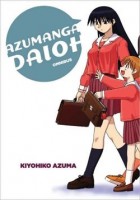
Azumanga Daioh OmnibusAnd the winner of the 4-Koma for You manga giveaway is…Cassandra!

As the winner, Cassandra (who currently writes at The Huge Anime Fan) will be receiving the Yen Press omnibus of Kiyohiko Azuma’s yonkoma manga Azumanga Daioh. For this giveaway, I asked entrants to tell me a little about the four-panel manga that they had read. Check out the 4-Koma for You comments for all of the details. And if you’re looking for some yonkoma manga to read, I’ve taken this opportunity to pull together a list of some of the titles that have been licensed in English.

4-Koma Manga in English (in print)
.hack//4Koma by Koichi Sumimaru
Azumanga Daioh by Kiyohiko Azuma
Bloody Brat written by Yuuki Kodoma, illustrated by Kanata Yoshino
ChocoMimi by Konami Sonoda
Crayon Shinchan by Yoshito Usui
Dojin Work by Hiroyuki
GA: Geijutsuka Art Design Class by Satoko Kiyuduki
Great Place High School by Naduki Koujima
Hetalia: Axis Powers by Himaruya Hidekaz
Ichiroh! by Mikage
K-ON! by Kakifly
Lucky Star by Kagami Yoshimizu
Neko Ramen by Kenji Sonishi
Palepoli by Usamaru Furuya (excerpted in Secret Comics Japan)
Oh My Goddess!: Adventures of the Mini-Goddesses by Kosuke Fujishima
Shoulder-a-Coffin Kuro by Satoko Kiyuduki
Shugo Chara Chan! by Peach-Pit
S.S. ASTRO: Asashio Sogo Teachers’ Room by Negi Banno
Sunshine Sketch by Ume Aoki
Suzunari! by Shoko Iwami
Tori Koro by Hairan
Welcome to Wakaba-soh by Chaco Abeno

Filed Under: UNSHELVED Tagged With: manga

My Week in Manga: December 23-December 29, 2013

December 30, 2013 by Ash Brown

My News and Reviews

Last week I posted a review of Hinoki Kino’s manga No. 6, Volume 4. The series has been getting better with each installment and things are starting to get really good. I also wrote a little bit about some of the manga, comics, and fiction releases that for me were particularly Notable in 2013. It’s not exactly a “best of” list, and it isn’t exactly a list of my favorite manga of the year, either. Basically it’s a list of interesting releases from 2013. And speaking of 2013, there’s still time to enter the last manga giveaway of the year! Check out the 4-Koma for You manga giveaway for a chance to win the omnibus edition of Kiyohiko Azuma’s yonkoma manga Azumanga Daioh.

Quick Takes

FairyTail, Volume 33Fairy Tail, Volume 33 by Hiro Mashima. It’s the second day of the Grand Magic Games and it’s still not looking good for the two Fairy Tail teams, although some of their members have surprising victories. Unfortunately, considering their prior string of defeats, it’s not enough to make much of a difference this early in the tournament. There are some great battles and moments of humor in this volume, but I still don’t find the tournament arc to be as compelling as the arcs that came before it. New characters continue to be introduced; I particularly enjoyed the addition of Bacchus, a powerful wizard from the Quatro Cerberus guild. Personality-wise, he can be a bit of a drunken jerk and isn’t always particularly likeable. What caught my interest is that his style of magic is based on Piguaquan, a legitimate Chinese martial art. Not too surprising considering his name, Bacchus combines this with Zui Quan, or “drunken fist.” Granted, it’s the fictionalized version of drunken fist that requires the practitioner to actually be intoxicated, but this is fitting and meshes well with the existing magic systems in Fairy Tail.

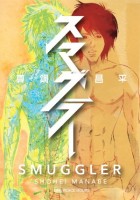
SmugglerSmuggler by Shohei Manabe. Originally released in English by Tokyopop, Smuggler is now available in a new edition from One Peace Books. I missed the manga the first time around, and since it also received a live-action film adaptation, I was particularly curious to read it. Kinuta is a failed actor who has accumulated a fair amount of debt. In order to pay back what he owes he has been smuggling and illegally dumping cargo outside of Tokyo. What he didn’t initially realize was that he was helping to transport and dispose of dead bodies for the yakuza. And now that he does know, Kinuta owes the mob his life as well as his money. When a job goes terribly wrong and an extraordinarily dangerous assassin escapes on his watch, Kinuta suddenly finds himself pulled even deeper into Japan’s underworld. Smuggler is a dark and violent manga, quickly paced, and unrelenting. It’s definitely not for the faint of heart. Smuggler held my interest, and there were some marvelously gut-wrenching scenes, but in the end I can’t say that the manga left much of a lasting impression on me.

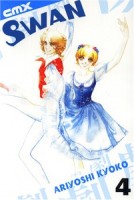
Swan, Volume 4Swan, Volumes 4-9 by Kyoko Ariyoshi. I am still completely in love with Swan and am astounded that it has taken me this long to actually get around to reading it. The series is incredibly well done–it’s just so intense and passionate, not to mention beautifully drawn. I’m also learning a bit more about ballet and its history as I read, which I count as a bonus. There are quite a few themes being addressed in these particular volumes. One of the themes that is especially prominent deals with sacrifice and what people are willing to give up in order to pursue what the truly love. It’s not always an easy decision. As someone who was deeply involved in the performing arts (in my case music, not dance), it’s a conflict with which I can personally identify. The characters in Swan all have to struggle to find the balance between their lives as dancers and their relationships with other people. Matters of love and romance complicate things greatly, but they also serve as a source of inspiration for creative expression. Swan piles on the drama and it’s fantastic.

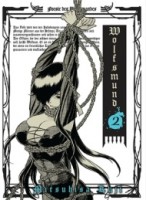
Wolfsmund, Volume 2Wolfsmund, Volume 2 by Mitsuhisa Kuji. While the first volume of Wolfsmund was violent and intense, the second volume is arguably even more so. In response to the rebellion gaining strength and numbers, the questioning of those trying to cross through the Wolf’s Maw at Sankt Gotthard Pass has become even more invasive and thorough. The gate’s overseer Wolfram–who is almost always shown with a terrifyingly pleasant smile on his face–seems to take particular delight in this. In order to get the information he needs, he’s more than willing to order the death or torture of a person no matter who they are. Cruelty isn’t limited to Wolfram. Even the rebellion’s heroes are capable of terrible deeds. I am a fan of dark historical manga, so Wolfsmund is right up my alley. Wolfsmund is definitely for mature readers. Considering its brutal nature (women and girls in particular suffer greatly in this volume) it’s not a series that I would recommend to just anyone. That being said, I am looking forward to the next volume.

Filed Under: FEATURES, My Week in Manga Tagged With: Fairy Tail, Hiro Mashiba, Kyoko Ariyoshi, manga, Mitsuhisa Kuji, Shohei Manabe, Smuggler, swan, Wolfsmund

Pick of the Year – 2013

December 30, 2013 by MJ, Sean Gaffney, Michelle Smith, Ash Brown and Anna N 2 Comments

MJ: 2013 was a pretty dramatic year for manga in many ways, both good and bad. I can’t help but feel pangs of sadness and regret when I look back at last year’s column, in which I named now-defunct digital publisher JManga as my Pick of the Year. Their titles dominated both my BL and digital “best of” lists as well.

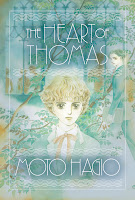
heartofthomasDespite that tragedy, I gaze fondly back at 2013, as the year that brought me new favorites like Knights of Sidonia and Sunny. When thinking about my final Pick this year, however, I guess I’ve little choice but to sound like a broken record, because for me, there can be no other than Moto Hagio’s The Heart of Thomas. When Michelle and I discussed this book back in January, I wrote:

“In case it isn’t obvious to anyone reading this, I loved this manga with my whole heart. And I’ll admit that’s not exactly what I expected. I expected to find it visually beautiful and worthy as a classic, but I also expected it to be very dated and I thought the story might not appeal to my tastes as a modern fan. Instead, I found it to be both beautiful and emotionally resonant to an extent I’ve rarely experienced—especially in BL manga. This is a book I’d wholeheartedly recommend to any comics fan, without reservation. It’s an absolute treasure.”

We were working from digital review copies at the time, and though I’d clearly fallen in love, it wasn’t until my own print copy finally shipped later that month that I realized just how much of a treasure this book truly is. It is glorious to behold. As the year passed, nothing else has come close.

gundamoriginSEAN: There was a lot of great manga released in 2013, even if you just stick with titles that began this year. My mind keeps drifting over to one title in particular, and that’s the deluxe hardcover release of Mobile Suit Gundam: The Origin from Vertical. Leaving aside the fact that it looks expensive and fantastic with lovely paper and color and everything, it’s a terrific story. Gundam wouldn’t be what it is today without that original story, and reading about the slow maturation (very slow at times) of Amuro Ray, the increasing leadership abilities of Bright Noah, and the political backstabbing of everyone on the Zeon side (but particularly Char Aznable) is as addicting as anything.

With 4 hardcover volumes out so far this year and more on the way, this has to be the Pick of the Year for me.

knights1MICHELLE: I am finding this profoundly difficult. I picked Taiyo Matsumoto’s Sunny for our gift-giving edition last week, so I obviously love it a great deal and think it’s something every manga fan should check out. But if we’re talking about the new-for-2013 manga that pushes my personal buttons the most, it would have to be Tsutomu Nihei’s Knights of Sidonia. Quite simply, I love everything about it, especially Nihei’s art and how the interior nooks and crannies of Sidonia are depicted. It’s also the most accessible of his works that I’ve read, with an endearing cast thrown into a desperate, seemingly impossible conflict.

I very much want to read more Sunny, but I’m kind of desperate to read more Knights of Sidonia, and so it gets the edge and becomes my official Pick of the Year.

seiichi-hayashi-gold-pollen-and-other-stories-3ASH: Oh, this really is difficult! I always have a hard time choosing bests or favorites, but I did recently manage to write about some of the manga from the last year that were particularly notable for me. As for my selection for Pick of the Year, I’m actually going to cheat a little and choose the publisher PictureBox. Sadly, PictureBox will not be releasing any new titles, but I was greatly impressed and intrigued by all of the manga it published in 2013.

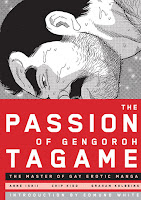
PictureBox was taking manga publishing in some very exciting directions. The releases were high-quality, too. I was especially interested in the two series helmed and edited by Ryan Holmberg: Ten-Cent Manga (which brought us The Last of the Mohicans by Shigeru Sugiura and The Mysterious Undergound Men by Osamu Tezuka) and Masters of Alternative Manga (which brought us Gold Pollen and Other Stories, an anthology of short manga by Seiichi Hayashi). Plus, PictureBox actually had the guts to release The Passion of Gengoroh Tagame: The Master of Gay Erotic Manga. So, while PictureBox may not be releasing any more manga, I’m very grateful for the risks it took in 2013.

helterskelter
ANNA: I’m relieved that Sean picked Gundam: The Origin because that gives me room to pick something else. And I’m happy that Ash decided to cheat a little, because I’m going to do that too!

My pick of the year isn’t a manga volume or series, but a genre. I want to highlight josei manga! Just when I was about to give up hope of seeing much more josei manga published in English, 2013 ended up being a great year for manga targeted at older female readers. Viz Media had the commercial but incredibly addictive Midnight Secretary and Happy Marriage, Vertical highlighted more challenging and edgy fare by translating works of Kyoko Okazaki, and Digital Manga Publishing released a ton of Harlequin manga on emanga.com. This makes me a very happy reader! I hope for more josei in 2014.

Readers, what manga made your year?

Filed Under: PICK OF THE WEEK Tagged With: Josei, knights of sidonia, mobile suit gundam, picture box, the heart of thomas

Random Musings: Notable in 2013

December 28, 2013 by Ash Brown

Despite having written at Experiments in Manga for over three years, I have never once attempted to create a “best of the year” list and I’m not about to start. However, I thought it would be interesting to write a post reflecting on what I have read in the past year. This isn’t a best of list. It’s not even necessarily a list of my favorite releases of the year (although, some of them certainly are). Instead, it’s a collection of manga, comics, and fiction from 2013 that, for one reason or another, were particularly notable for me.

The Heart of ThomasI’ll start out with Moto Hagio’s The Heart of Thomas. Fantagraphics released the entire series in a beautiful, hardcover omnibus. Technically, I think it was published at the end of 2012, but I wasn’t able to get my hands on one until 2013. I adore Hagio’s manga and wish more of it was available in English. The Heart of Thomas in particular is a historically significant work and one of the precursors to the boys’ love genre. Plus, it’s a wonderful work in its own right.

The Passion of Gengoroh TagameThe Passion of Gengoroh Tagame: The Master of Gay Erotic Manga probably couldn’t be more different from The Heart of Thomas, but I anticipated its release just as much. Tagame is an incredibly influential gay comics artist. The volume was not only the first collection of his work to be released in English, it was also the first collection of bara manga to be released in print. Happily, it won’t be the last. More of Tagame’s manga is already scheduled to be published.

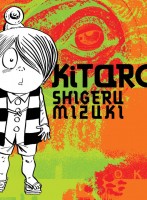
KitaroI have become increasingly interested in yokai over the last few years. And so I was thrilled when Drawn & Quarterly released Kitaro by Shigeru Mizuki. The volume collects stories from the first few volumes of Mizuki’s GeGeGe no Kitaro which is the yokai manga that started it all and which continues to influence creators to this day. I found Kitaro to be utterly delightful and can understand why it’s so well-loved. I hope more of the series will be translated.

Mobile Suit Gundam: The Origin, Volume 1I picked up Mobile Suit Gundam: The Origin for one reason–it was written and drawn by Yoshikazu Yasuhiko. I’m not at all a Gundam fan, but I am a fan of Yasuhiko’s work. Even so, I didn’t anticipate how much I would enjoy The Origin. The manga ended up being an extremely well done space opera. It doesn’t hurt that Vertical’s edition of the series is one of the highest quality manga releases available in English, either. I’m still not a Gundam fan, but I am a fan of The Origin.

UnicoAnother manga that I was pleasantly surprised by was Osamu Tezuka’s Unico. As much as I appreciate Tezuka’s work, I will admit to have grown a little tired of it. (I wish that other classic manga received the same amount of attention in English.) I approached Unico more as a curiosity than anything else; the full-color artwork and unusual page layouts had caught my attention. It turned out to be an endearing manga that is both heartbreaking and charming.

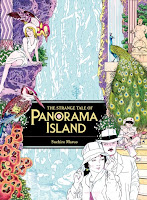
The Strange Tale of PanoramaAfter years of delay, Suehiro Maruo’s The Strange Tale of Panorama Island was finally released by Last Gasp in 2013. The manga is an adaptation of Edogawa Rampo’s novella Strange Tale of Panorama Island which, coincidentally, was also released in English in 2013. I cannot think of a more perfect artist to adapt Rampo’s work; Maruo’s exquisite, sensual, and erotically charged illustrations with hints of the macabre are an ideal fit. The Strange Tale of Panorama Island was worth the wait.

Wandering Son, Volume 4As for continuing series in 2013, Takako Shimura’s Wandering Son remains a manga that is incredibly important to me on a very personal level. I’m pretty sure that I’ve mentioned it before, but Wandering Son has quite literally been life-changing for me. In addition to that, I simply think it’s a wonderfully sensitive and sincere look at personal identity. Fantagraphics released both the fourth and fifth volumes of Wandering Son in 2013; I’m looking forward to reading more of the series great deal.

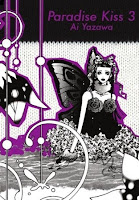
Paradise Kiss, Part 32013 also saw the release of Ai Yazawa’s Paradise Kiss, Part 3–the third and final volume in Vertical’s edition of the series. I missed out on the manga when it was originally licensed by Tokyopop and I’m very glad to have had the opportunity to read it. Over the last year, I have been extremely impressed by Yazawa’s work. I don’t have a particular interest in fashion, but the complex characters and complicated relationships in Paradise Kiss were extraordinary.

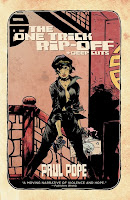
The One Trick Rip-Off + Deep CutsThe One Trick Rip-Off + Deep Cuts is a fantastic anthology which collects fifteen comics by Paul Pope, including those he created for Kodansha while in Japan. The volume makes a great introduction to Pope’s comics, exhibiting a nice range of styles and stories selected from nearly a decade of his work. The influence of manga can be seen in the collection, but Pope definitely has his own approach to comics. I’ve become very fond of his work and the quirkiness of his stories and characters.

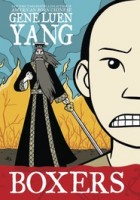
BoxersWritten and illustrated by Gene Luen Yang with colors by Lark Pien, the Boxers & Saints duology is honestly one of the best comics that I read in the past year. It’s a powerful retelling of the Boxer Rebellion–a violent uprising in China that began in the late 1800s–from two different sides of the conflict, neither of which were entirely in the right. Yang put a tremendous amount of research into the work, making it historically accurate while still maintaining a very human element to the story.

Self-Reference EngineI already knew that I enjoyed Toh EnJoe’s short stories and essays and so I was excited for the release of Self-Reference Engine, the first book-length work of his to be translated into English. It’s not quite a novel, and it’s not quite a collection of short stories, but whatever it is it’s good stuff. I expected Self-Reference Engine to be intellectually stimulating as well as entertaining, and it was, but I wasn’t prepared for how funny and mind-bending it would be.

Filed Under: FEATURES Tagged With: comics, manga, Novels

  • « Go to Previous Page
  • Page 1
  • Interim pages omitted …
  • Page 128
  • Page 129
  • Page 130
  • Page 131
  • Page 132
  • Interim pages omitted …
  • Page 140
  • Go to Next Page »
 | Log in
Copyright © 2010 Manga Bookshelf | Powered by WordPress & the Genesis Framework