• Skip to primary navigation
  • Skip to main content
  • Skip to primary sidebar
  • Home
  • About Us
    • Privacy Policy
    • Comment Policy
    • Disclosures & Disclaimers
  • Resources
    • Links, Essays & Articles
    • Fandomology!
    • CLAMP Directory
    • BlogRoll
  • Features & Columns
    • 3 Things Thursday
    • Adventures in the Key of Shoujo
    • Bit & Blips (game reviews)
    • BL BOOKRACK
    • Bookshelf Briefs
    • Bringing the Drama
    • Comic Conversion
    • Fanservice Friday
    • Going Digital
    • It Came From the Sinosphere
    • License This!
    • Magazine no Mori
    • My Week in Manga
    • OFF THE SHELF
    • Not By Manga Alone
    • PICK OF THE WEEK
    • Subtitles & Sensibility
    • Weekly Shonen Jump Recaps
  • Manga Moveable Feast
    • MMF Full Archive
    • Yun Kouga
    • CLAMP
    • Shojo Beat
    • Osamu Tezuka
    • Sailor Moon
    • Fruits Basket
    • Takehiko Inoue
    • Wild Adapter
    • One Piece
    • After School Nightmare
    • Karakuri Odette
    • Paradise Kiss
    • The Color Trilogy
    • To Terra…
    • Sexy Voice & Robo
  • Browse by Author
    • Sean Gaffney
    • Anna Neatrour
    • Michelle Smith
    • Katherine Dacey
    • MJ
    • Brigid Alverson
    • Travis Anderson
    • Phillip Anthony
    • Derek Bown
    • Jaci Dahlvang
    • Angela Eastman
    • Erica Friedman
    • Sara K.
    • Megan Purdy
    • Emily Snodgrass
    • Nancy Thistlethwaite
    • Eva Volin
    • David Welsh
  • MB Blogs
    • A Case Suitable For Treatment
    • Experiments in Manga
    • MangaBlog
    • The Manga Critic
    • Manga Report
    • Soliloquy in Blue
    • Manga Curmudgeon (archive)

Manga Bookshelf

Discussion, Resources, Roundtables, & Reviews

Archives for May 2016

Pick of the Week: Some Hail the King

May 9, 2016 by Michelle Smith, Sean Gaffney, Anna N, Ash Brown and MJ 1 Comment

requiem4SEAN: It’s a small week, but there’s a few items of interest here, definitely. That said, in terms of the title I’m most intrigued by, it has to be What Is Obscenity?, which I plan on picking up at TCAF, despite the inherent dangers of testing Canadian customs. And then probably reading it while listening to “The Power Of Pussy” by Bongwater.

ASH: An excellent choice, Sean! And, despite the most recent volumes in some of my favorite series like Requiem of the Rose King being released this week, What Is Obscenity? is my pick, too. I actually just reviewed the wonderfully remarkable, playful, and subversive comic memoir and highly recommend it.

MICHELLE: I will buck the trend and award my pick to volume ten of Fumi Yoshinaga’s always wonderful What Did You Eat Yesterday?. It’s been ten months since volume nine was released, but the wait is finally over! Happily, there’s only a six-month wait for volume eleven. Still long, but bearable.

ANNA: I’m most interested in the latest volume of Requiem of the Rose King. The combination of history and drama with Aya Kanno’s masterful art is hard to resist.

MJ: I’ve been incredibly torn this week, with a new volume of my beloved What Did You Eat Yesterday? and a number of other interesting prospects on the way. In the end, though, I guess I’m with Anna here. My personal obsession with Requiem of the Rose King in all its strangeness and beauty has me firmly in its thrall. There’s no other way for me this week.

Filed Under: PICK OF THE WEEK

My Week in Manga: May 2-May 8, 2016

May 9, 2016 by Ash Brown

My News and Reviews

Last week at Experiments in Manga I announced the winner of the superhero duo manga giveaway. As usual, the post also includes a list of manga, in this particular case a list of manga featuring superheros of one ilk or another. Last week I also posted my review of Rokudenashiko’s comic memoir What Is Obscenity?: The Story of a Good for Nothing Artist in Her Pussy which is a wonderfully engaging and important work. Rokudenashiko is one of the featured guests at the Toronto Comic Arts festival which is this upcoming weekend; I greatly admire her and her work, so I’m looking forward to having the opportunity to meet her in person.

Elsewhere online: Rokudenashiko was recently interviewed in preparation for her trip to Toronto. Massive Goods hints at an upcoming announcement regarding an English-language release of Gengoroh Tagame’s award-winning My Brother’s Husband, which I am super-excited about. And Ryan Holmberg wrote a about Katsumata Susumu’s Anti-Nuclear Manga for the Sainsbury Institute and, at the other end of the spectrum, about the Nuclear Literati: Nakashima Kiyoshi’s Furusato Goes to Hell for The Comics Journal.

Quick Takes

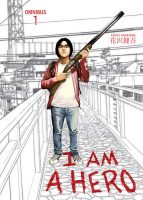
I Am a Hero, Omnibus 1I Am a Hero, Omnibus 1 (equivalent to Volumes 1-2) by Kengo Hanazawa. By this point I’m fairly burned-out when it comes to zombies, but I had heard so many good things about the award-winning I Am a Hero that I had to give it a try. And, I must admit, the manga is one of the most interesting and best examples of the genre that I’ve come across in quite some time. For me what makes I Am a Hero stand out is the lead character, Hideo. After making his debut as a professional mangaka, he’s back to being an assistant when his career failed to take off. He has the tendency to talk to himself, hear voices, and hallucinate, so everything that he experiences has to be questioned. The zombie apocalypse doesn’t really come until the second half of the first I Am a Hero omnibus. Until that happens, most of the hints and clues of the impending disaster can be easily dismissed as part of Hideo’s delusions. When the apocalypse finally does happen the series suddenly becomes horrifyingly brutal and grotesque as the world descends into chaos. Hideo remains surprisingly calm in the face of it all, partially because he initially assumes that the end of the world is just another one of his hallucinations. By the end of the first omnibus there’s already an extraordinarily high body count (most the named characters are done for and even Hideo isn’t completely unscathed), so I am very curious to see where the series goes from here.

Maga-Tsuki, Volume 1Maga-Tsuki, Volume 1 by Hoshino Taguchi. Apparently the initial inspiration behind Maga-Tsuki was originally going to be worked into a shōnen battle manga, but in the end it turned into a harem-ish romantic comedy. Personally, in this case I probably would have been more interested in the action-oriented series, but Maga-Tsuki does offer some variations on the usual tropes that are amusing. It is, however, very trope-heavy and contains the expected levels of fanservice for this type of story. When he accidentally breaks the sacred mirror protected by his family’s shrine, Yasuke finds himself cursed by the goddess sealed within it. In order to lift the curse he must make Orihime, a goddess of calamity and misfortune, happy, which proves to be something of a challenge. In the meantime, his soul has been separated from his body and he must maintain constant physical contact with Orihime or else he will die. A kiss from Orihime will conveniently revive him, though. This obviously results in all sorts of complications and misunderstandings, especially when it comes to trying to confess his feelings to the girl that he likes. I like that Maga-Tsuki makes use of Japanese mythology, otherwise I’m not sure that it would have managed to hold my attention. However, I do have a hard time seeing the sweetly cute and seemingly innocent Orihime as an ancient, all-knowing goddess even if her divine powers are suitably impressive.

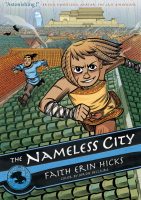
The Nameless CityThe Nameless City, Volume 1 by Faith Erin Hicks with colors by Jordie Bellaire. In general I tend to be fond of Hicks’ work, but I’ve been especially anticipating the debut of The Nameless City trilogy having followed its development and progress online. The titular Nameless City is a city that has been conquered and re-conquered countless times. Situated in a geographically advantageous location which allows the ruling kingdom immense control over the area’s economics and trade it makes a sought-after target. The city is currently under the domain of the Dao and has been for a few decades, but it’s likely only a matter of time before there’s another invasion or the residents rise up in revolt. Inspired in part by Chinese history, The Nameless City is about an unlikely friendship that develops over the backdrop of warfare, clashing cultures, and political intrigue. Kaidu is one of the Dao, sent to the Nameless City to participate in military education and training (though he’d much rather be reading than fighting), while Rat is one of the city’s many orphans whose parents were killed by the Dao. As Kaidu gets to know Rat he gets to know the city, and he learns more about his own people in the process, too. As for Rat, she initially hates Kaidu simply because he is Dao, but that slowly changes as she realizes that not all Dao are the same. I’m really enjoying seeing their relationship develop and look forward to the next volume, The Stone Heart, a great deal.

Filed Under: FEATURES, My Week in Manga Tagged With: comics, Faith Erin Hicks, Hoshino Taguchi, I Am a Hero, Kengo Hanazawa, Maga-tsuki, manga, Nameless City

Yowamushi Pedal, Vol. 2

May 8, 2016 by Sean Gaffney

By Wataru Watanabe. Released in Japan in two separate volumes by Akita Shoten, serialization ongoing in the magazine Weekly Shonen Champion. Released in North America by Yen Press.

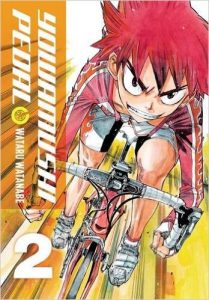
The last volume promised we’d see a race, but I don’t know if readers were prepared for the race to take up the entire omnibus, which is to say two volumes of the original Japanese release. Given that it’s meant to be an endurance test to weed out those who aren’t ready for the big time, it makes sense. And, of course, it ends up showing off the character development of our three leads – Onoda discovers the joy of competition, particularly when he gets a real bike; Naruko realizes that he is not in fact top dog here; and Imaizumi finds a desire to win that had been absent in him for some time. In other words, this still manages to embody all the archetypes of sports manga in one handy volume.

yowamushi2

Onoda is still the star, and we see him coming to terms with the fact that he can’t make it on pure guts alone – though god knows he tries, particularly when he gets his racing bike. There’s a lovely bit where he sees the car of team captains behind him (they’re there to pick up those too far behind and say they’ve lost) and despairs, but no, they’re here to give him his racing bike, which got stuck in traffic before the event. The team captains (and Kanzaki, who continues to boggle at Onoda’s raw potential, though this being a sports title, and an Akita Shoten one at that, I expect boggling is all she will do) also get to play Greek chorus along the way, explaining why *this* is the exact point that Onoda will finally run out of steam, only to be proven wrong time and time again.

Of course, he eventually does collapse – your male sports lead does not end up winning against the veterans in the early volumes. The course is designed to kill anyone who doesn’t plan on being a “cycling uber alles” sort, which means most of it is a giant hill. Onoda wins the race to the top of the hill, but that’s all he has in him. As for Imaizumi, there’s some lovely characterization here as he unconsciously finds himself riding as he did when he was a child (something noticed by Kanzaki, who was a childhood friend of his), and also overexerting himself despite knowing it’s not the right thing to do in order to efficiently win the race. Stoic types in manga are always at their most interesting when they go up against something that threatens their facade. It doesn’t necessarily have to make them emotional, but it’s good to see.

So now that Onoda has made a name for himself, to the point where even Kanzaki’s non-cycling BFF says that he seems to have more presence than before, what’s next? My guess is more cycling, and probably an intense training regimen. Are we too early for an inter-high meet? What does the author plan to do with the eccentric yet clearly intelligent and wily coach we’re introduced to? I definitely plan on finding out next time.

Filed Under: REVIEWS

What Is Obscenity?: The Story of a Good for Nothing Artist and Her Pussy

May 6, 2016 by Ash Brown

What Is Obscenity?Creator: Rokudenashiko
U.S. publisher: Koyama Press
ISBN: 9781927668313
Released: May 2016
Original release: 2015

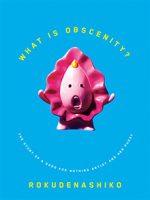
Like many other people both inside and outside of Japan, the work of artist and activist Rokudenashiko (the pseudonym of Megumi Igarashi) was brought to my attention following her arrests in 2014 on charges of obscenity. Rokudenashiko is a self-described manko (pussy) artist, challenging preconceived notions and taboos surrounding female genitalia by creating clever, fun, and silly sculptures incorporating realistic molds of vulvas as well as designing Manko-chan, a cute anthropomorphized pussy. One of Rokudenashiko’s responses to being arrested was to create the manga What Is Obscenity? about her experience. It was originally serialized in the Japanese political magazine Weekly Friday in 2014 before being collected in a single volume along with other material in 2015. The English-language edition of Rokudenashiko’s comic memoir, subtitled The Story of a Good for Nothing Artist and Her Pussy, was published by Koyama Press in 2016 thanks in part to the editing, translation, and production efforts of the fine folks behind Massive Goods.

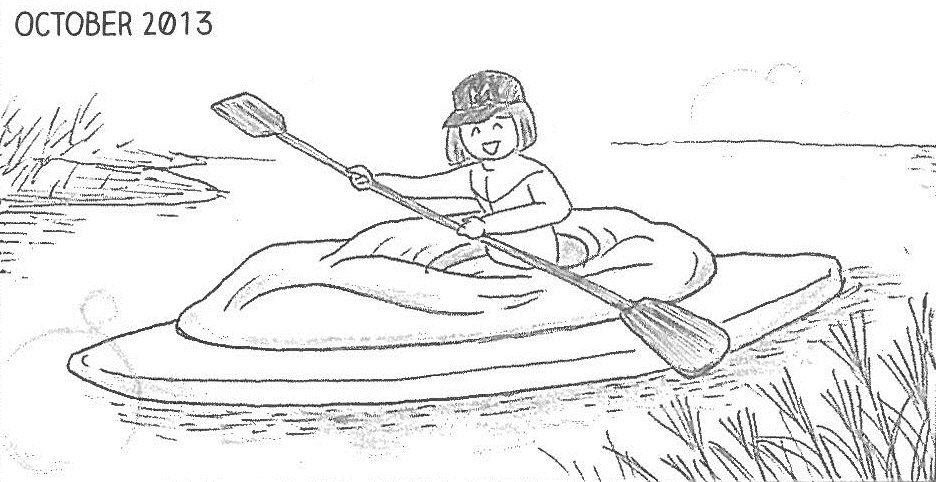
In 2013, Rokudenashiko successfully crowdfunded a project to create a kayak molded from a 3D scan of her genitals. One of the rewards given to some contributors of the campaign was a downloadable vector file of the scan which she encouraged others to use to make their own artwork. In July 2014, this file along with her artwork and other personal belongings were used as evidence to support the obscenity charges that were brought against her. Rokudenashiko was arrested and jailed for a week before being released only to be arrested and indicted again in December of that year. She continues to fight the charges in court and her trial process is currently ongoing, although a judgement on her case is scheduled to be pronounced on May 9, 2016.

What Is Obscenity? collects two short series of autobiographical manga—”What Is Obscenity? How I Became a So-Called Artist” about Rokudenashiko’s first arrest, her time spent in jail, and the immediate aftermath and “Why I Became a Manko Artist” which relates the story of how she almost unintentionally became an activist and started creating pussy-related artwork. Adorable illustrations of Manko-chan are found throughout the volume and “This Is My Story,” a short full-color manga about Manko-chan, is featured as well. The English-language edition of What Is Obscenity also includes additional material such as an introduction by Rokudenashiko, examples of her sculptures and artwork, color photography, cultural notes, and an excerpt of a discussion between Rokudenashiko and the controversial film direction Sion Sono.

What Is Obscenity?, page 11Freedom of expression, and especially freedom from governmental censorship, is something that I am very passionate about. One of my particular focuses in the various copyright and intellectual property law courses I took in graduate school actually happened to be obscenity law which, as in the case of Rokudenashiko, can be used to attempt to silence and punish artists and other creatives as criminals and which are notoriously inconsistent in their application. But Rokudenashiko isn’t allowing herself to be silenced. Her arrest and trial, as well as her willingness to publicly fight the obscenity charges, made not only national but international news. This has given her a larger platform that has allowed her to bring even greater attention to the absurdity of the systemic injustice of a society that objectifies the bodies of women while at the same time treating them as something shameful and obscene. I greatly and sincerely admire her work and efforts; what Rokudenashiko is doing is incredibly important both artistically and socially.

One of the things that makes Rokudenashiko so remarkable is that even in the face of infuriating and intimidating circumstances she is able to retain an outwardly upbeat, bright, and strikingly personable attitude which is then reflected in her work. Even while dealing with some fairly serious issues, What Is Obscenity? is sweet and charming with a wonderful sense of humor and art to match. As with much of Rokudenashiko’s work, What Is Obscenity? can be silly and fun, though many of the events portrayed were probably not nearly as funny while she was actually living through them. Her experiences, everything from the utter lows of personal and family troubles and the jail time caused by her artwork to the immense joy sparked by the unflagging support of her friends and fans, are recounted with a cheeky candidness that makes her story and the subject matter approachable and entertaining while still getting her message across. With its gentle humor and creative cuteness, What Is Obscenity? and the rest of Rokudenashiko’s work is subversively powerful, inspiring, and empowering.

Filed Under: REVIEWS Tagged With: Koyama Press, manga, Rokudenashiko

Manga the Week of 5/11

May 5, 2016 by Sean Gaffney, Ash Brown, Michelle Smith, MJ and Anna N 1 Comment

SEAN: Glory be! A small week at last! Write this week down in your diary, folks.

ASH: Astonishing!

MICHELLE: “Glory be” is gonna make me have “The Night Chicago Died” in my head all day! :)

SEAN: We start off with Kodansha’s 14th volume of The Seven Deadly Sins, which is at least seven too many sins. Are they just repeating sins now?

For those going to TCAF, you may be aware that Rokudenashiko will be appearing and discussing her genitalia-related art. A manga-style memoir discussing the whole thing, called What is Obscenity?: The Story of a Good For Nothing Artist and her Pussy, will be out next week from Koyama Press.

ASH: It’s a serious topic and an important manga, but it’s also strikingly funny and charming. Highly recommended.

guardians

SEAN: And Jiro Taniguchi fans will be delighted to hear about the hardcover Guardians of the Louvre coming out from NBM Publishing.

ASH: Looking forward to reading this! I enjoy Taniguchi’s work, and it’s a part of the series that brought us Hirohiko Araki’s Rohan at the Louvre as well.

MICHELLE: Ooh, I had no idea about this.

MJ: Oh… yes!

SEAN: SubLime has a 5th volume of Love Stage!!.

Vertical has somehow reached double digits with What Did You Eat Yesterday’s 10th volume. That’s a lot of food.

ASH: And a delectable series.

MICHELLE: Yay! I treasure each new release of this series.

MJ: I’m so excited! I always want more of this series.

SEAN: Ranma 1/2 has a 14th omnibus, as we get to see Hinako fall for Soun Tendo, every Ryouga/Ukyou fan’s favorite story (they won’t enjoy the manga version), and Ryu Kumon, possibly the most sympathetic antagonist in all of Ranma.

And Requiem of the Rose King has a 4th volume, as I begin to wonder how closely we’ll be sticking to Shakespeare’s timeline. Is Henry VI not long for this world?

ASH: I still adore this series. The atmosphere! The drama!

MICHELLE: I’m enjoying this one, too.

MJ: I’m head-over-heels for this series! Figures, the first small week in ages, and it’s the one with the most for me!

ANNA: I agree, this is one of my current favorites!

SEAN: Are you going for the arty manga, or the more traditional fare? Or both?

ASH: I’ll apparently be picking up a copy of almost everything being released this week…

Filed Under: FEATURES, manga the week of

Planetes, Vol. 2

May 5, 2016 by Sean Gaffney

By Makoto Yukimura. Released in Japan by Kodansha, serialized in the magazine Weekly Morning. Released in North America by Dark Horse Comics.

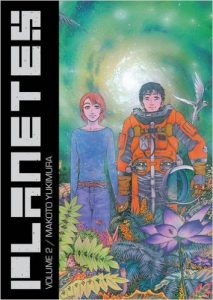
The 2nd omnibus volume of Planetes has as many powerful moments as the first, including possibly the most iconic marriage proposal in all of manga. But, just like its subject, one gets the feeling that the series has proven a bit too big for its author. The 2nd half of the series has a series of story arcs that feel like endings, but it keeps going on for a bit, and reminds me somewhat of a series that has been extended by its editors rather than its author. Of course, this offers us the opportunity for a magnificent arc focusing on fee, so I shouldn’t complain too much. But space has no ending, and neither does Planetes, which simply keeps rolling along till the very last page.

planetes2

Of course, Hachimaki is still the star, and after his vision quest he’s almost a different person, though it’s touch and go as to whether he’ll survive at all – not that he did himself any damage, but he seems to have lost the will do live his life, something that Sally has to bully out of him with a combination of yelling and nudity. Moreover, he needs someone like Tanabe, even if marrying means they immediately won’t see each other again for seven years. The aforementioned marriage proposal, done as a game of shiritori, is justifiably famous, but I think may be surpassed by two other scenes – Hachimaki comforting a sobbing Tanabe as she reveals she has no idea what she can possibly write in her will should she be killed in space, and Tanabe’s complete inability to explain why she loves Hachimaki or why she married him – except that she loves him a lot. Tanabe is still the heart of this series.

And then there’s Fee. (Sorry, Yuri, you are forever “the other one”.) Fee has always tried to avoid making the personal political, probably as it’d be so easy for her to do, as we find out here. But with the world superpowers waving their dicks around and blowing up so much stuff in space that an entire orbit is now forever lost, even one person finds it hard to make a difference. We contrast adult Fee’s attempts to balance a job, a family life, and a newfound, unwanted fake with Fee’s childhood, which she liked to spend with her uncle out in his shack in the woods. This allows Planetes to take on the quiet racism of the countryside, adding in a handful of prejudice against the mentally disabled as well. It’s handled with a surprisingly gentle touch, and also allows Fee to realize that she and her son are far more alike than she’d like, but also that she belongs in space.

There’s more I haven’t touched on – Locksmith continues to be a very ambiguous villain, and Hachi’s father gets a nice flashback chapter. But as I said, the manga does not end, but keeps flowing onward till the last page. Hachi’s message to the Earth from Jupiter reflects that, talking about the need to explore space, and how it needs to be done while not losing sight of humanity. It’s a subtle rebuke to Locksmith, and also a great, down-to-earth speech. Planetes remains one of the best space-oriented titles out there, and I’d recommend it to any reader.

Filed Under: REVIEWS

Manga Giveaway: Superhero Duo Winner

May 4, 2016 by Ash Brown

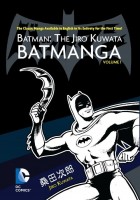
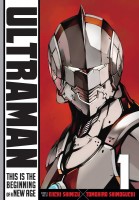
Batmanga, Volume 1Ultraman, Volume 1And the winner of the Superhero Duo manga giveaway is… Cody Kemp!

As the winner, Cody will be receiving a copy of Batmanga, Volume 1 by Jiro Kuwata as well as a copy of Ultraman, Volume 1 by Eiichi Shimizu and Tomohiro Shimoguchi, two superhero manga that were released relatively recently in English. I don’t really consider myself to be a huge fan of the superhero genre, but when I do finally get around to reading manga featuring superheros of one ilk or another, I generally do enjoy them. So, for this giveaway, I asked that participants tell me a little about some of their favorite superhero manga. For everyone’s detailed responses, be sure to check out the Superhero Duo giveaway comments. (The lesson learned from the responses? If you’re not already reading One-Punch Man, you should be!)

Some of the superhero manga available in English:
Apocalypse Zero by Takayuki Yamaguchi
Batmanga by Jiro Kuwata
Big Hero 6 by Haruki Ueno
Dead End by Shohei Manabe
Duklyon: Clamp School Defenders by CLAMP
Hero Heel by Makoto Tateno
Hero’s Are Extinct by Ryoji Hido
Heroman written by Stan Lee, illustrated by Tamon Ohta
Junk: Record of the Last Hero by Kia Asamiya
Lucifer and the Biscuit Hammer by Satoshi Mizukami
My Hero Academia by Kōhei Horikoshi
No. 5 by Taiyō Matsumoto
One-Punch Man written by One, illustrated by Yusuke Murata
Ratman by Sekihiko Inui
Tiger & Bunny by Mizuki Sakakibara
Tiger & Bunny: The Beginning by Tsutomu Ono
Tiger & Bunny: Comic Anthology edited by Asuka Henshubu
Tokyo ESP by Hajime Segawa
Ultimate Muscle: The Kinnikuman Legacy by Yudetamago
Ultraman by Eiichi Shimizu and Tomohiro Shimoguchi

Depending on your definition of “superhero,” the above list could be much longer (or much shorter, for that matter) but it’s probably not a bad place to start for someone interested in reading super-heroic manga. Thank you to everyone who participated in the giveaway and took the time to share your favorite superhero manga with me. Until next time!

Filed Under: Giveaways, UNSHELVED Tagged With: Batmanga, Eiichi Shimizu, Jiro Kuwata, manga, Tomohiro SHimoguchi, Ultraman

Emma, Vol. 4

May 3, 2016 by Sean Gaffney

By Kaoru Mori. Released in Japan in two separate volumes by Enterbrain, serialized in the magazine Comic Beam. Released in North America by Yen Press.

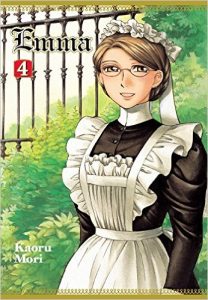
After the last omnibus proved to be quite depressing at times, it’s a relief to see that this new one contains a happy ending, of sorts. Given this is still an interclass relationship in Victorian England, of course, the definition of happy is a lot more repressed than you’d expect, but it works. I was somewhat relieved to see that Emma’s arranged abduction by Big Daddy Campbell was less ‘let’s have her murdered’ and more ‘let’s dump her far away from London and remind her she is merely a working-class girl’, something which Emma sadly takes to heart. Luckily, after a thorough search of all of England (the coincidences fly thick and fast in this volume, but I suspect Mori is well aware of how ridiculous it is – it feels Dickensian), William and Emma are reunited, he managed to break off his engagement to Eleanor (and also his family’s upward mobility, though hopefully that’s temporary), and Emma prepares to enter high society.

emma4

While things are mostly dramatic, there are moments of humor that serve to lighten the mood. Eleanor has been treated horribly by the narrative, and her emotional breakdown would be incredibly depressing were it not for the presence of Hakim’s identical triplet concubines doing their best “staaaaaaaaaaaaaaaaaaaare” at her. And the scene of Mrs. Jones, Mrs. Molders, and Emma trying to sort out the many and varied rules of etiquette, some of which contradict each other, is pure gold. That said, William and Emma’s romance is played with the utmost seriousness, and seeing her decked out in fine fashion at the end of the main story is breathtaking. Mori can draw, and it’s still one of the best reasons to get her works.

Emma proper ends here, but there were three volumes of side stories which were collected as well, and the first of these is the second half of this omnibus. We get to see a young Kelly Stownar and her long-dead husband when they were young just-barely-getting-by newlyweds, trying to save up to see the Great Exhibition, in a very sweet and touching chapter. Eleanor, having been exiled to Brighton as a disgrace by her evil father (presumably she is a disgrace for now being good enough to keep William Jones’ attention despite his being – ugh – a merchant), gets to meet a young student who turns out to have been William’s underclassman at school, and they bond, although I am pleased to see it doesn’t seem to be a rebound relationship – indeed, Eleanor seems to want to emulate him more than romance him. I also liked the chapter devoted to Tasha, the clumsy maid who befriended Emma, and her huge family that she goes home to visit.

Emma is always best when it evokes mood and shows us gorgeous things, and there’s a lot of that in this omnibus. And, of course, if you like William and Emma’s romance, you will be pleased as well. More side-stories follow in the final omnibus, including, I understand, an actual wedding, though it does take place several years after the main plot.

Filed Under: REVIEWS

Bookshelf Briefs 5/2/16

May 2, 2016 by Sean Gaffney and Michelle Smith Leave a Comment

dfrag8D-Frag!, Vol. 8 | By Tomoya Haruno | Seven Seas – I fear that this volume of D-Frag! is still on the island beach adventure, and it drags it out a bit too long, in my opinion. There are still some great gags—one of the all-girls’ school classmates being a clone of Oscar from Rose of Versailles led to some hilarious situations—but I am happy to be back at school in the end. As for the plot, we are reminded that this is still a group of kids who will compete in any competitive game, no matter how stupid or how embarrassing the consequences. (Well, except for poor Funabori, who’s simply an innocent bystander.) Even if they have to rewrite the rules as they go along, they will win. As for the supposed harem aspect, well, that’s mocked as much as everything else. Subpar, but still fun. – Sean Gaffney

sakamoto3Haven’t You Heard? I’m Sakamoto, Vol. 3 | By Nami Sano | Seven Seas – It was inevitable for someone who can draw people into his orbit as much as Sakamoto that he would invariably meet up against a real villain, and we’re introduced to one here: Fukase, a repeat offender who enjoys “erasing” popular kids from the school, and is now out to ruin Sakamoto as much as he can. Of course, Sakamoto is not defeated so easily, and that’s where most of the comedy comes in, as we see him taking on the typical athletic and cultural festivals and coming out on top. Fukase seems made of sterner stuff, though, and I suspect the fourth and final volume will amount to a big confrontation. Or maybe not; after all, this is a gag manga first and foremost. – Sean Gaffney

horimiya3Horimiya, Vol. 3 | By Hero and Daisuke Hagiwara | Yen Press – I genuinely anticipate and enjoy each new volume of this series. Miyamura and Hori are both incredibly likable, and I especially liked getting to see a different side of Miyamura in this installment, as he is reunited with a friend from middle school. Spending time with this crowd is lovely. But… I can’t help wanting the two leads to get together, already! I mean, they’re in that stage where they both kind of know that their feelings are mutual but they’re afraid to ruin their friendship and… argh! Why does it bother me when, say, Skip Beat!, still dragging things out for 30+ volumes, doesn’t? Perhaps it’s that their relationship is pretty much the sole focus of the thing. Maybe next volume they’ll either get together or find some career goals and I will be appeased. – Michelle Smith

sidonia15Knights of Sidonia, Vol. 15 | By Tsutomu Nihei | Vertical Comics – The final volume of Sidonia spends 3/4 of its time locked in a deadly final battle with the Gauna. Sacrifices are made, stuff blows up, and there is much shouting of orders and cool mecha things. As for our hero and surprise heroine, both try their hardest to sacrifice their lives for each other. But in the end, Nihei makes good on his promise that this was a bit less bleak and more hopeful than his other works, and we get what’s fairly close to a happy ending. I’ll admit I was somewhat confused at where we ended up, as the characters get even more genderfluid and speciesfluid than we’d seen before, but the ending—with Izana going to explore space, and Tanikaze staying behind to raise a family, is very sweet. -Sean Gaffney

Knights of Sidonia, Vol. 15 | By Tsutomu Nihei | Vertical, Inc. – I was pretty concerned when I learned Knights of Sidonia would end with the fifteenth volume. It just seemed like there wasn’t enough time to wrap things up in a satisfying way. However, I’m happy to report that, although it’s true some things feel rushed—man, would I have loved more time with the character who changes genders off-camera!—Nihei-sensei is able to impart sufficient epic scope to humanity’s final battle with the Gauna that I found the result downright cinematic. I especially appreciated that, because of what’s happened in the story up to this point, I didn’t feel as though a happy ending was guaranteed. I couldn’t recommend this series more highly. And if you’ve enjoyed it, don’t forget Vertical is releasing BLAME! starting in September! – Michelle Smith

loghorizon2Log Horizon: The West Wind Brigade, Vol. 2 | By Koyuki and Mamare Touno | Yen Press – There are still elements of a harem comedy to this, and the cover promises lots of T&A, but covers lie as always. What we get instead is a surprisingly dark examination of the emotions of those trapped in the game during the first book. This takes place in the middle of Shiroe and company’s trek to rescue Serara, and is adept at showing both the chaos that was going on in Akiba while they were away, and also the leadup to what’s going to happen with Hamelin in the second novel. As for Soujiro Seta, it’s not just his looks that keep the female guild members enamored of him—he can be quite scary when he wants to be, while also keeping an optimism that contrasts with the series’ new villain, Magus. – Sean Gaffney

pandora-urn4Pandora in the Crimson Shell: Ghost Urn, Vol. 4 | By Shirow Masamune and Rikudou Koushi | Seven Seas – I had assumed that the Kabapu cameo would be just that, but no, he’s got a much larger role in this new volume, even if he is now mysteriously a black man. Even more surprising is the appearance of Momochi, who is once again Kabapu’s capable secretary, but shows more emotion in two chapters than she did in 27 volumes of Excel Saga—perhaps working for a man like him has finally started to push her over the edge. So it’s not a must read for Excel Saga fans, but I think they’ll find it of more interest than the previous three. As for Vlind, she continues to have Excel’s personality and Elgala’s luck. If this sounds like I’m ignoring the rest of the manga, you are correct. – Sean Gaffney

yowamushi2Yowamushi Pedal, Vol. 2 | By Wataru Watanabe | Yen Press – Oh, sports manga. Why do you make me get all verklempt when the underdog surprises those who have underestimated him with a new technique? This second volume is comprised entirely of the first years’ welcome race, and it’s so fast-paced and addictive that I plowed through this chunky two-in-one omnibus in record time (which is fitting, I suppose). It’s too early for Onoda to win, of course, but he shows tremendous potential and impresses the older members of the bicycle racing club, whom it was great to get to know. I am extremely happy this series is 44 volumes and climbing in Japan, so I can continue to devour it for years to come. – Michelle Smith

Filed Under: Bookshelf Briefs

My Week in Manga: April 25-May 1, 2016

May 2, 2016 by Ash Brown

My News and Reviews

April has come to a close and May has begun, but there’s still a little time left to enter April’s manga giveaway for a chance to win a duo of superhero manga: Jiro Kuwata’s Batmanga, Volume 1 and Eiichi Shimizu and Tomohiro Shimoguchi’s Ultraman, Volume 1. In addition to the manga giveaway, I also snuck in my review of Setona Mizushiro’s After School Nightmare, Volume 9 last week. It’s a particularly dramatic volume in the series with some major twists and reveals. I’m very curious to see how Mizushiro will bring things to a close in the tenth and final volume. The review was part of my monthly horror manga review project, and I just barely got it written and posted before April ended. I’ve been super busy and stressed out lately, which makes writing even more difficult for me than it usually is. There are plenty of great and wonderful things going on right now in my life, but sadly the busyness and stress probably isn’t going anywhere anytime soon.

Quick Takes

Fairy Tail: Ice Trail, Volume 1Fairy Tail: Ice Trail, Volume 1 by Yuusuke Shirato. There have recently been several manga spin-offs of Hiro Mashima’s series Fairy Tail released, but Ice Trail is the first that I’ve read. (For that matter, I’ll have to admit that I’ve not actually read most of Fairy Tail proper.) What primarily interested me in Ice Trail is that it serves as an origin story for Gray Fullbuster, one of Fairy Tail‘s most popular characters (as well as one of my personal favorites). Gray is a badass ice mage with a tragic past and the propensity for walking around without a shirt. Ice Trail shows Gray’s childhood in the brief time between when his home village was destroyed and when he joined the Fairy Tail guild. Despite the cuteness of seeing Gray as a kid, Ice Trail is very reminiscent of Fairy Tail in both style and tone. Apparently the series is only two volumes long, which may partially explain why the manga moves along at a break-neck pace with one action-packed battle after another. Ice Trail can mostly stand on its own, but will likely be most appreciated by readers who are already familiar with Gray and with Fairy Tail as a whole—though not absolutely necessary, that additional context can be helpful.

Kiss Him, Not Me, Volume 2Kiss Him, Not Me!, Volume 2 by Junko. I do get a kick out of Kiss Him, Not Me! I was a little worried at first since the series’ plot essentially hinges on the heroine’s sudden and drastic weight loss to bring her to the romantic attention of four of the hottest guys at her school. However, the manga quickly moves on from that premise and I don’t think it was even referenced at all in the second volume. Instead, Kiss Him, Not Me! revels in its humor and the comedic situation of a fujoshi finding herself on the opposite side of her usual fantasies. Basically, Serinuma’s life has become an otome game in which numerous young men are vying for her favor. The second volume of Kiss Him, Not Me! primarily focuses on two events: the school festival, during which each of the guys has the opportunity to have a mini-date with Serinuma (with varying degrees of success), and the Winter Comiket, which they all attend together although Serinuma is by far the most enthusiastic about it. One of the things that I particularly appreciate about Kiss Him, Not Me! is that no one asks Serinuma to change who she is at heart—she still gets to be an otaku. The second volume also introduces a new character who greatly intrigues me.

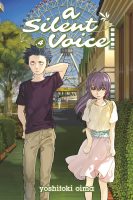
A Silent Voice, Volume 4A Silent Voice, Volumes 4-6 by Yoshitoki Oima. One of the manga to debut last year that I found to be particularly notable was Oima’s A Silent Voice and it continues to be a series that greatly impresses me. It’s not necessarily an especially happy read, though. The manga realistically portrays teenage angst compounded by issues of disability and bullying and explores the accompanying relationships which are extraordinarily messy and complicated. Emotional and physical violence takes its toll not only on the people who are being directly targeted, but also on the people who surround them. For better and for worse, the characters are all trying to deal with the repercussions of their past mistakes as best as they can, and even those who come across as antagonistic generally have their own problems they are working through. Just how deep a wound bullying can leave and how it can literally change a person’s life is more fully expressed in these volumes, and frankly it’s devastating. Thankfully, there are still moments of hope and redemption so A Silent Voice, while very serious and at times emotionally wrenching, never seems to become overwhelmingly bleak, but sometimes it does get close.

Filed Under: FEATURES, My Week in Manga Tagged With: Fairy Tail, Junko, Kiss Him Not Me, manga, Silent Voice, Yoshitoki Oima, Yuusuke Shirato

Pick of the Week: May Flowers

May 2, 2016 by Michelle Smith, Sean Gaffney, Anna N, Ash Brown and MJ Leave a Comment

blancnoirMICHELLE: Regrettably, I’m not too excited about anything coming out next week. However, I am planning to check out the debut volume of The Heiress and Chauffeur, so I reckon I’ll make that my official pick this week.

SEAN: No question about it, Oresama Teacher is what has me excited this week. Its combination of hilarity, delinquency, and brainwashing (yes, really) has been a must read the last few volumes. Go get it.

ANNA: I also pick The Heiress and Chauffeur. I’m always curious about new shoujo, and the historical setting for this manga sounds appealing.

ASH: It’s a little bit of a cheat for me since my copy arrived last week and I already know how gorgeous it is, but my pick this week is for Takeshi Obata’s artbook blanc et noir. I’ve always enjoyed Obata’s artwork, so having an entire book devoted to it great and Viz has done a fantastic job with it.

MJ: Yes, yes, yes, I gotta go with Ash this week! I own Obata’s gorgeous Hikaru no Go artbook, and I’m incredibly excited about this new one. It’s blanc et noir for me!

Filed Under: PICK OF THE WEEK

The Heiress and the Chauffeur, Vol 1

May 1, 2016 by Anna N

The Heiress and the Chauffeur, Volume 1 by Keiko Ishihara

It is interesting that there are a couple new two volume series (Shuriken and Pleats being the first) coming out from Shojo Beat now. I feel like publishes backed off super-short shoujo for a little bit in favor of mid-range 5 or 6 volume series. Heiress and the Chauffeur is a conventional shoujo series with attractive art that is livened up by a historical setting.

The heiress in question is Sayaka Yoshimura, who is the daughter of a wealthy family. Her chauffeur is Shinobu Narataki, and they were raised closely together as children, resulting in a friendship that is entirely unconventional for a mistress and her servant. Sayaka has to deal with the behavioral rules and rumors swirling at her all-girls school, while running a gauntlet of all her admiring classmates who enjoy staring at Shinobu while he patiently waits to pick her up. Sayaka has a bright, spunky personality and she isn’t afraid to stick up for Shinobu when his habit of barging in to rescue her gets them both in trouble with the school authorities.

heiresschauffeur1

I enjoyed the historical aspect of the manga, and seeing the life of an heiress in the Taisho era portrayed, because that’s a type of setting that I don’t usually see in shoujo manga. I was a bit worried that each chapter would be a replay of the dynamic where Sayaka gets in trouble, Shinobu rescues her, and they have to find their way out of the aftermath, but towards the end of the volume it is made clear that their odd friendship has given Sayaka the tools to stand up for herself independently. That being said, overall the manga was a little bit dull. The art is pretty, but not terribly distinctive, and while the premise and setting is interesting, there isn’t much to distinguish the main characters from any other shoujo series. This is Isihara’s first series though, and it certainly is well executed enough that I’m curious to see what she could do given a bit more space to develop a manga. I think younger teens would enjoy The Heiress and the Chauffeur in particular.

Filed Under: REVIEWS Tagged With: heiress and the chauffeur, shojo beat, shoujo, viz media

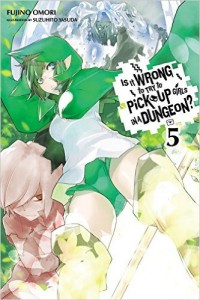
Is It Wrong To Try To Pick Up Girls In A Dungeon?, Vol. 5

May 1, 2016 by Sean Gaffney

By Fujino Omori and Suzuhito Yasuda. Released in Japan as “Dungeon ni Deai o Motomeru no wa Machigatte Iru Darou ka?” by Softbank Creative. Released in North America by Yen On.

Well, I suppose I asked for it. In the last few reviews of this series I kept mentioning how the mechanics of the series meant that Hestia, the supposed female lead, kept getting less screen time than everyone else. Now we have a book where she actually comes along on a dungeon crawl in order to rescue Bell, and it’s sadly fairly cliched. She can’t use godly powers in there, so she’s useless in the fighting. She spends much of the time post-rescue jealous of the fact that every girl in the entire series has fallen in love with Bell (though honestly, I think what Aiz is feeling is deep jealousy of Bell’s progress, but that doesn’t matter to Hestia), *and* she gets kidnapped and has to be rescued.

danmachi5

The others fare better. Bell too needs to be rescued, but that’s not really his fault, and he, Welf and Lilly show off their excellent teamwork here. (Lilly also shows a lot of jealousy, but she’s more cynical and sarcastic about it, and thus appeals more to Western readers.) Bell’s reputation is starting to precede him, and much of this volume is devoted to the fact that if you are an overpowered character in what is for all intents and purposes an RPG, you’re going to have players assuming you’re cheating, or getting help, or just plain old “who does he think he is?”. And so we see the return of some old bullies from Book 2, who decide to teach Bell a lesson – and by that I mean beat the crap out of him. The trouble is, Bell is just too good for that to work.

The big debut this volume is Hermes, who’s the standard trickster god type, also out to teach Bell a lesson: stop being so naive and realize that some humans are bad people. This lesson does not work, because Bell is Bell, and this isn’t Black Bullet. Hermes is amusing, and I love the fact that everyone just accepts that he’s something of an asshole – indeed, when we get the standard “whoops, Bell is peeking on the girls at the hot spring, lol” scene, literally everyone there knows this isn’t something Bell would do, and blame Hermes instead. I was ecstatic to see that. He also lets the cat out of the bag about Bell’s ancestry, but honestly I think everyone had guessed that by now anyway.

For those who enjoy battles, the one in the last third of the book is very epic, with a huge cast of characters all teaming up to take out a nightmarish monster. Lyu, one of the waitresses from our favorite pub, gets a tragic backstory and a serious chance to show off. In fact, I’d argue the series has more women kicking ass than men by a large margin – which is partly for the service, but it’s also simply nice to see. In the ‘odd’ department, we meet one of the Japanese gods and his all-Japanese human team, who do well but feel out of place in this land of Greek fantasy archetypes. On the whole, though, it’s another strong volume, though I hope Hestia can get over her jealousy soon. (Yes, I know.) Also, we’ve now caught up with the anime, so the next book should be new to viewers.

Filed Under: REVIEWS

  • « Go to Previous Page
  • Page 1
  • Page 2
  • Page 3
 | Log in
Copyright © 2010 Manga Bookshelf | Powered by WordPress & the Genesis Framework