• Skip to primary navigation
  • Skip to main content
  • Skip to primary sidebar
  • Home
  • About Us
    • Privacy Policy
    • Comment Policy
    • Disclosures & Disclaimers
  • Resources
    • Links, Essays & Articles
    • Fandomology!
    • CLAMP Directory
    • BlogRoll
  • Features & Columns
    • 3 Things Thursday
    • Adventures in the Key of Shoujo
    • Bit & Blips (game reviews)
    • BL BOOKRACK
    • Bookshelf Briefs
    • Bringing the Drama
    • Comic Conversion
    • Fanservice Friday
    • Going Digital
    • It Came From the Sinosphere
    • License This!
    • Magazine no Mori
    • My Week in Manga
    • OFF THE SHELF
    • Not By Manga Alone
    • PICK OF THE WEEK
    • Subtitles & Sensibility
    • Weekly Shonen Jump Recaps
  • Manga Moveable Feast
    • MMF Full Archive
    • Yun Kouga
    • CLAMP
    • Shojo Beat
    • Osamu Tezuka
    • Sailor Moon
    • Fruits Basket
    • Takehiko Inoue
    • Wild Adapter
    • One Piece
    • After School Nightmare
    • Karakuri Odette
    • Paradise Kiss
    • The Color Trilogy
    • To Terra…
    • Sexy Voice & Robo
  • Browse by Author
    • Sean Gaffney
    • Anna Neatrour
    • Michelle Smith
    • Katherine Dacey
    • MJ
    • Brigid Alverson
    • Travis Anderson
    • Phillip Anthony
    • Derek Bown
    • Jaci Dahlvang
    • Angela Eastman
    • Erica Friedman
    • Sara K.
    • Megan Purdy
    • Emily Snodgrass
    • Nancy Thistlethwaite
    • Eva Volin
    • David Welsh
  • MB Blogs
    • A Case Suitable For Treatment
    • Experiments in Manga
    • MangaBlog
    • The Manga Critic
    • Manga Report
    • Soliloquy in Blue
    • Manga Curmudgeon (archive)

Manga Bookshelf

Discussion, Resources, Roundtables, & Reviews

Archives for February 2016

Planetes, Vol. 1

February 18, 2016 by Ash Brown

Planetes, Omnibus 1Creator: Makoto Yukimura
U.S. publisher: Dark Horse
ISBN: 9781616559212
Released: December 2015
Original release: 2001-2003
Awards: Seiun Award

Makoto Yukimura’s Planetes, a realistic, near-future science fiction manga series about space exploration and development, was originally released in English by Tokyopop. It’s a great series, and one that I’ve made a point to hold onto over the years. I was very pleased to learn that the manga was going to be brought back into print by Dark Horse—this time in a larger trim size, with more of the color pages, and with artwork that has been better reproduced. Dark Horse’s edition of Planetes consists of two omnibus volumes and it’s production quality makes it well-worth the upgrade. The first omnibus, released in 2015, contains the first and second volumes of the original Japanese edition as well as a small part of the third volume, which were published between 2001 and 2003. In 2002, Planetes earned Yukimura a Seiun Award for best manga. Planetes was also adapted into an anime which happens to be one of my favorite and most frequently rewatched series.

The year is 2074. Humankind has established numerous bases on the moon and has sent multiple expeditions to Mars. The next major goal in space exploration is to successfully man a mission to Jupiter in the hopes of harnessing the planet’s resources to support the ever-increasing energy needs of the solar system’s human populations. However, with the continued development of space comes a significant problem—the creation of vast amounts of waste. Junked and outdated satellites, exhausted fuel cells, and other debris orbit the Earth, endangering the lives of anyone who would attempt to leave the atmosphere. Hachimaki is a debris hauler, one of the unsung heroes who makes space travel possible. Along with the rest of the crew of the Toy Box, a decades-old ship that’s falling apart itself, Hachimaki either retrieves the debris drifting in space or drops it into the atmosphere to burn. It’s important and demanding work, not to mention dangerous, but the thankless job rarely receives any recognition.
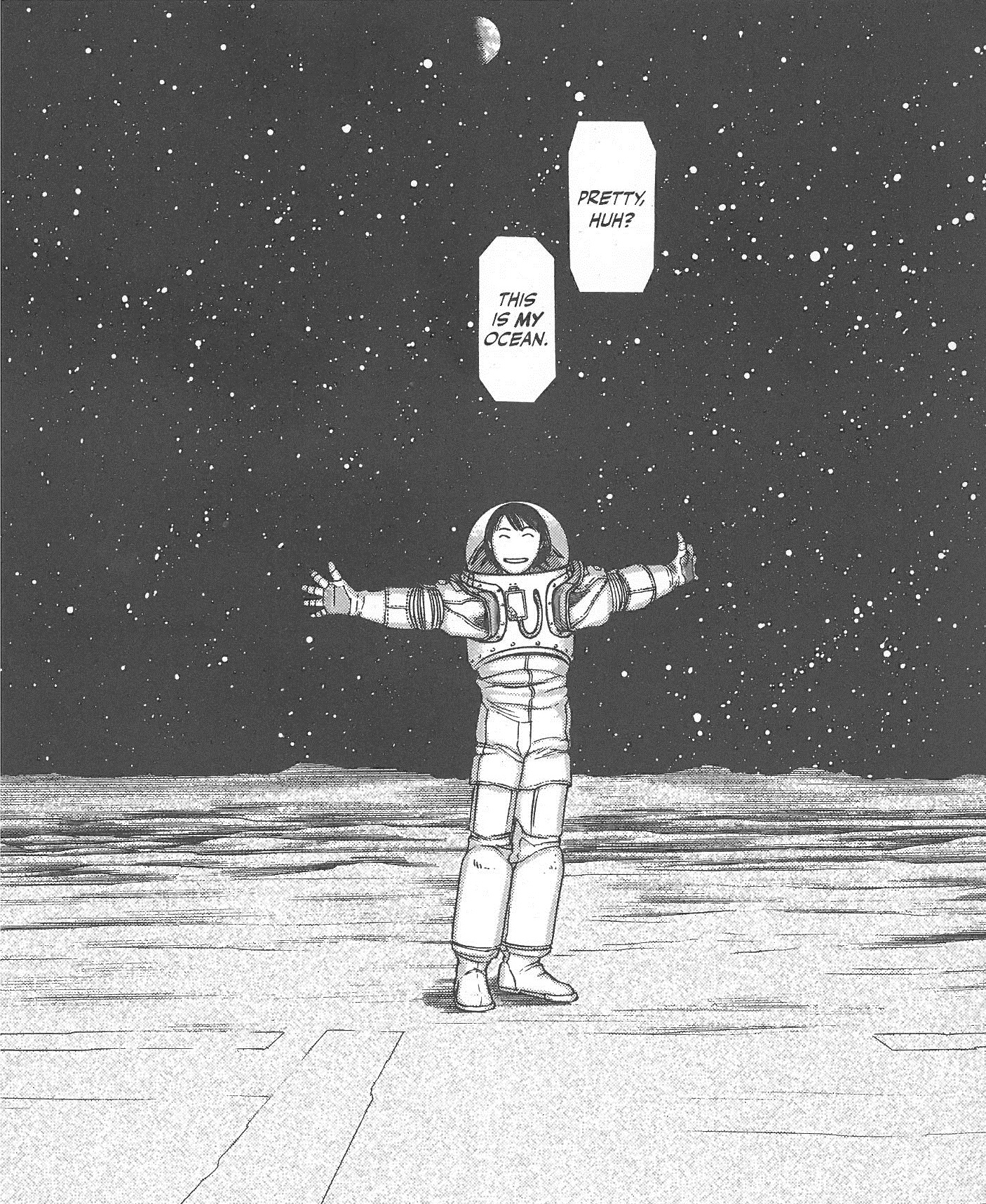
Planetes, Omnibus 1, page 93Planetes is a manga about many different things—scientific progress, socioeconomic tensions, geopolitical discourse, and so on—but more importantly it’s a series about many different kinds of people. It’s about the dreamers who are inspired and compelled to reach for the stars, the scientists and engineers who are focused on advancing technology above all else, the medical researchers who are developing treatments and cures for space-caused disorders, and the people for whom leaving Earth is simply a way of making a living. But it’s also about all of the loved ones the spacefarers leave behind, the families and friends who can do little but hope and wait for their safe return. While incorporating into the story all of the basic, mundane, and day-to-day requirements necessary for life in space, Planetes explores the complex human relationships that support and make that life possible.

Planetes spends a fair amount of time delving tin the psyches of its characters. This is most obvious with the manga’s treatment of Hachimaki, who goes through an extreme psychological crisis and transformation after a traumatic accident, but the other characters have their own struggles, too. Their evolving relationships with one another and their changing attitudes towards space are critical components of Planetes, lending an additional sense of realism to the series. Yukimura doesn’t just limit himself to the personal aspects of the characters’ lives in the series, he also addresses wider societal issues and concerns such as inequality, terrorism, and war. It takes a few chapters for Yukimura to fully settle into the tone and art style for the series, but from the very beginning Planetes is an excellent work of science fiction, balancing humor and pathos while maintaining a largely optimistic outlook on the future believably punctuated by some of the harsher realities of life.

Filed Under: REVIEWS Tagged With: Dark Horse, Makoto Yukimura, manga, Planetes, Seiun Award

Fate/Zero, Vol. 1

February 18, 2016 by Sean Gaffney

By Gen Urobuchi, Type-Moon, and Shinjiro. Released in Japan by Kadokawa Shoten, serialization ongoing in the magazine Young Ace. Released in North America by Dark Horse.

I find myself somewhat relieved that I am familiar with Fate/Stay Night, the original visual novel that this is a prequel to. Admittedly, it makes it hard to judge whether this work can stand on its own for someone who was unfamiliar with this world till they picked it up. My guess is that no, it would be hopelessly confusing, which is why I am relieved. This reads like a prequel everyone wants to see to the game/manga/anime they’ve already experienced, and so it delivers a lot of cool things, but the explanations are to a degree taken as read, or at least glossed over lightly in smug monologues. That said, it’s pretty good at delivering the cool things.

fatezero1

Fate/Stay Night’s manga was never finished here due to Tokyopop’s abandonment of their manga division, so I’m assuming most of the audience here is one that’s seen the various Fate anime versions. Including Fate/Zero, for that matter, which has also been an anime (which I haven’t seen) and which was originally a light novel (which I haven’t read, and isn’t licensed). This prequel takes place during the Fourth Grail War, and features the parents or relations of a great deal of the cast – Shirou’s adoptive father Kiritsugu, his wife Irisviel and their daughter Illya, Rin’s father (who is only briefly seen, and who Rin seems to have inherited her smugness from), and a young Kotomine Kirei, who has not yet been completely horrible but give him time. Thankfully, a few of the servants are the same ones we’ve seen before. Saber is still the King Arturia Saber we know and love, and Archer is Gilgamesh, as the original Fate had made clear.

It does shake up a few things, though. Kiritsugu and Emiya are meant to contrast, and they certainly do, with Kiritsugu’s adaptation of the “needs of the many” maxim meaning he tries to find the most happiness for others by killing those who get in its way – he realizes that you can’t simply save everyone, unlike Shirou later on. And Kotomine’s father seems to be pulling strings for the Church, which is as “unbiased” as ever. The most interesting part of the manga, however, is of the whiny, seemingly bullied Waver Velvet and his servant Rider. This Rider is not the Medusa we’re familiar with, though – it’s Alexander the Great, known here as Iskandar, and he is the main reason to get this volume, as he is awesome. You’d expect him to be contemptuous of his rather whiny master, and you’d be right, but he seems to be training Waver Velvet to be a better person instead of writing him off. They have a wonderful dynamic.

Saber doesn’t get as much to do here, though she does rock a fantastic bodyguard suit, and is as empathic as she was in the original. I like her conversations with Iris, who reveals she’s literally never left the castle where she lives until just now. I’m not sure how long Iris will last in this manga – Fate/Stay Night reminds us she’s dead, and even if it didn’t this prequel is written by Gen Urobuchi, who created Madoka Magica and Psycho Pass. But it has characters we wanted to see doing cool things, and the art is decent (the artist also does the Taboo Tattoo manga), and is definitely worth getting for fans of Fate.

Filed Under: REVIEWS

Hayate the Combat Butler, Vol, 27

February 16, 2016 by Sean Gaffney

By Kenjiro Hata. Released in Japan as “Hayate no Gotoku!” by Shogakukan, serialization ongoing in the magazine Shonen Sunday. Released in North America by Viz.

One of the stranger running plots we’ve had in Hayate the Combat Butler has been 13-year-old Nagi’s insistence on being a brilliant manga artist, an insistence that is counterbalanced by her actual manga, which is strange to the point of incoherence. This mas mostly been played for humor, focusing on Hayate and Maria’s attempts to not tsukkomi Nagi when reading her stuff, and pretend that it’s totally going to sell. Here, though, Nagi’s manga becomes the point of this next arc, as she runs into a genuine manga artist – mostly through the machinations of Ayumu – and discovers what a leap forward it would take for her work to achieve what a professional artist’s does.

hayate27

We briefly saw this artist several volumes ago, but now we get a name – Ashibashi-sensei – and we see what the life of a manga artist actually entails. This also includes an assistant, who turns out to be Azumamiya, one of the many minor characters who littered the early volumes and have now mostly been forgotten. He’s here to be annoyed that they’re doing this for Nagi at all. In any case, Ashibashi-sensei is clearly based on Hata’s former mentor Koji Kumeta, author of Sayonara Zetsubou-sensei. There’s not quite as much despair this time around, but we do get to see how totally exhausted a manga author can get, the dangers of procrastination, and most importantly, how Nagi’s work just isn’t cutting it.

Nagi can’t even bring herself to show it to him – she runs off devastated, having received actual criticism she’ll listen to for the first time ever, as opposed to people trying to be nice (Hayate, Maria), or people with the same warped worldview as she has (Isumi). This leads to a serious crisis of confidence, particularly since, when Nagi decides to simply concentrate on school work, she notices her grades are slipping as well (though she’s still in the Top 10). Nagi’s maturity, or lack thereof, has been a source of frustration for many of the Western fans of Hayate. Honestly, I suspect for those fans the solution is so eliminate her entirely – character development is not what they want. But it’s what they see here.

Luckily, Chiharu comes to the rescue, asking Nagi to help her sell doujinshi at a local event. This allows Hata to throw in a couple of chapters praising the idea of doujinshi (here clearly referring to original works, not the parodies and porn most people associate the word with), and allowing Nagi to get her groove back, mostly as she reads a dolphin-based manga that’s even screwier than hers is. I like the idea that “I can do better than THIS!” is a motivating factor. We also see what I believe is the author of that particular manga, though why she’s in disguise is something that is likely left for the next volume. Hayate the Combat Butler continues to be lots of fun, and it’s good to see Nagi finally growing.

Filed Under: REVIEWS

Bookshelf Briefs 2/15/16

February 15, 2016 by Michelle Smith, Sean Gaffney and Anna N Leave a Comment

It’s a seasonally appropriate bouquet of briefs!

akuma2Akuma no Riddle: Riddle Story of Devil, Vol. 2 | By Yun Kouga and Sunao Minakata | Seven Seas – Twelve female high-school assassins have gathered in a special class with the aim of killing their classmate and target, Ichinose Haru. In this volume, Azuma Tokaku decides to go against her assignment and publicly declares herself Haru’s guardian. Two classmates make their attempt on Haru’s life, and in the process we learn more about their backstories and the rules of the game itself. While volume two isn’t as tensely suspenseful as the first, it’s got enough mystery and yuri flair to appeal to me. What it reminds me of most is Bokurano, with the rotating spotlight between players in a game who might not know all the rules. The fact that Azuma’s change of allegiance was anticipated, for example, and lingering secrets about Haru’s true nature guarantee that I’ll be coming back for more. – Michelle Smith

crown2Crown of Thorns, Vol. 2 | By Yoko Kamio | VIZ Media (digital only) – Alas, I didn’t enjoy the second (and final) volume of Crown of Thorns as much as the first. It wasn’t bad—indeed, it’s a thoroughly pleasant read—but a few pages into the volume, I could see the path the plot would take to the finale and it played out almost exactly as expected, the only real deviation being some unexplained out-of-character behavior from the big bad. I figure all of this is due to the series’ brevity. I wanted more of prickly Nobara and Lucio, her “slightly virtuous demon,” before anyone developed romantic feelings or vowed to become a more caring person. I just can’t care as much if it happens suddenly. Still, I’m glad to have had the chance to read something else by Kamio. More would certainly be welcome. – Michelle Smith

horimiya2Horimiya, Vol. 2 | By Hero and Daisuke Hagiwara | Yen Press – While Horimiya may not have the most original storyline ever, it’s still proof that manga about nice people being nice doesn’t have to be boring! The plot isn’t fueled by misunderstandings—Hori could’ve frustratingly allowed the pretty student council member to make a move on Miyamura, but she clearly voiced her opposition—or love triangles. Instead, there are two kids with a strong bond of friendship inching slowly towards being something more, and it is honestly quite wonderful. We get to know Miyamura a bit better in this volume, too, including a glimpse at his lonely past that makes it difficult for him to accept the idea that Hori might have feelings for him. I’m looking forward to seeing what happens next and relieved that there are at least half a dozen volumes still to come. I am far from ready for this series to be anywhere near over. – Michelle Smith

maid5-6Maid-sama!, Vols. 5-6 | By Hiro Fujiwara | Viz Media – It really is astounding how much difference 5-6 years makes in your opinion of a manga. I reviewed Maid-sama! 6 back in the Tokyopop days for my blog, and mostly discussed Misaki and Usui, as well as the intro of the past childhood friend. “Boys spend a chapter trying to rape the girls” never really crossed my radar, but now it’s a blinding light. I continue to find Maid-sama! emotionally satisfying but intellectually jarring—Misaki’s admission of feeling useless, and Usui’s comforting of her, is sweet but my brain keeps saying “but.” And let’s not even get into the series’ undecided feelings about effeminate males. Maid-sama! demonstrates how fast something can become inappropriate in this modern world. – Sean Gaffney

qqsweeper2QQ Sweeper, Vol. 2 | By Kyousuke Motomi | Viz Media – Dengeki Daisy always had a good balance between its comedy and drama, but in Motomi’s new series, the drama clearly takes precedence. I’d said before how I was fairly certain that Fumi would turn out to be the Fuyu that Kyutaro keeps remembering, and sure enough, he’s now certain of it as well. What’s more surprising is how connected she seems to be to the background of all this mental bug cleaning—it’s suggested that her presence is what attracts the bugs to others. Our heroes are quick to assure her this isn’t her fault, but I suspect the lessons will take a bit longer to stick. In the meantime, as with Dengeki Daisy, I desperately want to read more to see what happens next. One of the most addictive new series. – Sean Gaffney

schooljudg1School Judgment, Vol. 1 | By Nobuaki Enoki and Takeshi Obata | VIZ Media – Like Library Wars, School Judgment asks its readers to believe that the Japanese government has passed some unlikely legislation. In this case, establishing a judicial system run by children. However, here it’s so over-the-top—especially the four-year-old judges who are so burdened by their task that they look middle-aged—that it’s easier to just go with it. The mystery cases themselves are not especially great, but I like the glimpses at defense genius Abaku Inugami’s past as well as the suggestion of a secret organization at large. And while some of the humor is not for me—I sigh heavily every time a shounen manga features a dog peeing on someone—there is a line at the end that made me laugh out loud, which was completely unexpected. At only three volumes, it won’t be too much of a time investment to see this one through to the end. – Michelle Smith

socute5So Cute It Hurts!!, Vol. 5 | By Go Ikeyamada | Viz Media – This manga continues to be the lightest and fluffiest of shoujo stories as the twins temporarily shift places yet again and Mitsuru decides to be unselfish in love, only to ensure that his own heart gets broken. These little plot twists that include some soulfulness ensure that the series isn’t totally insubstantial. There’s a time shift in the middle of the volume, as everyone starts a new year of school. Megumu is steadfast in her devotion to Aoi, and he’s determined to work on his female phobia so he can date his girlfriend without having to maintain 12 inches of distance between them at all times. This manga is still cute and funny five volumes in. – Anna N

Filed Under: Bookshelf Briefs

Pick of the Week: Diametrically Opposed

February 15, 2016 by Sean Gaffney, Michelle Smith, Ash Brown, MJ and Anna N 1 Comment

frankenfran1SEAN: No surprises that my pick of the week is Franken Fran from Seven Seas. I’ve already reviewed the omnibus here. It’s absolutely not for everybody (in particular, warning for those who hate bugs and roaches), and Fran can be… impossible to empathize with, but if you like horror and really back comedy, it’s one of the better titles out there.

MICHELLE: I suppose my pick of the week is still the second and final volume of Crown of Thorns, but now I’ve read it and didn’t enjoy it as much as the first. Oh, well. I hope this paves the way for more digital Yoko Kamio! Cat Street, please!

ASH: I’m with Sean, this week. By far the manga release I’m most interested in is the first Franken Fran omnibus. The word of mouth for this series has been huge in my circles, so I’m looking forward to reading it myself.

MJ: This is a pretty sparse week for me, but I admit I’ve been won over by my colleagues’ interest in Franken Fran. Count me in for some horror and black comedy! I’ll try to survive the bug aspect. *shudder*

ANNA: I haven’t read Crown of Thorns, so I haven’t been disappointed yet, and that appeals to me much more than Franken Fran, so that is my pick!

Filed Under: PICK OF THE WEEK

My Week in Manga: February 8-February 14, 2016

February 15, 2016 by Ash Brown

My News and Reviews

Life has gotten to be rather hectic again for me, though hopefully things should settle back down soon. In the meantime, I’ve returned to a reduced posting schedule for a little bit. Last week I only posted one in-depth review, but it was for the most recent installment in one of my favorite series currently being released—Aya Kanno’s Requiem of the Rose King. In this volume a tenuous peace has been established while the story moves away from the battlefield to delve into the dangerous political intrigue of the court.

Elsewhere online, The Organization of Anti-Social Geniuses (which has moved, by the way), posted a short interview with Casey Brienza, the author of the recently released Manga in America (which I hope to review in the not too distant future). The wonderful folks behind MASSIVE have launched a Kickstarter campaign to help fund The Queer Japan Project documentary, which should be phenomenal. In manga news, Kodansha Comics has announced that its release of the final volume of My Little Monster will include an additional sixty pages of content. Over the weekend, Vertical announced the addition of a few more titles: the Bakemonogatari novels by Nisioisin, the manga Immortal Hounds by Ryo Yasohachi, the master edition of Tsutomu Nihei’s manga Blame!, and (the one I’m most excited about) the josei horror manga Dissolving Classroom by Junji Ito. Not to be left out, Seven Seas snuck in a license announcement on Sunday as well—Nakatani Nio’s yuri manga Bloom Into You.

Quick Takes

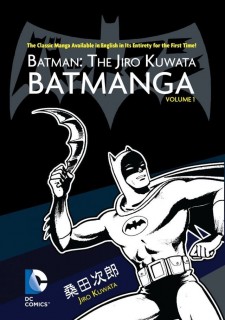
Batmanga, Volume 1Batmanga, Volume 1 by Jiro Kuwata. Back in the 1960s, Kuwata was commissioned to create a manga series featuring the iconic American masked vigilante Batman specifically tailored for a Japanese audience. This series was nearly forgotten in the United States but was rediscovered and introduced in translation relatively recently. DC Comics is now releasing the entire series in English. Although I do enjoy Batman and grew up with the franchise, I don’t really consider myself to be a huge fan or aficionado. But I was very interested in the publication history of Batmanga, and it’s not very often that an older manga is licensed. Kuwata’s Batmanga is understandably most reminiscent of the 1960s television series starring Adam West than any of Batman‘s more recent incarnations (the sixties apparently saw a Batman craze in Japan). The manga is a lot of fun with plenty of ridiculous action, camp, and wordplay. I believe that all the villains are unique to the manga, their origin stories often having something to do with devious scientific innovations or experiments gone awry.

False Memories, Volume 1False Memories, Volumes 1-2 by Isaku Natsume. A few of Natsume’s boys’ love manga have been released digitally, but I believe False Memories is only the second one to be released in print. It’s been a while since I’ve read any of Natsume’s manga, so I was surprised by how charming and touching False Memories ended up being. Nakano and Tsuda drifted apart soon after they slept together in high school. Ten years have passed since their graduation, but they suddenly find themselves assigned to work together on the same project by their respective companies. The misunderstandings surrounding their high school days continue to prove problematic, though. The two men will at least need to pretend to be friendly, but old feelings can be difficult to ignore. I enjoyed False Memories more than I expected I would, largely because I found the characters to be so likeable and relatable. Nakano’s insecurities are understandable, having unintentionally been hurt by Tsuda in the past. As for Tsuda, he’s a well-meaning goofball. The two of them do honestly care for each other, it just takes them a little while to figure that out.

Firefighter! Daigo of Fire Company M, Volume 1Firefighter! Daigo of Fire Company M, Volume 1 by Masahito Soda. I recently happened across the first volume of Firefighter! and so picked it up. It’s been out-of-print for some time now, but the entire series is now available digitally from Viz Media. When Daigo Asahina was a child, he almost died in a fire but was rescued by a heroic local firefighter. Ever since then, it has been his dream to become a firefighter himself. Fresh out of training he’s eager to prove himself, only the station that he’s been assigned to deals with very few major fires. While this would normally be considered to be a good thing, for Daigo it’s frustrating, especially when his rival at another company has already seen plenty of action. Despite the seemingly relaxed atmosphere of Company M, Firefighter! quickly ramps up the excitement. Only one volume in and Daigo’s had to rescue a cat, help prevent a potential gas explosion, fight multiple fires, and face the fact that he’s not nearly as well-prepared as he thought he was. The veterans of Company M know their stuff, though, and are very good at what they do.

Filed Under: FEATURES, My Week in Manga Tagged With: Batmanga, False Memories, Firefighter, Isaku Natsume, Jiro Kuwata, manga, Masahito Soda

One Piece, Vol. 77

February 14, 2016 by Sean Gaffney

By Eiichiro Oda. Released in Japan by Shueisha, serialization ongoing in the magazine Weekly Shonen Jump. Released in North America by Viz.

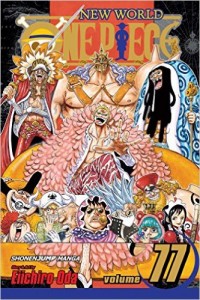
I’m still a big fan of One Piece, but there’s no getting around it: this arc has dragged, and it shows. The chaos that is Dressrosa is starting to be harder and harder to follow, and while that’s clearly meant to mirror what’s going on with the actual participants, it doesn’t make things any easier. Half the Straw Hat crew have been absent for several volumes now. Oda’s constant scene shifting means we barely get to remind ourselves who’s fighting who before we move on to another location. Rebecca continues to be a thing to be protected, with even Nico Robin getting into the mix, much to my chagrin. Worst of all, a lot of things here, particularly the backstory, are things that have been done before and better in earlier volumes. One Piece is 77 volumes now, and I’m afraid it’s starting to repeat itself.

onepiece77

A good example of this is the entire flashback with Corazon and young Law. It’s supposed to be heartwrenching, and there are moments where you are truly horrified by how cynical and awful people in this world can be (I’m thinking of the hospitals Corazon visits to try to cure Law), but it’s hard not to be reminded of other backstories we’ve had before. Other backstories we see to explain silly characters are either too tragic for the silliness (why Senor Pink wears a baby bonnet) or reinforce negative behavior (literally everything about Baby 5, which may be the nadir of this arc). Again, this is the sort of thing that you’ll only see in a long-running series like this, especially one where the ‘tragic backstory’ part of the arc comes regularly like clockwork.

Some stuff worked better. Robin, Cavendish, and Bartolomeo were probably the funniest part of the volume. Robin is a Straw Hat, therefore Oda has exempted her from any romantic issues such as Baby 5 has. She’s therefore able to simply sit back and stare balefully at these two morons trying either to impress her. Cavendish’s multiple personalities come somewhat out of nowhere, but they lead to some amusing situations and don’t feel quite as repetitive as some of the other things we see here. Luffy’s concern about Bellamy, who is pretty much ready to throw away his own life at this point. Characters rarely die in One Piece, so I doubt Bellamy will, but the fact that Luffy is worried shows how desperate the situation is. Oh yes, and Doflamingo remains a thoroughly evil little snake.

There’s a few other things I could mention, such as Oda’s hilariously awful attempts at writing a tsundere character. But for the most part, I really want this arc to be over and the crew to move on. I want to see Nami and Sanji and Chopper and Brook again. I want Luffy to defeat Doflamingo so that I don’t have to keep staring at his face all the time. Most of all, I want something new. Dressrosa is filled with the angry ghosts of One Piece plots of old, and they’re merely pale shrouds of what we know Oda can really do.

Filed Under: REVIEWS

Franken Fran, Vols. 1-2

February 12, 2016 by Sean Gaffney

By Katsuhisa Kigitsu. Released in Japan by Akita Shoten, serialized in the magazine Champion Red. Released in North America by Seven Seas.

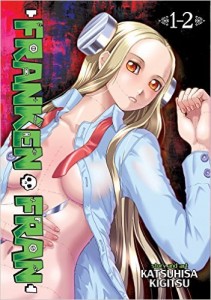
This has been one of the long-awaited licenses, and it’s easy to see why with this first omnibus. Franken Fran is terrific. That said, one or two caveats. I feel, once again, Seven Seas’ rating is lower than it really should be. Also, this is absolutely not for anyone easily creeped out by body horror. Not for nothing has it been nicknamed ‘Squick: The Manga’. If you don’t like insects, gore, horrific scientific human/animal hybrids… again, not a manga for you. But if you have enjoyed the Kurosagi Corpse Delivery Service, or yearn for a return to some of the weirder Black Jack stories, then Franken Fran is right up your alley.

frankenfran1

As the cover might demonstrate, there is some theoretically salacious nudity. I say theoretically because every time you see a naked breast in this series, it’s immediately offset by something horrible happening to its owner. The premise is that there is a mad scientist known throughout the world for his incredible medical skills and ability to save anyone even after death. This is not his story – he’s absent. But he’s left behind his daughter Fran, who seems to be more ‘built’ than ‘conceived’, and she too has amazing medical skills and can do anything. The stories in Franken Fran, much like Black Jack (which the series admits it’s indebted to), involve people coming to Fran asking for operations, her performing these, and the unforeseen consequences that arise.

Because make no mistake about it, there are consequences. Unlike Black Jack, or even Kurosagi Corpse Delivery Service, Fran has no real identifiable sense of morality beyond ‘life must be preserved at all costs’. Yes, even if it means that the person whose life has been saved is living on in agony as some kind of monstrous hybrid. They’re alive, so it’s OK, right? Fran also has a tendency to do things because she wants to see what will happen, which has led to a girl’s entire body being rebuilt so she can live as just a head, giving a man who is losing his sight eyes that can see ANYTHING, including other dimensional beings, and experimenting on cockroaches for the lulz, and then ending up taking their side after realizing she’s lost the war against them. Fran is usually impossible to understand.

She’s hilarious though. The reason that this series is so popular is not just the monstrous horror, but the combination of it with a truly black as pitch comedy. High school students get their every whim catered to by Fran (I want to be taller, I want bigger eyes, etc.) and the results are hysterical. A crime syndicate’s insane leader has to go up against his increasingly difficult to handle clones, and the chaos is glorious. And then there’s Kuho, the unfortunate detective who is misfortunate enough to be the only normal character in the series… or at last she is until Fran gets a hold of her. People suffer horribly in this book, and it’s funny. Trust me on this.

This omnibus gives us the first two Japanese volumes, ending with the introduction of Fran’s assassin sister Veronica, who looks to be psychotic and dangerous but turns out to be nothing next to Fran’s ‘hey, it’s for science’ mentality. In the meantime, if you enjoy any of the titles I mentioned above, or stuff like Dorohedoro, absolutely give Franken Fran a try. Don’t mind the salacious covers. This ran in Champion Red, which is only read by horrible people. They had to throw them a bone.

Filed Under: REVIEWS

Behind the Scenes!!, Vol. 1

February 12, 2016 by Anna N

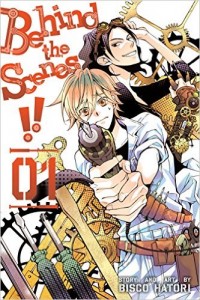
Behind the Scenes!!, Volume 1 by Bisco Hatori

I read several volumes of Ouran High School Host Club and the first couple volumes of Millenium Snow way back in the day, so I was looking forward to this new series. Behind the Scenes!! takes place in a film props and set department at an arts college.

Ranmaru Kurisu comes from a fishing village, where he has never fit in. His bad luck isn’t quite reaching Ataru Moroboshi, Ranmaru automatically assumes that everything is his fault and he seems to spend most of his time apologizing unnecessarily. One day, he accidentally finds himself on set during the filming of a zombie movie on campus, spoiling the shot. He gets a rapid-fire introduction to the Art Squad, a team of students who support all the film clubs on campus. Ryuji Goda is the leader, and he immediately tells Ranmaru to sit down and start folding paper cranes for movie props.

It turns out that Ranmaru is incredibly good at crafts, but he spends so much time putting himself down he isn’t very aware of his own abilities. One aspect of his character development that I thought was incredibly clever on Hatori’s part is that Ranmaru’s perspective allows him to both anticipate and recover from disasters when they happen, because he’s just constantly thinking of how things could go wrong. Ranmaru spots a crack in a skylight in the Art Club’s studio space, and when the window shattering results in a prop getting damaged, he’s able to forage for supplies and improvise some impressive fixes. Ryuji sees Ranmaru’s talent and proclaims him as the Art Clubs savior.

Stories featuring found families are always appealing to me. While in many ways Behind the Scenes!! is very different from Paradise Kiss, both series feature characters who were alone who get adopted by art students and end up being transformed by the power of art. Behind the Scenes!! has a large supporting cast aside from Ranmaru and Ryuji, and there wasn’t enough space in the first volume to go into depth about some of the characters, so a few of them only fixed in my mind as “girl who loves special effects horror manga” or “handsome bland dude who likes latte art”. I’m sure that the supporting characters will all get more stories as the manga develops, and I’m looking forward to finding out more. The dynamic between the art squad and the student directors is a bit antagonistic and seems to rely a bit on forced drama, but the dynamic of a team of people all with different talents coming together to create props and sets made this manga fun to read, even if it doesn’t yet approach the goofy ridiculousness of Ouran High School Host Club.

bth

Filed Under: REVIEWS Tagged With: behind the scenes!!, shojo beat, shoujo, viz media

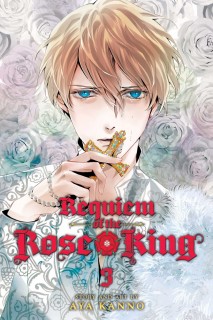
Requiem of the Rose King, Vol. 3

February 11, 2016 by Ash Brown

Requiem of the Rose King, Volume 3Creator: Aya Kanno
U.S. publisher: Viz Media
ISBN: 9781421582597
Released: January 2016
Original release: 2015

Aya Kanno’s manga series Requiem of the Rose King has quickly become one of the releases that I most look forward to from one volume to the next. I’m not particularly surprised by this, though—I’ve enjoyed many of Kanno’s past works, and she has proven to be quite versatile when it comes to genre and style. In the case of Requiem of the Rose King, Kanno has taken direct inspiration from the historical plays of William Shakespeare, more specifically the Wars of the Roses cycle consisting of Henry VI and Richard III. Even if Kanno hadn’t been involved with the manga, this would have been more than enough to catch my attention. But Kanno is involved and she brings her own touches to the story, giving it a dark fantasy-tinged atmosphere in addition to exploring gender and identity in an interesting and engaging way. With all of that and more, I have been completely taken with Requiem of the Rose King, and so was glad when the third volume of the series, originally released in Japan in 2015, was published in English by Viz Media in 2016.

The battle has been won and the House of York reigns victorious, but the struggle for the English crown continues; the war is far from being over. The deposed King Henry seems content to wander the countryside, the weight of rulership lifted from his shoulders, but the rest of the Lancasters are plotting to return their family to power and reclaim the throne. The hold that the newly established King Edward has on the England is in more peril than he realizes. In addition to the threat that the Lancasters pose, there are others among the nobility who are againt the House of York’s usurption of the throne. The widowed Elizabeth Woodville is prepared to take advantage of Edward’s womanizing ways in order to bring about his and his family’s downfall; besotted with Elizabeth, he puts his own desires before the security of the kingdom, risking the loss of the support of France. His younger brother Richard is one of the few people to recognize the danger, but Richard isn’t yet in a position to avert the potentially calamitous outcome.

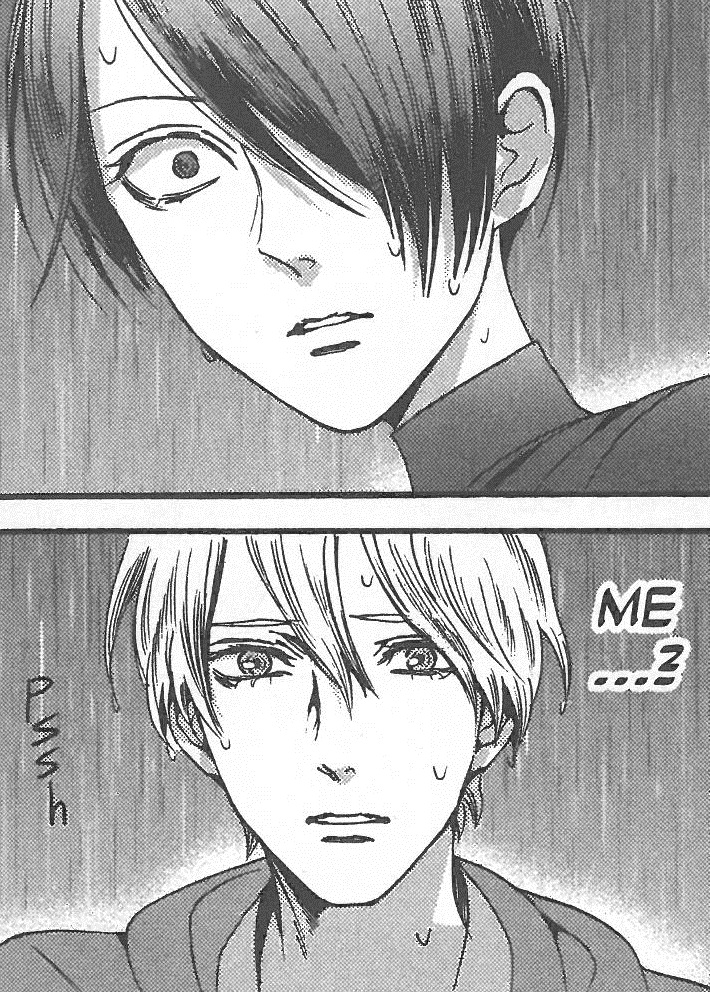
Requiem of the Rose King, Volume 3, page 68I continue to be fascinated by Kanno’s interpretation of Richard, a young man who has been irrevocably harmed by the the rejection and hatred of his mother who sees him and his body as imperfect and demonic. He has a difficult time connecting with people because of the anxiety surrounding his self-identity, an issue made even worse by the recent death of his father on the battlefield. Henry is a perfect foil for Richard and is in many ways his opposite, which throws Richard’s perception of himself and of the world into confusion. Richard has resigned himself to loneliness and darkness, even while Henry seeks his company. The two men spend a fair amount of time together in Requiem of the Rose King, Volume 3, neither of them knowing who the other truly is and that their families are enemies. Much as Edward and Elizabeth’s relationship may doom the kingdom, Richard and Henry’s awkward friendship can only result in tragedy with far-reaching consequences.

Personal strife is mixed with political turmoil in Requiem of the Rose King, each feeding into the other as events unfold. With multiple people expressing interest in obtaining the crown, whether in jest or in all seriousness, the social structures and relationships among the English nobility have become extraordinarily precarious during a time of tenuous peace. This underlying chaos is also reflected in how Kanno approaches the story of Requiem of the Rose King. Many times several scenes overlap with one another, tied together thematically rather than chronologically. Pasts, presents, and possible futures all intertwine and are simultaneous revealed. This can be somewhat disconcerting at first and at times challenging to follow, but I do like the overall effect and drama that it brings to the series, emphasizing the individual characters’ experiences as memories, reality, and visions merge together. Requiem of the Rose King has an almost dreamlike quality to it and I find that I fall more deeply under its thrall with each passing volume.

Filed Under: REVIEWS Tagged With: Aya Kanno, manga, requiem of the rose king, viz media

Manga the Week of 2/17

February 11, 2016 by Sean Gaffney, Ash Brown, MJ, Michelle Smith and Anna N Leave a Comment

SEAN: There’s one title I’m really excited about next week, but there are several other books of interest. Let’s go through them, starting, as ever, with Dark Horse. (If a manga company started beginning with A-C, they’d clean up.)

fatezero1

Fate/Zero is a prequel to the insanely popular visual novel franchise Fate/Stay Night, taking place 20 years prior. It still has Saber (Arturia version) in it, though, no worries.

If you missed it the first time, there’s a 3rd Kurosagi Corpse Delivery Service omnibus, with Vol. 7-9.

ASH: Still a great series; glad that Dark Horse found a way to keep it in print!

SEAN: Vampire Hunter D has reached its 23rd novel. I think Dark Horse put out the first one in 1922 or something like that.

ASH: Ha! Indeed, something like that.

SEAN: One Peace has a 3rd volume of the light novel Rise of the Shield Hero.

Seven Seas gives a 9th Dragonar Academy, which continues to attempt to titillate its core audience, and while I am not remotely that, I hear it does a good job.

It may surprise some to see me getting so excited about a “monster girl” series, particularly given my ambivalent attitude towards their recent popularity. But Franken Fran is not just any monster girl series . Fans have been waiting for its blend of grotesque horror and pitch-black humor to be licensed for years, and Seven Seas now obliges us with 4 big omnibuses, of which this is the first. Get this, folks (well, over-18 folks).

MJ: Well, you’ve sold me! :D

ASH: This is the series I’m most intensely curious about this week.

SEAN: I missed another one last week: there’s a 2nd digital-only volume of Crown of Thorns, by the Hana Yori Dango author.

MICHELLE: I’m not sure Franken Fran is for me, but I’m definitely excited about more Crown of Thorns!

ANNA: ACK! I forgot to get the first volume of Crown of Thorns! Oh well, it is an excellent excuse to binge-read!

SEAN: Tokyo Ghoul’s 5th volume, out next week via Viz, will sell more copies than all the other titles in this list combined.

ASH: I’ve fallen behind on the series, but I’m happy to see it doing so well for Viz.

SEAN: And there’s a 3rd Ultraman, also from Viz, which I really should know more about than I do.

Go get Franken Fran. What else will you get?

Filed Under: FEATURES, manga the week of

School Judgment, Vol. 1

February 10, 2016 by Sean Gaffney

By Nobuaki Enoko and Takeshi Obata. Released in Japan as “Gakkyu Hotei” by Shueisha, serialized in the magazine Weekly Shonen Jump. Released in North America by Viz Media.

It can sometimes be difficult, particularly for a Western audience, to remember that Weekly Shonen Jump’s demographic remains young boys in Japan, with the ideal age between 8 and 13 years old. They know the reality of writing for children, which is kids want to read about other kids a few years older than they are, which is why the less fantasy-oriented Jump series feature a bunch of middle and high schoolers. (Speaking of which, when did Bleach last attend high school anyway?) But sometimes there is a series which does give us elementary schoolers, and we have that in School Judgment. There’s a catch, though – some of the students are lawyers, and what follows is, if not exactly a ipoff of the Ace Attorney franchise, at least highly influenced by it.

school1

It becomes fairly clear a few pages into this series that you really have to leave your suspension of disbelief at the door. While true for most Jump series, the combination of 12-year-old lawyers, some of whom are also ex-convicts, and 4-year-old baby judges may make a few people at least raise an eyebrow. But it fits with the manga’s overall mood, which is over the top, a bit loud, and somehow both painfully earnest and deeply cynical at the same time. The main reason that it succeeds is the hero, Abaku, is *not* your standard Jump hero. In fact, he’s more like the cynical, grinning mentor who’s gradually won over by the shiny idealism of the normal hero. No idealism here – Abaku is obnoxious, superior, selfish, and acts refreshingly like a 12-year-old at times.

The cases we see and characters we meet are fairly standard shonen fare – the boy with the pudding bowl haircut is disliked by everyone, who knew? There’s scholastic rivalry, nascent crushes, and intense drama over whether or not to eat the classroom’s pet fish. In the midst of all this, we start to get a bit of a larger ongoing plot – Abaku clearly has a past, and may have at one point been imprisoned in Japan’s maximum security elementary school prison island. (I’m not making this up, you know.) He’s in that classroom for a reason. I was less impressed with the prosecuting attorney, Pine, who seems to be the standard “I pretend to be sweet but am secretly angry all the time” girl, destined to always lose to our heroes. I hope she gains depth in the next volume.

This is not terrific by any means – the mysteries are rather perfunctory, and I’m not sure I agree with using the Japanese word “ronpa” throughout instead of just translating it as “cross-examination” or somesuch. And the baby judges are a hideously stupid idea. Despite Obata’s usual excellent art, this reads like the work of a Jump newbie, and it will not surprise anyone to hear it only has 2 volumes to go. But it held my attention, and is ridiculous in a way that makes you smile wryly, rather than just want to put the book down. Worth a look.

Filed Under: REVIEWS

Pick of the Week: Some Shonen Sunday

February 9, 2016 by Michelle Smith, Sean Gaffney, Ash Brown and Anna N Leave a Comment

magi16MICHELLE: As predicted, my pick of the week is super easy this time. Magi all the way!

SEAN: I love Magi to bits, but it’s time for my twice-yearly pick of Hayate the Combat Butler, still my go-to manga for silly humor and unresolvable harems.

ASH: The manga release that I’m probably the most interested in this week is Giganto Maxia. As a fan or Berserk I feel like I should give it a try, even if some of Miura’s other works haven’t really done much for me.

ANNA: Magi for me too! Magi forever!

Filed Under: PICK OF THE WEEK

Bookshelf Briefs 2/8/16

February 8, 2016 by Sean Gaffney and Michelle Smith Leave a Comment

Sean and Michelle review a sizable pile of new releases from a sizable percentage of manga publishers.

assclass8Assassination Classroom, Vol. 8 | By Yusei Matsui | Viz Media – Viz may never have licensed Supernatural Detective Neuro, Matsui’s prior series, but at least we can get an in-joke about it here. As for this volume itself, it’s very good at showing that our class is learning well, but still can make mistakes and grow from them. We see the specialty of various kids who hadn’t gotten the spotlight before, and Karma makes a nice comeback after being brought down during the exams. As always, though, it ends up being Nagisa who drives things forward—both on the humorous side, as he has to cross-dress apparently for nothing but the class’ amusement, to the serious side, as he faces off against a nasty and insane foe with murder in mind. Really fantastic. – Sean Gaffney

behind1Behind the Scenes!!, Vol. 1 | By Bisco Hatori | VIZ Media – Oh, how I wanted to love this. As someone who once concluded a review of the first volume of Ouran High School Host Club with the words “could not possibly be more highly recommended,” it is with a heavy heart that I confess that I found Behind the Scenes!! profoundly underwhelming. Ranmaru Kurisu is a somewhat spazzy protagonist who spends a lot of time in freak-out mode, and though he does occasionally save the day for the special effects crew he joins, the plots are all pretty lame. It doesn’t help that the leader of the group is constantly urging Ranmaru to “evolve,” either. However, as disappointing and unfunny as this first volume was, I find I just can’t give up yet. Hatori loyalty compares me to stick with it ‘til all hope is gone. – Michelle Smith

food10Food Wars!: Shokugeki no Soma, Vol. 10 | By Yuto Tsukuda and Shun Saeki | Viz Media – A lot of battle manga, which Food Wars! definitely is, end up having some sort of ethical battle between someone who is fighting and winning for the right reasons (our hero), and one fighting for the wrong ones (this volume’s villain, Mimisaka). It’s a great plot for your typical “young boy” manga, as it shows off a lot of negative traits and then shows why they’re bad. Mimisaka enjoys enraging and then humiliating his opponents, as well as taking their most prized possessions. He also tends to imitate his opponents. I suspect he’ll have more trouble with Yukimura than any other. In the meantime, it’s Western-style cooking next time around, and I expect we’ll see a lesson being learned. – Sean Gaffney

shoreA Girl on the Shore | By Inio Asano | Vertical Comics – The back cover blurb describes this short series as “challenging,” and boy, is that apt. Initially, I thought that adjective mostly referred to the way Koume Sato, cruelly used by the boy she likes, initiates a sexual arrangement with Keisuke Isobe, who has liked her for years, while repeatedly belittling him and rejecting his desire for a real relationship. What ensues between them is explicit and a bit twisted, and by the time Sato is ready to admit that she does genuinely like Isobe, it’s a case of too little, too late. But really, it’s the way things end—and the struggle to decide if it’s hopeful or terribly bleak—that I found most difficult to accept. I can’t go into more detail without spoilers, but I have many feels! I definitely recommend the series, especially for the stellar sense of place Asano evokes, but be warned… it really is challenging! – Michelle Smith

kamisama20Kamisama Kiss, Vol. 20 | By Julietta Suzuki | Viz Media – So our main couple have admitted their feelings, and a time-travel trip to the past has resolved any other women who may have been troublesome. Now, of course, we need to add more complications to the mix, and it’s a rather obvious one—Nanami may be the local shrine god, but she’s still a human, and a life with Tomoe is going to feel like no time at all for him, and end in inevitable tragedy. He’s aware of this as well, of course, and seemingly far more concerned about it, which leads to him making a rare stupid mistake. Of course, this also ties into the main plot, which still chugs along—Akura-Oh is around in the modern world, and is not going to simply sit around and let Tomoe and Nanami happily ever after. Always fun. – Sean Gaffney

mlm12My Little Monster, Vol. 12 | By Robico | Kodansha Comics – There is a 13th volume of My Little Monster, but my guess is it’s filled with side stories, as things wrap up here for our lead couple and their beta couple friends. Given that it’s a final volume, I don’t want to spoil too much, but suffice to say that there are a lot of heartwarming and satisfying scenes here, and there’s a nice flash forward to about 3-4 years later that gives us a Shizuku who looks amazing. I also freely admit that Natsume is my favorite character in the series, and she gets a lot to do as well, including a great sultry look that makes Sasayan’s eyes bug out. I started off not sure if I’d like this, mostly as Haru was simply out of control. Seeing him develop has been an experience, and one worth the read. – Sean Gaffney

orangeorange: The Complete Collection, Vol. 1 | By Ichigo Takano | Seven Seas – I have read and truly enjoyed a LOT of manga, but that “I’m so glad this series is part of my life” feeling that I got with orange is rare indeed. Simply put, this is a story about a timid heroine who must change herself—following instructions somehow sent to her by her future self—to change the future and prevent a beloved classmate from committing suicide. Such a setup could easily play out as cheesy, but the execution is anything but, and neither does the “you need to show people that you care” message ever turn preachy. Instead, there’s just great characters and supportive friends (including another pair for the “heroine’s awesome protective friends” list) trying to do their best to pull someone through a difficult time. It’s only February, but I just might have found my top contender for the Best of 2016! – Michelle Smith

silent5A Silent Voice, Vol. 5 | By Yoshitoki Oima | Kodansha Comics – Desperately trying to pretend that absolutely nothing is wrong while suffering inside is, unfortunately, something I think most of us have experience seeing. We get it throughout this volume, mostly from Shoya, who’s forced to return to the elementary school where this all began and admit to his new high school friends what he did then. And of course there’s Shoko, who my guess is has never stopped believing that everything that happened isn’t her fault in some way, and she finally breaks after we see all their newfound friends fighting and separated. Given there are two volumes to go after this, I assume the cliffhanger will be resolved in some way, but believe it or not, things should get worse before they get better. – Sean Gaffney

yamada6Yamada-kun and the Seven Witches, Vol. 6 | By Miki Yoshikawa| Kodansha Comics – There’s a lot of stuff happening here, but it’s variations on what we’ve seen before. We find out that the ‘manipulated’ minions are not as manipulated as we’d expect, and we find out that the witch behind it all is really not all that evil, just a high schooler with high school problems, which can be solved by Yamada-kun and his blunt but honest ways. It’s actually pretty sweet in a number of places, and there’s several funny scenes, including the bonus chapter where Yamada (in Urara’s body) has to stay over at Itou’s apartment. But in terms of plot or characterization of our regulars, it’s more of the same. I hope the next volume moves things forward a bit. – Sean Gaffney

Filed Under: Bookshelf Briefs

The Manga Revue: Behind the Scenes!!

February 8, 2016 by Katherine Dacey

It’s a snowy day here in Boston, giving me the perfect excuse to tunnel under a blanket and read a goofy, light-hearted story. My escapism of choice: Bisco Hatori’s latest series, Ouran University Host Club Behind the Scenes!!

BehindTheScenes-01Behind the Scenes!!, Vol. 1
By Bisco Hatori
Rated T, for teens
VIZ Media, $9.99

Behind the Scenes!! embodies what’s good–and not so good–about Bisco Hatori’s storytelling.

In the plus column, Hatori has a knack for writing ensemble pieces in which the principal characters exhibit a genuine fondness for one another. The stars of her latest series are Shichikoku University’s Art Squad, a scrappy outfit that makes props for the Film Club–or, more accurately, clubs, as there are several students groups competing for the Art Squad’s services, each with their own aesthetic objectives. Ranmaru, the series’ protagonist, gets a crash course in film making when he stumbles into the middle of an Art Squad project: a low-budget horror flick. As penance for disrupting the shoot, Ranmaru joins the Art Squad and is quickly pressed into service painting props, folding paper cranes, and building a fake hot spring.

These scenes–in which Ranmaru and the gang tackle set-design challenges–are among the series’ most enjoyable. Not only do they give us a sneak peek at the movie-making process, they also show us how the club members’ friendly overtures embolden the timid, self-doubting Ranmaru to let go of his painful childhood and become part of a community. In one exchange, for example, Ranmaru tells a fellow squad member about a black-and-white film that made a powerful impression on him. Hatori cuts between scenes from this imaginary film and Ranmaru’s face, registering how powerfully Ranmaru identified with the film’s principal character, a toy robot who dreams of flying. The symbolism of the toy is hard to miss, but the directness and simplicity with which Hatori stages the moment leavens the breezy tone with a note of poignancy.

In the minus column, Hatori often strains for comic effect, overwhelming the reader with too many shots of characters mugging, shouting, and flapping their arms. The Art Squad’s interactions with various student directors give Hatori license to indulge this tendency; the auteurs’ snits and whims frequently force the Art Squad members to behave more like the Scooby Doo gang–or Hollywood fixers–than actual college students juggling coursework and extra-curriculars. (The Art Squad even has a goofy dog mascot.)

At the same time, however, these wannabe Spielbergs bring out the best in Hatori’s draftsmanship. Each one’s personality is firmly established in just a single panel: one looks like a refugee from Swingin’ London (or perhaps an Austin Powers film); another dresses like a Taisho-era author, swanning around campus in a yukata; and a third sports a shaggy mane, Buddy Holly glasses, and a female entourage. The efficiency with which Hatori introduces these characters, and the range of personalities they embody, demonstrate just how crisp and distinctive her artwork can be. That Hatori’s heroes are visually bland by comparison says less about her skills, I think, than it does her desire to make Ranmaru’s new “family” seem normal–well, as normal as anyone who specializes in making fake zombie guts can be.

The bottom line: Tentatively recommended. If Hatori can tone down her characters’ antic behavior, Behind the Scenes!! could be a winner.

Reviews: Sean Gaffney and Michelle Smith post a fresh crop of Bookshelf Briefs. Also new at Manga Bookshelf: Sean tackles the first volume of orange (no, that’s not a typo), Anna N. reviews Takeshi Obata’s kiddie-thriller School Judgment, and Ash Brown weighs in on Hiroaki Samura’s stylish (and bloody) manga Die Wergelder. Further afield, translator Jocelyn Allen posts her annual doujinshi round-up.

Sara Dempster on The Angel of Elhamburg (No Flying No Tights)
Matthew Warner on vol. 5 of Ani-Emo (The Fandom Post)
Michael Burns on vols. 7-8 of Barakamon (AniTAY)
Johanna Draper Carlson on vol. 12 of Chi’s Sweet Home (Comics Worth Reading)
Adam Brunell on vol. 12 of Deadman Wonderland (ComicSpectrum)
SKJAM! on Dream Fossil (SKJAM! Reviews)
Josh Begley on vol. 2 of Emma (The Fandom Post)
Patrick Moore on vol. 1 of Honey So Sweet (Bentobyte)
Sean Gaffney on vol. 1 of How to Raise a Boring Girlfriend (A Case Suitable for Treatment)
Ken H. on Junji Ito’s Cat Diary: Yon & Mu (Sequential Ink)
Kory Cerjak on vol. 13 of Magi (The Fandom Post)
Megan R. on Millennium Prime Minister (The Manga Test Drive)
Rebecca Silverman on vol. 12 of My Little Monster (Anime News Network)
Exile on vol. 1 of My Monster Secret (AniTAY)
Jocelyn Allen on Night Worker (Brain vs. Book)
Matthew Warner on vol. 2 of Puella Magi Tart Magica (The Fandom Post)
Matt on vol. 5 of A Silent Voice (AniTAY)
Terry Hong on vol. 2 of Ultraman (Book Dragon)
Nick Creamer on vol. 2 of UQ Holder! (Anime News Network)
Frank Inglese on Uzumaki Naruto: Illustrations (Snap 30)
Sheena McNeil on vol. 3 of Yo-Kai Watch (Sequential Tart)


Filed Under: MANGABLOG, REVIEWS Tagged With: Bisco Hatori, Manga Review, shojo beat, viz media

  • « Go to Previous Page
  • Page 1
  • Page 2
  • Page 3
  • Go to Next Page »
 | Log in
Copyright © 2010 Manga Bookshelf | Powered by WordPress & the Genesis Framework