• Skip to primary navigation
  • Skip to main content
  • Skip to primary sidebar
  • Home
  • About Us
    • Privacy Policy
    • Comment Policy
    • Disclosures & Disclaimers
  • Resources
    • Links, Essays & Articles
    • Fandomology!
    • CLAMP Directory
    • BlogRoll
  • Features & Columns
    • 3 Things Thursday
    • Adventures in the Key of Shoujo
    • Bit & Blips (game reviews)
    • BL BOOKRACK
    • Bookshelf Briefs
    • Bringing the Drama
    • Comic Conversion
    • Fanservice Friday
    • Going Digital
    • It Came From the Sinosphere
    • License This!
    • Magazine no Mori
    • My Week in Manga
    • OFF THE SHELF
    • Not By Manga Alone
    • PICK OF THE WEEK
    • Subtitles & Sensibility
    • Weekly Shonen Jump Recaps
  • Manga Moveable Feast
    • MMF Full Archive
    • Yun Kouga
    • CLAMP
    • Shojo Beat
    • Osamu Tezuka
    • Sailor Moon
    • Fruits Basket
    • Takehiko Inoue
    • Wild Adapter
    • One Piece
    • After School Nightmare
    • Karakuri Odette
    • Paradise Kiss
    • The Color Trilogy
    • To Terra…
    • Sexy Voice & Robo
  • Browse by Author
    • Sean Gaffney
    • Anna Neatrour
    • Michelle Smith
    • Katherine Dacey
    • MJ
    • Brigid Alverson
    • Travis Anderson
    • Phillip Anthony
    • Derek Bown
    • Jaci Dahlvang
    • Angela Eastman
    • Erica Friedman
    • Sara K.
    • Megan Purdy
    • Emily Snodgrass
    • Nancy Thistlethwaite
    • Eva Volin
    • David Welsh
  • MB Blogs
    • A Case Suitable For Treatment
    • Experiments in Manga
    • MangaBlog
    • The Manga Critic
    • Manga Report
    • Soliloquy in Blue
    • Manga Curmudgeon (archive)

Manga Bookshelf

Discussion, Resources, Roundtables, & Reviews

Archives for May 2015

Harlequin Manga: His Virgin Mistress and Night of Love

May 23, 2015 by Anna N

I recently read several Harlequin manga, and there was not a single kidnapping, secret baby, or case of amnesia in any of the titles! Despite my disappointment, there were a few manga in this batch that were entertaining. I’ll have another Harlequin manga post soon!

His Virgin Mistress by Anne Mather and Kazuko Fujita

This title seems very logistically complicated, or perhaps not very useful, because it seems like having a virgin mistress would be counter to the purpose of having a mistress in the first place. In this case, Joanna has agreed to pretend to be the mistress of a Greek tycoon who is struggling with a horrible illness. He’s returning home for his daughter’s wedding and doesn’t want his family distracted with the knowledge that he’s suffering from an incurable disease, so he decides to distract them with a beautiful young fake English mistress instead. Does he have a handsome son? If you have to ask you have never read a Harlequin romance! Demitri is incredibly perplexed when he meets Joanna, because she seems far too serious and intelligent to be a mistress. He’s instantly attracted to her, and horribly conflicted because he doesn’t approve of his father having a mistress.

The art in this title was a few steps above what I come to expect from a Harlequin manga. The character designs are attractive and distinctive, and Fujita illustrates the interactions between the characters with great fluidity. Demitri stomps around in the throws of angst, and Johanna is much more disposed to dealing with her turmoil inwardly. I’d recommend this title if you enjoy romances with a Mediterranean setting or virgin mistresses.

Night of Love by Diana Palmer and Harumo Sanazaki

I bought this title because the cover made me think that it would be a good example of the 80s manga style Harlequin manga adaption that I find particularly delightful. However, when I started reading I was a bit distracted because all the male characters were strongly afflicted with a case of triangle face. Most of the illustrations of men in this book basically gave them the facial structure of a guitar pick, with insect-like eyebrows. I did find this title entertaining because the heroine Meg was a prima ballerina with an injury who is forced to return home to recuperate. She’s spunky and still carries a torch for Steven, a businessman who she used to be engaged to. Their families conspired to break off the engagement for both of them. There is much emotional trauma when Meg and Steven meet again and their attraction to each other is immediately rekindled. There are many panels of sad people with flowing hair with roses in the background, which always adds that special touch to any Harlequin manga adaptation. There’s a lot of “I hate you but I love you!” in the relationship between Meg and Steven, and they gradually realize that they’ve both been making incorrect assumptions about each other’s feelings. There’s a random prince from the Middle East and a spy-related subplot to add additional suspense to the story. I have to say that I found the ending of this book a bit disappointing, because Meg demonstrates plenty of spunkiness throughout the book, yet towards the end of the book she just decides to give up so many of the things she’s been invested of for so long. This isn’t uncommon in Harlequin titles, but it is a little too old fashioned for my taste.
Filed Under: REVIEWS Tagged With: harlequin manga

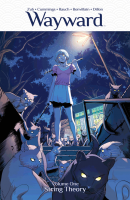
Wayward, Volume 1: String Theory

May 22, 2015 by Ash Brown

Wayward, Volume 1Creator: Jim Zub and Steve Cummings
Publisher: Image Comics
ISBN: 9781632151735
Released: March 2015
Original run: 2014

Wayward is an ongoing comic series created by Jim Zub and Steve Cummings and published by Image Comics. Zub, a creator from Canada, is primarily responsible for writing the story while Cummings, currently based in Japan, is the series’ line artist. Along with Tamra Bonvillain, Ross A. Campbell, Josh Perez, and John Rauch, Zub also worked on the comics’ color art with additional flats done by Ludwig Olimba. Wayward was first brought to my attention due to Zub’s involvement—I had previously read and enjoyed some of his other work—but my curiosity was piqued even more when I learned that Zack Davisson was writing bonus material for the series in the form of background information on yokai. It’s not a secret that I have a particular fondness for yokai; I was very interested in seeing what sort of role Japan’s mythological and legendary creatures would play in the comic. The first trade collection, String Theory, was published in 2015. It includes the first five issues of Wayward originally released in 2014 as well as additional essays written by Davisson.

Not long after her parents divorced, Rori Lane left Ireland to be with her mother in Japan. Living with her father just wasn’t working for any of them. Of course, this does mean that Rori will have to start her life over again in a county she’s never even visited. Her mother may be a native Tokyoite, but the city is unlike anywhere else she’s ever been before. For a loner like Rori, and for a young half-Japanese woman such as herself, fitting in and feeling comfortable in Japan and at her new school won’t be an easy task. To complicate matters further, she has a curious but occasionally useful ability that allows her to see the patterns connecting people, places, and events. And to some small extent, she can even control the world around her because of it. By following those threads of destiny, she finds herself drawn to several young people who are also gifted in peculiar ways. It’s good to have found a small group of friends, people around whom she can feel a little more at ease, but it’s not long before they are all pulled into a dangerous power struggle within the city that they don’t even understand.

Wayward, Volume 1, page 4String Theory provides a fantastic start to Wayward, a contemporary fantasy action series with prominent influences drawn from traditional Japanese folklore with modern twists. Rori encounters various yokai throughout String Theory, beginning with a trio of monstrous and extremely dangerous kappa. Although the designs, abilities, and basic natures of the yokai in String Theory are directly inspired by their original counterparts, they are also distinctive to Wayward. It all works very well. The series is action-packed, with dramatic supernatural battles, but it also has more introspective personal conflicts as well. Rori finds herself overwhelmed, thrust into circumstances to which she brings very little knowledge. As String Theory progresses, more and more is revealed about how the world of the series functions as Rori herself begins to piece together how it works. As Rori learns more so do the readers, but there are still plenty of mysteries that have yet to be fully explored.

The worldbuilding in String Theory is excellent. Even with the phenomenal powers of the main characters and the presence of yokai and monsters, the supernatural Tokyo of Wayward looks and feels like a real place. A large part of this is due to Cummings’ wonderful illustrations and the work of the series’ colorists. I love the colors in String Theory. They range from muted and subdued palettes to colors that are flashy and vibrant, almost appearing to glow. String Theory can be violent and grotesque and includes elements of horror, but it is also beautifully illustrated. I also particularly liked the visual representation of Rori’s abilities, reminiscent of the concept of the red string of fate found in Japanese culture. The characters introduced in String Theory are great, too; I’m very curious to see how their fated destinies will continue to weave together. I thoroughly enjoyed the first volume of Wayward—it has chaotic action as well as quiet moments, humor as well as drama—and look forward to the next installment a great deal.

Filed Under: REVIEWS Tagged With: comics, Image Comics, Jim Zub, Steve Cummings, Wayward

The Manga Revue: Phantom Blood and Seraphim 266613336 Wings

May 22, 2015 by Katherine Dacey

Welcome to the first installment of The Manga Revue! I’ll be posting this column on a weekly basis, offering a mixture of reviews and links to manga criticism around the web. This week, I focus on two manly manga, JoJo’s Bizarre Adventure: Phantom Blood, the first installment of Hirohiko Araki’s long-running saga, and Seraphim 266613336 Wings, an unfinished collaboration between Mamoru Oshii and Satoshi Kon.

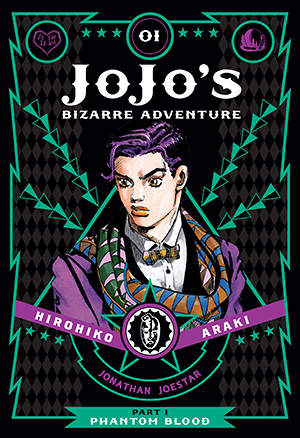
jojo_phantom_blood1JoJo’s Bizarre Adventure, Part 1: Phantom Blood, Vol. 1
By Hirohiko Araki
Rated T+, for Older Teens
VIZ Media, $10.99

Phantom Blood is a prime example of ALL CAPS theater, the sort of manga in which characters boldly declare their intentions on every page, sidekicks materialize whenever a plot twist demands explanation, and villains reveal their true colors by torturing fathers, girlfriends, and faithful pets. If only Phantom Blood was fun! Alas, this origin story is a dud, thanks to its flat characterizations and paint-by-numbers plotting.

The biggest problem is the hero: Jonathan Joestar is a paragon of virtue who suffers so many preposterous setbacks that it tests the reader’s patience. Many shonen heroes share Jonathan’s capacity for punishment, but Jonathan is such a limp rag that it’s hard to sympathize with his anguish over losing favored son status to his adopted brother Dio Brando. Dio is similarly two-dimensional, devoting 97.8% of his waking hours to plotting the Joestar clan’s demise. Although his plan is suitably baroque, Dio’s malevolence is so all-consuming that he, too, lacks any recognizably human traits.

These paper-thin characterizations would matter less if the plot or artwork were more engaging. The main storyline, however, is about as fresh as week-old fish; even if the phrase “bloodthirsty Aztec mask” piques your interest, the mask is so clumsily integrated into Dio’s revenge as to invite comparisons with an episode of Scooby Doo. The artwork is also a disappointment, a collection of lantern-jawed men with cartoonish muscles inhabiting a pseudo-Victorian landscape–it’s Fist of the North Star in 19th century England! At least we know Araki’s draftsmanship and storytelling got better, as fans of the third JoJo arc, Stardust Crusaders, will attest.

The verdict: Unless you’re a die-hard collector, skip it. Folks looking for a good introduction to Araki’s unique talent are better served by Rohan at the Louvre.

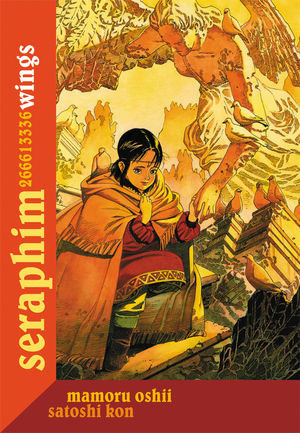
seraphimSeraphim 266613336 Wings
By Mamoru Oshii and Satoshi Kon
Rated 16 and up
Dark Horse, $19.99

In 1994, Animage‘s editors faced a dilemma: Hayao Miyazaki’s critically lauded Nausicaa of the Valley of the Wind had come to an end, leaving a hole in the magazine’s line-up. Their solution: invite Patlabor director Mamoru Oshii to create a new series for the magazine. Oshii, in turn, tapped animator Satoshi Kon to illustrate the project, and Seraphim 266613336 Wings was born.

Oshii’s story goes something like this: in the not-too-distant future, Asia is in shambles, devastated by a mysterious plague that reduces its victims to stony, bird-like corpses. Despite the best efforts of the World Health Organization (WHO), no one has successfully determined the disease’s cause or found a cure. In a desperate bid to save humanity, four pilgrims cross the cordon sanitaire into the epicenter of the plague. Their mission: to investigate a mysterious relic that might reveal where and why the “Seraphim” virus spread so quickly.

If certain aspects of the plot feel a little heavy-handed–the WHO, for example, is portrayed as a quasi-religious organization not unlike the Vatican–the execution is brisk and skillful. Oshii and Kon resist the temptation to freight the dialogue with too much exposition, instead relying on Kon’s crumbling landscapes and vivid character designs to convey the pandemic’s toll on society. We see abandoned cities punctuating the desert, refugee camps teeming with feverish, disoriented victims, and isolated military outposts where survivors husband weapons and medicine–all potent (if familiar) symbols of a world plunged into chaos.

Winged imagery, too, plays an important role in Seraphim: planes glide silently through migrating flocks, skies turn black with mobbing birds. In some passages, Kon and Oshii revel in the ambiguity of these images: did the pandemic originate with birds, or are they simply beneficiaries of its effects? In other passages, however, the authors baldly state the story’s themes; characters pontificate about the plague victims’ “angelic” appearance and wonder if these victims are harbingers of mankind’s extinction–or redemption.

We’ll never know the answer. After producing seventeen chapters, Oshii and Kon shelved the project over creative differences. The surviving fragment is a testament to their ability to transcend those differences–if only for a short period–to produce a story that reads like the product of a single, fertile imagination.

The verdict: With its gorgeous artwork and intricate plot, Seraphim 266613336 Wings rewards multiple readings–even if the story lacks a proper ending.

Review Links: Jason Thompson offers a sneak peak at cyber-thriller Inuyashiki, which will debut in print this August, while Serdar Yegulalp revisits old favorite Black Lagoon. At Brain vs. Book, translator Jocelyn Allen discusses Aya Kanno’s Otomen. (Fun fact: Allen is currently translating Kanno’s Requiem of the Rose King for VIZ.) Closer to home, Sean Gaffney posts an early review of The Ancient Magus’ Bride, while Ash Brown weighs in on the latest volumes of Attack on Titan, Fairy Tail, and Love at 14.

Marissa Lieberman on vols. 1-2 of Accel World (No Flying No Tights)
Joseph Luster on vol. 4 of Ajin: Demi-Human (Otaku USA)
Matthew Warner on vol. 1 of Ani-Imo (The Fandom Post)
Megan R. on Apothecarius Argentum (The Manga Test Drive)
A Library Girl on vol. 1 of Aquarian Age: Juvenile Orion (A Library Girl’s Familiar Diversions)
Kate O’Neil on vol. 4 of Attack on Titan: Before the Fall (The Fandom Post)
Tony Yao on Black Butler (Manga Therapy)
Connie on vol. 27 of Blade of the Immortal (Slightly Biased Manga)
Justin Stroman on vol. 1 of Captain Ken (Organization Anti-Social Geniuses)
Ken H. on vol. 5 of Cardfight!! Vanguard (Sequential Ink)
Connie on vol. 3 of Crimson Spell (Slightly Biased Manga)
Sean Gaffney on vol. 15 of Dorohedoro (A Case Suitable for Treatment)
Allen Kesinger on vols. 1-3 of High School DxD (No Flying No Tights)
Allen Kesinger on High School DxD: Asia and Koneko’s Secret Contact?! (No Flying No Tights)
Connie on vol. 23 of Hoshin Engi (Slightly Biased Manga)
Wolfen Moondaughter on vol. 14 of Itsawaribito (Sequential Tart)
Connie on vol. 1 of JoJo’s Bizarre Adventure, Part One: Phantom Blood (Slightly Biased Manga)
Kory Cerjak on vol. 2 of JoJo’s Bizarre Adventure, Part One: Phantom Blood (The Fandom Post)
Anna N. on vol. 4 of Kiss of the Rose Princess (The Manga Report)
Emma Vail on vols. 1-3 of Manga Dogs (Women Write About Comics)
Sakura Eries on vol. 2 of Master Keaton (The Fandom Post)
Erica Friedman on vol. 9 of Morita-san ha Mukuchi (Okazu)
Kristin on vols. 1-2 of My Neighbor Seki (Comic Attack!)
Connie on vol. 2 of Phantom Thief Jeanne (Slightly Biased Manga)
Kory Cerjak on vol. 3 of Prophecy (The Fandom Post)
Erica Friedman on vol. 17 of Rakuen Le Paradis (Okazu)
Rebecca Silverman on vol. 11 of Sankarea: Undying Love (ANN)
Helen on Shirahime-Syo (Organization Anti-Social Geniuses)
Connie on vol. 33 of Skip Beat! (Slightly Biased Manga)
Sheena McNeil on vol. 3 of Spell of Desire (Sequential Tart)
Erica Friedman on vol. 2 of Stretch (Okazu)
Leroy Douresseaux on vol. 6 of Terra Formars (Comic Book Bin)
Greg Hunter on Trash Market (The Comics Journal)
Rebecca Silverman on vol. 3 of Whispered Words (ANN)

If you’re a manga reviewer and would like to see your reviews included in our regular round-ups, please let us know in the comment section.

Filed Under: MANGABLOG, REVIEWS

Kagerou Daze I: In A Daze

May 22, 2015 by Sean Gaffney

By Jin (Shinzen no Teki-P) and Sidu. Released in Japan by Enterbrain. Released in North America by Yen On.

Writing something that is merely one part of a massive media franchise can in many ways be even more difficult than it is to create an original story – even if you’re the original creator. The writer has to balance out giving the fans who know everything already exactly what they’ve been expecting, and trying to create a space where new readers who may pick up the book sight unseen are encouraged to continue. Kagerou Daze is one of these books. It’s based on a series of songs created for the Vocaloid series, which became wildly popular. They thus spawned this light novel series (6+ volumes), a manga adaptation (also 6+ volumes), and an anime series with a completely different name (Mekakucity Actors, complete in one season and highly controversial.)

kagerou1

The novel is told in two parts, essentially. The first concerns Shintaro, a young man who has been holed up in his room for the past two years and whose narration verges on the histrionic, and Ene, his sentient AI whose job is apparently to annoy him so much that he forgets to be depressed. When his keyboard and mouse are damaged and the Obon holiday means he actually has to leave the house to replace them, he goes to a department store and gets caught up in one of the stupider terrorist attacks I’ve ever seen. The second and third sections are narrated by his sister Momo, a pop idol despite her best efforts who is having tremendous trouble dealing with the fame and the fact that she apparently causes it without really knowing why. She meets up with a group of teens who all have superpowers stemming from their eyes, and finds they can teach her how to control her own abilities to make everyone watch her.

So far so good, and the characters are all mostly likeable, though I think the guy whose outward persona is ‘be a jerk until people relax around each other’ is trying a bit too hard. There’s typical anime ‘types’ here – said jerk; the grumpy NEET; the ditzy younger sister (I know she’s bad in school, but 2 out of 100 is pushing it); the stoic girl with a side of tsundere, the shy to the point of extremes girl. The problem for me is that after finishing the first book (it’s quite short, probably the shortest of the recent Yen On releases), I’m not actually remotely sure where it’s going or what the plot is. There’s a cliffhanger ending of a sort, involving danger to someone we’ve never met before. There’s also interludes featuring a young sort-of couple who are apparently reliving the same trip to the park over and over again, possibly as one of them keeps dying, and it’s almost Higurashi-esque.

It’s diffuse. There’s very little to hang your hat on, so to speak. As I said above, these are based on a series of songs that, taken together, tell a sort of plot. I admit after listening to the first, “Artificial Enemy”, I am very glad that the creator chose to not end it by killing off the AI, who is annoying but probably the most amusing part of the cast. But it reads very much like a series where the author knows he can take his time to draw the plot out over several books as he has a built-in audience which will get it no matter what. That could be the case here as well – Kagerou Daze has over 2K stories on Fanfiction.net, even more than Sword Art Online. I just wish I knew more about what was going on.

Filed Under: REVIEWS

Pick of the Week: Three By Yen

May 20, 2015 by Sean Gaffney, Michelle Smith, Ash Brown and Anna N 6 Comments

potwgoongSEAN: Let’s see… Goong, Emma, Emma, Goong… so I’m the tiebreaker, huh? Good thing I pick first! Won’t be breaking the tie, though, because it’s time for Sean to highlight another of his pet series. Umineko: When They Cry is technically halfway done, at least in terms of arcs – in terms of actual volume count we have a bit more to go. I’m particularly excited for End of the Golden Witch, as most Umineko fans agree that it’s the best of all the manga adaptations.
MICHELLE: Predictably, I pick Goong, especially since it’s my final chance to do so. I’m in the midst of a reread of this series, and it’s pretty much the quintessential manhwa, with plenty of arguments, true feelings concealed, and true feelings revealed, along with its own special blend of “sweet moments interrupted by really unfunny comedic bits with ugly art.” Really, it can’t be missed.

ASH: No question about it, my pick this week is Emma. Ever since Yen Press started releasing Kaoru Mori’s A Bride’s Story in a gorgeous hardcover edition, I’ve been hoping for a rescue of Emma. And now it’s here! My local library had a run of most of the old CMX volumes, so I’ve read the series before, but I’m thrilled that I’ll finally be able to own it. And in a beautiful deluxe omnibus release, no less!

ANNA: I have to agree with Ash, it is time to celebrate the rerelease of Emma. I’m thrilled for the folks who weren’t able to collect the series before, especially since Yen does such a great job on their deluxe editions.

SEAN: MJhas been busy moving into a new home, but trust me, if she were here to pick she would agonize between Emma and Goong but pick Goong. We all know this.

What looks good to you this week?

Filed Under: PICK OF THE WEEK

Random Musings: Toronto Comic Arts Festival 2015

May 20, 2015 by Ash Brown

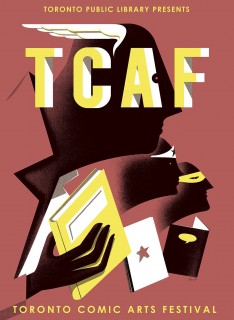
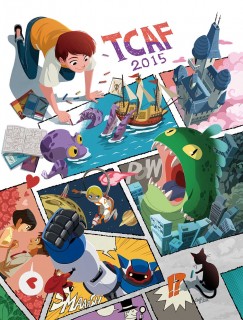
TCAF 2015 Poster

©Gurihiru

2015 marks the third time that I’ve been able to attend the Toronto Comic Arts Festival (TCAF). I generally don’t go to very many conferences, festivals, or conventions unless it’s for work, but I had such a phenomenal experience at TCAF 2013 that it’s become an annual event for me. TCAF is totally worth me pushing through all of my social anxieties and general awkwardness. This year was great, too, and for the most part I handled it pretty well. I don’t know if it’s just that I’m getting used to the trip and generally know what to expect from the event or what, but TCAF’s expansion into more areas of the Toronto Reference Library made the crowds feel less, well, crowded which probably also helped.

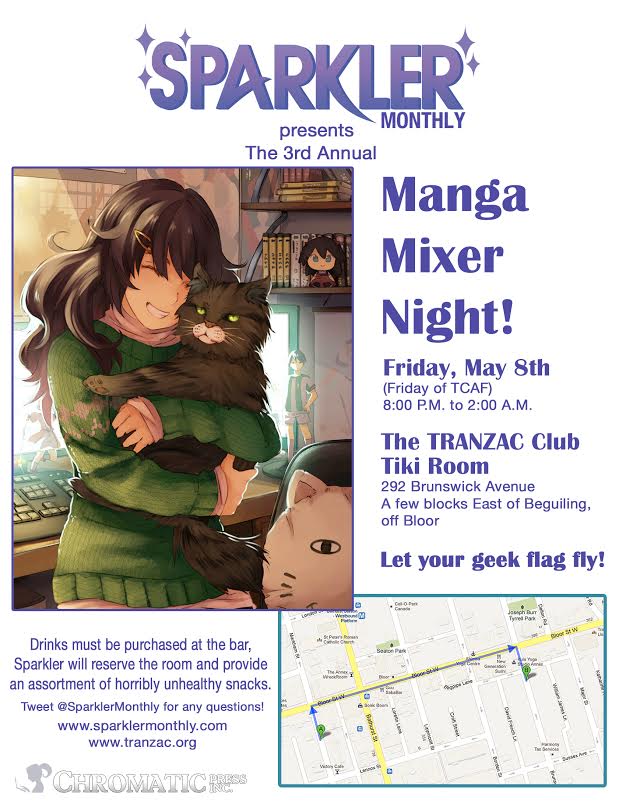
I’ve actually been trying to make TCAF a family trip since 2013 and this year it finally happened. Everyone, including the nine-month old, was able to make it to Toronto. We set out from Michigan on Friday and arrived in Toronto in time for me to go to Sparkler Monthly‘s Manga Mixer. I went last year, too, and enjoyed myself, so I was looking forward to it even though I’m not much of a party person. I enjoyed the mixer this year as well and had the opportunity to talk about manga, comics, and all sorts of things with all sorts of people. I was particularly happy to chat with Lissa Pattillo and the rest of the folk at Chromatic Press again. And I met several of my fellow manga and comics enthusiasts in person for the first time, like Linda/animemiz, Ysabet MacFarlane, and Alex Hoffman, which was great. Later on in the evening Jason Thompson showed up and we talked for a bit, which was pretty exciting for me since he played a large role in introducing me to manga. He seemed to know who I was, too, even though we’d never met before.

Actually, people recognizing me or Experiments in Manga after I introduced myself was something that happened several times over the course of TCAF, which was an odd but kind of thrilling experience. (I guess “Ash Brown” is a name that tends to stick with people?) Another odd thing to happen was that a lot of people assumed I was one of the exhibitors or an artist myself. Granted, considering how many creators visit TCAF as exhibitors or attendees, it’s a pretty safe guess for someone to make and still end up being correct much of the time. Anyway. Some of my personal social highlights over the course of TCAF in addition the Manga Mixer: I had a nice conversation with Ryan Sands, said hello to the MASSIVE crew, ran into fellow Manga Bookshelf blogger Sean Gaffney, had the chance to meet Amanda Cosmos, briefly chatted with Jocelyne Allen, and talked with Ken Niimura and Aya Kanno at their respective signings. And there were plenty of other smaller interactions throughout the festival, too.

Manga Mixer presented by Sparkler

TCAF 2015 Manga Mixer presented by
Sparkler Monthly

I like to start off TCAF proper bright and early on Saturday morning by visiting the exhibitor areas. This has a few advantages: the crowds are relatively small and manageable, exhibitors haven’t sold out of anything yet (although, not everything is available for sale right away), and most of the festival programming for the day hasn’t started. I generally have a few tables that I know I want to stop by and a few things that I know I want to check out, but I also wander around to see everything that’s there. For me, part of TCAF is learning about and discovering new things; I always make a point to come home with some comics and artwork by artists whose work I’m completely unfamiliar with. If I could I’d bring home everything that caught my interest. I have to give myself a strict budget for TCAF to keep things from getting out of hand. I focus my purchases on independent creators and small publishers while at TCAF, but I also end up making a very lengthy list of comics and other books to obtain at a later date. Even after it’s over, TCAF continues to influence what I buy. This year I got my hands on almost everything that I really wanted, but there were a few things I’m still kicking myself for missing out on, like Gengoroh Tagame’s new artbook. Hopefully I’ll have the chance to pick some of those things up in the near future, though.

On Saturday, I attended a total of six (six!) panels. I basically found a seat in the Marriott’s High Park Ballroom and didn’t move for the rest of the day. (Should you ever attempt this yourself, I highly recommend bringing your own water and snacks with you.) One of the most challenging parts of TCAF is deciding which programs to go to because it is literally impossible to do everything. There are so many fantastic panels and creators that there are always going to be conflicts. But, rest assured, whatever you choose, it will be great. I have yet to leave a TCAF event disappointed or dissatisfied.

My first panel of the day was “Subscription Comics.” Moderated by Brigid Alverson, the discussion featured Box Brown of Retrofit Comics, Ryan Sands of Youth in Decline, Jordan Shiveley of Uncivilized Books, and Lianne Sentar of Chromatic Press. Although the models are different from one publisher to another, each of them features a subscription service of some sort. (I’m currently a Chromatic Press and Youth in Decline subscriber; next year I’ll probably be a Retrofit subscriber, too, considering the number of comics I buy from the publisher anyway.) The panel’s conversation focused on the benefits provided and challenges presented by subscriptions not just for publishers, but for creators and readers as well. Subscriptions get money to the publisher quickly and can help pay for upfront costs. It can be incredibly useful for publishers to know that there will be definite revenue when planning the year’s finances, too. For creators, publishers’ subscriptions can provide an appealing outlet for experimentation, a way to do something for fun on the side, and not have to worry about marketing and other aspects of promotion. The panelists tended to agree that an ideal subscription service would feature both big and small names. The more well-known artists provide the initial draw for readers and help support the publication of the rest of the comics. Subscriptions can provide the curatorial guidance needed in the astoundingly large world of comics which can frequently be overwhelming, especially for newer readers.

TCAF 2015 Poster - Pascal Blanchet

©Pascal Blanchet

Brigid Alverson was also involved with the next event, serving as the interviewer for Aya Kanno’s Spotlight with Jocelyne Allen interpreting. The discussion largely focused on Kanno’s two most recent series to have been released in English, Otomen and Requiem of the Rose King. She got the idea for Otomen when she realized that a lot of the men around her were otomen, but that in Japan a boy liking girlish things is still looked down upon, more so than a girl liking boyish things. Her editor at the time was a little uneasy about the series because Kanno had never done a comedy manga before; it took about a year to convince him. Being true to oneself is a theme that is particularly important in Otomen, and one that deeply resonates with Kanno. As for Requiem of the Rose King, there is an exaggerated element in Shakespeare’s plays that she doesn’t often see in modern works that she finds very appealing. Kanno described her version of Richard as a mix of all of the good parts of Shakespeare’s Richard, characteristics of the historical Richard III, and some of her own fantasy. Kanno did read a fair number of history books when conducting research for the series, but not much on the time period is available in Japanese, so the visuals of the manga tend to be heavily influenced by Shakespearian stage productions and much of the story comes from within Kanno herself as she creates her own personal interpretations of history. Kanno has always been interested in sex, gender, and sexuality, so it isn’t too surprising that those subjects play an important role in her work; both Otomen and Requiem of the Rose King deal with those subjects in different ways.

Next up was “Gay Comics Art Japan with Gengoroh Tagame,” featuring Gengoroh Tagame, the first commercially successful creator of gay manga, Anne Ishii and Graham Kolbeins of MASSIVE, and Leyla Aker, one of the editors at Viz Media and SuBLime Manga. Tagame was one of the featured guests at TCAF in 2013 and he is an extremely knowledgeable and charming individual, so I was very happy to see him return again this year. The panelists discussed queer comics, gay manga, and BL, the fluidity of the boundaries between the genres, and the usefulness and limitations of labels. It’s becoming more and more difficult to definitively draw a line between gay manga and BL. Many complicated factors influence how a person approaches a particular work: the style of the art, the gender and sexuality of the creator (which in and of itself is very complicated), the emphasis placed on romance or sex, and the intended audience, among many other things. Generally, fifteen to twenty percent of SuBLime’s readership, and up to fifty percent for some titles (usually the romance-oriented manga), are men and Tagame has a large number of fans who are women, so even the boundaries between expected audiences are blurring. Complicating matters even further is the fact that the different categories and genres applied to manga in Japan do not necessarily have exact equivalents to those used in other countries and vice versa. Categorization can be useful for marketing purposes, publishers, and readers, but it can also create situations in which the content or creators are being marginalized or pigeonholed simply because of the label that is being used. Aker mentioned that there were two major BL mangaka whose work is often requested by fans who ultimately did not want to be published by SuBLime specifically for those reasons.

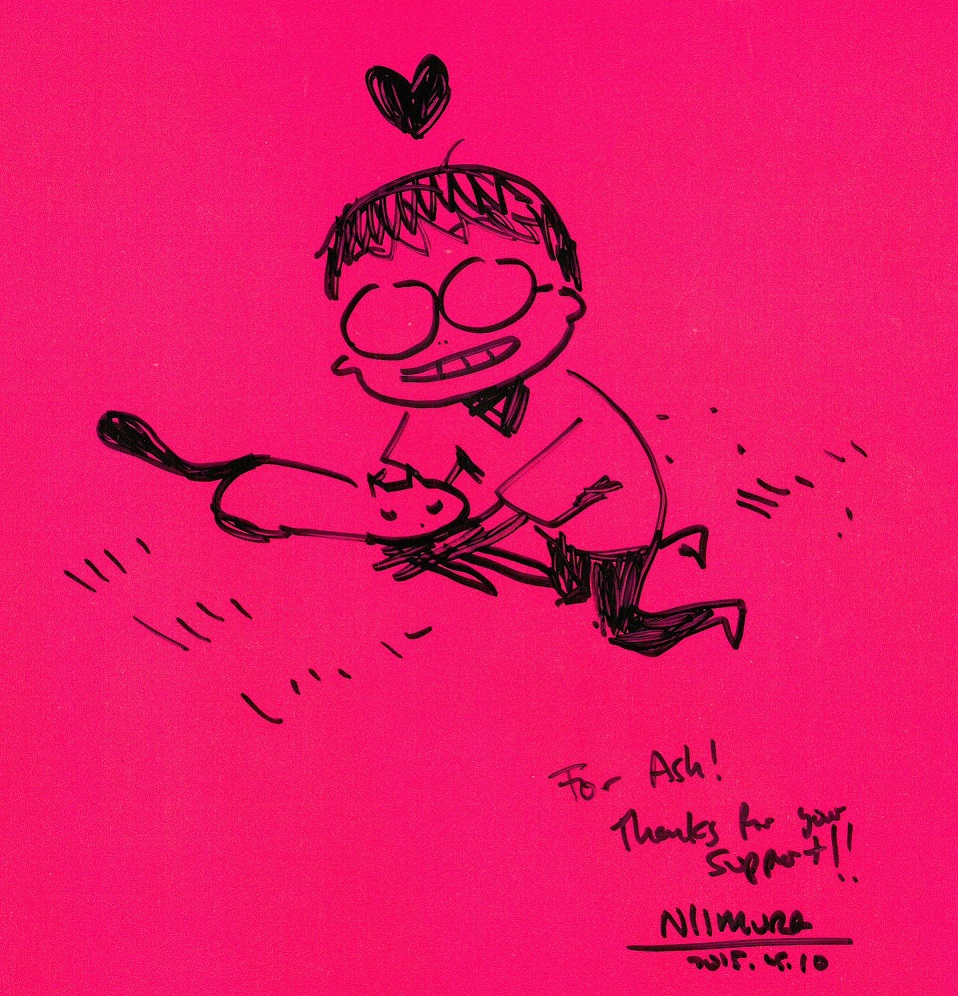
Ken Niimura Sketch

Ken Niimura likes cats

Despite being a huge fan of Avatar: The Last Airbender, I’ve never actually read any of the comics. And so before attending Gurihiru’s Spotlight, I wasn’t particularly familiar with the work of the two Japanese artists who make up the illustration team: Chifuyu Sasaki, who focuses on design, pencils, and inks, and Naoko Kawano, who focuses on design and colors. Along with their agent Akihide Yanagi, who helped to interpret, the two women were interviewed by Deb Aoki. Sasaki and Kawano became friends in college and soon after began collaborating on artwork together. Although they each have their specialty, their creative process has always been a team effort. Previously, they both worked as office ladies and did some local illustration work on the side; it wasn’t until they responded to Marvel’s search for Japanese creators that their career as artists really took off. They still haven’t been published much in Japan—their style is considered “too Western” by some—however, they have found success in other parts of the world. One of the reasons they submitted their work to Marvel was to try to reach an audience that would better appreciate their style. Marvel has never asked them to change how they draw and they have been given a lot of freedom with the series that they have been involved with. In addition to Marvel and Dark Horse Comics, Gurihiru has also worked with Scholastic and Pearson Education as illustrators and colorists. Their two biggest influences when it comes to how they approach their art? Disney animation and Todd McFarlane’s Spawn. One day Gurihiru would like to try creating their own stories, but in the meantime they’re so busy as artists that they haven’t had a good opportunity to develop those skills.

Noelle Stevenson’s Spotlight conflicted with Ed Luce’s Spotlight, which I was also very interested in. But, because Gurihiru’s session went over its time, I was already in the room, and I wanted to be there for the next panel as well, I decided to continue my siege of the High Park Ballroom. Stevenson was on a panel that I attended last year at TCAF and I was looking forward to reading her debut graphic novel Nimona which debuted at TCAF this year, so I was glad to have the chance to hear her interviewed by Robin Brenner (another manga-savvy librarian that I look up to a great deal). Stevenson is an engaging, intelligent, and well-spoken young creator. Topics of the casual conversation included Nimona, working as part of a team as a writer for Lumberjanes, and the importance of diversity in comics. Before being picked up by HarperCollins, Nimona started as a webcomic that was a part of Stevenson’s senior thesis. The first thing she knew about the story was its ending, but she actually began posting the comic online before the script had been finalized. As a result, the comic changed some as it progressed, and additional revisions needed to be made for the print edition. Stevenson first became widely known for her fanart, which is how her agent, who approached her directly, discovered her. Her work on Nimona and as a writer for Lumbarjanes has allowed her to create something of her own which subsequently led to other projects. As Stevenson describes it, “the writing was an accident,” but she is now being hired for her own unique voice rather than as someone to mimic an existing tone or story. She finds it very satisfying to be in the position to create something that isn’t just more of the same, feeling that diversity in comics makes for better stories in addition to challenging readers to expand both their worldviews and their capacities for empathy.

Aya Kanno Chibis

Chibi Richard and Asuka by Aya Kanno

One of the most popular events at TCAF in 2014 was “What Do Women Want? Writing Comics For A Female Audience” and so this year Lianne Sentar facilitated a reprise of the panel. Joining her this time around was Sam Maggs, Sandra Bell-Lundy, Brenden Fletcher, Svetlana Chmakova, and Sydney Padua. The group provided a nice range of perspectives on the subject as the panelists are all involved in different parts of the comics industry: publishing, journalism, syndicated comics, mainstream comics, manga-influenced comics, and webcomics. The panelists argue, and I agree with them, that by expanding the range of stories being told about and for women in addition to increasing the diversity of their representation in comics, men’s stories and representation are inherently expanded and increased as well. Stories aimed at straight, white men are often the default in mainstream media, but if allowed, women-oriented stories can be just as universal. Last year the panel included a lot of angry ranting, but this year tended to be much more positive in tone, a good indication that the state of the comics industry is already beginning to change for the better. The group hypothesized that the Internet has a played a critical role in allowing this to happen. Social media and webcomics in particular have provided platforms for creators to freely express themselves, reach a widespread audience, and form communities and support networks even when working on a comic that is especially niche. The big publishers are paying attention to these developments and taking note of what readers want, but the inertia of a well-entrenched industry used to telling a particular kind of story can be difficult to overcome and there will continue to be missteps. The road may be bumpy, but it is improving, and there are now other viable options for creators and readers outside of mainstream publication, as well.

I thought about going to the Queer Mixer again this year but ultimately ended up hanging out in the city with the family, finding plenty of good food to eat and beer to drink, enjoying the pleasant weather outside, and visiting Toronto’s public parks. Because TCAF starts a couple of hours later on Sunday than it does on Saturday, we were able to sleep in a bit on Sunday morning before heading out for brunch. Afterwards I made my way back to the Marriott and the Reference Library while the rest of the family explored the Royal Ontario Museum. Compared to Saturday, at first it seems like I hardly did anything at all on Sunday since I only attended three panels. But, I also made it to Ken Niimura and Aya Kanno’s signings, and spent some more time in the exhibitor areas talking to and collecting signatures from some of the other creators. The other three-fourths of family wandered around the library for a bit as well, tracking down some of their favorite artists and adding to the pile of comics that were coming back to the United States with us.

My first panel of the day was “Get Published In Japan!,” moderated by Deb Aoki and featuring Yuri Yamamoto (an editor at Akita Shoten for Princess magazine who is working with Aya Kanno on Requiem of the Rose King among other series), Ken Niimura, Abby Denson and independent manga artist Yuuko Koyama (who self-published some work together in Japan), and Gurihiru’s agent Akihide Yanagi. While the panel addressed some of the more technical issues and challenges that confront non-Japanese creators when trying to break into the manga industry in Japan—such as language barriers and the lack of support for submitting materials digitally—much of the discussion actually focused on the importance of the relationship between an editor and creator. In Japan, editors tend to play a much more prominent role in the creation of comics than they do in most other countries; editors are often considered a part of the creative team, and some even act as the writers for the artists they work with. It’s a relationship dynamic which may take some foreign creators, many of whom are used to working more independently, time to adjust to. As Niimura puts it, “Finding the right editor is like finding the right girlfriend or boyfriend,” a good match is required to really make the relationship work. The panelists agreed that one of the most important traits for creators to have is the ability to positively take critique and criticism in stride, always working to improve based on those comments with the knowledge that even if they are severe they are intended to help them better themselves and their work. Of course, the advice that creators receive, even for the same comic, will differ depending on the editor they are working with. Some editor’s in Japan intentionally seek out foreign talent, while others still show some discrimination towards non-Japanese creators. But, as long as a submission to a manga magazine is in Japanese, it will always be reviewed for consideration.

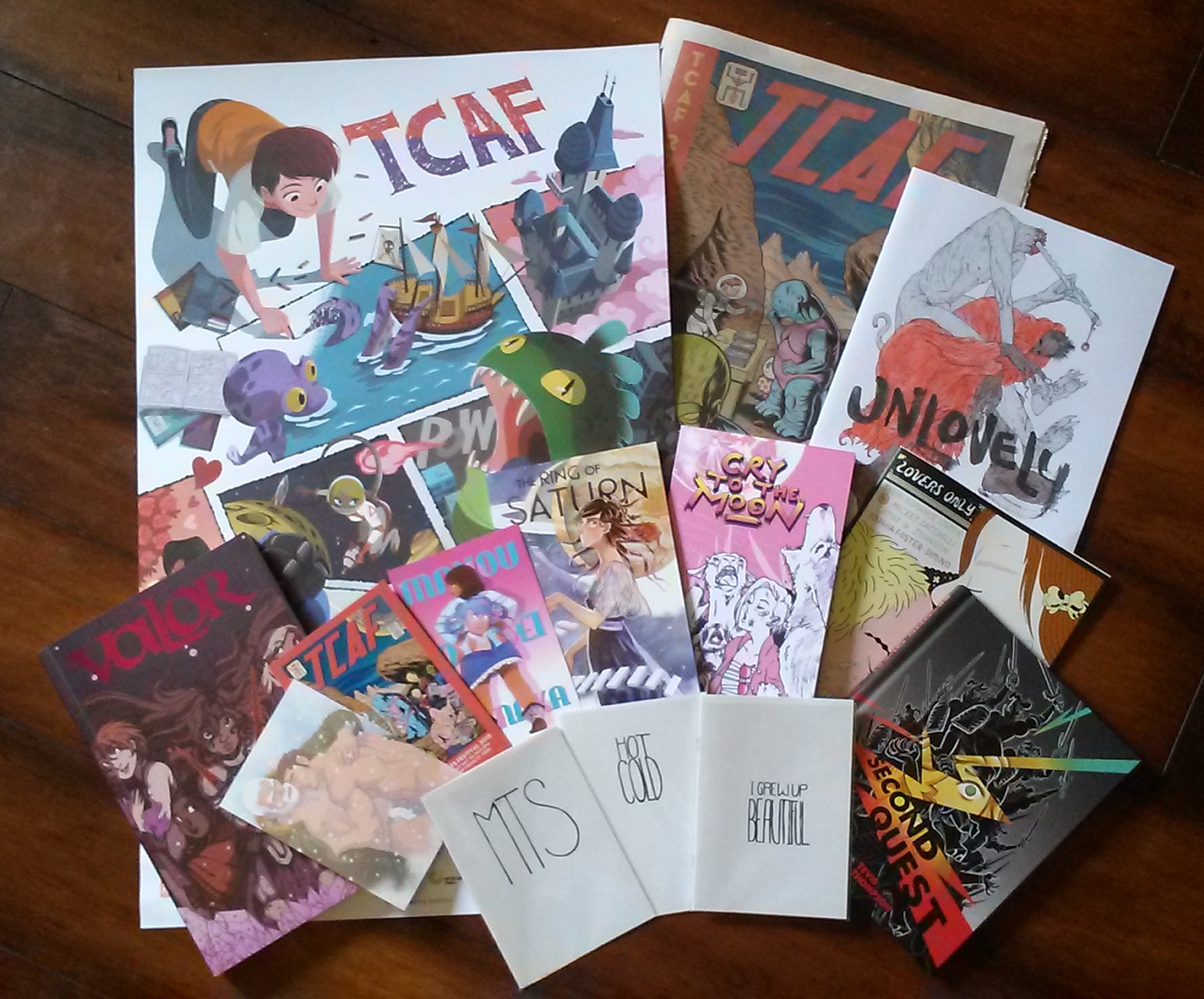
TCAF 2015 Haul

Most, but not quite all, of my TCAF haul

It was then back to the Reference Library for the “Manga Translation” panel facilitated by Robin Brenner and featuring translators Kumar Sivasubramanian (who has done manga translation for Dark Horse and Vertical) and Jocelyne Allen (who has worked with Drawn & Quarterly, Digital Manga, Viz Media, and others) as well as Deb Aoki (who has served as one of the judges for the Manga Translation Battle sponsored by Japan’s Agency for Cultural Affairs). Over the course of the discussion, the panelists identified some of the things that make manga translation particularly challenging, such as sound effects, the size and shape of word balloons and the limited space for text, choosing appropriate gendered pronouns, puns and wordplay, culturally specific concepts and jokes, and so on. Both accuracy and readability are important for any translation; the audience must always be kept in mind since translation choices and tone will change depending on what the publishers and readers want or need. Some series, like Blade of the Immortal, demand a “rawer” translation with much of the Japanese terminology left intact because that is what the audience has come to expect. Different publishers have different policies and requirements for their translations, too. For example, some allow translation notes while others do not. Many manga fans may not realize that the translators ultimately aren’t the only ones responsible for a manga’s translation—adapters and editors, as well as the original publishers and creators, are also involved in the decisions that are made. More than one translator may work on the same series, too, so additional effort is needed in order to maintain a consistent translation over multiple volumes. It’s also worth noting that it’s very rare that a translator has the opportunity to work directly with creators or to ask them questions about their manga. Generally translators don’t know anything more than any other reader and they can be taken by surprise by the manga’s developments, which can present problems for translation.

Although the Comics vs Games showcase has been a part of TCAF for four years now, 2015 was the first time that I had the chance to attend any of its programming, largely because much of it was actually located in the Reference Library this year. At one point in time, my love of games rivaled my love of comics, so I was particularly looking forward to it. “Comics vs Games: Microtalks!” featured eleven speakers: David Calvo, Alfe Clemencio, Amanda Cosmos, David Hellman, Andrew Hlynka, Kim Hoang, Rachel Kahn, Xin Ran Liu, Matthew Ritter, Jason Shiga, and Miguel Sternber. The group included game developers, artists, and aficionados, as well as comics creators, each of whom gave a very short presentation discussing various aspects of comics and games, generally touching upon the similarities and differences between the mediums and what creators working in one could learn from the other. Both comics and games can be a form of storytelling that requires a reader or player to actively engage in the creation of a narrative from disparate images and moments. Of the two, generally games are considered to be more interactive, which greatly impacts the experience of the story, even if it’s a linear one. But the incredibly innovative work being done by Jason Shiga proves that comics can be interactive as well. Art obviously serves a function in comics where it is a critical part of the narrative, but it’s also important in games where the artwork is responsible for creating and establishing a setting and environment. Traditional illustration techniques can be used to inform game art and design, and even three-dimensional games can successfully incorporate two-dimensional artwork and animation.

Believe it or not, the above is just a small fraction of what I could have written about TCAF. Each of the individual panels and spotlights could have easily had an entire essay devoted solely to them; I merely expressed some of my own thoughts and experiences, and touched upon a few and not by any means all of the major themes and topics addressed at the various programs at the festival. TCAF is an absolutely fantastic comics event. If you ever have the opportunity to attend, I highly recommend it. I know that I certainly plan on returning every year that I possibly can.

Filed Under: FEATURES Tagged With: Aya Kanno, comics, Gengoroh Tagame, Gurihiru, J. M. Ken Niimura, manga, Noelle Stevenson, TCAF, Video Games

Dorohedoro, Vol. 15

May 20, 2015 by Sean Gaffney

By Q Hayashida. Released in Japan by Shogakukan, serialization ongoing in a Shogakukan magazine to be named later. Released in North America by Viz.

Readers of this manga will know already that it can be very, very violent and blood-filled. It’s not all buff babes and gyoza, there’s a good deal of death and dismemberment – the main reason it’s rated M, in fact. But even for Dorohedoro, Vol. 15 really pushes the envelope of what its readers can take, offering up some truly disturbing and grotesque imagery. And it’s actually rather fitting, as the main character sees his various personas fractured beyond belief… oh yes, and we find out that the main character has been a lot more characters than we may have previously believed.

dorohedoro15

This is not really news for anyone who has been following the plot of the last few volumes closely (and if you are one of those people, I commend you – I love this series, but half the time I can’t remember what’s going on), but this volume spells it out: Caiman = Aikawa = Kai = Ai. Of course, we as the reader know this, but the cast are still somewhat in the dark. The cross-eyes wonder why their boss doesn’t have the distinctive markings. Risu needs to know more about the details of his curse. And En’s group don’t really care about Ai, as they’re still trying to find a way to resurrect En, who is busy attempting to incite rebellion in Hell (and failing), thus showing us that he really is dead. But as we’ve seen in Dorohedoro, death rarely means much. (Unless you’re Natsuki. Sorry, Natsuki.)

Dorohedoro is so addictive in part due to its imagery, and there are some excellent examples here. It rains in the Hole, which is pretty much unheard of – and bad news for most sorcerers, who find it nearly crippling to them. Nikaido may now be able to use her magic to change time and other deus ex machina things, but it comes at a cost – her magic is now literally rendered as a giant gun with only 5 shots, and she’s already used one of them – four left and then she has no more magic ever. Oh yes, and she’s still dealing with the whole ‘devil horns’ thing. And as for Ai, fusing with a giant mutated monster covered with severed heads seems all too appropriate given what’s been happening with him.

This far into the series, I’m not sure there’s much to offer the new reader, but there’s also not much to make old readers drop it, either. What we’ve gotten before is what we get now. There’s some amusing humor scattered throughout. There’s some nudity and fanservice once in a while (for a certain definition of fanservice). Sometimes we get both together, as when a recovered Ebisu realizes she’s naked among a group of her close friends and completely freaks out. But most of all, Dorohedoro has finally started to answer most of the mysteries it’s been posing, and we’re eager to see what’s going to happen next. Will En be resurrected? Will Nikaido manage to save Caiman? Is there even a Caiman to be saved? Provided you can accept the fact that this volume is twice as disgusting as a normal Dorohedoro volume (is there such a thing?), you’ll enjoy pondering these questions as well.

Filed Under: REVIEWS

Kiss of the Rose Princess Vol. 4

May 19, 2015 by Anna N

Kiss of the Rose Princess Volume 4 by Aya Shouto

This series continues to be a ridiculous fantasy reverse harem manga, and I enjoyed this volume mostly because it features evil idol singers.

The first half of this story delved more into the very Cardcaptor Sakura-like plot where Anise and her Rose Knights have to capture Arcana cards in order to reinforce the seal to the underworld and defeat the demon lord, as you do. Of course, the only way to do this is to enter an all boys idol competition at school, where Anise ends up cross-dressing as a boy, because the arcana card is second prize and their group is in danger of winning it all if the cutest Rose Knight Seiran enters the contest. In keeping with the long-cherished shoujo tradition of male models or idols being secretly evil, the duo Rhodecia are revealed to be artificial Rose Knights created by Anise’s evil (but HOW evil?) father. The battle for school supremacy involves magic tricks, even more cross dressing, and a horribly awkward comedy act.

While all of this is going on, the Black Rose Mutsuki is struggling with some dark emotions stirred up by a mysterious outside influence. Anise makes a new acquaintance at school named Mikage who asks Anise to set up a date between her and Kaede, which Anise does because she is an idiot who is absolutely unaware that Kaede is in love with her. The date ends up taking place at a Gothic carnival, where Anise and the other Rose Knights tag along in order to sleuth out the location of another arcana card.

Kiss of the Rose Princess is a super silly shoujo manga, but it is really just the thing if you happen to be in the mood for light entertainment. The art continues to be attractive, with all the cool poses one would expect from a reverse harem manga. I’m intrigued by the hints of psychological struggle that Mutsuki is starting to exhibit, which does create a bit more interest than the more typical “gotta catch them all” arcana card collecting plot that is currently developing.

Filed Under: REVIEWS Tagged With: kiss of the rose princess, shojo beat, shoujo, viz media

My Week in Manga: May 11-May 17, 2015

May 18, 2015 by Ash Brown

My News and Reviews

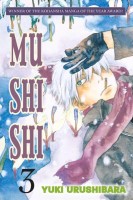
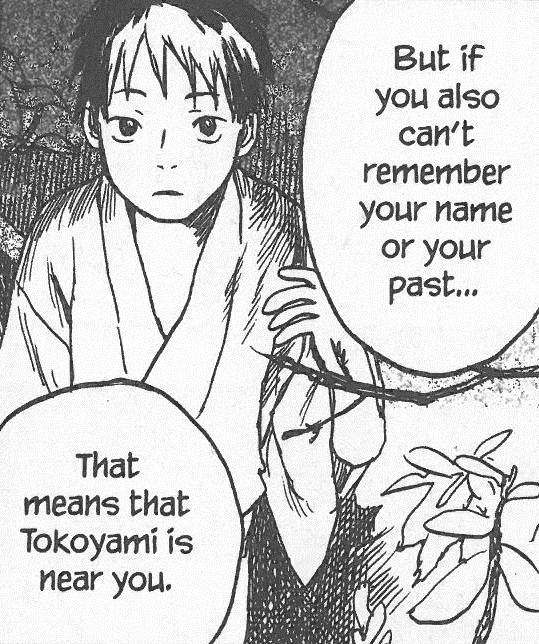
Well, I was hoping to post the recap of my recent visit to the Toronto Comic Arts Festival last week, but I haven’t actually managed to finish writing it yet. (Things have been very busy at work and home, and the taiko performance season is ramping up, too.) So, the plan is to post it sometime later this week instead. Fortunately, I did have a couple of in-depth manga reviews in reserve for last week just in case the TCAF post fell through. The first review, Yuki Urushibara’s Mushishi, Volume 3, is a part of my ongoing monthly horror manga review project. Mushishi continues to be one of my favorite series. This particular volume is notable as it reveals some of Ginko’s backstory. Last week I also reviewed the most recent installment of Bruno Gmünder’s Gay Manga line, Mentaiko Itto’s Priapus, which is a highly entertaining collection of gay erotic manga. The volume marks Itto’s official English-language debut and contains some pretty ridiculous stories and characters.

While I haven’t managed to fully report back on TCAF 2015, other TCAF posts are already being made. The Comics Reporter is making an effort to create an index of stories and references, but I specifically wanted to point out the recordings of some of the panels at The Comics Beat. Other items of interest from elsewhere online include Ryan Holmberg’s most recent What Was Alternative Manga? column at The Comics Journal—Blood Plants: Mizuki Shigeru, Kitaro, and the Japanese Blood Industry—and the 2015 edition of Advice on Manga Translation from Manga Translators over at Organization Anti-Social Geniuses. As for licensing news, Kodansha Comics announced a deluxe omnibus edition of Fairy Tail and Dark Horse will be adding a few new titles: Kentaro Miura’s Giganto Maxia, Spike Chunsoft and Takashi Tsukimi’s Danganronpa, and Kengo Hanazawa’s I Am a Hero, in addition to rescuing CLAMP’s RG Veda.

Quick Takes

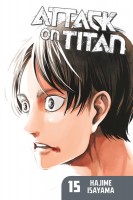
Attack on Titan, Volume 15Attack on Titan, Volume 15 by Hajime Isayama. Although it certainly has its moments and its own peculiar charm, Isayama’s artwork has never really been one of the strengths of Attack on Titan. There has certainly been improvement over the course of the series, and some of the individual panels and sequences are fantastic, but the artwork in this particular volume is terribly inconsistent and sometimes doesn’t even make sense to the point of distraction. But what Attack on Titan lacks in artistic finesse, the series makes up for with its large, engaging cast of characters and its constantly evolving story. Granted, with plot twist after plot twist after plot twist, the story is frequently on the verge of getting out of hand. Fortunately, Isayama reins it in a bit with this volume, allowing several of the story threads to play out and come to some sort of resolution before throwing something completely new into the mix, once again ending with a cliffhanger. Sometimes I miss the days when Attack on Titan was closer to being straight up horror, but all of the recent political intrigue can be interesting, too.

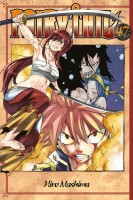
Fairy Tail, Volume 47Fairy Tail, Volumes 47-48 by Hiro Mashima. Thanks to Mashima’s afterword in the forty-seventh volume, I think I’ve finally figured out why Fairy Tail has been frustrating me recently—it’s his admitted lack of foreshadowing. The sudden plot developments that seem to come out of nowhere, although some of them are admittedly pretty great, make the series feel very disjointed and to some extent even directionless. Instead of inspiring feelings of excitement in how the story is progressing, Fairy Tail often inspires bafflement over its twists and revelations. In the same afterword Mashima indicates that he hopes to improve the foreshadowing, but he also says that he’ll be including plenty of red herrings as well, so I’m not sure how much that’s going to help. But even considering the unevenness of the series’ narrative, there’s still some good fun to be had in these two volumes. There are dragons, epic battles, and plenty of opportunities for the characters to demonstrate just how powerful they have become and just how badass they can be. Mashima is even able to work in some additional backstory for some of the characters amidst all the chaos.

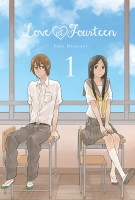
Love at Fourteen, Volume 1Love at Fourteen, Volumes 1-2 by Fuka Mizutani. I was actually taken by surprise by how much I ended up enjoying the first two volumes of Love at Fourteen. I had heard good things about the series, but I didn’t really expect that I would be so taken with a series about the romantic turmoils of middle school students. Tanaka and Yoshikawa have been close friends for some time and that friendship has started to blossom into something greater. They are becoming more aware of themselves and of each other. But their school doesn’t allow dating at such a young age, so they do what they can to keep their relationship a secret. So far the series is a chaste, slowly developing romance, but realistically that’s how it should be. Love at Fourteen is charming and somewhat nostalgic without being syrupy sweet. There’s even some queer representation—a girl who has fallen in love with another girl—which I’m always happy to see. However, I will admit that I am a little concerned about how the relationship between the music teacher and one of the other students may develop since some of her behavior towards him has been has been borderline if not blatantly inappropriate.

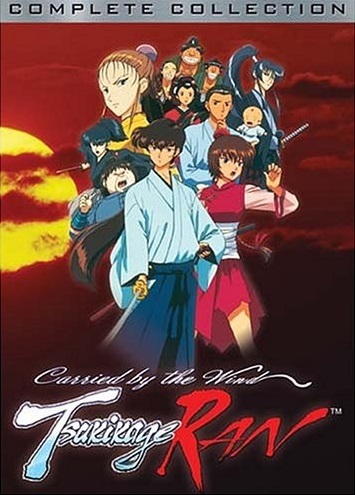
Carried by the Wind: Tsukikage RanCarried by the Wind: Tsukikage Ran directed by Akitaro Daichi. I am just now discovering Carried by the Wind; I completely missed when it was first released and happened across the thirteen-episode series more by accident than anything else. I’m glad that I did, though, because it is a tremendous amount of fun. Carried by the Wind is a comedic homage, without quite being a parody, of samurai films and television series. Tsukikage Ran, a skilled swordswoman, is a wandering ronin who would much rather drink a good bottle of sake and take a nap than get into a fight. Meow is a talented Chinese martial artist who means well but tends to get herself into trouble with her meddling. Although their attitudes and personalities are almost complete opposites—Ran is cool and collected while Meow is brash and prone to outbursts—the two end up becoming traveling companions of sorts. Each episode of Carried by the Wind stands completely on its own and generally follows a somewhat predictable story arc with Ran and Meow righting some sort of wrongdoing. But with its humor, marvelous lead characters, and great fight scenes, Carried by the Wind is a highly entertaining series.

Filed Under: FEATURES, My Week in Manga Tagged With: anime, attack on titan, Carried by the Wind, Fairy Tail, Fuka Mizutani, Hajime Isayama, Hiro Mashima, Love at Fourteen, manga

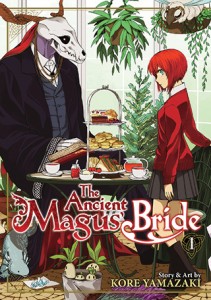
The Ancient Magus’ Bride, Vol. 1

May 17, 2015 by Sean Gaffney

By Kore Yamazaki. Released in Japan as “Mahou Tsukai no Yome” by Mag Garden, serialization ongoing in the magazine Monthly Comic Garden. Released in North America by Seven Seas.

There have been so many fantasy series released over the past few years that it can be a bit difficult to sort out the wheat from the chaff, and you find yourself looking for some plot point or character that makes the new license stand out from the pack of selkies, vampires, goblins and fairies that dot the manga landscape. I’m not sure that The Ancient Magus’ Bride possesses anything that makes it immediately leap out at a reader, expect perhaps for the skull of said magus himself. But what it does have it a strong plot, likeable characters, solid, pretty art and a desire to get the next volume in the series the moment you set the first one down. In other words, no flashy stuff here, just a very, very good book.

magus1

The premise is that a teenage girl who has spent most of her life shunned by friends because she can see “invisible things”, and whose mother has passed away, is kidnapped by a bunch of alchemists, who realize that she is a Sleigh Beggy, which is to say a giant magical sponge. Luckily for her, the one who purchases her is Elias, who may have a face like a cow skull and claim that he plans to make her his bride one day, but in practice seems happy to take her on as an apprentice, showing her the joys and dangers of a world where magic is slowly dying but still present, and allowing her to use her considerable power to try to help those in need.

As I said above, I’m not sure where the ‘bride’ thing is going, but given that Chise is 15, I hope it’s nowhere anytime soon. Chise herself is a fairly quiet, reserved type, as you’d expect from a child with her past – we see her pondering suicide in one flashback – but she is also very much attuned to the wonders of the world she is now part of. This can be dangerous – in the first chapters, she’s almost kidnapped again by “helpful” fairies who try to take her to their own land – but also tremendously heartwarming, as when she’s kidnapped AGAIN, but this time manages to help a dying dragon have a vivid and wonderful final dream before he passes on.

It’s a bit difficult to know what else to say in a review like this, as I don’t want to spoil too much, but I will say that I was smiling a great deal as I read it. There’s likeable supporting characters – Angelica in particular is awesome, and there are some interesting bad guys who pop up near the end as well. As I said before, the art is excellent, showing off the world it’s creating without being too complex or showy. And you really want to see Chise learning more and growing into her power fully, as well as realizing what life can hold for her and learning to love herself after spending so long on the edge of despair. There’s also some humor, mostly from Elias – or rather, against Elias, who gets beaten up for not remotely recognizing the trembling of a young maiden’s heart.

There’s nothing specifically outstanding about this title so far, but it doesn’t put too many feet wrong, and as such ends up adding up to something excellent. Mag Garden’s titles are somewhat genreless, but I think this is a title that could appeal to both men and women, even if it has a bit of a shoujo feel to it. Seek it out immediately.

Filed Under: REVIEWS

New Licenses, May Manga Roundup, Vinland Saga Love

May 16, 2015 by Brigid Alverson

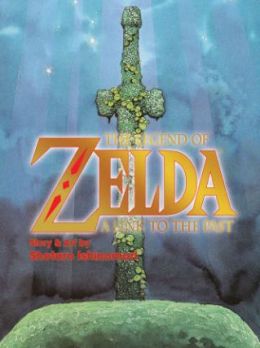
Legend of ZeldaLots of fantasy, gaming and supernatural series are launching in May, starting with Shotaro Ishinomori’s Legend of Zelda: A Link to the Past, which was originally drawn for Nintendo Power magazine back in the 1990s; I rounded up some of the most promising May releases at the Barnes & Noble Sci-Fi/Fantasy Blog.

Also at the B&N blog, I celebrate the return of Vinland Saga with a look at what sets it apart from your average Viking story.

This blog has been a bit quiet because I went to TCAF last week, where I interviewed both Aya Kanno, the creator of Otomen and Requiem of the Rose King, and Gurihiru, the two-woman team that illustrates Dark Horse’s Avatar: The Last Airbender graphic novels. I’ll have more to say about that later, but for now, it’s worth taking a few minutes to read Jocelyne Allen’s essay on Aya Kanno and the importance of Otomen. Jocelyne was Kanno’s translator at TCAF and she did a superb job; she’s also the translator of Requiem of the Rose King, but this post is about why Otomen matters. I have to admit I had only glanced at Otomen before TCAF, but I prepped for the interviews (one individual and one onstage) by reading not only Otomen and Requiem but also Kanno’s earlier series, Blank Slate. Taken together, they are a remarkable body of work. Kanno is versatile, working in a number of styles, but also very smart, and as Jocelyne points out, Otomen gets really interesting after the first few volumes.

Seven Seas has announced three new manga licenses: The high school zombie series Hour of the Zombie (a.k.a. Igai—The Play Dead/Alive); a fanservice-y shonen title, The Testament of Sister New Devil, which is based on a light novel series; and an action comedy, My Monster Secret.

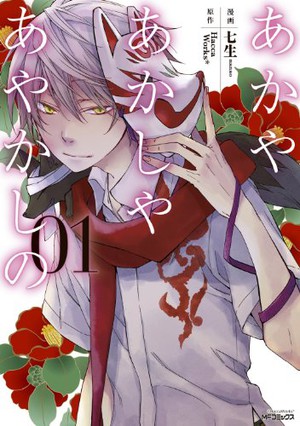
Of the Red, the Light and the Ayakashi

Of the Red, the Light and the Ayakashi

Yen Press announced two new licenses last week: School-Live! (Gakkō Gurashi!), by Sadoru Chiba and Norimitsu Kaihō (Nitroplus), and Of the Red, the Light and the Ayakashi (Aka ya Akashi ya Ayakashi no), by HaccaWorks* and Nanao

Meanwhile, Viz has some license rescues, all digital: Eureka Seven, formerly published by Bandai; two vintage Tokyopop titles, Glass Wings and Flower of Deep Sleep; and Cheeky Angel, a Viz title that’s out of print.

And Crunchyroll has the digital release of Inuyashiki, by Gantz creator Hiroya Oku. Kodansha comics will start releasing it in print in August.

Big convention news:

  • Naruto creator Masashi Kishimoto will be coming to New York Comic Con in October;
  • Yu-Gi-Oh! manga-ka Kazuki Takahashi will be at Comic-Con International in San Diego in July;
  • And Julietta Suzuki, creator of Kamisama Kiss and Karakuri Odette (remember that one?) will make her first U.S. appearance at Anime Expo, also in July.

The Manga Bookshelf team discuss their Pick of the Week and take a look at the coming week’s new releases.

Justin Stroman has another one of his excellent insider posts up at Organization Anti-Social Geniuses; this time he interviews four manga translators about their work. He also investigates why he can’t read mature manga in the Viz apps.

Also, Ryan Holmberg has a longish but fascinating piece at The Comics Journal about blood banks and selling blood and why that pops up so often in manga.

In preparation for Kishimoto’s visit, Vernieda Vergara answers all your questions about Naruto. Well, some of them, anyway.

Shonen Jump is bringing back Jump Start, running a couple of chapters of new manga from the Japanese magazine; Lori Henderson takes a look at two new series.

Least surprising news item of the week: Shotaro Ishinomori’s Legend of Zelda: A Link to the Past tops this week’s New York Times best-seller list.

Here’s a preview of Batman: The Jiro Kuwata Batmanga #46.

News from Japan

  • Kodansha has announced the winners of the 39th Kodansha Manga Awards. The Seven Deadly Sins and Yowamushi Pedal (recently licensed by Yen Press) tied for best shonen manga, Nigeru wa Haji da ga Yaku ni Tatsu got the nod for best shojo title, and Knights of Sidonia was named Best General Manga. Tochi Ueyama’s long-running series Cooking Papa got a special award as well.
  • The monthly magazine Zero-Sum Ward is shutting down, but several series, including Wild Adapter, are being farmed out to other publications or online.
  • Do you like Magi? So do lots of other people: A recent issue of Shonen Sunday reports that there are 18 million volumes in print.
  • Kadokawa is launching Comic Walker GLOBAL, a companion to its Comic Walker digital manga site that features non-Japanese titles (mostly translated into Japanese).
  • Shueisha will be selling a full-size reproduction of Masashi Kishimoto’s original art for the first chapter of Naruto.

Reviews

Kristin on The Angel of Elhamburg (Comic Attack)
John Rose on vol. 18 of Black Butler (The Fandom Post)
Ash Brown on Blade of the Immortal, vol. 31: Final Curtain (Experiments in Manga)
John Rose on vol. 5 of Blood Lad (The Fandom Post)
Day on vol. 2 of Citrus (Okazu)
AstroNerdBoy on vol. 1 of D-Frag (AstroNerdBoy’s Anime and Manga Blog)
Sean Gaffney on vol. 1 of Evergreen (A Case Suitable for Treatment)
John Rose on vol. 38 of Fairy Tail (The Fandom Post)
Kory Cerjak on vol. 43 of Fairy Tail (The Fandom Post)
Ken H on vols. 2 and 3 of The Heroic Legend of Arslan (Sequential Ink)
Matthew Alexander on vol. 3 of High School DxD (The Fandom Post)
AJ Adejare on vol. 1 of Kagerou Daze (The Fandom Post)
Erica Friedman on vol. 3 of Kampfer (Okazu)
Lori Henderson on vol. 1 of Let’s Dance a Waltz (Manga Xanadu)
Kate O’Neil on vol. 1 of Let’s Dance a Waltz (The Fandom Post)
Matthew Warner on vol. 13 of Library Wars (The Fandom Post)
Anna N on vols. 1-3 of Magi (Manga Report)
Dave Ferraro on vol. 1 of Maria the Virgin Witch (Comics and More)
Erica Friedman on Murcielago (Okazu)
Ash Brown on vol. 3 of Mushishi (Experiments in Manga)
John Rose on vol. 1 of No. 6 (The Fandom Post)
Laura on No. 6 (Heart of Manga)
Jessica Uelmen on Ouran High School Host Club (The Mary Sue)
Lori Henderson on vols. 12-20 of Pandora Hearts (Manga Xanadu)
Chris Beveridge on Panty and Stocking with Garterbelt (The Fandom Post)
Ash Brown on Priapus (Experiments in Manga)
Rebecca Henely on Puella Magi Oriko Magica: Extra Story and vol. 1 of Puella Magi Tart Magica (Women Write About Comics)
Nick Smith on Puella Magi Tart Magica, vol. 1: The Legend of Jeanne (ICv2)
Erica Friedman on Renai Manga (Okazu)
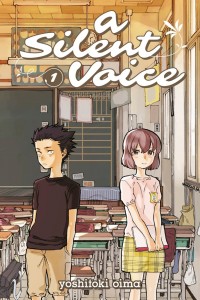
Sean Gaffney on vol. 1 of A Silent Voice (A Case Suitable for Treatment)
John Rose on vol. 3 of Soul Eater NOT! (The Fandom Post)
Erica Friedman on Starlight Melody (Okazu)
Kristin on vols. 2 and 3 of Terra Formars (Comic Attack)
Justin Stroman on vol. 1 of Tokyo Ghoul (Organization Anti-Social Geniuses)
Matthew Alexander on vol. 8 of Triage X (The Fandom Post)
Scott Cederlund on Uzumaki (Panel Patter)
Ken H on vol. 6 of Wolfsmund (Sequential Ink)
Kory Cerjak on vol. 1 of Yamada-Kun and the Seven Witches (The Fandom Post)
Sakura Eries on vol. 1 of Your Lie in April (The Fandom Post)

Filed Under: MANGABLOG

Priapus

May 15, 2015 by Ash Brown

PriapusCreator: Mentaiko Itto
Publisher: Bruno Gmünder
ISBN: 9783867877947
Released: April 2015

Mentaiko Itto’s Priapus is the fifth volume to be released by Bruno Gmünder as part of its relatively new Gay Manga line. Although the publisher is based in Germany, so far all of the manga have been translated into English. With the publication of Priapus in 2015, Itto joined Gengoroh Tagame and Takeshi Matsu as one of the few creators of gay erotic manga to have had an entire collection of their work released in English. However, unlike Tagame and Matsu, who both had examples of their work translated before being published by Bruno Gmünder, Priapus is Itto’s official English-language debut. Although the release of Priapus provided my first opportunity to read any of Itto’s manga, the creator does have a fairly strong presence online and so I was already somewhat familiar with his artwork and illustrations. But, I don’t actually know much about Itto beyond the fact that he seems to have garnered a global following; Bruno Gmünder describes him as “one of the most exciting young voices in gay manga today.”

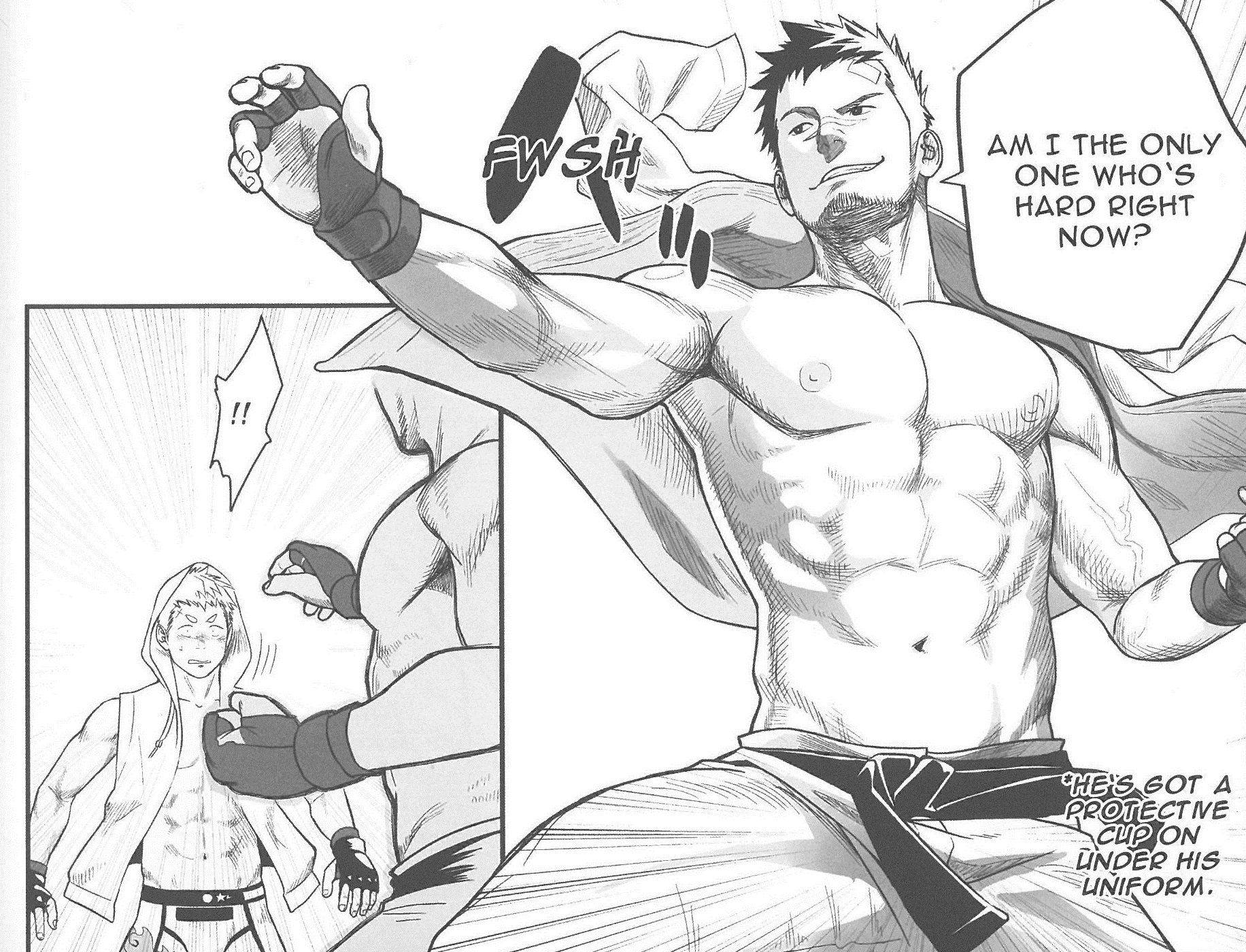
Priapus collects several of Itto’s short manga and doujinshi. The volume opens with the first three episodes of “Priapus,” an ongoing series of stories featuring a contemporary erotic reimagining of the titular Greek god of fertility. Zeus, fed up with humans and their pointless wars, has decided to eliminate the entire race. Believing more violence will do nothing to solve the problem or teach humanity a lesson, he orders Priapus to bring about their demise bloodlessly in a way that only he can—by turning all of the men gay in a great Homopocalypse. “Gachinko Battle” is a spinoff of sorts from “Priapus.” The Gachinko Budokai is an epic mixed martial arts tournament, the winner of which is granted a wish by the gods. However, the rules of the competitions change according to the gods’ whims, and with Priapus in charge that means the champion will be whoever makes his opponents orgasm first during a fight. The gods have their fun in “1/4” as well, shrinking a young man to less than a quarter of his size and cursing him to stay that way until he successfully has sex with someone he likes. Priapus concludes with the completely unrelated “1000 Meters Deep” which is about the intimate relationship between the two last remaining members of a swim club.

Priapus, page 106In general, there isn’t a lot of depth to the stories and characters of Priapus. The setups mostly serve as an excuse for a copious amount of sex, and there is plenty of vigorous, uninhibited sex included in the manga. But so much of Priapus is intentionally ridiculous that, for the most part, it’s not intended to be taken too seriously to begin with. Ultimately, the result is highly entertaining. At times the volume is even surprisingly cute and sweet. As expected, Priapus is a stunningly virile god who takes great delight in being given free rein to have as much sex as he wants with as many men as he would like using wide a variety of divine tools and techniques to achieve his goals. But it soon becomes clear that he actually and honestly cares for the men he seduces. He even takes the time to set them up with other guys when he needs to move on to his next target. The men in the other stories, too, make emotional and romantic connections with each other, not just physical ones. The erotic content of Priapus tends to be the focus of the manga, but there are some rather charming character moments as well.

Although in part some of the characters in Priapus are inspired by Greek mythology, Itto’s stories and interpretations are entirely his own. Humor pervades Priapus, everything from the basic premises of the stories, to the references to anime and adult videos, the breaking of the fourth wall, the interactions between the characters, and even the imaginative sex itself. (By necessity, the sex in “1/4” has to be particularly creative.) Initially it would seem that “1000 Meters Deep” would be the exception to this trend. Overall, the story has a much more melancholy and introspective feel to it. Even the artwork is more delicate, setting it further apart from the rest of the manga collected in Priapus. But it also ends with a bit of levity. Itto mentions in the afterword that he’s very happy that his work has now been published uncensored; his lean, trim, muscular, and well-built men are on full display in all of their frequently naked glory. The artwork in Priapus is attractive and the stories and characters are amusing and even heartwarming on occasion, making for a very appealing collection of erotic gay manga. I certainly wouldn’t mind seeing more of Itto’s work translated.

Filed Under: REVIEWS Tagged With: Bruno Gmünder, Gay Manga, manga, Mentaiko Itto

Manga the Week of 5/20

May 14, 2015 by Sean Gaffney, Ash Brown, Anna N, Michelle Smith and MJ 2 Comments

SEAN: Did you enjoy this week’s small week? Good. That isn’t next week.

Dance in the Vampire Bund’s Scarlet Order may have ended (somewhat surprisingly) in Japan, but Seven Seas still has more of it to bring you here, with Vol. 2 arriving next week.

Lucifer and the Biscuit Hammer’s third omnibus takes us over halfway through this highly underrated superheroes story.

ASH: I’ve largely been enjoying this rather peculiar series.

dreamfossil

SEAN: Satoshi Kon gets a collection of his short stories from Vertical Comics, called Dream Fossil.

ASH: This should be good. (And unlike Dark Horse’s Kon releases, aren’t unfinished works.)

ANNA: Good to know! I hadn’t realized that the Dark Horse releases were unfinished works.

SEAN: Dorohedoro has reached Volume 15, and things are continuing to get darker and darker in this already dark manga.

ASH: Always happy to see more Dorohedoro!

SEAN: In fact, it’s a depress-o-rama from Viz this week! We also get a 6th volume of Gangsta, a 4th Resident Evil, and a 6th volume of Terra Formars. If you like action and people dying and having bits of them cut off, you should be very happy indeed.

ASH: Oh, more Gangsta, too? Excellent.

ANNA: Gangsta is great. So stylish, so violent, so seinen.

SEAN: Well, I was wrong, it was a short wee—oh right, Yen Press. I knew I was missing 17 or so titles. First off, we have the third A Certain Magical Index light novel, and the one most everyone agrees is one of the best in the entire series.

The other novel is a debut. Kagerou Daze began life as a series of Vocaloid songs about a group of friends with powers, and has now become a fairly large franchise, of which the light novel is one part.

Back to manga, we have the third volume of Ani-Imo, which is shoujo in that odd way that only Aria titles can be shoujo.

A 6th Blood Lad omnibus. I’ve become really fond of this series, and always enjoy seeing more of it.

MICHELLE: I was pleasantly surprised that the sixth omnibus is out so soon, given that we’re essentially caught up to Japan.

SEAN: And a 10th volume of BTOOOM!, a series of which I am far less fond. Honestly, once you do the bomb bouncing off the breast thing, where else is there to take a story? It’s the pinnacle.

If you’d rather have a manga version of the Magical Index novels, then Yen Press is here to help you, as here’s the first manga volume.

emma1

One of the most exciting license rescues ever, Yen is releasing the seinen classic Emma in omnibus hardcover format. It will be read by everyone. (glare) I said, everyone.

ASH: I’m absolutely thrilled; I’ll actually be able to buy the series this time around!

MJ: Same here! This is honestly thrilling!

MICHELLE: I am clutching my CMX editions tightly!

ANNA: Nice. This is a series that deserves to be in print, and the deluxe Yen editions are always a treat. I might buy it again!

SEAN: Well, everyone except the Manga Bookshelf team, who may be distracted by the 18th Goong omnibus.

MJ: Also, THIS.

MICHELLE: Not only is it new Goong, it’s also the end, as this omnibus contains the final volumes (27-28 by the original Korean numbering) of the series!

ANNA: I need to get caught up on Goong, it is such a great soap opera.

SEAN: The Manga Bookshelf team is unlikely to be distracted at all by the 3rd Gou-dere Sora Nagihara volume.

If you’d rather have a manga version of the Is It Wrong To Try To Pick Up Girls In A Dungeon? novels, then Yen Press is here to help you, as here’s the first manga volume. (Have I typed this before?)

After seven volumes of No Matter How I Look At It, It’s You Guys’ Fault I’m Not Popular!, I’m beginning to think she needs to take some responsibility here.

ASH: Heh.

MICHELLE: Srsly.

SEAN: It has been a common complaint that Sword Art Online features Kirito, occasionally Asuna, and not much else. So those readers should enjoy the spinoff Girls’ Ops, which focuses on the rest of the female cast getting involved in new MMORPG adventures.

trinityseven

Another debut for the more action-oriented crowd, we have the first volume of fantasy series Trinity Seven, which is also a harem series if the cover art and blurb don’t deceive me. I admit I know little about it.

On the darker fantasy side, there’s a 3rd Ubel Blatt omnibus, helpfully called Vol. 2.

ASH: Very helpful.

SEAN: Umineko: When They Cry’s new omnibus, End of the Golden Witch, sees the series shaken up with a new detective, who arrives on the island. Will things continue to be horribly tragic as we continue the adventures of manga’s most toxic family? Even this level of reasoning is possible for Furudo Erika. (Please note: Furudo Erika, Frederica Bernkastel, and Furude Rika are totally different people. Honest.)

Lastly, we get a 9th omnibus of Until Death Do Us Part, another series I’ve fallen incredibly behind on.

Is this too much manga? Or just right?

Filed Under: FEATURES, manga the week of

A Silent Voice, Vol. 1

May 14, 2015 by Sean Gaffney

By Yoshitoki Oima. Released in Japan as “Koe no Katachi” by Kodansha, serialized in the magazine Weekly Shonen Magazine. Released in North America by Kodansha Comics.

There have been many manga releases here in North America that deal with the subject of childhood bullying – it’s a theme in Japanese manga that is getting more and more of a workout lately, as the ability to simply blame the victim and look away gets harder to do. This doesn’t mean, however, that it’s always accepted or welcomed. A Silent Voice won an award for its original one-shot chapter, but took years to get released as a series – in fact, there were apparently lawsuits. This is likely due to the fact that it has not one but two things that there is a desire to gloss over and not bring out into the open – childhood bullying, and disabilities.

silentvoice1

The blurb on the back cover says the word heartwarming was made for a manga like this, and I can only imagine readers will finish the first volume and want to give the writer of that blurb a good swift kick, as this initial volume is all heartbreaking instead. You can see why this title was shied away from. It’s not shy about showing exactly how a culture of bullying works, and how quickly it can turn against anyone. It shows the apathy and outright cruelty of teachers, how parents can seethe with anger or merely stand there unable to do anything. And in the end our hero, who’s a childish brat who discovers that harassing a deaf girl is a good outlet for his anger and boredom, is driven to the point where at the end of this volume he’s looking to put all his affairs in order so that he can kill himself. This is a heavy book.

If there’s a fault in this initial volume, it’s that there’s really TOO many characters who we simply don’t like. Shoya’s boredom and desire for excitement (and lack of desire for learning) is understandable, but you desperately hope he will mature, and cringe as the book goes deeper and deeper into how he feels about Shoko’s mere presence. The children are quick to go along with what Shoya does, mostly as they find it incredibly annoying to have to deal with Shoko’s disability. And the kid’s teacher is loathsome, wanting nothing more than to shuffle these kids on and make sure they don’t do anything embarrassing, with a side dose of cruelty.

As for Shoko, she’s a bit of a cipher right now, aside from being shy, but there’s a bit of deliberateness in that. She is the outsider, the different one, the one who NEEDS special attention over the other kids. It’s notable that she’s deaf but doesn’t know sign language – a well-meaning but easily cowed teacher tries to get the kids to learn it, but that goes precisely nowhere. Shoko’s disability doesn’t automatically make her better, faster, or stronger like other cliched works – she’s an average kid, can’t sing because of her hearing… honestly, it’s seeing her insistent effort on trying to br friendly with everyone despite all the abuse that is the most heartwarming part of this series.

We end on a bit of a cliffhanger, and I suspect that this reunion will go poorly, but I really want to see more. Most of these characters are horrible, but the author does a great job of making you want to see them mature. And it’s also a good, non-shiny look at how disabled children might be treated in a society that believes the nail that sticks up must be hammered down. Definitely recommended.

Filed Under: REVIEWS

Mushishi, Vol. 3

May 13, 2015 by Ash Brown

Mushishi, Volume 3Creator: Yuki Urushibara
U.S. publisher: Del Rey
ISBN: 9780345496454
Released: February 2008
Original release: 2002
Awards: Japan Media Arts Award, Kodansha Manga Award

Mushishi, Volume 3 by Yuki Urushibara was originally published in Japan in 2002. The volume was initially released in English in print by Del Rey Manga in 2008. Although that particular edition is no longer available, Kodansha Comics did re-release Mushishi, Volume 3 digitally in 2014. I count myself lucky to own the entirety of Mushishi in print. I fell in love with the series after reading the first volume and so made a point to begin collecting it. Fortunately, Mushishi was being released in English around the same time I first started to really get into comics and manga and I didn’t have a difficult time finding the series. To this day, Mushishi remains one of my favorite manga. I like its quiet yet often creepy atmosphere and its folktale-like nature. I’m not the only one who appreciates Mushishi. The series was a recipient of a Kodansha Manga Award and has also been the basis for a live-action movie as well as multiple anime adaptations and other media.

Unseen to most people but found throughout nature are mushi—creatures that are still very close to the original form of life. They can be benign forces but often their presence is a source of trouble when it encroaches upon the human world. Illness and disease and even seemingly natural phenomena can all be attributed to mushi. Some people with the ability to see mushi make their living as mushishi by traveling across the country, studying the creatures, and trying to return balance where disturbances have occurred. But there are also those who can see mushi who are not mushishi. Frequently they are unaware of what the creatures truly are, and many times the people around them don’t believe them when they try to describe their experiences with mushi. This lack of understanding can cause significant strife, even within tightly knit communities. People who can see and are aware of mushi, whether they be mushishi or not, are treated differently, sometimes out of concern and sometimes out of fear.

Mushishi, Volume 3, page 202While the previous volume of Mushishi seemed to place a particular emphasis on mushishi, the fourth volume mostly features stories in which Ginko—a mushishi and the series’ protagonist—is dealing with incidents where people who can see mushi but who are not formally trained as mushishi are somehow involved. In “The Cry of Rust,” the unique quality of a young woman’s voice attracts mushi, bringing calamity to her village. “From the Ocean’s Edge” follows a man whose wife has been missing at sea for three years after they both saw peculiar creatures in the water. “The Heavy Seed” tells the story of a village that has strangely bountiful harvests during times of famine. Children fall deathly ill in “White Living in the Inkstone” when they accidentally release dormant mushi while playing in Doctor Adashino’s storehouse without permission. (Adashino is one of the very few recurring characters in Mushishi; his slightly antagonistic relationship with Ginko is absolutely delightful.)

Although during serialization it followed “The Cry of Rust,” the final chapter collected in Mushishi, Volume 3 is “The Fish Gaze.” The episode is particularly notable because it reveals some of Ginko’s backstory. Even though it’s a past that he himself is unable to remember—a rare example of a time when the reader is more knowledgeable than he is—this specific part of Ginko’s life story plays a very important role in who he later becomes. Mushishi tends to be episodic, but elements of Ginko’s character and personality have been revealed throughout the series. However, “The Fish Gazee” is the first chapter to really delve into his history. Like many of the other stories in Mushishi, Ginko’s tale has elements of darkness and tragedy, but the emphasis placed on the ultimate perseverance of life in the face of death and sorrow remains. Mushishi frequently incorporates sadness, but the manga is not without hope; Urushibara seems to be able to navigate a fine balance between melancholy and wonder with ease.

Filed Under: REVIEWS Tagged With: del rey, Japan Media Arts Award, Kodansha Manga Award, manga, mushishi, Yuki Urushibara

  • « Go to Previous Page
  • Page 1
  • Page 2
  • Page 3
  • Go to Next Page »
 | Log in
Copyright © 2010 Manga Bookshelf | Powered by WordPress & the Genesis Framework