• Skip to primary navigation
  • Skip to main content
  • Skip to primary sidebar
  • Home
  • About Us
    • Privacy Policy
    • Comment Policy
    • Disclosures & Disclaimers
  • Resources
    • Links, Essays & Articles
    • Fandomology!
    • CLAMP Directory
    • BlogRoll
  • Features & Columns
    • 3 Things Thursday
    • Adventures in the Key of Shoujo
    • Bit & Blips (game reviews)
    • BL BOOKRACK
    • Bookshelf Briefs
    • Bringing the Drama
    • Comic Conversion
    • Fanservice Friday
    • Going Digital
    • It Came From the Sinosphere
    • License This!
    • Magazine no Mori
    • My Week in Manga
    • OFF THE SHELF
    • Not By Manga Alone
    • PICK OF THE WEEK
    • Subtitles & Sensibility
    • Weekly Shonen Jump Recaps
  • Manga Moveable Feast
    • MMF Full Archive
    • Yun Kouga
    • CLAMP
    • Shojo Beat
    • Osamu Tezuka
    • Sailor Moon
    • Fruits Basket
    • Takehiko Inoue
    • Wild Adapter
    • One Piece
    • After School Nightmare
    • Karakuri Odette
    • Paradise Kiss
    • The Color Trilogy
    • To Terra…
    • Sexy Voice & Robo
  • Browse by Author
    • Sean Gaffney
    • Anna Neatrour
    • Michelle Smith
    • Katherine Dacey
    • MJ
    • Brigid Alverson
    • Travis Anderson
    • Phillip Anthony
    • Derek Bown
    • Jaci Dahlvang
    • Angela Eastman
    • Erica Friedman
    • Sara K.
    • Megan Purdy
    • Emily Snodgrass
    • Nancy Thistlethwaite
    • Eva Volin
    • David Welsh
  • MB Blogs
    • A Case Suitable For Treatment
    • Experiments in Manga
    • MangaBlog
    • The Manga Critic
    • Manga Report
    • Soliloquy in Blue
    • Manga Curmudgeon (archive)

Manga Bookshelf

Discussion, Resources, Roundtables, & Reviews

Archives for December 2014

VIZ Nabs New Junji Ito Manga

December 5, 2014 by Katherine Dacey

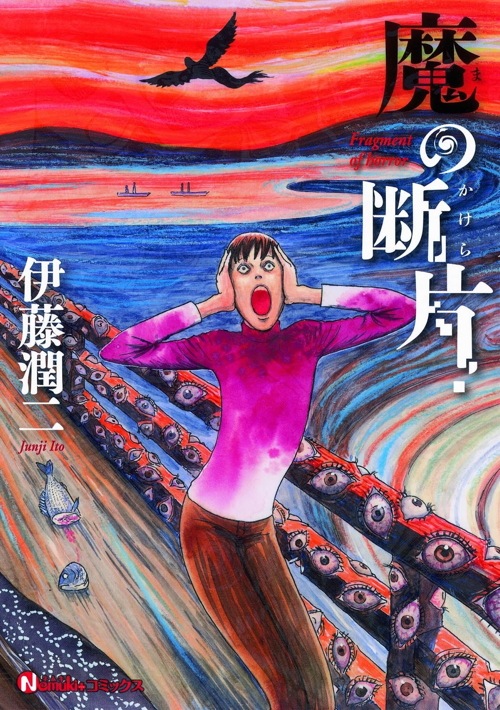
fragments_of-Horror-itoExciting news: VIZ will publish Junji Ito’s latest manga, Fragments of Horror, in 2015. VIZ promises that Fragments has something for everyone, “from the terrifying to the comedic, from the erotic to the loathsome.” Look for a hardcover edition next summer.

The latest volume of Monster Musume edges out Attack on Titan for the top spot on this week’s New York Times Manga Bestseller list.

Toshi Nakamura thinks the new Parasyte movie doesn’t stack up against the manga.

But wait–there’s more! Masashi Kishimoto sits down for another interview about Naruto, this time with Mezamashi TV.

Deb Aoki files a report from the 2014 International Manga Festival in Tokyo, while Khursten Santos posts an in-depth look at the Manga Futures conference, which was held at the University of Wollongong last month.

Organization Anti-Social Geniuses is looking for a Manga Features Writer.

To help shojo fans get into the Christmas spirit, Anna N. is giving away volumes 1-3 of Sweet Rein.

Which new Seven Seas titles are you eagerly anticipating? Lori Henderson offers her two cents on the company’s latest acquisitions.

Librarian Mikhail Koulikhov discusses the pros and cons of using Google Scholar to research anime and manga topics.

News from Japan: Mayumi Azuma (Elemental Gelade) and Tatsuro Nakanishi (Crown) have teamed up for Amadeus Code, a new series for Monthly Comic Garden.

Reviews: Anime News Network officially retires its Right Turn Only!! column this week with mini-reviews of Afterschool Charisma, From the New World, and Whispered Words. Elsewhere at ANN, Jason Thompson looks at Japan Sinks, a natural disaster story from the 1970s.

Alice Vernon on Are You Alice? (Girls Like Comics)
Sakura Eries on vol. 3 of Aron’s Absurd Armada (The Fandom Post)
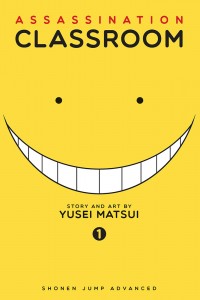
Sean Gaffney on vol. 1 of Assassination Classroom (A Case Suitable for Treatment)
Matt Wilson on Batman: The Jiro Kuwata Batmanga (Comics Alliance)
Sarah on vol. 62 of Bleach (nagareboshi reviews)
Kate O’Neil on vol. 52 of Case Closed (The Fandom Post)
Megan R. on Hatsune Miku: Unofficial Hatsune Mix (The Manga Test Drive)
Allen Kesinger on vols. 1-4 of Judge (No Flying No Tights)
Leroy Douresseaux on vol. 4 of Millennium Snow (Comic Book Bin)
Lori Henderson on vols. 15-21 of Pokemon Adventures: Ruby & Sapphire (Good Comics for Kids)
Matthew Warner on vol. 3 of Puella Magica Madoka Magi: The Different Story (The Fandom Post)
Scott Cederlund on vol. 13 of Real (Panel Patter)
Mad Manga on chapters 1-26 of Salty Studio (Cartoon Geek Corner)
Ken H. on vols. 3-4 of Say I Love You (Sequential Ink)
Megan R. on The Seven Deadly Sins (The Manga Test Drive)
Mad Manga on chapters 2-3 of Takujo no Ageta (Cartoon Geek Corner)
Lesley Aeschliman on vol. 8 of Voice Over! Seiyu Academy (Lesley’s Musings on Anime & Manga)

Filed Under: MANGABLOG Tagged With: Junji Ito, viz media

Manga the Week of 12/10

December 5, 2014 by Sean Gaffney, Ash Brown, MJ, Anna N and Michelle Smith Leave a Comment

SEAN: The second week in December brings us a wide variety of manga for perusing, but is already dominated by something that Fantagraphics released THIS week and I am therefore behind on.

massive

Massive is an anthology of gay manga that, from what I hear, can be judged very well by its cover: if the idea of large, muscley men having sex with each other intrigues you, then this is an absolute must buy. It’s always great to see this sort of manga over here.

ASH: The release date kept moving around for this one, so don’t feel too bad. I’m thrilled that it’s finally here, though! Massive is one of my most anticipated releases for 2015. It includes manga, interviews, essays, and more. I can’t wait to get my hands on a copy!

MJ: Same here.

ANNA: I probably won’t be reading this, but I think it is very cool that it is being published.

SEAN: Kodansha has a third volume of Attack on Titan: Before the Fall. This is the manga, not the novel, for those who may be confused.

There’s also a fifth Battle Angel Alita: Last Order omnibus.

Seven Seas hopes you still like Wonderland (not to be confused with the Country of Hearts) with the 2nd volume of I Am Alice: Bodyswap in Wonderland.

Vertical gives us two types of supernatural action manga. The 2nd volume of Ajin possibly has less romantic comedy than I expect Witch Craft Works 2 will have, though I’ve been wrong about that sort of thing before.

ASH: I think you’re probably right this time.

SEAN: Arata the Legend has reached 20 volumes, which means if it weren’t licensed already, it would be totally unlicensable by now. But it is! Rejoice, Arata fans.

MICHELLE: I do like Arata, but I kind of can’t believe it’s gone on longer than Fushigi Yuugi. I guess that’s what happens when it’s shounen.

ANNA: I do have a deep and unwavering affection for Fushigi Yuugi. Sorry Arata!

dw6

SEAN: Deadman Wonderland has its sixth volume next week as well.

ASH: Tokyopop only made it to five volumes; Viz is starting to get into new material, now.

MICHELLE: Yep! I always think of this series in the same thought as the other final straggly releases TOKYOPOP managed to get out, including a volume of The Stellar Six of Gingacho. Probably no one will ever rescue that one, so I has a sad.

MJ: I’ve been kinda iffy on this series, but I am pretty happy that TP series’ are getting picked back up, so I consider it a win.

ANNA: I will pause to evoke the late, lamented series Demon Sacred and Sky Blue Shore

And there’s a 13th Itsuwaribito, and I begin to despair about this long string of worthy Viz shonen I don’t really follow.

And I am rewarded with a 9th volume of Magi, which I do follow, and which is excellent.

MICHELLE: It is. We need to start a campaign to get MJto read it.

MJ: Heh.

ANNA: I am hoarding stray volumes of this and do mean to read it one day.

SEAN: Are you getting a massive amount of manga next week? Or just Massive?

Filed Under: FEATURES, manga the week of

Assassination Classroom, Vol. 1

December 4, 2014 by Sean Gaffney

By Yusei Matsui. Released in Japan by Shueisha, serialization ongoing in the magazine Weekly Shonen Jump. Released in North America by Viz.

A few years back, when Weekly Shonen Jump was just getting started in North America, there was a rumor that one of the series brought over would be the quirky, somewhat popular Majin Tantei Nōgami Neuro. Unfortunately, what it ended up being was one of the first examples of those “mid-range” Jump titles that get to 15-25 volumes in Japan but never quite garner enough success to come over here. After a break of a couple of years, however, the author came back with an even larger hit: Assassination Classroom, the story of an alien teacher and the misfit kids who have to kill him to save the Earth. Initially thought unlicensable due to the basic premise, it’s now reached double digit volumes and an anime is on the way, so Viz is releasing it as a Shonen Jump Advanced title.

assclass1

There’s another good reason why Viz decided to license this title after all: it’s fantastic. Technically the story is about the kids trying to find ways of murdering their teacher – attempts are made every single chapter, after all – but what this *really* is is another in the genre of ‘oddball teacher comes into class full of misfits and shows them they are all better than they think they are’. Think GTO, Gokusen, or Hell Teacher Nube. The background regarding Koro-sensei’s decision to blow up the Earth at the end of the school year unless he is killed is kept deliberately vague, though various hints suggest he may have been human once. It’s more a plot widget to allow for the killings, which range from deadly serious to hilarious.

Technically the other protagonist of this series is Nagisa, a bishonen-looking young man who’s good at research and analysis but apparently bad enough at school to be in class 3-E. So far he’s mostly there to be the narrative voice, but I sense that there’s more coming in the next few volumes. The series clearly has something to say about bullying and the Japanese educational system, even if it’s filtered through a SF-comedy vein. The regulations against 3-E are designed deliberately so that the children are scapegoats for the rest of the school, and that once there it’s very difficult to climb back out. Indeed, the only person on their side seems to be the alien they have to kill.

Matsui got his start as an assistant on Bobobobo-bobobo, and the influence can sometimes be seen in the sheer loopy surrealism of Koro-sensei’s remarks and attitudes. This isn’t a gag manga, though, and the kids have very real problems – a bully hunter who was betrayed by a teacher has lost all faith in the profession; a baseball pitcher who imitates his favorite player finds he can’t move forward; and a girl who’s good at chemistry but poor at speaking finds you can’t simply kill someone by asking them to die nicely. These are good lessons Koro-sensei is teaching, and the kids are beginning to realize what a great teacher he really is. Shame he plans to destroy the Earth.

Speaking of which, not *everything* is left to these kids (who I suspect are meant to be scapegoats to the entire world if their mission fails). A Ministry of Defense employee becomes their gym teacher, and teaches the kids genuine assassination techniques. And there seems to be another assassin being sent to kill Koro-sensei at the cliffhanger to this volume, and she gives quite a first impression. It’s going to be another two months til the next volume, but this is a terrific debut from Jump, and I cannot wait to see what happens next.

Filed Under: REVIEWS

Bookmarked: Satoshi Kon-a-thon

December 3, 2014 by Katherine Dacey

It’s not every day that an American publisher releases a manga by the late, great Satoshi Kon, so Brigid and I decided to mark the occasion with a roundtable discussion. Joining us is David Brothers, one our favorite comics journalists. David has written for Comics Alliance, Pop Culture Shock, Publisher’s Weekly, Wired, and The Atlantic Monthly, and currently works in the comics industry.

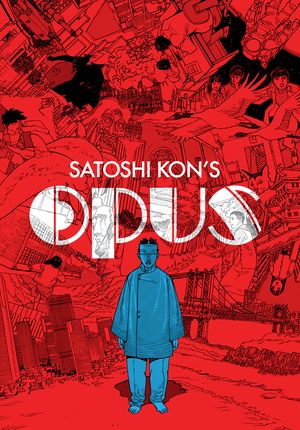
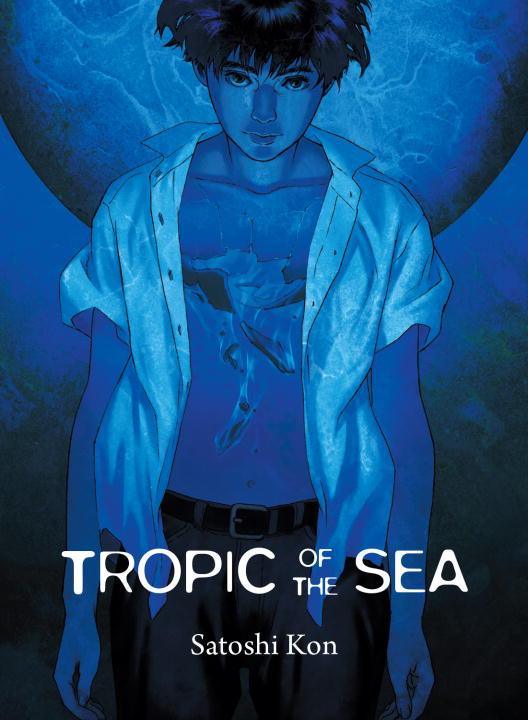
On our plate: Tropic of the Sea, which was published by Vertical Comics in 2013, and OPUS, which arrives in comic book stores today courtesy of Dark Horse. Both works date to an early stage of Satoshi Kon’s career, but explore themes present in such films as Perfect Blue, Millennium Actress, and Paprika–most notably the boundary between reality and imagination.

KATE: Let’s start the conversation with a basic question: which did you enjoy more, OPUS or Tropic of the Sea, and why?

OpusDAVID: I definitely liked OPUS a lot more than Tropic of the Sea, I think owing to the fact that while both are stories in well-worn genres, OPUS is way more up my alley in general, since it was at least partly about storytelling as a creator. Tropic of the Sea felt fairly pat, with precious few surprises all the way down to the last panel. OPUS follows the blueprint of other stories in its genre, but it’s also funnier and warmer somehow, I suppose because it’s about the nature of free will and humanity, and to tackle those points you kinda have to have characters that are entertaining to watch.

I actually read these books back-to-back the first time I read both, Tropic of the Sea and then OPUS, with a break for cooking and dinner in-between. OPUS did a great job of sparking my imagination. I think it’s cool that the story works as both how we read it, as the story of a creator in his creation, and also a crazy deus ex machina ending for the manga Resonance. Tropic of the Sea sorta is what it is, which is a well-executed story to be sure, but OPUS goes places I really enjoy.

I’m focusing on OPUS, but I didn’t dislike Tropic of the Sea. It’s good, but it’s just not quite my bag. How was it for you two?

BRIGID: Wow, I’m actually feeling the opposite: I really liked Tropic of the Sea because I thought that it was very well done, even if the story had been done before. I’m finding OPUS much harder to follow, though. Maybe I’m just not good with action stories, but it seems like things are constantly exploding and flying apart without any visible cause. And right at the end of chapter 1 there’s this weird non-sequitur where Satoko’s leg is trapped under a stone column and then, without anything changing in the panel that I could see, she just pushed it off and jumped up. On the one hand, this manga has a pretty sophisticated sense of space, but on the other hand, I’m having a lot of trouble following the motion of people and things within that space, and in particular, why things are blowing up. As I write this, I haven’t finished the manga, so maybe there’s a resolution or explanation I’m not seeing yet, but right now it’s pulling me out of the story to have to stop and figure out what just happened. It’s weird, too, because you would expect an animator to be tighter about that kind of thing.

tropic-of-the-sea-cover
KATE: My experience tracks with yours, David: I liked OPUS more than Tropic of the Sea. I found the premise of Tropic of the Sea a little too familiar, in large part because the characters were all such obvious types–the skeptic, the unscrupulous developer, the wise old-timer–that none registered as individuals. The story’s length was also a contributing factor, as Kon didn’t have enough space to flesh out the cast beyond their specific plot functions. It’s a shame that the script wasn’t better, as the illustrations create a palpable sense of place.

As for OPUS, it irresistibly reminded me of the a-ha video for “Take on Me” and the Will Farrell/Emma Thompson flick Stranger Than Fiction, with a pinch of AKIRA for seasoning. I normally find these kind of meta-exercises tedious, but Kon infuses the story with a sense of playful urgency that thwarts the urge to deconstruct every page. (For me, at least; your mileage may vary.)

DAVID: Oh, I’m definitely knee-deep in that urge to deconstruct. Resonance feels like the anime and manga that was around when I was getting into this stuff, something halfway between Ryoichi Ikegami’s ’80s realism and Masamune Shirow’s willingness to blend weird tangents into his hard sci-fi worldbuilding. The haircuts, the fashion, the motivations, the poorly thought-out backstories, and somehow even the fourth wall breaking action are all my bag. Which I think is a big part of why I share the constant feeling of Things Are Happening All Over with you, Brigid, but have a different response to it. The story-in-the-story is something I know well and have read often (the cop mentor, the thug friend, the weird way the heroine keeps getting rescued instead of rescuing!), so I buy into that, and through that the rest of the story, maybe a little harder than others would. This feels a lot like a lost chapter of a comic I never read as a kid, from late enough in the story that doing a daring metafictional “let’s talk about comics stories by way of being in a comics story!” tale was not just feasible, but something you could dedicate 300+ pages to.

KATE: I agree with Brigid that the draftsmanship in Tropic of the Sea is crisper–in fact, I think that’s part of the reason that I’m so focused on the creakier aspects of the story. The illustrations are almost… well, “invisible” isn’t quite the right word, but they don’t call attention to themselves in the same way that the illustrations in OPUS do. I don’t always respond well to flashy artwork, but I found OPUS engaging enough that I didn’t linger on the busier images.

As for the story, I’m with you, David: OPUS is a fun throwback to the kind of manga that Dark Horse and VIZ were publishing in the 1990s, right before the Sailor Moon/InuYasha revolution. OPUS isn’t as gonzo as some of the Koike/Ikegami manga from that era, but it still has that same breathless, hyperbolic quality. I’m kind of surprised that I liked it better than Tropic of the Sea, actually, as Tropic seems like it would be more in my wheelhouse. But I thought the script was too on-the-nose–a little ambiguity would have made the ending more satisfying, and more in keeping with Kon’s mature work. (An aside: I wondered what Rumiko Takahashi could have done with the premise of Tropic of the Sea… sigh.)

Switching gears, how did you react to the ending? Was Dark Horse right to include Kon’s unfinished sketches, or should the manga have been left incomplete?

DAVID: I came into OPUS cold, not even knowing it was unfinished, so I was both surprised, disappointed, and glad to see them. Surprised at the lack of an ending, disappointed at the same, but glad there was some kind of resolution, even if it’s just a metafictional one. For a story about stories to end with “Welp, and I guess I just didn’t finish this one, but I might one day!” is the kind of serendipity you can’t plan for, but is sometimes thematically correct for the work. It worked here, and I especially liked to see the pages Kon did with no faces. I thought that was a cool and creepy touch, and when combined with the rest of the backmatter, it made for a satisfying, though not all the way satisfying, ending.

Filed Under: MANGABLOG Tagged With: Dark Horse, Satoshi Kon, Vertical Comics

Manga Giveaway: Seven Seas Sampler Winner

December 3, 2014 by Ash Brown

A Centaur's Life, Volume 1Dictatorial Grimoire, Volume 1: Cinderella
Gakuen Polizi, Volume 1Kashimashi: Girl Meets Girl, Omnibus 1

And the winner of the Seven Seas Sampler manga giveaway is…Karen Swartz!

As the winner, Karen will be receiving A Centaur’s Life, Volume 1 by Kei Murayama; Dictatorial Grimoire, Volume 1: Cinderella by Ayumi Kanou; Gakuen Polizi, Volume 1 by Milk Morinaga; and Kashimashi: Girl Meets Girl, Omnibus 1 written by Satoru Akahori and illustrated by Yukimaru Katsura. Over the last couple of years, Seven Seas has really taken off, adding more licenses than ever before and diversifying its catalog. So, for this giveaway, I asked people tell me a little about some of their favorite manga released by Seven Seas. I’ve compiled a list below (those with an asterisk were mentioned by more than one person), but be sure to check out the Seven Seas Sampler comments for more details.

Some favorite Seven Seas titles:
Afro Samurai by Takashi Okazaki
Alice in the Country of created by Quin Rose
Amazing Agent Luna written by Nunzio DeFillippis, Christina Weir, illustrated by Shiei
Blood Alone by Masayuki Takano
Boogiepop created by Kouhei Kadono
A Centaur’s Life by Kei Murayama
A Certain Scientific Railgun written by Kazuma Kamachi, illustrated by Motoi Fuyukawa
Citrus by Saburouta
*D-Frag! by Tomoya Haruno
Dance in the Vampire Bund by Nozomu Tamaki
*Devils and Realist written by Utako Yukihiro, illustrated by Madoka Takadono
Dragonar Academy written by Ran, illustrated by Shiki Mizuchi
Freezing by Kwang-Huyn Kim
Gakuen Polizi by Milk Morinaga
*Girl Friends by Milk Morinaga
*Gunslinger Girl by Yu Aida
*Haganai: I Don’t Have Many Friends written by Yomi Hirasaka, illustrated by Itachi
Haven’t You Heard? I’m Sakamoto by Nami Sano
Hayate X Blade by Shizuru Hayashiya
Inukami! written by Mamizu Arisawa, illustrated by Mari Matsuzawa
Kisses, Sighs, and Cherry Blossom Pink by Milk Morinaga
Kokoro Connect written by Sadanatsu Anda, illustrated by CUTEG
*Lizzie Newton: Victorian Mysteries written by Hey-jin Jeon, illustrated by Ki-ha Lee
Love in Hell by Reiji Suzumaru
*Lucifer and the Biscuit Hammer by Satoshi Mizukami
Magical Girl Apocalypse by Kentaro Sato
Strawberry Panic written by Sakurako Kimino, illustrated by Takuminamuchi
*Toradora! written by Yuyuko Takemiya, illustrated by Zekkyou
Witch Buster by Jung-man Cho
*Young Miss Holmes by Kaoru Shintani
Zero’s Familiar written by Noboru Yamaguchi, illustrated by Nana Mochizuki

Thank you to everyone who participated in the giveaway and shared some of your favorites; I hope to see you all again for the next one!

Filed Under: UNSHELVED Tagged With: Ayumi Kanou, Centaur's Life, Dictatorial Grimoire, Gakuen Polizi, Kashimashi, Kei Murayama, manga, milk morinaga, Satoru Akahori, Yukimaru Katsura

Accel World: The Red Storm Princess

December 2, 2014 by Sean Gaffney

By Reki Kawahara and Hima. Released in Japan by ASCII Mediaworks. Released in North America by Yen Press.

Much as I’m enjoying Sword Art Online, it was very much complete in one novel, and the subsequent second volume ended up being a series of world-building short stories that filled time while the author regrouped (or so it seemed to me, I know this series began as an online web fiction). Accel World seems to be more planned in advance, and so its second light novel can delve right into fallout from the first: Haruyuki hitting a wall in his gaming and feeling pathetic and useless about it; Takumu and Chiyuri not quite broken up but no longer really together; and Kuroyukihime trying to be a guide and mentor for Haruyuki while attempting to convey that she has feelings for him (she succeeds in only one of these things, of course).

aw2

The main thrust of the arc, though, is a new character, Yuniko. She’s only 11, and reminds us how young everyone in this cast is (our hero and heroine are 13 and 14, respectively). That’s by design – the Accelerated technology is designed so that only people below a certain age have the possibility of using it – but you do occasionally wish for some adult supervision in amongst all this gaming, particularly as the effects of the gaming world can seep out psychologically into the real world. The plot involves Yuniko, the “Red King” and a Level 9, teaming up with Kuroyukihime’s team to try to stop an armor that possesses its wearer and drives them insane.

Haruyuki remains the most fascinating character in these books. The bullies have been removed from his school, and he’s dating (well, sort of not really) the school “Princess”, so you’d think he would feel better about himself. But that’s not how minds work, particularly when one was bullied for years as he was. Haruyuki is now desperately afraid of failing Kuroyukihime, and sets up masochistic VR games in order to grow stronger that mostly just serve to beat him up. It’s depressing, and you are relieved that when Kuroyukihime eventually finds out he’s doing this she screams at him. The disconnect between ‘it’s just a game’ and ‘but it’s MORE than a game’ isn’t as obvious here as it is in Sword Art Online, but it’s still a major theme of the books.

The second half of this novel is almost entirely devoted to one big fight, and it’s very well done, filled with action and betrayals and the like. There’s a minor villain, the Yellow King, who’s designed to be hated by the reader, and succeeds very nicely. (He’s reminiscent of the villain from Fairy Dance, only a bit less obvious.) We get a flashback of the scene where Kuroyukihime put in motion the events that led to her being hunted, and it’s both informative and shows us how much succeeding in this game requires strength of will. Which is why, despite all his whining and terror, Haruyuki gets to save the day. (Well, apart from the cliffhanger that suggests he may become possessed and evil in the future…)

For gamers, fans of light novels, and those who like heroes that are a bit out of the ordinary, Accel World is a great read, and a nice contrast with Kawahara’s other series.

Filed Under: REVIEWS

The Problem with Doraemon

December 1, 2014 by Brigid Alverson

OpusZainab Akhtar posts a preview of Satoshi Kon’s Opus, which is due out this week from Dark Horse.

At Eeeper’s Choice, Phillip weighs in on Digital’s new Tezuka Kickstarter, which is considerably more modest than the last one.

Doraemon is the most iconic children’s character in Japan, if not all of Asia, so why have publishers been so slow to bring him over here? Roland Kelts looks at the problem, with input from translators Matt Alt (who is translating the manga, which is being released digitally), and Matt Thorn.

This week’s Pick of the Week at Manga Bookshelf comes down to two very different manga.

Erica Friedman recommends the digital magazine Sparkler Monthly.

Laura looks at this month’s new shoujo manga releases at Heart of Manga.

At Organization Anti-Social Geniuses, Justin and Manjiorin discuss five fears they have about buying manga. Any dedicated manga reader will relate!

A Library Girl notes a mini-revolt going on in the Crunchyroll forums because the company did not offer its traditional Black Friday discount on the All Access pass. Why are we writing about this on a manga blog? Because the All Access pass is what you use to read manga; if a substantial number of customers drop their subscriptions or convert to the anime-only service, it could hurt their digital manga program.

Peking University in Beijing, China, has opened a manga library.

News from Japan: This year’s best selling manga were One Piece, with 11,885,957 volumes sold, and Attack on Titan, with 11,728,368, but the numbers drop off quickly after that; Naruto, in the number six slot, had only half the sales of One Piece. Princess Resurrection manga-ka Yasunori Mitsunaga has a new series, Kako to Nise Tantei (Kako and Detective Nise), set to debut in the next issue of Young Jump.

Reviews: The Manga Bookshelf bloggers round up some quick takes on recent releases in the latest edition of Bookshelf Briefs. Ash Brown sums up a week’s worth of manga reading at Experiments in Manga. At Brain Vs. Book, Jocelyne Allen reviews Fumiko Fumi’s Memento Mori, which hasn’t been translated into English. Johnanna Draper Carlson takes a look at the how-to book Kawaii Manga: Adorable! at Comics Worth Reading.

Ash Brown on All You Need Is Kill (Experiments in Manga)
Leroy Douresseaux on vol. 2 of Black Rose Alice (The Comic Book Bin)
Erica Friedman on the September issue of Comic Yuri Hime (Okazu)
Sakura Eries on vol. 6 of GA: Geijutsuka Art Design Class (The Fandom Post)
TSOTE on Heureka (Three Steps Over Japan)
Johanna Draper Carlson on vol. 1 of Manga Dogs (Comics Worth Reading)
Sean Gaffney on vol. 14 of Neon Genesis Evangelion (A Case Suitable for Treatment)
Leroy Douresseaux on vol. 16 of Rin-ne (The Comic Book Bin)
A Library Girl on vols. 7-9 of The Story of Saiunkoku (A Library Girl’s Familiar Diversions)

Filed Under: MANGABLOG

Sweet Rein 1-3 Giveaway

December 1, 2014 by Anna N

sr1

I’m getting rid of some of my manga! I have a bunch listed on ebay right now, but I thought I would also do a giveaway as well. So appropriately for the start of the holiday season, I’m going to give away Sweet Rein Volumes 1-3. Just leave a comment on this post and I’ll select a random winner in a week.

Filed Under: UNSHELVED

Bookshelf Briefs 12/1/14

December 1, 2014 by Sean Gaffney, Anna N and Michelle Smith Leave a Comment

This week, Sean, Anna, & Michelle look at recent releases from Kodansha Comics, Viz Media, Yen Press, and Seven Seas.

titanjunior2Attack on Titan Junior High, Vol. 2 | By Saki Nakagawa | Kodansha Comics – A word of warning: as with the first volume, if you think that accurate translation is the most important thing in a North American release, this volume may make you catch fire just by touching it. If, on the other hand, you’re looking for an adaptation bursting with ridiculous humor, you’ve come to the right place. Even when the manga tries briefly to run with a serious plotline, it’s not only filled with multiple gags per page, but it undercuts the serious by talking about how crappy the Naruto manga’s become as it’s ending. There’s Eren being racist, Hange being hyper, Ymir loving (and insulting) Krista, and the introduction of Erwin and Hannes to the series. This is tremendously stupid, in all the best ways. – Sean Gaffney

blackrosealice2Black Rose Alice, Vol. 2 | By Setona Mizushiro | Viz Media – I really was not prepared for Black Rose Alice to get more awesome, but that’s exactly what it does in its second volume. The transplanted soul of 28-year-old teacher Azusa Kikukawa awakes in the 16-year-old body that once belonged to a Viennese aristocrat whom vampire Dimitri once loved and learns exactly what’s expected of her in exchange for Dimitri saving her lover’s life. What is expected is pretty dark, but Mizushiro-sensei sort of half-buries this with cuteness, resulting in a volume with a really interesting and inescapable undercurrent. Honestly, reading this manga feels somewhat like reading a novel, so sure-footed is the storytelling and characterization, but with the added benefit of some terrific non-verbal reaction shots, especially from Dimitri and Kai, one of the vampires vying for the chance to propagate with Azusa (now renamed Alice). This is fascinating stuff. Get on board! – Michelle Smith

bride6A Bride’s Story, Vol. 6 | By Kaoru Mori | Yen Press – I think I’m finally starting to be won over in regards to Amir. I had trouble getting a handle on her in the first few volumes, finding her a bit too detached for my tastes. But we return to her after a few volumes’ absence now, and she has a lot to be emotional about – her family has now come to take her back by force, even though some of her brothers may disagree with this; said family is allying with treacherous Russian gun-runners; and Karluk is growing up, and chafing at still being considered a child. This culminates in a magnificent battle, drawn with verve and attention to detail. It looks like we’ll be following a new bride in the next volume, so I appreciate that we saw Amir and company here again – and I like her a lot more now. – Sean Gaffney

foowars3Food Wars, Vol. 3 | By Yuto Tsukuda and Shun Saeki – This series is slowly winning me over. I enjoyed the third volume of Food Wars much more than previous volumes. The elite cooking academy goes to a resort, not for a relaxing vacation but for grueling tests with the harshest taskmasters possible – successful graduates of their school. Soma finally meets a rival worthy of his attention when the half-Japanese half-Italian Takumi Aldini shows up and promptly challenges him. Takumi has a tendency to make aggressive pronouncements that then turn out to be very anti-climatic, but his approach to food is similar to Soma’s. Seeing the students of cuisine being pitted against the quirky graduates of their program was amusing, and I’m looking forward to the next volume. – Anna N

gangsta4Gangsta, Vol. 4 | By Kohske | Viz Media – Between Gangsta and Dorohedoro, it may be that the most violent titles on the manga market at the moment are both being drawn by women, which is awesome. There’s also more of the complex plot, as we find one of the new villains is an old childhood friend of Worick and Nicholas, and that there’s a group – supported it seems by the general populace – who simply want all Twilights wiped out entirely. There’s also Alex, who not only can’t escape her past – she’s still being told prostitute is her best and possibly only option – but also recalls she is searching for her brother, whose appearance at the end of this volume is one of the least shocking plot twists ever. Complex, but also fun to read. – Sean Gaffney

kokoro2Kokoro Connect, Vol. 2 | By Sadanatsu Anda and CUTEG | Seven Seas – After a first volume establishing the mind-swapping premise, things settle down here into more prosaic matters – a love triangle and teenage angst. In fact, the teenage angst is a particularly good spotlight. as Inaba stresses herself into being sick over worries that, once revealed, turn out to be fairly ordinary. This manga seems to be about secrets that can’t help but be revealed, so it’s nice to see that some of what folks think is a huge secret turns out to be no big deal. (Also, it’s refreshing to see a female character admit they masturbate in a non-porn title.) I suspect Iori’s worries are more complicated and harder to magically fix, and also that Taichi is not the best one to do it. We’ll see what happens. – Sean Gaffney

jeanne5Phantom Thief Jeanne, Vol. 5 | By Arina Tanemura | Viz Media – Phantom Thief Jeanne comes to an end with this volume, wrapping up in a thoroughly shoujotastic yet satisfying fashion. After resolving the cliffhanger from the end of the last volume, things begin moving quickly. Maron ends up meeting God (depicted as a glowing ball of light), who drafts her to participate in one final fight against the Demon Lord. I wondered how this would work, since Jeanne basically has no powers aside from sealing demons located in paintings, but I should’ve known it would play out in the most magical girl way possible. So, maybe the resolution was a little too easy, but I really can’t argue about any aspect of it. I particularly enjoyed seeing the eventual fate of a couple of supporting characters who are finally able to find happiness together. Definitely recommended. – Michelle Smith

Filed Under: Bookshelf Briefs

Pick of the Week: Torn Between Two Manga

December 1, 2014 by Sean Gaffney, Michelle Smith, Ash Brown, Anna N and MJ Leave a Comment

Feeling like a fool.

potwSEAN: There’s a really obvious pick for me this week, as I already mentioned in my Manga the Week of. I’m a sucker for stories where groups of delinquents and misfits are given reasons to fight back and find worth in themselves, and if it’s an alien smiley-face teacher who’s also a bit of a pervert, so much the better. Assassination Classroom is a long awaited addition to the Jump line, and I can’t wait to dig into it.

MICHELLE: I was all set to pick Yukarism here, and I really do look forward to that one, but Sean, you really got me with the description of delinquents/misfits finding worth in themselves. I love stories where kids like that find somewhere they belong, or a passion that they can excel in. It’s a huge reason that I love Slam Dunk so much. And so, I guess I’m picking Assassination Classroom, too!

ASH: Assasination Classroom is one of the manga I’m most curious about this week, too, but since it already has such strong support, I’m going to go ahead and pick the debut of Yukarism. I haven’t read any of the mangaka’s previous works, but the art looks beautiful and I’m intrigued by the story’s premise.

ANNA: I join with Ash in also being intrigued by Assasination Classroom, but as someone who has read all of Chika Shiomi’s other works, I have to pick Yukarism as the manga I am most looking forward to this week.

MJ: Oh dear, oh dear. Well. Though I am feeling the same torment as everyone else here, I will also side with Yukarism in the end. My love for Rasetsu coupled with the rather adorable nature of the title compels me. Yes, indeed it does. Yukarism FTW!

What looks good to you this week?

Filed Under: PICK OF THE WEEK

My Week in Manga: November 24-November 30, 2014

December 1, 2014 by Ash Brown

My News and Reviews

Last week was a busy week for me as I was traveling and such for the Thanksgiving holiday, but Experiments in Manga had quite a few things going on, too. The most recent manga giveaway was posted and there’s still time to enter for a chance to win a Seven Seas Sampler–four first volumes of some of Seven Seas’ manga series. I also posted two reviews last week. First up was Yu Godai’s novel Quantum Devil Saga: Avatar Tuner, Volume 1 which I loved. It’s based on the same story as Digital Devil Saga, a spinoff of the Shin Megami Tensei video game series. I also reviewed Ryosuke Takeuchi and Takeshi Obata’s All You Need Is Kill manga adaptation of Hiroshi Sakurazaka’s original All You Need Is Kill novel. I think the novel is the stronger of the two, but I enjoyed the manga as well. Last week I also joined in with the other Manga Bookshelf bloggers for a roundtable on food manga over at MangaBlog.

I should also probably mention that the votes have been tallied for my next monthly manga review project. After School Nightmare took an early lead, but it ended up being a very close contest between it and Dorohedoro and Mushishi. And in the end, After School Nightmare and Mushishi actually tied with each other! So, I’ve decided to review both manga. There are a few different ways to approach this, but beginning with After School Nightmare, each month I’ll alternate between the two series. If everything goes according to schedule, it should take me a year and a half to complete the review project. Thank you to everyone who participated in the poll! I was very glad to see interest expressed in all of the series to which I had narrowed down the vote. I’ll be sure to keep in mind the other series that were strongly supported and try to feature them as best as I can, too. I wish that I had more time to read and write!

Elsewhere online, Organization Anti-Social Geniuses had a couple of posts that I found particularly interesting last week–an interview with Abigail Blackman, one of Yen Press’ editors and letterers, and a discussion of some of the fears of buying manga from U.S. publishers. Digital Manga has launched yet another Osamu Tezuka manga Kickstarter, though one that seems much more reasonable than the last failed project. This time, Digital Manga is trying to raise funding for the publication of Tezuka’s Ludwig B, an unfinished manga series about Beethoven. (In part because of my background in music, I’m actually really interested in Ludwig B.) I’d also like to bring a little attention to an effort started by Becca Hillburn–a group for Western Shoujo Comic Artists. More about it and the endeavor to create a network of support for manga-influenced artists can be read at Hillburn’s website Nattosoup: Solidarity and the American Shoujo/Josei Comic Scene.

Quick Takes

Alice in the Country of Hearts, Omnibus 1Alice in the Country of Hearts, Omnibus 1 (equivalent to Volumes 1-2) by Soumei Hoshino. Based on an otome game by Quin Rose, Hoshino’s Alice in the Country of Hearts is one of many manga adaptations and spinoffs. Originally the series was partially released in English by Tokyopop, but the license was later rescued by Yen Press. Despite hearing good things about Alice in the Country of Hears, one of the reasons it took me so long to give the manga a try was the sheer number of volumes associated with the franchise. I’m glad that I finally got around to reading the first omnibus, though, because I loved it. At first, Alice in the Country of Hearts seems like a fairly straightforward re-imagining of Lewis Carroll’s Alice’s Adventures in Wonderland. (Granted, many of the characters are now bishōnen of various types.) But it soon becomes clear that something very ominous and disconcerting is brewing under the story’s surface. Alice has been transported to Wonderland and if she ever wants to return home she will have to get to know its residents better. Although they are participating in some sort of game to win her affections, those who live in Wonderland are prone to violence and have a very different sense of what is normal.

Milkyway Hitchhiking, Omnibus 1Milkyway Hitchhiking, Omnibus 1 (equivalent to Volumes 1-2) by Sirial. Although occasionally the same characters make an appearance in multiple stories, Milkyway Hitchhiking is generally an episodic manhwa. The only thing that really ties the volume together is the presence of Milkyway, a beautiful cat who can apparently travel through space and time. She may or may not actually play an active role in the stories being told. Sometimes she’s just an observer and sometimes she’s a participant. Sometimes she’s a focal point of a tale and sometimes she simply happens to be present while events unfold around her. The most striking thing about Milkyway Hitchhiking is its beautiful, full-color artwork. Some of the individual illustrations are simply stunningly gorgeous. A variety of color palettes are used to lovely effect. While I particularly appreciate Milkyway Hitchhiking for Sirial’s art, I also enjoyed the individual episodes, too. The stories range from the fantastical to those grounded in reality. Some feel very much like something out of a fairy tale while others are contemporary slice-of-life or historical in nature. At times heartwarming and at times heartbreaking, I very much enjoyed Milkyway Hitchhiking and look forward to reading more of the series.

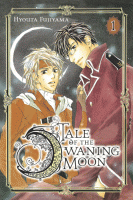
Tale of the Waning Moon, Volume 1Tale of the Waning Moon, Volume 1 by Hyouta Fujiyama. I have a tendency to forget that Yen Press releases boys’ love series. Tale of the Waning Moon is one of those manga. Fujiyama has had quite a few of her works released in English, but I haven’t read any until now. Tale of the Waning Moon is pretty ridiculous. Ryuka is a young man whose girlfriend recently left him for another man. While drowning his sorrows Ryuka accidentally calls upon Ixto, the spirit of the last quarter moon, to grant him true love. The twist is that all of the eligible candidates that Ixto comes up with are men, which doesn’t particularly appeal to Ryuka. The real problem is that when Ryuka rejects those options, he comes under Ixto’s spell and is therefore compelled to leave his village on a quest to reunite with the spirit. From there, Ryuka sets of on his journey, unintentionally amassing an adventuring party of sorts in the process. Tale of the Waning Moon has sex (not all of it consensual) and silliness, magic and mayhem. Inspired and heavily influenced by fantasy RPGs, the manga is definitely more of a comedy than it is a romance. Tale of the Waning Moon is a short series–only four volumes–and the first installment entertained me well enough, so I’ll probably get around to picking up the rest at some point.

Ubel Blatt, Omnibus 0Übel Blatt, Omnibus 0 (equivalent to Volumes 0-1) by Etorouji Shiono. Übel Blatt, which translates as “evil blade,” has a lot going for it that generally appeals to me–a dark fantasy setting, a tale of revenge, epic battles, and so on–but for some reason, the first omnibus (the zeroth omnibus?) didn’t quite grab me as much as I expected it to. I’m not really sure why, since it seems like a series that should interest me. In fact, overall I actually did like the story. I even like many of the characters, especially its lead. But there were a few little (and big) things here and there that just didn’t work for me. For one, the sexual content and rape in the volume seems entirely unnecessary. It comes across as a superfluous attempt to add more edginess as opposed to being important to the story. Most of the female characters don’t fare particularly well, either. Occasionally there’s a little bit of hope that they’ll overcome their scantily clad fantasy tropes, but it never quite seems to happen. At this point, many of the antagonists in Übel Blatt seem fairly one-dimensional, too, though I suspect that this will change as the series progresses. All that being said, Übel Blatt does feature some excellent fight sequences and scenes of destruction. And while I’m not desperate to read the next volume, the series does show potential.

Filed Under: FEATURES, My Week in Manga Tagged With: Alice in the Country of, Etorouji Shiono, Hyouta Fujiyama, manga, manhwa, Milkyway Hitchhiking, Sirial, Soumei Hoshino, tale of the waning moon, Ubel Blatt

  • « Go to Previous Page
  • Page 1
  • Page 2
  • Page 3
  • Page 4
 | Log in
Copyright © 2010 Manga Bookshelf | Powered by WordPress & the Genesis Framework