• Skip to primary navigation
  • Skip to main content
  • Skip to primary sidebar
  • Home
  • About Us
    • Privacy Policy
    • Comment Policy
    • Disclosures & Disclaimers
  • Resources
    • Links, Essays & Articles
    • Fandomology!
    • CLAMP Directory
    • BlogRoll
  • Features & Columns
    • 3 Things Thursday
    • Adventures in the Key of Shoujo
    • Bit & Blips (game reviews)
    • BL BOOKRACK
    • Bookshelf Briefs
    • Bringing the Drama
    • Comic Conversion
    • Fanservice Friday
    • Going Digital
    • It Came From the Sinosphere
    • License This!
    • Magazine no Mori
    • My Week in Manga
    • OFF THE SHELF
    • Not By Manga Alone
    • PICK OF THE WEEK
    • Subtitles & Sensibility
    • Weekly Shonen Jump Recaps
  • Manga Moveable Feast
    • MMF Full Archive
    • Yun Kouga
    • CLAMP
    • Shojo Beat
    • Osamu Tezuka
    • Sailor Moon
    • Fruits Basket
    • Takehiko Inoue
    • Wild Adapter
    • One Piece
    • After School Nightmare
    • Karakuri Odette
    • Paradise Kiss
    • The Color Trilogy
    • To Terra…
    • Sexy Voice & Robo
  • Browse by Author
    • Sean Gaffney
    • Anna Neatrour
    • Michelle Smith
    • Katherine Dacey
    • MJ
    • Brigid Alverson
    • Travis Anderson
    • Phillip Anthony
    • Derek Bown
    • Jaci Dahlvang
    • Angela Eastman
    • Erica Friedman
    • Sara K.
    • Megan Purdy
    • Emily Snodgrass
    • Nancy Thistlethwaite
    • Eva Volin
    • David Welsh
  • MB Blogs
    • A Case Suitable For Treatment
    • Experiments in Manga
    • MangaBlog
    • The Manga Critic
    • Manga Report
    • Soliloquy in Blue
    • Manga Curmudgeon (archive)

Manga Bookshelf

Discussion, Resources, Roundtables, & Reviews

Archives for May 2012

Manga the Week of 5/16

May 9, 2012 by Sean Gaffney

Don’t mind me, I’m just depressed. Still no Oresama Teacher 8 for me. And now Story of Saiunkoku 7 is missing as well. Oh Diamond, why must you hurt so?

That said, Midtown Comics is still getting a bunch of stuff in next week. Let’s go over it publisher by publisher.

Being around the Manga Bookshelf team has made me feel guilty that I tend to ignore manwha, so I’ll just note that the 11th volume of romantic fantasy Bride of the Water God is here. It runs in a magazine called Wink. Also, I hear there are gods.

Digital Manga Publishing has a bunch of new BL series, as well as some old favorites. Both Castle Mango and Samejima-kun & Sasahara-kun sound much sillier than the usual solicits I see, which pleases me. More silly BL, please! As for Starry Sky, it’s hard to find info on it except that I think it came from Comic B’s Log, so may not be true BL but BL-ish. It does seem to star a female. Lastly, we have new volumes of Private Teacher and The Tyrant Falls in Love, both of which tie for this week’s ‘sounds most like a USA Up All Night movie’ award.

Kodansha gives us Sailor Moon Vol. 5, which wraps up the ‘R’ arc, and features my all-time favorite Sailor Moon manga moment. We also get the 6th volume of the Emily Rodda series Deltora Quest, which Kodansha snapped up and turned into manga before, say, Yen Press could. :)

Seven Seas has the 4th volume of A Certain Scientific Railgun, which says right on the back that it’s beginning the long-awaited ‘Sisters’ arc, thus showing that any attempt to market this series to newbies has long since left town. Should be good, though. I quite enjoyed the last volume.

Lastly, Viz stuff is still trickling in, as we see Naruto 56 (huge good pile of ninjas battle the enemy’s huge evil pile of reanimated ninjas), and Inu Yasha VIZBIG Edition 11, which presumably has Vols. 31-33. It’s more than halfway there! And also features the undead, which is apparently Viz’s theme this week.

So what floats your boat?

Filed Under: FEATURES

‘Mouse Chronicles: A Chuck Jones Collection’ Announced

May 8, 2012 by Sean Gaffney

And here I was thinking that we wouldn’t get any Looney Tunes news until San Diego Comic Con. No doubt that will feature an announcement of the 2nd Platinum Collection (at least I hope…), but for now we have this: a new collection of 19 of Chuck Jones’ cartoons from 1938-1951 featuring his stars who were mice: Sniffles; and Hubie & Bertie. The collection is out August 28th on both DVD and Blu-Ray.

Jerry Beck notes that it was originally part of the ‘Super Stars’ sets we’ve seen the last few years, which is why you don’t see any other one-shot mice here, just the ‘stars’. Of course, I put stars in air quotes for a reason. Sniffles and Hubie & Bertie are not exactly Bugs Bunny and Daffy Duck. The name that’s selling the discs here is Chuck Jones.

A list of the contents:

Naughty but Mice
Little Brother Rat
Sniffles and the Bookworm
Sniffles Takes a Trip
The Egg Collector
Bedtime for Sniffles
Sniffles Bells the Cat
Toy Trouble
The Brave Little Bat
The Unbearable Bear
Lost and Foundling
Hush my Mouse
The Aristo-Cat
Trap Happy Porky
Roughly Squeaking
House Hunting Mice
Mouse Wreckers
The Hypo-Chondri-Cat
Cheese Chasers

The first 12 cartoons on this set range from 1938 to 1946, and star Sniffles. Sniffles was named from his debut, Naughty but Mice, where he has a cold. Despite lacking the cold in his other cartoons, the name stuck. Most of the first 9 cartoons on here feature Chuck’s ponderous, slow, Disney-imitating style. Sniffles is cute rather than funny, and a lot of his more cloying cartoons can be very trying for the adult viewer – or indeed anyone over the age of two.

That said, there are some interesting cartoons here. Sniffles and the Bookworm is a ‘things come to life’ cartoon, albeit a more serious example of the form. The Brave Little Bat features Sniffles trying to deal with a loudmouth bat who absolutely won’t stop talking. And Sniffles’ final 3 cartoons, made in the mid-40s after a three year break, are much funnier and Chuck Jones-ish. Ironically, Sniffles undergoes a personality transplant in them, going from cute and adorable to being unable to shut up or go away – that’s right, exactly like the bat in his last cute cartoon.

The real treat here, even if it involves the most double dipping from prior Golden Collections, is the 2nd half of this set, featuring seven cartoons with Hubie & Bertie (from 1943-1951). These are Jones near the top of his game, and are some of my all-time favorites. They only have a cameo in Trap Happy Porky (one of Jones’ rare mid-40s Porky efforts), but the other 6 have them taking center stage. Hubie & Bertie get what they want, not by violence or cute mischief, but by psychological damage. Seeing them break the mind of Claude Cat is a thing of beauty.

As I noted above, there’s some double dipping here. Four of the seven Hubie & Bertie cartoons have been on prior Golden Collections – Trap Happy Porky, Roughly Squeaking, and House Hunting Mice are new to DVD. Sniffles fares better. Only Sniffles Takes A Trip has shown up (unrestored) on a prior collection. This means 14 cartoons here are new to DVD.

The reason I like this collection so much is because Jerry Beck had noted previously that Warner Brothers had asked them to focus their restoration only on cartoons made after 1953 (as they could be released widescreen). The cartoons on this collection feature precisely zero from that period, and 3 from the 1930s. Given my goal is every cartoon restored and on DVD, this is a big step in that direction. (I am presuming they will also be uncut – though there’s very little to object to here. Hubie & Bertie have some typical cartoon violence. I think Toy Trouble has a blackface gag.)

Buy Warner Brothers cartoon DVD/Blu-Ray sets and support restoration of even more classics! Sniffles will thank you. Probably in a cute, adorable way.

EDIT 7/27/12:

They’ve announced a list of bonus cartoons that will come with this set. it’s not clear if they will be restored or not, but most of them are quite rare these days, so it’ll be great to see them anyway.

The Country Mouse (1935, Friz Freleng) – A mouse dreams of being a boxer, but the big city proves his undoing.
The Lyin’ Mouse (1937, Friz Freleng) – A mouse, trying to save his skin, tells a cat the story of the Lion and the Mouse. Freleng is starting to find his feet here – great WB-style cynical ending.
The Mice Will Play (1938, Tex Avery) – One of Avery’s attempts at doing a ‘cutesy’ musical cartoon, this gets away with it mostly thanks to the end gag.
Little Blabbermouse (1940, Friz Freleng) – The first of two shorts featuring a W.C. Fields mouse and a kis mouse who never stops talking. Influenced the later Sniffles cartoons.
Shop Look & Listen (1940, Friz Freleng) – And this is the 2nd of those.
Mouse Mazurka (1949, Friz Freleng) – Sylvester chases after a mouse while the cartoon is set to various Eastern European musical themes. Friz timed to music is best Friz.
Mouse-Warming (1952, Chuck Jones) – Claude Cat without Hubie and Bertie, interfering with two teenage mice nd their romance. Some gunplay, edited from TV, should return here.
Mouse-Taken Identity (1957, Robert McKimson) – This is a Hippety Hopper cartoon, set in a museum. It features the gags you see in all the Hippety Hopper cartoons, as well as Sylvester, Jr. Also had edited gun scenes that should be restored.
Mice Follies (1960, Robert McKimson) – The last of McKimson’s Honeymooners parodies with mice, and the only one not yet on DVD.
It’s Nice to Have a Mouse Around the House (1965, Friz Freleng) – The first cartoon pairing Speedy Gonzalez with Daffy Duck, for better or worse. Also has Sylvester in a cameo. At least Freleng directs this.
Merlin the Magic Mouse (1967, Alex Lovy) – One of Warner’s late 60s attempts to create new marketable characters, and probably one of the better ones (though still not that good). Another WC Fields parody.

Now there’s even ore reason to buy it!

Filed Under: UNSHELVED

Fannish Drift: All We Are Is Lust In the Wind?

May 8, 2012 by Aja Romano 6 Comments

Hello, Manga Bookshelf!

It’s the time of year where everything turns into a frenzy, and I haven’t had much opportunity for reflecting upon fannish things; but lately something has been on my mind, and that’s the syndrome of Fannish Drift. In this case I’m speaking in the fandom sense–how people move from one fandom to the next.

There are several reasons this has been on my mind: the primary one is that May 5th, the flagstone day for my previous fandom, Hikaru no Go, has come and gone without my doing anything to commemorate it, other than allowing the fandom at large to take over the “Let’s Five!” meme that I began 6 years ago. As you may remember from last year when it was hosted right here, the meme had been hosted in numerous places, and I didn’t have the heart to move it to yet a 4th location when it could have a permanent home. And while I love the canon as much as ever, I’m just not in the fandom anymore. I’ve stopped participating in the community and devoting large sections of my headspace to thinking about board games and the ghosts who play them. :D

Since 2010 I’ve been happily esconced in the fandom for Inception, which is an unlikely fandom to have survived this long because it’s a film fandom, and film fandoms tend to have very small fandoms and very short afterlives. For whatever reason, luckily for us, Inception fandom has been the exception, and is still going strong as a mid-sized fandom nearly two years later. Still, it’s inevitable that there’s been a decline in size over the years as people move on, and in a fandom whose largeness was always a surprise, it’s impossible not to notice the change. Which brings me to my second reason–watching fannish drift occur in my current fandom, and the accompanying experience of feeling overwhelmed by the current “trendy” fandoms.

As far as western fandoms go, I seem to be a bit of a strange bird because while I’ve dabbled in all kinds of fandoms during down periods, I tend to be very fandom monogamous. Literally for the last two years I’ve read nothing but Inception fanfic, because it was all I wanted to read, and it’s hard to get me to participate actively in multiple fandoms at once. I am, of course, aware of other fandoms and general fandom trends, but I don’t really invest in them heavily when I’m pre-engaged. :) My experience with Japanese fandoms has been totally different, however: during the period I was most heavily involved in Japanese fandoms, I was involved in, or at least actively conversant in, several at once: Tenipuri, Hikago, Nobuta wo Produce, Death Note, J-pop and J-rock. There have been moments when I’ve engaged with western media this way (most notably every year at Yuletide) but I also think there’s more of a culture, with western media fandoms, of movement from one fandom to another, rather than inhabiting multiple fandoms at once. I think that’s why lately I’m experiencing more of a disconnect between fannish social platforms: on tumblr, where it’s incredibly easy to reblog evidence of 20 different fandoms a day, fannish activity seems endlessly diverse; but in most other fandom corners I inhabit, the evidence for “active” fandoms–the fandoms people are talking about the most, the fandoms people are actively engaging in–seems largely confined to a handful at the moment: primarily, of course, Avengers, but also Teen Wolf, Sherlock, and hockey RPF.

Of course, the active fandoms I’ve just listed all have a white male bromance at their center, and many fans talk about this trend of movement between fandoms as being linked to the constant desire to seek out endless repetitions of this dynamic.* You might hear this phenomenon termed “Migratory Slash Fandom” or “Random Militant Slashers.” I have incredibly mixed feelings about this, honestly. I think it’s a very valid depiction of how many western media fans respond to canons, and a valid depiction of what kind of canons gain fan followings quickly. But I also think it’s a) sexist, because it’s usually used as a way to judge other female fans for doing fandom wrong, and b) limiting, because it presupposes that the only reason for fannish drift–for this movement from fandom to fandom–is because the fans are just moving around in search of more hot white guys to ship.

(Though for today, at least, the popular pairing seems to be F/F. I am speaking of Creamsicle, everyone’s new favorite OTP created in under 24 hours entirely from an unlikely internet meme!)


(Source = Tumblr, possible (?) credit to whileothersreap)


I’ll use my own fandom as an example: Inception fandom primarily revolves around the Arthur/Eames ship, which is a relationship between two characters who have literally three minutes of total screentime together. But they fit the formula for what pulls in the Random Militant Slashers completely: hot white guys, banter, easy chemistry, and: voila! Instantly popular fandom. But is that all there is to it? As I’ve said earlier, everyone was surprised by Inception’s popularity, and two years later, no one expected the fandom would still be this active, much less thriving. To me, that’s all the credit to the incredible possibilities the film gives us for worldbuilding and creation and literally endless interpretations of the canon universe and its alternatives. In other words, Arthur and Eames may arguably be cardboard stock characters dropped into a heist film ensemble, but if everything else about the film weren’t so compelling, none of us would be writing fics for it.

Still, when I see people moving on from Inception fandom predictably moving into other fandoms where the “two white guys + banter” phenomenon holds sway, I wonder what a more accurate set of criterion is for what pulls people from one fandom to the next, or if maybe there just isn’t one.

So tell me, MB: in your experience, what creates fannish drift? What draws you to a fandom initially and what keeps you there? Does it change over time, or does it change with every fandom? Is it easier to be in lots of fandoms at once or to devote yourself just to one until you’re done with it, then move on? Is there a culture divide in how we perceive fannish movement between Eastern and Western fandoms? I have no idea. But as I’ve already said, I’m an odd bird.

(Then again, I might just spend the rest of my day writing Normal Girl/Other-Girl-san~.)

Filed Under: FANBATTE Tagged With: fandom, slash, Western

The end of Bakuman, the reboot of Rurouni Kenshin

May 8, 2012 by Brigid Alverson

Viz is staying current with developments in Japan in their Shonen Jump Alpha digital magazine; this week’s issue includes the final chapter of Bakuman, and in two weeks they will start carrying the new Rurouni Kenshin series, Rurouni Kenshin Reboot.

Erin and Noah talk to Felipe Smith, the creator of Peepo Choo, about his life as an American manga-ka in Japan in the latest Ninjaconsultant podcast.

The Manga Bookshelf bloggers discuss their picks of the week.

Lissa Pattillo takes a look at Digital’s latest batch of new licenses.

Richard Bruton posts a preview of vol. 3 of Summit of the Gods, illustrated by Jiro Taniguchi, at the Forbidden Planet blog.

Khursten Santos has a quick look at some of Mitsuru Adachi’s art for his new series, Mix.

Three Steps Over Japan peeks inside the covers of Jump SQ.

Happy blogiversary to Kate Dacey, The Manga Critic, who is celebrating her third anniversary by giving away some omnibuses.

News from Japan: Saturn Apartments manga-ka Hirae Iraoka is working on a new series, Narihirabashi Denki Shoten (Narihirabashi Electric Appliance Store), which will run in Kodansha’s Evening magazine. The relaunch of K-ON! will come to an end in June, and Claymore will reach its last chapter in the June issue of Jump Square.

Reviews: The Manga Bookshelf team starts the week with a new set of Bookshelf Briefs. Ash Brown queues up a week’s worth of brief manga reviews at Experiments in Manga.

David Gromer on vol. 2 of Cage of Eden (Graphic Novel Resources)
Khursten Santos on vol. 1 of Flowers of Evil (Otaku Champloo)
Kristin on vol. 13 of Black Bird and vol. 14 of Kimi ni Todoke (Comic Attack)
Rebecca Silverman on vol. 1 of Skip Beat! (omnibus edition) (ANN)
Anna on vol. 7 of The Story of Saiunkoku (Manga Report)
Leroy Douresseaux on vol. 7 of The Story of Saiunkoku (The Comic Book Bin)
Lori Henderson on vols. 11-15 of The Wallflower (Manga Xanadu)

Filed Under: MANGABLOG

Monday manga roundup

May 7, 2012 by Brigid Alverson

I took a look at this past week’s new manga releases at MTV Geek.

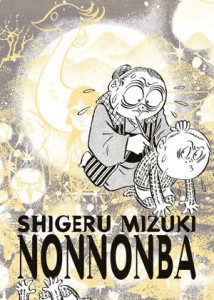
Jason Thompson pens an appreciation of Shigeru Mizuki, the creator of NonNonBa, for his latest House of 1000 Manga column at ANN.

RightStuf’s rescue of the first three volumes of Hetalia has Kate Dacey asking her readers: How much would you pay for out-of-print manga? The readers respond with plenty of opinions.

Erica Friedman has all the latest from the world of yuri in this week’s edition of Yuri Network News at Okazu.

Vol. 8 of Rosario + Vampire: Season II was the top-selling manga in U.S. bookstores in April, taking the fifth slot overall (after four volumes of The Walking Dead).

Manga-ka Kia Asamiya will be a guest at this year’s Fanime.

Reviews: Ash Brown posts some brief reviews of manga from the library at Experiments in Manga.

Justin on vol. 2 of GTO: 14 Days in Shonan (Organization Anti-Social Geniuses)
Sweetpea616 on High School Debut (Organization Anti-Social Geniuses)
David Gromer on vol. 2 of No Longer Human (Graphic Novel Reporter)
Connie on Nostalgia (artbook) (Slightly Biased Manga)
David Gromer on vol. 6 of Omamori Himari (Graphic Novel Reporter)
Leroy Douresseaux on vol. 4 of Psyren (The Comic Book Bin)
Lesley Aeschliman on vol. 10 of Ranma 1/2 (Blogcritics)
David Gromer on vol. 11 of Sumomomo Momomo (Graphic Novel Reporter)

Filed Under: MANGABLOG

Bookshelf Briefs 5/7/12

May 7, 2012 by Katherine Dacey, Sean Gaffney and Michelle Smith 3 Comments

This week, Kate, Sean, and Michelle look at recent releases from Yen Press, Dark Horse, VIZ Media, and Digital Manga Publishing.


Highschool of the Dead, Vol. 6 | Story by Daisuke Sato, Art by Shouji Sato | Yen Press – After reading the first six volumes of this Dawn of the Dead rip-off, I’m still mystified by its appeal. The layouts are busy and poorly composed, a riot of screentones, traced elements, and grossly distended breasts, while the script consists mostly of characters ordering one another around. Yes, there are plenty of scenes of zombie carnage, but even those aren’t executed with much imagination. In volume six, for example, our heroes try to fight their way out a shopping mall, eventually taking refuge on the roof. Sound familiar? That’s because volume one follows the same basic trajectory — just swap “school” for “mall,” and the two storylines are virtually interchangeable. That kind of lazy storytelling might be excusable if Highschool of the Dead were funny or exceptionally gory, but when the laughs and scares are in such short supply, it’s hard to fathom why horror fans are making do with such weak sauce. -Katherine Dacey

Itazura Na Kiss, Vol. 7 | By Kaoru Tada | Digital Manga Publishing – We’re now over halfway through this series, and so we begin to get some new plotlines and characters debut in order to give us more to chew on than “When will Naoki be nice/when will Kotoko be smart?” So we get a new girl who is clearly introduced to be the ‘consolation prize’ to nice yet loser-ish Kinnosuke. It works here, though, as Chris is so much fun – kudos to DMP for translating her fractured Japanese in a way that shows how she sounds to everyone else – and you’re also rooting for her. As for Kotoko, reality slaps her in the face again here, despite minor triumphs like winning over Naoki’s family. Naoki is correct in that Kotoko works best when she isn’t coddled or sympathized with. What’s impressive here is that she realizes it as well. She really may be finally growing up. –Sean Gaffney

Itazura Na Kiss, Vol. 8 | By Kaoru Tada | Digital Manga Publishing – And if the last book showed us Kotoko, if not getting smarter, then at least learning her strengths and limitations, this volume is for Naoki. No, he’s not really all that nicer, but he is at last realizing that he can’t simply expect declarations of love to be entirely one-sided on his wife’s part. Naoki simply doesn’t do emotions – except around Kotoko, who has taught him the joys of frustration, anger, exasperation… and love, reluctant as he still is to admit it. He admits this publicly for one reason – a serious threat to his marriage arrives, and starts pointing out all of his worst flaws. Keita is not particularly in danger of stealing Kotoko – she’s not all that interested. But Naoki here not only admits that he needs Kotoko to be more human – and to be more loving. Which is why the final part of the book is the two of them skipping their anniversary party and sharing a drink and a kiss on a quiet bench. –Sean Gaffney

Kamisama Kiss, Vol. 8 | By Julietta Suzuki | VIZ Media – The annual kami conference is underway, and Nanami has been assigned the special task of sealing the entrance to the land of the dead, which is always besieged by yokai when its guardian kami is away. Unfortunately, she and a mysterious human named Kirihito end up trapped on the other side. So basically, this is yet another “Tomoe to the rescue” scenario. True, Nanami exhibits some bona fide powers as she works to free herself and Kirihito, but ultimately it’s Tomoe who must save her. One nice side effect is that Tomoe seems to realize his feelings for Nanami at long last and some secrets concerning his past—that even he is unaware of—are touched upon. I continue to enjoy Kamisama Kiss, but it must be said that this particular volume was not particularly riveting. – Michelle Smith

Magic Knight Rayearth 2 | By CLAMP | Dark Horse Comics – Needless to say, although it had a great ending, it cannot be denied that the way the last Rayearth manga ended was a bit… well, depressing. So let’s have a sequel where we bring our heroines back and have them save the world again! This omnibus has more flaws than the first – too many characters and a messy and confusing plotline. That said, it explores the idea of what would happen to a world which is collapsing after the woman keeping it idyllic is killed quite well. And it is nice seeing the cute couples that barely had time to be suggested in the first series having a bit more time to develop now – aged-up Ascot is adorable, and I love Caldina and Lafarga too… (Sorry, Rafaga. Damn romanizations.) And of course there’s Hikaru, Lantis and Eagle, which is about as close as one can get to a canonical threesome without a wedding. Not as essential as the first, but still fun. –Sean Gaffney

Psyren, Vol. 4 | By Toshiaki Iwashiro | VIZ Media – The plot of Psyren is moving right along. Oh, sure, there’s the obligatory shounen stuff wherein the heroes are determined to get stronger and the main character must gain control of his tremendous yet potentially destructive power, but we also get more information about how the world of Psyren came to be and how far ahead it is from the present for our characters. Each volume of Psyren is a lot of fun, though I’m beginning to suspect that I would enjoy it even more if I had a lovely stack to consume at once—each time I finish a volume, I wonder when the next will be coming out, which is a pretty big compliment. If you’re weary or wary of certain shounen clichés, Psyren might be different enough to satisfy. As an added bonus, at sixteen volumes, it’s considerably shorter than many titles in this demographic. – Michelle Smith

Voltron Force: Shelter from the Storm, Vol. 1 | Story by Brian Smith, Art by Jacob Chabot | VIZ Media – Back in the 1980s — the golden age of cruddy cartoons with merchandising tie-ins — Voltron: Defender of the Universe introduced a generation of American kids to mecha. Nickelodeon revived the series last year, giving it a fresh look and new cast of cadets. In keeping with the spirit of the original, the new Voltron has inspired its fair share of spin-off products, including a series of original graphic novels published by VIZ. When contrasted with similar comics — especially the original Ben 10 “manga” — Voltron Force: Shelter from the Storm is a superior product, with crisp artwork, sophisticated storytelling, and teenage characters who sound and act enough like teenagers to pass muster with the comic’s target audience of seven-to-ten-year-old boys. The language is sufficiently challenging for advanced readers but not too overwhelming for kids who have just graduated to chapter books, while the diverse cast of characters ensures that boys and girls alike will find a cast member to identify with. A solid addition to the elementary school classroom library. -Katherine Dacey

Filed Under: Bookshelf Briefs

Pick of the Week: Saiunkoku, NonNonBa, FLCL

May 7, 2012 by Katherine Dacey, MJ and Sean Gaffney 2 Comments

KATE: Looking over Midtown Comics‘ brief shipping list, I’m not particularly interested in Blood Blockade Battlefront—though I admit it’s fun to say—and I haven’t read FLCL yet, so my pick is volume seven of The Story of Saiunkoku. I realize that “spunky” is one of the most abused adjectives in the manga critic’s lexicon, but Shurei, Saiunkoku‘s heroine, is spunky in the best sense of the word: she’s smart, determined, and upbeat without being Pollyannish. That she’s surrounded by an agreeable cast of bishonen makes Saiunkoku a special treat; no matter what your preference, there’s a cast member who will make your heart sing. (I’m a Minister Ko partisan, FWIW.) I’ve fallen a little behind with this series, but the release of a new volume offers me a fine incentive for diving back in.

SEAN: Yeah, I think I’m going to have to give Midtown’s list a pass this week. Half of what I’m getting is last week’s order late, anyway. I am excited for the appearance of Shigeru Mizuki’s NonNonBa from Drawn & Quarterly, though, which Diamond says it is shipping to me this week. We’re in a bit of a yokai renaissance right now, what with Natsume’s Book of Friends, Nura: Rise of the Yokai Clan, and Kamisama Kiss. But no one can possibly top the creator of Gegege no Kitaro for yokai, both in scares, laughs, and pure strangeness. This book is half-autobiographical, and also touches on what life was like growing up in pre-World War II Japan. It’s a must buy.

MJ: Technically, I’m with Kate. The one book I know I’ll enjoy from this week’s tiny list is The Story of Saiunkoku. It’s one of my favorite currently-running shoujo series—probably one of my top three or four, in fact. But since Kate has already recommended it so thoroughly (my heart is singing already), I’ll throw my vote to FLCL. This is a bit of a risky pick for me. I enjoyed the anime series when I first saw it several years ago, despite the fact that it contains a number of elements that generally lose with me (mecha, maids, and a sort of fetishization of teen depression are just a few). And though I don’t tend to have a lot of confidence in manga adapted from anime (as opposed to the other way around), I’ll give this one a shot.


Readers, what looks good to you this week?

Filed Under: PICK OF THE WEEK

Not By Manga Alone: Battle of the bands

May 6, 2012 by Megan Purdy and Sean Gaffney Leave a Comment

Welcome back to Not By Manga Alone! This month Sean continues his mastery of Kilban’s back catalog with Playboy’s Kilban and Playboy’s New Kilban, while Megan explores the dangers of far north prospecting in Zach Worton’s The Klondike, and the even more terrible dangers of inter-band romance, with Dan Parent and Bill Gavin’s The Archies & Josie and the Pussycats.

The Archies & Josie and the Pussycats | By Dan Parent and Bill Galvan | Archie Comics — Archie Comics has been in the news plenty in the last few years. Between the introduction of Kevin Keller, the line’s first gay character, Archie’s dueling alternate universe marriages to Betty AND Veronica, and his interracial romance (and eventual alternate universe marriage and family) with Valerie of Josie and the Pussycats fame, the once staid publisher has become hot news. Kevin earned the publisher a boycott, and the marriages sparked an epic, cross platform ship war, with shades of class and culture war. Archie and Valerie’s love got some conservative fans tut-tutting but it was generally received well. It’s cute, is the thing.

Archie and Josie kiss.Archie is currently running another of those unit-moving future marriage stories, but this time he marries and begins a family with Valerie. The start of their romance is collected in The Archies & Josie and the Pussycats. The two bands decide to go on tour together, because… because reasons. There are numerous logistical and logical Rubicons to cross here, not least being the status of the two bands: The Archies are a garage band, while the Pussycats can carry a world tour; Archie’s in high school, while Valerie most definitely is not. But aside from the weaselly objections of Alex Cabot, the Pussycats’ money-hungry manager, these issues are glossed over in favour of milkshakes and love songs. And rightfully so, Archie comics having their own particular, family-friendly, romcom logic. If it doesn’t bear up to too close a look, well, it isn’t meant to. And so, in due course–a handful of pages–Valerie and Archie find themselves falling in love.

The romance is rushed. I found myself wondering why Archie, why Valerie, but as with any Archie comic, a certain amount of suspended disbelief is a requisite. It pays to just go with it. The resulting shenanigans–scheming Cabot siblings, a thwarted Veronica–are worth it. Despite the mysterious genesis of their relationship–they write a love song together, and then they fall in love–and a first half that drags, once things get going, they’re adorable.

Writing for comics franchises takes a different skill set than does writing original comics, and Dan Parent and Bill Galvan are old hands. Galvan’s Riverdale is as timeless as ever, with the usual small updates for contemporary sensibilities. And Dan Parent powers through the narrative with admirable brevity. Light, earnest and slightly ridiculous, The Archies & Josie and the Pussycats is pure fun. — Megan Purdy

* * * * *

The Klondike | By Zach Worton | Drawn and Quarterly — I’ve been meaning to read The Klondike for awhile. I picked it up on a weekend trip to Montreal and it’s been staring at me ever since. The prospect of seeing Zach Worton this weekend at TCAF spurred me on–and I’m so glad I finally cracked the cover, because aside from a few issues, the book is fantastic. The Klondike is historical fiction. Worton tells the story of the Alaskan/Yukon gold rush through a combination of real historical, and fictional characters, and it’s a wise choice that lets him create charming amalgams like Sid the Barber and John the Russian. Characters who have brief, vivid lives in the narrative, but speak to a whole cast of real characters–the thousands of prospectors, some experienced, some naive greenhorns, who came in search of their fortunes. Too many ended their lives in misery, and Worton doesn’t shrug away from that. The harsh conditions of the North are detailed here: the killing weather, isolation, persistently threatened health, and humanity itself are all dangers Worton’s characters have to navigate. Few of them make it through, and fewer strike it rich. Klondike cover

Worton tells the story in segments, shorter stories often centered on interesting historical episodes, interposed with fascinating explanatory notes. The whole is a skillfully woven epic in miniature. The Klondike isn’t just Joe (Dawson City founder and mayor) Ladue’s story, or Sam Steele’s story, it’s a wonderful exploration of the lives of these prospectors and the economy and society that quickly rose up around them. Although it starts out episodic, The Klondike quickly shifts into competing story arcs about the prospectors, cops, criminals, and tough men and women of the North. Worton says that he didn’t want to write an adventure, and The Klondike rolls over that potential story with an avalanche of everyday struggle, misery and small triumphs, but there’s still plenty of action in this book.

Klondike landscapesLike Osamu Tezuka and Bryan Lee O’Malley, Worton contrasts toony figures, with more realistic and beautiful, detailed backgrounds. The characters are made accessible, easy to read, while the landscape of the Klondike is revealed to us with loving attention. It’s probably not a deliberate, story-telling choice, but Worton’s expressive, simply rendered characters have very detailed, over-sized hands. This draws attention to what they’re doing–working, drinking, striking deals–and lends a certain weather-beaten roughness to even the most polished characters.

My chief complaint about an otherwise great book, is that the dialogue is often stilted, and sometimes reads as though it’s adapted from letters, or historical accounts. Later in the narrative, characters pick up individual verbal tics, which goes a long way toward establishing and maintaining a sense of naturalism in speech that’s sorely needed. Early on, conversations read too much like a script without actors; interesting, but stiff and too mannered. Once Worton finds his rhythm–or his characters do–and the various plots pick up, The Klondike is an easy, quick, read that’s informative and at times genuinely moving. — Megan Purdy

* * * * *

Playboy’s Kliban and Playboy’s New Kliban | By B. Kliban | Wideview Books — Let’s face it, an artist has to earn a living. And B. Kliban has been drawing cartoons since 1965. The Cat book didn’t really take off till the mid to late 1970s, meaning most of his work depended on his main publisher, and that was Playboy Magazine. We’ve seen several cartoons by Kliban, notably in Whack Your Porcupine, that were sexually explicit, but they were still completely bizarre and Kliban-ey. It’s not until we look at these two collections of cartoons he drew explicitly for Playboy over the years that we realize just how much of the previous four books was his sketchbook of unsellable ideas. You will not find grotesque caricatures here – most of the people look fairly normal, and the girls of course all look attractive. This is not weird Kliban, or offbeat Kliban. Or clean Kliban. It is, thank goodness, still funny Kliban.

These books are mostly cartoons from the late 60s and early 70s, and it shows – even if they weren’t meant for Playboy, there’s still a certain aura to them. These cartoons are for the adult male – not just because 80% of them feature sexual content (though there are quite a few here that are ‘normal’), but because they have a certain male viewpoint to them. There’s little to no non-consensual sex here – Playboy cartoons tend to show men and women having tons of fun – but there’s still a certain sexist sensibility I never really got in the prior Kliban collections. Let’s face it, he’s drawing for his audience.

These are such a contrast to his other books, in that they’re mainstream. This doesn’t mean bad – I laughed many times throughout both books – but work like this is what paid the bills, while his Workman Publishing books are what fueled his creative mind. If you can find these, and are over 18, grab a copy – but they aren’t essential, as his other works are. — Sean Gaffney

Filed Under: Not By Manga Alone Tagged With: archie, kliban, the klondike

The return of Hetalia

May 4, 2012 by Brigid Alverson

The latest Tokyopop license rescue is by… Tokyopop. Well, sort of: The online retailer RightStuf announced yesterday that it will be co-publishing the first three volumes of Hetalia: Axis Powers with Tokyopop, mostly as print-on-demand. The first two volumes, which were released in English but are now hard to find, are available now for $15.99 each; RightStuf is currently taking orders for volume 3, and the pre-ordered volumes will include all color pages. The next run will be all black and white. I have the details at MTV Geek, and I talked to Alison Roberts of RightStuf about the thinking that went into this deal—and where things might go from here. And RightStuf has put up a video as well!

Lissa Pattillo checks this week’s new-release list in her On the Shelf column at Otaku USA. Sean Gaffney looks farther ahead with his list of the best of next week’s manga. And Kristin checks out the manga highlights in this month’s Previews at Comic Attack.

Lissa also has a handy list of manga events at this weekend’s Toronto Comic Arts Festival, which will feature Chi’s Sweet Home creator Konami Kanata.

Why are manga titles so long? Kotaku talks to the author of That’s Why I Can’t Have Ecchi to find out.

I mentioned MTV Geek’s Battle Arena Otaku Fight! Fight! a little while ago; well, now they are down to the final four: Luffy D. Monkey vs. Rick Hunter and Ultraman vs. Voltron. Go check it out, join the fun, and cast your votes!

The Japanese Ministry of Foreign Affairs is now accepting entries for the Sixth International Manga Awards.

Reviews

John Rose on vol. 10 of 13th Boy (The Fandom Post)
Connie on vol. 9 of Arata the Legend (Slightly Biased Manga)
John Rose on vol. 6 of Black Butler (The Fandom Post)
Kate Dacey on vols. 1 and 2 of Durarara!! and vol. 1 of Kamen (The Manga Critic)
Sean Gaffney on Fallen Words (A Case Suitable for Treatment)
Connie on Golgo 13: Into the Wolves’ Lair (Slightly Biased Manga)
Matt Brady on vol. 2 of King of RPGs (Warren Peace Sings the Blues)
Connie on vol. 13 of Kimi ni Todoke (Slightly Biased Manga)
Kate O’Neil on vol. 9 of Pandora Hearts (The Fandom Post)
Matt Brady on Rohan at the Louvre (Warren Peace Sings the Blues)
TSOTE on vol. 26 of Sayonara, Zetsubou-Sensei (Three Steps Over Japan)
Kristin on vol. 9 of Toriko (Comic Attack)
Michael Buntag on Velveteen and Mandala (NonSensical Words)
Connie on Yuri Sensei Is in a Good Mood Today As Well (Slightly Biased Manga)
Connie on vol. 6 of Ze (Slightly Biased Manga)

Filed Under: MANGABLOG

PR: Viz Media Offers Substantial May Digital Manga Update

May 4, 2012 by Sean Gaffney

Normally I tend to leave the press releases to my colleagues here at Manga Bookshelf, Kate and Brigid, who are much better at that sort of thing than I am. But I cannot simply sit back this time. Viz is finally releasing Excel Saga in digital form! Sure, it’s just Vol. 1, but if it does well, we might get the long out of print, selling for $150 at times Vols. 7 and 8! This is HUGE! (At least if you’re in North America. Sorry, keep nagging the Japanese companies, non-NA folks.)

Latest Digital Update For The First-Half Of May Also Features The Launch Of HIGH SCHOOL DEBUT, MISTRESS FORTUNE, SEIHO BOYS HIGH SCHOOL And EXCEL SAGA

Manga publisher VIZ Media encourages fans across North America to visit VIZManga.com and the VIZ MANGA App for the Apple iPad®, iPhone® and iPod® touch every Monday throughout the first-half of May to take advantage of a special 40% off discount on select Volume 1 digital titles (Reg. MSRP: $4.99, Sale Price: $2.99). Five different opening volumes from various manga series will be offered each week, from the hit debuts of BLEACH and BAKUMAN。, to the non-stop action of DRAGON BALL Z and psychological tension of DEATH NOTE, to the romance of BLACK BIRD and DENGEKI DAISY.

Discount Manga Titles for May 7th Include:

BAKUMAN。 Vol. 1 · Rated ‘T’ for Teens
DEATH NOTE Vol. 1 · Rated ‘T+’ for Older Teens
DRAGON BALL Z Vol. 1 · Rated ‘A’ for All Ages
ROSARIO + VAMPIRE II Vol. 1 · Rated ‘T+’ for Older Teens
TORIKO Vol. 1 · Rated ‘T’ for Teens

Discount Manga Titles for May 14th Include:

ABSOLUTE BOYFRIEND Vol. 1 · Rated ‘T+’ for Older Teens
ARATA: THE LEGEND Vol. 1 · Rated ‘T’ for Teens
BLACK BIRD Vol. 1 · Rated ‘T+’ for Older Teens
DENGEKI DAISY Vol. 1 · Rated ‘T+’ for Older Teens
HYDE & CLOSER Vol. 1 · Rated ‘T+’ for Older Teens

VIZ Media also delivers a substantial digital manga update during the first-half of May with the announcement of the launch of 4 new series. The new series include the romantic shojo fun of MISTRESS FORTUNE, HIGH SCHOOL DEBUT, and SEIHO BOYS HIGH SCHOOL, as well as the zany sci-fi comedy action of EXCEL SAGA.

The VIZ MANGA APP is available for free through the iTunes Store and all manga volumes are generally available for purchase and download in the U.S. and Canada within the application for $4.99 (U.S. / CAN) per volume. More than 55 series and 500+ volumes are currently available for download.

MISTRESS FORTUNE · by Arina Tanemura · Rated ‘T’ for Teens ·
Available May 7th
Fourteen-year-old Kisaki Tachibana has psychic powers. She works for PSI, a secret government agency that fights aliens. She’s in love with her partner Giniro, but PSI won’t allow operatives to get involved. Just when Kisaki thinks she may be getting closer to Giniro, she finds out she’s going to be transferred to California!

HIGH SCHOOL DEBUT Vol. 1 · by Kazune Kawahara · Rated ‘T’ for Teens ·
Available May 14th
Hapless Haruna needs help finding a boyfriend! After failing to win the eye of any guy in high school, Haruna enlists the help of cute upperclassman Yoh to coach her on how to make herself more appealing to the male species. Yoh agrees, with one catch: Haruna had better not fall for him!

SEIHO BOYS HIGH SCHOOL Vol. 1 · by Kaeneyoshi Izumi ·
Rated ‘T+’ for Older Teens · Available May 14th
Remote, lonely and surrounded by the ocean – this isn’t Alcatraz we’re talking about – it’s Seiho Boys’ High School, where the student body is rife with sexually frustrated hunks! How can these young men get girlfriends when they’re stuck in the middle of nowhere? These are the stories of the students of Seiho High and the trouble they get into as they awkwardly pursue all girls who cross their paths.

EXCEL SAGA Vol. 1 · by Rikdo Koshi · Rated ‘T’ for Teens ·
Available May 14th
Question: What happens when you try to act like an anime character in real life? Answer: EXCEL SAGA. Two groups of neighbors in an apartment building lead secret lives. One thinks they’re trying to take over the city of Fukuoka. The other thinks they’re trying to defend it. Only their bosses, would-be conqueror Lord Il Palazzo and obsessed bureaucrat Dr. Kabapu, know the truth behind this increasingly dangerous private game. Too bad neither lets their underlings in on it!

VIZ Media’s multiple digital manga platforms allow for universal access to read manga from an iPhone, iPod touch, iPad, and now, on VIZManga.com for desktop/laptop PC-enabled computers as well as Android-powered devices with built-in web browsers. The free VIZ Manga App is the top application for reading manga and features a rapidly growing library of the most popular manga series in the world. For more information, please visit VIZManga.com or www.VIZ.com/apps.

Filed Under: NEWS

Fallen Words

May 4, 2012 by Sean Gaffney

By Yoshihiro Tatsumi. Released in North America by Drawn and Quarterly.

Sometimes you don’t need deep, significant plots. You don’t need characters that go on an incredibly journey that lets them grow up and learn about life. And you may not need 65 volumes to tell your story. Sometimes all you need to do is be interesting, to have an anecdote to tell and to enthrall the listener with that anecdote. And if it ends on a funny note, well, so much the better. The art of rakugo is beloved in Japan. It’s basically storytelling, but has an element of stand up comedy to it (while, of course, being nothing like stand up at all). The stories usually involve dialogues, all conveyed through changes in tone and pitch. And now we have legendary mangaka Yoshihiro Tatsumi giving us some rakugo in manga form.

There are eight stories here, all about 30-50 pages in length, and almost all being fairly comedic and lighthearted. Even the darkest of the bunch, which involves a down-on-his-luck man who befriends The Grim Reaper (seen on the cover here) is still fairly humorous until its dark conclusion. Since Tatsumi cannot aurally convey what the world of the Rakugo is like, he simply has to do it by drawing us into the stories. And it works beautifully, as I found it very hard to pull myself away, even when I was reading about yet another get-rich-quick scheme (a common theme of these stories is the lack of money).

While I said the stories weren’t stand-up, they are of course devoted to telling a funny story. I was reminded a bit of the longer and less humor-oriented parts of Henry Rollins’ old spoken word albums, where he described photo shoots in Australia and crappy jobs euthanizing animals. The other thing these stories reminded me of, especially since some of them *do* end with a punchline that makes you groan rather than laugh, is the shaggy dog story. Not in as much as you feel that you just wasted 15-20 minutes of your life (which is what the best shaggy dog stories offer to the listener), but that feeling that the journey was more important than the destination. In a story about a courtesan and her clients, all of whom sit alone and rail at the poor beleaguered assistant, the final joke is sort of a quick “the end’ gag. What’s fun is the entire story itself, watching these puffed-up and self-deluded middle-aged men ranting and raving because they aren’t getting any.

My favorite story, in terms of combining all the elements I mentioned above, was the third in the book, Escape of the Sparrows. Featuring a prologue that is seemingly irrelevant to the rest of the tale, this them spins off into another ‘deadbeat guest’ story, but becomes far more fantastical. As the pace quickens and the stakes increase, the story also takes on a fantasy element, and even manages to have some beauty. And then… there’s the last page, which features a horrible, horrible joke that wraps up everything the entire story did in a neat bow. You will groan, but feel like applauding.

Such is the nature of the craft of rakugo. Tatsumi says in his afterword that the performers would retire if they didn’t feel they could convey the different moods anymore. I don’t think Tatsumi has anything to worry about here, though. This is not only a great collection of humorous short stories, but a storybook, the kind that you feel like reading aloud to people after you’ve finished it. Perhaps someone will read these and become a rakugo (or its Western equivalent) of his own!

Filed Under: REVIEWS

Manga the Week of 5/9

May 2, 2012 by Sean Gaffney

After a very busy week this week, next week is looking eerily quiet. Too quiet. (Except for me. Due to shipping issues with Diamond and UPS you may have heard of, 2/3 of my order this week never showed. Some is coming next week… some still later. In case you wonder where my Oresama Techer review is…)

In fact, Midtown is so quiet I’m going to throw in some stuff not on their list. One came in via Diamond today, the other next week, and both are from Drawn & Quarterly. Yoshihiro Tatsumi’s Fallen Words is a new short story collection from the author of A Drifting Life, each story told in the oral tradition of rakugo. I got that one today, and it looks fantastic.

And next week we get a new Shigeru Mizuki title, NonNonBa, a memoir about his lifelong interest in yokai. Given we are apparently not getting Gegege no Kitaro over here anytime soon, this is the next best thing, and everyone who reads this blog should get a copy. (For those wondering, Midtown apparently gets their ‘indie publisher’ stuff from a non-Diamond source, meaning some D&Q titles take forever to get there.)

Dark Horse has two manga ouit, one new and one a re-release. The new is the 2nd volume of Yasuhiro Nightow’s Blood Blockade Battlefront, which brings a Jump Square mentality to his traditional Western-style gunplay heroics. Let’s hope Shieisha’s editors were better than Shonen Gahosha’s at making his art more coherent, especially in fight scenes.

Speaking of incoherence, Dark Horse is also releasing the FLCL series as one big omnibus. Originally an anime, it was adapted in Kodansha’s Magazine Z, which tended to be devoted to media properties. Tokyopop released it back in the day, but this should have a fresh new translation and color pages and other cool things. I wasn’t too impressed first time round, I seem to recall, but then I found the anime overrated as well. If you liked the anime, though, this should be right up your street.

Another ‘not from Midtown but from Diamond’ title, the fourth in Seven Seas’s A Certain New York Times Bestselling Railgun is coming out, and should be electrifying as usual. So to speak.

Lastly, a Viz title that for some reason didn’t come in with the pile this week. The Story of Saiunkoku is up to Vol. 7, and now that Shurei actually is a civil servant, she should finally be able to achieve her dream… once she stops being bullied damn near to death, of course. The series recently ended in Asuka at 9 volumes (though the light novels go on forever), so we’re in the home stretch. Court intrigue ahoy!

So what are you getting this week? (And yes, Sailor Moon will be out in bookstores a week before comic stores, as usual. I’ll plug it next week, no doubt.)

Filed Under: FEATURES

Subtitles & Sensibility: Sequel time with Death Note & Gantz

May 1, 2012 by Jaci Dahlvang 7 Comments

Back in February I shared my thoughts on the first live action Death Note & Gantz films, and honestly, not a lot has changed since I watched the sequels. (If you haven’t seen either, that post should be sufficient. This post assumes franchise knowledge for both.)

I did find the overall experience surprising. My snap judgment was that I would really enjoy Death Note, but I would find Gantz a little too dry & sci -fi for my taste. Instead, I frequently disliked Death Note, but I thoroughly enjoyed Gantz. There were two key differences for me between the two.

First, in Death Note, we are watching the manipulators from their areas of power, whereas in Gantz we are with the manipulated, watching these ordinary people trying to do their best in an extraordinary world. Second, the respective morality of the films was very different. In Death Note, even though Light is being pursued by authorities, the film accepts his decisions to kill in a way that I was uncomfortable with. Plus, an element of the Death Note is that the holder can kill from afar, so he doesn’t have to get his hands dirty. In Gantz, however, the characters brought back from death to fight are conflicted about killing, and when they choose to follow the instructions of Gantz it is for a clear goal: to earn enough points to either bring back someone else who has died, or so they might free themselves from the program. And even with this, in the second Gantz film, they are questioned outright about why they’re fighting, and it is clear that they question this themselves.

As for particulars of the films themselves….

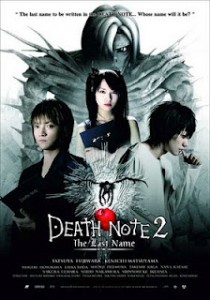
In Death Note: The Last Name, the production value runs the gamut from soap opera to video game. Story-wise a few new complications are added to the rules of the Death Note (and a second Death Note is introduced), though none of this really challenges L, who works intuitively. The story tension is meant to come not from whether or not L will know that Light is Kira, but whether or not he will be able to prove it. However, Light and his various associates, be they gods of death or devoted fans, continue to remain one contrived step ahead of L’s ability to discover hard evidence.

As for Gantz: The Perfect Answer, it was a satisfying conclusion to the story. New elements were brought in, like people who are investigating the rumors of Gantz and the possibility that these dead people are still alive, and as aforementioned, the fighters deal with some heavy questions about who they are fighting and why.

There are a number of excellent action sequences involving a subway car, though there were definitely some moments where I wished I was watching it in the theater. Action on DVD frequently goes on too long to hold my interest, but that’s a personal thing. Overall, I enjoyed both Gantz films, and they’ve got me interested in the anime and manga, which is a huge success.

::

On a whim I picked up L: Change the World at the library, and to my surprise, very much enjoyed it. It’s an L-specific spin-off of the Death Note live action films, and opens just before the Kira story begins. It starts with L working with Naomi on a case, and I actually really wished we could have had more of that. Naomi is a fun, capable character, and I enjoyed the taste we got of their relationship. If anyone could tell me if that is expanded on in the anime or manga I would really appreciate it.

The film quickly leaps through the timeline of the first two films, and the bulk of it takes place after. L takes some time finishing off odds and ends of cases, and this is his last big case before his chosen death comes. Essentially it’s a completely unoriginal bioterrorism-type outbreak story, but I enjoyed getting to know more about L outside of his entanglement with Light, especially insofar as it gave us a better look at the system L works within. The villains have a pretty traditional plan to destroy the world so they can remake it, but at least in the process they have to engage with the world, which makes them much more interesting than Light, hiding behind his notebook.

It’s a testament to the work Matsuyama had done with the character of L over the prior two films that when he engages in simple human behaviors it’s incredibly strange to watch. When he’s simply being outside in the world, it made me nervous. I wanted to encase him in bubble wrap & return him to his hermetically sealed chamber, full of sweets & computer monitors. In the course of fighting the virus, he has to interact with children, and it’s a great twist to watch this child-like character struggle to connect. As a bonus, children are the perfect people to ask L all the questions we’ve had through the prior two films. Why does he eat so much sugar? Is he even capable of standing up straight?

In the end, L: Change the World was a treat for me for making it through the other two Death Note films. It wasn’t great, and it certainly wouldn’t stand on its own, but if you really wanted more L, it’s a fun little diversion.


Review copies of Death Note: The Last Name and Gantz: The Perfect Answer provided by New People Entertainment.

Filed Under: Subtitles & Sensibility Tagged With: death note, gantz

MoCCA Delight

May 1, 2012 by Brigid Alverson

Why is Ed Chavez smiling? Probably because Vertical books were selling like gangbusters at this past weekend’s MoCCA Fest. Ed is the marketing director at Vertical, Inc., home of Chi’s Sweet Home, Twin Spica, and all those Tezuka manga, and he looked like he was having a big day. He wasn’t the only manga peddler there; Stephen Robson of Fanfare/Ponent Mon, the company that publishes those beautiful Jiro Taniguchi manga, hopped over as well, and Drawn & Quarterly had a nice selection of paperback Yoshihiro Tatsumi books as well as their newest Shigeru Mizuki title, NonNonBa.

TCAF is coming up this weekend, and Deb Aoki has rounds up everything you won’t want to miss.

The new books just keep on coming: Digital Manga announced that it has licensed three new BL manga, Kairi Shimotsuki’s A Century of Temptation (Izanai Hyakunen no Koi), Ayan Sakuragi’s Deflowering the Boss (Uchi no Shachō wa Cherry Desu), and Naomi Guren’s The Incredible Kintaro (Masaka no Kintarō), for print release. Lissa Pattillo spots Amazon listings for 21st Century Boys, Naoki Urasawa’s sequel to 20th Century Boys, as well as for a boxed set of Nausicaä of the Valley of the Wind.

The Manga Bookshelf team debates their Pick of the Week.

Kate Dacey wraps up this month’s Manga Moveable Feast with a final wrap-up of posts about the Viz Signature imprint.

Erica Freidman has all the yuri news from Japan and North America in her latest Yuri Network News roundup.

MJ and Michelle Smith change their column to GL Bookrack and check out some yuri titles at Manga Bookshelf.

Khursten puts the spotlight on CLAMP and their work at Otaku Champloo.

Tony Yao asks: What are your favorite epic plot twists in manga?

Blogging about Prevention of Cruelty to Animals month, Lori Henderson rounds up some manga where cats meet unfortunate ends.

Job Board: Looking for a job in manga? Viz has some openings.

News from Japan: Three Steps Over Japan takes a look at a newish cousin of Shonen Jump, Jump X. Seiki Tsuchida, the creator of Under the Same Moon, has died at the age of 43. The outspoken manga-ka Shuho Sato has abruptly ended his contract with Kodansha for Say Hello to Black Jack and is insisting the publisher destroy any unsold copies of the manga; his new series, New Say Hello to Black Jack, is being published by Shogakukan.

Reviews: Ash Brown sums up a week’s worth of manga reading at Experiments in Manga.

Lesley Aeschliman on vol. 2 of Cardcaptor Sakura (omnibus edition) (Blogcritics)
Adam Stephanides on vol. 1 of Doll (Completely Futile)
Sean Gaffney on vol. 12 of GTO: The Early Years (A Case Suitable for Treatment)
Erica Friedman on Hana to Hoshi/Flower and Star (Okazu)
Leroy Douresseaux on Naruto: The Official Character Book (The Comic Book Bin)
Sean Gaffney on vol. 34 of Negima (A Case Suitable for Treatment)
Lesley Aeschliman on vol. 9 of Ranma 1/2 (Blogcritics)
Kristi on vols. 4 and 5 of Rosario + Vampire, Season 2 (Comic Attack)
Anna on Tesoro (Manga Report)
Lesley Aeschliman on vol. 4 of Twin Spica (Blogcritics)
Lori Henderson on vols. 1-10 of The Wallflower (Manga Xanadu)

Filed Under: MANGABLOG

GTO: The Early Years, Vol. 12

May 1, 2012 by Sean Gaffney

By Toru Fujisawa. Released in Japan as “Shonan Jun’ai Gumi” by Kodansha, serialized in the magazine Weekly Shonen Magazine. Released in North America by Vertical.

Volume 11 of this manga was fortuitously focused on Onizuka. I say fortuitously because when you’re reintroducing a series via a different publisher that didn’t sell well in the first place, it’s always best to drum up sales by featuring the one character people absolutely love. This next volume, however, reminds you that GTO: The Early Years didn’t just star Onizuka, but his best friend Ryuji Danma, and he gets most of the focus here.

This is not to say there isn’t also plenty of Onizuka. He gets most of the first half, actually, as we resolve the Joey storyline from the previous volume. As you might guess form a delinquent story set in Shonen Magazine, this is not done through graphic violence and killings, but via a motorcycle race. Joey is on one of the best bikes around, Onizuka is on a legendary old bike whose best days are behind it. Guess who wins. It’s notable that, while we all know Onizuka as a cool character who is constantly allowed to be a giant comedic goof, he also works well in the opposite direction: Onizuka is a goofy, horndog teen who can nevertheless back up his boasts with feats of utter badassery. And of course teaching valuable lessons, which he does with Joey here.

Meanwhile, Onizuka gets to cool moments, but Ryuji gets the emotional turmoil. (Not a surprise: Ryuji has always been vaguely more mature than his best friend. Note I said vaguely.) First of all, he’s dealing with his former teacher and first love appearing back in his life again, right when he’s trying to settle down with Nagisa. Secondly, there’s the ongoing issues with Joey, and his girlfriend being used as “bait” to draw out the two leaders. But both of these pale next to the end of his “castle” and idyllic trailer park life, as the cops arrive to destroy everything, and Nagisa’s parents arrive to take their runaway daughter back home. Ryuji, of course, is forbidden to see her.

There’s a lot of teen angst here, which I can’t help but see from a slightly older perspective. For all that Ryuji and Nagisa were living in their happy fantasy, a bus in the middle of a field, with no real prospects for the future is not something to cling to. I think Nagisa gets that more than the others. While Onizuka and Shinomi are wondering why they can’t be left alone, Nagisa’s the one noting that no matter where they run, adults (and by extension reality) will still exist. They can’t face life as a loving couple on teenage terms. Growing up has to be done. And for the moment, that means dealing with her being under house arrest and having to communicate via written messages.

There is still, lest this all sound like a bummer, plenty of humor – this is an Onizuka manga, after all. The catfight between Shinomi and Saya over Onizuka is ridiculous and hilarious, as is the chapter where Nagisa reveals she might be pregnant, and everyone goes completely out of control. (Spoiler: she isn’t.) Best of all, though, is Onizuka accidentally ending up in the middle of a yakuza job, and finding the horrifying things you would expect – all played for comedy, of course. All in all, the series continues to give us what Fujiwara does best: lots of fighting, lots of goofy faces, a few heartwarming/heartbreaking moments, and lots of a future Great Teacher.

Filed Under: REVIEWS

  • « Go to Previous Page
  • Page 1
  • Page 2
  • Page 3
  • Page 4
 | Log in
Copyright © 2010 Manga Bookshelf | Powered by WordPress & the Genesis Framework