• Skip to primary navigation
  • Skip to main content
  • Skip to primary sidebar
  • Home
  • About Us
    • Privacy Policy
    • Comment Policy
    • Disclosures & Disclaimers
  • Resources
    • Links, Essays & Articles
    • Fandomology!
    • CLAMP Directory
    • BlogRoll
  • Features & Columns
    • 3 Things Thursday
    • Adventures in the Key of Shoujo
    • Bit & Blips (game reviews)
    • BL BOOKRACK
    • Bookshelf Briefs
    • Bringing the Drama
    • Comic Conversion
    • Fanservice Friday
    • Going Digital
    • It Came From the Sinosphere
    • License This!
    • Magazine no Mori
    • My Week in Manga
    • OFF THE SHELF
    • Not By Manga Alone
    • PICK OF THE WEEK
    • Subtitles & Sensibility
    • Weekly Shonen Jump Recaps
  • Manga Moveable Feast
    • MMF Full Archive
    • Yun Kouga
    • CLAMP
    • Shojo Beat
    • Osamu Tezuka
    • Sailor Moon
    • Fruits Basket
    • Takehiko Inoue
    • Wild Adapter
    • One Piece
    • After School Nightmare
    • Karakuri Odette
    • Paradise Kiss
    • The Color Trilogy
    • To Terra…
    • Sexy Voice & Robo
  • Browse by Author
    • Sean Gaffney
    • Anna Neatrour
    • Michelle Smith
    • Katherine Dacey
    • MJ
    • Brigid Alverson
    • Travis Anderson
    • Phillip Anthony
    • Derek Bown
    • Jaci Dahlvang
    • Angela Eastman
    • Erica Friedman
    • Sara K.
    • Megan Purdy
    • Emily Snodgrass
    • Nancy Thistlethwaite
    • Eva Volin
    • David Welsh
  • MB Blogs
    • A Case Suitable For Treatment
    • Experiments in Manga
    • MangaBlog
    • The Manga Critic
    • Manga Report
    • Soliloquy in Blue
    • Manga Curmudgeon (archive)

Manga Bookshelf

Discussion, Resources, Roundtables, & Reviews

Archives for December 2010

Manga on Deck for December

December 6, 2010 by Anna N

Here’s the stack of manga that has made its way into my house recently, a combination of my usual monthly DCBS order, early holiday presents and some review copies:

I’m always excited to see a volume of Vagabond I haven’t read yet. I had no idea that the 4th volume of 12 Kingdoms was so big! I’m glad that Tokyopop continues to translate this title so people who were fans of the anime can get an idea of what the non-truncated story is like. I’m looking forward to trashy shoujo in Papillon and talking bears in Biomega. I’m finally getting around to reading Batman and the Mad Monk, because I do enjoy Matt Wagner’s superhero work sometimes. I was so excited when I saw a copy of Julietta Suzuki’s Kamisama Kiss. I am probably going to read that and Papillon first, because I am suddenly in the mood for some shoujo.
Filed Under: UNSHELVED

Announcing the next Manga Moveable Feast: Karakuri Odette

December 6, 2010 by Anna N

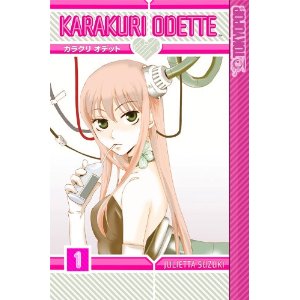
I’m pleased to announce the next Manga Moveable Feast will be hosted here from January 16th-22nd. We’ll focus on Karakuri Odette, a great shoujo series about an android girl who wants to become more human.

I wanted to make this title the focus of my first time hosting the manga moveable feast because Julietta Suzuki elevates the android-girl genre, turning it into a series that is at times both sweet and philosophical. Suzuki’s a gifted cartoonist too, and the ways she subtly differentiates android Odette’s body language from her human friends is always a treat to see. Since it is well over a month away, you have plenty of time to add a volume or two of this series to your wishlists, or maybe pick it up with your holiday money. One of the nice things about this series is that it is fairly episodic, so even if you were to pick up one of the later volumes I think it would still be easy to enjoy the manga.

Here’s a sample first chapter on the Tokyopop site.
Here’s a sampling of reviews of the first volume from:
Comics Worth Reading
My old blog TangognaT
A Case Suitable for Treatment
About.com manga guide
And a bunch of review links on Manga Views.

Filed Under: UNSHELVED

2010 Manga Bookshelf Gift Guide

December 5, 2010 by MJ 16 Comments

Once again, it’s the time of year when manga bloggers throw in their suggestions for the Great Manga Gift Guide. Daniella Orihuela-Gruber is keeping this year’s archive at All About Manga. (Check out David Welsh’s Manga Curmudgeon for links to last year’s guides.)

Since Manga Bookshelf’s guide last year drew from manga and manhwa in general published up to that point, this year’s guide acts as an appendix, focusing on comics that debuted in 2010 only.

Shall we begin?


Short and Sweet
For something easy on the pocketbook (and easy to wrap), take a look at these manga, complete in one volume.

Not Love But Delicious Foods (Make Me So Happy!) | Yen Press – This single-volume manga from creator Fumi Yoshinaga is a joy for foodies and manga fans alike. From my review, “There isn’t a real story to this manga, just a series of episodes moving from restaurant to restaurant, but what makes each chapter come together is a strong feeling of intimacy with the characters and the author’s characteristic banter. Humorous dialogue is Yoshinaga’s specialty, and she uses it to great advantage in this book, stringing together descriptions of complicated dishes in the most natural way possible.”
Ristorante Paradiso | Viz Media – From Natsume Ono, this single volume manga has spawned a currently-running sequel series, Gente, but the original stands beautifully on its own. From my review, “The story begins with conflict–a young woman, Nicoletta, seeks out her mother (who abandoned her for love) with the intention of outing her as a divorcée to her current husband. But things immediately become more complicated as she finds herself torn between resentment over her mom’s happiness and a desire to be a part of the life her mom has built for herself … It’s a fairly quiet story about a bunch of people just being people, for better or worse.”

I Enjoy Being a Girl
If you’re looking for a series aimed at teen girls, here are a couple of strong choices, each with a very different feel.

The Story of Saiunkoku | Viz Media – This historical manga features beautiful costumes and scenery, a smart female lead, and plenty of royal intrigue to make its period setting come alive for teen readers. From my review, “…the series’ execution is thoughtful and unexpectedly nuanced. And though the story first seems to be crafted out of the same, tired tropes … each of these standard elements–the happy-go-lucky heroine, the over-the-top humor, the contrived matchmaking–becomes fresh and even insightful in Sai Yukino’s hands … Nobody is perfect, and since flawed characters are generally the most compelling in any story, this makes for a very rich experience overall.”
Seiho Boys’ High School! | Viz Media – This humorous tale of teenaged boys in a secluded all-boys high school leaves behind the romantic ideals of most shoujo manga in favor of comedy and an unexpectedly frank look at the minds and lives of its subjects. From my review, “… reading the second volume actually sold me on the series to an extent I could not possibly have expected. The crude humor is still there, but what turns the series around is that it *finally* focuses on its lead, Maki, giving him a rich, poignant backstory that really takes the story to the next level … one of the most realistic depictions of teenaged boys I’ve seen in shoujo manga.”

Ladies’ Choice
For a racier and/or more sophisticated read, here are some options certainly not exclusive to the ladies.

Bunny Drop | Yen Press – For female readers, it’s often entertaining to explore what men experience when thrust into roles generally allotted to women. Bunny Drop does this better than most, even portraying its male lead in a genuinely warm light. From my review, “Daikichi, is a 30-something bachelor whose recently deceased grandfather has left behind a 6-year-old love child, Rin, previously unknown to the rest of the family … In an impetuous fit of frustration, he declares that he’ll take care of Rin himself … This might sound dull, but it’s really, really not. It’s moving and funny and honestly compelling.”
There’s Something About Sunyool | NETCOMICS – One of the few recent NETCOMICS’ series for adult women to actually make it to print, Sunyool brings together melodrama, smart humor, and a strong female lead. From David Welsh’s review, “The title of Youngran Lee’s There’s Something About Sunyool is accurate, though it takes a while to figure out what that something is and if you’d like to see more of it. By the time I’d finished the first volume, she had gone from blandly quirky to confidently madcap, and I was very much in her corner … I’m looking forward to seeing her refuse to suffer new fools and roll with life’s nastier punches as the series progresses.”

Uncommon Beauty
These stories are from artists who weave tales of great beauty–mysterious, melancholy, and each stunning in its own way.

House of Five Leaves | Viz Media – Though it might seem strange to describe a story about a misplaced samurai and a group of criminals with terms like “uncommon beauty,” the quiet melancholy of this series brings to mind words just like that. From my review, “Akitsu is drawn to Yaichi’s personal qualities–the same ones he most painfully lacks–but his illusions are shattered when he discovers that Yaichi’s line of business is a sort of twisted vigilante kidnapping racket …The story moves quite slowly, but that’s really not the point. It’s all about this strange, vulnerable man, and whether he can truly discover family in a bunch of morally ambiguous outlaws.”
A Drunken Dream and Other Stories | Fantagraphics – This collection of short stories spanning the career of shoujo pioneer Moto Hagio offers a poignant look into the author’s mind, both as a young artist and an established creator, focusing especially on themes of family and personal identity. From Erica Friedman’s review, “Moto Hagio is a woman, who draws stories for girls. She is a Master of her Craft. She is a groundbreaker in her field. A Drunken Dream is a must-read for any serious student of manga. While you’re getting a copy, buy one for a niece or friend – and don’t tell them it’s ‘important.’ This way they’ll be free to just enjoy it, tropes and all.”

Supernatural Smorgasbord
Spirits, superstitions, and a herd of deadly unicorns? Here are two series both weird and wonderful.

Demon Sacred | TOKYOPOP – For fans of cracktastic shoujo fantasy, TOKYOPOP’s got your number this year with this tale of demons, deadly unicorns, and hot young men. From my review, “Itsuki is a deft storyteller with the soul of a dreamy-eyed teen, and despite the story’s complicated plot and abundance of characters, the narrative is so strong, it’s not confusing in the least. Everything about this manga is perfectly crafted to appeal to its core demographic of teen girls, but sophisticated enough to grab the attention of those of us who are only teens at heart. I honestly can’t wait to read more.”
Natsume’s Book of Friends | Viz Media – Debuting in January, this quiet series took the manga blogging world by storm as one of the biggest surprises of this year. From my review of volume one, “This story is a pleasant surprise on all counts–art, characterization, storytelling … It possesses a sort of xxxHolic meets Mushishi vibe … which is not to suggest that it lacks its own unique charms. This volume is charming from start to finish, thanks to Takashi (whose good heart shines even as he faces rejection from family and peers) and the spirits he meets along the way, ranging from downright adorable to genuinely frightening.”

Sci-Fi on the Side
If sci-fi is the way to go, Vertical’s got you covered this year.

Twin Spica | Vertical, Inc. – Easily earning my vote for best new series this year, Twin Spica follows the adolescence of Asumi, an aspiring young astronaut in a time of recovery for Japan’s space program. From my review of volume one, “Though this series finished its run … just last year, its simple artwork and wistful tone make its first volume read like an instant classic. Even the volume’s cover art … evokes feelings of nostalgia. Also, though the story’s foundation is set firmly in hard sci-fi, it is its heroine’s poignant and occasionally whimsical inner life that really defines its voice. Asumi provides the heart of this story, and it is a strange and wonderful heart indeed.”
7 Billion Needles | Vertical, Inc. – This story, about an isolated young girl whose body becomes host to an alien entity, is psychologically-driven sci-fi of the very best kind. From my Pick of the Week, “Inspired by Hal Clement’s 1950s sci-fi novel, Needle, but set firmly in the present, this volume feels nostalgic and contemporary all at once … And though the premise is perhaps not quite original, as with most manga, the plot here is somewhat beside the point. The real story driving this volume is Hikaru’s own personal journey and the beginnings of her tenuous connection to the other seven billion people with whom she shares the planet.”

For the Young & Young at Heart
Here are some great choices that easily appeal to young and old alike.

Chi’s Sweet Home | Vertical, Inc. – Cute and simple enough for younger readers, but written originally for adults, Chi’s Sweet Home is the ultimate holiday gift this year, guaranteed to please nearly anyone. From my review of the early volumes, “Chi’s Sweet Home is the family-friendly manga we’ve all be waiting for. Its tiny feline protagonist is uniquely poised to appeal to readers of all ages, and even very young readers will find its image-heavy narrative easy to follow. Kanata’s simple, expressive art tells her story so clearly, it’s a series most of us could probably follow even if Vertical had printed it in the original Japanese.”
One Fine Day | Yen Press One of the few new manhwa series to debut this year, One Fine Day is filled with glorious whimsy, charming artwork, magic, and sweet scenes of home life between protagonist No-Ah and his furry “children.” From my review, “Perhaps the series’ most consistently delightful aspect, however, is its artwork. Alternating between crude sketches and elaborate fancies, Sirial’s drawings overflow with warmth and whimsy, matching the story’s tone perfectly. From No-Ah’s comically unmanageable hair to Rang’s footie pajamas, everything that could be labeled as “cute” is also an essential tool for expression, contradicting the series’ haphazard feel.”

Bang For Your Buck
For a whole lot of manga in just one or two volumes, here are gifts that come complete without breaking the bank!

Tenken | One Peace Books – This surreal fantasy, complete in one oversized volume, has an atypical look that may appeal to non-manga fans. Though it can be challenging to follow, the rewards are clear. From Julie Opipari, “I loved the brooding atmosphere of this post-apocalyptic tale … maybe it’s meant to be like a dream, one that fades and blurs after waking. One aspect of this story is crystal clear, and that is the compelling elegance of the visually arresting art. I am looking forward to more by Yumiko Shirai. Like Saki,her artwork shines with brilliance that can’t be ignored.”

Chobits Omnibus | Dark Horse Manga – This bulky, two-volume reissue of the entire series is a treat for CLAMP fans old and new. With a spiffy new translation and gorgeous color pages, these oversized volumes reflect the quality manga fans have come to expect from Dark Horse. From astronerdboy, “Considering the Japanese love of androids and 2-D characters, CLAMP’s work here lays out the groundwork that questions the very notions of love and whether or not a person having a relationship with a machine in human form is acceptable … Along the way, CLAMP picks up a lot of fun, sweetness, interesting characters, and a genuine mystery over Chi.”

Boys Who Love Boys
If your loved one’s a fan of boy on boy action, perhaps one of these?

Calling | BLU – Strong BL one-shots are difficult to find. Most try to accomplish to much (or too little), and few are able to create a believable relationship in just a few chapters. Fortunately, Calling strikes the balance. From my review, “Calling is a surprisingly sweet story about two lonely young men discovering love for the first time. Even the story’s obvious cliches are handled with nuance and care … If Calling is more warm than it is profound, that’s really not something to complain about. It’s the story’s focus on small moments that make it work so well in just a single volume. In a sea of disappointing BL one-shots, Calling is a welcome oasis indeed.”
Seven Days | Juné – Though the premise of this (yet incomplete) short series appears cringe-worthy, its execution is anything but. From my review, “There are a lot of layers to this odd little story, and though it’s unclear at this point how anything might be resolved … writer Venio Tachibana provides more than enough reason for us to want to find out. And though that reason includes school club drama, at least two love triangles, one wonderfully tough female character, and, of course, attractive archery uniforms, it’s still the story’s idiosyncratic leads who steal the show with a mountain of mixed signals, persistent defensiveness, and awkward moments of affection.”

For more ideas, try last year’s guide. Happy Shopping!

Filed Under: FEATURES Tagged With: gift guide

December Giveaway: The Story of Saiunkoku Volume 1

December 5, 2010 by Anna N

I ended up with an extra copy of the first volume of The Story of Saiunkoku, a fun fantasy shoujo series that features a strong heroine!

To enter the giveaway, just comment with the title of the manga you’d most like to get for the holidays. I’ll randomly pick a winner next Sunday.

And the winner is: Yalimar. Congrats!

Filed Under: UNSHELVED

One Piece Volumes 1 and 2

December 4, 2010 by Anna N

One thing that I’ve found a little off-putting about One Piece is the wide consensus that it takes quite a few volumes to really get going. I tend to follow a two book rule on principle when evaluating manga series to see if I want to collect them, because while I’ve read plenty of so-so first volumes that develop into an interesting series by volume two, I have a limited amount of patience when it comes to the idea of collecting several volumes just to get to the good stuff. But I only have the first two volumes on hand right now, so that’s what I’m going to look at today. I’m going to attempt to show what might lead a reader to assume that the series isn’t so great and also highlight the aspects that might cause someone to come back for more.

The first chapter of One Piece follows a very typical shonen formula. An adventurous proto-hero gets inspired by a total bad-ass and decides to become a hero himself. I’m sure there are numerous examples of other manga that have similar beginning chapters, but the ones that come to my mind immediately are Tegami Bachi and Gun Blaze West. The heroic quest idea gets a little bit of a twist in One Piece because Monkey D. Luffy decides that he’ll become “The King of the Pirates.” Luffy is aided in his ambition by his inadvertent ingestion of the fruit of the Gum-Gum tree, which adds him to the ranks of stretchy superheroes. I’ve often thought that elastic powers give a cartoonist the license to go absolutely crazy, but Luffy’s powers mostly seem to manifest in near-invulnerability and the ability to do devastating super-stretchy punches.

Luffy is a hero who is made engaging due to his almost stupid levels of enthusiasm and his tendency to leap into action without any fear for himself. He sets out in a dinghy for the fabled “One Piece,” the legendary pirate treasure that will make him Pirate King. Luffy’s early adventures show him gradually assembling a team that will help him fulfill his quest. He’s joined by Zoro, a swordsman with a hilarious three-sword technique (he fights with swords in both hands and one clenched in his teeth) and Nami, a greedy femme fatale of a navigator.

The art in One Piece is one aspect that might be off-putting to a new reader. Oda’s style is cartoony, with plenty of exaggerated facial expressions. If someone comes to One Piece wanting slick art featuring the giant blades and billowing costumes of Bleach, they’re going to be disappointed. I enjoyed the Oda’s art, just because it looks very different from most shonen titles. I especially appreciated the variety in the character designs for the villains Luffy faced, which ranged from a hideously gigantic pirate queen to a corrupt navy captain with an iron jaw and an axe for a hand. I wasn’t surprised to see that Oda once worked as an assistant on Rurouni Kenshin, because I always thought one of the great things about that series was distinctive villain character design. That’s something I look for when reading shonen manga, so that goes in One Piece’s bonus column for me.

The storyline in the first couple volumes will likely perplex anyone who is wondering why One Piece is a bestseller in Japan. Luffy pulls his team together due to his enthusiasm and genuine friendliness. Even if other characters initially think Luffy is crazy, they end up falling in with his plans despite their earlier intentions. The first couple volumes feature plenty of fights made more interesting by the unique qualities of the villains as well as some episodes that have a bit of after school special type moralizing about the power of friendship. Luffy meets a boy whose ambition is to join the navy and fight pirates, and he becomes Luffy’s first friend from outside his village. Later, a dog’s loyalty is shown to endure past the life of his master in a town decimated by pirates.

The emotional tone in the first couple volumes is one thing that I think hasn’t gelled yet. The series seems on the surface to just be fairly goofy, with the exaggerated villains, plenty of action scenes and jokes, and a hero who can’t be hurt by anything. But there are scattered scenes that emphasize the arbitrary nature of violence and death. Luffy’s hero gets his arm bitten off by a shark and seems largely unconcerned about the sudden amputation. Zoro’s back story is about moving on from tragedy and while Luffy is largely unharmed by fighting with pirates, his companions don’t have that luxury. Zoro fights past the point of exhaustion and announces his intention to sleep on the battlefield, and Luffy cheerfully flexes his muscles and decides to take over. The darker element of violence mixed with the more frivolous elements and usual shonen boosterism of friendship might hint at darker times ahead for Luffy and his crew, and that’s what I’d be interested in seeing later on in the series.

If I was just going by the first couple volumes of the series, I might just assume that One Piece was just a slightly better than average shonen series, with the added bonus of piracy. But seeing how many people are genuinely enthusiastic about this manga makes me think I should at least check out a few of the omnibus volumes even though I am frightened of getting hooked by a 60+ shonen series. I will be looking for One Piece at my local library too.

Filed Under: UNSHELVED

Saturday Morning Cartoon: Read Or Die

December 4, 2010 by Anna N

Today’s Saturday morning cartoon is one of my all time favorite anime: Read Or Die!

Filed Under: UNSHELVED

Fanservice Friday: Sundome

December 3, 2010 by MJ 2 Comments

Welcome to the second monthly edition of Fanservice Friday!

Today’s column is actually collaborative in a sense, and not hosted here in its entirety. Just yesterday, I appeared as a guest on the Manga Out Loud podcast, hosted by Ed Sizemore (Manga Worth Reading), where we discussed the manga series, Sundome, written by Kazuto Okada, and published in English by Yen Press.

The series mainly follows two Japanese teenagers, Hideo and Kurumi, who develop between them something very close to a classic dominant/submissive relationship (Hideo as the submissive party and Kurumi as the dom), presented in a fairly dark context of obsession and deep emotional damage (though not without some surprisingly warm moments).

For in-depth discussion of the series, please check out the podcast, though given the purpose of this column, I will take a moment to specifically mention the series’ dense volume of fanservice. There is so much of it in this series, in fact, I’m not entirely sure it can be properly categorized as “fanservice” which perhaps indicates something extraneous to the story. In the case of Sundome, “extraneous” could not be a less accurate description.

The entire series is steeped in erotic imagery, some of which could be characterized as quite crude, but with such a strong emotional core, it’s difficult to think of it as obscene, even in its most explicit moments. That the characters are high school students only makes the level of eroticism more disturbing, yet again, it’s so appropriate to the narrative and especially to Hideo’s point of view, it’s difficult to imagine the story working well without it. Eroticism is so much a part of the fabric of the story, anything less might just seem unbelievably coy.

One particular type of imagery, however, is used more prominently here than in any other manga I’ve personally encountered (which, in terms of this type of manga, is admittedly not all that much). That would be the constant presence of the cameltoe. Shots down the shirt or up the skirt are incredibly common, even in pretty mainstream shounen and seinen manga, but Okada’s obsession with the cameltoe is something new for me.

Observe.

Now, obviously I’m not necessarily the most appropriate judge in terms of appeal, but not only do I have difficulty finding this attractive, it mostly looks… kinda painful. Ouch.

As I mentioned in the podcast, given the sexual themes in the manga, I actually find the rather stunning wealth of male-oriented fanservice in Sundome mainly inoffensive, as it seems so integral to the series’ tone and plot. I find it quite a bit less offensive, in fact, than random, less explicit panty-shots tossed into standard fantasy or adventure manga.

What say you, readers?


Be sure to download this week’s Manga Out Loud podcast, and let us know what you think!

Filed Under: Fanservice Friday Tagged With: sundome

PR: Kamisama Kiss Coming Soon From Viz

December 2, 2010 by Anna N

I tend to only run press releases I am genuinely enthusiastic about, which is definitely the case with the new Julietta Suzuki series Kamisama Kiss. I’d want to get it in any case because I think her series Karakuri Odette is fantastic, and now I’m intrigued with the premise of the story:

Nanami, alone & homeless after her dad skips town to avoid the debt collectors, saves a mysterious man from a dog attack. Grateful for the rescue, he offers Nanami his home with a kiss on her forehead. Little does she know, but Nanami has just taken over his home…AND his job as the local deity! Adjustments and new responsibilities lay ahead as Nanami faces a host of supernatural creatures, and finds what might be love with the recalcitrant yokai caretaker!

Suzuki managed to make the off-putting at first glance premise of an android girl attending high school genuinely interesting and heartwarming, so I’m very curious to see what she does with gods and yokai. Here’s the full press release:

VIZ MEDIA RELEASES DIVINE ROMANTIC COMEDY KAMISAMA KISS

A Kiss On The Forehead Is A Girl’s Ticket To A New Home And An Unexpected Life As A Deity

San Francisco, CA, December 2, 2010 – VIZ Media, LLC (VIZ Media), one of the entertainment industry’s most innovative and comprehensive publishing, animation and licensing companies, will release the shojo manga (graphic novels for female readers) romantic comedy, KAMISAMA KISS, on December 7th. The new series, created by Julietta Suzuki, will be published under the company’s Shojo Beat imprint, is rated ‘T’ for Teens, and will carry an MSRP of $9.99 U.S. / $12.99 CAN.
Nanami Momozono is alone and homeless after her dad skips town to evade his gambling debts and the debt collectors kick her out of her apartment. So when a mysterious man she’s just saved from a dog attack offers her his home, she jumps at the opportunity. But it turns out that his place is a shrine, and Nanami has unwittingly taken over his job as a local deity!

“Plenty of surprises are in store for Nanami as she adjusts to life at the shrine, taking on new responsibilities and facing a whole range of hidden dangers that she doesn’t fully understand yet,” says Pancha Diaz, Editor. “A kiss on the forehead might have bestowed the land-god mark on Nanami, but she will have a lot to learn as she faces a bratty sky god, a mysterious swamp deity, and a strange, cute boy who might have supernatural powers of his own!”
Julietta Suzuki’s debut manga The Day One Becomes A Star appeared in Hana to Yume Plus magazine in 2004. Her other published works include The Devil And Sweets, Karakuri Odette, and Kamisama Kiss, which is currently featured in Hana to Yume.

For more information on KAMISAMA KISS, or other shojo titles from VIZ Media, please visit www.ShojoBeat.com.

Filed Under: UNSHELVED

Manga Moveable Feast: Stretchy Super Heroes

December 2, 2010 by Anna N

I’m working on writing up a review of the first couple volumes of One Piece for the Manga Moveable Feast, but I thought I’d take the time to talk about other characters in comics who have similar stretchy powers as One Piece’s enthusiastic protagonist Monkey D. Luffy. While Luffy gained his rubber powers by eating the fruit of the Gum Gum tree, there are plenty of examples of super heroes with magical stretchy abilities in western comics. Here’s a brief overview of some stretchy superheros.

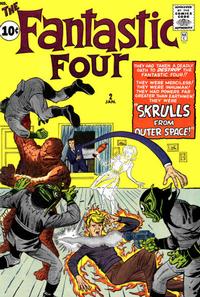
Reed Richards aka Mr Fantastic:
The leader of the Fantastic Four, Reed Richards gained his stretching abilities due to a scientific experiment gone horribly wrong. The funny thing about Reed Richard’s powers is that for someone with such goofy-looking powers, Reed is unquestionably a total stiff in terms of his personality. The contrast between his somewhat frivolous powers and his intellect make him an interesting leader of one of the classic super teams, even though he’d rather spend all of his time in a lab.

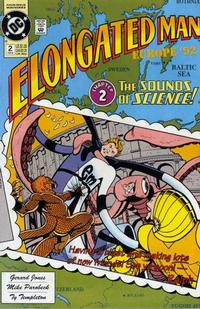
The Elongated Man

In an amusing coincidence, the Elongated Man’s powers are also fruit based. It seems like poor Ralph Dibney is always going to be a second-string character, because it doesn’t do much good to be a detective in the same universe as Batman. It also doesn’t seem to be all that wonderful to be super stretchy in a universe containing Plastic Man. He’s doomed to be second best and he and his wife seem to be mainly used as cannon fodder in DC crossover event comics.

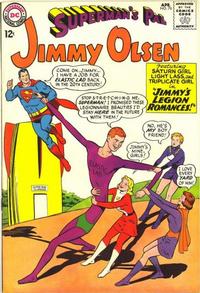
Jimmy Olsen (Elastic Lad)

When Superman’s best friend travels forward in time to hang out with the Legion of Super-Heroes, he does so by taking on the abilities of Elastic Lad when he drinks a serum. Unfortunately his super powers do not enable him to make time with the Legion ladies very effectively. Jimmy’s transformation into Elastic Lad were part of a general pattern where he endured being changed into any number of strange creatures. If you’ve been transformed into a giant turtle boy, gorilla, or a radioactive dude having temporary elastic powers seems completely normal.

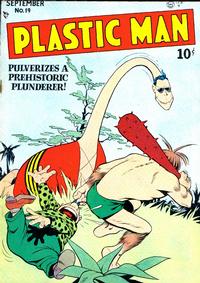
Plastic Man

Plastic Man is by far my favorite stretchy super hero, mainly because Jack Cole was an incredibly talented cartoonist who took full advantage of the idea of someone having elastic powers. Eel O’Brian was a thief who was splashed by a strange acid, gaining Most stretchy superheroes have some degree of invulnerability due to their malleable nature, but Plastic Man is able to transform himself into any shape imaginable while still retaining the distinctive red and yellow coloring of his costume. Plastic Man comics end up being delightfully surreal, but comics featuring other heroes with elastic powers often just focus on their stretchy limbs instead of taking full advantage of the possibilities of a person made of rubber.

Luffy seems to be partially invulnerable due to his rubber powers, but he mostly uses his elastic abilities to pack some powerful punches, just based on the first couple volumes. I’m curious to see how his elastic powers are used further into series.

Filed Under: UNSHELVED

3 Things Thursday: Heroines for 2010

December 2, 2010 by MJ 15 Comments

This may not come as a surprise to most of you, but I spend a lot of time thinking about women in manga, both behind the pen and on the page. As I was pondering a topic for this week’s 3 Things, it occurred to me that I might like to pick out some of my favorite female leads from this year’s batch of new manga. What surprised me when I got down to it, however, was the realization that very few of my favorites this year come from the pages of shoujo manga.

While I’m not sure exactly what that says about me or the newest crop of shoujo, I’d certainly be interested in the discussion. In the meantime, lets take a look at three of my favorite heroines from the pages of this year’s debut series.

3 favorite heroines debuting in 2010:

1. Yukiko | All My Darling Daughters | Fumi Yoshinaga | Viz Media – Perhaps “heroine” is not quite the right word for Yukiko, but as the manga’s various stories are all threaded through her, I’ve decided she qualifies. In any case, I can’t let her go unrecognized.

What’s wonderful about Yukiko is that she’s entirely ordinary, in a way that makes clear just how individual “ordinary” actually is. She’s got average looks, an average job, an average relationship, and even a pretty average outlook on life, and yet both her story and her personality are just as intriguing as any “ordinary girl” who wins the love of a dashing hero, accidentally attains superpowers, and/or saves the world.

Yukiko’s a real everywoman. And every woman is awesome.

2. Asumi | Twin Spica | Kou Yaginuma | Vertical, Inc. – Asumi is a heroine after my own heart, mainly because of her skyward dreams and her rich inner life. She reminds me of myself as a young girl, though with a kinder heart and a much more tragic past. I’d like to have been strong enough at her age to reach out, without fear, to someone in need, even if that person was unfriendly to me, as she does with her deeply damaged classmate, Marika.

What’s especially enjoyable about Asumi’s journey, too, is that, though her ambitions are no less daunting than those of most fantasy heroines, she isn’t granted any special powers in order to achieve them. Her path entails numerous mundane obstacles, like scientifically-heavy schooling and real-world financial difficulties. Asumi is an idealized version of my young teenaged self, yet real enough that I can pick out exactly the ways in which I could have become her, with just a little more bravery and genuine self-awareness.

3. Shurei | The Story of Saiunkoku | Sai Yukino, Kairi Yura | Viz Media – Though Shurei’s happy-go-lucky attitude and strong sense of civil responsibility make her an ideal shoujo heroine, there’s a sense of deep intelligence and real mystery about her that somehow defies the norm.

Not that the norm is bad, mind you, but it’s refreshing to encounter a current shoujo heroine who has more on her mind than romance or the standard determination to “do her best!” Shurei does her best, all right, but she’s not necessarily forthcoming about what that is. She’s smart, she’s capable, and she’s every bit as interesting as the male characters who surround her–something that is not quite as common in girls’ manga as a reader might hope.

Honorable mention:

Chi | Chi’s Sweet Home | Konata Konami | Vertical, Inc. – I don’t cheat often in this column, but Chi is a kitty who demands special treatment, and who am I to refuse?

She’s cute, she’s fearless, she’s defiant when necessary, and she understands the value of good meal. What more could one ask for in a manga heroine? Though lately she’s been hanging with a questionable crowd, her love for her family shines through, even if they are too dense to understand her half the time.

With her bright, wide eyes and spunky personality, who could resist a cat like Chi?


So, readers, who are some of your favorite heroines from this year’s crop of manga?

Filed Under: 3 Things Thursday

3 Reasons to Read One Piece

December 2, 2010 by Katherine Dacey

Why would any sane person commit to reading a series that’s still going strong after sixty volumes? I can think of three compelling reasons why you should set aside your shonophobia — that’s Latin for “fear of incredibly long series with interminable fight scenes and characters who do their best” — and give Eiichiro Oda’s One Piece a shot.

1. THE ARTWORK

Though many shonen manga-ka love to populate their stories with flamboyantly ugly villains, Eiichiro Oda’s character designs are more memorable than his competitors’. That’s because Oda doesn’t just add a few scars and a crazy hairdo to distinguish the bad guys from the good; he creates every villain from scratch, making each garment, prop, tattoo, wart, and weapon a direct reflection of the character’s personality and personal history. The same goes for other supporting players: Oda emphasizes the greenness of one pirate’s kiddie followers by giving them vegetal hairdos, and the isolation of a pirate castaway by stuffing the character’s body into an empty treasure chest, with only Gaimon’s unkempt hair and feet poking out. (Gaimon gets one of the series’ best lines: “I used to have two eyebrows!” he exclaims, musing on his twenty years stranded on a remote island.)

Oda’s entire approach to drafting shows a similar thoughtfulness: his pirate ships, tropical islands, and sea coast villages are rendered in clean lines, with a minimum of screen tone. Oda relies instead on playful shapes to help set the stage, from a sea-going restaurant that looks like a cross between a carp and a Hong Kong dim sum parlor, to an island populated by rabbit-cobras, pig-lions, and rooster-foxes.

The only blind spot in Oda’s artwork is his female characters. Though he can draw a marvelous, gnarled pirate queen, as gloriously repulsive as any of the series’ other villains, his young, attractive girls are blandly interchangeable. Even as more female characters are introduced in later story arcs, their appearance seems more calculated to satisfy the male gaze than reveal much about their personality — besides, of course, the near-universal tendency among shonen artists to make a girl’s bust- and neckline a reliable predictor of her villainy.

2. THE LOVING SEND-UPS OF SHONEN CLICHES

One of the reasons I don’t read more shonen manga: I find the characters’ compulsion to shout the name of their fighting techniques kind of silly. (OK, a lot silly.) If anything, it brings back memories of the old Super Friends TV show in which the Wonder Twins clinked rings and announced that they’d be taking “the form of an ice sled!” or “the form of a green-striped tiger!” (If that was meant to be comedy and not a complete abdication of imagination on the writer’s part, I missed it.) Granted, InuYasha and Naruto boast cooler-sounding and more effectual powers, but the minute InuYasha yells “Wind Scar!”, I’m ripped out of the scene, pondering the need for such verbal displays.

In One Piece, however, Oda pokes fun at the practice by assigning his characters goofy powers with goofy names that are fun to say. Monkey D. Luffy’s Gum-Gum attacks are the most frequent and obvious example, as he pretzels himself into a Looney Tunes assortment of weapons and shields, but his crew mates also have a few tricks up their sleeves. The best of them, by far, is Tony Tony Chopper, a blue-nosed reindeer who also happens to be the ship’s doctor. His Human-Human powers enable him to assume a variety of forms, including a gargantuan were-reindeer that wouldn’t be out of place in the pages of Lycanthrope Leo.

Oda also walks a fine line between openly mocking his hero and using him to exemplify the “friendship, effort, and victory” motto that undergirds every Shonen Jump title. Monkey is, to put it nicely, one of the dumbest shonen heroes in the canon — and that’s part of his charm. Unlike, say, Naruto or Lag Seeing (of Tegami Bachi fame), Monkey’s single-minded pursuit of treasure is portrayed as a kind of insanity, not a sign of a stellar character. Monkey goes to extreme lengths to prove himself — not unusual for a shonen hero — but his behavior is clearly meant to be ridiculous. (In the very first pages of the series, he stabs himself in the face with a knife to demonstrate his imperviousness to pain, much to the horror of the assembled pirates.) Yet for all his ill-advised bravado, he’s a kind-hearted goof; anyone who demonstrates valor or integrity is invited to join his crew, regardless of the original circumstances under which they met Monkey. Again, those qualities don’t make Monkey unique, but they do make him appealing; he’s an indestructible hero who’s utterly fallible.

3. THE EXCELLENT ADAPTATION

Any text as thick with puns and pirate-speak as One Piece runs the risk of falling flat in translation, but the English-language adaptation is fluid, funny, and eminently readable. I can’t gauge how faithfully the VIZ edition adheres to the original Japanese, but the script’s buoyant, goofy tone complements the artwork perfectly, leading me to think that VIZ’s editorial team has given American audiences a reasonable approximation of the Japanese-language reading experience. Heck, they’ve even made Oda’s reader correspondence sound like a real, mischievous person answered those fan letters. Now that’s a good adaptation.

Filed Under: Manga, Manga Critic, Recommended Reading, REVIEWS Tagged With: Comedy, One Piece, Pirates, Shonen, Shonen Jump, VIZ

3 Reasons to Read One Piece

December 2, 2010 by Katherine Dacey 19 Comments

Why would any sane person commit to reading a series that’s still going strong after sixty volumes? I can think of three compelling reasons why you should set aside your shonophobia — that’s Latin for “fear of incredibly long series with interminable fight scenes and characters who do their best” — and give Eiichiro Oda’s One Piece a shot.

1. THE ARTWORK

Though many shonen manga-ka love to populate their stories with flamboyantly ugly villains, Eiichiro Oda’s character designs are more memorable than his competitors’. That’s because Oda doesn’t just add a few scars and a crazy hairdo to distinguish the bad guys from the good; he creates every villain from scratch, making each garment, prop, tattoo, wart, and weapon a direct reflection of the character’s personality and personal history. The same goes for other supporting players: Oda emphasizes the greenness of one pirate’s kiddie followers by giving them vegetal hairdos, and the isolation of a pirate castaway by stuffing the character’s body into an empty treasure chest, with only Gaimon’s unkempt hair and feet poking out. (Gaimon gets one of the series’ best lines: “I used to have two eyebrows!” he exclaims, musing on his twenty years stranded on a remote island.)

Oda’s entire approach to drafting shows a similar thoughtfulness: his pirate ships, tropical islands, and sea coast villages are rendered in clean lines, with a minimum of screen tone. Oda relies instead on playful shapes to help set the stage, from a sea-going restaurant that looks like a cross between a carp and a Hong Kong dim sum parlor, to an island populated by rabbit-cobras, pig-lions, and rooster-foxes.

The only blind spot in Oda’s artwork is his female characters. Though he can draw a marvelous, gnarled pirate queen, as gloriously repulsive as any of the series’ other villains, his young, attractive girls are blandly interchangeable. Even as more female characters are introduced in later story arcs, their appearance seems more calculated to satisfy the male gaze than reveal much about their personality — besides, of course, the near-universal tendency among shonen artists to make a girl’s bust- and neckline a reliable predictor of her villainy.

2. THE LOVING SEND-UPS OF SHONEN CLICHES

One of the reasons I don’t read more shonen manga: I find the characters’ compulsion to shout the name of their fighting techniques kind of silly. (OK, a lot silly.) If anything, it brings back memories of the old Super Friends TV show in which the Wonder Twins clinked rings and announced that they’d be taking “the form of an ice sled!” or “the form of a green-striped tiger!” (If that was meant to be comedy and not a complete abdication of imagination on the writer’s part, I missed it.) Granted, InuYasha and Naruto boast cooler-sounding and more effectual powers, but the minute InuYasha yells “Wind Scar!”, I’m ripped out of the scene, pondering the need for such verbal displays.

In One Piece, however, Oda pokes fun at the practice by assigning his characters goofy powers with goofy names that are fun to say. Monkey D. Luffy’s Gum-Gum attacks are the most frequent and obvious example, as he pretzels himself into a Looney Tunes assortment of weapons and shields, but his crew mates also have a few tricks up their sleeves. The best of them, by far, is Tony Tony Chopper, a blue-nosed reindeer who also happens to be the ship’s doctor. His Human-Human powers enable him to assume a variety of forms, including a gargantuan were-reindeer that wouldn’t be out of place in the pages of Lycanthrope Leo.

Oda also walks a fine line between openly mocking his hero and using him to exemplify the “friendship, effort, and victory” motto that undergirds every Shonen Jump title. Monkey is, to put it nicely, one of the dumbest shonen heroes in the canon — and that’s part of his charm. Unlike, say, Naruto or Lag Seeing (of Tegami Bachi fame), Monkey’s single-minded pursuit of treasure is portrayed as a kind of insanity, not a sign of a stellar character. Monkey goes to extreme lengths to prove himself — not unusual for a shonen hero — but his behavior is clearly meant to be ridiculous. (In the very first pages of the series, he stabs himself in the face with a knife to demonstrate his imperviousness to pain, much to the horror of the assembled pirates.) Yet for all his ill-advised bravado, he’s a kind-hearted goof; anyone who demonstrates valor or integrity is invited to join his crew, regardless of the original circumstances under which they met Monkey. Again, those qualities don’t make Monkey unique, but they do make him appealing; he’s an indestructible hero who’s utterly fallible.

3. THE EXCELLENT ADAPTATION

Any text as thick with puns and pirate-speak as One Piece runs the risk of falling flat in translation, but the English-language adaptation is fluid, funny, and eminently readable. I can’t gauge how faithfully the VIZ edition adheres to the original Japanese, but the script’s buoyant, goofy tone complements the artwork perfectly, leading me to think that VIZ’s editorial team has given American audiences a reasonable approximation of the Japanese-language reading experience. Heck, they’ve even made Oda’s reader correspondence sound like a real, mischievous person answered those fan letters. Now that’s a good adaptation.

Filed Under: Manga Critic Tagged With: Comedy, One Piece, Pirates, Shonen, Shonen Jump, VIZ

Off the Shelf: Sentimental Journey

December 1, 2010 by MJ and Michelle Smith 11 Comments

Welcome to another edition of Off the Shelf with MJ & Michelle! I’m joined, once again, by Soliloquy in Blue‘s Michelle Smith.

This week, Michelle continues her look at some final releases from Del Rey Manga, while I check out some new manga from Yen Press and Tokyopop.


MICHELLE: So, MJ. Read anything interesting on the internet today? :)

MJ: HAHAHAHAHAHAHAHAHAHAHAHAHAHAHAHAHAHA. Okay. *whew* Gotta recover here.

MICHELLE: Maybe we can recover by discussing some manga. By the way, you’re looking radiant tonight.

MJ: Why, thank you! You’re exceptionally brilliant, and possibly a little sparkly.

MICHELLE: Why, thank you for noticing. (I’m part vampire, you know.)

MJ: I suspected as much! Well, now that we both feel properly affirmed, I suppose we could talk about some manga.

MICHELLE: It is what we’re here for, after all!

MJ: Yes, yes, it is. So, usually I would save my favorite selection for last, but I admit that tonight I’m so anxious to talk about one of the manga I just read, that I’m going to just give in and go for it. I don’t know if you’ve read it yet, but I suspect you’re looking forward to it. Promise not to shriek when I tell you what it is?

MICHELLE: I will try to contain myself.

MJ: Good luck! As you may have guessed by this point, it’s Fumi Yoshinaga’s Not Love But Delicious Foods (Make Me So Happy), due out in December from Yen Press. As a fan of Yoshinaga’s previously-translated works, I’ve been eagerly anticipating this release for some time, though I knew very little about it, specifically, before I pulled open the cover. What I discovered inside was even more charming than I’d imagined.

The book is essentially a tour of several of the author’s favorite Tokyo restaurants, highlighting each establishment’s specialties, and including details ranging all the way from atmosphere to parking recommendations. What makes it especially rewarding for Yoshinaga fans, however, is that Yoshinaga herself stars as the main character, surrounded by her circle of friends. How much of this is fictionalized, of course we can’t know, but it feels so authentic, the overwhelming sense for readers is that we’re getting a peek into Yoshinaga’s private world, with a delightful view of her real-life quirks, hopes, desires, and of course, her obsessive love of food.

Yoshinaga portrays herself as an aging, neurotic slacker who eats like a horse, routinely spills food on her clothing, and has a thing for cute, chubby men, all of which makes her even more appealing to an older female reader like me. She strikes exactly the right balance between self-deprecation and self-love, warding off any danger of approaching either desperation or narcissism. She’s neurotic, sure, but also keenly self-aware, and her affection for her friends (be they real or fictional) is palpable.

There isn’t a real story to this manga, just a series of episodes moving from restaurant to restaurant, but what makes each chapter come together is a strong feeling of intimacy with the characters and the author’s characteristic banter. Humorous dialogue is Yoshinaga’s specialty, and she uses it to great advantage in this book, stringing together descriptions of complicated dishes in the most natural way possible. …

Read More

Filed Under: OFF THE SHELF Tagged With: ghost hunt, not love but delicious foods, papillon, summoner girl

Viz Signature Quick Takes – 20th Century Boys, Children of the Sea, and Detroit Metal City

December 1, 2010 by Anna N

20th Century Boys Volume 11

I made a conscious decision that I was going to invest in one Urasawa series, and that would be 20th Century Boys. I read the first three volumes of Monster, and a couple volumes of Pluto but I just feel more invested in finding out what’s going to happen in the sprawling narrative of 20th Century Boys than Urasawa’s other series. With the eleventh volume, we’re at the halfway mark for the series, and there’s plenty of emotional trauma and action as Kanna finds out the truth behind her parentage and the Friends are on the street persecuting any ally of Kanna’s they can find.

Kanna finds out that her father is the Friend, and lapses into a fugue-like state because she’s utterly unable to process that information. Her connection to her beloved uncle Kenji is severed when her old walkman finally stops working and she’s no longer able to listen to his songs. Seeing Kanna brought down so much made me realize again how young she is, even though she’s exhibited cleverness and charisma as she moves towards being the focus of a resistance movement against the friends. Kanna works through the revelation about her father only to find out that her missing mother was a biomedical researcher who might have contributed the disease outbreak that proceeded the Bloody New Year’s Eve. Sadakiyo makes a final decision about what to do with his life, and Kanna meets up with classmate Kyoko and some of Kenji’s other allies. A special bonus in this volume was the reappearance of Otcho, who is one of my favorite characters. I can see the different threads of Urasawa’s story start to come together, and I’m happy to be on board for the next ten volumes.

Children of the Sea Volume 4

I read the first volume of Children of the Sea and caught a few chapters online, but I’ve missed a some chapters. Fortunately so much of this series is expressed in the beautiful art, it was easy just to crack open the book and let the atmosphere created by the philosophical characters and gorgeous illustrations wash over me.

Ruka has vanished with Umi and quirky scientist Anglade. Her parents and Jim are left alone to unravel the mystery behind her disappearance. While sending out search parties is ineffective, Ruka’s mother who used to be a traditional shell diver sets out to find her daughter along with the wisewoman Dehdeh. Kanoko works through her own relationship with the sea as being on the ocean to find her daughter makes her recall her childhood. Other flashbacks feature the strained relationship between Anglade and Jim, with plenty of scientific theorizing from Anglade as he touches on issues of evolution, astronomy, and the nature of time and space. Ruka and Sora explore a strange underwater world in the presence of a mystical meteorite. I had no idea what was going on with Ruka and Sora, but the images of them encountering bizarre sea creatures were arresting. Igarashi creates this manga with such a unique atmosphere and reading experience. I wouldn’t have thought that the mysteries of the sea combined with child explorers and a healthy dose of scientific theorizing would be so compelling, but Children of the Sea pulls it off admirably.

Detroit Metal City #7

Detroit Metal City is a manga that I’m happy to read if I stumble across a copy, but I probably wouldn’t make a special effort to seek it out. I did think in my review of the previous volume that the hints of an ongoing storyline might combat the repetitive nature of the main joke behind this manga about the meek Soichi who is helpless in the face of his uncanny talent for being a profane front man for a death metal band.

Unfortunately I found that the story carried over from the last volume dragged a little bit. Soichi has found a substitute Krauser II to take his place, but a challenger named Krauser I may destroy DMC. Despite a truly odd sequence of Krauser I raping Tokyo Tower, there wasn’t a whole lot of interest in the Krauser confrontation, as it seems that every contest ends with establishing that Soichi can yell “rape” faster than any human on the planet. I did enjoy Soichi’s ill-fated attempt to connect with his desire to create pop music by entering an artists’ colony. Despite the fact that Wakasugi isn’t the most gifted cartoonist around, seeing the blandly happy faces of the art students and reading Soichi’s lame pronouncements like “the curry might get cold, but never our passion” was hilarious. The volume finished up with a few short chapters about a bad hair day for Soichi and the lengths he will go to in order to prevent his younger brother from losing his virginity. So overall, DMC 7 was a bit of a mixed bag – there were a few very funny moments mixed in with some episodes that were a bit long.

Review copies for Children of the Sea and Detroit Metal City provided by the publisher.

Filed Under: UNSHELVED

  • « Go to Previous Page
  • Page 1
  • Interim pages omitted …
  • Page 3
  • Page 4
  • Page 5
 | Log in
Copyright © 2010 Manga Bookshelf | Powered by WordPress & the Genesis Framework