• Skip to primary navigation
  • Skip to main content
  • Skip to primary sidebar
  • Home
  • About Us
    • Privacy Policy
    • Comment Policy
    • Disclosures & Disclaimers
  • Resources
    • Links, Essays & Articles
    • Fandomology!
    • CLAMP Directory
    • BlogRoll
  • Features & Columns
    • 3 Things Thursday
    • Adventures in the Key of Shoujo
    • Bit & Blips (game reviews)
    • BL BOOKRACK
    • Bookshelf Briefs
    • Bringing the Drama
    • Comic Conversion
    • Fanservice Friday
    • Going Digital
    • It Came From the Sinosphere
    • License This!
    • Magazine no Mori
    • My Week in Manga
    • OFF THE SHELF
    • Not By Manga Alone
    • PICK OF THE WEEK
    • Subtitles & Sensibility
    • Weekly Shonen Jump Recaps
  • Manga Moveable Feast
    • MMF Full Archive
    • Yun Kouga
    • CLAMP
    • Shojo Beat
    • Osamu Tezuka
    • Sailor Moon
    • Fruits Basket
    • Takehiko Inoue
    • Wild Adapter
    • One Piece
    • After School Nightmare
    • Karakuri Odette
    • Paradise Kiss
    • The Color Trilogy
    • To Terra…
    • Sexy Voice & Robo
  • Browse by Author
    • Sean Gaffney
    • Anna Neatrour
    • Michelle Smith
    • Katherine Dacey
    • MJ
    • Brigid Alverson
    • Travis Anderson
    • Phillip Anthony
    • Derek Bown
    • Jaci Dahlvang
    • Angela Eastman
    • Erica Friedman
    • Sara K.
    • Megan Purdy
    • Emily Snodgrass
    • Nancy Thistlethwaite
    • Eva Volin
    • David Welsh
  • MB Blogs
    • A Case Suitable For Treatment
    • Experiments in Manga
    • MangaBlog
    • The Manga Critic
    • Manga Report
    • Soliloquy in Blue
    • Manga Curmudgeon (archive)

Manga Bookshelf

Discussion, Resources, Roundtables, & Reviews

viz media

Water Dragon’s Bride Vol. 4

January 1, 2018 by Anna N

Water Dragon’s Bride Volume 4 by Rei Toma

One of the reasons why this manga is so fun to read is that each volume starts out with a slight change in circumstances for the characters. In volume 4 the Water Dragon is now undercover as a human, and Asahi is looking at him as a odd experimental subject, as she teases him into eating human food, even though it isn’t going to have an effect on him. Subaru is a bit creeped out by this new arrangement, but still determined to serve as Asahi’s human protector.

As Asahi completes her yearly ritual, she requests that the Water Dragon God take her and Subaru on a trip during her usual three days of disappearance after the ritual is completed. One of the areas on narrative tension in this series is contrasting the Water Dragon God’s basic inhumanity with the inhumane behavior of humans to each other. When the trio travel to a distant country that happens to be under threat from a natural disaster, the villages there try to offer up a girl as a sacrifice. Asahi can’t get the Water Dragon God to intervene, so she offers herself up as a substitute. She relies on her power to make it rain when she cries to fend off the threatening fire.

Asahi’s powers end up placing her in a priestess role again, and she has to intervene in an outbreak of illness and contend with the local boy emperor. Toma’s illustrations, which often contain little to no backgrounds when the characters are experiencing emotional turmoil, help the reader appreciate the symbolic and otherworldly nature of the situations Asahi finds herself in. Asahi attempts to shield Subaru from her intense sadness, but he understands what she’s trying to hide from him. The Water Dragon God gradually seems to be taking on more human emotions, so it will be interesting to see how his personality continues to evolve, and if Asahi will ever be able to find her way home.

Filed Under: Manga Reviews, REVIEWS Tagged With: shojo beat, shoujo, viz media, water dragon's bride

Yona of the Dawn, Vol 9

December 29, 2017 by Anna N

Yona of the Dawn Volume 9 by Mizuho Kusanagi

Excellent manga continues to be excellent isn’t the most earth shattering reaction to the latest volume of Yona of the Dawn, but it is absolutely true. This latest episode swings between pathos and humor with the ease that I expect from Kusanagi. After meeting up with the Yellow Dragon, all of Yona’s guardians are assembled. What’s going to happen next? They wander into a village that Yun had adopted in the past only to find out that their food stores are low. Yona’s group immediately starts competeting to see who can deny that they are hungry the longest as they help to fix up the village, despite plenty of evidence of rumbling stomachs. Yona wants to see how the people are living as a manifestation of the poor choices her father made when he was king. The villagers are being preyed upon by a local gang of bandits, and Yona promptly proclaims that she’s the head of a rival gang called “The Dark Dragon and the Happy Hungry Bunch” in order to banish the bandits.

This is all pretty hilarious, especially the way the new gang starts threatening the villagers by forcing them to take extra portions of supplies and candy. But the local bandits once driven off come back in force, and things get serious. Sinha ends up confronting his terrible destructive power with Yona’s help. He’s drawn in shadow, with the focus on his eyes that allow his powers to manifest, seeming almost monstrous until Yona prevents him from using his powers in a way that he might later regret. As always with this series, while Yona has been training to build her capacity to fight, it is her insight into human nature and her genuine support of her companions that allow them to get through difficult moments.

This is such a pleasure to read, and I’m happy that Viz decided to all in on a multi-volume fantasy manga series. Seeing how the characters evolve in a series where there’s time for the mangaka to do slow and deliberate character development is extremely rewarding.

Filed Under: Manga Reviews, REVIEWS Tagged With: shojo beat, shoujo, viz media, yona of the dawn

Children of the Whales, Vol. 1

December 20, 2017 by Anna N

Children of the Whales Volume 1 by Abi Umeda

Dystopia manga can sometimes be a bit tricky. Some have great world building, some have intriguing characters, some have compelling story lines, but you don’t often get a manga that has the perfect ratio of those three elements. I very much liked the setting of Children of the Whales, but the character and story development fell a little flat to me in the first volume.

The Mud Whale is an floating island adrift on a sea of sand, and Chakuro serves as the archivist, chronicling the lives of the people. One class of people with magical powers called thymia tend to die young. The less gifted are long-lived elders who end up governing the Mud Whale. One thing I liked very much about this title was the art. The desolate sea of sand contrasts with the rounded towers of the Mud Whale, and the bleak horizon in the background serves to underscore the isolation of the characters. Aspects of the art reminded me a little bit of Nausicaa, particularly the lack of hard edges and the look of the eroded buildings. The setting is one of the most compelling things about Children of the Whales, however I think the story could have benefited from being a bit more slowly paced. There was a bit of a tendency to dump way too much background information in Chakuro’s internal narration, instead of letting the reader discover this world in a more organic fashion. Since so much of the manga is spent in Chakuro’s head, the other characters just don’t seem as developed, with their motivations not as thoroughly explored.

As can be expected in a story that centers on an isolated society, when outside influences come in, the world of the Mud Whale is tested in unusual and violent ways. This first volume was intriguing, but it didn’t totally make me invested in wanting to find out what would happen to the characters, which is a little disappointing because it ends on a shocking cliffhanger. There were enough aspects of Children of the Whales that I did like that I would give the second volume a try, just to see if things come together a little bit better once all the exposition is out of the way.

Filed Under: viz media Tagged With: children of the whales, viz media

The Promised Neverland, Vol 1

December 12, 2017 by Anna N

The Promised Neverland by Kaiu Shirai and Posuka Demizu

This series is one of more intriguing debuts that I’ve read from the Shonen Jump line in a long time. It is also a very difficult series to write about due to a pretty dramatic plot twist that happens around 40 pages into the manga, but I’m going to be deliberately vague and avoid spoilers.
The series opens with a semi-idyllic portrayal of life in an orphanage in what looks like a non-specific European country. Emma, Norman, and Ray are some of the oldest orphans, and each is gifted with some special talents. Emma is a tremendous athlete, Norman is incredibly smart, and Ray is a strategic thinker who is constantly honing his powers of observation. The orphans are cared for by a woman named Mom, who they all love as the only adult in their lives. As the first few pages unfold, small details in the art start to unsettle the reader. Why do all the orphans have numeric sequences tattooed on their necks? Why do they all have to dress in white? Why are they subjected to what looks like insanely detailed IQ tests in the morning, and then given the freedom to roam around the woods that surround the orphanage in the afternoon?

The orphans make a discovery that causes them to question the environment that they’ve been raised in, and their unique personalities and perspectives cause them to band together to start to assess their situation and develop a plan of action. While Emma is smart, one of the greatest things she brings to the team is moral clarity and a sense of urgency. The two boys are more cerebral, with Norman being more book smart, and Ray serving as a mastermind who is initially focused most on what is practical to accomplish. This volume focuses mainly on the orphans testing their assumptions and working together to figure out how The Promised Neverland doesn’t really live up to the fairy-tale aspects of the title. The art in the series features faces that are a but smushy, but very expressive of emotion. Emma’s hairstyle looks like a reference to Duck in Princess Tutu, so I found that amusing. The Promised Neverland is incredibly dark, but seeing how resourceful the orphans are brings an element of hope into play for the reader. The first volume of the series easily draws the reader into the sinister world the orphans are resisting. Extremely entertaining, and I’m already impatient for the next volume.

Filed Under: Manga Reviews, REVIEWS Tagged With: Shonen, Shonen Jump, The Promised Neverland, viz media

Idol Dreams, Vol. 4

December 3, 2017 by Anna N

Idol Dreams Volume 4, by Arina Tanemura

I’m always up for any Arina Tanemura manga, but I do spend a great deal of time while I am reading Idol Dreams mentally preparing for disaster to strike, as the storyline of a hapless editor with no self confidence and few social skills reliving her teen years as an aspiring idol singer named Hikari with the help of magic pills just seems fraught with traumatic situations. This volume definitely went somewhat into the danger zone, as Chikage in her 15 year old persona decides to go out on at date with her fellow teen idol Ru. The volume opens with Chikage telling Tokita all about her teen romance plans, and he doesn’t point out the inherent problems of Chikage dating someone half her age very strongly, but he does ask the pointed question, “Are you going to tell him that you’re actually 31?” GOOD QUESTION TOKITA!

Chikage is nervous about her upcoming date and gets some tips from one of her coworkers. Quite frankly, as a reader, I was nervous about this date too as it seems like a horrible idea, but my anxiety was blunted somewhat when Ru decided to cross dress so his fans wouldn’t recognize him. Chikage and Ru go out, looking like a couple of girlfriends. Really, the only possible happy ending for this manga is for Chikage to not emotionally damage any of the teenagers she’s hanging out with, and gain enough confidence to actually become a functional adult. There are some slight signs of progress with her adult life in this volume, as she shows how adept she is at dealing with an editorial emergency at work.

As Chikage learns more about Ru, she realizes that she can’t continue to go out with him, but she chooses to break up with him in a particularly cruel way. Chikage’s lack of emotional intelligence is leaving plenty of distress in her wake, but I’m not sure if she realizes what she’s doing. I do miss Tanemura’s more teenage-centric manga, but I’m certainly curious about what will happen next in Idol Dreams.

Filed Under: Manga Reviews, REVIEWS Tagged With: idol dreams, shojo beat, shoujo, viz media

Anonymous Noise, Vol. 5

December 1, 2017 by Anna N

Anonymous Noise Volume 5 by Ryoko Fukuyama

I think Fukuyama should give other mangaka lessons on designing compelling covers. The cover for this volume of Anonymous Noise features a great image of Miou rocking out with her guitar. Speaking of Miou, in my mind, I think the best possible ending for this series would be for Nino and Miou to forswear all men, and run off to form an all girl supergroup. This being shoujo manga, I think the series is going to continue along with some conventional love triangles until everything is resolved.

I tend to prefer Anonymous Noise when it focuses more on the music than the romantic drama aspects of the story, so I was looking forward to this volume, where Nino and Yuzu’s band In No Hurry goes up against Momo and Miou’s Silent Black Kitty in a battle of the bands. At 5 volumes in, I’m still not finding the romance storylines in this series very compelling, as Nino is revered as a muse and pulled back and forth by her two childhood friends as though they are squabbling over a shiny toy. I did enjoy seeing Nino’s determination as she approaches practicing for her big concert, and there was a great scene of sassy comebacks as the rival bands unexpectedly find themselves on a radio show together, where they argue about who is the most angsty. I wish the series had a few more self-aware humorous bits like this.

Momo has an emotional confrontation with Nino right before she’s about to perform, which is an action I think is so overwhelmingly selfish, it causes me to not be very invested in the whole Nino/Momo romance that this series has built up over several volumes. Nino’s reaction to her emotional trauma is to take her fugue-like state while singing to the next level, and she responds with an incredible performance, even if she is emotionally out of control. The art is consistently super stylish, and I enjoy the dynamic performance scenes of Nino scream-singing. While I might not be very invested in the romance side of Anonymous Noise, it reliably brings the drama with every volume, and I do enjoy the series when the focus is centered more on the music that the characters all love.

Filed Under: Manga Reviews, REVIEWS Tagged With: Anonymous Noise, shojo beat, shoujo, viz media

SP Baby, Vol. 1

November 15, 2017 by Anna N

SP Baby Volume 1 by Maki Enjoji

I’m a pretty big fan of Enjoji’s series Happy Marriage so I was excited when it was announced that Shojo Beat would be bringing out another series of hers. While Happy Marriage has an undercurrent of tension (spoiler alert! no one is getting married yet), the first volume of SP Baby is more of a comedic workplace romance.

Tamaki Hasegawa is struggling to find a full-time job. She needs to better support both herself and her little brother who is about to enter college. She has an ordinary life where one of the highlights is her helpless pining for her long-time friend Natsu who works in a flower shop. One day she sees one man chasing another on the street and jumps in to help by attempting a kick to the head of the threatening man. He promptly catches her ankle, leaving her at a loss on what to do next. After it becomes clear that the two men in question know each other, Tamaki apologizes for interrupting a lover’s quarrel and runs away. Her adventures are not over because the next day she’s shoved into a car carrying Kagetora Sugou, the man who she attempted to defend. He gives her a suit with a short skirt and announces that he’s going to interview her for the full-time job of being his bodyguard.

Kagetora is a nice contrast from Ryu in Everyone’s Getting Married. Kagetora is of course rich, but there’s an odd open-hearted innocence in his mannerisms and actions, like when he gives the people he works with nicknames that are usually reserved for cats. He alludes to having met Tamaki in the past, which is something that she has no memory of. Tamaki embarks on her new job, which necessitates dealing with some intense training in martial arts as well as finally getting her driver’s license. While it is obvious that her new boss is romantically interested in her, Tamaki keeps reminding herself of her so far one-sided affection for Natsu.

Enjoji’s art is always solid, and she easily captures the extreme emotions that Tamaki deals with as she ends up on an impromptu date with Kagetora or gives in to her lighting-fast violent reflexes. By the end of SP Baby, I was rooting for this very odd couple and wanting to see more of this story unfold. February is a long time to wait for the next volume! I recommend this title if you enjoy josei comedies with heroines who have a tendency to kick people in the head.

Filed Under: Manga News, REVIEWS Tagged With: Josei, shojo beat, sp baby, viz media

Honey So Sweet, Vol. 8

October 31, 2017 by Anna N

Honey So Sweet Volume 8 by Amu Meguro

I’m a little worried about Shojo Beat’s list of titles now, because with both My Love Story!! and Honey So Sweet ending, it seems to be like there is a slight lack of super adorable manga currently being published. I’m sure something else will come along soon to full fans’ need for low conflict shoujo where everyone is genuinely nice to each other, but in the meantime I might have to get that extra warm and fuzzy feeling by rereading older series instead of from new manga.

This final volume focused on the characters’ all getting their lives together as Nao and Taiga start to approach the end of high school. In particular, Nao’s uncle Sou finally has a chance at a life outside of being a parent, as a long-lost love from his past suddenly reappears in his life. Sou has put aside his own feelings to a degree, with all of his efforts focused on Nao’s happiness. Nao is determined to demonstrate that she’s capable of being more self-sufficient, with the goal of encouraging Sou to move on. She has some predictably funny mishaps in her first attempts at household management.

In the end, Taiga’s usual blunt nature and heartfelt feelings cut to the heart of the matter in a conversation with Sou. Sou might find a way to move on as the young couple enters adulthood together. There’s a predictably happy ending, and a bonus story in the back of the manga that shows the first, one-shot version of the story. Overall, while Honey So Sweet might not be the most challenging manga to read, the whimsical illustrations and gentle pacing of the plot in each volume made it a perfect stress relieving manga. It is difficult to feel cynical about the world when reading Honey So Sweet, and that’s the main reason why I enjoyed this series so much.

Filed Under: Manga Reviews, REVIEWS Tagged With: honey so sweet, shojo beat, shoujo, viz media

Kamisama Kiss Vol. 25 – limited edition

October 29, 2017 by Anna N

Kamisama Kiss Volume 25 Limited Edition by Julietta Suzuki

I had a good time getting caught up on this series in order to enjoy the special edition concluding volume. After having to deal with the grand conclusion of the saga concerning Tomoe and Akura-ou, including visiting the land of the dead, tracking down Akura-oh’s immortal body, and dealing with Nanami’s decline after having her life force taken from her, the final volume gives all the characters in Kamisama Kiss some much needed breathing room, as Nanami and Tomoe prepare to enter the world of human adulthood together. Along the way Nanami helps out the Kotaro and Himemiko one last time, and it is nice to have this circular moment of returning to some of Nanami’s first friends after she became attached to the Ayakashi world.

Nanami and Tomoe’s wedding is a little bittersweet, because when they both become human, they’ll become cut off from the world where all their friends live. This is especially hard on Mizuki, who is worried about being left alone. Nanami and Tomoe decide to marry on the last possible day before becoming human, so everyone can be invited to the wedding. I do enjoy final volumes that allow the reader to say goodbye to an extended cast of characters, and this volume pulls off the reunion and celebration in a lively fashion, with detailed wedding costumes and panels that pause to show all the wedding guests. Someone as capable and arrogant as Tomoe isn’t going to have too much difficulty fitting into the human world, and the final chapter shows just how capable the newly human couple is at adapting to their new life.

The limited edition featured a slim hardcover book with the first few pages devoted to small reproductions of the color pages in the manga volumes. This was done in a collage, year-book style layout which was nice, but it also made me really long for an oversized volume of Julietta Suzuki illustrations because some of the detail was lost. The bulk of the volume is an extra bonus story that shows more of Nanami and Tomoe’s life after becoming human, with bonus pencil sketches of the final chapter of the manga. It was nice to get a window into Suzuki’s artistic process, I only wish the special bonus book had been two times the size and twice as long, but I shouldn’t be greedy! Kamisama Kiss was such a special series, I’m glad the final volume got a little extra bonus for the long-time fans who have enjoyed the series for so long.

Filed Under: Manga Reviews, REVIEWS, Uncategorized Tagged With: kamisama kiss, shojo beat, shoujo, viz media

Sweet Blue Flowers, Vol. 1

October 27, 2017 by Ash Brown

Sweet Blue Flowers, Omnibus 1Creator: Takako Shimura
Translator: John Werry
U.S. publisher: Viz Media
ISBN: 9781421592985
Released: September 2017
Original release: 2005-2006

Takako Shimura is probably best known for two manga series. The first, and my introduction to her work, is Wandering Son, a series which sympathetically explores some of the challenges faced by transgender and gender non-conforming youth. (Wandering Son is an incredibly important manga to me personally and I will forever lament the fact that it will likely never be released in English in its entirety.) The second manga is Sweet Blue Flowers, another series with queer themes, this time focusing on bisexual young woman and lesbian teenagers. While the anime adaptation of Sweet Blue Flowers has been readily available in English for years, the publication history of Shimura’s original manga has been more fraught. Originally translated in 2012 as part of the failed JManga digital initiative, the first volume was subsequently released by Digital Manga in a less than stellar ebook version after which the series languished unfinished. Surprisingly, Sweet Blue Flowers would be rescued by Viz Media, making it one of the first yuri manga to ever be released by the publisher. The first print omnibus of the Viz Signature edition of Sweet Blue Flowers, collecting the first and second volumes of the series originally published in Japan in 2005 and 2006, was easily one of my most anticipated debuts of 2017.

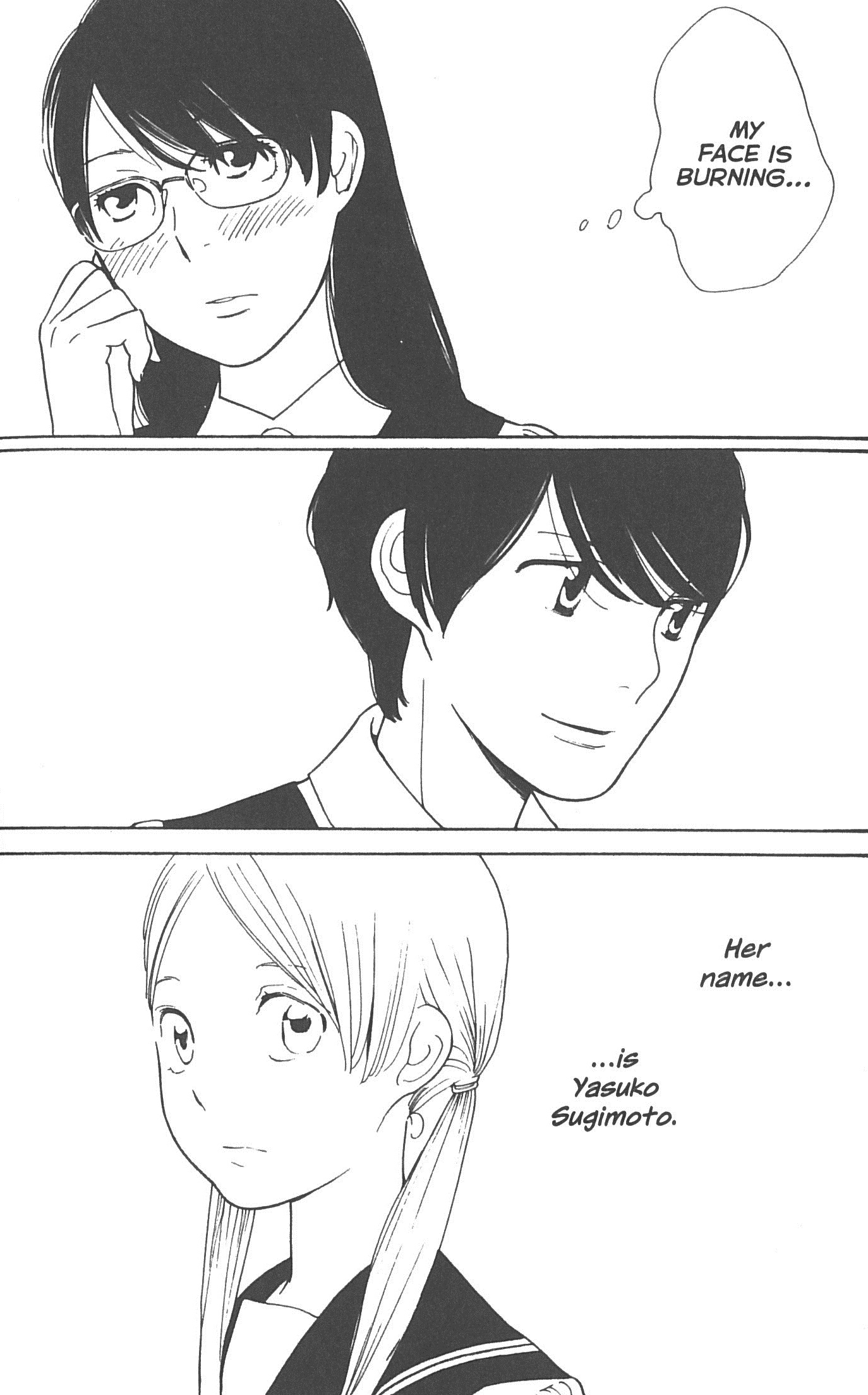
Fumi Manjome and Akira Okudaira were very close as children but the two girls fell out of touch after Fumi’s family moved away. Many years later they meet again by chance while commuting by train on the way to their first day of high school. They don’t actually realize who the other one is at first, but soon Fumi and Akira’s friendship is rekindled and their relationship blossoms once more. Since they attend different all-girls schools they don’t get a chance to see each other as much as they might like, though. Even so, both Akira and Fumi are faced with some similar trials which bring them together–making friends at their new schools and finding an extracurricular club to join that interests them among other things–but not everything is the same for them. Although complimentary, the two young women have strikingly different personalities, resulting in drastically different experiences and interactions. And while Akira doesn’t seem to have put much thought into romance, Fumi has recently had her heart broken. But now Fumi has fallen for an older student at her school, Yasuko Sugimoto, a young woman who is interested in Fumi but who is also dealing with an unrequited love of her own.

Sweet Blue Flowers, Omnibus 1, page 92Shimura’s artwork in Sweet Blue Flowers is simple and refined, but is still able to carry the emotional weight and expressiveness of the story. The focus of the manga’s illustrations is almost entirely on the characters themselves. Except for when the actual setting is intended to make an impact, such as the hallowed halls of a prestigious school or the imposing home of a distinguished family, backgrounds are minimalistic and sometimes even non-existent. Just enough is implied to give readers an impression of place and location. This technique, along with Shimura’s use of light and shadow, is reminiscent of intentionally minimal set design used in some theatrical performances which in turn nicely echoes the high school stage production of Wuthering Heights featured prominently in the first omnibus of Sweet Blue Flowers. The characters’ involvement with the play is an important part of the series both aesthetically and thematically. The connections to theater and creative performance arts present in Sweet Blue Flowers can also be found in Shimura’s other work, including but not limited to Wandering Son.

Sweet Blue Flowers is a wonderful series. The manga is emotionally resonate, with a realistic portrayal of the experiences of young women who love other young women. The characterizations and character development in Sweet Blue Flowers in particular are marvelous. Shimura effectively captures the nuances of a multitude of personalities and how they interact with one another, showing both individuals and their relationships as believably layered and convincingly complex. Sweet Blue Flowers is a relatively quiet story, but the emotional drama is powerful and the manga conveys a compelling sense of authenticity and honesty. I am loving the series and find that I am completely invested in the lives and well-being of Fumi, Akira, and the other characters as they navigate their adolescence. Life and relationships can be challenging and messy, something that Shimura does not shy away from in the manga. The young women in Sweet Blue Flowers grow and change, gaining maturity through their mistakes and missteps as well as personal clarity as they slowly discover their own identities. Sweet Blue Flowers is a worthwhile and lovely work; I’m so glad that it’s finally receiving a proper release in English.

Filed Under: REVIEWS Tagged With: manga, Sweet Blue Flowers, Takako Shimura, viz media, VIZ Signature

Yona of the Dawn, Vol. 8

October 10, 2017 by Anna N

Yona of the Dawn Volume 8 by Mizuho Kusanagi

If I had to come up with a brief phrase to describe this volume of Yona of the Dawn, it would be “clever subverted expectations”. Kusanagi explores this theme in a couple ways, first with a brief introductory story focusing on the Yellow Dragon, and then followed by a closer look at King Su-Won.

I was fully expecting another detailed quest storyline as Yona and her companions sit around debating how to search for the Yellow Dragon, but then a mysterious man shows up at their campsite, announcing himself due to his intense stomach gurgling. It is Zeno, the Yellow Dragon, and he is hungry! What follows is one of the comedic interludes that livens up the series as everyone attempts to adjust to the new stranger in their midst and try to figure out what to do next once all the guardian dragons are gathered together. While Zeno initially acts goofy and mysterious, as Yona is trying to figure out what to do next he switches over to serious mode and is incredibly insightful. As one naturally expects from this series Yona’s next direction is not to take back the throne in a grab for power, she wants to help her people who are currently repressed.

The first part of the manga played with the reader’s expectations by subverting the quest narrative that they have come to expect. The second half focuses on king Su-Won and his relationship with his greatest general, Yi Guen-Tae. The general isn’t sure what sort of king Su-Won is, and he’s initially not impressed, as Su-Won appears to be cheerful and ineffectual, without the emphasis on force as a means to an end that Yi Guen-Tae would expect. Reports keep arriving of little problems within the kingdom, and Su-Won appears to be unconcerned. Su-Won ends up proposing an elaborate war game to give the general the action he craves, and Yi Guen-Tae gradually realizes that he’s severely underestimated his king. In this story particularly Kusanagi’s ability to shift between different moods from panel to panel and her facility with facial expressions showcases the real Su-Won as opposed to the mask that usually hides his emotions.

I always put down each volume of Yona of the Dawn feeling a little in awe of Kusanagi’s storytelling abilities. She’s always able to pack so much character development into a single volume, while still giving the reader the feeling that the plot is unfolding in an unhurried, natural way. This is quite tricky to pull off successfully, and one of the reasons why Yona of the Dawn always ends up at the top of my to-read pile as soon as it comes out.

Filed Under: Manga Reviews, REVIEWS Tagged With: shojo beat, shoujo, viz media, yona of the dawn

Anonymous Noise Vol. 4

October 8, 2017 by Anna N

Anonymous Noise, Volume 4 by Ryoko Fukuyama

I feel a bit conflicted about this series. I found the first volume a bit uneven, but was gradually won over by all the performance scenes in the manga, even though some of the drama in the manga seems a bit far-fetched at times. This volume featured fewer performances, which maybe accounts for me feeling somewhat impatient in some of the plot resets that happened. In the first few pages of the book an event occurred that made me think, “Hell no!” and then I put the manga down and proceeded to read a few other things before picking it up again. Yuzu kisses Nino when she’s in the throes of emotional turmoil (her usual condition), and her reaction is to say “Don’t talk to me for awhile.”

Just a few pages later Yuzu clarifies that she was upset because she didn’t realize that being with her was causing Nino so much pain, and yet she continues to be fundamentally clueless about the idea that someone might have a crush on her. Yuzu promptly walks back on the idea that he has any romantic feelings for Nino, telling her that it is her voice that’s important to him. This type of emotional reset button with the storyline is what I find frustrating sometimes about this series. It just doesn’t seem like there’s a great deal of character change or growth five volumes in. In Everyone’s Getting Married, for example, no one is getting married, but the relationships between the main characters has grown and evolved so much over just a few volumes, I’m confident that the series is going somewhere, and all the drama will pay off for the reader in the end. I don’t have that same feeling for Anonymous Noise, but at the same time, it is still compelling to read.

Once I got past the romantic drama, I was able to settle down more with the secret backstory of the formation of Yuzu’s band. The next volume promises to have more of a focus on music, as everyone is gearing up for a battle of the bands. I think I enjoy this series most when it is emphasizing music more than romance, so I’m hoping for some dramatic scenes of Nino doing her rock star scream soon.

Filed Under: Manga Reviews, REVIEWS Tagged With: Anonymous Noise, shojo beat, shoujo, viz media

Water Dragon’s Bride, Vol. 3

September 18, 2017 by Anna N

The Water Dragon’s Bride, Volume 3 by Rei Toma

The story in The Water Dragon’s Bride has been unfolding at a measured pace, in the third volume Asahi and Subaru are almost all grown up. As they become more adults, this results in some increased tension with Asahi’s eventual destiny as the bride of the Water Dragon as well as her role as priestess for Subaru’s village.

The volume opens with a little bit of backstory showing Asahi filing her role of priestess as she moves through adolescence. Every year, there’s a ritual designed to gain the favor of the water god, and Asahi disappears under the waves for three days. Her encounters with the water god are first limited to staring, glaring, and finally smiling. The elemental gods still are fundamentally alien when compared with humans. The Water Dragon at least has figured out that he needs to feed his young human bride, so he calls over the Tree God to give her some supplies. I enjoyed seeing these visits from the perspective of both the Water Dragon and Asahi.

I think a lot about clarity of art when I read a Rei Toma series, but I’m always struck by how much she is able to do with simple character designs and sparse backgrounds. It is expected that expressive eyes count for a great deal in shoujo manga, but she’s able to convey so much in just a couple pages. Subaru, aware that both his mother and his sister are prejudiced against Asahi, turns away from his family thinking “…don’t disappoint me more any than this.” His face is half in shadow, and blank in a way that shows he’s hiding the tension and disgust he feels inside. As he walks away he smiles and waves. All of this is accomplished with just one line of dialogue and some great sequencing and paneling from Toma in a two page spread.

For a series with such lovely illustrations and a seemingly fantastic premise, one of the reasons why I enjoy The Water Dragon’s Bride is that it explores some dark territory, particularly focusing on the way humans are capable of great cruelty. While the first volume also lingered on Asahi’s inhumane treatment by the Water Dragon who was absolutely ignorant and uncaring of the ways humans can suffer, humans seem like the real source of evil in the world. In addition to the leering gazes and jealously in Subaru’s village that Asahi has to isolate herself from, her capabilities as a priestess attract the attention of a neighboring village and a war is launched. Watching these events with Asahi, the Water Dragon thinks all the humans are fools.

While for most of this volume Asahi seems to be placed in a Persephone role, going back and forth between water and the human world, there’s a narrative turn as Water Dragon decides to dwell with humans for a time. Toma is able to pack an incredible amount of story in a single volume of manga, making this a shoujo fantasy series that is extremely rewarding to the reader.

Filed Under: Manga Reviews, REVIEWS Tagged With: shojo beat, shoujo, viz media, water dragon's bride

Art of Pokemon Adventures

September 11, 2017 by Anna N

The Art of Pokemon Adventures by Satoshi Yamato

The young children in my house have firmly moved on to Yu-Gi-Oh from Pokemon, so this book did not immediately get stolen which is sometimes what happens with the manga that arrives in my house like Haikyu! or Kuroko’s Basketball.

However, as an art book I do think this would appeal to Pokemon Adventure fans. It is a solid book with full-color illustrations printed on glossy paper, with plenty of fold-out posters. Along with the finished art, plenty of sketches are included so the reader can get a sense of how the drawings evolved from idea to finished illustration. Line art is also included, as well as a couple sample panel layouts and some color guides for the characters. The librarian in me appreciated that an index was included in the back of the book, so all the illustrations can be matched up with the manga that they originally appeared in. A bonus short manga chapter concludes the volume. I thought the production quality of this volume was solid, it made me think I should check out other Viz art books.

Filed Under: REVIEWS Tagged With: Pokemon, Shonen, viz media

Queen’s Quality, Vol. 1

September 10, 2017 by Anna N

Queen’s Quality Volume 1 by Kyousuke Motomi

I was very happy when I saw that Queen’s Quality was licensed shortly after the earlier series QQ Sweeper. Motomi has a quirky and slightly warped sense of humor that makes her shoujo series stand out. Queen’s Quality starts out at what felt like a faster pace than QQ Sweeper, as many of the plot points that were only dangling or hinted at in the earlier series get pushed forward dramatically in the first few chapters of this volume.

Fumi continues her life as an apprentice sweeper, learning the tricks of the paranormal trade from her friend Kyutaro and his family. While they practice cleaning everyday rooms and objects, they are also training for dealing with exorcising the demons that can get inside human hosts, causing them to act cruel. There’s a focus on personality and inner character in this series, as people who might be mentally weak or who have a tendency to be cruel end up leaving a door open for evil to get in, and their worst personality traits are magnified.

Another sweeper named Takaya Kitahara shows up to visit the Horikita family, and he provokes Fumi’s hidden Queen power as part of a test. Kyutaro is able to bring her back to herself, but seeing her power manifest is frightening. Kyutaro resolves to stay by Fumi to support her, but he’s told that he can’t ever remind her of the past that she’s forgotten, when they used to be childhood friends. Kyutaro’s response to this is to emotionally withdraw even more than usual, causing Fumi a great deal of distress as she doesn’t understand why he’s acting deliberately cold towards her. Fortunately his family has their best interests at heart, and they send the young couple on a mandatory and hilariously awkward shopping trip/date as an assignment, and their friendship is salvaged.

One thing I like about Motomi’s series is that there’s always a psychological element to be found in the stories, and they don’t rely quite as much on external situations or antagonists. While there are certainly forces at work trying to turn Fumi into an evil queen, the bad guys aren’t really as interesting as the fact that Fumi is going to have to draw on her emotional reserves and face the darkness that’s inside her, the same as any human. Fumi and Kyutaro talk at the end of the volume, and she asks if he’s afraid of her. He replies “Everyone has dark thoughts…or parts of themselves that they can’t control.” He vows that if she has to head into the darkness, he’s going too. This relationship dynamic is so interesting to see in a shoujo series, and it is why I’m so impressed with Queen’s Quality.

Filed Under: Manga Reviews, REVIEWS Tagged With: queen's quality, shojo beat, shoujo, viz media

  • « Go to Previous Page
  • Page 1
  • Interim pages omitted …
  • Page 6
  • Page 7
  • Page 8
  • Page 9
  • Page 10
  • Interim pages omitted …
  • Page 20
  • Go to Next Page »
 | Log in
Copyright © 2010 Manga Bookshelf | Powered by WordPress & the Genesis Framework