• Skip to primary navigation
  • Skip to main content
  • Skip to primary sidebar
  • Home
  • About Us
    • Privacy Policy
    • Comment Policy
    • Disclosures & Disclaimers
  • Resources
    • Links, Essays & Articles
    • Fandomology!
    • CLAMP Directory
    • BlogRoll
  • Features & Columns
    • 3 Things Thursday
    • Adventures in the Key of Shoujo
    • Bit & Blips (game reviews)
    • BL BOOKRACK
    • Bookshelf Briefs
    • Bringing the Drama
    • Comic Conversion
    • Fanservice Friday
    • Going Digital
    • It Came From the Sinosphere
    • License This!
    • Magazine no Mori
    • My Week in Manga
    • OFF THE SHELF
    • Not By Manga Alone
    • PICK OF THE WEEK
    • Subtitles & Sensibility
    • Weekly Shonen Jump Recaps
  • Manga Moveable Feast
    • MMF Full Archive
    • Yun Kouga
    • CLAMP
    • Shojo Beat
    • Osamu Tezuka
    • Sailor Moon
    • Fruits Basket
    • Takehiko Inoue
    • Wild Adapter
    • One Piece
    • After School Nightmare
    • Karakuri Odette
    • Paradise Kiss
    • The Color Trilogy
    • To Terra…
    • Sexy Voice & Robo
  • Browse by Author
    • Sean Gaffney
    • Anna Neatrour
    • Michelle Smith
    • Katherine Dacey
    • MJ
    • Brigid Alverson
    • Travis Anderson
    • Phillip Anthony
    • Derek Bown
    • Jaci Dahlvang
    • Angela Eastman
    • Erica Friedman
    • Sara K.
    • Megan Purdy
    • Emily Snodgrass
    • Nancy Thistlethwaite
    • Eva Volin
    • David Welsh
  • MB Blogs
    • A Case Suitable For Treatment
    • Experiments in Manga
    • MangaBlog
    • The Manga Critic
    • Manga Report
    • Soliloquy in Blue
    • Manga Curmudgeon (archive)

Manga Bookshelf

Discussion, Resources, Roundtables, & Reviews

Kodansha Comics

No. 6, Vol. 9

November 7, 2014 by Ash Brown

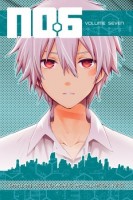
No. 6, Volume 9Creator: Hinoki Kino
Original story: Atsuko Asano

U.S. publisher: Kodansha
ISBN: 9781612627946
Released: October 2014
Original release: 2014

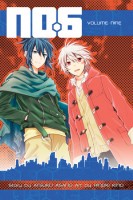
Released both in Japan and in English in 2014, No. 6, Volume 9 is the final volume of Hinoki Kino’s manga series No. 6, an adaptation of a series of science fiction novels written by Atsuko Asano. The manga adaptation felt a little hurried at first, but the series’ pacing, characterization, and world-building continued to improve with each new volume. I have very much been enjoying the No. 6 manga. My introduction to No. 6 was actually through the eleven-episode anime series from 2011, directed by Kenji Nagasaki. I largely enjoyed the anime, but was disappointed with its extraordinarily rushed ending. One of the reasons why I was particularly happy when Kodansha Comics licensed the No. 6 manga for an English-language release was that I was hoping for a more satisfying conclusion to the story. Though there are some similarities between the two (including the same character designs), the manga and the anime adaptations are different interpretations of Asano’s original No. 6, each with their own merits. I was definitely curious to see how Kino would end the series.

Shion and Rat have failed in their mission to rescue Safu from the Correctional Facility, barely managing to flee with their own lives. To make matters worse, Rat has been critically injured–shot in the chest while trying to protect Shion during their escape. Shion was able to give Rat first aid, but the other young man is in desperate need of proper medical attention. However, the facilities that could save Rat’s life don’t exist within West Block. No. 6, the city that Rat wishes above all else to destroy, holds his only hope, and it is now in chaos. The citizenship is dangerously close to revolt and fear is sweeping across the populace. Some of the turmoil was cause by Shion and Rat during their attack on the Correctional Facility, but there are also others within No. 6 itself who are seeking revenge against the state, fanning the flames of discontent. Rat and Shion have so far been able to survive, but their fight is far from over. Shion doesn’t even have time to grieve for Safu if he wants to prevent losing more of the people he loves dearly.

Because I started reading the No. 6 manga in part because I had seen the anime, at times it’s difficult for me not to compare the two. And as previously mentioned, I was particularly interested in how Kino would end the series. I’m not certain how it compares to Asano’s original novels, but the manga’s conclusion is much more comprehensive than the anime’s. (Actually, I can make some more sense out of the anime now that I have read the manga.) The last few volumes have been increasingly intense. The sudden relaxation of all of that tension in No. 6, Volume 9 is very disconcerting, and even a little anticlimactic, as the immediate danger passes. However, the Correctional Facility has been destroyed and the wall between No. 6 and West Block has begun to fall. There may be a temporary lull in which people momentarily feel safe, but peace will be a long time in coming as resentment and hatred still exist and pose a threat. Taking this into consideration, Kino’s ending allows for that and, while the ending is complete, there is a sense that the world of No. 6 and the struggle continues beyond the page.

Although No. 6, Volume 9, mostly provides a satisfying conclusion to the manga series, at times it does feel like it’s only really scratching the surface of a much more complicated and detailed story. However, all of the major plot threads are addressed and resolved, including the revelation of the meaning behind the parasitic bees and the explanation of the secret experiments being carried out in No. 6. Granted, it does take an infodump or two to fit it all into the last volume, but they work and their inclusion actually makes a fair amount of sense within the context of the narrative. Where Kino’s No. 6 really excels though is with the evolution and development of Rat and Shion. They begin the series with straightforward personalities that become increasingly layered and complex as the manga progresses. Shion is benevolent but also frightening; Rat’s apparent strength hides his frailty. Their roles in their relationship with each other have reversed several times throughout the series and continue to shift and change all the way to its end. I came to care about Shion and Rat immensely and am very glad to finally have a much more thorough ending to their story.
Filed Under: REVIEWS Tagged With: Atsuko Asano, Hinoki Kino, kodansha, Kodansha Comics, manga, no. 6

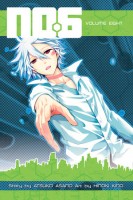
No. 6, Vol. 8

September 5, 2014 by Ash Brown

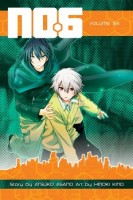
No. 6, Volume 8Creator: Hinoki Kino
Original story: Atsuko Asano

U.S. publisher: Kodansha
ISBN: 9781612625782
Released: August 2014
Original release: 2013

Hinoki Kino’s manga series No. 6 is an adaptation of Atsuko Asano’s No. 6 science fiction novels. I’ve wanted to read the original series ever since I watched the No. 6 anime adaptation, but I am quite aware of how unlikely it is that the novels will be licensed any time soon, if ever. Still, I was very pleased when Kodansha Comics announced that Kino’s manga adaptation would be officially translated into English. No. 6, Volume 8 was originally released in 2013 while Kodansha’s edition was published in 2014. The English-language edition is actually based on the Japanese special edition of the volume, which means that it contains a bonus story as well as some additional material. Of particular note is a sixteen-page color illustration gallery which will most likely be limited to the first printing of No. 6, Volume 8 (at least in color). This is the first time that color pages have been included in the English-language version of No. 6; it’s Kodansha’s way of thanking readers for the strong support that they have shown the series.

Rat and Shion have been able to successfully infiltrate No. 6’s Correctional Facility, but it hasn’t been easy. The two young men have faced off with the building’s security forces and survived, but not without injury and not without taking the lives of some of those who would do them harm. It’s been a traumatizing experience for both Shion and Rat, but they are determined to complete their mission at whatever cost. Shion’s goal is to rescue his close friend Safu, who has been arrested and is being held within the Correctional Facility; Rat aspires to completely destroy No. 6 and anything and anyone associated with it. Sadly, Shion’s reunion with Safu isn’t all that he hoped for and now that Rat and Shion have reached the most secure and heavily guarded areas of the Correctional Facility they must find a way to escape–something that will prove to be even more dangerous than their initial assault on the building. With time quickly running out, it will be all that they can do just to survive.

Even though I am already familiar with the story of No. 6 it is still astounding and incredibly heart-wrenching to see just how much Shion has changed over the course of the series. And it’s not change without cause. He has seen and been put through terrible, horrifying things. Some harsh truths and decisions have been forced upon him while other choices have been entirely his own, either consciously or subconsciously. Glimmers of who Shion once was can still be seen–even when in utter despair he can somehow find beauty in life and in other people–but it’s likely only a matter of time before reality completely breaks him. Over the last few volumes he has been slipping further and further away; by this point in the series Shion’s mental state is extremely precarious. He is desperately trying, and failing, to process and make sense of everything that has happened. Tragically, Shion is no longer even capable of saving himself. It’s only when Rat’s life is in mortal danger that Shion is temporarily torn away from his inner turmoil and crisis.

No. 6, Volume 8 focuses almost entirely on the escape from the Correctional Facility. Kino’s action sequences have improved immensely since the beginning of the series, which is especially important for a volume which relies so heavily on them. Kino has started using some very interesting and effective angles of perspective, which adds to the dynamic nature of Rat and Shion’s flight. While there isn’t much plot advancement in the eighth volume of No. 6, there are still some crucial and defining character moments for both Rat and Shion. The changes that Shion has been going through have had a tremendous impact on Rat and as a result he is struggling, too. Although there is excitement and drama to be found within the story itself, it’s ultimately the characters and their evolution as the series steadily progresses that make No. 6 so gripping. With only one more volume to go there is still plenty that could happen, but no matter which direction No. 6 takes Rat and Shion will never be the same.

Filed Under: REVIEWS Tagged With: Atsuko Asano, Hinoki Kino, kodansha, Kodansha Comics, manga, no. 6

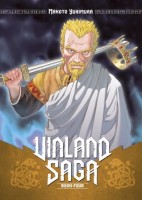
Vinland Saga, Vol. 4

August 9, 2014 by Ash Brown

Vinland Saga, Omnibus 4Creator: Makoto Yukimura
U.S. publisher: Kodansha
ISBN: 9781612624235
Released: July 2014
Original release: 2009
Awards: Japan Media Arts Award, Kodansha Manga Award

Makoto Yukimura’s award-winning Vinland Saga has quickly become one of the manga releases that I most look forward to each time a new volume is published every few months. The series is thoroughly researched historical fiction with fantastic artwork and incredibly engaging story and characters. I was happy when Kodansha Comics picked up the license, but as the series gets better and better with each passing volume my excitement for the manga grows along with it. Kodansha’s edition of Vinland Saga was the publisher’s first foray into a deluxe release. Each omnibus collects two of the original volumes, retaining the color pages, in a nice hardcover format. Vinland Saga, Omnibus 4, published by Kodansha in 2014, contains the seventh and eighth volumes of the Japanese edition of the series, both of which were released in 2009. The fourth omnibus, like the third, also includes an exclusive question and answer segment with Yukimura about the series which I’ve really been enjoying.

Defying all expectations, Prince Canute has survived his father’s attempt to have him killed in battle and has taken his destiny into his own hands. At one point a gentle young man considered weak by the Viking mercenaries and soldiers, Canute is now resolved to wrest the crown from his father, King Sweyn. He is prepared to use force and any other means necessary in order to gain control of the realm. This change of heart has earned Canute an impressive array of followers who are willing to fight and die for him as he challenges Denmark’s king. Thorkell and his men are known and respected as great warriors to be feared on the battlefield. Most of Askeladd’s troop has been slain, but Askeladd himself is a skilled fighter with an even greater talent for strategy and manipulation. The aid of both men will give Canute distinct advantages in the approaching confrontation, but its conclusion is far from certain. Sweyn  has strong men who are loyal to him as well in addition to the recognized power to rule over the masses. He isn’t about to let the throne slip away so easily.

I continue to be extremely impressed by the characterization in Vinland Saga. The main characters and even the supporting cast all have a tremendous amount of depth. They are complex, with both human failings and strengths, well-developed personalities, and believable motivations. Nothing is as simple as good or bad. Instead the characters are portrayed as real people with complicated pasts that have made them who they are. Up until this point Sweyn has been somewhat of an enigma, a dark shadow hanging over Canute and the territories which he has conquered. But in Vinland Saga, Omnibus 4 he, too, is revealed to be much more nuanced of a character than when he was first introduced. Much like Canute, Sweyn’s actions are informed and driven by his beliefs and his desire to create a prosperous realm. He is a formidable ruler with significant influence, but he is also a man and a tired one at that. Kingship has taken its toll. Sweyn also serves as an example showing that even a person with righteous intentions can become corrupt, a lesson that Canute would do well to take to heart.

Compared to previous installments of Vinland Saga, the fourth omnibus in the series focuses less on all-out battle and more on the political strategies and maneuverings going on behind the scenes. However, the intensity of the series remains and when fights do break out they make an impact. They are incredibly bold and dynamic. Yukimura’s action scenes are epic and extremely well choreographed, but what makes them so effective is the emotional investment of the characters. Askeladd in particular is especially compelling. He has been able to channel his hatred and desire for revenge, controlling those around him with immense skill, but it hasn’t been without personal sacrifice. Askeladd himself is also the target of revenge–Thorfinn holds him responsible for the death of his father. Thorfinn and Askeladd’s relationship is extraordinarily complex. Askeladd doesn’t blame the younger man for seeking his demise. In his own way he actually tries to teach Thorfinn, drawing from his own past experiences. But this omnibus makes it tragically clear that Thorfinn is so obsessed with his quest for revenge that he has thought very little beyond it.

Filed Under: REVIEWS Tagged With: Japan Media Arts Award, kodansha, Kodansha Comics, Kodansha Manga Award, Makoto Yukimura, manga, Vinland Saga

No. 6, Vol. 7

June 20, 2014 by Ash Brown

No. 6, Volume 7Creator: Hinoki Kino
Original story: Atsuko Asano

U.S. publisher: Kodansha
ISBN: 9781612625539
Released: June 2014
Original release: 2013

I have been following Hinoki Kino’s manga adaptation of Atsuko Asano’s science fiction novel series No. 6 since its beginning. The manga got off to a bit of an unsteady start, but it quickly improved its pacing and setting development, each passing volume becoming stronger and building on those that came before it. No. 6, Volume 7 was initially published in Japan in 2013 while Kodansha Comics’ English translation, which includes a bonus story from Japan’s special edition, was released in 2014. I haven’t read Asano’s original novels (sadly, they have yet to be licensed in English) so I can’t directly compare the manga series, but I have seen the anime adaptation. In fact, it was because I liked the characters from the anime so well that I sought out another interpretation of their story. Though both the anime and the manga began around the same time, the anime was completed in 2011 while the ninth and final volume of the manga was released in 2014. The anime and manga share many similarities with each other, but in the end they are their own works.

Rat and Shion’s daring plan to infiltrate the city of No. 6’s Correctional Facility has so far been surprisingly successful and, with a little outside help, they have been able to penetrate the building’s first line of defenses. Gaining access to the Correctional Facility and surmounting the initial challenges preventing the rescue of Shion’s close friend Safu is only the beginning; even with their unexpected luck, things will prove to be much more difficult for Rat and Shion as they continue on their mission and press on farther into the Facility’s interior. Considering that Safu was once counted among No. 6’s elites, Shion is convinced that she must be being held captive in the most secure, upper levels of the Correctional Facility. At best, he and Rat have mere minutes before their intrusion is discovered. After that there is no knowing what they will have to face and they were working with very limited information to begin with. Both Shion and Rat anticipated that the rescue attempt would be extremely dangerous, and at this point there is no turning back.

Since I have seen the anime adaptation of No. 6 and am therefore familiar with many of the important plot points found in the manga, I can’t say that I was particularly surprised by some of the major developments in No. 6, Volume 7. That being said, there are still some incredibly shocking moments which can be attributed to the strength of the underlying story as a whole. Especially potent and devastating is the evolution of Shion’s character over the course of the series. In the last few volumes in particular he has changed so much it seems that Rat’s fears are starting to come true–at times he is no longer even recognizable as Shion anymore. He has become a different person. Gone is the innocent and optimistic young man who was so quick to see the good in people. In his place is a person within whom hatred is growing and whose sense of justice has taken a dramatic and dangerous turn, not only for those around him, but for himself as well.

Taking into account everything that Shion has been through so far, it’s not unexpected that he and his outlook on the world has changed. His own life and the lives of those he holds dearest have been repeatedly threatened. He has personally witnessed the poverty and despair of the residents of West Block as well as the horrors of the Manhunt. Shion has seen senseless violence and death. He has learned about the atrocities committed in the name of No. 6, and yet he still doesn’t know everything. Rat and Shion gained access to the Correctional Facility in order to rescue Safu, but in the process they discover even more of the city’s dark secrets. The truths behind No. 6, its establishment, and its continued existence are not pleasant ones. It’s a so-called perfect society, but the leadership is more than willing to turn on its own citizens in order to maintain that perfection. Shion is trying to come to terms with all of this and to protect the people that he cares about and loves, but in doing so he may very well lose himself entirely.

Filed Under: REVIEWS Tagged With: Atsuko Asano, Hinoki Kino, kodansha, Kodansha Comics, manga, no. 6

Attack on Titan: No Regrets, Vol. 1

June 18, 2014 by Ash Brown

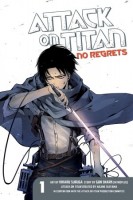
Attack on Titan: No Regrets, Volume 1Creator: Hikaru Suruga
Original story: Gun Snark

U.S. publisher: Kodansha
ISBN: 9781612629414
Released: June 2014
Original release: 2014

I think it’s probably safe at this point to call Hajime Isayama’s manga series Attack on Titan a worldwide phenomenon. It has spawned successful anime adaptations as well as multiple manga spinoffs, a series of novels, and games, among other media. Most of those have been, or soon will be, released in English, too. When it comes to the side manga, I was especially curious about Attack on Titan: No Regrets because so far it has been the only explicitly shoujo offering to be included as part of the franchise. (I was therefore very happy to receive a review copy.) The short manga series in an adaptation by Hikaru Suruga of a Nitroplus visual novel written by Gun Snark and supervised by Isayama himself. The first volume of No Regrets was released in Japan, and then soon after in English by Kodansha Comics, in 2014. Kodansha’s English-language release also collects the story’s prologue chapter, which was included as part of Japan’s special edition of Attack on Titan: No Regrets, Volume 1.

Behind Wall Sheena lies the royal capital and the surrounding city where those who are lucky enough are able to live in luxury. But below it all is the Underground, where outcasts and criminals live in slum-like conditions. It’s there that Levi and his two comrades Isabel and Furlan call home, but they swear to one another that one day they will leave their criminal pasts and the Underground behind and live up above. Their chance comes in the form of Erwin, a young, talented, and devoted Survey Corps squad leader. Levi’s exceptional vertical maneuvering skills have caught Erwin’s attention and after some effort he has caught Levi as well. Erwin offers Levi and his crew a choice: join the Survey Corps themselves, lending their natural strengths to humanity’s fight against the Titans, or submit to the Military Police to answer for their many crimes. The decision isn’t a difficult one to make, but being forced to join the Survey Corps against their will doesn’t sit at all well with Levi; he plans to have his revenge against Erwin.

Arguably, Erwin and Levi are two of Attack on Titan‘s most beloved characters. (Not to mention one of the pairings that I’ve most frequently seen shipped.) There’s a certain intensity to their relationship in the original series–it’s obvious that they share a history and a past with each other–which means exploring their origins and how that bond developed in No Regrets makes a good deal of sense. Personally, I’ve always found Levi and Erwin to be particularly interesting characters, making No Regrets a welcome addition to the Attack on Titan canon. In the first volume of No Regrets their relationship is a volatile and antagonistic one. It’s an extremely important element of the series, but the manga also explores who they are as individuals, which is just as crucial. Each in their own way, both Levi and Erwin are intimidating and formidable men. Erwin may actually be the more terrifying of the two–he’s cool, calm, collected, and incredibly calculating–but Levi’s more obvious aggressiveness and propensity towards violence also leaves an impression.

In addition to focusing on Erwin and Levi, No Regrets features cameos from a few of the other key players from the original Attack on Titan and also introduces new characters, most notably Furlan and Isabel. Granted, seeing as this is still Attack on Titan and that No Regrets already has a considerable death count, there’s certainly no guarantee of their survival. All of the main characters in No Regrets, and to some extent the series’ side and background characters as well, have very distinct personalities which are exhibited through their facial expressions, body language, and individual manners of speech. Suruga’s artwork in No Regrets takes its cues from Isayama’s original series but in general is much cleaner and consistent. Story-wise, the series exhibits an excellent balance between political intrigue and action, including fantastically dynamic vertical maneuvering sequences. For the most part No Regrets stands fairly well on its own, although those familiar with Attack on Titan will get the most out of it. I quite enjoyed the first volume of No Regrets and look forward to reading the rest of the series.

Thank you to Kodansha for providing a copy of Attack on Titan: No Regrets, Volume 1 for review.

Filed Under: REVIEWS Tagged With: attack on titan, Gun Snark, Hikaru Suruga, kodansha, Kodansha Comics, manga

No. 6, Vol. 6

May 9, 2014 by Ash Brown

No. 6, Volume 6Creator: Hinoki Kino
Original story: Atsuko Asano

U.S. publisher: Kodansha
ISBN: 9781612623603
Released: April 2014
Original release: 2013

I was rather pleased when Kodansha Comics licensed Hinoki Kino’s manga adaptation of Atsuko Asano’s No. 6. The original No. 6 was a nine-volume series of science fiction novels written between by 2003 and 2011. (Sadly, they haven’t officially been translated into English.) Also in 2011, two adaptations of No. 6 began–Kino’s manga series, which also ended up being nine volumes long, and an eleven-episode anime series directed by Kenji Nagasaki. The anime was actually my introduction to No. 6. Parts of the anime’s original ending frustrated me a great deal, but I was so taken with the characters and setting that I wanted to explore another interpretation of the story. No. 6, Volume 6 was originally published in Japan in 2013 while the English-language edition of the volume was released in 2014. The series has now passed its halfway point and is approaching its climax. The fifth volume ended in the middle of a critical scene, so I was particularly anxious to read the sixth.

The Security Bureau of the city of No. 6 has arrested Shion’s close childhood friend Safu and is currently holding her within the Correctional Facility. Shion is willing to do almost anything he can to rescue her, but he won’t be able to do it on his own no matter how hard he tries. Instead, he must rely on those he has met in West Block, a large population of refugees living outside the city walls. Rat has devised a daring plan to infiltrate the Correctional Facility. Shion and Rat allow themselves to be rounded up during the Manhunt–an effort by No. 6 to forcibly control and instill fear into those living in West Block–and are thereby able to gain access to the least secured area of the facility. If they hope to proceed any further they will have to depend on outside help and bribery; nothing is free in West Block, especially when those who give their aid may very well lose their lives for doing so. Everyone involved in the rescue have their own motives and agendas against the holy city of No. 6 so, at least for the time being, they are comrades.

No. 6, Volume 6 is a particularly important volume in the series for several reason: more of No. 6’s dark secrets are uncovered, a part of Rat’s past and the reason behind his hatred for the city is revealed, and the characters, specifically Shion but also Rat, have reached a crucial turning point in their development. All three of these things are interrelated and tied closely together. Shion grew up living an extremely privileged life in the supposedly perfect and pristine No. 6. However, the Manhunt and his experiences in West Block have shown him the terrible things that the city is capable of. Shion’s innocence is shattered further when he discovers that even the foundation of No. 6 was based on the blood of others. This history and Rat’s connection to it is something that up until this point in the series Rat has kept hidden from Shion, partly because he tends to distrust and close himself off from other people, but also because he was trying to protect the other young man. However, these are terrible truths that Shion must now face and come to terms with.

Seeing Shion begin to really change in the previous volume was heartbreaking, but here in No. 6, Volume 6 the difference between who Shion is now and who he was before is terrifying. The violence he is willing to commit with such eerie calm is chilling. His mother, still inside the city, is understandably worried about her son and his survival. However Rat, who is with him, is less concerned with Shion’s physical safety and more concerned about the potential loss of Shion’s personality and his very self. It’s almost as if the two of them have changed roles. Never before has Rat appeared so vulnerable or exhibited such kindness. He fears for Shion and is afraid of who Shion is becoming. At one point in the sixth volume the question is asked “Who do you want so much that it kills you?” In many ways, that question is the crux of No. 6. Rat is changing. Shion is changing. For the better and for the worse. For themselves and for each other. As a result the dynamics of their relationship is also evolving. They may or may not survive their confrontation with No. 6; tragically, even if they do, it is likely that they will be so different that little of their past lives and selves will remain intact.

Filed Under: REVIEWS Tagged With: Atsuko Asano, Hinoki Kino, kodansha, Kodansha Comics, manga, no. 6

Vinland Saga, Vol. 3

May 3, 2014 by Ash Brown

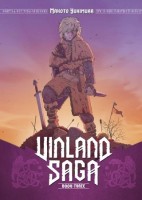
Vinland Saga, Omnibus 3Creator: Makoto Yukimura
U.S. publisher: Kodansha
ISBN: 9781612624228
Released: April 2014
Original release: 2007-2008
Awards: Japan Media Arts Award, Kodansha Manga Award

Vinland Saga, an award-winning manga series by Makoto Yukimura, is a title that I’ve been wishing for a release in English for years. Thanks to Kodansha Comics, it’s finally available, and in a deluxe hardcover edition no less. I couldn’t be happier. If I loved the first omnibus, I loved the second omnibus even more. Vinland Saga has easily become one of my favorite manga series currently being released in English. The third Vinland Saga omnibus, published by Kodansha in 2014, collects the fifth and sixth volumes of the original Japanese edition, released in 2007 and 2008 respectively. Vinland Saga, Omnibus 3 also includes a brief section of questions answered by Yukimura about the series which is exclusive to the English release. Vinland Saga is Kodansha’s first foray into deluxe manga releases and features color pages as well as a slightly larger trim size than most of its other manga which allows Yukimura’s artwork to present itself as strongly as his storytelling skills. Vinland Saga is an excellent series and has won both a Japan Media Arts Award as well as a Kodansha Manga Award.

The Danish invasion of England is steadily progressing. The English forces are preparing to surrender, which doesn’t sit well at all with Thorkell the Tall. A Viking mercenary fighting on the side of the English with an insatiable thirst for battle, he would much rather see the war continue indefinitely. One way he can encourage the conflict to continue is by taking Canute, the son of Denmark’s King Sweyn and second in line to the throne, captive. Canute is currently being escorted by Askeladd and his band of mercenaries. They initially escaped Thorkell’s pursuit by fleeing to Wales. Askeladd planned to rejoin with the main Danish force, but to do so required traveling through English-controlled territory. To make their situation even worse, winter and a heavy snowstorm forced them to halt their march in a small English village. Their presence behind enemy lines is discovered far sooner than they had wished or expected. Askeladd and his men are once again faced with confronting Thorkell and his mercenaries in bloody battle.

The struggle for the control of Canute and his fate is pivotal to the story of Vinland Saga. It also provides a phenomenal opportunity for battle sequences and they are brutal. Yukimura doesn’t hold back or spare any details, depicting broken bones, severed limbs, crushed skulls, blood and gore as needed or required. Askeladd’s plans are falling apart around him and his men are beginning to lose confidence in their leader. Already in disarray, they are in an extremely bad position when Thorkell and his band catch up with them. The battle as a whole is intense, but then comes the fight between Thorkell and Thorfinn. Their confrontation in the second omnibus was impressive to begin with, but their duel in the third is even more so. Thorfinn is skilled, quick, small, and volatile while Thorkell is a literal giant of a man who primarily relies on his strength. Their fight is incredible to watch unfold. Thorfinn holds his own against Thorkell surprisingly well, but Thorkell’s physical feats are astounding.

The battles and duels in Vinland Saga are well-executed and thrilling, but just as important to the series is the development of the story and of the characters. Particularly astonishing in Vinland Saga, Omnibus 3 is the remarkable growth of Canute. Up until this point he has seemed sheltered and coddled; he abhors the senseless violence around him which makes the others view him as weak. However, Canute is all too aware of his unfortunate situation. Askeladd and Thorkell are surprised to discover that Canute carries very little value as a hostage, nor will his survival necessarily be appreciated by the king. Ultimately, it is up to Canute himself to take control of his own destiny. His true strength is revealed and it is utterly magnificent. This marks a turning point not only for Canute but for the entirety of Vinland Saga. Yukimura mixes historical fiction with meticulously researched historical fact and the results are extraordinarily engaging. Vinland Saga is the epic that I’ve been waiting for and I can’t wait to read more.

Filed Under: REVIEWS Tagged With: Japan Media Arts Award, kodansha, Kodansha Comics, Kodansha Manga Award, Makoto Yukimura, manga, Vinland Saga

Manga Publishers on Fan Interest in Manga Online

April 18, 2014 by Justin Stroman 5 Comments

Welp, thanks Google! Credit to AnimeKon for that.

Um, I guess this is the best image I could find? Credit to AnimeKon.

It started this week, when Ash had posted a link to Kodansha’s Tumblr that weighed in on piracy. Interested in reading what they said, I checked it out, and after sitting on this idea for a day, I decided to get in contact with all the manga publishers in the US and basically asked them for a response to that query. So a shout-out to he or she who decided to ask the question, and to Ash for linking to it.

I should already preface this by saying that, after reading the responses by the publishers, feel free to discuss your overall position on the situation, because discussion is good, and especially for those who live on the side where you do read manga that has no chance of being published in English for a multitude of reasons, it may be something you want to know. Or maybe not know about!

Note: as a heads up, this post may be updated with publisher thoughts as the day goes on. It’s their choice whether to respond or not.

Anyways, here they are (let’s start with the one who started this chain off):

Kodansha’s Editor Ben Applegate:

Today, here’s how our process works. We read series as they begin serialization in Kodansha’s magazines, and we keep an eye on the promising ones. If it’s by an author or from a franchise we’ve had success with, that’s a major bonus. Kodansha Japan will come to us to with the series they want to push in the future. We also consider which series may get an anime presence. All of these factors are more important than fan requests online. Though there was a time when most publishers referred to scanlations during licensing, and maybe some still do, we don’t. The other manga publishers I’m familiar with don’t either.

This is not because we don’t pay attention to our fans. It’s because we’ve learned from experience that highly-requested series usually produce sales that come in under expectations. The biggest reason is that, unfortunately, heavy social media users are just not representative of a majority of English-language manga fans. But it can’t help that most of the target audience has already read the series online, and thus isn’t very motivated to buy.

When series, usually seinen series, that are frequently requested on social media as a result of scans do get licensed, sales might be okay for Vol. 1 and sometimes 2, but they drop far below expectations on Vol. 3+. My personal hypothesis here is that people who’ve read the scanlations maybe remember to buy Vol. 1 or 2 because they want to support the artist, but by Vol. 3 and later they either forget or feel they’ve done their part. But the publisher is still on the hook for five, ten, fifteen more potentially money-losing volumes.

So, given the choice (and we usually aren’t), I would rather start from zero with a series I strongly believed in and try to build an audience for the legal release than be forced to compete with illegal scanlations that people have already been reading for months or years.

It doesn’t mean we’ve given up on “fan favorite” series. Vinland Saga was highly-requested and highly-scanlated for years. We took lots of extraordinary measures to try to break the “seinen curse,” producing premium hardcover editions with a bonus story, exclusive author Q&A, and other extra content. We also made them 2-in-1 editions to reduce the number of volumes we’d have to release. Whether that has worked or not is still an open question. Though Vol. 1 is doing well, it is discouraging to see basically no change in the popularity of the scanlations since we licensed the series.

Finally, consider: We’ve received some asks about whether having a manga available in English on a legal manga site makes a print version less likely because people have already read it. Well, illegal scanlations have an impact that’s many times bigger than any legal manga site. Something to think about.

So, what can you do? Well, you can stop reading scanlations, and encourage friends to do the same. I have never read more than a single chapter of a series in scanlation, and I have read a lot of manga (not all of it in Japanese). There is enough excellent manga out legally in English to fill all of your leisure time. ALL of it. And it’s increasingly available digitally at an affordable price.

If you still need a little piracy in your life, the least you can do is stop reading series that have been licensed. If you want to see what happens next, wait for the official release to catch up. You’ll survive the wait, I promise. And please spread the word about licensed releases! It can be hard for publishers to get scan readers informed about the legal version.

Viz’s Vice President of Publishing, Leyla Acker:

— On whether it’s a bad thing to read manga that won’t be published in English online when they’ve been fan translated?

I don’t think it’s a “bad thing,” mainly because I don’t think that value judgments like “good” and “bad” are useful to the conversation. The assumption implicit in this question is that the legitimacy of scanlations should be measured primarily by their potential impact on sales. While that’s no small issue, it’s not the main one, which is this: with a few notable exceptions, every mangaka and doujinshika I have ever spoken to about their work being scanlated hates it. From the creator’s perspective, the point is not whether the work is officially released in English or any other language, but that their work has been appropriated by people they don’t know and then used in ways they never consented to, even if it’s being done with good intentions.

— If fan interest online ever compelled them to go back and take a second look at a title?

You can basically copy and paste Kodansha’s Tumblr post on scanlations here. In other words, no. As fans ourselves, we’re definitely aware of what people are talking about online, but in our market there’s not necessarily a direct correlation between what’s popular online and what people actually buy. In fact, sometimes there’s an inverse correlation, not only with seinen and josei, as the Kodansha post indicated, but also markedly with shoujo. Also, if a midlist or potentially more modest-selling title has been heavily scanlated that can act as a disincentive for us to publish it since we know we’ll be faced with diminished sales out the gate.

Digital Manga Publishing’s Sales Manager Yoko Tanigaki:

— On whether it’s a bad thing to read manga that won’t be published in English online when they’ve been fan translated?

When was it ever a good thing? This is not a good or bad thing. This is an issue of right or wrong. It is wrong to take un-consented or unlicensed materials, scan them, translate them and distribute them. This is stealing- YES, stealing. This is never OK. This is WRONG. Knowing this and you still want a “scanlation-like” action in your life? Come work for me at Digital Manga Guild, and we’ll pay you a portion of the sale. I could always use more translators and letterers.

— On whether it’s a bad thing to read manga that won’t be published in English online when they’ve been fan translated?

Not really. There is no magical publishing formula that says “this book will sell well because it has a huge fan interest on line.”


Justin is the Editor-in-Chief of Organization Anti-Social Geniuses, an anime and manga blog. Currently is on an anime backlog adventure. You can follow him on Twitter @Kami_nomi.

Filed Under: FEATURES Tagged With: digital manga publishing, fan interest online, Kodansha Comics, kodansha usa, Manga Publishers, viz media

Attack on Titan: Junior High, Vol. 1

March 19, 2014 by Ash Brown

Attack on Titan: Junior High, Omnibus 1Creator: Saki Nakagawa
U.S. publisher: Kodansha
ISBN: 9781612629162
Released: March 2014
Original release: 2013

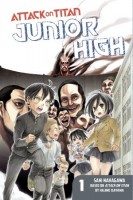
Attack on Titan: Junior High is one of several spin-off series inspired by Hajime Isayama’s hit manga Attack on Titan. Saki Nakagawa was selected to work on an Attack on Titan series after entering a manga contest. (Coincidentally, both Nakagawa and Isayama attended the same design school.) Although Nakagawa is the writer and artist for Attack on Titan: Junior High, Isayama has had some input into the series’ development. In fact, he was the one who suggested creating a manga along the lines of Tsutomu Nihei’s parody series Blame! Academy. And so Attack on Titan: Junior High was born–a comedy manga that somehow manages to combine Attack on Titan with contemporary Japanese school life. The manga began serialization in 2012 in Japan and the first two volumes were collected in 2013. Kodansha Comics is releasing Attack on Titan: Junior High in an omnibus edition. The first omnibus, collecting the first two Japanese volumes, was published in 2014 and Kodansha was kind enough to send me a review copy.

It has been five years since Eren was traumatized from an encounter with a Titan. Now that he’s in junior high he finally has the opportunity to seek revenge–both humans and titans are counted among the students and teachers of Attack Junior High. Of course Eren has other pressing matters to attend to even while his hatred of Titans remains at the forefront of his mind: making allies out of his classmates (which he’s not particularly good at), surviving epic games of dodgeball and choosing the perfect after-school club (which are both more dangerous than they might first appear), not to mention trying to stay on the upperclassmen’s good sides (which can actually be rather difficult). On top of all of that, Eren is a member of class four, a group of first years who all have their own quirks and issues to deal with. All together they’re a bunch of weirdos, but none of the other classes at Attack Junior High are much better. It’s really saying something when the Titans are the most normal ones at the school.

To really appreciate Attack on Titan: Junior High requires familiarity with the original Attack on Titan series and to some extent familiarity with Attack on Titan fandom as well. Some of Attack on Titan: Junior High will be funny, or at least amusing, even to those who haven’t read Attack on Titan, but the manga works best when it is directly parodying the original series and using it as its framework. All of Attack on Titan‘s most well-loved and reviled characters make an appearance in Attack on Titan: Junior High with some of their personality traits taken to a comedic extreme (although some were fairly over-the-top to begin with): Eren is a single-minded fanatic; Mikasa is overprotective of him to a fault; Sasha thinks about nothing but food; Jean is an arrogant ass; Hange succumbs to fits of ecstasy at the mere thought of Titans; Levi is obsessed with cleanliness, and so on. These characteristics were true of the original cast, too, but Nakagawa has stretched them to their limits in Attack on Titan: Junior High.

Nakagawa is clearly a fan of the original Attack on Titan series and is having a lot of fun with Attack on Titan: Junior High. In addition to using Isayama’s characters and taking them to their ludicrous yet logical conclusions, Nakagawa also uses pivotal and memorable scenes from Attack on Titan, giving them utterly ridiculous and absurd twists to emphasize their more comedic possibilities. The darkness, death, and destruction found in Attack on Titan is almost completely missing from Attack on Titan: Junior High. It can be just as frantic and frenetic, but as a parody the manga is much more lighthearted in tone. Even characters who have long been dead in the original series have an active role to play in Attack on Titan: Junior High; it seems as though no one really has to worry about dying in Nakagawa’s series. The worst thing that really happens in the first omnibus of Attack on Titan: Junior High is some stolen lunches. Granted, for students that can be an extremely tragic event, indeed.

Thank you to Kodansha for providing a copy of Attack on Titan: Junior High, Omnibus 1 for review.

Filed Under: REVIEWS Tagged With: attack on titan, kodansha, Kodansha Comics, manga, Saki Nakagawa

No. 6, Vol. 5

February 28, 2014 by Ash Brown

No. 6, Volume 5Creator: Hinoki Kino
Original story: Atsuko Asano

U.S. publisher: Kodansha
ISBN: 9781612623597
Released: February 2014
Original release: 2012

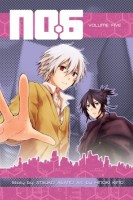
As much as I would like to read them, it is highly unlikely that Atsuko Asano’s series of science fiction novels No. 6 will ever be licensed in English. Happily, two adaptations are available: the 2011 anime series directed by Kenji Nagasaki (which was my introduction to the story) and the manga series by Hinoki Kino. Despite the anime’s bungled ending, I actually quite enjoyed the series, so I was glad to have a chance to experience another interpretation of the original story. The fifth volume in Kino’s manga adaptation was initially published in Japan in 2012. Kodansha Comics’ English-language edition of No. 6, Volume 5, published in 2014, also collects bonus stories not included in the regular Japanese edition. Though it had its high points, overall I found the first volume of the No. 6 manga to be a bit weak. However, each volume has gotten progressively stronger as Kino has had time to more fully develop the series’ characters and world.

With the increase in the number of refugees and the rise in violent crime, the population of West Block has been deemed too large and dangerous. It’s all the excuse the holy city of No. 6 needs to mount a massive cleanup operation, known to the residents of West Block as the Manhunt, in which parts of the area outside the city walls are completely destroyed and the population conveniently “removed.” The Manhunt is a way for No. 6 to keep control and prevent riots, but this time the operation serves another purpose–to gather enough undesirables to serve as human guinea pigs for a top-secret experiment being conducted and authorized by the city’s upper echelons. The Manhunt will also provide Shion and Rat with the opportunity that they need to infiltrate the Correctional Facility in order to search for and hopefully rescue Shion’s close friend Safu. Rat is one of the few people to have made it out of the Correctional Facility alive and doesn’t particular want to go back, but he isn’t about to allow Shion to attempt it on his own.

This is the volume of No. 6 in which Shion is brought dangerously close to his breaking point, and it is heart-wrenching to witness it happen. Living in West Block has been slowly changing him; it’s an environment that is drastically different from the seemingly perfect city of No. 6 where he spent almost his entire life. But the violence and suffering that Shion has been exposed to in West Block is nothing compared to the extent of the very deliberate cruelty of the Manhunt. Any faith that he still had in No. 6 is shattered when confronted with this horrifying atrocity, absolute proof that the city is not at all what it claims to be. Shion by nature has a very positive and optimistic outlook on life, but he has begun to lose that. Both he and Rat regret that change and even fear how much Shion might continue to change, especially in light of the most recent turn of events. Shion will never be able to return to the person who he once was no matter how much either of them would want it.

The characters and their growth continue to be some of the strongest elements of Kino’s No. 6 manga. This is especially true of Shion, as can particularly be seen in this volume, but Rat has also been changing in significant ways. The supporting cast, too, has almost all seen at least some minor development. The only major exception to this is the research scientist in charge of No. 6’s experiment. In fact, even though the series is more than halfway over, he doesn’t even have a name yet and is only referred to as “the man in white” in the character profiles. Since he seems to be one of the series’ main antagonists, this is a little disappointing. It’s also rather unsatisfying that the experiment, its purpose, and the motives behind it haven’t yet been made clear to the readers. This persistent vagueness and lack of clarity, instead of being mysterious or creating ominous tension, is mostly just frustrating this far along in the series. Even so, Rat and Shion’s excellent development in the manga largely makes up for this. In the end, I’m still really enjoying No. 6.

Filed Under: REVIEWS Tagged With: Atsuko Asano, Hinoki Kino, kodansha, Kodansha Comics, manga, no. 6

Vinland Saga, Vol. 2

February 7, 2014 by Ash Brown

Vinland Saga, Omnibus 2Creator: Makoto Yukimura
U.S. publisher: Kodansha
ISBN: 9781612624211
Released: January 2014
Original release: 2006-2007
Awards: Japan Media Arts Award, Kodansha Manga Award

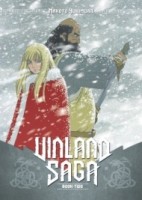
The second Vinland Saga omnibus, released by Kodansha in 2014, collects the third and fourth volumes of Makoto Yukimura’s historical manga series originally published in Japan in 2006 and 2007 respectively. Vinland Saga first began serialization in 2005 and has since earned Yukimura several honors, including a Japan Media Arts Award in 2009 and a Kodansha Manga Award in 2012. Vinland Saga was a series that I had been hoping would be licensed in English for years and so I was understandably thrilled when Kodansha picked the series up. Kodansha’s edition of Vinland Saga is quite nice–hardcover omnibuses which include color pages and have a larger trim size than the publisher’s previous releases. Vinland Saga is Kodansha’s first deluxe manga; personally, I think it’s a series which deserves the special treatment. I was not at all disappointed with the first omnibus of Vinland Saga and so was eagerly awaiting the release of the second.

In the early part of the eleventh century, England was under frequent attack by Vikings. In 1013, after years of fighting, England’s King Ethelred has been driven into exile in France while King Sweyn of Denmark proceeds with his invasion of the country. The Danes aren’t entirely united though, and many of the king’s forces are more like mercenaries or bands of pirates than they are loyal followers. Some groups, such as those led by Thorkell the Tall, have actually aligned themselves with the English in the conflict. Others, such as Askeladd’s band of warriors, fight under King Sweyn simply because he currently has the more advantageous position and the chance of reward is therefore much greater. But there is some infighting among Askeladd’s ranks as well. The only reason that Thorfinn, a skilled young fighter, follows him is for the chance to seek revenge against Askeladd for the death of his father. In the meantime, Thorfinn serves both as one of Askeladd’s most valuable and most expendable assets.

I enjoyed the first omnibus of Vinland Saga a great deal, but I think that I probably enjoyed the second one even more. Yukimura has struck an ideal balance between exciting action sequences and combat and the more personal and emotional character development of the fighters who are involved. Vinland Saga is both epic and intimate in its scope. War is occurring between nations, but it is the characters’ individual struggles that make the story so visceral and compelling. Many of the warriors in Vinland Saga are bloodthirsty, seeking glory and taking pleasure from battle itself rather than from any sort of perceived noble cause. But there are exceptions. Thorfinn despises this fighting for fighting’s sake. However, while his search for revenge may arguably be more righteous, that doesn’t necessarily mean that he’s in the right. Askeladd, too, has some very legitimate justifications for fighting. But while his skills as a warrior and strategist are commendable, many of his actions are deplorable.

The depth of characterization in Vinland Saga is impressive. In this omnibus, Askeladd in particular is shown to be a much more complicated figure than he may have first appeared. Vinland Saga, Omnibus 2 delves into part of his backstory, which only begins to reveal his motivations and who he really is as a person. Yukimura’s attention to detail in Vinland Saga extends beyond the characters themselves. The amount of research he has conducted allows him to portray the time period realistically, taking into consideration major historical events but also incorporating religious issues and matters of the day-to-day lives of royalty, mercenaries, and common folk. The artwork, too, can be incredibly detailed. The landscapes and environments are beautifully rendered and each character, even the multitudes of unnamed combatants, have distinctive designs. Vinland Saga really is an excellent series. I’m enjoying it immensely and am extremely happy that it’s finally available in English.

Filed Under: REVIEWS Tagged With: Japan Media Arts Award, kodansha, Kodansha Comics, Kodansha Manga Award, Makoto Yukimura, manga, Vinland Saga

No. 6, Vol. 4

December 27, 2013 by Ash Brown

No. 6, Volume 4Creator: Hinoki Kino
Original story: Atsuko Asano

U.S. publisher: Kodansha
ISBN: 9781612623580
Released: December 2013
Original release: 2012

Hinoki Kino’s manga series No. 6 is an adaptation of a series of nine science fiction novels written by Atsuko Asano. The fourth volume of the No. 6 manga was originally published in Japan in 2012. The English-language edition of No. 6, Volume 4 was released by Kodansha Comics in 2013. My introduction to No. 6 was actually through the anime adaptation, but I have been enjoying the manga’s rendition of the story as well. I have had a fondness for dystopian fiction ever since I was introduced to the genre in high school and so I am particularly pleased that a manga series like No. 6 is being released in English. I did find the first volume to be a little rushed and disjointed in places, but each subsequent volume has continued to improve and the series has settled into an excellent pace. The characters and world-building have also been developing rather nicely. Because the series keeps getting better, I was looking forward to reading the fourth volume.

Shion’s close friend Safu has been arrested by the Security Bureau of No. 6 and taken to the Correctional Facility, which may very well mean her death. Rat has known about Safu’s predicament for some time, but it’s something that he has been keeping a secret from Shion, concerned that he would put his own life at risk in order to rescue Safu. Rat is soon proven correct when, by chance, Shion discovers that Safu has been taken. Shion is prepared to do anything that he can to save her, even if that means doing it alone. But, despite his reservations, Rat isn’t about to let that happen. Infiltrating the Correctional Facility won’t be easy. Both Shion and Rat have been classified as dangerous criminal fugitives by No. 6’s authorities which severely limits their movements outside of West Block. Simply getting information about what is happening in No. 6 is a difficult task which will require all of the connections and influence that the two young men can muster. They are at a definite disadvantage and their situation is nearly impossible, but Rat and Shion are determined to come out of it alive however unlikely.

While the previous volume or so took time to further establish the relationships between the characters in the manga, No. 6, Volume 4 ratchets up the pace again, moving the plot forward quite handily. This is not to say that Kino has forgotten the series’ main players for the sake of the story. In fact, there are some absolutely wonderful character moments in the fourth volume. These are critical for the development of both the plot and the characters themselves. It is quite clear by this point in the manga that Shion and Rat deeply care about each other. But in No. 6, Volume 4 Shion is forced to confront just how vicious Rat can be, something that he has been avoiding. Rat has never hesitated to intimidate or threaten other people and is a master manipulator. Though up until now he has largely (but not completely) kept his overt violence in check, when given a reason and opportunity he can be absolutely terrifying. Rat’s actions in this volume are nominally for Shion’s sake, but he also has an intense, deep-seated hatred and anger towards No. 6 which lends to his brutality.

West Block has always been a violent place, but at least its residents are honest and forthright about it. They hold no delusions as they often literally have to fight to survive. On the other hand, there’s No. 6. The city is presented as a perfect society even though it is anything but. Granted, most of No. 6’s citizens are completely unaware that anything untoward is going on and those who do suspect find themselves conveniently disappeared. Because of this, No. 6 is actually the more terrifying of the two places. What exactly is going on in No. 6 has yet to be made clear. There have been some hints, and Shion and the others have uncovered a few clues, but even some of No. 6’s highest ranking officials aren’t privy to that information. All that is known is that some sort of terrible experiment is being conducted on the city’s population. However, the goal, purpose, and motivation behind that experiment hasn’t been revealed yet. With plenty of questions remaining to be answered and the story increasing in intensity, I’m definitely looking forward to reading the next volume of No. 6.

Filed Under: REVIEWS Tagged With: Atsuko Asano, Hinoki Kino, kodansha, Kodansha Comics, manga, no. 6

No. 6, Vol. 3

November 20, 2013 by Ash Brown

No. 6, Volume 3Creator: Hinoki Kino
Original story: Atsuko Asano

U.S. publisher: Kodansha
ISBN: 9781612623573
Released: October 2013
Original release: 2012

Hinoki Kino’s No. 6 manga is one of two adaptations available based on Atsuko Asano’s series of science fiction novels No. 6. My introduction to the story was through the anime series, but I am very glad to see the manga being released in English as well. No. 6, Volume 3 was originally published in Japan in 2012. The English-language edition was released by Kodansha Comics in 2013. Although the manga and the anime both share the same character designs and basic story, they are both different interpretations of the original novels. The manga, which is currently still an ongoing series, actually began serialization before the anime adaptation began airing. I quite enjoyed the No. 6 anime–except for its rushed original ending–which is why I was particularly interested in reading Kino’s manga. I felt the first volume was a bit uneven, but the second volume improved in both world-building and pacing, so I was looking forward to reading the third.

Even though at one point he was considered to be among No. 6’s elite, Shion is now a fugitive hiding outside of the city in West Block. Currently he is living with Rat who has already saved Shion’s life on several occasions and who himself is listed as a violent criminal by No. 6. Fortunately, the city seems to have very little interest in what is going on outside of its walls, so the two young men should at least be safe for the time being. In fact, Shion seems to be adapting surprisingly well to life in West Block, although his kindheartedness and naivety still have a tendency to get him into trouble. Inside the city, Shion’s mother is still afraid for her missing son’s safety and Shion’s childhood friend Safu wants to do anything that she can to find him. The risks involved in searching for Shion are not small and both of the women are under close surveillance by the authorities. A single mistake could lead to their arrest or convenient disappearance.

The relationship between Rat and Shion has always been an important part of the No. 6 manga. This hasn’t changed with No. 6, Volume 3, but the volume also further develops the relationships between them and the other characters. The pacing of the third volume is happily a bit slower than the first two which allows more time for Kino to better explore those relationships. Particularly telling is Rat’s interactions with Dogkeeper and how different they are from his interactions with Shion. Rat normally doesn’t hesitate to manipulate and intimidate other people and is more than willing to resort to violence. It’s his way of distancing himself from others in an attempt to avoid being hurt or taken advantage of. There is a small amount of kindness to be found in Rat’s personality, but he keeps it very well hidden. Shion is Rat’s complete opposite in this and seems to be made up of nothing but kindness, though he certainly has become less of a pushover than he once was.

It’s not only that Shion, Rat, and the others have different personalities, it’s that they have completely different worldviews and ways of thinking. This is a sources of strife in their relationships, but from this conflict comes subtle changes in their attitudes. Shion has an effect on those around him and he in turn is slowing changing as well. As an outsider in West Block, Shion asks questions that no one else would think to ask; he’s not as naive as he first appears, simply more open-minded and optimistic. Those used to living in the harsh environment of West Block have lost that idealism, and in time Shion may lose it as well as he is confronted with the terrible reality of West Block and the truth behind No. 6. He is strangely accepting of his own situation and exile, but when it comes to those he cares about he feels compelled to protect them at any cost, even if it puts him in danger. Each volume of the No. 6 manga continues to improve; I’m definitely looking forward to seeing where Kino takes things next.

Filed Under: REVIEWS Tagged With: Atsuko Asano, Hinoki Kino, kodansha, Kodansha Comics, manga, no. 6

Vinland Saga Vol 1

November 18, 2013 by Anna N

Vinland Saga, Vol 1 by Makoto Yukimura

This is a manga that I think of as having mirage-like qualities. I never thought it would actually be released in the US, just because I assumed a 13+ volume series about vikings would be a bit of a hard sell, despite the almost universal acclaim that Planetes Yukimura’s other English-translated series received. Furthermore the fact that the first volume of this series vanished from amazon (it is still available in kindle format) made it seem all the more hard to get. Fortunately I was able to brave the wilderness of an actual brick and mortar bookstore (isn’t it good these are still around) and track down this volume.

Releasing series that might be slightly less commercial in an omnibus deluxe format seems like a smart move. This hardcover volume features color pages, author notes, and a bonus story, so the higher price point still feels like a bargain. Vinland Saga certainly lives up to its title, as the first two volumes set up a sweeping tale of adventure, simmering revenge, daring battles, amusing cynicism, and manly men being almost too awesomely manly. The story opens mid-battle, as the Viking commander Askeladd observes a battle between Frankish tribes and is determined to enter the battle as a third party and make off with all the spoils of war. Askeladd sends out a pathologically surly young boy to be his messenger, but Thorfinn demands a reward before agreeing to undertake his task. Askeladd knows what Thorfinn wants and promises him his reward if he brings back the head of the commander of the opposing forces.

Bringing back someone’s head might seem like a bit too much of a burden for a young man, but Thorfinn capably negotiates with the frog-like Frankish leader, climbs the walls of the besieged castle, beheads his target, loses the head, retrieves it, then heads back to his companions to demand his reward – a duel with Askeladd. Thorfinn has been raised by Vikings who killed his father, and as he’s grown older and more capable his desire for revenge has increased as well. The battle scenes in Vinland Saga are dynamic and detailed, and it is hard not to root for Askeladd due to his innovative battle tactics and glee in his victories. If this manga only focused on battles, I could see it becoming less interesting, but Yukimura spends just as much time showing the reader the family life of the men who go out to plunder and raid.

An extended flashback throws Thorfinn’s current life in sharp contrast, as the reader sees the peaceful village where he was raised, and the father who he wishes to avenge. While Thorfinn’s family was removed from violence in the past, his father’s legendary martial prowess results in old enemies seeking him out, and Thorfinn’s innocent desire for adventure ends up leading him to experience loss at a very young age. Yukimura’s realistic and detailed style grounds the story effectively, with all of the background elements such as dwellings, ships, and clothing having the well-researched feeling that just allows a reader to slip into enjoying the story easily. While there’s plenty of adventure and action in Vinland Saga what stands out to me more are the human elements that Yukimura focuses on so well. Seeing the world weary desire for peace shown by Thorfinn’s father does more to ground the character than showing all of his past battles. Leif Erikson shows up as a storyteller who enjoys talking about himself far too much. Thorfinn’s sister is hilariously indifferent to the attentions of the village boys, and Thorfinn’s gentle mother is shown with murder in her eyes when she sees her husband not paying enough attention to her newborn daughter. I’m very much looking forward to the next volume of this series.

Filed Under: REVIEWS Tagged With: Kodansha Comics, Vinland Saga

Kodansha Comics NYCC 2013

October 12, 2013 by MJ Leave a Comment

kodansha-panel2Unsurprisingly, today’s panel was very much about Kodansha Comics’ huge hit, Attack on Titan, though that’s far from all. Editor Ben Applegate reported that they have over 500,000 copies in print to date. They are releasing a companion Guidebook: Inside & Outside, as well as a comedy spinoff, Titan Junior High. … that’s right, Titan Junior High.

Other new Titan-related announcements today include the license for two spin-off manga, the shoujo series Attack on Titan: No Regrets and Attack on Titan: Before the Fall—the manga version of the light novel series announced this morning by Vertical.

All the Titan talk led to some interesting conversation towards the end of the panel’s Q&A section, too, as Director of Publishing Services Dallas Middaugh told stories about the series’ initial slow sales, including some flak he took over printing 45,000 copies of the first volume, which he was told he’d be “sitting on for two years.” It obviously gave him great pleasure to report that they’ll be out in a couple of weeks.

sinsBut though Attack on Titan was clearly the main theme of this year’s panel, its various spinoffs were not the only announcements by far.

Kodansha also announced two new licenses for 2014—first, Nakaba Suzuki’s Seven Deadly Sins, an ongoing series from the pages of Weekly Shōnen Magazine (Tsubasa: Reservoir Chronicle and Fairy Tail, among others), set in the middle ages, and described by Middaugh as “very much in the vein of Dragon Ball and Dragon Ball Z.”

Then, also from Weekly Shōnen Magazine, we’ll see Ken Akamatsu’s UQ Holder!, set in the world of Negima!

Digital news was a major topic for today’s panel as well, with a large number of titles ready to join Kodansha Comics’ new wealth of manga on the Kindle, Nook, and iBook stores. New digital titles include Shugo Chara!, Shugo Chara!-chan, Tokyo Mew Mew, Tokyo Mew Mew a la Mode, Sherlock Bones, Negima!, and upcoming titles My Little Monster, and Say I Love You. The company’s digital releases have moved entirely to the ebook model and away from their app, which is no longer being updated. Though print manga is clearly still a huge priority for Kodansha, editor David Yoo revealed his personal preferences by, at one point, stating that “Digital is always better!” Those of us with small apartments can’t help but agree.

We’ll be covering New York Comic Con all weekend, so stay tuned!

Filed Under: UNSHELVED Tagged With: Kodansha Comics, NYCC, NYCC 2013

  • « Go to Previous Page
  • Page 1
  • Interim pages omitted …
  • Page 3
  • Page 4
  • Page 5
  • Page 6
  • Page 7
  • Go to Next Page »
 | Log in
Copyright © 2010 Manga Bookshelf | Powered by WordPress & the Genesis Framework