• Skip to primary navigation
  • Skip to main content
  • Skip to primary sidebar
  • Home
  • About Us
    • Privacy Policy
    • Comment Policy
    • Disclosures & Disclaimers
  • Resources
    • Links, Essays & Articles
    • Fandomology!
    • CLAMP Directory
    • BlogRoll
  • Features & Columns
    • 3 Things Thursday
    • Adventures in the Key of Shoujo
    • Bit & Blips (game reviews)
    • BL BOOKRACK
    • Bookshelf Briefs
    • Bringing the Drama
    • Comic Conversion
    • Fanservice Friday
    • Going Digital
    • It Came From the Sinosphere
    • License This!
    • Magazine no Mori
    • My Week in Manga
    • OFF THE SHELF
    • Not By Manga Alone
    • PICK OF THE WEEK
    • Subtitles & Sensibility
    • Weekly Shonen Jump Recaps
  • Manga Moveable Feast
    • MMF Full Archive
    • Yun Kouga
    • CLAMP
    • Shojo Beat
    • Osamu Tezuka
    • Sailor Moon
    • Fruits Basket
    • Takehiko Inoue
    • Wild Adapter
    • One Piece
    • After School Nightmare
    • Karakuri Odette
    • Paradise Kiss
    • The Color Trilogy
    • To Terra…
    • Sexy Voice & Robo
  • Browse by Author
    • Sean Gaffney
    • Anna Neatrour
    • Michelle Smith
    • Katherine Dacey
    • MJ
    • Brigid Alverson
    • Travis Anderson
    • Phillip Anthony
    • Derek Bown
    • Jaci Dahlvang
    • Angela Eastman
    • Erica Friedman
    • Sara K.
    • Megan Purdy
    • Emily Snodgrass
    • Nancy Thistlethwaite
    • Eva Volin
    • David Welsh
  • MB Blogs
    • A Case Suitable For Treatment
    • Experiments in Manga
    • MangaBlog
    • The Manga Critic
    • Manga Report
    • Soliloquy in Blue
    • Manga Curmudgeon (archive)

Manga Bookshelf

Discussion, Resources, Roundtables, & Reviews

Kodansha Comics

The Manga Revue: Inuyashiki, Kurosagi Corpse Delivery Service and Tokyo Ghoul

September 4, 2015 by Katherine Dacey

I’m fresh out of snappy intros, so I’ll cut to the chase: this week’s column looks at Inuyashiki, The Kurosagi Corpse Delivery Service Omnibus Edition, and Tokyo Ghoul.
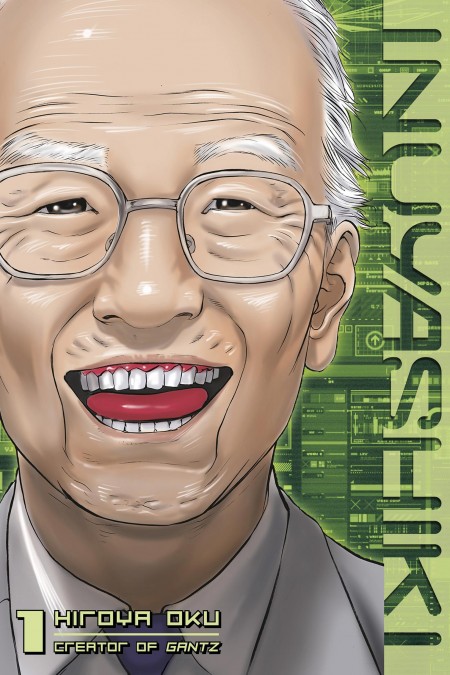
inuyashikiInuyashiki, Vol. 1
By Hiroya Oku
Rated OT, for older teens (16+)
Kodansha Comics, $12.99

Bette Davis famously declared that “Old age is no place for sissies,” a statement borne out by the first chapters of Hiroya Oku’s grimly compelling Inuyashiki. Its hero, a 58-year-old salaryman, is a picture of despair: his family loathes him, his co-workers ignore him, and his health is failing. In a blinding flash of light, however, his life changes. He wakes up to discover that his memories are intact but his body has changed; his once-frail limbs and failing eyes are now military-grade weapons, capable of withstanding lethal force. What to do with this gift? That question animates the final pages of volume one, as Ichiro tests his new body’s limits for the first time.

This final scene is a neat illustration of what’s good — and not so good — about Inuyashiki. Oku stages a suspenseful confrontation between Ichiro and a gang of teenage thugs; though we sense that Ichiro will prevail, how he gains the upper hand is a nifty surprise made more effective by Oku’s meticulously detailed illustrations. The incident that precipitates the showdown, however, is saddled with a heavy-handed script; Oku stokes the reader’s sense of righteous indignation by revealing that the thugs’ intended victim is a good but vulnerable man. By overemphasizing the victim’s inherent decency, Oku reduces him to a saintly caricature, a problem that also mars Ichiro’s early interactions with his family. (His kids are such ungrateful jerks you may root for Ichiro to use his powers on them.)

Even if Ichiro’s catharsis is less earned than contrived, watching him transform from terminal sad-sack to indestructible bad-ass is a deeply satisfying experience. He’s found his purpose and his spine, even if it’s taken him 58 years to do so. Now that’s a fantasy that any middle-aged reader can get behind.

The verdict: Pour yourself a scotch before reading; you’ll need the emotional fortification to navigate the early chapters.
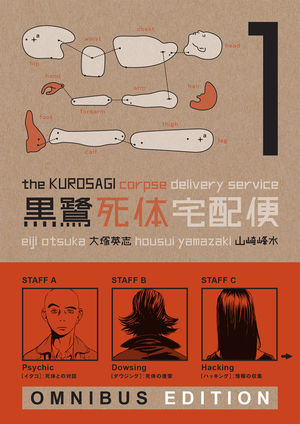
kurosagi_omnibus1The Kurosagi Corpse Delivery Service Omnibus Edition, Book One
By Eiji Ōtsuka and Housui Yamazaki
Rated OT, for older teens (16+)
Dark Horse, $19.99

Scooby Doo for grown-ups — that’s how I’d describe The Kurosagi Corpse Delivery Service, a macabre comedy about five cash-strapped college students who drive around in a van solving supernatural mysteries. The Kurosagi gang’s bread-and-butter are mysterious (and often violent) deaths. Through dowsing and channeling, they discover how and why their “clients” died, enabling the victims’ spirits to cross over to the other side.

The new omnibus edition — which collects the first three volumes of KCDS —  includes two of the series’ best stories: “Lonely People,” in which the gang stumbles across a portable altar with a mummy inside, and “Crossing Over,” in which the gang searches for the victim of an organ harvesting ring. Though the denouement of both “deliveries” include a few gruesome panels, the deadpan dialogue, expressive character designs, and snappy pacing prevent KCDS from sinking to the level of torture porn; the horrific imagery functions as a rim shot or an exclamation mark, not the main attraction. The self-contained nature of the stories is another plus: you can begin your KCDS odyssey almost anywhere in the series and still grasp what’s happening, though the crew’s origin story (“Less Than Happy,” the very first chapter) offers an interesting window into Buddhist university culture in Japan.

The verdict: If you haven’t tagged along on one of the Kurosagi crew’s “deliveries,” the omnibus edition gives you an economical way to do so.

Review copy provided by Dark Horse.
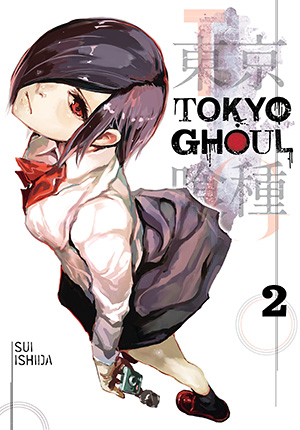
tokyo_ghoul2Tokyo Ghoul, Vol. 2
By Sui Ishida
Rated OT, for older teens (16+)
VIZ Media, $12.99

The first volume of Tokyo Ghoul reads like an urban legend: Ken Kaneki, earnest college student, goes out for dinner with a pretty girl, but wakes up in the hospital with a brand-new set of organs… that used to belong to his date. Within a few days of his release, Kaneki begins turning into a flesh-eating monster, a side effect of the transplant surgery. Volume two picks up where volume one left off: now caught between the human and demon worlds, Kaneki casts his lot with the demons of cafe Anteiku. They teach him tricks for passing as a human, and warn him about the deep divide between the ghouls who embrace their predator status and those who feel some kinship with humanity.

Although volume two introduces several new and potentially interesting characters, Kaneki’s wet-blanket personality continues to put a damper on the story: he whines and frets and refuses to do anything that might compromise the reader’s good opinion of him. As anyone who’s read Death Note knows, however, a charismatic, intelligent protagonist doesn’t have to be good or right to command the audience’s sympathy. Someone who’s flawed, misguided, or tempted to abuse a new-found power might actually invite more self-identification than a goody two-shoes lead.

The verdict: Tokyo Ghoul isn’t bad, just a little too obvious to sustain my interest.

Review copy provided by VIZ Media.

Reviews: Joe McCulloch looks at the new English-language version of Comics Zenon, Michelle Smith and Anna N. post a fresh set of Bookshelf Briefs, and Vernieda Vergara asks if Bleach has overstayed its welcome.

Connie on vol. 19 of Bakuman (Slightly Biased Manga)
Julie on The Desert Lord’s Bride (Manga Maniac Cafe)
Ash Brown on Dr. Makumakuran and Other Stories (Experiments in Manga)
Connie on vol. 3 of Earthian (Slightly Biased Manga)
Kory Cerjak on vol. 47 of Fairy Tail (The Fandom Post)
James Ristig on Full Metal Alchemist (How to Love Comics)
Matthew Alexander on vol. 1 of Hayate Cross Blade (The Fandom Post)
Connie on vol. 11 of Kamisama Kiss (Slightly Biased Manga)
Rebecca Silverman on vol. 23 of Kaze Hikaru (Anime News Network)
Lesley Aeschliman on vol. 1 of Komomo Confisere (WatchPlayRead)
Jordan Richards on vol. 1 of Komomo Confiserie (AiPT!)
Connie on vol. 14 of The Kurosagi Corpse Delivery Service (Slightly Biased Manga)
Angel Cruz on vols. 1-2 of Love at Fourteen (Women Write About Comics)
Lori Henderson on vols. 1-3 of Neon Genesis Evangelion (Manga Xanadu)
Ken H. on vol. 1 of Ninja Slayer Kills! (Sequential Ink)
Matthew Warner on vol. 10 of Nisekoi: False Love (The Fandom Post)
Connie on vol. 4 of No. 6 (Slightly Biased Manga)
Jocelyn Allen on Nobara (Brain vs. Book)
David Brooke on vol. 1 of Noragami: Stray God (AiPT!)
Lesley Aeschliman on vol. 1 of One-Punch Man (WatchPlayRead)
Kristin on vols. 1-2 of One-Punch Man (Comic Attack)
Jordan Richards on vol. 2 of One-Punch Man (AiPT!)
Matthew Warner on vol. 18 of Rin-ne (The Fandom Post)
Sarah on vol. 1 of The Royal Tutor (Anime UK News)
Al Sparrow on vol. 1 of So I Can’t Play H (Comic Spectrum)
Helen on Sweetness and Lightning (Organization Anti-Social Geniuses)
Dustin Cabeal on vol. 1 of Tokyo Ghoul (Comic Bastards)
Matthew Warner on vol. 1 of Tokyo Ghoul (The Fandom Post)
Connie on vol. 6 of Toradora! (Slightly Biased Manga)
Sheena McNeil on vol. 29 of Toriko (Sequential Tart)
Adam Capps on vol. 1 of Ultraman (BentoByte)
Michael Burns on vol. 3 of Yamada-Kun and the Seven Witches (AniTAY)
Filed Under: MANGABLOG, REVIEWS Tagged With: Dark Horse, Horror/Supernatural, Inuyashiki, Kodansha Comics, kurosagi corpse delivery service, Manga Review, Tokyo Ghoul, viz media

The Science of Attack on Titan

August 19, 2015 by Ash Brown

The Science of Attack on TitanAuthor: Rikao Yanagita
Illustrator: Maru Fujishima

Translator: Ko Ransom
U.S. publisher: Kodansha
ISBN: 9781632361851
Released: June 2015
Original release: 2014

Hajime Isayama’s ongoing manga series Attack on Titan has become a worldwide phenomenon, spawning multiple spinoff manga series, anime, live-action films, games, and other media and merchandise. The franchise has been such a resounding success that Kodansha Comics, the manga’s English-language publisher, has even broken its rule of not releasing anything that isn’t manga. The first exception was the Attack on Titan Guidebook: Inside & Outside. More recently, in 2015, Kodansha published Rikao Yanagita’s The Science of Attack on Titan as translated by Ko Ransom (who also happens to the translator for the guidebook and the Attack on Titan: Before the Fall novels, among other things.) Since I’m fascinated by Attack on Titan and its immense popularity, I was particularly glad to have the chance to read a review copy of The Science of Attack on Titan. The volume was originally published in Japan in 2014 and is the first work by Yanagita to have been released in English. Credited as the Senior Researcher of the Sci-F/Fantasy Science Research Institute, Yanagita is a fairly prolific writer who has authored other “The Science of” books as well.

The Science of Attack on Titan is divided into four main sections. The first and longest, “Surprising Titan Fundamentals,” focuses on the Titans, specifically investigating their strengths and weaknesses. Once Titans have been established as the fearsome creatures that they are, in the next section Yanagita asks and answers the question “What Should I Do If Titans Attack?!” Appropriately, this is followed by “Anti-Titan Measures: How Effective Are They Really?,” a section exploring in-series technologies such as the vertical maneuvering equipment. (Also included: an entire chapter devoted to the awesomeness of Levi.) The final section, “Simple Questions about Attack on Titan,” is a sort of catchall for remaining topics that didn’t really fit into the previously established categories. There are also shorter one-page investigations called “Lingering Fantasy Science Questions” scattered throughout the volume. Accompanying the text are relevant panels and pages taken from the Attack on Titan manga as well as additional illustrations by Maru Fujishima that can be quite humorous.

The Science of Attack on Titan, page 17Although the readers who will probably be the most interested in or at least the most likely to pick up The Science of Attack on Titan are those who are already familiar with Attack on Titan as a whole, it is only fair to give the warning that the volume does include spoilers for the franchise. Most are fairly minor, but there are a few major twists that are discussed as well. The Science of Attack on Titan is based on the original Attack on Titan series up through the thirteenth volume in addition to the first volume of the Attack on Titan: No Regrets spinoff manga, the Before the Fall prequel novels, and the Attack on Titan Guidebook. Unless readers are trying to avoid spoilers at all costs, they shouldn’t be too daunted by Yanagita’s thoroughness; only a basic knowledge of Attack on Titan, and its characters and setting is required to enjoy and understand The Science of Attack on Titan. There is no need to be well-versed in all aspects of the franchise in order to follow the book. The Science of Attack on Titan is approachable and friendly for novices in science, too.

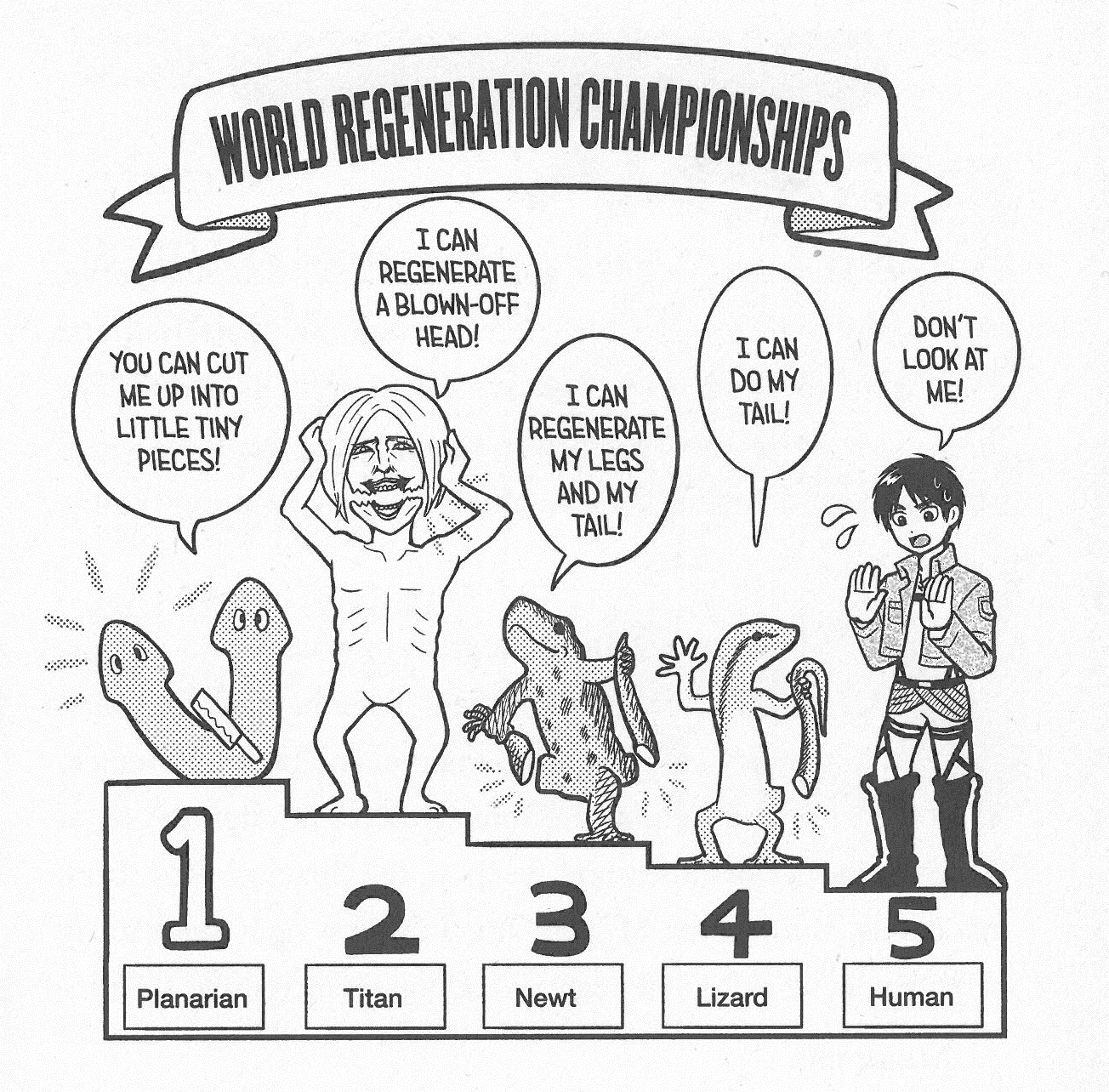
The Science of Attack on Titan may be inspired by Attack on Titan, but for the most part Yanagita spends more time discussing real-world physics, chemistry, biology, history, technology, and such than he does Attack on Titan itself. The franchise simply provides an excuse or jumping off point to explore interesting scientific concepts and how they might or might not apply to the series. Unsurprisingly, Yanagita’s analysis shows that many aspects of Attack on Titan could be nothing but fantasy, but it’s very exciting when it appears that something from the series could actually work. The Science of Attack on Titan is written to be both entertaining and engaging, though how funny it is will depend on an individual’s personal sense of  humor. While Yanagita address serious science, he recognizes that Attack on Titan is a fictional work and that subjecting it to such critical scrutiny can be inherently funny. As a result, his approach in The Science of Attack on Titan is informal and comedic, but also informative. Ultimately, the volume’s greatest value is probably in encouraging those who are interested in Attack on Titan to discover just how cool real science can be. Even I learned a few things that I didn’t previously know.

Thank you to Kodansha for providing a copy of The Science of Attack on Titan for review.

Filed Under: REVIEWS Tagged With: attack on titan, kodansha, Kodansha Comics, Maru Fujishima, Nonfiction, Rikao Yanagita

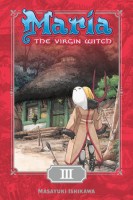
Maria the Virgin Witch, Vol. 3

August 9, 2015 by Ash Brown

Maria the Virgin Witch, Volume 3Creator: Masayuki Ishikawa
U.S. publisher: Kodansha
ISBN: 9781632360823
Released: June 2015
Original release: 2013

Maria the Virgin Witch is a three-volume manga series (four volumes if counting the sequel Exhibition) created by Masayuki Ishikawa. It was actually because the series was by Ishikawa, who is also the creator of Moyasimon (which I enjoy), that it first came to my attention. The first volume of Maria the Virgin Witch intrigued me, and the second ends with the heroine in a rather dire-looking situation, so I was very curious to see how the story would continue to play out in the third. Happily, Kodansha Comics was kind enough to send a review copy along to me. Maria the Virgin Witch, Volume 3 was originally published in Japan in 2013. Kodansha’s English-language edition of the volume was released in 2015. Despite being a short series, the narrative of Maria the Virgin Witch has the tendency to be a little unfocused, but I still find the manga to be consistently engaging. I especially appreciate the quirkiness of the series in general as well as the quirkiness of its characters specifically.

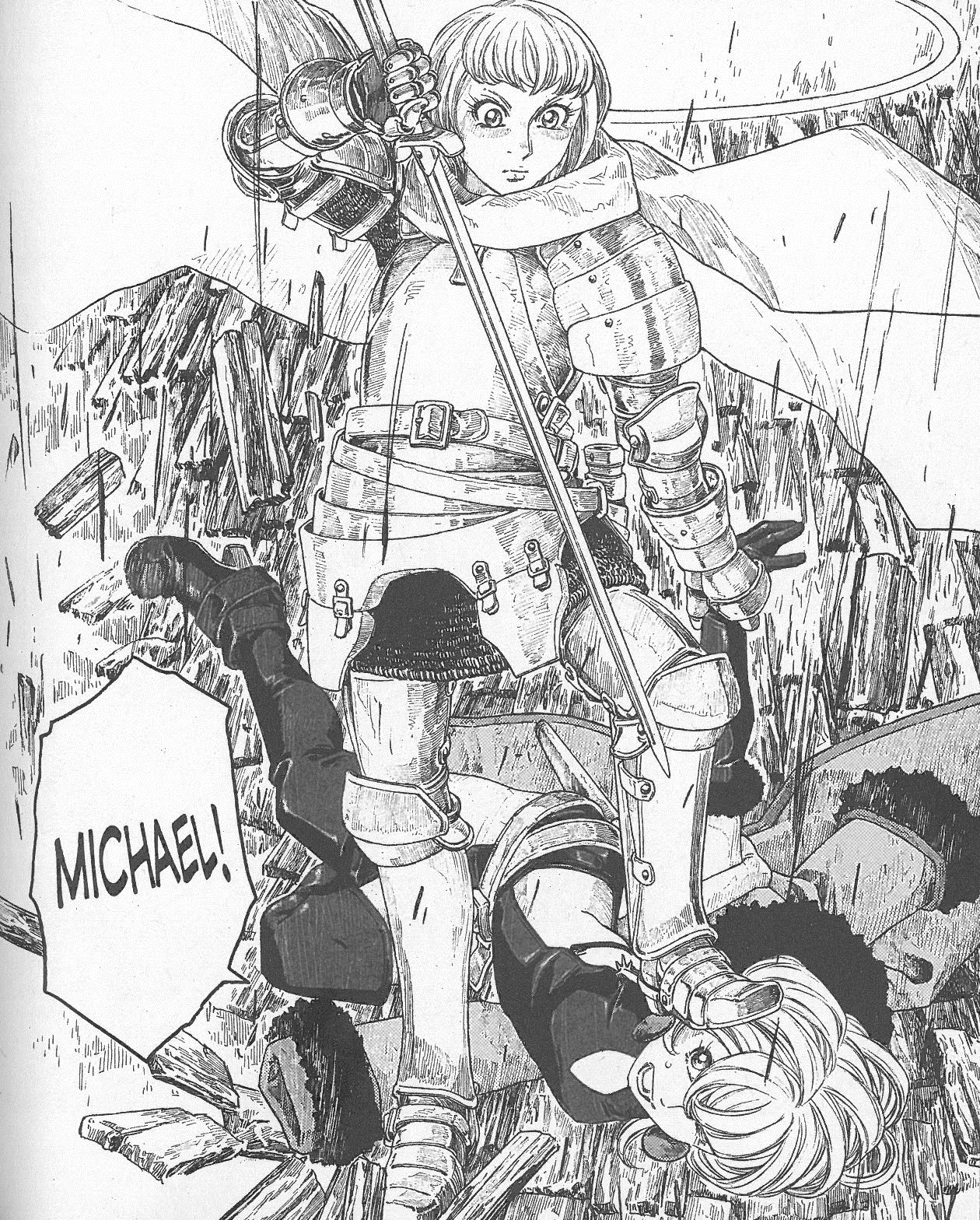
Maria had been warned by the Archangel Michael: If the young witch continued to interfere with the natural order of the world she would be struck down. However, so devoted to ending the long-lasting war between France and England, Maria continued to flaunt her powers, even while in the presence of Michael’s messenger Ezekiel. Now the time has come for her to face the consequences of her actions. She was, however, somehow able to survive what was intended to be a fatal blow from Michael’s spear. But she’s still vulnerable and must rely on the protection of her two owl familiars and the kindness of her fellow witches who don’t necessarily approve of her efforts to force a peace. Maria was at one point alone in the world—the Heavens, other witches, and even some of the humans she was trying to save all standing against her—but over time her earnestness and innocence has earned her some friends, a few of whom could have at one time been counted among her enemies. But even with their support Maria is beginning to lose her naiveté, realizing that bringing happiness to humanity may be more complicated than she initially considered.

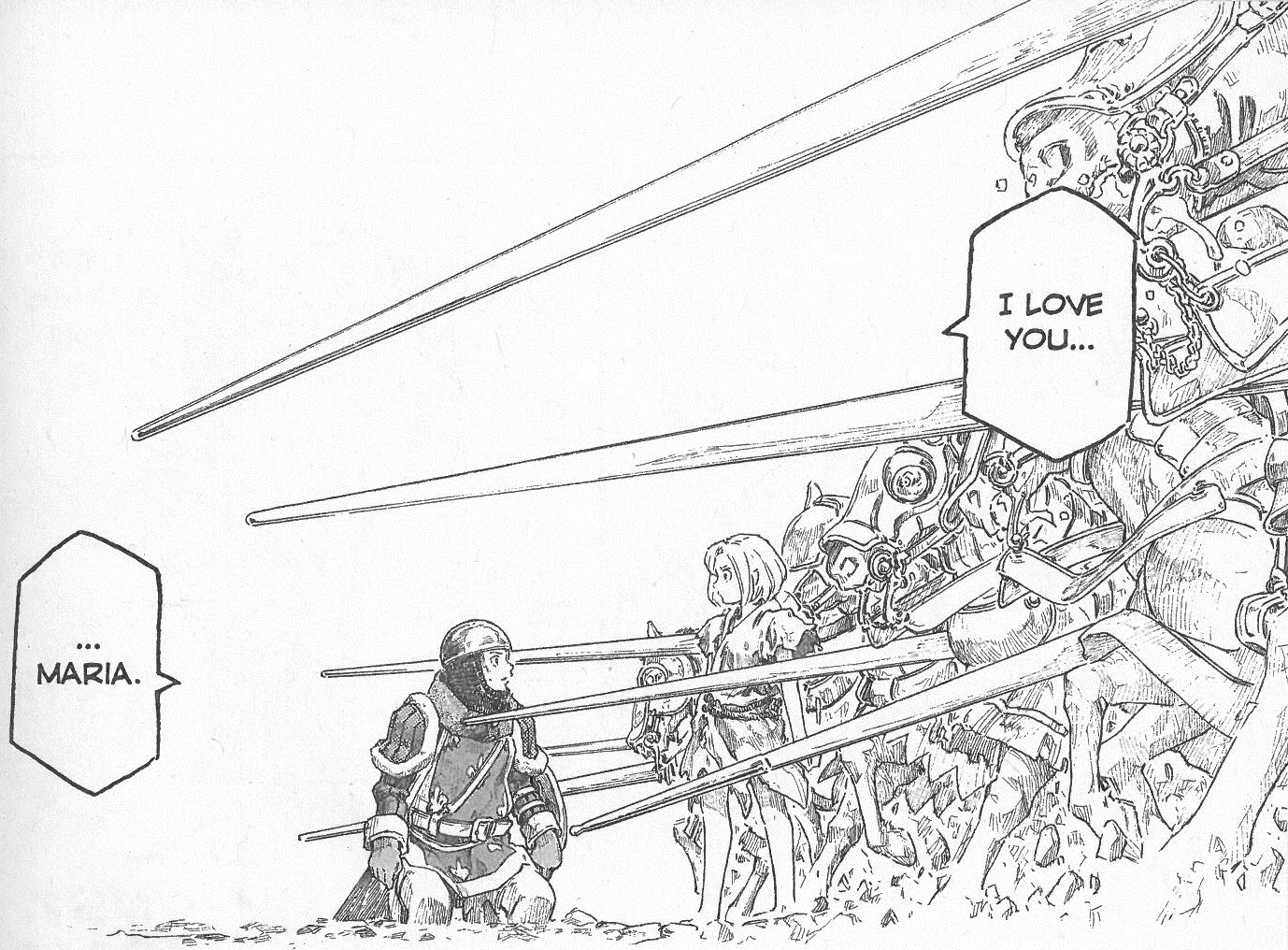
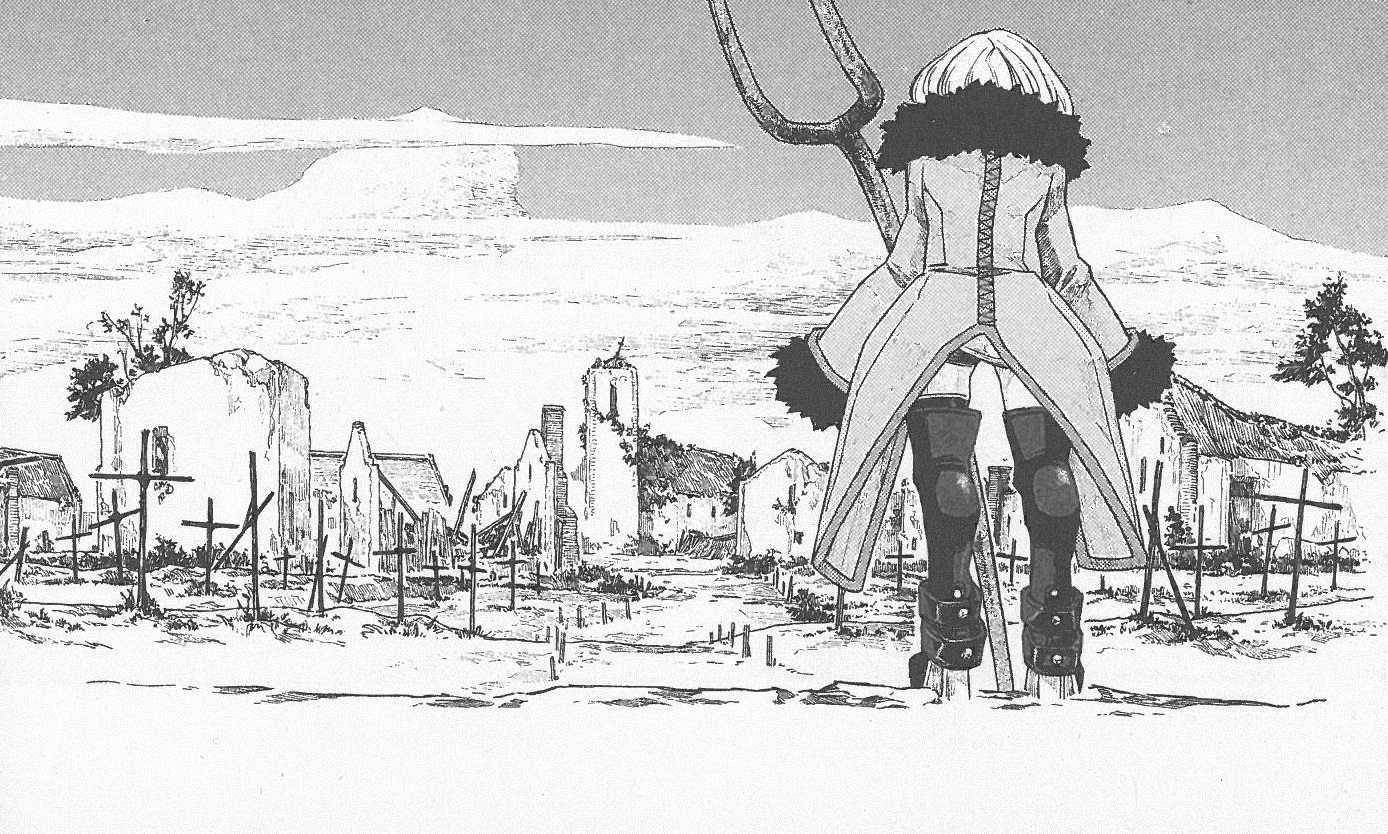
Maria the Virgin Witch, Volume 3, page 154Maria the Virgin Witch has always been a peculiar mix of quirky humor and more serious philosophical and theological reflection. There are a lot of ideas that Ishikawa was able to work into such a short series, although at the same time it’s difficult to thoroughly explore all of them in only three volumes. (It actually makes me wonder if Maria the Virgin Witch was originally intended to be a longer story.) The third volume brings up questions about Maria’s family and backstory without really answering them. Also, apparently many if not all witches are loners, something that wasn’t clearly established until now. Maria’s close friendship with the English witch Viv develops suddenly, and their discussions about the true meaning of happiness and love come across as a little forced. It was as if Ishikawa needed to rush in order to make sure that the heart of the series was addressed and made absolutely clear, paring down the seemingly extraneous elements introduced earlier in the manga.

Although overall the narrative of Maria the Virgin With is somewhat uneven, in the end I did largely enjoy the series and I would like to read Exhibition as well. Since the very beginning of the manga, I’ve been particularly fond of Maria herself. While she and the other witches feel more contemporary in thought and appearance than the rest of the series’ setting, I do appreciated her struggle to come to terms with not only her own position in the world, but also the role of the higher powers of Heaven. It’s a debate that humankind has been wrestling with for ages and is one more link between the manga’s historical backdrop and the present day. Ishikawa explores the answer to this timeless question through Maria’s growth as a character. She begins as a young, determined woman seeking to right the wrongs of the world, becoming wiser and more mature as she is confronted with the often brutal realities of life. But importantly, Maria never loses her ideals or succumbs to despair, which is why so many people come to love her so dearly.

Thank you to Kodansha for providing a copy of Maria the Virgin Witch, Volume 3 for review.

Filed Under: REVIEWS Tagged With: kodansha, Kodansha Comics, manga, Maria the Virgin Witch, Masayuki Ishikawa

Your Lie in April, Vol. 2

August 7, 2015 by Ash Brown

Your Lie in April, Volume 2Creator: Naoshi Arakawa
U.S. publisher: Kodansha
ISBN: 9781632361721
Released: June 2015
Original release: 2012
Awards: Kodansha Manga Award

Your Lie in April is an eleven-volume manga series created by Naoshi Arakawa that began serialization in Japan in 2011. The manga is one of Arakawa’s earliest professional works. Even so, Your Lie in April would go on to win a Kodansha Manga Award in 2013 and in 2014 the series’ anime adaptation debuted. Although I haven’t actually seen it yet, it was the anime that first brought Your Lie in April to my attention. As a lover of both manga and music (in addition to being a musician myself), the basic premise of Your Lie in April appealed to me a great deal. I was glad that Kodansha Comics licensed the series since I’m always excited to see more music manga released in English. I largely enjoyed the first volume of Your Lie in April and so was happy to receive a review copy of the second as well. Your Lie in April, Volume 2 was originally published in Japan in 2012 while the English translation was released in 2015.

Kosei hasn’t played the piano publicly for years, having tried to give it up after the death of his mother and a disastrous performance in competition. He has become so psychologically distraught that he literally can no longer his own music; the sound seems to disappear when he begins to seriously play. Very few people actually know why Kosei no longer performs or competes, and his closest friends continue to encourage him to play despite his reluctance. Somehow Kaori manages to bully him into serving as her accompanist in the second round of her violin competition at the last minute. She’s a passionate and headstrong musician who other pianists find difficult work with, sometimes even refusing to accompany her. But Kaori wants to be remembered by her audiences and she is convinced that Kosei, who was once well-known as a child prodigy, can help her do that. Except that he’s never been an accompanist before, they’ve never practiced together, and he hasn’t even had the change to study the score.

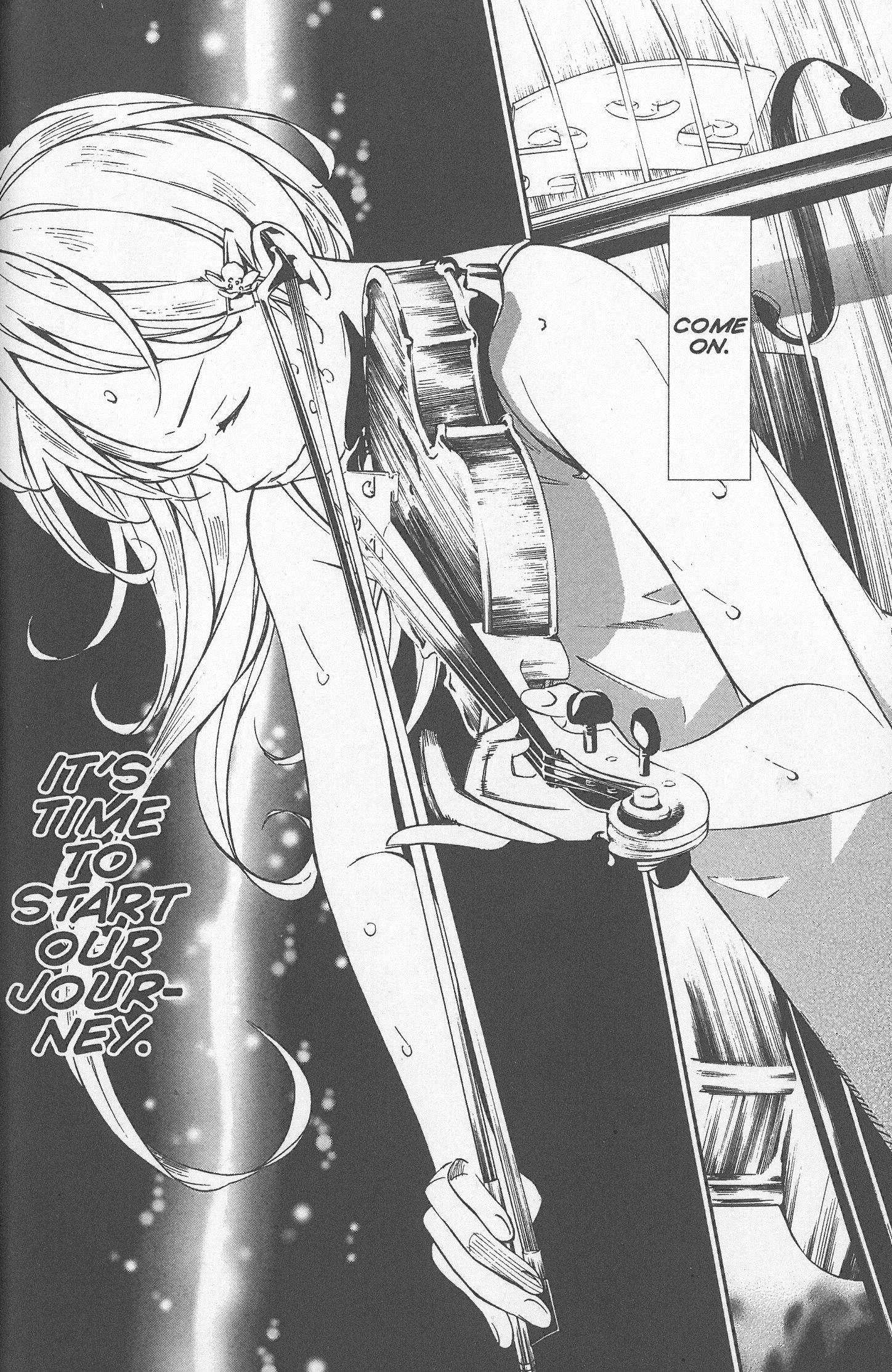
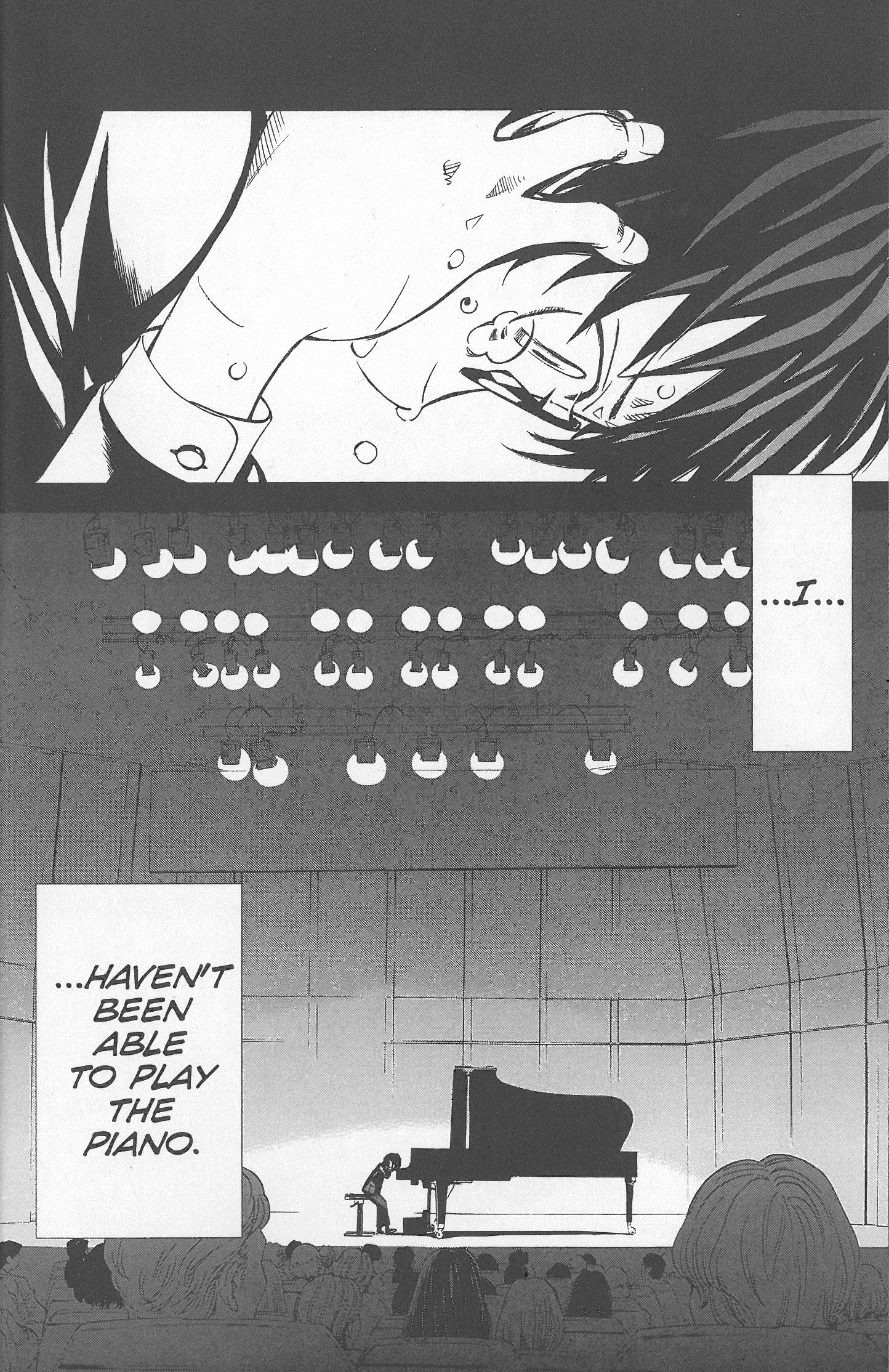
YourLieApril2-68Though Your Lie in April can be somewhat melodramatic at times, I appreciate that Arakawa is leveraging the psychological states of the series’ characters in order to further the story. Kosei being thrust into the spotlight and once again experiencing the thrill of performance doesn’t simply make everything all right or solve his problems. If anything, it actually makes matters more complicated. He continues to be torn between wanting to play and never wanting to touch the piano again. Hovering over Kosei is the shadow of his dead mother, an abusive woman who demanded perfection from him and his playing. But she was also the person who first taught him to love music. By the end of her life she had become cruel, but Your Lie in April, Volume 2 reveals that before she became ill she was much kinder and gentler person. It doesn’t excuse how she eventually treated her son, though it does help to explain in part why Kosei remained and continues to be devoted to her throughout the pain and suffering that was inflicted upon him.

What little is known about Kosei’s mother so far in Your Lie in April provides an interesting counterpoint to what little is known about Kaori. They are both musicians, they both are partly responsible for drawing Kosei into the world of music and, as the second volume of the series shows, they both struggle with physical illness. However, whereas Kosei’s mother became cruel, Kaori’s illness has caused her to devote herself to her music, striving to leave a lasting impression on those around her. No matter what happens in the future, Kosei’s relationship with Kaori, like the one with his mother, will be a formative one. He, at least, will never be able to forget her. She is an inspiration dragging him out of his personal darkness. This is something that is visually reinforced in the manga as well. Kaori is almost always shown in the light, sometimes she even seems to be the source of light, while Kosei is frequently seen in shadow, especially when he is playing. But Kaori is challenging and changing him. The time may come when Kosei will be able to freely stand in the light, too.

Thank you to Kodansha for providing a copy of Your Lie in April, Volume 2 for review.

Filed Under: REVIEWS Tagged With: kodansha, Kodansha Comics, Kodansha Manga Award, manga, Naoshi Arakawa, Your Lie in April

UDON to Publish Rose of Versailles; Showa Wins Eisner

July 11, 2015 by Katherine Dacey

rose-of-versailles-udonUDON may have scored the biggest coup of SDCC 2015: at its Saturday panel, the publisher revealed that it had acquired the rights to Rose of Versailles. UDON will release Riyoko Ikeda’s ground-breaking shojo manga in a 2-in-1 omnibus format next spring.

Shigeru Mizuki’s Showa 1939-1944 and Showa: A History of Japan, 1944-1953 clinched the Eisner Award for Best U.S. Edition of International Material–Asia, beating out All You Need Is Kill, In Clothes Called Fat, Master Keaton, One-Punch Man, and Wolf Children: Ame & Yuki.

At the Kodansha Comics panel, one new title was announced: Paradise Residence, an ongoing series by Oh! My Goddess creator Kosuke Fujishima. The Kodansha team also gave the audience a sneak peak at volumes 16 and 17 of Attack on Titan–both of which will include special extras–and hinted that they might have some additional licensing news at Otakon.

Dark Horse will publish a new omnibus edition of Hiroaki Samura’s Blade of the Immortal. No publication date has been set.

Sword Art Online: Progressive and Tokyo Ghoul lead this week’s New York Times Manga Best Seller list.

Erica Friedman posts the latest Yuri Network News update.

The new omnibus edition of Chi’s Sweet Home looks ridiculously cute. ‘Nuff said.

The Manga Bookshelf gang previews next week’s new arrivals. Over the Barnes & Noble Sci-Fi blog, Brigid Alverson highlights July’s best manga, from Twin Star Exorcists to Pandora in the Crimson Shell.

News from Japan: The last chapter of So Cute It Hurts! will appear in the August issue of Sho-Comi; eleven volumes have been released to date. Corpse Princess creator Yoshiichi Akahito just launched a new “battle fantasy manga” in Shonen Gangen magazine.

The Japan Times has a fascinating profile of manga-ka Machiko Satonaka, whose series Tenjo no Niji chronicles the life of the Empress Jiro (645-702 AD).

Reviews: Ash Brown jumps in the WABAC machine for a look at Sanpei Shirato’s The Legend of Kamui, which VIZ originally published in English in the 1990s.

ebooksgirl on vol. 10 of Attack on Titan (Geek Lit Etc.)
Connie on vol. 2 of Black Rose Alice (Slightly Biased Manga)
Lesley Aeschliman on vol. 64 of Bleach (WatchPlayRead)
Jocelyn Allen on Deathco (Brain vs. Book)
Leroy Douresseaux on vol. 1 of The Demon Prince of Momochi House (Comic Book Bin)
Svetlana Fedotov on Fragments of Horror (Fangoria)
Matthew Warner on Gyo (The Fandom Post)
Connie on vol. 1 of No. 6 (Slightly Biased Manga)
Connie on vol. 5 of Toradora! (Slightly Biased Manga)
Connie on vol. 1 of Whispered Words (Slightly Biased Manga)
TSOTE on The World of Mud Men (Three Steps Over Japan)
Lesley Aeschliman on vol. 6 of World Trigger (WatchPlayRead)
Ken H. on vol. 2 of xxxHolic Rei (Sequential Ink)

Filed Under: MANGABLOG Tagged With: Dark Horse, Eisner Awards, Kodansha Comics, Rose of Versailles, Shigeru Mizuki, udon

Kodansha Licenses Princess Jellyfish; Tokyopop Returns

July 7, 2015 by Katherine Dacey

Kuragehime_vol01_CoverJust a quick programming note before I tackle the day’s news: The Manga Revue is on hiatus this week so that I can focus on breaking stories from San Diego Comic Con. The Revue will be back on Friday, July 17th with an in-depth look at Junji Ito’s Fragments of Horror. On to the links…

This year’s Anime Expo yielded several major licensing announcements, including the welcome news that Kodansha Comics will be publishing Princess Jellyfish in 2016. Vertical, Inc. also unveiled two recent acquisitions: Nichijou, a surreal gag manga, and FukuFuku: Kitten Tales, a josei title from the creator of Chi’s Sweet Home. For a complete list of all of the titles announced at AX 2015, check out Sean Gaffney’s comprehensive round-up.

The biggest news story of AX 2015 was the re-launch of Tokyopop. Not surprisingly, the Robofish reboot generated numerous essays from industry veterans and journalists, including Alex de Campi, Heidi MacDonald, Aja Romano, and Brigid Alverson. Pour yourself a cup of coffee and read up on Stu Levy’s second act.

Mobile Suit Gundham and Tokyo Ghoul top this week’s New York Times Manga Best Seller list, followed by the perennially popular Naruto and Attack on Titan.

Publisher’s Weekly reports that the North American comics market grew 7% last year, generating almost $1 billion in print and digital sales.

Erica Friedman compiles the latest yuri publication news.

Megan R., host of The Manga Test Drive, shows off her manga collection and discusses her reading habits.

Justin Stroman interviews the husband-and-wife team of Christine Schilling and James Dashiell, who are currently translating Akame ga Kill! and The Seven Deadly Sins. Fun fact: the two met at Tokyopop, where Schilling was an intern and Dashiell was a letterer.

What will you find on the New Arrival shelf this week? The Manga Bookshelf gang sift through the good, the meh, and the awful.

News from Japan: Move over, Daigo Asahina–Atsushi Okubo, creator of Soul Eater, has a new “sci-fi firefighting battle manga” in the works for Weekly Shonen Magazine. Over at Weekly Shonen Jump, creator Masahiro Hirakata will debut Best Blue, a manga about a champion swimmer. Saint Seiya‘s Masami Kuramada also has a new series launching this year: Ai no Jidai (Ichigoe Ichie), a “semi-autobiographical” story that will run in Weekly Shonen Champion.

Reviews: Over at Organization Anti-Social Geniuses, confusedmuse sings the praises of Kaori Yuki’s The Cain Saga. Johanna Draper Carlson had an exceptionally productive long weekend, posting reviews of Ani-Emo, So, I Can’t Play H, and Emma. Not to be outdone, Ash Brown posted brief reviews of The Ancient Magus’ Bride and Man of Many Faces.

Ken H. on vol. 5 of Ajin: Demi-Human (Sequential Ink)
Anna N. on vol. 1 of The Demon Prince of Momochi House (Manga Report)
Sheena McNeil on vol. 5 of Food Wars!! Shokugeki no Soma (Sequential Tart)
Johanna Draper Carlson on vols. 1-2 of Love at Fourteen (Comics Worth Reading)
Kristin on The Legend of Zelda: A Link to the Past (Comic Attack)
Nick Creamer on vols. 5-6 of Lucifer and the Biscuit Hammer (ANN)
Rebecca Silverman on vol. 6 of Monster Musume (ANN)
Lori Henderson on vol. 2 of Prophecy (Manga Xanadu)
Sheena McNeil on vol. 14 of Rosario + Vampire, Season II (Sequential Tart)
Leroy Douresseaux on vol. 1 of Twin Star Exorcists (Comic Book Bin)


Filed Under: MANGABLOG Tagged With: Kodansha Comics, Tokyopop, Vertical Comics

The Manga Lover’s Guide to SDCC 2015

July 5, 2015 by Katherine Dacey

sdcc_logoAre you headed to San Diego this week? If so, this column is for you! We’ve compiled a handy list of the major manga events, from VIZ’s Ultraman spectacular to Tokyopop’s Don’t-Call-It-a-Comeback panel. Our own Brigid Alverson will be joining an all-star line-up of bloggers for the Best and Worst Manga of 2015 panel, which will be held on Saturday, July 11th at 7:00 pm. We’ll also be updating the blog throughout the week with the latest licensing announcements.

A final note about the programs listed below: our list focuses on manga, but there are also a wealth of anime programs including cosplay panels, voice acting workshops, and screenings of Spirited Away. A comprehensive schedule of anime events is now live on the SDCC website, and available through the Comic-Con app (iOS and Android).

THURSDAY, JULY 9th

Shonen Jump: Past, Present, and Future
10:00 – 11:00 am, Room 5AB
From the program: “Hang out with the English language editors of the world’s most popular manga, plus special surprise guests! Come hear some exciting news about the latest new series, all-time fan favorites, and everything in between. Plus a chance to win amazing prizes by showing off your SJ trivia skills.”

What Do Women Want? Female Gaze in Manga
3:00 – 4:00 pm, Room 29AB
From the program: “From shojo manga to boys love manga to reverse harem ‘otome’ video games and anime filled with delectable guys, these media have been catering to the tastes of female fans in Japan. These stories are reaching readers and inspiring comics creators worldwide more than ever. See what manga publishing pros Leyla Aker (senior vice president, publishing, VIZ Media), JuYoun Lee (editor-in-chief, Yen Press), Lillian Diaz-Pryzbyl (head of comics, Sparkler Monthly), and manga creator Jamie Lynn Lano (The Princess of Tennis, Denkiki) have to say about ‘female gaze’ in manga, why it sells, and why it matters. They’ll also share their picks for your next must-read manga that’ll make you swoon. Moderated by Deb Aoki (Publishers Weekly, Manga Comics Manga).”

VIZ Media
4:00 – 5:00 pm, Room 7AB
From the program: “Come party with VIZ Media! And by party, they mean sit in a chair and listen to thrilling tales of upcoming releases and other Earth-shattering announcements from North America’s largest distributor of manga and anime… Hosted by Urian Brown, Charlene Ingram and VIZ Media staff, with special guests.”

Making a Living in Manga: Japan Creators, Editors Talk
5:00 – 6:00 pm, Room 29AB
From the program: “What’s it like to work as a comics creator in Japan? What does it take to sell your self- published manga at Tokyo’s Comic Market (Comiket), the world’s largest comics show? How do Japanese manga editors work with creators to craft addictive stories that keep readers coming back for more? Hear what it’s really like to work in the motherland of manga from Japan- and U.S.-based pros who have done all of this and more. Akihide Yanagi (writer, agent), Kamome Shirahama (manga artist, Eniale & Dewiel), Philip S. Y. Tan (Heaven, Uncanny X-Men), Makoto Nishi (manga editor), and Philip Knall (translator, salaryman) offer a rare look behind the scenes of Japan’s manga biz, followed a Q&A session moderated by Deb Aoki (Publishers Weekly, Manga Comics Manga).”

Dark Horse Manga
6:00 – 7:00 pm, Room 9
From the program: “Dark Horse’s history with Japanese comics can be traced back to the company’s earliest years… Dark Horse continues to publish some of the industry’s bestselling titles… Be on hand for a look at the past, present, and future of manga at Dark Horse.”

Manga: Lost In Translation
7:00 – 8:00 pm, Room 9
From the program: “It seems that manga is charging back from its late ’00s slump, and anime simulcasts have become the norm. So what is it like to work in the industry? Here’s your chance to ask some of the top professionals in the manga and anime industry about their jobs and the titles they’ve worked on. Join William Flanagan (Fairy Tail), Jonathan “Jake” Tarbox (Fist of the North Star), Mari Morimoto (Naruto), Stephen Paul (One Piece), Ed Chavez (director, Vertical Comics), and Lillian Diaz-Przybyl (head of comics, Chromatic Press Inc.) for this panel.”

FRIDAY, JULY 10th

Get Your Comic Published in Japan: Silent Manga Audition
1:30 – 2:30 pm, Room 5AB
From the program: “Jonathan Tarbox (CEO, Arashi Productions) explains how manga artists from any nation can submit their work to a contest run by a major Japanese publisher. Winners will have their submission published in Japan and be considered for the opportunity to work in the manga industry…”

VIZ Media: Ultraman
3:00 – 4:00 pm, Room 23ABC
From the program: “For their first international appearance, Eiichi Shimizu and Tomohiro Shimoguchi, creators of the new VIZ Media manga series Ultraman, inspired by the original Japanese TV show, are joined onstage by special guests from Legendary Comics to discuss Japan’s quintessential superhero and the influence of kaiju in today’s pop culture…”

Manga Publishing Industry Roundtable
5:00 – 6:00 pm, Room 4
From the program: “Manga publishing in North America has definitely seen its shares of highs and low, from the manga boom in the early 2000s to the crash ten years later, caused by a perfect storm of the U.S. recession, Borders bookstores closures, and the growth of online piracy. So how are things now? Get a taste of what’s hot, what’s not, and what’s next for manga in North America and Japan, from top publishing pros including Leyla Aker (senior VP, publishing, VIZ Media), Kurt Hassler (VP, publishing director, Yen Press), Michael Gombos (director of licensing Asia, Dark Horse Comics), Ben Applegate (associate director, publishing services, Penguin Random House), and Erik Ko (chief of operations, Udon Entertainment). Moderated by Deb Aoki (Publishers Weekly, Manga Comics Manga).”

Showcasing the Best in Korean Comics
7:30 – 8:30 pm, Room 26AB
From the program: “A team of Korea’s prolific artists and animation studios, represented by Jongmin Shin (CEO of EGA Studios), showcases the latest and greatest trends in Korean comics and animation. They will also showcase their recent and upcoming productions on some of today’s hottest comics. Join Jongmin and crew for this Q&A session moderated by Austin Osueke (publisher of eigoMANGA).”

SATURDAY, JULY 11th

Kodansha Comics
11:30 am – 12:30 pm, Room 8
From the program: “The publisher of the manga megahit Attack on Titan… reveals exciting upcoming titles. General manager Kana Koide and senior editor Ben Applegate will answer your questions about Kodansha’s books and the manga industry.”

Spotlight on Yu-Gi-Oh! and Creator Kazuki Takahasi
2:00 – 3:00 pm, Room 7AB
From the program: “Get a rare, behind-the-scenes look at the Yu-Gi-Oh! phenomenon and a sneak peek at the third Yu-Gi-Oh! feature film through the eyes of world-renowned manga artist and Yu-Gi-Oh! creator Kazuki Takahashi, and other distinguished panelists…”

Tokyopop: The Robofish Rises
6:00 – 7:00 pm, Room 28DE
From the program: “Big News, TOKYOPOP is coming back! Meet Stu Levy (founder, CEO), Clay Bohle, and the TOKYOPOP team to get the scoop firsthand. Giveaways for all attendees. If you’re an artist, bring your portfolio for review, and if you’re a fan, bring all your questions.” [Editor’s note: for more information about Tokyopop’s past and future, check out Brigid’s recent article at Comic Book Resources. If you’re planning to bring your portfolio, be sure to read Alex De Campi’s blog post about her complicated–and sometimes exploitative–relationship with Tokyopop.]

Best and Worst Manga of 2015
7:00 – 8:00 pm, Room 23ABC
From the program: “A panel of opinionated bloggers, retailers, librarians, manga mavens, and comics curmudgeons spotlight the best new manga that hit the shelves in the past year. See them rave about their favorite continuing series. Watch them rant about the excruciatingly mediocre manga that they were forced to read. Find out what Brigid Alverson (Robot 6, Good Comics for Kids), David Brothers (4thletter!), Christopher Butcher (The Beguiling, Toronto Comic Arts Festival), Eva Volin (Alameda Free Library, No Flying No Tights), and Deb Aoki (Manga Comics Manga, Publishers Weekly) loved and loathed to read in the past year. Hear about their picks for the most anticipated upcoming releases for fall 2015 and beyond, and discover their favorite underappreciated manga gems that are worth picking up.”

Filed Under: MANGABLOG Tagged With: Dark Horse, Kodansha Comics, manhwa, SDCC, Tokyopop, Ultraman, viz media, Yu-Gi-Oh!

The Manga Revue: A Silent Voice and Your Lie in April

July 3, 2015 by Katherine Dacey

It’s been a while since I checked in with Kodansha, so this week I reviewed two recent additions to the KC catalog: A Silent Voice, which explores the complex relationship between a bully and his victim, and Your Lie in April, which focuses on a piano prodigy who flamed out at an early age.

A Silent VoiceA Silent Voice, Vol. 1
By Yoshitoki Oima
Rated T, for Teens
Kodansha Comics, $10.99

Thirteen-year-old Shouya Ishida is at loose ends: he’s a mediocre student, a latch-key kid, and a thrill-seeker who goads his friends into dangerous stunts. When deaf girl Shoko Nishimiya joins Ishida’s class, however, Ishida’s recklessness shades into cruelty. He orchestrates a systematic campaign of harassment against her, mocking her speech, stealing her hearing aides, and blaming her for “ruining” the class.

As manga-ka Yoshitoki Oima capably shows, Ishida’s inability to control his worst impulses stems from a toxic mixture of loneliness, frustration, and immaturity. Oima resists the urge to blame Ishida’s mother for her son’s behavior, portraying her as a hard-working, decent woman who’s struggling to run a business and raise two children on her own. Instead, Oima zeroes in the complex dynamic between Ishida and his classmates, acknowledging the degree to which their own hostility towards Nishimiya validates–and encourages–Ishida’s cruelty.

In one scene, for example, the teacher calls on Nishimiya to read a passage out loud. Her words are labored and difficult to understand, prompting uncomfortable stares from the class. When Ishida is asked to do the same, he’s emboldened by his peers’ response. “Uwah! Uwoh! Argle! Bargle!” he declares, feasting on the giggles and snickers his impression elicits. Though the teacher issues Ishida a stern warning, Mr. Takeuchi’s own contempt for Nishimiya seeps into their conversation, granting Ishida further license to harass his classmate.

I’d be the first to admit that A Silent Voice is a difficult read, not least for the scenes in which Ishida torments Nishimiya; Nishimiya’s crestfallen expressions will rip your heart out. It’s a worthwhile series, however, for its truthful exploration of adolescent cruelty, and for its steadfast refusal to paint its troubled protagonist as a monster–or a victim.

your_lie_april_EnglishYour Lie in April, Vol. 1
By Naoshi Arakawa
Rated T, for Teens
Kodansha Comics, $10.99

Your Lie in April follows the budding relationship between Kosei Arima, a piano prodigy, and Kaori Miyazono, a violinist who plays by her own rules. When Arima first meets Miyazono, he’s so crippled by his own perfectionism that he can’t play in public. Miyazono, on the other hand, is fearless, giving messy but emotionally authentic performances that irk judges and wow audiences. Miyazono has an equally messy personality–she’s impetuous, petulant, and bossy–but captivates Arima with the sheer force of her enthusiasm.

I’ll be honest: I’d like Your Lie in April a lot more if it focused on a drama troupe or a sports team. That may seem like an odd admission from a musicologist, but Miyazono’s character embodies what I dislike most about popular depictions of classical music. Her eclectic performances are offered as evidence of her “true” musical ability, while the judges’ disapproval is portrayed as a failure of imagination–it’s like Shine in manga form, and boy howdy, did I hate Shine. Why? Because a score isn’t a loose set of guidelines to be followed at the musician’s whim; it’s an explicit representation of the composer’s intentions. Willfully ignoring tempo markings, dynamics, and phrasing misses the entire point of musical notation. Miyazono may make Beethoven’s Kreutzer sonata “unequivocally her own,” but is she really capturing the spirit of the piece by taking so many liberties with it?

Given my own bias, I don’t know if I can give Your Lie in April a fair shake. I found the artwork clean and expressive, and the dynamic between Arima and his non-musical friend Tsubaki Sawabe true to life. (In contrast to Miyazono, Sawabe is not simply a vehicle for the hero’s self-actualization, but a character in her own right.) I also enjoyed the program notes at the end of every chapter–a nice touch for readers who recognize Saint-Saens’ name, but can’t quite tie him to a specific composition or stylistic period. I’m not sure these small pleasures are enough inducement for me to pick up volume two, but a less fussy music lover might well enjoy this coming-of-age drama.

Reviews: Bust out your handkerchief–the final installment of House of 1000 Manga has been posted! Jason Thompson takes a few minutes to reflect on the column, list his ten favorite manga, and discuss what he’ll be doing next. Like many of ANN’s regular readers, I will miss House of 1000 Manga dearly; Shaenon and Jason did a terrific job of sharing their knowledge of and enthusiasm for manga with readers in a consummately effortless style.

Courtney Sanders on vol. 16 of 07-Ghost (Three If By Space)
Connie on vol. 2 of Alice in the Country of Clover: Knight’s Knowledge (Slightly Biased Manga)
Connie on vol. 3 of Alice in the Country of Clover: Cheshire Cat Waltz (Slightly Biased Manga)
Al Sparrow on vol. 1 of The Ancient Magus’ Bride (ComicSpectrum)
Ken H. on vol. 4 of Attack on Titan: Before the Fall (Sequential Ink)
Erica Friedman on Awajime Hyakkei (Okazu)
Connie on vol. 18 of Black Bird (Slightly Biased Manga)
Kate O’Neil on vol. 10 of Black Lagoon (The Fandom Post)
Connie on vol. 28 of Blade of the Immortal (Slightly Biased Manga)
Helen on Cardcaptor Sakura (Organization Anti-Social Geniuses)
Connie on vol. 1 of Citrus (Slightly Biased Manga)
TSOTE on vol. 29 of C.M.B. (Three Steps Over Japan)
Connie on vol. 2 of Demon Love Spell (Slightly Biased Manga)
Rebecca Silverman on Dream Fossil (ANN)
Holly Saiki on Fragments of Horror (Examiner)
Courtney Sanders on Fragments of Horror (Three If By Space)
Ken H. on In Clothes Called Fat (Sequential Ink)
Luke Halliday on vol. 2 of JoJo’s Bizarre Adventure: Phantom Blood (Snap 30)
Rebecca Silverman on vol. 18 on Kamisama Kiss (ANN)
Sakura Eries on vol. 4 of Kiss of the Rose Princess (The Fandom Post)
Johanna Draper Carlson on vol. 14 of The Kurosagi Corpse Delivery System (Comics Worth Reading)
Connie on vol. 5 of Love Pistols (Slightly Biased Manga)
Kristin on vol. 3 of Master Keaton (Comic Attack)
Lesley Aeschliman on vol. 3 of Master Keaton (WatchPlayRead)
Anna N. on vol. 2 of Meteor Prince (The Manga Report)
Sean Gaffney on vol. 1 of Non Non Biyori (A Case Suitable for Treatment)
Al Sparrow on Panty & Stocking with Garterbelt (ComicSpectrum)
TSOTE on vol. 1 of Q.E.D. iff (Three Steps Over Japan)
Matthew Alexander on vol. 9 of Sankarea (The Fandom Post)
Megan R. on Seraph of the End (The Manga Test Drive)
Al Sparrow on vol. 1 of A Silent Voice (ComicSpectrum)
Connie on vol. 34 of Skip Beat! (Slightly Biased Manga)
L.B. Bryant on vol. 1 of So Cute It Hurts! (ICv2)
Matthew Alexander on vol. 9 of Triage X (The Fandom Post)
Connie on vol. 16 of We Were There (Slightly Biased Manga)
Ash Brown on vol. 7 of What Did You Eat Yesterday? (Experiments in Manga)

Filed Under: MANGABLOG, REVIEWS Tagged With: A Silent Voice, Kodansha Comics, Manga Review, Your Lie in April

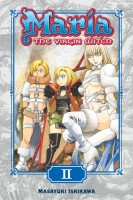
Maria the Virgin Witch, Vol. 2

June 5, 2015 by Ash Brown

Maria the Virgin Witch, Volume 2Creator: Masayuki Ishikawa
U.S. publisher: Kodansha
ISBN: 9781632360816
Released: April 2015
Original release: 2011

I was somewhat wary when I picked up Masayuki Ishikawa’s manga series Maria the Virgin Witch to read. I wasn’t really sure what to expect from it, especially considering part of the story is explicitly focused on the heroine’s virginity and sexuality. No that that is necessarily a bad thing, it just has the potential to go very wrong, very quickly. But because the series is by Ishikawa, whose Moyasimon I enjoy immensely, in the end I decided to give Maria the Virgin Witch a try. (At some point, I’ll likely take the time to watch the manga’s recent anime adaptation as well.) Although there were a few things that bothered me about the series’ first volume, by and large I was intrigued and enjoyed the manga, certainly more so than I had initially anticipated that I would. I liked the basic premise of the manga, particularly the quirky characters, and so I wanted to see what Ishikawa would do with the rest of the series. Maria the Virgin Witch, Volume 2 was first released in Japan in 2011. The English-language edition of the volume was published by Kodansha Comics in 2015.

Having drawn too much attention to herself by dramatically interfering with the affairs and wars of humankind, the young, idealistic witch Maria has been given an ultimatum by the Archangel Michael. Maria as been forbidden to display her powerful magic in front of humans or else forfeit her life. Additionally, should she ever lose her virginity she will lose her powers as a witch, putting her in a position where she must either choose her own happiness or the happiness of others. Since Michael has better things to do than spend all his time watching over a rogue witch, he leaves his messenger Ezekiel behind to ensure that Maria follows the rules. Whether Ezekiel is actually successful is another matter entirely. Maria still feels very strongly about aiding those who ask for her help and bringing an end to the war between England and France. With some assistance from her familiars Artemis and Priapus, she is able to take advantage of a few loopholes in Ezekiel’s charge, but it’s likely only a matter of time before Michael puts a stop to that, too.

Maria the Virgin Witch, Volume 2, page 74Maria the Virgin Witch continues to be a strange combination of crude humor largely revolving around sex (or the lack thereof) and more serious philosophical and theological questioning. The introduction of Ezekiel allows Ishikawa to more fully explore Maria’s motivations and her view of the world and all that she believe is wrong with it. If God and his angels won’t step in to put an end to humanity’s wars and violence—even when people are praying for just that—Maria sees it as her responsibility to fulfill that role since it is within her power, albeit in a much more limited fashion. She acknowledges that she is no god; she is not omnipotent, neither is she omniscient. She can only do what she can. The second volume of Maria the Virgin Witch reveals that Maria is very much an outlier in her way of thinking. Other people and other witches who have the ability to influence the course of the war actually want to drag it out as long as possible. To do so is to their advantage. They believe the position held by Maria to be incomprehensible and incredibly naive. But some, including Ezekiel, find that their assumptions and beliefs are challenged by Maria’s idealism and earnestness and are forced to reexamine them.

Although the series is set during the Hundred Years War and references actual events and people, the second volume of Maria the Virgin Witch makes it very clear that the manga is less historical fiction and more fantasy fiction. While interesting, the worldbuilding of the series is actually a little confused, or at least not thoroughly explained. Magic has always been a large part of Maria the Virgin Witch, as have demons, monsters, angels, and other divine beings (including Valkyries for some reason), but the second volume introduces a mythical and mortal non-human race to the mix. There’s nothing inherently wrong with this, but it seems to come out of nowhere and means that the manga loses some if its focus, which is something that is particularly important for a short series like Maria the Virgin Witch to maintain. With only one volume in the main series remaining, I’m afraid that Ishikawa may not be able to fully develop all of the elements and themes that he is trying to incorporate. Even so, I still find Maria the Virgin Witch to be an intriguing although somewhat uneven series; I’m very curious to see how it ends.

Filed Under: REVIEWS Tagged With: kodansha, Kodansha Comics, manga, Maria the Virgin Witch, Masayuki Ishikawa

Your Lie in April, Vol. 1

April 10, 2015 by Ash Brown

YourLieApril1Creator: Naoshi Arakawa
U.S. publisher: Kodansha
ISBN: 9781632361714
Released: April 2015
Original release: 2011
Awards: Kodansha Manga Award

Your Lie in April is the first and so far only manga series by Naoshi Arakawa to have been released in English. Arakawa is still fairly early on in his career—Your Lie in April was only his third major work—but the series earned him a Kodansha Manga Award in 2013 for Best Shōnen Manga. The first volume of the eleven-book series was originally published in Japan in 2011. In English, the manga was released by Kodansha Comics in 2015. The entirety of Your Lie in April was adapted into an anime series between 2014 and 2015, which is how I first learned about the manga. My interest in the series primarily stems from the prominent role that music has to play in the manga. Music is something that is incredibly important to me and continues to be a major part of my life. Probably unsurprisingly, I tend to enjoy music manga. And so, I was particularly happy to receive an early copy of Your Lie in April from Kodansha for review.

Kosei Arima was a child prodigy, admired for his skill and success as a pianist, winning competition after competition. But ever since his mother died and he had a breakdown in the middle of a performance on stage when he was eleven, he hasn’t been able to play the piano. Not for others and not even for himself. Piano was such an integral part of Kosei’s life that he seems to be somewhat lost without it and he hasn’t been able to completely let music go. Several years have passed since then, leaving Kosei a rather withdrawn and gloomy young man. But then he meets Kaori Miyazono, an extremely passionate violinist who attends the same middle school that he does. Kaori plays the way that she wants to play, disregarding traditional interpretations and technique to make the music her own. Though he is still reluctant and hesitant, watching Kaori’s enthusiastic, free-spirited performances has reignited something within Kosei and she and his friends are determined to see him play once again.

Your Lie in April, Volume 1, page 6A particular challenge faced by music manga like Your Lie in April is expressing sound in a visual medium. It takes more than simply throwing notes on the page to effectively convey the feeling of music in a comic. For the most part, Arakawa handles this aspect of the series quite well. The music itself isn’t heard, but the expressions and reactions of the listeners and musicians, the impact created by the music, can readily be seen. Perhaps the best example of this in Your Lie in April, Volume 1 is Kaori’s performance during a violin competition. The violinists before her are poised and fairly reserved in their playing, but Kaori uses her entire body to emote and express the music. This and the stunned faces of the audience members make it very clear that her invigorated style is drastically different and unexpected. But while music is obviously an important part of Your Lie in April, the real focus of both the artwork and the storytelling is on people’s experiences of that music.

Kosei’s relationship with music, and specifically with playing the piano, is a complicated one. He is struggling with intense psychological distress and it is revealed very early on in Your Lie in April that his mother physically, and very likely emotionally, abused him as well, trying to force her own dreams onto her son. Whether he is aware of it or not, Kosei’s feelings towards music and the piano are very much tied up with his feelings towards his mother. Underneath a relatively calm exterior is a turmoil of conflicting emotions that includes both love and hatred and even some fear. Deep down, Koesi does still seem to have the desire to continue playing the piano, though he denies it to himself and to others. It’s something that he will have to face head-on eventually, but Kaori’s influence threatens to make it something that he will have to deal with sooner rather than later, perhaps even before he’s really ready. I am very curious to see how Your Lie in April continues to develop and the steps Kosei may take to overcome his trauma.

Thank you to Kodansha for providing a copy of Your Lie in April, Volume 1 for review.

Filed Under: REVIEWS Tagged With: kodansha, Kodansha Comics, Kodansha Manga Award, manga, Naoshi Arakawa, Your Lie in April

Maria the Virgin Witch, Vol. 1

April 8, 2015 by Ash Brown

Maria the Virgin Witch, Volume 1Creator: Masayuki Ishikawa
U.S. publisher: Kodansha
ISBN: 9781632360809
Released: February 2015
Original release: 2010

I’ll admit, when I first heard about the manga series Maria the Virgin Witch, I was more than a little skeptical. I’m not particularly interested in witches, which seem to be nearly as common as vampires in translated manga these days, and the emphasis placed on the heroine’s virginity seemed like it could be a little suspect. But then I realized that Maria the Virgin Witch was by Masayuki Ishikawa, the creator of Moyasimon, a quirky manga about microbes and fermentation that I enjoyed immensely. (Sadly, only two volumes of Moyasimon were ever released in English.) If for no other reason, I wanted to give Maria the Virgin Witch a chance because of my love for Moyasimon. I’m very glad that I did; the first volume turned out to be a very promising and intriguing start to the short series. Maria the Virgin Witch, Volume 1 was initially published in Japan in 2010 while the English-language edition was released by Kodansha Comics in 2015.

During the first half of the fifteenth century, England and France were still locked in the Hundred Years War, many of the battles being waged on French soil. Maria is a powerful but young witch living in France. She abhors the killing and senseless violence and so does what she can to disrupt the conflict and protect the villages and people who live near her woods. She has discovered one particularly effective method: by sending an owl familiar in the form of a succubus among the leaders of the armies on the eve of major battles, they often lose their will to fight or their interest in the impending confrontation. However, sometimes more direct action is required and Maria will summon great beasts to wreak havoc and chaos on the battlefield. But causing such a spectacle carries with it the danger of drawing the attention of Heaven and the risk of incurring the wrath of the Archangel Michael. There is a proper order to the world, and Maria poses a threat to it.

Maria the Virgin Witch, Volume 1, page 118 Maria’s outlook on life (as well as her and her familiars’ character designs) does tend to be more contemporary than the rest of the manga’s setting, but I really like her as a character. She has strong convictions, and she is prepared to act on them, doing what she can to right the injustices she sees in the world. Michael and others criticize her for her interference and audacity; Maria is very forthright with her feelings and opinions. She is young, and perhaps a little naive, but I admire her earnestness. Despite her anger and frustration, she has yet to become embittered by the world.  Maria honestly and wholeheartedly cares about people, especially those who are powerless or taken advantage of. Though some of her methods might not be considered to be particularly respectable by most, she and the people she protects believe her to be a force for good. Even so, Maria is considered to be a heretic by the Catholic Church, an institution for which she quite obviously holds no love.

Although Maria the Virgin Witch explores some fairly serious subjects—religion, morality, power dynamics, sexuality—the manga also includes a good deal of humor. Much of the comedy has to do with sex in one way or another, but some of it simply relies of the quirkiness of the characters. Maria, for example, is old enough to be curious about sex, but is still completely embarrassed at even the mere thought of seeing a man naked. As a result Priapus, the incubus she creates, is rather indistinct where it counts and is generally just put in charge of cooking and running errands. The first volume of Maria the Virgin Witch can be a bit crass at times (personally, I could have done without the repeated “cry for me like a little whore”-type comments), but overall the manga is a surprisingly layered work. The more I think about it, the more it grows on me, and the more I want to read the rest of the series. So far, Maria the Virgin Witch is a very interesting mix of historical fiction and fantasy that can be both entertaining and sobering.

Filed Under: REVIEWS Tagged With: kodansha, Kodansha Comics, manga, Maria the Virgin Witch, Masayuki Ishikawa

Attack on Titan: Junior High, Vol. 2

February 6, 2015 by Ash Brown

Attack on Titan: Junior High, Omnibus 2Creator: Saki Nakagawa
U.S. publisher: Kodansha
ISBN: 9781612629186
Released: November 2014
Original release: 2013-2014

I was actually a little surprised by how much I ended up liking the first omnibus of Attack on Titan: Junior High. Created by Saki Nakagawa with input from Hajime Isayama (both of whom actually attended the same design school, though that fact is more of a coincidence than anything else), Attack on Titan: Junior High is specifically a parody spinoff of Isayama’s immensely popular manga series Attack on Titan. More generally, the series is also a parody of just about any manga with a school setting. Attack on Titan: Junior High is an odd mix of Attack on Titan and contemporary school life that actually manages to work much of the time. The second Attack on Titan: Junior High omnibus, released by Kodansha Comics in 2014, collects the third and fourth volumes of the series’ original Japanese edition, published in 2013 and 2014 respectively. Kodansha was kind enough to send me a review copy of Attack on Titan: Junior high, Omnibus 2 which, because I enjoyed the first omnibus, I was particularly happy to see.

Life isn’t easy for the human students of Attack Junior High. Not only do they have to worry about the normal sorts of challenges encountered at school–getting a passing grade in class, surviving the ire of upperclassmen, daring to ask another student on a date, ensuring their clubs aren’t suspended, and so on–they also have to worry about the rest of the student body, the Titans. It doesn’t help that Attack Junior High’s principal just so happens to be a Titan as well, meaning most of the administration looks the other way as the Titans terrorize the much smaller students, the victims of bullying and stolen lunches. But then there’s the beloved teacher Mr. Erwin Smith who on the surface seems to favor the Titans when in actuality he harbors a deep-seated hatred so intense that it rivals Eren’s. Considering Eren’s single-minded commitment to taking on and taking out all of the Titans, this is rather impressive.

There is no denying that Attack on Titan: Junior High is an utterly ridiculous manga series. In general, I think that overall I probably enjoyed the first omnibus slightly more. The novelty of the spinoff has worn off some, but the second omnibus still managed to make me laugh on multiple occasions. I do find that the series works best for me when it is directly riffing on the original Attack on Titan manga and its fandom rather than playing around with more generic story tropes. Granted, from time to time those parodies can be entertaining, as well. But ultimately Attack on Titan: Junior High tends to be rather uneven with its humor. Sometimes the manga can be absolutely hilarious, but just as often the attempts at comedy just aren’t very funny. Unsurprisingly, many of the jokes in the series require readers to already be very familiar with Attack on Titan to really appreciate them, but it’s those readers for whom the series is intended to begin with.

Attack on Titan: Junior High and its style of humor certainly will not appeal to everyone. It’s not particularly clever and much of the manga can only be enjoyed by readers who are already predisposed towards random, absurd, and frequently nonsensical comedy. The English translation and localization of Attack on Titan: Junior High is fairly loose in sections, adding a few jokes here and there and freely changing pop culture references to ones that will likely be more recognizable to Western audiences. I’m not sure how funny or effective some of the changes will be in a few years’ time since they often refer to recent events, but for now they are amusing. The best gags are those where Nakagawa takes the characters of Attack on Titan and emphasizes and distorts their personality quirks to extremes. One of the most appealing things about the original Attack on Titan is its ensemble cast, and that is true of Attack on Titan: Junior High as well. Fortunately, that’s something that doesn’t rely on timeliness.

Thank you to Kodansha for providing a copy of Attack on Titan: Junior High, Omnibus 1 for review.

Filed Under: REVIEWS Tagged With: attack on titan, kodansha, Kodansha Comics, manga, Saki Nakagawa

New Licenses from Kodansha

January 14, 2015 by Katherine Dacey

Kodansha just announced a large slate of new manga for 2015, including more Attack on Titan products–no, really!–as well as an interesting assortment of seinen, shojo, and shonen series. Here is a brief round-up of the eight titles that will be coming to a bookstore near you this year:

tumblr_ni5kk1d8tK1s7mwd3o1_1280

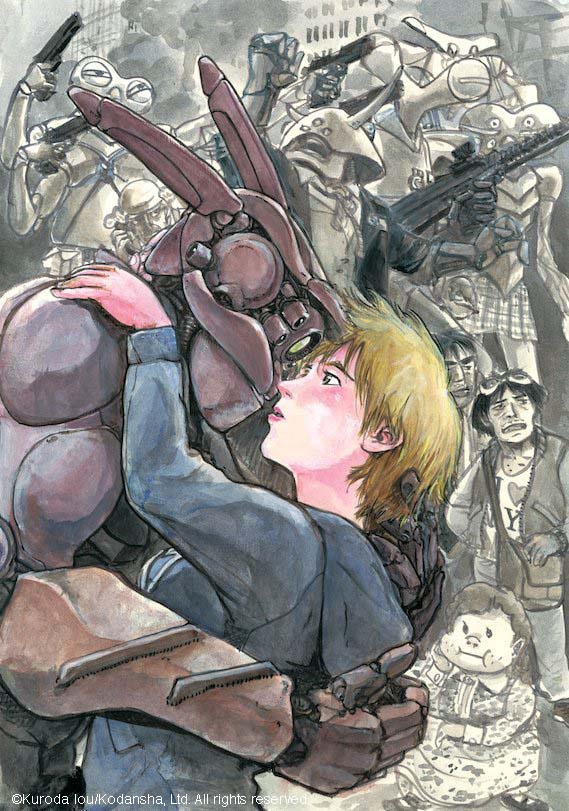
Kuroda Iou’s Appleseed Alpha. (Fall 2015)

Appleseed α (Masamune Shirow and Kuroda Iou): A prequel to Masamune Shirow’s sci-fi classic Appleseed, set in 22nd century New York City. Sexy Voice and Robo artist Kuroda Iou provides the illustrations. (Fall 2015)

Attack on Titan: Colossal Edition, Vol. 2 (Hajime Isayama): An oversized omnibus collecting volumes 6-10 of everyone’s favorite series. (September 2015)

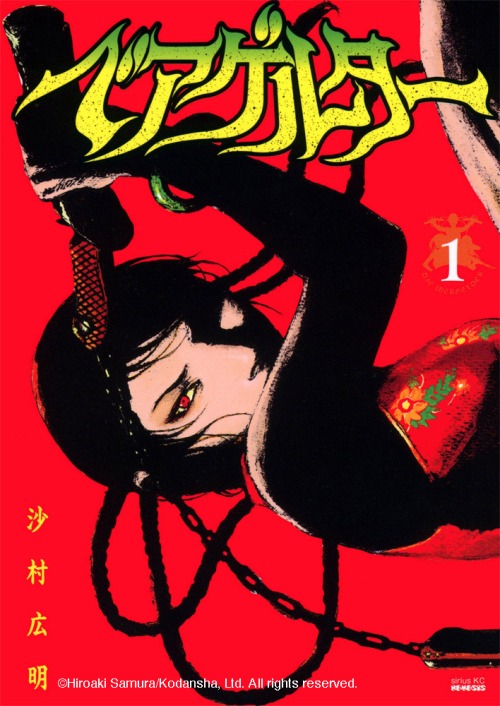
Die Wergelder (Hiroaki Samura): A seinen title from Blade of the Immortal creator Hiroaki Samura, featuring three women who kick ass, take names, and really, really want their stuff back. (Fall 2015)

Fairy Girls! (Hiro Mashima and BOKU) Yet another Fairy Tail spin-off; this one chronicles the further adventures of Erza, Wendy, Lucy, and Juvia. (Fall 2015)

Kiss Him, Not Me! (Junko): A shojo comedy about a fujoshi who just wants her male classmates to make out with one another, dammit… (Fall 2015)

Livingstone (Jinsei Kataoka and Tomohiro Maekawa): A supernatural story featuring artwork by Deadman Wonderland manga-ka Jinsei Kataoka. Expect gorgeous illustrations and a lot of earnest discussion about the weight of human souls. (Fall 2015)

Maria the Virgin Witch Exhibition (Masayuki Ishikawa): A one-volume sequel to Maria the Virgin Witch. Both manga have been licensed by Kodansha; both manga feature a young witch who uses her magic to alter the course of the Hundred Years’ War. (August 2015)

The Science of Attack on Titan (Rikao Yanagita and Hajime Isayama): A generously illustrated text that answers all your burning questions about giant anatomy, intellect, and powers. Guaranteed to be 100% free of any actual science, or your money back. (June 2015)

tumblr_ni5juwfv3P1s7mwd3o1_500

Hiroaki Samura’s Die Wergelder (Fall 2015)


Filed Under: MANGABLOG Tagged With: Kodansha Comics

Attack on Titan: No Regrets, Vol. 2

December 12, 2014 by Ash Brown

Attack on Titan: No Regrets, Volume 2Creator: Hikaru Suruga
Original story: Gun Snark

U.S. publisher: Kodansha
ISBN: 9781612629438
Released: October 2014
Original release: 2014

Attack on Titan: No Regrets, Volume 2 is the final volume of Hikaru Suruga’s manga adaptation of the A Choice with No Regrets visual novel written by Gun Snark. No Regrets is one of the many spinoffs and adaptations of Hajime Isayama’s immensely popular Attack on Titan manga series. It focuses on the backstory of one of Attack on Titan‘s most beloved characters, Levi, and how he became an exceptionally skilled and valued member of the Survey Corps. The second volume of the No Regrets manga was originally released in Japan in 2014, as was Kodansha Comics’ English-language edition. The volume also includes two short, largely comedic, No Regrets side stories as well as a special interview between Isayama and Suruga discussing the story and characters of the Attack on Titan franchise. I rather enjoyed the first volume of No Regrets and so was looking forward to reading the conclusion of the series.

At one point they were considered to be some of the most notorious criminals in the Underground, but now Levi, Isabel, and Furlan have been coerced into joining the Survey Corps, which may very well be a death sentence. Initially they weren’t well-liked by their fellow soldiers, and the three of them weren’t particularly happy with their situation, either. But during their first expedition outside of the walls, Levi and his crew leave quite an impression by handily dispatching an abnormal Titan with seeming ease. Levi and the others still don’t fit in with the rest of the Survey Corps members, but at least their remarkable skills, especially Levi’s, are recognized and admired. The extra attention they receive after defeating the Titan isn’t exactly welcome, though–Furlan is trying to coordinate a covert mission that will either lead to the three criminals’ ultimate freedom or to their deaths. They have been hired by a high-ranking political figure to steal back incriminating documents from Erwin, one of the Survey Corps’ most promising young leaders, and to end his life in the process.

What I particularly liked about the first volume of No Regrets was that it expanded the setting of Attack on Titan in addition to providing valuable background information about Levi, Erwin, and their relationship to each other. Sadly, the second volume doesn’t add much more that is new; I felt like I had already seen many of the scenes play out before and it was very clear how some of the events were going to end. The second volume of No Regrets spends a fair amount of time explaining the long-distance scouting formation, for example. While it’s noteworthy that No Regrets shows the first time that the maneuver is ever attempted, anyone familiar with Attack on Titan should already be quite aware of how the formation functions and its importance. Likewise, as is to be expected, encounters with Titans never tend to go well. Because in many ways No Regrets serves as a prequel to Attack on Titan, the deaths of major characters in the series are not at all surprising and lose some of their impact as a result.

More than anyone else’s, No Regrets is Levi’s story, but Erwin plays a pivotal role in it as well. Both of the men are exceptionally charismatic leaders, although Erwin is the only one of the two who actually seeks that role. Levi doesn’t want to be responsible for the lives of others while Erwin is willing to shoulder the weight of the sacrifices made in the fight against the Titans. He is extremely intelligent and talented and able to make tough decision. Even at the cost of individual lives, Erwin voluntarily employs dubious methods if he believes that the results will increase the odds of humanity’s survival. His almost fanatical drive and obsession contrasts sharply with Levi’s more reserved and internally focused nature. As is known will happen, eventually Erwin wins Levi over to his cause and gives him a firm direction and purpose, but this foregone conclusion does seem to occur rather abruptly. Still, the exploration of Levi and Erwin’s respective personalities and motivations in No Regrets is probably what the series does best and is what the manga brings to Attack on Titan as a whole.

Filed Under: REVIEWS Tagged With: attack on titan, Gun Snark, Hikaru Suruga, kodansha, Kodansha Comics, manga

Vinland Saga, Vol. 5

November 22, 2014 by Ash Brown

Vinland Saga, Omnibus 5Creator: Makoto Yukimura
U.S. publisher: Kodansha
ISBN: 9781612624242
Released: October 2014
Original release: 2010-2011
Awards: Japan Media Arts Award, Kodansha Manga Award

Makoto Yukimura’s award-winning manga Vinland Saga, an epic and thoroughly researched work of historical fiction, has quickly become one of my favorite series currently being released in English. I was very happy when Kodansha Comics initially licensed Vinland Saga, but with each new volume that is published my excitement increases. The English-language edition of Vinland Saga is being printed as a series of hardcover omnibuses, each containing two volumes of the manga as originally released in Japan. The fifth omnibus, published by Kodansha in 2014, collects the ninth and tenth volumes of the Japanese edition of the series which were published in 2010 and 2011 respectively. It also includes a section of questions and answers exclusive to the English-language edition in which Yukimura discusses some of the inspirations for and creative processes behind Vinland Saga. I already enjoy Vinland Saga immensely, but greatly appreciate of this sort of bonus material.

Ever since his father was killed in front of his eyes, Thorfinn has devoted his life to one thing–seeking revenge against Askeladd, the man he holds responsible for his father’s death. But when Askeladd takes King Sweyn’s head and doesn’t survive the resulting skirmish, suddenly Thorfinn is left directionless and without purpose. Despondent and empty, he ends up a slave on an expansive wheat farm in Denmark. There he really only goes through the motions of living, suffering silently under the humiliation, discrimination, and torment inflicted by the farm hands and hired guards. It’s not until Einar arrives at the farm that Thorfinn is slowly drawn out of his despondency. Of the two, Einar is much more lively and still chafes at his enslavement. And, unlike Thorfinn, he actually knows a thing or two about farming. As difficult as it will be to achieve, those are skills that could conceivably help them earn back their freedom.

The amount of research and historic detail that Yukimura has put into both the artwork and the narrative of Vinland Saga has always been impressive, and that hasn’t changed with the fifth omnibus. Vinland Saga incorporates the politics and social structures of the time period directly into the story in a very engaging way, making them critical issues that the characters must deal with and which greatly impact their lives. At this point in the series, the manga has largely moved from the battlefield to the wheat field, but it still retains its intensity. Farming, like war, is also a life and death struggle which requires men and women to submit themselves to arduous and unforgiving tasks for the smallest chance of survival. The main difference is that raising crops is a creative act while battle is a destructive one. It seem appropriate then that Thorfinn’s labouring in the fields might actually help to bring him some healing, especially since in his past he was part of a force that would raze farms and villages when needed or convenient.

Much of the fifth omnibus of Vinland Saga is devoted to Thorfinn and Einar and the system of slavery that they are now a part of. A great deal of focus is given to Thorfinn and his psychological development in particular. In addition to historical accuracy, Yukimura also excels at creating realistically complex and well-defined characters in Vinland Saga who change and are affected by the events around them. And in some cases, they are the ones to bring great change to the world in which they exist. One of the characters that has transformed the most is Canute, the younger son of King Sweyn. Out of the entire omnibus, only two chapters show what has become of him, but they leave a tremendous impact. Once a seemingly weak and timid young man he has shown incredible fortitude and strength. Where Thorfinn has lost his purpose, Canute has found his. Canute’s ambitions and his willingness to do anything it takes to forge his kingdom will have far-reaching implications.

Filed Under: REVIEWS Tagged With: Japan Media Arts Award, kodansha, Kodansha Comics, Kodansha Manga Award, Makoto Yukimura, manga, Vinland Saga

  • « Go to Previous Page
  • Page 1
  • Page 2
  • Page 3
  • Page 4
  • Page 5
  • Page 6
  • Page 7
  • Go to Next Page »
 | Log in
Copyright © 2010 Manga Bookshelf | Powered by WordPress & the Genesis Framework