• Skip to primary navigation
  • Skip to main content
  • Skip to primary sidebar
  • Home
  • About Us
    • Privacy Policy
    • Comment Policy
    • Disclosures & Disclaimers
  • Resources
    • Links, Essays & Articles
    • Fandomology!
    • CLAMP Directory
    • BlogRoll
  • Features & Columns
    • 3 Things Thursday
    • Adventures in the Key of Shoujo
    • Bit & Blips (game reviews)
    • BL BOOKRACK
    • Bookshelf Briefs
    • Bringing the Drama
    • Comic Conversion
    • Fanservice Friday
    • Going Digital
    • It Came From the Sinosphere
    • License This!
    • Magazine no Mori
    • My Week in Manga
    • OFF THE SHELF
    • Not By Manga Alone
    • PICK OF THE WEEK
    • Subtitles & Sensibility
    • Weekly Shonen Jump Recaps
  • Manga Moveable Feast
    • MMF Full Archive
    • Yun Kouga
    • CLAMP
    • Shojo Beat
    • Osamu Tezuka
    • Sailor Moon
    • Fruits Basket
    • Takehiko Inoue
    • Wild Adapter
    • One Piece
    • After School Nightmare
    • Karakuri Odette
    • Paradise Kiss
    • The Color Trilogy
    • To Terra…
    • Sexy Voice & Robo
  • Browse by Author
    • Sean Gaffney
    • Anna Neatrour
    • Michelle Smith
    • Katherine Dacey
    • MJ
    • Brigid Alverson
    • Travis Anderson
    • Phillip Anthony
    • Derek Bown
    • Jaci Dahlvang
    • Angela Eastman
    • Erica Friedman
    • Sara K.
    • Megan Purdy
    • Emily Snodgrass
    • Nancy Thistlethwaite
    • Eva Volin
    • David Welsh
  • MB Blogs
    • A Case Suitable For Treatment
    • Experiments in Manga
    • MangaBlog
    • The Manga Critic
    • Manga Report
    • Soliloquy in Blue
    • Manga Curmudgeon (archive)

Manga Bookshelf

Discussion, Resources, Roundtables, & Reviews

Unshelved

Bookshelf Overload: November 2014

December 7, 2014 by Ash Brown

Once again, November mostly brought preorders and a few review copies to my doorstep, but I also made a point of picking up some first volumes of older series that I’ve been meaning to try, like Pandora Hearts, Bakuman, and Oresama Teacher. As for the preorders I was particularly happy to see arrive, there was the penultimate volume of Blade of the Immortal by Hiroaki Samura, Kaoru Mori’s A Bride’s Story, Volume 6, and Takehiko Inoue’s Real, Volume 13. I also picked up a couple of alt-manga releases: Akino Kondoh’s Nothing Whatsoever All Out in the Open and Masahiko Matsumoto’s The Man Next Door. It was a good month for fans of Fumi Yoshinaga, too; both Ōoku: The Inner Chambers, Volume 10 and What Did You Eat Yesterday?, Volume 5 are now available. But the release that I was probably most excited about in November wasn’t actually even manga. The Early Cases of Akechi Kogoro by Edogawa Rampo, a collection of four stories featuring one of Rampo’s most famous characters, has been published by Kurodahan Press!

Manga!
Ani-Imo, Volume 1 by Haruko Kurumatani
Assassination Classroom, Volume 1 by Yusei Matsui
Attack on Titan: No Regrets, Volume 2 by Hikaru Suruga
Barakamon, Volume 1 by Satsuki Yoshino
Bakuman, Volumes 1-2 written by Tsugumi Ohba, illustrated by Takeshi Obata
Blade of the Immortal, Volume 30: Vigilance by Hiroaki Samura
A Bride’s Story, Volume 6 by Kaoru Mori
Clamp School Detectives, Volumes 1-3 by CLAMP
Devils and Realist, Volume 3 written by Madoka Takadono, illustrated by Utako Yukihiro
Food Wars!: Shokugeki no Soma, Volume 3 written by Yuto Tsukuda, illustrated by Shun Saeki
Gangsta, Volume 4 by Kohske
The Garden of Words written by Makoto Shinkai, illustrated by Midori Motohashi
Genshiken: Second Season, Volume 5 by Shimoku Kio
Love in Hell, Volume 1 by Reiji Suzumaru
Lucifer and the Biscuit Hammer, Omnibus 1 by Satoshi Mizukami
The Man Next Door by Masahiko Matsumoto
Manga Dogs, Volume 1 by Ema Toyama
Missions of Love, Volumes 8-9 by Ema Toyama
No Matter How I Look at It, It’s You Guys’ Fault I’m Not Popular!, Volume 5 by Nico Tanigawa
Nothing Whatsoever All Out in the Open by Akino Kondoh
Ōoku: The Inner Chambers, Volume 10 by Fumi Yoshinaga
Oresama Teacher, Volume 1 by Izumi Tsubaki
Pandora Hearts, Volume 1 by Jun Mochizuki
Prophecy, Part 1 by Tetsuya Tsutsui
President Momoi-Kun by Higashi Nishida
Real, Volume 13 by Takehiko Inoue
Sense and Sexuality by You Higashino
Showa: A History of Japan, 1944-1953 by Shigeru Mizuki
Tale of the Waning Moon, Volume 1 by Hyouta Fujiyama
Terra Formars, Volume 3 written by Yu Sasuga, illustrated by Ken-ichi Tachibana
Ubel Blatt, Omnibus 0 by Etorouji Shiono
Yukarism, Volume 1 by Chika Shiomi
What Did You Eat Yesterday?, Volume 5 by Fumi Yoshinaga

Manhwa!
Milkyway Hitchhiking, Omnibus 1 by Sirial

Comics!
Hotblood!: A Centaur in the Old West, Volume 2 by Toril Orlesky
Oglaf, Book Two by Doug Bayne and Trudy Cooper
Open Spaces and Closed Places, Parts 1-6 by saicoink
Outwards by Elephant Wendigo
The Tribute Album: An Authorized Less Than Epic Adventures of TJ & Amal Fan Artbook

Collections!
The Early Cases of Akechi Kogoro by Edogawa Rampo
Season of Infidelity: BDSM Tales from the Classic Master by Oniroku Dan

Filed Under: Bookshelf Overload, UNSHELVED

Manga Giveaway: Seven Seas Sampler Winner

December 3, 2014 by Ash Brown

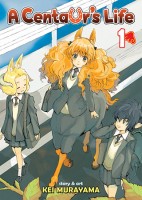
A Centaur's Life, Volume 1Dictatorial Grimoire, Volume 1: Cinderella
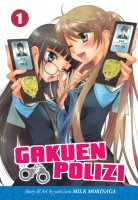
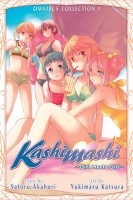
Gakuen Polizi, Volume 1Kashimashi: Girl Meets Girl, Omnibus 1

And the winner of the Seven Seas Sampler manga giveaway is…Karen Swartz!

As the winner, Karen will be receiving A Centaur’s Life, Volume 1 by Kei Murayama; Dictatorial Grimoire, Volume 1: Cinderella by Ayumi Kanou; Gakuen Polizi, Volume 1 by Milk Morinaga; and Kashimashi: Girl Meets Girl, Omnibus 1 written by Satoru Akahori and illustrated by Yukimaru Katsura. Over the last couple of years, Seven Seas has really taken off, adding more licenses than ever before and diversifying its catalog. So, for this giveaway, I asked people tell me a little about some of their favorite manga released by Seven Seas. I’ve compiled a list below (those with an asterisk were mentioned by more than one person), but be sure to check out the Seven Seas Sampler comments for more details.

Some favorite Seven Seas titles:
Afro Samurai by Takashi Okazaki
Alice in the Country of created by Quin Rose
Amazing Agent Luna written by Nunzio DeFillippis, Christina Weir, illustrated by Shiei
Blood Alone by Masayuki Takano
Boogiepop created by Kouhei Kadono
A Centaur’s Life by Kei Murayama
A Certain Scientific Railgun written by Kazuma Kamachi, illustrated by Motoi Fuyukawa
Citrus by Saburouta
*D-Frag! by Tomoya Haruno
Dance in the Vampire Bund by Nozomu Tamaki
*Devils and Realist written by Utako Yukihiro, illustrated by Madoka Takadono
Dragonar Academy written by Ran, illustrated by Shiki Mizuchi
Freezing by Kwang-Huyn Kim
Gakuen Polizi by Milk Morinaga
*Girl Friends by Milk Morinaga
*Gunslinger Girl by Yu Aida
*Haganai: I Don’t Have Many Friends written by Yomi Hirasaka, illustrated by Itachi
Haven’t You Heard? I’m Sakamoto by Nami Sano
Hayate X Blade by Shizuru Hayashiya
Inukami! written by Mamizu Arisawa, illustrated by Mari Matsuzawa
Kisses, Sighs, and Cherry Blossom Pink by Milk Morinaga
Kokoro Connect written by Sadanatsu Anda, illustrated by CUTEG
*Lizzie Newton: Victorian Mysteries written by Hey-jin Jeon, illustrated by Ki-ha Lee
Love in Hell by Reiji Suzumaru
*Lucifer and the Biscuit Hammer by Satoshi Mizukami
Magical Girl Apocalypse by Kentaro Sato
Strawberry Panic written by Sakurako Kimino, illustrated by Takuminamuchi
*Toradora! written by Yuyuko Takemiya, illustrated by Zekkyou
Witch Buster by Jung-man Cho
*Young Miss Holmes by Kaoru Shintani
Zero’s Familiar written by Noboru Yamaguchi, illustrated by Nana Mochizuki

Thank you to everyone who participated in the giveaway and shared some of your favorites; I hope to see you all again for the next one!

Filed Under: UNSHELVED Tagged With: Ayumi Kanou, Centaur's Life, Dictatorial Grimoire, Gakuen Polizi, Kashimashi, Kei Murayama, manga, milk morinaga, Satoru Akahori, Yukimaru Katsura

Sweet Rein 1-3 Giveaway

December 1, 2014 by Anna N

sr1

I’m getting rid of some of my manga! I have a bunch listed on ebay right now, but I thought I would also do a giveaway as well. So appropriately for the start of the holiday season, I’m going to give away Sweet Rein Volumes 1-3. Just leave a comment on this post and I’ll select a random winner in a week.

Filed Under: UNSHELVED

Random Musings: Picking My Next Monthly Review Project

November 21, 2014 by Ash Brown

Now that I’ve wrapped up my Year of Yuri monthly review project, it’s time for me to decide which manga I’ll focus on next. Like last time, in order to help me choose another monthly manga review project, I wanted to get some input from the readers of Experiments in Manga. So, once again, I’m putting it to a vote. Recently, I’ve been in the mood for horror manga. Using a fairly broad definition of horror, I’ve narrowed down my options to five (technically six) manga series that I would be interested in reviewing. After the fact, I noticed that the horror manga that made the final cut coincidentally all had something in common–the creators all happen to be women. (Well, except maybe for Shin Mashiba, whose gender I’m uncertain of, but whose manga has a shoujo flair to it.) For my next monthly review project, I will be tackling one of the following series:

After School Nightmare by Setona Mizushiro
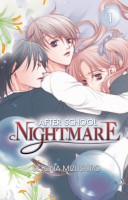
After School Nightmare, Volume 1Unlike the other completed options on this list, I haven’t actually finished reading After School Nightmare. I initially borrowed the first few volumes of the manga from my local library and on the strength of those volumes alone I sought out and purchased the entire series. So why did I never finish reading it? Honestly, I’m not sure, but I think I might have actually been afraid to since some of the themes are pretty hard-hitting. Published in English by Go! Comi, all ten volumes of After School Nightmare are now out of print, but fortunately they are still relatively easy to find.

Dorohedoro by Q Hayashida
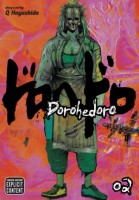
Dorohedoro, Volume 2Dorohedoro is a very strange and weird manga, but one that I enjoy immensely. It’s a series that somehow manages to be both gruesome and charming all at the same time. Dorohedoro is violent and graphic, dark and grimy, but also incredibly goofy with an exceptionally black sense of humor and a cast of absurdly quirky characters. I’ve previously reviewed the first volume of Dorohedoro, so this option will include in-depth reviews of the remaining volumes currently available in English as well as any future volumes that are released.

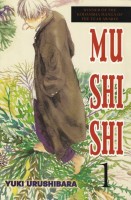
Mushishi by Yuki Urushibara
Mushishi, Volume 1 Mushishi was one of the first manga series that I made a point to collect in its entirety, but because it was released before I started blogging at Experiments in Manga, I’ve never really written much about it. I love the series (the anime adaptation is a favorite, too), and find its quiet, contemplative creepiness to be especially appealing. Mushishi was initially published by Del Rey manga and is out of print (some of the volumes are now very expensive), but happily the entire series is now available digitally from Kodansha Comics.

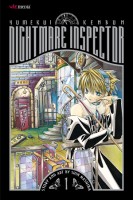
Nightmare Inspector: Yumekui Kenbun by Shin Mashiba
Nightmare Inspector, Volume 1Nightmare Inspector began serialization in a shoujo magazine, but when it folded the manga was moved to a shounen monthly. Initially it seems to be episodic, but by the end of the series a heartrending overarching story emerges. With its dark, melancholic atmosphere, Nightmare Inspector is a manga that I am particularly fond of. I wrote a little about the series as a whole for the Horror Manga Moveable Feast a few years ago, but I’ve always wanted to go back and revisit Nightmare Inspector again in order to really dig into the individual volumes.

Tokyo Babylon/X by CLAMP
Tokyo Babylon, Omnibus 1The first time I tried reading X, I didn’t actually like it much at all and gave up after only one volume. But then I tried reading it again when the omnibus edition was released and promptly became hooked. Tokyo Babylon, to which X is a sequel of sorts, also took a while to really grow on me. So I’ve been wondering if, like X, I might appreciate Tokyo Babylon more if I gave it a second chance. This option will include in-depth reviews of the two Tokyo Babylon omnibuses from Dark Horse as well as the six X omnibuses from Viz Media.

So, what’ll it be? My fate is in your hands.

(The poll will be open through the end of November!)

Filed Under: UNSHELVED Tagged With: manga

Morning Manga Spotlight: They Were Eleven

November 18, 2014 by MJ Leave a Comment

they-were-eleven-floppiesI’ll admit that it’s been tough trying to curb my “classic” inclinations when it comes to recommending manga for my teen students, and there are days when it becomes impossible. Today is one of those days, as I find myself irresistibly drawn to the work of Moto Hagio, specifically her early short series, They Were Eleven.

Originally serialized over three issues in Shojo Comic in 1975, They Were Eleven follows a young student named Tada through the final stage of his entrance exam to the elite Galactic University. From my write-up of the series at Comics Should Be Good:

“Sometime in the distant future, hopeful students from all over the galaxy gather for the difficult entrance exams at the elite Galactic University. For the final test, [the students] are divided into computer-generated groups of ten students each and sent off to various locations where they must survive as a group for fifty-three days without pushing the provided emergency button, which immediately summons a rescue team, resulting in automatic failure of the entire group. One group is deposited on a derelict ship, devoid of engine power and filled with dangerous explosives, which they must safely maintain in orbit for the length of the test. As the group arrives on the ship, however, it becomes apparent that there are eleven students rather than the assigned ten, indicating that one of them must be an impostor. Potential disasters pile up quickly, including an unstable orbit and the presence of a deadly disease, and in the midst of it all the group begins to suspect Tada, a young Terran (Earth descendent) with intuitive powers and uncanny knowledge of the ship’s layout, of being the eleventh member.

With the ship’s mechanical problems and deadly health threat driving things forward, it is young Tada’s story that takes focus, as he struggles to understand his relationship with the decrepit ship while also attempting to clear himself of the other students’ rapidly-mounting suspicion. Despite the fact that his intuition saves the group early on, it also becomes the greatest point of contention amongst the group, and as more about Tada’s own history comes to light, each revelation seems to point more clearly to his potential guilt.”

fssAs a psychological drama wrapped in a sci-fi package, They Were Eleven is glorious, and benefits particularly from Hagio’s clear, expressive artwork and her minor obsession with gender identification. On the flip side, like a lot of older manga, the gender discussion can be problematic. Again from my write-up:
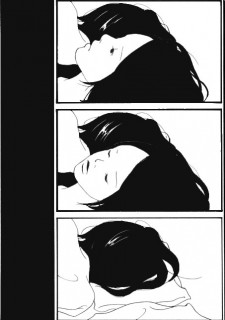
“Two of the characters in the story are species whose gender is not determined until adulthood. One of these, Frol, who is decidedly feminine in appearance (referred to hereafter as “her” and “she”), is taking the test because she will be allowed to become male if she passes, a privilege otherwise only granted to a family’s oldest child. On Frol’s planet, “men govern and women work,” and becoming a woman would mean relinquishing all autonomy and joining the harem of the neighboring lord (eighteen years her senior), so it is understandable why she would want to instead take advantage of her society’s male privilege and collect a harem of her own. Still, it’s a little bit jarring that when the story finally reaches a point where it becomes clear that they may very well not pass the test, the only other alternative presented to Frol is for her to leave her own people, become a woman, and marry someone else.

The fact that in every scenario her future as a woman leads directly to marriage is not a fantastic message for today’s young girls (nor is the fact that Frol, the story’s only obviously “feminine” character, is depicted as capricious and “simple”) and it is this that dates the series more than anything else.”

This attitude towards femininity is perhaps best reflected in the tagline of Viz’s Four Shoujo Stories, in which They Were Eleven appeared alongside works by Keiko Nishi and Shio Sato. “It’s Not Just Girls’ Stuff Anymore” the cover proudly proclaims, assuring us in advance that its content is smarter and better than that (“It’s for girls, but it’s still good, I swear!”)

So why am I recommending this to teens, you’re asking? I’m recommending it because it’s beautifully-drawn, fantastic storytelling. I’m recommending it because it was part of a female-led revolution in girls’ comics, which had previously been drawn mostly by men. I’m recommending it because, despite its issues, it presents us with a very stark view of Hagio’s own struggles as a woman and an artist in a time not so far removed from the present, and the hopelessness of a world in which the only imaginable destination for a woman is marriage (also not so far removed from the present). Most of all, though, I’m recommending it, because it’s a great comic.

They Were Eleven was published twice by Viz, first as a series of four floppies in 1995, and then later in Four Shoujo Stories. Both are out of print (though the floppies show up often on eBay, which is how I acquired mine). Fortunately for my students, I own the series in both formats, so they have a couple of options to choose from. Fortunately, too, some of Hagio’s other works are available in English now as well, thankfully in print, thanks to Matt Thorn and Fantagraphics (students: these are available from the MJLibrary as well). I hope we’ll see a lot more!

Filed Under: Morning Manga Spotlight

Random Musings: Wrapping Up the Year of Yuri Monthly Review Project

November 15, 2014 by Ash Brown

BlueAlthough I’ve continued to review the new volumes of the series as they are released, last year I wrapped up my Blade of the Immortal monthly review project. Because I enjoyed the project, which took me nearly two years to complete, I started to look for a new one to take its place. Ultimately, I decided I wanted readers of Experiments in Manga to have some input in which manga I would tackle next and so put it up for a vote. Out of the five options that I narrowed it down to, by far the most popular choice was what I called “Year of Yuri.”

Over the course of twelve months, I reviewed twelve different comics and manga with yuri and/or lesbian themes. My intention was to feature a wide variety of genres, demographics, and styles. I think I was fairly successful in that. Most of the stories were based in reality, but there was a bit of fantasy, too. Some were erotic while others were very chaste. There were first loves and failed loves, healthy relationships and relationships that did more harm than good, humor and nostalgia, lightheartedness and seriousness, stories about school girls and stories about grown women, and more.

Whereas the Blade of the Immortal project focused on a single series, the Year of Yuri project allowed me to explore a range of titles which was interesting to do. Granted, with only twelve reviews, I could only begin to scratch the surface of the entire realm of possibilities. But hopefully I featured at least one manga or comic that sparked someone’s interest. I enjoyed having a project to work on from month to month and had fun selecting the comics and manga that I would review. Now that my Year of Yuri monthly review project has concluded, I’ll once again be turning to the readers of Experiments of Manga to help choose my next project. Another poll will be opened in the very near future, so stay tuned!

The links to all of my Year of Yuri manga reviews can be found below. I have also conveniently added a Year of Yuri tag to all of the reviews to pull them all together and for even greater ease of access. While I’ll no longer be focusing on yuri and lesbian comics as part of a monthly review project, I will continue to read and review them, so expect to see more quick takes and in-depth reviews in the future. I hope you all enjoyed this project as much as I did!

Year of Yuri reviews:
12 Days by June Kim
Before You Go by Denise Schroeder
Between the Sheets by Erica Sakurazawa
Blue by Kiriko Nananan
Gakuen Polizi, Volume 1 by Milk Morinaga
Kisses, Sighs, and Cherry Blossom Pink by Milk Morinaga
The Legend of Bold Riley created by Leia Weathington
Maka-Maka: Sex, Life, and Communication, Volume 1 by Torajiro Kishi
Revolutionary Girl Utena: The Adolescence of Utena by Chiho Saito
S.S. Astro: Asashio Sogo Teachers’ Room, Volume 1 by Negi Banno
Sweat & Honey by Mari Okazaki
Whispered Words, Omnibus 1 by Takashi Ikeda

Filed Under: UNSHELVED Tagged With: comics, manga, Year of Yuri

Morning Manga Spotlight: After School Nightmare

November 11, 2014 by MJ 1 Comment

afterschoolnightmare1Setona Mizushiro’s After School Nightmare has loomed in the back of my mind ever since I began this series of manga recommendations for my teen students, and there is really no good reason that it has taken this long to actually come to the fore. I suppose I thought maybe I’d reread it myself first—it has been years now—so that I could talk about it with the particular verve and passion that only accompanies a fresh read. Maybe I thought I’d wait until I had lots of pretty pictures to share, or more articles to point to besides my one lonely review of the first volume.

In the past, I’ve expressed regret at missing out on the Manga Moveable Feast dedicated to this series, and yes, I was really busy at the time, and that was a real factor. But if I’m really being honest with myself and with you, the reason I’ve written less than I’d like about After School Nightmare, is that it nails so many of my personal storytelling kinks and hits upon so many of my own secrets and anxieties, I actually find it difficult to talk about out loud. You know, with other people. Like Please Save My Earth, it weaves dreamworlds in a way that feels written especially for me. Unlike Please Save My Earth, it also scares the bejeezus out of me.

I’ve often said that what I find most powerful about fiction in general is that it lets us explore other people’s inner lives and compare them to our own. I’ve even said that this is, for me (as I suspect it is for many introverts), the most effective way of connecting with other people. And this absolutely applies to me and After School Nightmare (or me and Setona Mizushiro, depending on how you look at it). But there are some stories that feel so close and so private, they are best explored in silence. For my students’ sake, I’ll try to break that silence, just a little.

After School Nightmare is a 10-volume shoujo manga, originally serialized in Princess magazine, home of such legendary manga as Yasuko Aoike’s From Eroica with Love and Moto Hagio’s A, A Prime. The story revolves around Ichijo, a student at an elite high school, whose induction into an unusual after-hours class sends him into a dream world where he must battle other students for a mysterious key necessary for graduation. Furthermore, in the dream world, the students appear as physical manifestations of the things they most fear revealing about themselves. From my review:


Everybody has some kind of secret, though Ichijo Mashiro’s is bigger than most: he was born with a male upper body and a female lower body, something he has successfully kept from his peers for his entire life … In the nightmare, the students are reduced to their “true forms,” revealing their worst fears and deepest wounds to each other. One student, for instance, appears in the dreams with gaping holes in place of her face and chest, while another appears in a full suit of armor. Yet another appears as a pair of endless, disembodied arms. Unlike the others, Ichijo’s true form looks exactly like himself, only dressed in a girl’s school uniform.

As Ichijo soon learns, the battles in the nightmare are only the beginning, for though some students’ daytime identities are pretty well-concealed by their nightmare “true forms,” more (like Ichijo’s) are not, and the dynamics the develop during the after school class soon begin affecting people’s waking relationships as well. Throw in lots of beautiful artwork, some gender confusion, a little romance, and a genuinely surprising plot twist, and you have the recipe for a perfectly MJ-pleasing manga.

The story is well-told and compact (for manga), and though the series has now been out of print for several years, and its North American publisher is no longer), copies can frequently be found used. I originally borrowed the series from a friend, and then picked up my own copies (mostly used) shortly afterwards, so my local students can borrow the series from me in its entirety. The line starts here!

Filed Under: Morning Manga Spotlight

New License Time

November 9, 2014 by Sean Gaffney

Yes, there are no major cons, but that doesn’t mean there hasn’t been activity. Let’s go in alphabetical order, starting with Seven Seas.

junkbox

These have been up on Amazon for a while, but I think it’s safe to say (control your shock) that Seven Seas will have more Alice in the Country of ______ licenses for us this summer. Two are from Ohzora Shuppan, and I think are direct to tankobon releases. Given the publisher has a line devoted to ‘Happy Weddings’, I’d expect more romance and less twisted psychology from these releases. Junk Box looks to be along the lines of Toy Box from earlier this year, i.e. an anthology catch all. White Rabbit and Some Afternoon Tea also looks like it may finally give us what many have been dreading but some will no doubt be pleased by: an Alice/Peter romance book. The other new title is from Ichijinsha, Black Lizard and Bitter Taste, and given the title will no doubt feature Gray as the romantic lead.

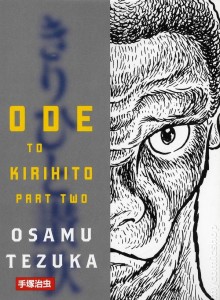
The next news is possibly the most exciting, especially if you wanted to get that old Tezuka book from Vertical but couldn’t as it fell out of print. Vertical Comics has announced it will be releasing digital versions of its classic Tezuka titles to digital platforms. This will include:

kirihito

Apollo’s Song – omnibus
Black Jack 1 through 17
Dororo – omnibus
Princess Knight 1 & 2
Ode to Kirihito – omnibus
MW
Ayako
Book of Human Insects
Buddha 1 through 8
Message to Adolf 1 & 2
Twin Knights

This is fantastic news for me, as I tend to read manga on the bus into work, and many of these Tezuka titles have been so large I’ve been unable to. Everyone should pick these up as soon as they are able!

Lastly, let’s talk Viz. In case you missed it, Viz has been quietly digitally rescuing a number of old manga titles from Tokyopop and Bandai and putting them out online. There don’t appear to be plans for new titles (unless they sell well, I imagine), but it’s nice to get some of these old series online in any form. They include:

D N Angel
Chibi Vampire
Fate/Stay Night
Future Diary
Trinity Blood
The Girl Who Leapt Through Time
Lucky Star
St. Lunatic High School
Suki
Miyuki-chan in Wonderland
Mad Love Chase
Lagoon Engine
Million Tears
Kyo Kara MAOH!
Zone-00 (later this month)
Mouryou Kiden – Legend of the Nymphs (later this month)

As you can see, it’s a lot of stuff with a built-in fanbase and potential for new readers, but not enough potential to justify an actual print rescue. It’s also mostly Kadokawa stuff, likely in conjunction with their Comic Walker online site.

komomo

Viz also announced a new Shojo Beat title, Komomo Confiserie, from Maki Minami, creator of Special A and Voice Over: Seiyu Academy. For those who worry this may go as long as those two series, it’s already over in Japan as of next month, so I suspect it won’t be that big. It involves pastry chefs and power imbalances, a guilty favorite of all shoujo readers.

But wait, Hakusensha fans! We also have a new print license rescue! Yes, one of the most missed of the late Tokyopop line will be returning in omnibus format with an all new translation. Maid-sama! is an amazingly funny series with a wonderful female lead who takes absolutely no guff but also has no idea how to deal with the guy she’s now fallen in love with. The series ended with Tokyopop’s demise, so I look forward to this re-release to see Viz get to the last 10 volumes – it only gets wilder as it goes on. Expect lots of leaping from tall buildings.

What are you most excited about?

Filed Under: NEWS, UNSHELVED

Manga Giveaway: Sherlock Bones Giveaway Winner

November 5, 2014 by Ash Brown

Sherlock Bones, Volume 1And the winner of the Sherlock Bones manga giveaway is…Serene!

As the winner, Serene will be receiving a copy of Yuma Ando and Yuki Sato’s Sherlock Bones, Volume 1 as published by Kodansha Comics. Because Sherlock Bones features a rather unusual detective–Sherlock Holmes reincarnated as a puppy–for this giveaway I was interested in learning more about other people’s favorite detectives and unusual crime solvers. Check out the Sherlock Bones Giveaway comments for all of the responses. And, as usual, I have taking this opportunity to compile a list!

Manga in English featuring detectives and/or other crime solvers:
888 by Noriko Kuwata
Black Butler by Yana Toboso
Case Closed by Gosho Aoyama
City Hunter by Tsukasa Hojo
Clamp School Detectives by CLAMP
Death Note written by Tsugumi Ohba, illustrated by Takeshi Obata
Fake by Sanami Matoh
Future Diary by Sakae Esuno
Goku: Midnight Eye by Buichi Terasawa
Ice Blade by Tsutomu Takahashi
Kamen Tantei by Matsuri Akino
Kids Joker by Maki Fujita
Kindaichi Case Files written by Yōzaburō Kanari, illustrated by Fumiya Sato
Kurosagi Corpse Delivery Service written by Eiji Otsuka, illustrated by Housui Yamazaki
Lupin III by Monkey Punch
Monster by Naoki Urasawa
MPD-Psycho written by Eiji Otsuka, illustrated by Shou Tajima
The Mythical Detective Loki Ragnarok by Sakura Kinoshita
Petshop of Horrors by Matsuri Akino
Phoenix Wright: Ace Attorney written by Kenji Kuroda illustrated by Kazuo Maekawa
Pluto by Naoki Urasawa
Remote written by Seimaru Amagi, illustrated by Tetsuya Koshiba
R.O.D: Read or Dream written by Hideyuki Kurata, illustrated by Ran Ayanaga
Rose Hip Zero by Tohru Fujisawa
Sherlock Bones written by Yuma Ando, illustrated by Yuki Sato
Skyscrapers of Oz by written by Yoshino Somei, illustrated by Row Takakura
Steam Detectives by Kia Asamiya
Young Miss Holmes by Kaoru Shintani
Yellow by Makoto Tateno
Zodiac P.I. by Natsumi Ando

The above list isn’t comprehensive by any means, but it’s probably not a bad place to start if you’re looking for some detective or mystery manga to read. Thank you to everyone who shared your favorites with me. I hope to see you again for the next giveaway!

Filed Under: UNSHELVED Tagged With: manga, Sherlock Bones, Yuki Sato, Yuma Ando

Bookshelf Overload: October 2014

November 2, 2014 by Ash Brown

I knew October was going to be rough on my wallet since there were a lot of manga that I was planning on picking up. Most of October’s acquisitions were the result of preorders, but there were a few impulse buys as a result of some major sales. There were some out-of-print materials that I was happy to welcome into my home, too. For example, I’ve recently become rather enamored with the Boogiepop franchise, and so I made a point to pick up all of the manga and related music albums that were released in North America to add to my collection. As for the new October manga releases that I was particularly excited to see, Kodansha and Vertical made an especially good showing with Vinland Saga, Omnibus 5 by Makoto Yukimura, No. 6, Volume 9 by Hinoki Kino, and Tsuina Miura and Gamon Sakurai’s Ajin: Demi-Human, Volume 1. (Expect in-depth reviews of all three in the near future.) I’m also very excited to read the All You Need Is Kill manga illustrated by Takeshi Obata and Setona Mizushiro’s Black Rose Alice, Volume 2 from Viz. Technically they won’t be released until November, though; I was simply lucky enough to get my copies a little early. October was a good month for independent comics, too.

Manga!
Ajin: Demi-Human, Volume 1 written by Tsuina Miura, illustrated by Gamon Sakurai
All You Need Is Kill written by Ryosuke Takeuchi, illustrated by Takeshi Obata
Apple and Honey by Hideyoshico
Black Rose Alice, Volume 2 by Setona Mizushiro
Blue Morning, Volume 5 by Shoko Hidaka
Boogiepop Doesn’t Laugh, Volumes 1-2 written by Kouhei Kadono, illlustrated by Kouji Ogata
Boogiepop Dual: Losers’ Circus, Volumes 1-2 written by Kouhei Kadono, illustrated by Masayuki Takano
Castle of Dreams by Masami Tsuda
Dengeki Daisy, Volume 15 by Kyousuke Motomi
Disciplinarian by Inochi Wazuka
The Flowers of Evil, Volume 11 by Shuzo Oshimi
Food Wars!, Volume 2 written by Yuto Tsukuda, illustrated by Shun Saeki
The Judged by Akira Honma
Kamen, Volume 2 by Gunya Mihara
Knights of Sidonia, Volume 11 by Tsutomu Nihei
Last Portrait by Akira Honma
Legal Drug by CLAMP
Lone Wolf and Cub, Omnibus 6 written by Kazuo Koike, illustrated by Goseki Kojima
Heartbroken Angels, Volumes 1-2 by Masahiko Kikuni
Magical Girl Apocalypse, Volume 1 by Kentaro Sato
New Lone Wolf and Cub, Volume 2 written by Kazuo Koike, illustrated by Hideki Mori
A New Season of Young Leaves written by Venio Tachibana, illustrated by Akeno Kitahata
No. 6, Volume 9 by Hinoki Kino
Nyotai-ka!, Volumes 2-3 by Ru-en Rouga
Sunny, Volume 4 by Taiyo Matsumoto
Twittering Birds Never Fly, Volume 1 by Kou Yoneda
Vinland Saga, Omnibus 5 by Makoto Yukimura
Whispered Words, Omnibus 2 by Takashi Ikeda
Witchcraft Works, Volume 1 by Ryu Mizunagi
World Trigger, Volumes 1-2 by Daisuke Ashihara
Ze, Volume 9 by Yuki Shimizu

Manhwa!
Aron’s Absurd Armada, Omnibus 3 by MiSun Kim

Comics!
My Japanese Husband Thinks I’m Crazy by Grace Buchele Mineta
Oh Joy, Sex Toy, Volume 1 by Erika Moen
RAV by Mickey Zacchilli
Smut Peddler 2014 by Various
Snackies by Nick Sumida
Tomboy: A Graphic Memoir by Liz Prince
YU+ME: Dream, Omnibuses 1-2 by Megan Rose Gedris

Artbooks!
The Art of Angel Sanctuary, Volumes 1-2 by Kaori Yuki

Film!
Edge of Tomorrow directed by Doug Liman

Music!
Boogiepop: Music Album Inspired by Boogiepop and Others by Yuki Kajiura
Boogiepop Phantom Original Soundtrack by Various

Filed Under: Bookshelf Overload, UNSHELVED

Morning Manga Spotlight: Paradise Kiss

October 28, 2014 by MJ 1 Comment

I pondered for a blatantly ridiculous amount of time over this week’s manga recommendation for my teen students. I considered another classic epic (Please Save My Earth), a couple of overlooked romances (Rasetsu, Crown of Love), or perhaps something for my pre-teens (Shugo Chara!). My most serious consideration, however, went to Ai Yazawa’s yet-unfinished (but totally glorious) romance/friendship epic NANA. As the subject of my first, and still most famous, “persuasion post,” Why You Should Read NANA, it’s pretty obvious that I’m a long-time fan, and recommending it seems like a no-brainer—at least for my older teens. But the more I thought about it, the more I found myself thinking about the things it lacks. NANA has a great deal to offer of interest to my teens… beautifully written characters (many of whom are pursuing an artistic field), complicated relationships, career angst, epic friendship, and (of course) gorgeous, gorgeous artwork. Things it doesn’t have, however, include genuine interaction/conflict with parental figures, anxiety over education, or queer characters of any kind—stuff that is important and relevant, particularly to my older teens.

parakiss2-vertFortunately, I don’t even have to stray outside the same artist’s catalogue to find all that, and more. Which brings us to Yazawa’s much-celebrated (at least here at Manga Bookshelf) josei series, Paradise Kiss. Originally serialized in the women’s fashion magazine Zipper, Paradise Kiss tells the story of a high school senior named Yukari, who finds herself recruited by a a group of college fashion design students to model for their senior project. The encounter is life-altering for Yukari, as it not only forces her to face some hard truths about her own future and academic prospects, but also sweeps her into a tumultuous romance with George, the group’s charismatic, mercurial designer.

With all that in place, if you’re expecting a standard romance, you’d be gravely mistaken. While Yukari and George’s relationship is certainly central to the story, its essential disfunction is really the point. And though it manages to heat up the pages pretty intensely at times, the story’s real stars are, to my mind, its supporting characters, particularly diminutive seamstress Miwako and trans pattern-maker Isabella, who regularly battle it out in my heart for the position of “favorite character.” I’ll admit that Isabella usually wins. From our Off the Shelf column on the series:

Isabella is my favorite character in the series by far. In fact, I even joked when this title was first chosen for the MMF that my contribution would be an essay entitled, “Why I love Isabella” (or something along those lines). Not only is she a wonderfully warm and nurturing character, as you mention here, but she’s also the one who is best able to see the truth about everyone else, unhindered by insecurity or personal bias.

Additionally, she’s just about 100% responsible for my ability to like George, which took a hell of a long time to develop, to be honest. It took me several times through the series to get over my deep intolerance of George’s refusal to take responsibility for his role in the lives of others, and it was only Isabella who was able to convince me that George’s unquestioning, immediate acceptance of her true self made him worth reconsidering.

You can read the rest of that article or my original review of the full series for more on my complicated feelings about George, but perhaps the better idea is simply to read the series yourself!

Originally published in North America by Tokyopop, the series was recently rescued by Vertical, who gave it a beautiful new visual treatment (larger trim size, high-quality paper, gorgeous new covers) and a new translation, which has some ups and downs. On the upside, Vertical’s translation removes some of Tokyopop’s mild censorship (particularly in terms of George’s sexual preferences and other similar topics). On the downside, the prose is noticeably more awkward in some spots, one of which I detailed in my review of the first volume. In any case, I own both versions of the series, so local students who are borrowing can consider these issues and choose their poison.

The truth is, no matter which print version you’re able to pick up, you’re in for a beautifully-drawn, emotionally complex story, told in a remarkably concise fashion. To quote myself, “I feel that I could go on forever and still fail to do justice to the sheer exquisiteness of this series, so I’ll wind things up here. Suffice it to say that Paradise Kiss, with its complex look at beauty, longing, and personal discovery, truly is a bit of manga paradise.”

Filed Under: Morning Manga Spotlight, UNSHELVED

Morning Manga Spotlight: Antique Bakery

October 21, 2014 by MJ 7 Comments

For those who missed this column’s introduction, this is a new, weekly spotlight featuring books from my own personal manga collection that I’ve offered up as a library to my teen students. And since talking on and on about manga series I love is my usual role here, it only made sense to adapt the column from its origins on Facebook to my true home as a manga blogger. I hope you’ll enjoy!

ab4After spending my first installment of this new column to recommend an out-of-print 27-volume epic, I’m going to take the second to make things a little easier, at least on one front. This week’s spotlight manga is also out of print and (unlike Basara) not yet enjoying new life, digital or otherwise. On the other hand, this series is regularly available for sale on eBay, and my students can be rest assured that I own no fewer than three copies of it in full, so there are plenty of books to go around. Furthermore, this series is only four volumes long, making it easily digestible for nearly any manga appetite.

And speaking of appetite, what could be more enticing than the combination of Fumi Yoshinaga and food? If you’ve enjoyed more recent of her series such as Yen Press’ Not Love But Delicious Foods Make Me So Happy! or Vertical’s ongoing What Did You Eat Yesterday? I’m sure your answer must be “not much.” That’s my answer, too, and has been since the very first time I picked up a copy of Antique Bakery.

Debuting in Shinshokan’s idiosyncratic shoujo magazine Wings in 2000, this short series (about four men in Tokyo running a western-style bakery) is notable in several ways. First, it falls very close to the beginning of Yoshinaga’s departure from her BL roots (following up on the much less ambitious Garden Dreams), while still including gay characters (something still much too rare in manga). In 2002, it won the Kodansha Manga Award for shoujo (and was nominated for a 2007 Eisner award during its run here in the US). It’s been adapted into an anime series, a Japanese live-action drama, and—most successfully, in my view—a Korean feature film (students, I own this on DVD), and was for many of us our first introduction to Yoshinaga’s glorious wit, delicious dialogue, and distinctive art style.

Students who have been with our studio for a while may remember a long-ago summer session that included a class I called “Acting & Manga” in which we looked at several specific scenes from various manga series to study the way silence and physicality impact a scene. One of these scenes was from Fumi Yoshinaga’s later series Flower of Life (probably my favorite of her older works), but she uses these tools just as effectively in Antique Bakery.

As an example, Michelle and I once examined a scene for Let’s Get Visual, using scans from the Japanese original to demonstrate how clearly the artwork tells the story, even without words. Though Yoshinaga has been criticized by some for favoring similar looks in character designs, it’s impossible to deny the expressiveness of her artwork overall, and that’s always been a huge draw for me.

On the other hand, an even greater draw is her wonderfully witty, wordy dialogue—the likes of which I’ve yet to encounter from any other manga artist. Her silences may be powerful, but her words are warm and utterly delicious. And despite the drama depicted here, one of her greatest strengths is humor, which flows through the entirety of Antique Bakery, even in its darkest moments—and some moments are surprisingly dark. This is no lightweight series, yet it leaves the reader walking on air. It is a true delight.

Antique Bakery is available to any of my students 13 and up to borrow. (For non-student readers here’s at least one you could check into). But that’s not all! I own a fairly large collection of Fumi Yoshinaga’s work in English, and while some of it is definitely for older readers, there’s plenty of everything to go around. For a taste of what’s available, you can check out my 2010 Fumi Yoshinaga Week post, and she has several newer works available as well.

Filed Under: Morning Manga Spotlight, UNSHELVED

Morning Manga Spotlight: Basara

October 14, 2014 by MJ 2 Comments

basara-dreams-smI’ve recently offered up my personal manga/manhwa library (completely with photos & titles on Facebook) as a resource for my teen students who might wish to begin reading manga, or to dig into older/rarer series that they may never have heard of. This is my second attempt at such a thing, but now that I actually have a couple of students who already read manga, I’m feeling more hopeful about spreading the love for Japanese and Korean comics. And to help things along, I thought I’d try spotlighting some of these series that may be new to young fans. I intended this as a series of Facebook posts, since that’s where I most commonly interact with my students via social media, but I thought I’d also duplicate it here, particularly for newer and/or younger manga readers, who may not be familiar with titles we’ve all talked about in the past.

To that end, my first spotlight will shine on Yumi Tamura’s BASARA, a 27-volume shoujo manga that ran in Japan from 1990-1998. Friends in the industry will know that there is pretty much nothing I love more than late 1980s – early 1990s shoujo, and Basara is a particularly precious gem from this period. Basara is an epic fantasy set in a post-apocalyptic world, in which Japan has been divided into several regions, each ruled by a king from the same cruel and corrupt royal clan. The story revolves around Sarasa, a 15-year-old girl from the poorest of these regions, whose twin brother, Tatara, is prophesied to be the “child of destiny” who can free their people from tyranny. When Sarasa’s village is destroyed and her brother murdered by the Red King, Sarasa takes on the identity of “Tatara” in order to keep the prophecy alive and seek revenge on the Red King. The series chronicles her journey through her ravaged country toward her final battle with the Red King, but more importantly, it chronicles her journey as a young woman in a world where she’s valued primarily for her identity as a man.

While I was initially dismayed by what I perceived as an unfortunate focus on romance in this series, I eventually came to view it not only as a decidedly feminist tale, but also an anarchist narrative that was more compelling than I ever expected. Here, I’ll let my articles here on Manga Bookshelf do the talking. (Yes, there are spoilers. But for a story like this, the plot itself is less the point than how it plays out. Decide for yourself how you feel about that.)

Personalizing Feminism in Basara

More than this, though (or perhaps *because* of this), Basara is engaging, beautiful, and incredibly moving as an epic fantasy. If you doubt at all the emotional power of this series, I should mention that I’m tearing up just *skimming* that article I wrote over a year ago. For more reading (and even more spoilers), here is the 10,000-world roundtable I participated in during last year’s Yumi Tamura Manga Moveable Feast.

Or for something a little more fannish: try this essay on why Basara’s Blue King demonstrates what JK Rowling could have (and *should have*) done with Draco Malfoy,

Even if you don’t want to read the spoilers, go look at some of the beautiful artwork. It is undeniably drawn in an older shoujo style, but I’ll take this over current art trends any day. I mean, seriously. THE EMOTIONS.

If you like epic fantasy with a fantastic female protagonist, Basara is for you. But, honestly, I think it’s something everyone should read. I’m totally serious. BASARA IS THE BEST. Your life will be made richer by it, on multiple levels.

This has been today’s Manga Spotlight! Enjoy!

Filed Under: Morning Manga Spotlight, UNSHELVED

NYCC 2014 – Day 4

October 12, 2014 by Sean Gaffney

The final day of New York Comic Con had the fewest amount of panels I was going to, as usual, but was not without interest, particularly after I did some more room camping and ended up seeing panels I would not otherwise have seen.

The first ended up being a Doctor Who panel – I got there an hour early, which was fortunate, as the line was so big many were turned away. This didn’t have any of the cast or crew, however. It was a panel with several SF and fantasy authors discussing how Doctor Who influenced their work and what it meant to them. As I expected, most of the discussion involved the new series, though a couple of the authors noted experience with Classic. When asked about what they took away from the series, they mentioned the character-driven stories, the philosophy the program has explored, the ethical questions it finds itself embroiled in, and how it prefers cleverness over brute force. One author, Mike Cole, seemed to be only a casual fan, and in fact discussed how his dislike of chaos and love of efficiency has led to him siding with the villains much of the time!

After this was a panel run by Kickstarter, discussing how to crowdfund your comic book, with several people on the panel who had done just that. Kickstarter was emphasized as a place to build communities, and as an added bonus you can get publicity that isn’t all self-generated. Kickstarter by its very nature lends itself to comics and small press publications – there are 4700 projects that are comics related on the site. It also helps gain an audience of pros and editors, who do pay attention to things like this – new talent is appreciated.

When asked about advice, one point was hammered down over everything else – think about your shipping costs. When you offer stretch goals, think about what weight is added that may put your calculations over what you assumed. For that matter, think about your stretch goals, period – they can make or break a project. Most Kickstarter projects get their money in either the first or last weeks of the funding period, when it’s either getting new eyes or when people on the fence make a decision to pay. All the panelists were clearly enthusiastic about this as a way of getting their work out there and noticed.

After that came a panel that was more in line with my actual coverage, Kodansha Comics. They had four new titles to announce, all of which are exciting. I may have had my issues with Tsubasa Reservoir Chronicle, but if CLAMP can get past the morass of plot kudzu it became and make it more like the start of the series, then Tsubasa World Chronicle, coming out next year, should be a treat. As for Fairy Tail: Blue Mistral, it was a fairly obvious pickup as well, being a shoujo spinoff focusing on cute young Wendy and her magical adventures. There’s also a brand new series by the creator of Gantz, called Inuyashiki. It’s so new Kodansha couldn’t tell us much about it, but it comes out in Fall 2015. I wasn’t the biggest Gantz fan, but it certainly sells well, and barring Kodansha licensing Hen or HEN – both highly unlikely – this is the next obvious choice.

The big surprise for me was the pickup of L♥DK. Not really because I didn’t think it fit the company – after Say “I Love You” and My Little Monster it’s an obvious choice. No, it’s more due to the fact that it’s 15+ volumes. The author has had several other series in various Kodansha magazines over the last few years, mostly in Betsufure, which is also where L♥DK comes from. But I believe this is her first title over here. It did have a live-action adaptation come out this past year. The plot is not really anything new – school prince ends up being forced to move in with our heroine, a fact they have to hide even as she falls for him. If you like any of the recent shoujo Kodansha has done, this will be right up your alley.

My last panel of the day was Crunchyroll Manga, though sadly they were unable to announce any new titles, although they said it should be ready to announce in a week or so. So we got to see some of the editor’s favorite titles, including ones she wish got more clicks such as Memoirs of Amorous Gentlemen. They’ve also recently updated both the web and mobile applications, making for a smoother reading experience. A relatively quiet final panel allowed me to duck out during questions (which tended to be of the “have you guys considered licensing title X’ variety) and head over to an amazingly packed Artist’s Alley before leaving.

NYCC has grown exponentially over the years, to the point where I think this year it passed 150,000. It’s not a con for the casual or the introverted. That said, it was gratifying to see they sorted out many of the tiny room issues (lines were still prohibitively long, but well-policed, and there were few arguments that I saw) from last year. The fans were enthusiastic as well – I had several long conversations about cartoons after the early panel Saturday, and spent Sunday talking with a 16-year old Doctor Who fan and a young woman babysitting her 13-year-old charge, a huge Attack on Titan fan, and had gone the extra mile for him by dressing up as a Survey Corp member herself. The con may have been packed, but everyone was having a lot of fun. And that’s really all that you can ask of a con this size.

Filed Under: NYCC/NYAF, UNSHELVED

NYCC 2014 – Day 3

October 11, 2014 by Sean Gaffney

Saturday was a day fairly light on manga, but that doesn’t mean there was not a great deal of things to experience at this third day of the con – and the busiest in terms of sheer bodies.

I began with Tom Cook, an animator who worked with Filmation in the 1980s, who was discussing both his career and the way Saturday morning cartoons worked back in the day. He’d grown up with early Hanna-Barbera TV titles – Top Cat was a favorite – and through luck and talent managed to get a job working for them as an animator, which was very much learn as you go. They started work at an airplane hangar in Burbank, as the regular building was still being built/renovated.

After a few years, he got wing of H-B threatening to move all their jobs overseas and switched over to Filmation, whose big selling point was they said they would never do that – it was all in the US. Of course, the drawback was they had to compete with larger budgets, and also do larger shows – 25% of each He-Man had to be recycled footage. Not because they were too lazy or had no budget – for the sheer number of shows they had to do, the budget did what it could.

After a discussion of how ACME came into being (it came from the peg boards used to hold down their drawings, made by a real-life ACME), he ended the panel by walking us through how a typical cartoon was made in those days. Mattel asked for He-Man to sell their toys, so a good script was essential. After that, they moved to voice recording, followed by storyboarding and the model sheets. From there the animation happened, followed by backgrounds, then the actual filming on a camera, then the editing, and finally adding the voice and sound to the film.

Next up I saw a panel discussing comics journalism, with several names familiar to the manga crowd, including Deb Aoki and Brigid Alverson. The panel discussed how each of them found themselves in the field, and what makes comics journalism so rewarding. Some of the topics discussed included misogyny and hate in the comments of blogs and message boards, and how moderating these has simply gotten too time-consuming and exhausting. Most sites have comments active as it fosters a sense of community, but you should never be afraid to ban jerks.

There was discussion of the recent debate about “is cosplay killing comics”, which the whole panel agreed was ridiculous. Comics journalism is also finding new competition these days, from sites like TMZ or Nerdist, and it can b e hard to make your own site known. Much like real life politics, the internet comics scene is dealing with polarization and fragmentation (Tumblr is a good example here), and you have to move with the times.

After a brief line wait, I ended up in the IDW artists panel. Much of this panel was used to plug the various artists’ titles, but each was given a good discussion and going over about why it was so popular and fun to read. Gabriel Rodriguez discussed Locke and Key, his co-created series, s well as titles based on old properties such as the new Little Nemo reboot, where all artists are nervous about following in the footsteps of Windsor McCay. He enjoys drawing licensed titles as well, and Sarah Gaydos, the editor and moderator, helpfully added with regards to what studios want: “They have to be realistic, but also hot.”

An artist who goes by Menton3 also does licensed work, and finds that the ‘original is better by default’ crowd gets too pretentious. He said the real danger was in being bland – both in licensed and original works. Menton3 also does a lot of oil painting and also meditates, which is likely how he’s able to get away with lines like “externalizing the internality”.

Derek Charm does Powerpuff Girls, and was also good enough to do the recent IDW crossover series, Super Secret Crisis Wars, which brought the PPG together with Samurai Jack, Ed, Edd and Eddy, and other CN creations. IDW also took the time to announce they would be doing anotehr of those soon.

Andy Price discussed My Little Pony: Friendship Is Magic, and how he had to argue to Hasbro to let him use his own, more ‘comics’ style rather than simply imitate the show. He enjoys making fun, experimental layouts, and says MLP is good for that as the show is already so fluid to begin with. He also had his range noted – we saw by some art of Hulk and Wonder Woman that he can draw more than just ponies.

Alan Robert got to talk about his Killogy title, which brings together characters from Goodfellas, Heroes and the Ramones in a horror comic title. He’s also done another popular series called The Shunned One, and said it was important for each title to have its own voice. After this, with minimal time for Q&A, the panel was asked to give comic advice. The best advice was Andy Price’s: draw everything. Don’t just stick with your favorites or what you’re good at.

Sailor Moon was in the same room in an hour, so I just stayed (which turned out to be a good idea – SM fans were getting turned away from the immense line). As a result, I saw Del Rey’s panel on the new Star Wars books. This really isn’t my fandom, so I didn’t get much of what they were talking about. The new book on Grand Moff Tarkin sounds interesting. And the Lords of the Sith cover was hilarious – the panel jokingly called it a “Darth Vader and Palpatine go on spring break” book.

As for the Sailor Moon panel itself, Viz played some dub clips for us – Stephanie Sheh makes a terrific Usagi, even to my dub-hating ears. We also got to hear the debut of Amanda Miller as Jupiter – this hasn’t been released yet. She sounded quite good. The other big news, which actually broke on Thursday, was the 2nd S1 box set, due out this February.

Lastly, Vertical played to a packed house, much to the surprise and pleasure of Ed Chavez. He went through some of their recent releases, then gave us the two big announcements, neither of which should surprise those who follow Vertical. They’re publishing Vols. 2 and 3 of Before the Fall as an omnibus together next fall, and this is the arc that was made into the manga Kodansha is releasing. They also have the brand new Harsh Mistress fo the City novel, which only has one volume in Japan, but will also be a 2-volume omnibus by the time it’s out here. It’s a good time to be a Titan fan.

The other big news was that they’re splitting the manga imprint into its own line, Vertical Comics, separate from Vertical Inc. which will continue to publish its non-fiction, crime novels, etc. Witchcraft Works and The Garden of Words are the first to bear that imprint, with more on the way. Ed is excited for this, as the separate focus will allow both Comics and Inc. to work harder at reaching out to their own distinct audiences.

This day wasn’t quite as involved as the previous two, so this writeup is smaller. Tomorrow will be smaller still, but both Kodansha Comcis and Crunchyroll manga should both have interesting things to say before everyone head home.

Filed Under: NYCC/NYAF, UNSHELVED

  • « Go to Previous Page
  • Page 1
  • Interim pages omitted …
  • Page 7
  • Page 8
  • Page 9
  • Page 10
  • Page 11
  • Interim pages omitted …
  • Page 62
  • Go to Next Page »
 | Log in
Copyright © 2010 Manga Bookshelf | Powered by WordPress & the Genesis Framework